Fatty acids
Fatty acids long chain organic acids 2-24 carbon atoms.
single carboxyl group and a long, nonpolar hydrocarbon tail.
building block units of lipids.
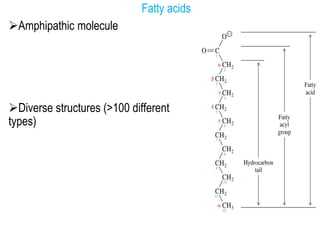
Fatty acids
Amphipathic molecule
Diverse structures (>100 different
types)
Classification of Fatty acids
1. Saturated Fatty acids
2. Unsaturated Fatty acids
Classification of Fatty acids
1. Saturated Fatty acids:
derivative of acetic acid  at least 4 carbon atom.
All carbon  fully saturated no double bond is .
2. Unsaturated Fatty acids:
double bonds between any two carbon atoms
. Generally double bonds C-9 and C-10.
•PUFA:
more than 2 double bonds Polyunsaturated fatty acids
(Polyethenoid).
E.g linoleic acid, linolenic acid and arachidonic acid fatty
acids (EFA)
Lipids
esters of fatty acids or are substances such
Esters
heterogenous compound, greasy in nature insoluble in water but
soluble in organic solvents
Occurrence of Lipids
Abundant plants, animal and microorganism  major
component  Biological membrane
Lipid  huge amount as triglycerides in adipose tissue of
animals and in cytoplasm of plants.
Functions of Lipids
1. Source of energy:
2. Storage of energy:
3. Heat insulation and Mechanical protection:
4. Structural components of cells:
5. transport form
Functions of Lipids
4. Structural components of cells:
5. transport form
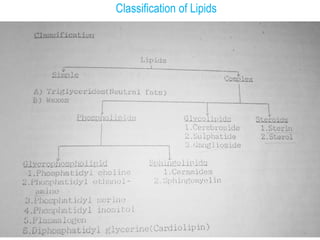
Classification of Lipids
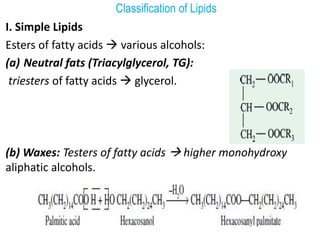
I. Simple Lipids
Esters of fatty acids  various alcohols:
(a) Neutral fats (Triacylglycerol, TG):
triesters of fatty acids  glycerol.
(b) Waxes: Testers of fatty acids  higher monohydroxy
aliphatic alcohols.
Classification of Lipids
2.Complex lipids: Esters of fatty acids
containing other groups
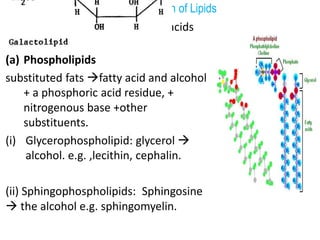
(a) Phospholipids
substituted fats fatty acid and alcohol
+ a phosphoric acid residue, +
nitrogenous base +other
substituents.
(i) Glycerophospholipid: glycerol 
alcohol. e.g. ,lecithin, cephalin.
(ii) Sphingophospholipids: Sphingosine
 the alcohol e.g. sphingomyelin.
Classification of Lipids
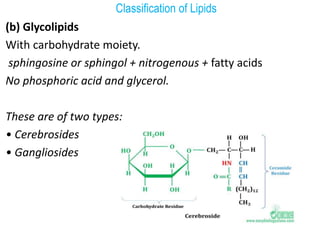
(b) Glycolipids
With carbohydrate moiety.
sphingosine or sphingol + nitrogenous + fatty acids
No phosphoric acid and glycerol.
These are of two types:
• Cerebrosides
• Gangliosides
Classification of Lipids
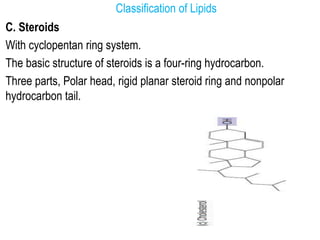
C. Steroids
With cyclopentan ring system.
The basic structure of steroids is a four-ring hydrocarbon.
Three parts, Polar head, rigid planar steroid ring and nonpolar
hydrocarbon tail.
Classification of Lipids
Importance of cholesterol
• component of some cell membranes and of plasma
lipoproteins.
•precursor of many other biologically important steroids
•
•sterol of higher animals abundant in nerve tissues and in
gallstones.
•High blood atherosclerosis.

Lipids BPH

  • 1.
    Fatty acids Fatty acidslong chain organic acids 2-24 carbon atoms. single carboxyl group and a long, nonpolar hydrocarbon tail. building block units of lipids.
  • 2.
    Fatty acids Amphipathic molecule Diversestructures (>100 different types)
  • 3.
    Classification of Fattyacids 1. Saturated Fatty acids 2. Unsaturated Fatty acids
  • 4.
    Classification of Fattyacids 1. Saturated Fatty acids: derivative of acetic acid  at least 4 carbon atom. All carbon  fully saturated no double bond is . 2. Unsaturated Fatty acids: double bonds between any two carbon atoms . Generally double bonds C-9 and C-10. •PUFA: more than 2 double bonds Polyunsaturated fatty acids (Polyethenoid). E.g linoleic acid, linolenic acid and arachidonic acid fatty acids (EFA)
  • 5.
    Lipids esters of fattyacids or are substances such Esters heterogenous compound, greasy in nature insoluble in water but soluble in organic solvents
  • 6.
    Occurrence of Lipids Abundantplants, animal and microorganism  major component  Biological membrane Lipid  huge amount as triglycerides in adipose tissue of animals and in cytoplasm of plants.
  • 7.
    Functions of Lipids 1.Source of energy: 2. Storage of energy: 3. Heat insulation and Mechanical protection: 4. Structural components of cells: 5. transport form
  • 8.
    Functions of Lipids 4.Structural components of cells: 5. transport form
  • 9.
  • 10.
    Classification of Lipids I.Simple Lipids Esters of fatty acids  various alcohols: (a) Neutral fats (Triacylglycerol, TG): triesters of fatty acids  glycerol. (b) Waxes: Testers of fatty acids  higher monohydroxy aliphatic alcohols.
  • 11.
    Classification of Lipids 2.Complexlipids: Esters of fatty acids containing other groups (a) Phospholipids substituted fats fatty acid and alcohol + a phosphoric acid residue, + nitrogenous base +other substituents. (i) Glycerophospholipid: glycerol  alcohol. e.g. ,lecithin, cephalin. (ii) Sphingophospholipids: Sphingosine  the alcohol e.g. sphingomyelin.
  • 12.
    Classification of Lipids (b)Glycolipids With carbohydrate moiety. sphingosine or sphingol + nitrogenous + fatty acids No phosphoric acid and glycerol. These are of two types: • Cerebrosides • Gangliosides
  • 13.
    Classification of Lipids C.Steroids With cyclopentan ring system. The basic structure of steroids is a four-ring hydrocarbon. Three parts, Polar head, rigid planar steroid ring and nonpolar hydrocarbon tail.
  • 14.
    Classification of Lipids Importanceof cholesterol • component of some cell membranes and of plasma lipoproteins. •precursor of many other biologically important steroids • •sterol of higher animals abundant in nerve tissues and in gallstones. •High blood atherosclerosis.