

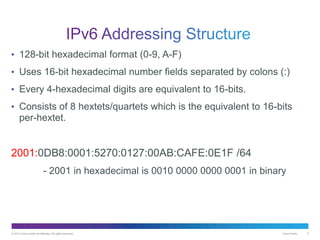
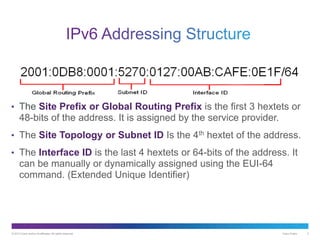
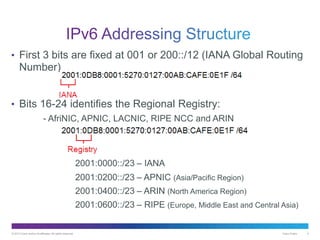
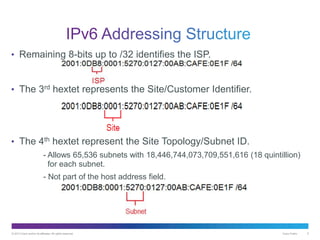
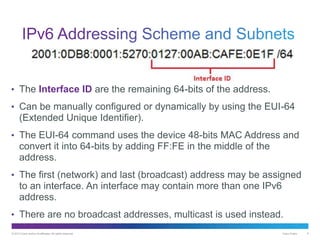
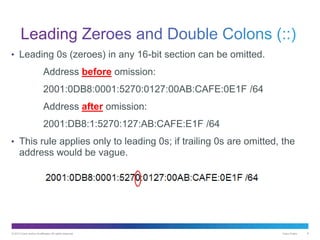
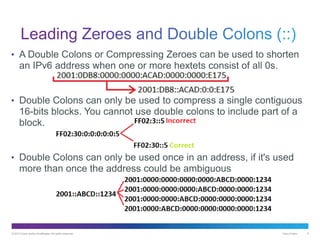
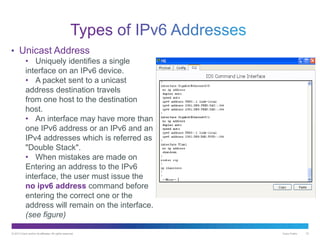
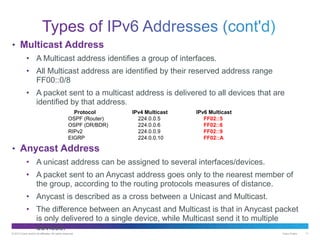
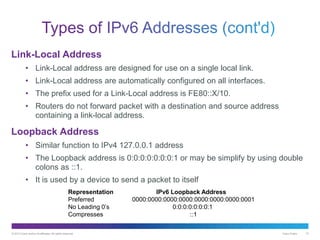
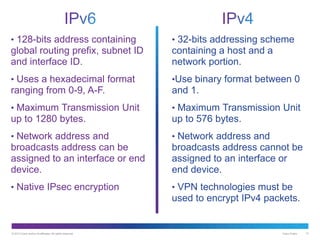


The document discusses IPv6 addressing and summarizes: - IPv6 addresses are 128-bit hexadecimal addresses consisting of 8 sections separated by colons, with the first 3 sections making up the prefix or network portion and the last 4 sections being the interface ID. - Addressing hierarchies are defined, with the first bits identifying the registry and subsequent bits identifying the ISP and site. - Methods for compressing zeros, representing loopback addresses, and defining link-local and multicast addresses are covered. - IPv6 enhances IPv4 by allowing larger addresses and more efficient routing while introducing features like built-in encryption.


