Subnets


Routing within an Organization
Subnet
   Subnets are a subset of the entire
    network
       Networks can be divided into subnets
       Subnets can be divided into subnets
   Each subnet is treated as a separate
    network
       A subnet can be a WAN or LAN
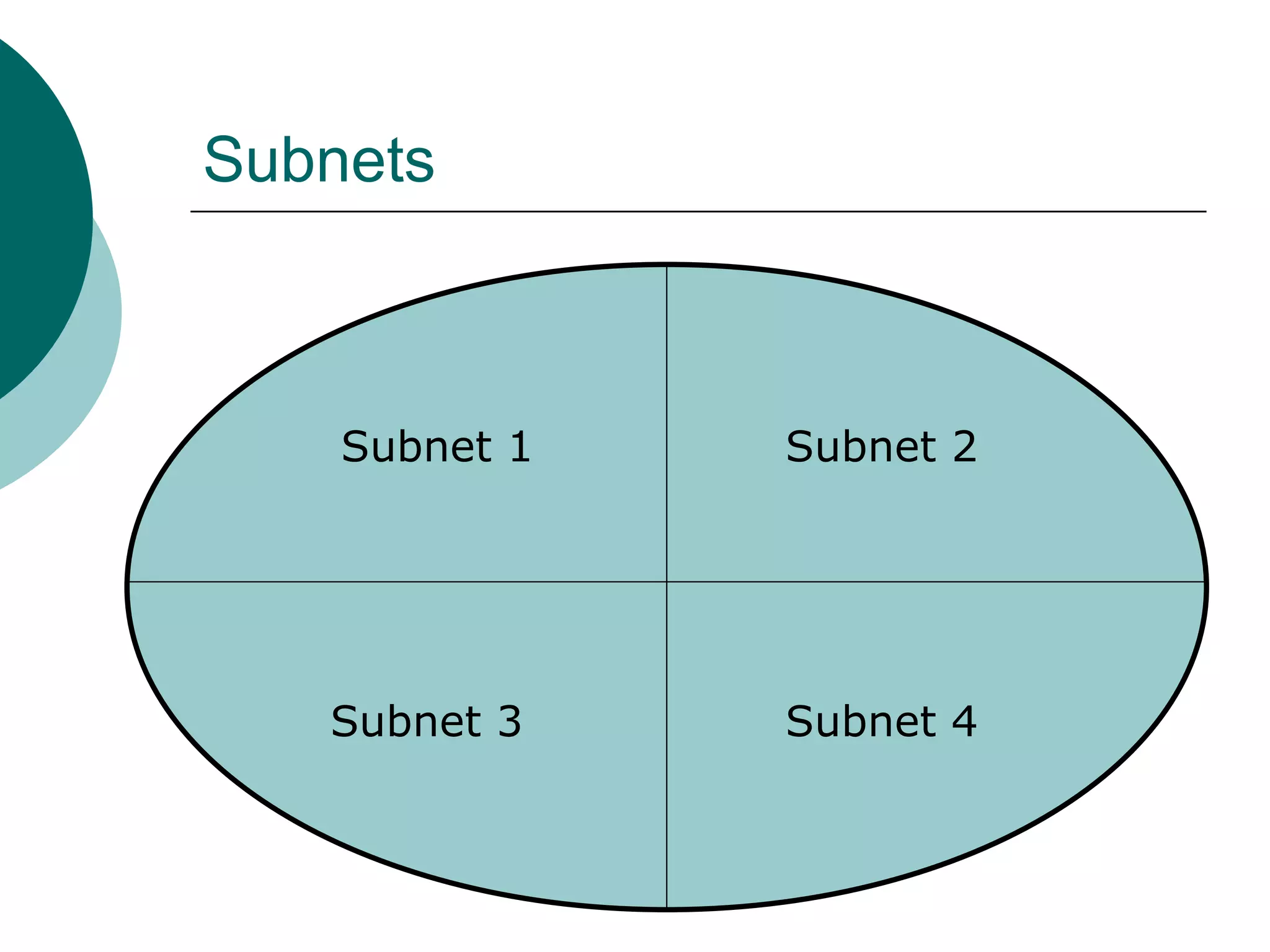
Subnets


    Subnet 1   Subnet 2


   Subnet 3    Subnet 4
Subnet Addresses
   Typical (classed) IP addresses (e.g.
    137.207.32.2) have two parts:
       A network ID (e.g. 137.207.0.0)
       A host ID (e.g. 0.0.32.2)
   A subnetted network will divide the IP
    address differently
       Part of the host ID will be used to specify the
        subnet number
       The network ID and subnet portion of the host
        ID can be considered the subnet ID
Subnet Addresses
   For example, if we want to divide a
    network into 4 subnets, we can use
    the following scheme:
       4 subnets can be represented with 2
        bits (22 = 4)
       For a class B address, which already
        uses 16 bits for the network portion,
        the address would use 18 bits for the
        subnet portion
External Routing with Subnets
   Subnetting is transparent outside an
    organization
       e.g. If subnetting is used in the
        University, routers outside the
        University will not consider subnetting
        at all
       Thus, subnetting is only relevant within
        an organization
Internal Routing with Subnets
   When a packet enters a network
    with subnetting, the routers will
    behave differently
       A route may use the subnet ID
        (network portion + subnet portion,
        followed by zeroes) to determine which
        route to take
Routing with Subnets
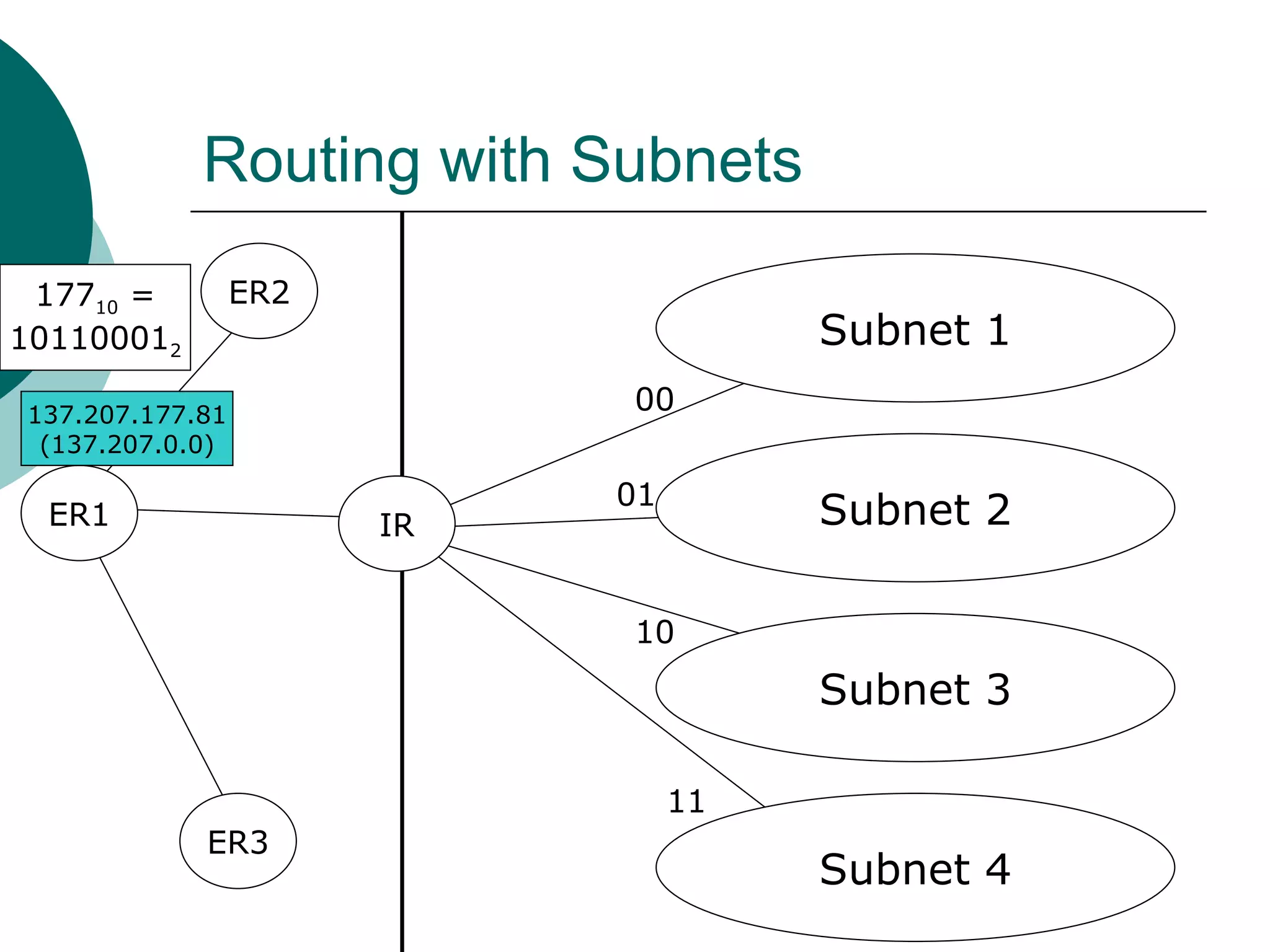
 17710 =         ER2
101100012                             Subnet 1
137.207.177.81
                            00
 (137.207.0.0)

                            01
  ER1                  IR             Subnet 2

                            10
                                      Subnet 3

                                 11
            ER3
                                      Subnet 4
Routing with Subnets
 17710 =     ER2
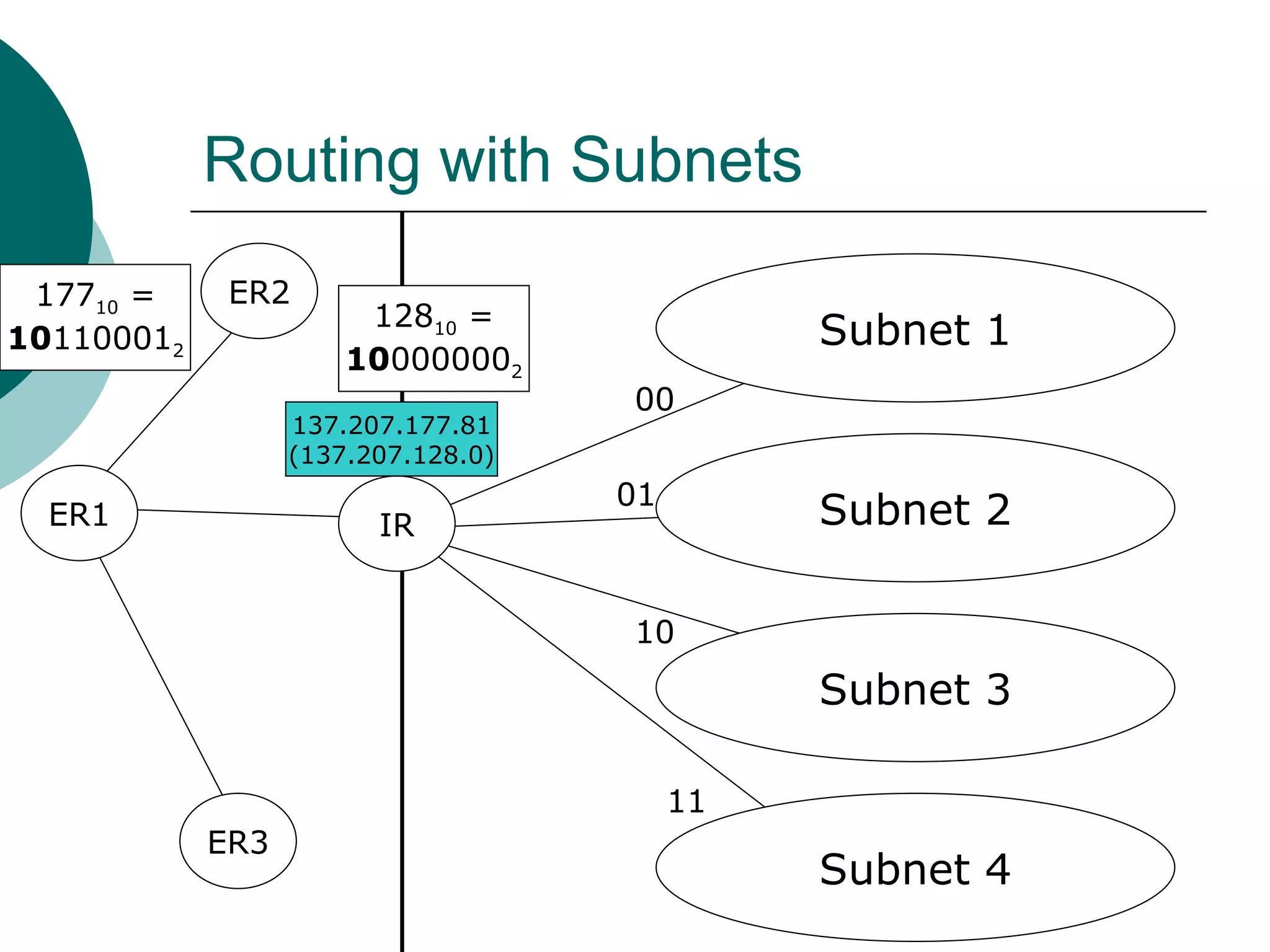
                       12810 =
101100012                                     Subnet 1
                      100000002
                                    00
                  137.207.177.81
                  (137.207.128.0)
                                    01
  ER1                   IR                    Subnet 2

                                    10
                                              Subnet 3

                                         11
            ER3
                                              Subnet 4
Routing with Subnets
       ER2
                                  Subnet 1
                    00


                   01
ER1          IR                   Subnet 2

                    10
                                  Subnet 3
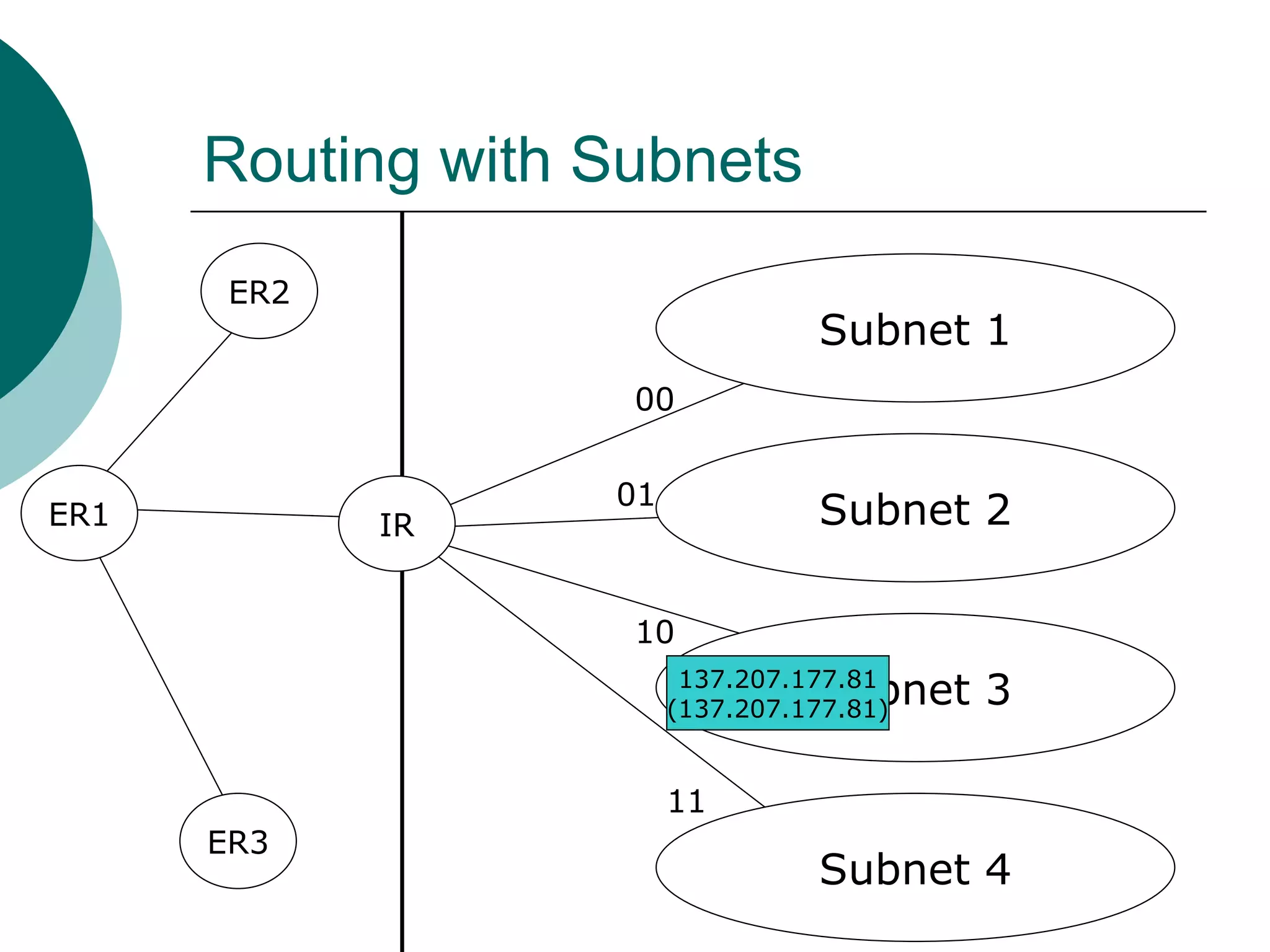
                         137.207.177.81
                        (137.207.177.81)


                        11
      ER3
                                  Subnet 4
Multi-Level Subnets
   A subnet can be divided into
    subnets
       If the first layer of subnetting used 2
        bits for the subnet portion, a second
        layer can be used to subnet within each
        subnet
            Using more bits from the host portion of
             the address
Multi-Level Subnets
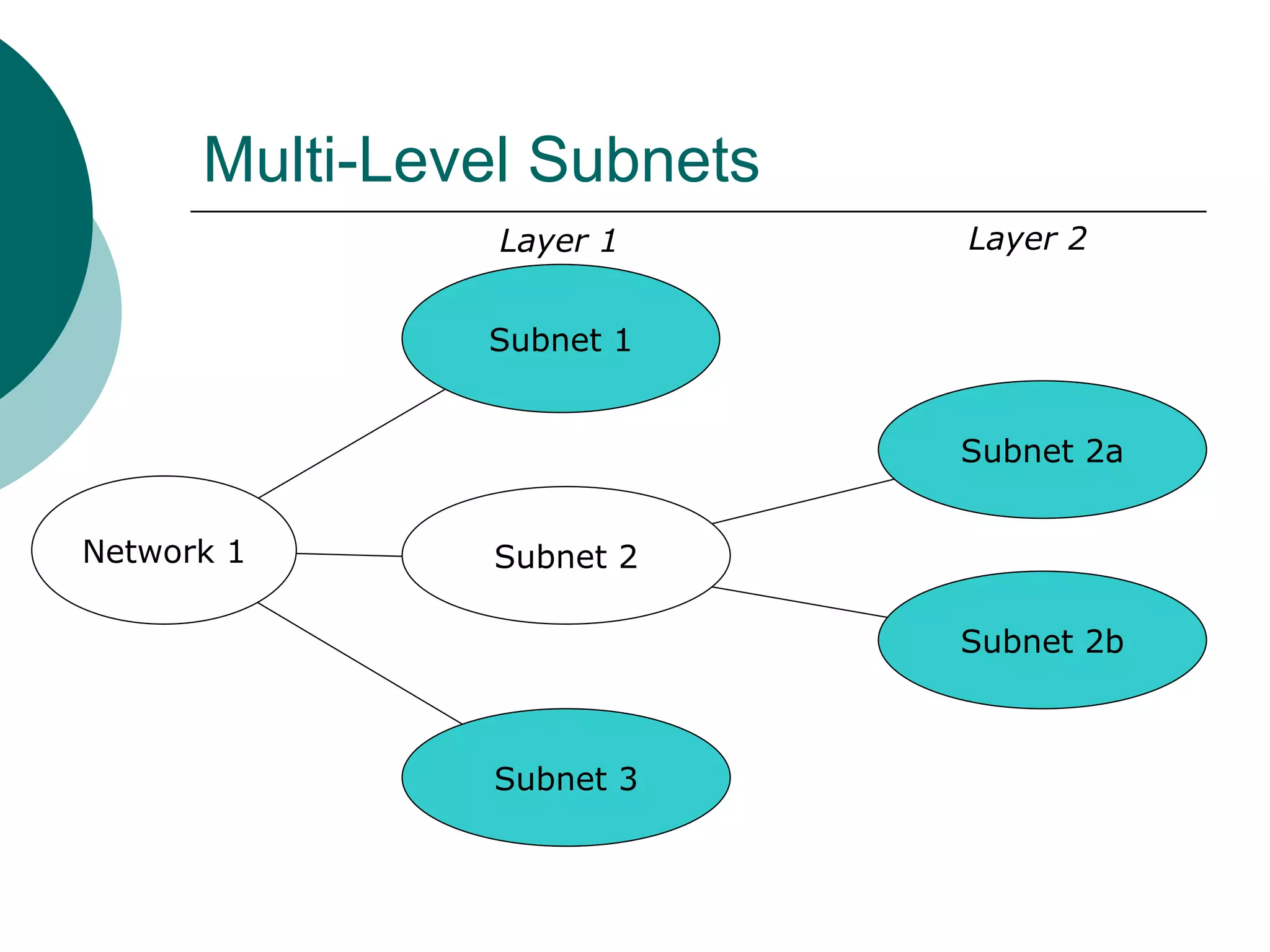
                Layer 1     Layer 2


               Subnet 1


                            Subnet 2a


Network 1      Subnet 2

                            Subnet 2b


               Subnet 3
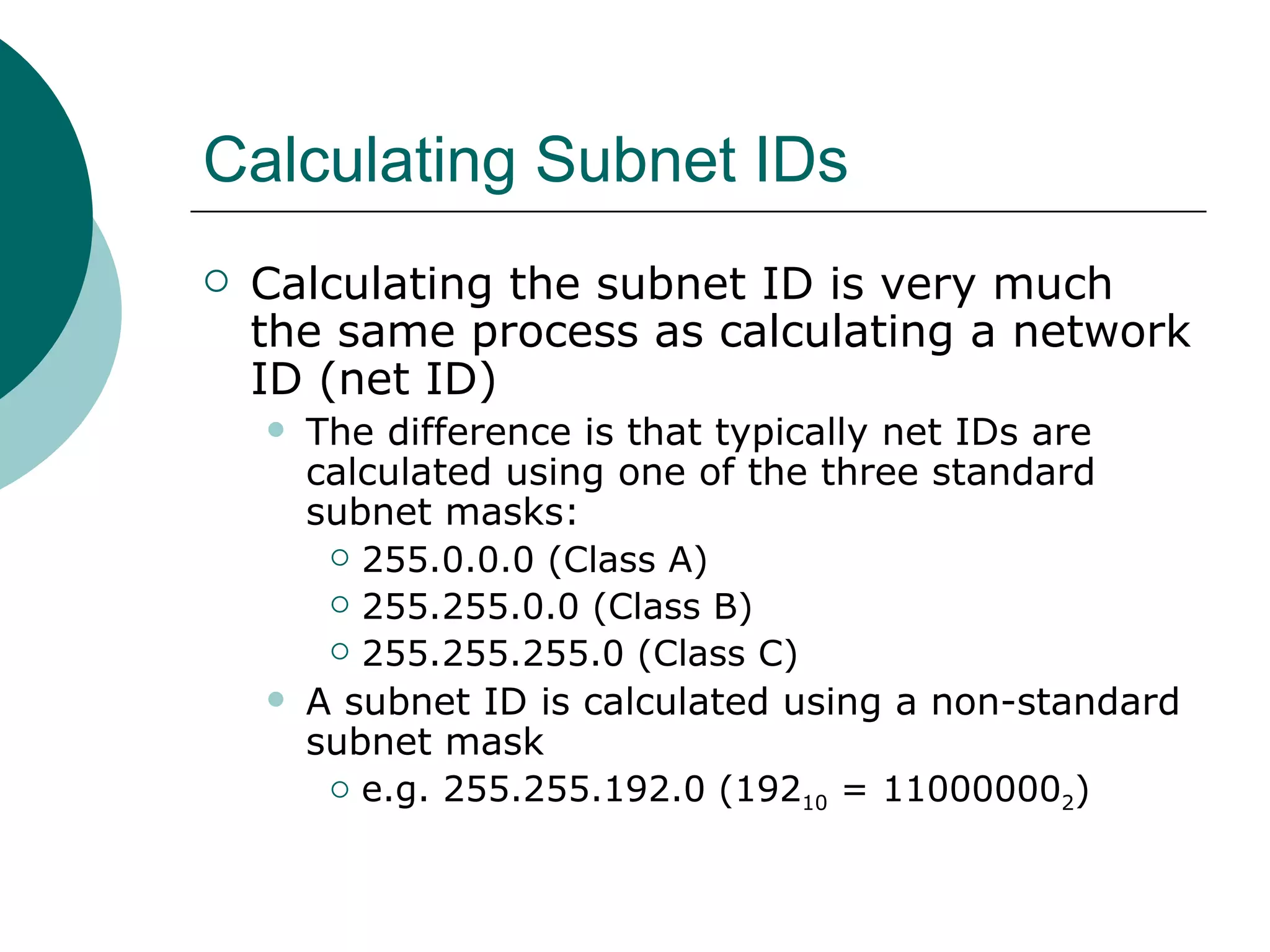
Calculating Subnet IDs
   Calculating the subnet ID is very much
    the same process as calculating a network
    ID (net ID)
       The difference is that typically net IDs are
        calculated using one of the three standard
        subnet masks:
          255.0.0.0 (Class A)

          255.255.0.0 (Class B)

          255.255.255.0 (Class C)

       A subnet ID is calculated using a non-standard
        subnet mask
          e.g. 255.255.192.0 (192
                                    10 = 110000002)
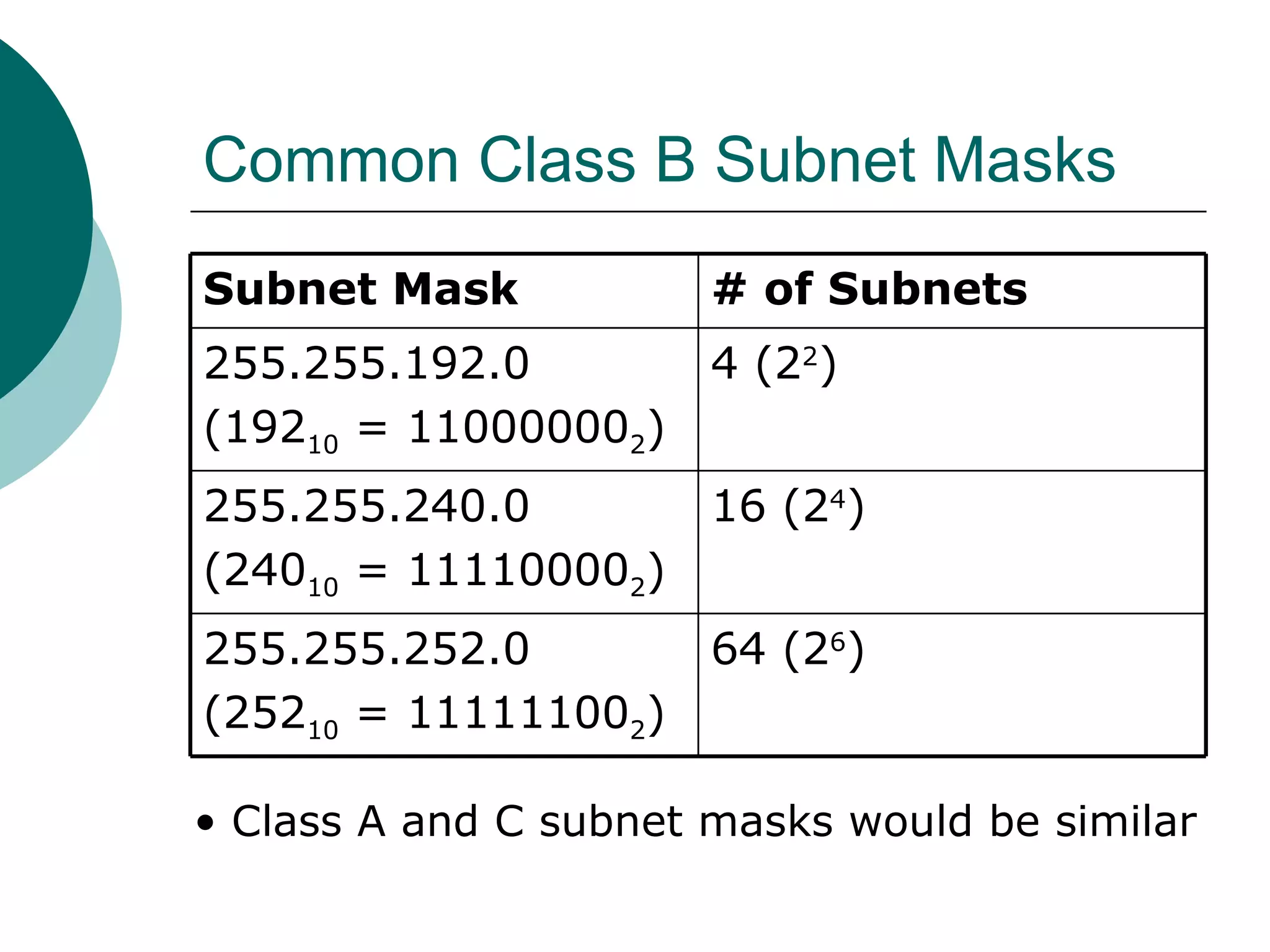
Common Class B Subnet Masks
Subnet Mask            # of Subnets
255.255.192.0          4 (22)
(19210 = 110000002)
255.255.240.0          16 (24)
(24010 = 111100002)
255.255.252.0          64 (26)
(25210 = 111111002)

• Class A and C subnet masks would be similar
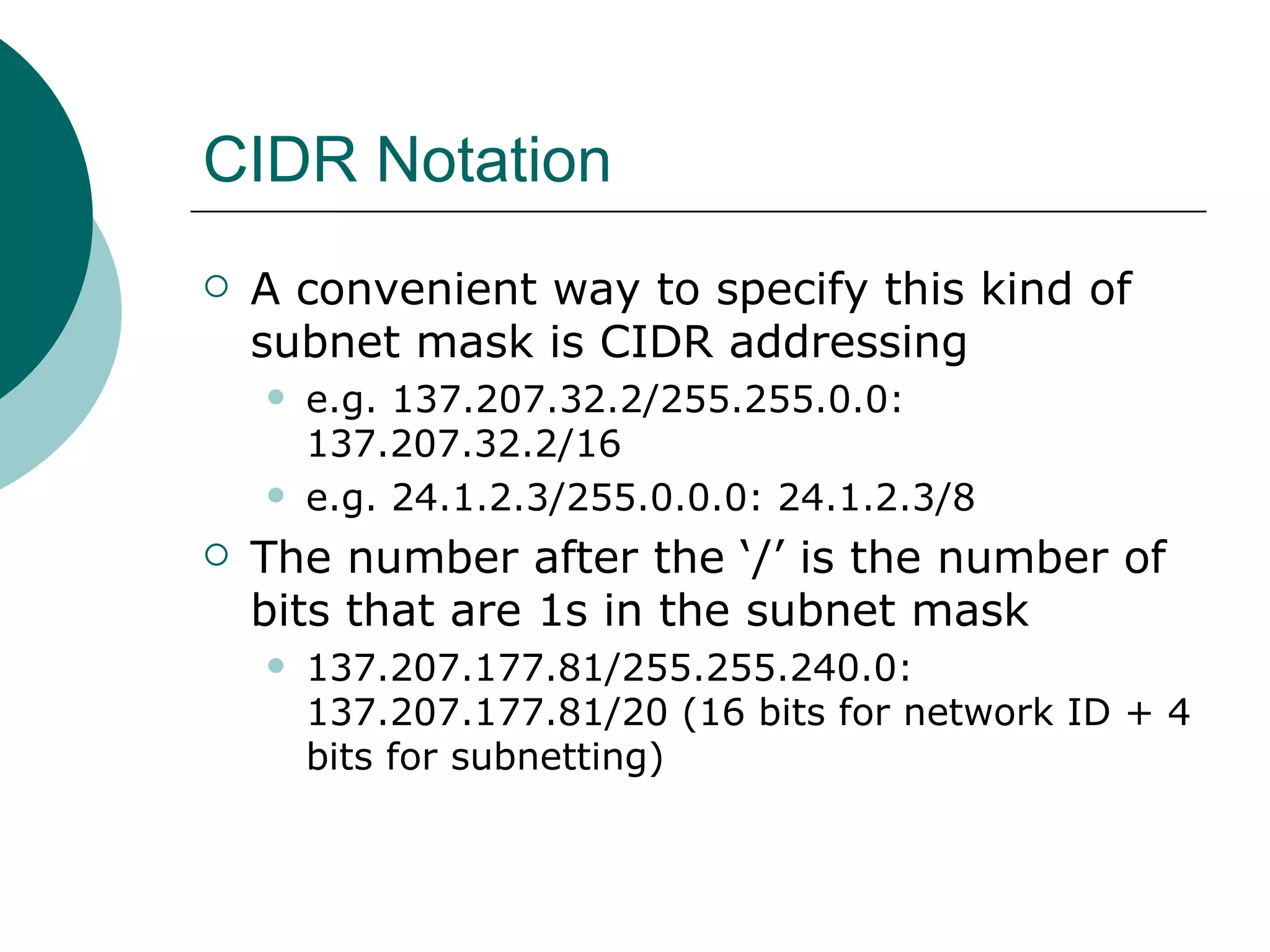
CIDR Notation
   A convenient way to specify this kind of
    subnet mask is CIDR addressing
       e.g. 137.207.32.2/255.255.0.0:
        137.207.32.2/16
       e.g. 24.1.2.3/255.0.0.0: 24.1.2.3/8
   The number after the ‘/’ is the number of
    bits that are 1s in the subnet mask
       137.207.177.81/255.255.240.0:
        137.207.177.81/20 (16 bits for network ID + 4
        bits for subnetting)

Subnetting

  • 1.
  • 2.
    Subnet  Subnets are a subset of the entire network  Networks can be divided into subnets  Subnets can be divided into subnets  Each subnet is treated as a separate network  A subnet can be a WAN or LAN
  • 3.
    Subnets Subnet 1 Subnet 2 Subnet 3 Subnet 4
  • 4.
    Subnet Addresses  Typical (classed) IP addresses (e.g. 137.207.32.2) have two parts:  A network ID (e.g. 137.207.0.0)  A host ID (e.g. 0.0.32.2)  A subnetted network will divide the IP address differently  Part of the host ID will be used to specify the subnet number  The network ID and subnet portion of the host ID can be considered the subnet ID
  • 5.
    Subnet Addresses  For example, if we want to divide a network into 4 subnets, we can use the following scheme:  4 subnets can be represented with 2 bits (22 = 4)  For a class B address, which already uses 16 bits for the network portion, the address would use 18 bits for the subnet portion
  • 6.
    External Routing withSubnets  Subnetting is transparent outside an organization  e.g. If subnetting is used in the University, routers outside the University will not consider subnetting at all  Thus, subnetting is only relevant within an organization
  • 7.
    Internal Routing withSubnets  When a packet enters a network with subnetting, the routers will behave differently  A route may use the subnet ID (network portion + subnet portion, followed by zeroes) to determine which route to take
  • 8.
    Routing with Subnets 17710 = ER2 101100012 Subnet 1 137.207.177.81 00 (137.207.0.0) 01 ER1 IR Subnet 2 10 Subnet 3 11 ER3 Subnet 4
  • 9.
    Routing with Subnets 17710 = ER2 12810 = 101100012 Subnet 1 100000002 00 137.207.177.81 (137.207.128.0) 01 ER1 IR Subnet 2 10 Subnet 3 11 ER3 Subnet 4
  • 10.
    Routing with Subnets ER2 Subnet 1 00 01 ER1 IR Subnet 2 10 Subnet 3 137.207.177.81 (137.207.177.81) 11 ER3 Subnet 4
  • 11.
    Multi-Level Subnets  A subnet can be divided into subnets  If the first layer of subnetting used 2 bits for the subnet portion, a second layer can be used to subnet within each subnet  Using more bits from the host portion of the address
  • 12.
    Multi-Level Subnets Layer 1 Layer 2 Subnet 1 Subnet 2a Network 1 Subnet 2 Subnet 2b Subnet 3
  • 13.
    Calculating Subnet IDs  Calculating the subnet ID is very much the same process as calculating a network ID (net ID)  The difference is that typically net IDs are calculated using one of the three standard subnet masks:  255.0.0.0 (Class A)  255.255.0.0 (Class B)  255.255.255.0 (Class C)  A subnet ID is calculated using a non-standard subnet mask  e.g. 255.255.192.0 (192 10 = 110000002)
  • 14.
    Common Class BSubnet Masks Subnet Mask # of Subnets 255.255.192.0 4 (22) (19210 = 110000002) 255.255.240.0 16 (24) (24010 = 111100002) 255.255.252.0 64 (26) (25210 = 111111002) • Class A and C subnet masks would be similar
  • 15.
    CIDR Notation  A convenient way to specify this kind of subnet mask is CIDR addressing  e.g. 137.207.32.2/255.255.0.0: 137.207.32.2/16  e.g. 24.1.2.3/255.0.0.0: 24.1.2.3/8  The number after the ‘/’ is the number of bits that are 1s in the subnet mask  137.207.177.81/255.255.240.0: 137.207.177.81/20 (16 bits for network ID + 4 bits for subnetting)