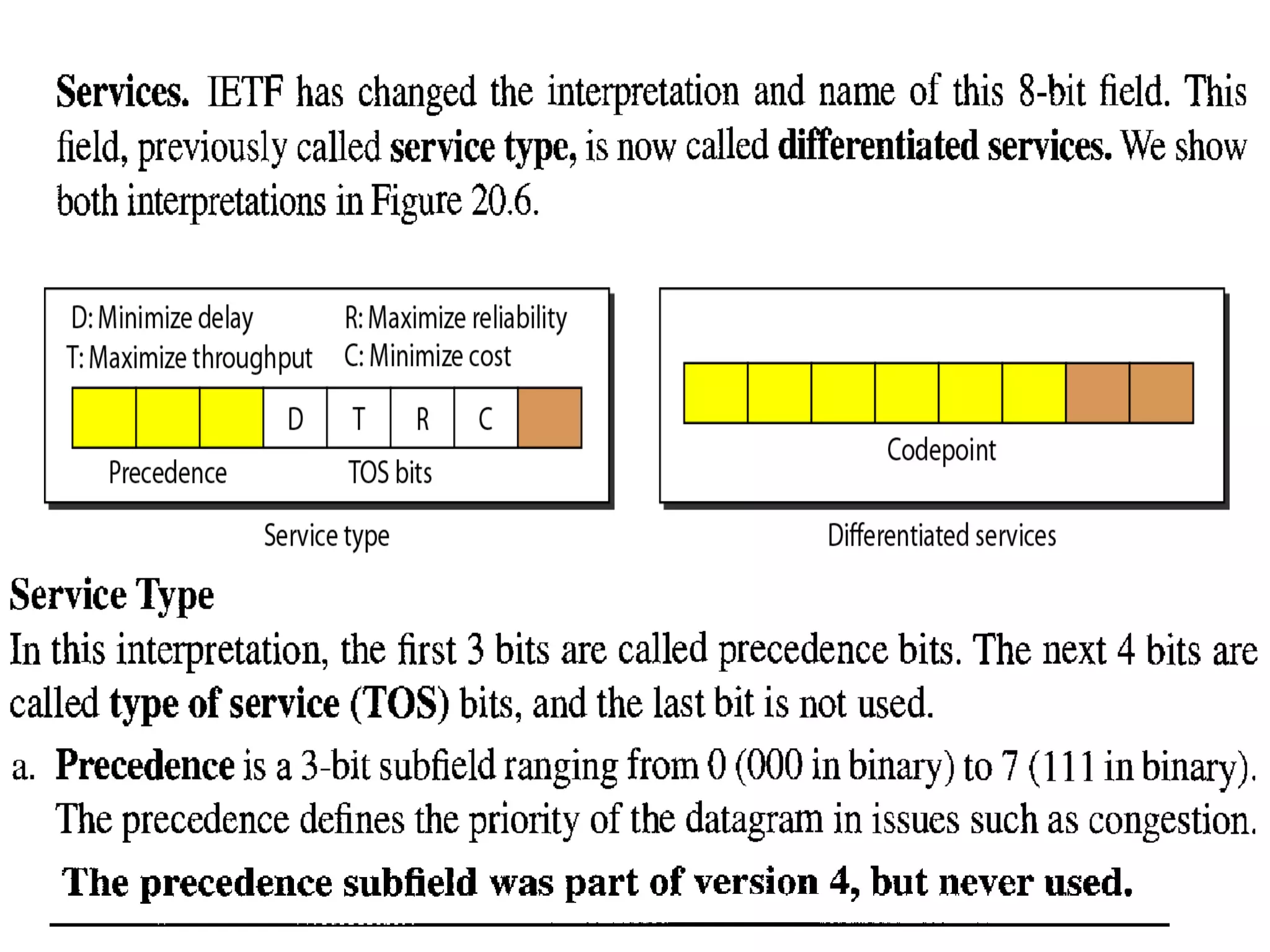
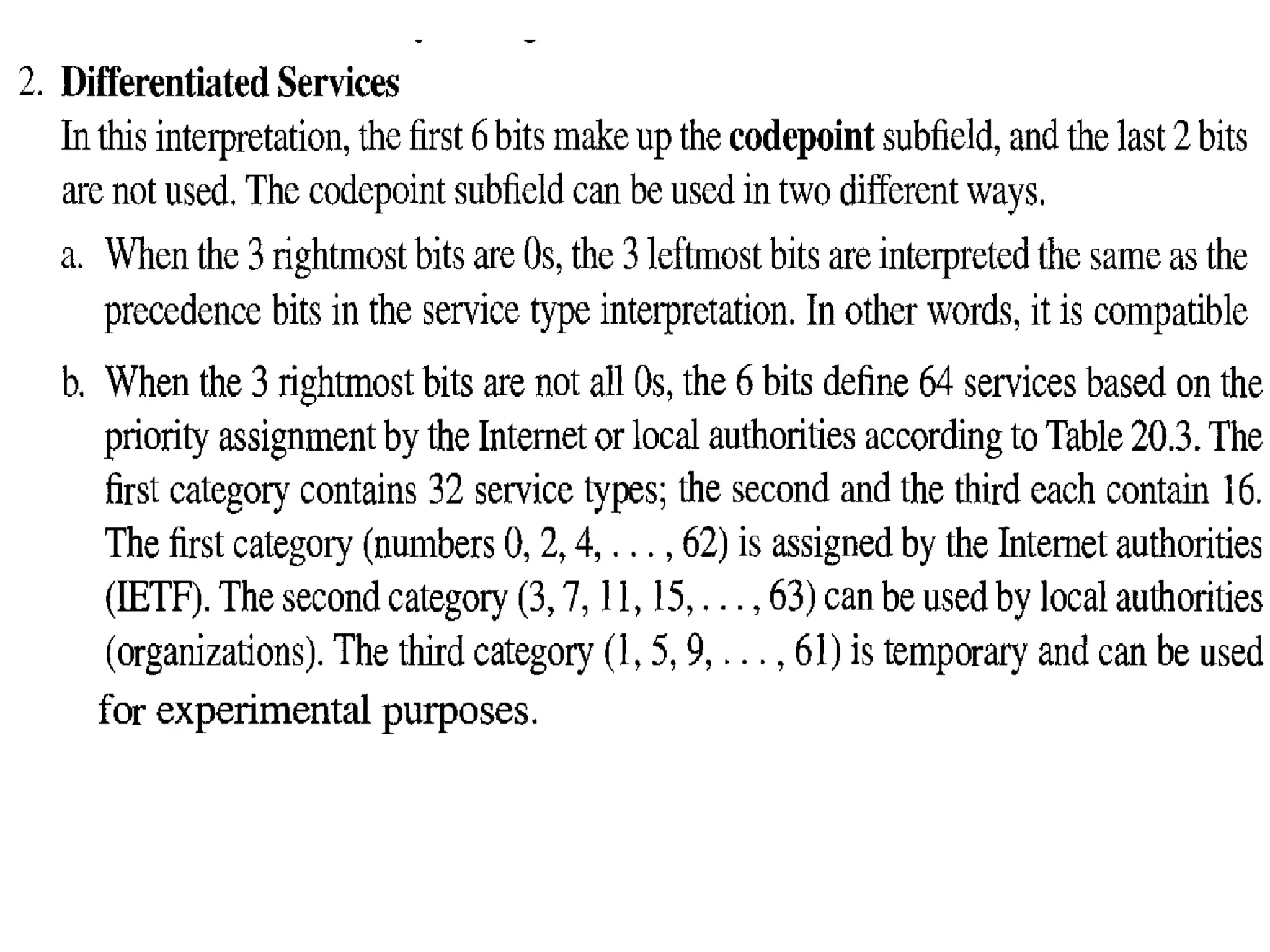

Internet Protocol (IP) 
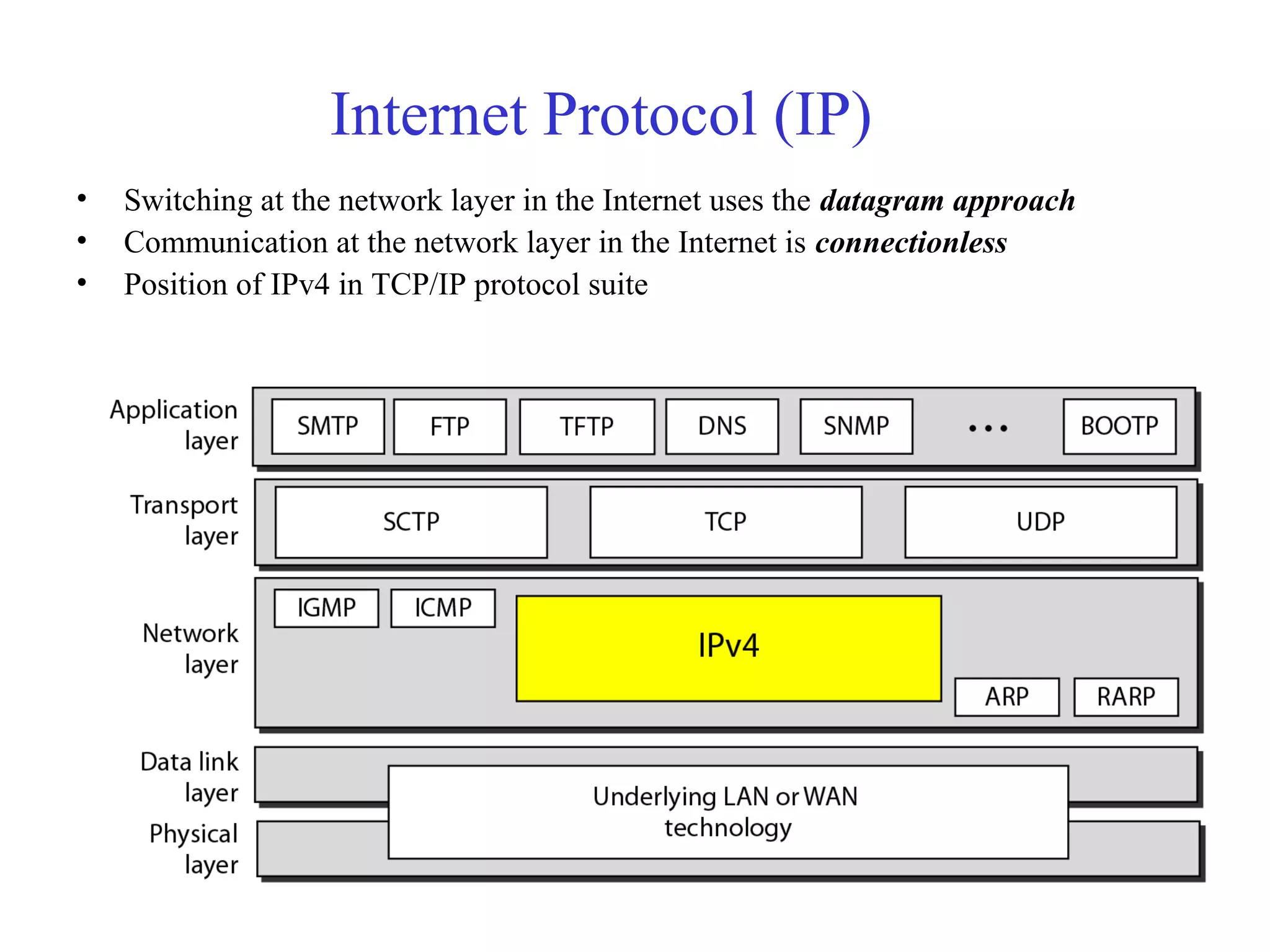
• Switching at the network layer in the Internet uses the datagram approach 
• Communication at the network layer in the Internet is connectionless 
• Position of IPv4 in TCP/IP protocol suite
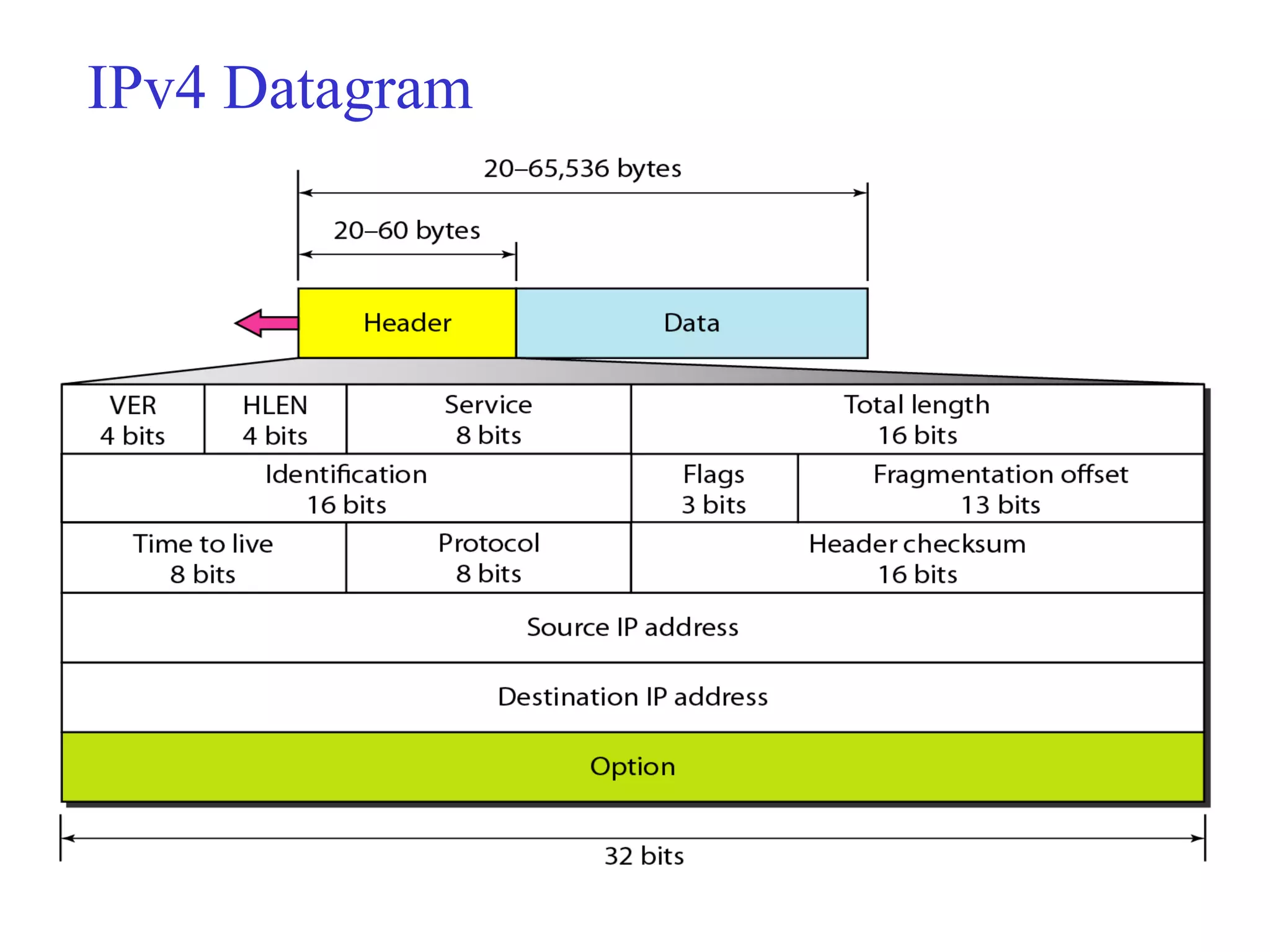
IPv4 Datagram
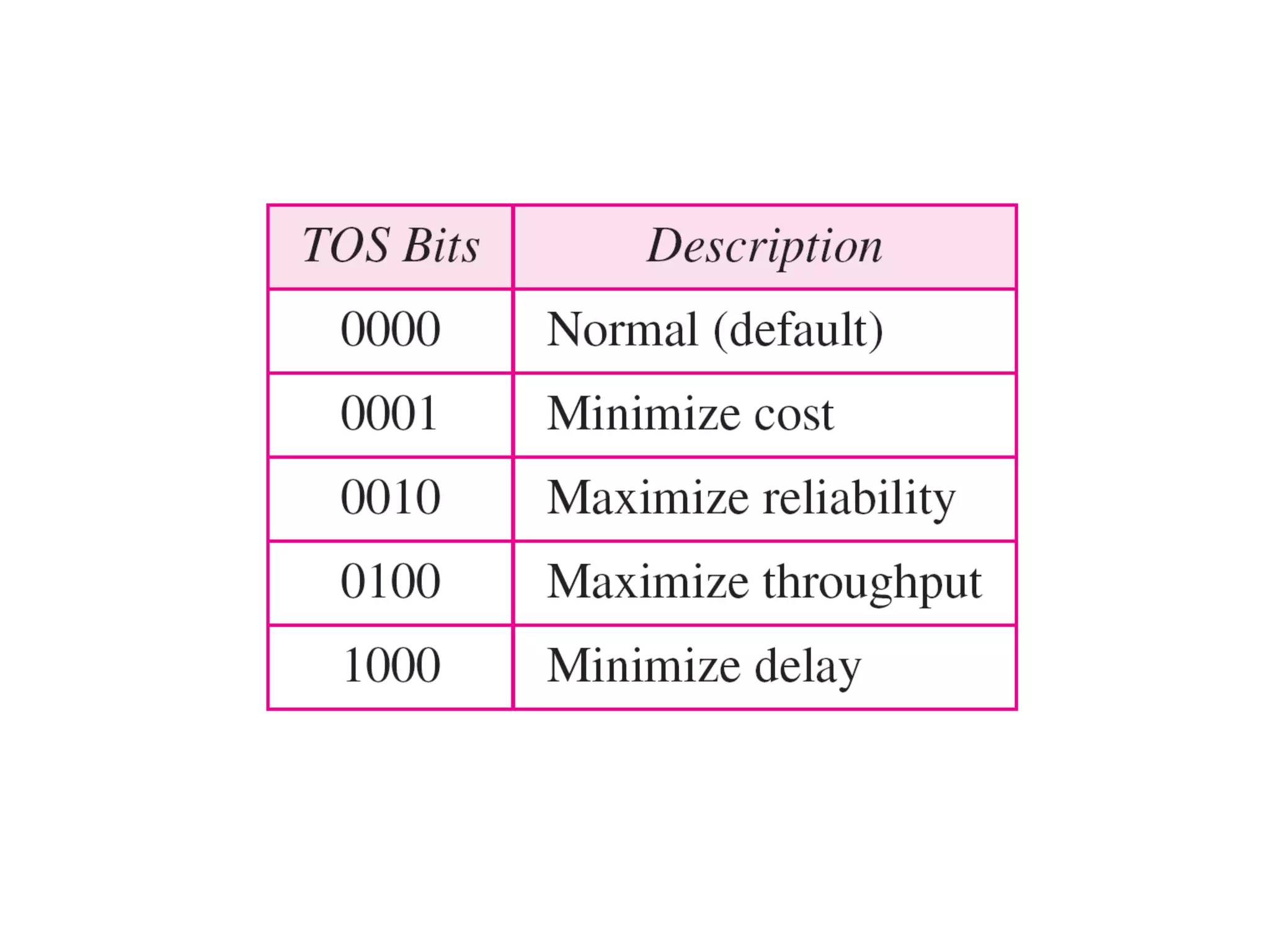
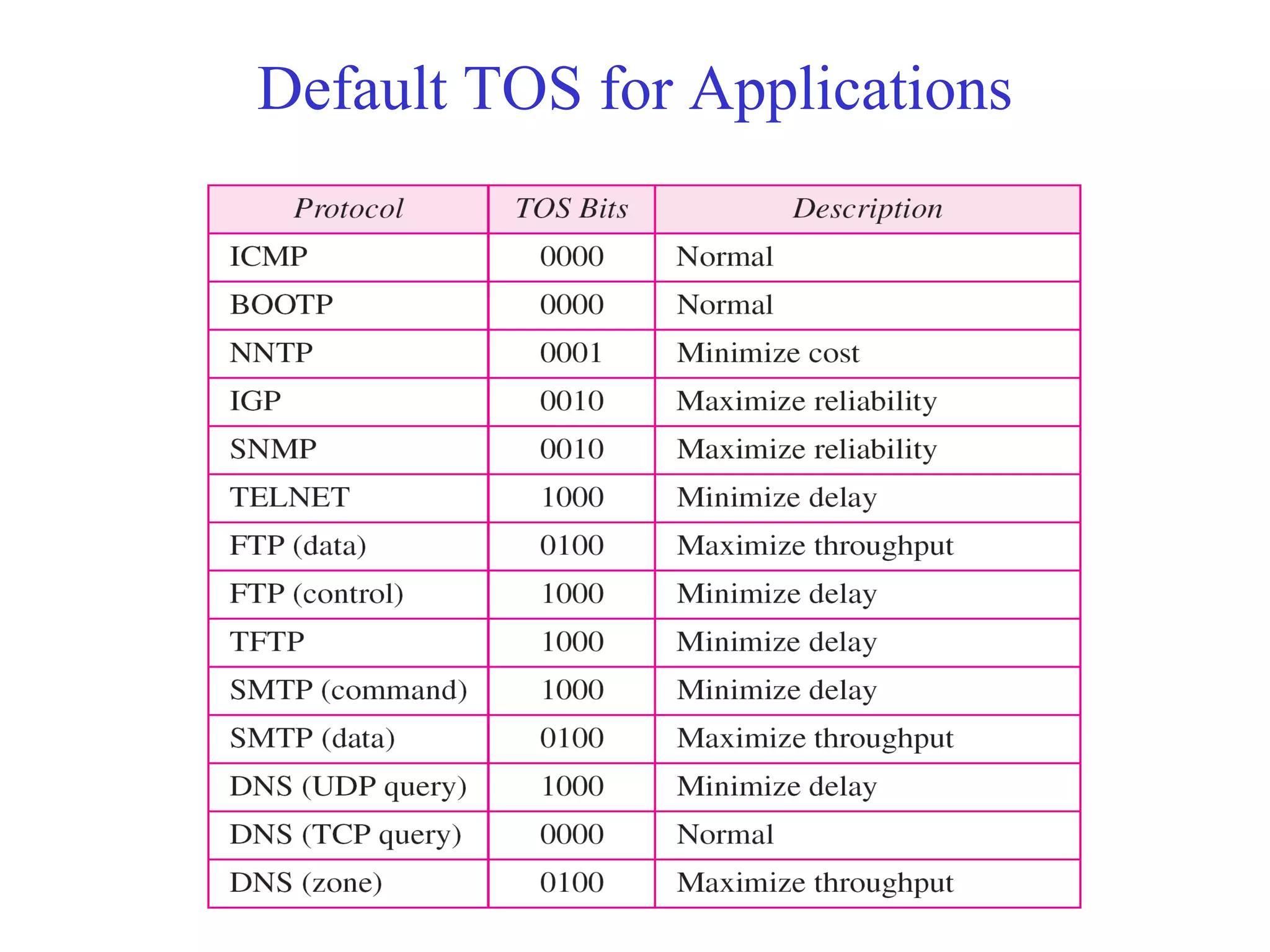
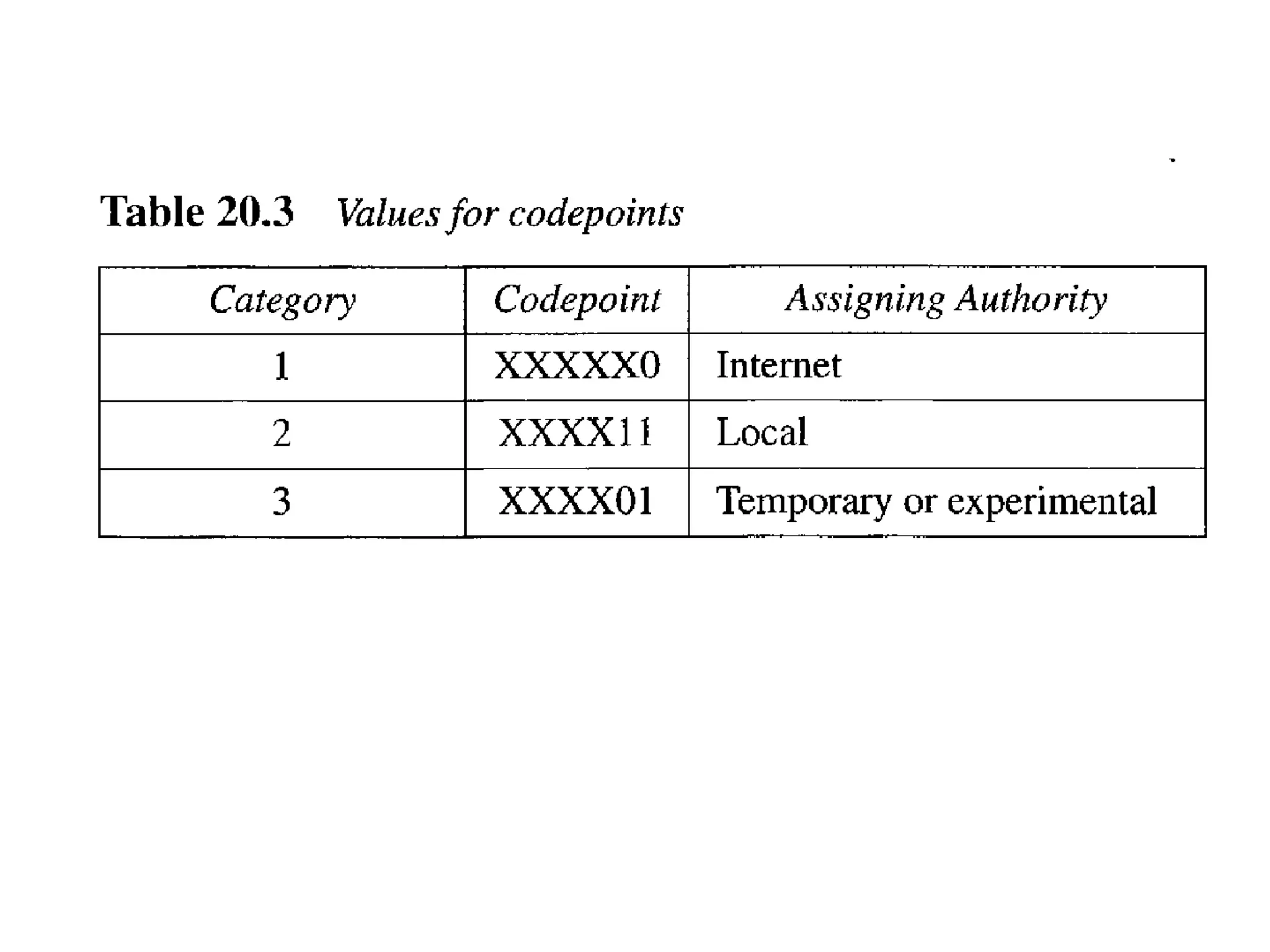
Default TOS for Applications
• Identification: used in fragmentation 
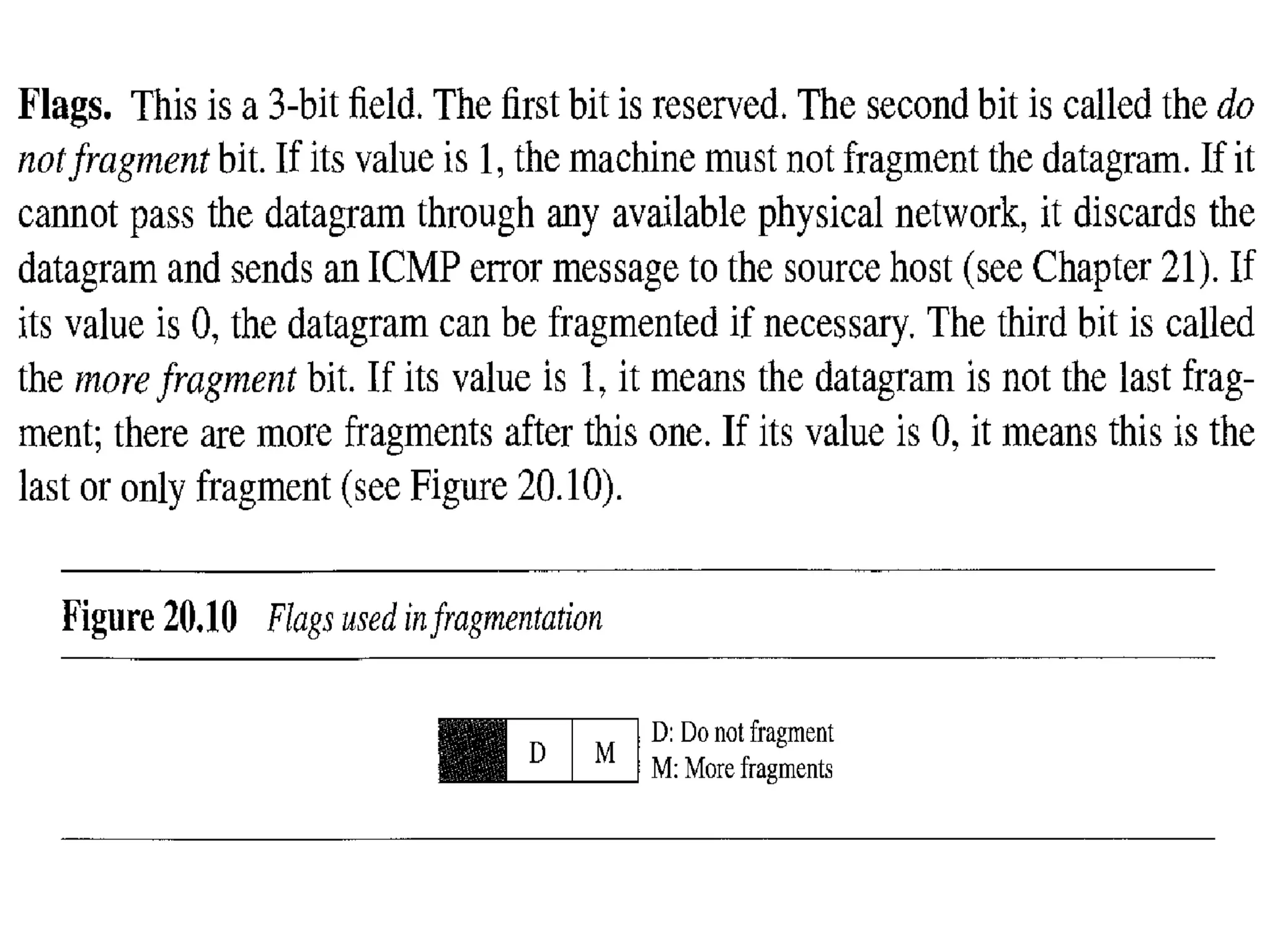
• Flag : used in fragmentation 
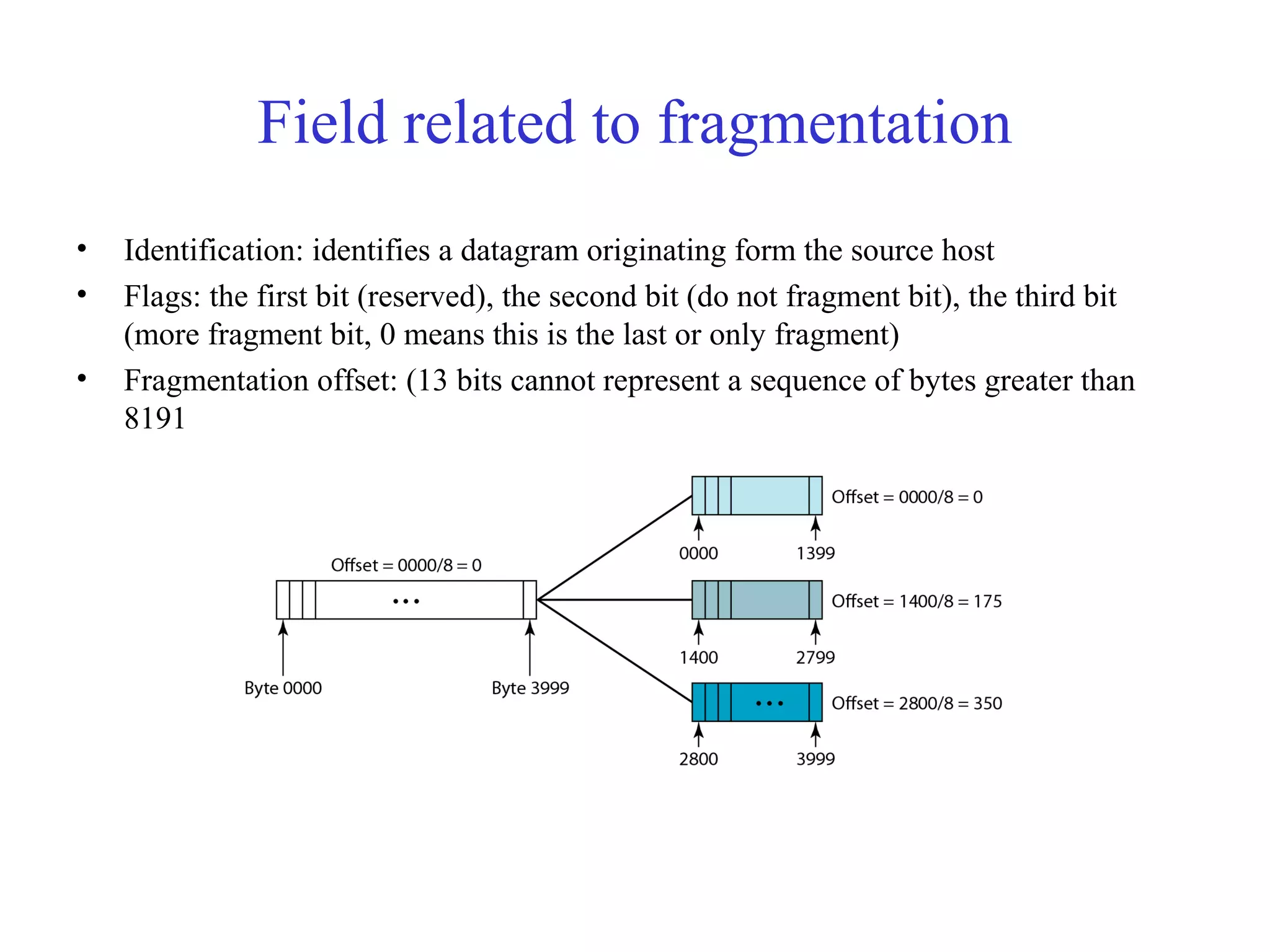
• Fragmentation offset 
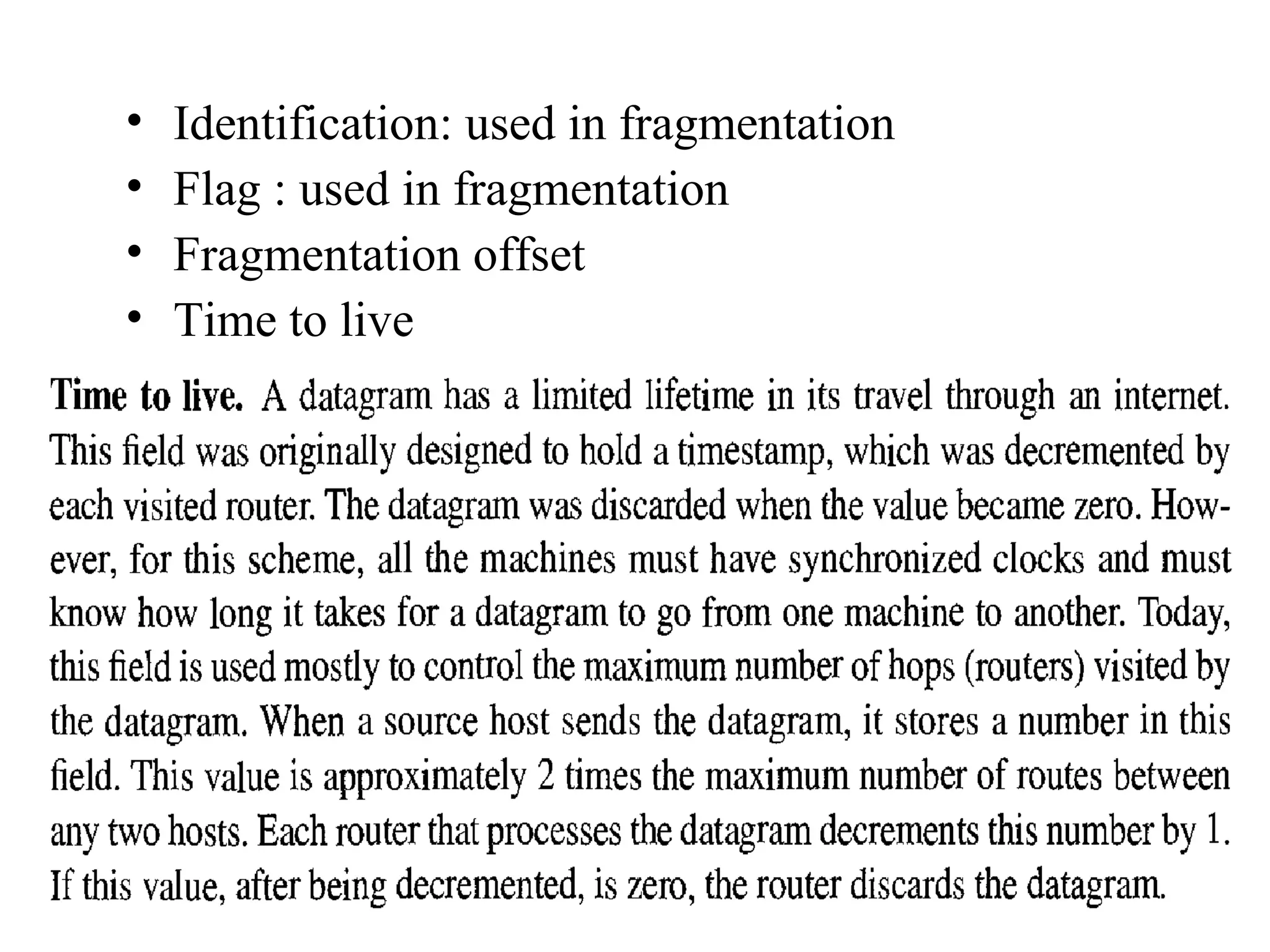
• Time to live
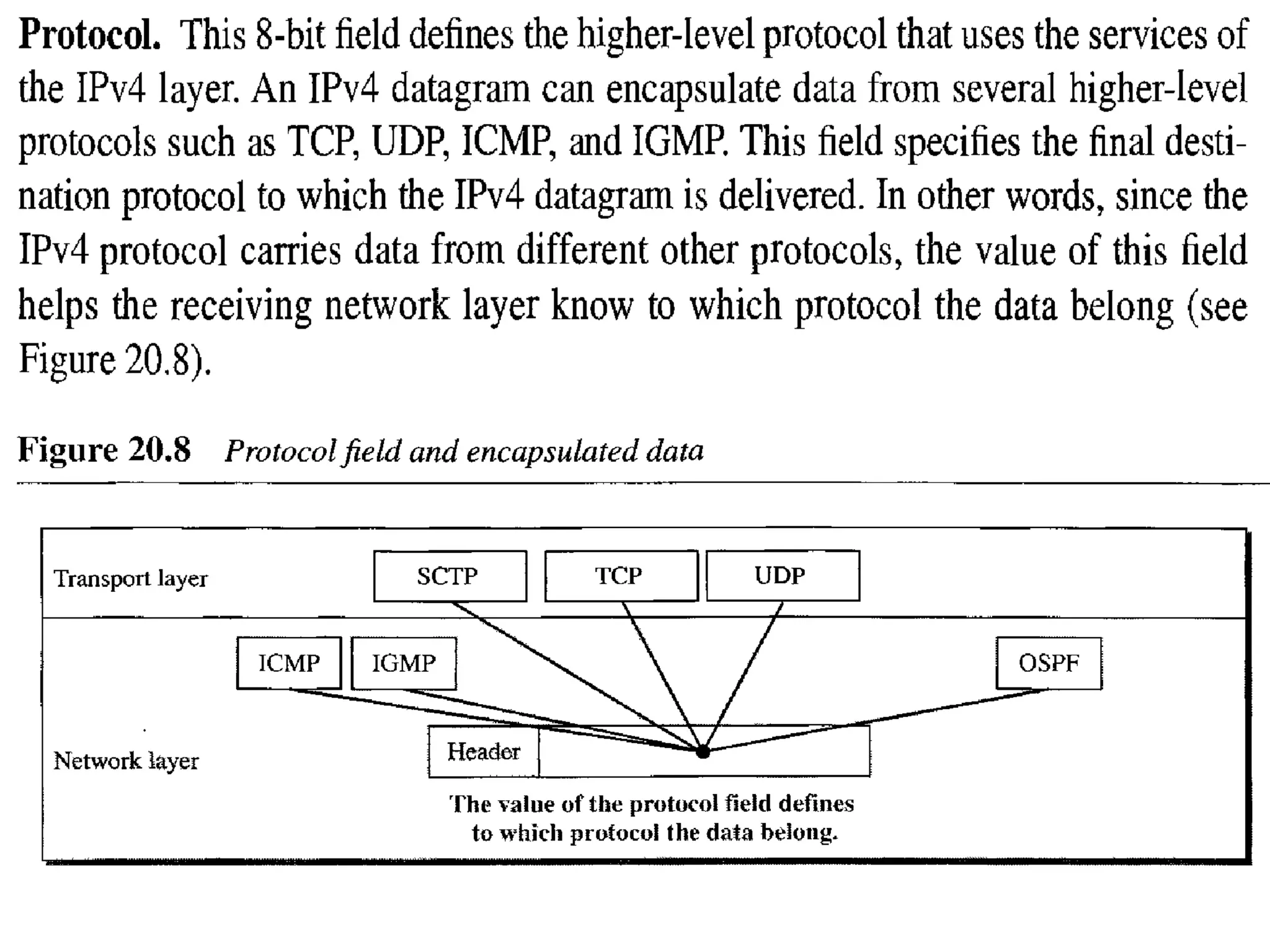
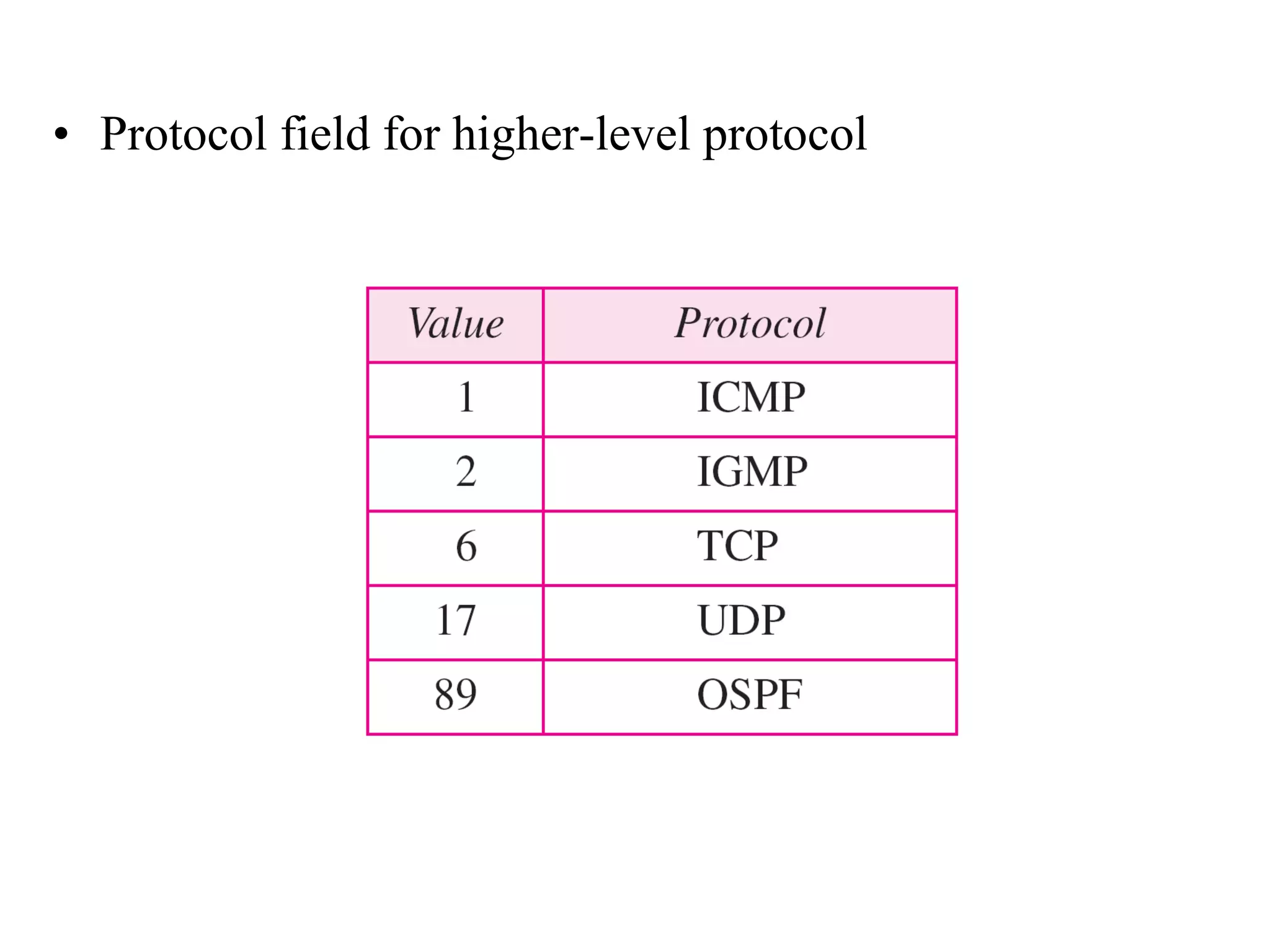
• Protocol field for higher-level protocol
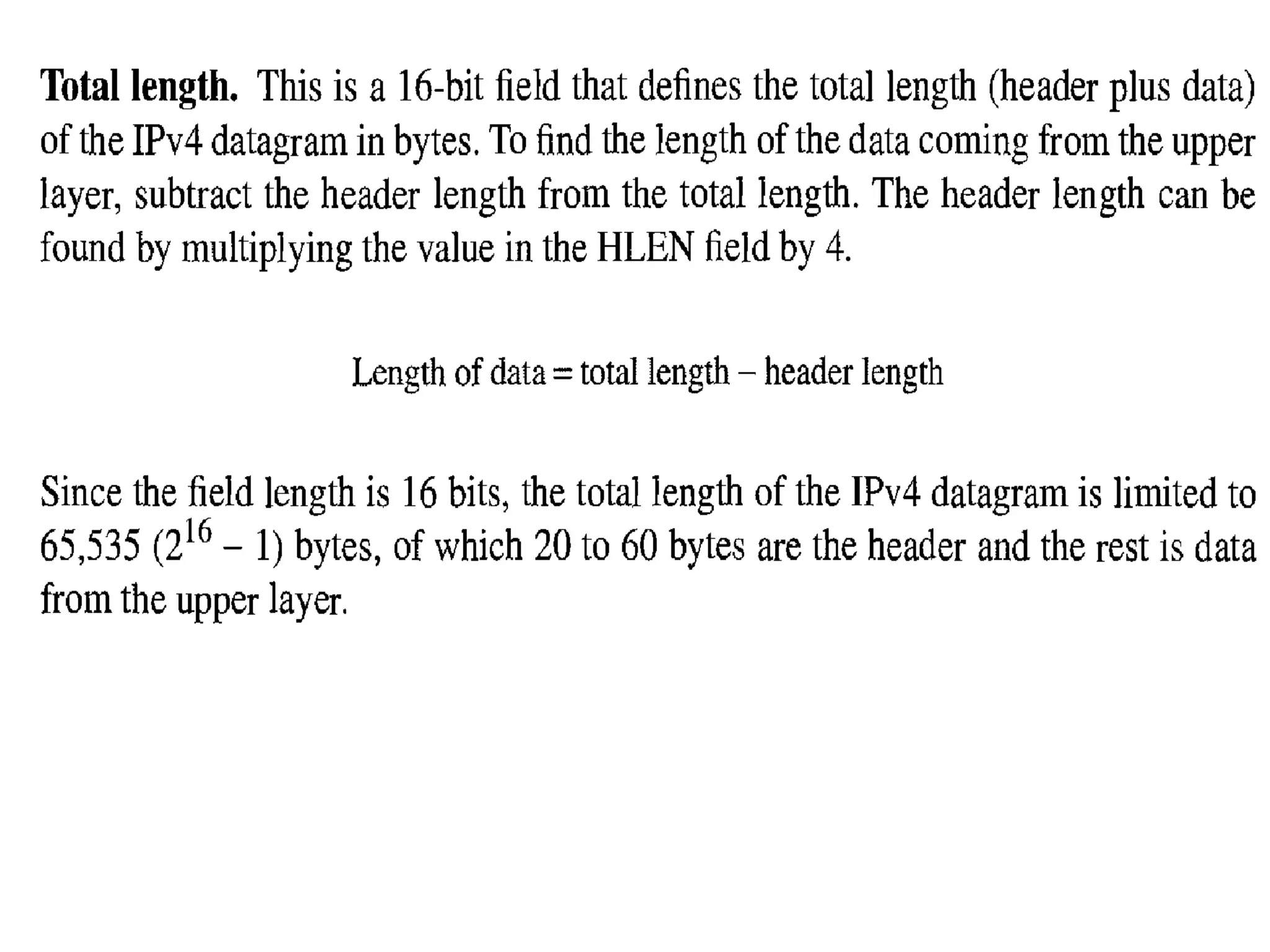
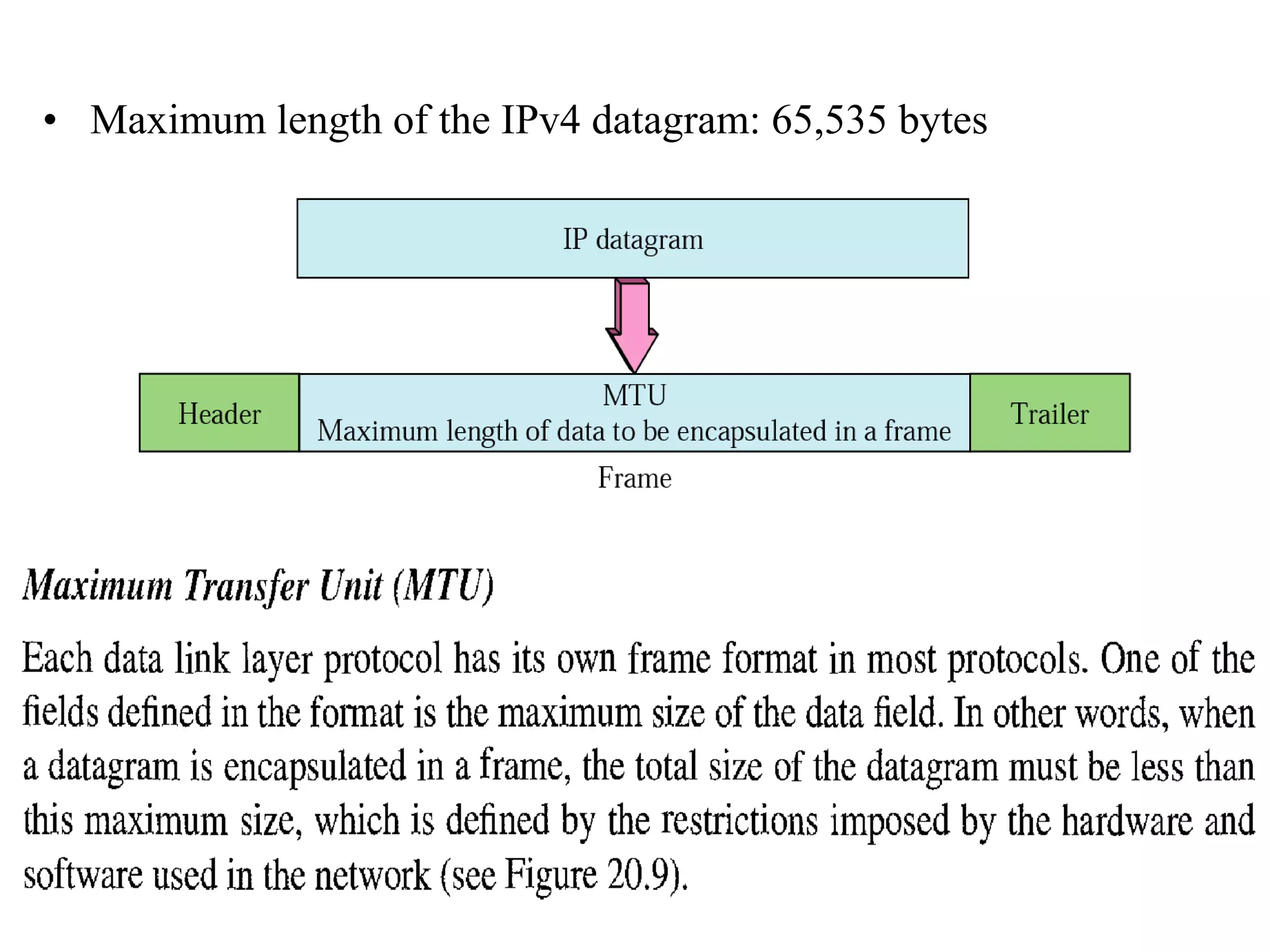
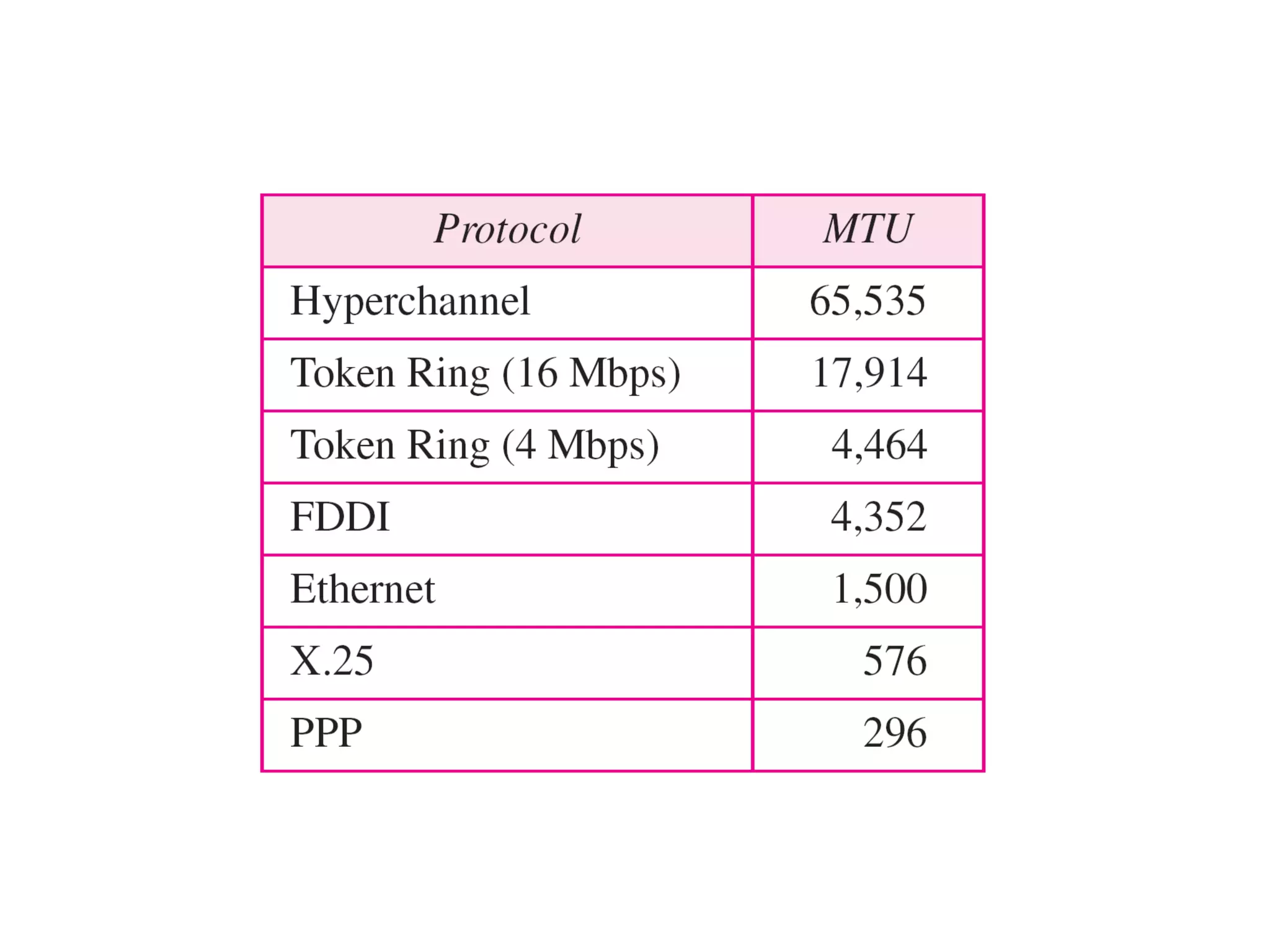
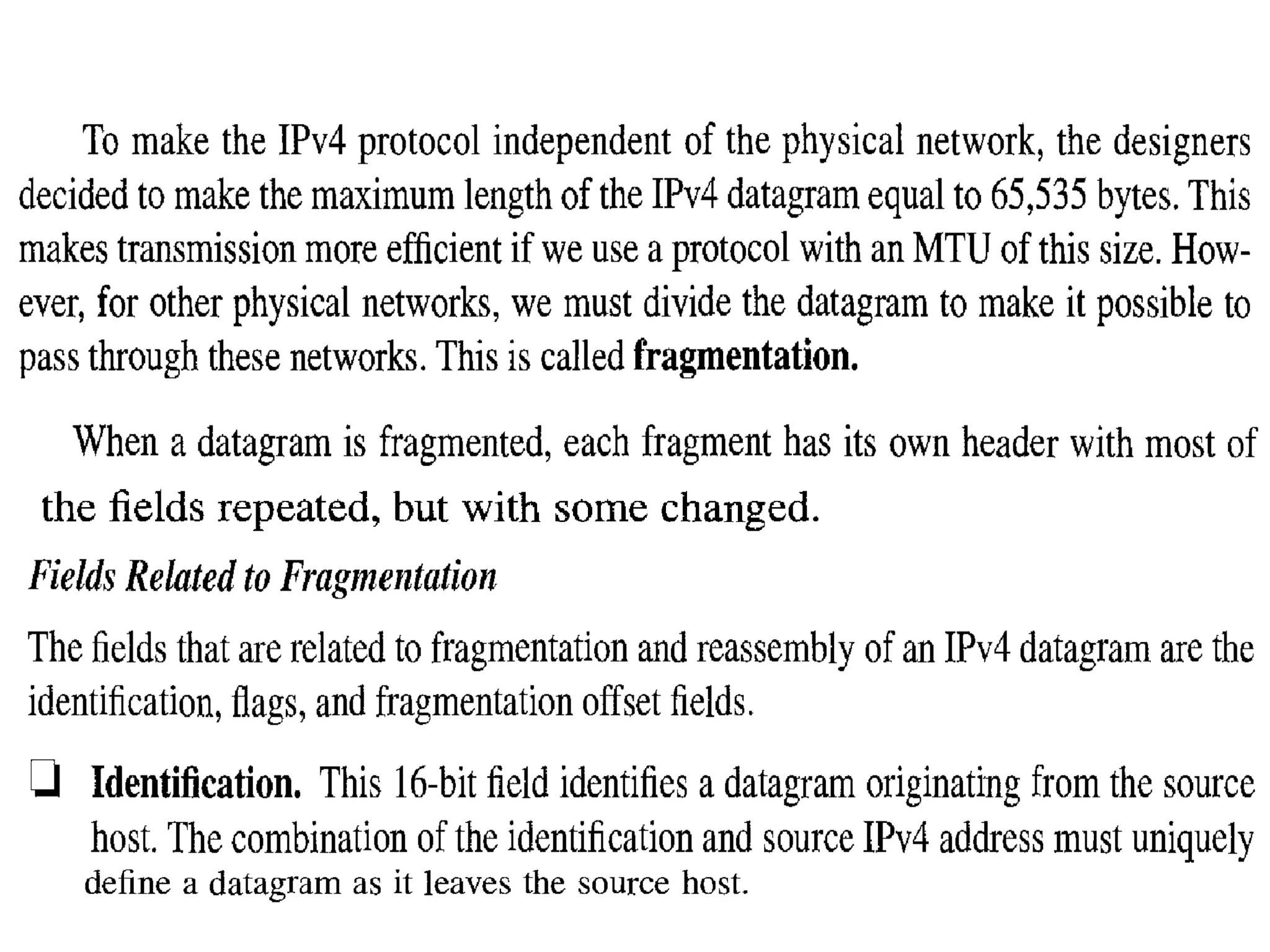
• Maximum length of the IPv4 datagram: 65,535 bytes
Field related to fragmentation 
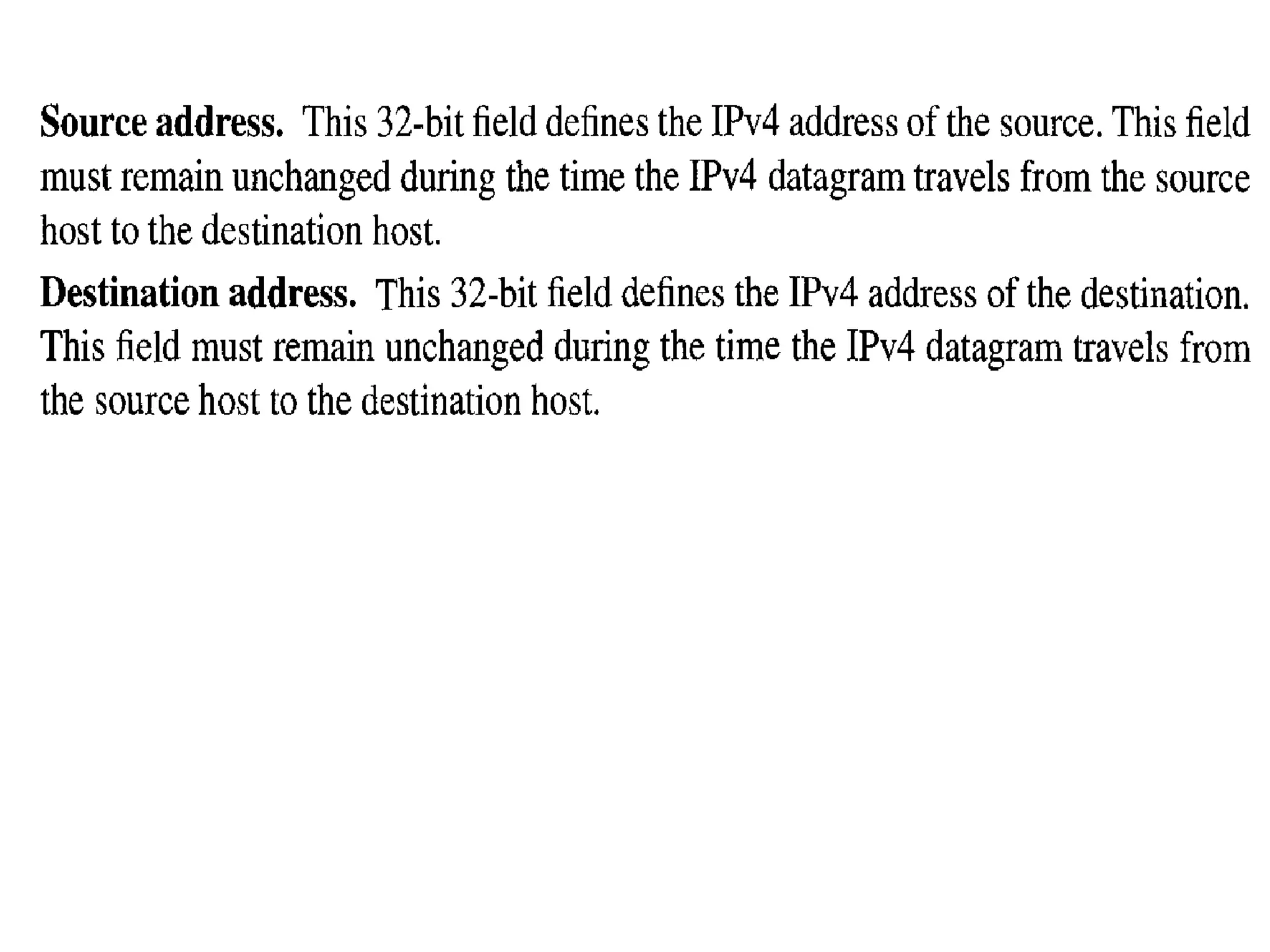
• Identification: identifies a datagram originating form the source host 
• Flags: the first bit (reserved), the second bit (do not fragment bit), the third bit 
(more fragment bit, 0 means this is the last or only fragment) 
• Fragmentation offset: (13 bits cannot represent a sequence of bytes greater than 
8191
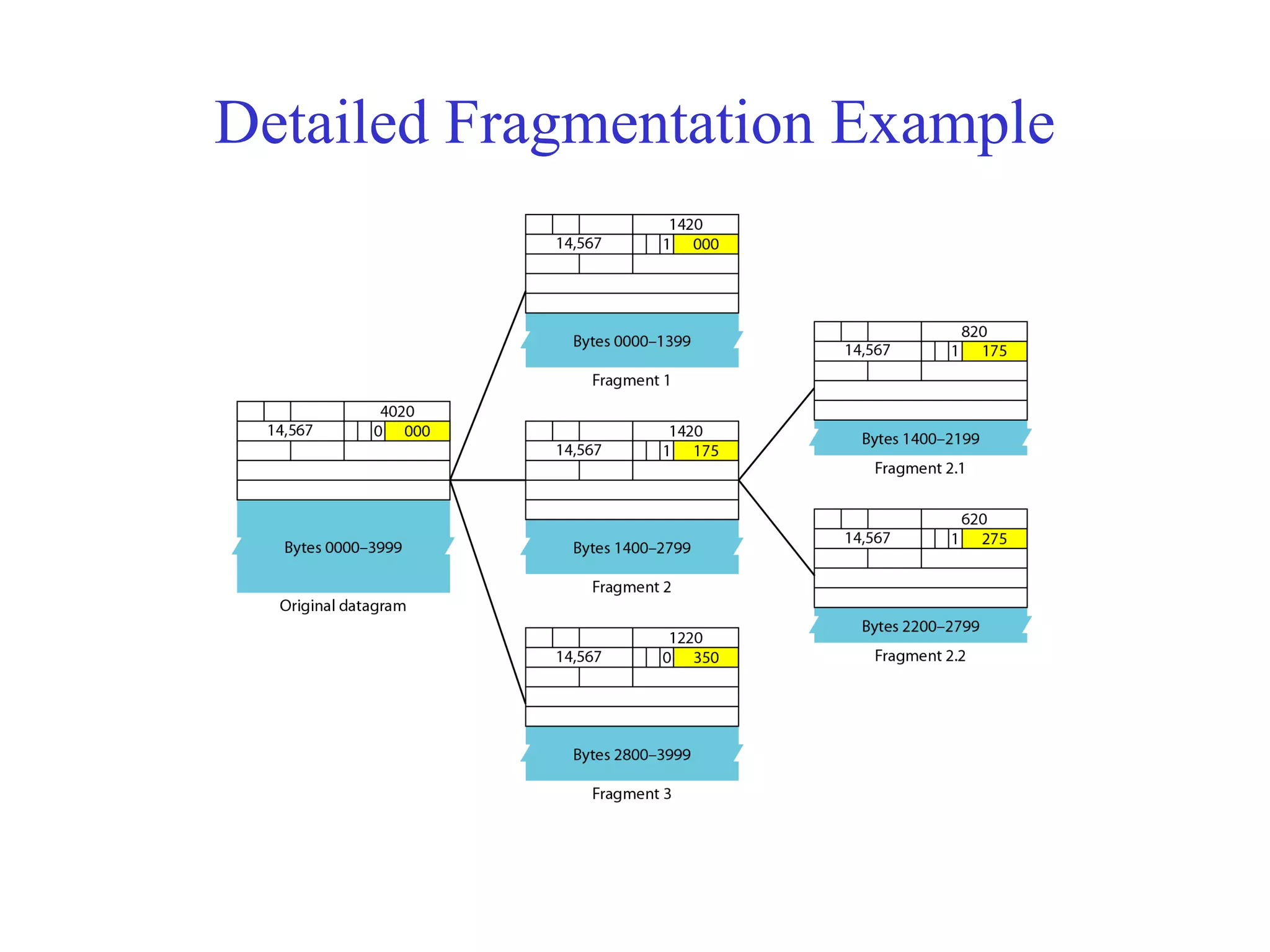
Detailed Fragmentation Example
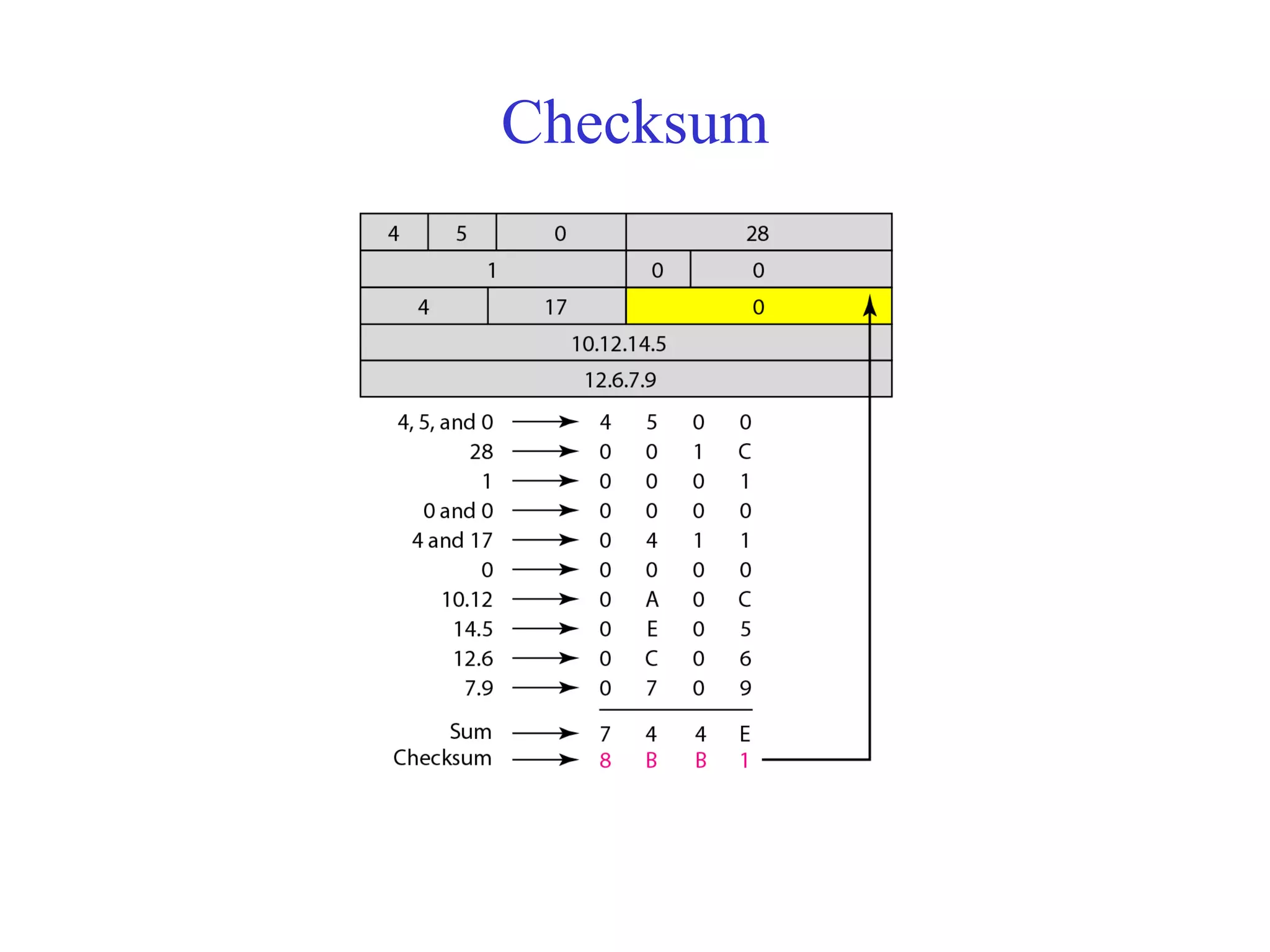
Checksum
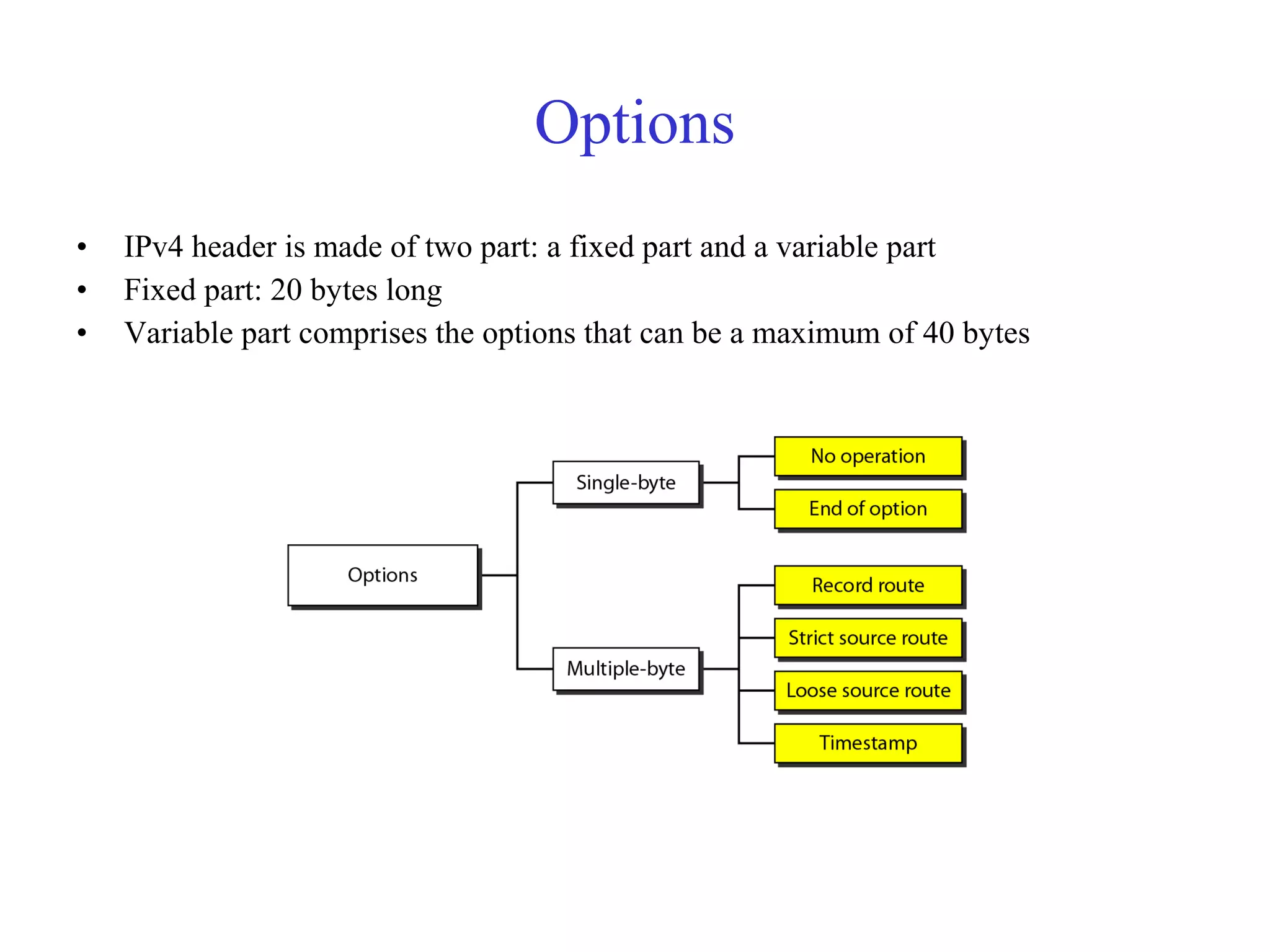
Options 
• IPv4 header is made of two part: a fixed part and a variable part 
• Fixed part: 20 bytes long 
• Variable part comprises the options that can be a maximum of 40 bytes
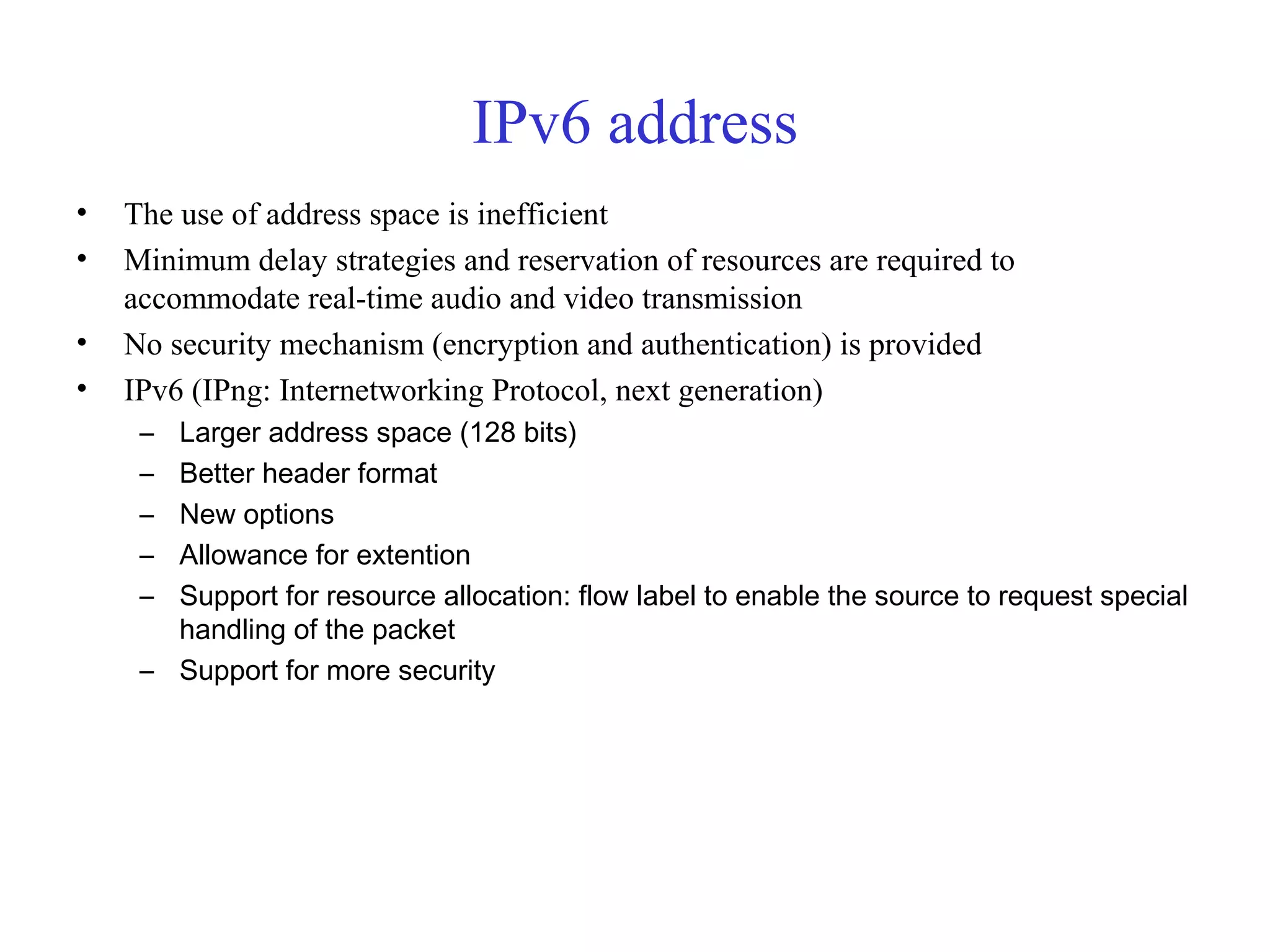
IPv6 address 
• The use of address space is inefficient 
• Minimum delay strategies and reservation of resources are required to 
accommodate real-time audio and video transmission 
• No security mechanism (encryption and authentication) is provided 
• IPv6 (IPng: Internetworking Protocol, next generation) 
– Larger address space (128 bits) 
– Better header format 
– New options 
– Allowance for extention 
– Support for resource allocation: flow label to enable the source to request special 
handling of the packet 
– Support for more security
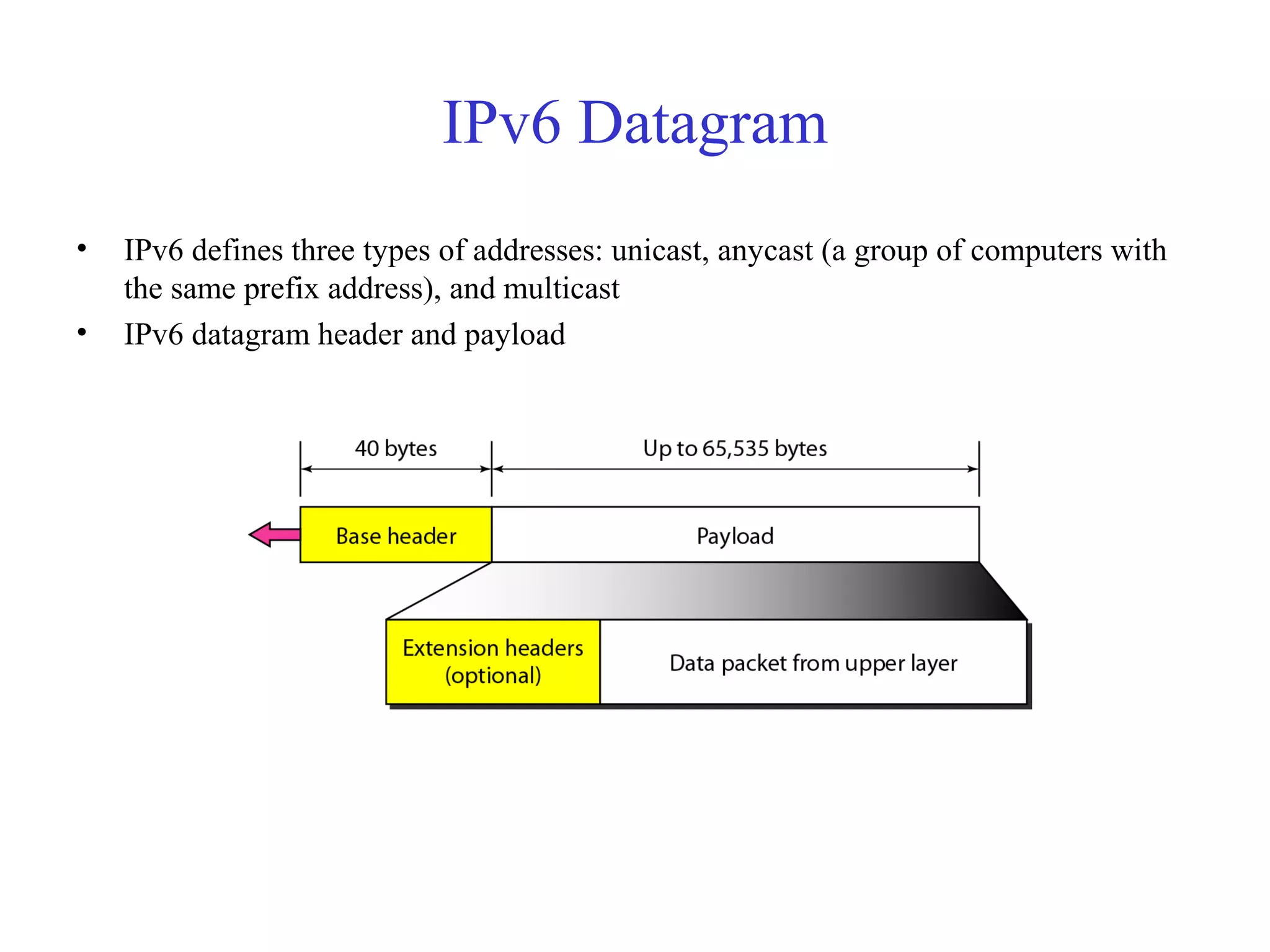
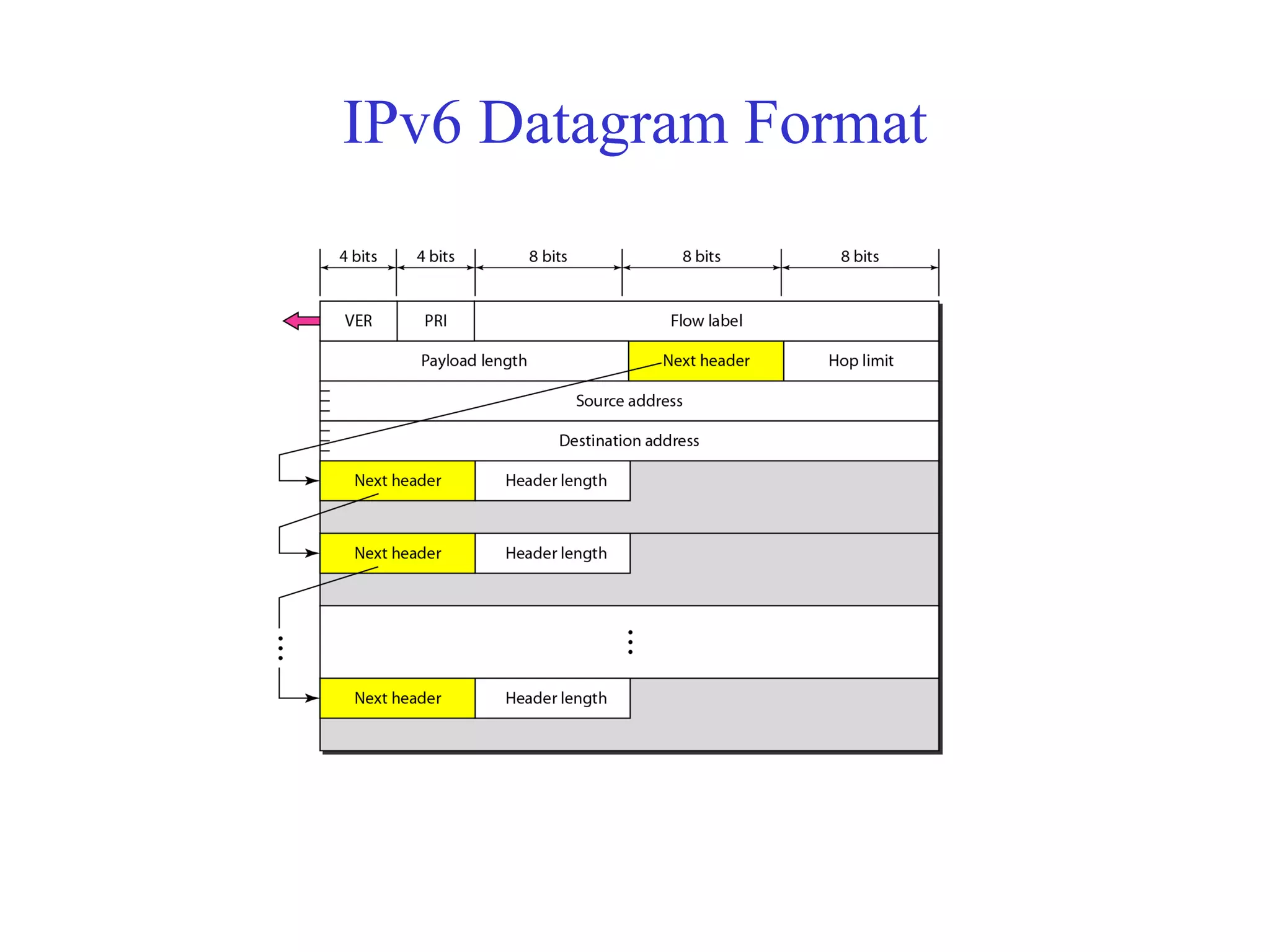
IPv6 Datagram 
• IPv6 defines three types of addresses: unicast, anycast (a group of computers with 
the same prefix address), and multicast 
• IPv6 datagram header and payload
IPv6 Datagram Format
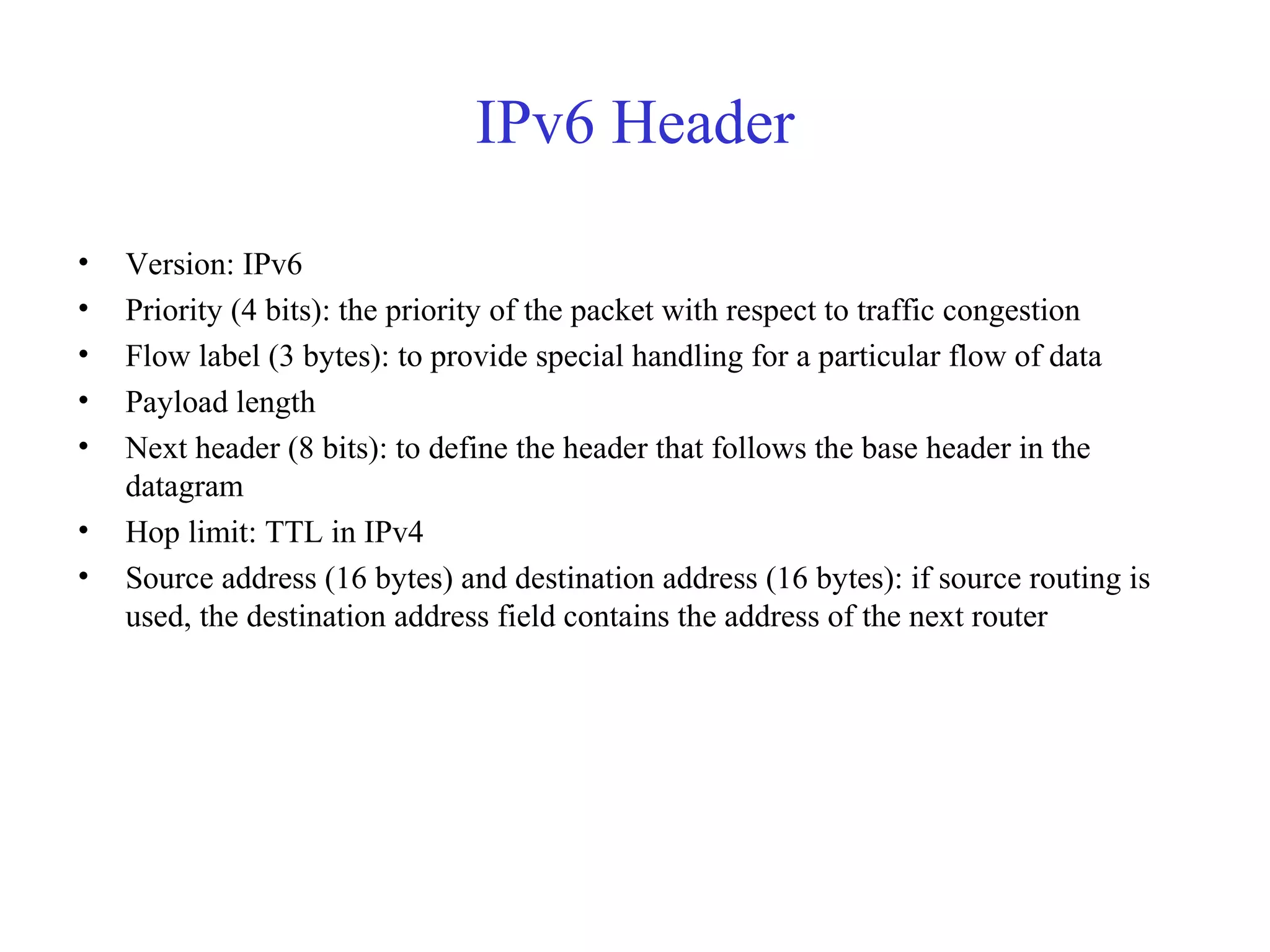
IPv6 Header 
• Version: IPv6 
• Priority (4 bits): the priority of the packet with respect to traffic congestion 
• Flow label (3 bytes): to provide special handling for a particular flow of data 
• Payload length 
• Next header (8 bits): to define the header that follows the base header in the 
datagram 
• Hop limit: TTL in IPv4 
• Source address (16 bytes) and destination address (16 bytes): if source routing is 
used, the destination address field contains the address of the next router
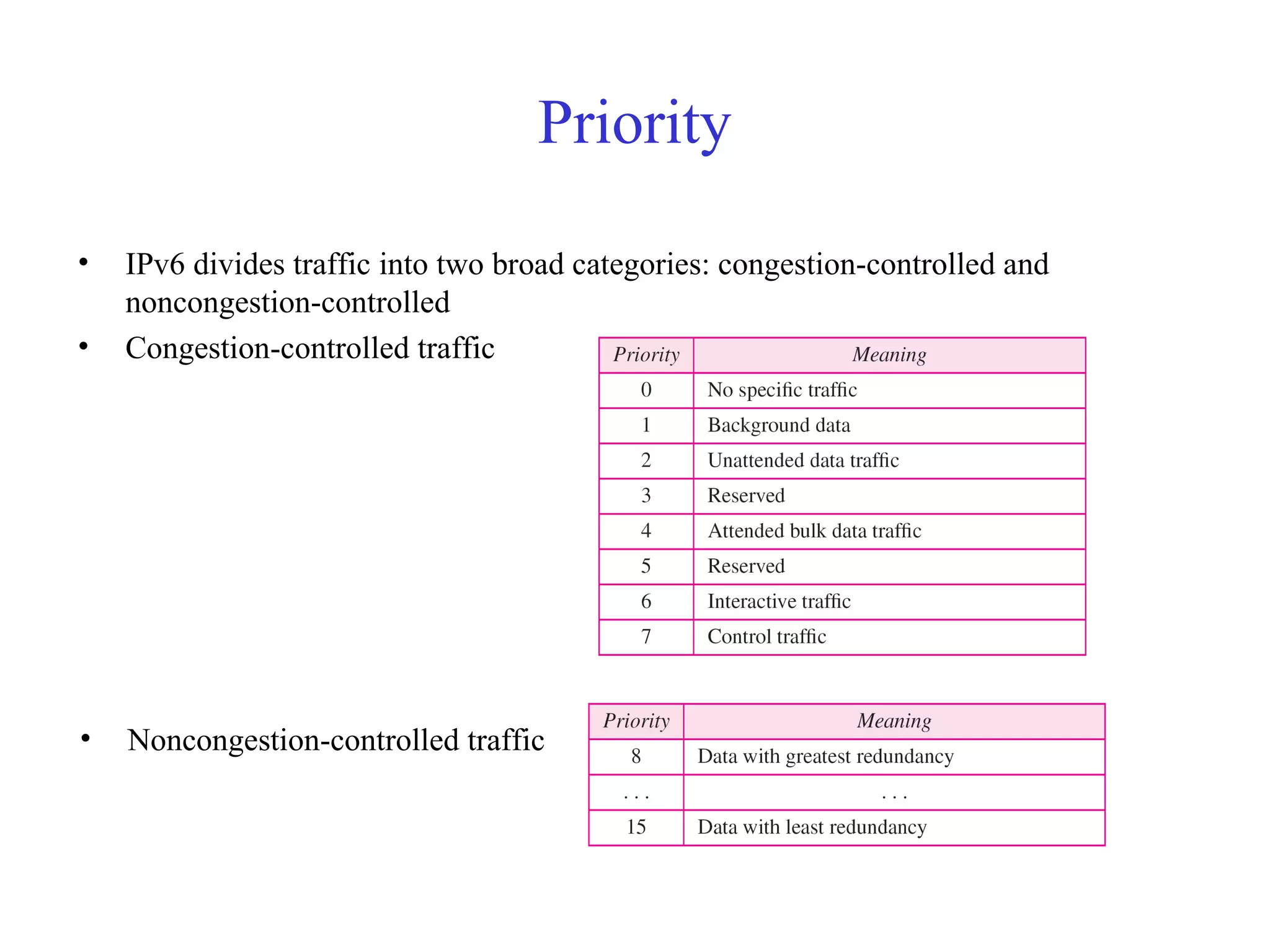
Priority 
• IPv6 divides traffic into two broad categories: congestion-controlled and 
noncongestion-controlled 
• Congestion-controlled traffic 
• Noncongestion-controlled traffic
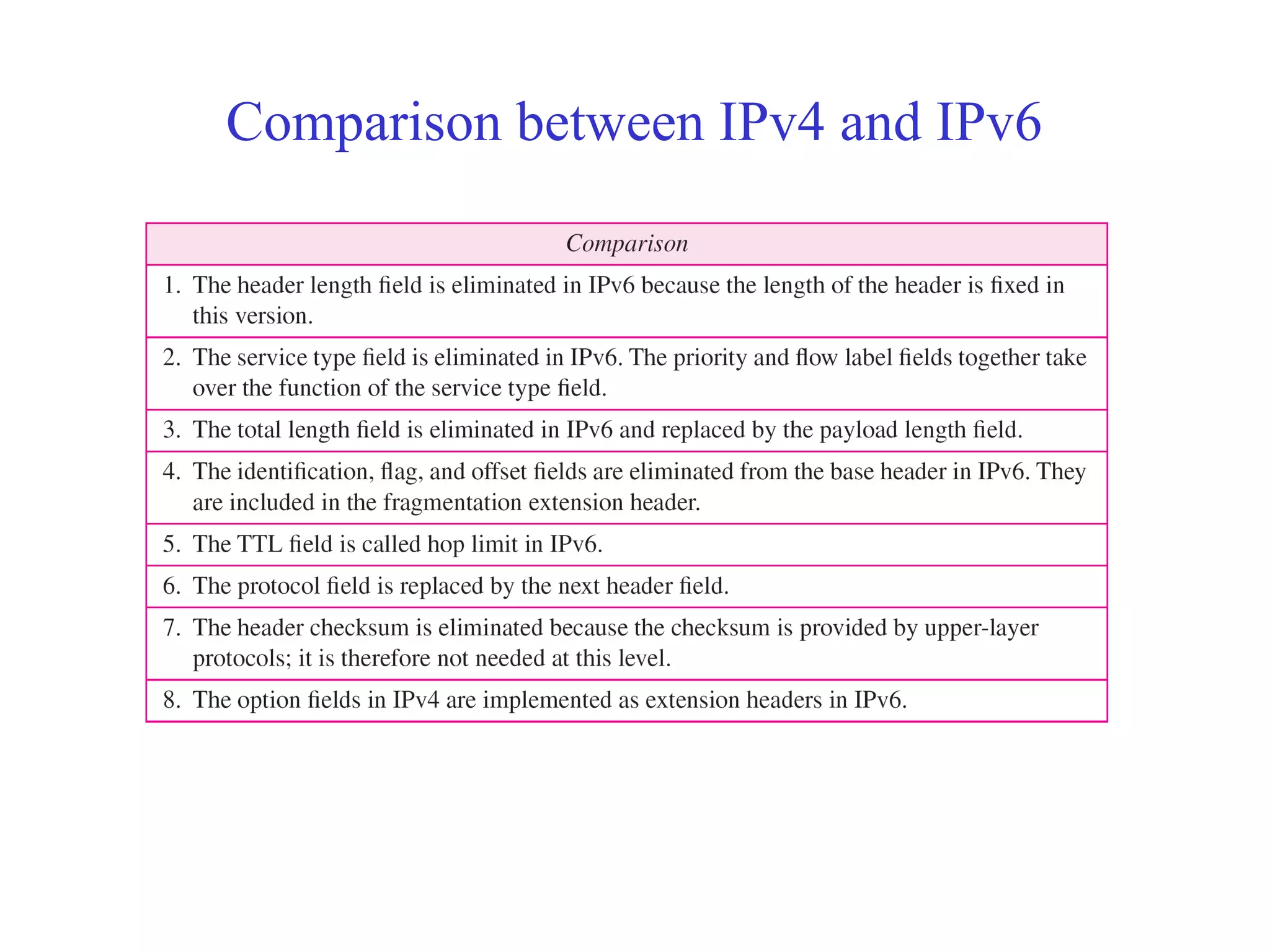
Comparison between IPv4 and IPv6
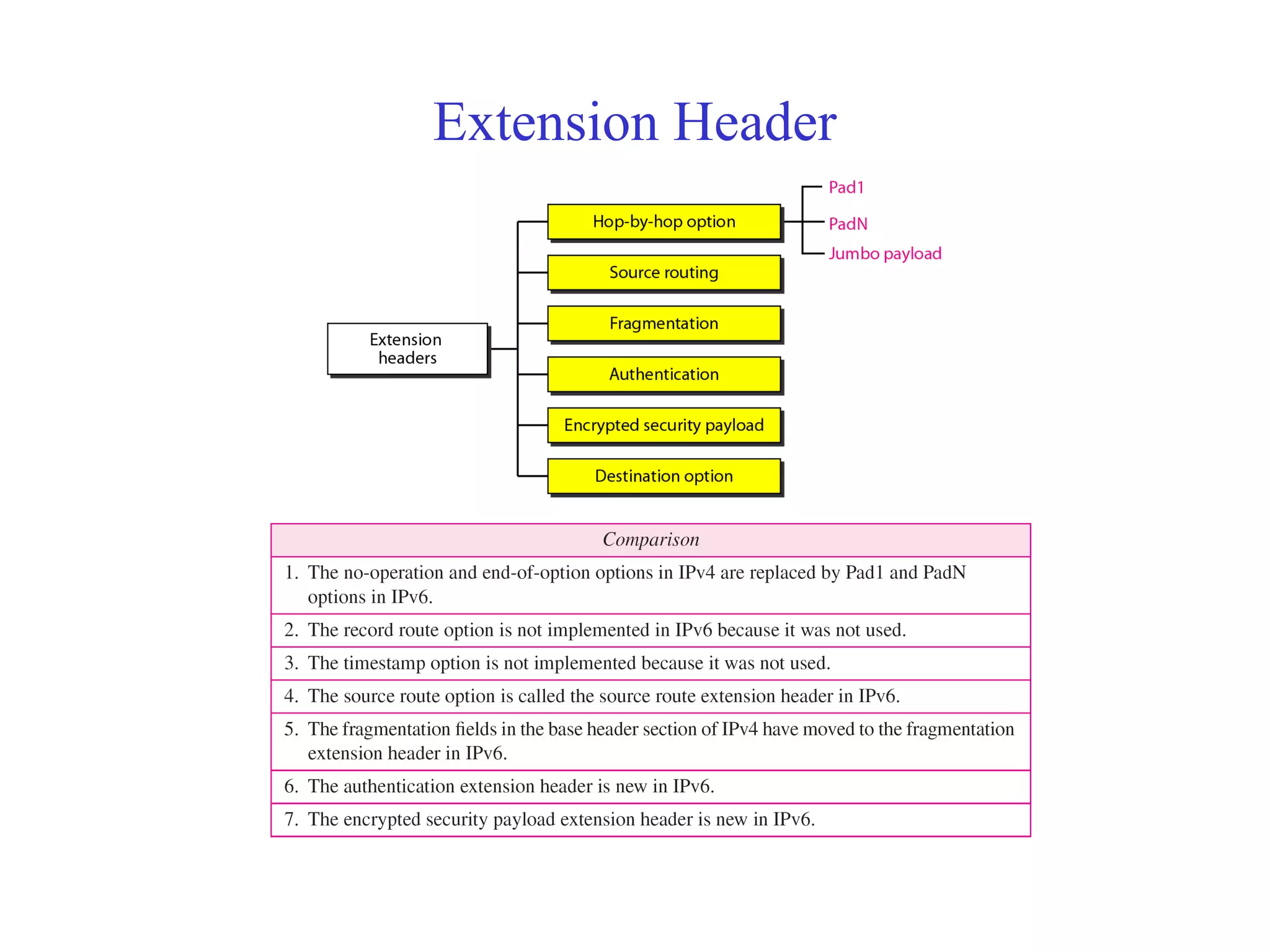
Extension Header
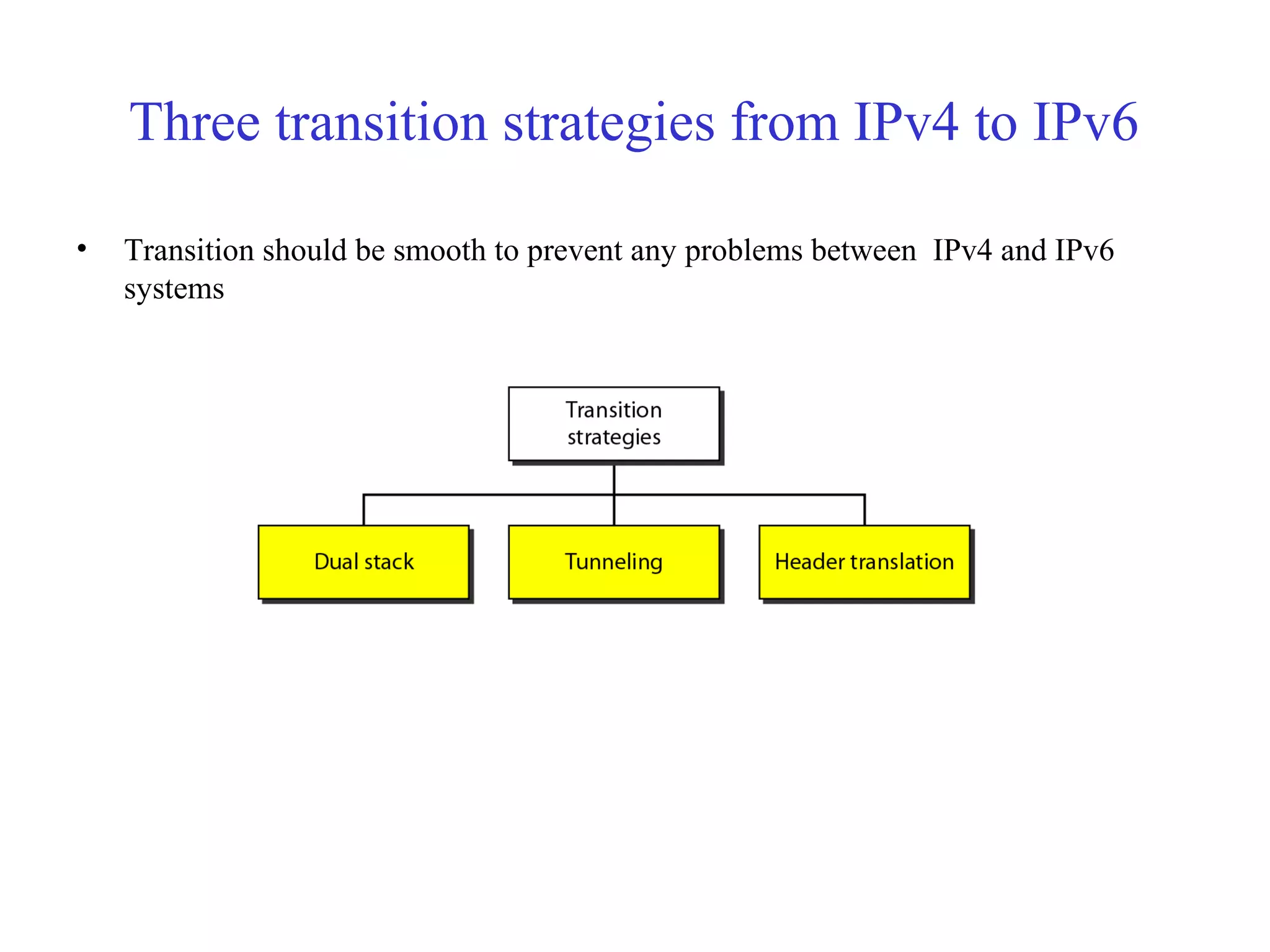
Three transition strategies from IPv4 to IPv6 
• Transition should be smooth to prevent any problems between IPv4 and IPv6 
systems
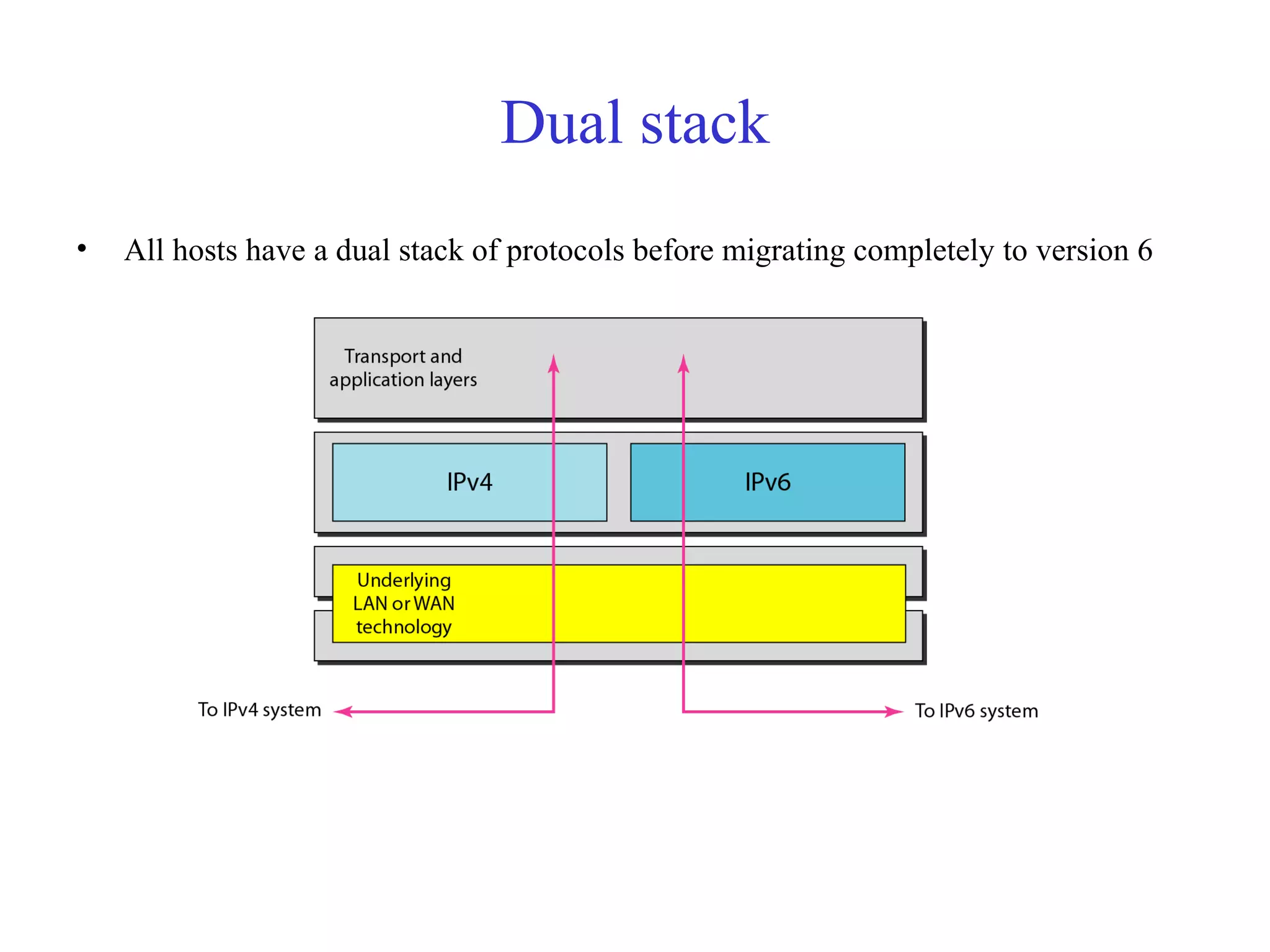
Dual stack 
• All hosts have a dual stack of protocols before migrating completely to version 6
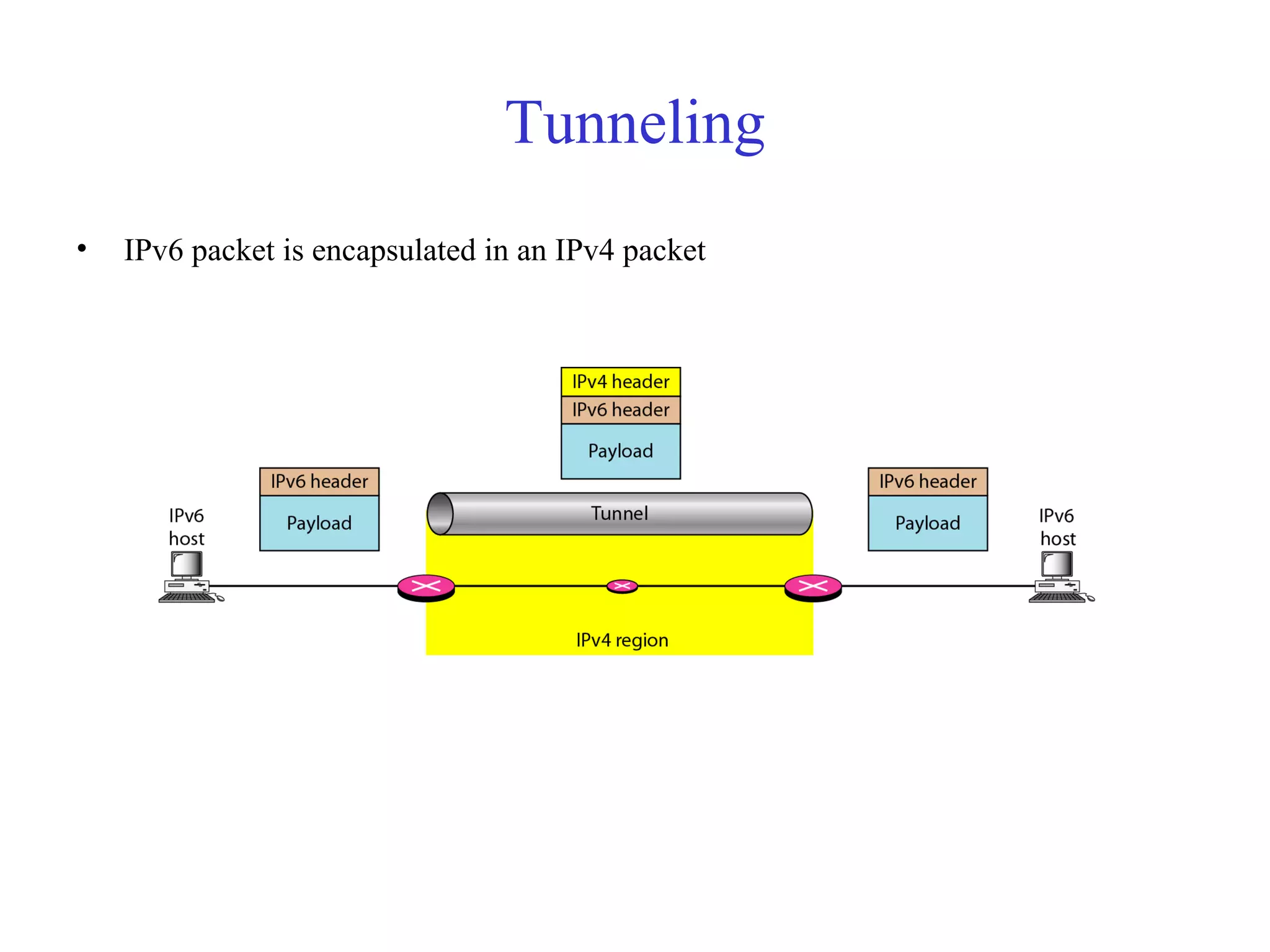
Tunneling 
• IPv6 packet is encapsulated in an IPv4 packet
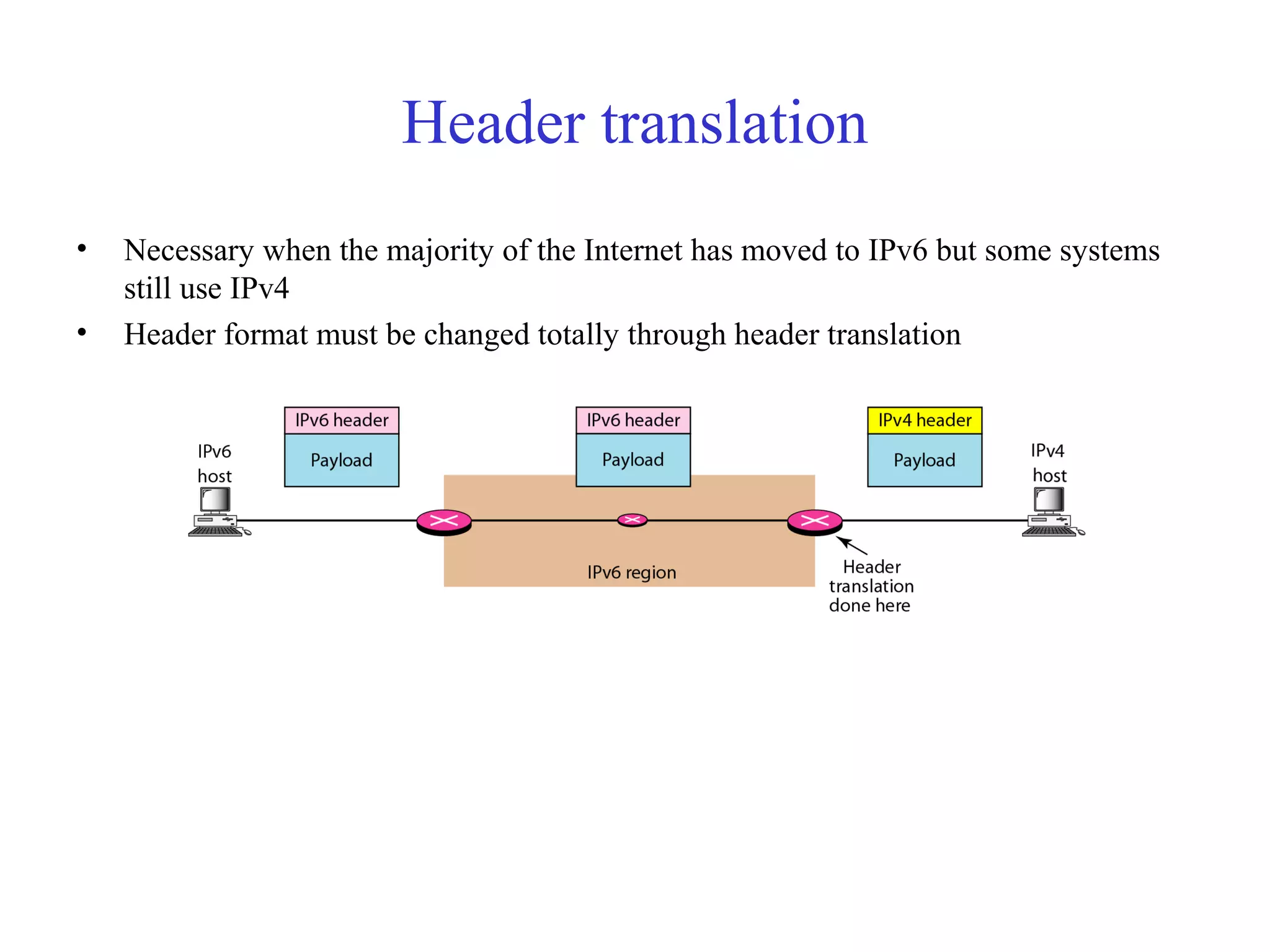
Header translation 
• Necessary when the majority of the Internet has moved to IPv6 but some systems 
still use IPv4 
• Header format must be changed totally through header translation

I pv4 format

  • 1.
    Internet Protocol (IP) • Switching at the network layer in the Internet uses the datagram approach • Communication at the network layer in the Internet is connectionless • Position of IPv4 in TCP/IP protocol suite
  • 3.
  • 7.
    Default TOS forApplications
  • 11.
    • Identification: usedin fragmentation • Flag : used in fragmentation • Fragmentation offset • Time to live
  • 13.
    • Protocol fieldfor higher-level protocol
  • 15.
    • Maximum lengthof the IPv4 datagram: 65,535 bytes
  • 20.
    Field related tofragmentation • Identification: identifies a datagram originating form the source host • Flags: the first bit (reserved), the second bit (do not fragment bit), the third bit (more fragment bit, 0 means this is the last or only fragment) • Fragmentation offset: (13 bits cannot represent a sequence of bytes greater than 8191
  • 21.
  • 22.
  • 23.
    Options • IPv4header is made of two part: a fixed part and a variable part • Fixed part: 20 bytes long • Variable part comprises the options that can be a maximum of 40 bytes
  • 24.
    IPv6 address •The use of address space is inefficient • Minimum delay strategies and reservation of resources are required to accommodate real-time audio and video transmission • No security mechanism (encryption and authentication) is provided • IPv6 (IPng: Internetworking Protocol, next generation) – Larger address space (128 bits) – Better header format – New options – Allowance for extention – Support for resource allocation: flow label to enable the source to request special handling of the packet – Support for more security
  • 25.
    IPv6 Datagram •IPv6 defines three types of addresses: unicast, anycast (a group of computers with the same prefix address), and multicast • IPv6 datagram header and payload
  • 26.
  • 27.
    IPv6 Header •Version: IPv6 • Priority (4 bits): the priority of the packet with respect to traffic congestion • Flow label (3 bytes): to provide special handling for a particular flow of data • Payload length • Next header (8 bits): to define the header that follows the base header in the datagram • Hop limit: TTL in IPv4 • Source address (16 bytes) and destination address (16 bytes): if source routing is used, the destination address field contains the address of the next router
  • 28.
    Priority • IPv6divides traffic into two broad categories: congestion-controlled and noncongestion-controlled • Congestion-controlled traffic • Noncongestion-controlled traffic
  • 29.
  • 30.
  • 31.
    Three transition strategiesfrom IPv4 to IPv6 • Transition should be smooth to prevent any problems between IPv4 and IPv6 systems
  • 32.
    Dual stack •All hosts have a dual stack of protocols before migrating completely to version 6
  • 33.
    Tunneling • IPv6packet is encapsulated in an IPv4 packet
  • 34.
    Header translation •Necessary when the majority of the Internet has moved to IPv6 but some systems still use IPv4 • Header format must be changed totally through header translation