General Characteristics
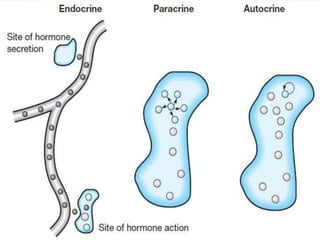
• Cell communication using hormones
• Endocrine glands regulate body metabolism
• Endocrine glands
o Lack ducts
o Secrete products into the interstitial fluid
Function
• Maintain Internal Homeostasis
• Support Cell Growth
• Coordinate Development
• Coordinate Reproduction
• Facilitate Responses to External Stimuli
Elements
• Sender = Sending Cell
• Signal = Hormone
• Nondestructive Medium = Serum & Hormone
Binders
• Selective Receiver = Receptor Protein
• Transducer = Transducer Proteins & Messengers
• Amplifier = Transducer/Effector Enzymes
• Effector = Effector Proteins
• Response = Cellular Response
Hormones
Chemicals that are broadcast
throughout the body which induce
physiological changes in specific
target cells.
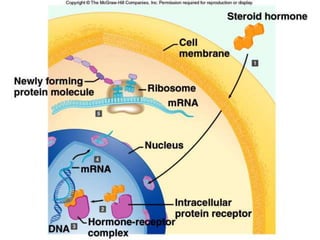
Types of Receptors
Endocrine Glands
• Releasing hormones from the hypothalamus control
the secretions of the anterior pituitary.
• The releasing hormones are carried in the
bloodstream directly to the anterior pituitary by
hypophyseal portal veins.
16
Mechanisms of
hormone release
(a) Humoral: in response to changing
levels of ions or nutrients in the blood
(b) Neural: stimulation by nerves
(c) Hormonal: stimulation received from
other hormones
Thyroid Gland
• Produces two groups
of hormones
o Thyroid hormones
Thyroxine (T4) and
triiodothyronine (T3) -
Increase metabolic rate
and body heat production
o Calcitonin
o increases bone matrix
formation and Ca2+
secretion from kidneys
• reduces blood Ca2+
levels
Some Effects of Thyroid Hormone
• Increases the basal metabolic rate
o The rate at which the body uses oxygen to
transform nutrients (carbohydrates, fats and
proteins) into energy
• Affects many target cells throughout the
body; some effects are
o Protein synthesis
o Bone growth
o Neuronal maturation
o Cell differentiation
The Effects of Calcitonin
• Secreted from thyroid parafollicular (C) cells when
blood calcium levels are high
• Calcitonin lowers Ca++ by slowing the calcium-
releasing activity of osteoclasts in bone and
increasing calcium secretion by the kidney
• Acts mostly during childhood
22
The Parathyroid
Glands
• Most people have four
• On posterior surface of thyroid
gland
(sometimes embedded)
23
Parathyroids
(two types of cells)
• Rare chief cells
• Abundant oxyphil cells
• Chief cells produce PTH
o Parathyroid hormone, or
parathormone
o A small protein hormone
24
Function of PTH
• Increases blood Ca++ (calcium)
concentration when it gets too low
• Mechanism of raising blood calcium
1. Stimulates osteoclasts to release more Ca++
from bone
2. Decreases secretion of Ca++ by kidney
3. Activates Vitamin D, which stimulates the
uptake of Ca++ from the intestine
Adrenal Gland
The Pineal Gland
• At the end of a short stalk on the roof of the
diencephalon
• Pinealocytes with dense calcium particles
• Can be seen on x-ray (because of Ca++)
• Melatonin helps regulate the circadium rhythm
o The biological clock of the diurnal (night/day) rhythm
o Complicated feedback via retina’s visual input
The Pancreas
Exocrine and endocrine cells
• Acinar cells (forming most of the pancreas)
o Exocrine function
o Secrete digestive enzymes
• Islet cells (of Langerhans)
o Endocrine function
Different Types of Insulin Duration
The Gonads (testes and ovaries)
main source of the steroid sex hormones
• Testes
o Interstitial cells secrete androgens
o Primary androgen is testosterone
• Maintains secondary sex characteristics
• Helps promote sperm formation
• Ovaries
o Androgens secreted by thecal folliculi
• Directly converted to estrogens by follicular granulosa cells
o Granulosa cells also produce progesterone
o Corpus luteum also secretes estrogen and
progesterone
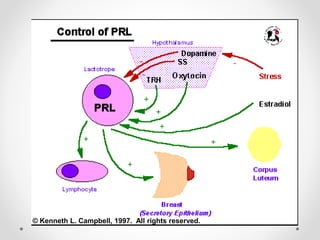
© Kenneth L. Campbell, 1997. All rights reserved.
Endocrine cells in various organs
• The heart: atrial natriuretic peptide (ANP)
o Stimulates kidney to secrete more sodium
o Thereby decreases excess blood volume, high BP and high blood
sodium concentration
• GI tract & derivatives: Diffuse neuroendocrine system (DNES)
• The placenta secretes steroid and protein hormones
o Estrogens, progesterone
o CRH
o HCG
• The kidneys
o Juxtaglomerular cells secrete renin
• Renin indirectly signals adrenal cortex to secrete aldosterone
o Erythropoietin: signals bone marrow to increase RBC production
• The skin
o Modified cholesterol with uv exposure becomes Vitamin D precursor
o Vitamin D necessary for calcium metabolism: signals intestine to
absorb CA++

Endocrinology Physiology

  • 2.
    General Characteristics • Cellcommunication using hormones • Endocrine glands regulate body metabolism • Endocrine glands o Lack ducts o Secrete products into the interstitial fluid
  • 3.
    Function • Maintain InternalHomeostasis • Support Cell Growth • Coordinate Development • Coordinate Reproduction • Facilitate Responses to External Stimuli
  • 4.
    Elements • Sender =Sending Cell • Signal = Hormone • Nondestructive Medium = Serum & Hormone Binders • Selective Receiver = Receptor Protein • Transducer = Transducer Proteins & Messengers • Amplifier = Transducer/Effector Enzymes • Effector = Effector Proteins • Response = Cellular Response
  • 5.
    Hormones Chemicals that arebroadcast throughout the body which induce physiological changes in specific target cells.
  • 8.
  • 12.
  • 14.
    • Releasing hormonesfrom the hypothalamus control the secretions of the anterior pituitary. • The releasing hormones are carried in the bloodstream directly to the anterior pituitary by hypophyseal portal veins.
  • 16.
    16 Mechanisms of hormone release (a)Humoral: in response to changing levels of ions or nutrients in the blood (b) Neural: stimulation by nerves (c) Hormonal: stimulation received from other hormones
  • 17.
    Thyroid Gland • Producestwo groups of hormones o Thyroid hormones Thyroxine (T4) and triiodothyronine (T3) - Increase metabolic rate and body heat production o Calcitonin o increases bone matrix formation and Ca2+ secretion from kidneys • reduces blood Ca2+ levels
  • 19.
    Some Effects ofThyroid Hormone • Increases the basal metabolic rate o The rate at which the body uses oxygen to transform nutrients (carbohydrates, fats and proteins) into energy • Affects many target cells throughout the body; some effects are o Protein synthesis o Bone growth o Neuronal maturation o Cell differentiation
  • 20.
    The Effects ofCalcitonin • Secreted from thyroid parafollicular (C) cells when blood calcium levels are high • Calcitonin lowers Ca++ by slowing the calcium- releasing activity of osteoclasts in bone and increasing calcium secretion by the kidney • Acts mostly during childhood
  • 22.
    22 The Parathyroid Glands • Mostpeople have four • On posterior surface of thyroid gland (sometimes embedded)
  • 23.
    23 Parathyroids (two types ofcells) • Rare chief cells • Abundant oxyphil cells • Chief cells produce PTH o Parathyroid hormone, or parathormone o A small protein hormone
  • 24.
    24 Function of PTH •Increases blood Ca++ (calcium) concentration when it gets too low • Mechanism of raising blood calcium 1. Stimulates osteoclasts to release more Ca++ from bone 2. Decreases secretion of Ca++ by kidney 3. Activates Vitamin D, which stimulates the uptake of Ca++ from the intestine
  • 25.
  • 28.
    The Pineal Gland •At the end of a short stalk on the roof of the diencephalon • Pinealocytes with dense calcium particles • Can be seen on x-ray (because of Ca++) • Melatonin helps regulate the circadium rhythm o The biological clock of the diurnal (night/day) rhythm o Complicated feedback via retina’s visual input
  • 29.
    The Pancreas Exocrine andendocrine cells • Acinar cells (forming most of the pancreas) o Exocrine function o Secrete digestive enzymes • Islet cells (of Langerhans) o Endocrine function
  • 33.
    Different Types ofInsulin Duration
  • 36.
    The Gonads (testesand ovaries) main source of the steroid sex hormones • Testes o Interstitial cells secrete androgens o Primary androgen is testosterone • Maintains secondary sex characteristics • Helps promote sperm formation • Ovaries o Androgens secreted by thecal folliculi • Directly converted to estrogens by follicular granulosa cells o Granulosa cells also produce progesterone o Corpus luteum also secretes estrogen and progesterone
  • 39.
    © Kenneth L.Campbell, 1997. All rights reserved.
  • 40.
    Endocrine cells invarious organs • The heart: atrial natriuretic peptide (ANP) o Stimulates kidney to secrete more sodium o Thereby decreases excess blood volume, high BP and high blood sodium concentration • GI tract & derivatives: Diffuse neuroendocrine system (DNES) • The placenta secretes steroid and protein hormones o Estrogens, progesterone o CRH o HCG • The kidneys o Juxtaglomerular cells secrete renin • Renin indirectly signals adrenal cortex to secrete aldosterone o Erythropoietin: signals bone marrow to increase RBC production • The skin o Modified cholesterol with uv exposure becomes Vitamin D precursor o Vitamin D necessary for calcium metabolism: signals intestine to absorb CA++