MULTINODULAR GOITRE
ANAKHA RAJENDRAN
23
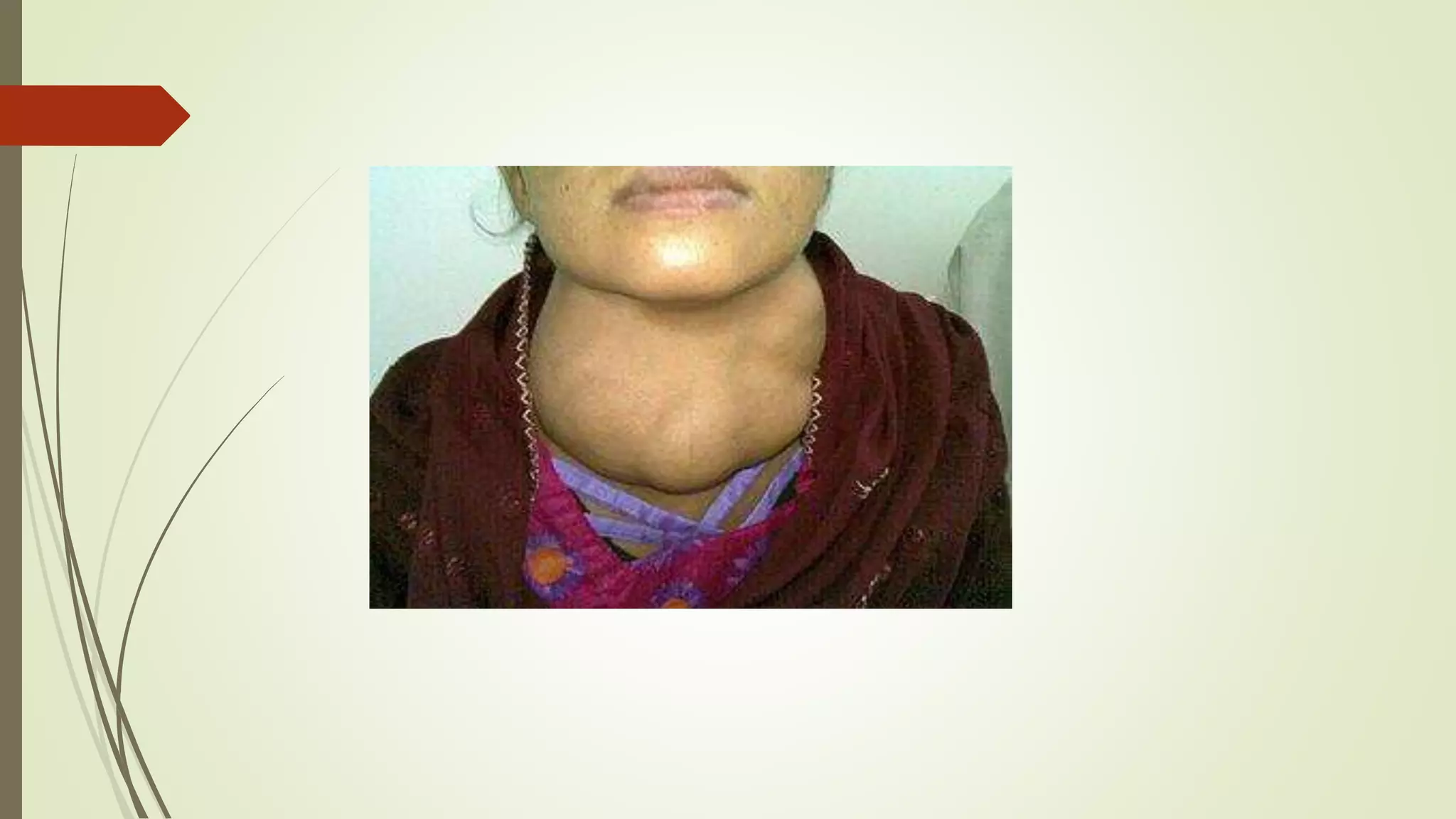
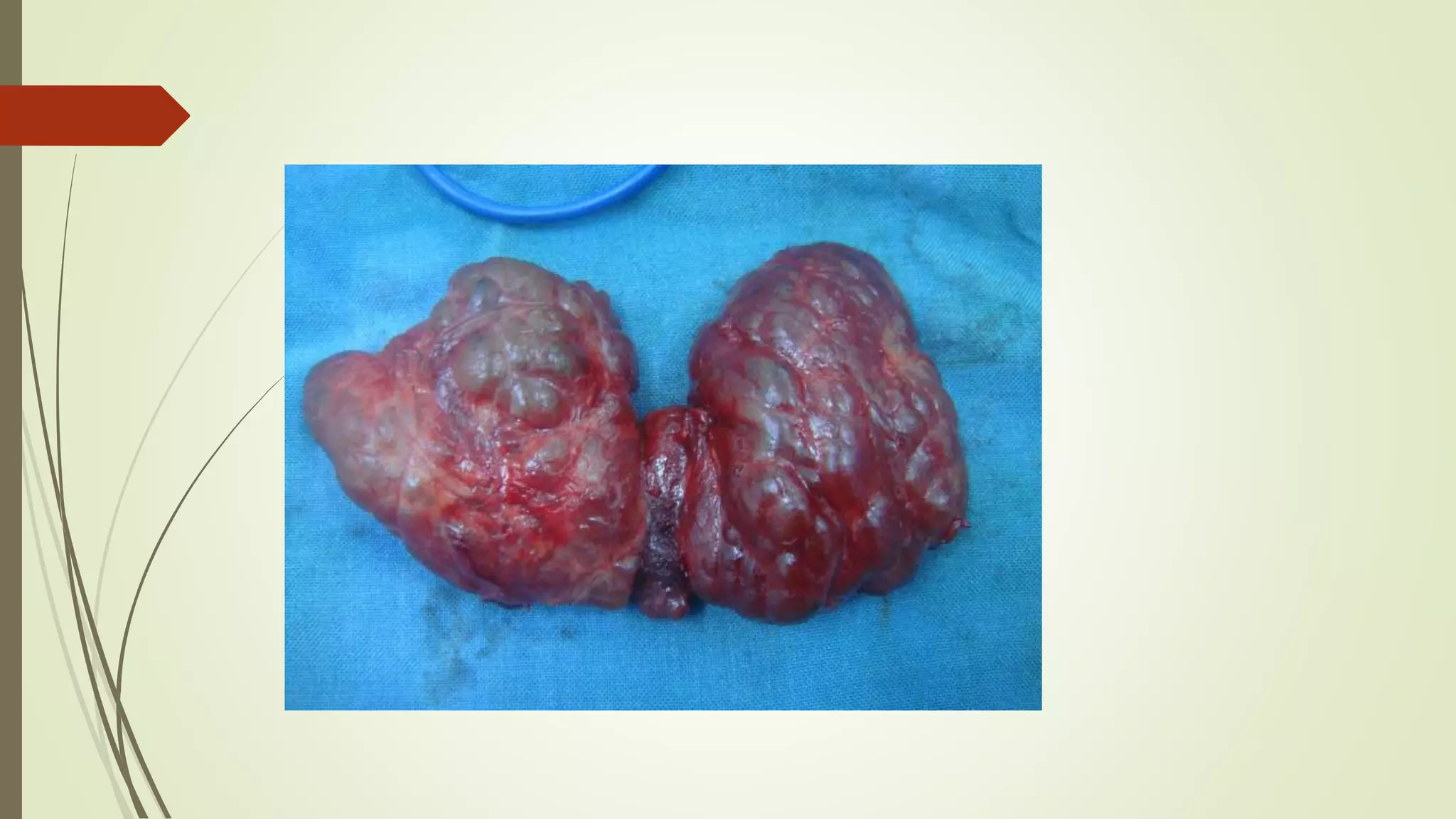
 MNG is a discordant growth with functionally and structurally altered thyroid
follicles presenting as multiple nodules in thyroid.
 It maybe due to fluctuation in TSH level; other causes include iodine deficiency,
goitrogens, hereditary, dyshormonogenesis.
STAGES OF MNG FORMATION
 Stage of hyperplasia and hypertrophy
 Stage of fluctuation in TSH
 Stage of formation of nodules.inactive
PATHOGENESIS
 Persistent TSH stimulation
 Diffuse hyperplasia of gland ..all active lobules and uniform iodine intake
 When there is Fluctuation of TSH level
 Mixed areas of active and inactive lobules develop due to Increased sensitivity of
follicular cells to TSH
 Active lobules become more vascular and hyperplastic
 Haemorrhages causes central necrosis leaving a rim of active follicles
 Necrotic lobules coalesce .Nodule formation filled with colloid
 Internodular tissue is active
 Many nodules formed -> MNG
C/F
 More common in middle age females
 Slowly progressive disease
 Multiple nodules of different sizes
 Firm, nodular, non tender, moves with deglutition
 Recent increase in size signifies malignant transformation or haemorrhage.
 Positive Kocher’s test is due to compression of trachea (tracheomalacia /scabbard’s
trachea) in long standing MNG.
 Nodule when calcified becomes harder; necrosis softens the nodule.
 Carotid infiltration
 Pembertons Sign
COMPLICATIONS
 Secondary thyrotoxicosis(30%)
 Follicular carcinoma of thyroid(10%)
 Haemorrhage in a nodule
 Tracheal obstruction, calcification
 Cosmetic problem
INVESTIGATIONS
 T3, T4, TSH, US neck, FNAC. (Dominant)
 XRAY neck- ring calcification, position and compression of trachea
 Indirect laryngoscopy- vocal cords; occult RLN palsy
 Radioisotope iodine scan
 Routine blood investigations, serum calcium
 CT scan/ MRI – retrosternal extension
TREATMENT
 Surgery preferred – irreversible, complications, cosmetic
 Total thyroidectomy is preferred
 Subtotal thyroidectomy (8g)
 Partial thyroidectomy/ Hartley Dunhill operation
 Post operative L- thyroxine (fluctuation; recurrence)
 Prevention- 0.1-0.2mg L- thyroxine, iodine- rich diet, iodized salts,avoid
goitrogenic diet and drugs
THANK YOU

Multinodular goitre

  • 1.
  • 4.
     MNG isa discordant growth with functionally and structurally altered thyroid follicles presenting as multiple nodules in thyroid.  It maybe due to fluctuation in TSH level; other causes include iodine deficiency, goitrogens, hereditary, dyshormonogenesis.
  • 5.
    STAGES OF MNGFORMATION  Stage of hyperplasia and hypertrophy  Stage of fluctuation in TSH  Stage of formation of nodules.inactive
  • 6.
    PATHOGENESIS  Persistent TSHstimulation  Diffuse hyperplasia of gland ..all active lobules and uniform iodine intake  When there is Fluctuation of TSH level  Mixed areas of active and inactive lobules develop due to Increased sensitivity of follicular cells to TSH  Active lobules become more vascular and hyperplastic  Haemorrhages causes central necrosis leaving a rim of active follicles  Necrotic lobules coalesce .Nodule formation filled with colloid  Internodular tissue is active  Many nodules formed -> MNG
  • 7.
    C/F  More commonin middle age females  Slowly progressive disease  Multiple nodules of different sizes  Firm, nodular, non tender, moves with deglutition  Recent increase in size signifies malignant transformation or haemorrhage.  Positive Kocher’s test is due to compression of trachea (tracheomalacia /scabbard’s trachea) in long standing MNG.  Nodule when calcified becomes harder; necrosis softens the nodule.  Carotid infiltration  Pembertons Sign
  • 9.
    COMPLICATIONS  Secondary thyrotoxicosis(30%) Follicular carcinoma of thyroid(10%)  Haemorrhage in a nodule  Tracheal obstruction, calcification  Cosmetic problem
  • 10.
    INVESTIGATIONS  T3, T4,TSH, US neck, FNAC. (Dominant)  XRAY neck- ring calcification, position and compression of trachea  Indirect laryngoscopy- vocal cords; occult RLN palsy  Radioisotope iodine scan  Routine blood investigations, serum calcium  CT scan/ MRI – retrosternal extension
  • 13.
    TREATMENT  Surgery preferred– irreversible, complications, cosmetic  Total thyroidectomy is preferred  Subtotal thyroidectomy (8g)  Partial thyroidectomy/ Hartley Dunhill operation  Post operative L- thyroxine (fluctuation; recurrence)  Prevention- 0.1-0.2mg L- thyroxine, iodine- rich diet, iodized salts,avoid goitrogenic diet and drugs
  • 14.