)
Presented by
Introduction
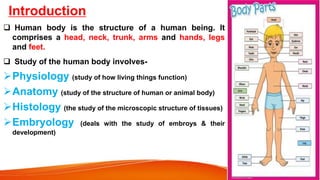
 Human body is the structure of a human being. It
comprises a head, neck, trunk, arms and hands, legs
and feet.
 Study of the human body involves-
Physiology (study of how living things function)
Anatomy (study of the structure of human or animal body)
Histology (the study of the microscopic structure of tissues)
Embryology (deals with the study of embroys & their
development)
Systems of Human Body
Nervous System
Respiratory System
Circulatory System
Digestive System
Excretory System
Muscular System
Skeletal System
Integumentary System
Immune System
Endocrine System
Reproductive System
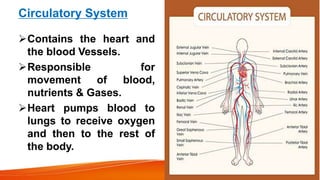
Circulatory System
Contains the heart and
the blood Vessels.
Responsible for
movement of blood,
nutrients & Gases.
Heart pumps blood to
lungs to receive oxygen
and then to the rest of
the body.
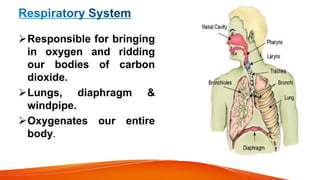
Responsible for bringing
in oxygen and ridding
our bodies of carbon
dioxide.
Lungs, diaphragm &
windpipe.
Oxygenates our entire
body.
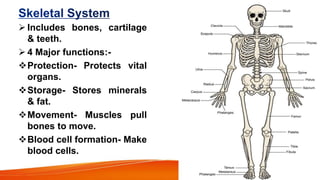
 Includes bones, cartilage
& teeth.
 4 Major functions:-
Protection- Protects vital
organs.
Storage- Stores minerals
& fat.
Movement- Muscles pull
bones to move.
Blood cell formation- Make
blood cells.
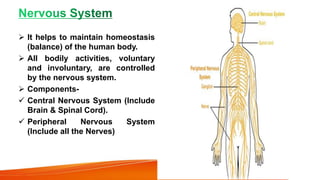
 It helps to maintain homeostasis
(balance) of the human body.
 All bodily activities, voluntary
and involuntary, are controlled
by the nervous system.
 Components-
 Central Nervous System (Include
Brain & Spinal Cord).
 Peripheral Nervous System
(Include all the Nerves)
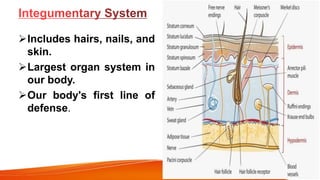
Includes hairs, nails, and
skin.
Largest organ system in
our body.
Our body's first line of
defense.
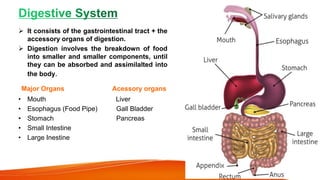
 It consists of the gastrointestinal tract + the
accessory organs of digestion.
 Digestion involves the breakdown of food
into smaller and smaller components, until
they can be absorbed and assimilalted into
the body.
Major Organs Acessory organs
• Mouth Liver
• Esophagus (Food Pipe) Gall Bladder
• Stomach Pancreas
• Small Intestine
• Large Inestine
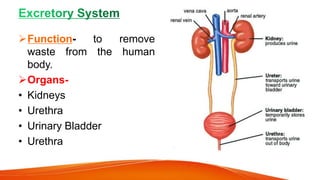
Function- to remove
waste from the human
body.
Organs-
• Kidneys
• Urethra
• Urinary Bladder
• Urethra
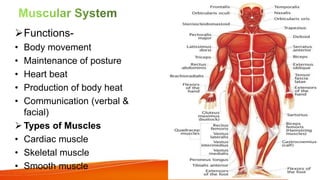
Functions-
• Body movement
• Maintenance of posture
• Heart beat
• Production of body heat
• Communication (verbal &
facial)
 Types of Muscles
• Cardiac muscle
• Skeletal muscle
• Smooth muscle
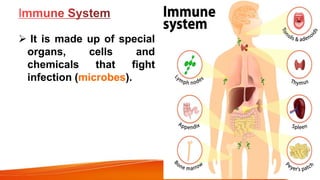
 It is made up of special
organs, cells and
chemicals that fight
infection (microbes).
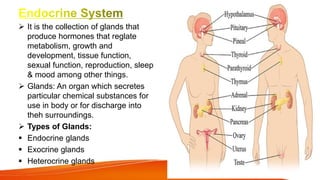
 It is the collection of glands that
produce hormones that reglate
metabolism, growth and
development, tissue function,
sexual function, reproduction, sleep
& mood among other things.
 Glands: An organ which secretes
particular chemical substances for
use in body or for discharge into
theh surroundings.
 Types of Glands:
 Endocrine glands
 Exocrine glands
 Heterocrine glands
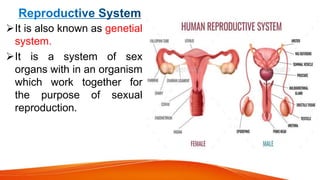
It is also known as genetial
system.
It is a system of sex
organs with in an organism
which work together for
the purpose of sexual
reproduction.
Human body (General Description)

Human body (General Description)

  • 1.
  • 2.
    Introduction  Human bodyis the structure of a human being. It comprises a head, neck, trunk, arms and hands, legs and feet.  Study of the human body involves- Physiology (study of how living things function) Anatomy (study of the structure of human or animal body) Histology (the study of the microscopic structure of tissues) Embryology (deals with the study of embroys & their development)
  • 5.
    Systems of HumanBody Nervous System Respiratory System Circulatory System Digestive System Excretory System Muscular System Skeletal System Integumentary System Immune System Endocrine System Reproductive System
  • 6.
    Circulatory System Contains theheart and the blood Vessels. Responsible for movement of blood, nutrients & Gases. Heart pumps blood to lungs to receive oxygen and then to the rest of the body.
  • 7.
    Responsible for bringing inoxygen and ridding our bodies of carbon dioxide. Lungs, diaphragm & windpipe. Oxygenates our entire body.
  • 8.
     Includes bones,cartilage & teeth.  4 Major functions:- Protection- Protects vital organs. Storage- Stores minerals & fat. Movement- Muscles pull bones to move. Blood cell formation- Make blood cells.
  • 9.
     It helpsto maintain homeostasis (balance) of the human body.  All bodily activities, voluntary and involuntary, are controlled by the nervous system.  Components-  Central Nervous System (Include Brain & Spinal Cord).  Peripheral Nervous System (Include all the Nerves)
  • 10.
    Includes hairs, nails,and skin. Largest organ system in our body. Our body's first line of defense.
  • 11.
     It consistsof the gastrointestinal tract + the accessory organs of digestion.  Digestion involves the breakdown of food into smaller and smaller components, until they can be absorbed and assimilalted into the body. Major Organs Acessory organs • Mouth Liver • Esophagus (Food Pipe) Gall Bladder • Stomach Pancreas • Small Intestine • Large Inestine
  • 12.
    Function- to remove wastefrom the human body. Organs- • Kidneys • Urethra • Urinary Bladder • Urethra
  • 13.
    Functions- • Body movement •Maintenance of posture • Heart beat • Production of body heat • Communication (verbal & facial)  Types of Muscles • Cardiac muscle • Skeletal muscle • Smooth muscle
  • 14.
     It ismade up of special organs, cells and chemicals that fight infection (microbes).
  • 15.
     It isthe collection of glands that produce hormones that reglate metabolism, growth and development, tissue function, sexual function, reproduction, sleep & mood among other things.  Glands: An organ which secretes particular chemical substances for use in body or for discharge into theh surroundings.  Types of Glands:  Endocrine glands  Exocrine glands  Heterocrine glands
  • 16.
    It is alsoknown as genetial system. It is a system of sex organs with in an organism which work together for the purpose of sexual reproduction.