Human body
Purbangshu Chatterjee
Anatomy & Physiology
• Human Anatomy (ana- = “up”,
tome = “to cut”) is often
defined as the study of
structures in the human body.
• Anatomy focuses on the
description of form, or how
body structures at different
levels look. ...
• Body structure functions
depend on their form. The way
structures work depend on the
way they are organized.
• Human physiology is the
science of the mechanical,
physical, and biochemical
function of humans,
• serves as the foundation of
modern medicine. As a
discipline,
• it connects science, medicine,
and health,
• Creates a framework for
understanding how
the human body adapts to
stresses, physical activity, and
disease.
Human Body
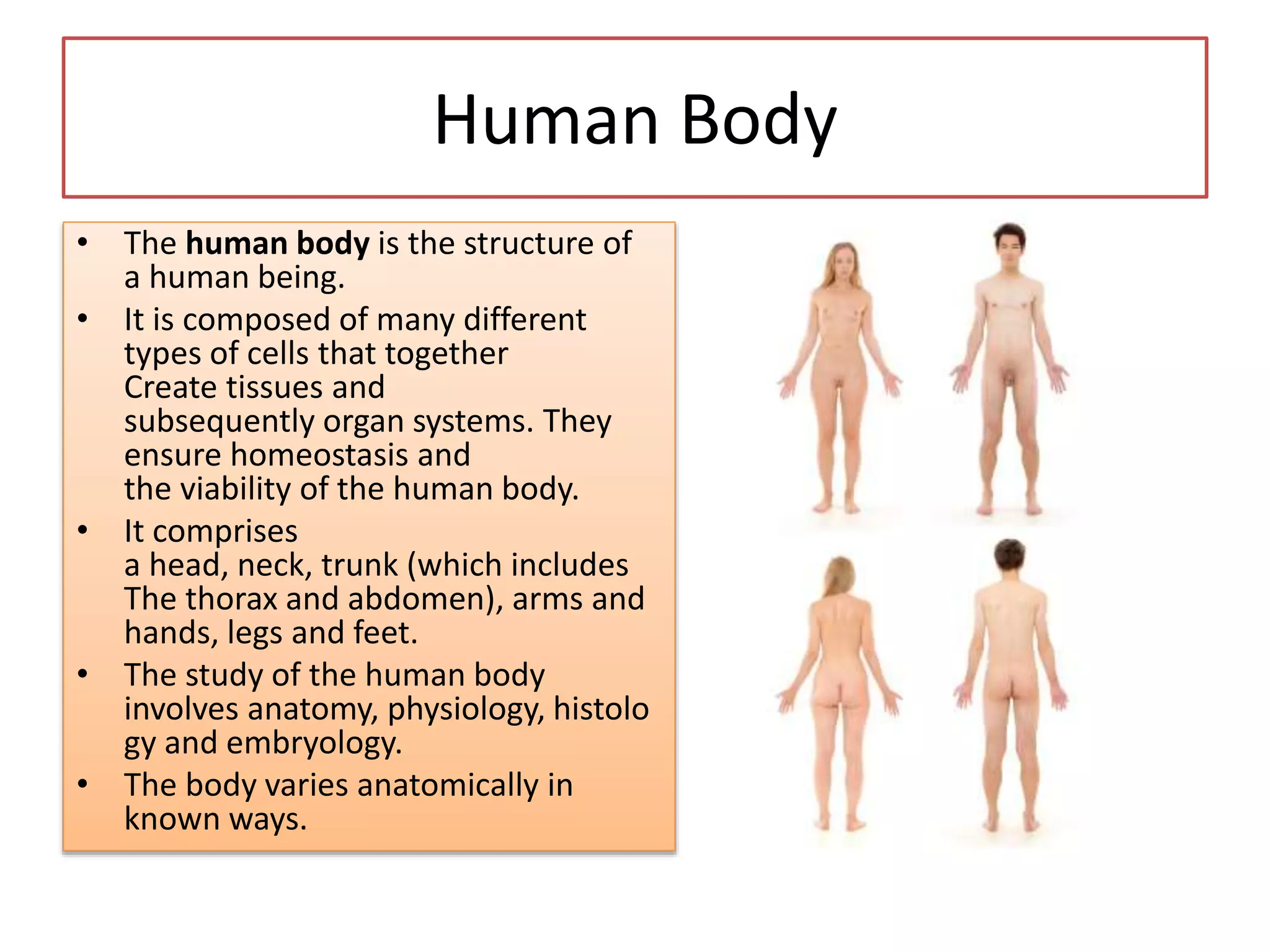
• The human body is the structure of
a human being.
• It is composed of many different
types of cells that together
Create tissues and
subsequently organ systems. They
ensure homeostasis and
the viability of the human body.
• It comprises
a head, neck, trunk (which includes
The thorax and abdomen), arms and
hands, legs and feet.
• The study of the human body
involves anatomy, physiology, histolo
gy and embryology.
• The body varies anatomically in
known ways.
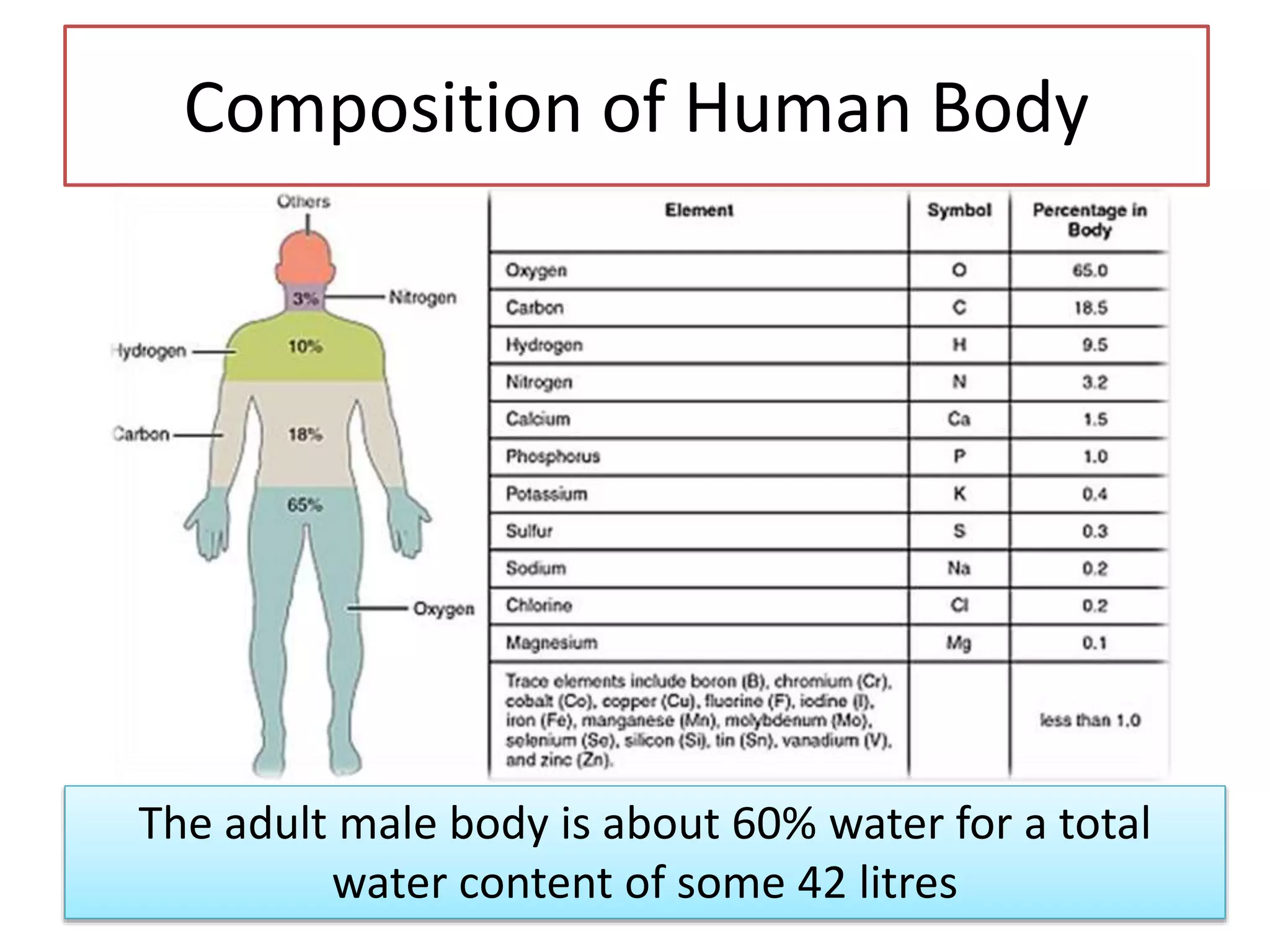
Composition of Human Body
The adult male body is about 60% water for a total
water content of some 42 litres
Human Cells
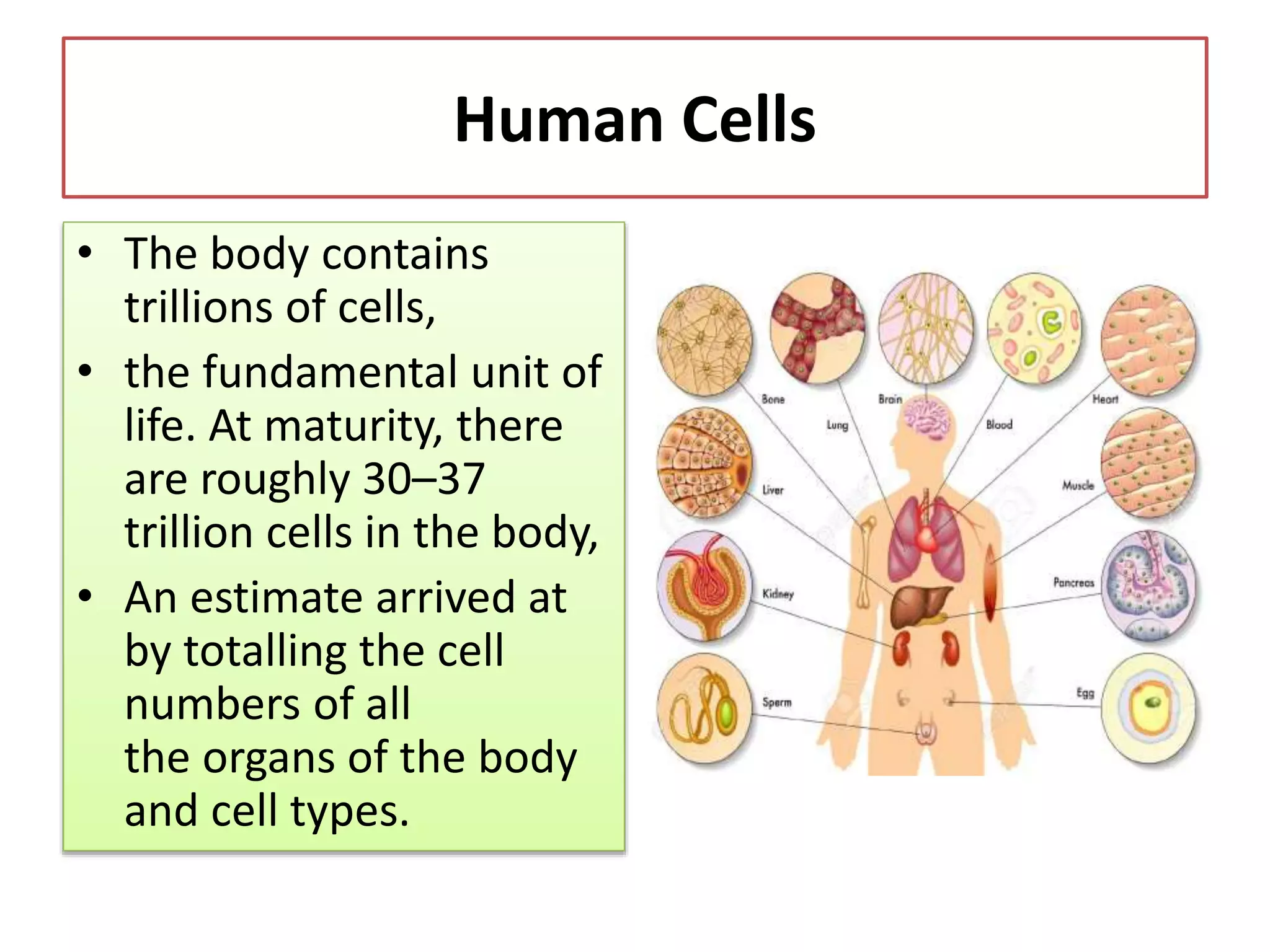
• The body contains
trillions of cells,
• the fundamental unit of
life. At maturity, there
are roughly 30–37
trillion cells in the body,
• An estimate arrived at
by totalling the cell
numbers of all
the organs of the body
and cell types.
Human Tissues
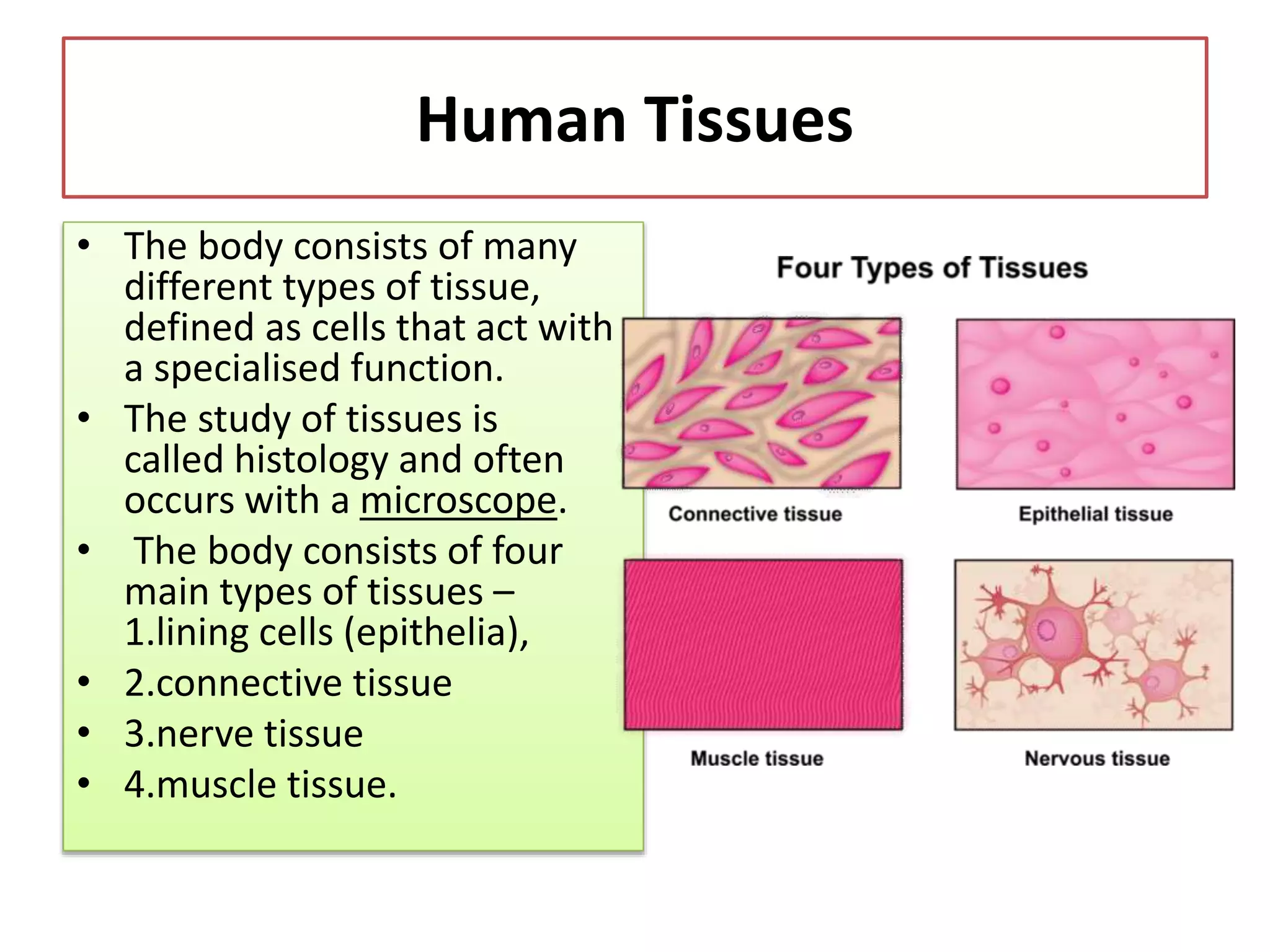
• The body consists of many
different types of tissue,
defined as cells that act with
a specialised function.
• The study of tissues is
called histology and often
occurs with a microscope.
• The body consists of four
main types of tissues –
1.lining cells (epithelia),
• 2.connective tissue
• 3.nerve tissue
• 4.muscle tissue.
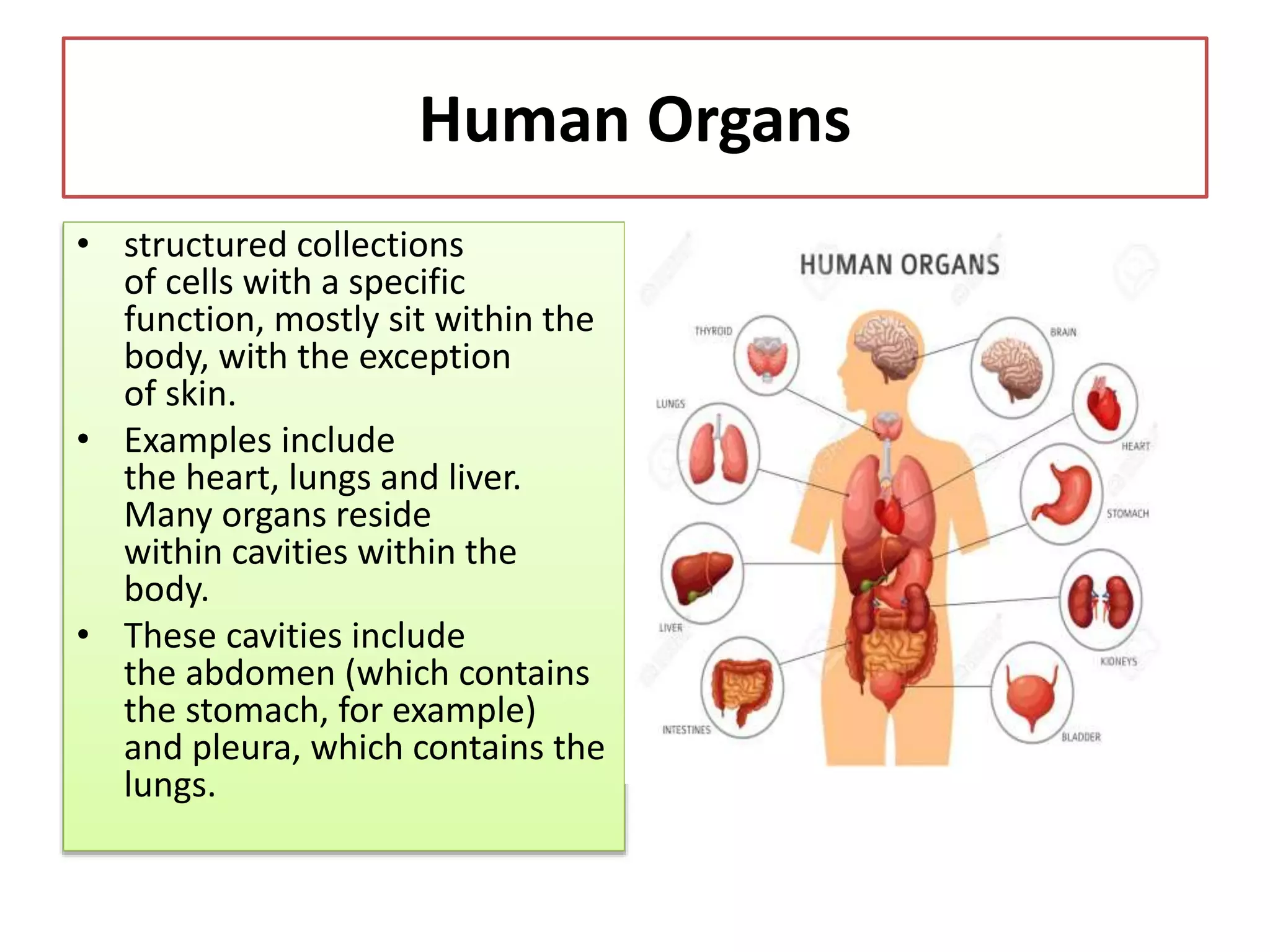
Human Organs
• structured collections
of cells with a specific
function, mostly sit within the
body, with the exception
of skin.
• Examples include
the heart, lungs and liver.
Many organs reside
within cavities within the
body.
• These cavities include
the abdomen (which contains
the stomach, for example)
and pleura, which contains the
lungs.
Major organs of the Body
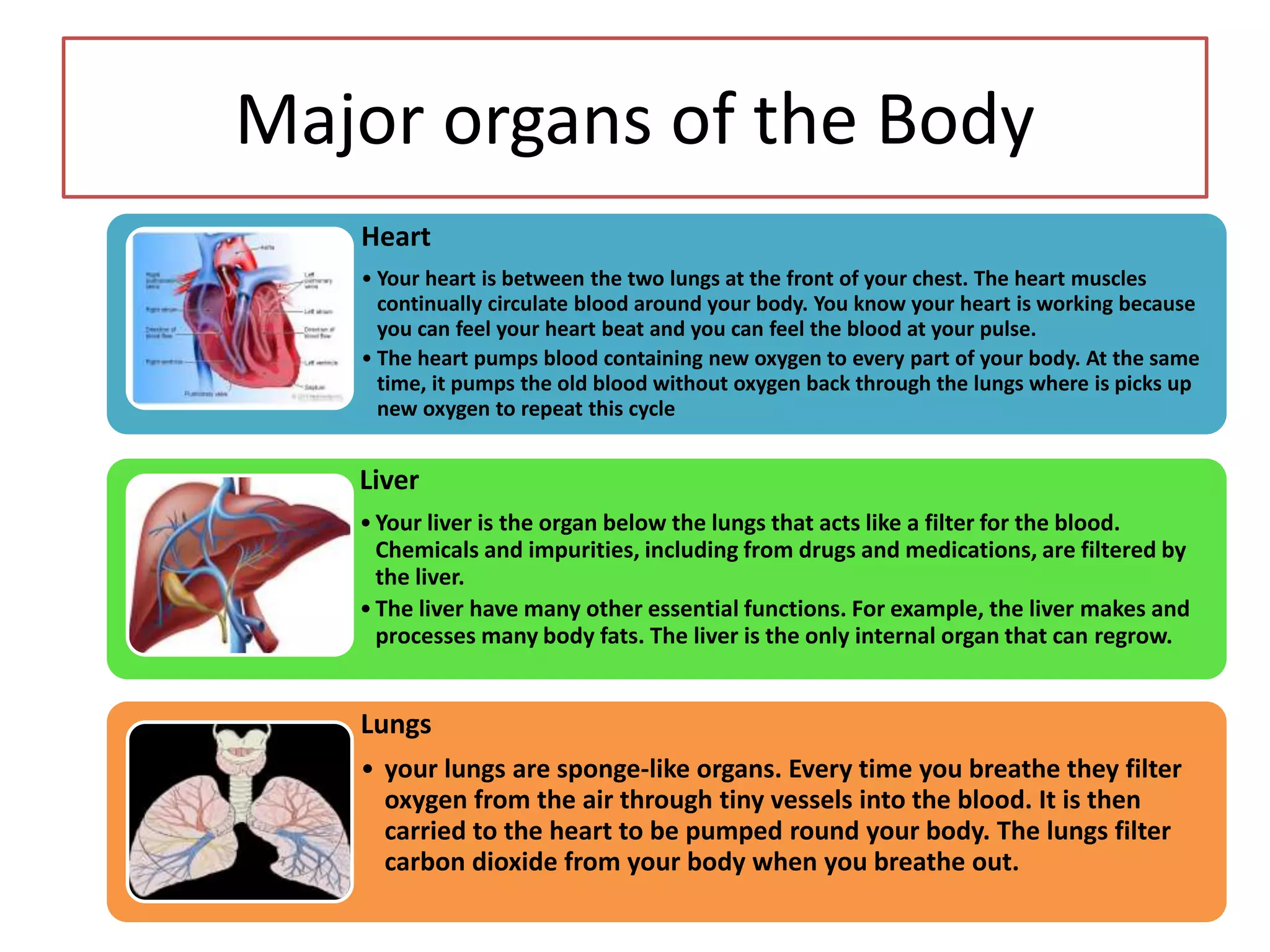
Heart
• Your heart is between the two lungs at the front of your chest. The heart muscles
continually circulate blood around your body. You know your heart is working because
you can feel your heart beat and you can feel the blood at your pulse.
• The heart pumps blood containing new oxygen to every part of your body. At the same
time, it pumps the old blood without oxygen back through the lungs where is picks up
new oxygen to repeat this cycle
Liver
•Your liver is the organ below the lungs that acts like a filter for the blood.
Chemicals and impurities, including from drugs and medications, are filtered by
the liver.
•The liver have many other essential functions. For example, the liver makes and
processes many body fats. The liver is the only internal organ that can regrow.
Lungs
• your lungs are sponge-like organs. Every time you breathe they filter
oxygen from the air through tiny vessels into the blood. It is then
carried to the heart to be pumped round your body. The lungs filter
carbon dioxide from your body when you breathe out.
Major organs of the Body
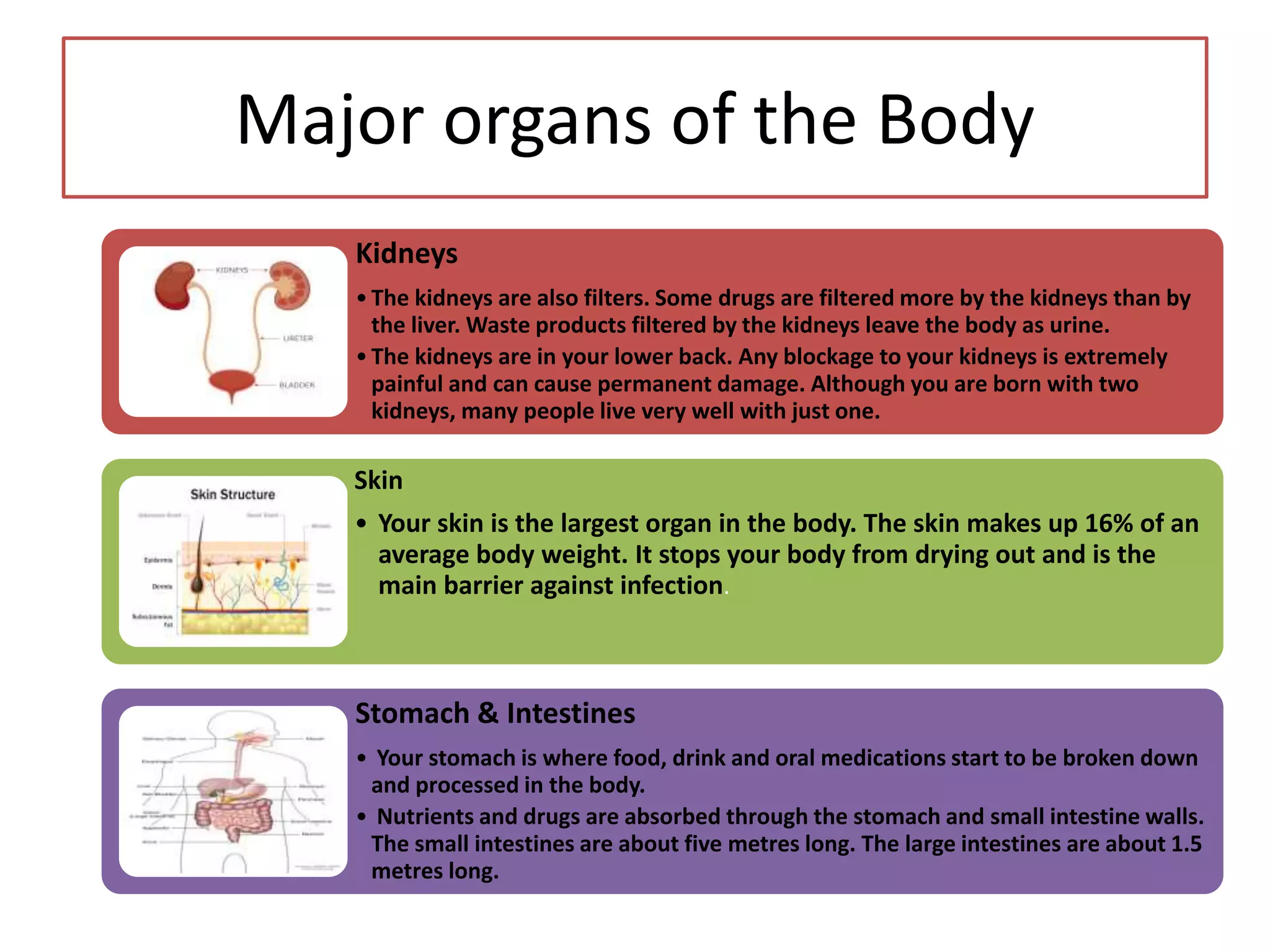
Kidneys
•The kidneys are also filters. Some drugs are filtered more by the kidneys than by
the liver. Waste products filtered by the kidneys leave the body as urine.
•The kidneys are in your lower back. Any blockage to your kidneys is extremely
painful and can cause permanent damage. Although you are born with two
kidneys, many people live very well with just one.
Skin
• Your skin is the largest organ in the body. The skin makes up 16% of an
average body weight. It stops your body from drying out and is the
main barrier against infection.
Stomach & Intestines
• Your stomach is where food, drink and oral medications start to be broken down
and processed in the body.
• Nutrients and drugs are absorbed through the stomach and small intestine walls.
The small intestines are about five metres long. The large intestines are about 1.5
metres long.
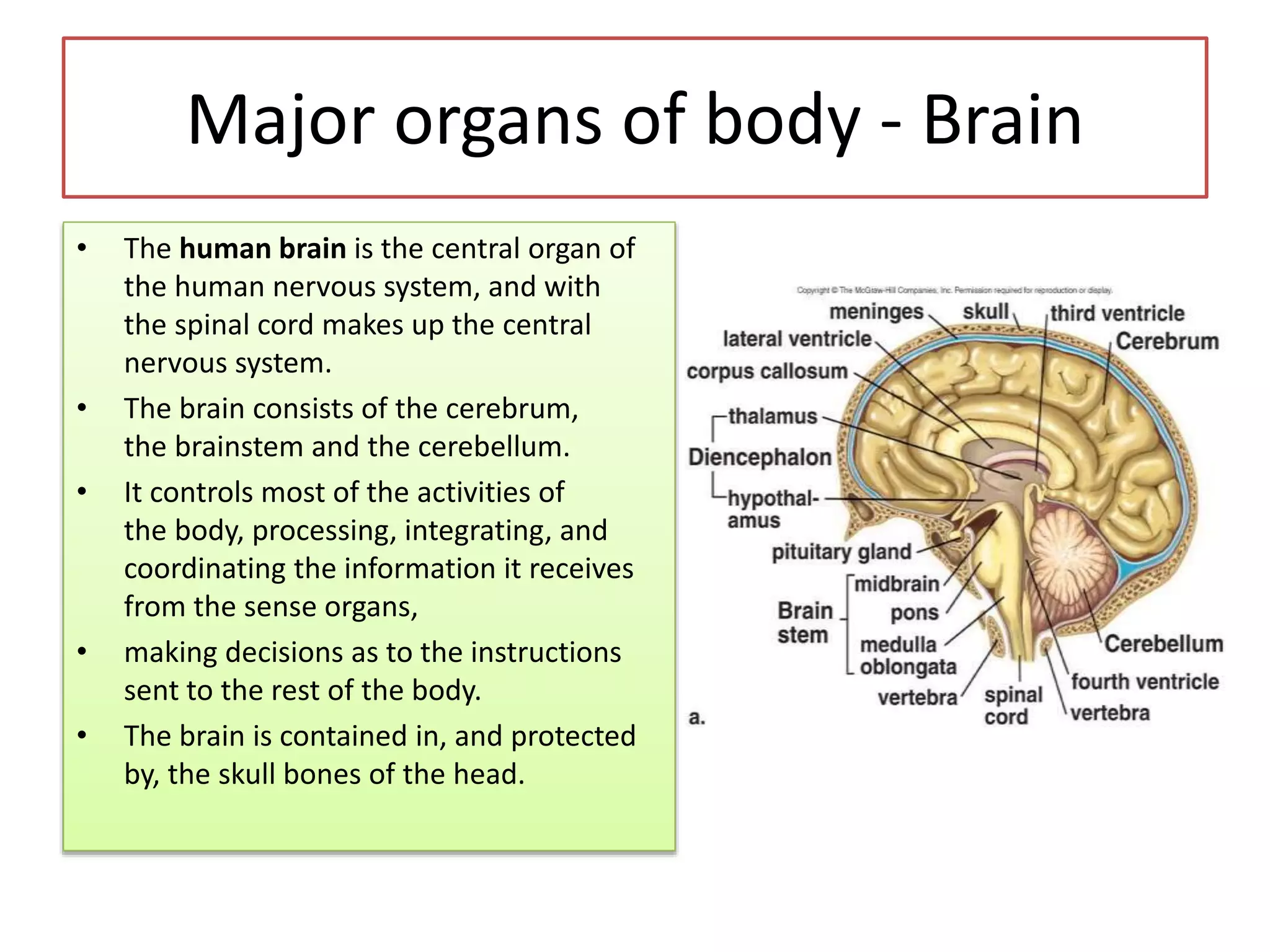
Major organs of body - Brain
• The human brain is the central organ of
the human nervous system, and with
the spinal cord makes up the central
nervous system.
• The brain consists of the cerebrum,
the brainstem and the cerebellum.
• It controls most of the activities of
the body, processing, integrating, and
coordinating the information it receives
from the sense organs,
• making decisions as to the instructions
sent to the rest of the body.
• The brain is contained in, and protected
by, the skull bones of the head.
10 Interesting Facts About The Human
Brain
• The human brain weighs 3 pounds
• It comprises 60% of fat and is one of the fattest organs in the human body
• Human brain has the capacity to generate approximately 23 watts of power when
awake.
• Of the total blood and oxygen that is produced in our body, the brain gets 20% of
it.
• When the blood supply to the brain stops, it is almost after 8-10 seconds that the
brain starts losing the consciousness.
• The brain is capable of surviving for 5 to 6 minutes only if it doesn’t get oxygen
after which it dies.
• The blood vessels that are present in the brain are almost 100,000 miles in length.
• There are 100 billion neurons present in the brain.
• In early pregnancy, the neurons develop at an alarming rate of 250,000 per
minute.
• As we grow older, we are unable to remember new things. According to the
researchers in the US it is because the brain is unable to filter and remove old
memories which prevent it from absorbing new ideas.
Systems of the human body
1. Circulatory system:
2. Digestive system and Excretory
system:
3. Endocrine system:
4. Integumentary
system / Exocrine system:
5. Immune system and lymphatic
system:
6. Muscular system:
7. Nervous system:
8. Renal system and Urinary
system
9. Reproductive system:
10. Respiratory system:
11. Skeletal system:
Circulatory system
• The circulatory system consists
of the heart and blood
vessels (arteries, veins and capill
aries).
• The heart propels the circulation
of the blood,
• which serves as a
"transportation system" to
transfer oxygen, fuel, nutrients,
waste products, immune cells
and signalling molecules
(i.e. hormones) from one part of
the body to another.
Human Circulatory System
Interesting facts about Heart
• The average heart is the size of an adult fist.
• Your heart will beat about 115,000 times each day.
• The beating sound your heart makes is caused by the opening and
closing of its valves.
• Each day, your heart pumps about 2,000 gallons of blood.
• If you were to stretch out your blood vessel system, it would extend
over 60,000 miles.
• The human heart weighs less than one pound, but a man’s heart is
typically two ounces heavier than a woman’s.
• A woman’s heart beats slightly faster than a man’s.
• There is such a thing as a broken heart. Symptoms are similar to a
heart attack but the cause is usually stress and not heart disease.
• Laughing is good for your heart. It reduces stress and gives a boost
to your immune system.
Digestive system
• The digestive system consists of the mouth
including
the tongue and teeth, oesophagus, stomach,
(gastrointestinal tract, small and large intestines,
and rectum),
• as well as the liver, pancreas, gallbladder,
and salivary glands.
• It converts food into small, nutritional, non-
toxic molecules for distribution and absorption into
the body.
• These molecules take the form of proteins (which
are broken down into amino
acids), fats, vitamins and minerals
• After being swallowed, food moves through
the gastrointestinal tract by means of peristalsis:
• the systematic expansion and contraction of
muscles to push food from one area to the next.
Endocrine system
• The endocrine system consists of
the principal endocrine glands:
the pituitary, thyroid, adrenals, p
ancreas, parathyroid's,
and gonads,
• Nearly all organs and tissues
produce specific
endocrine hormones as well.
• The endocrine hormones serve
as signals from one body system
to another regarding an
enormous array of conditions,
• resulting in variety of changes of
function.]
Enzyme & Hormones
• Enzymes are the biological
macromolecules which
speed up the rate of
biochemical reactions
without undergoing any
change.
• Salivary glands, Secretory
cells in the stomach,
pancreas and secretory
glands in the small
intestine.
• Hormones are molecules,
usually a peptide (eg:
insulin) or steroid (eg:
estrogen) that is produced
in one part of an organism
and trigger specific cellular
reactions in target tissues
and organs some distance
away.
• Glands such as Pituitary,
Pineal, Thymus, Adrenal,
Thyroid, Pancreas.
Immune system
• The immune system consists
of the white blood cells,
the thymus, lymph
nodes and lymph channels,
• which are also part of
the lymphatic system.
• The immune system provides a
mechanism for the body to
distinguish its own cells and
tissues from outside cells and
substances
• neutralize or destroy the latter
by using specialized proteins
such as antibodies, cytokines,
and toll-like receptors,
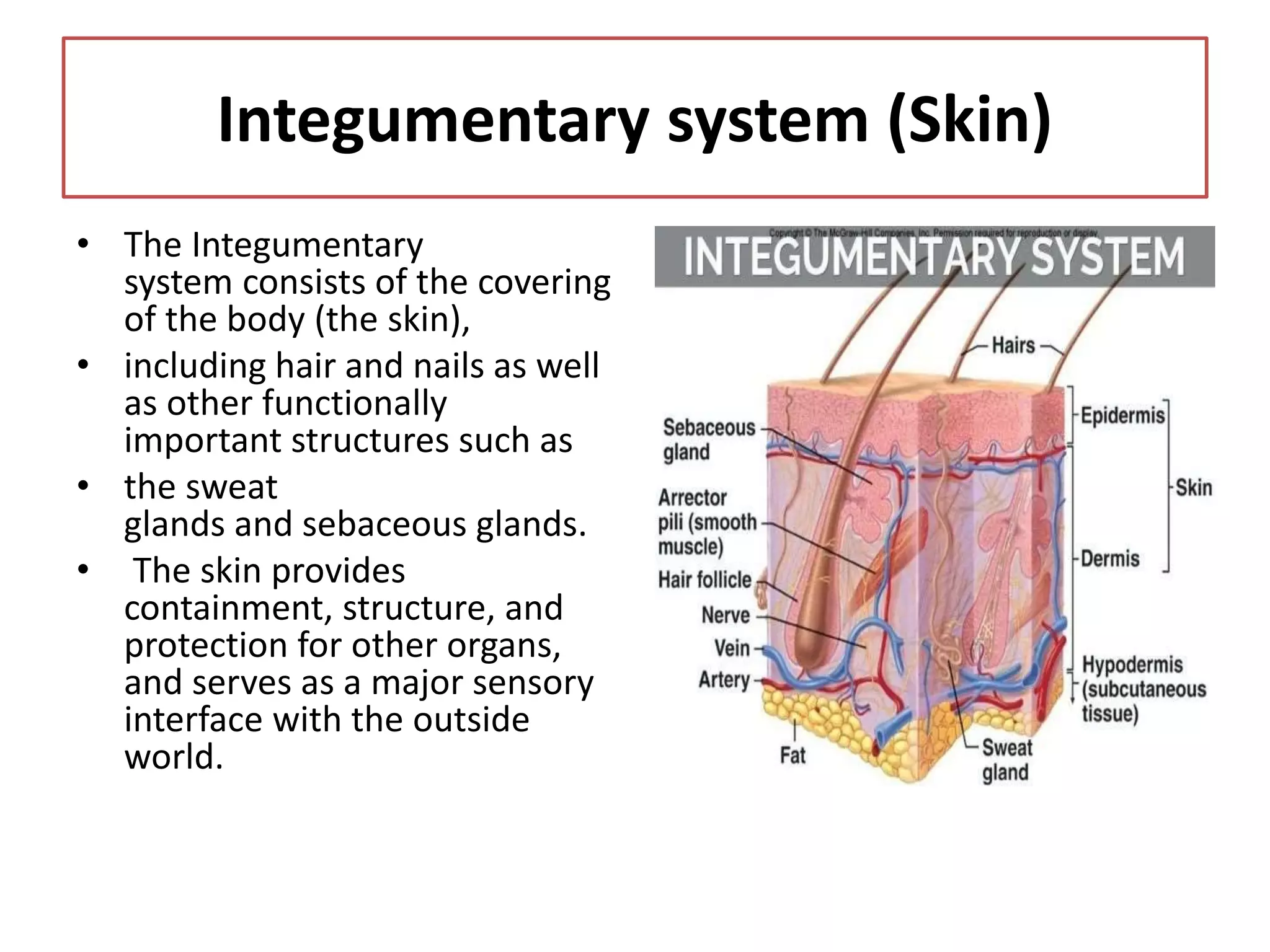
Integumentary system (Skin)
• The Integumentary
system consists of the covering
of the body (the skin),
• including hair and nails as well
as other functionally
important structures such as
• the sweat
glands and sebaceous glands.
• The skin provides
containment, structure, and
protection for other organs,
and serves as a major sensory
interface with the outside
world.
Lymphatic system
• The lymphatic system,
or lymphoid system, is
an organ system in vertebrates
that is part of the circulatory
system
• the immune system. It is made
up of a large network
of lymphatic vessels,
• lymphatic or lymphoid organs,
and lymphoid tissues.
• The vessels carry a clear fluid
called lymph (the Latin
word lympha refers to the
deity of fresh water,
"Lympha“) towards the heart.
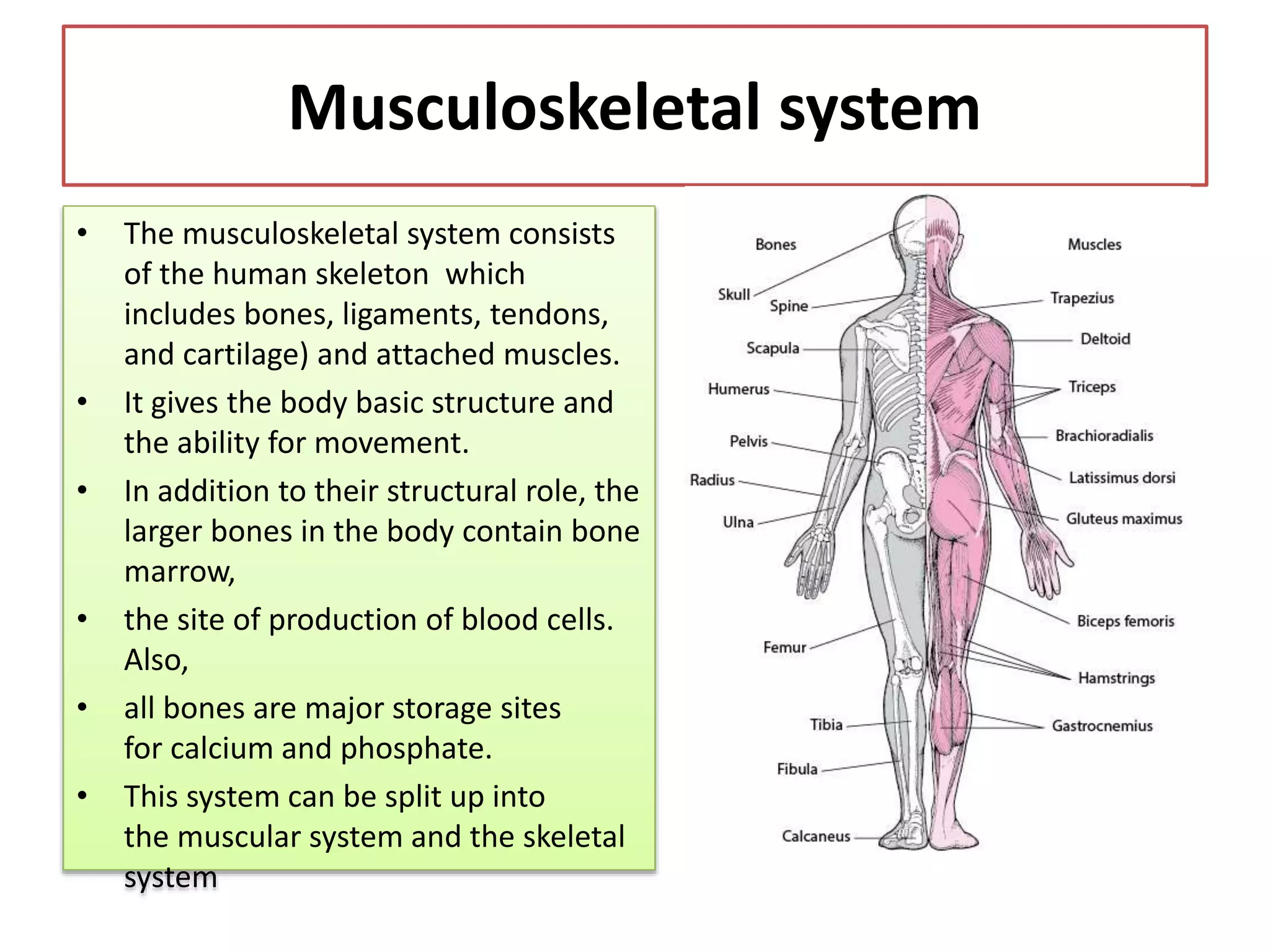
Musculoskeletal system
• The musculoskeletal system consists
of the human skeleton which
includes bones, ligaments, tendons,
and cartilage) and attached muscles.
• It gives the body basic structure and
the ability for movement.
• In addition to their structural role, the
larger bones in the body contain bone
marrow,
• the site of production of blood cells.
Also,
• all bones are major storage sites
for calcium and phosphate.
• This system can be split up into
the muscular system and the skeletal
system
Nervous system
• The nervous system consists of
the body's neurons,
• which together form
the nerves and ganglia which in
turn form the brain and related
structures.
• The brain is the organ of thought,
emotion, memory, and sensory
processing;
• it serves many aspects of
communication and controls
various systems and functions.
• The special senses consist
of vision, hearing, taste,
and smell. The eyes, ears, tongue,
and nose gather information
about the body's environment
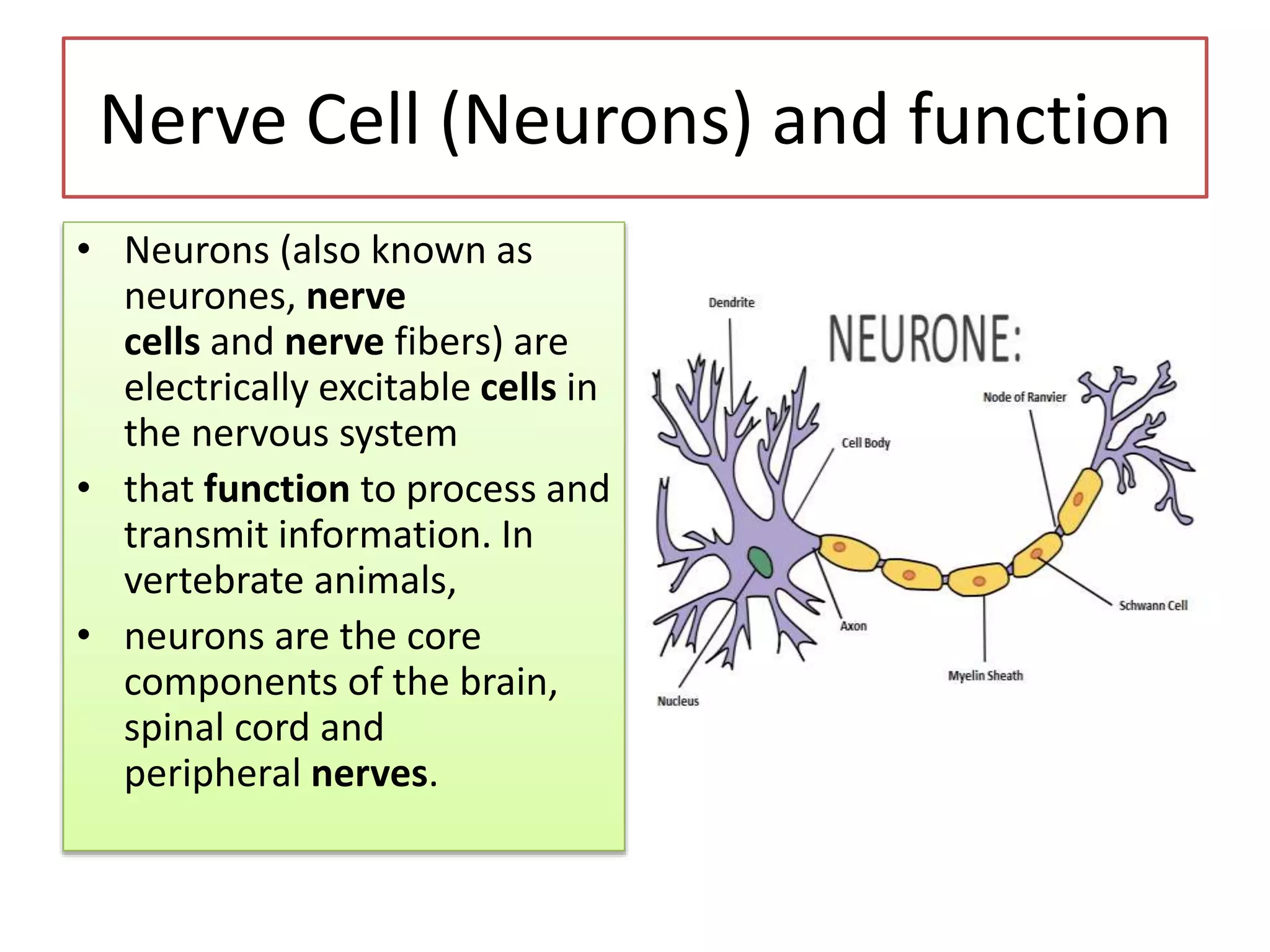
Nerve Cell (Neurons) and function
• Neurons (also known as
neurones, nerve
cells and nerve fibers) are
electrically excitable cells in
the nervous system
• that function to process and
transmit information. In
vertebrate animals,
• neurons are the core
components of the brain,
spinal cord and
peripheral nerves.
Reproductive system
• The male reproductive system has
one function: to produce and
deposit sperm.
• The female reproductive
system has two functions: to
produce egg cells, and to protect
and nourish the fetus until birth.
• Humans have a high level of sexual
differentiation. In addition to
differences in nearly every
reproductive organ,
• there are numerous differences in
typical secondary sex
characteristics
Respiratory system
• The respiratory system consists of the
nose, nasopharynx, trachea, and lungs.
• It brings oxygen from the air and
excretes carbon dioxide and water back
into the air.
• First, air is pulled through the trachea
into the lungs by
the diaphragm pushing down, which
creates a vacuum.
• Air is briefly stored inside small sacs
known as alveoli (sing.: alveolus) before
being expelled from the lungs when the
diaphragm contracts again.
• Each alveolus is surrounded
by capillaries carrying deoxygenated
blood, which absorbs oxygen out of the
air and into the bloodstream.
Urinary system
• The urinary system, also known as
the renal system or urinary tract,
consists of
the kidneys, ureters, bladder, and
the urethra.
• The purpose of the urinary system is
to eliminate waste from the body,
regulate blood volume and blood
pressure, control levels
of electrolytes and metabolites, and
regulate blood pH.
• The urinary tract is the body's
drainage system for the eventual
removal of urine.
• The kidneys have an extensive blood
supply via the renal arteries which
leave the kidneys via the renal vein.
• Each kidney consists of functional
units called nephrons. Following
filtration of blood and further
processing, wastes
Human body structure / Human Anatomy and Physiology

Human body structure / Human Anatomy and Physiology

  • 1.
  • 2.
    Anatomy & Physiology •Human Anatomy (ana- = “up”, tome = “to cut”) is often defined as the study of structures in the human body. • Anatomy focuses on the description of form, or how body structures at different levels look. ... • Body structure functions depend on their form. The way structures work depend on the way they are organized. • Human physiology is the science of the mechanical, physical, and biochemical function of humans, • serves as the foundation of modern medicine. As a discipline, • it connects science, medicine, and health, • Creates a framework for understanding how the human body adapts to stresses, physical activity, and disease.
  • 3.
    Human Body • Thehuman body is the structure of a human being. • It is composed of many different types of cells that together Create tissues and subsequently organ systems. They ensure homeostasis and the viability of the human body. • It comprises a head, neck, trunk (which includes The thorax and abdomen), arms and hands, legs and feet. • The study of the human body involves anatomy, physiology, histolo gy and embryology. • The body varies anatomically in known ways.
  • 4.
    Composition of HumanBody The adult male body is about 60% water for a total water content of some 42 litres
  • 5.
    Human Cells • Thebody contains trillions of cells, • the fundamental unit of life. At maturity, there are roughly 30–37 trillion cells in the body, • An estimate arrived at by totalling the cell numbers of all the organs of the body and cell types.
  • 6.
    Human Tissues • Thebody consists of many different types of tissue, defined as cells that act with a specialised function. • The study of tissues is called histology and often occurs with a microscope. • The body consists of four main types of tissues – 1.lining cells (epithelia), • 2.connective tissue • 3.nerve tissue • 4.muscle tissue.
  • 7.
    Human Organs • structuredcollections of cells with a specific function, mostly sit within the body, with the exception of skin. • Examples include the heart, lungs and liver. Many organs reside within cavities within the body. • These cavities include the abdomen (which contains the stomach, for example) and pleura, which contains the lungs.
  • 8.
    Major organs ofthe Body Heart • Your heart is between the two lungs at the front of your chest. The heart muscles continually circulate blood around your body. You know your heart is working because you can feel your heart beat and you can feel the blood at your pulse. • The heart pumps blood containing new oxygen to every part of your body. At the same time, it pumps the old blood without oxygen back through the lungs where is picks up new oxygen to repeat this cycle Liver •Your liver is the organ below the lungs that acts like a filter for the blood. Chemicals and impurities, including from drugs and medications, are filtered by the liver. •The liver have many other essential functions. For example, the liver makes and processes many body fats. The liver is the only internal organ that can regrow. Lungs • your lungs are sponge-like organs. Every time you breathe they filter oxygen from the air through tiny vessels into the blood. It is then carried to the heart to be pumped round your body. The lungs filter carbon dioxide from your body when you breathe out.
  • 9.
    Major organs ofthe Body Kidneys •The kidneys are also filters. Some drugs are filtered more by the kidneys than by the liver. Waste products filtered by the kidneys leave the body as urine. •The kidneys are in your lower back. Any blockage to your kidneys is extremely painful and can cause permanent damage. Although you are born with two kidneys, many people live very well with just one. Skin • Your skin is the largest organ in the body. The skin makes up 16% of an average body weight. It stops your body from drying out and is the main barrier against infection. Stomach & Intestines • Your stomach is where food, drink and oral medications start to be broken down and processed in the body. • Nutrients and drugs are absorbed through the stomach and small intestine walls. The small intestines are about five metres long. The large intestines are about 1.5 metres long.
  • 10.
    Major organs ofbody - Brain • The human brain is the central organ of the human nervous system, and with the spinal cord makes up the central nervous system. • The brain consists of the cerebrum, the brainstem and the cerebellum. • It controls most of the activities of the body, processing, integrating, and coordinating the information it receives from the sense organs, • making decisions as to the instructions sent to the rest of the body. • The brain is contained in, and protected by, the skull bones of the head.
  • 11.
    10 Interesting FactsAbout The Human Brain • The human brain weighs 3 pounds • It comprises 60% of fat and is one of the fattest organs in the human body • Human brain has the capacity to generate approximately 23 watts of power when awake. • Of the total blood and oxygen that is produced in our body, the brain gets 20% of it. • When the blood supply to the brain stops, it is almost after 8-10 seconds that the brain starts losing the consciousness. • The brain is capable of surviving for 5 to 6 minutes only if it doesn’t get oxygen after which it dies. • The blood vessels that are present in the brain are almost 100,000 miles in length. • There are 100 billion neurons present in the brain. • In early pregnancy, the neurons develop at an alarming rate of 250,000 per minute. • As we grow older, we are unable to remember new things. According to the researchers in the US it is because the brain is unable to filter and remove old memories which prevent it from absorbing new ideas.
  • 12.
    Systems of thehuman body 1. Circulatory system: 2. Digestive system and Excretory system: 3. Endocrine system: 4. Integumentary system / Exocrine system: 5. Immune system and lymphatic system: 6. Muscular system: 7. Nervous system: 8. Renal system and Urinary system 9. Reproductive system: 10. Respiratory system: 11. Skeletal system:
  • 13.
    Circulatory system • Thecirculatory system consists of the heart and blood vessels (arteries, veins and capill aries). • The heart propels the circulation of the blood, • which serves as a "transportation system" to transfer oxygen, fuel, nutrients, waste products, immune cells and signalling molecules (i.e. hormones) from one part of the body to another.
  • 14.
  • 15.
    Interesting facts aboutHeart • The average heart is the size of an adult fist. • Your heart will beat about 115,000 times each day. • The beating sound your heart makes is caused by the opening and closing of its valves. • Each day, your heart pumps about 2,000 gallons of blood. • If you were to stretch out your blood vessel system, it would extend over 60,000 miles. • The human heart weighs less than one pound, but a man’s heart is typically two ounces heavier than a woman’s. • A woman’s heart beats slightly faster than a man’s. • There is such a thing as a broken heart. Symptoms are similar to a heart attack but the cause is usually stress and not heart disease. • Laughing is good for your heart. It reduces stress and gives a boost to your immune system.
  • 16.
    Digestive system • Thedigestive system consists of the mouth including the tongue and teeth, oesophagus, stomach, (gastrointestinal tract, small and large intestines, and rectum), • as well as the liver, pancreas, gallbladder, and salivary glands. • It converts food into small, nutritional, non- toxic molecules for distribution and absorption into the body. • These molecules take the form of proteins (which are broken down into amino acids), fats, vitamins and minerals • After being swallowed, food moves through the gastrointestinal tract by means of peristalsis: • the systematic expansion and contraction of muscles to push food from one area to the next.
  • 17.
    Endocrine system • Theendocrine system consists of the principal endocrine glands: the pituitary, thyroid, adrenals, p ancreas, parathyroid's, and gonads, • Nearly all organs and tissues produce specific endocrine hormones as well. • The endocrine hormones serve as signals from one body system to another regarding an enormous array of conditions, • resulting in variety of changes of function.]
  • 18.
    Enzyme & Hormones •Enzymes are the biological macromolecules which speed up the rate of biochemical reactions without undergoing any change. • Salivary glands, Secretory cells in the stomach, pancreas and secretory glands in the small intestine. • Hormones are molecules, usually a peptide (eg: insulin) or steroid (eg: estrogen) that is produced in one part of an organism and trigger specific cellular reactions in target tissues and organs some distance away. • Glands such as Pituitary, Pineal, Thymus, Adrenal, Thyroid, Pancreas.
  • 19.
    Immune system • Theimmune system consists of the white blood cells, the thymus, lymph nodes and lymph channels, • which are also part of the lymphatic system. • The immune system provides a mechanism for the body to distinguish its own cells and tissues from outside cells and substances • neutralize or destroy the latter by using specialized proteins such as antibodies, cytokines, and toll-like receptors,
  • 20.
    Integumentary system (Skin) •The Integumentary system consists of the covering of the body (the skin), • including hair and nails as well as other functionally important structures such as • the sweat glands and sebaceous glands. • The skin provides containment, structure, and protection for other organs, and serves as a major sensory interface with the outside world.
  • 21.
    Lymphatic system • Thelymphatic system, or lymphoid system, is an organ system in vertebrates that is part of the circulatory system • the immune system. It is made up of a large network of lymphatic vessels, • lymphatic or lymphoid organs, and lymphoid tissues. • The vessels carry a clear fluid called lymph (the Latin word lympha refers to the deity of fresh water, "Lympha“) towards the heart.
  • 22.
    Musculoskeletal system • Themusculoskeletal system consists of the human skeleton which includes bones, ligaments, tendons, and cartilage) and attached muscles. • It gives the body basic structure and the ability for movement. • In addition to their structural role, the larger bones in the body contain bone marrow, • the site of production of blood cells. Also, • all bones are major storage sites for calcium and phosphate. • This system can be split up into the muscular system and the skeletal system
  • 23.
    Nervous system • Thenervous system consists of the body's neurons, • which together form the nerves and ganglia which in turn form the brain and related structures. • The brain is the organ of thought, emotion, memory, and sensory processing; • it serves many aspects of communication and controls various systems and functions. • The special senses consist of vision, hearing, taste, and smell. The eyes, ears, tongue, and nose gather information about the body's environment
  • 24.
    Nerve Cell (Neurons)and function • Neurons (also known as neurones, nerve cells and nerve fibers) are electrically excitable cells in the nervous system • that function to process and transmit information. In vertebrate animals, • neurons are the core components of the brain, spinal cord and peripheral nerves.
  • 25.
    Reproductive system • Themale reproductive system has one function: to produce and deposit sperm. • The female reproductive system has two functions: to produce egg cells, and to protect and nourish the fetus until birth. • Humans have a high level of sexual differentiation. In addition to differences in nearly every reproductive organ, • there are numerous differences in typical secondary sex characteristics
  • 26.
    Respiratory system • Therespiratory system consists of the nose, nasopharynx, trachea, and lungs. • It brings oxygen from the air and excretes carbon dioxide and water back into the air. • First, air is pulled through the trachea into the lungs by the diaphragm pushing down, which creates a vacuum. • Air is briefly stored inside small sacs known as alveoli (sing.: alveolus) before being expelled from the lungs when the diaphragm contracts again. • Each alveolus is surrounded by capillaries carrying deoxygenated blood, which absorbs oxygen out of the air and into the bloodstream.
  • 27.
    Urinary system • Theurinary system, also known as the renal system or urinary tract, consists of the kidneys, ureters, bladder, and the urethra. • The purpose of the urinary system is to eliminate waste from the body, regulate blood volume and blood pressure, control levels of electrolytes and metabolites, and regulate blood pH. • The urinary tract is the body's drainage system for the eventual removal of urine. • The kidneys have an extensive blood supply via the renal arteries which leave the kidneys via the renal vein. • Each kidney consists of functional units called nephrons. Following filtration of blood and further processing, wastes