Organ Systems (pg 6)
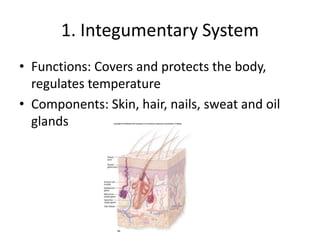
1. Integumentary System
• Functions: Covers and protects the body,
regulates temperature
• Components: Skin, hair, nails, sweat and oil
glands
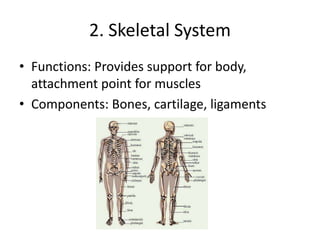
2. Skeletal System
• Functions: Provides support for body,
attachment point for muscles
• Components: Bones, cartilage, ligaments
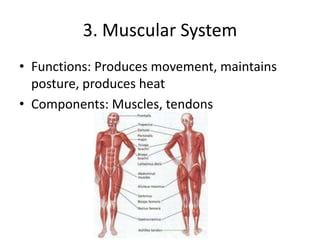
3. Muscular System
• Functions: Produces movement, maintains
posture, produces heat
• Components: Muscles, tendons
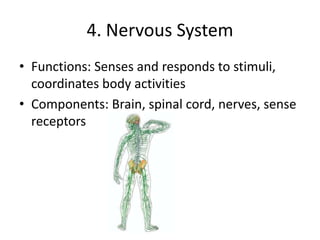
4. Nervous System
• Functions: Senses and responds to stimuli,
coordinates body activities
• Components: Brain, spinal cord, nerves, sense
receptors
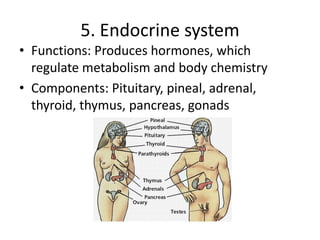
5. Endocrine system
• Functions: Produces hormones, which
regulate metabolism and body chemistry
• Components: Pituitary, pineal, adrenal,
thyroid, thymus, pancreas, gonads
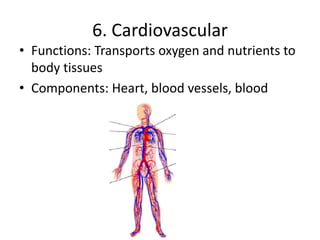
6. Cardiovascular
• Functions: Transports oxygen and nutrients to
body tissues
• Components: Heart, blood vessels, blood
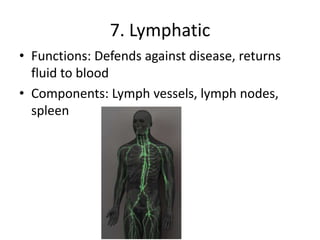
7. Lymphatic
• Functions: Defends against disease, returns
fluid to blood
• Components: Lymph vessels, lymph nodes,
spleen
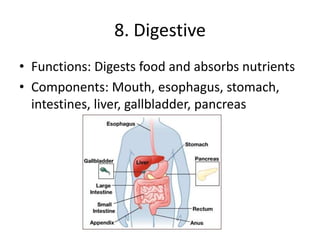
8. Digestive
• Functions: Digests food and absorbs nutrients
• Components: Mouth, esophagus, stomach,
intestines, liver, gallbladder, pancreas
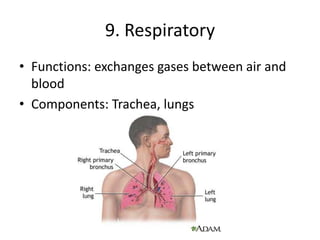
9. Respiratory
• Functions: exchanges gases between air and
blood
• Components: Trachea, lungs
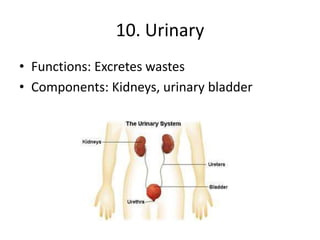
10. Urinary
• Functions: Excretes wastes
• Components: Kidneys, urinary bladder
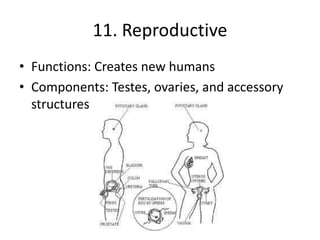
11. Reproductive
• Functions: Creates new humans
• Components: Testes, ovaries, and accessory
structures
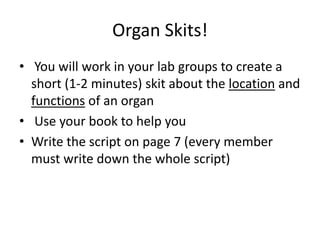
Organ Skits!
• You will work in your lab groups to create a
short (1-2 minutes) skit about the location and
functions of an organ
• Use your book to help you
• Write the script on page 7 (every member
must write down the whole script)
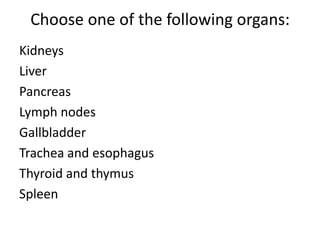
Choose one of the following organs:
Kidneys
Liver
Pancreas
Lymph nodes
Gallbladder
Trachea and esophagus
Thyroid and thymus
Spleen

Organ systems

  • 1.
  • 2.
    1. Integumentary System •Functions: Covers and protects the body, regulates temperature • Components: Skin, hair, nails, sweat and oil glands
  • 3.
    2. Skeletal System •Functions: Provides support for body, attachment point for muscles • Components: Bones, cartilage, ligaments
  • 4.
    3. Muscular System •Functions: Produces movement, maintains posture, produces heat • Components: Muscles, tendons
  • 5.
    4. Nervous System •Functions: Senses and responds to stimuli, coordinates body activities • Components: Brain, spinal cord, nerves, sense receptors
  • 6.
    5. Endocrine system •Functions: Produces hormones, which regulate metabolism and body chemistry • Components: Pituitary, pineal, adrenal, thyroid, thymus, pancreas, gonads
  • 7.
    6. Cardiovascular • Functions:Transports oxygen and nutrients to body tissues • Components: Heart, blood vessels, blood
  • 8.
    7. Lymphatic • Functions:Defends against disease, returns fluid to blood • Components: Lymph vessels, lymph nodes, spleen
  • 9.
    8. Digestive • Functions:Digests food and absorbs nutrients • Components: Mouth, esophagus, stomach, intestines, liver, gallbladder, pancreas
  • 10.
    9. Respiratory • Functions:exchanges gases between air and blood • Components: Trachea, lungs
  • 11.
    10. Urinary • Functions:Excretes wastes • Components: Kidneys, urinary bladder
  • 12.
    11. Reproductive • Functions:Creates new humans • Components: Testes, ovaries, and accessory structures
  • 13.
    Organ Skits! • Youwill work in your lab groups to create a short (1-2 minutes) skit about the location and functions of an organ • Use your book to help you • Write the script on page 7 (every member must write down the whole script)
  • 14.
    Choose one ofthe following organs: Kidneys Liver Pancreas Lymph nodes Gallbladder Trachea and esophagus Thyroid and thymus Spleen