Systems of Human body
Presented by,
K. Sai lakshmi
B-pharmacy
Balaji college of pharmacy
Definition:
Body systems are groups of organs and tissues that
work together to perform important jobs for the body. Some
organs may be part of more than one body system if they serve
more than one function
The human body consists of twelve organ systems, each
of which contains several functions and specific organs.
1. Digestive system
2. Circulatory system
3. Nervous system
4. Excretory system
5. Respiratory system
6. Skeletal system
7. Muscular system
8. Endocrine system
9. Immune system
10. Integumentary system
11. Lymphatic system
12. Reproductive system
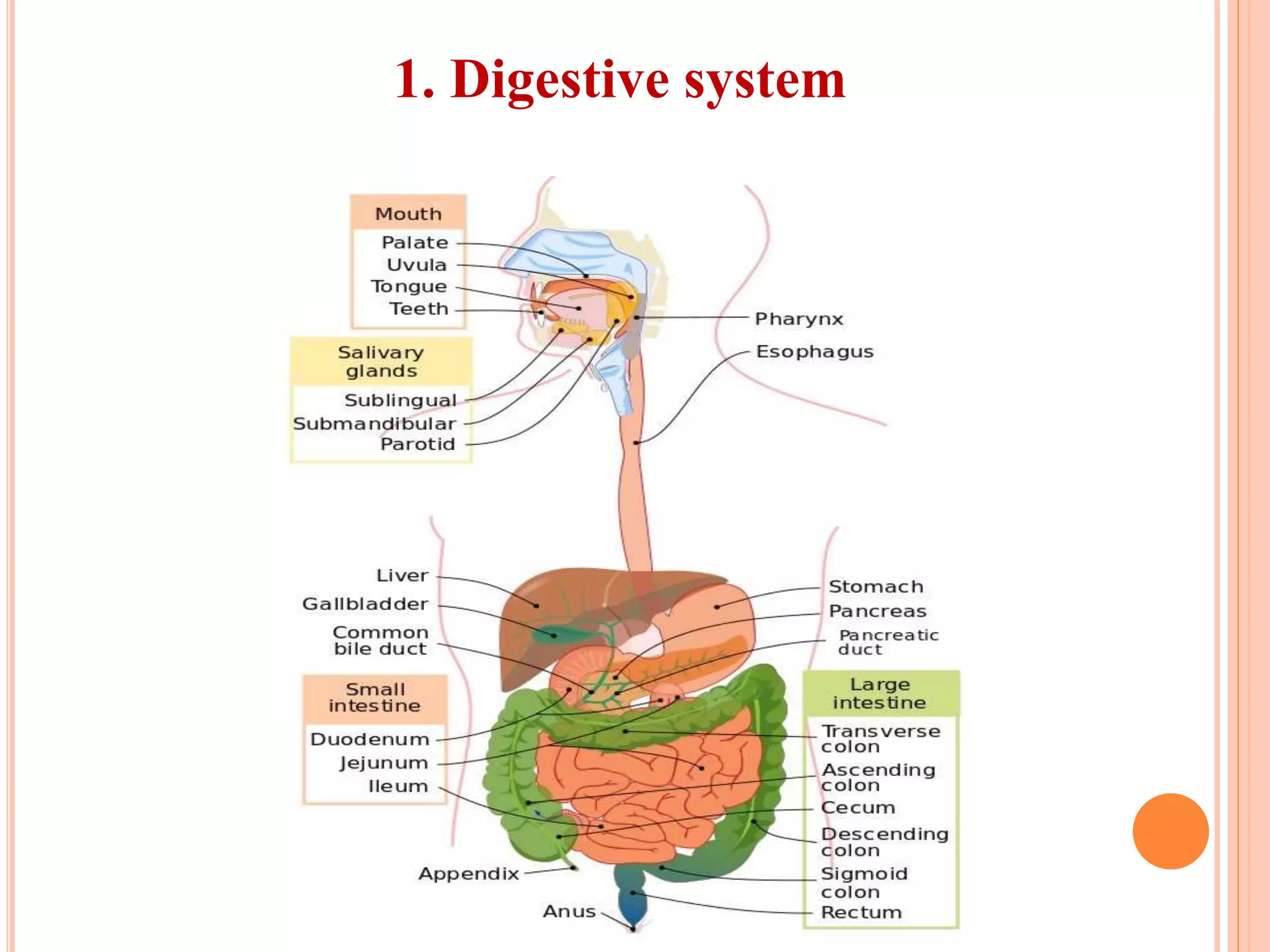
1. Digestive system
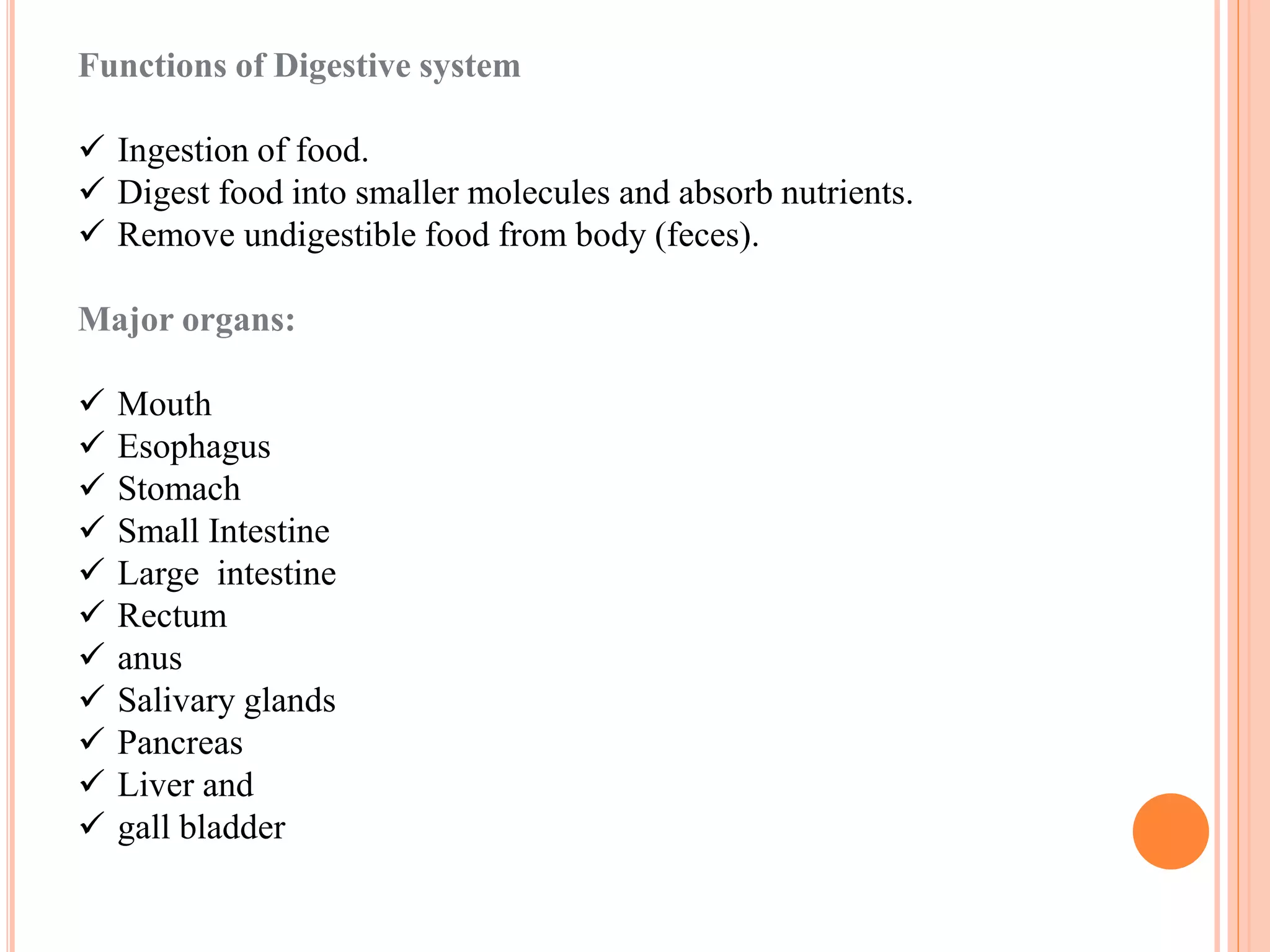
Functions of Digestive system
 Ingestion of food.
 Digest food into smaller molecules and absorb nutrients.
 Remove undigestible food from body (feces).
Major organs:
 Mouth
 Esophagus
 Stomach
 Small Intestine
 Large intestine
 Rectum
 anus
 Salivary glands
 Pancreas
 Liver and
 gall bladder
2. Circulatory system
Functions:
 Transport oxygen and nutrients to and from cells/tissues.
 Remove waste products.
Major organs:
 Heart
 Veins
 Arteries
 Capillaries
 Red blood cells
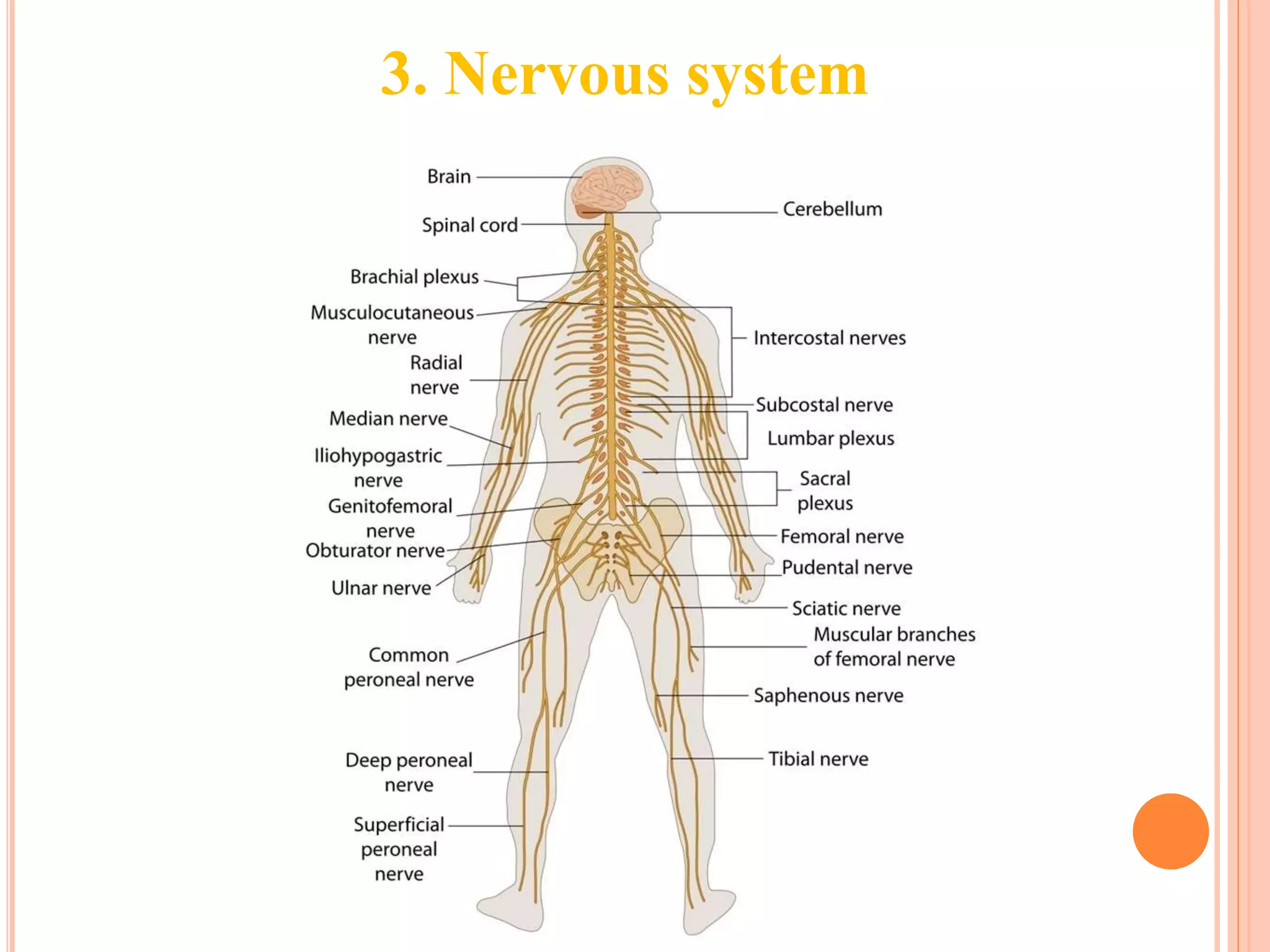
3. Nervous system
Functions:
 Gathers and interprets information
 Responds to information
 Helps maintain homeostasis
 Coordinates activities of other organ systems
Major organs:
 Brain
 Spinal cord
 Nerves
 Eyes
 Ears
4. Excretory system
Functions:
 Removes waste products from cellular metabolism(urea,water,CO2)
 Regulates pH and volume of blood.
 Filters blood
Major organs:
 Kidneys
 Ureters
 Bladder
 Urethra
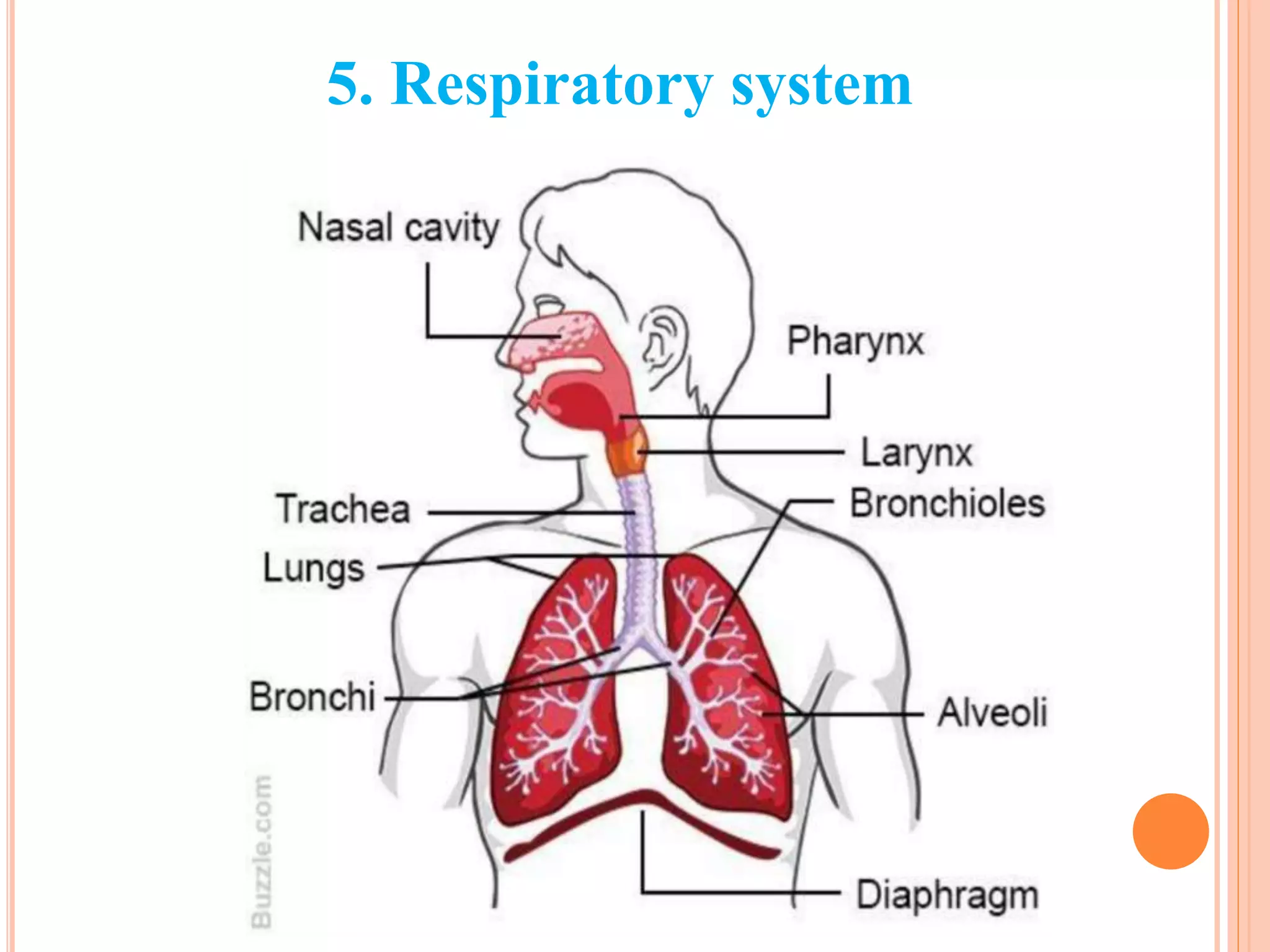
5. Respiratory system
Functions:
 Exchange of gases(oxygen and carbon dioxide)
 Removes water
Major organs:
 Nose
 Trachea
 Bronchi
 Bronchioles
 Alveoli
 Lungs
6. Skeletal system
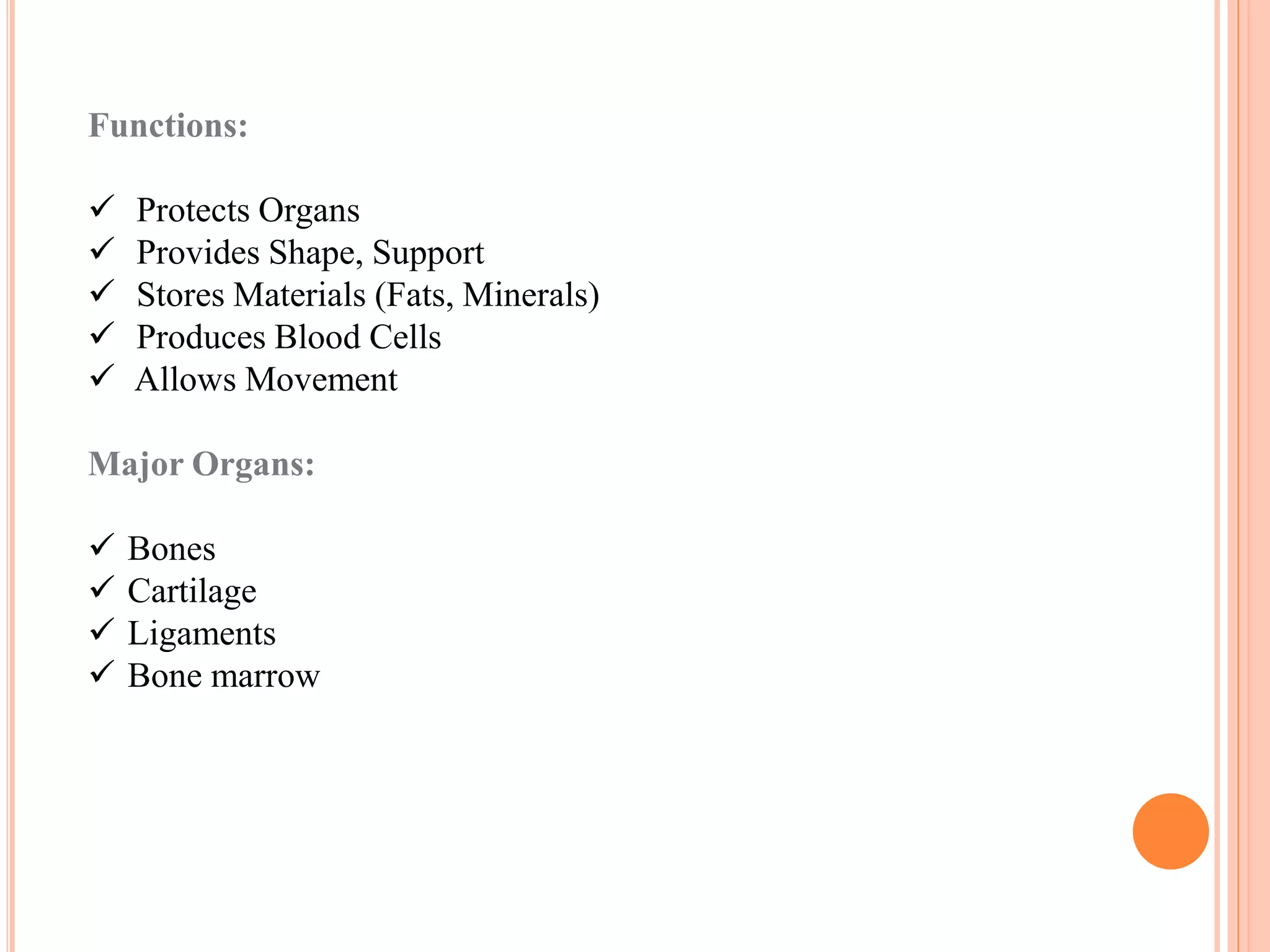
Functions:
 Protects Organs
 Provides Shape, Support
 Stores Materials (Fats, Minerals)
 Produces Blood Cells
 Allows Movement
Major Organs:
 Bones
 Cartilage
 Ligaments
 Bone marrow
7. Muscular system
Functions:
 Allows for movement by contracting
 Locomotion
 Heat production
Major organs:
 Cardiac muscle
 Smooth muscle
 Skeletal muscle
 Tendons
8. Endocrine system
Functions:
 Regulates body activities using hormones.
 Slow response, long lasting
Major organs:
 Hypothalamus gland
 Pituitary gland
 Thyroid gland
 Thymus gland
 Adrenal gland
 Pancreas
 Ovaries
 Testes
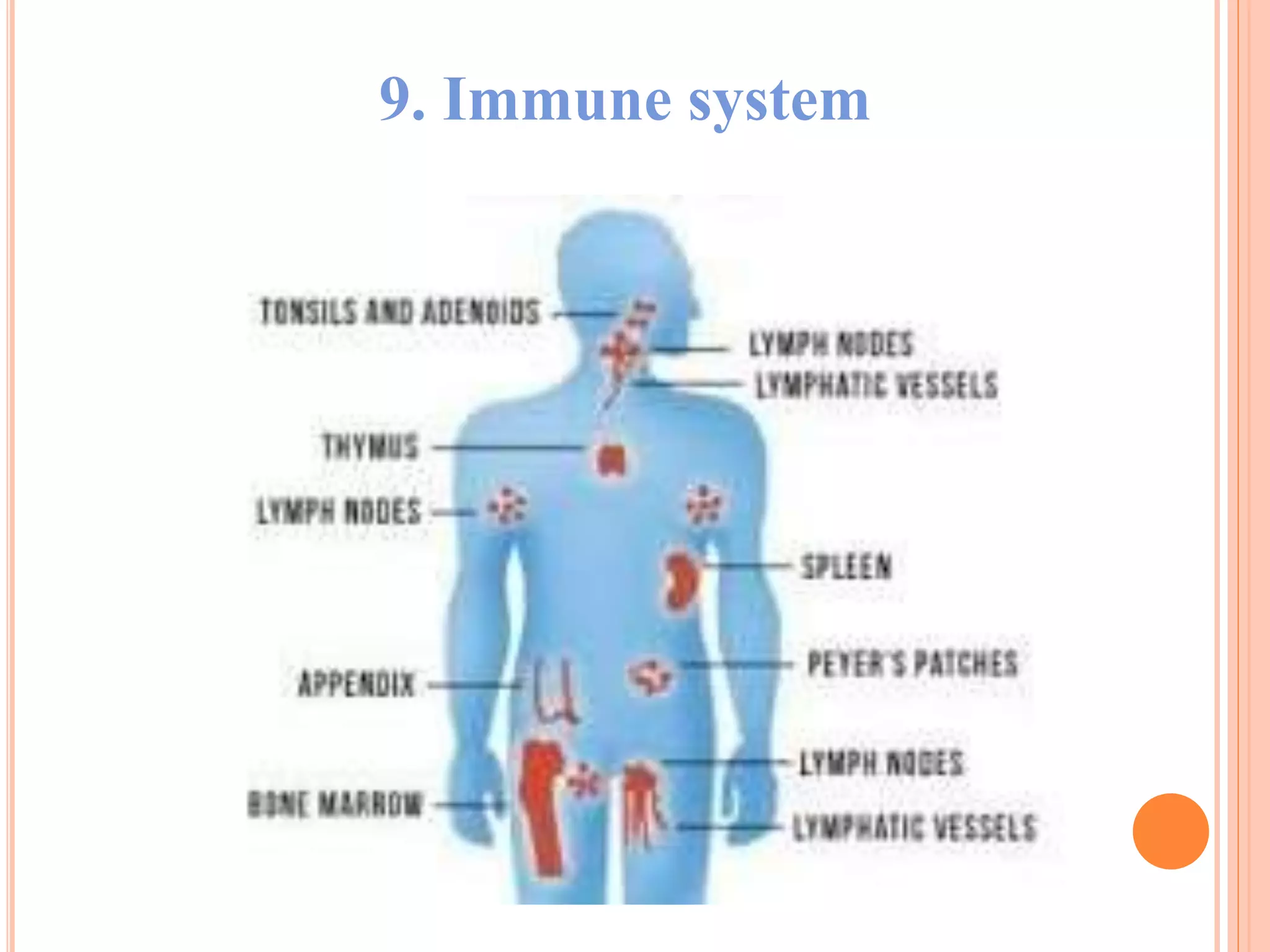
9. Immune system
Functions:
 Fights off foreign invaders in the body
Major organs:
 White Blood Cells
T cells
B cells
-produce antibodies
 Macrophages
10. Integumentary system
Functions:
 Barrier against infection
 Helps regulate body temperature
 Removes excretory waste(urea, water)
 Protects against sun’s uv rays
 Produces vitamin D
Major organs:
Skin
 Epidermis
 Dermis
 Sweat gland
 Sebaceous gland (oil)
 Hair follicle
 Blood vessels
 Nerves
11. Lymphatic system
Functions:
 Stores and carries WBC’s that fight disease.
 Collects excess fluid and returns it to blood (2nd circulatory system-
reaches places other one can’t between cells).
Major organs:
 Lymph
 Lymph vessels
 Lymph nodes
 Spleen
 Thymus
12. Reproductive system
Functions:
 Produce germ cells(eggs & sperms)
 Environmental for growth of fetus(female)
Major organs:
 Ovaries
 Uterus
 Mammary glands
 Testis
 Prostate glands
 External genitalia
Systems of human body

Systems of human body

  • 1.
    Systems of Humanbody Presented by, K. Sai lakshmi B-pharmacy Balaji college of pharmacy
  • 2.
    Definition: Body systems aregroups of organs and tissues that work together to perform important jobs for the body. Some organs may be part of more than one body system if they serve more than one function The human body consists of twelve organ systems, each of which contains several functions and specific organs.
  • 3.
    1. Digestive system 2.Circulatory system 3. Nervous system 4. Excretory system 5. Respiratory system 6. Skeletal system 7. Muscular system 8. Endocrine system 9. Immune system 10. Integumentary system 11. Lymphatic system 12. Reproductive system
  • 4.
  • 5.
    Functions of Digestivesystem  Ingestion of food.  Digest food into smaller molecules and absorb nutrients.  Remove undigestible food from body (feces). Major organs:  Mouth  Esophagus  Stomach  Small Intestine  Large intestine  Rectum  anus  Salivary glands  Pancreas  Liver and  gall bladder
  • 6.
  • 7.
    Functions:  Transport oxygenand nutrients to and from cells/tissues.  Remove waste products. Major organs:  Heart  Veins  Arteries  Capillaries  Red blood cells
  • 8.
  • 9.
    Functions:  Gathers andinterprets information  Responds to information  Helps maintain homeostasis  Coordinates activities of other organ systems Major organs:  Brain  Spinal cord  Nerves  Eyes  Ears
  • 10.
  • 11.
    Functions:  Removes wasteproducts from cellular metabolism(urea,water,CO2)  Regulates pH and volume of blood.  Filters blood Major organs:  Kidneys  Ureters  Bladder  Urethra
  • 12.
  • 13.
    Functions:  Exchange ofgases(oxygen and carbon dioxide)  Removes water Major organs:  Nose  Trachea  Bronchi  Bronchioles  Alveoli  Lungs
  • 14.
  • 15.
    Functions:  Protects Organs Provides Shape, Support  Stores Materials (Fats, Minerals)  Produces Blood Cells  Allows Movement Major Organs:  Bones  Cartilage  Ligaments  Bone marrow
  • 16.
  • 17.
    Functions:  Allows formovement by contracting  Locomotion  Heat production Major organs:  Cardiac muscle  Smooth muscle  Skeletal muscle  Tendons
  • 18.
  • 19.
    Functions:  Regulates bodyactivities using hormones.  Slow response, long lasting Major organs:  Hypothalamus gland  Pituitary gland  Thyroid gland  Thymus gland  Adrenal gland  Pancreas  Ovaries  Testes
  • 20.
  • 21.
    Functions:  Fights offforeign invaders in the body Major organs:  White Blood Cells T cells B cells -produce antibodies  Macrophages
  • 22.
  • 23.
    Functions:  Barrier againstinfection  Helps regulate body temperature  Removes excretory waste(urea, water)  Protects against sun’s uv rays  Produces vitamin D Major organs: Skin  Epidermis  Dermis  Sweat gland  Sebaceous gland (oil)  Hair follicle  Blood vessels  Nerves
  • 24.
  • 25.
    Functions:  Stores andcarries WBC’s that fight disease.  Collects excess fluid and returns it to blood (2nd circulatory system- reaches places other one can’t between cells). Major organs:  Lymph  Lymph vessels  Lymph nodes  Spleen  Thymus
  • 26.
  • 27.
    Functions:  Produce germcells(eggs & sperms)  Environmental for growth of fetus(female) Major organs:  Ovaries  Uterus  Mammary glands  Testis  Prostate glands  External genitalia