History
   of
Computer
How di d i t st ar t ?
Long time ago, people
 had to work very hard to
 have something they
 want. They always look
 for ways to make their
 work faster and easier.
Since man is born with
 intelligence, he thought of
 ways that would make things
 easy for him. One of the
 problems encountered by man
 was counting the things he
 had. Because of this, he
 invented something that could
 help him count fast and easy.
Ear l y C put i ng D
          om         evi ces
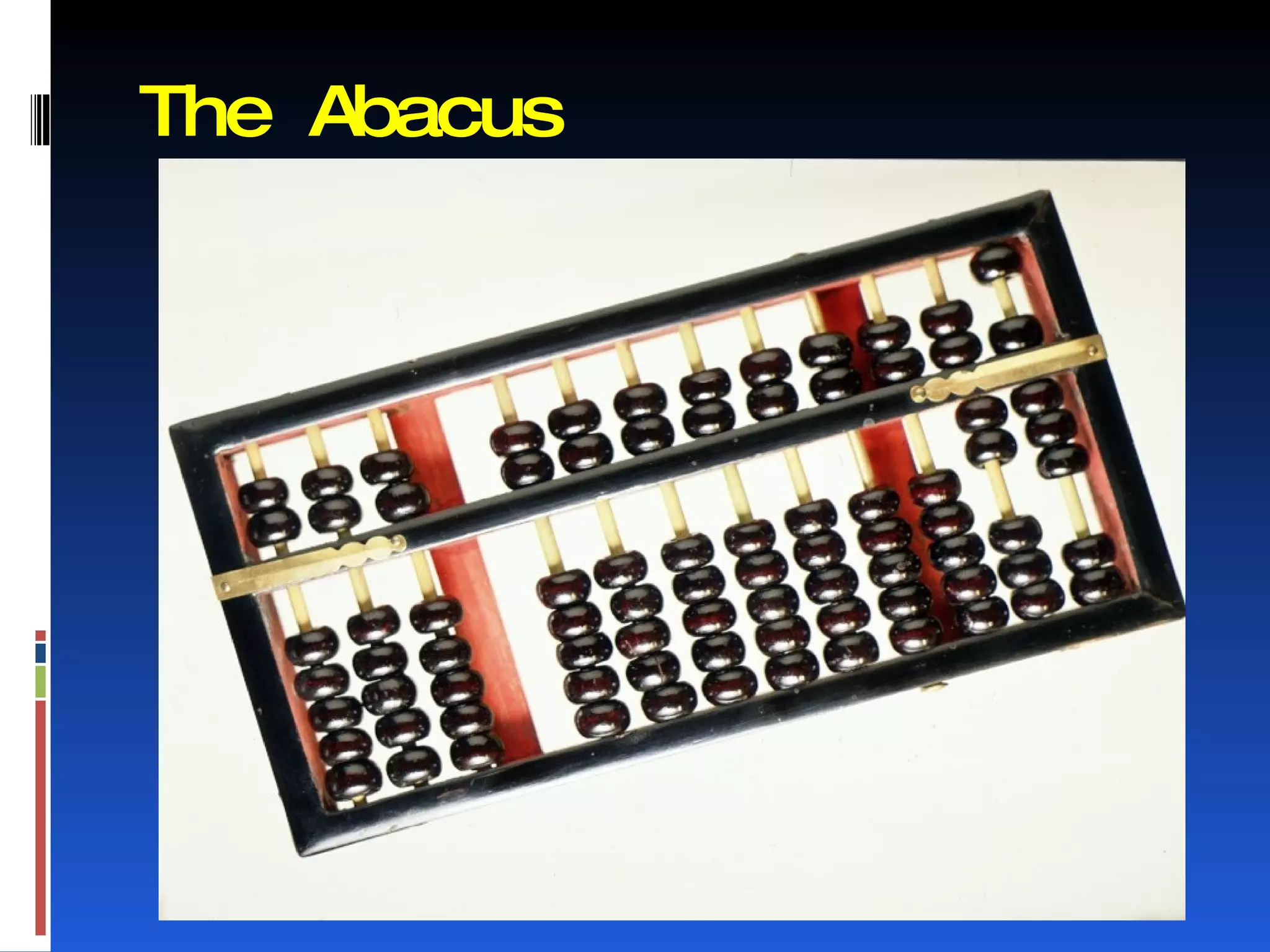
The Abacus
About 4,000 years ago, the Chinese
 invented the ABACUS. It is an adding
 tool that can help can you add &
 subtract numbers by moving beads
 back & forth on rods. The abacus was
 one of the earliest counting devise
 invented to help man solve his
 counting problems.
The Abacus
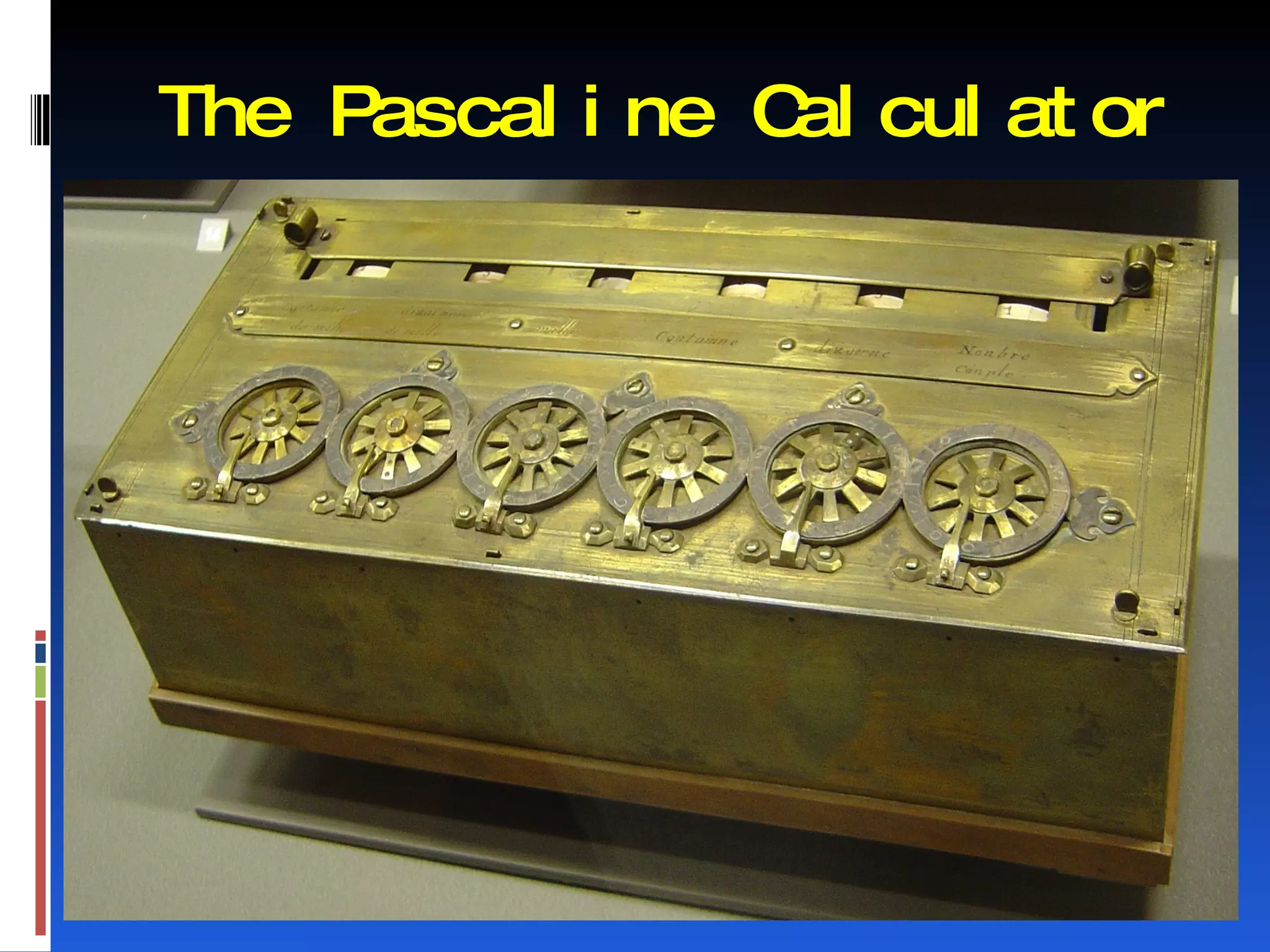
The Pascal i ne
C 1642, Blaiseor
Inal cul at Pascal, a French
 mathematician, invented the Pascal
 calculator. This device, also known as
 the Pascaline, operated 8 movable
 dials, which could add numbers up to
 8 figures long. It was used to perform
 simple arithmetic calculations. This
 device was limited to addition &
 subtraction only.
The Pascal i ne C cul at or
                 al
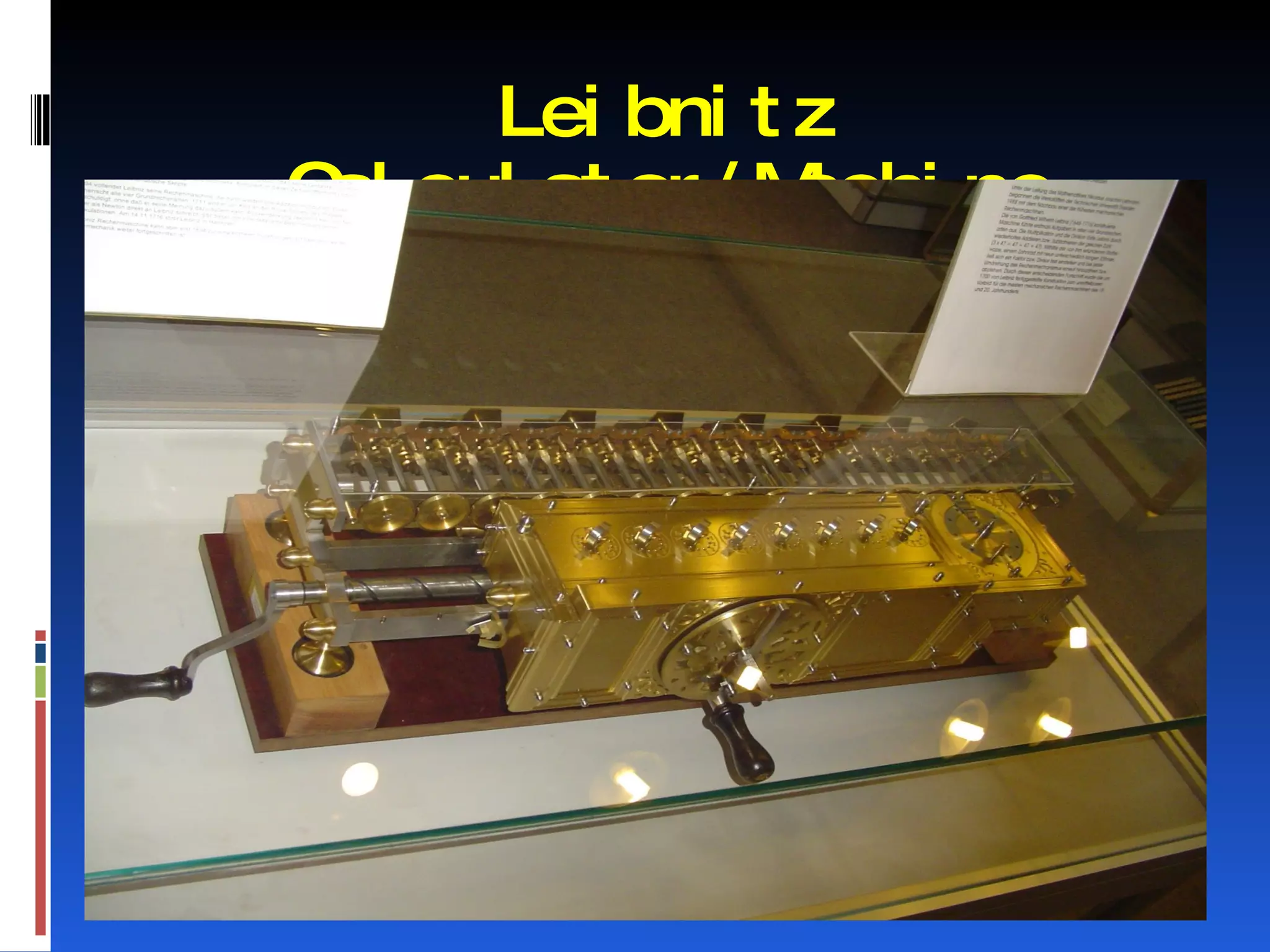
Lei bni t z C cul at or
               al
In 1673, Gottfried Leibntiz, a
  German mathematician &
  philosopher, enchanced the
  Pascaline by creating a device
  that could also multiply. It can
  even find the square root of
  number. The device was called
  the Leibnitz Calculator/ machine.
Lei bni t z
C cul at or / M
 al            achi ne
Jacquar d’ Aut om i c
               s      at
              Loom Jacquard,
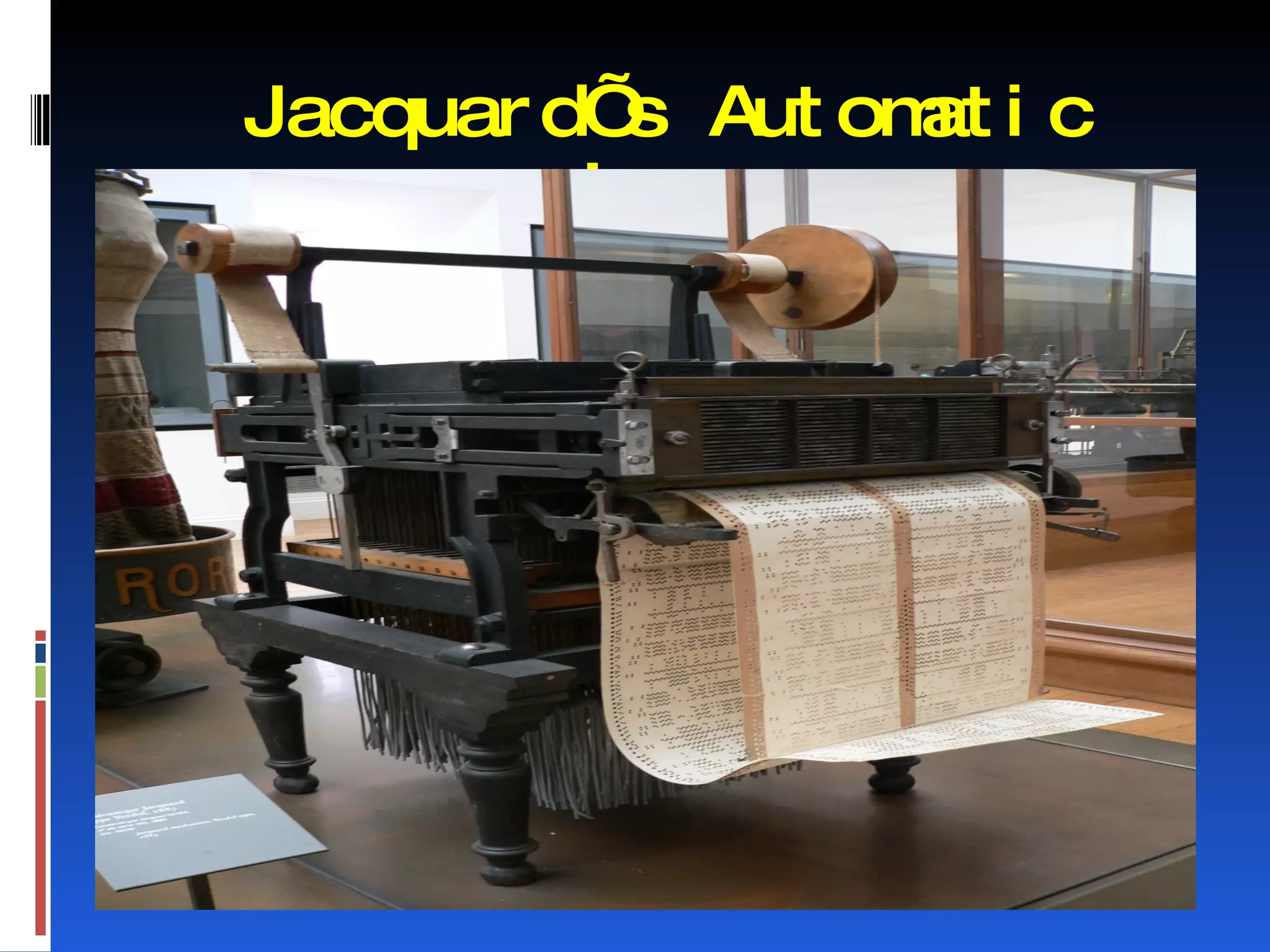
In 1801, Joseph-Marie
 a Frenchman, invented the
 Jacquard’s loom. Jacquard’s
 loom used punch card to
 program pattern that were
 outputted as woven fabrics by
 the loom.
Jacquar d’ Aut om i c
          s      at
         Loom
El ect r o- Mechani cal C put i ng
                          om
                Devi ces
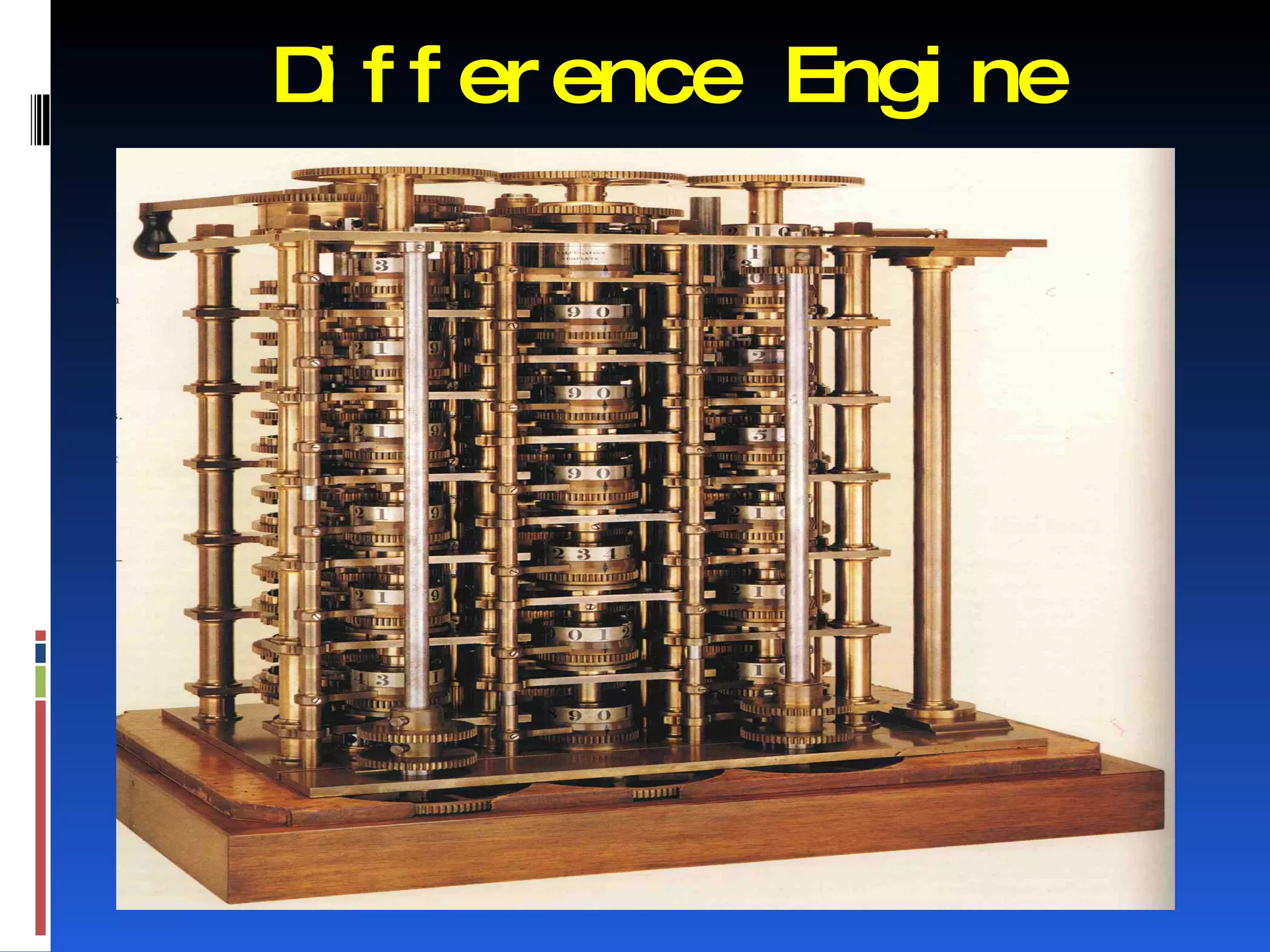
Difference Engine
In 1822, Charles Babbage, a British
  mathematician professor,
  invented the Difference Engine.
  Powered by steam & as large as a
  locomotive, the machine had the
  capacity to perform calculations &
  print the results.
D f f er ence Engi ne
 i
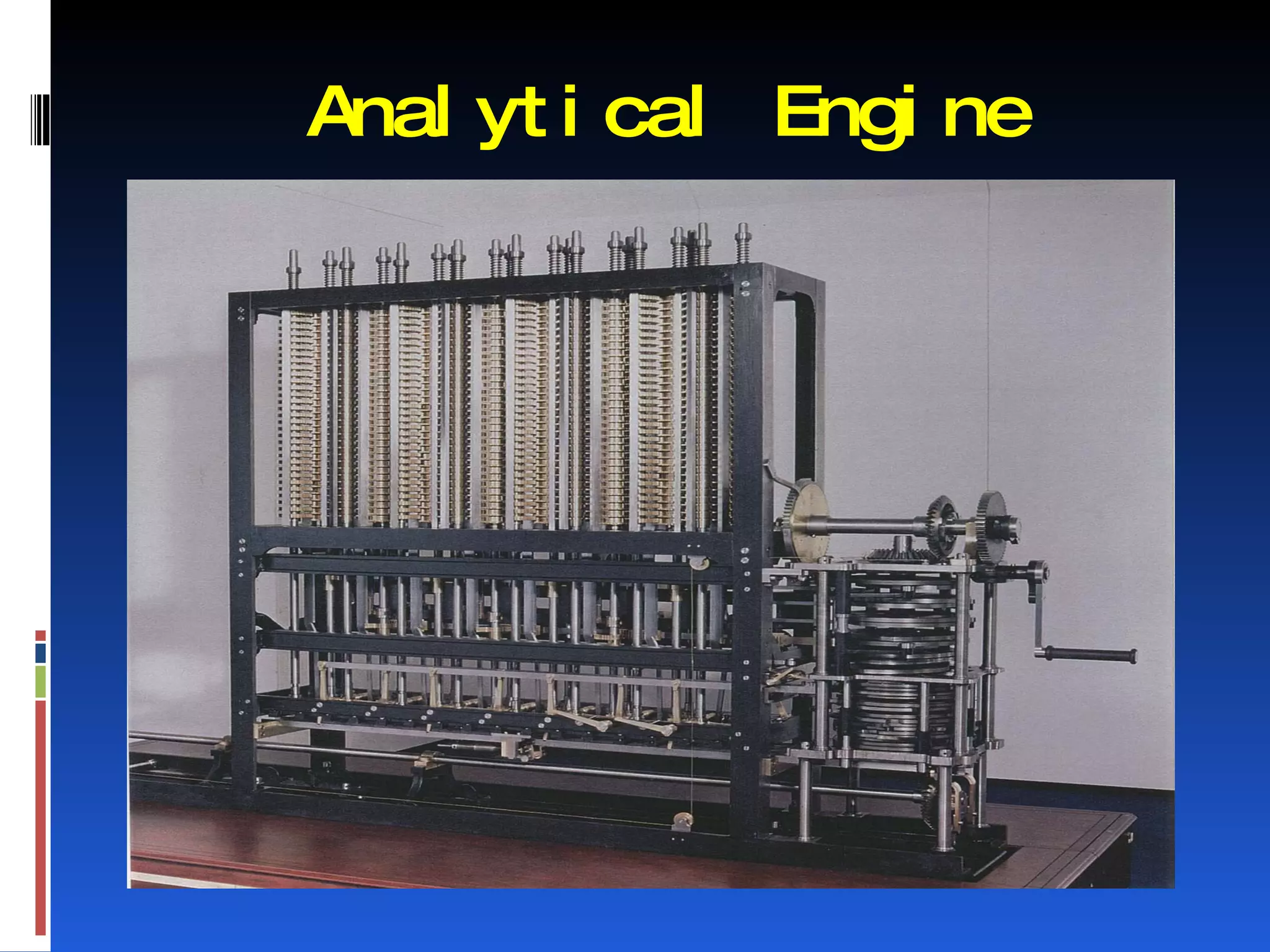
Anal yt i cal Engi ne
In, 1833, several years after Babbage
  worked on the Difference Engine, he
  began working on the first general-
  purpose digital computer, which he
  called the Analytical Engine. This
  steam-powered engine outlined the
  basic elements of today’s modern
  general-purpose computer and was a
  breakthrough concept.
Anal yt i cal Engi ne
Electronic
Computing Devices
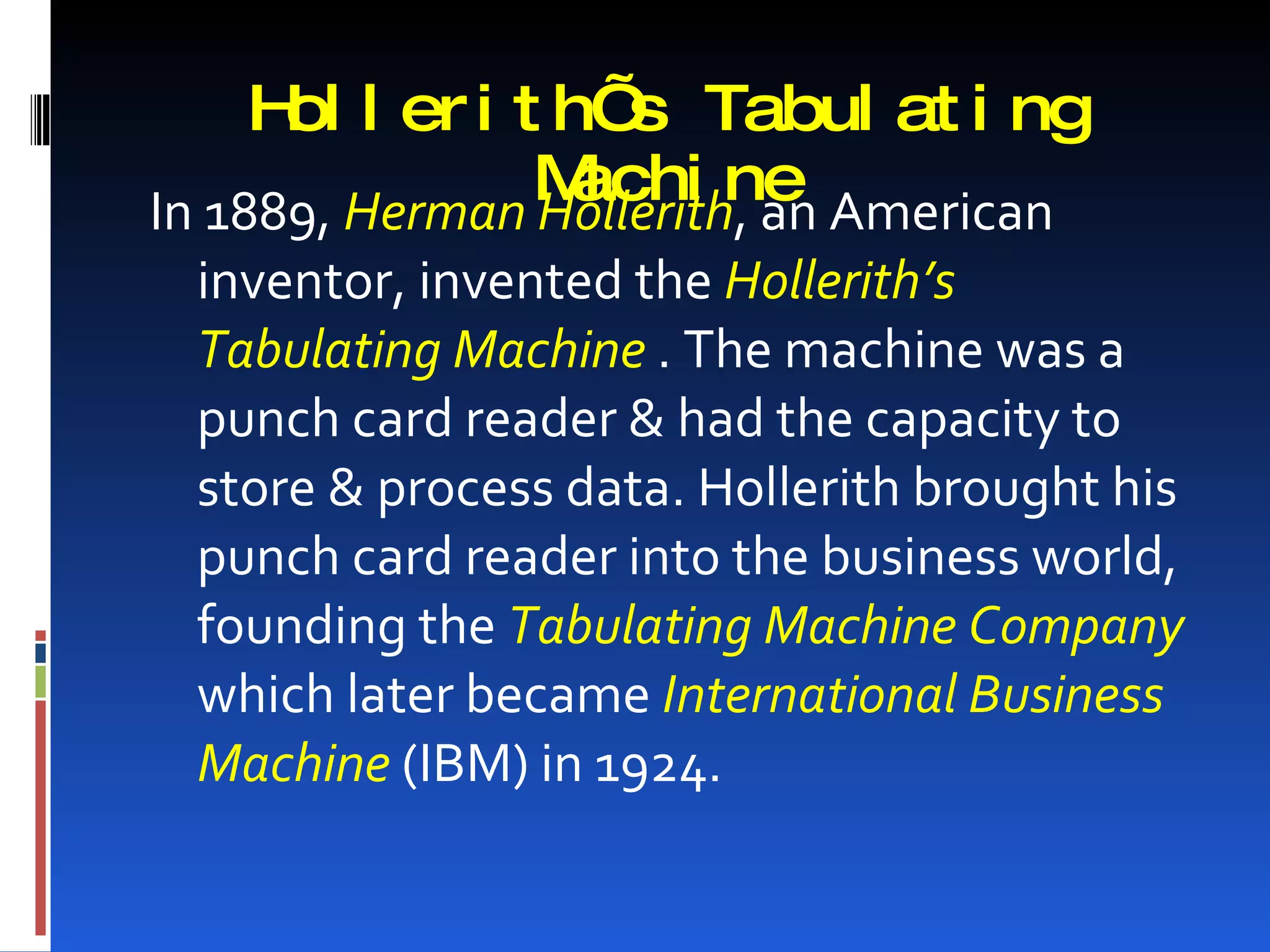
H l er i t h’ Tabul at i ng
      ol            s
                Machi ne American
In 1889, Herman Hollerith, an
 inventor, invented the Hollerith’s
 Tabulating Machine . The machine was a
 punch card reader & had the capacity to
 store & process data. Hollerith brought his
 punch card reader into the business world,
 founding the Tabulating Machine Company
 which later became International Business
 Machine (IBM) in 1924.
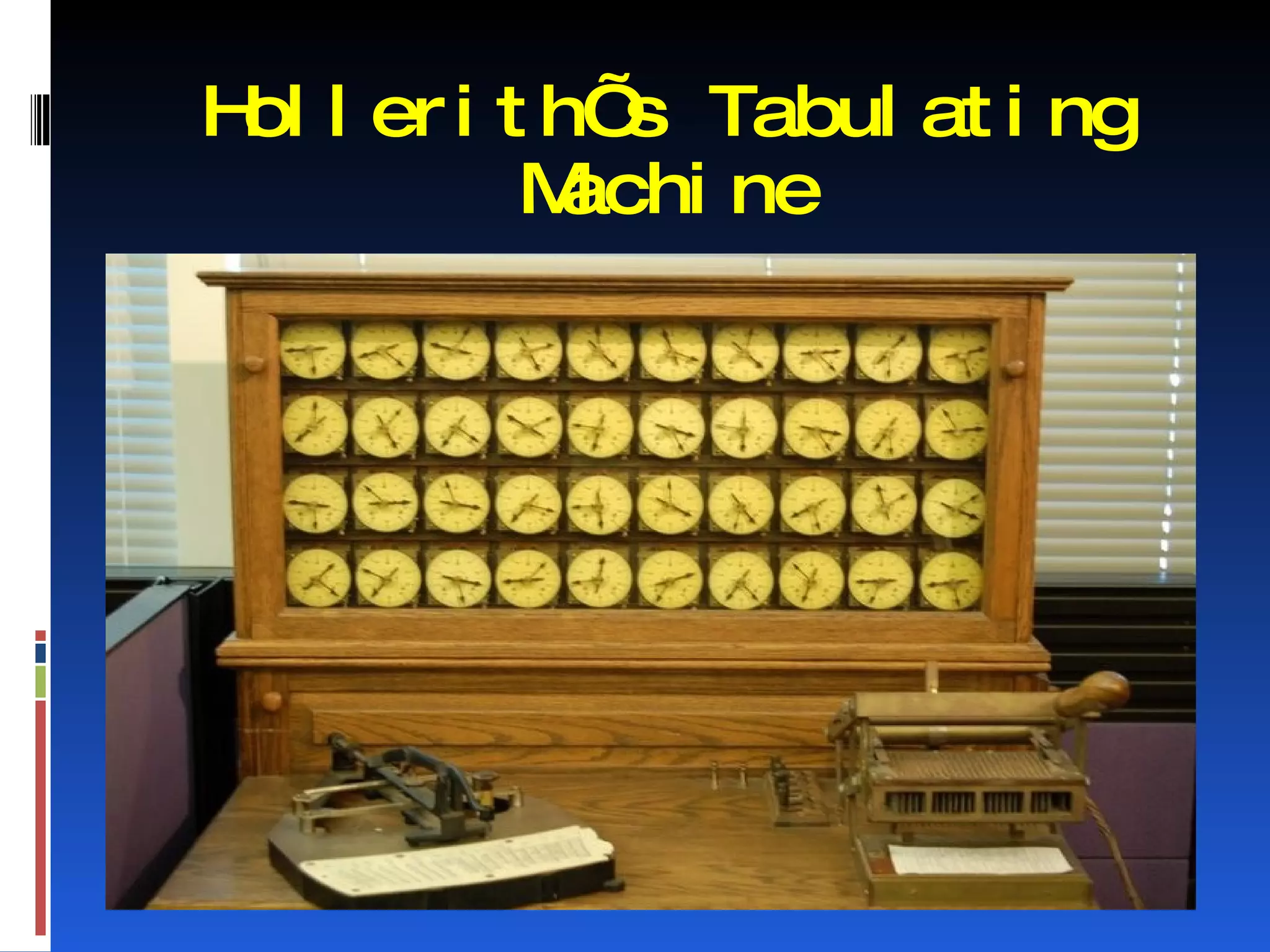
H l er i t h’ Tabul at i ng
 ol           s
          M achi ne
M k 1
             ar
This all-electronic calculator was
 invented by Howard H. Aiken in
 1930. This was used to create
 ballistic charts for the U.S.
 Navy. The Mark 1 is called the
 Harvard-IBM Automatic
 Sequence Controlled Calculator.
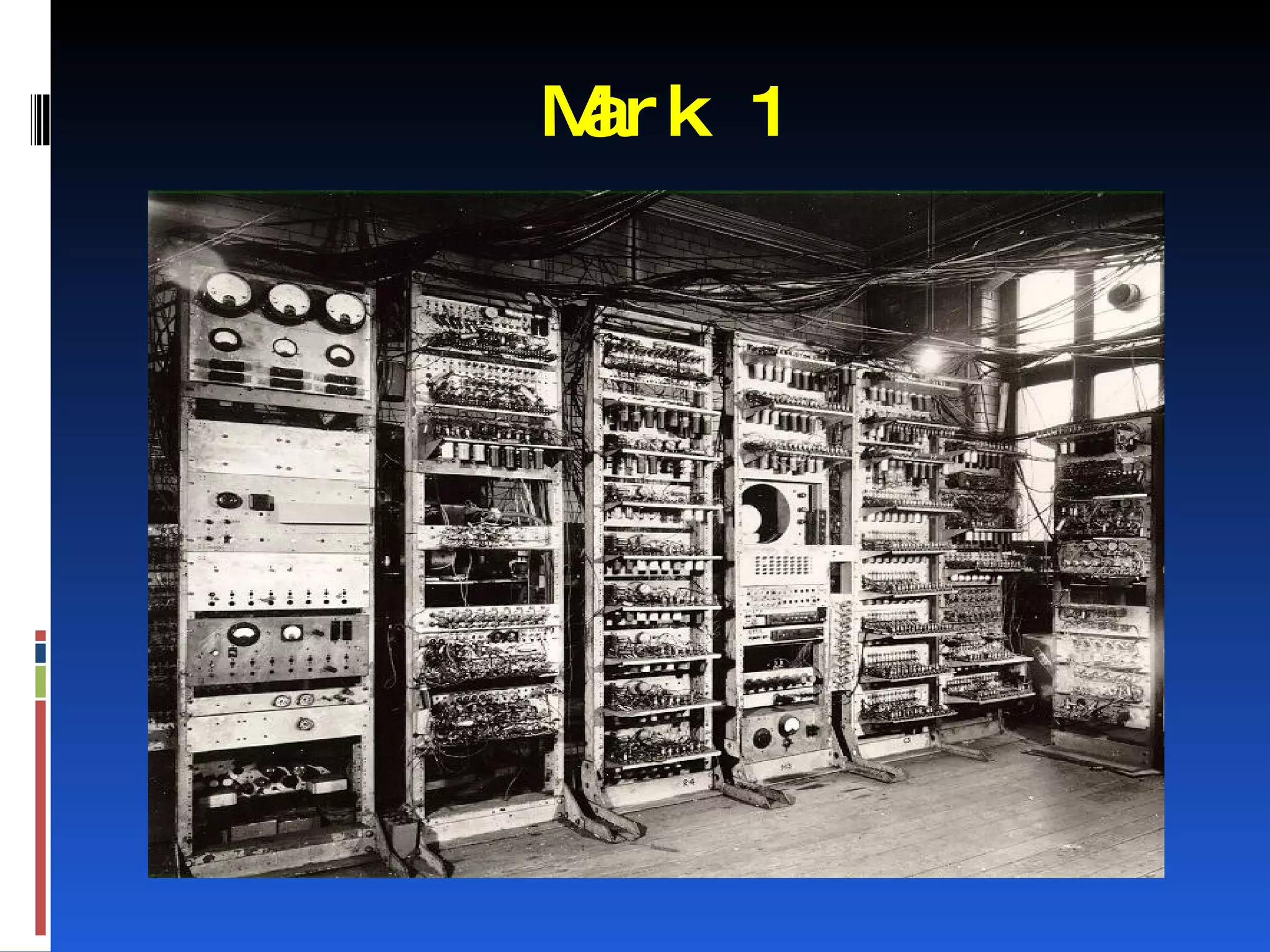
M k 1
 ar
EN AC
               I
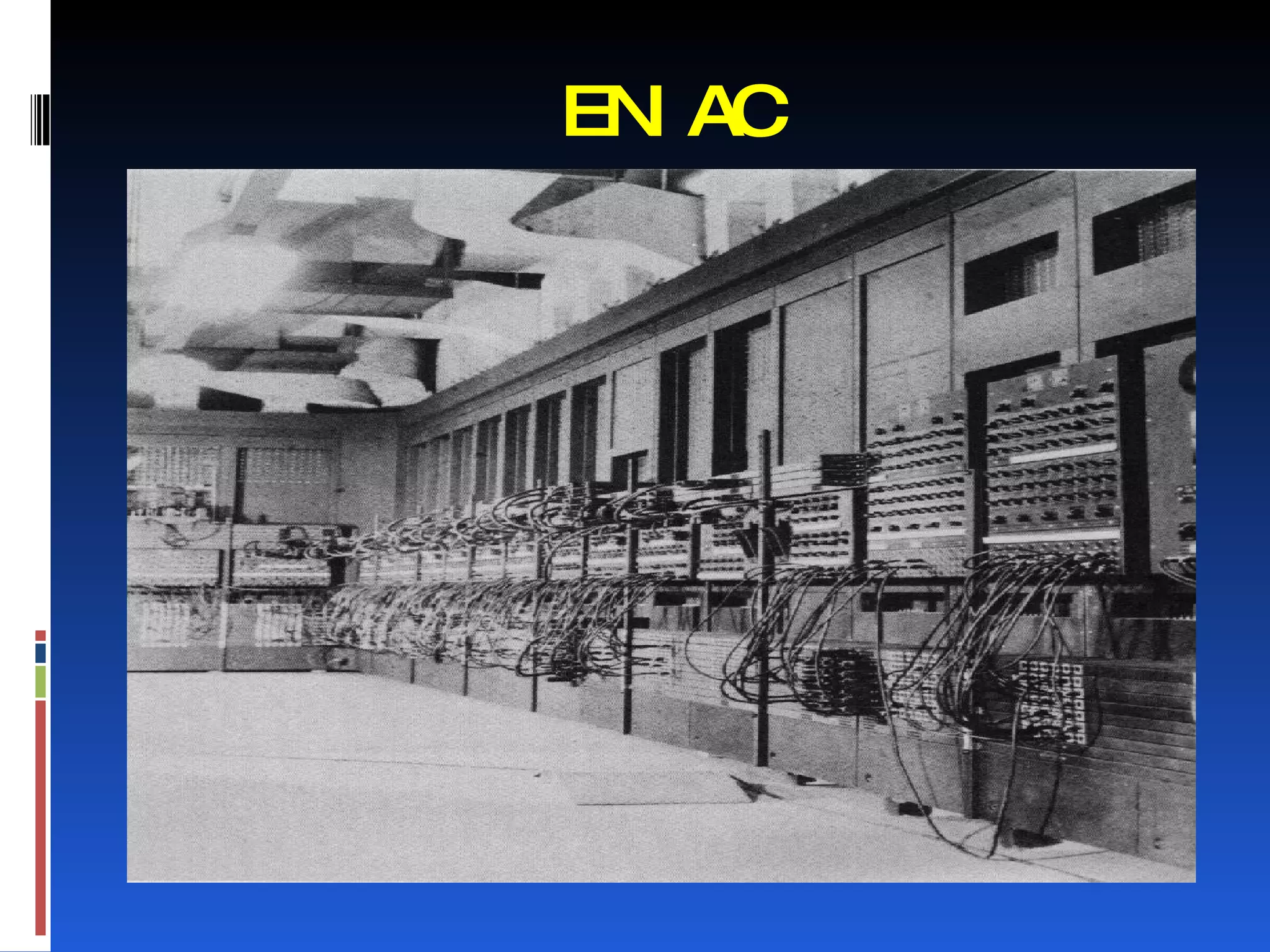
Between 1943 and 1946, the ENIAC
 or the Electronic Numerical
 Integrator and Computer was
 developed by John Presper Eckert
 and John Mauchly. This general
 purpose computer computed at a
 speed 1,000 times faster than the
 Mark 1.
EN AC
  I
EDVAC
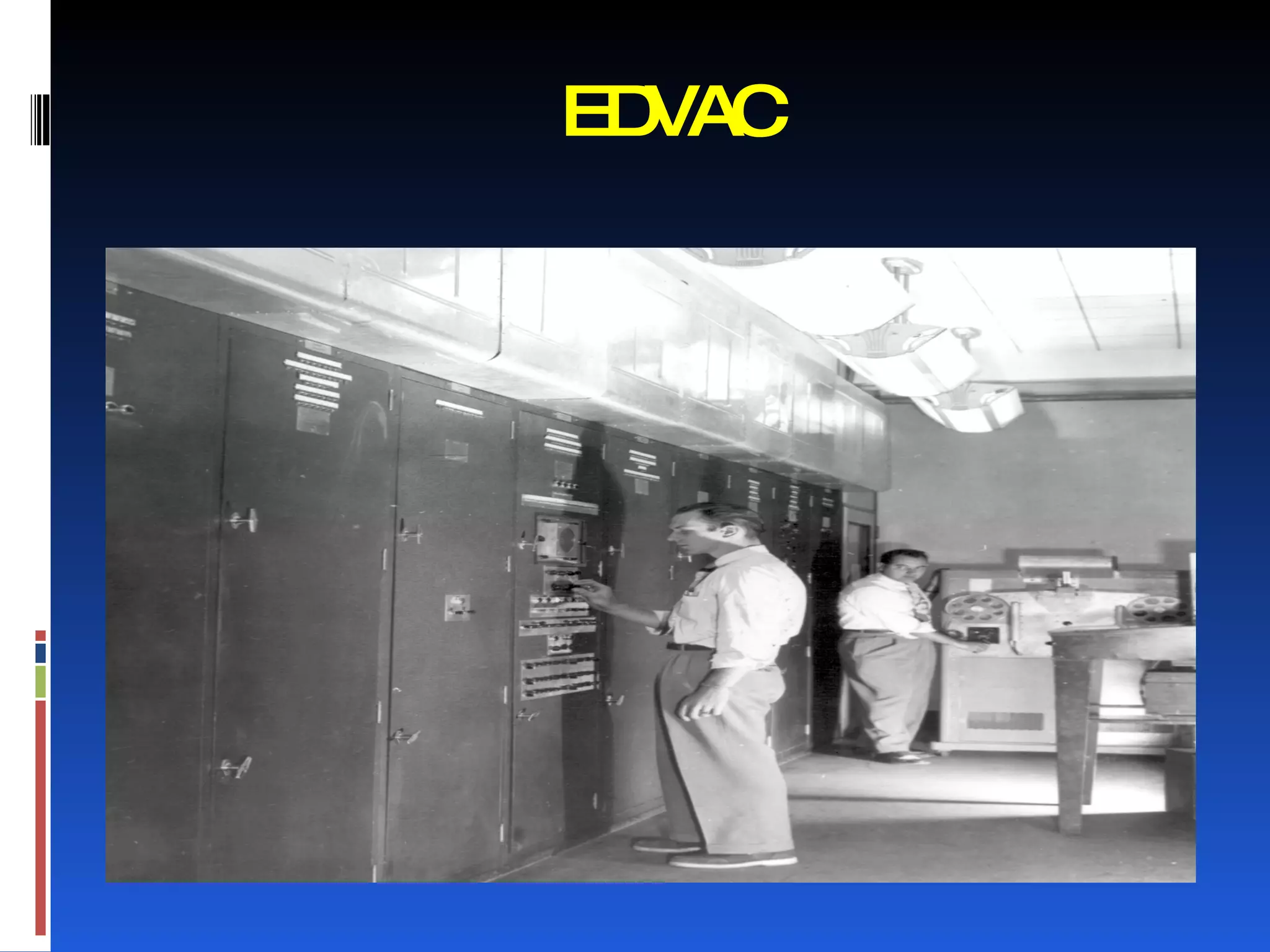
Between 1947 & 1948, the EDVAC
 or the Electronic Discrete Variable
 Automatic Computer was invented
 by John von Neumann. This
 invention had a Central
 Processing Unit (CPU), which
 allowed all computer functions to
 be coordinated through a single
 source.
EDVAC
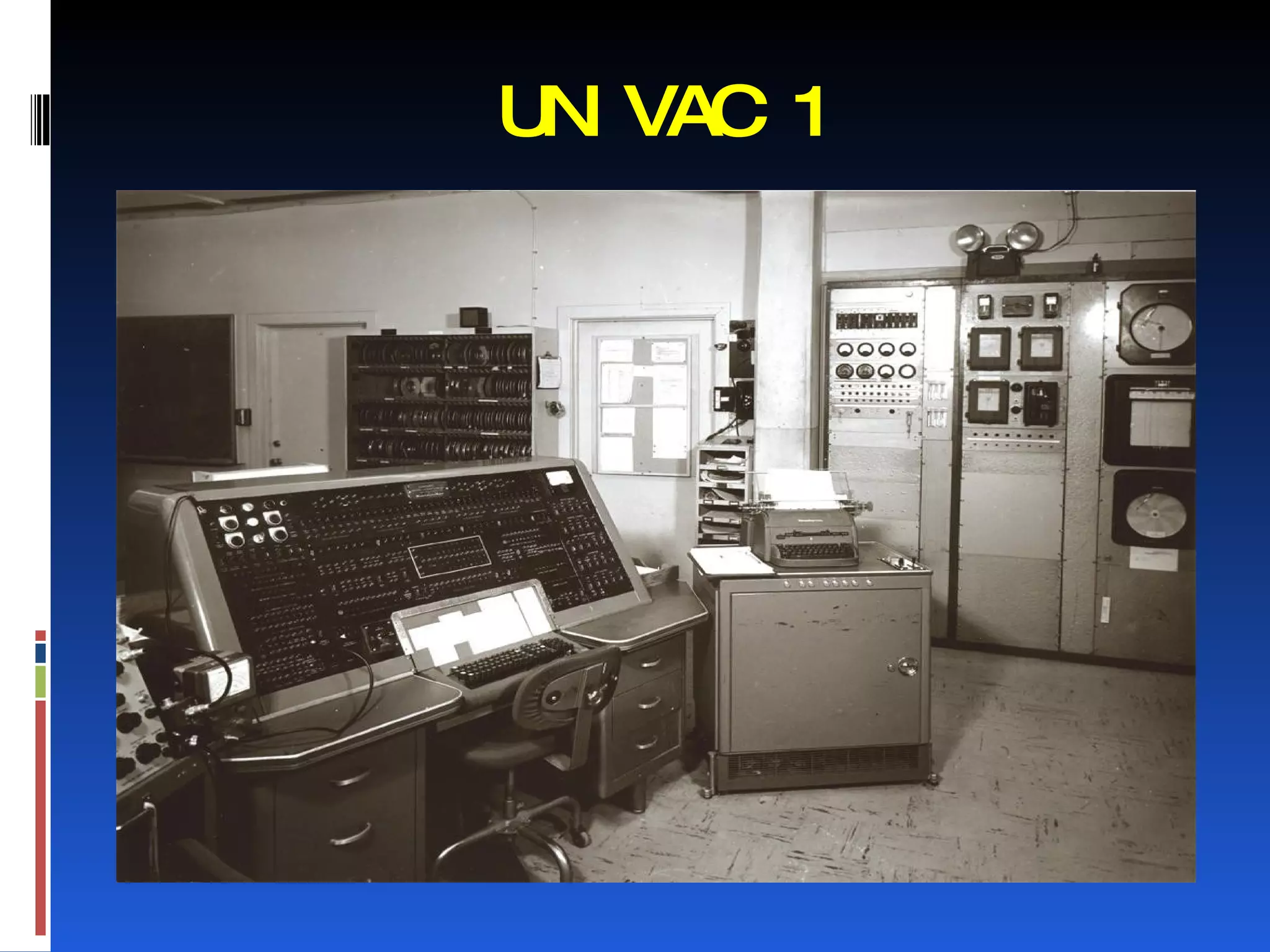
U I VAC 1
            N
The 1948, the UNIVAC or the
 Universal Automatic Computer was
  manufactured by Remington
 Rand Corporation. This became
 one of the first commercially
 available computers to benefit
 from the various advances in
 computing.
U I VAC 1
 N
Computers
  Today
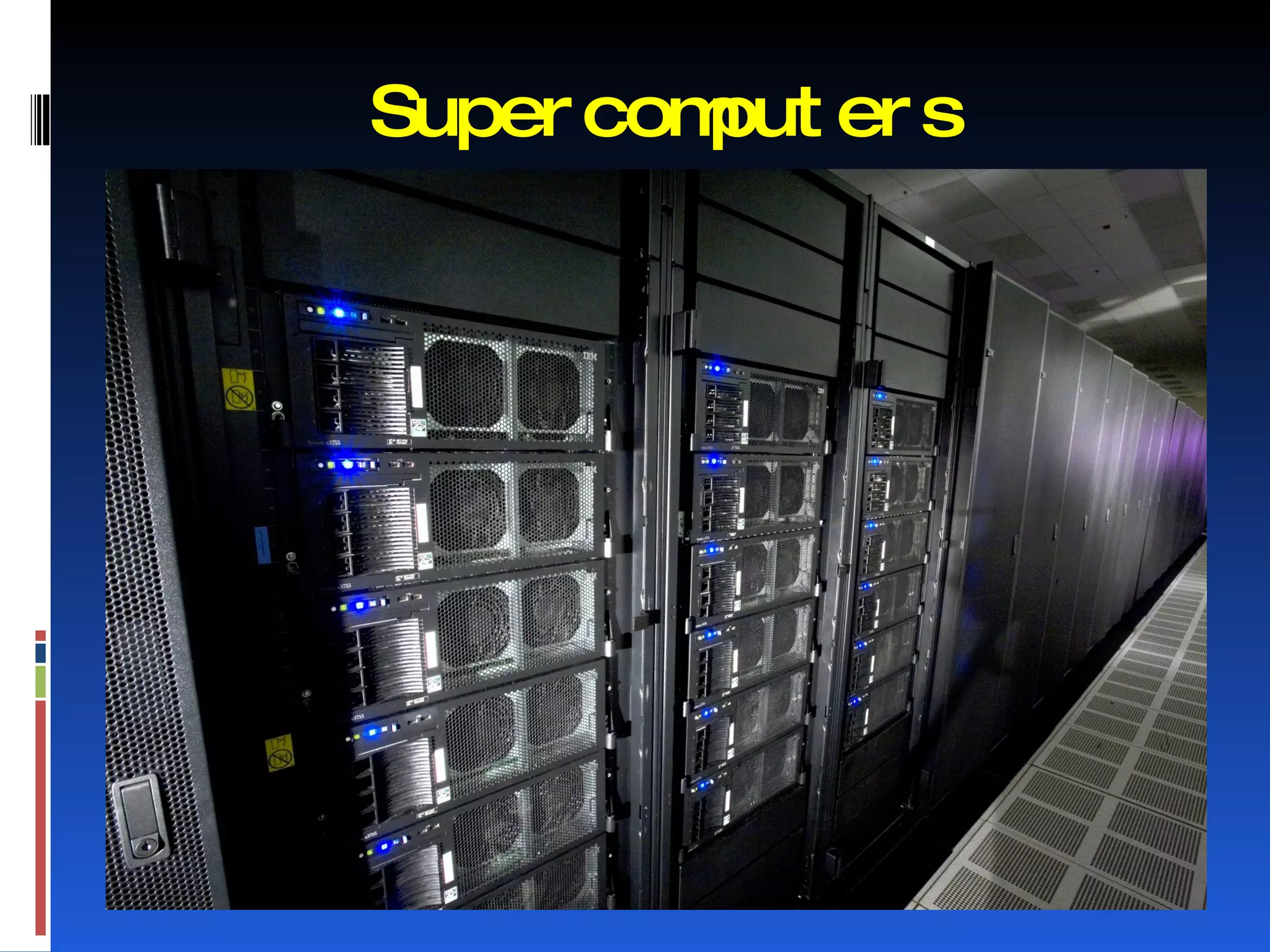
Super com er s
               put

Supercomputers are the most
 powerful computers made.
 Supercomputers are used to
 process huge amount of data
 for complex processes such as
 nuclear fission.
Super com er s
         put
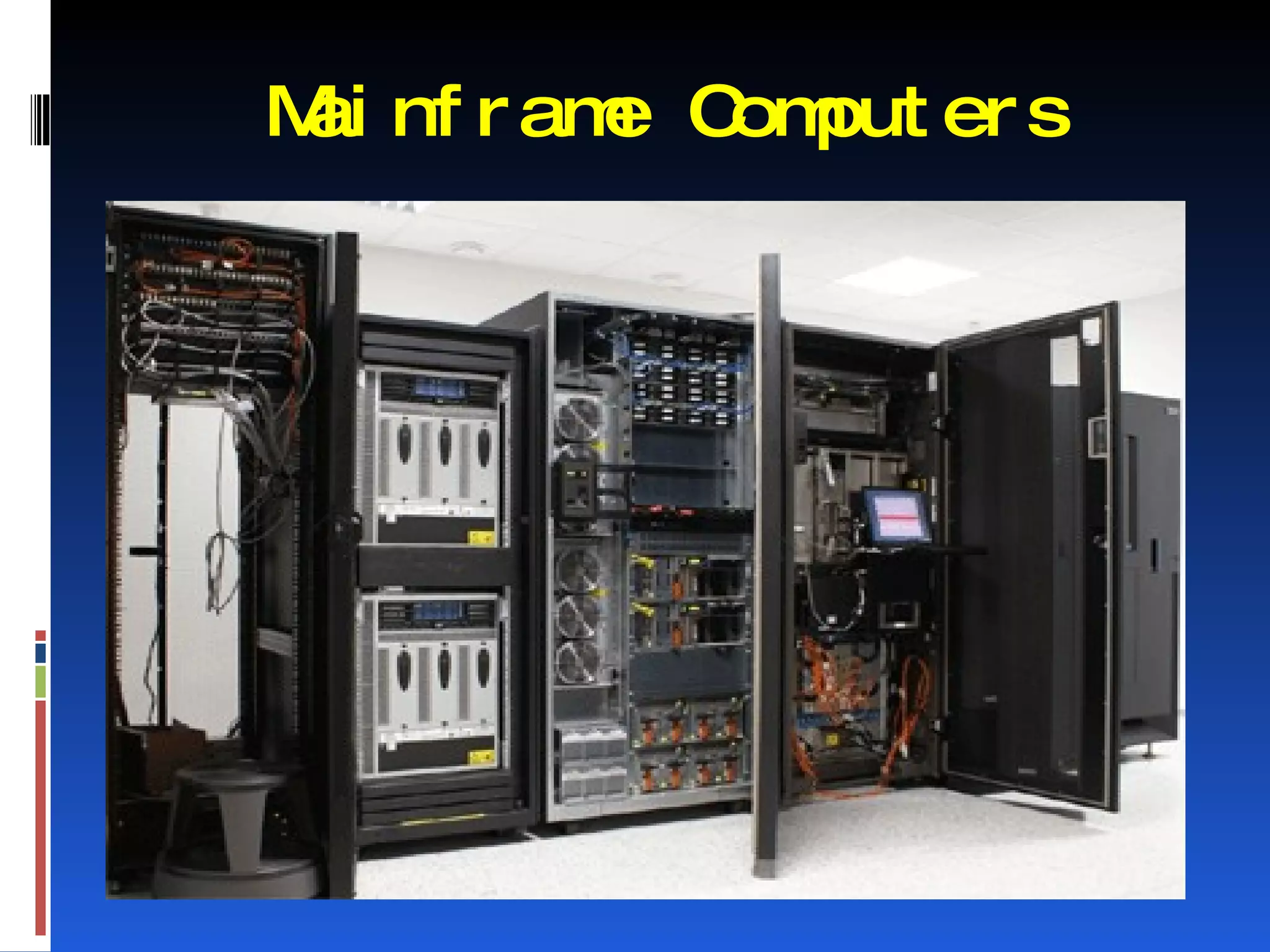
M nf r am C put er s
    ai      e om
Mainframe computers are the
 largest among the computers
 in use today. Mainframe
 computers are used where
 many people in large
 organizations are frequently
 accessing similar information.
M nf r am C put er s
 ai      e om
Per sonal C put er s
              om

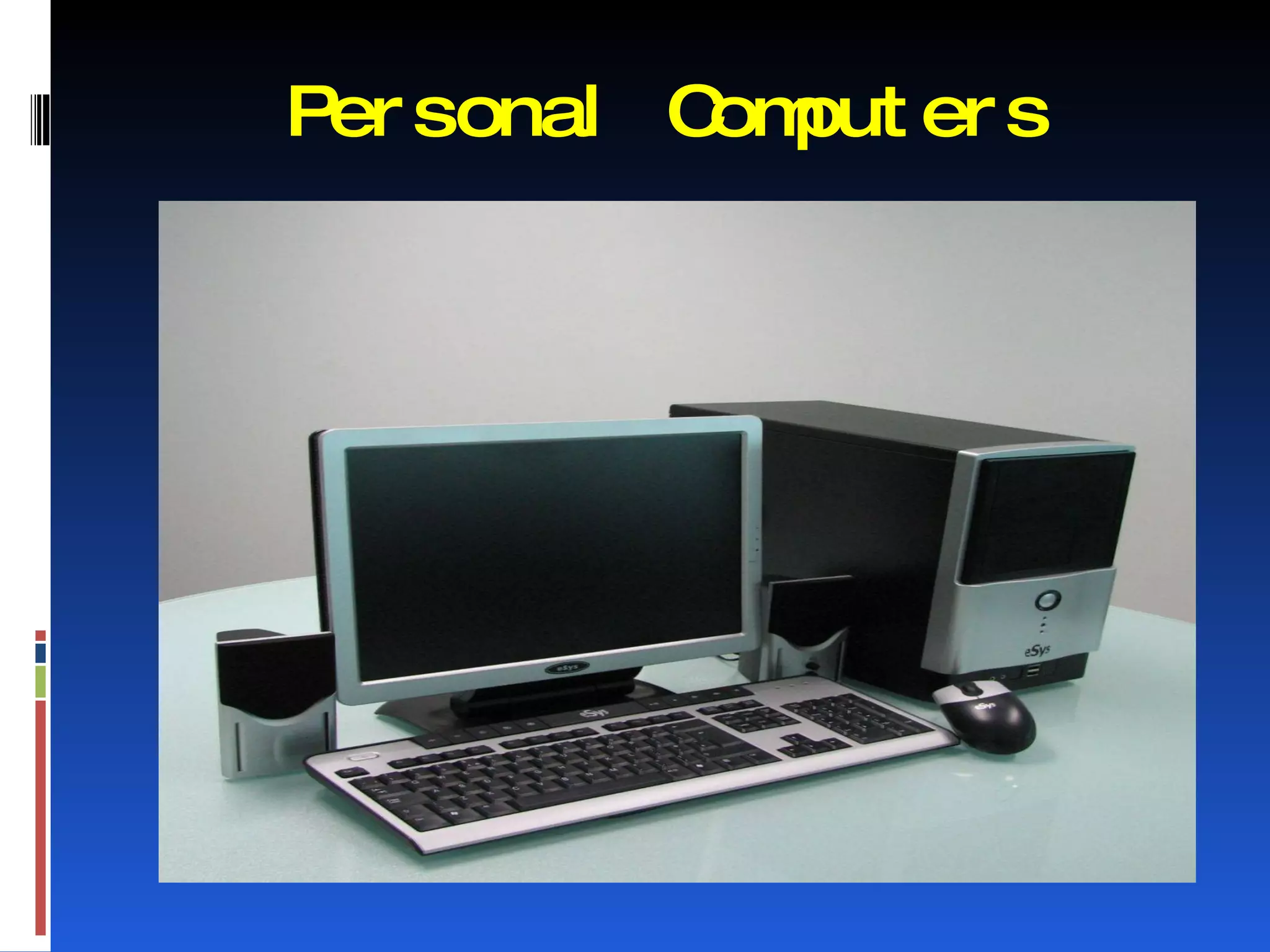
Personal Computers are the
 most common computers in
 use today.
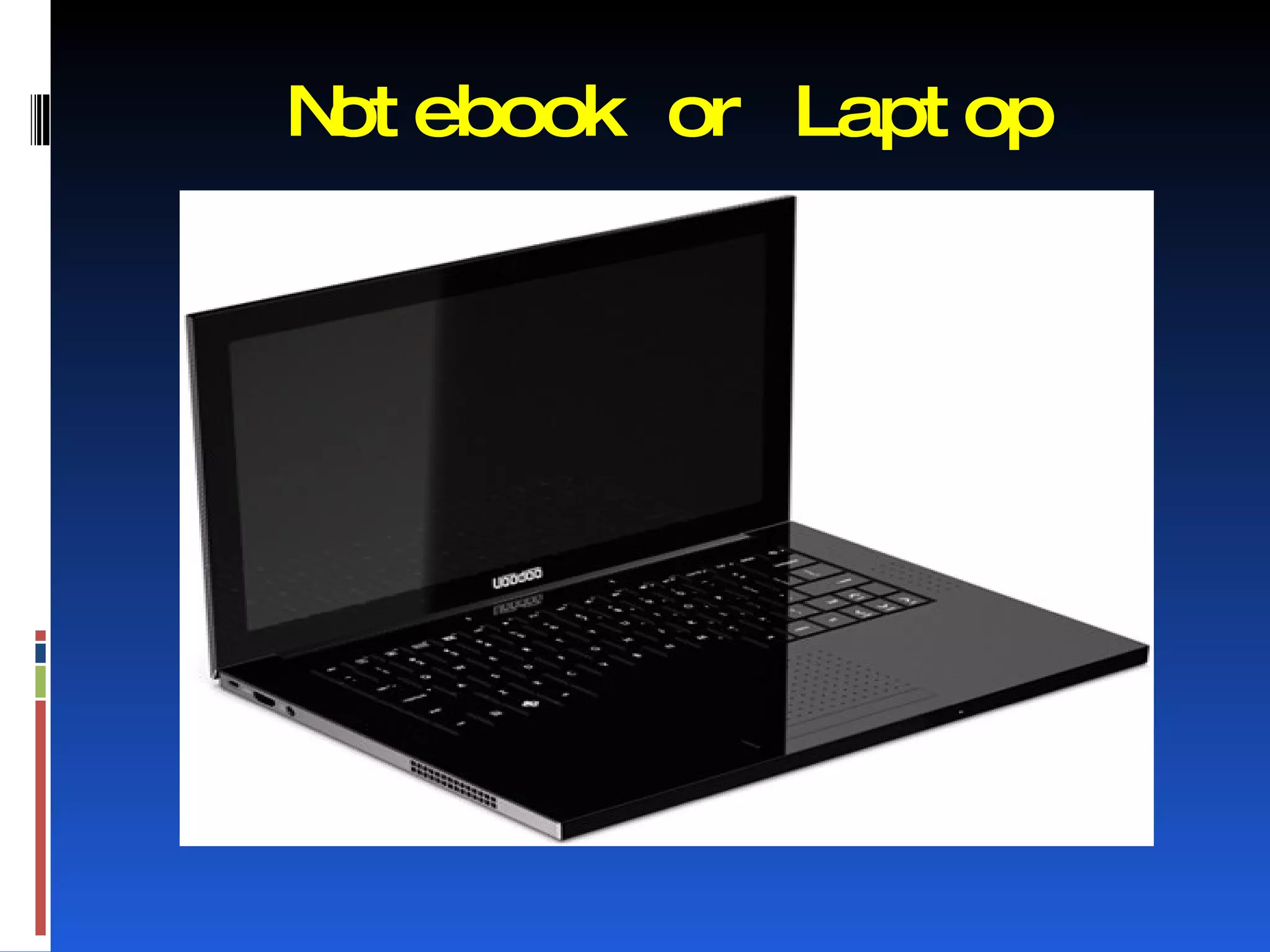
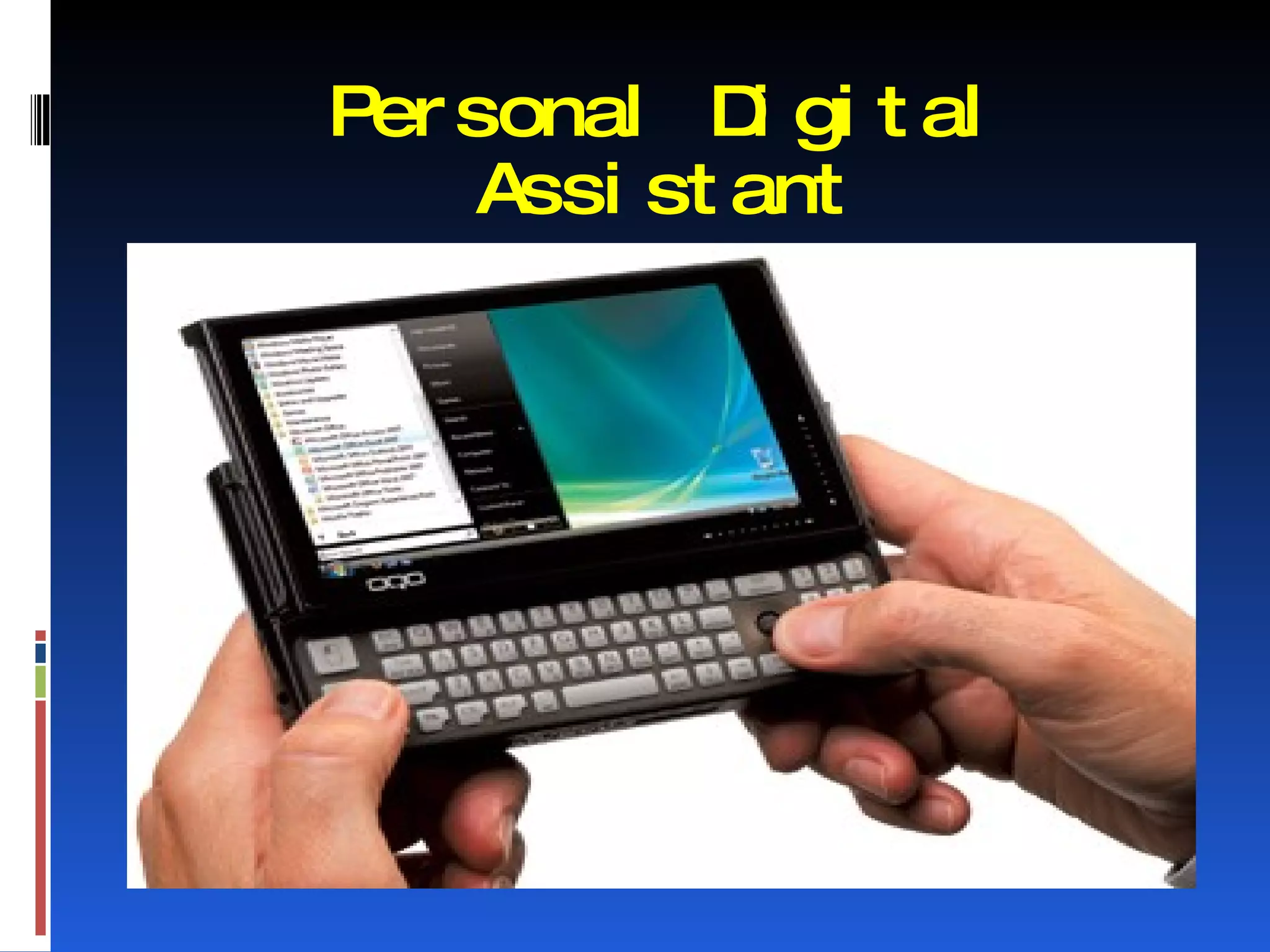
A personal computer can be a
 desktop computer, a notebook
 or a laptop or a Personal
 Digital Assistant.
Per sonal C put er s
           om
N ebook or Lapt op
 ot
Per sonal D gi t al
             i
     Assi st ant

History Of Computers

  • 1.
    History of Computer
  • 2.
    How di di t st ar t ? Long time ago, people had to work very hard to have something they want. They always look for ways to make their work faster and easier.
  • 3.
    Since man isborn with intelligence, he thought of ways that would make things easy for him. One of the problems encountered by man was counting the things he had. Because of this, he invented something that could help him count fast and easy.
  • 4.
    Ear l yC put i ng D om evi ces The Abacus About 4,000 years ago, the Chinese invented the ABACUS. It is an adding tool that can help can you add & subtract numbers by moving beads back & forth on rods. The abacus was one of the earliest counting devise invented to help man solve his counting problems.
  • 5.
  • 6.
    The Pascal ine C 1642, Blaiseor Inal cul at Pascal, a French mathematician, invented the Pascal calculator. This device, also known as the Pascaline, operated 8 movable dials, which could add numbers up to 8 figures long. It was used to perform simple arithmetic calculations. This device was limited to addition & subtraction only.
  • 7.
    The Pascal ine C cul at or al
  • 8.
    Lei bni tz C cul at or al In 1673, Gottfried Leibntiz, a German mathematician & philosopher, enchanced the Pascaline by creating a device that could also multiply. It can even find the square root of number. The device was called the Leibnitz Calculator/ machine.
  • 9.
    Lei bni tz C cul at or / M al achi ne
  • 10.
    Jacquar d’ Autom i c s at Loom Jacquard, In 1801, Joseph-Marie a Frenchman, invented the Jacquard’s loom. Jacquard’s loom used punch card to program pattern that were outputted as woven fabrics by the loom.
  • 11.
    Jacquar d’ Autom i c s at Loom
  • 12.
    El ect ro- Mechani cal C put i ng om Devi ces Difference Engine In 1822, Charles Babbage, a British mathematician professor, invented the Difference Engine. Powered by steam & as large as a locomotive, the machine had the capacity to perform calculations & print the results.
  • 13.
    D f fer ence Engi ne i
  • 14.
    Anal yt ical Engi ne In, 1833, several years after Babbage worked on the Difference Engine, he began working on the first general- purpose digital computer, which he called the Analytical Engine. This steam-powered engine outlined the basic elements of today’s modern general-purpose computer and was a breakthrough concept.
  • 15.
    Anal yt ical Engi ne
  • 16.
  • 17.
    H l eri t h’ Tabul at i ng ol s Machi ne American In 1889, Herman Hollerith, an inventor, invented the Hollerith’s Tabulating Machine . The machine was a punch card reader & had the capacity to store & process data. Hollerith brought his punch card reader into the business world, founding the Tabulating Machine Company which later became International Business Machine (IBM) in 1924.
  • 18.
    H l eri t h’ Tabul at i ng ol s M achi ne
  • 19.
    M k 1 ar This all-electronic calculator was invented by Howard H. Aiken in 1930. This was used to create ballistic charts for the U.S. Navy. The Mark 1 is called the Harvard-IBM Automatic Sequence Controlled Calculator.
  • 20.
  • 21.
    EN AC I Between 1943 and 1946, the ENIAC or the Electronic Numerical Integrator and Computer was developed by John Presper Eckert and John Mauchly. This general purpose computer computed at a speed 1,000 times faster than the Mark 1.
  • 22.
  • 23.
    EDVAC Between 1947 &1948, the EDVAC or the Electronic Discrete Variable Automatic Computer was invented by John von Neumann. This invention had a Central Processing Unit (CPU), which allowed all computer functions to be coordinated through a single source.
  • 24.
  • 25.
    U I VAC1 N The 1948, the UNIVAC or the Universal Automatic Computer was manufactured by Remington Rand Corporation. This became one of the first commercially available computers to benefit from the various advances in computing.
  • 26.
  • 27.
  • 28.
    Super com ers put Supercomputers are the most powerful computers made. Supercomputers are used to process huge amount of data for complex processes such as nuclear fission.
  • 29.
  • 30.
    M nf ram C put er s ai e om Mainframe computers are the largest among the computers in use today. Mainframe computers are used where many people in large organizations are frequently accessing similar information.
  • 31.
    M nf ram C put er s ai e om
  • 32.
    Per sonal Cput er s om Personal Computers are the most common computers in use today. A personal computer can be a desktop computer, a notebook or a laptop or a Personal Digital Assistant.
  • 33.
    Per sonal Cput er s om
  • 34.
    N ebook orLapt op ot
  • 35.
    Per sonal Dgi t al i Assi st ant