evolution
of
Computer
Since man is born with intelligence,
he thought of ways that would
make things easy for him. One of
the problems encountered by man
was counting the things he had.
Because of this, he invented
something that could help him
count fast and easy.
The Abacus
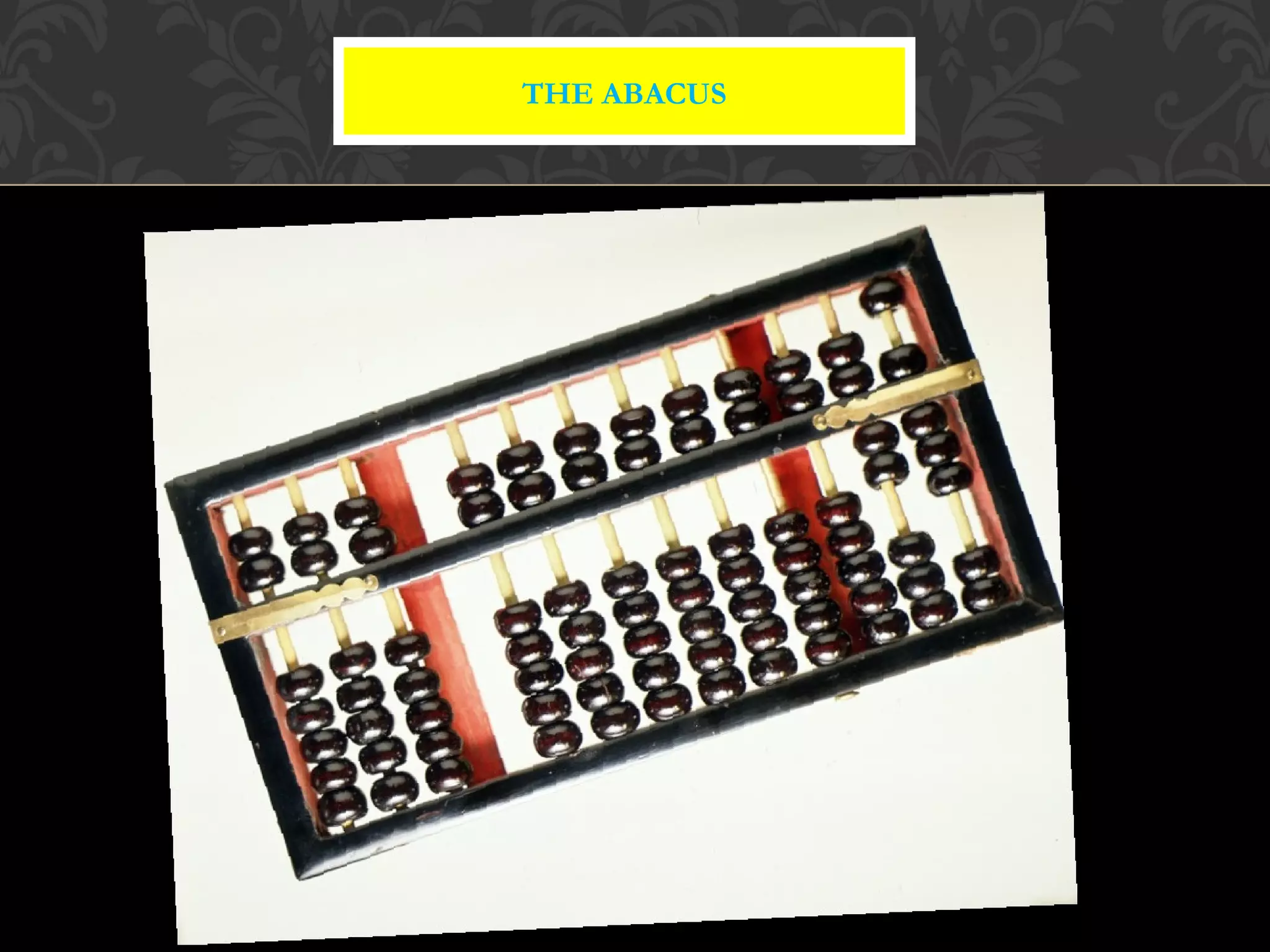
About 4,000 years ago, the Chinese
invented the ABACUS. It is an adding
tool that can help can you add & subtract
numbers by moving beads back & forth
on rods. The abacus was one of the
earliest counting devise invented to help
man solve his counting problems.
EARLY COMPUTING DEVICES
THE ABACUS
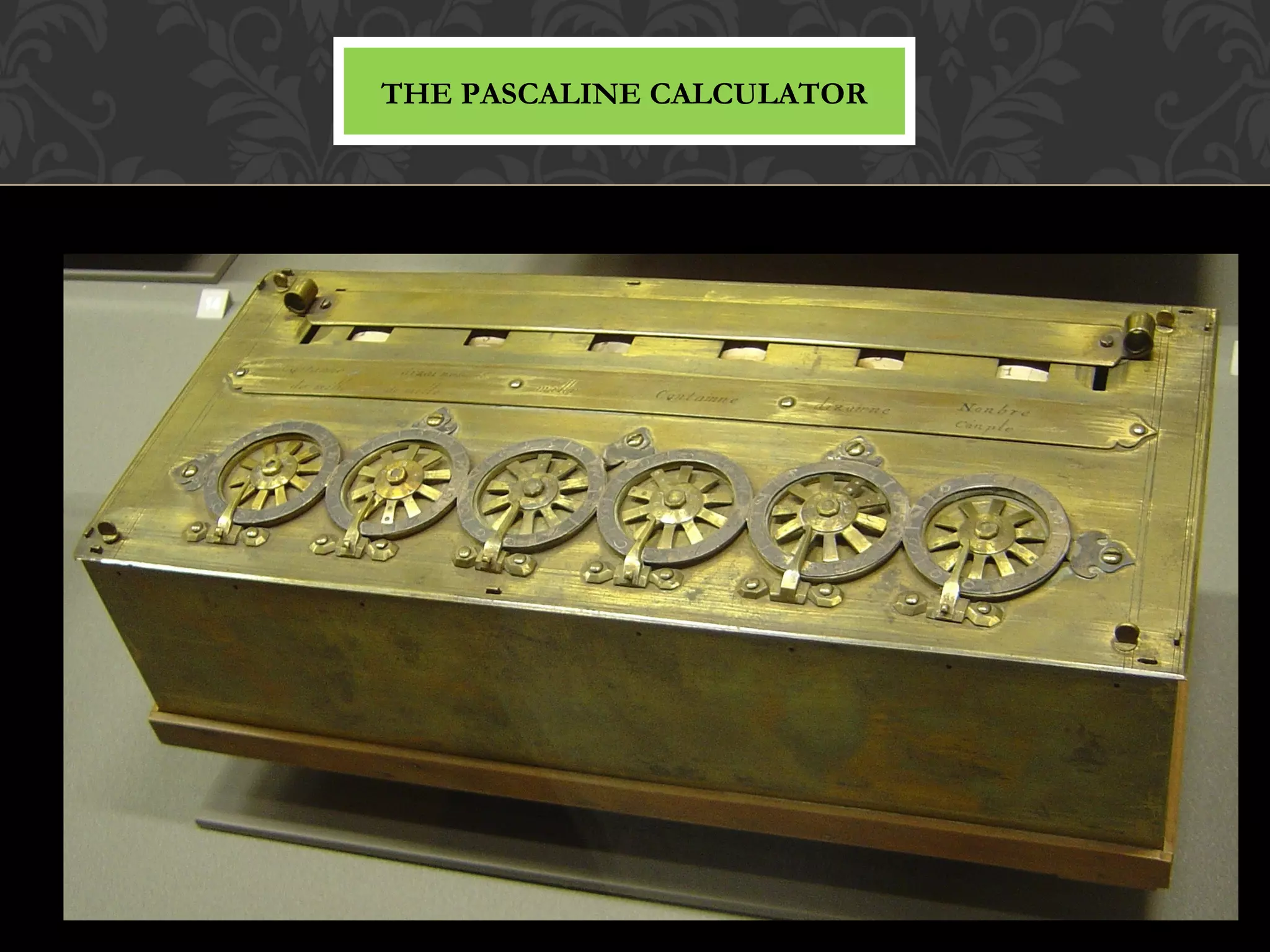
In 1642, Blaise Pascal, a French
mathematician, invented the Pascal
calculator. This device, also known as the
Pascaline, operated 8 movable dials, which
could add numbers up to 8 figures long. It
was used to perform simple arithmetic
calculations. This device was limited to
addition & subtraction only.
THE PASCALINE
CALCULATOR
THE PASCALINE CALCULATOR
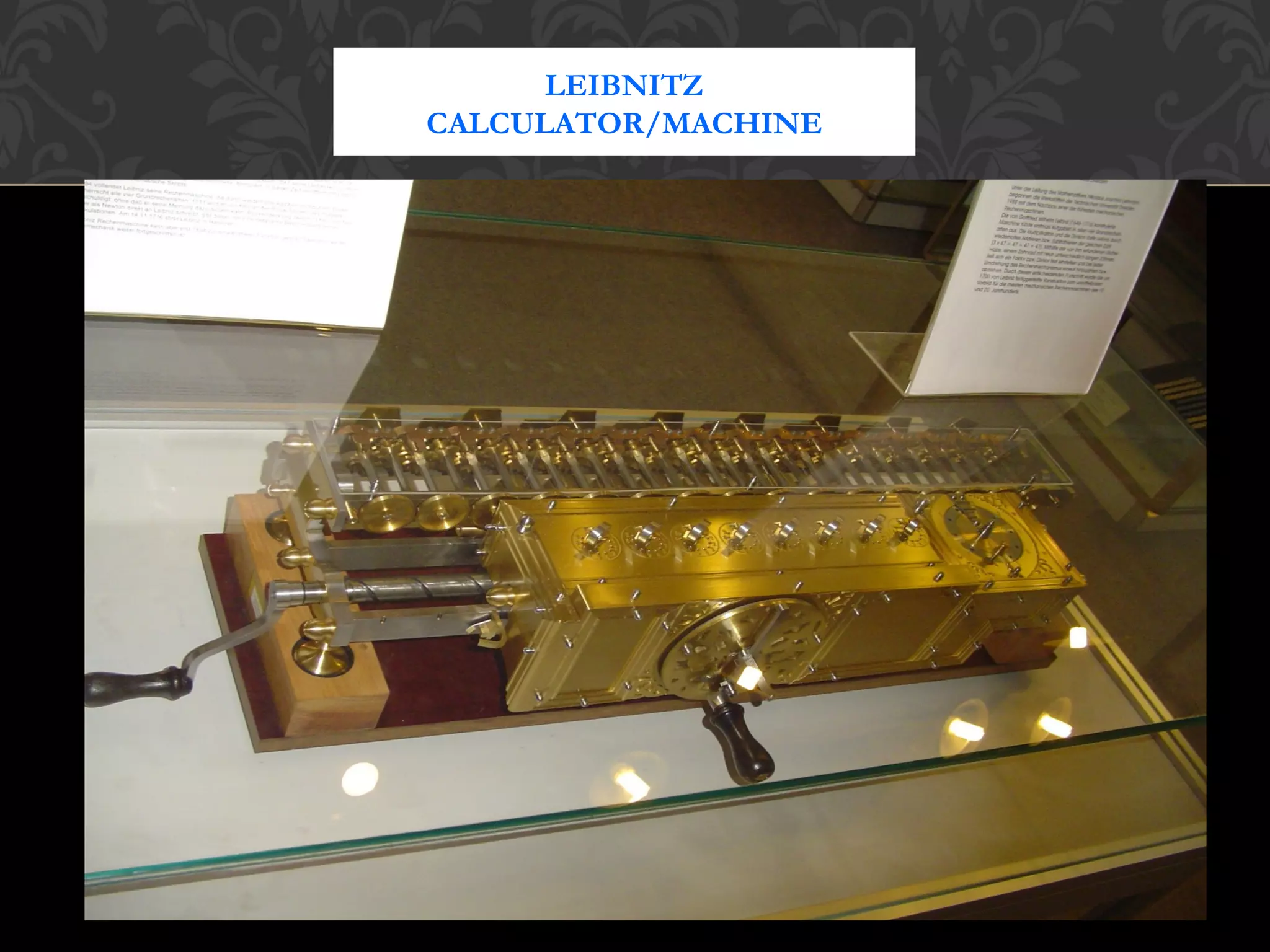
In 1673, Gottfried Leibntiz, a German
mathematician & philosopher,
enchanced the Pascaline by creating a
device that could also multiply. It can
even find the square root of number.
The device was called the Leibnitz
Calculator/ machine.
LEIBNITZ
CALCULATOR
LEIBNITZ
CALCULATOR/MACHINE
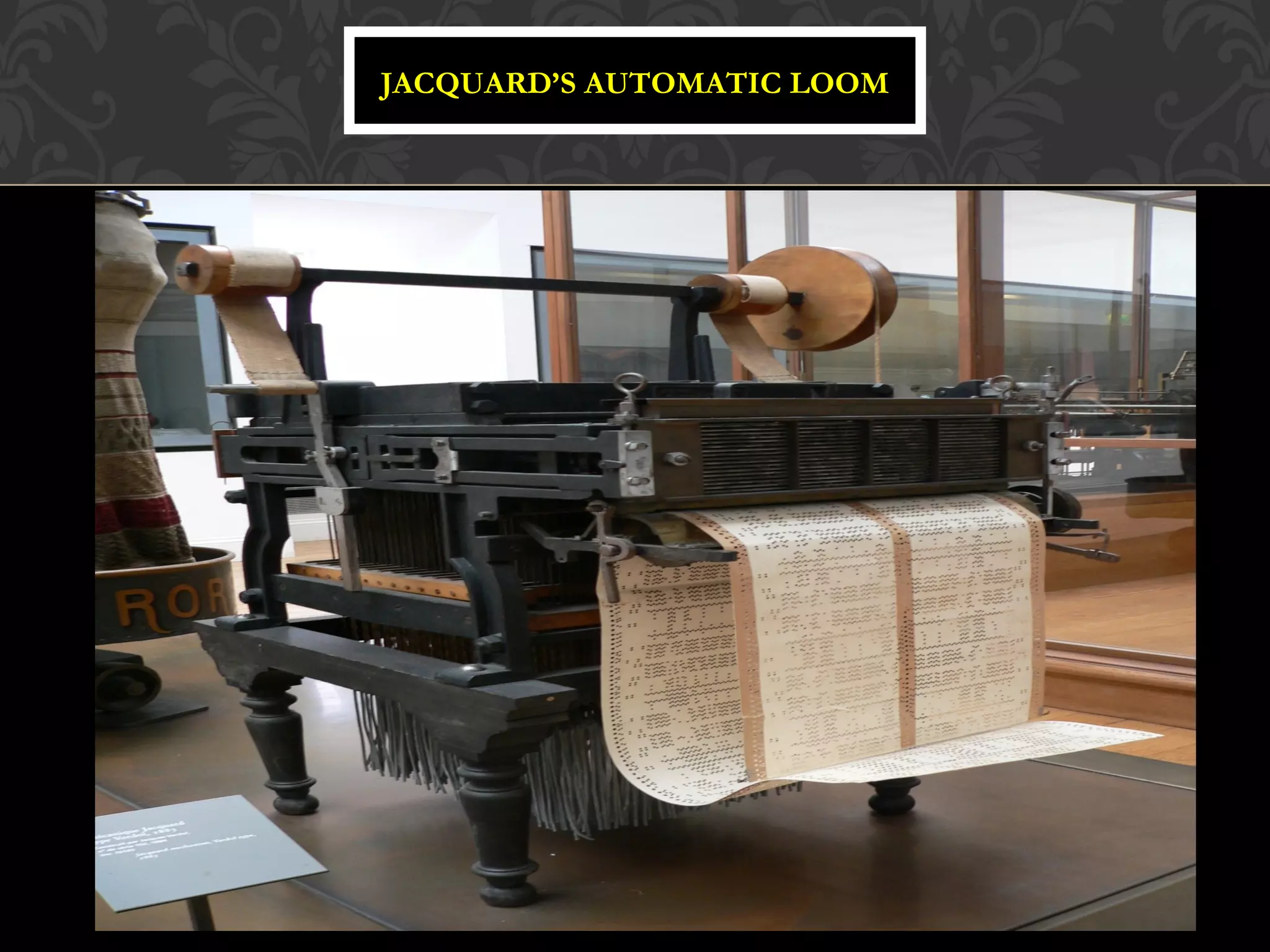
In 1801, Joseph-Marie Jacquard, a
Frenchman, invented the
Jacquard’s loom. Jacquard’s loom
used punch card to program pattern
that were outputted as woven
fabrics by the loom.
JACQUARD’S
AUTOMATIC LOOM
JACQUARD’S AUTOMATIC LOOM
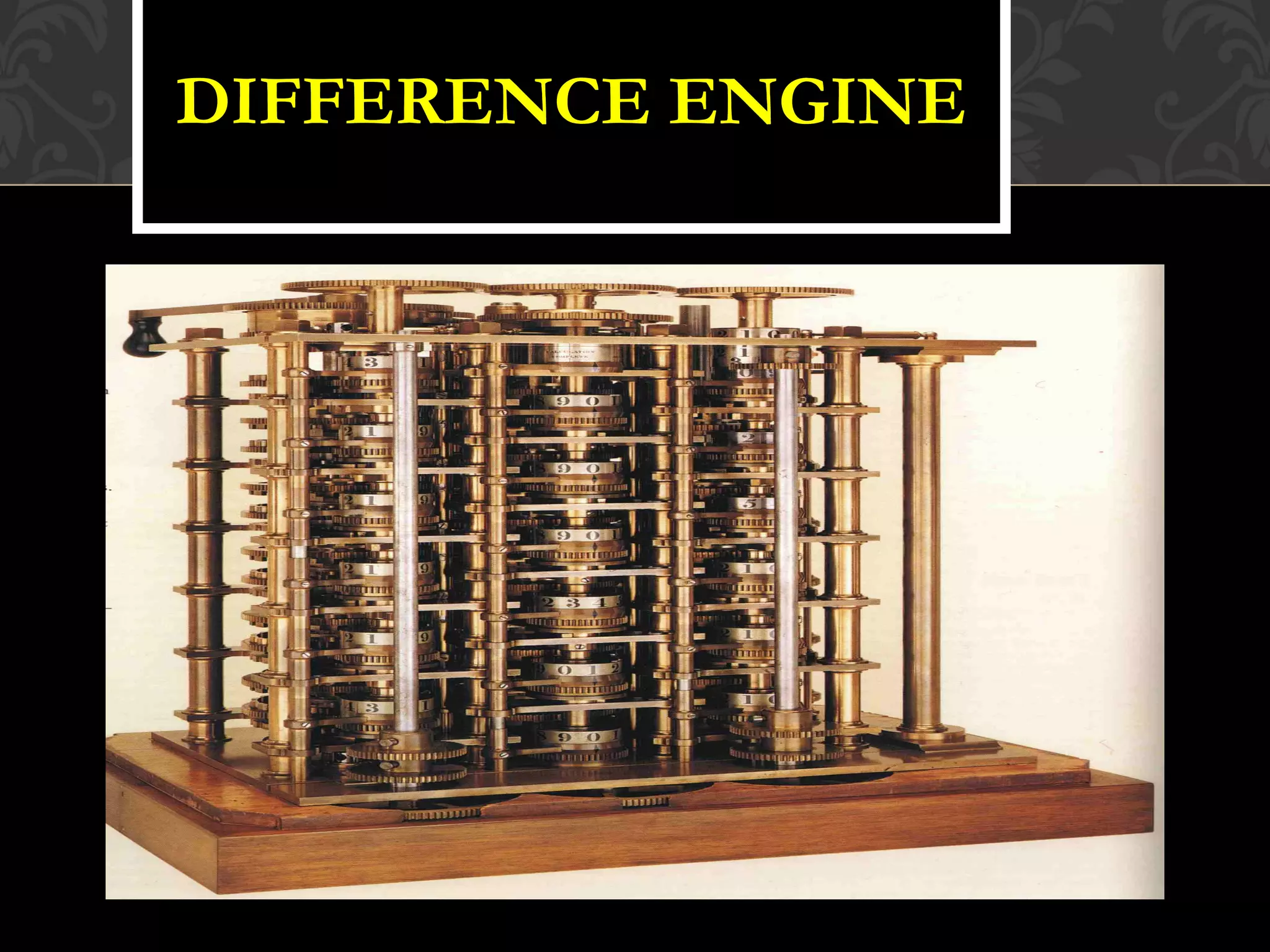
Difference Engine
In 1822, Charles Babbage, a British
mathematician professor, invented the
Difference Engine. Powered by steam &
as large as a locomotive, the machine
had the capacity to perform
calculations & print the results.
ELECTRO-MECHANICAL COMPUTING
DEVICES
DIFFERENCE ENGINE
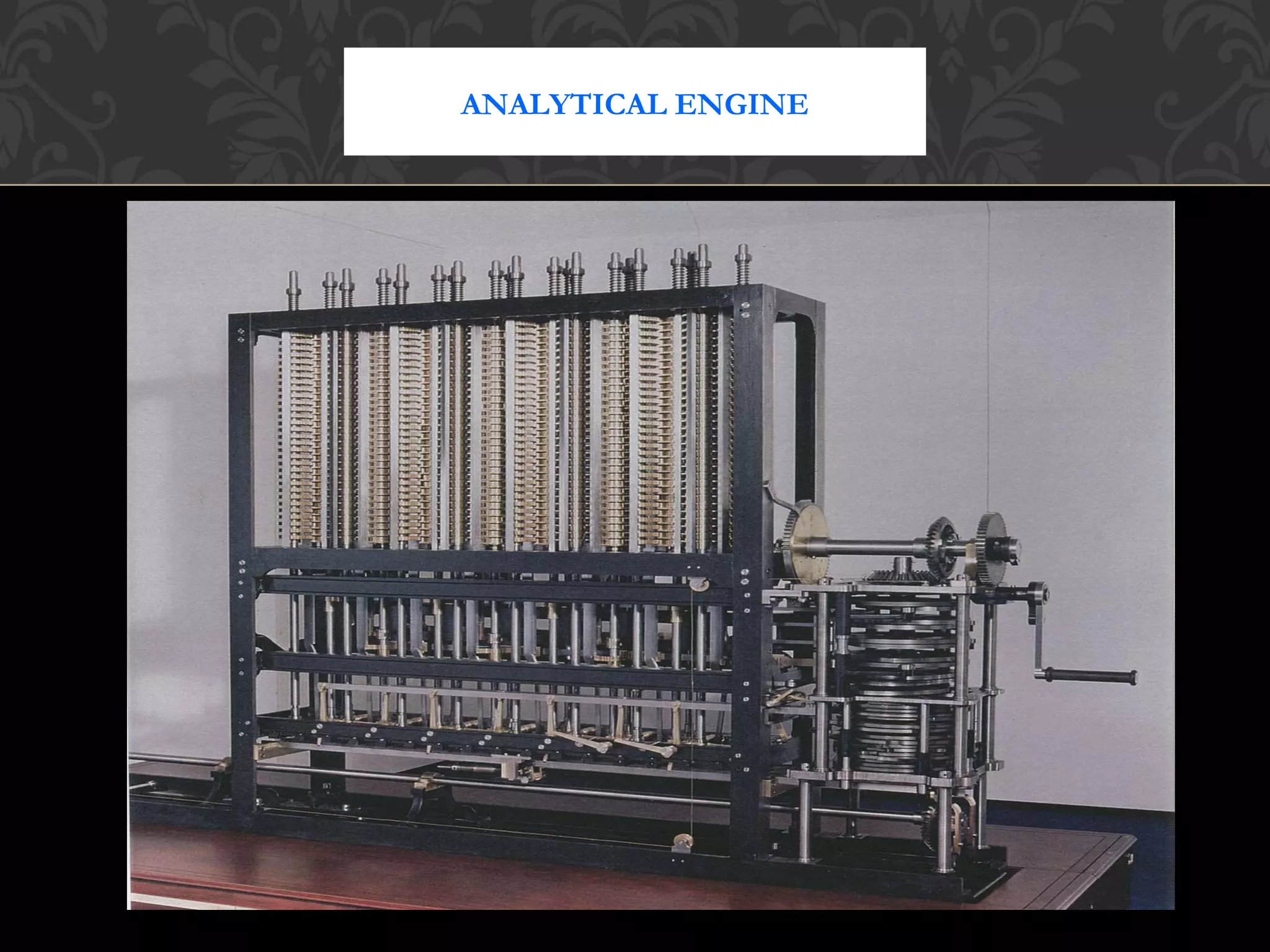
In, 1833, several years after Babbage worked on
the Difference Engine, he began working on the
first general-purpose digital computer, which he
called the Analytical Engine. This steam-powered
engine outlined the basic elements of today’s
modern general-purpose computer and was a
breakthrough concept.
ANALYTICAL ENGINE
ANALYTICAL ENGINE
Electronic
Computing
Devices
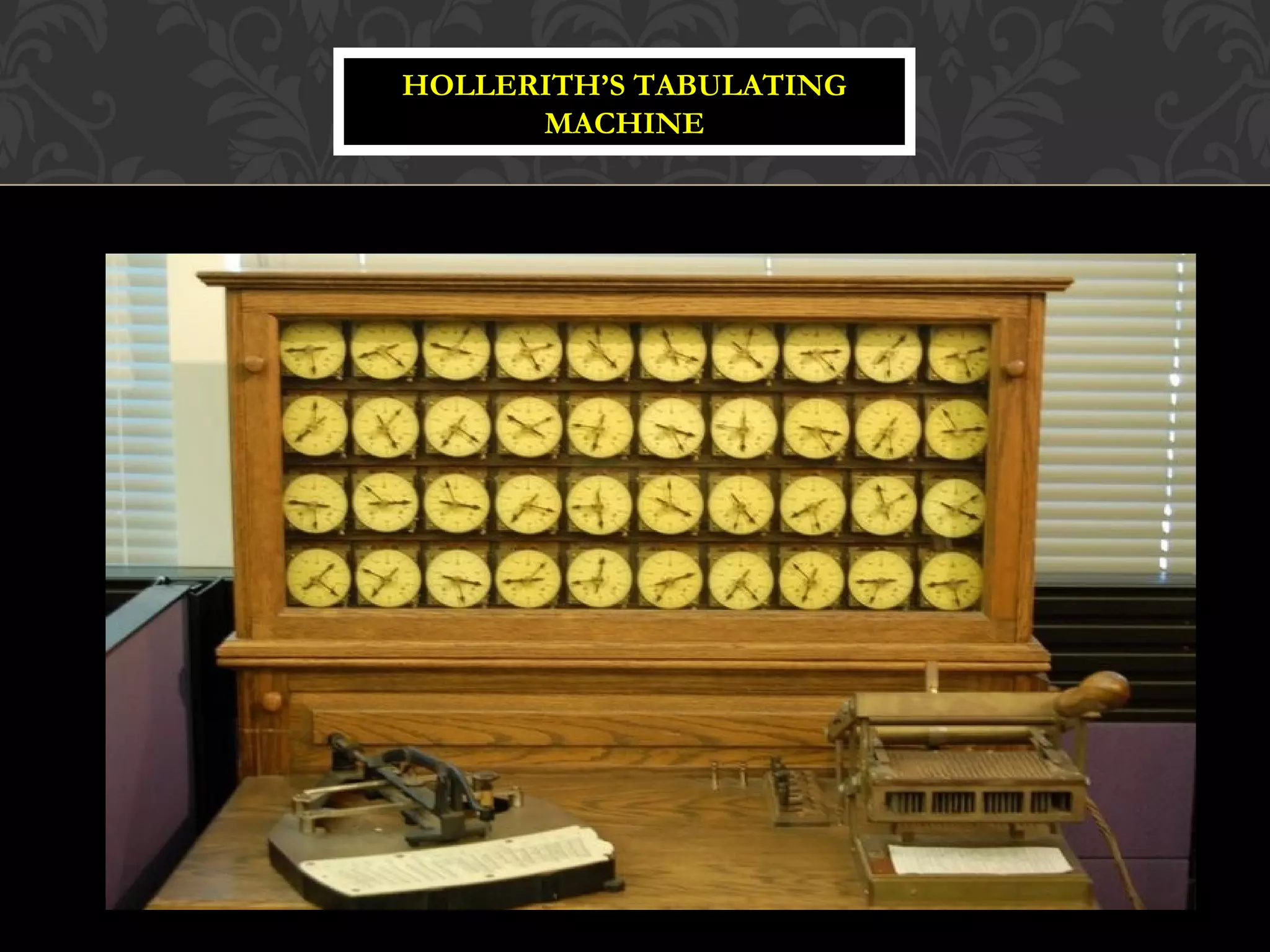
In 1889, Herman Hollerith, an American
inventor, invented the Hollerith’s Tabulating
Machine . The machine was a punch card reader
& had the capacity to store & process data.
Hollerith brought his punch card reader into
the business world, founding the Tabulating
Machine Company which later became International
Business Machine (IBM) in 1924.
HOLLERITH’S
TABULATING
MACHINE
HOLLERITH’S TABULATING
MACHINE
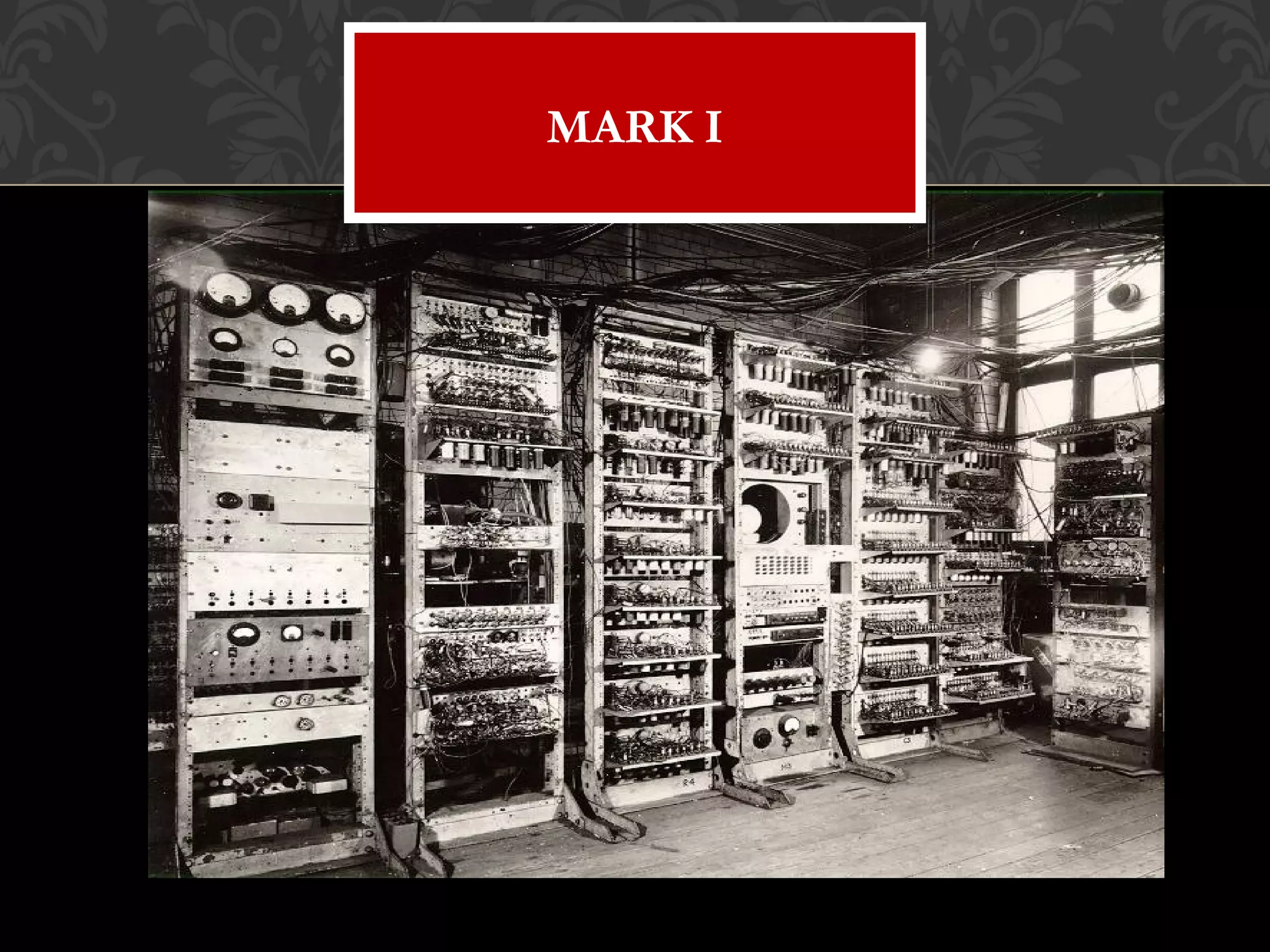
This all-electronic calculator was
invented by Howard H. Aiken in
1930. This was used to create
ballistic charts for the U.S. Navy.
The Mark 1 is called the Harvard-
IBM Automatic Sequence Controlled
Calculator.
MARK 1
MARK I
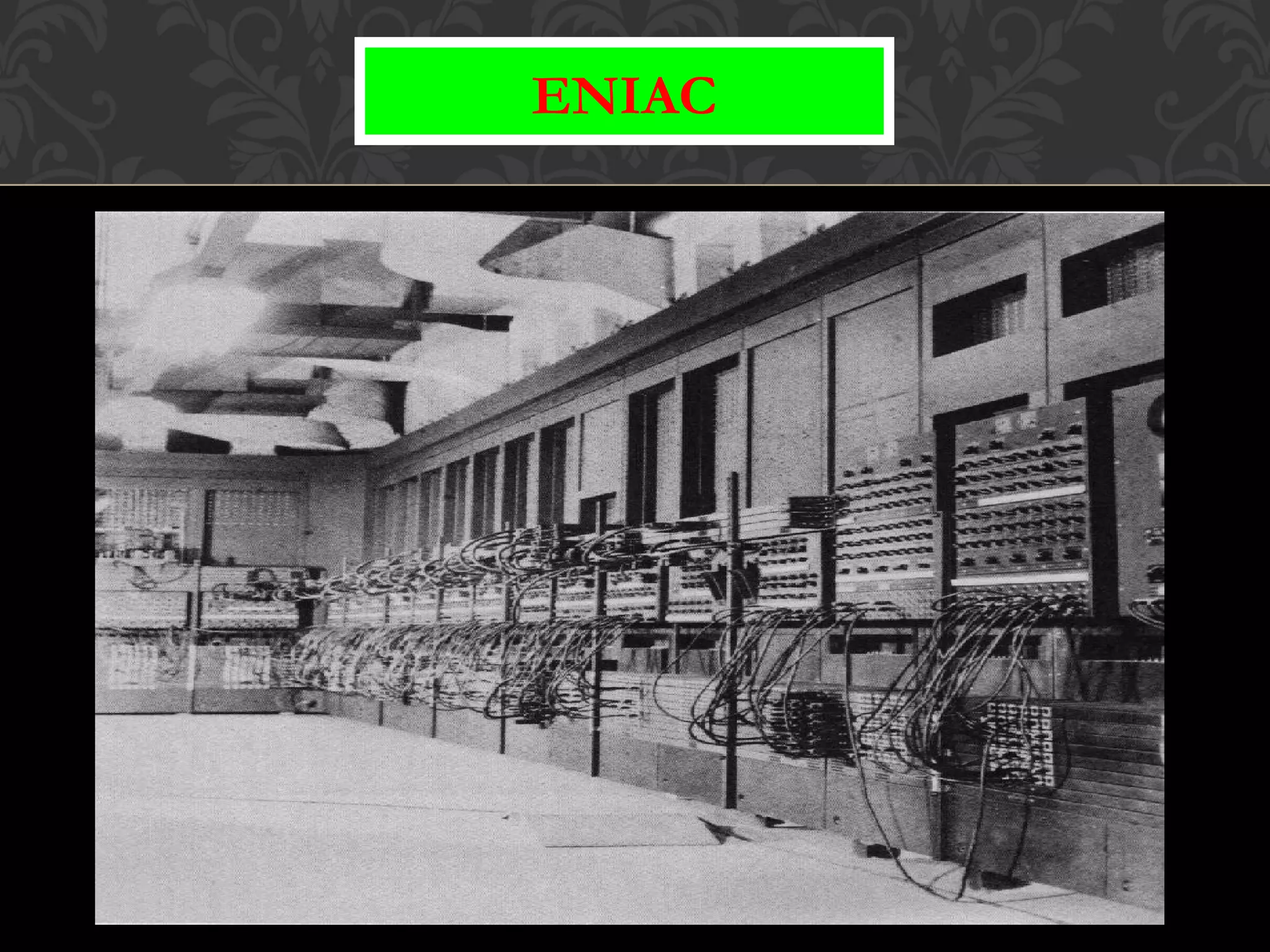
Between 1943 and 1946, the ENIAC
or the Electronic Numerical Integrator and
Computer was developed by John Presper
Eckert and John Mauchly. This general
purpose computer computed at a
speed 1,000 times faster than the
Mark 1.
ENIAC
ENIAC
Today’s
Computers
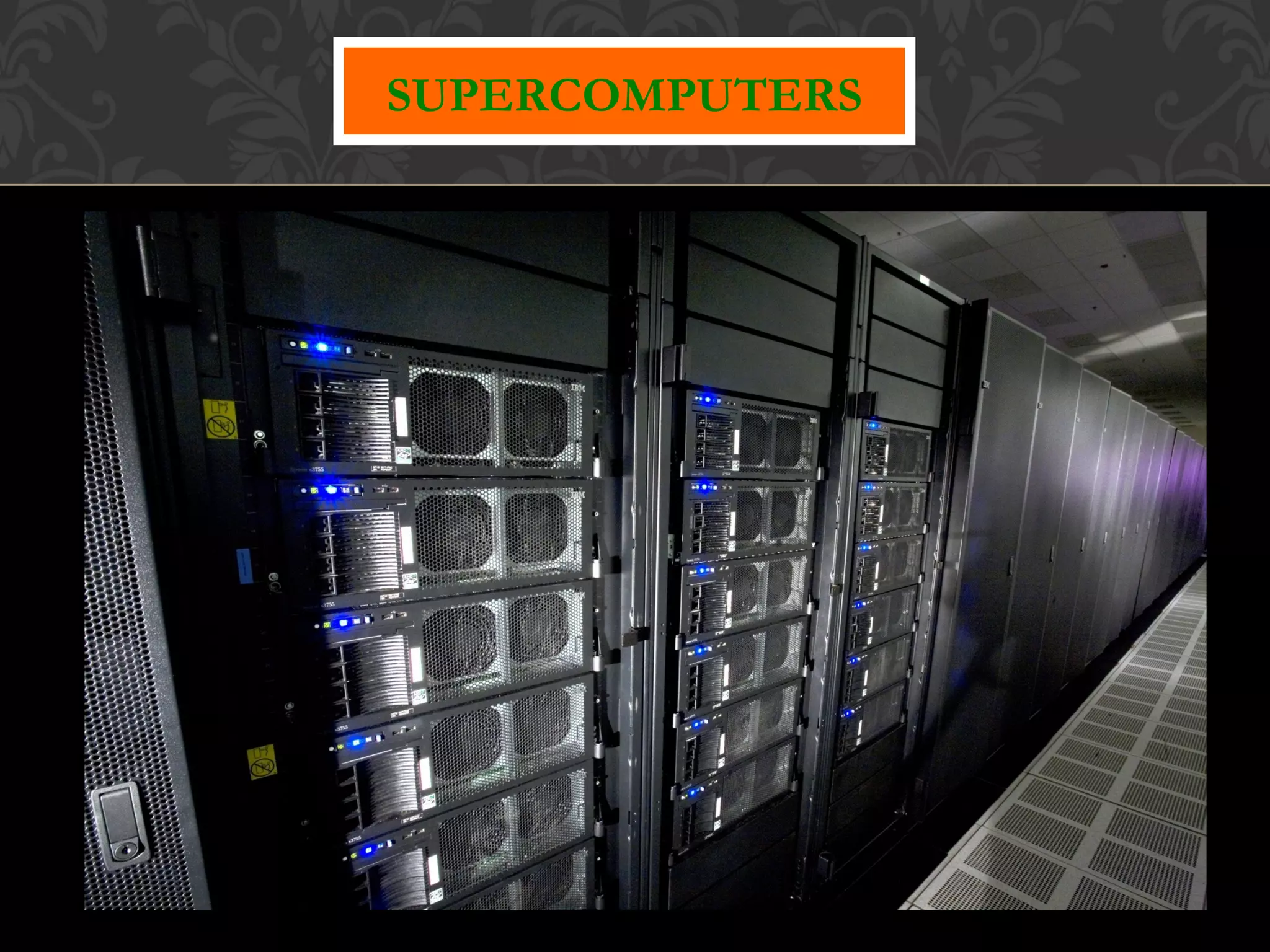
Supercomputers are the most
powerful computers made.
Supercomputers are used to
process huge amount of data for
complex processes such as nuclear
fission.
SUPERCOMPUTERS
SUPERCOMPUTERS
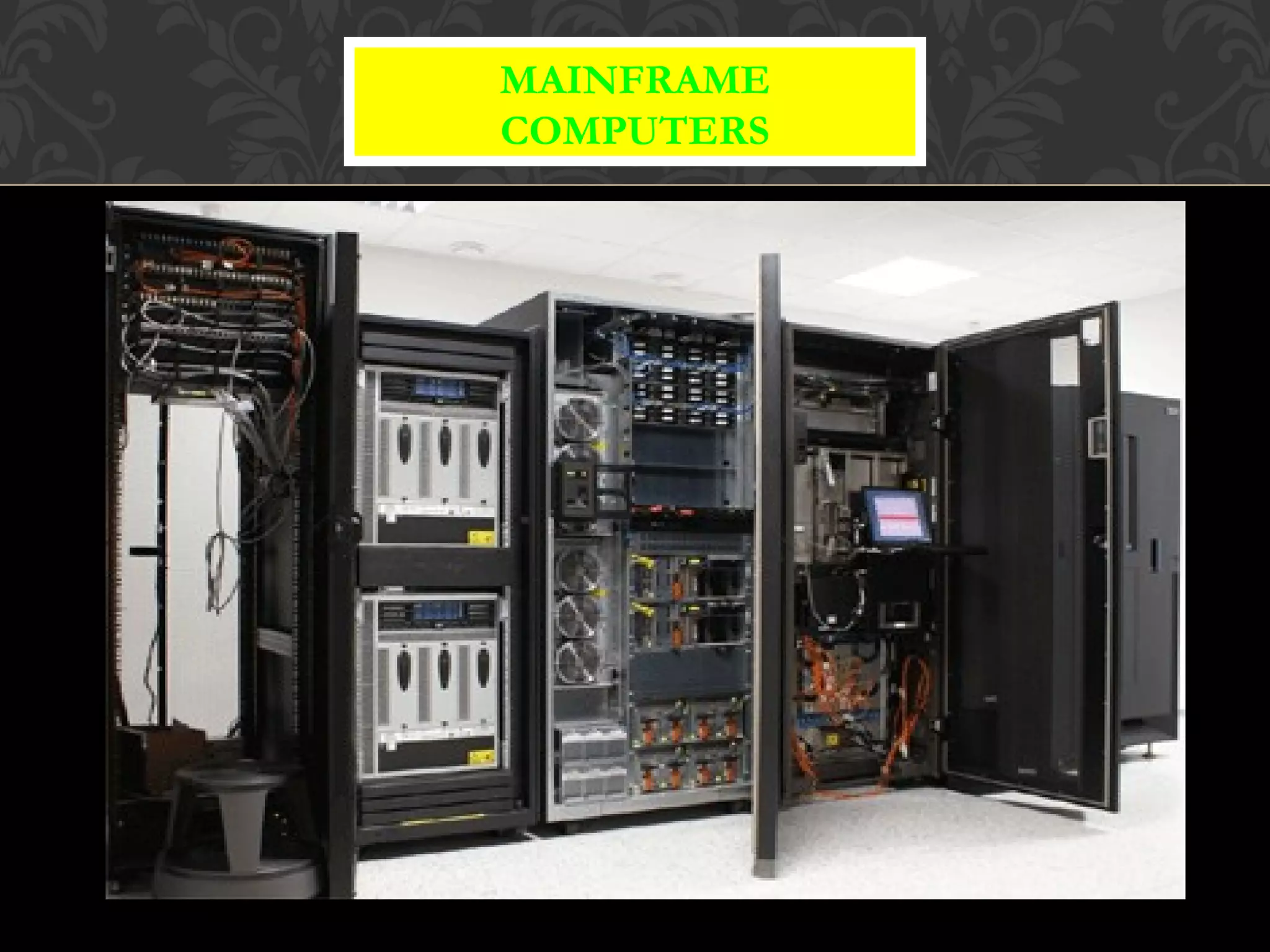
Mainframe computers are the largest
among the computers in use
today. Mainframe computers are used
where many people in large
organizations are frequently
accessing similar information.
MAINFRAME
COMPUTERS
MAINFRAME
COMPUTERS
 evolution of computers

evolution of computers

  • 1.
  • 2.
    Since man isborn with intelligence, he thought of ways that would make things easy for him. One of the problems encountered by man was counting the things he had. Because of this, he invented something that could help him count fast and easy.
  • 3.
    The Abacus About 4,000years ago, the Chinese invented the ABACUS. It is an adding tool that can help can you add & subtract numbers by moving beads back & forth on rods. The abacus was one of the earliest counting devise invented to help man solve his counting problems. EARLY COMPUTING DEVICES
  • 4.
  • 5.
    In 1642, BlaisePascal, a French mathematician, invented the Pascal calculator. This device, also known as the Pascaline, operated 8 movable dials, which could add numbers up to 8 figures long. It was used to perform simple arithmetic calculations. This device was limited to addition & subtraction only. THE PASCALINE CALCULATOR
  • 6.
  • 7.
    In 1673, GottfriedLeibntiz, a German mathematician & philosopher, enchanced the Pascaline by creating a device that could also multiply. It can even find the square root of number. The device was called the Leibnitz Calculator/ machine. LEIBNITZ CALCULATOR
  • 8.
  • 9.
    In 1801, Joseph-MarieJacquard, a Frenchman, invented the Jacquard’s loom. Jacquard’s loom used punch card to program pattern that were outputted as woven fabrics by the loom. JACQUARD’S AUTOMATIC LOOM
  • 10.
  • 11.
    Difference Engine In 1822,Charles Babbage, a British mathematician professor, invented the Difference Engine. Powered by steam & as large as a locomotive, the machine had the capacity to perform calculations & print the results. ELECTRO-MECHANICAL COMPUTING DEVICES
  • 12.
  • 13.
    In, 1833, severalyears after Babbage worked on the Difference Engine, he began working on the first general-purpose digital computer, which he called the Analytical Engine. This steam-powered engine outlined the basic elements of today’s modern general-purpose computer and was a breakthrough concept. ANALYTICAL ENGINE
  • 14.
  • 15.
  • 16.
    In 1889, HermanHollerith, an American inventor, invented the Hollerith’s Tabulating Machine . The machine was a punch card reader & had the capacity to store & process data. Hollerith brought his punch card reader into the business world, founding the Tabulating Machine Company which later became International Business Machine (IBM) in 1924. HOLLERITH’S TABULATING MACHINE
  • 17.
  • 18.
    This all-electronic calculatorwas invented by Howard H. Aiken in 1930. This was used to create ballistic charts for the U.S. Navy. The Mark 1 is called the Harvard- IBM Automatic Sequence Controlled Calculator. MARK 1
  • 19.
  • 20.
    Between 1943 and1946, the ENIAC or the Electronic Numerical Integrator and Computer was developed by John Presper Eckert and John Mauchly. This general purpose computer computed at a speed 1,000 times faster than the Mark 1. ENIAC
  • 21.
  • 22.
  • 23.
    Supercomputers are themost powerful computers made. Supercomputers are used to process huge amount of data for complex processes such as nuclear fission. SUPERCOMPUTERS
  • 24.
  • 25.
    Mainframe computers arethe largest among the computers in use today. Mainframe computers are used where many people in large organizations are frequently accessing similar information. MAINFRAME COMPUTERS
  • 26.