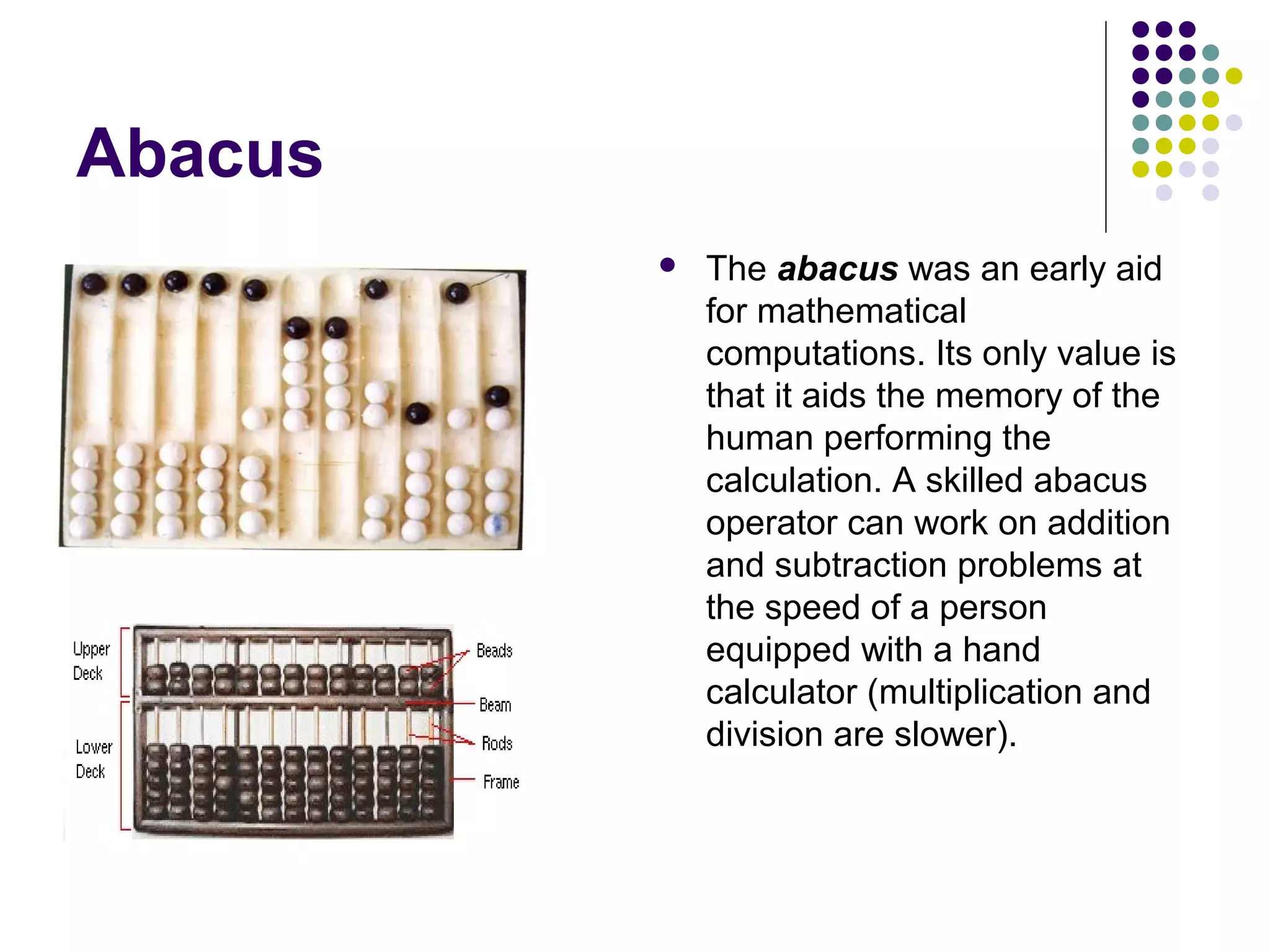
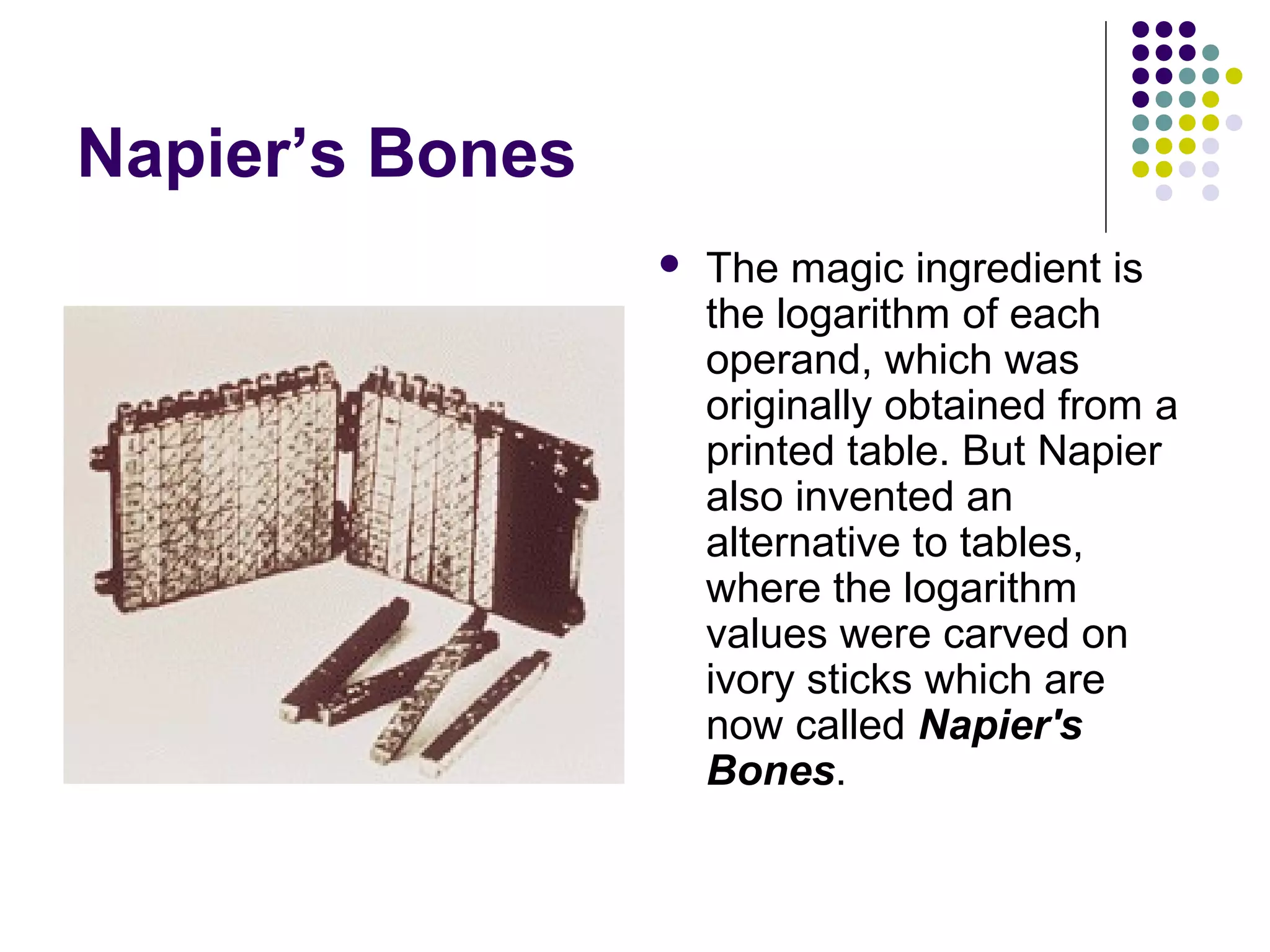
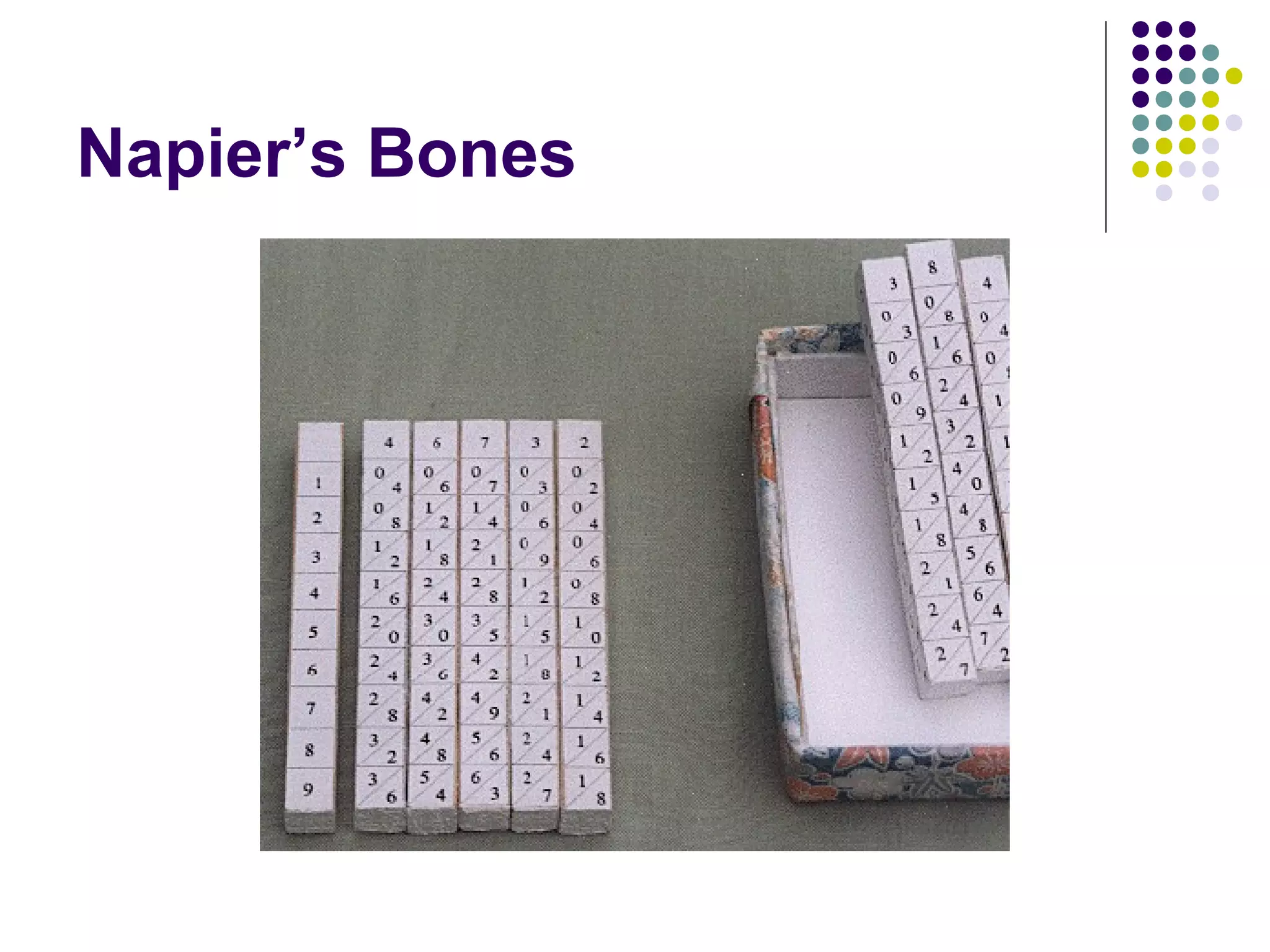
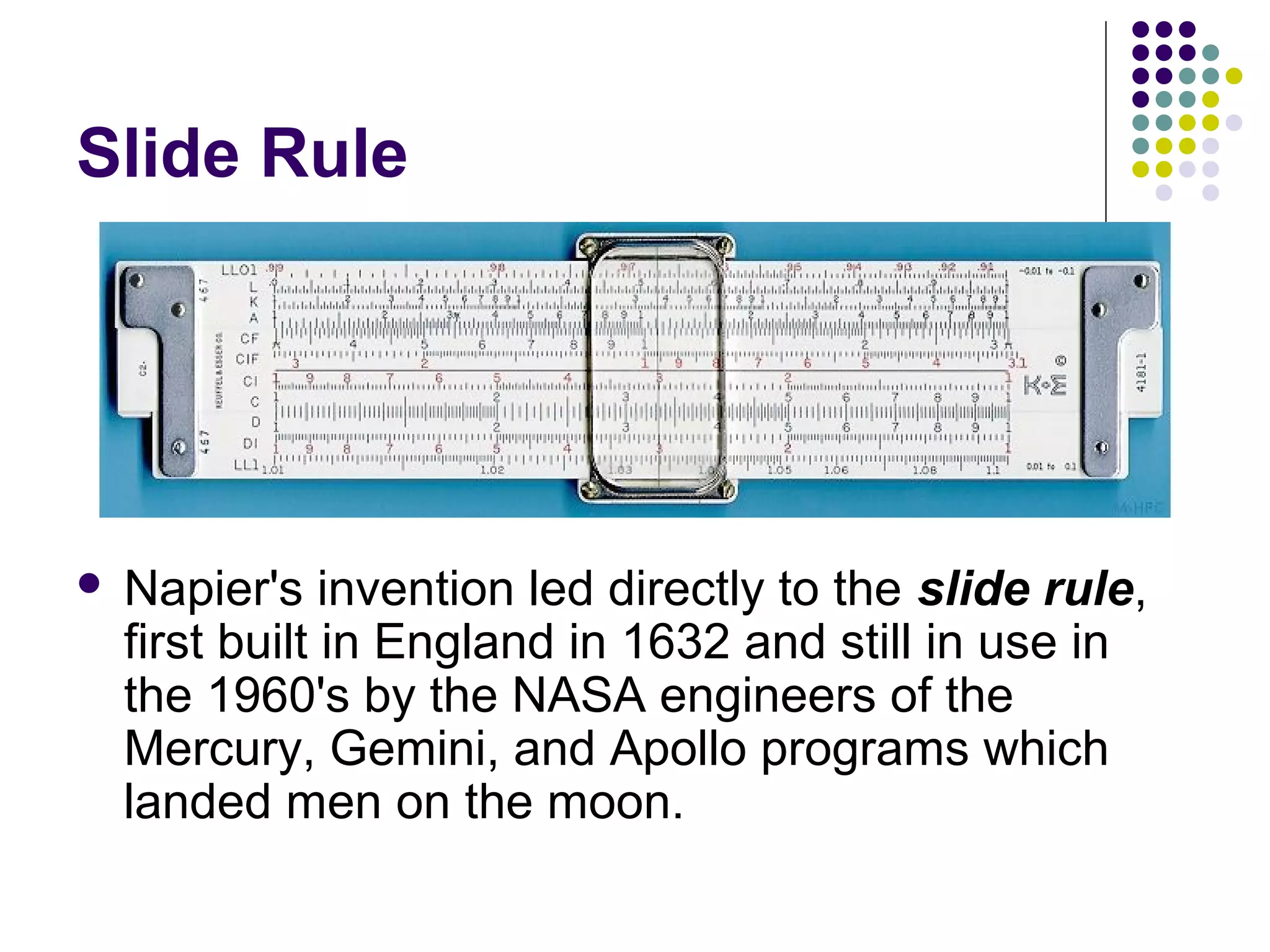
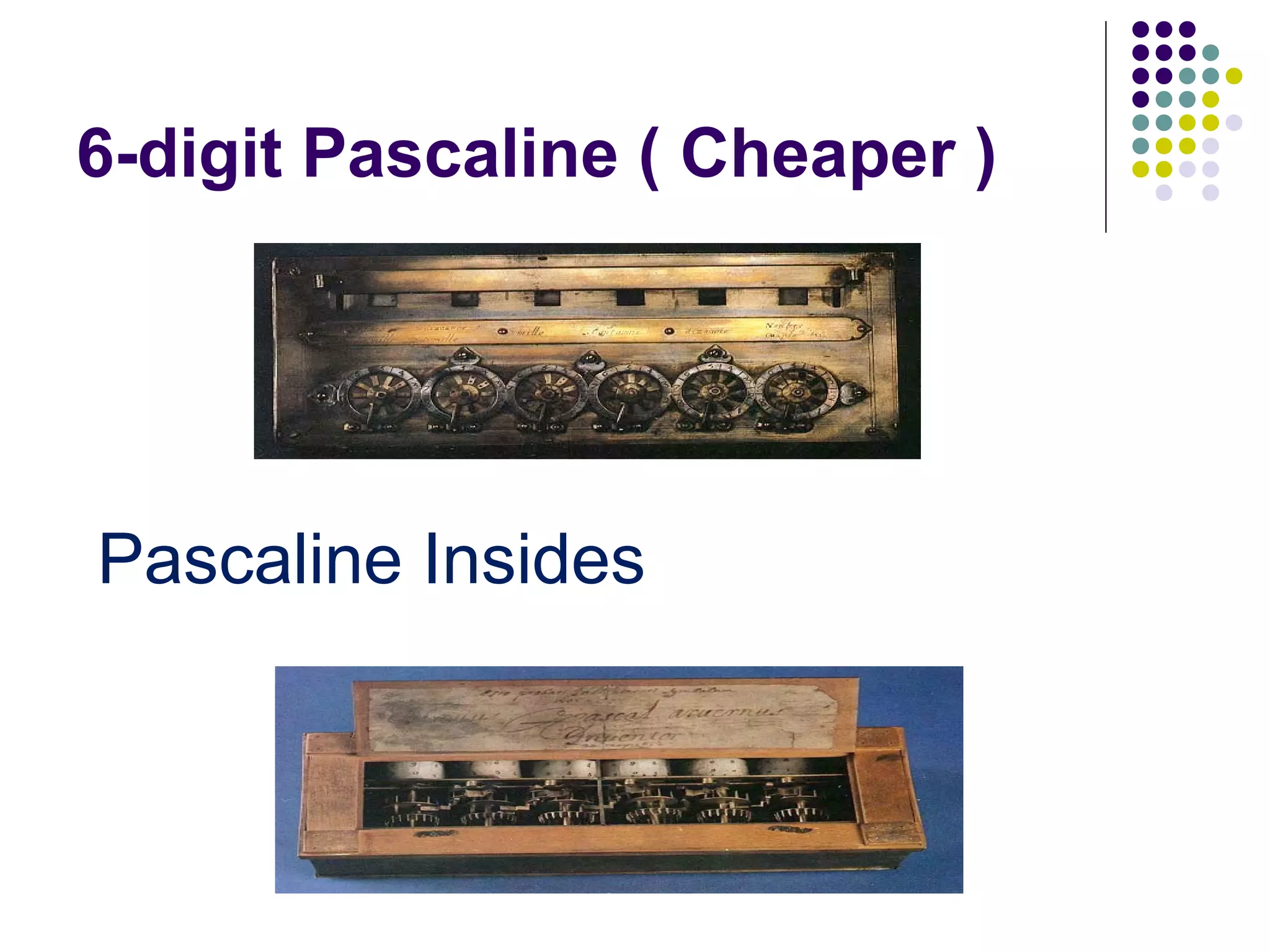
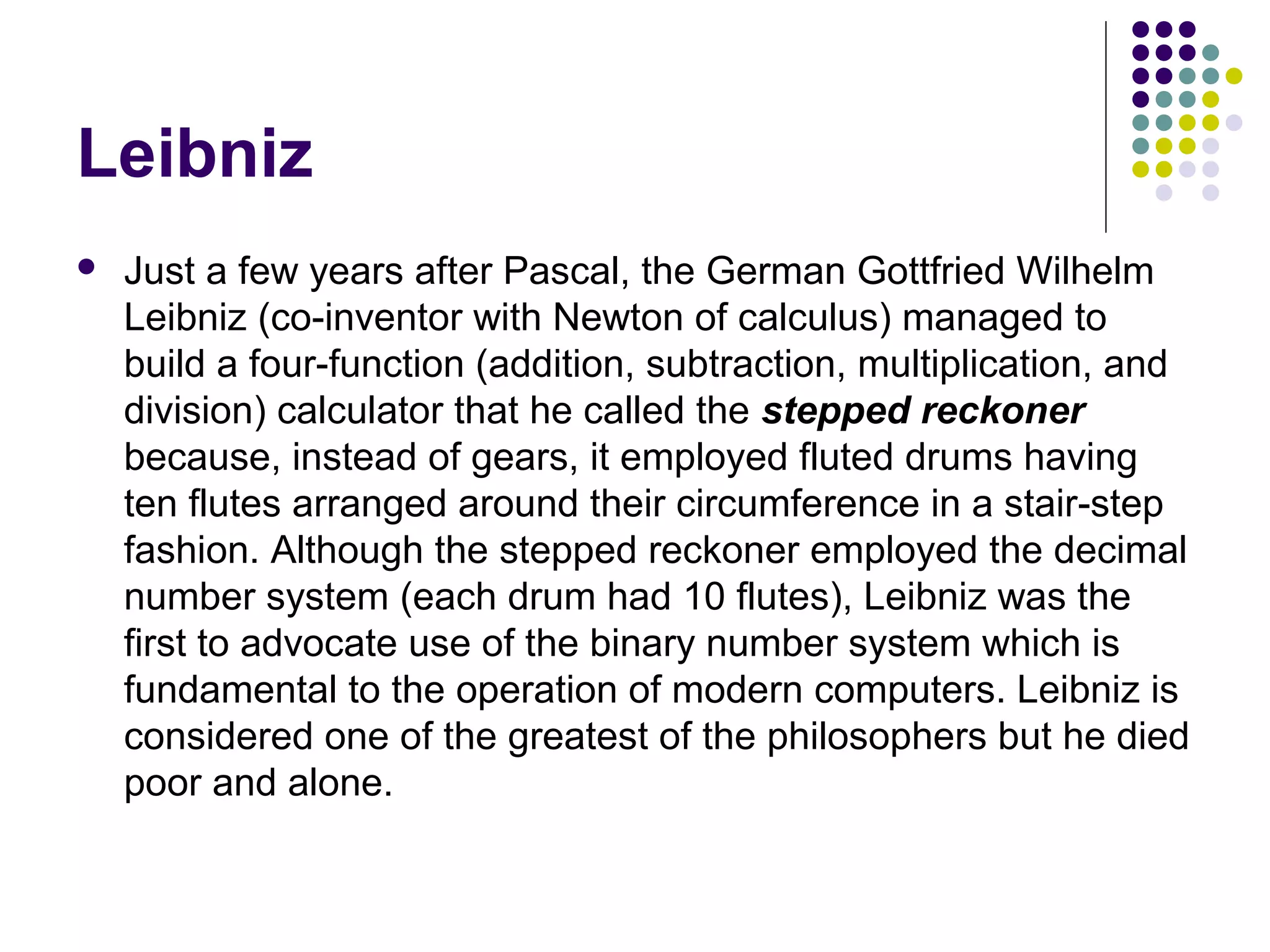
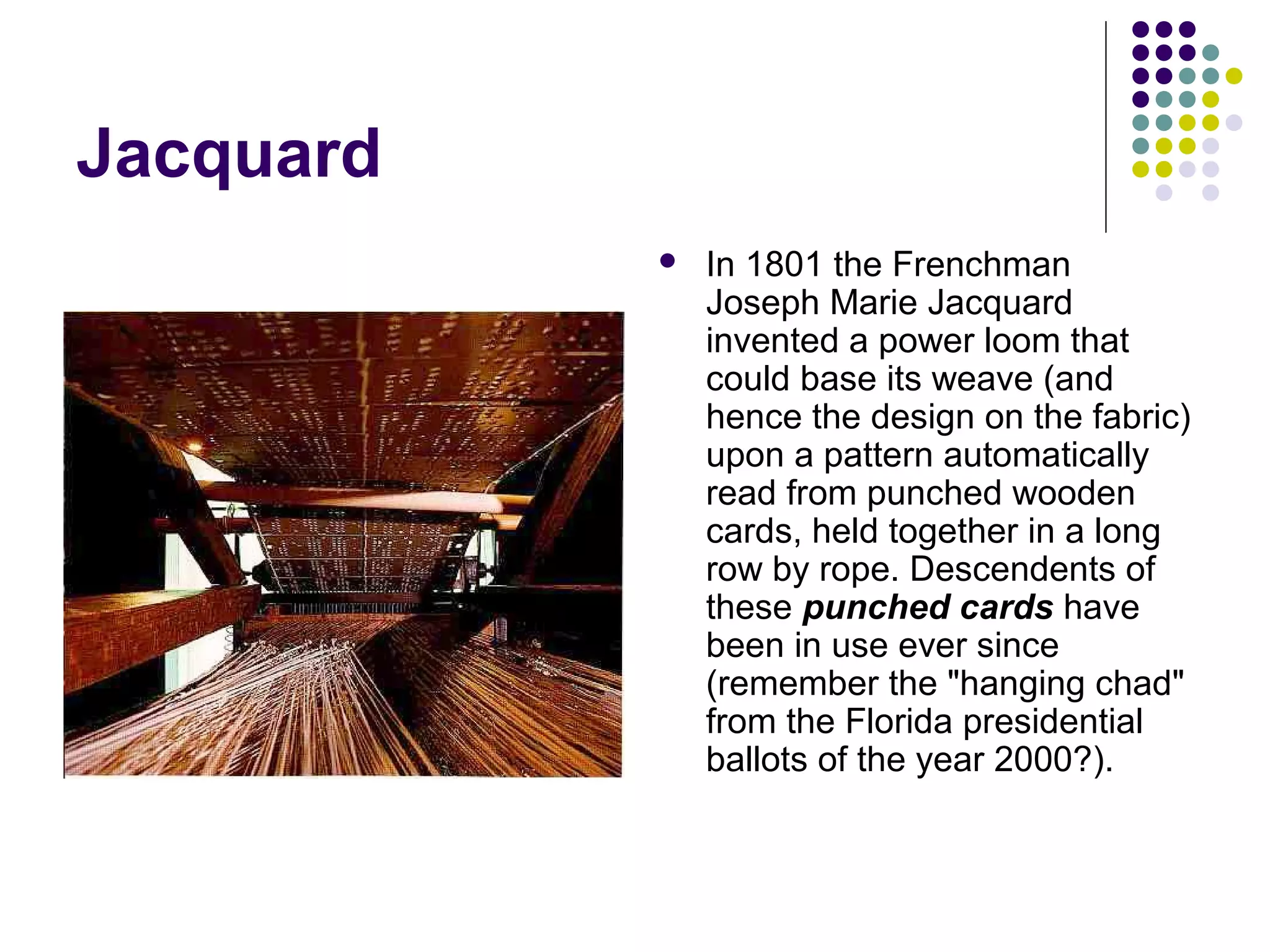
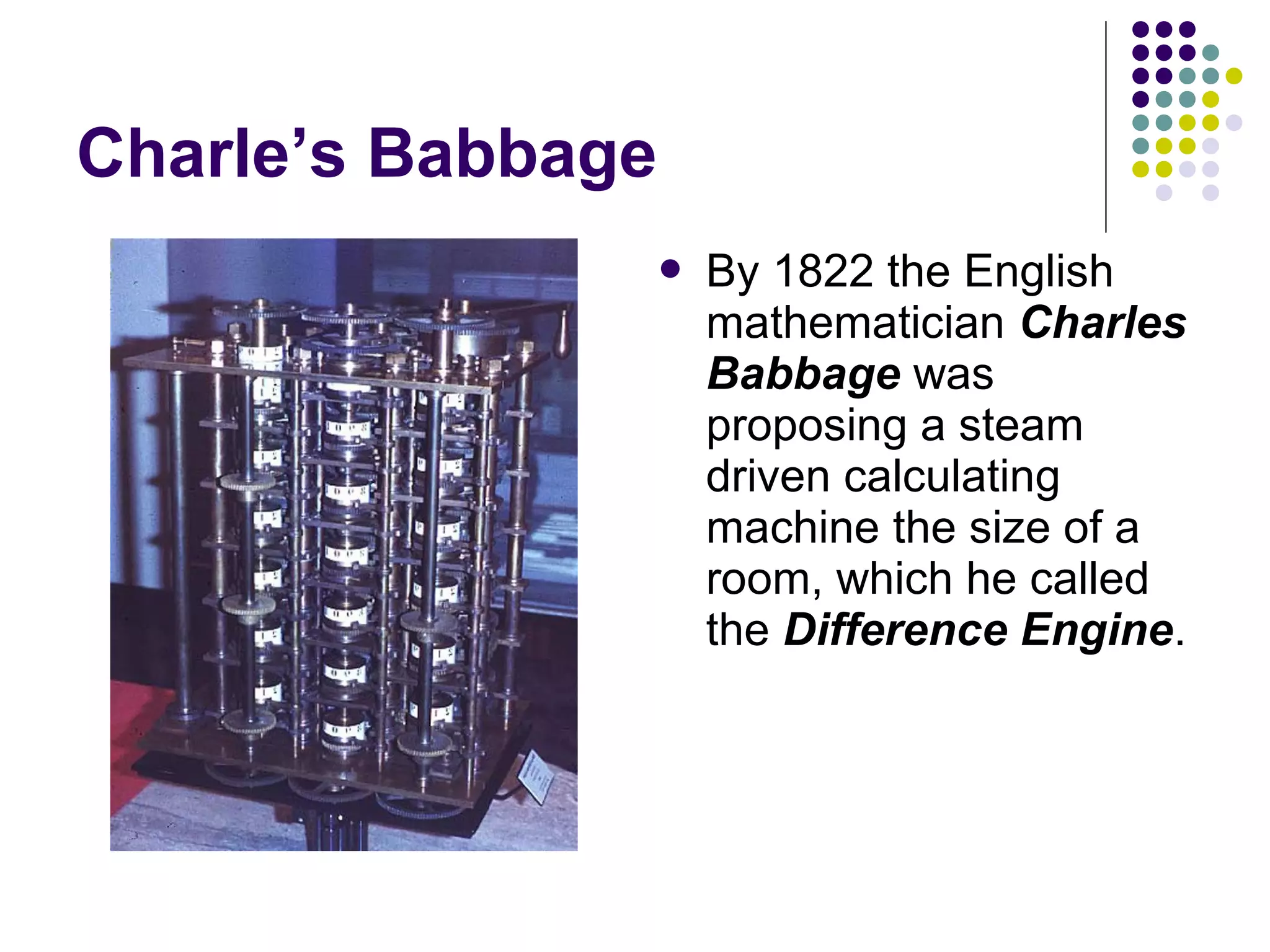
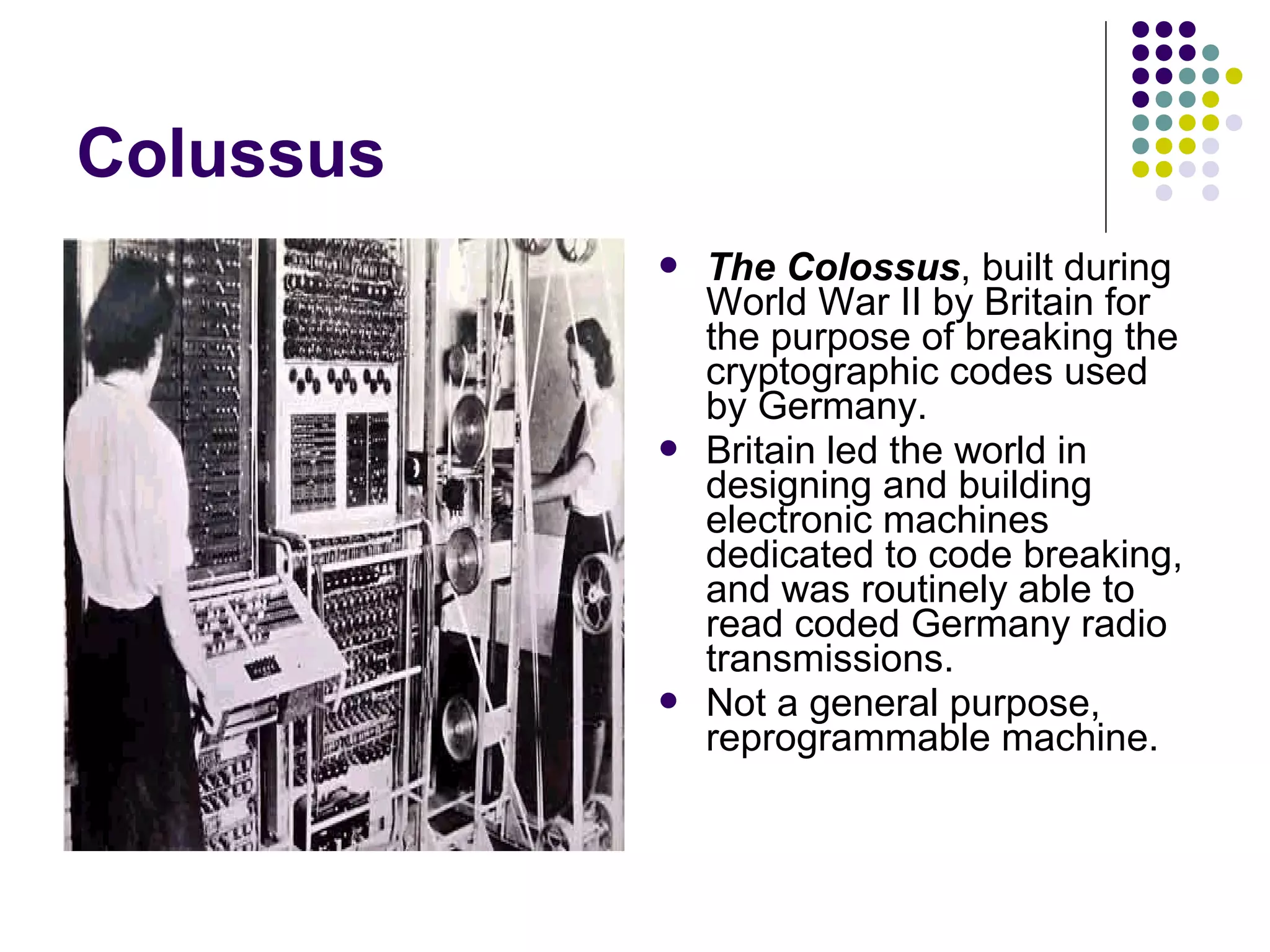
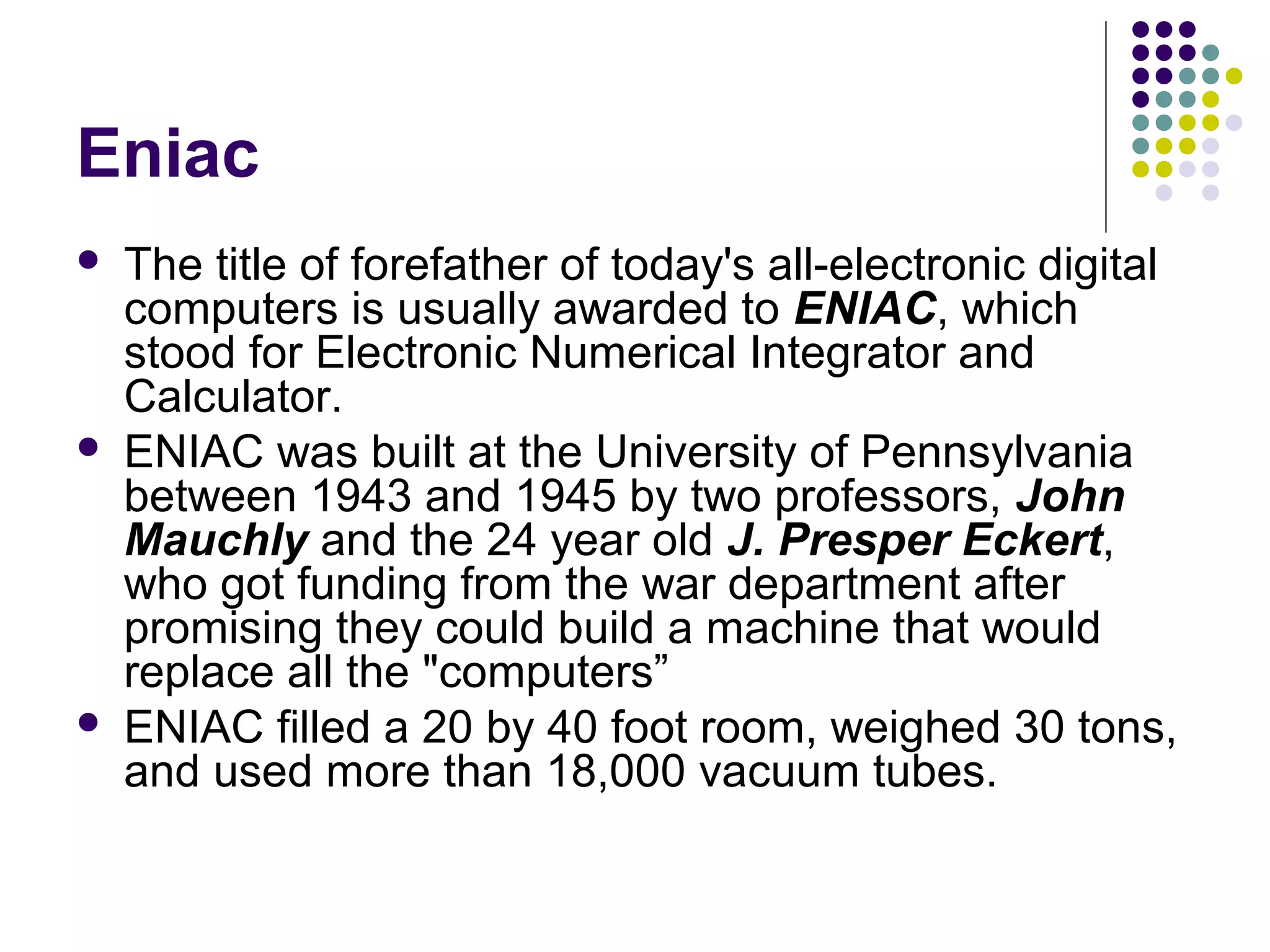
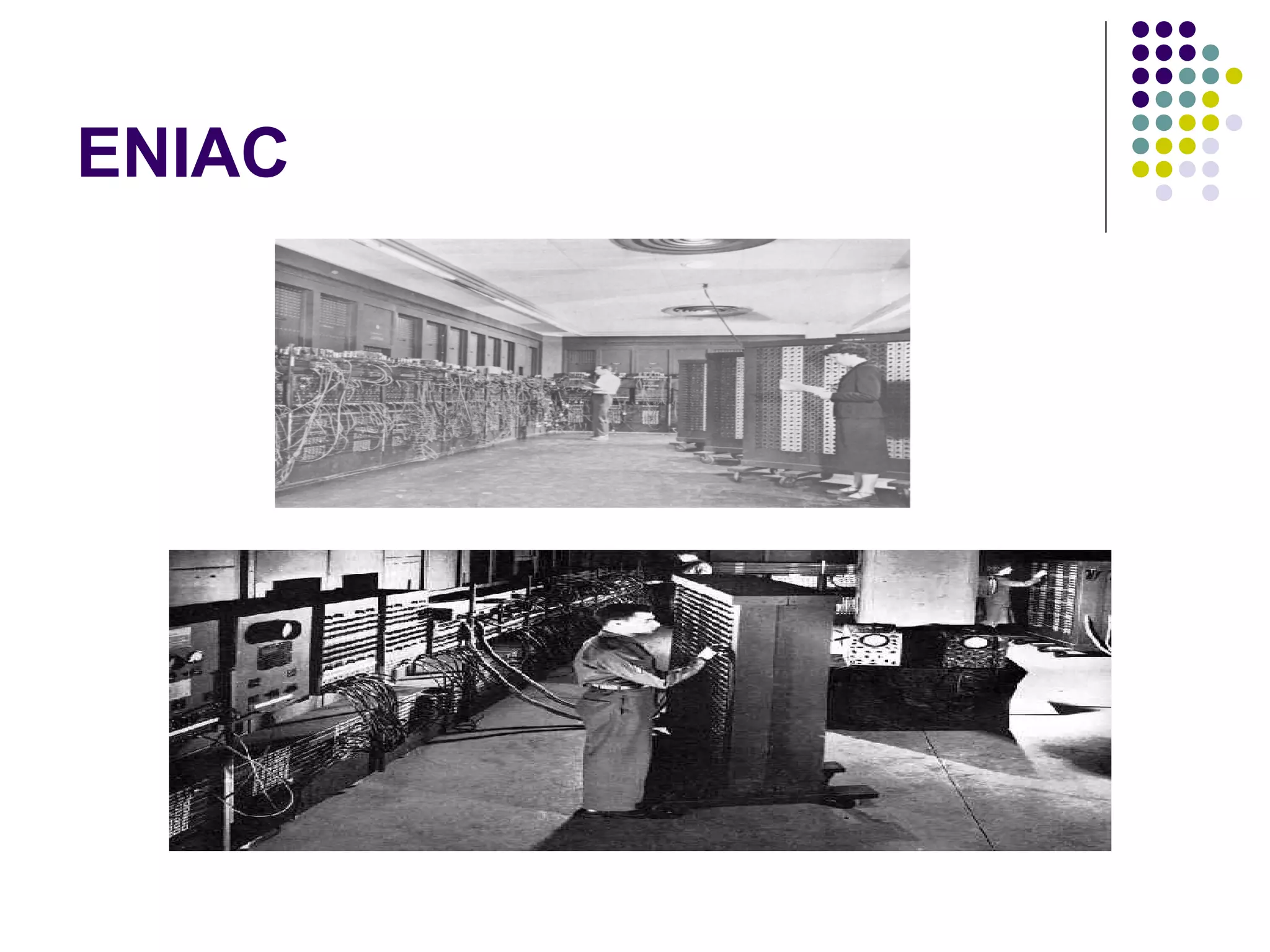
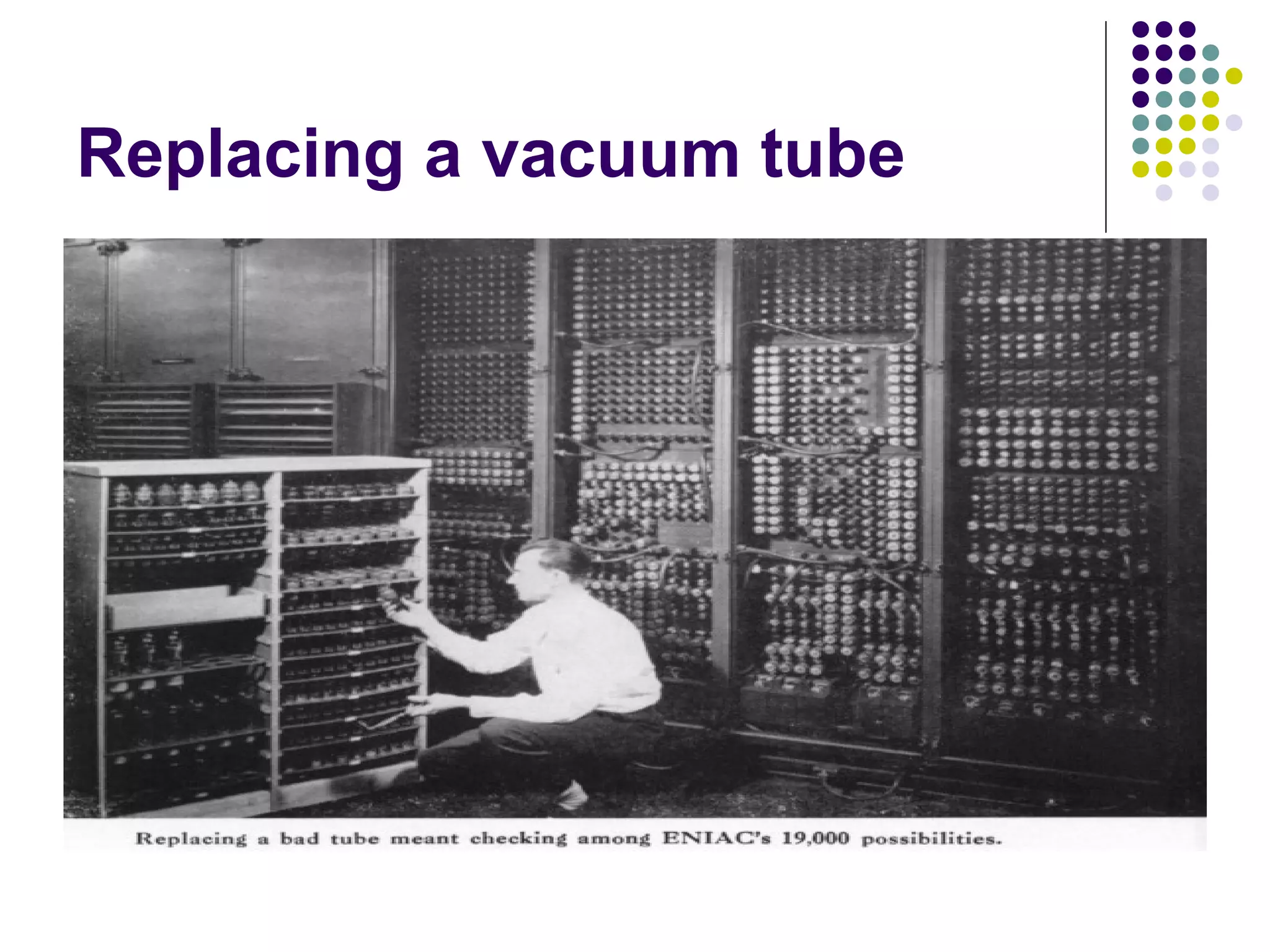
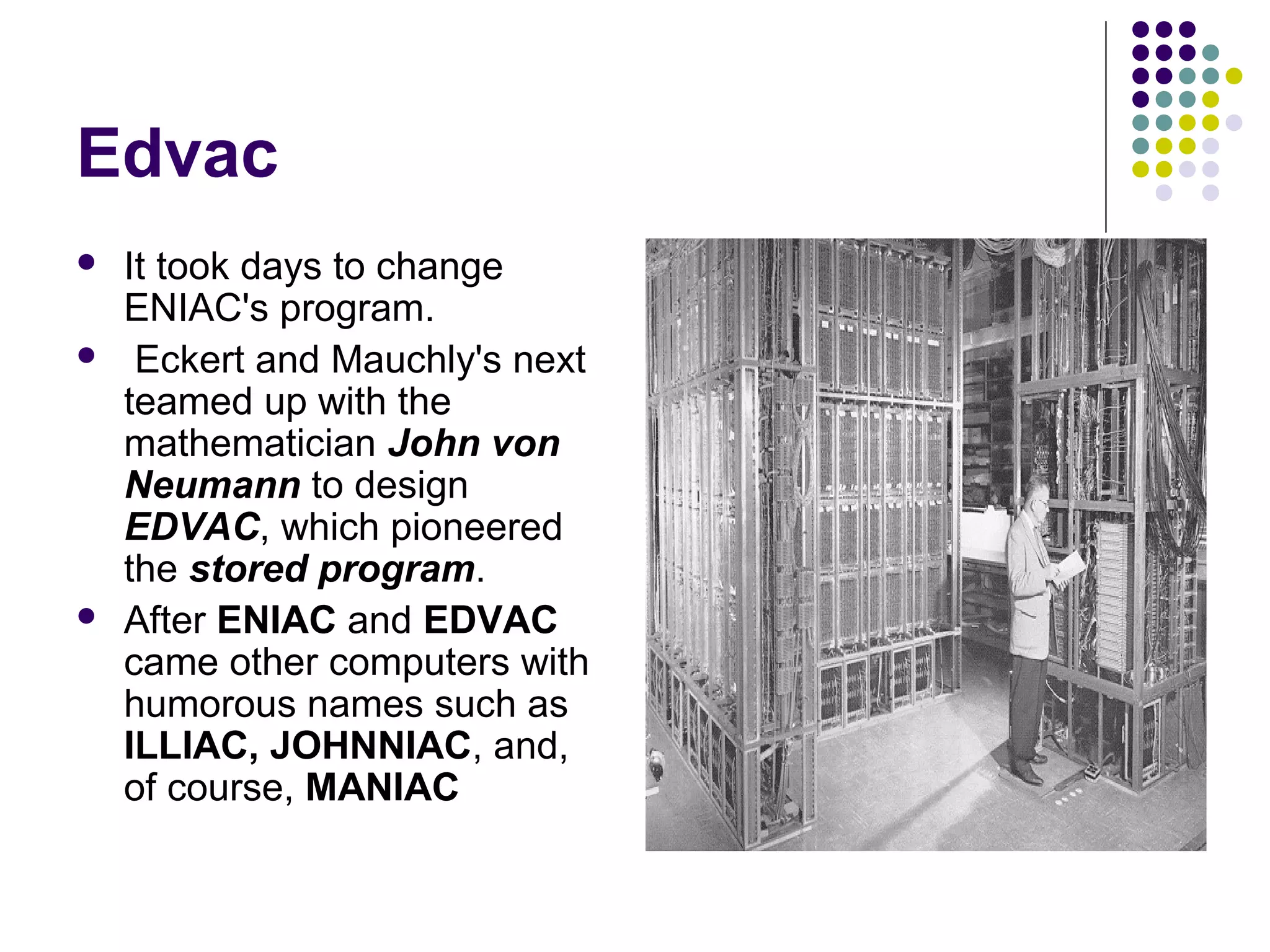
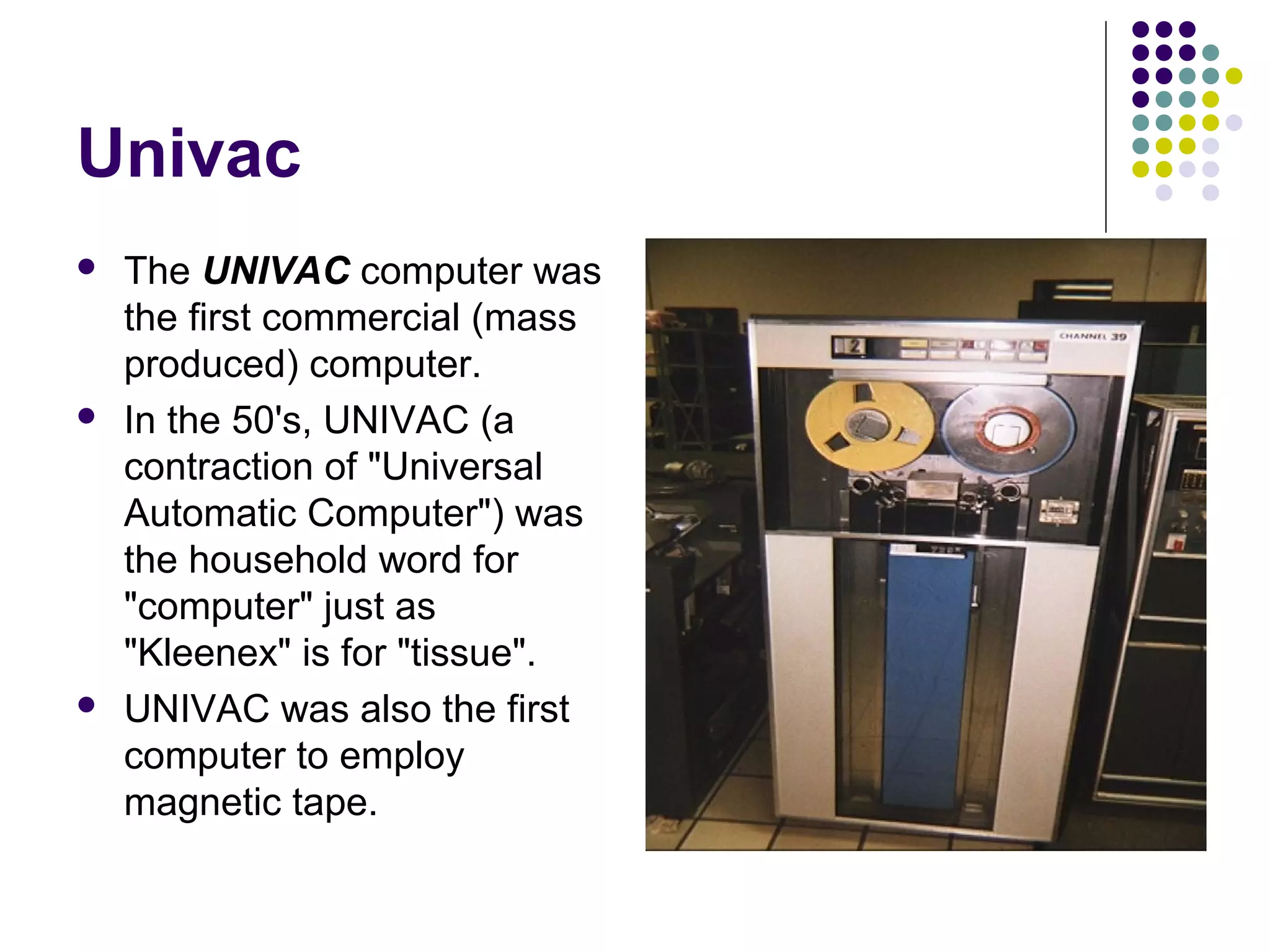
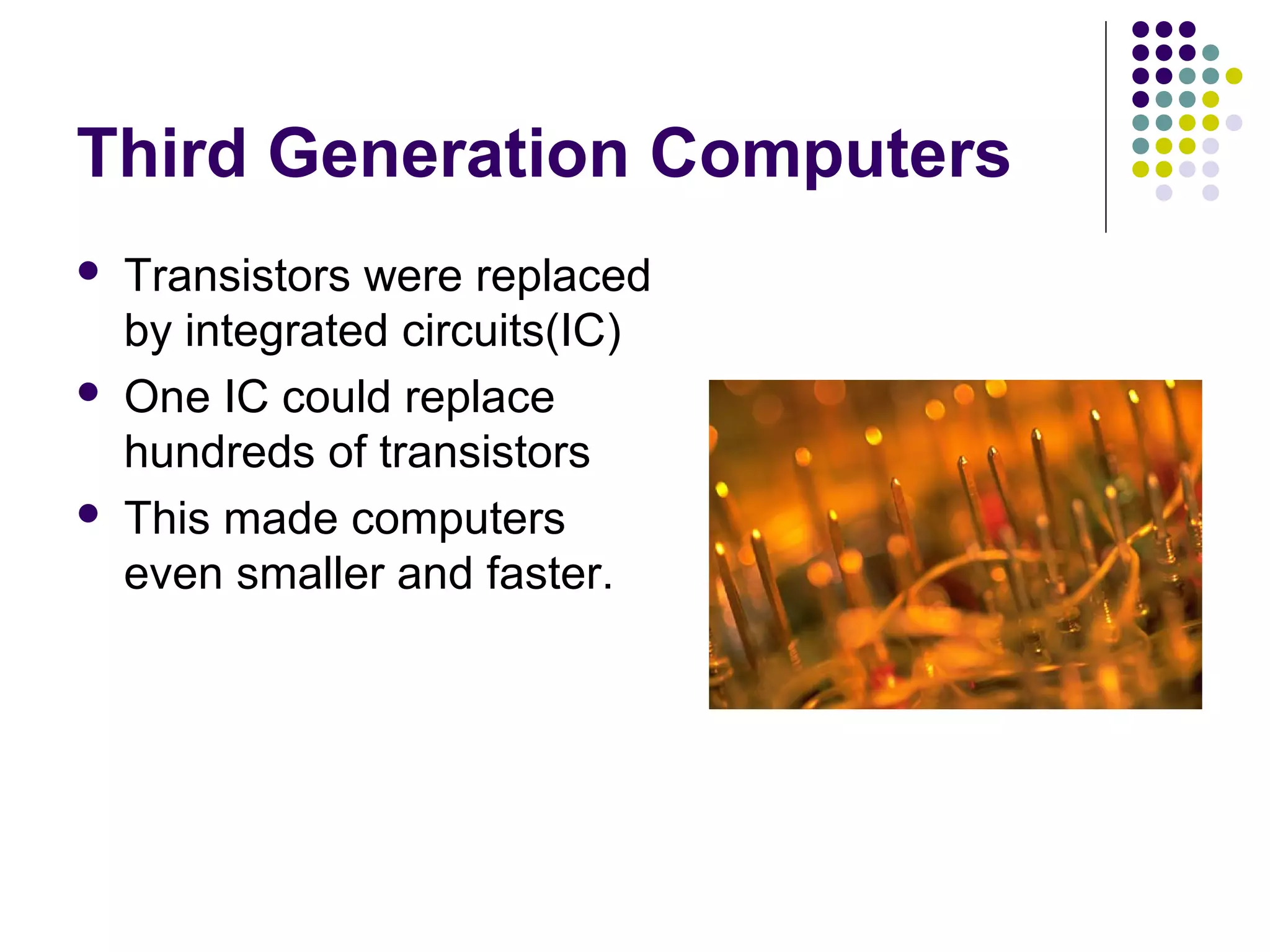
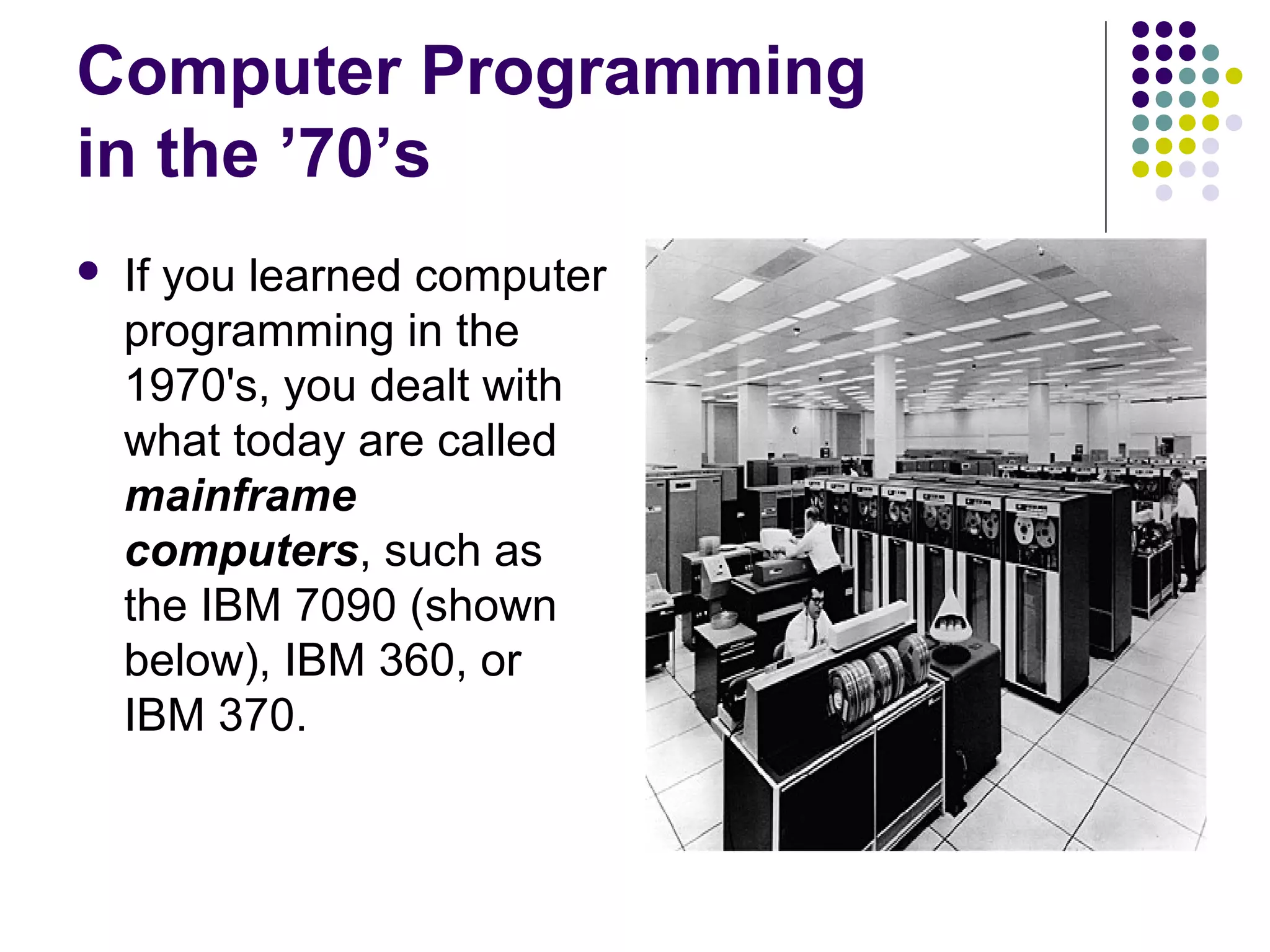
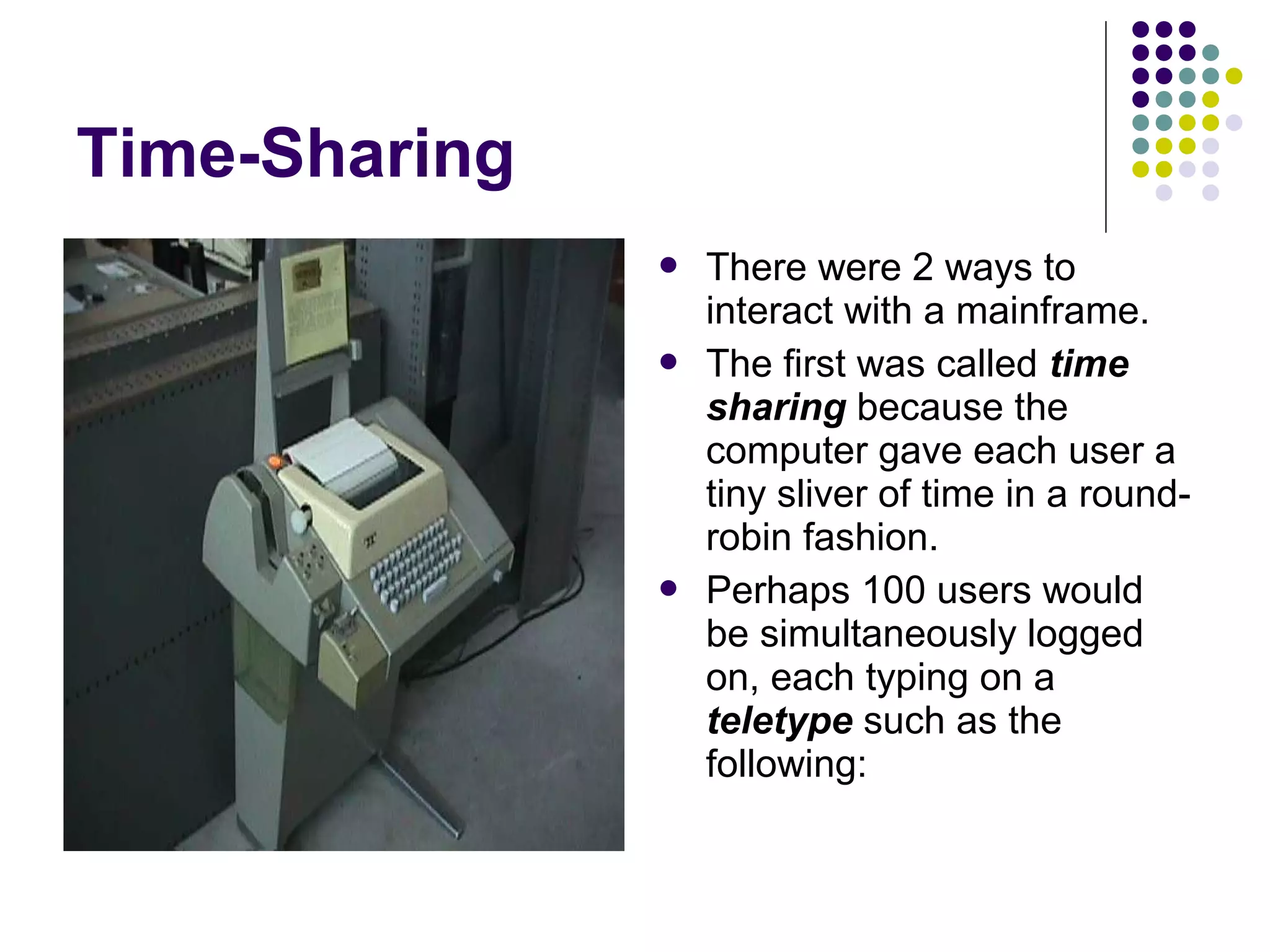
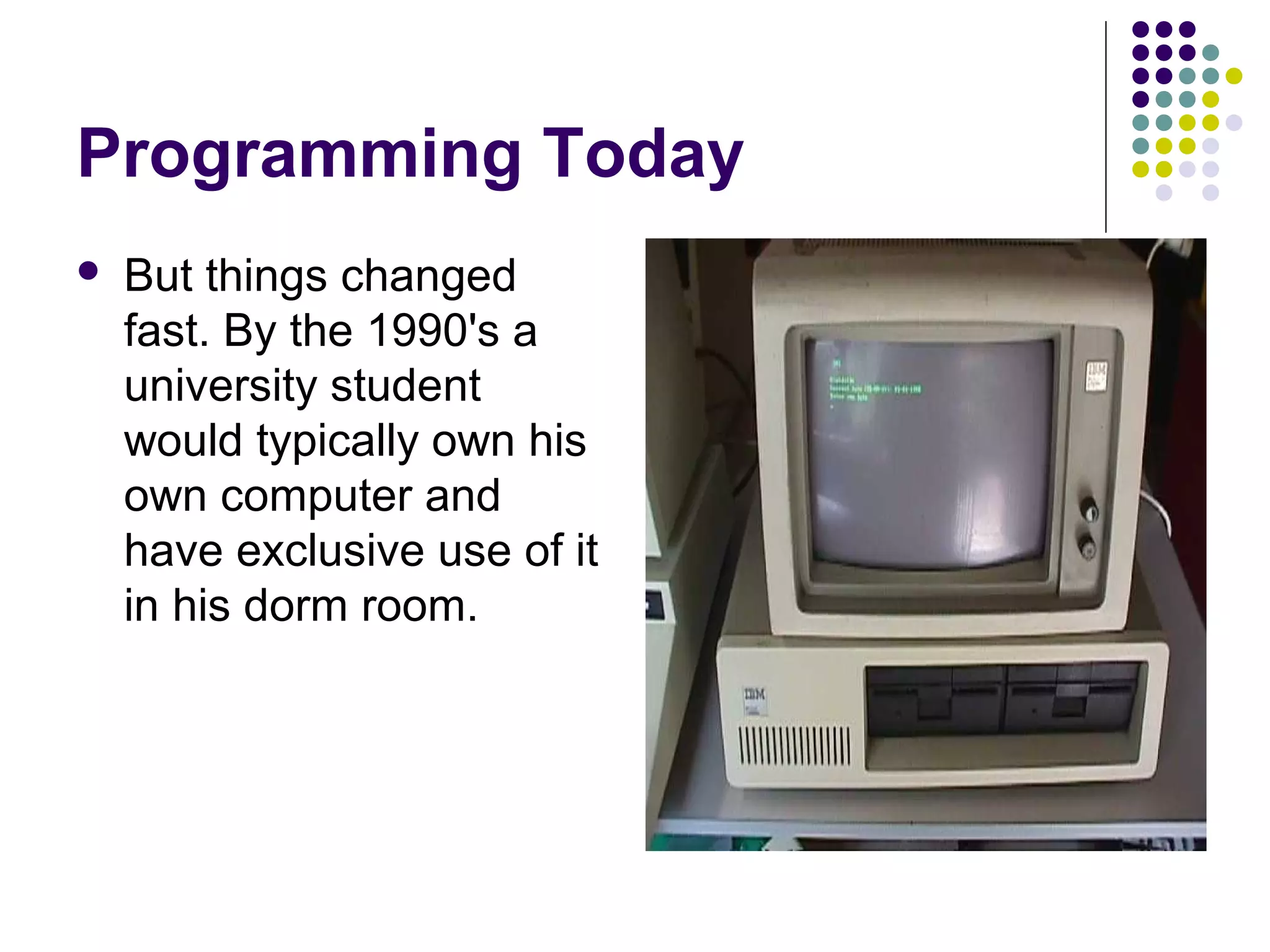
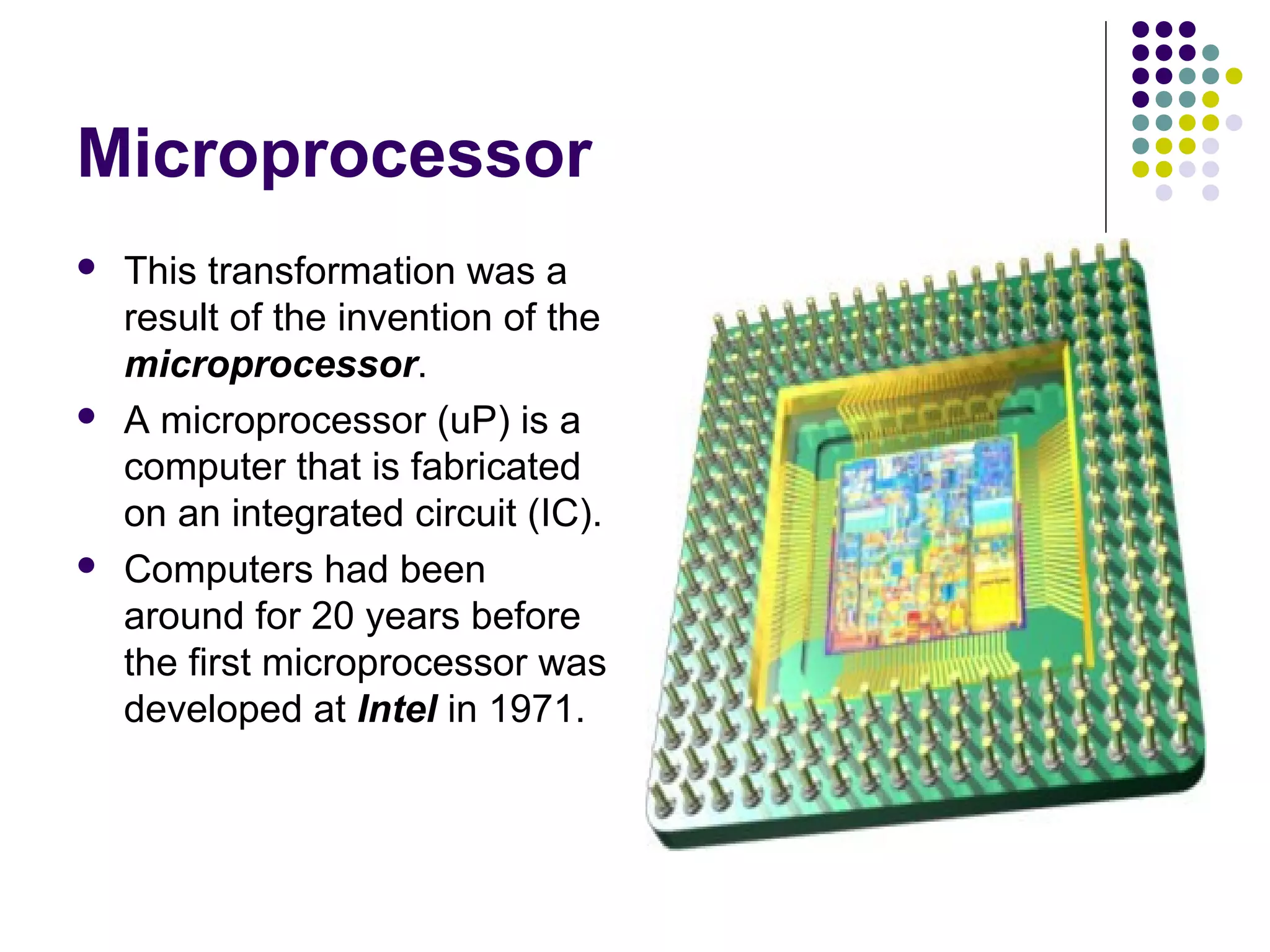
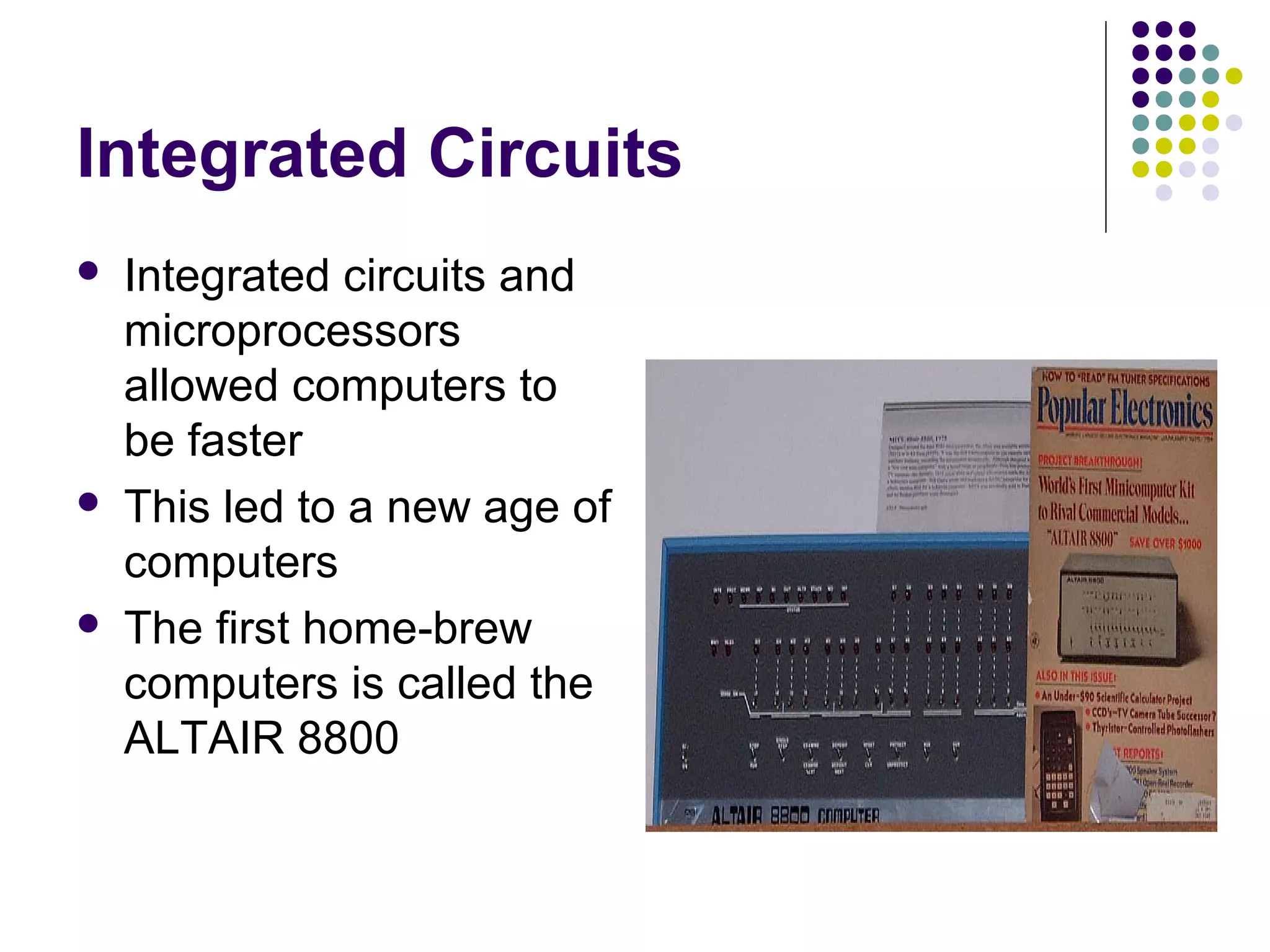
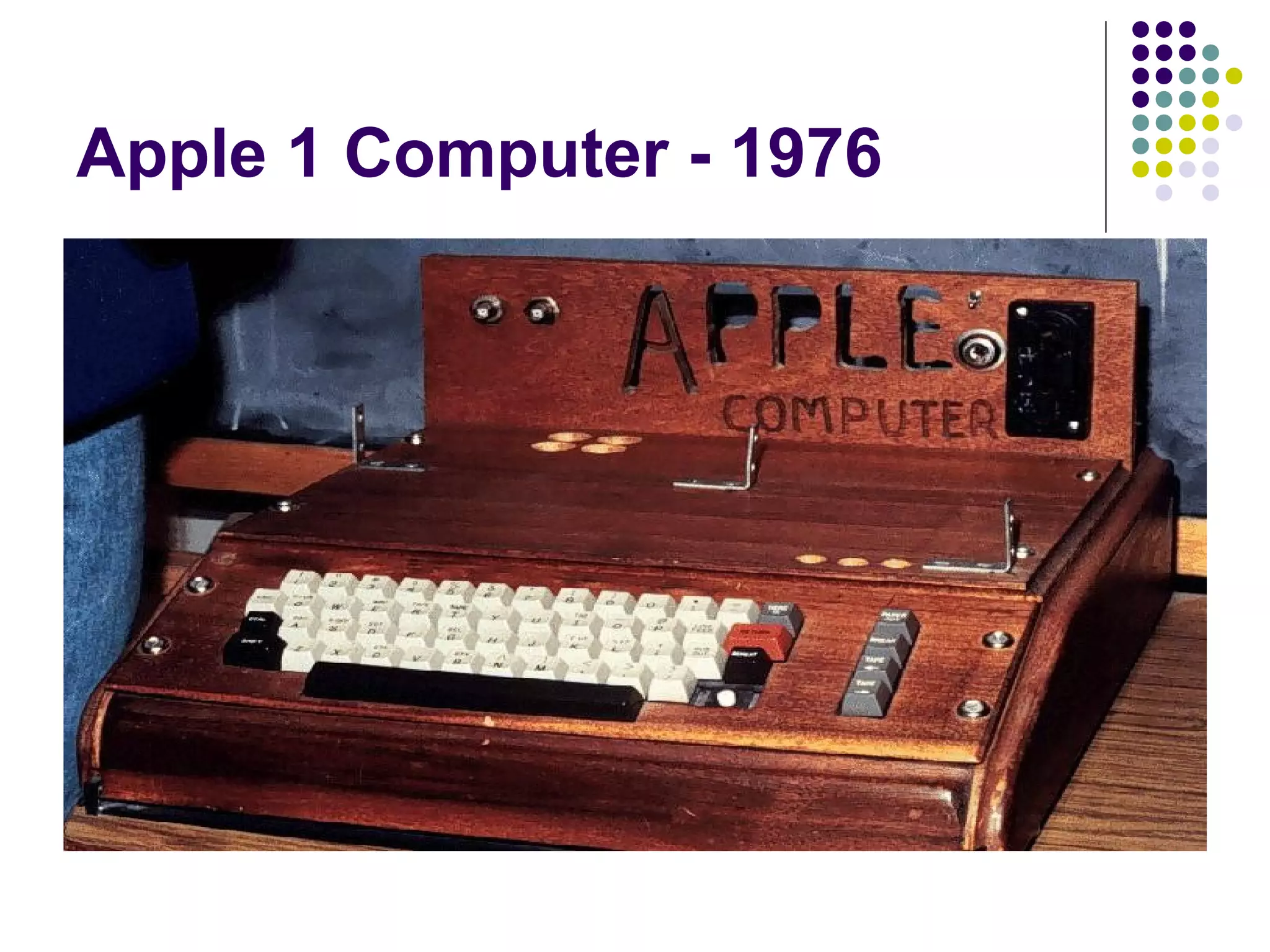
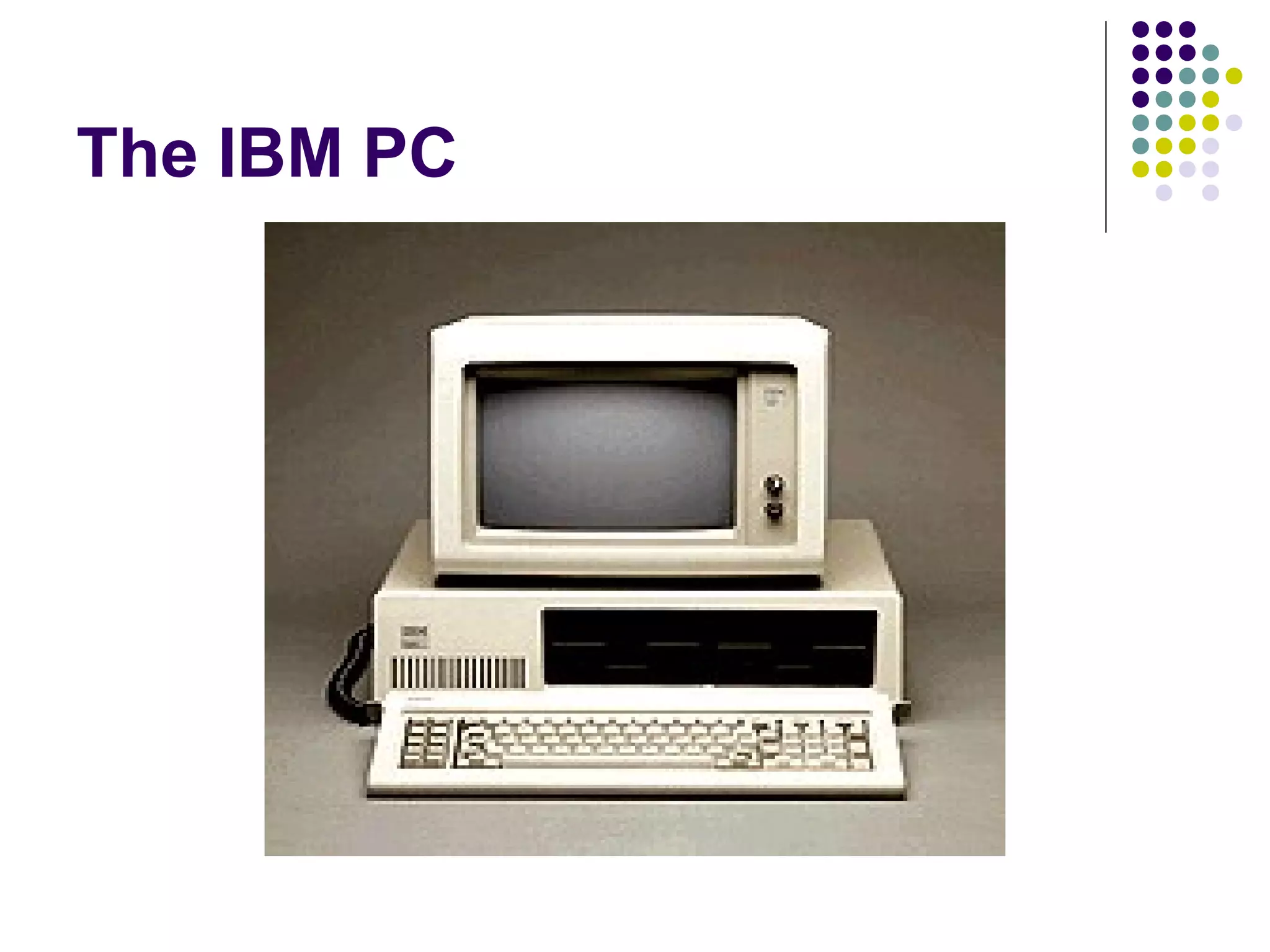
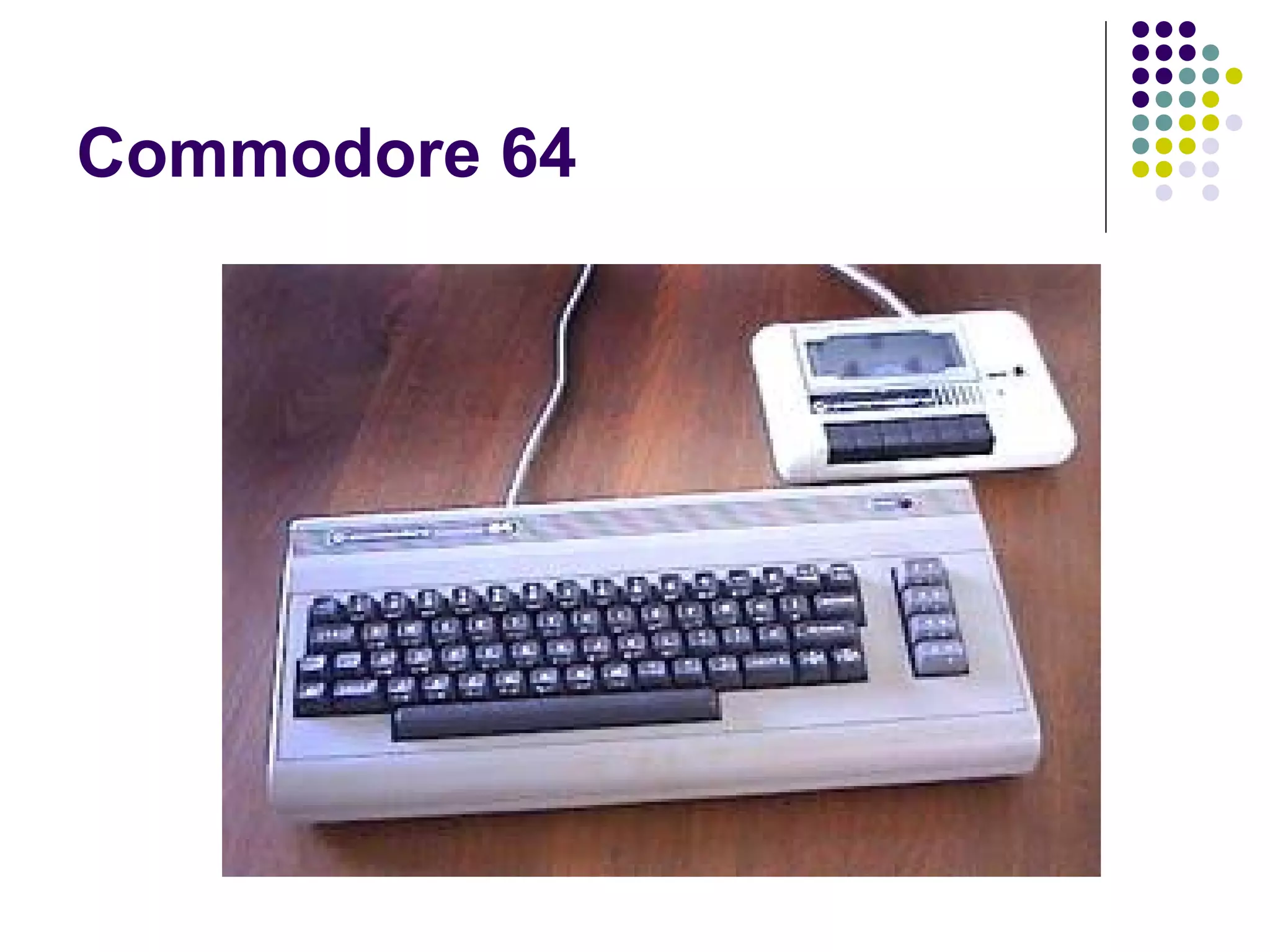
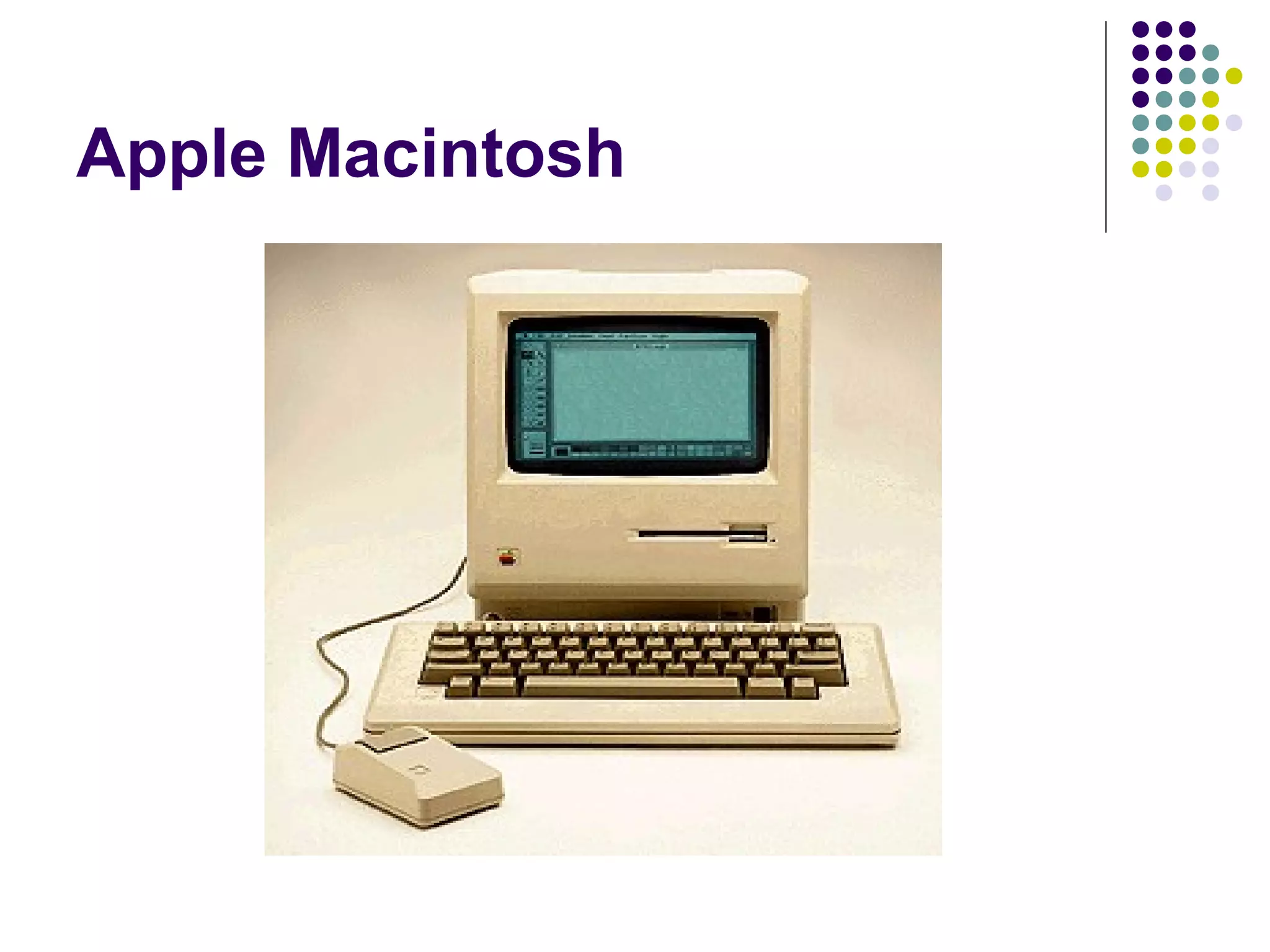
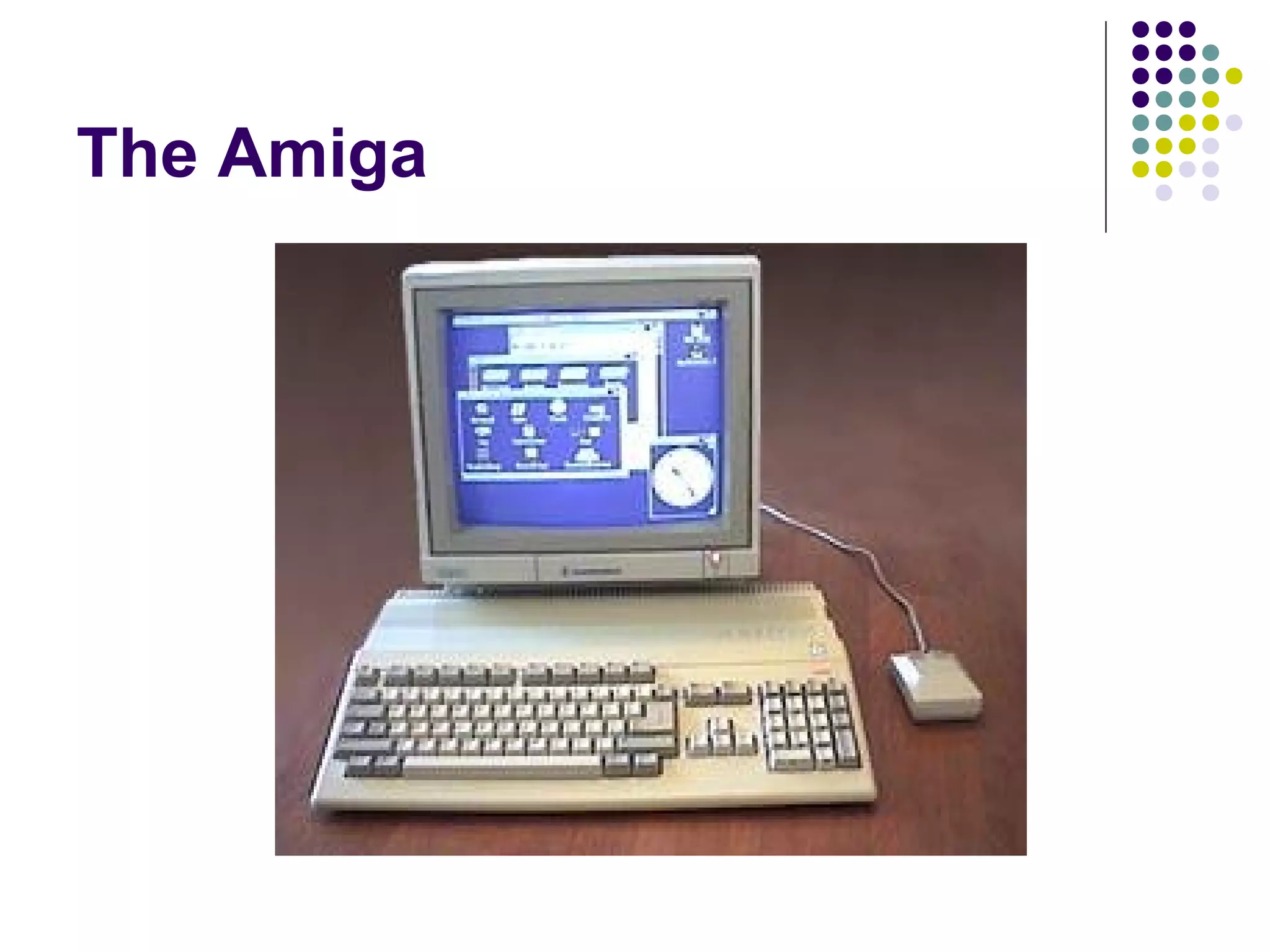
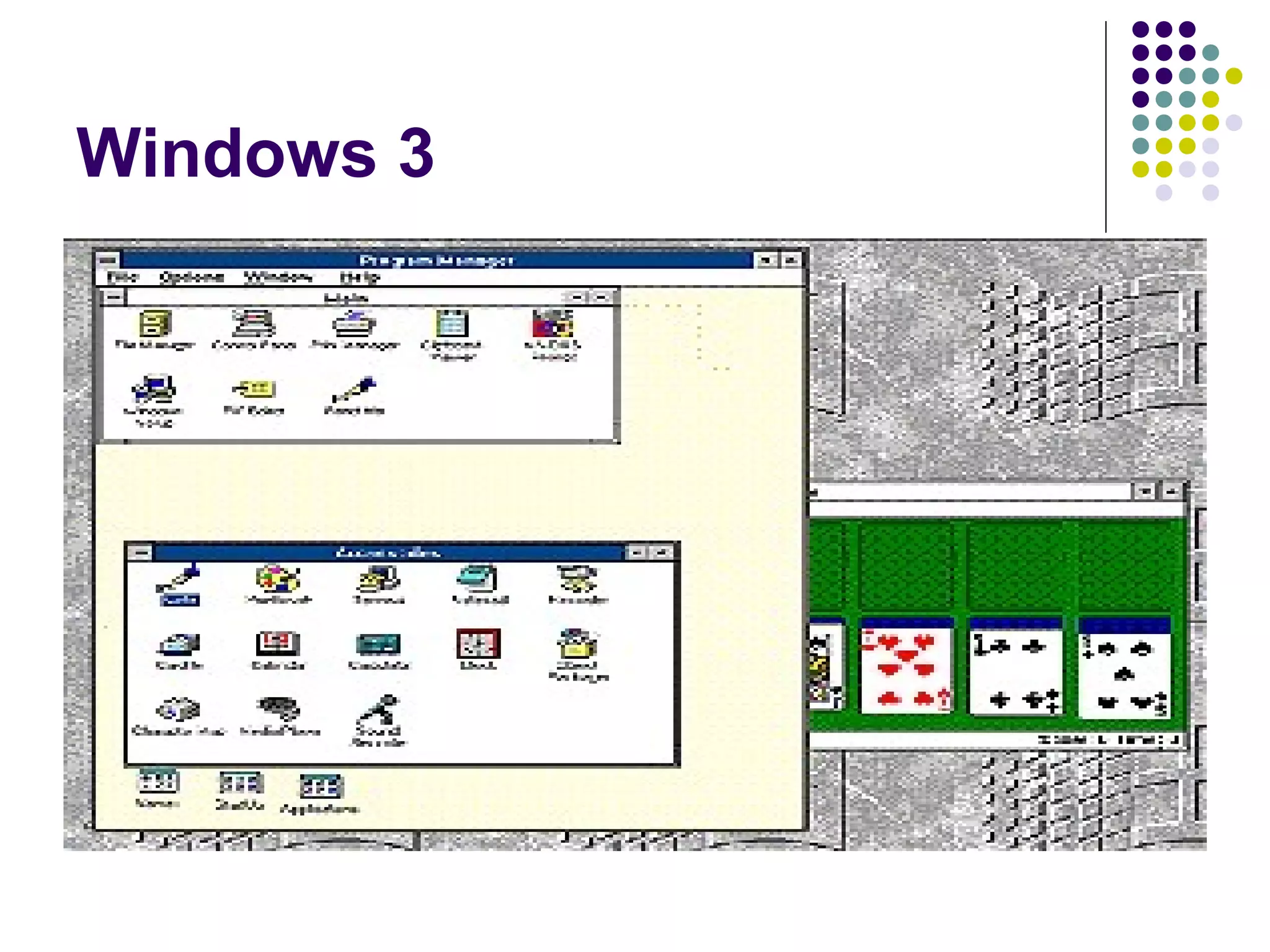
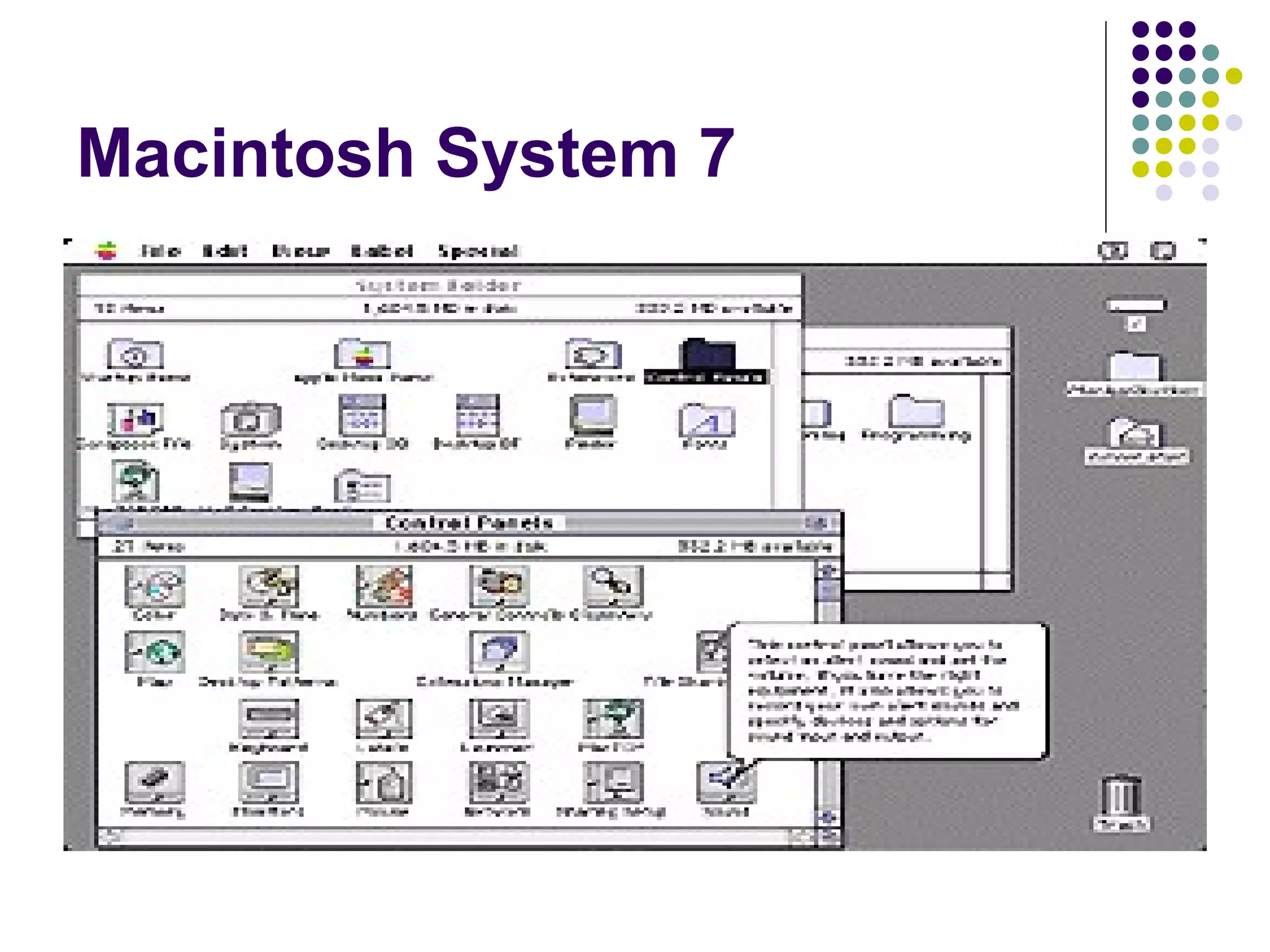
The document traces the history of computers from early mechanical aids like the abacus and slide rule, through early electromechanical computers like the Analytical Engine, ENIAC, and UNIVAC, to the development of integrated circuits, microprocessors, and personal computers which led to the age of modern computing we experience today. Key developments included the stored program concept, the invention of the transistor and microprocessor, advances in data storage from punch cards to magnetic tape and disks, and the rise of time-sharing and personal computing. These advances drove computers to become smaller, faster, and more accessible to larger groups of users over time.