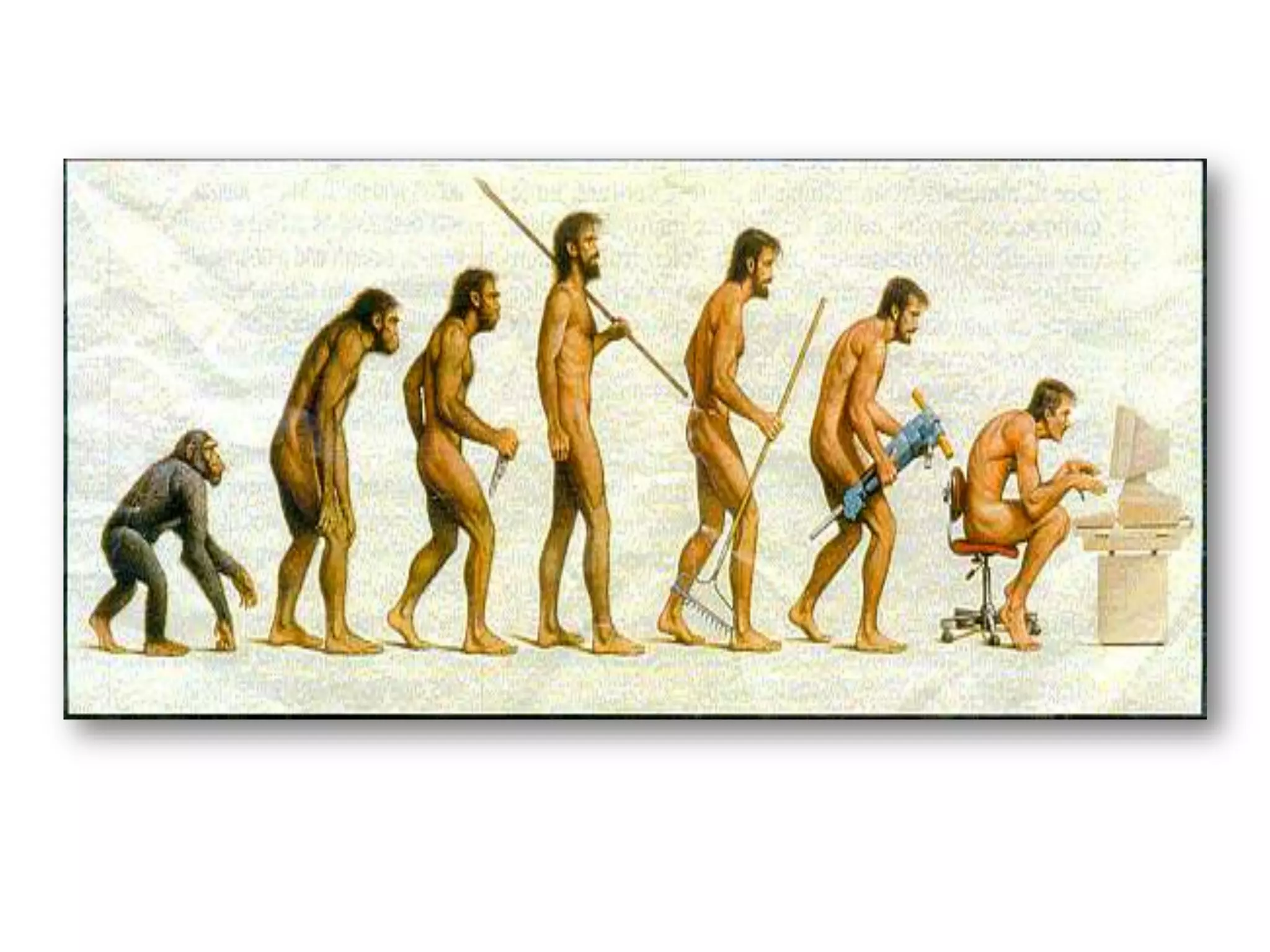
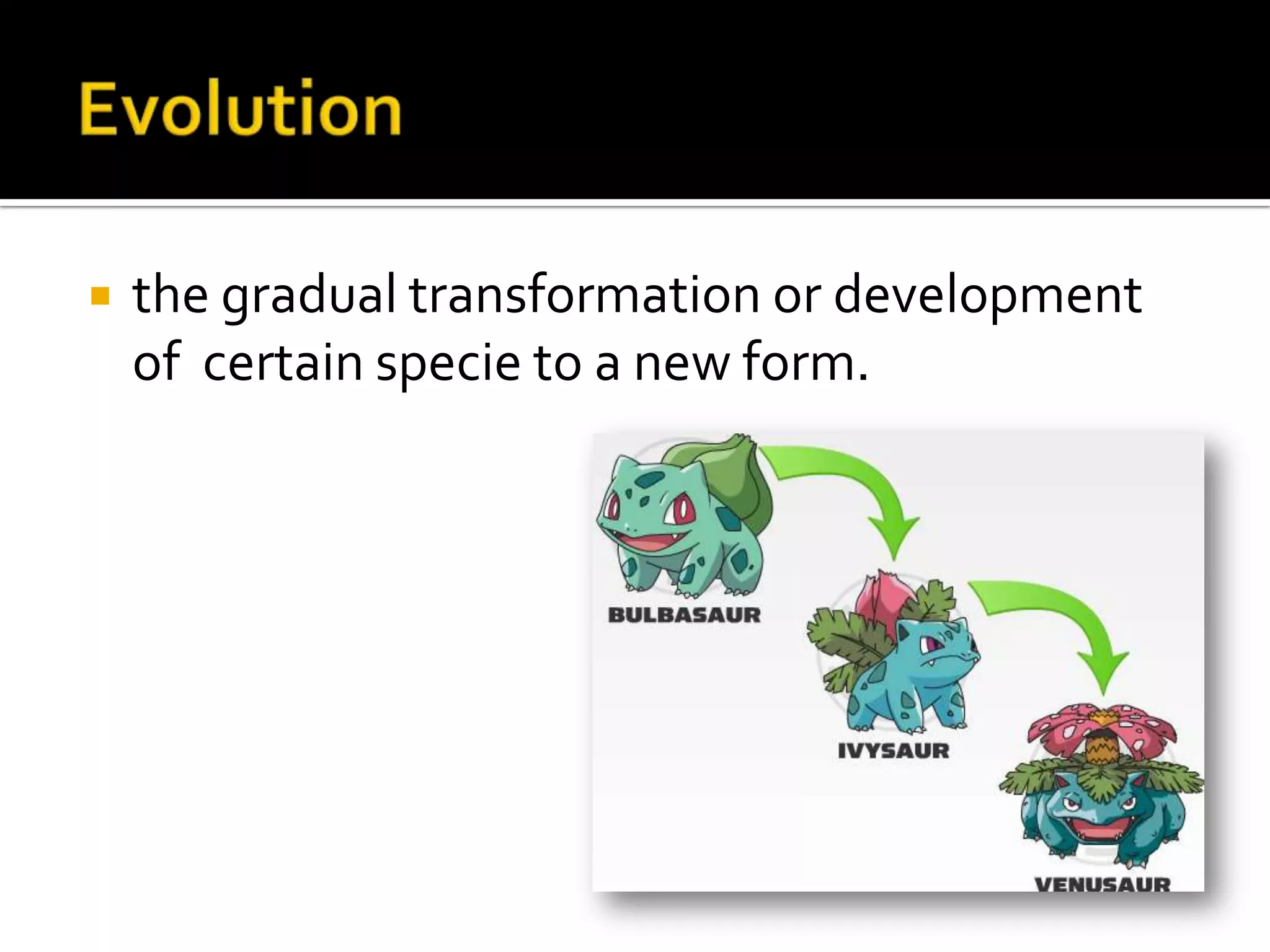
   the gradual transformation or development
    of certain specie to a new form.
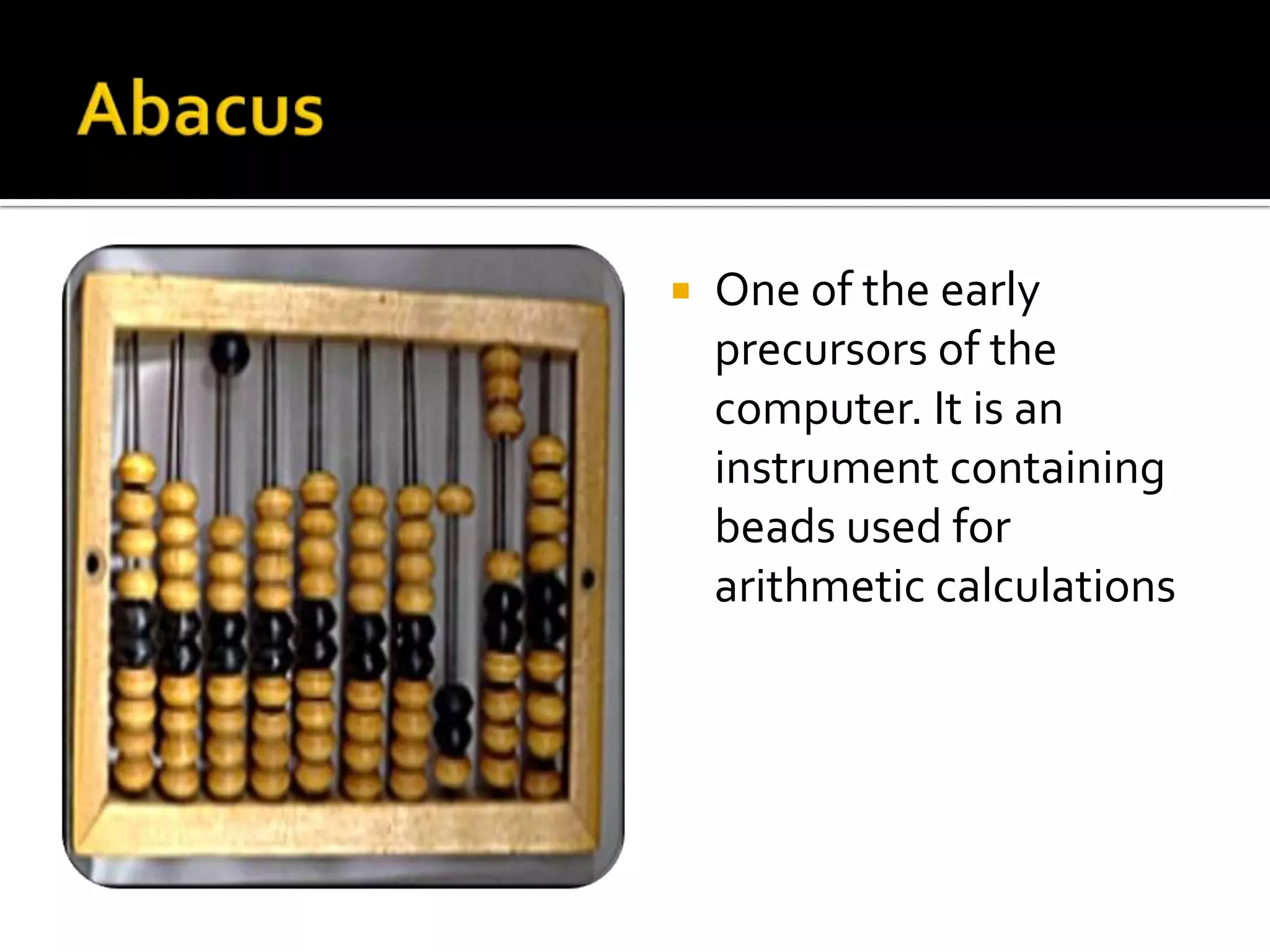
   One of the early
    precursors of the
    computer. It is an
    instrument containing
    beads used for
    arithmetic calculations
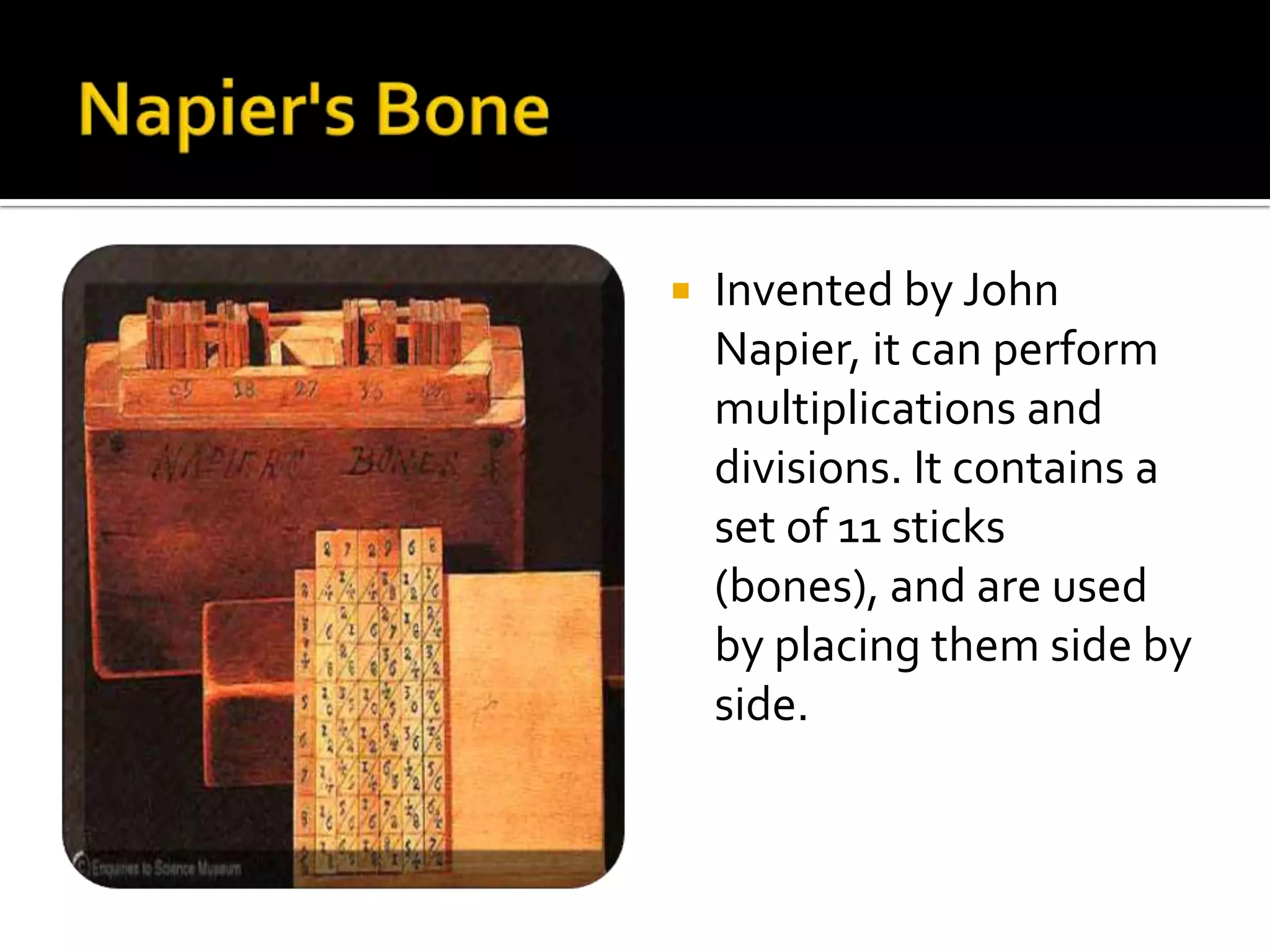
   Invented by John
    Napier, it can perform
    multiplications and
    divisions. It contains a
    set of 11 sticks
    (bones), and are used
    by placing them side by
    side.
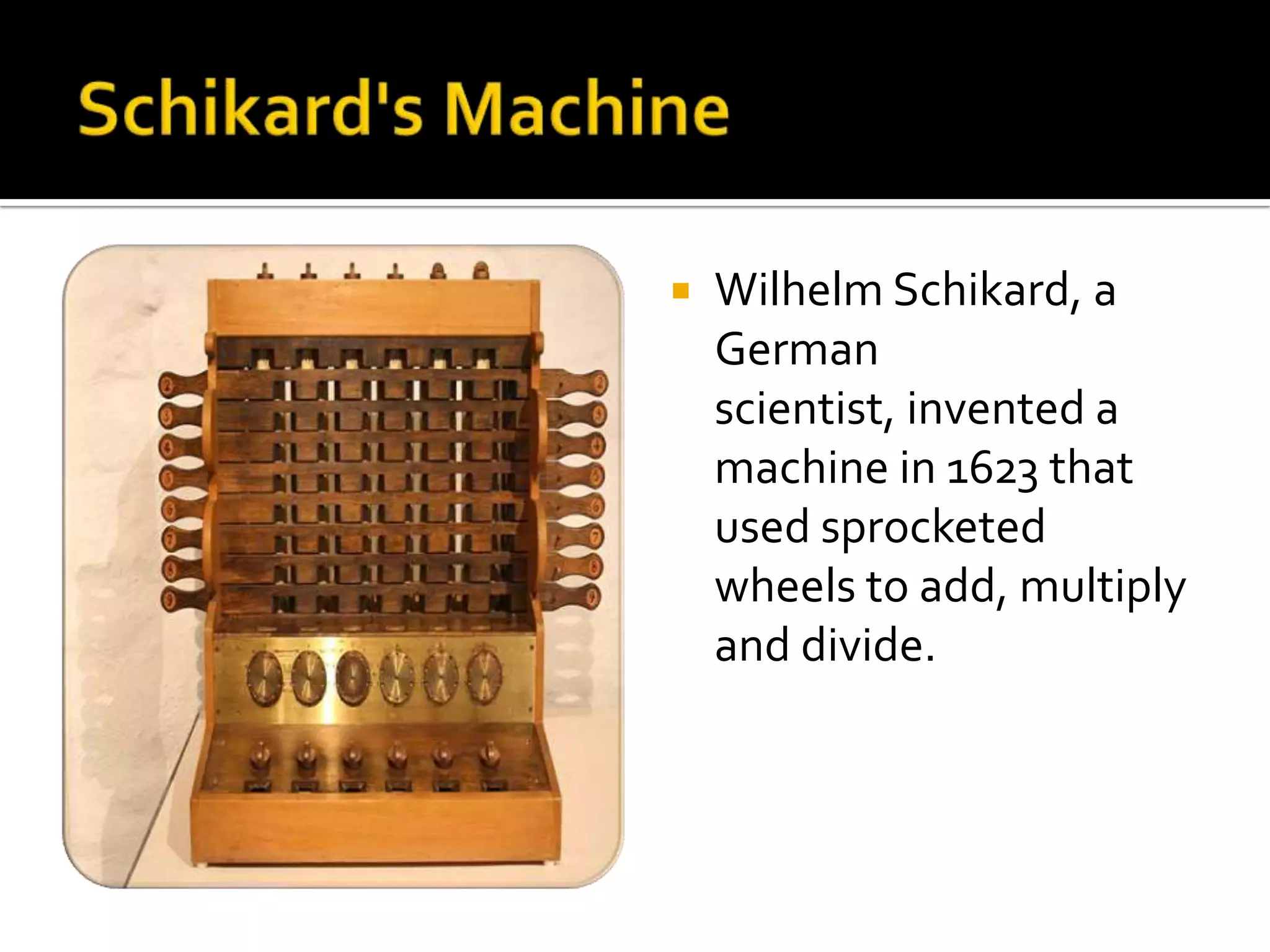
   Wilhelm Schikard, a
    German
    scientist, invented a
    machine in 1623 that
    used sprocketed
    wheels to add, multiply
    and divide.
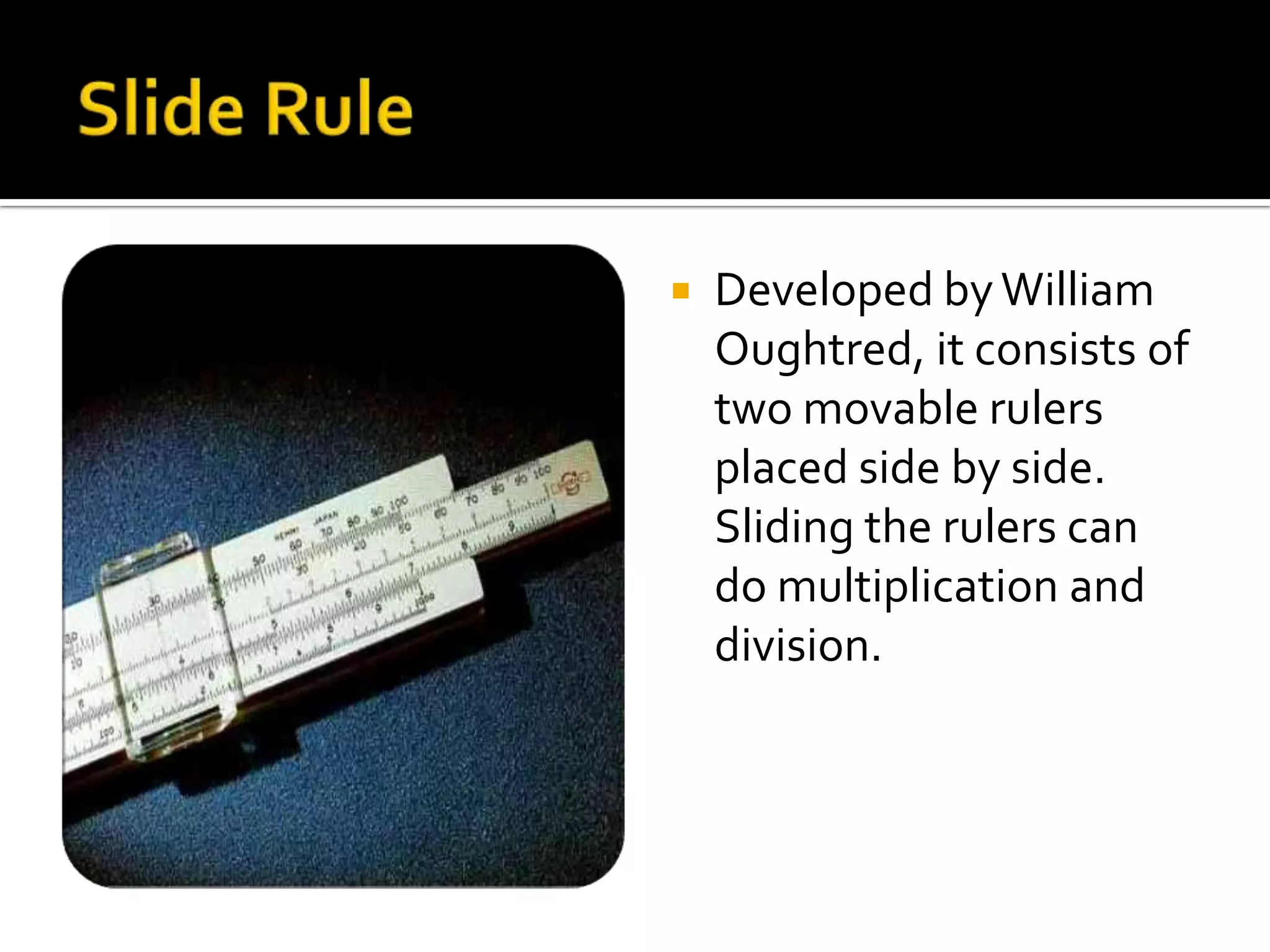
   Developed by William
    Oughtred, it consists of
    two movable rulers
    placed side by side.
    Sliding the rulers can
    do multiplication and
    division.
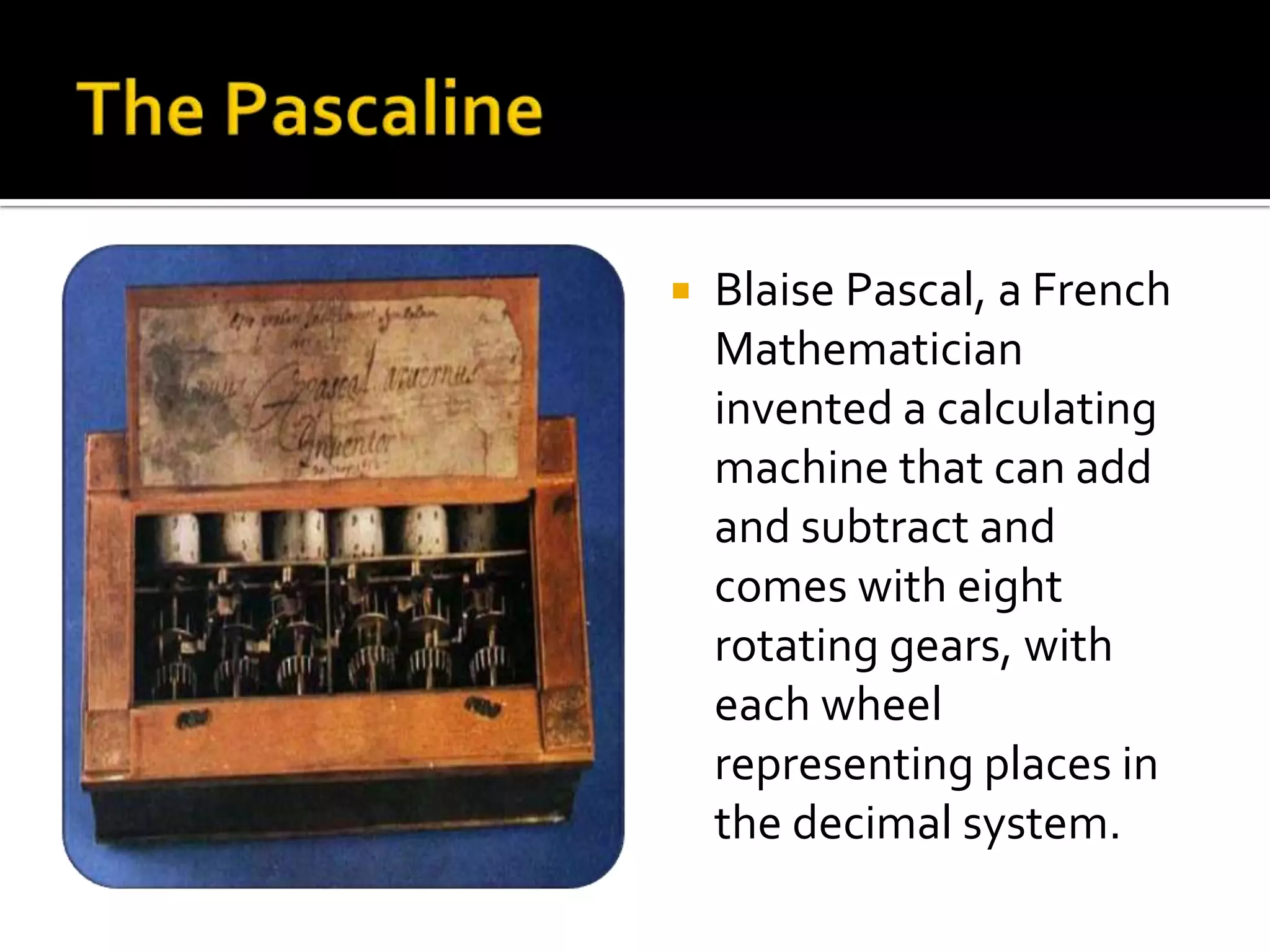
   Blaise Pascal, a French
    Mathematician
    invented a calculating
    machine that can add
    and subtract and
    comes with eight
    rotating gears, with
    each wheel
    representing places in
    the decimal system.
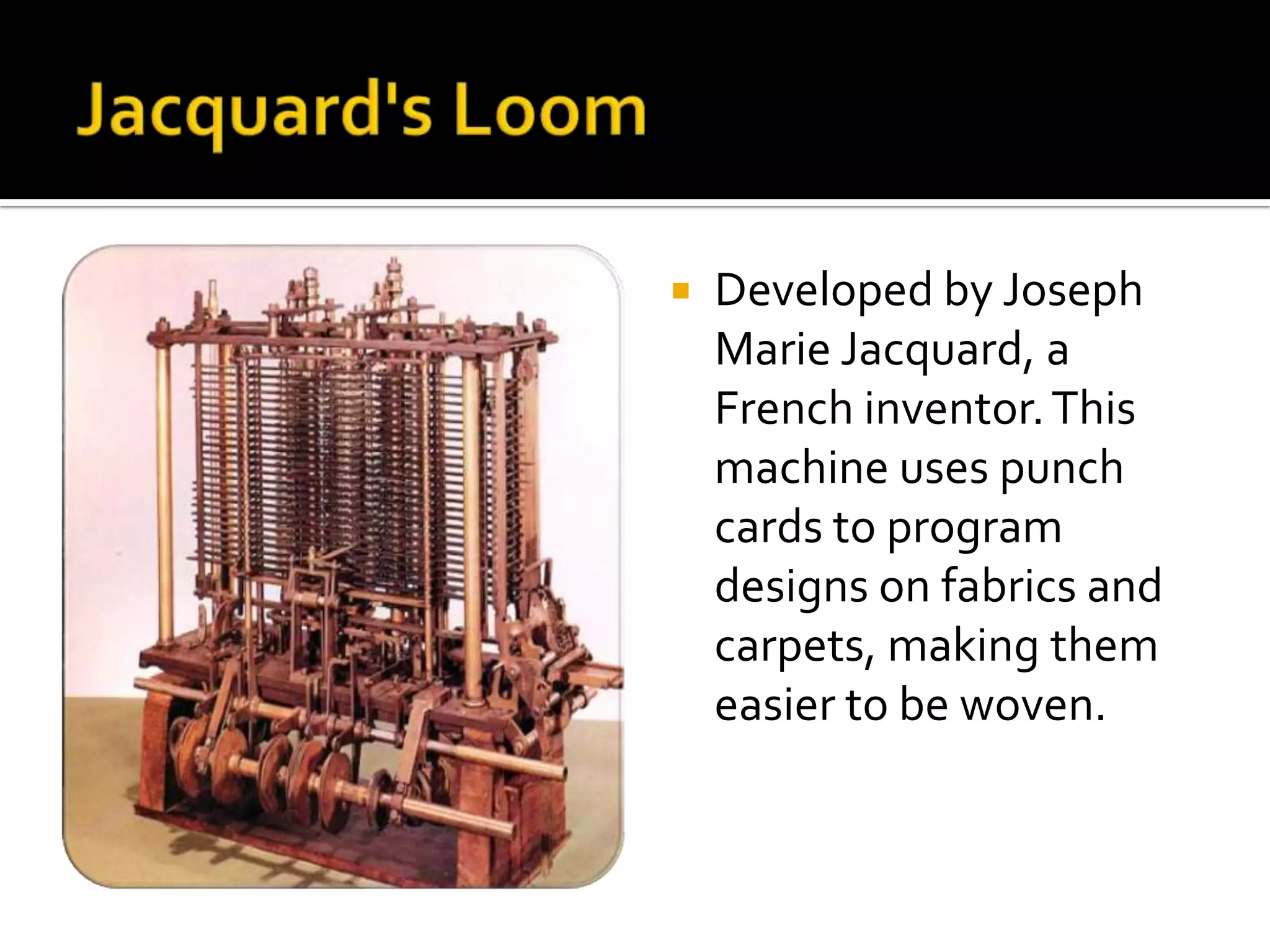
   Developed by Joseph
    Marie Jacquard, a
    French inventor. This
    machine uses punch
    cards to program
    designs on fabrics and
    carpets, making them
    easier to be woven.
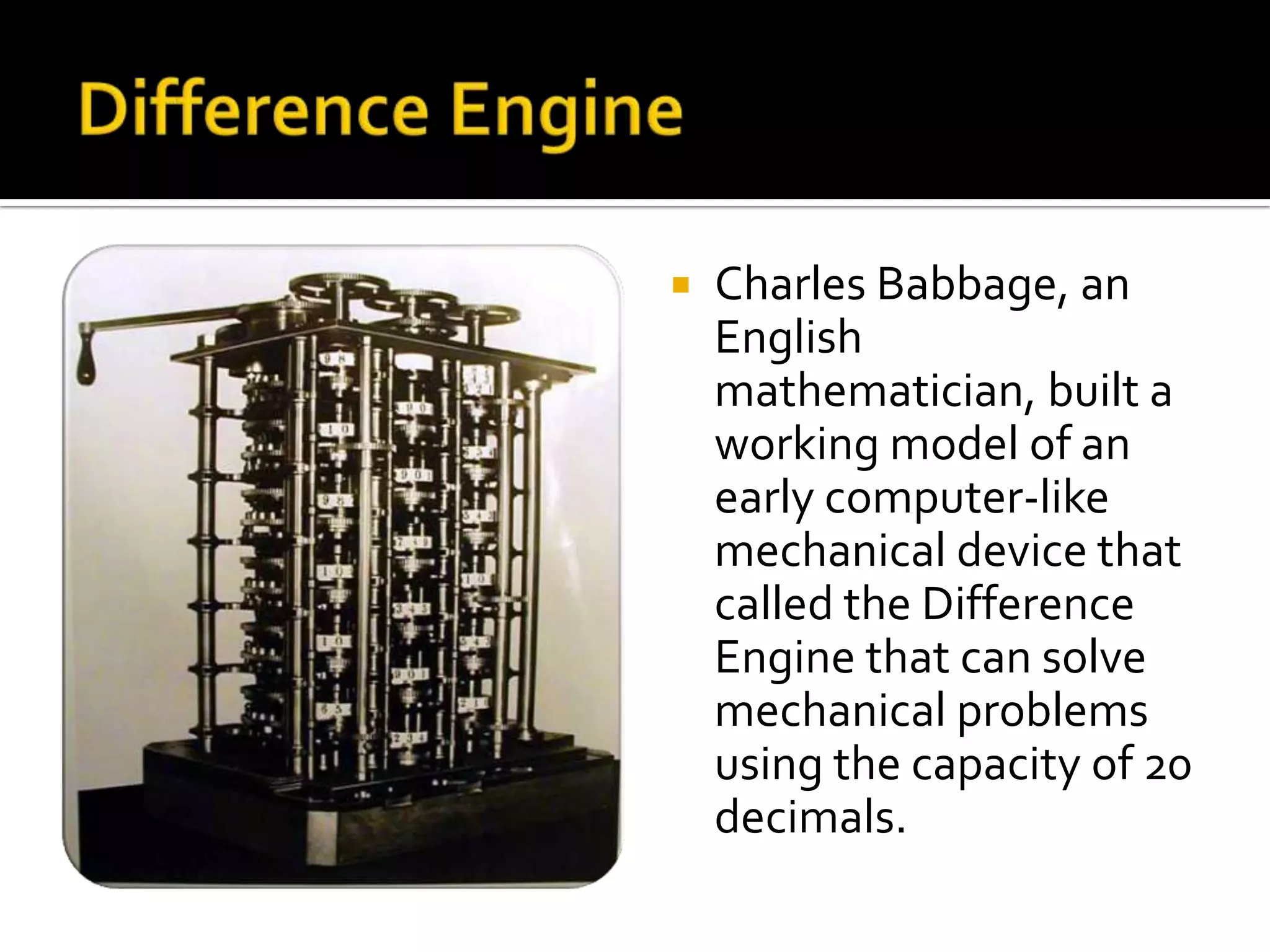
   Charles Babbage, an
    English
    mathematician, built a
    working model of an
    early computer-like
    mechanical device that
    called the Difference
    Engine that can solve
    mechanical problems
    using the capacity of 20
    decimals.
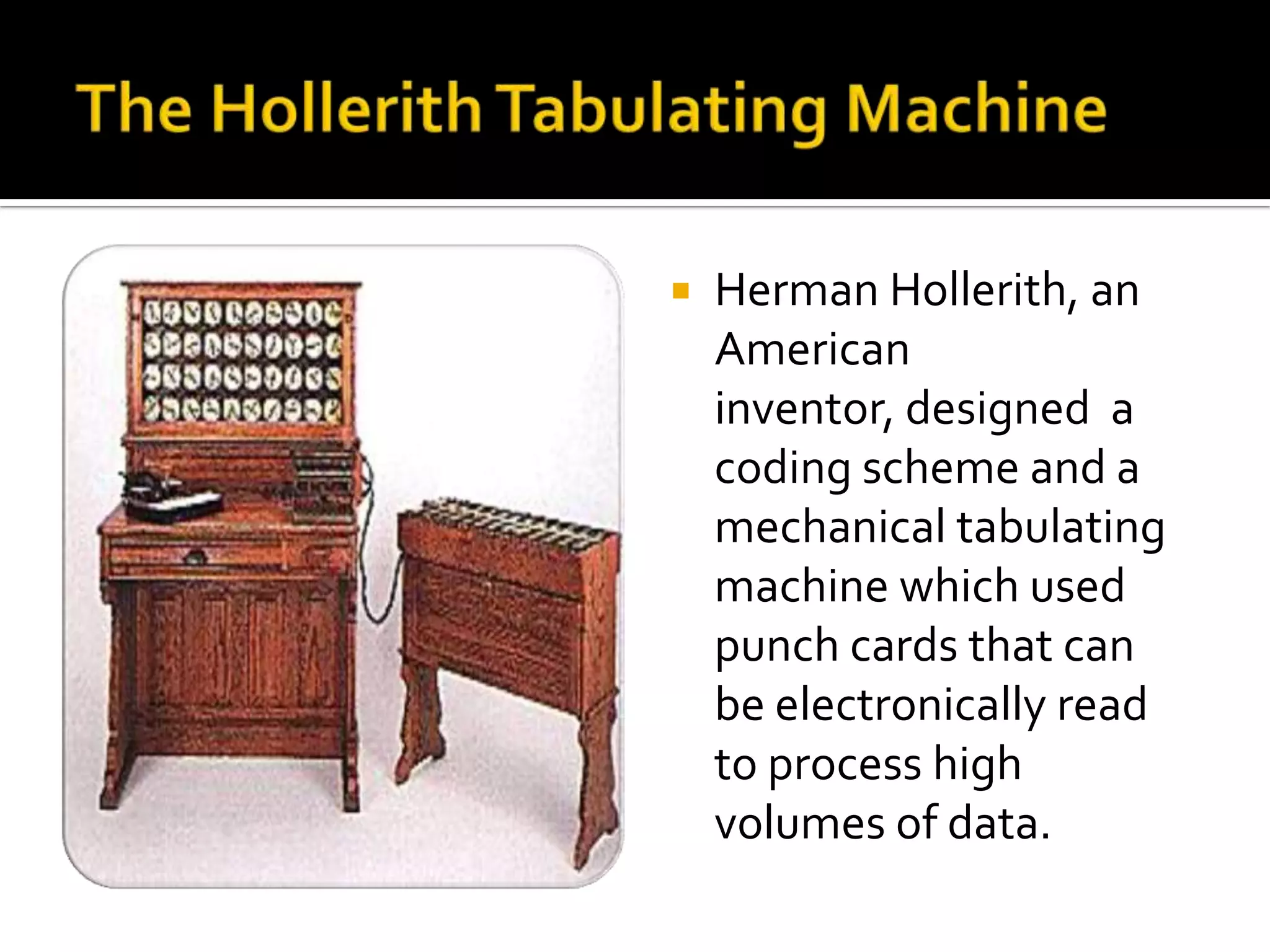
   Herman Hollerith, an
    American
    inventor, designed a
    coding scheme and a
    mechanical tabulating
    machine which used
    punch cards that can
    be electronically read
    to process high
    volumes of data.
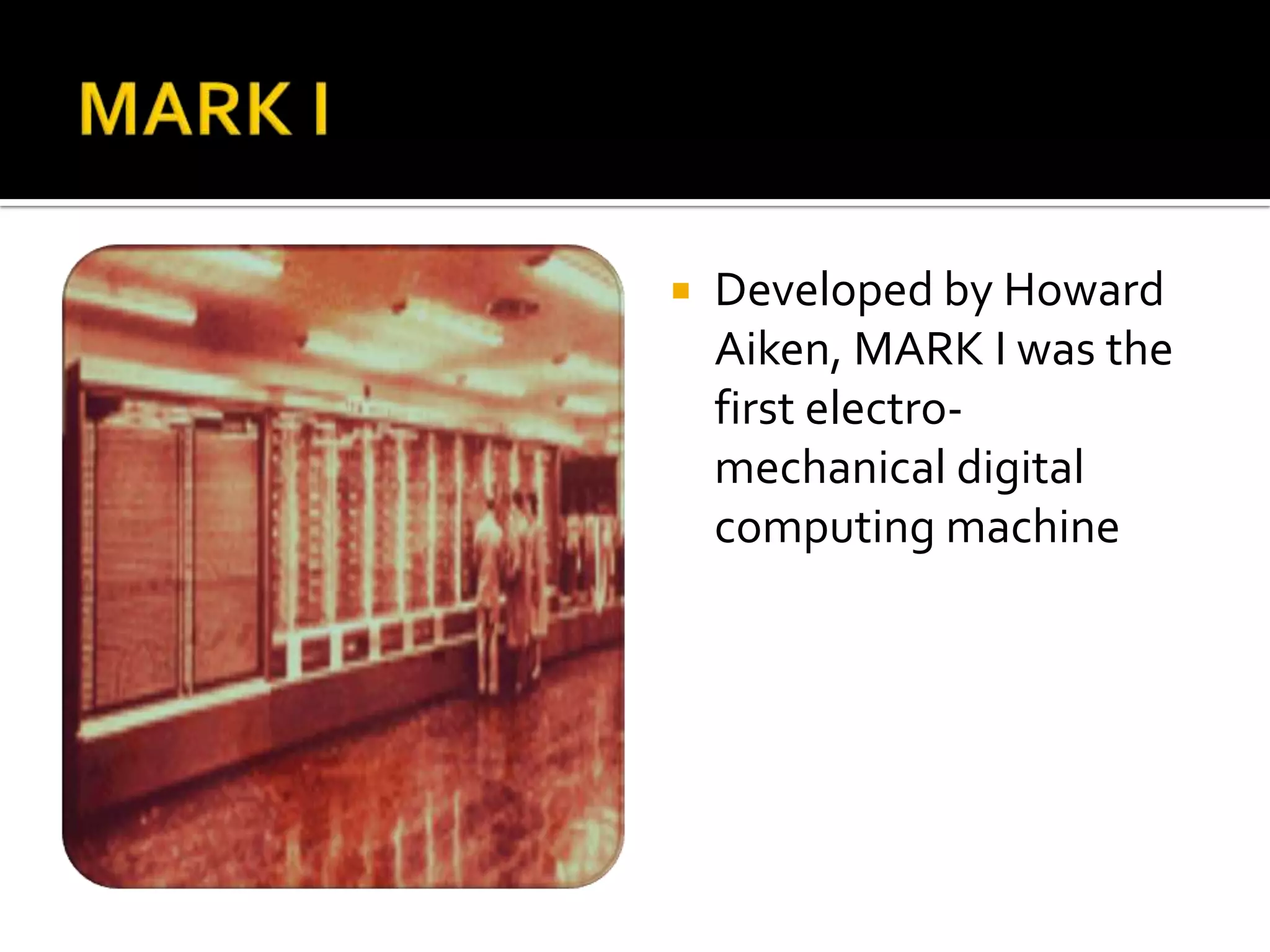
   Developed by Howard
    Aiken, MARK I was the
    first electro-
    mechanical digital
    computing machine
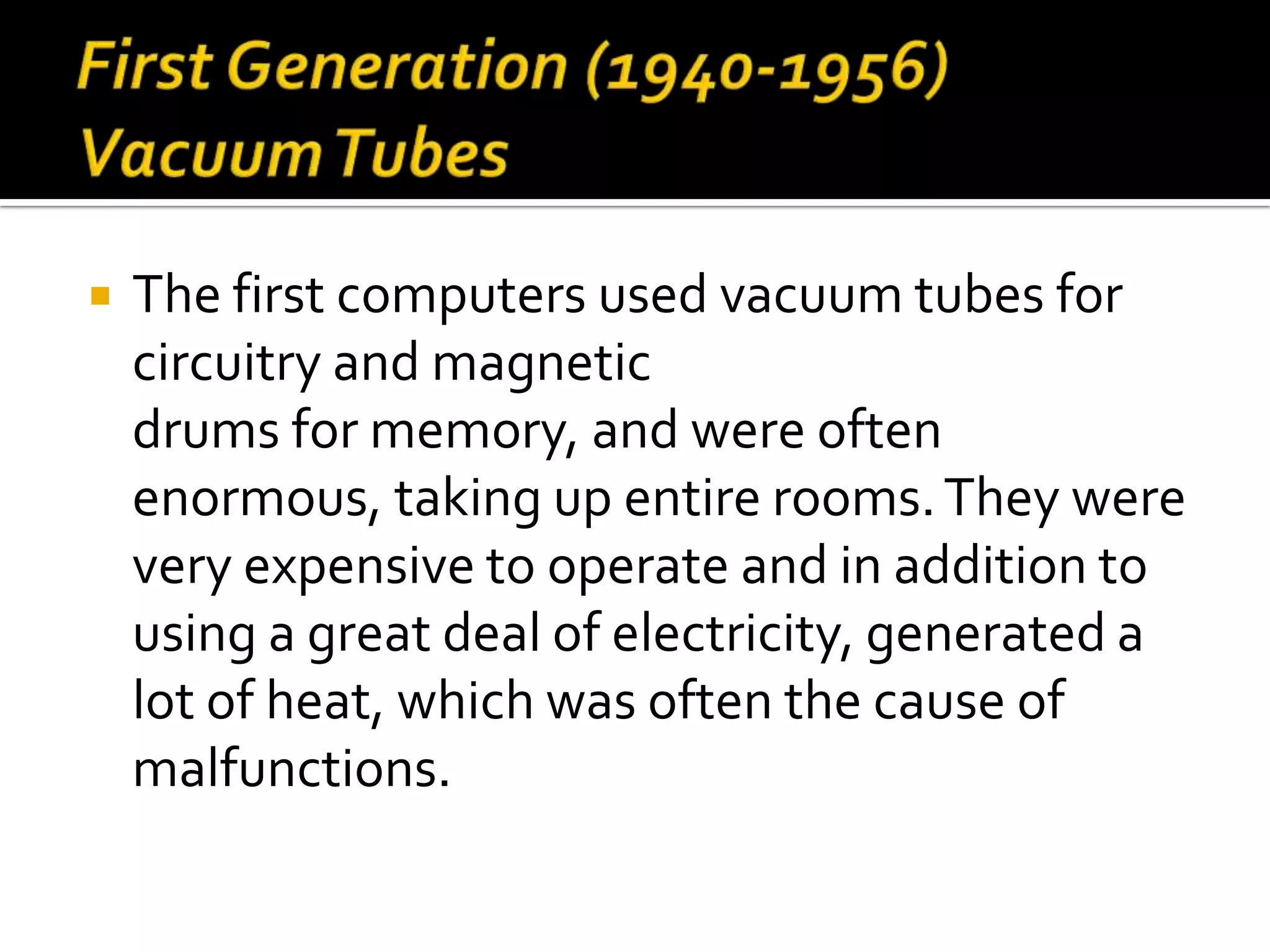
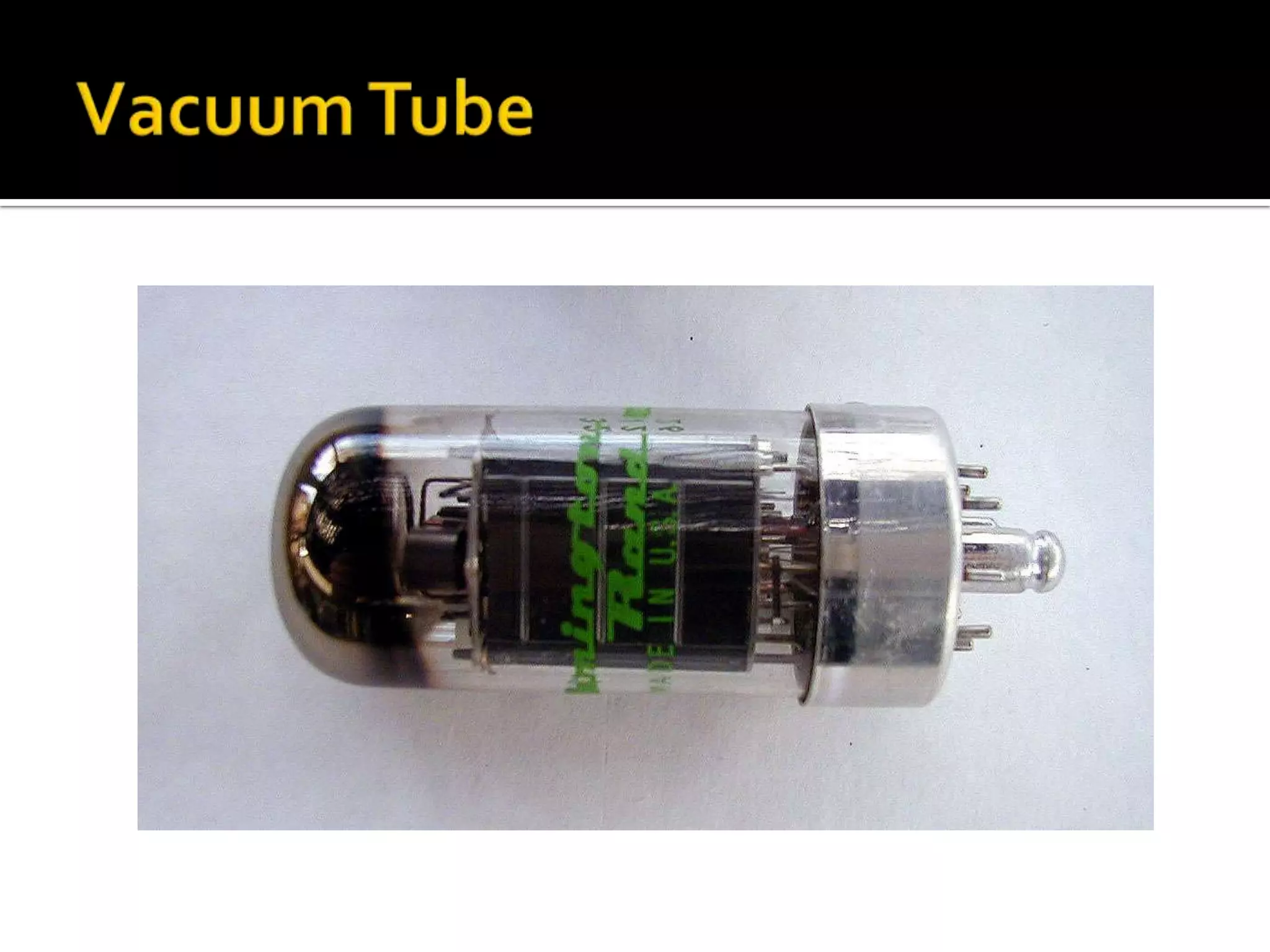
   The first computers used vacuum tubes for
    circuitry and magnetic
    drums for memory, and were often
    enormous, taking up entire rooms. They were
    very expensive to operate and in addition to
    using a great deal of electricity, generated a
    lot of heat, which was often the cause of
    malfunctions.
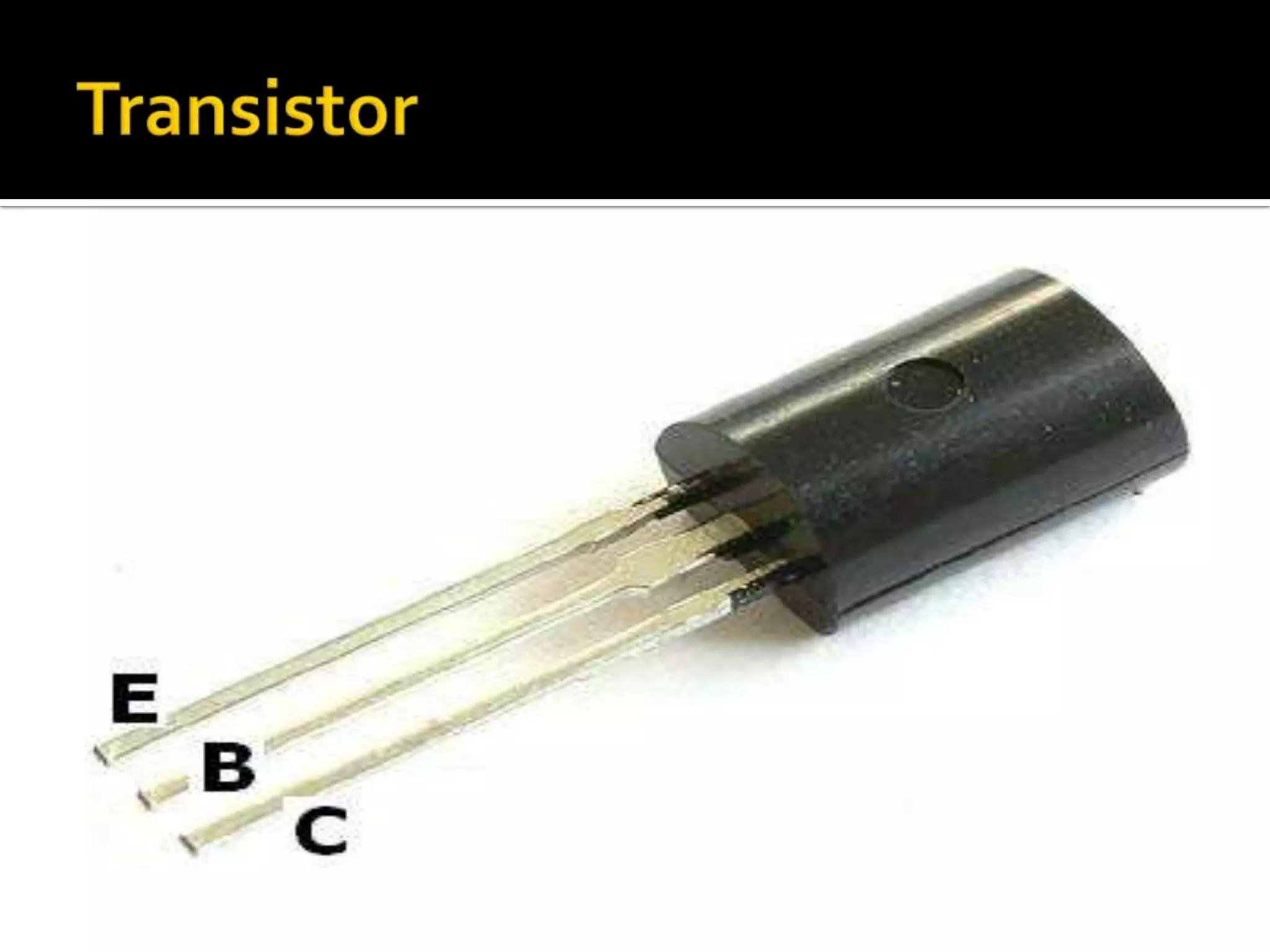
   Transistors replaced vacuum tubes and ushered in the
    second generation of computers. The transistor was
    invented in 1947 but did not see widespread use in
    computers until the late 1950s. The transistor was far
    superior to the vacuum tube, allowing computers to
    become smaller, faster, cheaper, more energy-
    efficient and more reliable than their first-generation
    predecessors. Though the transistor still generated a
    great deal of heat that subjected the computer to
    damage, it was a vast improvement over the vacuum
    tube. Second-generation computers still relied on
    punched cards for input and printouts for output.
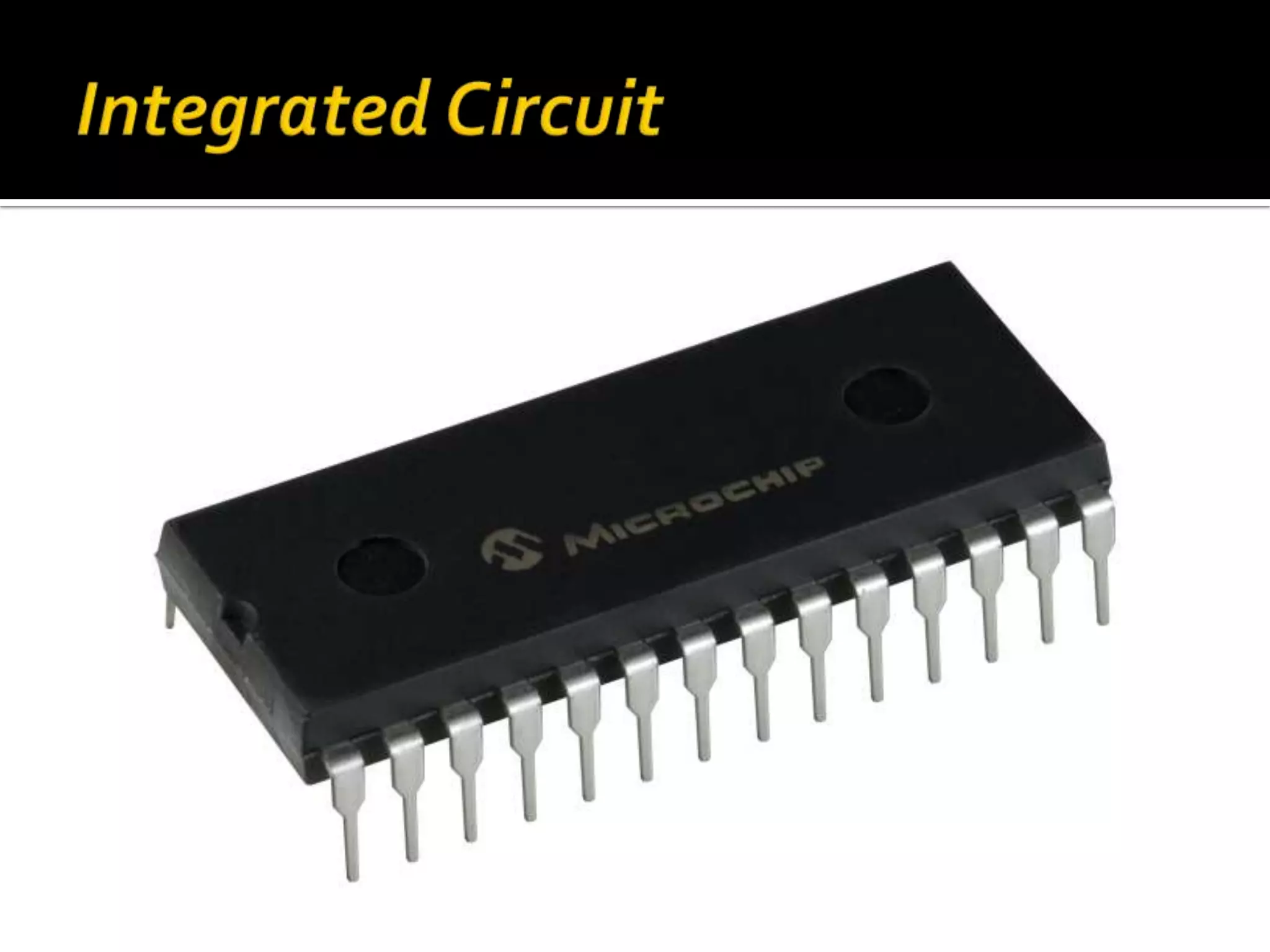
   The development of the integrated circuit was the
    hallmark of the third generation of computers. Transistors
    were miniaturized and placed
    on silicon chips, called semiconductors, which drastically
    increased the speed and efficiency of computers. Instead
    of punched cards and printouts, users interacted with third
    generation computers
    through keyboards and monitors and interfaced with
    an operating system, which allowed the device to run
    many different applications at one time with a central
    program that monitored the memory. Computers for the
    first time became accessible to a mass audience because
    they were smaller and cheaper than their predecessors.
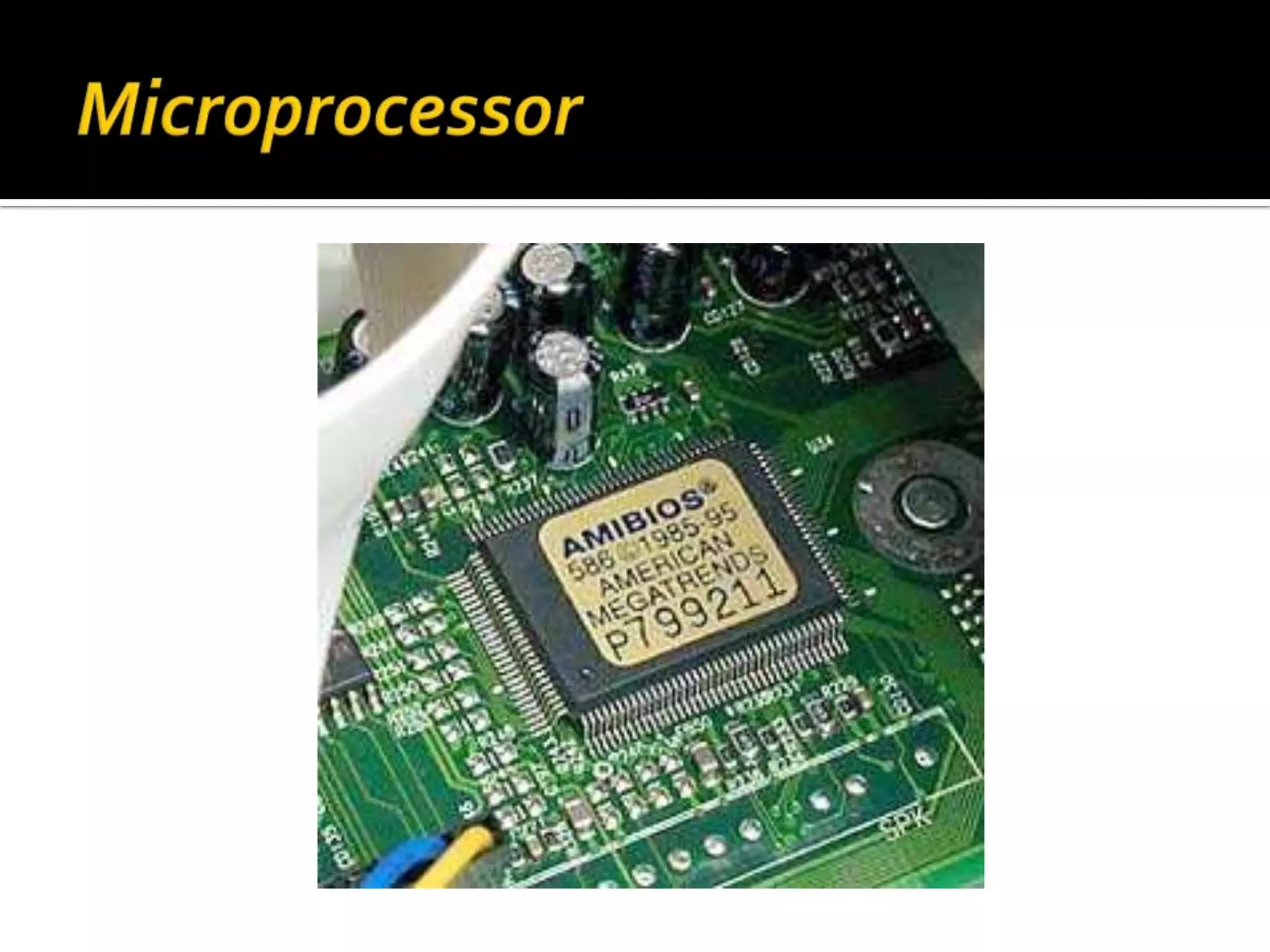
   The microprocessor brought the fourth
    generation of computers, as thousands of
    integrated circuits were built onto a single
    silicon chip. What in the first generation filled
    an entire room could now fit in the palm of
    the hand. The Intel 4004 chip, developed in
    1971, located all the components of the
    computer—from the central processing
    unit and memory to input/output controls—
    on a single chip.
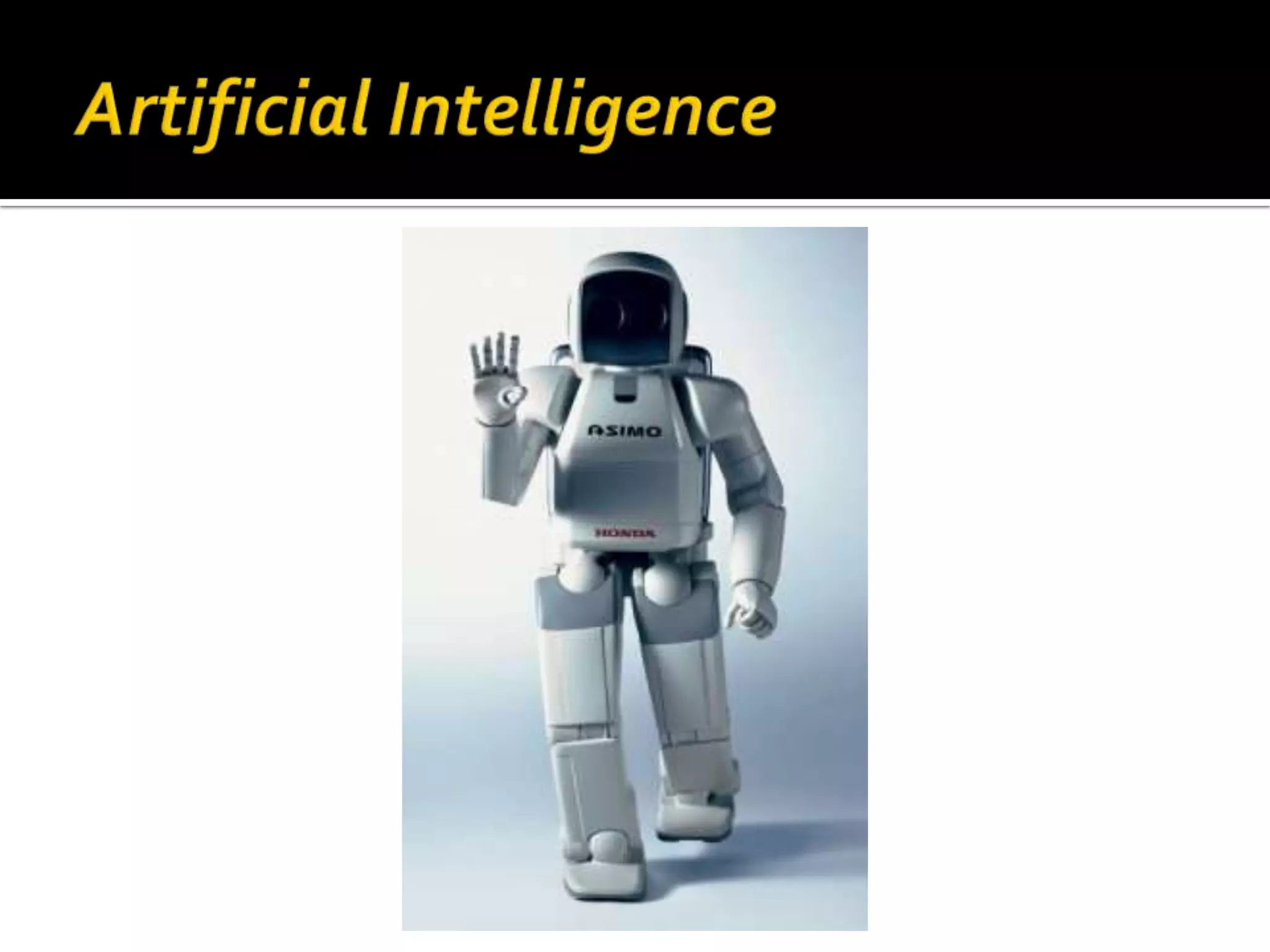
   Fifth generation computing devices, based
    on artificial intelligence, are still in
    development, though there are some
    applications, such as voice recognition, that are being
    used today. The use of parallel processing and
    superconductors is helping to make artificial
    intelligence a reality. Quantum computation and
    molecular and nanotechnology will radically change
    the face of computers in years to come. The goal of
    fifth-generation computing is to develop devices that
    respond to natural language input and are capable of
    learning and self-organization.
Danny D. J. Magdaraog

History of Computer Technology

  • 2.
    the gradual transformation or development of certain specie to a new form.
  • 5.
    One of the early precursors of the computer. It is an instrument containing beads used for arithmetic calculations
  • 6.
    Invented by John Napier, it can perform multiplications and divisions. It contains a set of 11 sticks (bones), and are used by placing them side by side.
  • 7.
    Wilhelm Schikard, a German scientist, invented a machine in 1623 that used sprocketed wheels to add, multiply and divide.
  • 8.
    Developed by William Oughtred, it consists of two movable rulers placed side by side. Sliding the rulers can do multiplication and division.
  • 9.
    Blaise Pascal, a French Mathematician invented a calculating machine that can add and subtract and comes with eight rotating gears, with each wheel representing places in the decimal system.
  • 10.
    Developed by Joseph Marie Jacquard, a French inventor. This machine uses punch cards to program designs on fabrics and carpets, making them easier to be woven.
  • 11.
    Charles Babbage, an English mathematician, built a working model of an early computer-like mechanical device that called the Difference Engine that can solve mechanical problems using the capacity of 20 decimals.
  • 12.
    Herman Hollerith, an American inventor, designed a coding scheme and a mechanical tabulating machine which used punch cards that can be electronically read to process high volumes of data.
  • 13.
    Developed by Howard Aiken, MARK I was the first electro- mechanical digital computing machine
  • 15.
    The first computers used vacuum tubes for circuitry and magnetic drums for memory, and were often enormous, taking up entire rooms. They were very expensive to operate and in addition to using a great deal of electricity, generated a lot of heat, which was often the cause of malfunctions.
  • 17.
    Transistors replaced vacuum tubes and ushered in the second generation of computers. The transistor was invented in 1947 but did not see widespread use in computers until the late 1950s. The transistor was far superior to the vacuum tube, allowing computers to become smaller, faster, cheaper, more energy- efficient and more reliable than their first-generation predecessors. Though the transistor still generated a great deal of heat that subjected the computer to damage, it was a vast improvement over the vacuum tube. Second-generation computers still relied on punched cards for input and printouts for output.
  • 19.
    The development of the integrated circuit was the hallmark of the third generation of computers. Transistors were miniaturized and placed on silicon chips, called semiconductors, which drastically increased the speed and efficiency of computers. Instead of punched cards and printouts, users interacted with third generation computers through keyboards and monitors and interfaced with an operating system, which allowed the device to run many different applications at one time with a central program that monitored the memory. Computers for the first time became accessible to a mass audience because they were smaller and cheaper than their predecessors.
  • 21.
    The microprocessor brought the fourth generation of computers, as thousands of integrated circuits were built onto a single silicon chip. What in the first generation filled an entire room could now fit in the palm of the hand. The Intel 4004 chip, developed in 1971, located all the components of the computer—from the central processing unit and memory to input/output controls— on a single chip.
  • 23.
    Fifth generation computing devices, based on artificial intelligence, are still in development, though there are some applications, such as voice recognition, that are being used today. The use of parallel processing and superconductors is helping to make artificial intelligence a reality. Quantum computation and molecular and nanotechnology will radically change the face of computers in years to come. The goal of fifth-generation computing is to develop devices that respond to natural language input and are capable of learning and self-organization.
  • 25.
    Danny D. J.Magdaraog