Histology of the Bone
By:
Dr Mohammed Faez
Objective of The Lecture
• To know about definition of the bone.
• To master the basic structure of the
bone.
• To know about bone matrix and bone
cells.
• Illustrate and differentiate the three
type of bone cells.
• To know about the periosteum &
endosteum.
Bone
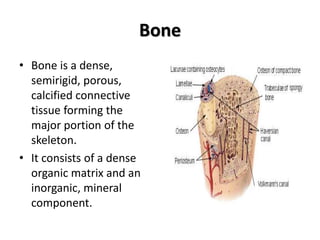
• Bone is a dense,
semirigid, porous,
calcified connective
tissue forming the
major portion of the
skeleton.
• It consists of a dense
organic matrix and an
inorganic, mineral
component.
Bone
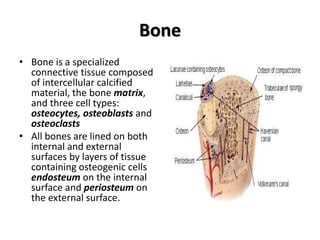
• Bone is a specialized
connective tissue composed
of intercellular calcified
material, the bone matrix,
and three cell types:
osteocytes, osteoblasts and
osteoclasts
• All bones are lined on both
internal and external
surfaces by layers of tissue
containing osteogenic cells
endosteum on the internal
surface and periosteum on
the external surface.
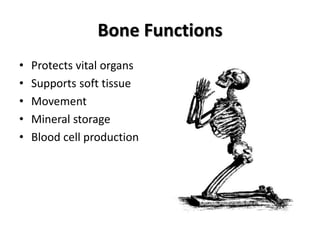
Bone Functions
• Protects vital organs
• Supports soft tissue
• Movement
• Mineral storage
• Blood cell production
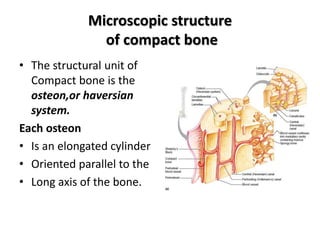
Microscopic structure
of compact bone
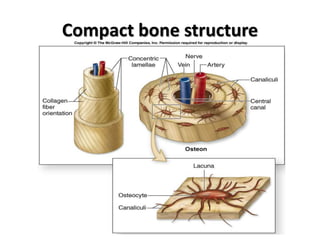
• The structural unit of
Compact bone is the
osteon,or haversian
system.
Each osteon
• Is an elongated cylinder
• Oriented parallel to the
• Long axis of the bone.
Microscopic structure
of compact bone
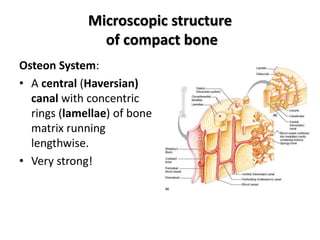
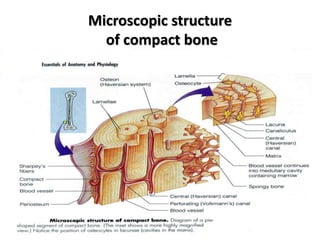
Osteon System:
• A central (Haversian)
canal with concentric
rings (lamellae) of bone
matrix running
lengthwise.
• Very strong!
Microscopic structure
of compact bone
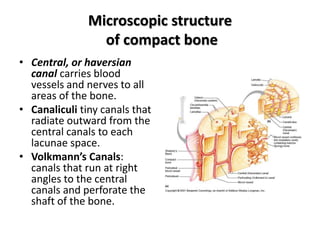
• Central, or haversian
canal carries blood
vessels and nerves to all
areas of the bone.
• Canaliculi tiny canals that
radiate outward from the
central canals to each
lacunae space.
• Volkmann’s Canals:
canals that run at right
angles to the central
canals and perforate the
shaft of the bone.
Microscopic structure
of compact bone
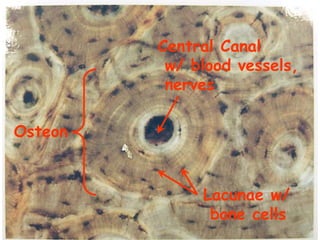
Osteon
Central Canal
w/ blood vessels,
nerves
Lacunae w/
bone cells
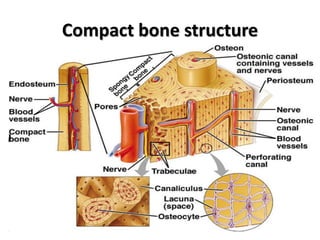
Compact bone structure
Spongy Bone
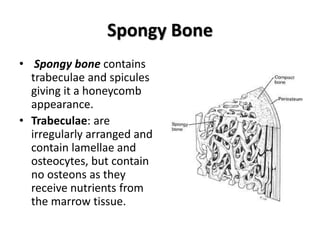
• Spongy bone contains
trabeculae and spicules
giving it a honeycomb
appearance.
• Trabeculae: are
irregularly arranged and
contain lamellae and
osteocytes, but contain
no osteons as they
receive nutrients from
the marrow tissue.
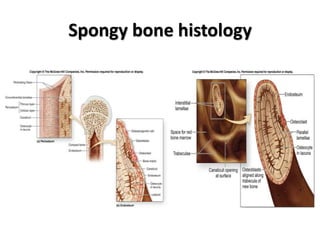
Spongy bone histology
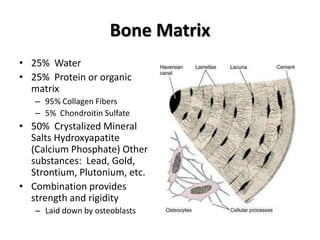
Bone Matrix
• 25% Water
• 25% Protein or organic
matrix
– 95% Collagen Fibers
– 5% Chondroitin Sulfate
• 50% Crystalized Mineral
Salts Hydroxyapatite
(Calcium Phosphate) Other
substances: Lead, Gold,
Strontium, Plutonium, etc.
• Combination provides
strength and rigidity
– Laid down by osteoblasts
Bone Matrix
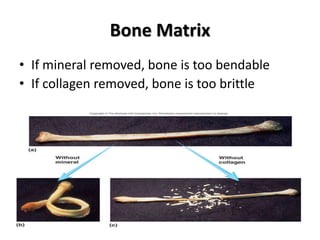
• If mineral removed, bone is too bendable
• If collagen removed, bone is too brittle
Bone Cells
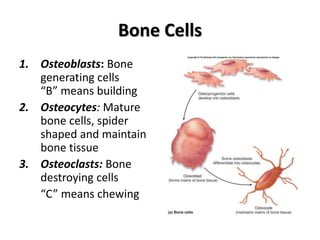
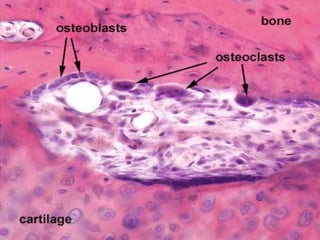
1. Osteoblasts: Bone
generating cells
“B” means building
2. Osteocytes: Mature
bone cells, spider
shaped and maintain
bone tissue
3. Osteoclasts: Bone
destroying cells
“C” means chewing
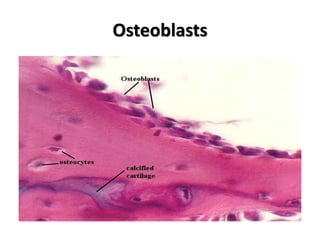
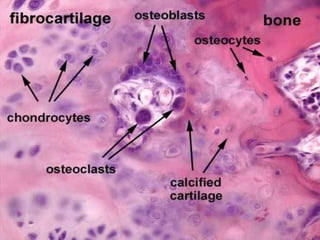
Osteoblasts
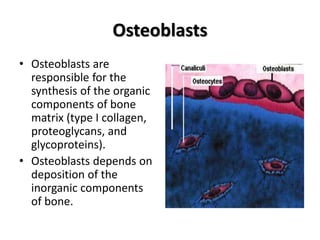
• Osteoblasts are
responsible for the
synthesis of the organic
components of bone
matrix (type I collagen,
proteoglycans, and
glycoproteins).
• Osteoblasts depends on
deposition of the
inorganic components
of bone.
Osteoblasts
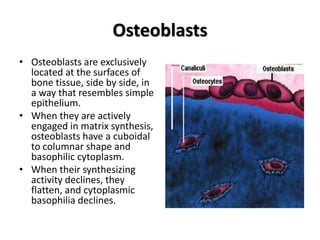
• Osteoblasts are exclusively
located at the surfaces of
bone tissue, side by side, in
a way that resembles simple
epithelium.
• When they are actively
engaged in matrix synthesis,
osteoblasts have a cuboidal
to columnar shape and
basophilic cytoplasm.
• When their synthesizing
activity declines, they
flatten, and cytoplasmic
basophilia declines.
Osteoblasts
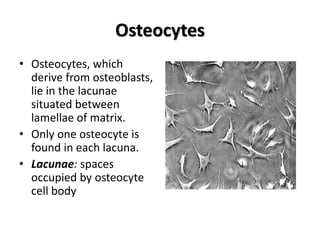
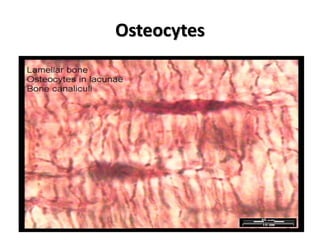
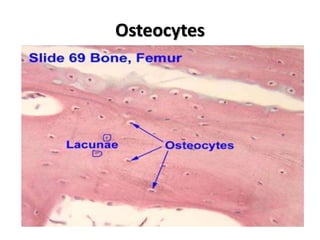
Osteocytes
• Osteocytes, which
derive from osteoblasts,
lie in the lacunae
situated between
lamellae of matrix.
• Only one osteocyte is
found in each lacuna.
• Lacunae: spaces
occupied by osteocyte
cell body
Osteocytes
Osteocytes
Osteoclasts
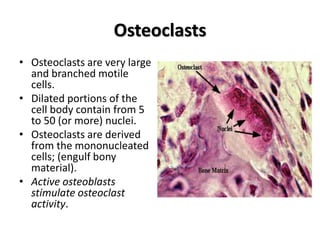
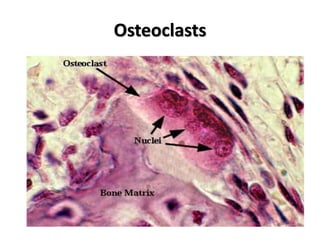
• Osteoclasts are very large
and branched motile
cells.
• Dilated portions of the
cell body contain from 5
to 50 (or more) nuclei.
• Osteoclasts are derived
from the mononucleated
cells; (engulf bony
material).
• Active osteoblasts
stimulate osteoclast
activity.
Osteoclasts
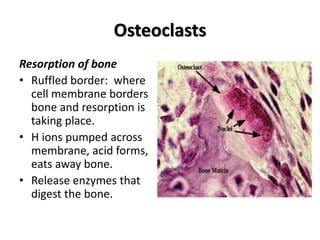
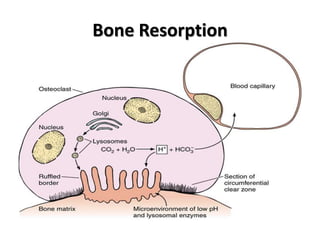
Resorption of bone
• Ruffled border: where
cell membrane borders
bone and resorption is
taking place.
• H ions pumped across
membrane, acid forms,
eats away bone.
• Release enzymes that
digest the bone.
Osteoclasts
Bone Resorption
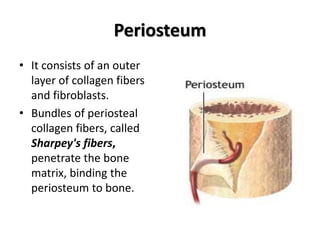
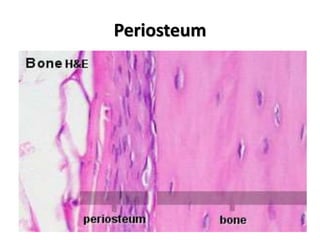
Periosteum
• It consists of an outer
layer of collagen fibers
and fibroblasts.
• Bundles of periosteal
collagen fibers, called
Sharpey's fibers,
penetrate the bone
matrix, binding the
periosteum to bone.
Periosteum
Endosteum
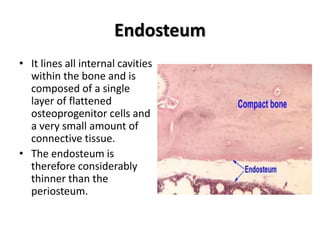
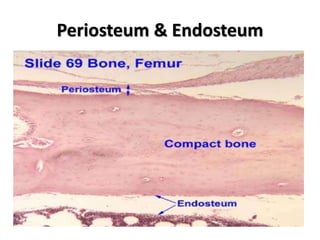
• It lines all internal cavities
within the bone and is
composed of a single
layer of flattened
osteoprogenitor cells and
a very small amount of
connective tissue.
• The endosteum is
therefore considerably
thinner than the
periosteum.
Periosteum & Endosteum
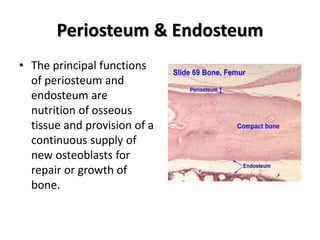
• The principal functions
of periosteum and
endosteum are
nutrition of osseous
tissue and provision of a
continuous supply of
new osteoblasts for
repair or growth of
bone.
Periosteum & Endosteum
Histo – bone

Histo – bone

  • 1.
    Histology of theBone By: Dr Mohammed Faez
  • 2.
    Objective of TheLecture • To know about definition of the bone. • To master the basic structure of the bone. • To know about bone matrix and bone cells. • Illustrate and differentiate the three type of bone cells. • To know about the periosteum & endosteum.
  • 3.
    Bone • Bone isa dense, semirigid, porous, calcified connective tissue forming the major portion of the skeleton. • It consists of a dense organic matrix and an inorganic, mineral component.
  • 4.
    Bone • Bone isa specialized connective tissue composed of intercellular calcified material, the bone matrix, and three cell types: osteocytes, osteoblasts and osteoclasts • All bones are lined on both internal and external surfaces by layers of tissue containing osteogenic cells endosteum on the internal surface and periosteum on the external surface.
  • 5.
    Bone Functions • Protectsvital organs • Supports soft tissue • Movement • Mineral storage • Blood cell production
  • 6.
    Microscopic structure of compactbone • The structural unit of Compact bone is the osteon,or haversian system. Each osteon • Is an elongated cylinder • Oriented parallel to the • Long axis of the bone.
  • 7.
    Microscopic structure of compactbone Osteon System: • A central (Haversian) canal with concentric rings (lamellae) of bone matrix running lengthwise. • Very strong!
  • 8.
    Microscopic structure of compactbone • Central, or haversian canal carries blood vessels and nerves to all areas of the bone. • Canaliculi tiny canals that radiate outward from the central canals to each lacunae space. • Volkmann’s Canals: canals that run at right angles to the central canals and perforate the shaft of the bone.
  • 9.
  • 10.
    Osteon Central Canal w/ bloodvessels, nerves Lacunae w/ bone cells
  • 11.
  • 12.
  • 13.
    Spongy Bone • Spongybone contains trabeculae and spicules giving it a honeycomb appearance. • Trabeculae: are irregularly arranged and contain lamellae and osteocytes, but contain no osteons as they receive nutrients from the marrow tissue.
  • 14.
  • 15.
    Bone Matrix • 25%Water • 25% Protein or organic matrix – 95% Collagen Fibers – 5% Chondroitin Sulfate • 50% Crystalized Mineral Salts Hydroxyapatite (Calcium Phosphate) Other substances: Lead, Gold, Strontium, Plutonium, etc. • Combination provides strength and rigidity – Laid down by osteoblasts
  • 16.
    Bone Matrix • Ifmineral removed, bone is too bendable • If collagen removed, bone is too brittle
  • 17.
    Bone Cells 1. Osteoblasts:Bone generating cells “B” means building 2. Osteocytes: Mature bone cells, spider shaped and maintain bone tissue 3. Osteoclasts: Bone destroying cells “C” means chewing
  • 18.
    Osteoblasts • Osteoblasts are responsiblefor the synthesis of the organic components of bone matrix (type I collagen, proteoglycans, and glycoproteins). • Osteoblasts depends on deposition of the inorganic components of bone.
  • 19.
    Osteoblasts • Osteoblasts areexclusively located at the surfaces of bone tissue, side by side, in a way that resembles simple epithelium. • When they are actively engaged in matrix synthesis, osteoblasts have a cuboidal to columnar shape and basophilic cytoplasm. • When their synthesizing activity declines, they flatten, and cytoplasmic basophilia declines.
  • 20.
  • 21.
    Osteocytes • Osteocytes, which derivefrom osteoblasts, lie in the lacunae situated between lamellae of matrix. • Only one osteocyte is found in each lacuna. • Lacunae: spaces occupied by osteocyte cell body
  • 22.
  • 23.
  • 24.
    Osteoclasts • Osteoclasts arevery large and branched motile cells. • Dilated portions of the cell body contain from 5 to 50 (or more) nuclei. • Osteoclasts are derived from the mononucleated cells; (engulf bony material). • Active osteoblasts stimulate osteoclast activity.
  • 25.
    Osteoclasts Resorption of bone •Ruffled border: where cell membrane borders bone and resorption is taking place. • H ions pumped across membrane, acid forms, eats away bone. • Release enzymes that digest the bone.
  • 26.
  • 29.
  • 30.
    Periosteum • It consistsof an outer layer of collagen fibers and fibroblasts. • Bundles of periosteal collagen fibers, called Sharpey's fibers, penetrate the bone matrix, binding the periosteum to bone.
  • 31.
  • 32.
    Endosteum • It linesall internal cavities within the bone and is composed of a single layer of flattened osteoprogenitor cells and a very small amount of connective tissue. • The endosteum is therefore considerably thinner than the periosteum.
  • 33.
    Periosteum & Endosteum •The principal functions of periosteum and endosteum are nutrition of osseous tissue and provision of a continuous supply of new osteoblasts for repair or growth of bone.
  • 34.