1
SUBJECT: DRUG DESIGN AND MOLECULAR
PHARMACOLOGY
CONNECTIVE TISSUE
gskpungai@gmail.com 5/30/2023
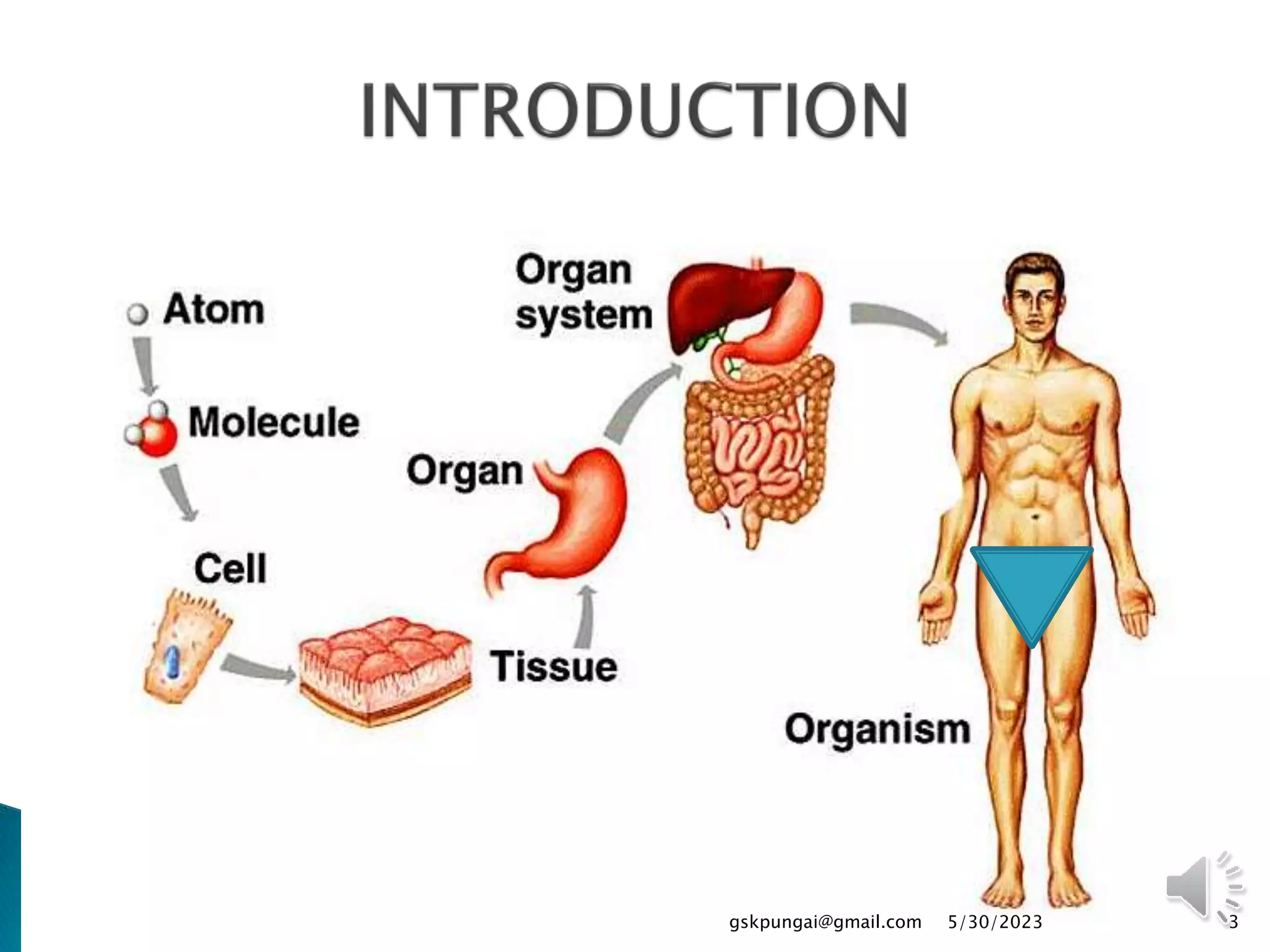
 INTRODUCTION
 COMPOSITION OF CONNECTIVE TISSUE
 TYPES OF CONNECTIVE TISSUE
 FUNCTIONS OF CONNECTIVE TISSUE
 HISTOPATHOLOGY
 STAINING OF CONNECTIVE TISSUE
 REFERENCES
2
gskpungai@gmail.com 5/30/2023
5/30/2023
gskpungai@gmail.com 3
5/30/2023
gskpungai@gmail.com 4
5/30/2023
gskpungai@gmail.com 5
TYPES
 Tissues
 Types of tissues
Epithelial tissue: protection, secretion, and absorption
Connective tissue: support, bind, and protect organs
Muscle tissue: contraction
Nervous tissue: information to other cells
CONNECTIVE TISSUE
 Connects, supports, binds, or separates different types of tissues
and organs in the body
 Develops from the mesoderm
 Found in b/w other tissues everywhere in the body, including
nervous system
6
gskpungai@gmail.com 5/30/2023
Mixture
of cells
Fibers
Ground
substance
7
gskpungai@gmail.com 5/30/2023
 FIBROBLASTS
 MACROPHAGES
 MAST CELLS
 PLASMA CELLS
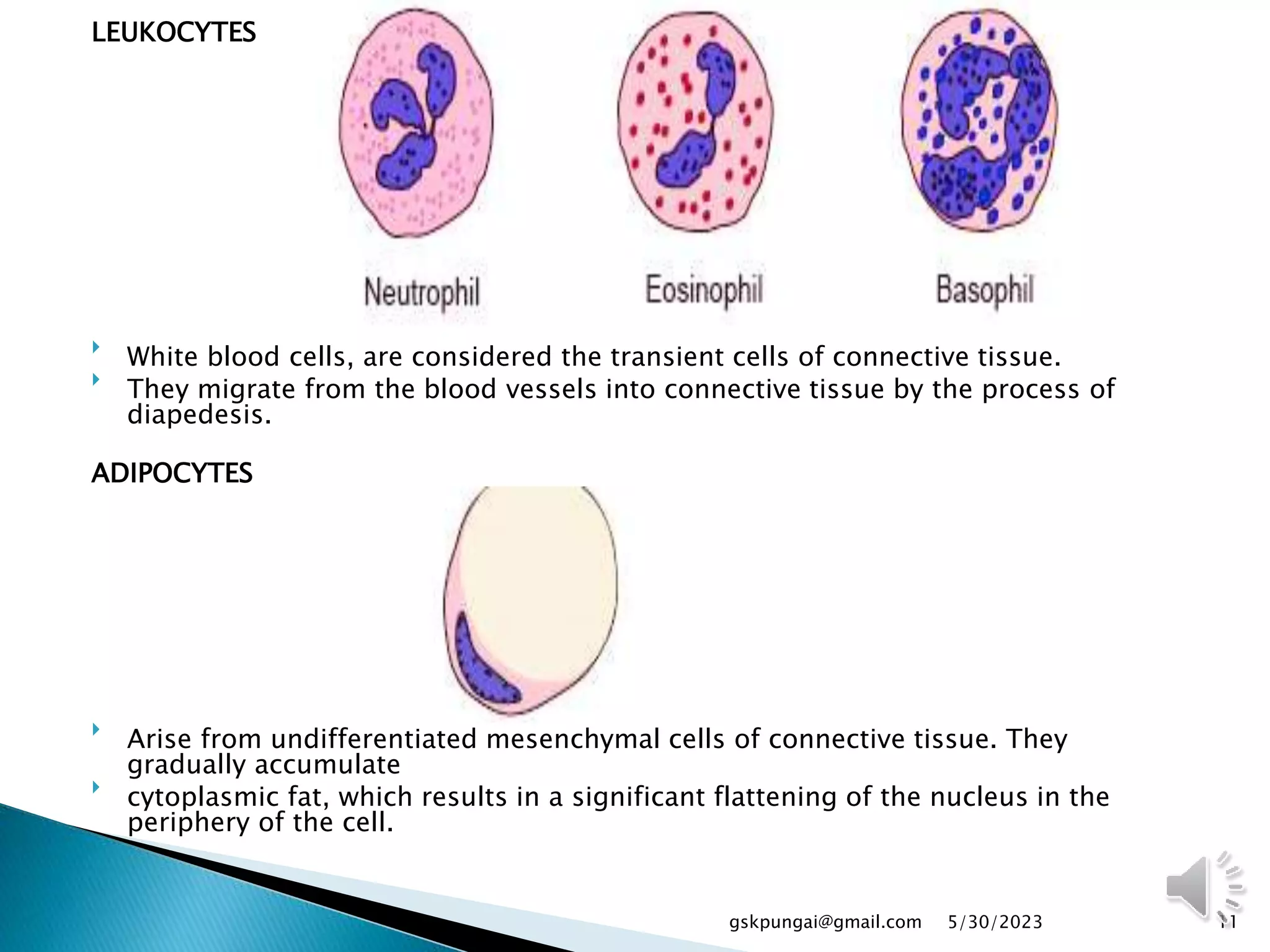
 LEUKOCYTES
 ADIPOCYTES (FAT CELLS)
8
gskpungai@gmail.com 5/30/2023
FIBROBLASTS

Most common cells in connective tissue.

Their nuclei are ovoid or spindle shaped and can be large or
small in size depending on their stage of cellular activity.
 Synthesis ECM and collagen
MACROPHAGES

Highly phagocytic cells that are derived from blood monocytes.

With conventional staining, macrophages are very difficult to
identify unless they show visible ingested material inside their
cytoplasm.
5/30/2023
gskpungai@gmail.com 9
MAST CELLS
 Bone marrow origin and are distributed chiefly around small
blood vessels.
 They are oval to round in shape, with a centrally placed nucleus.
PLASMA CELLS
 Derived from B lymphocyts
 They are oval shaped and have the ability to secrete antibodies
that are antigen specific.
5/30/2023
gskpungai@gmail.com 10
LEUKOCYTES

White blood cells, are considered the transient cells of connective tissue.

They migrate from the blood vessels into connective tissue by the process of
diapedesis.
ADIPOCYTES

Arise from undifferentiated mesenchymal cells of connective tissue. They
gradually accumulate

cytoplasmic fat, which results in a significant flattening of the nucleus in the
periphery of the cell.
5/30/2023
gskpungai@gmail.com 11
 Ground substance is a clear, viscous substance with a high
water content, but with very little morphologic structure.
 When stained with basic dyes (periodic acid-Schiff [PAS]), it
appears amorphous, it appears as a clear space.
 Its major component is Glycosaminoglycans (GAGs), which
are long, un-branched chains of polysaccharides with
repeating disaccharide units.
 Most GAGs are covalently bonded to a large central protein to
form larger molecules called proteoglycans.
12
gskpungai@gmail.com 5/30/2023
Collagen Elastic Reticular
13
gskpungai@gmail.com 5/30/2023
Collagen

COLLAGEN FIBERS are the most common and widespread
fibers in connective tissue.

25-35% of body

The collagen molecule (tropo-collagen) is a product of the
fibroblast.

Each collagen molecule is 300 nm in length and consists
of three polypeptide amino acid chains.
Elastic

Elastic fibers have a very resilient nature (stretch and
recoil), which is important in areas like the lungs, aorta,
and skin.

They are composed of two proteins, elastin and fibrillin,
and do not have a banding pattern.
Reticular

RETICULAR FIBERS are small-diameter fibers.

Supporting mesh in soft tissues(liver,bone marrow and
lymphatic system)
5/30/2023
gskpungai@gmail.com 14
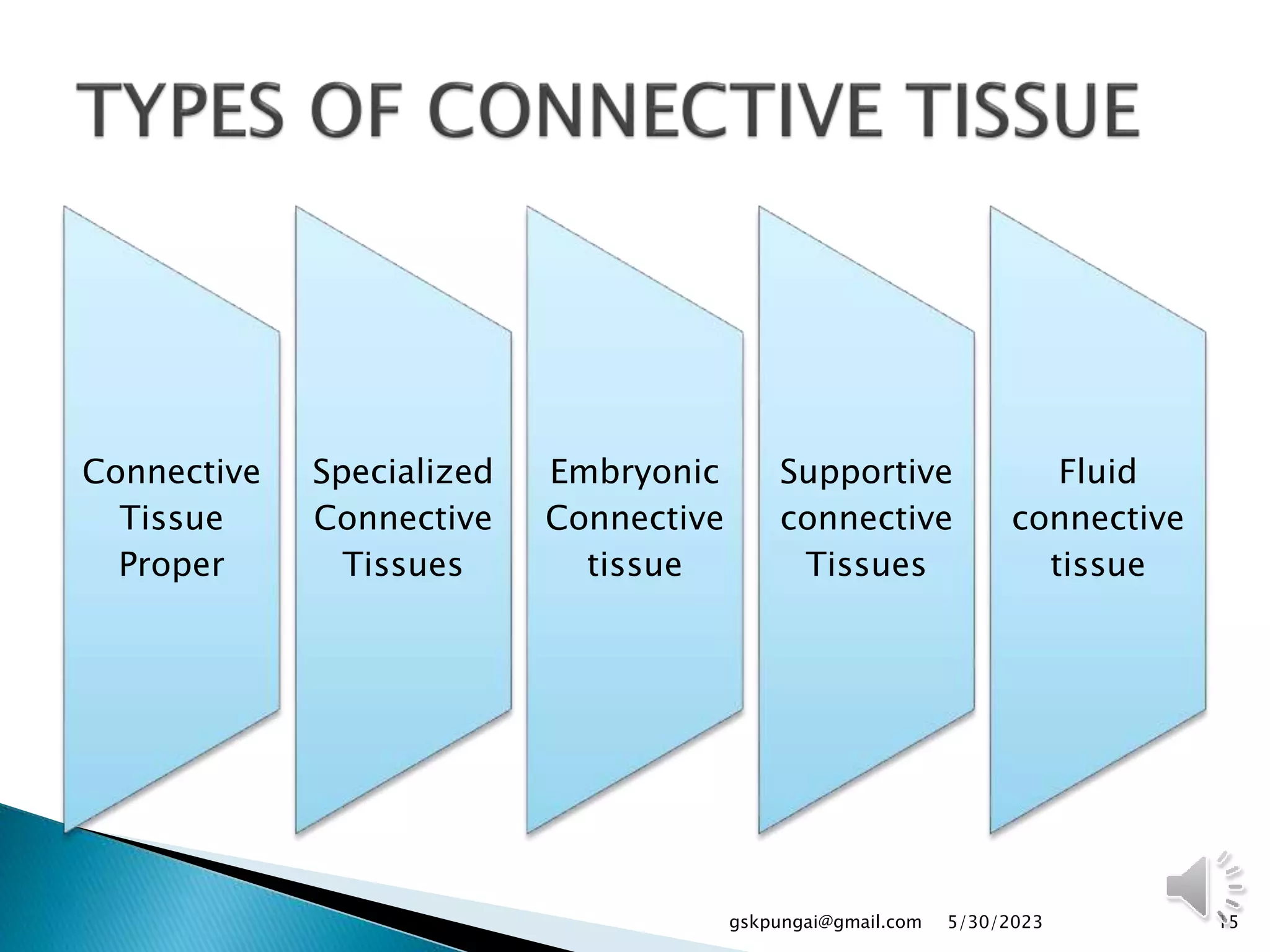
Connective
Tissue
Proper
Specialized
Connective
Tissues
Embryonic
Connective
tissue
Supportive
connective
Tissues
Fluid
connective
tissue
15
gskpungai@gmail.com 5/30/2023
CONNECTIVE TISSUE
16
gskpungai@gmail.com 5/30/2023
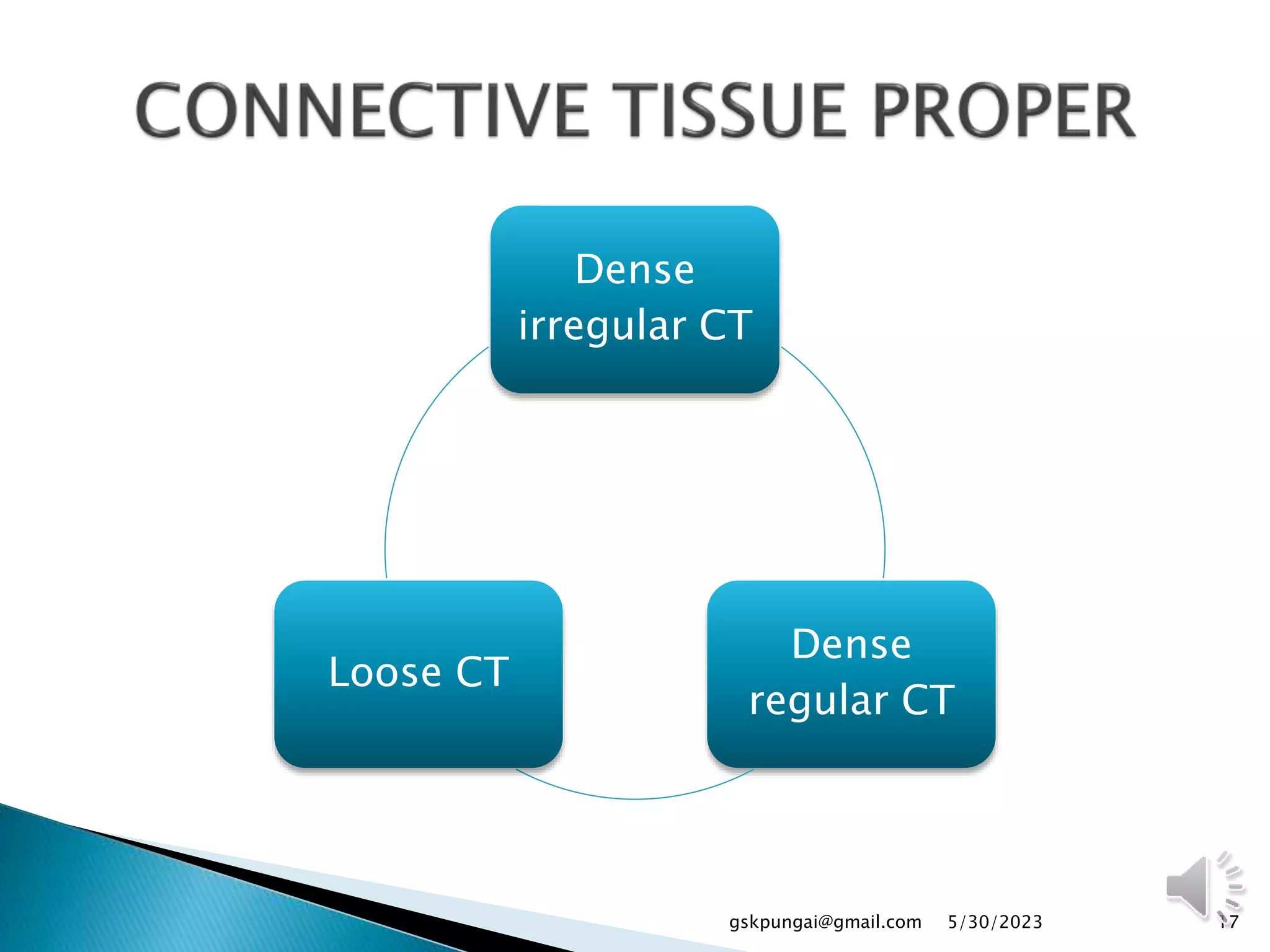
Dense
irregular CT
Dense
regular CT
Loose CT
17
gskpungai@gmail.com 5/30/2023
CONNECTIVE TISSUE PROPER
18
gskpungai@gmail.com 5/30/2023
 Dense irregular connective tissue is a cushion like tissue, which
provides great strength against pressure-induced stresses on
structures or organs.
 “Dense” refers to the high abundance of collagen fibers (but
fewer cells) compared to loose connective tissue.
 “Irregular” indicates that the orientation of the fiber bundles is in
many different directions (or randomly oriented bundles).
 Contains mostly collagen fibers with a lesser number of other
fibers such as elastic fibers.
 The skin has a thick layer of dense irregular connective tissue,
with fibers arranged in various directions to resist stretching
forces in any direction.
 It is prominent in the dermis of the skin, mammary glands, and
capsules of many organs.
 Function - provide strength.
19
gskpungai@gmail.com 5/30/2023
 This type of tissue is composed of coarse collagen bundles that is
densely packed and oriented into parallel cylinders.
 Long, thin fibroblasts are found among the fiber bundles and are
oriented in the same direction as the fibers.
 The nuclei of the fibroblasts are visible, but the cytoplasm is not
easily seen.
 The thick bundles of collagen fibers fill the intercellular spaces.
 Dense regular connective tissue provides resistance to traction
forces in tendons and ligaments.
 Function = provide strong attachment between various structures
20
gskpungai@gmail.com 5/30/2023
 Loose connective tissue is also called areolar connective tissue.
 This type of connective tissue has abundant ground substance,
with many connective tissue cells and relatively few fibers.
 It is richly vascularized, flexible, and not highly resistant to
stress.
 The lamina propria of the digestive tract is an extreme example
of loose connective tissue.
 This tissue lies immediately beneath the thin epithelium of the
gut, which is one place where the body’s defense mechanisms
initially attack bacteria and pathogens.
 Therefore, plasma cells, mast cells, leukocytes, and fibroblasts
are common in this area.
 Loose connective tissue is characterized by loosely arranged,
woven connective fibers, abundant ground substance, and tissue
fluid, which contains the rich array of connective tissue cells.
21
gskpungai@gmail.com 5/30/2023
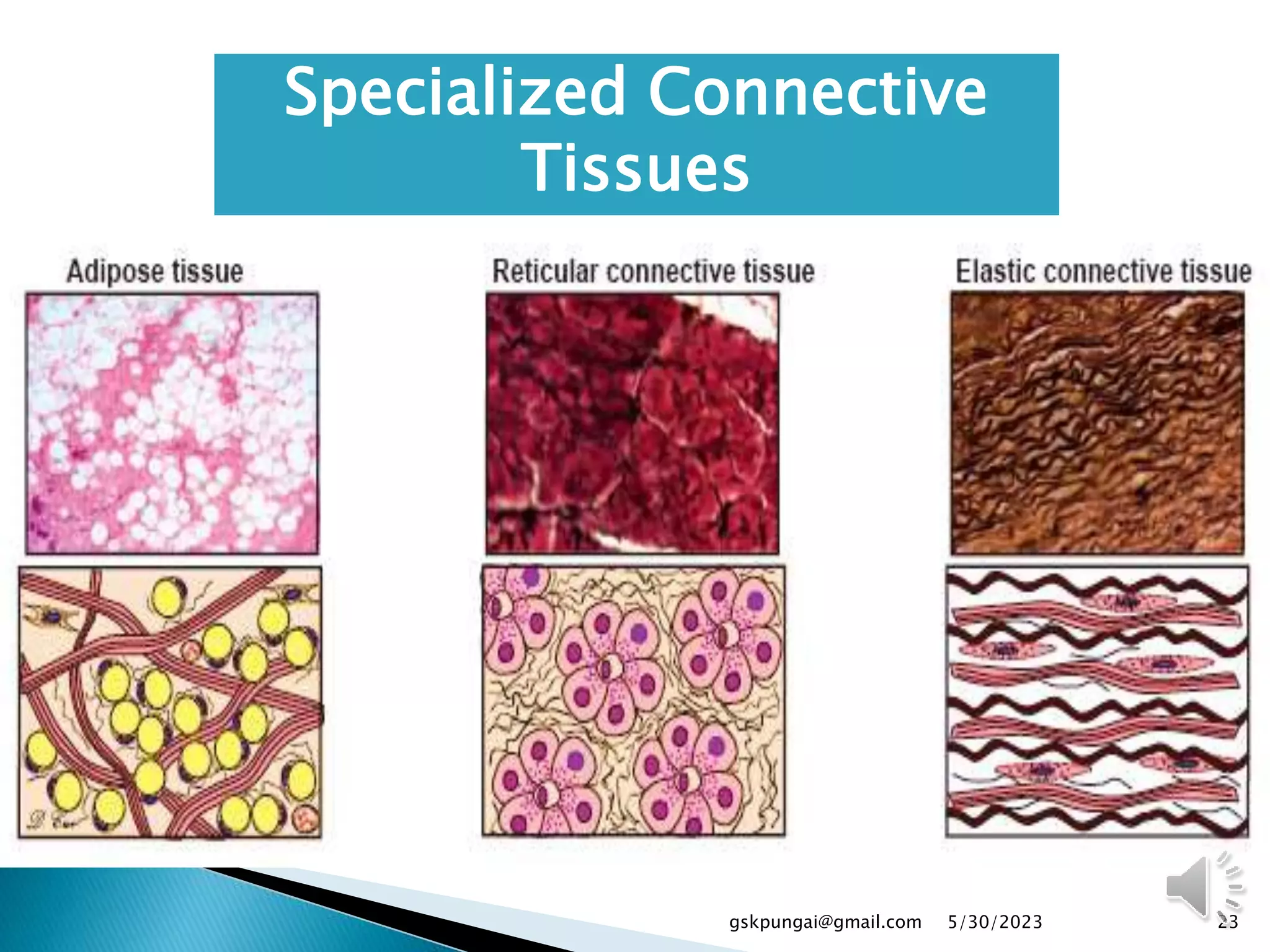
Adipose connective
tissue
Reticular
connective tissue
Elastic connective
tissue
22
gskpungai@gmail.com 5/30/2023
Specialized Connective
Tissues
23
gskpungai@gmail.com 5/30/2023
 Adipose tissue is a special form of connective tissue and has a rich
neurovascular supply.
 Adipocytes (fat cells) are scattered within a loose collagenous supporting
tissue in this unilocular adipose tissue.
 Each adipose cell contains a single large drop of lipid; it has a thin rim of
cytoplasm around the lipid, and its flattened nucleus is located in the
periphery of the cell.
 Adipocytes are the primary site for storage of energy, and lipid deposition
and mobilization are regulated by hormonal factors (steroids, insulin,
thyroid hormone, etc.).
 Adipocytes also play a role in the synthesis of some hormones such as
leptin.
 During childhood, the adipocyte numbers may increase depending on
nutrition and other factors, but in adulthood, adipocyte numbers normally
remain constant.
24
gskpungai@gmail.com 5/30/2023
 Reticular tissue is a specialized loose connective tissue that
provides a delicate supporting framework for many highly
cellular organs, such as endocrine glands, lymphoid organs,
the spleen, and the liver.
 They are arranged in a net like framework to support
parenchymal cells, in this example, pancreatic cells.
 The inset drawing represents the organization of reticular
fibers and pancreatic cells.
 These fibers consist of collagen type III, which forms a mesh
like network that supports the liver cells and holds these cells
together.
 There is a sinusoid running between the reticular fibers, which
appears as empty space here.
25
gskpungai@gmail.com 5/30/2023
 Elastic connective tissue consists predominately of elastic
material, and this allows distension and recoil of the
structure.
 This tissue can be found in some vertebral ligaments,
arterial walls, and in the bronchial tree.
 Thick bundles of elastic lamellae are arranged in parallel
wavy sheets, with the smooth muscle cells and collagen
fibers insinuated between alternating lamellae.
 The elastic fibers are formed by elastin and fibrillin micro-
fibrils.
 Elastic connective tissue is able to recoil after stretching.
 This property in large arteries helps to moderate the
extremes of pressure associated with the cardiac cycle.
 Abnormal expression of the fibrillin (FBN1) gene is
associated with abnormal elastic tissue disease.
26
gskpungai@gmail.com 5/30/2023
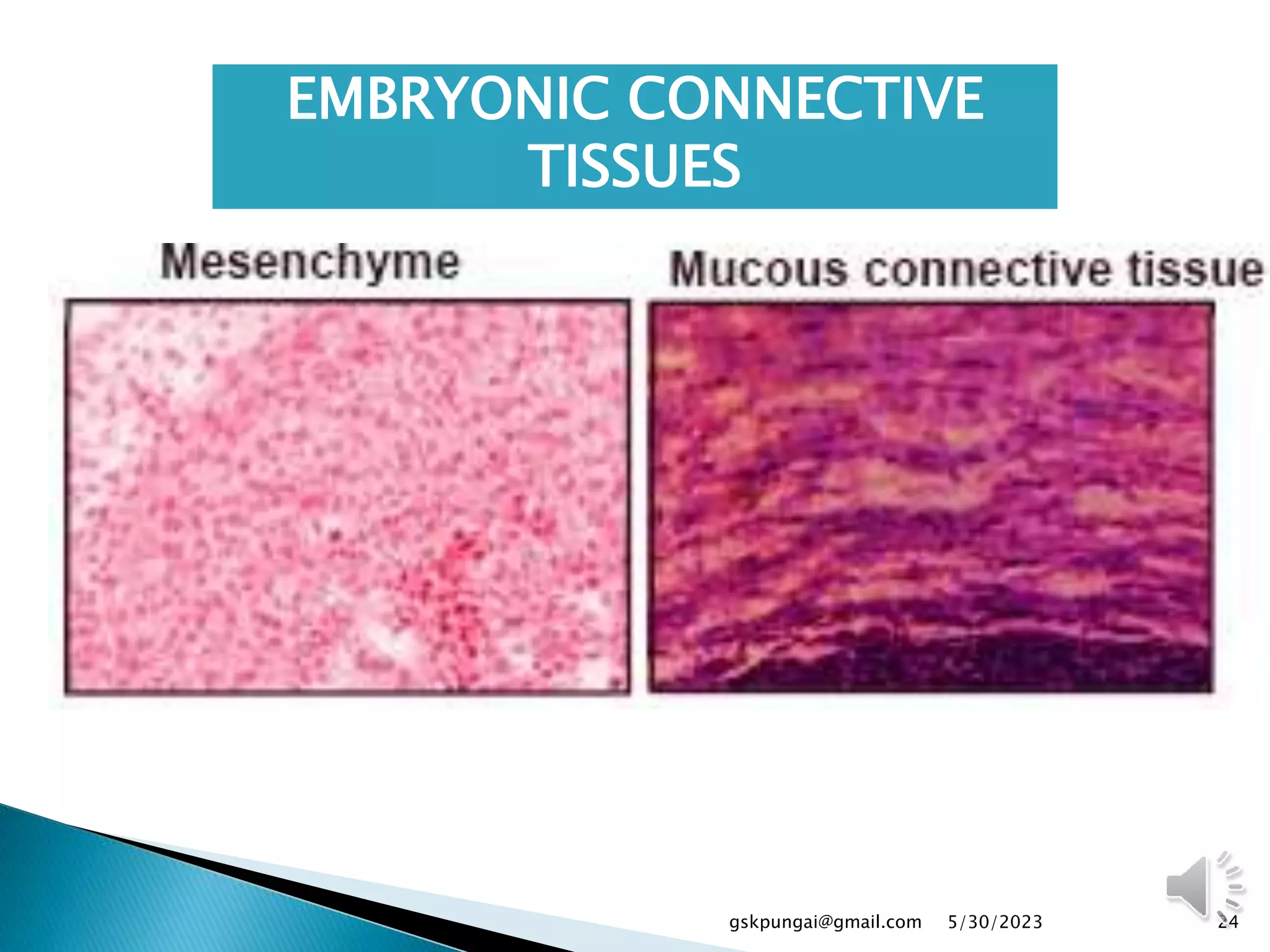
Mesenchymal
connective tissue
Mucous
connective tissue
27
gskpungai@gmail.com 5/30/2023
EMBRYONIC CONNECTIVE
TISSUES
24
gskpungai@gmail.com 5/30/2023
 Mesenchyme (mesenchymal connective tissue) is found in the
developing structures in the embryo.
 It contains scattered reticular fibers and mesenchymal cells, which
have irregular, star or spindle shapes and pale-stained cytoplasm.
 These cells exhibit cytoplasmic processes, which often give the cells
a stellate appearance.
 Mesenchymal cells are relatively unspecialized and are capable of
differentiating into different cell types in mature tissue cells, such as
cartilages, bones, and muscles.
 These blood cells contain a nucleus in each cell. This is the
characteristic of their immature state (a nucleated red blood cells are
characteristic of the mature state and are found in adult tissues).
 Interestingly enough, some vertebrates, such as frogs and chickens,
have nucleated red blood cells in the adult state.
29
gskpungai@gmail.com 5/30/2023
 An example of mucous connective tissue that has an
abundance of a jellylike matrix with some fine aggregates
of collagen fibers and stellate-shaped fibroblasts is shown.
 It is found in the umbilical cord and sub dermal
connective tissue of the embryo.
 Mucous tissue is a major constituent of the umbilical cord,
where it is referred to as Wharton jelly.
 In this example, the viscous ground substance has been
stained with a special stain to reveal jelly like mucin, which
contains hyaluronic acid and glycoproteins.
 Collagen fibers and large stellate-shaped fibroblasts (not
mesenchymal cells) predominate in the mucous tissue.
30
gskpungai@gmail.com 5/30/2023
BONE CARTILAGE
31
gskpungai@gmail.com 5/30/2023
 Bone cells (osteocytes) are surrounded by a matrix of
collagen fibres strengthened by inorganic salts,
especially calcium and phosphate.
 This provides bones with their characteristic strength
and rigidity.
32
gskpungai@gmail.com 5/30/2023
33
gskpungai@gmail.com 5/30/2023
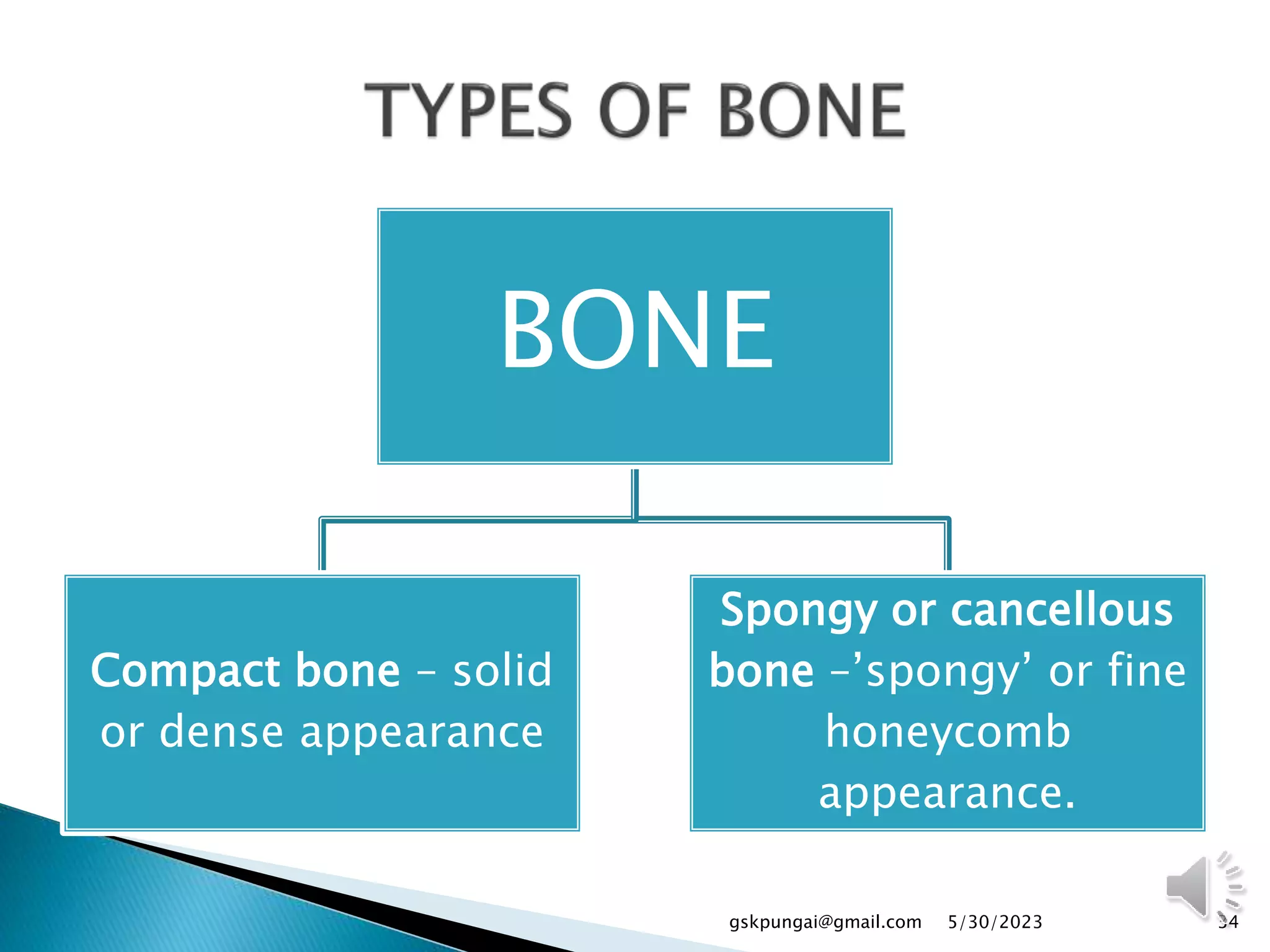
BONE
Compact bone – solid
or dense appearance
Spongy or cancellous
bone –’spongy’ or fine
honeycomb
appearance.
34
gskpungai@gmail.com 5/30/2023
35
gskpungai@gmail.com 5/30/2023
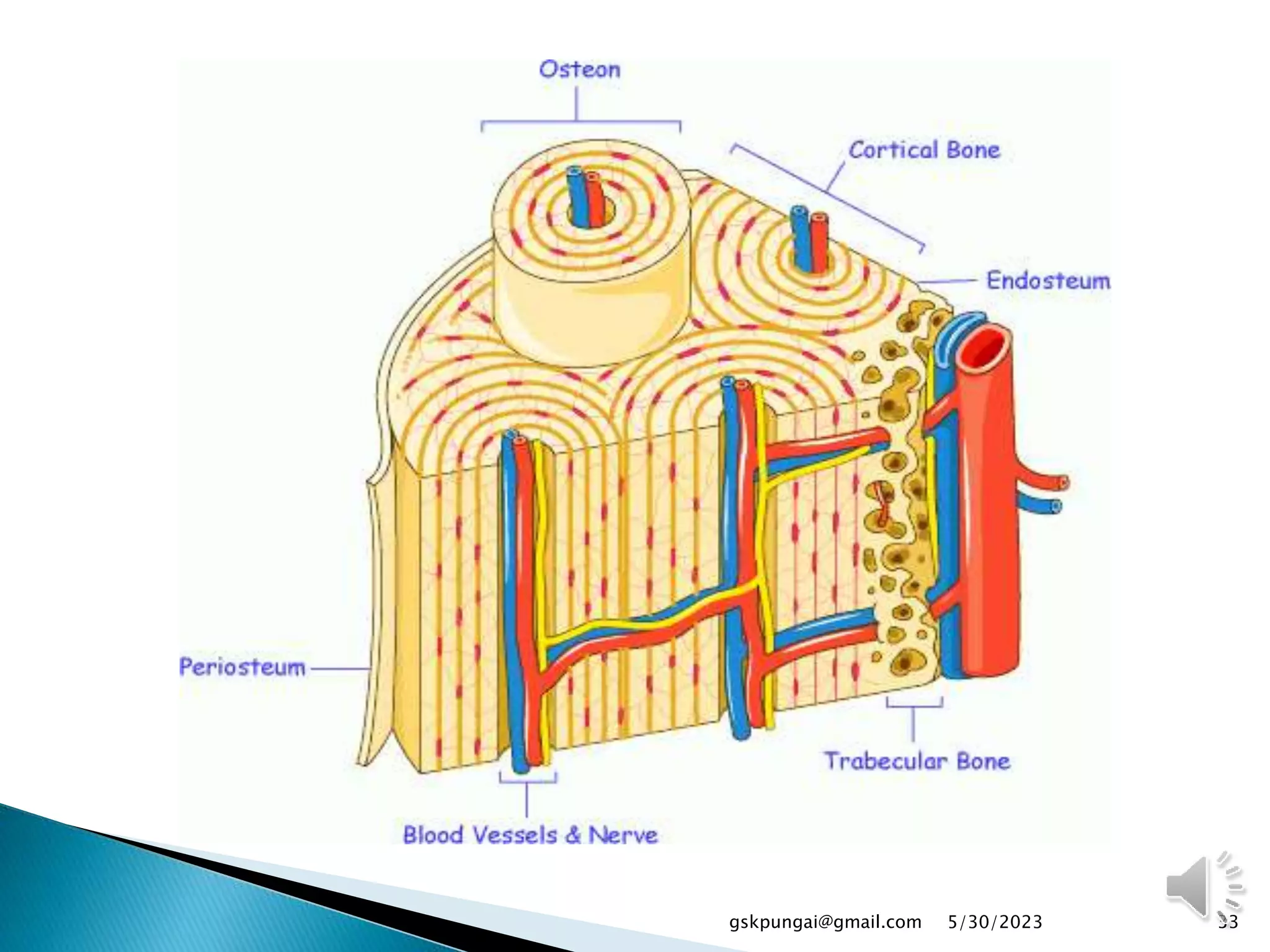
 Found in the outer
portion of long bones
 Consists of many
cylindrical-shaped
units called osteon
36
gskpungai@gmail.com 5/30/2023
 Cartilage has a flexible rubbery matrix.
It is found in organs like,
 External ear
 Tip of the nose or
 The “Adam’s apple” (thyroid cartilage of the larynx).
37
gskpungai@gmail.com 5/30/2023
38
gskpungai@gmail.com 5/30/2023
Hyaline Cartilage Elastic Cartilage Fibrocartilage
 Hyaline cartilage is
named for its clear,
glassy microscopic
appearance.
 surrounded by a sheath
of dense irregular
connective tissue.
locations: end of a rib to
the breastbone, around the
larynx,
the fetal skeleton.
Functions: Eases joint
movements; holds airway
open during respiration;
moves vocal cords during
speech , growth zones of
long bones of children.
 Elastic cartilage is
named for its
conspicuous elastic
fibers.
 surrounded by a sheath
of dense irregular
connective
tissue.
locations: External ear;
epiglottis
Functions: Provides
flexible, elastic support.
Fibrocartilage for its
coarse, readily
visible bundles of
collagen.
locations: Pubic-
symphysis, spinal
column; menisci, or pads
of shock-absorbing
cartilage,
knee joint.
Functions: Resists
compression and absorbs
shock
in some joints.
39
gskpungai@gmail.com 5/30/2023
40
gskpungai@gmail.com 5/30/2023
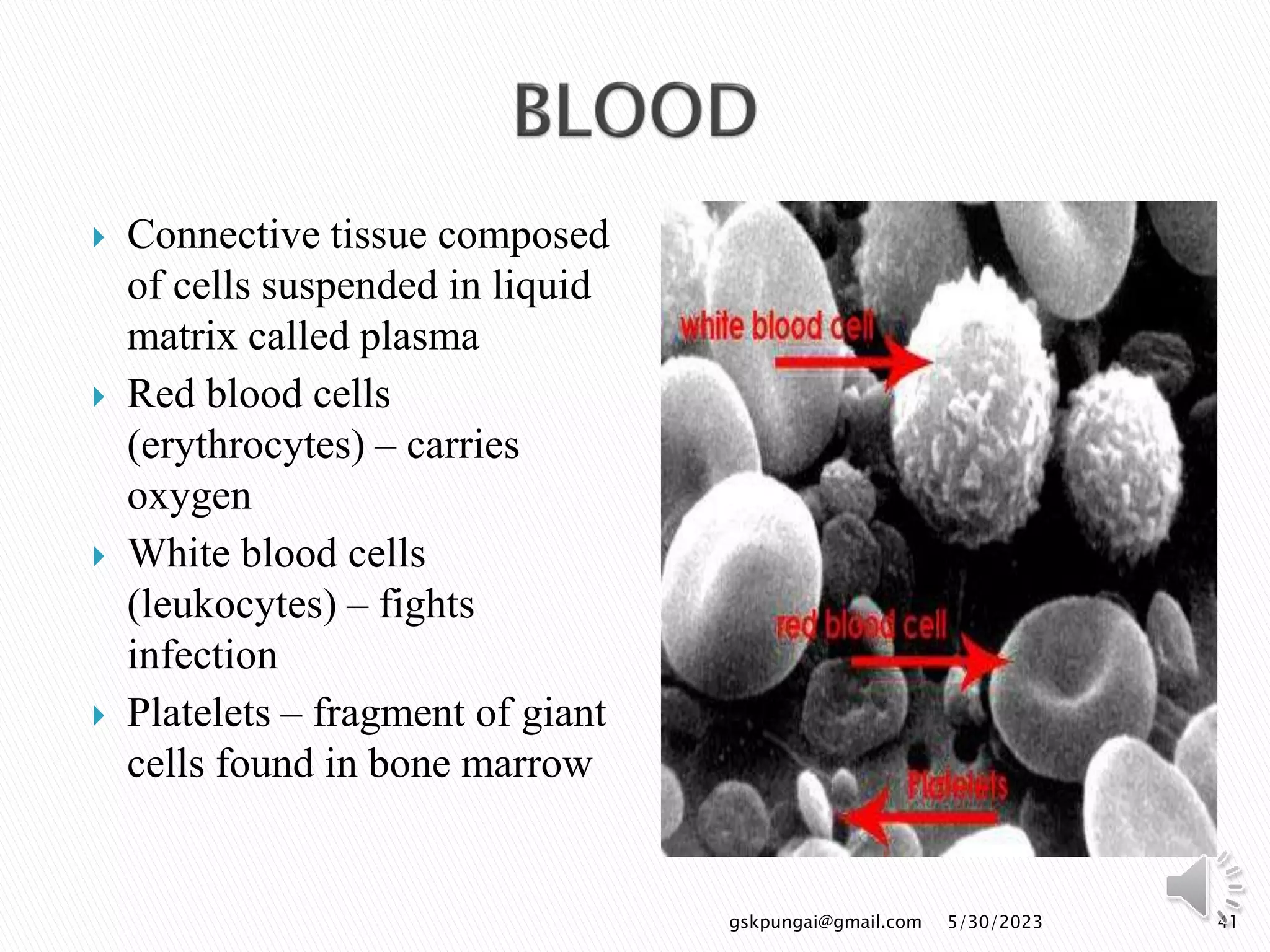
 Connective tissue composed
of cells suspended in liquid
matrix called plasma
 Red blood cells
(erythrocytes) – carries
oxygen
 White blood cells
(leukocytes) – fights
infection
 Platelets – fragment of giant
cells found in bone marrow
41
gskpungai@gmail.com 5/30/2023
Type Connective Tissue
Cells
Main Locations Main Functions
Dense irregular
connective tissue
Predominantly
fibroblasts; other
connective tissue
cells occasionally
present
Dermis of the skin,
capsules of many
organs
Resists stress
from all
directions;
protects organs
Dense regular
connective tissue
Predominantly
fibroblasts; other
connective tissue
cells occasionally
present
Tendons, ligaments Provides
resistance to
traction forces
Loose
connective tissue
Fibroblasts,
macrophages,
adipocytes, mast
cells, plasma cells,
leukocytes
Lamina propria
of gastrointestinal
tract; around the
nerves and vessels
(in adventitia layer)
Provides protection,
suspension, and
support; conduit
for vessels and
nerves; environment
for immune
defense function
Adipose
connective tissue
Predominantly
adipocytes (fat cells);
fibroblasts and other
connective tissue
cells occasionally
present
Hypodermis of the
skin, mammary
glands, and around
many organs
Provides
energy storage,
insulation;
cushioning of
organs; hormone
secretion
Types of connective tissue
42
gskpungai@gmail.com 5/30/2023
Reticular
connective tissue
Fibroblasts,
reticular cells,
hepatocytes,
smooth muscle
cells, Schwann cells
depending on the
location
Liver, pancreas,
lymph nodes,
spleen, and bone
marrow
Provides supportive
framework
for hematopoietic
and parenchymal
organs
Elastic
connective tissue
Predominantly
fibroblasts or
smooth muscle cells;
other connective
tissue cells occasionally
present
Vertebral ligaments,
walls of the large
arteries
Provides flexible
support for the
tissue; reduces
pressure on the
walls of the
Arteries
Mesenchymal
connective tissue
Mesenchymal cells Embryonic
mesoderm
Gives rise to all
connective tissue
types
Mucous
connective tissue
Spindle-shaped
fibroblasts
Umbilical cord,
subdermal layer
of the fetus, dental
pulp of the developing
teeth, nucleus
pulposus of the disk
Provides cushion
to protect the
blood vessels in
the umbilical cord.
43
gskpungai@gmail.com 5/30/2023
 Providing a medium for oxygen and nutrients to diffuse from
capillaries to cells.
 Wraps around and cushions and protects organs
 Stores nutrients
 Internal support for organs
 As tendon and ligaments, it protects joints and attaches muscles
to bone and each other
 Runs through organ capsules and in deep layers of skin giving
strength
44
gskpungai@gmail.com 5/30/2023
 Fibroblasts are responsible for synthesis of various fibers and extracellular matrix
components, such as collagen, elastic, and reticular fibers.
 Macrophages contain many lysosomes and are involved in the removal of cell
debris and the ingestion of foreign substances ; they also aid in antigen presentation
to the immune system.
 Adipocytes function to store neutral fats for energy or production of heat and are
involved in hormone secretion.
 Mast cells contain many granules, indirectly participate in allergic reactions, and
act against microbial invasion.
 Plasma cells are derived from B lymphocytes and are responsible for the
production of antibodies in the immune response.
 Lymphocytes participate in the immune response and protect against foreign
invasion.
 Neutrophils are the first line of defense against bacterial invasion.
 Eosinophils have anti-parasitic activity and moderate allergic reactions.
 Basophils have a (primary) function similar to mast cells; they mediate
hypersensitivity reactions.
45
gskpungai@gmail.com 5/30/2023
5/30/2023
gskpungai@gmail.com 46
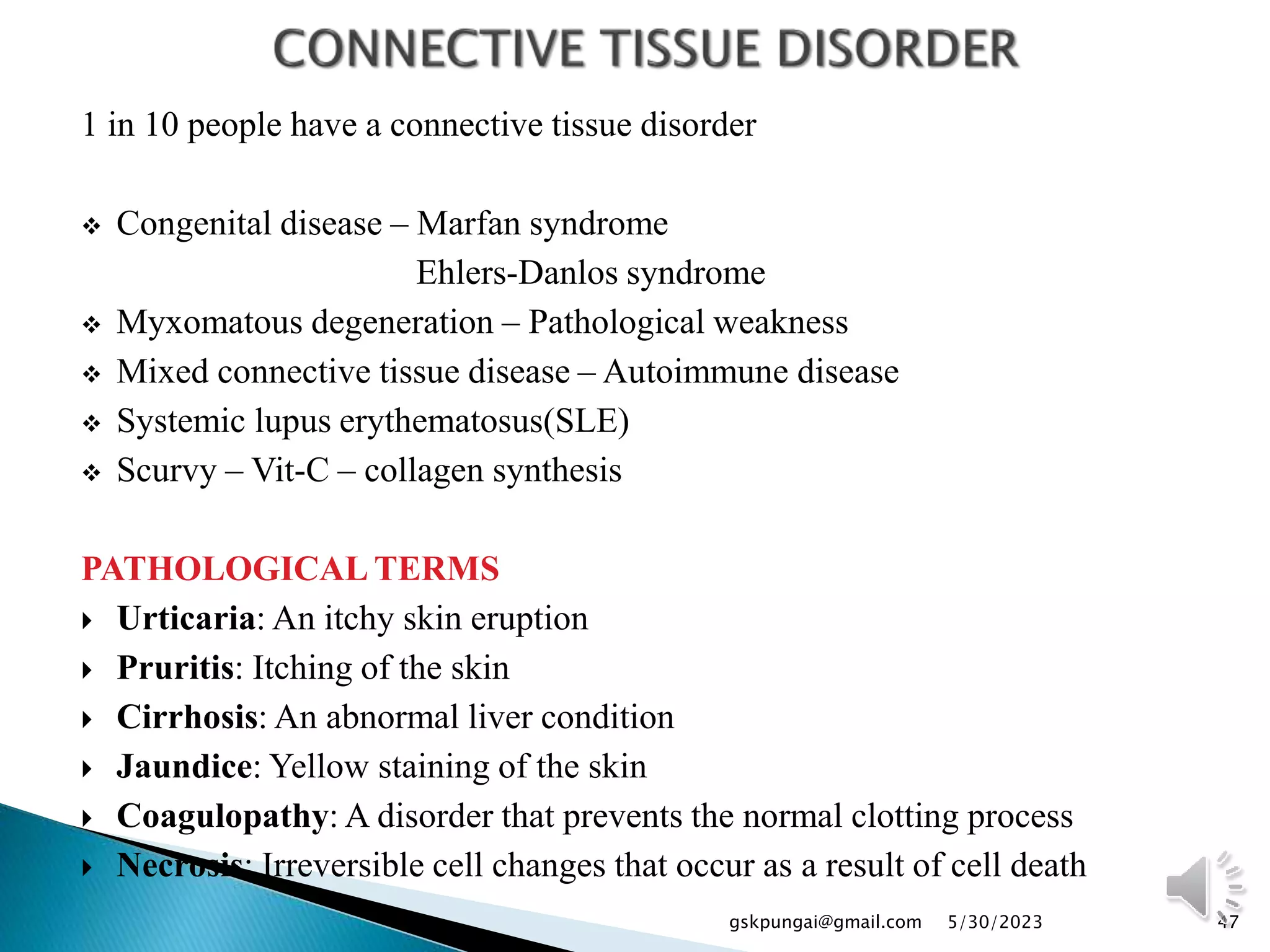
HISTOPATHOLOGY
1 in 10 people have a connective tissue disorder
 Congenital disease – Marfan syndrome
Ehlers-Danlos syndrome
 Myxomatous degeneration – Pathological weakness
 Mixed connective tissue disease – Autoimmune disease
 Systemic lupus erythematosus(SLE)
 Scurvy – Vit-C – collagen synthesis
PATHOLOGICAL TERMS
 Urticaria: An itchy skin eruption
 Pruritis: Itching of the skin
 Cirrhosis: An abnormal liver condition
 Jaundice: Yellow staining of the skin
 Coagulopathy: A disorder that prevents the normal clotting process
 Necrosis: Irreversible cell changes that occur as a result of cell death
47
gskpungai@gmail.com 5/30/2023
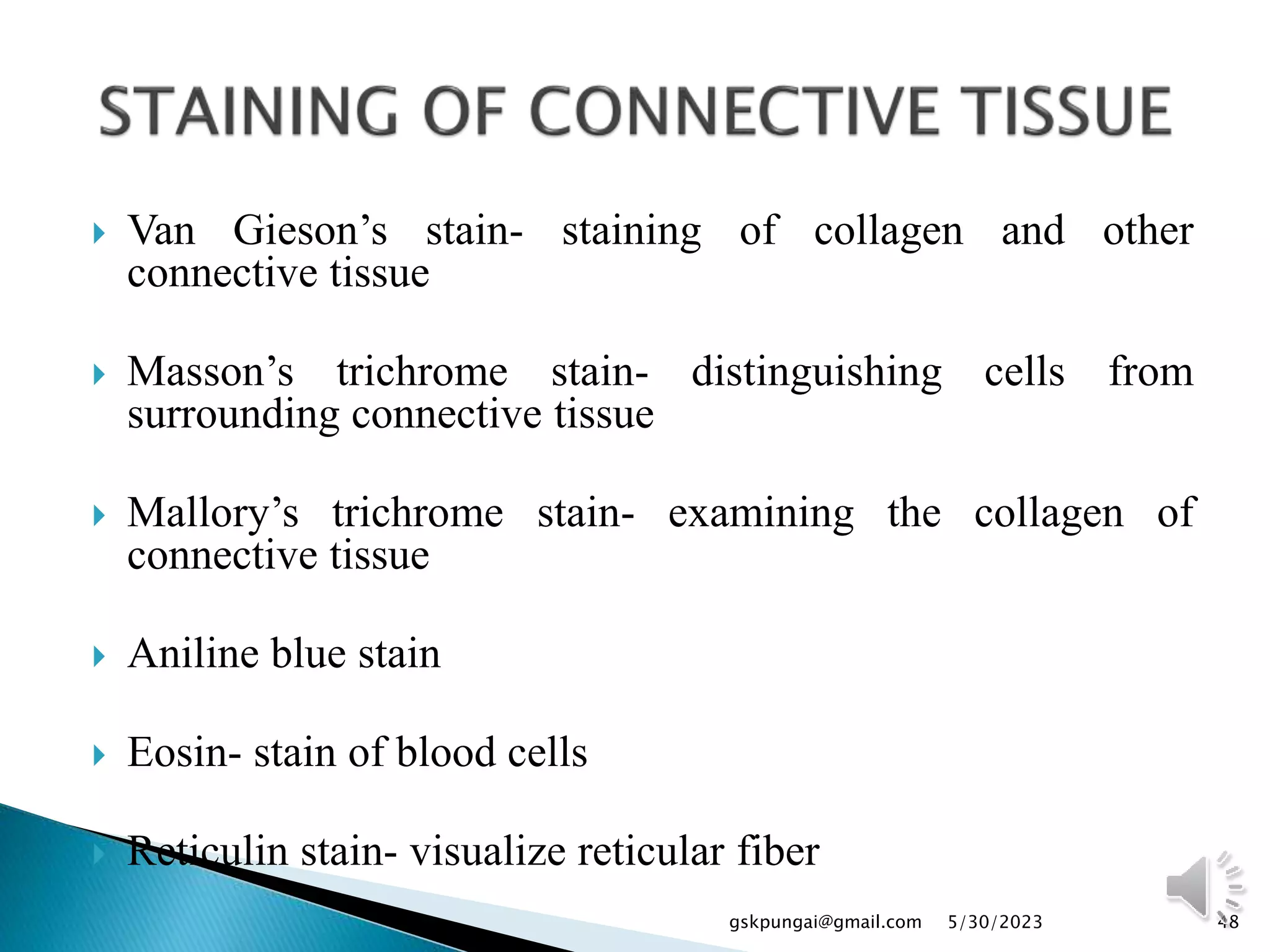
 Van Gieson’s stain- staining of collagen and other
connective tissue
 Masson’s trichrome stain- distinguishing cells from
surrounding connective tissue
 Mallory’s trichrome stain- examining the collagen of
connective tissue
 Aniline blue stain
 Eosin- stain of blood cells
 Reticulin stain- visualize reticular fiber
48
gskpungai@gmail.com 5/30/2023
 Human Anatomy second edition by Kenneth S. Saladin, “Histology: the study of
tissues”.
 Anatomy& Physiology in Health and Illness 12th Edition by Ross and Wilson, “The
cells, tissues and organization of the body”.
 Fundamentals of histology by GP Verma, “Connective tissue”.
 Anatomy& Physiology for nurses by Inderbir Singh, “General connective tissue”
 Human anatomy & Physiology by Biology-about.com, “Connective tissue Types and
examples”.
 Biology Encyclopedia by Biologyreference.com, “Connective tissue”.
49
gskpungai@gmail.com 5/30/2023
THANK YOU
50
gskpungai@gmail.com 5/30/2023

connective tissue

  • 1.
    1 SUBJECT: DRUG DESIGNAND MOLECULAR PHARMACOLOGY CONNECTIVE TISSUE gskpungai@gmail.com 5/30/2023
  • 2.
     INTRODUCTION  COMPOSITIONOF CONNECTIVE TISSUE  TYPES OF CONNECTIVE TISSUE  FUNCTIONS OF CONNECTIVE TISSUE  HISTOPATHOLOGY  STAINING OF CONNECTIVE TISSUE  REFERENCES 2 gskpungai@gmail.com 5/30/2023
  • 3.
  • 4.
  • 5.
  • 6.
     Tissues  Typesof tissues Epithelial tissue: protection, secretion, and absorption Connective tissue: support, bind, and protect organs Muscle tissue: contraction Nervous tissue: information to other cells CONNECTIVE TISSUE  Connects, supports, binds, or separates different types of tissues and organs in the body  Develops from the mesoderm  Found in b/w other tissues everywhere in the body, including nervous system 6 gskpungai@gmail.com 5/30/2023
  • 7.
  • 8.
     FIBROBLASTS  MACROPHAGES MAST CELLS  PLASMA CELLS  LEUKOCYTES  ADIPOCYTES (FAT CELLS) 8 gskpungai@gmail.com 5/30/2023
  • 9.
    FIBROBLASTS  Most common cellsin connective tissue.  Their nuclei are ovoid or spindle shaped and can be large or small in size depending on their stage of cellular activity.  Synthesis ECM and collagen MACROPHAGES  Highly phagocytic cells that are derived from blood monocytes.  With conventional staining, macrophages are very difficult to identify unless they show visible ingested material inside their cytoplasm. 5/30/2023 gskpungai@gmail.com 9
  • 10.
    MAST CELLS  Bonemarrow origin and are distributed chiefly around small blood vessels.  They are oval to round in shape, with a centrally placed nucleus. PLASMA CELLS  Derived from B lymphocyts  They are oval shaped and have the ability to secrete antibodies that are antigen specific. 5/30/2023 gskpungai@gmail.com 10
  • 11.
    LEUKOCYTES  White blood cells,are considered the transient cells of connective tissue.  They migrate from the blood vessels into connective tissue by the process of diapedesis. ADIPOCYTES  Arise from undifferentiated mesenchymal cells of connective tissue. They gradually accumulate  cytoplasmic fat, which results in a significant flattening of the nucleus in the periphery of the cell. 5/30/2023 gskpungai@gmail.com 11
  • 12.
     Ground substanceis a clear, viscous substance with a high water content, but with very little morphologic structure.  When stained with basic dyes (periodic acid-Schiff [PAS]), it appears amorphous, it appears as a clear space.  Its major component is Glycosaminoglycans (GAGs), which are long, un-branched chains of polysaccharides with repeating disaccharide units.  Most GAGs are covalently bonded to a large central protein to form larger molecules called proteoglycans. 12 gskpungai@gmail.com 5/30/2023
  • 13.
  • 14.
    Collagen  COLLAGEN FIBERS arethe most common and widespread fibers in connective tissue.  25-35% of body  The collagen molecule (tropo-collagen) is a product of the fibroblast.  Each collagen molecule is 300 nm in length and consists of three polypeptide amino acid chains. Elastic  Elastic fibers have a very resilient nature (stretch and recoil), which is important in areas like the lungs, aorta, and skin.  They are composed of two proteins, elastin and fibrillin, and do not have a banding pattern. Reticular  RETICULAR FIBERS are small-diameter fibers.  Supporting mesh in soft tissues(liver,bone marrow and lymphatic system) 5/30/2023 gskpungai@gmail.com 14
  • 15.
  • 16.
  • 17.
    Dense irregular CT Dense regular CT LooseCT 17 gskpungai@gmail.com 5/30/2023
  • 18.
  • 19.
     Dense irregularconnective tissue is a cushion like tissue, which provides great strength against pressure-induced stresses on structures or organs.  “Dense” refers to the high abundance of collagen fibers (but fewer cells) compared to loose connective tissue.  “Irregular” indicates that the orientation of the fiber bundles is in many different directions (or randomly oriented bundles).  Contains mostly collagen fibers with a lesser number of other fibers such as elastic fibers.  The skin has a thick layer of dense irregular connective tissue, with fibers arranged in various directions to resist stretching forces in any direction.  It is prominent in the dermis of the skin, mammary glands, and capsules of many organs.  Function - provide strength. 19 gskpungai@gmail.com 5/30/2023
  • 20.
     This typeof tissue is composed of coarse collagen bundles that is densely packed and oriented into parallel cylinders.  Long, thin fibroblasts are found among the fiber bundles and are oriented in the same direction as the fibers.  The nuclei of the fibroblasts are visible, but the cytoplasm is not easily seen.  The thick bundles of collagen fibers fill the intercellular spaces.  Dense regular connective tissue provides resistance to traction forces in tendons and ligaments.  Function = provide strong attachment between various structures 20 gskpungai@gmail.com 5/30/2023
  • 21.
     Loose connectivetissue is also called areolar connective tissue.  This type of connective tissue has abundant ground substance, with many connective tissue cells and relatively few fibers.  It is richly vascularized, flexible, and not highly resistant to stress.  The lamina propria of the digestive tract is an extreme example of loose connective tissue.  This tissue lies immediately beneath the thin epithelium of the gut, which is one place where the body’s defense mechanisms initially attack bacteria and pathogens.  Therefore, plasma cells, mast cells, leukocytes, and fibroblasts are common in this area.  Loose connective tissue is characterized by loosely arranged, woven connective fibers, abundant ground substance, and tissue fluid, which contains the rich array of connective tissue cells. 21 gskpungai@gmail.com 5/30/2023
  • 22.
    Adipose connective tissue Reticular connective tissue Elasticconnective tissue 22 gskpungai@gmail.com 5/30/2023
  • 23.
  • 24.
     Adipose tissueis a special form of connective tissue and has a rich neurovascular supply.  Adipocytes (fat cells) are scattered within a loose collagenous supporting tissue in this unilocular adipose tissue.  Each adipose cell contains a single large drop of lipid; it has a thin rim of cytoplasm around the lipid, and its flattened nucleus is located in the periphery of the cell.  Adipocytes are the primary site for storage of energy, and lipid deposition and mobilization are regulated by hormonal factors (steroids, insulin, thyroid hormone, etc.).  Adipocytes also play a role in the synthesis of some hormones such as leptin.  During childhood, the adipocyte numbers may increase depending on nutrition and other factors, but in adulthood, adipocyte numbers normally remain constant. 24 gskpungai@gmail.com 5/30/2023
  • 25.
     Reticular tissueis a specialized loose connective tissue that provides a delicate supporting framework for many highly cellular organs, such as endocrine glands, lymphoid organs, the spleen, and the liver.  They are arranged in a net like framework to support parenchymal cells, in this example, pancreatic cells.  The inset drawing represents the organization of reticular fibers and pancreatic cells.  These fibers consist of collagen type III, which forms a mesh like network that supports the liver cells and holds these cells together.  There is a sinusoid running between the reticular fibers, which appears as empty space here. 25 gskpungai@gmail.com 5/30/2023
  • 26.
     Elastic connectivetissue consists predominately of elastic material, and this allows distension and recoil of the structure.  This tissue can be found in some vertebral ligaments, arterial walls, and in the bronchial tree.  Thick bundles of elastic lamellae are arranged in parallel wavy sheets, with the smooth muscle cells and collagen fibers insinuated between alternating lamellae.  The elastic fibers are formed by elastin and fibrillin micro- fibrils.  Elastic connective tissue is able to recoil after stretching.  This property in large arteries helps to moderate the extremes of pressure associated with the cardiac cycle.  Abnormal expression of the fibrillin (FBN1) gene is associated with abnormal elastic tissue disease. 26 gskpungai@gmail.com 5/30/2023
  • 27.
  • 28.
  • 29.
     Mesenchyme (mesenchymalconnective tissue) is found in the developing structures in the embryo.  It contains scattered reticular fibers and mesenchymal cells, which have irregular, star or spindle shapes and pale-stained cytoplasm.  These cells exhibit cytoplasmic processes, which often give the cells a stellate appearance.  Mesenchymal cells are relatively unspecialized and are capable of differentiating into different cell types in mature tissue cells, such as cartilages, bones, and muscles.  These blood cells contain a nucleus in each cell. This is the characteristic of their immature state (a nucleated red blood cells are characteristic of the mature state and are found in adult tissues).  Interestingly enough, some vertebrates, such as frogs and chickens, have nucleated red blood cells in the adult state. 29 gskpungai@gmail.com 5/30/2023
  • 30.
     An exampleof mucous connective tissue that has an abundance of a jellylike matrix with some fine aggregates of collagen fibers and stellate-shaped fibroblasts is shown.  It is found in the umbilical cord and sub dermal connective tissue of the embryo.  Mucous tissue is a major constituent of the umbilical cord, where it is referred to as Wharton jelly.  In this example, the viscous ground substance has been stained with a special stain to reveal jelly like mucin, which contains hyaluronic acid and glycoproteins.  Collagen fibers and large stellate-shaped fibroblasts (not mesenchymal cells) predominate in the mucous tissue. 30 gskpungai@gmail.com 5/30/2023
  • 31.
  • 32.
     Bone cells(osteocytes) are surrounded by a matrix of collagen fibres strengthened by inorganic salts, especially calcium and phosphate.  This provides bones with their characteristic strength and rigidity. 32 gskpungai@gmail.com 5/30/2023
  • 33.
  • 34.
    BONE Compact bone –solid or dense appearance Spongy or cancellous bone –’spongy’ or fine honeycomb appearance. 34 gskpungai@gmail.com 5/30/2023
  • 35.
  • 36.
     Found inthe outer portion of long bones  Consists of many cylindrical-shaped units called osteon 36 gskpungai@gmail.com 5/30/2023
  • 37.
     Cartilage hasa flexible rubbery matrix. It is found in organs like,  External ear  Tip of the nose or  The “Adam’s apple” (thyroid cartilage of the larynx). 37 gskpungai@gmail.com 5/30/2023
  • 38.
  • 39.
    Hyaline Cartilage ElasticCartilage Fibrocartilage  Hyaline cartilage is named for its clear, glassy microscopic appearance.  surrounded by a sheath of dense irregular connective tissue. locations: end of a rib to the breastbone, around the larynx, the fetal skeleton. Functions: Eases joint movements; holds airway open during respiration; moves vocal cords during speech , growth zones of long bones of children.  Elastic cartilage is named for its conspicuous elastic fibers.  surrounded by a sheath of dense irregular connective tissue. locations: External ear; epiglottis Functions: Provides flexible, elastic support. Fibrocartilage for its coarse, readily visible bundles of collagen. locations: Pubic- symphysis, spinal column; menisci, or pads of shock-absorbing cartilage, knee joint. Functions: Resists compression and absorbs shock in some joints. 39 gskpungai@gmail.com 5/30/2023
  • 40.
  • 41.
     Connective tissuecomposed of cells suspended in liquid matrix called plasma  Red blood cells (erythrocytes) – carries oxygen  White blood cells (leukocytes) – fights infection  Platelets – fragment of giant cells found in bone marrow 41 gskpungai@gmail.com 5/30/2023
  • 42.
    Type Connective Tissue Cells MainLocations Main Functions Dense irregular connective tissue Predominantly fibroblasts; other connective tissue cells occasionally present Dermis of the skin, capsules of many organs Resists stress from all directions; protects organs Dense regular connective tissue Predominantly fibroblasts; other connective tissue cells occasionally present Tendons, ligaments Provides resistance to traction forces Loose connective tissue Fibroblasts, macrophages, adipocytes, mast cells, plasma cells, leukocytes Lamina propria of gastrointestinal tract; around the nerves and vessels (in adventitia layer) Provides protection, suspension, and support; conduit for vessels and nerves; environment for immune defense function Adipose connective tissue Predominantly adipocytes (fat cells); fibroblasts and other connective tissue cells occasionally present Hypodermis of the skin, mammary glands, and around many organs Provides energy storage, insulation; cushioning of organs; hormone secretion Types of connective tissue 42 gskpungai@gmail.com 5/30/2023
  • 43.
    Reticular connective tissue Fibroblasts, reticular cells, hepatocytes, smoothmuscle cells, Schwann cells depending on the location Liver, pancreas, lymph nodes, spleen, and bone marrow Provides supportive framework for hematopoietic and parenchymal organs Elastic connective tissue Predominantly fibroblasts or smooth muscle cells; other connective tissue cells occasionally present Vertebral ligaments, walls of the large arteries Provides flexible support for the tissue; reduces pressure on the walls of the Arteries Mesenchymal connective tissue Mesenchymal cells Embryonic mesoderm Gives rise to all connective tissue types Mucous connective tissue Spindle-shaped fibroblasts Umbilical cord, subdermal layer of the fetus, dental pulp of the developing teeth, nucleus pulposus of the disk Provides cushion to protect the blood vessels in the umbilical cord. 43 gskpungai@gmail.com 5/30/2023
  • 44.
     Providing amedium for oxygen and nutrients to diffuse from capillaries to cells.  Wraps around and cushions and protects organs  Stores nutrients  Internal support for organs  As tendon and ligaments, it protects joints and attaches muscles to bone and each other  Runs through organ capsules and in deep layers of skin giving strength 44 gskpungai@gmail.com 5/30/2023
  • 45.
     Fibroblasts areresponsible for synthesis of various fibers and extracellular matrix components, such as collagen, elastic, and reticular fibers.  Macrophages contain many lysosomes and are involved in the removal of cell debris and the ingestion of foreign substances ; they also aid in antigen presentation to the immune system.  Adipocytes function to store neutral fats for energy or production of heat and are involved in hormone secretion.  Mast cells contain many granules, indirectly participate in allergic reactions, and act against microbial invasion.  Plasma cells are derived from B lymphocytes and are responsible for the production of antibodies in the immune response.  Lymphocytes participate in the immune response and protect against foreign invasion.  Neutrophils are the first line of defense against bacterial invasion.  Eosinophils have anti-parasitic activity and moderate allergic reactions.  Basophils have a (primary) function similar to mast cells; they mediate hypersensitivity reactions. 45 gskpungai@gmail.com 5/30/2023
  • 46.
  • 47.
    1 in 10people have a connective tissue disorder  Congenital disease – Marfan syndrome Ehlers-Danlos syndrome  Myxomatous degeneration – Pathological weakness  Mixed connective tissue disease – Autoimmune disease  Systemic lupus erythematosus(SLE)  Scurvy – Vit-C – collagen synthesis PATHOLOGICAL TERMS  Urticaria: An itchy skin eruption  Pruritis: Itching of the skin  Cirrhosis: An abnormal liver condition  Jaundice: Yellow staining of the skin  Coagulopathy: A disorder that prevents the normal clotting process  Necrosis: Irreversible cell changes that occur as a result of cell death 47 gskpungai@gmail.com 5/30/2023
  • 48.
     Van Gieson’sstain- staining of collagen and other connective tissue  Masson’s trichrome stain- distinguishing cells from surrounding connective tissue  Mallory’s trichrome stain- examining the collagen of connective tissue  Aniline blue stain  Eosin- stain of blood cells  Reticulin stain- visualize reticular fiber 48 gskpungai@gmail.com 5/30/2023
  • 49.
     Human Anatomysecond edition by Kenneth S. Saladin, “Histology: the study of tissues”.  Anatomy& Physiology in Health and Illness 12th Edition by Ross and Wilson, “The cells, tissues and organization of the body”.  Fundamentals of histology by GP Verma, “Connective tissue”.  Anatomy& Physiology for nurses by Inderbir Singh, “General connective tissue”  Human anatomy & Physiology by Biology-about.com, “Connective tissue Types and examples”.  Biology Encyclopedia by Biologyreference.com, “Connective tissue”. 49 gskpungai@gmail.com 5/30/2023
  • 50.