Understanding Adult Hemodynamics Theory, Monitoring, Waveforms and Medications Vicki Clavir RN
Purpose The primary purpose of invasive hemodynamic monitoring is the early detection, identification, and treatment of life-threatening conditions such as heart failure and cardiac tamponade. By using invasive hemodynamic monitoring the nurse is able to evaluate the patient's immediate response to treatment such as drugs and mechanical support. The nurse can evaluate the effectiveness of cardiovascular function such as cardiac output, and cardiac index.
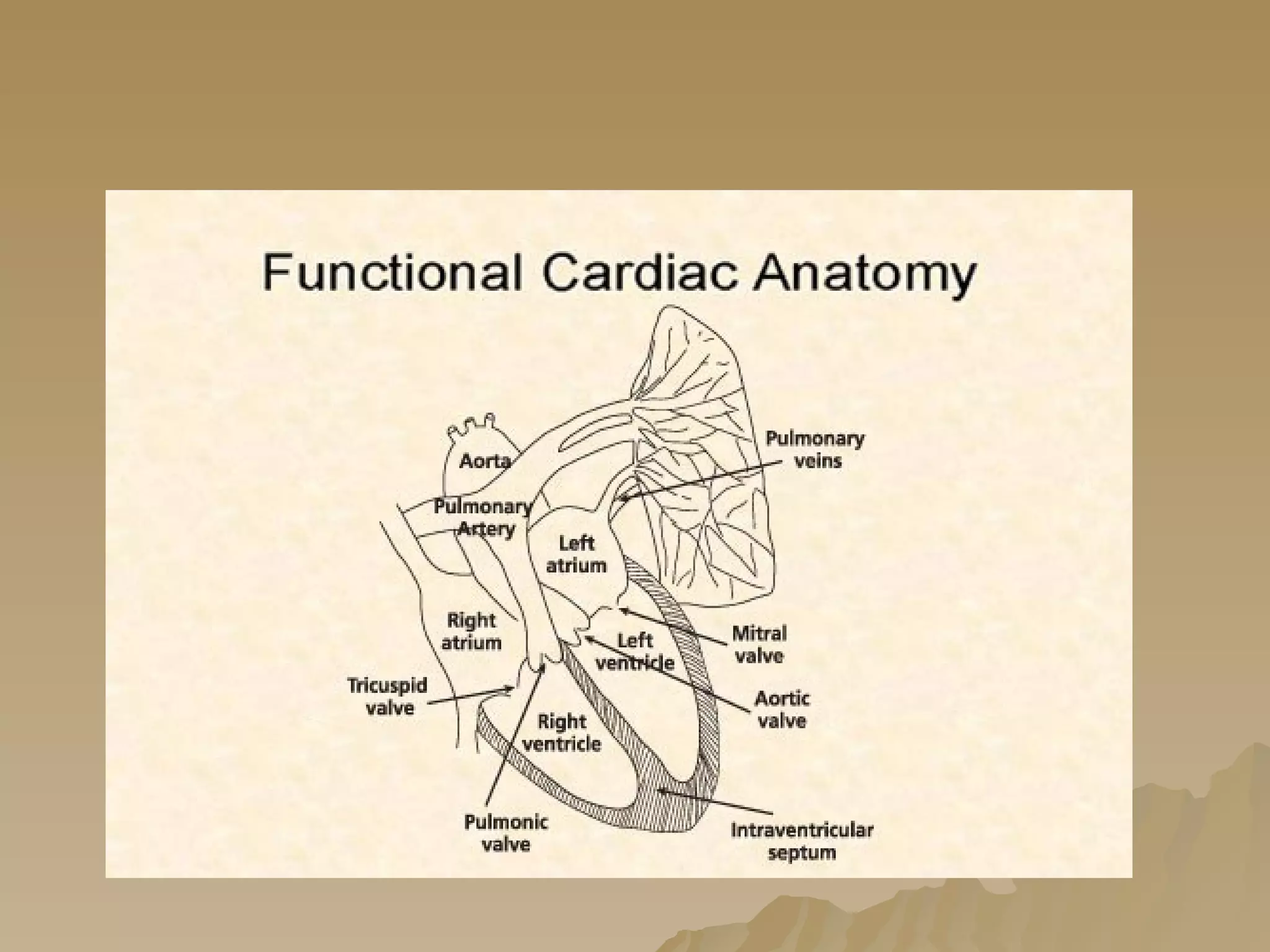
Objectives Understands basic cardiac anatomy Verbalizes determinates of Cardiac Output and their relationships to each other List indications for hemodynamic monitoring Demonstrates monitor system and set up Describe pharmacologic strategies that manipulate the determinates of cardiac output
Indications for Hemodynamic Monitoring: One of the obvious indications for hemodynamic monitoring is decreased cardiac output. This could be from dehydration, hemorrhage, G. I. bleed, Burns, or surgery. All types of shock, septic, cardiogenic, neurogenic, or anaphylactic may require invasive hemodynamic monitoring. Any deficit or loss of cardiac function: such as acute MI, cardiomyopathy and congestive heart failure may require invasive hemodynamic monitoring.
 
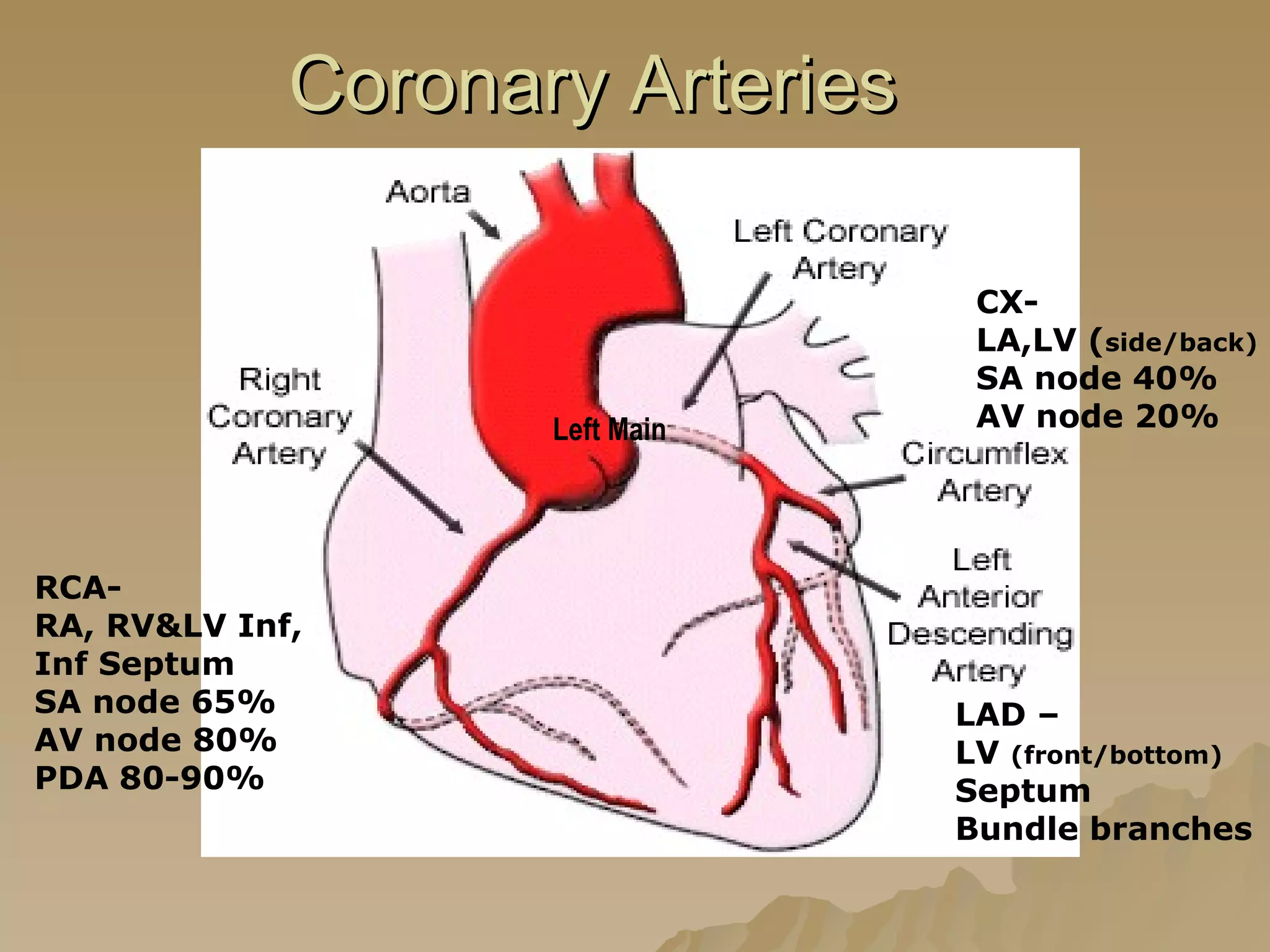
Coronary Arteries RCA- RA, RV&LV Inf, Inf Septum SA node 65% AV node 80% PDA 80-90% CX- LA,LV ( side/back) SA node 40% AV node 20% LAD – LV  (front/bottom) Septum Bundle branches Left Main
 
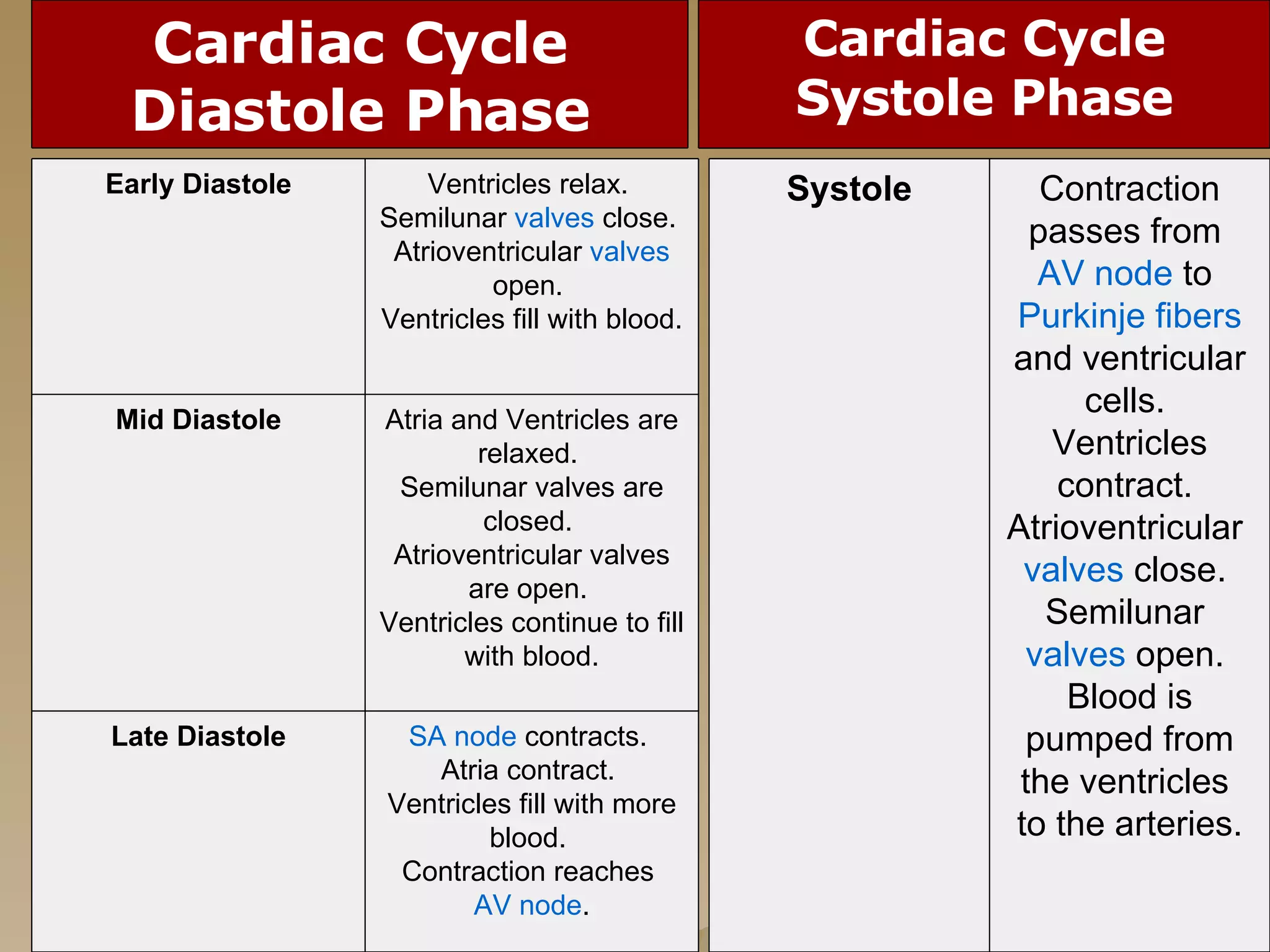
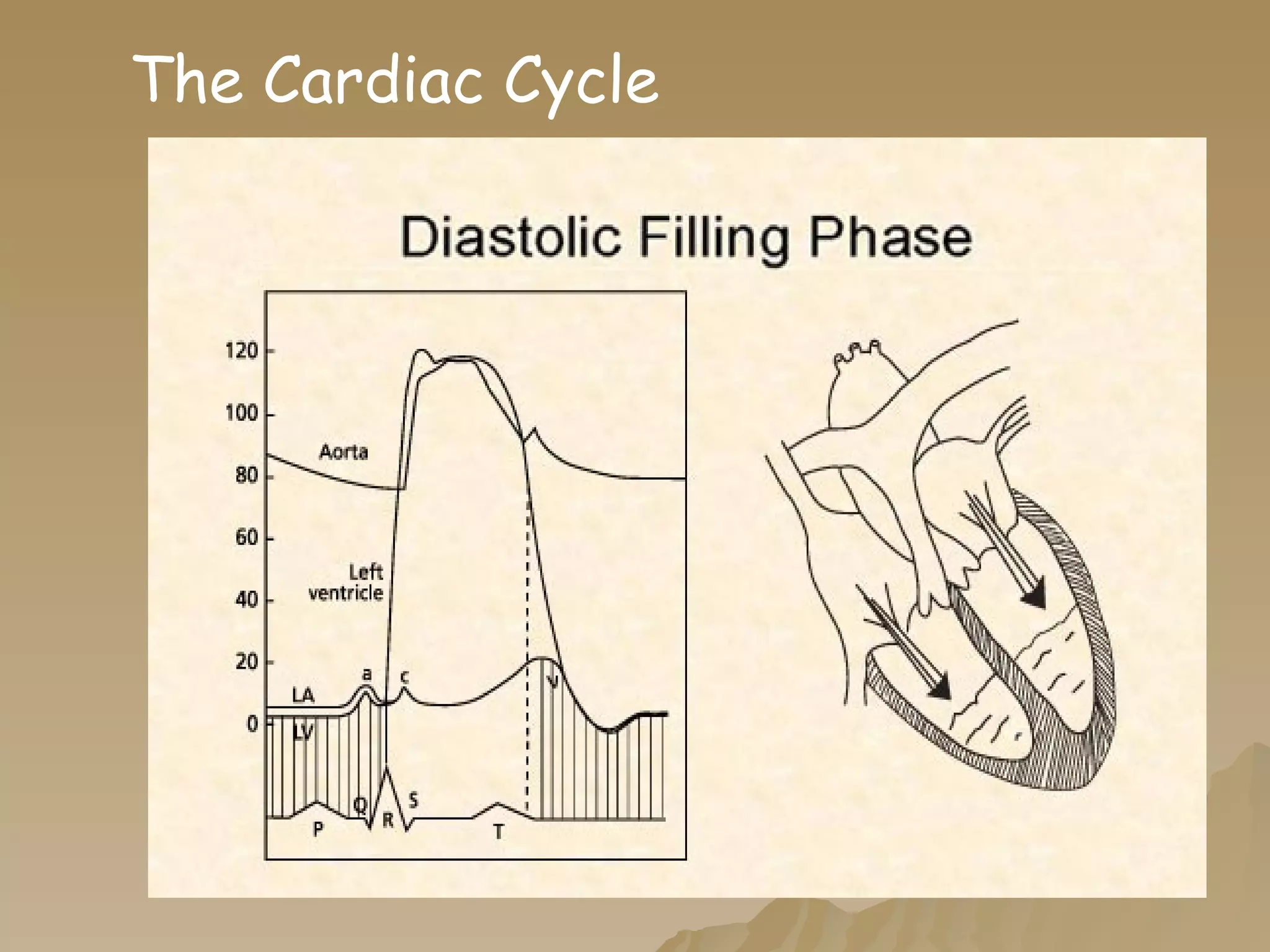
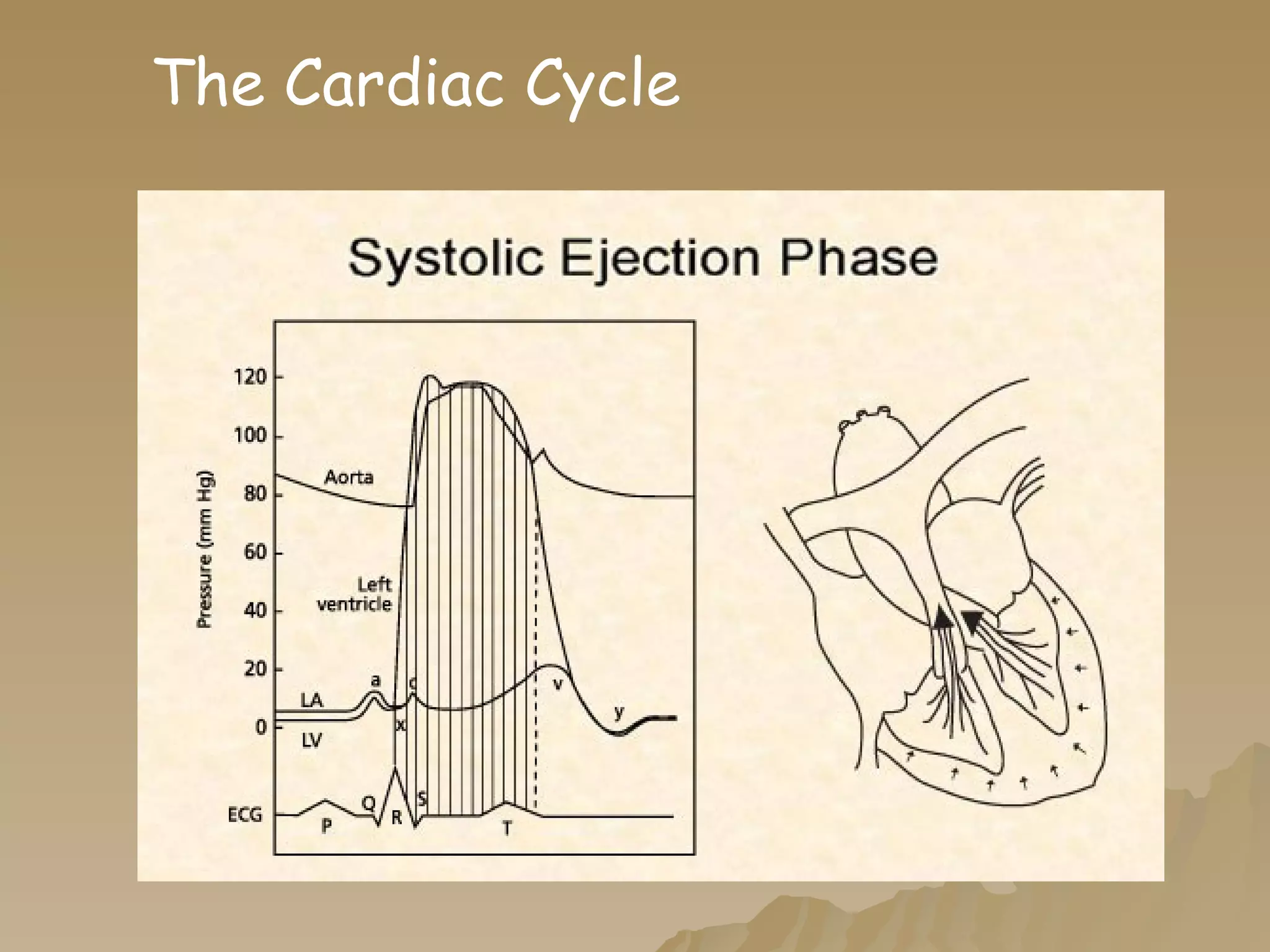
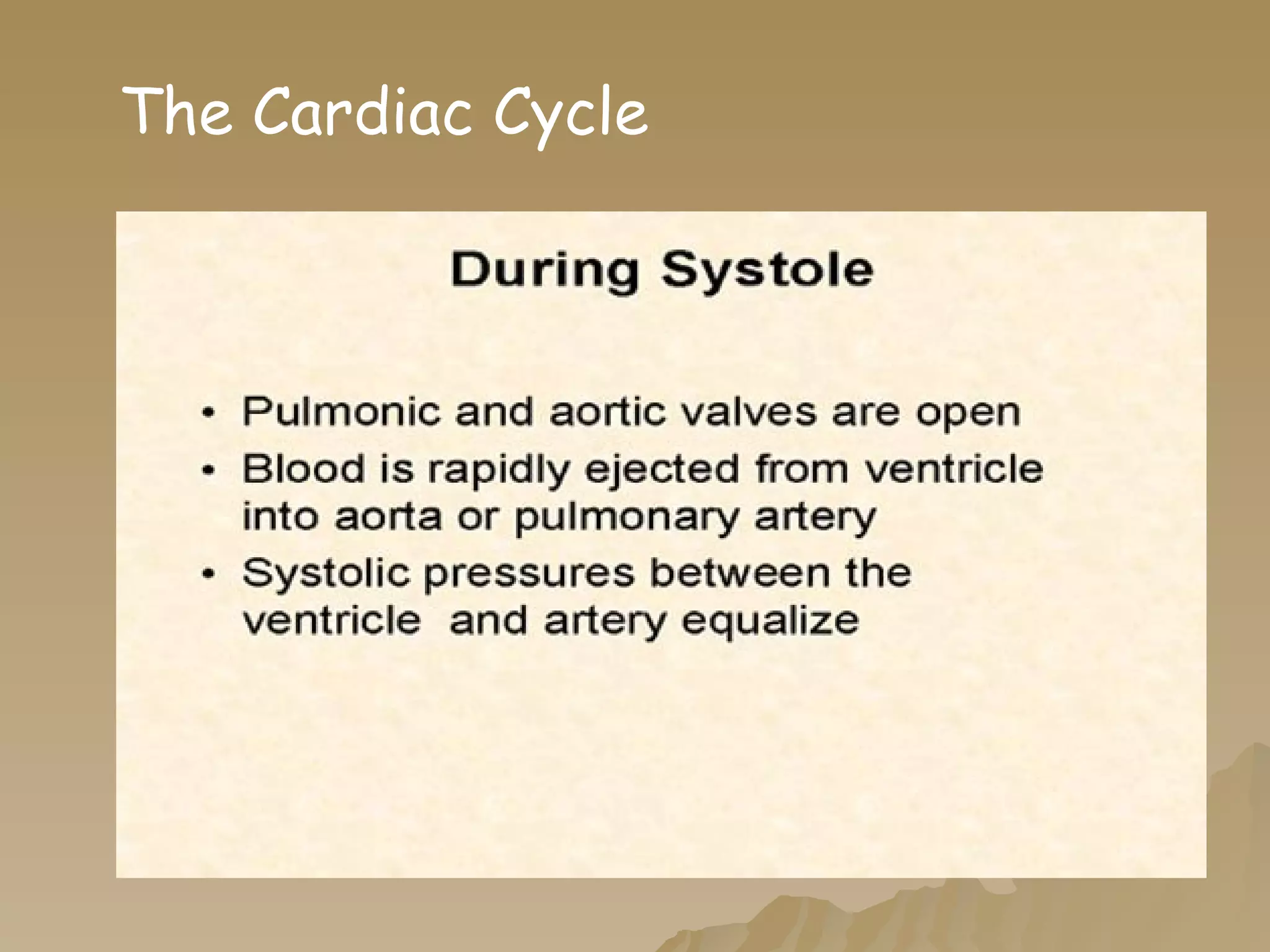
Cardiac Cycle Diastole Phase SA node  contracts.  Atria contract.  Ventricles fill with more blood.  Contraction reaches  AV node . Late Diastole Atria and Ventricles are relaxed.  Semilunar valves are closed.  Atrioventricular valves are open.  Ventricles continue to fill with blood. Mid Diastole Ventricles relax.  Semilunar  valves  close.  Atrioventricular  valves  open.  Ventricles fill with blood. Early Diastole Cardiac Cycle Systole Phase Contraction passes from  AV node  to  Purkinje fibers  and ventricular cells.  Ventricles contract.  Atrioventricular  valves  close.  Semilunar  valves  open.  Blood is pumped from the ventricles  to the arteries. Systole
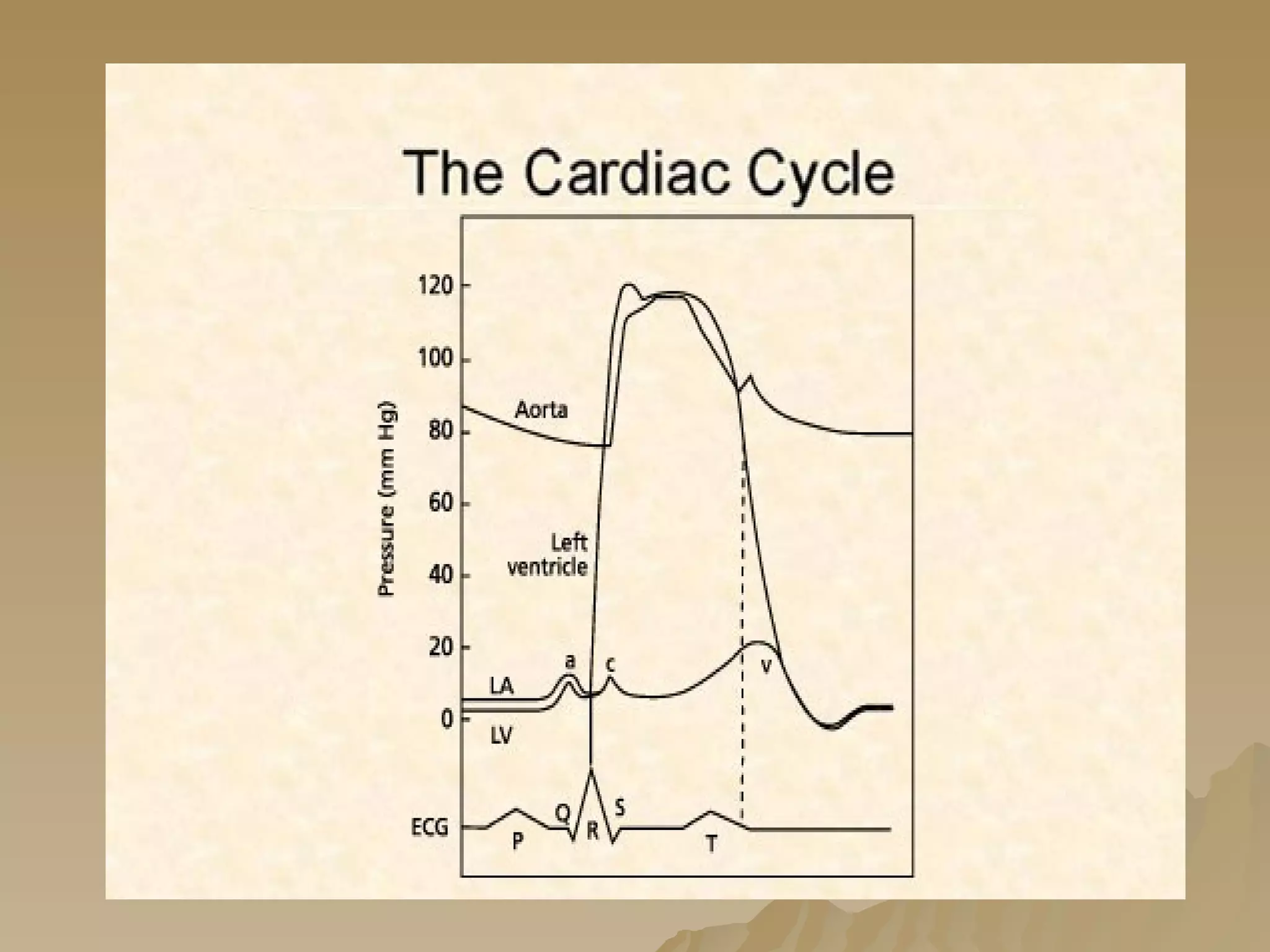
Cardiac Cycle
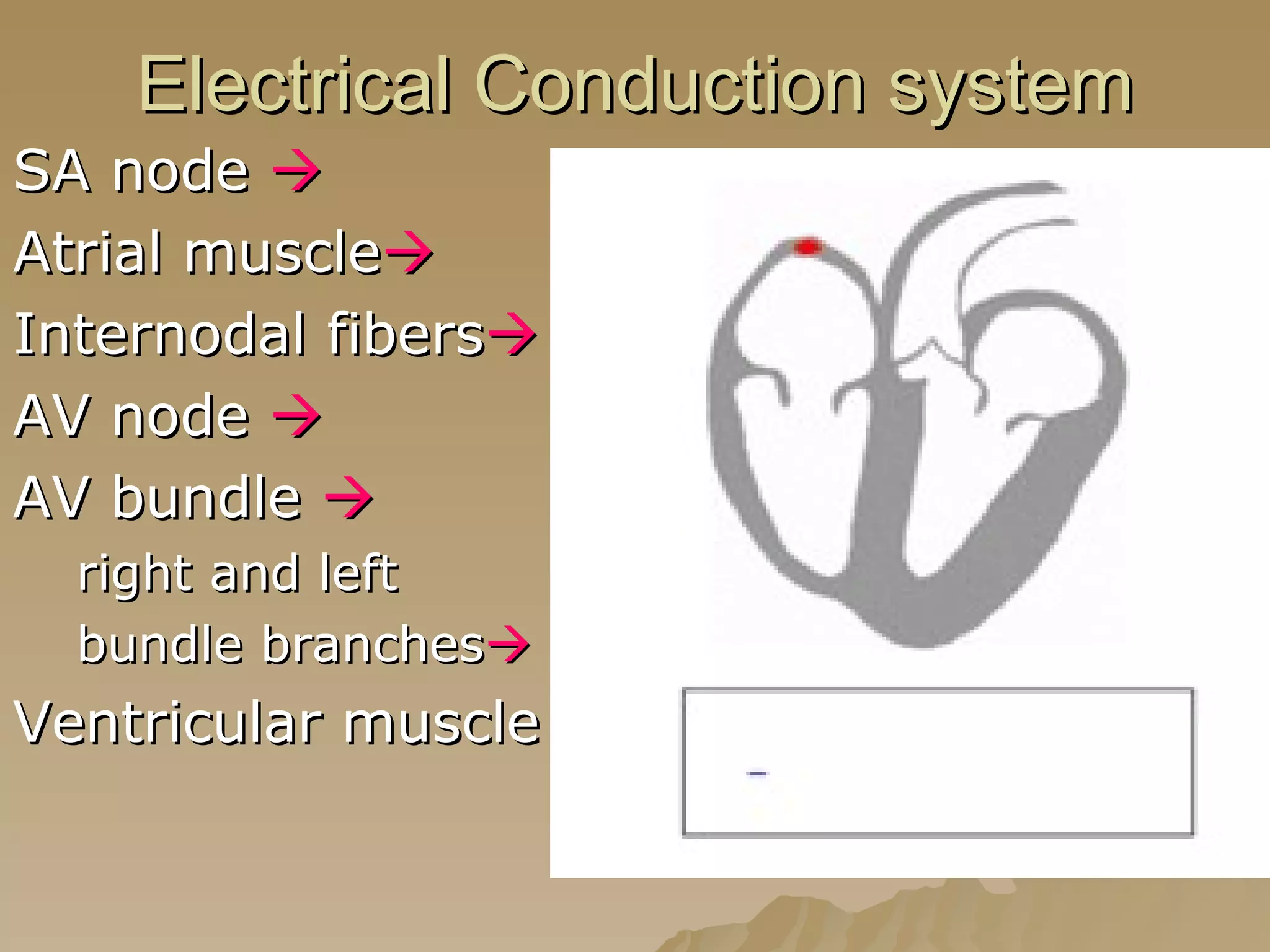
Electrical Conduction system SA node     Atrial muscle  Internodal fibers    AV node   AV bundle     right and left bundle branches  Ventricular muscle
Autonomic Nervous System The autonomic nervous system stimulates the heart through a balance of sympathetic nervous system and parasympathetic nervous system innervations. The sympathetic nervous system plays a role in  speeding  up impulse formation, thus increasing the heart rate The parasympathetic nervous system  slows  the heart rate.
The Cardiac Cycle
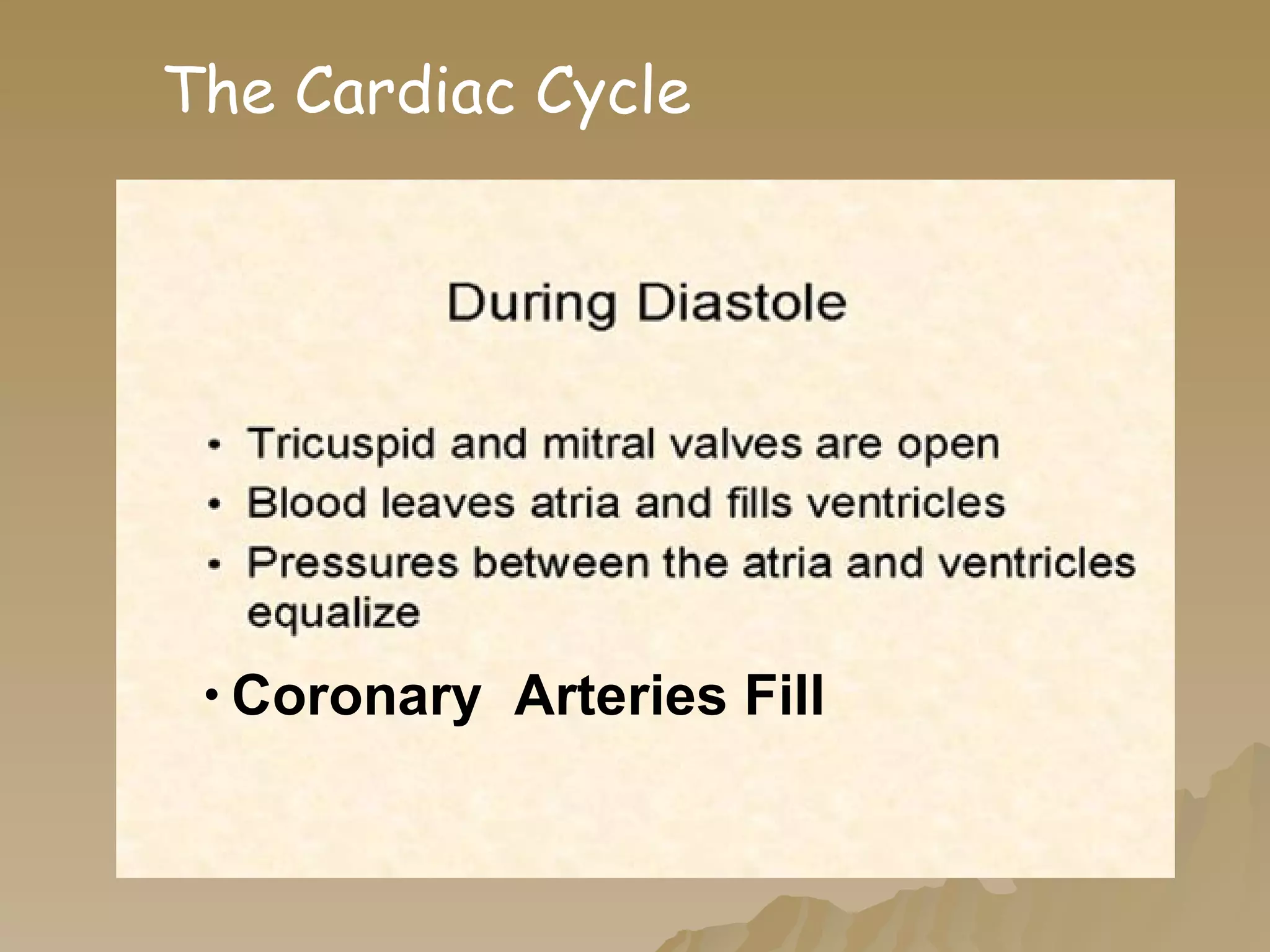
Coronary   Arteries Fill The Cardiac Cycle
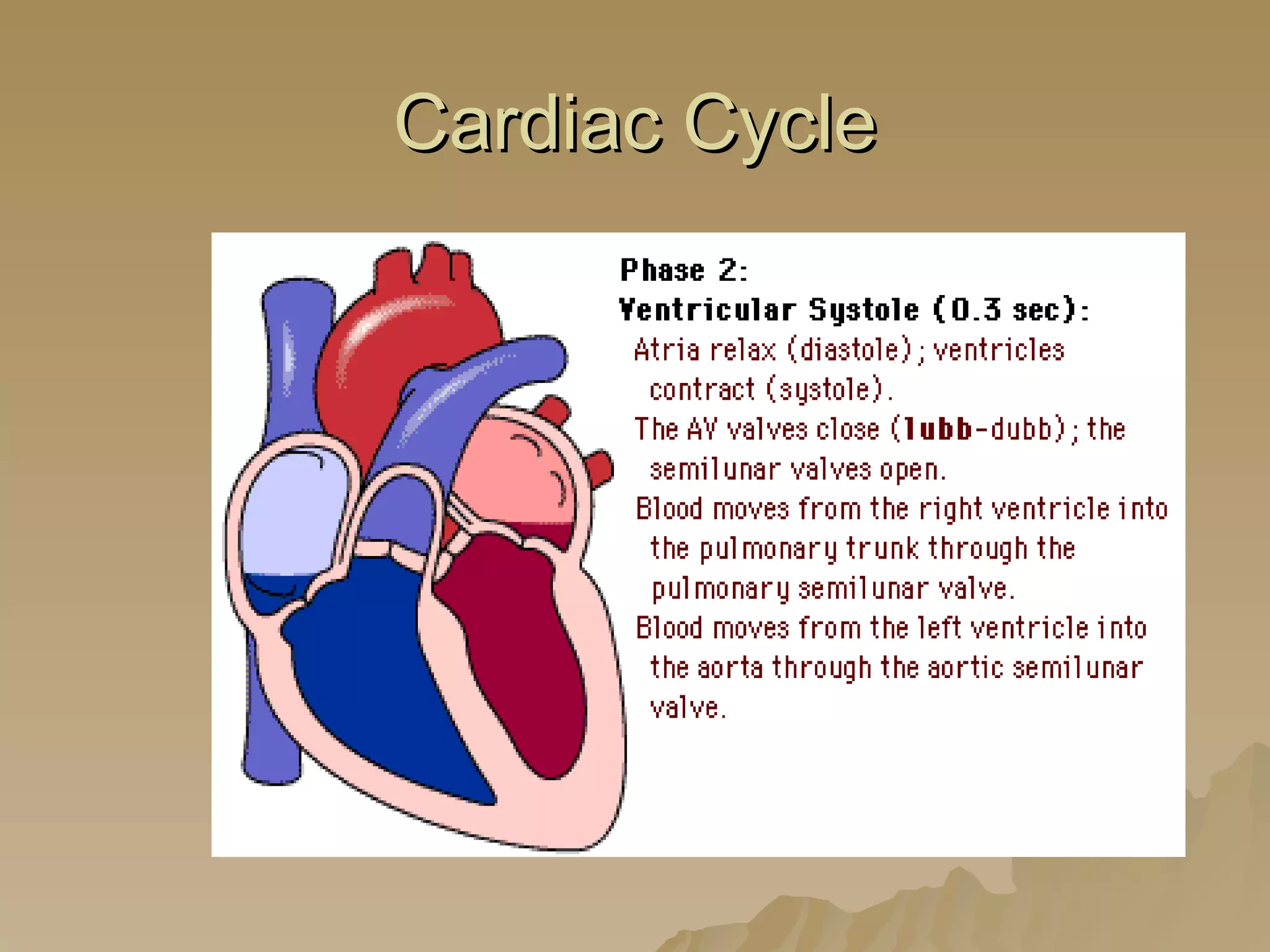
The Cardiac Cycle
The Cardiac Cycle
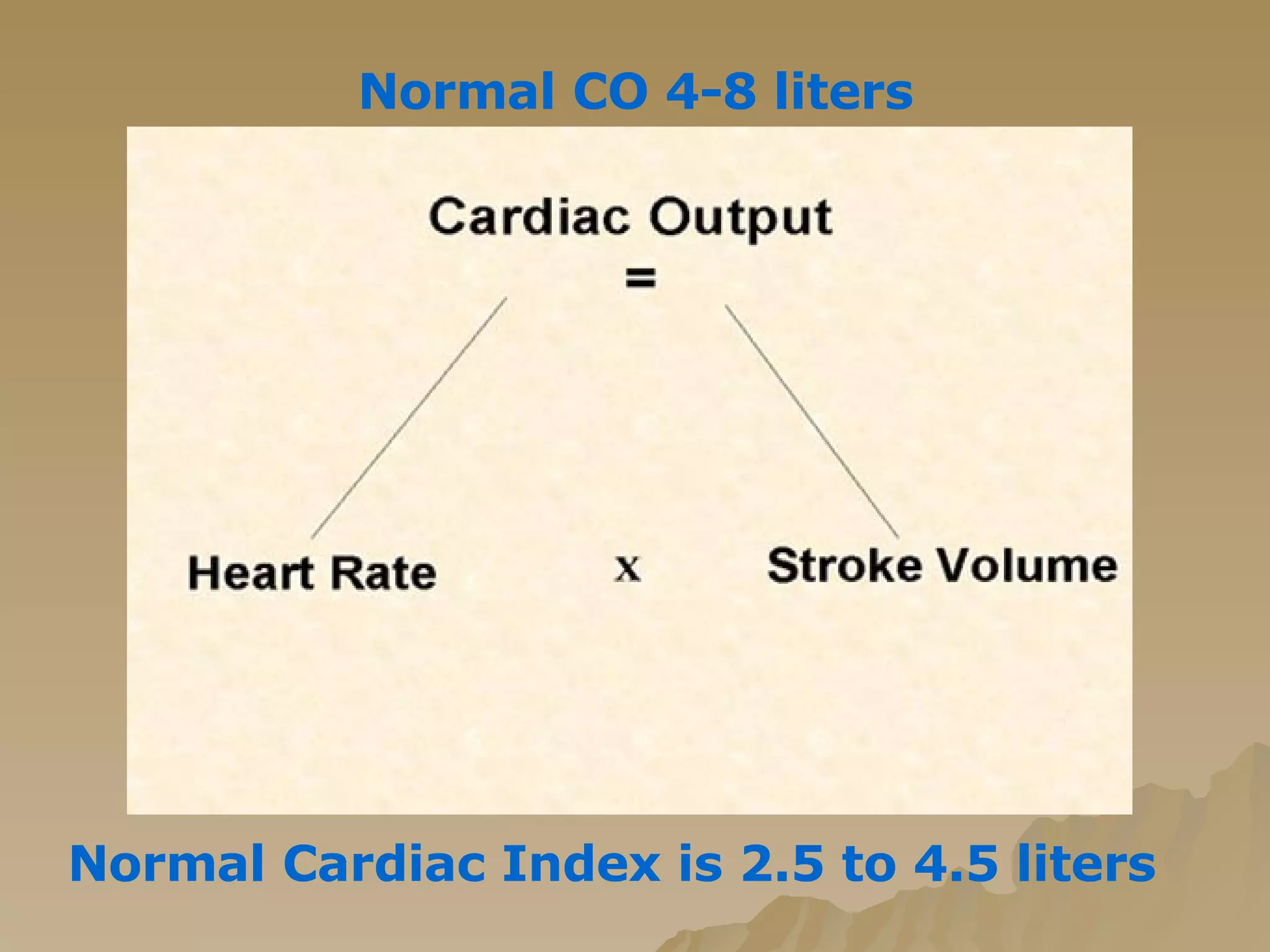
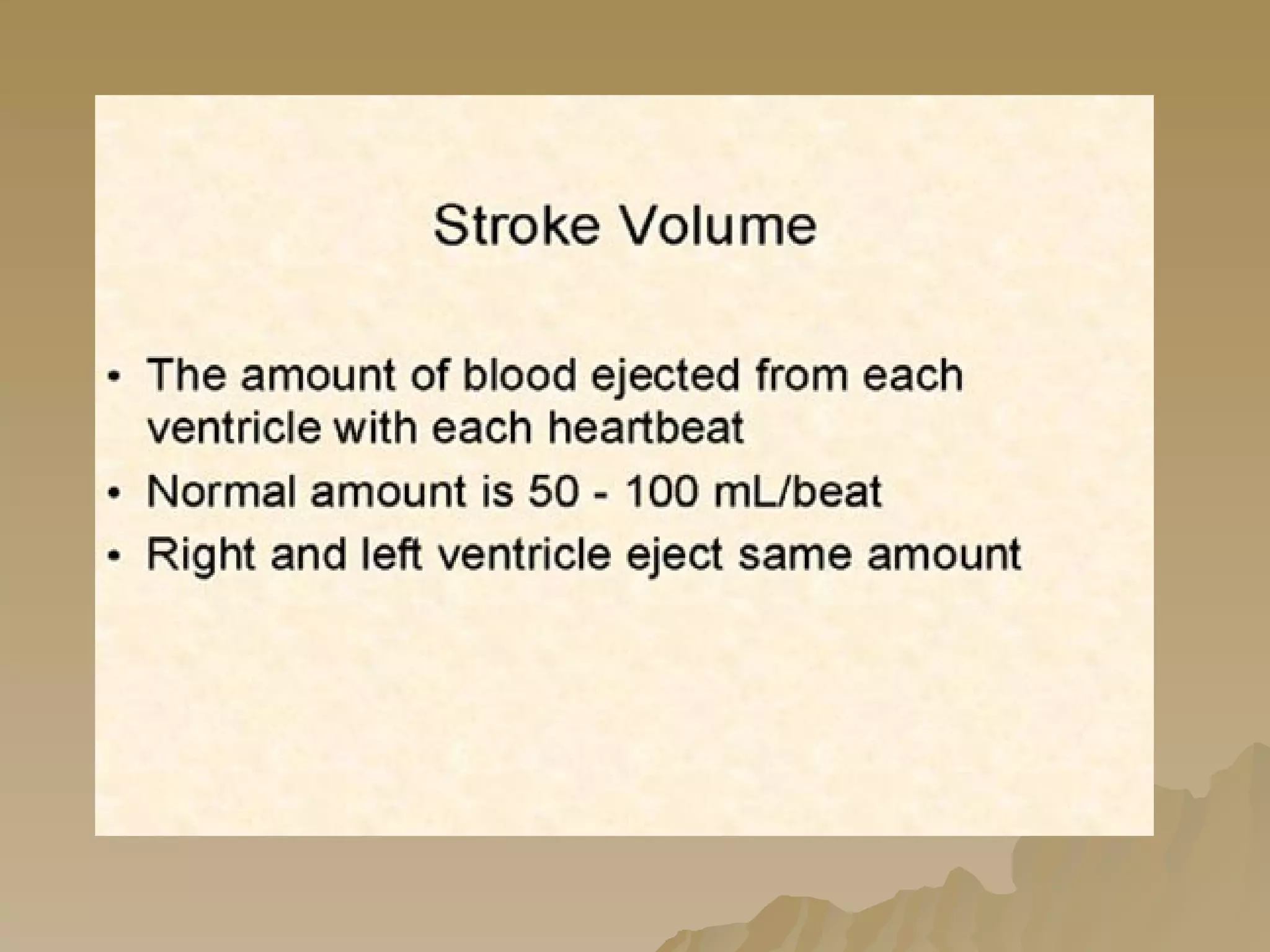
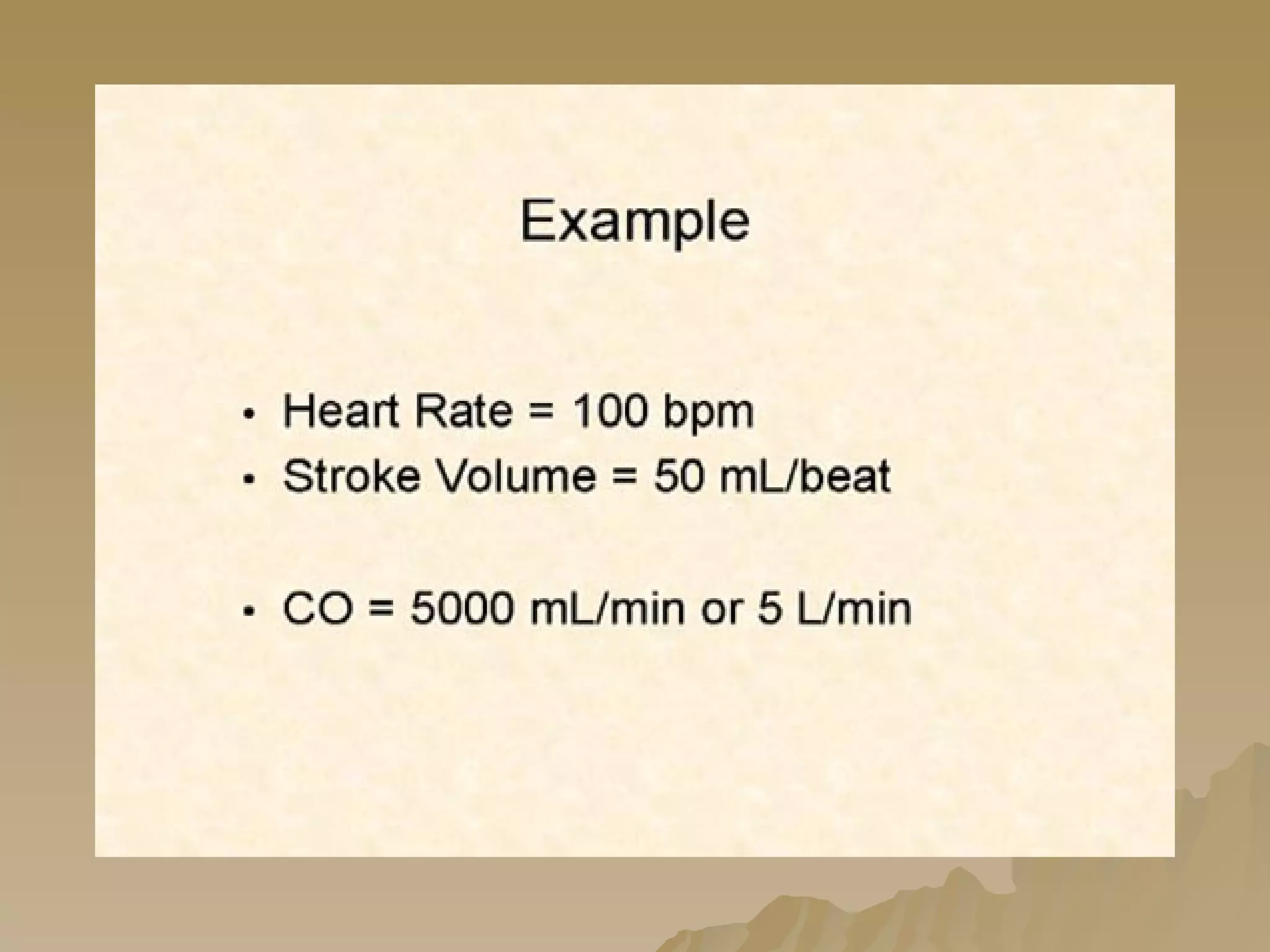
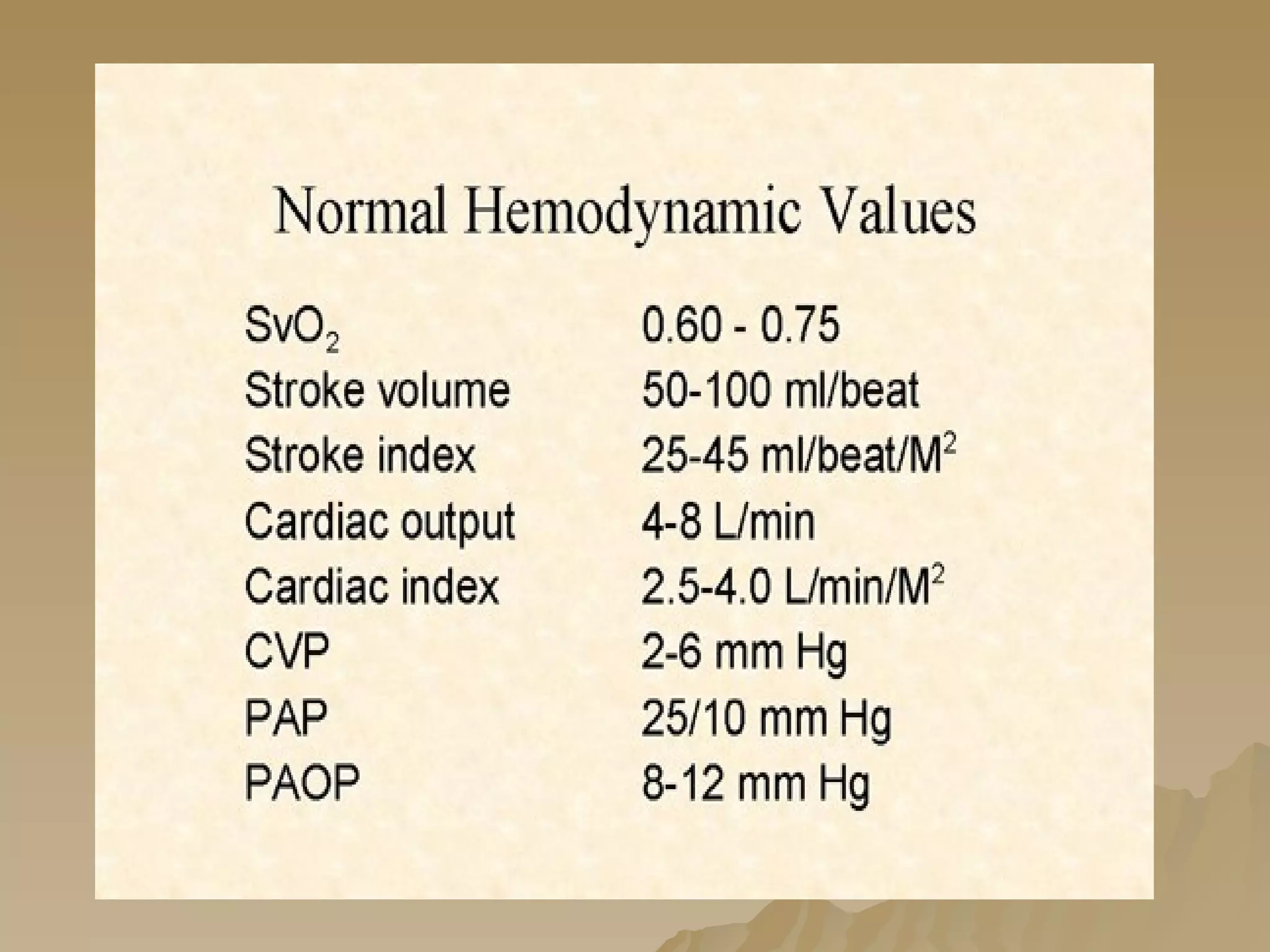
Normal CO 4-8 liters Normal Cardiac Index is 2.5 to 4.5 liters
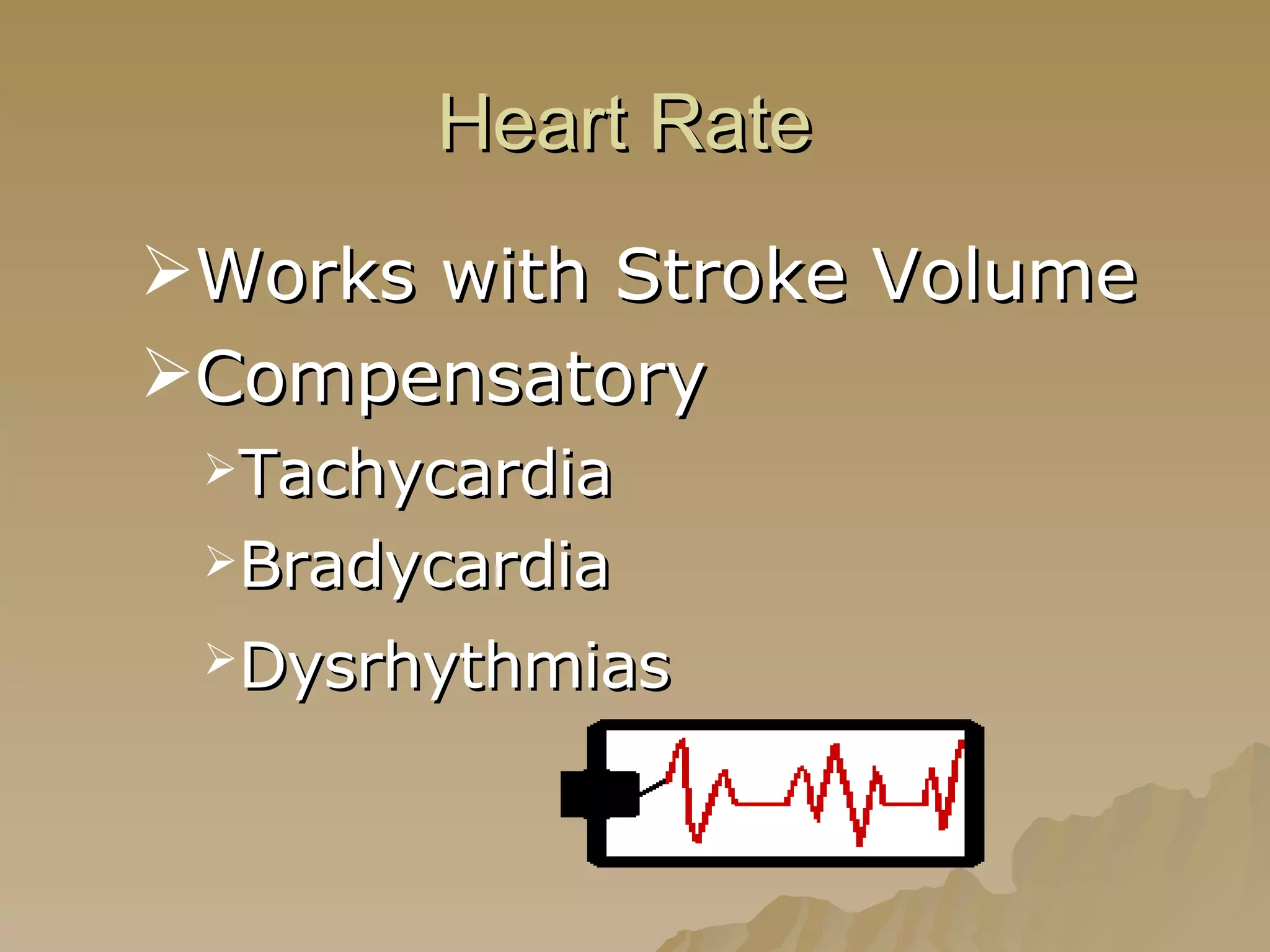
Heart Rate  Works with Stroke Volume Compensatory Tachycardia  Bradycardia Dysrhythmias
 
 
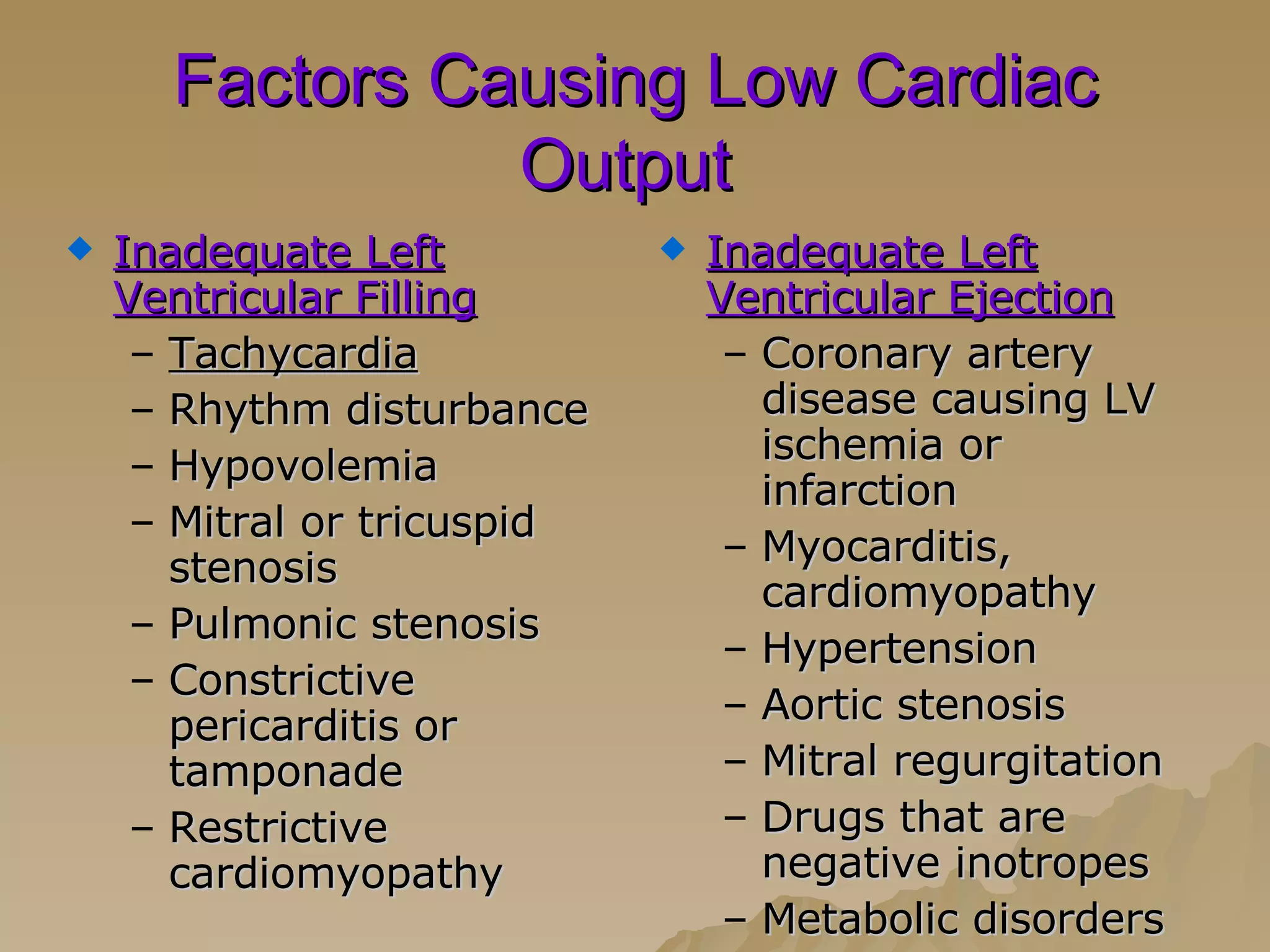
Factors Causing Low Cardiac Output   Inadequate Left Ventricular Filling Tachycardia   Rhythm disturbance Hypovolemia Mitral or tricuspid stenosis Pulmonic stenosis Constrictive pericarditis or tamponade  Restrictive cardiomyopathy  Inadequate Left Ventricular Ejection Coronary artery disease causing LV ischemia or infarction Myocarditis, cardiomyopathy Hypertension  Aortic stenosis Mitral regurgitation  Drugs that are negative inotropes  Metabolic disorders
 
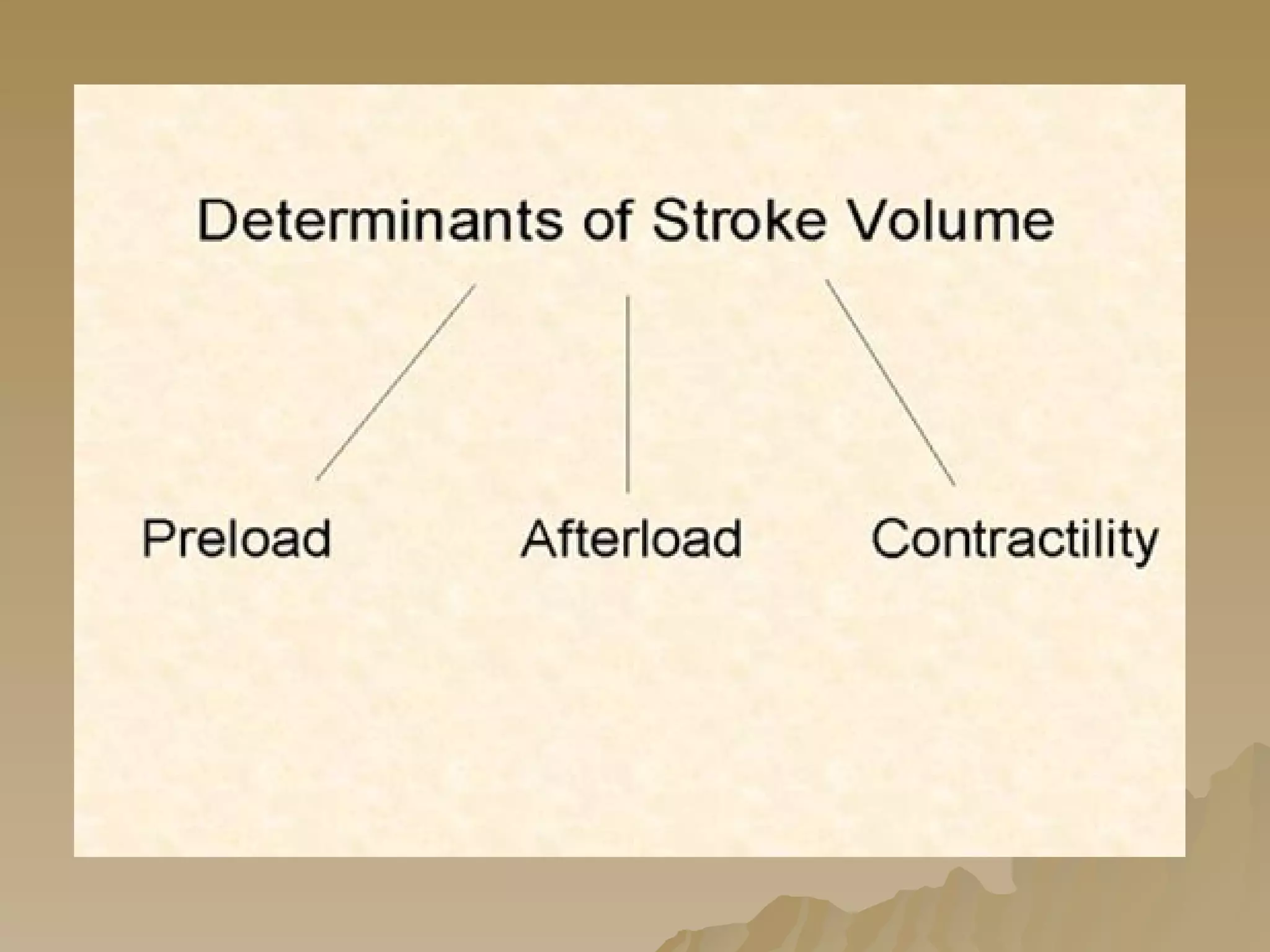
Hemodynamic terms Preload - Stretch of ventricular wall. Usually related to volume. (how full is the tank?) Frank Starling’s Law
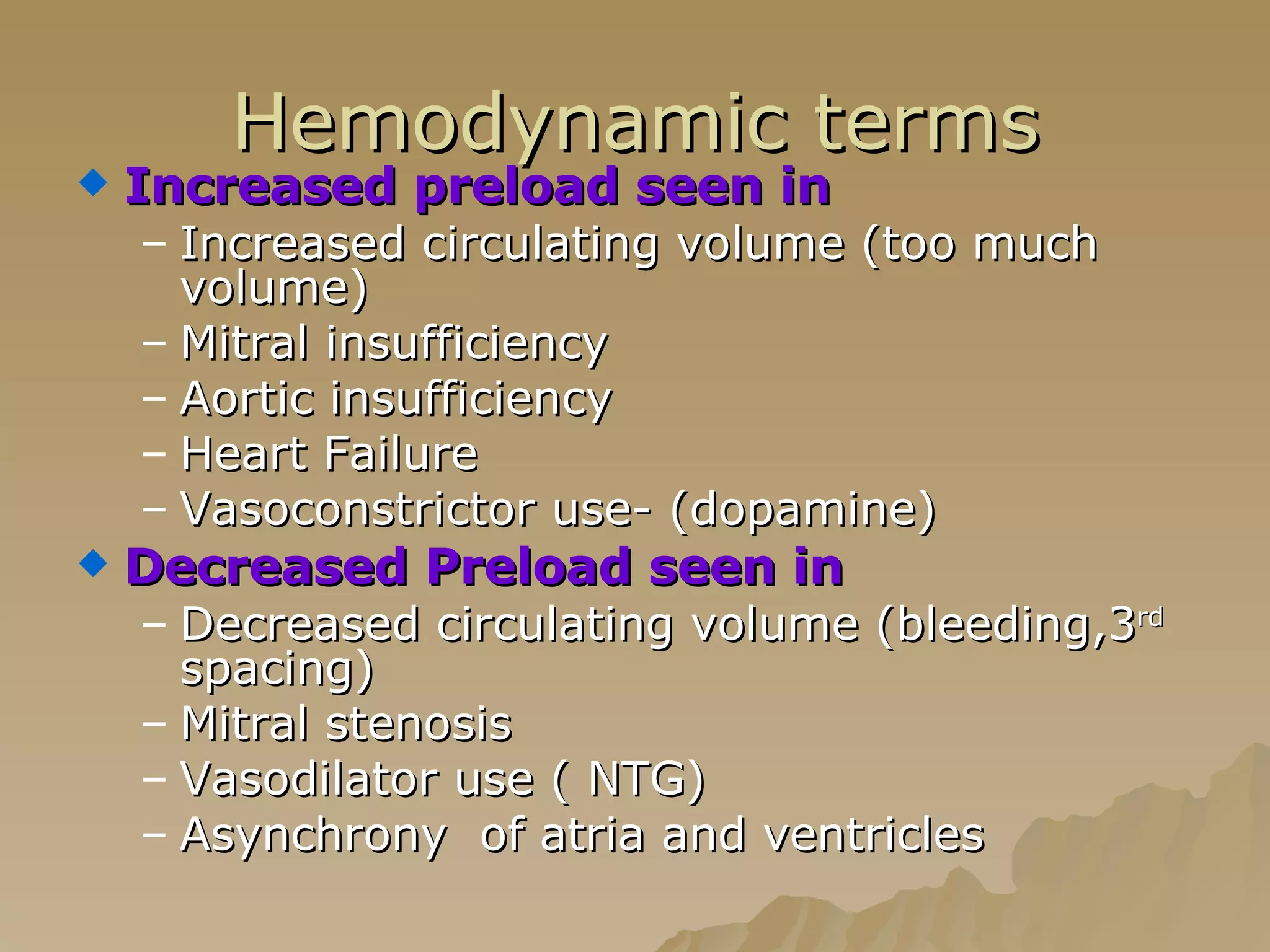
Hemodynamic terms Increased preload seen in   Increased circulating volume (too much volume) Mitral insufficiency Aortic insufficiency Heart Failure Vasoconstrictor use- (dopamine) Decreased Preload seen in Decreased circulating volume (bleeding,3 rd  spacing) Mitral stenosis  Vasodilator use ( NTG) Asynchrony  of atria and ventricles
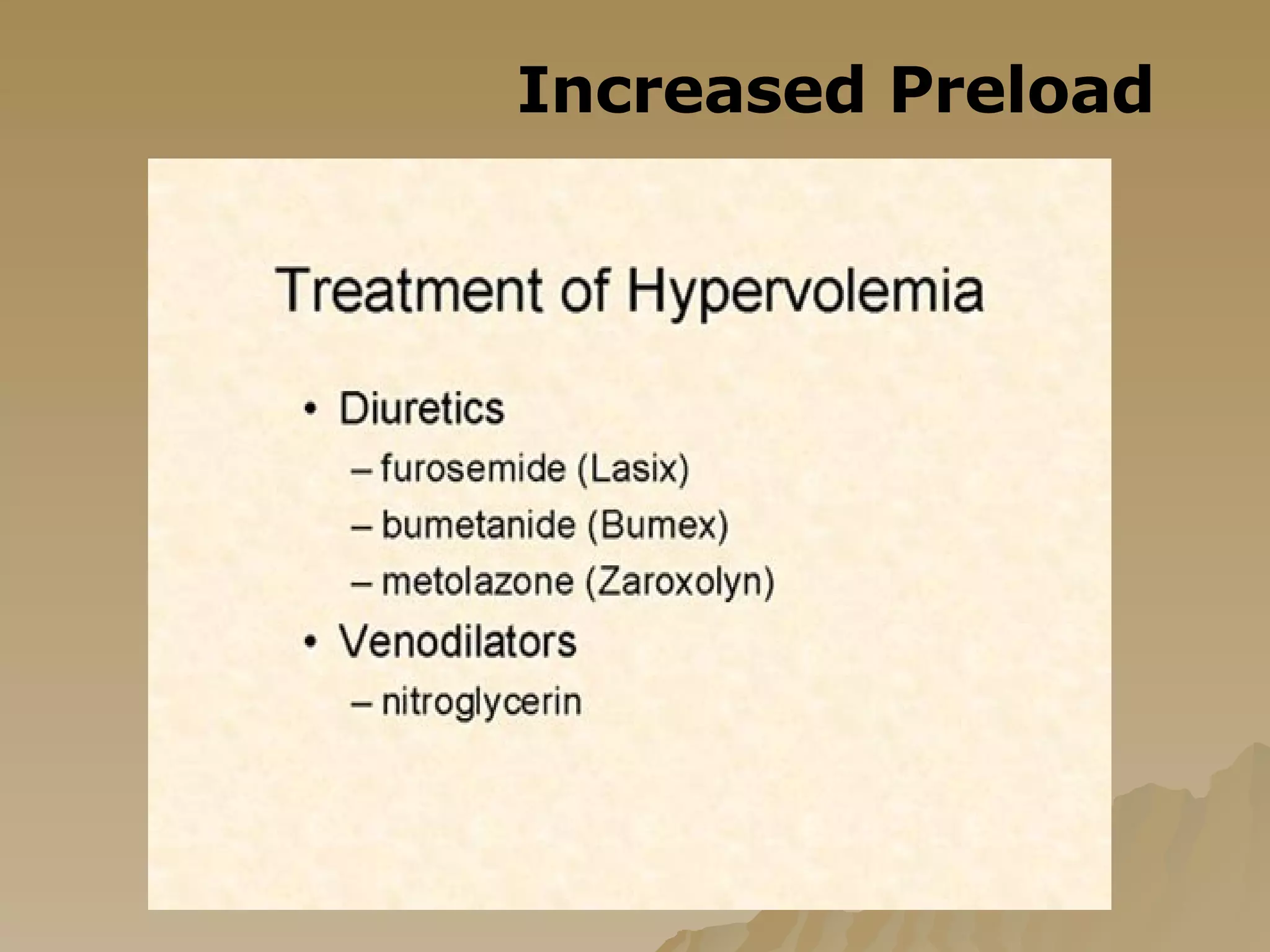
Increased Preload
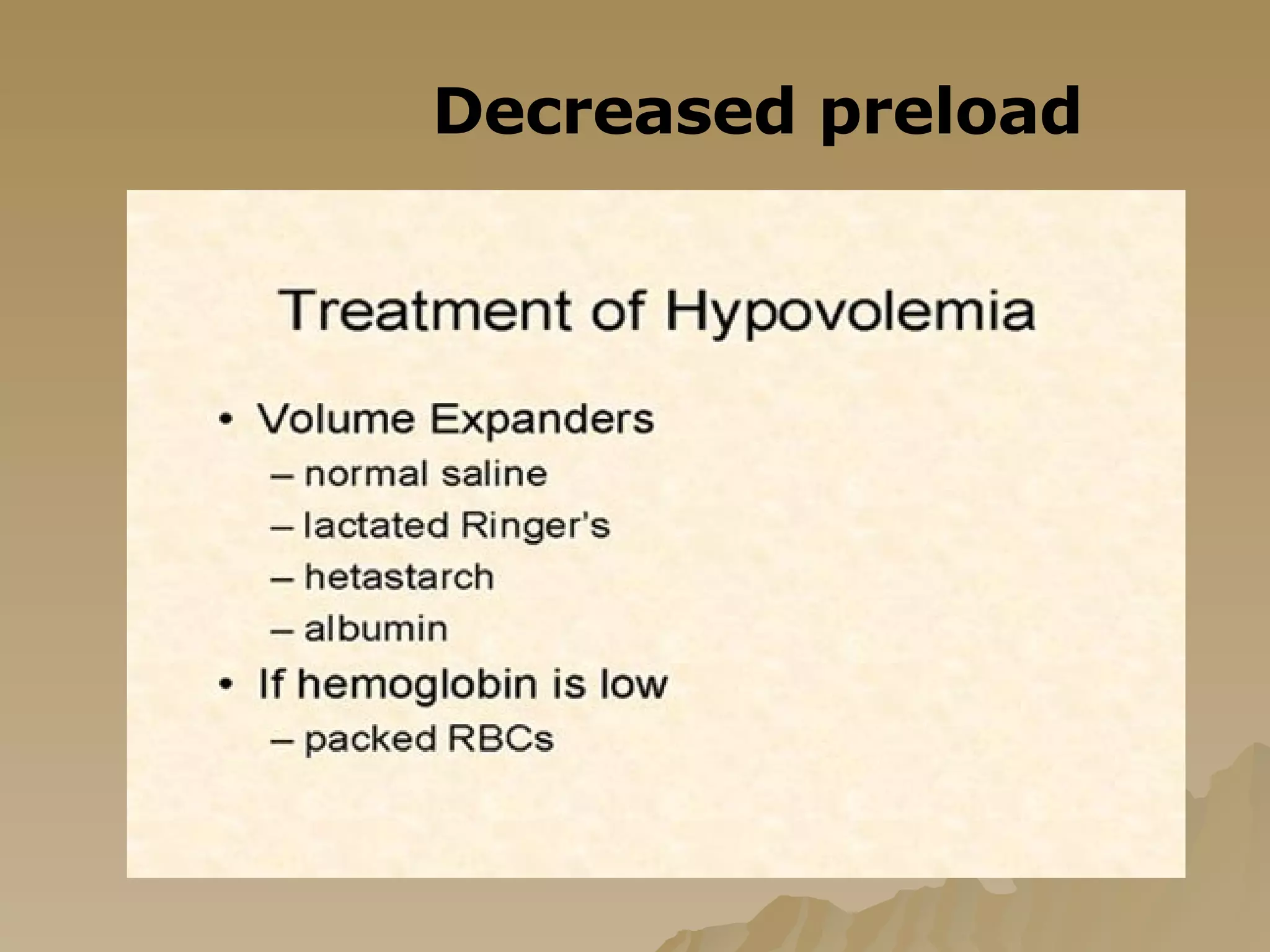
Decreased preload
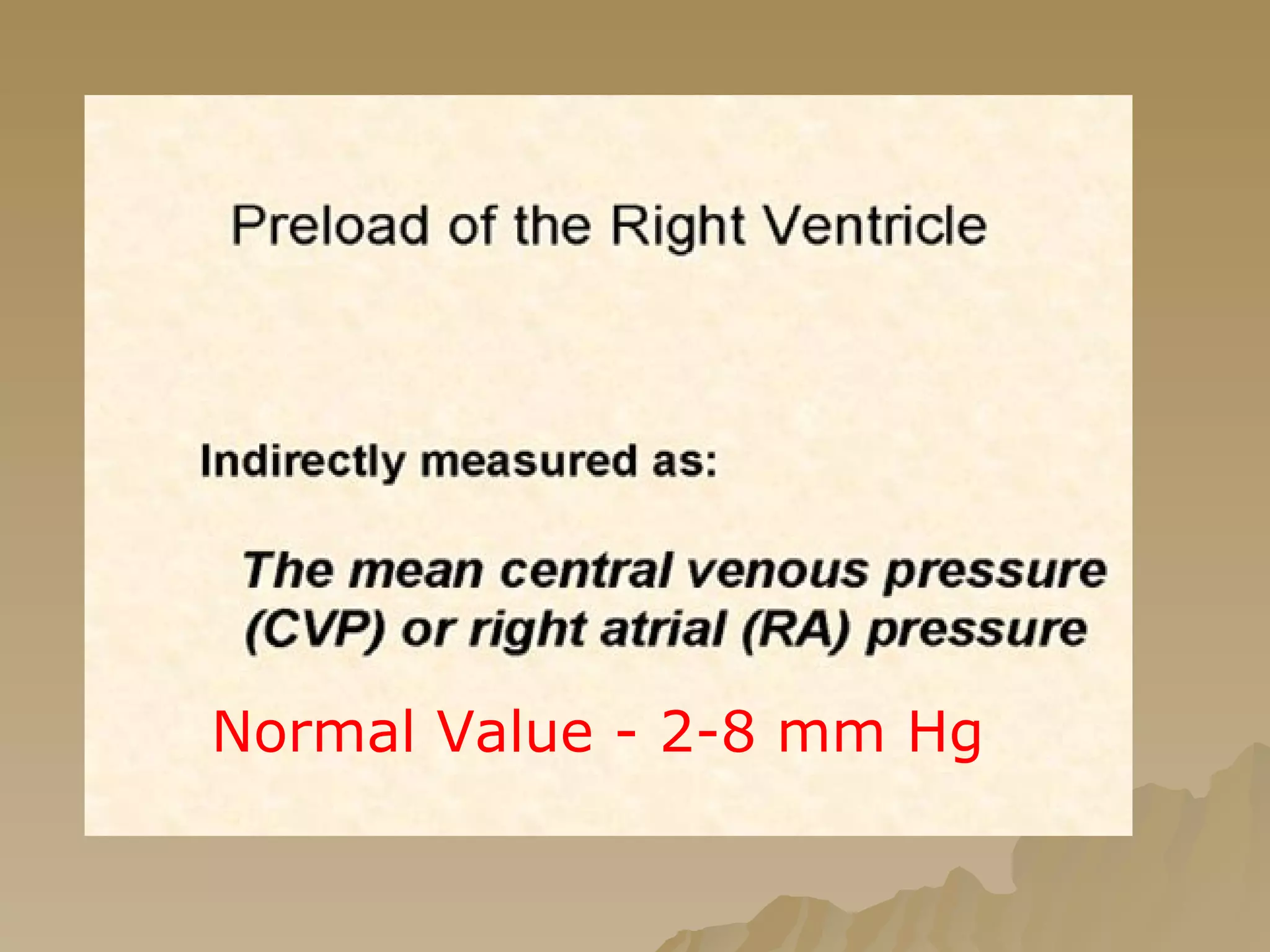
Normal Value - 2-8 mm Hg
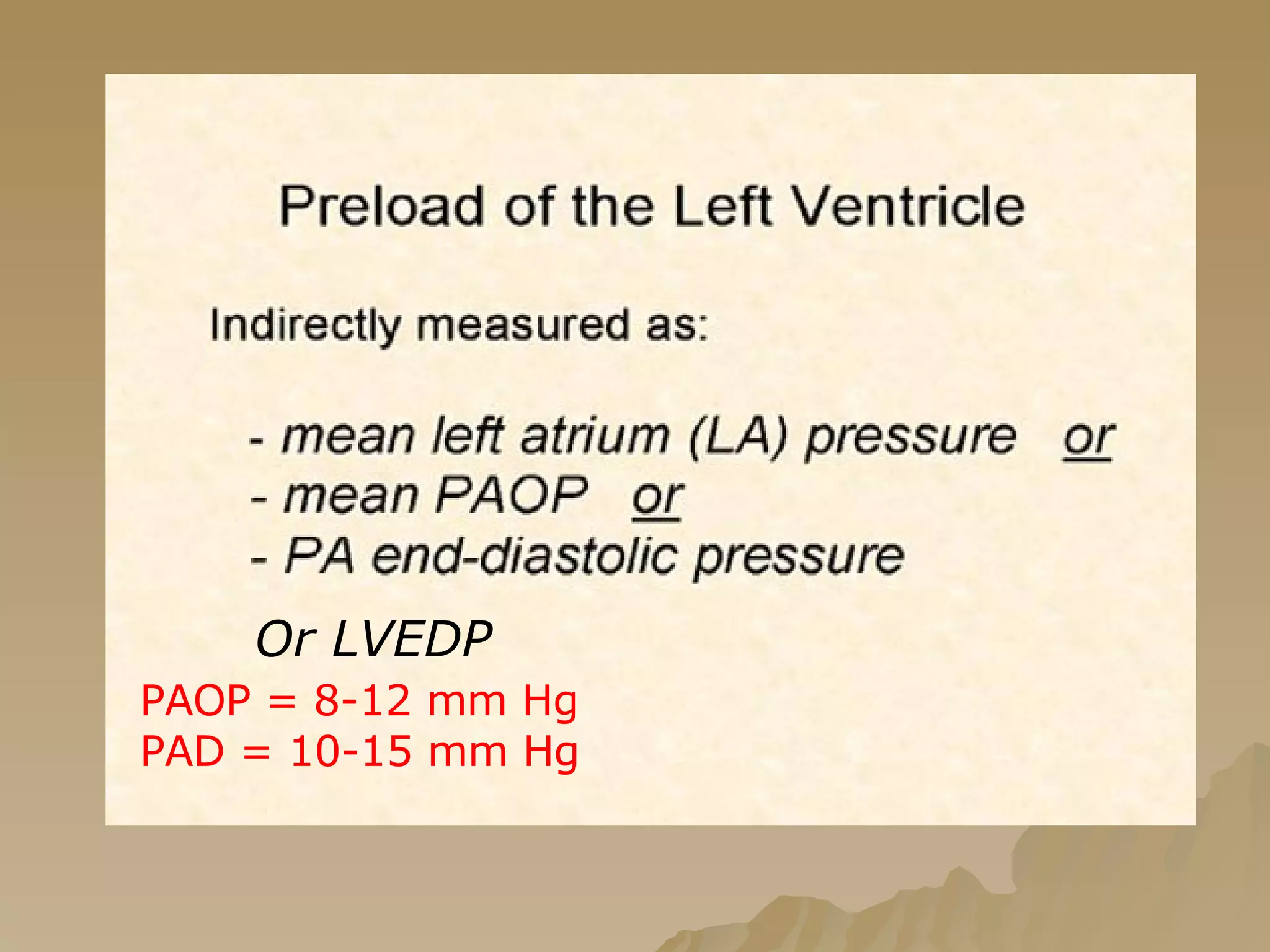
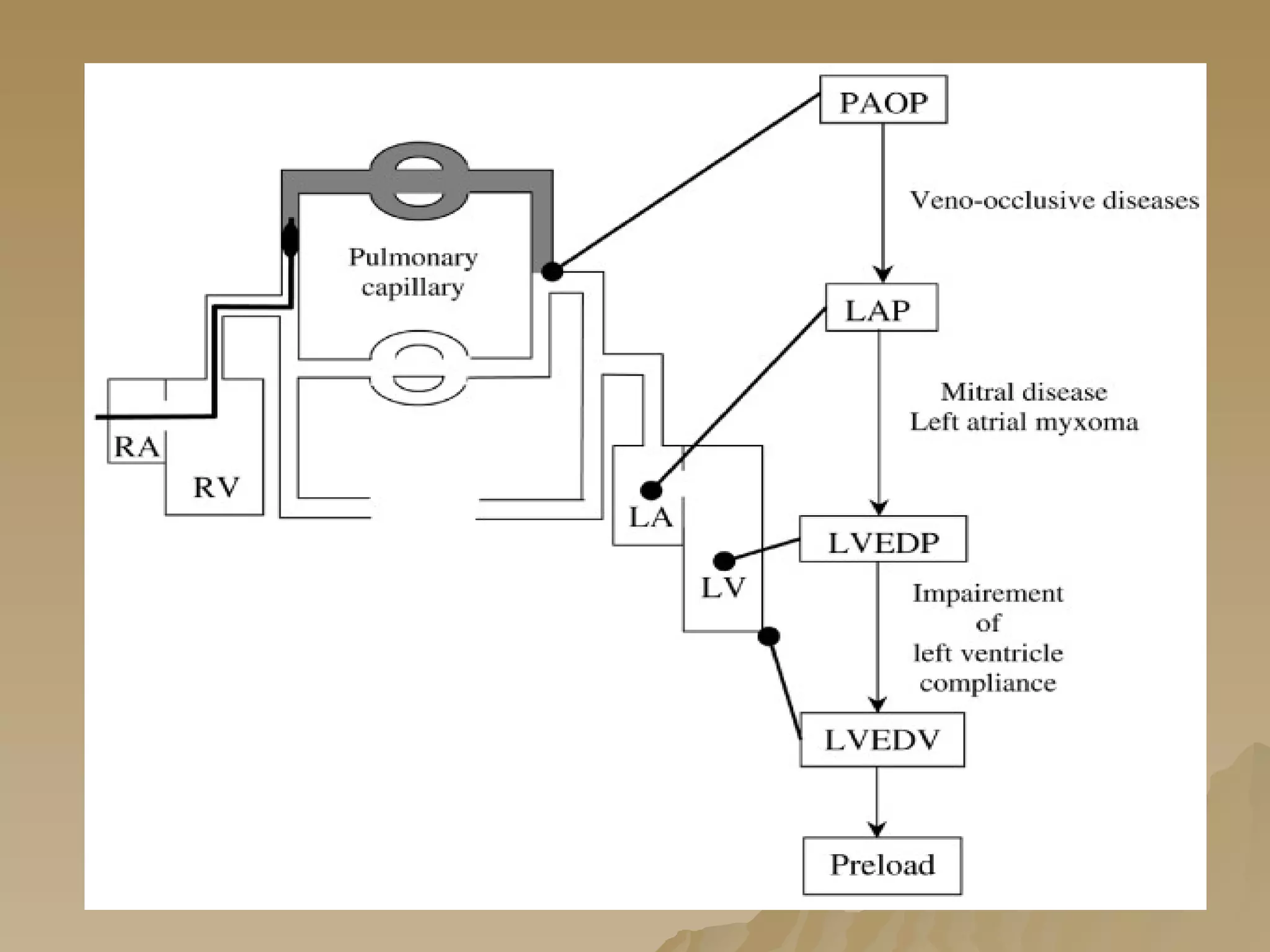
Or LVEDP PAOP = 8-12 mm Hg  PAD = 10-15 mm Hg
 
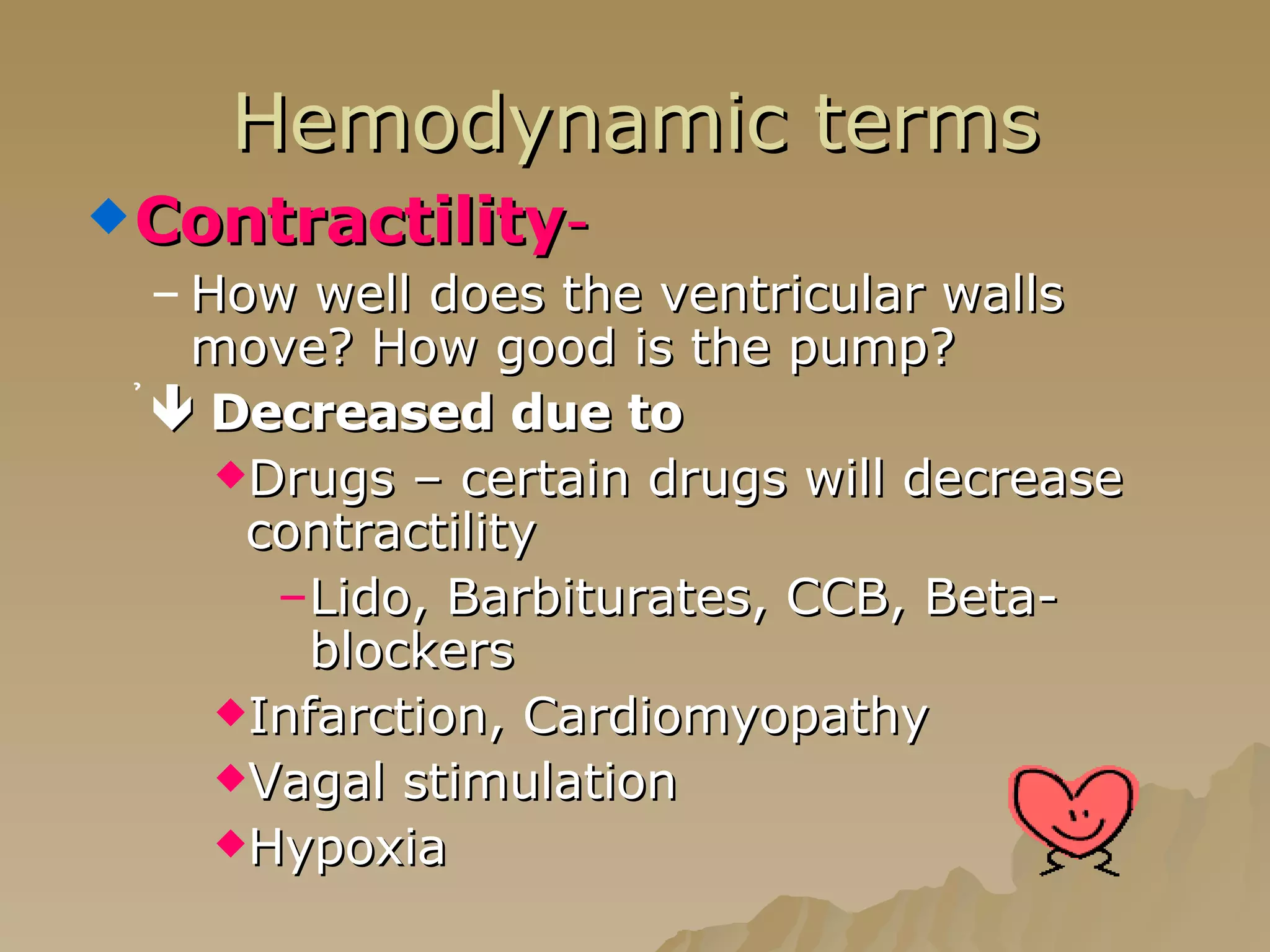
Hemodynamic terms Contractility - How well does the ventricular walls move? How good is the pump?    Decreased due to Drugs – certain drugs will decrease contractility Lido, Barbiturates, CCB, Beta-blockers Infarction, Cardiomyopathy Vagal stimulation Hypoxia
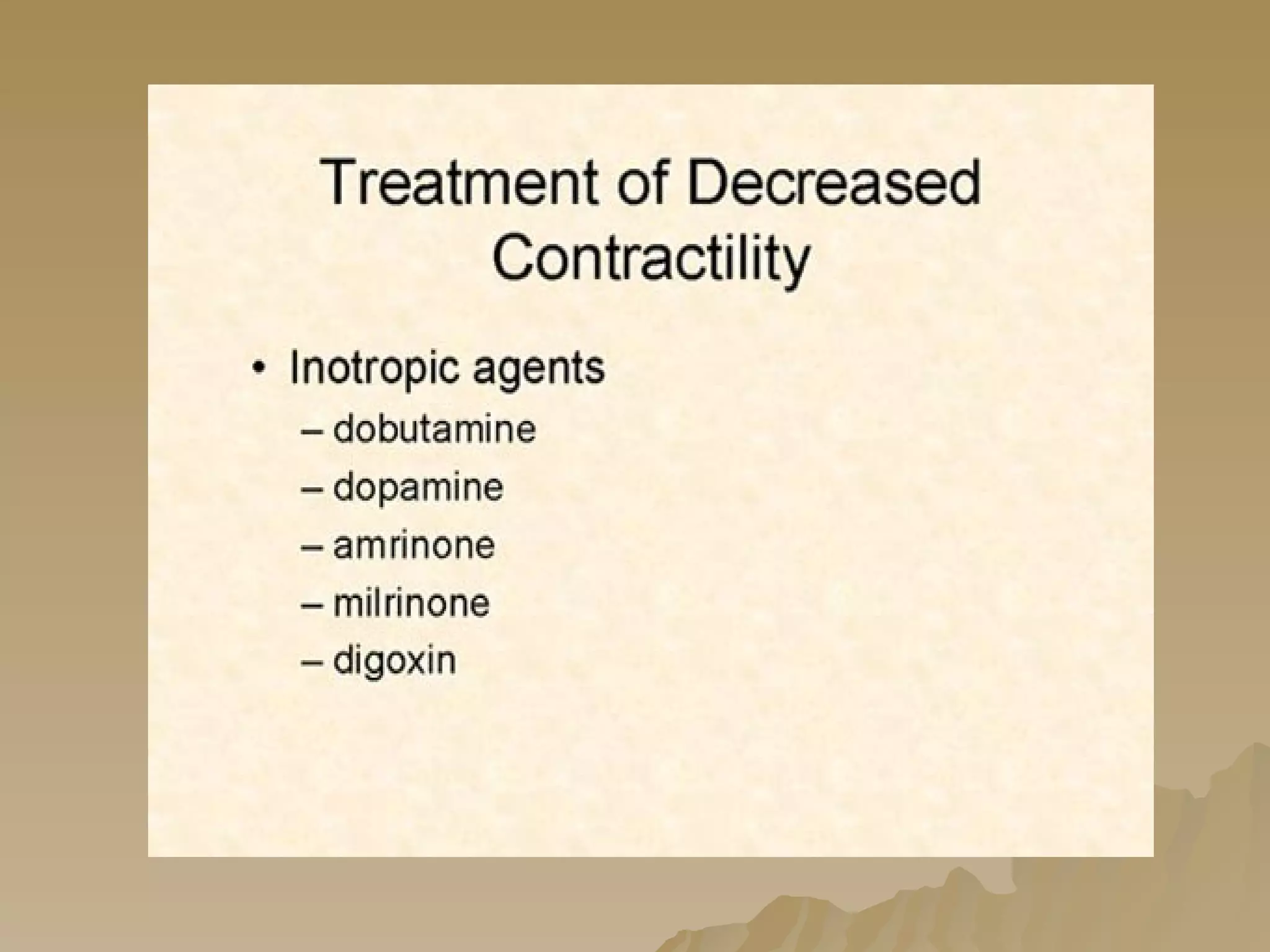
Hemodynamic terms Contractility -    Increased Positive inotropic drugs Dobutamine, Digoxin, Epinephrine Sympathetic stimulation Fear, anxiety Hypercalcemia ( high calcium)
CONTRACTILITY - PRECAUTIONS   Do Not use Inotropes until volume deficiency is corrected Correct Hypoxemia and electrolyte imbalance.
 
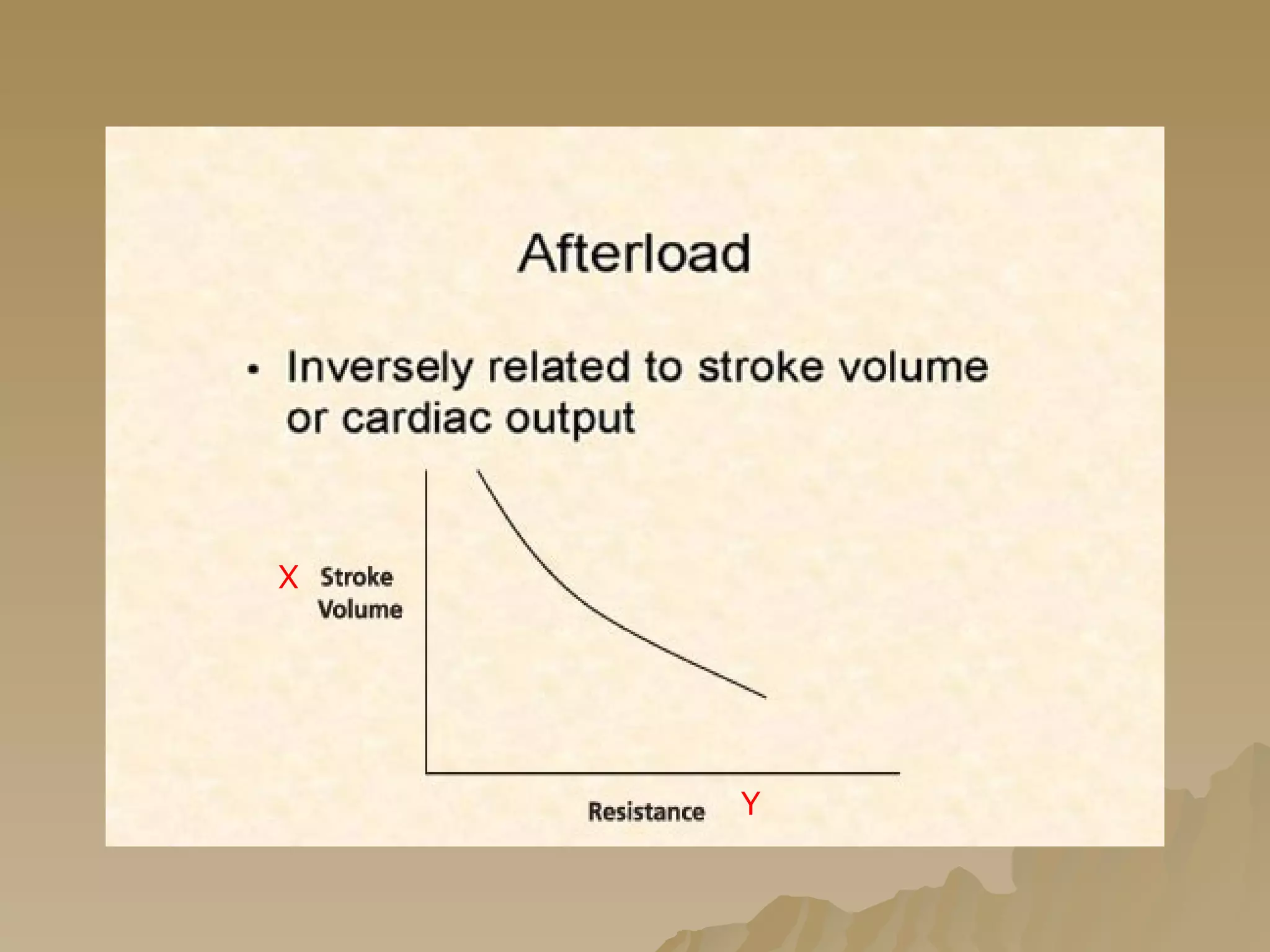
Hemodynamic terms Afterload   –  resistance the blood in the ventricle must overcome to force the valves open and eject contents to circulation.
X Y
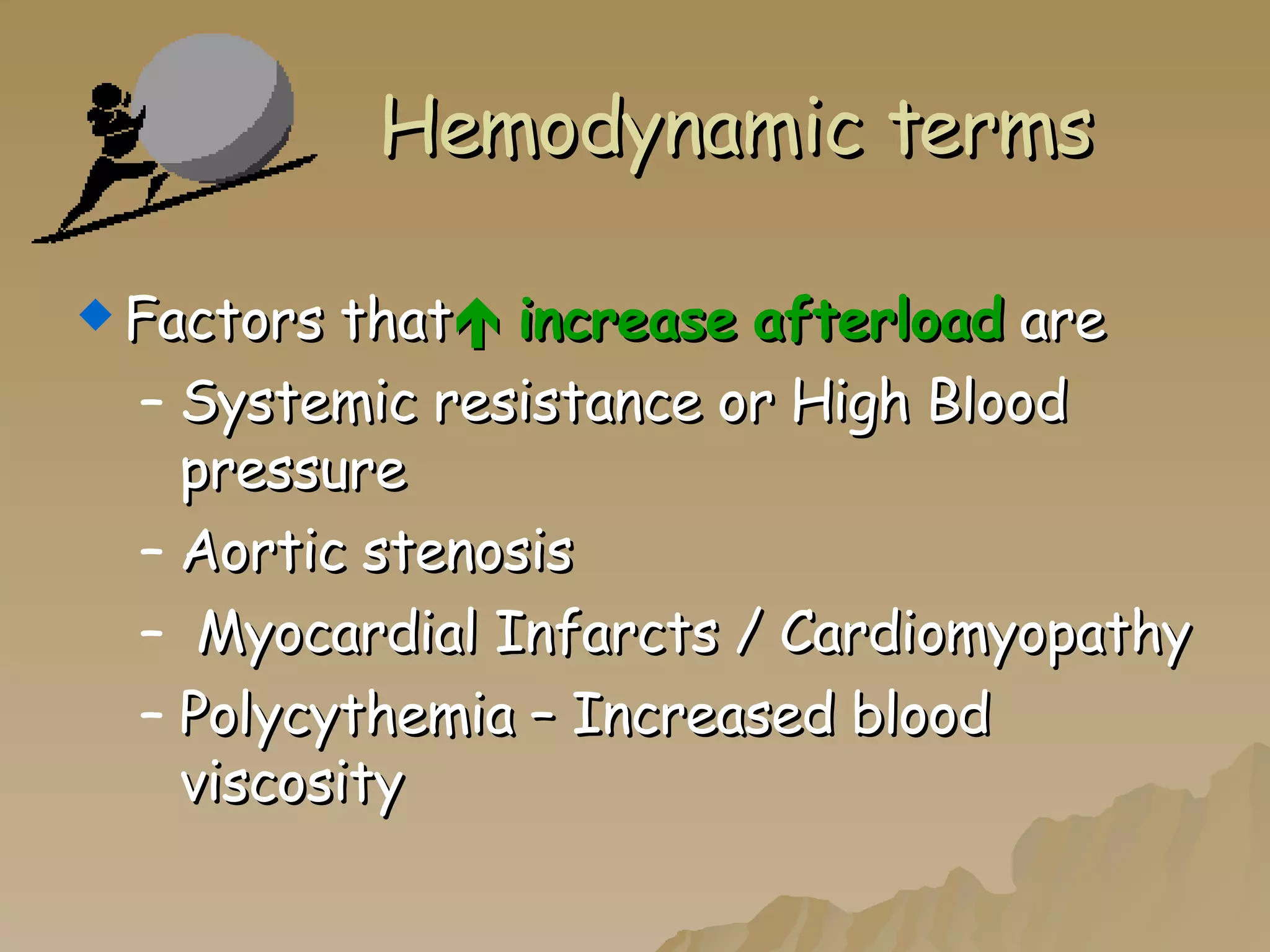
Hemodynamic terms Factors that    increase   afterload  are Systemic resistance or High Blood pressure Aortic stenosis Myocardial Infarcts / Cardiomyopathy Polycythemia – Increased blood viscosity
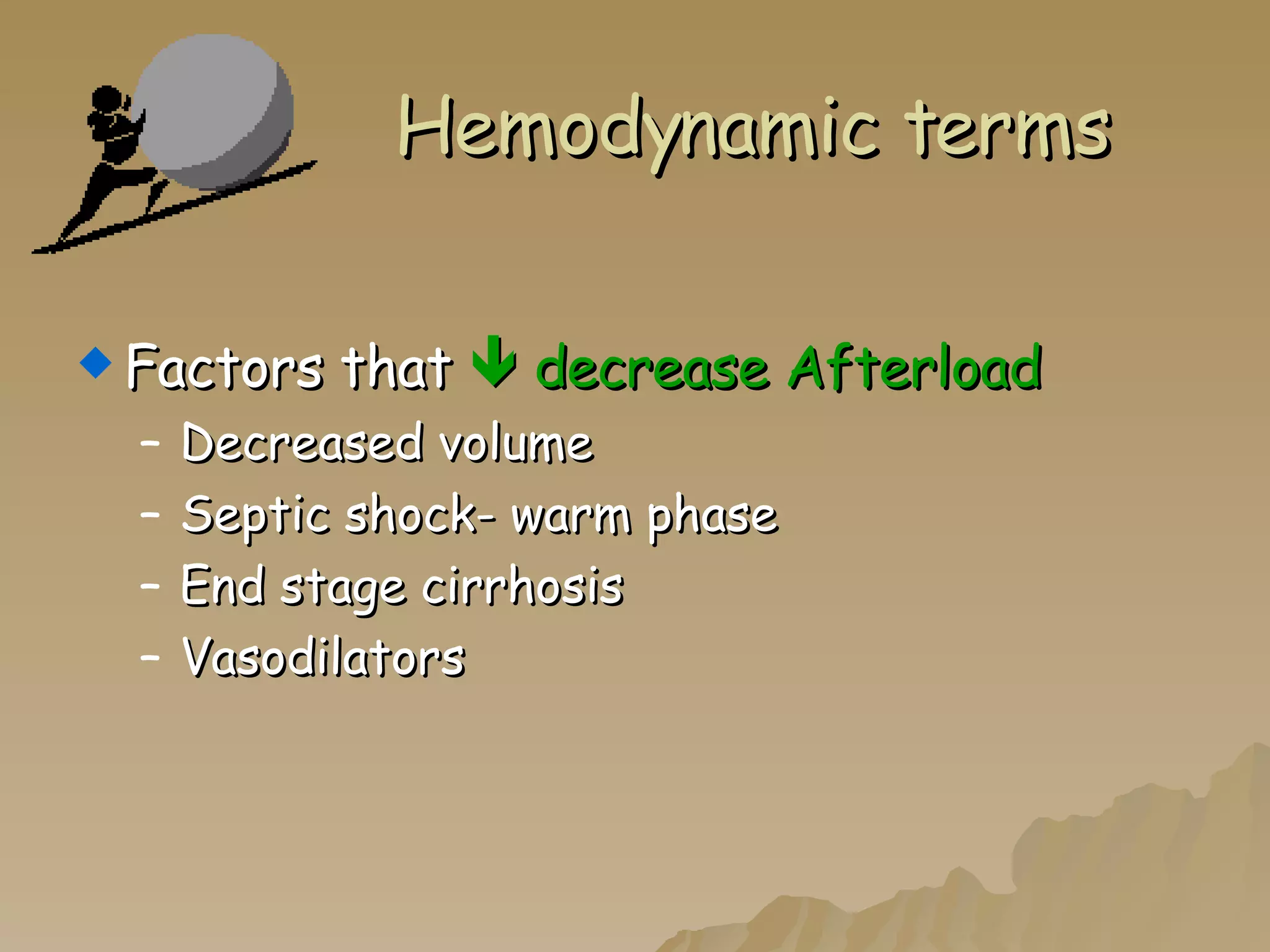
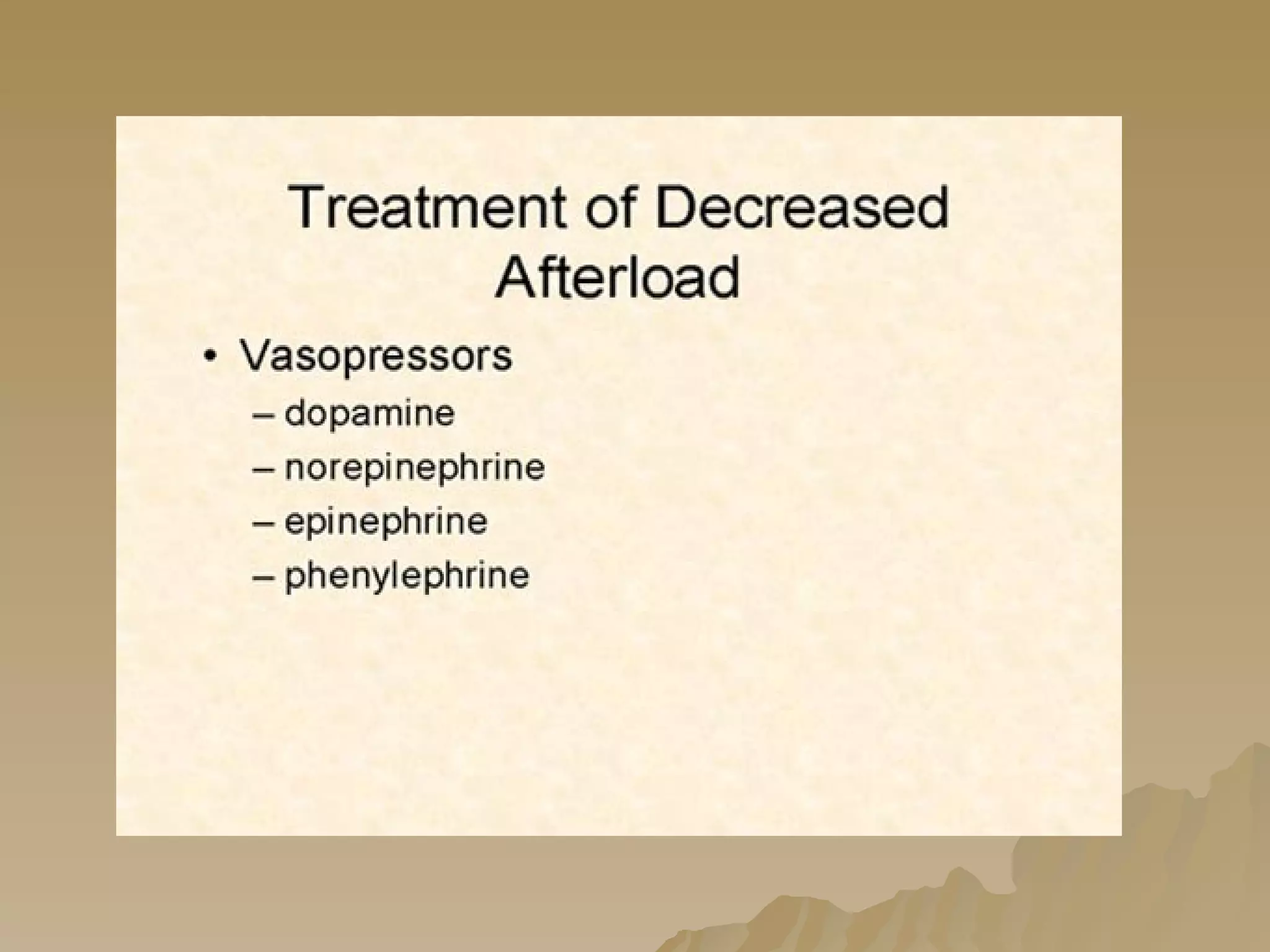
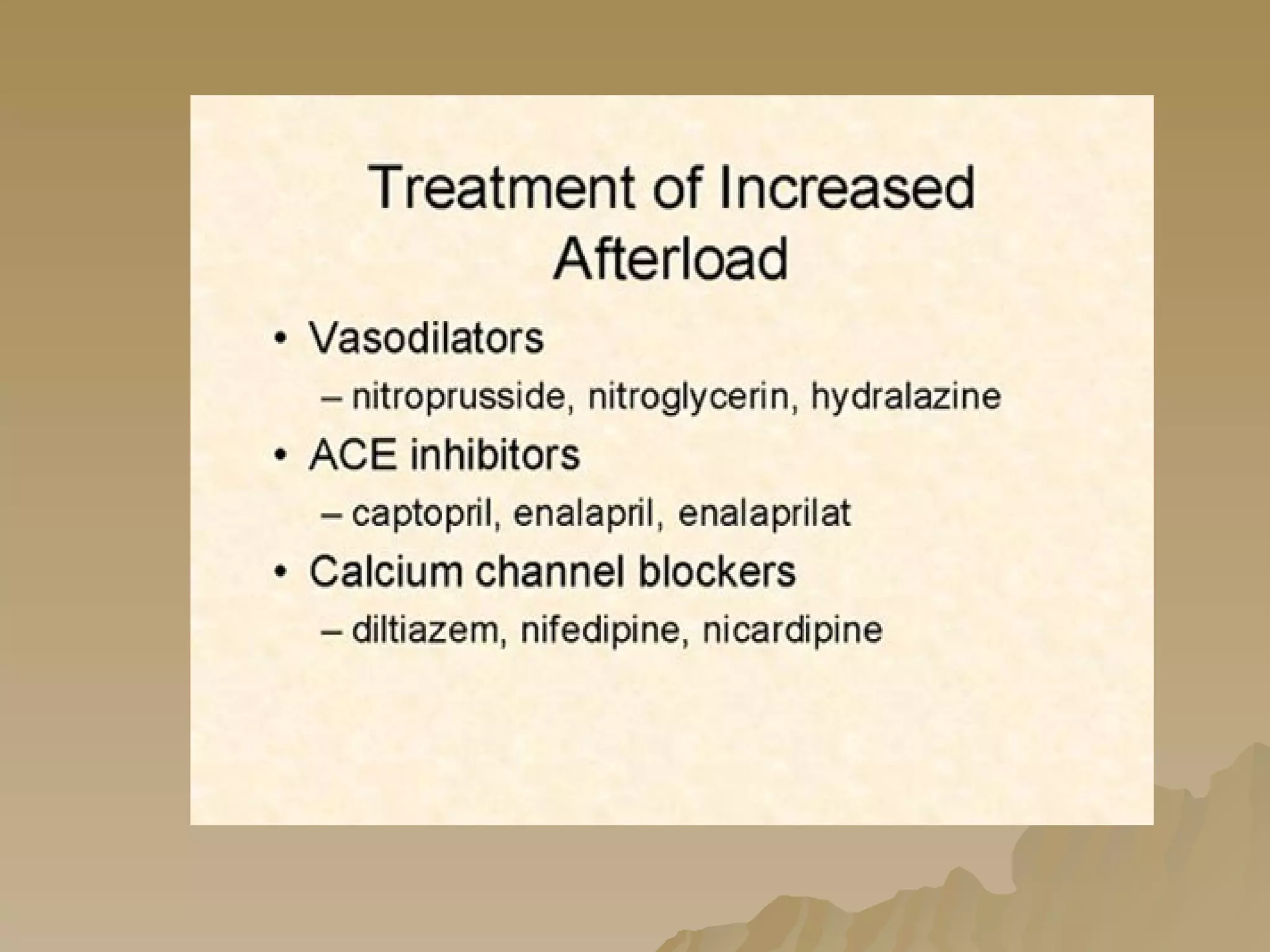
Hemodynamic terms Factors that    decrease Afterload Decreased volume Septic shock- warm phase End stage cirrhosis Vasodilators
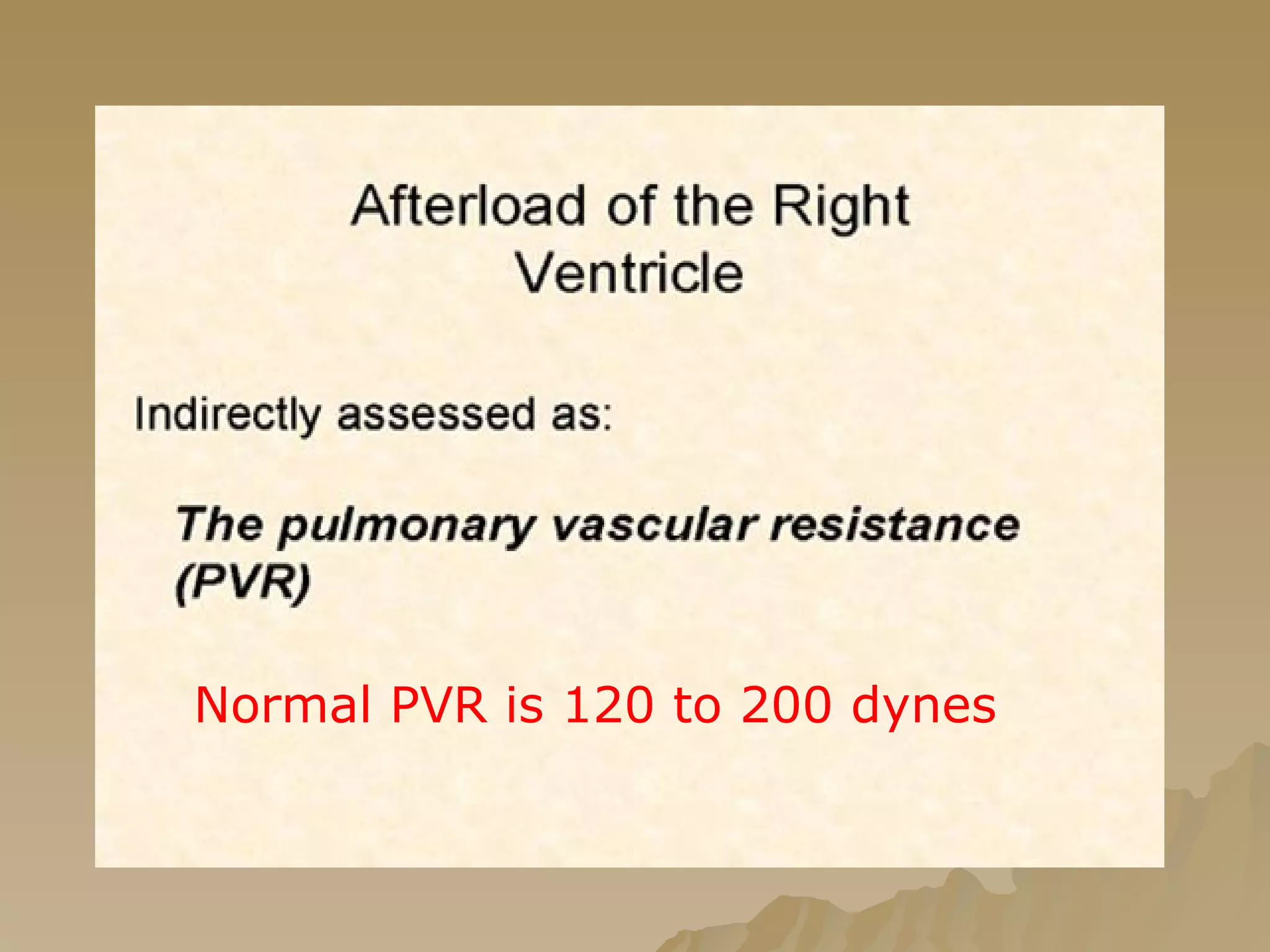
Normal PVR is 120 to 200 dynes
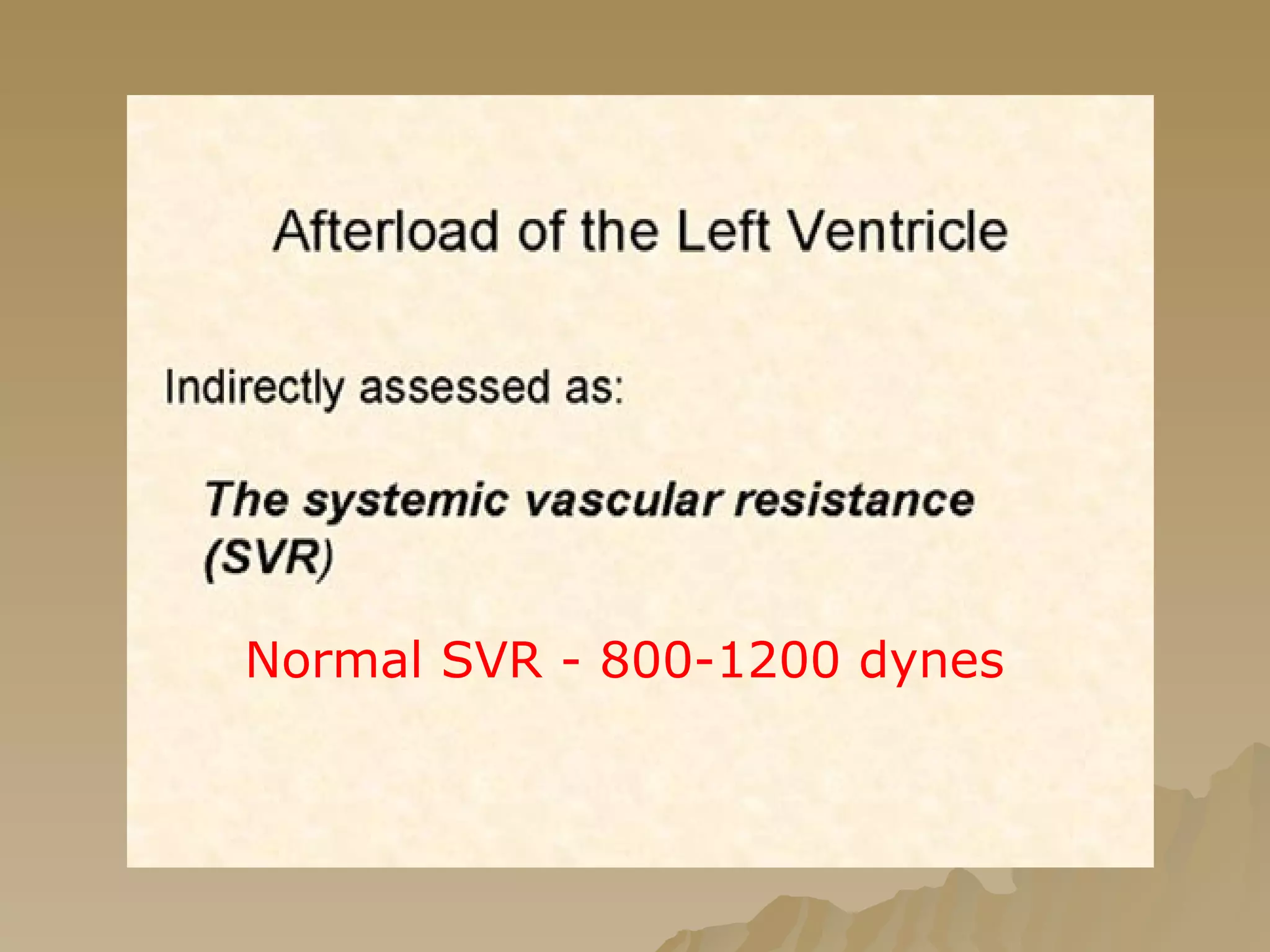
Normal SVR - 800-1200 dynes
 
 
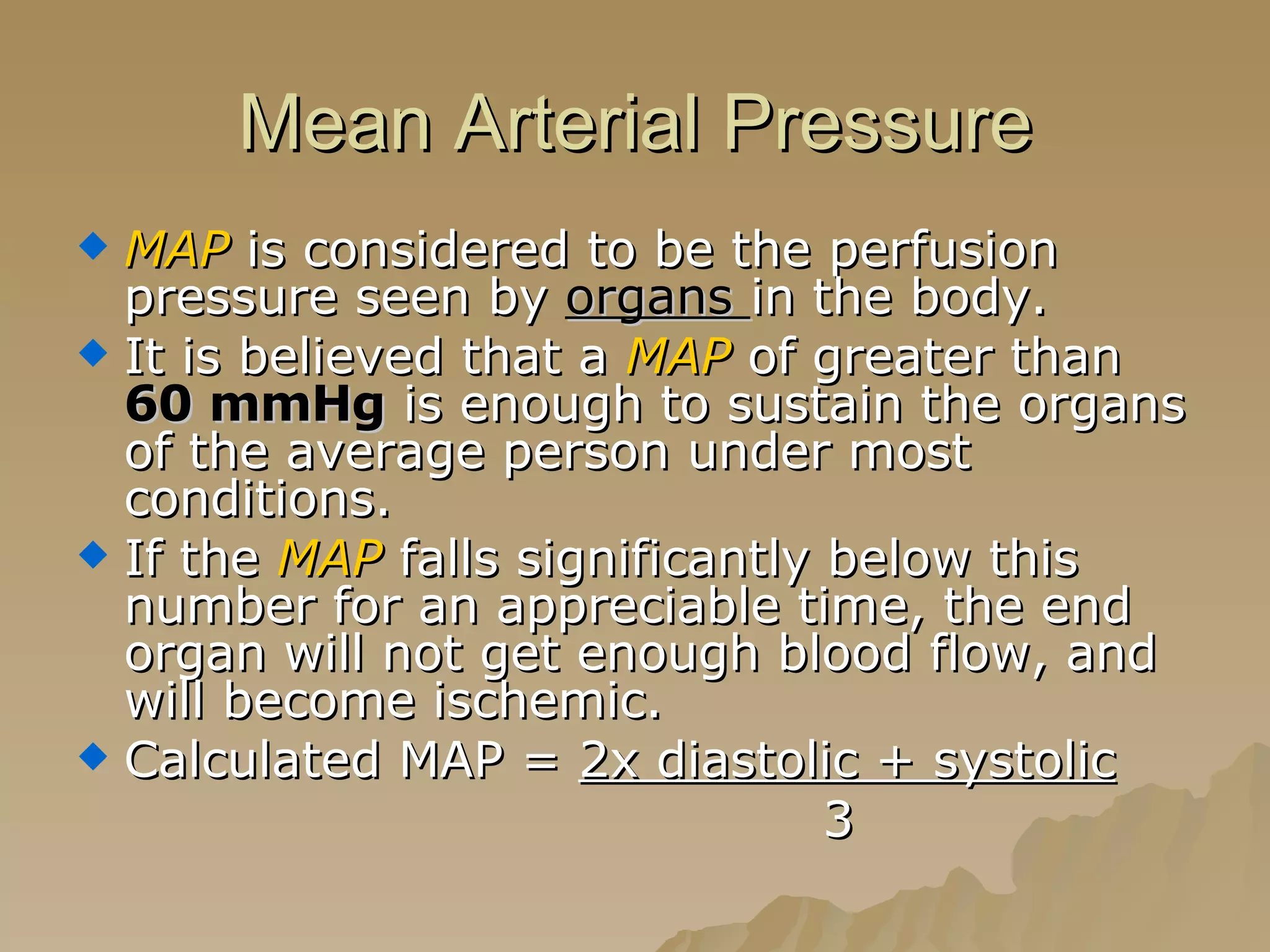
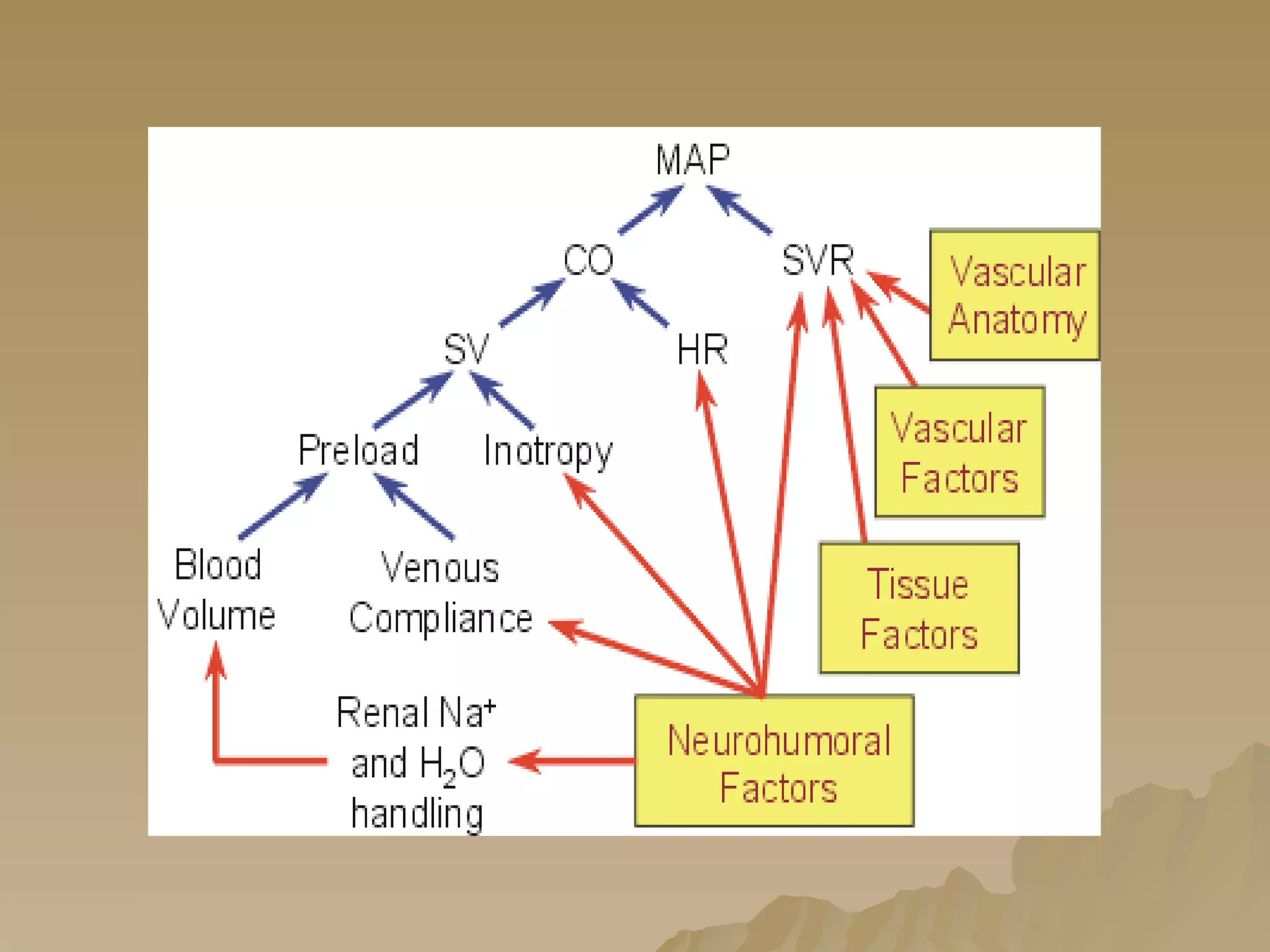
Mean Arterial Pressure MAP  is considered to be the perfusion pressure seen by  organs  in the body. It is believed that a  MAP  of greater than  60 mmHg  is enough to sustain the organs of the average person under most conditions. If the  MAP  falls significantly below this number for an appreciable time, the end organ will not get enough blood flow, and will become ischemic. Calculated MAP =  2x diastolic + systolic   3
 
 
EKG


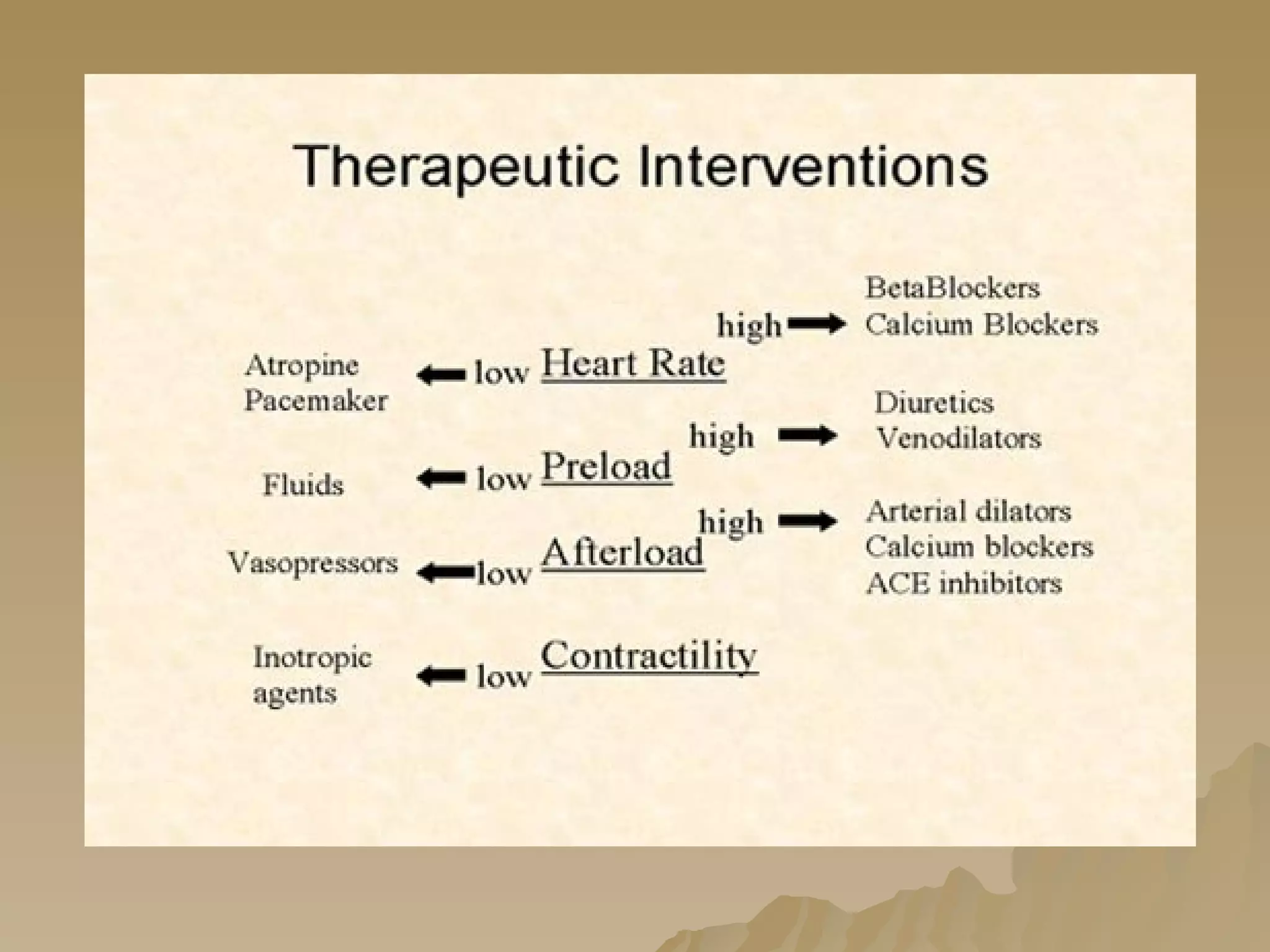
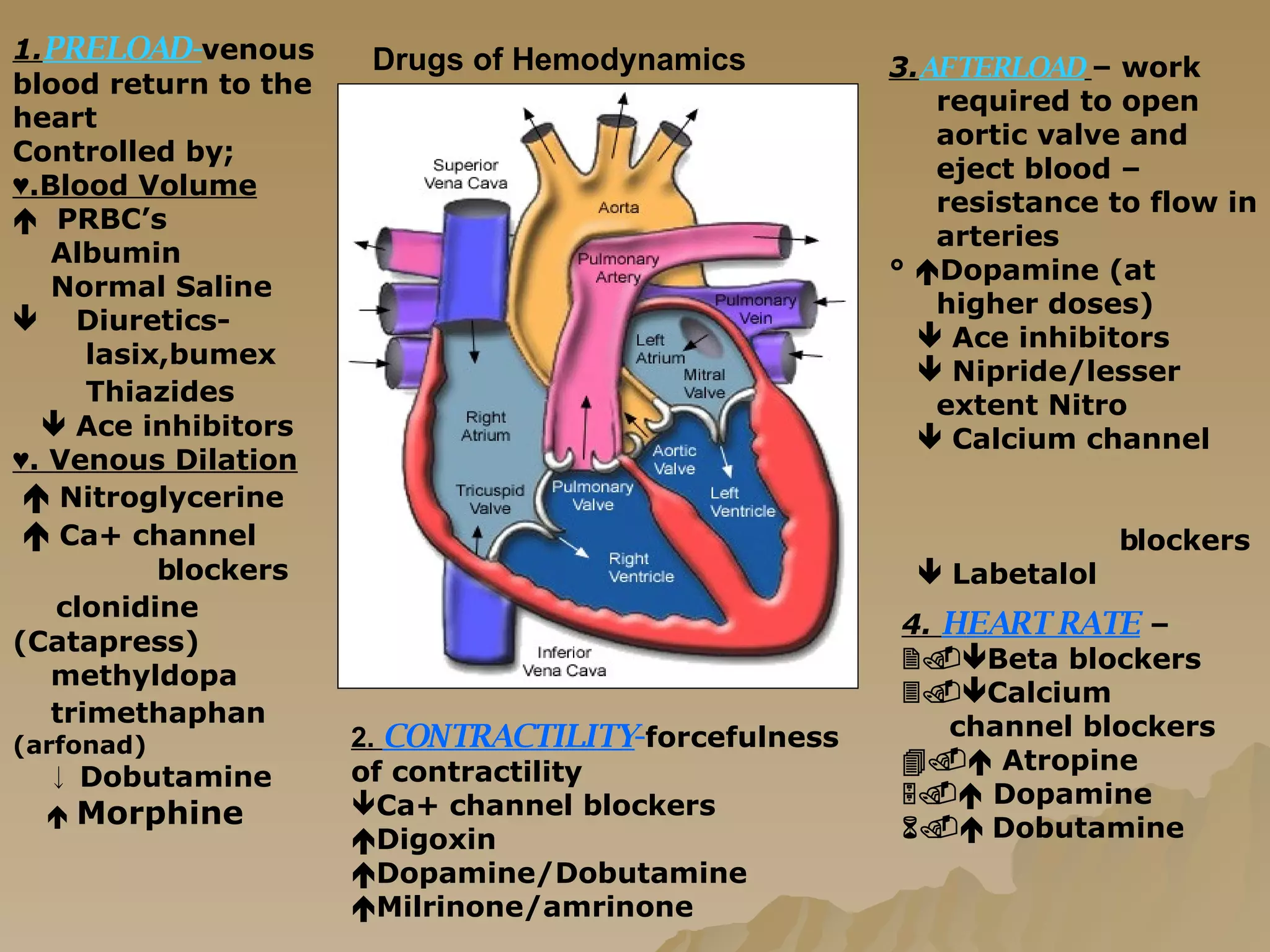
1. PRELOAD- venous blood return to the heart  Controlled by; ♥ .Blood Volume    PRBC’s Albumin Normal Saline    Diuretics- lasix,bumex Thiazides      Ace inhibitors  ♥ . Venous Dilation    Nitroglycerine    Ca+ channel  blockers clonidine (Catapress) methyldopa trimethaphan   (arfonad) ↓   Dobutamine    Morphine 2.  CONTRACTILITY - forcefulness of contractility  Ca+ channel blockers  Digoxin  Dopamine/Dobutamine  Milrinone/amrinone 3. AFTERLOAD   – work required to open aortic valve and eject blood – resistance to flow in arteries °   Dopamine (at higher doses)    Ace inhibitors    Nipride/lesser extent Nitro    Calcium channel  blockers    Labetalol Drugs of Hemodynamics 4.  HEART RATE  –   Beta blockers  Calcium channel blockers    Atropine    Dopamine    Dobutamine


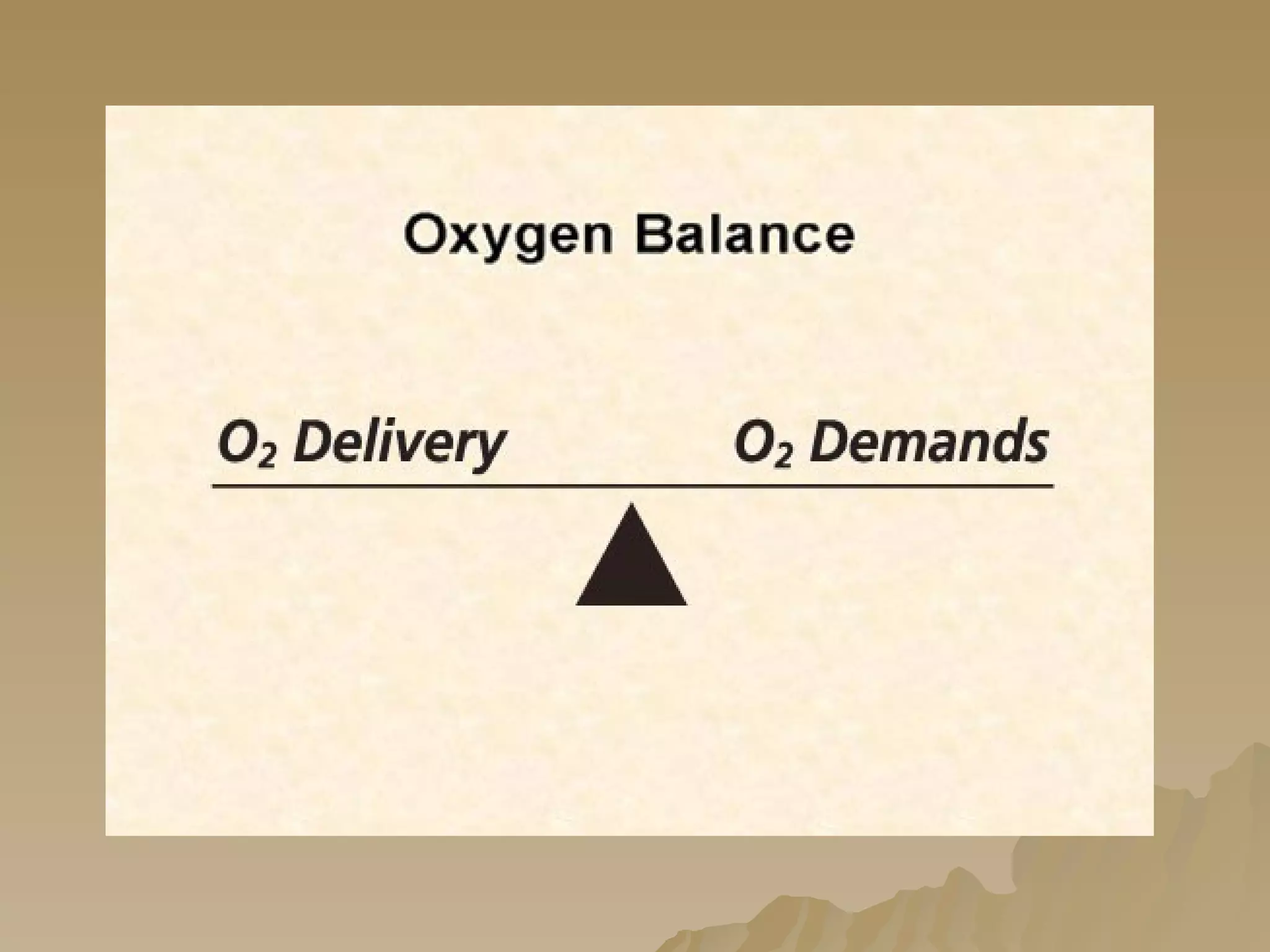
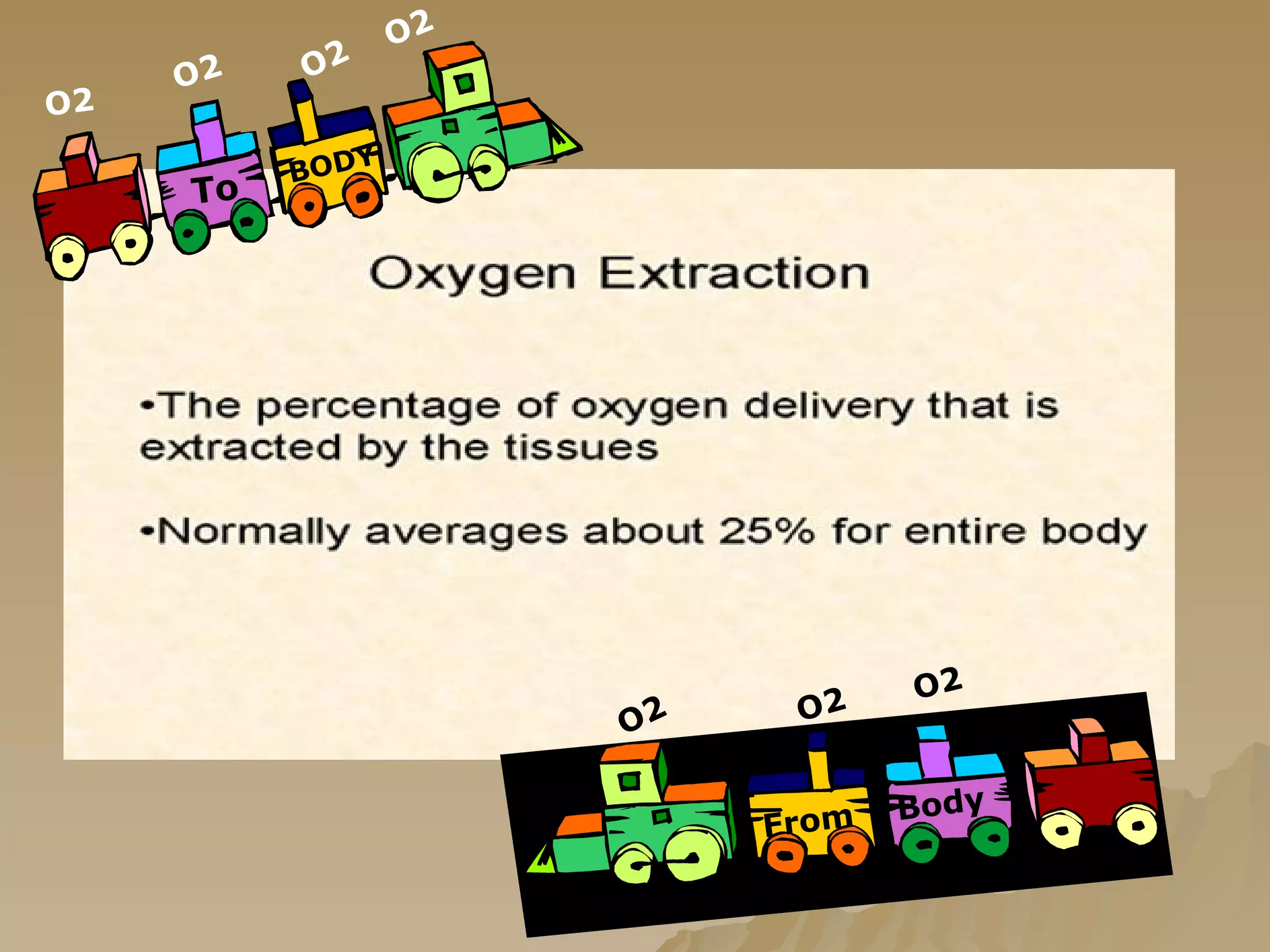
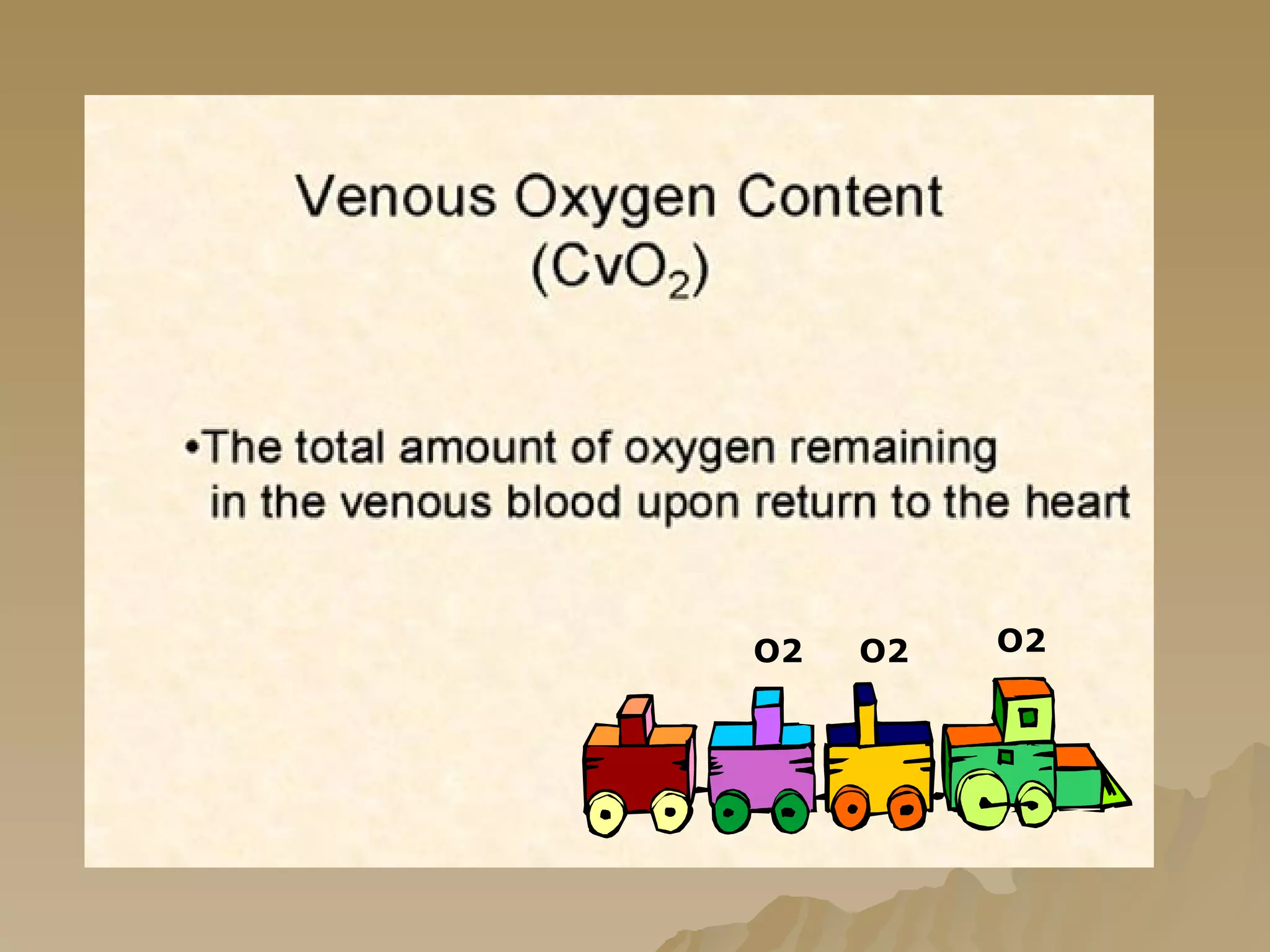
O2  O2   O2 O2 O2 O2 O2 To BODY From  Body
O2 O2 O2
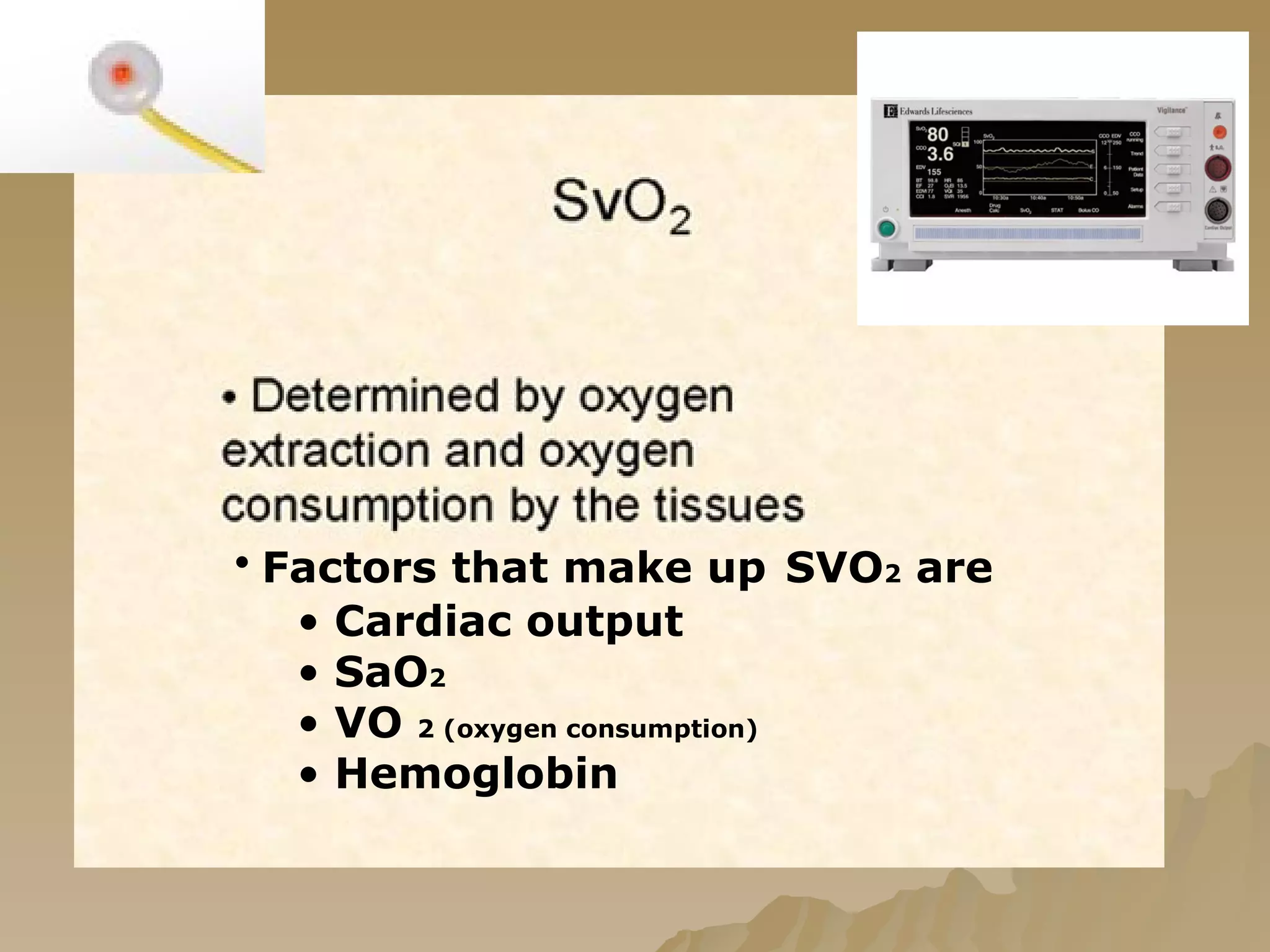
Factors that make up   SVO 2  are  Cardiac output SaO 2 VO  2 (oxygen consumption) Hemoglobin
 
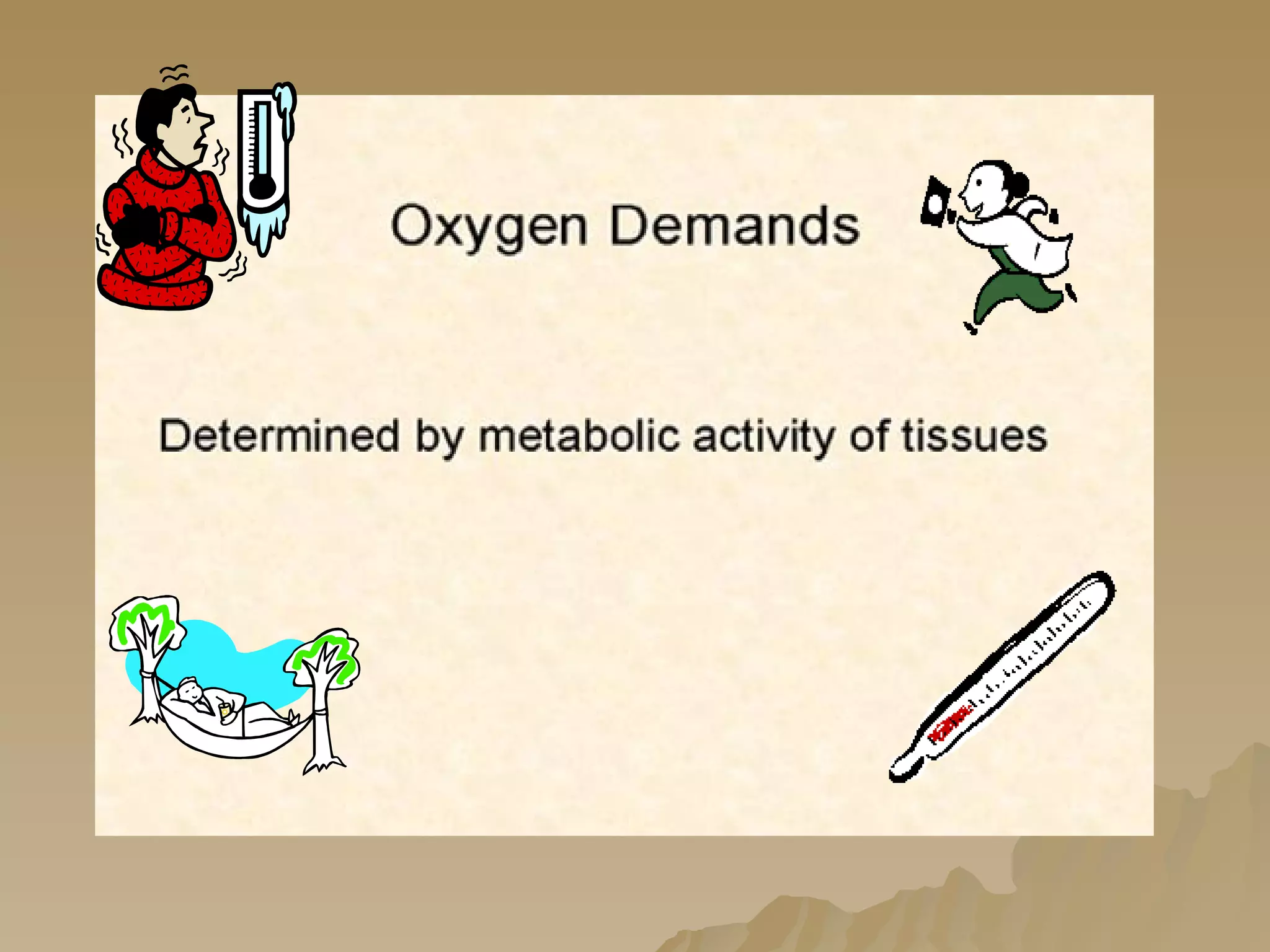
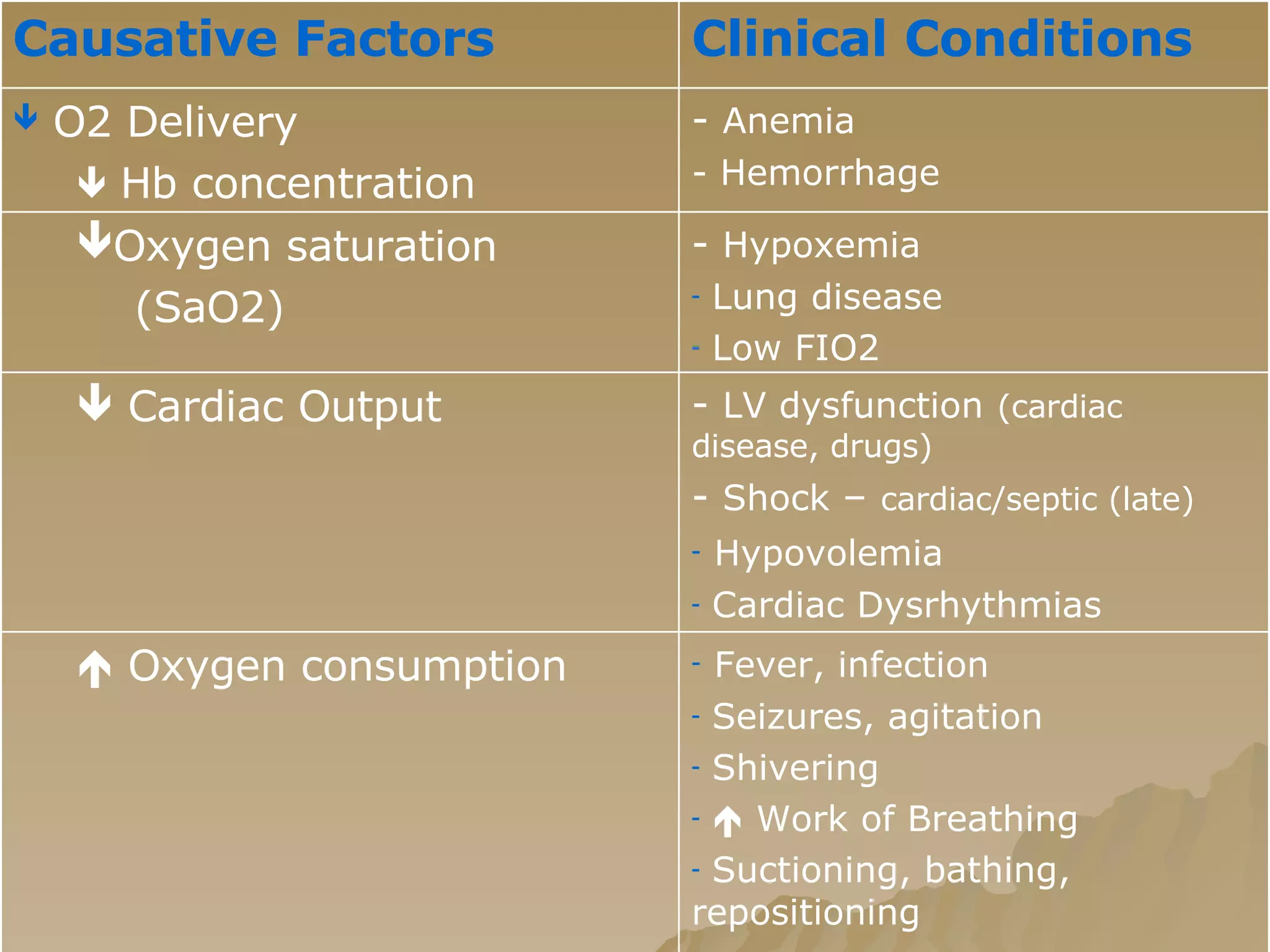
Fever, infection Seizures, agitation Shivering    Work of Breathing Suctioning, bathing,  repositioning    Oxygen consumption -  LV dysfunction   (cardiac disease, drugs) -  Shock  –  cardiac/septic (late) Hypovolemia Cardiac Dysrhythmias    Cardiac Output -  Hypoxemia Lung disease Low FIO2 Oxygen saturation (SaO2) -  Anemia - Hemorrhage O2 Delivery    Hb concentration Clinical Conditions Causative Factors
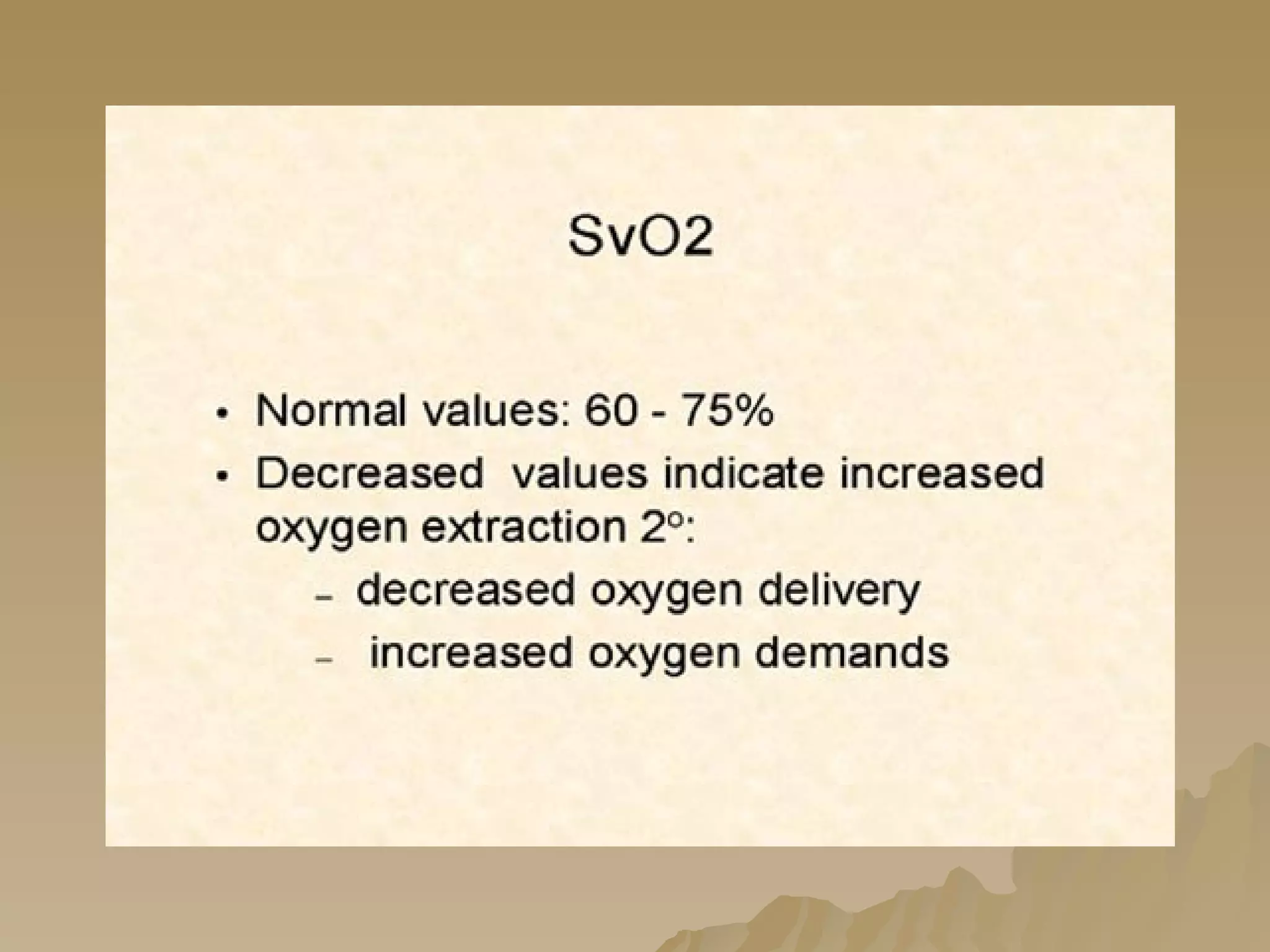
Increased SVO 2 Most common cause is  - Sepsis Or  Wedged PA catheter
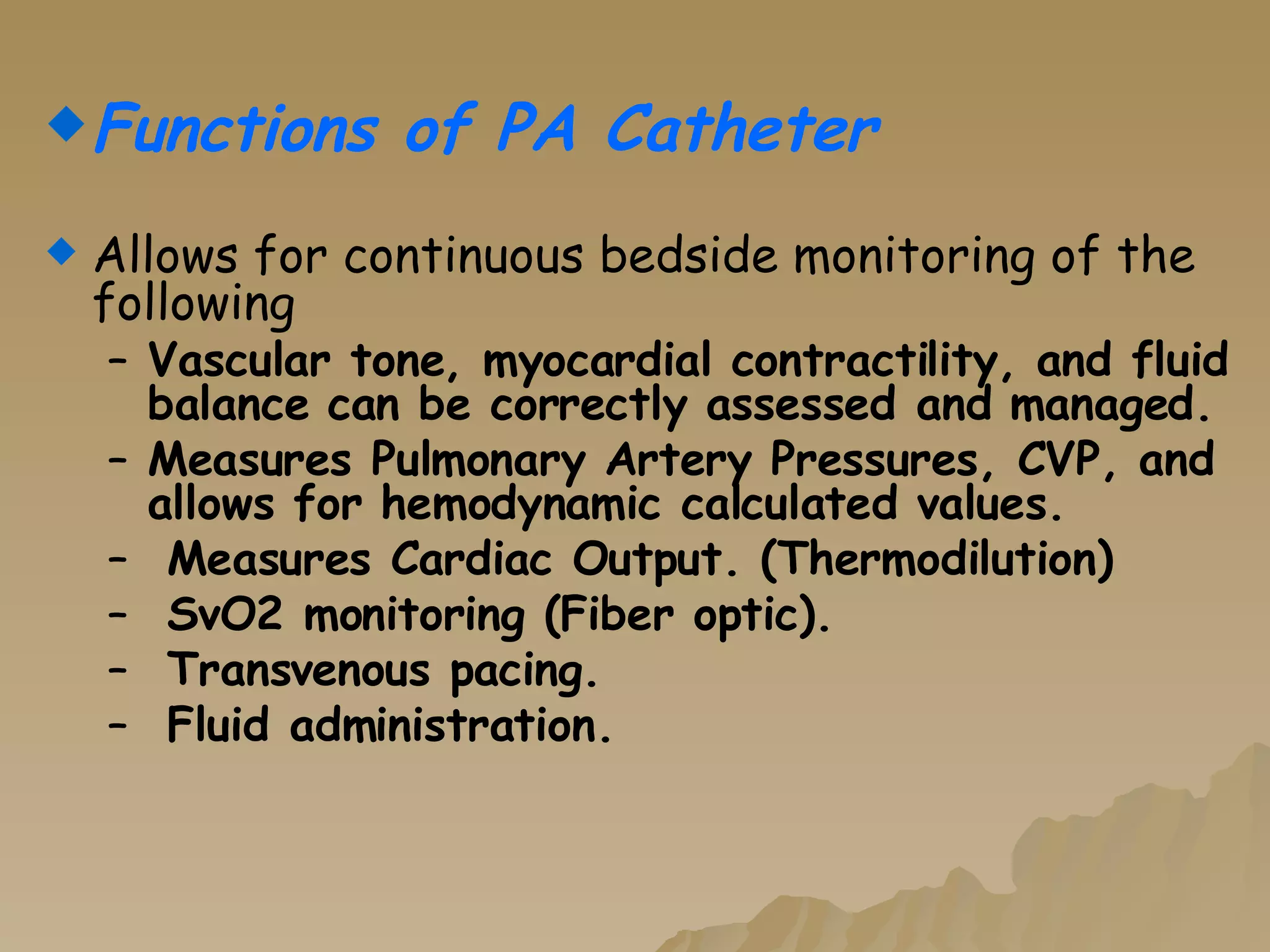
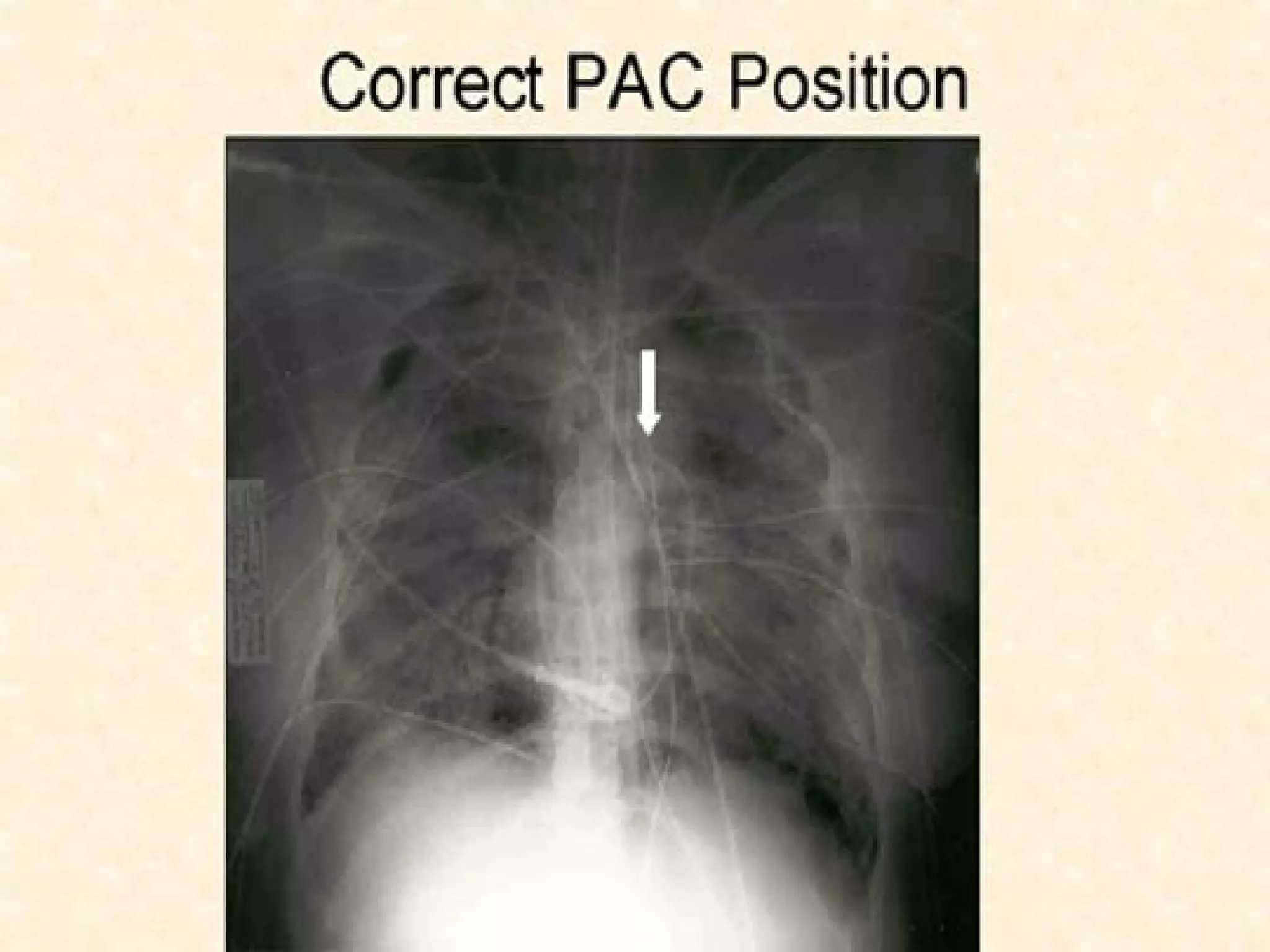
Functions of PA Catheter Allows for continuous bedside monitoring of the following   Vascular tone, myocardial contractility, and fluid balance can be correctly assessed and managed. Measures Pulmonary Artery Pressures, CVP, and allows for hemodynamic calculated values. Measures Cardiac Output. (Thermodilution) SvO2 monitoring (Fiber optic). Transvenous pacing. Fluid administration.
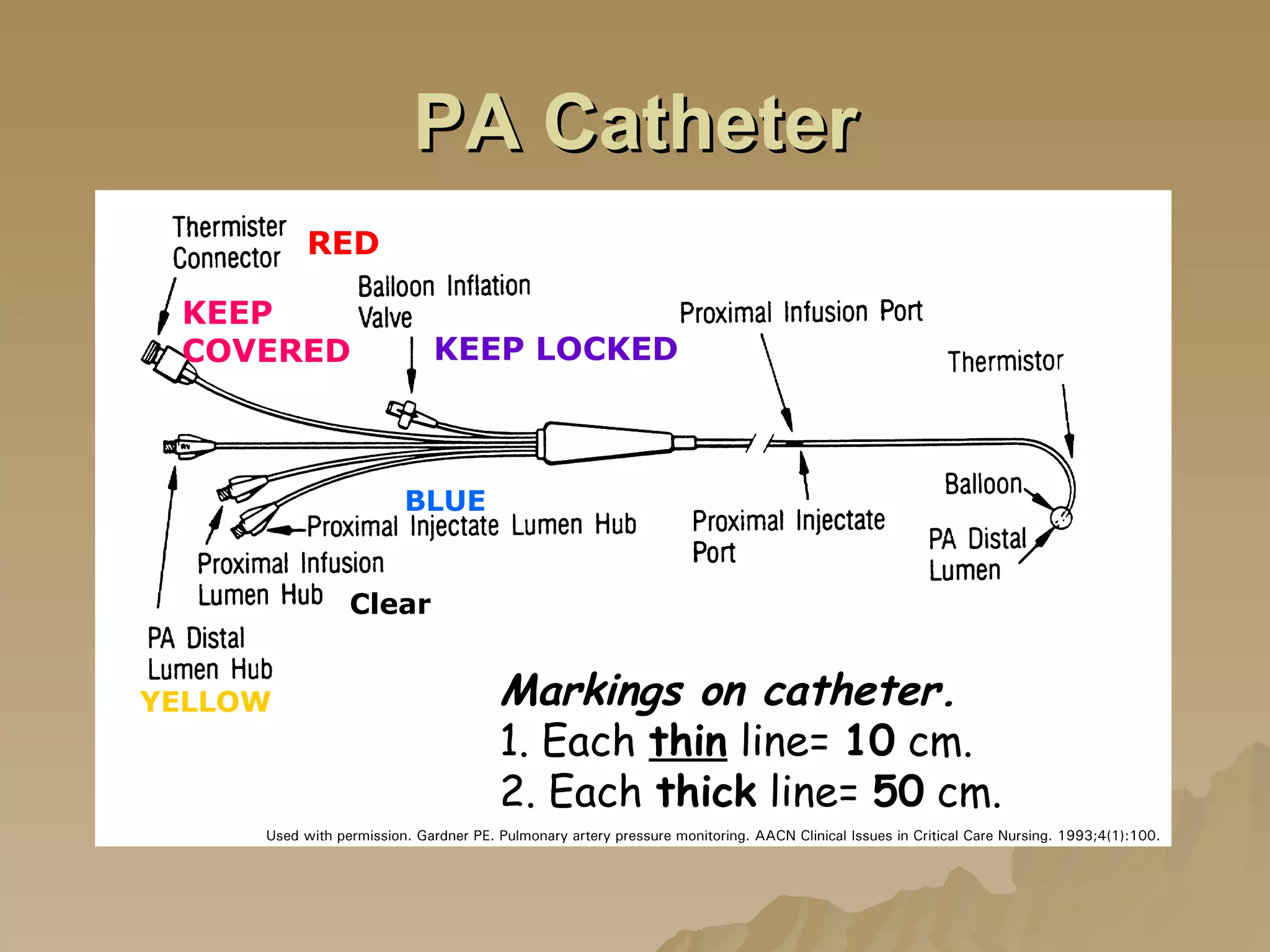
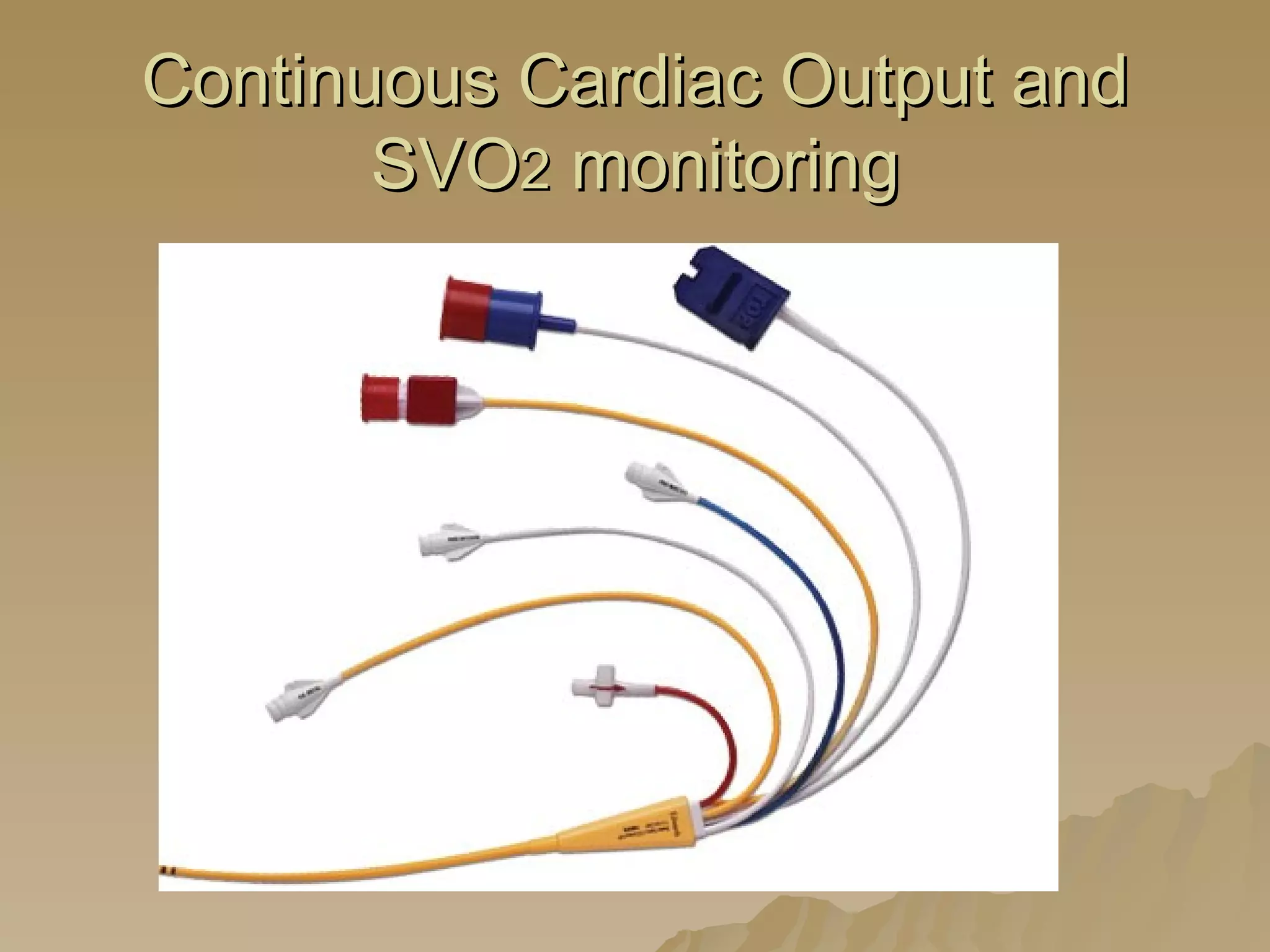
PA Catheter KEEP COVERED KEEP LOCKED YELLOW Clear BLUE RED Markings on catheter. 1. Each  thin  line=  10  cm. 2. Each  thick  line=  50  cm.
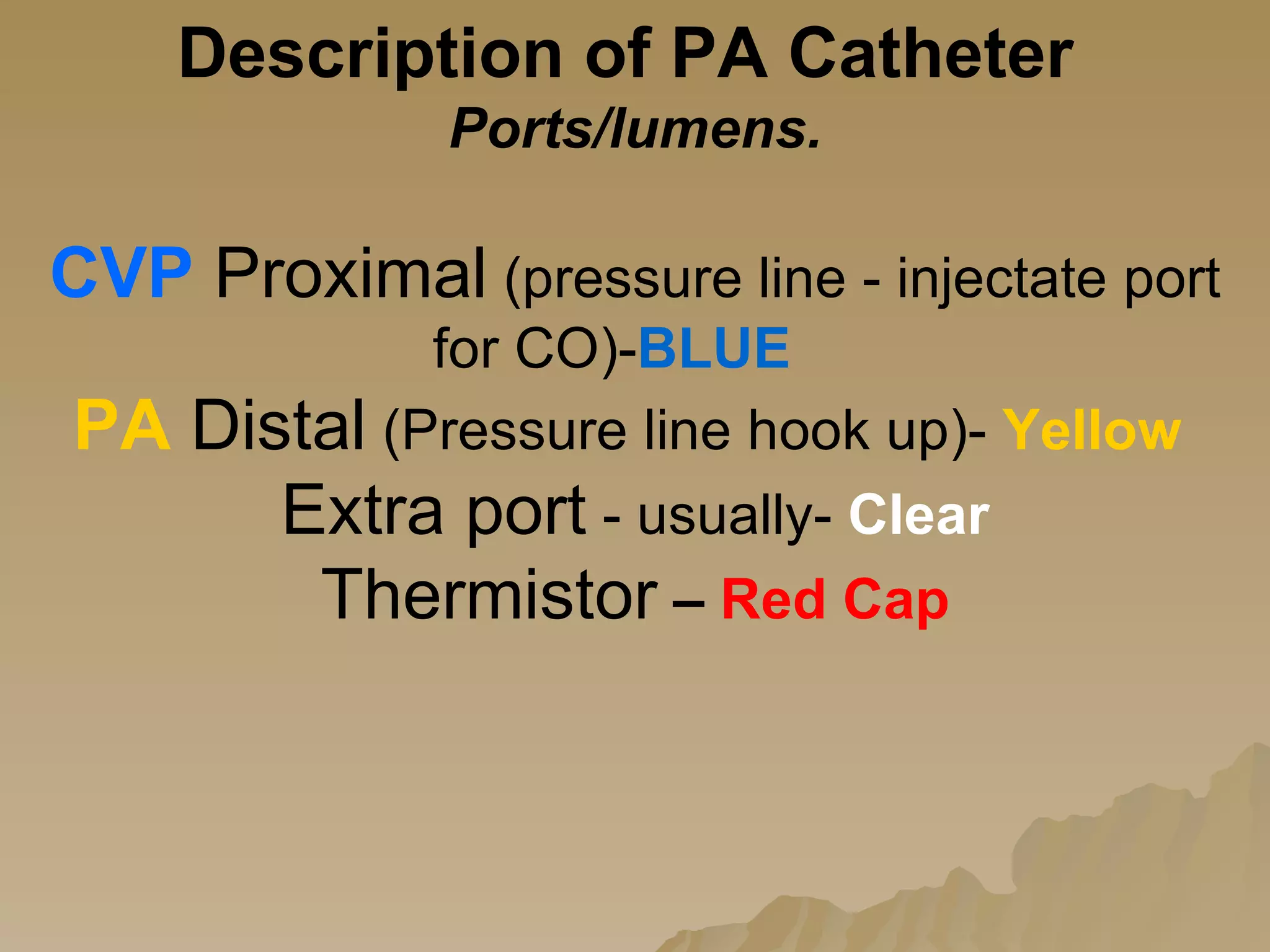
Description of PA Catheter  Ports/lumens. CVP   Proximal  (pressure line - injectate port for CO)- BLUE   PA  Distal  (Pressure line hook up)-  Yellow   Extra port  - usually-  Clear Thermistor   –   Red Cap
Continuous Cardiac Output and SVO 2  monitoring
Indications for PA catheter The pulmonary artery catheter is indicated in patients whose cardiopulmonary pressures, flows, and circulating volume require precise, intensive management. MI – cardiogenic shock - CHF Shock - all types Valvular dysfunction Preoperative, Intraoperative, and Postoperative Monitoring ARDS, Burns, Trauma, Renal Failure
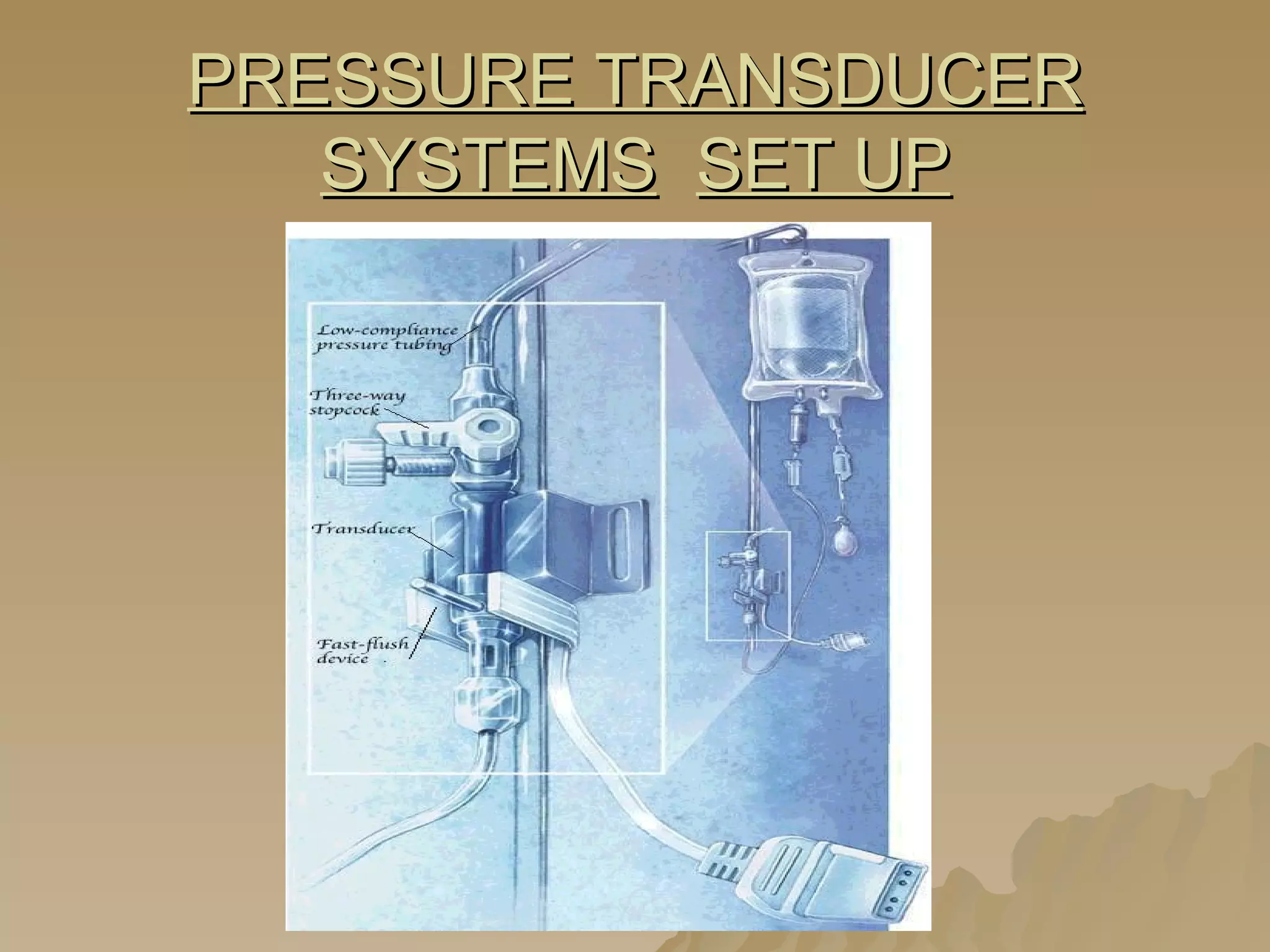
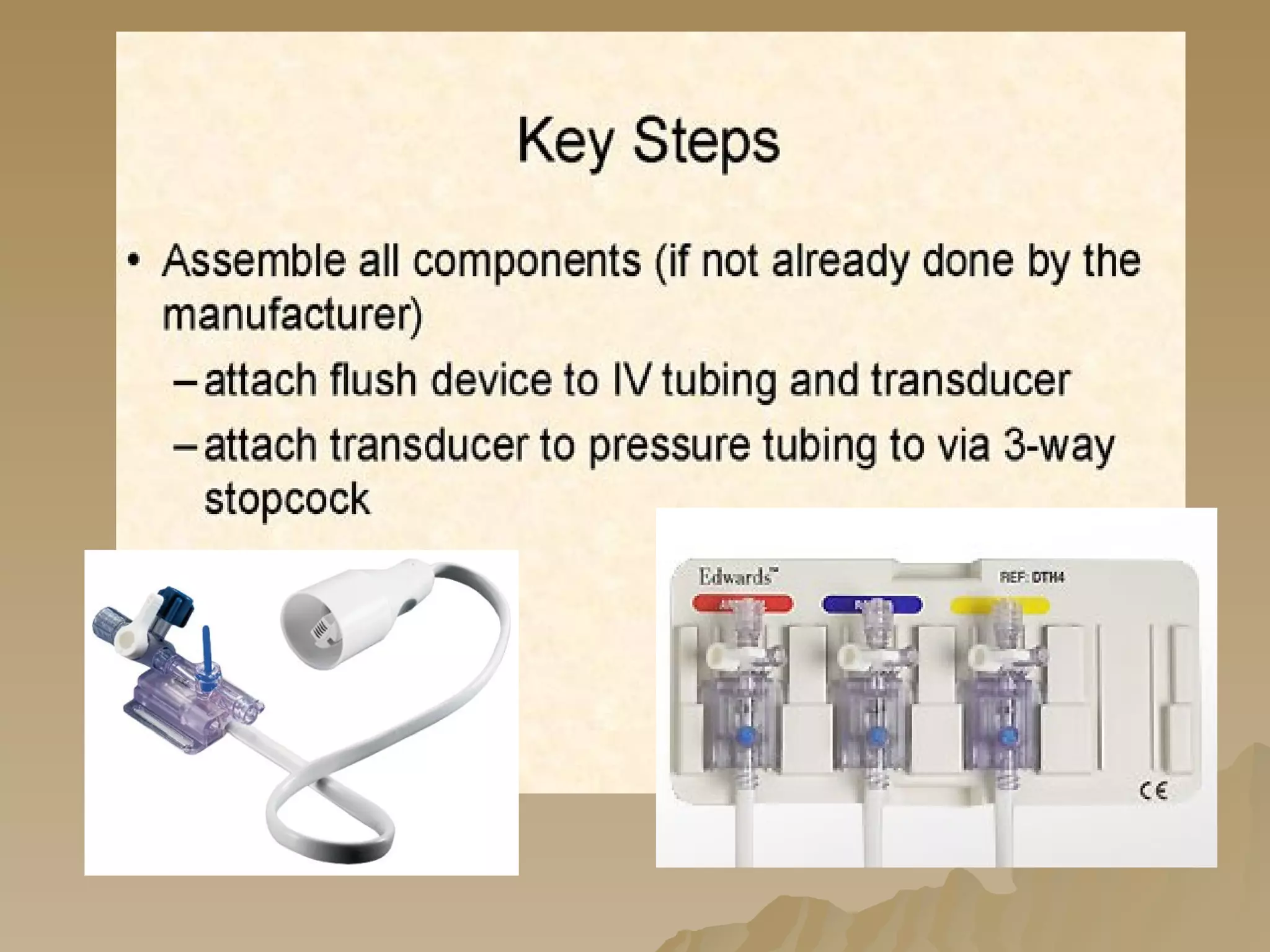
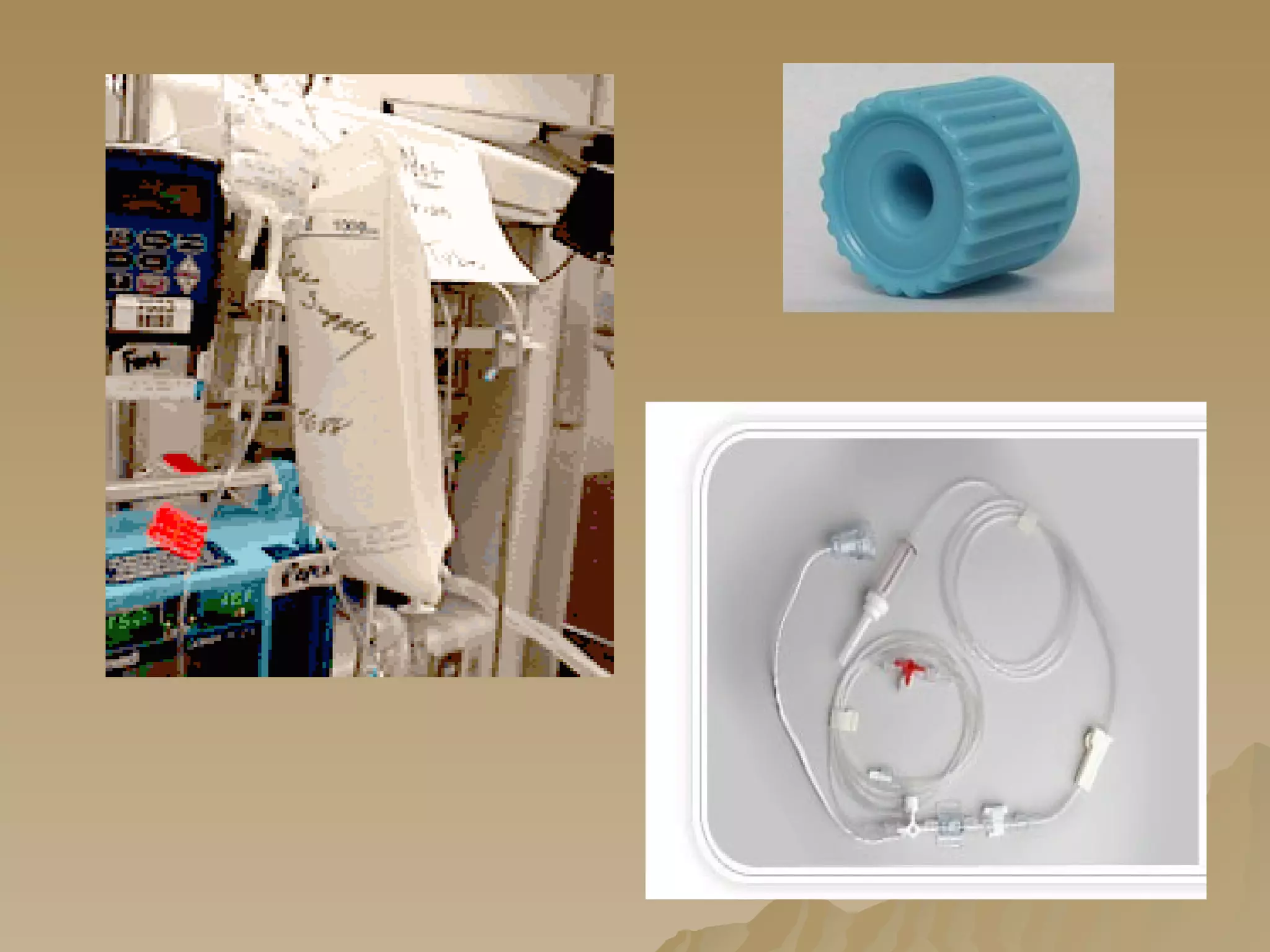
PRESSURE TRANSDUCER SYSTEMS   SET UP
 
500 ml Premixed Heparinized  bag of NS
 
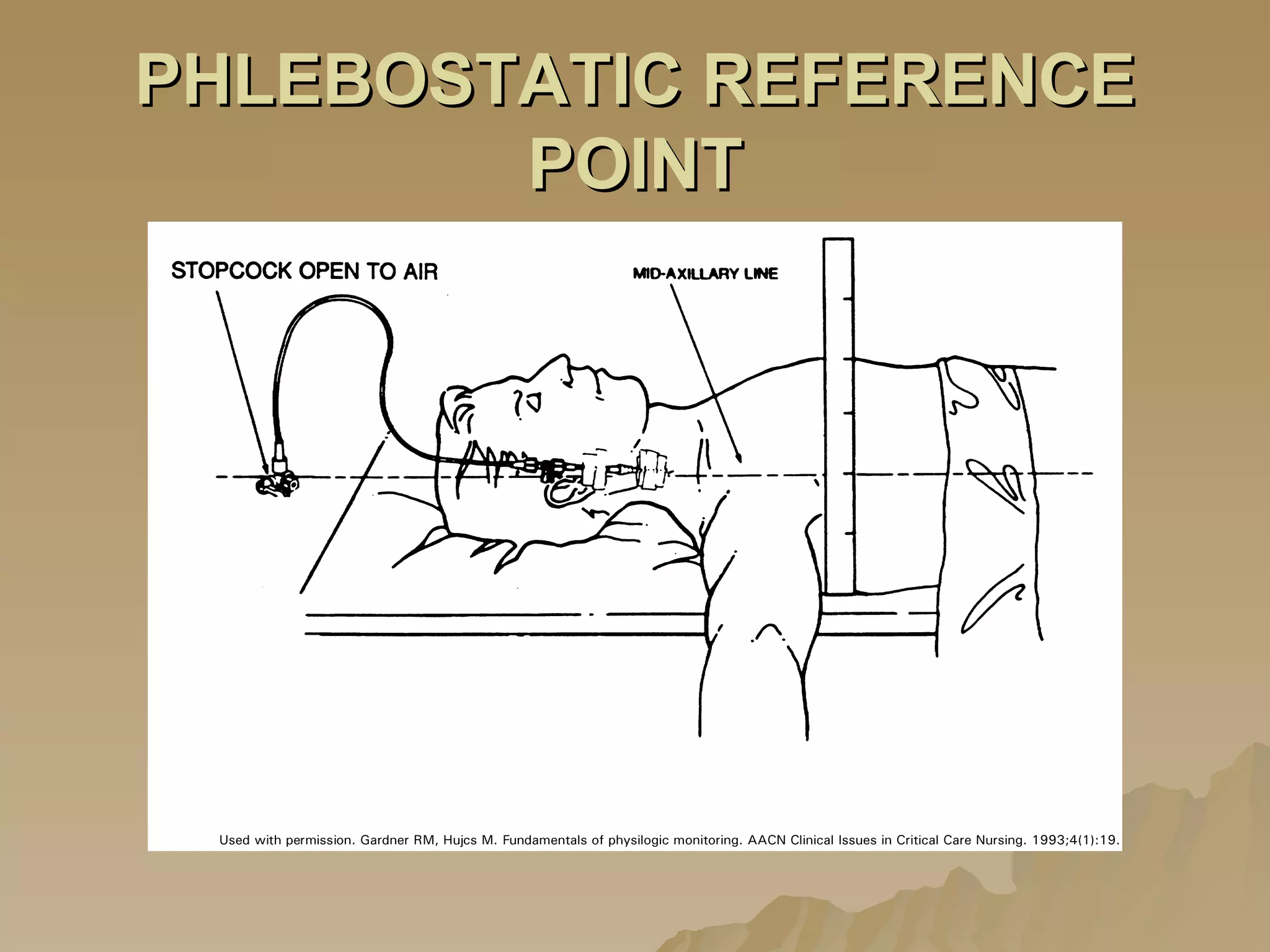
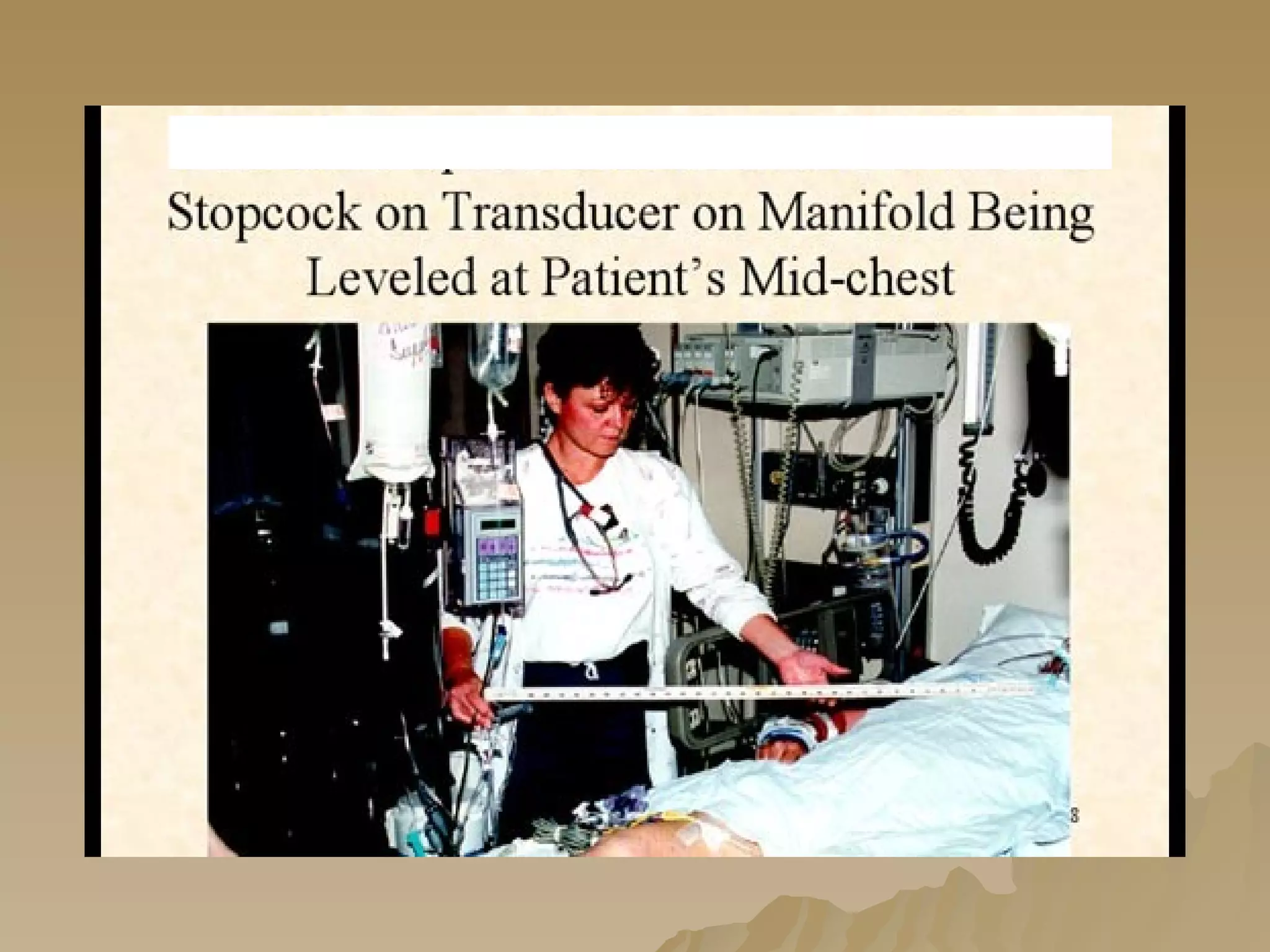
PHLEBOSTATIC REFERENCE POINT
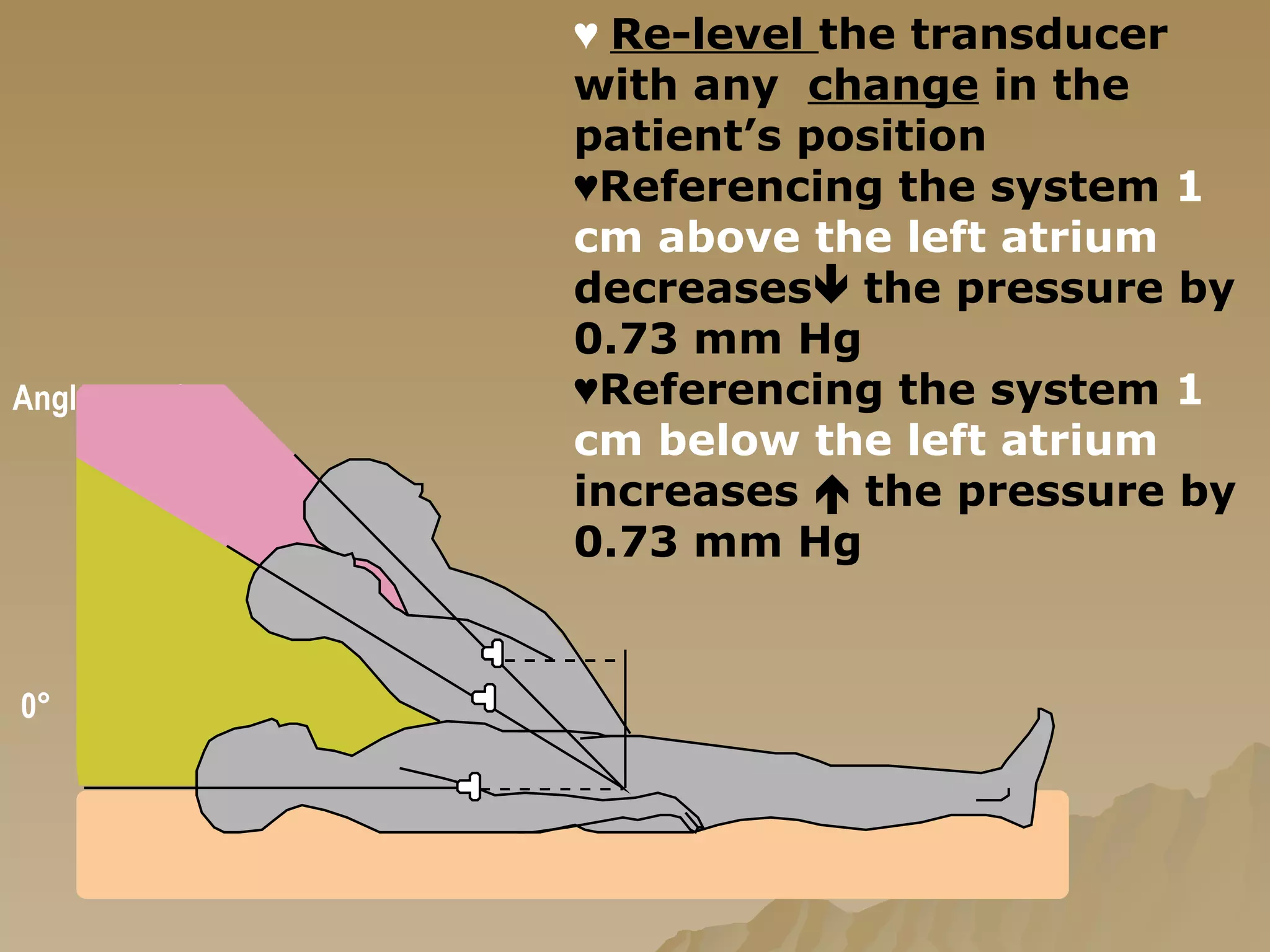
♥  Re-level  the transducer with any  change  in the patient’s position ♥ Referencing the system  1 cm above the left atrium  decreases   the pressure by 0.73 mm Hg ♥ Referencing the system  1 cm below the left atrium  increases    the pressure by 0.73 mm Hg Angles  45°  30° 0 °
 
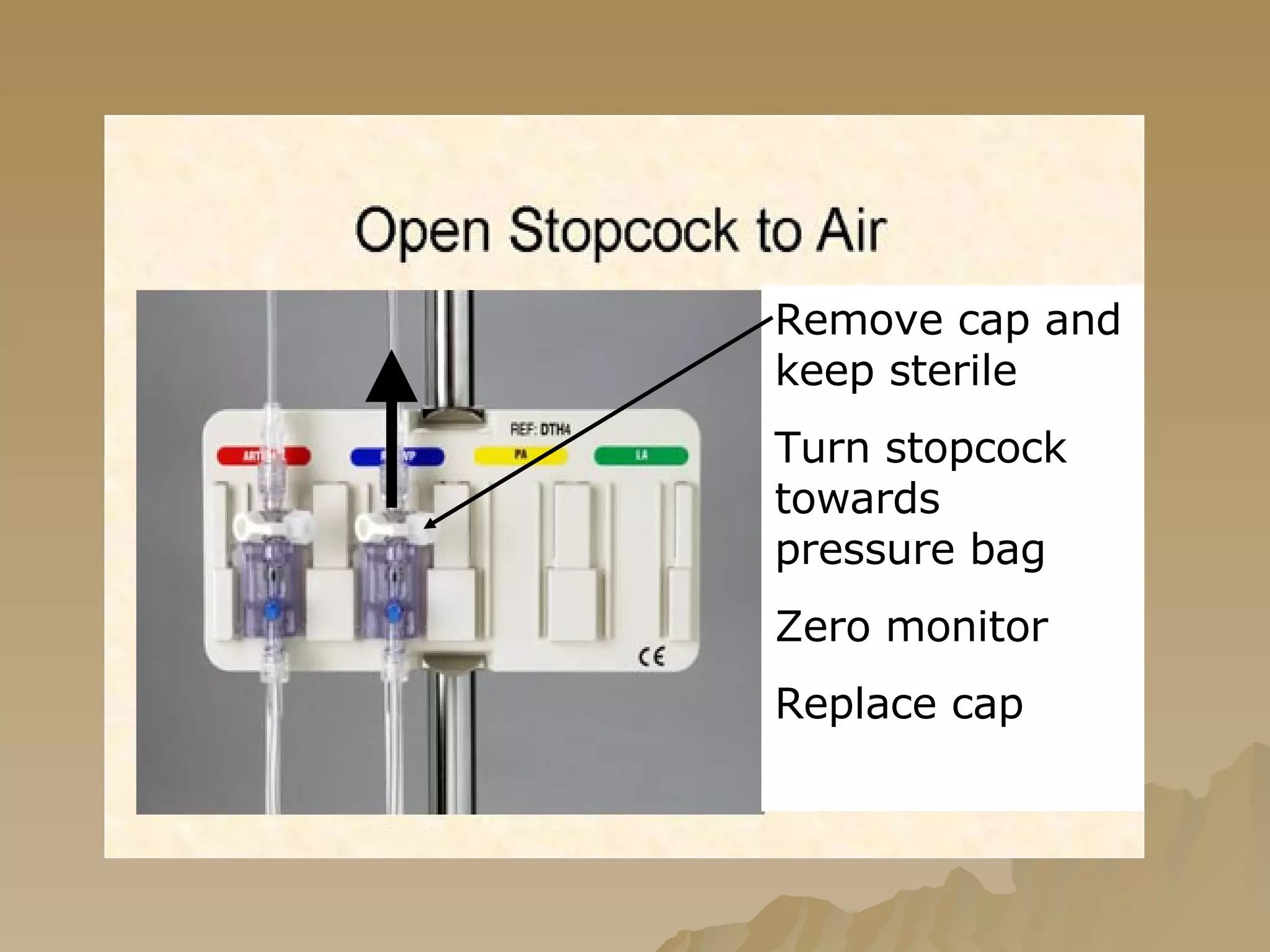
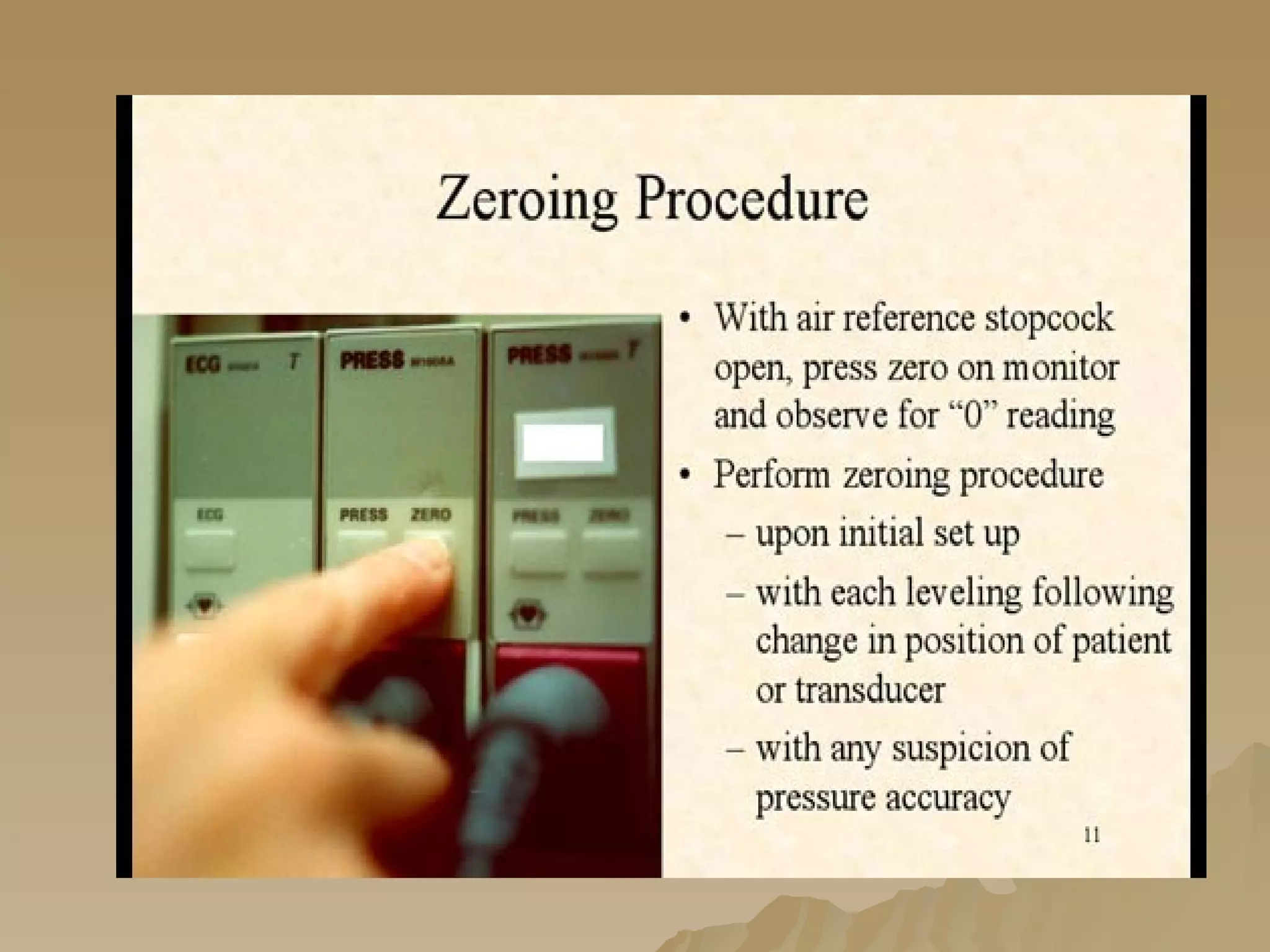
Remove cap and keep sterile Turn stopcock towards pressure bag Zero monitor Replace cap
 
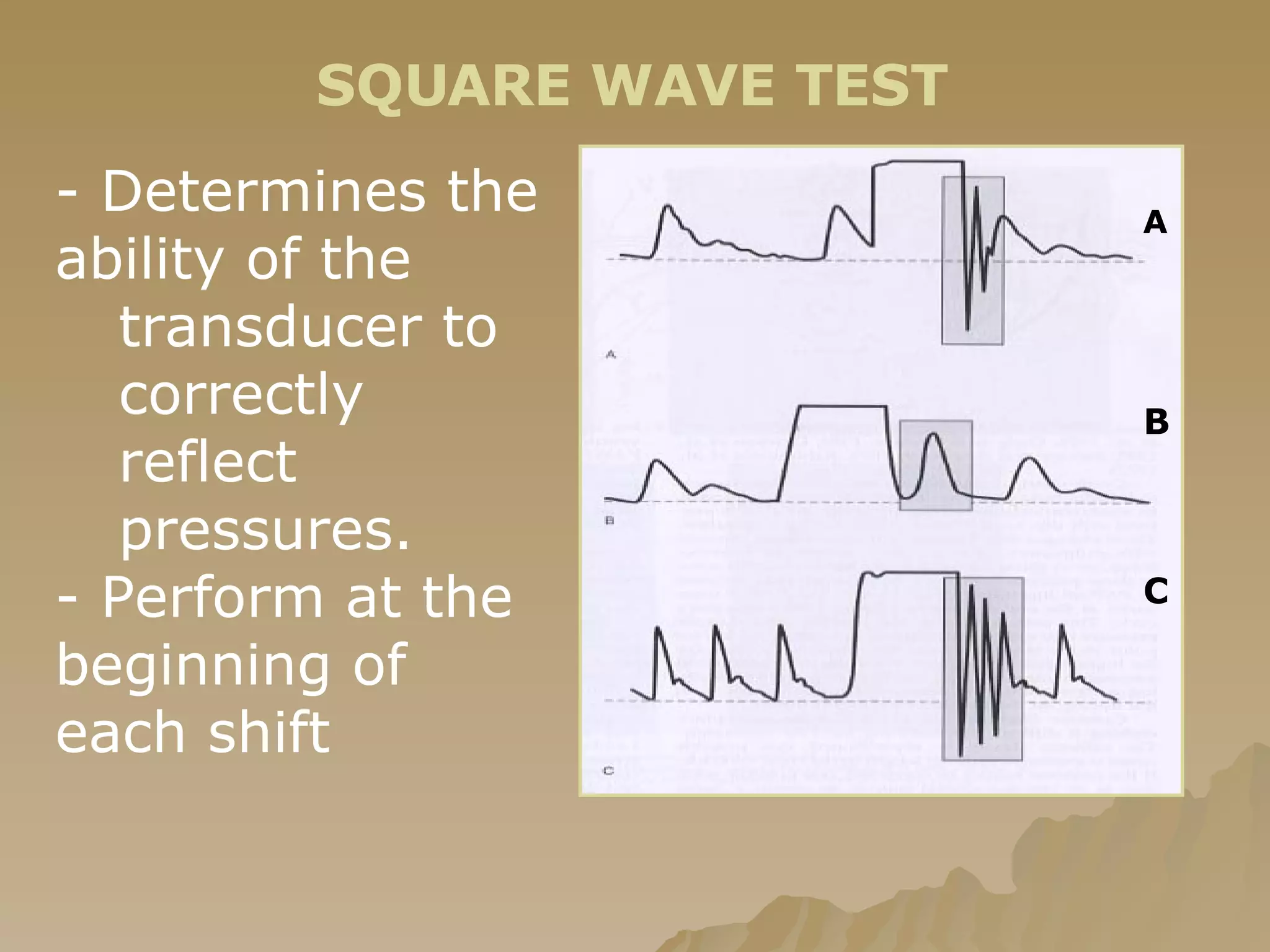
SQUARE WAVE TEST - Determines the ability of the  transducer to correctly reflect pressures. - Perform at the beginning of  each shift A B C
Thermodilution Cardiac Outputs C ardiac  O utputs reading should be  within   . 5 of each other for averaging purposes. Except in patients with atrial fibrillation- just average 3 to 4 readings. (due to loss of atrial kick output changes from minute to minute) C ardiac  O utputs should be obtained at the  end  of respiration  - at the same point each time
 
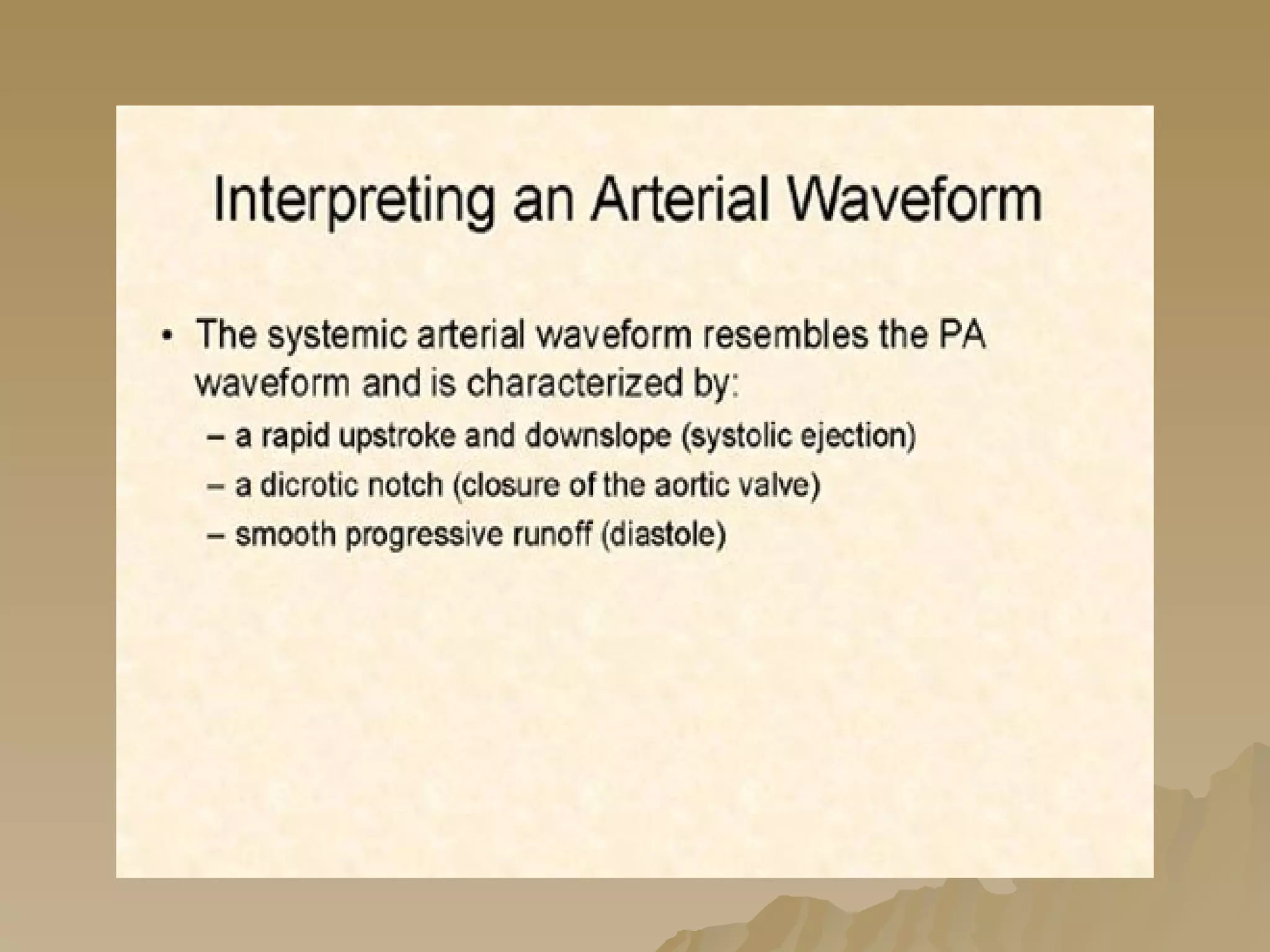
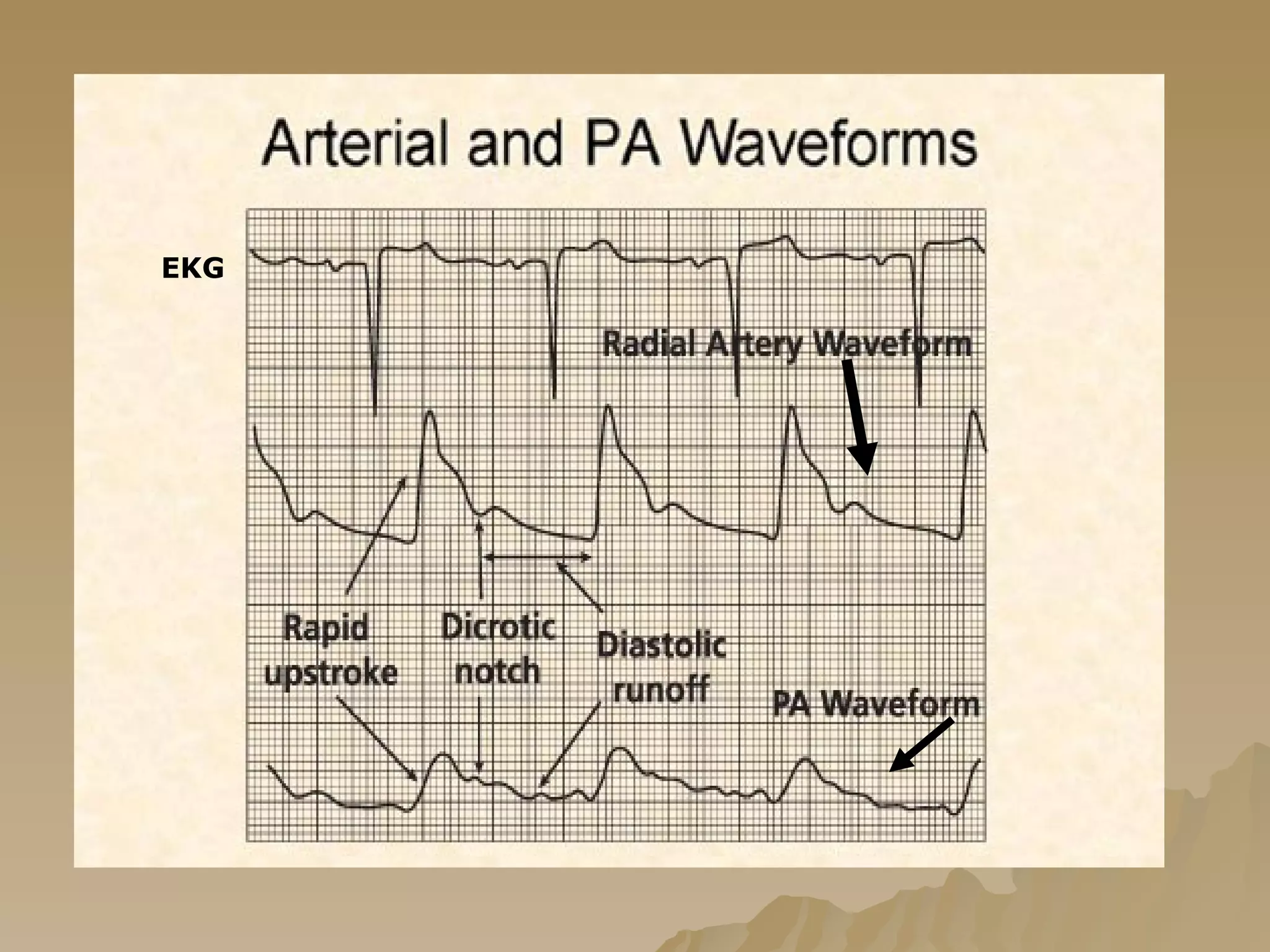
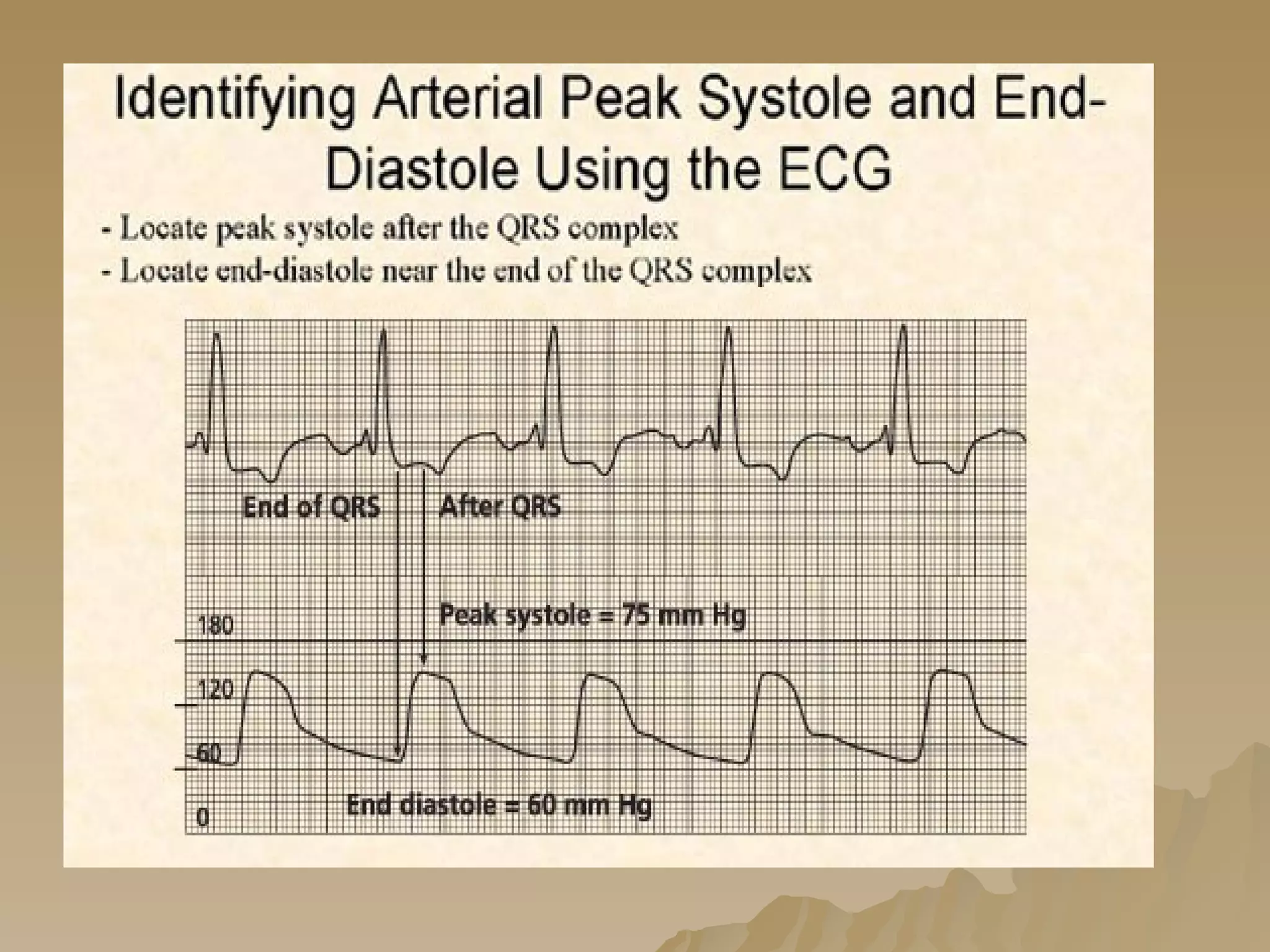
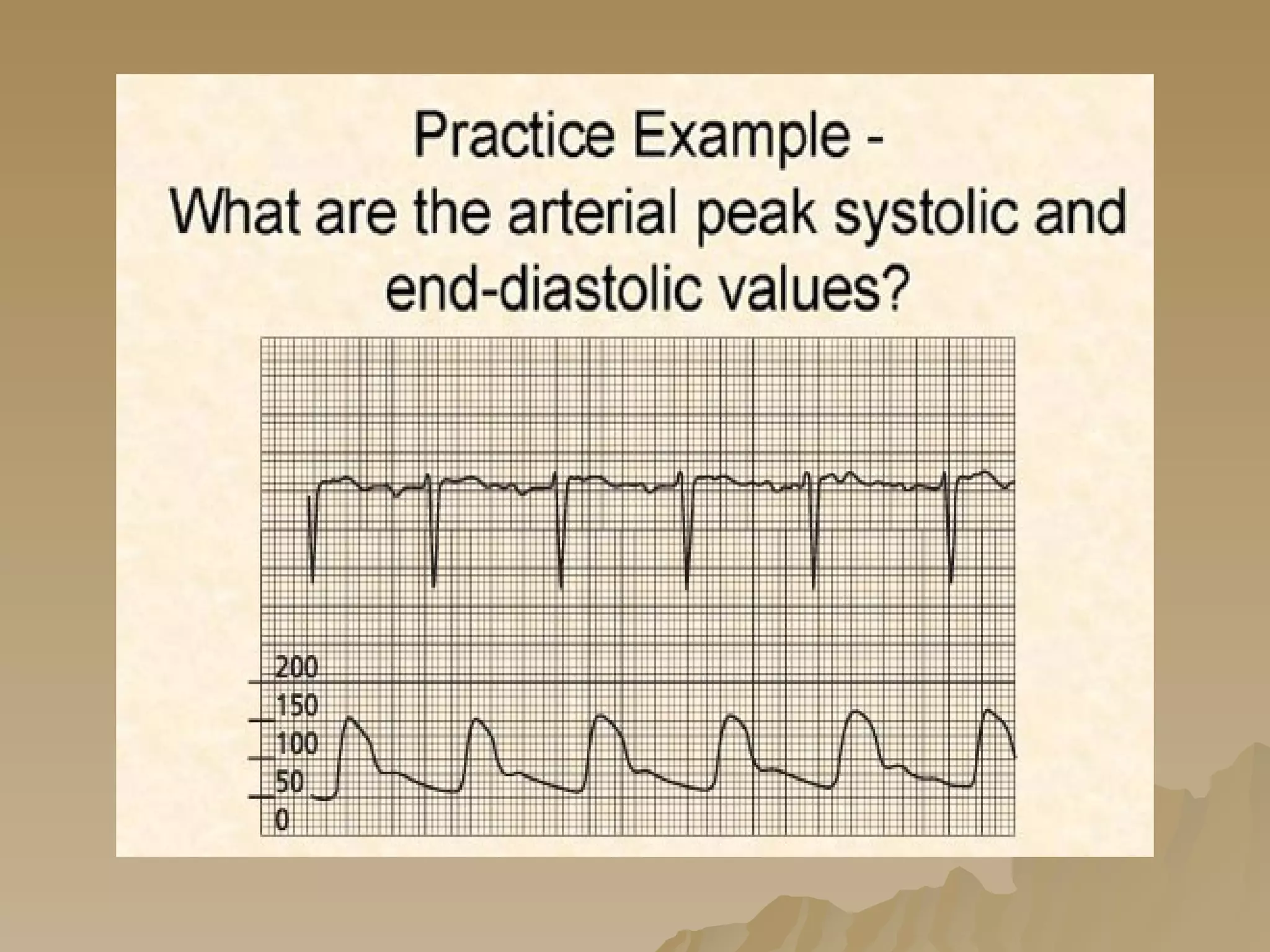
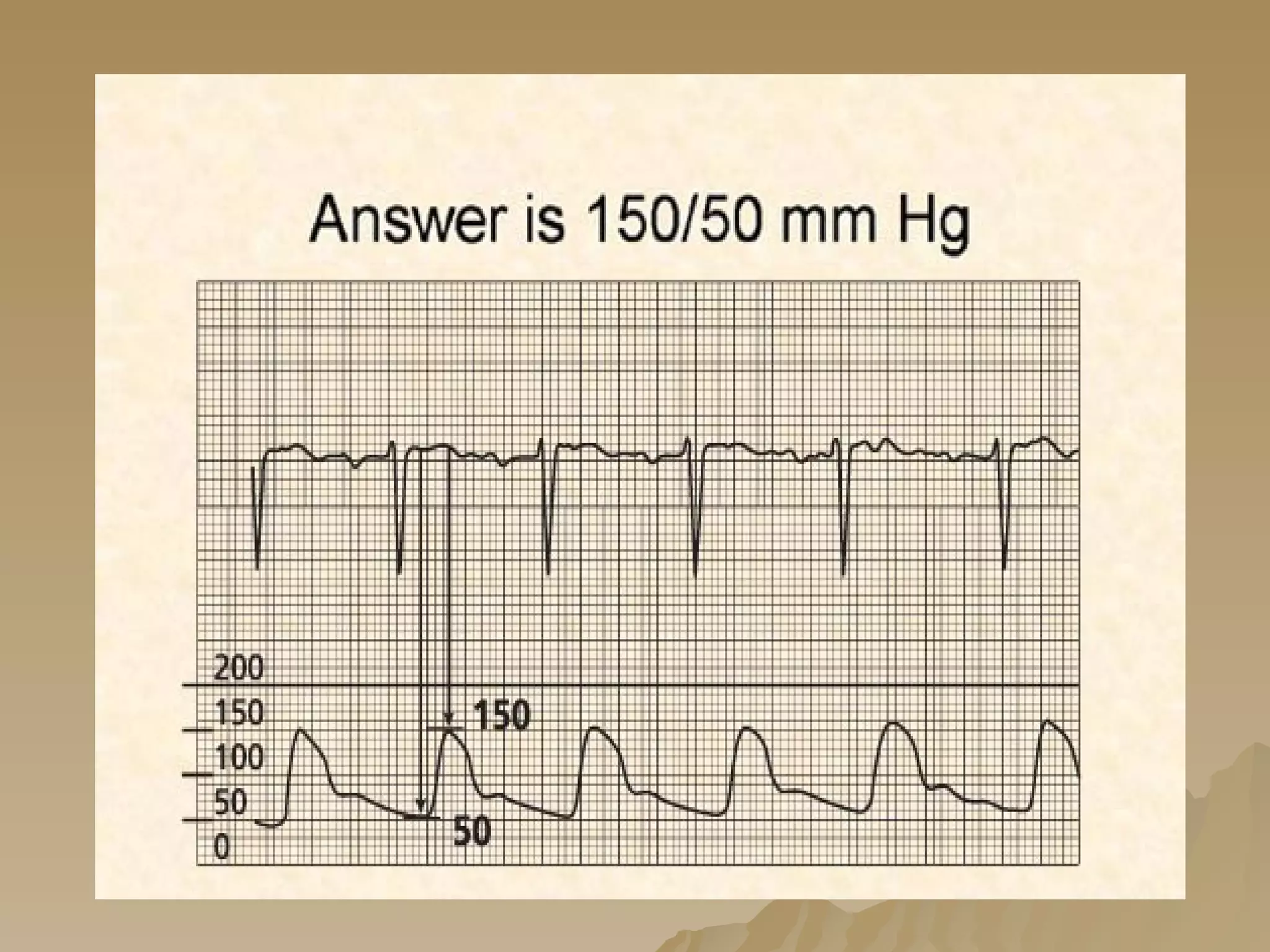
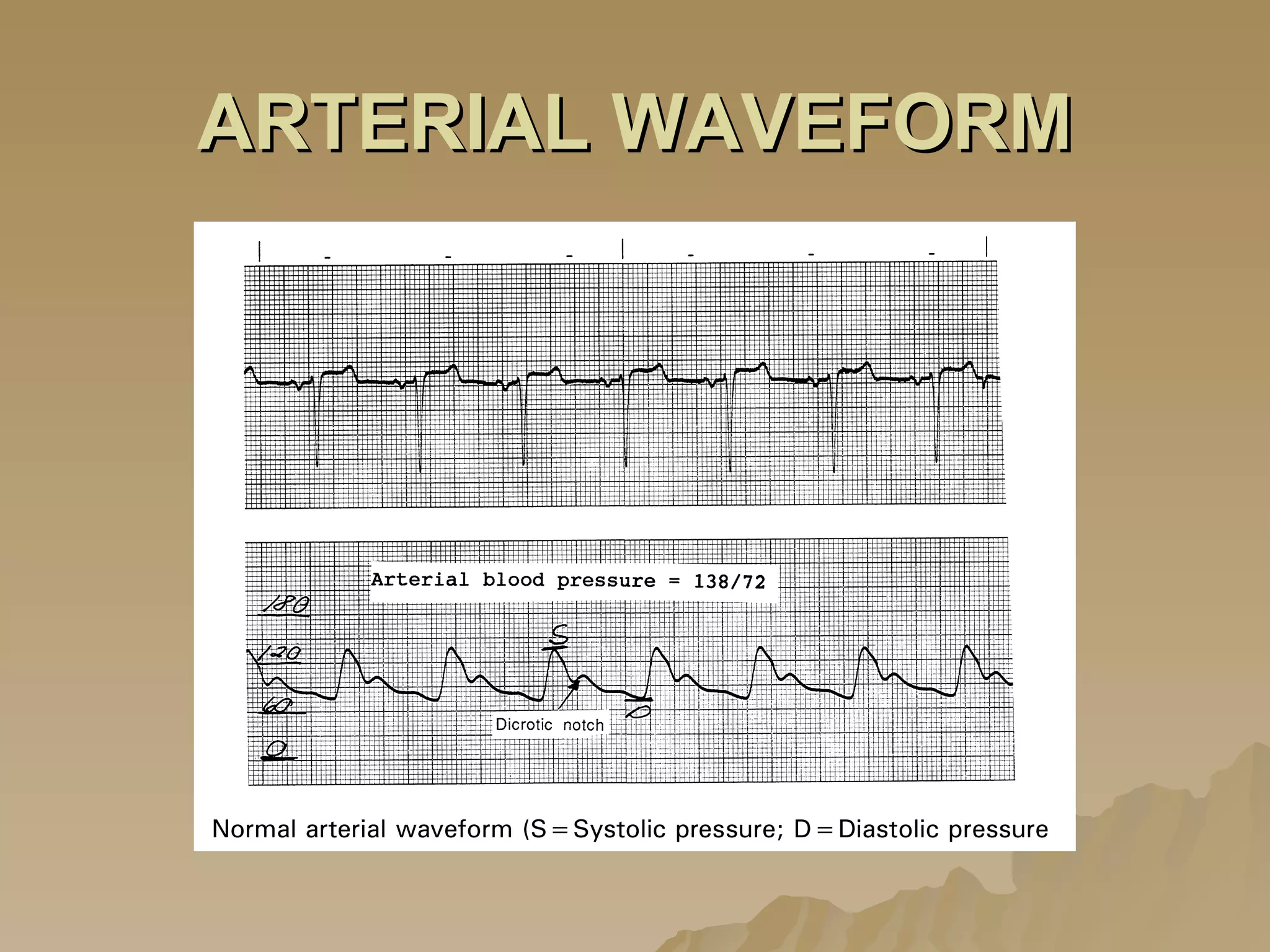
ARTERIAL WAVEFORM
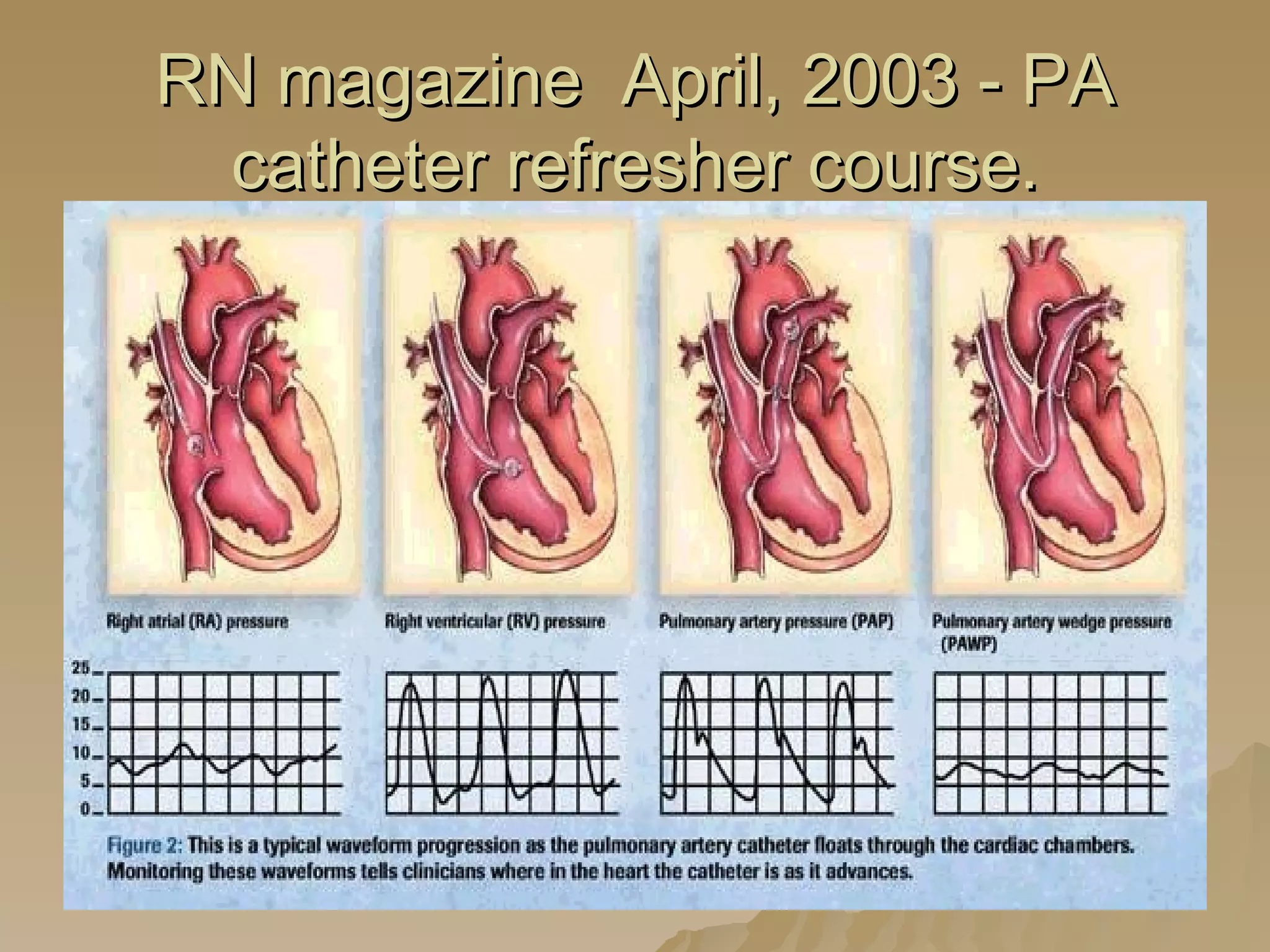
RN magazine  April, 2003 - PA catheter refresher course.
 
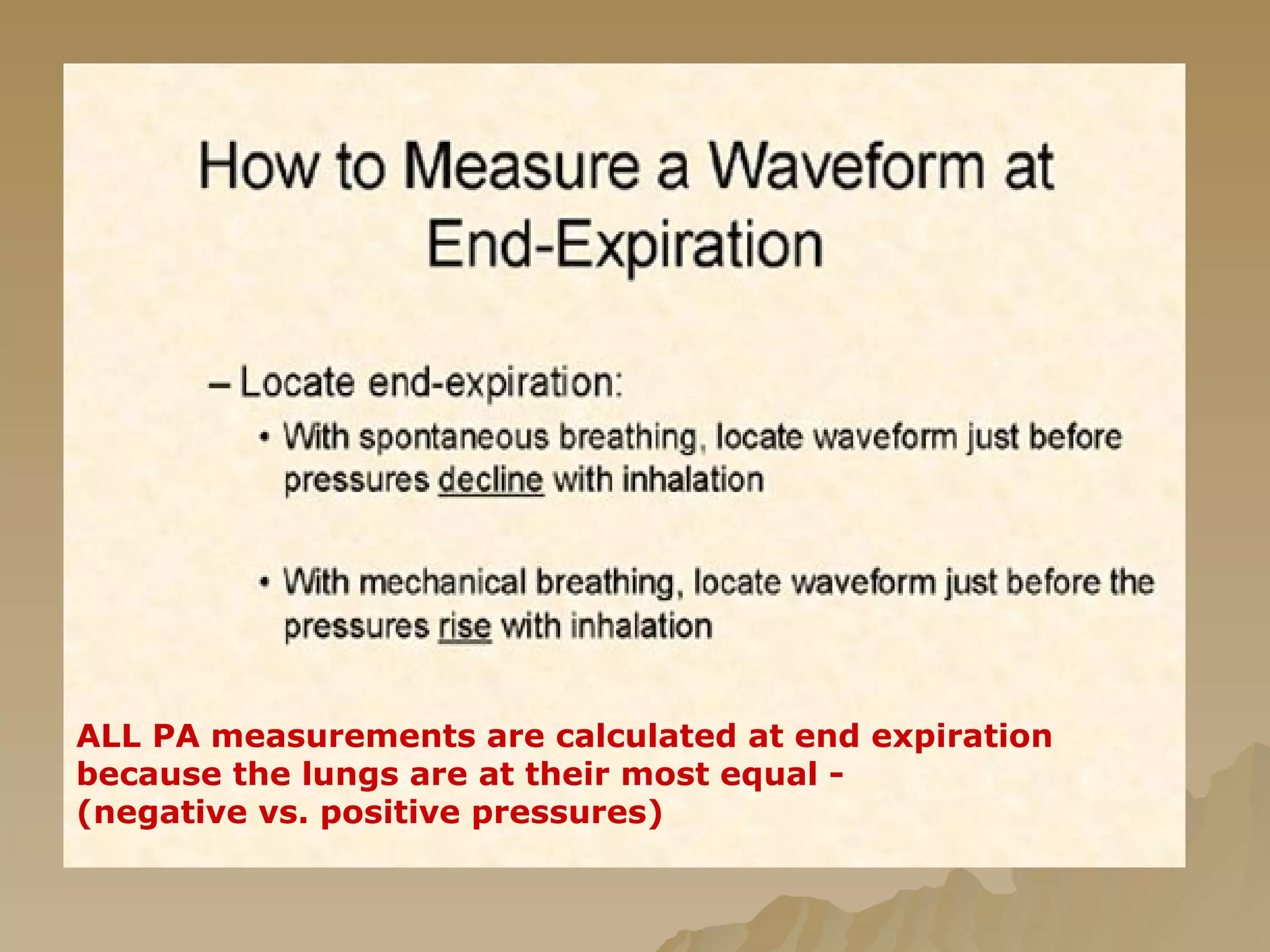
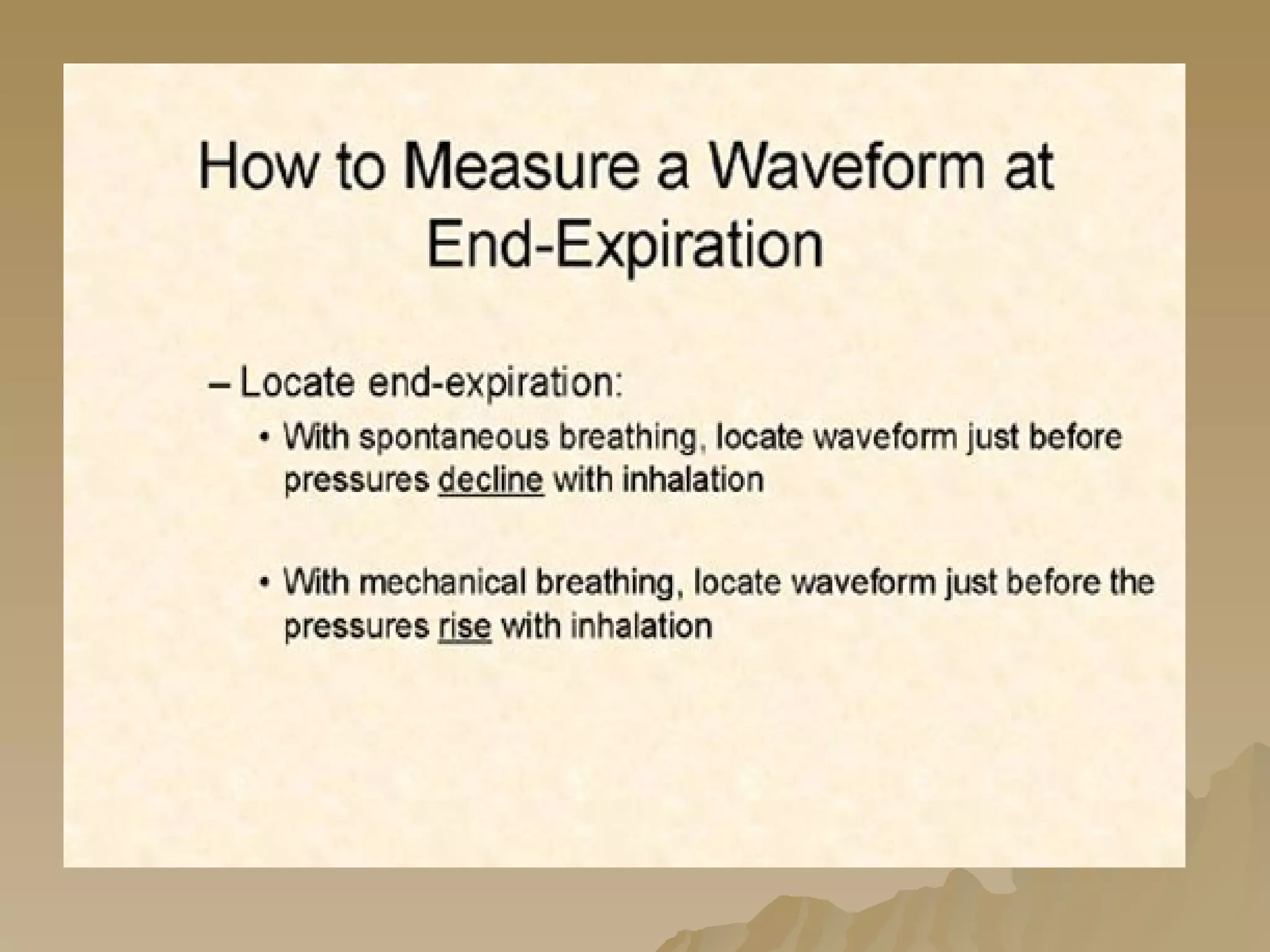
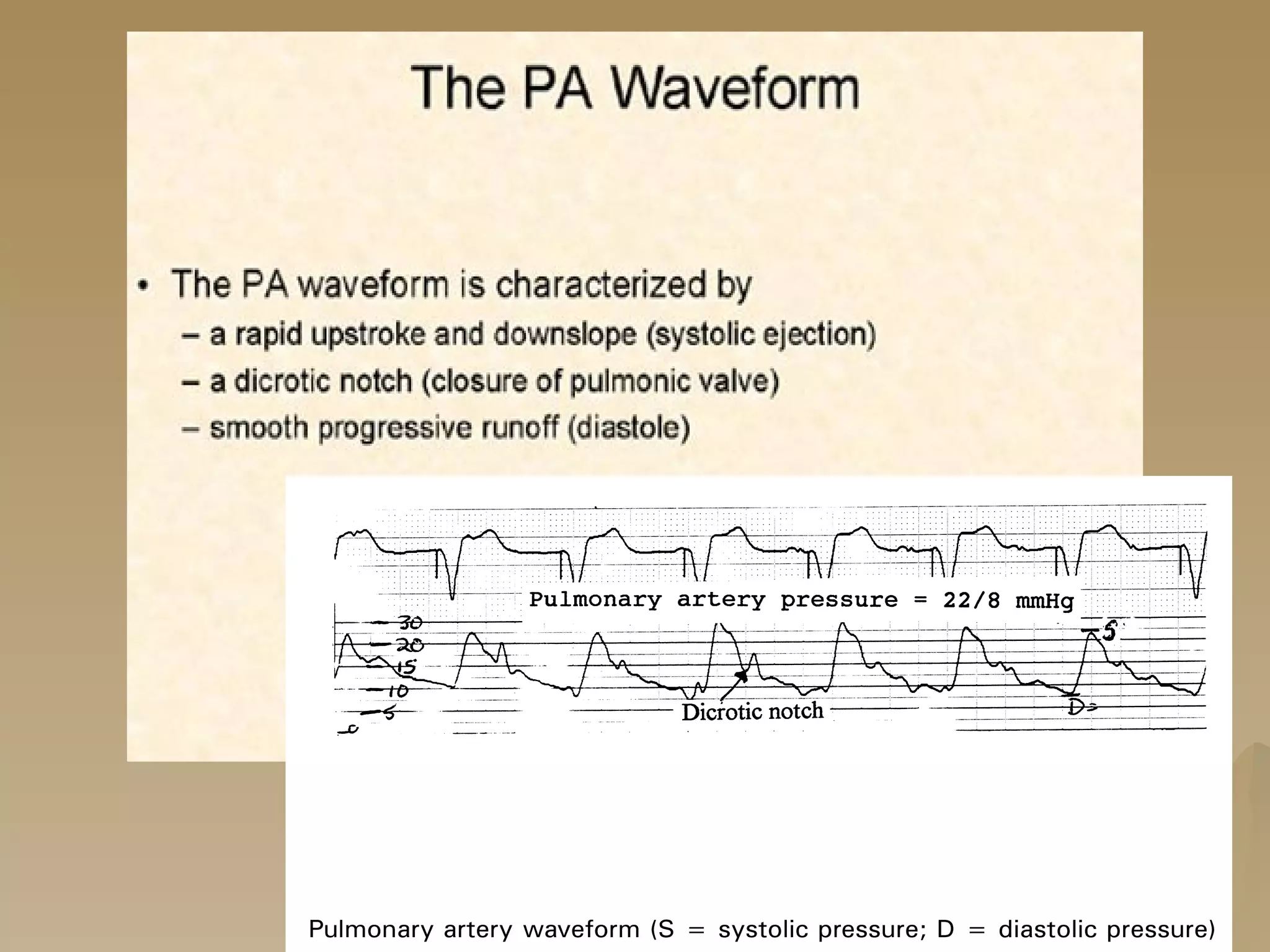
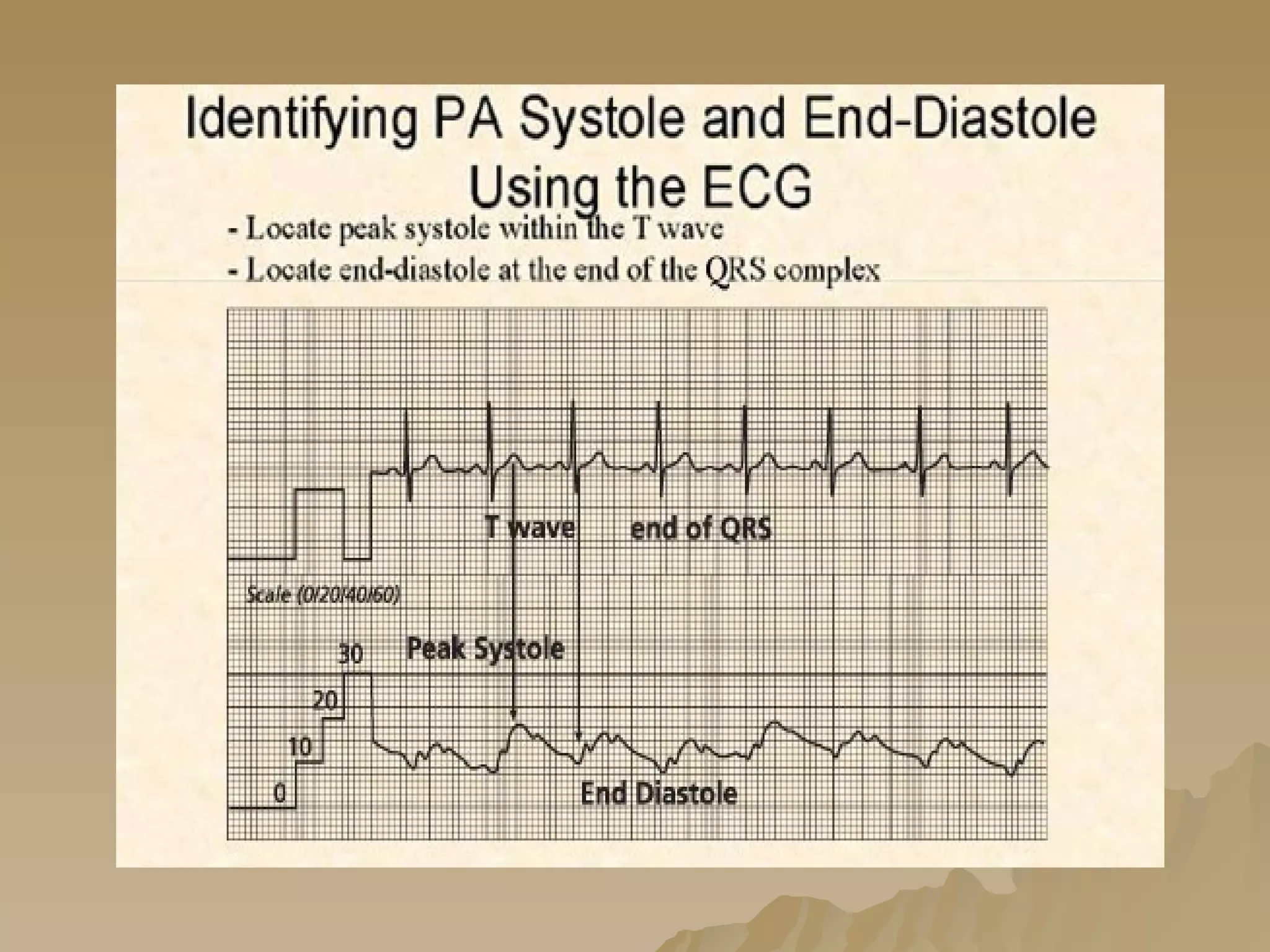
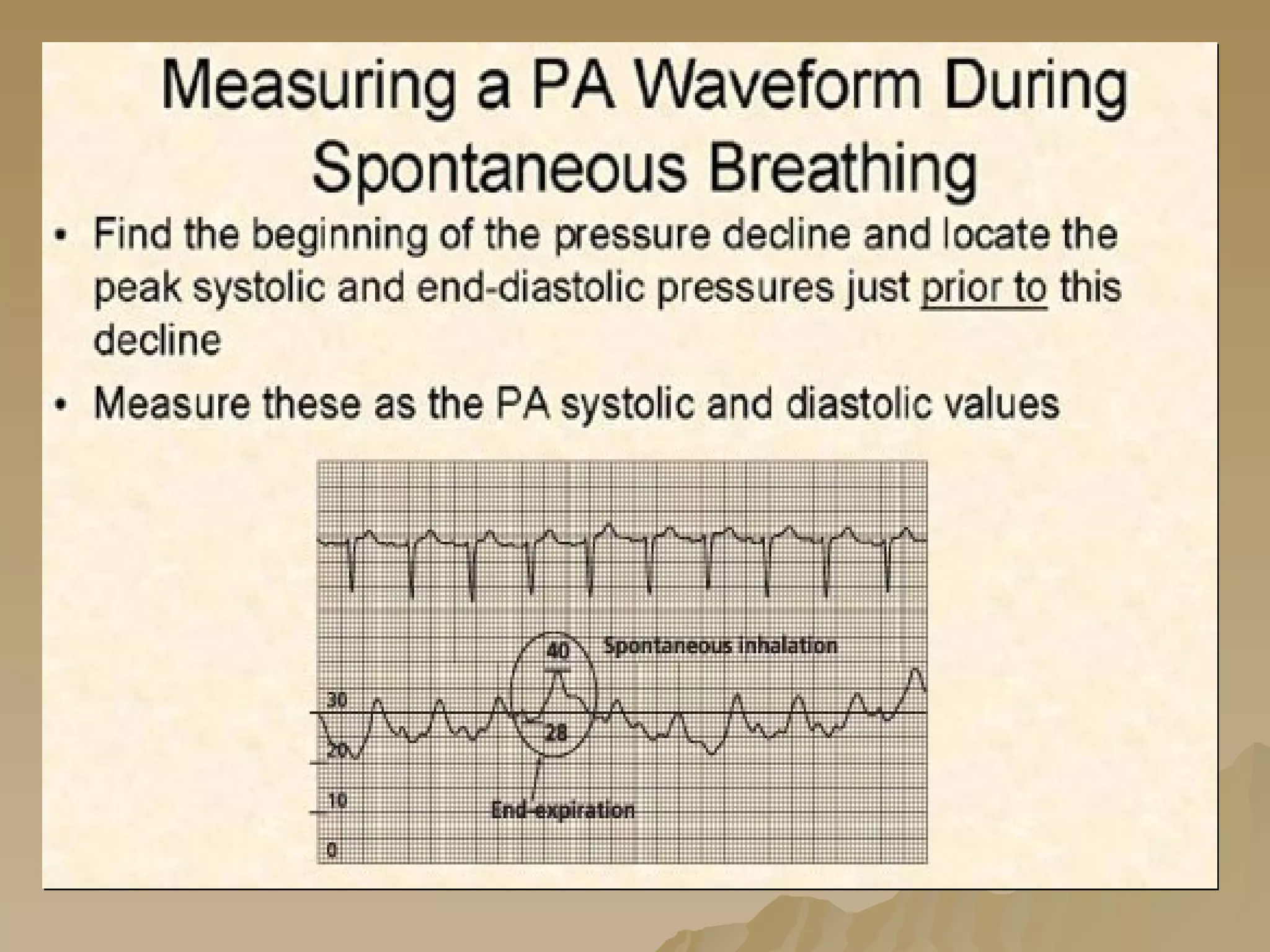
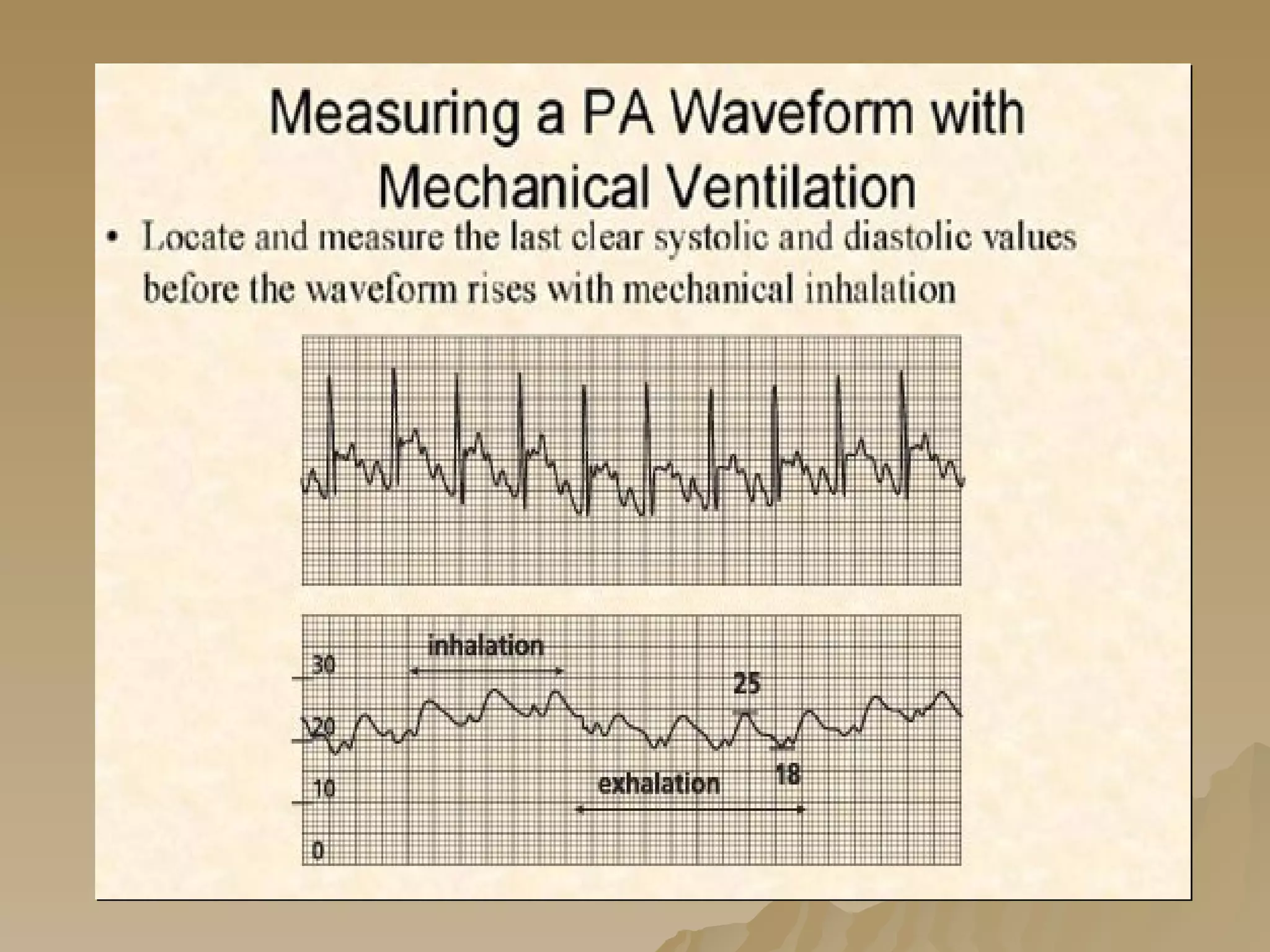
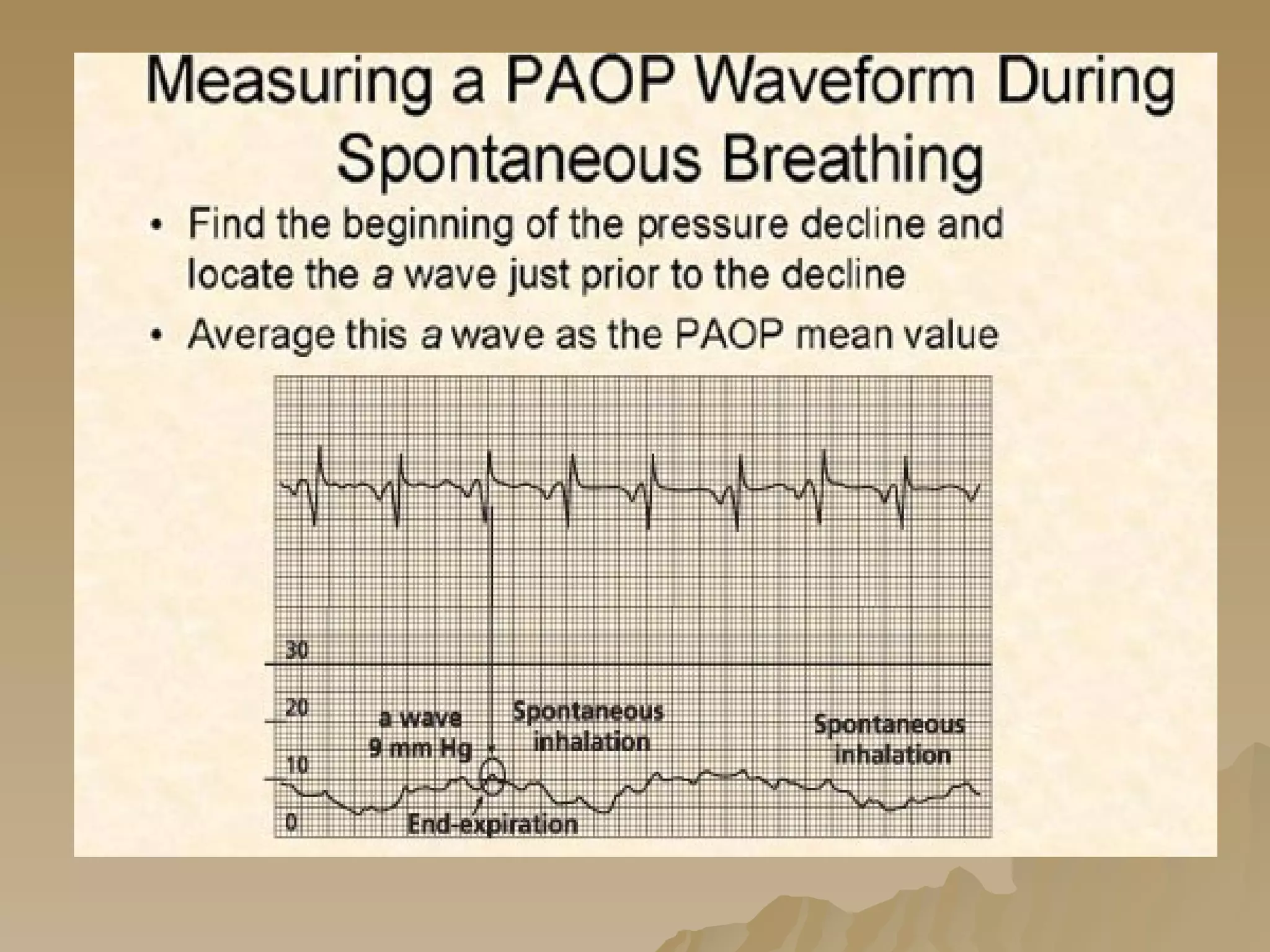
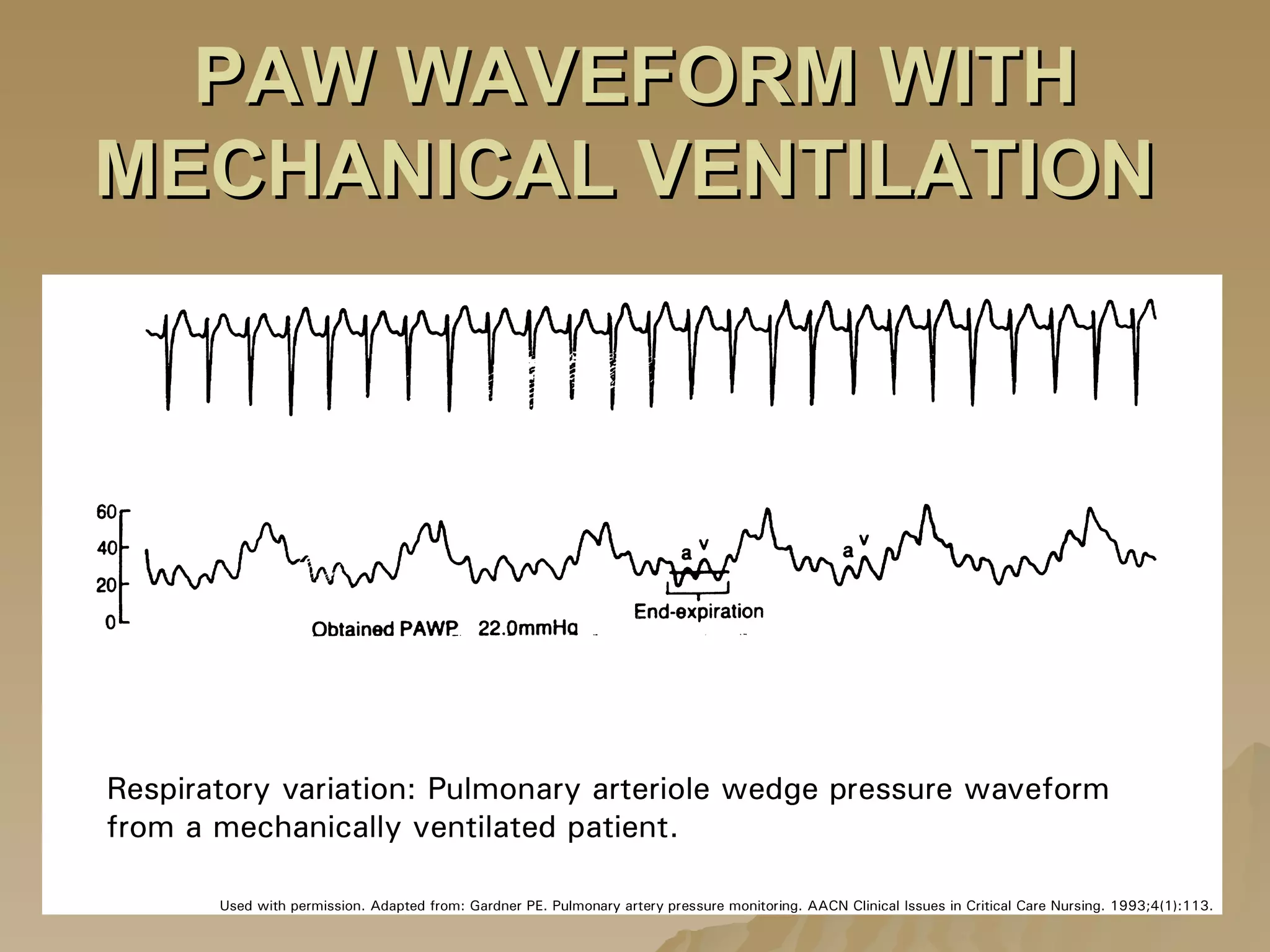
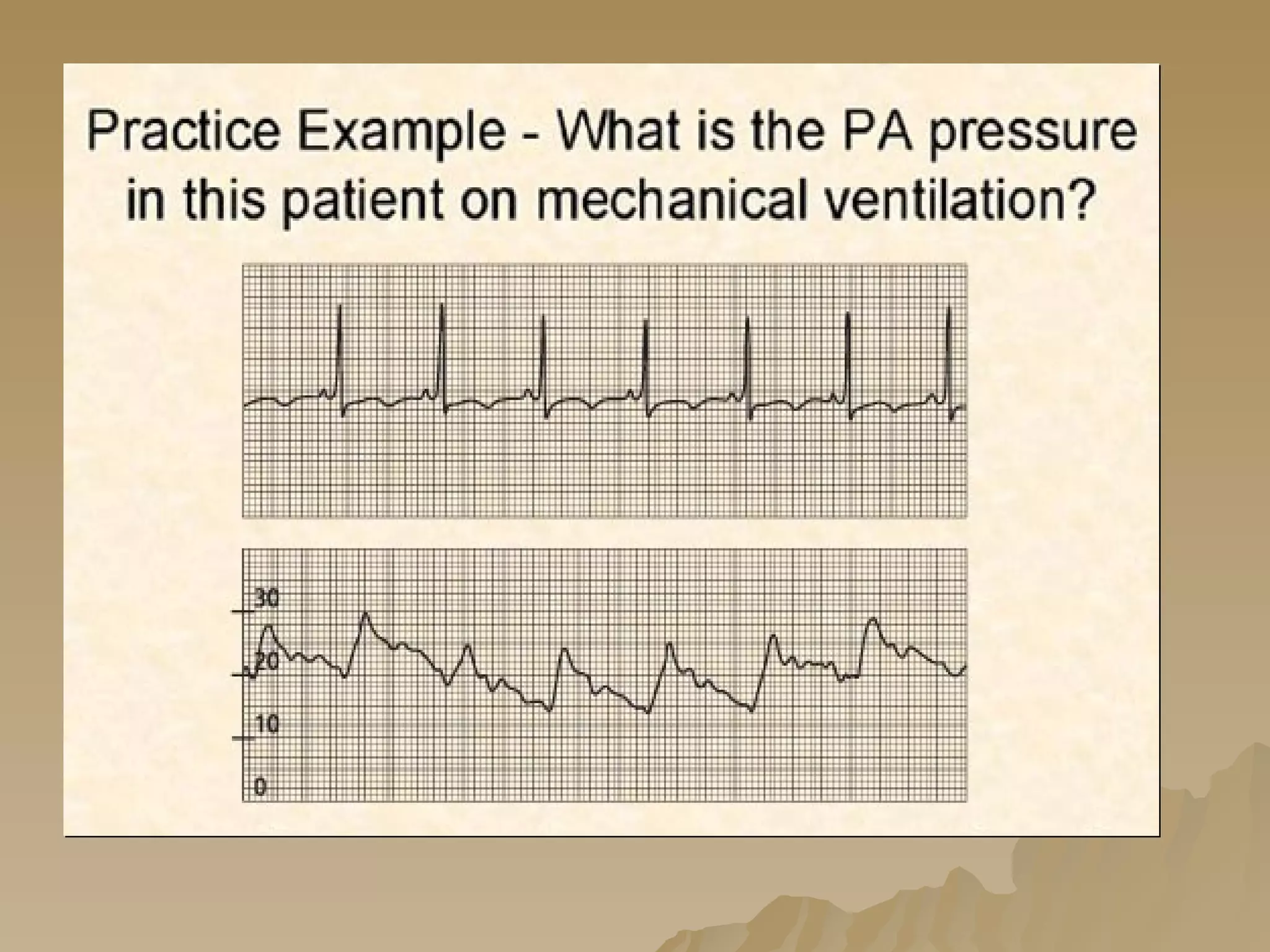
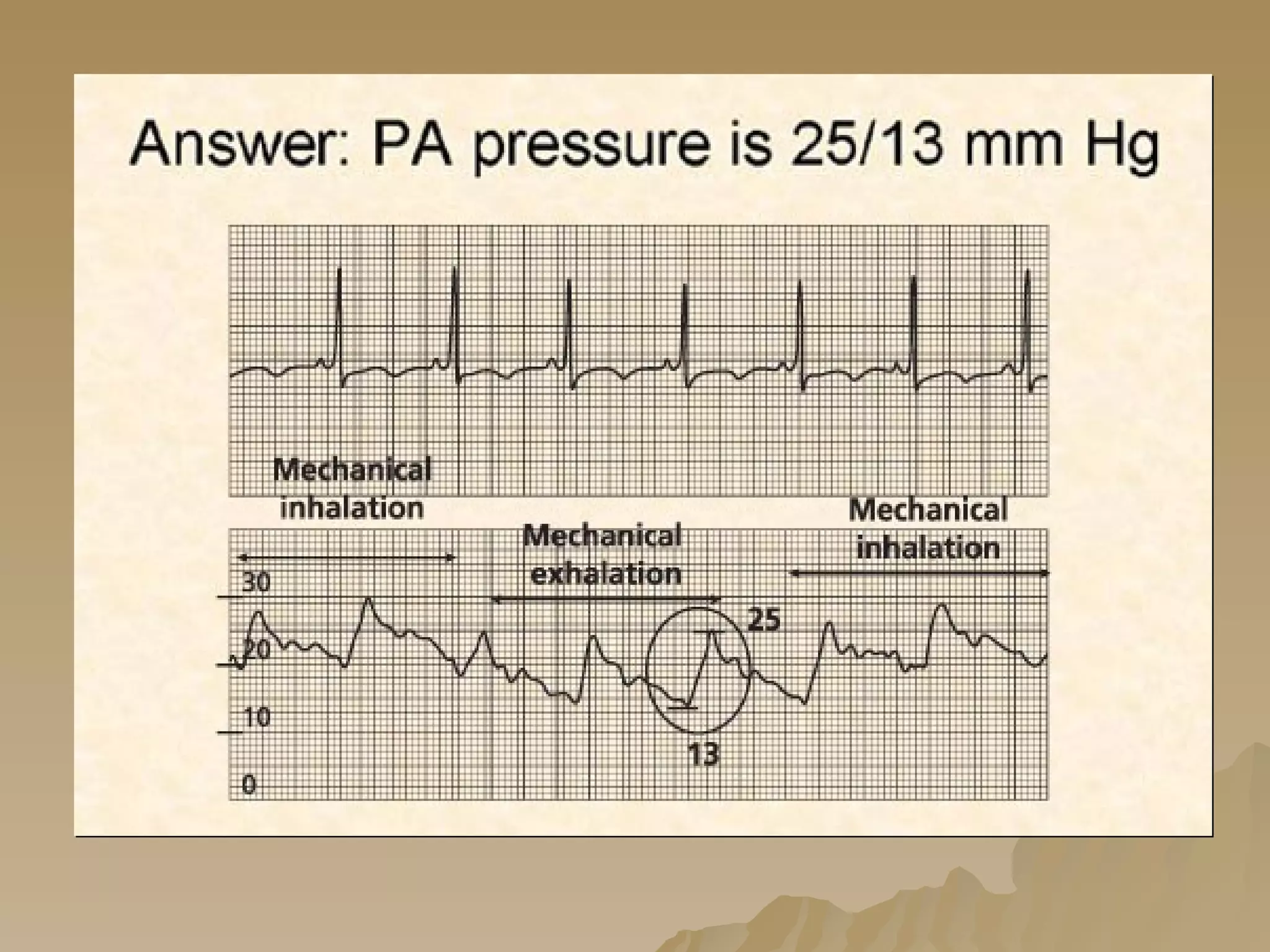
ALL PA measurements are calculated at end expiration because the lungs are at their most equal - (negative vs. positive pressures)
 
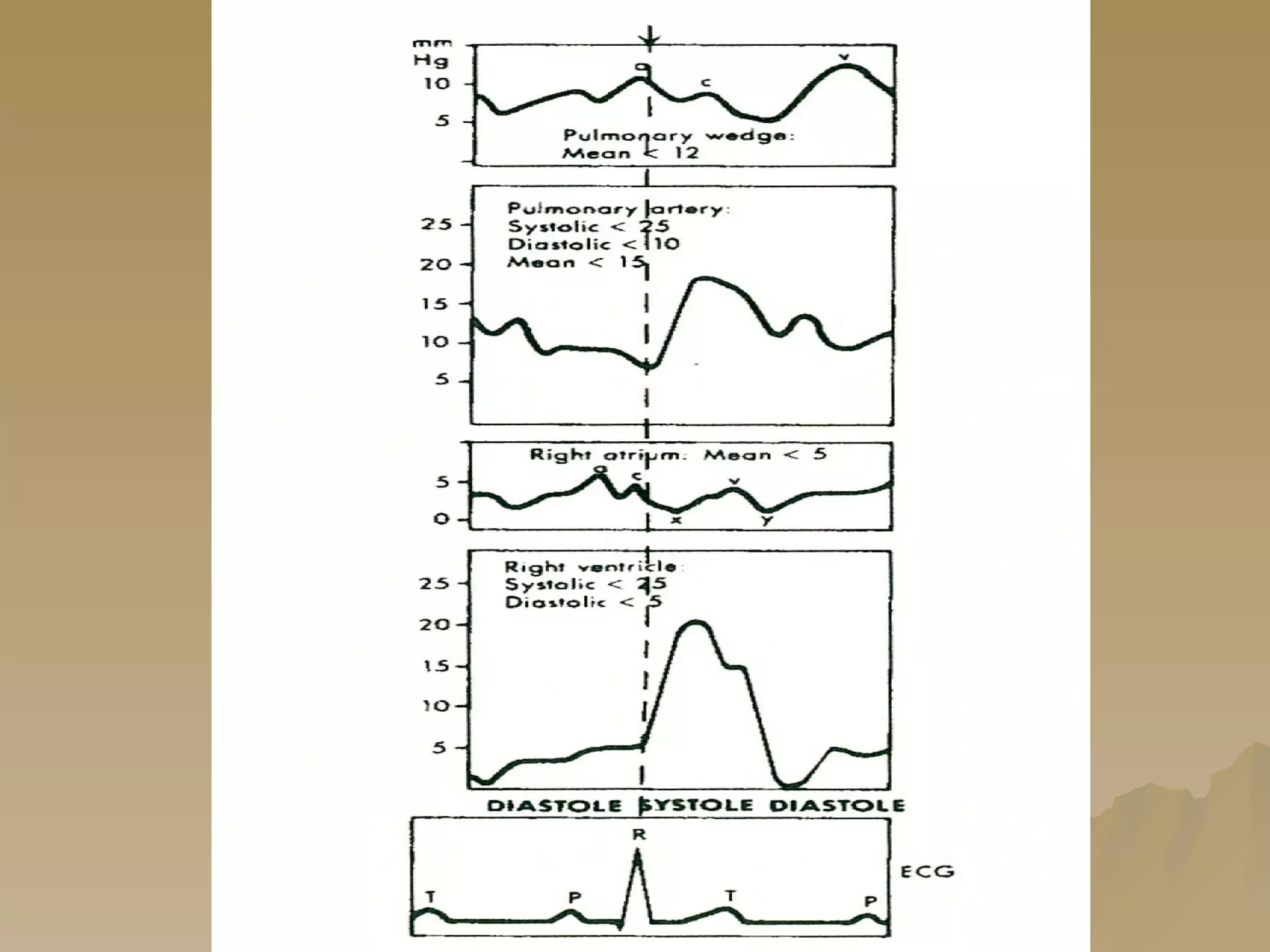
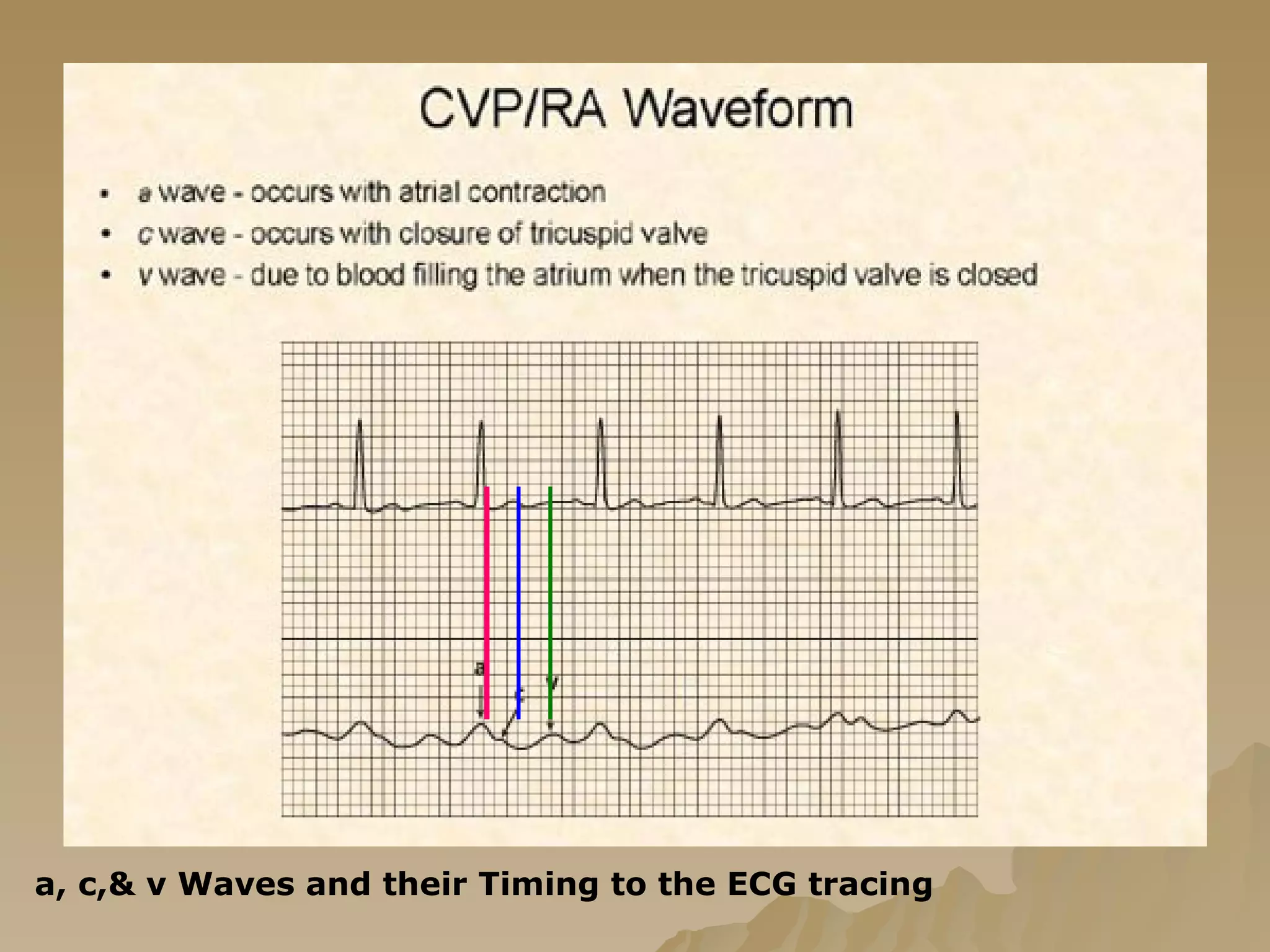
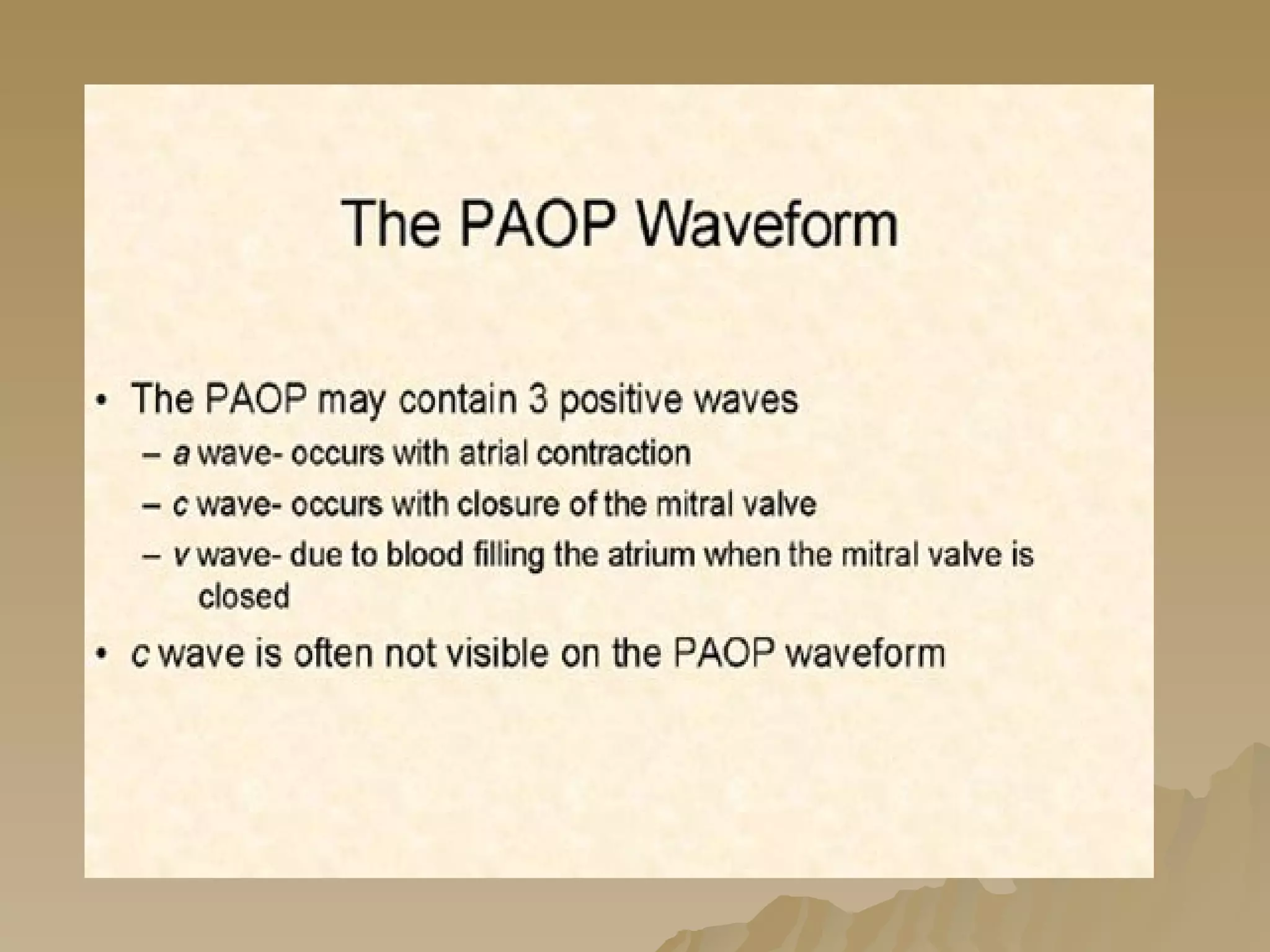
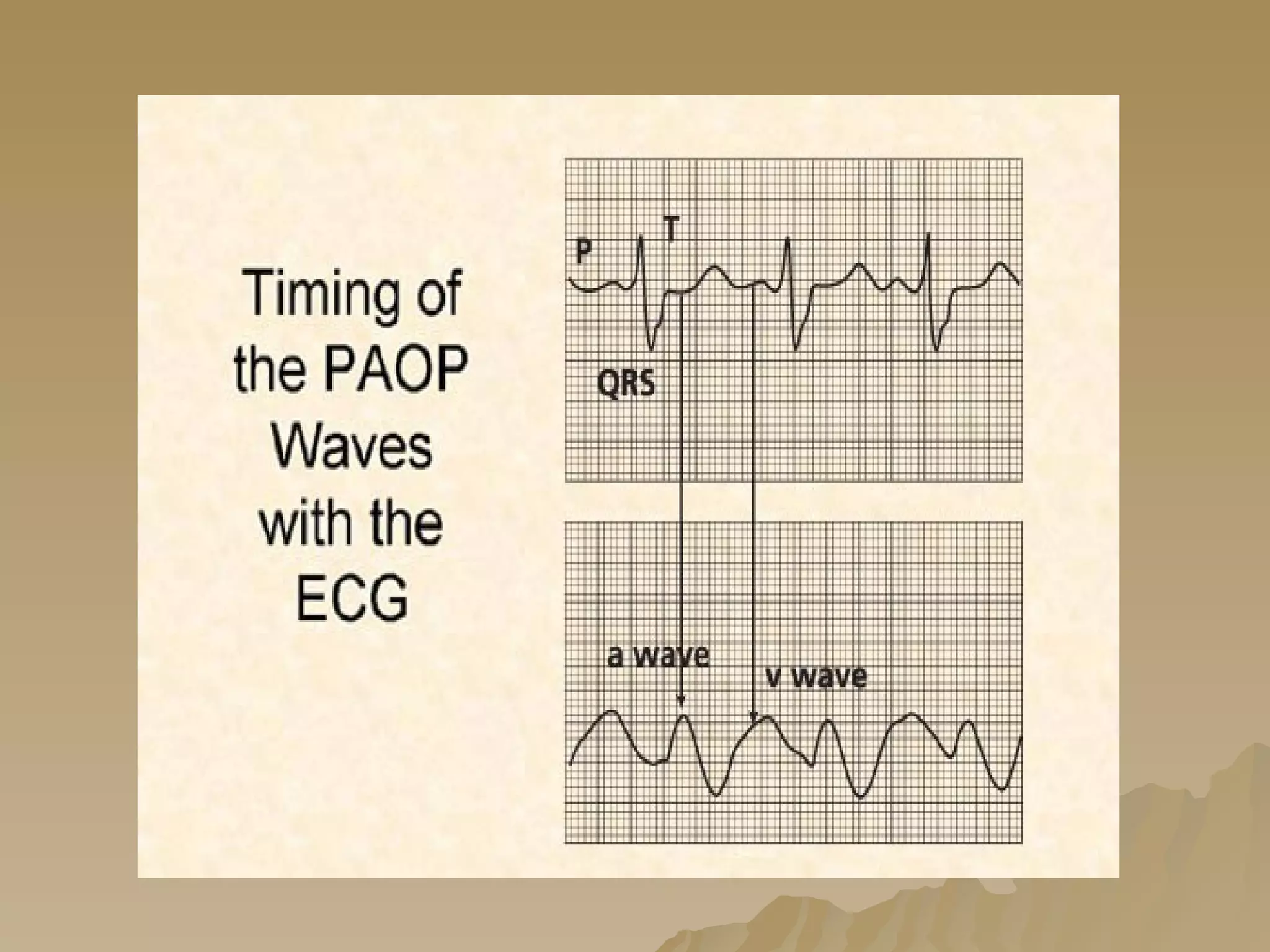
a, c,& v Waves and their Timing to the ECG tracing
 
 
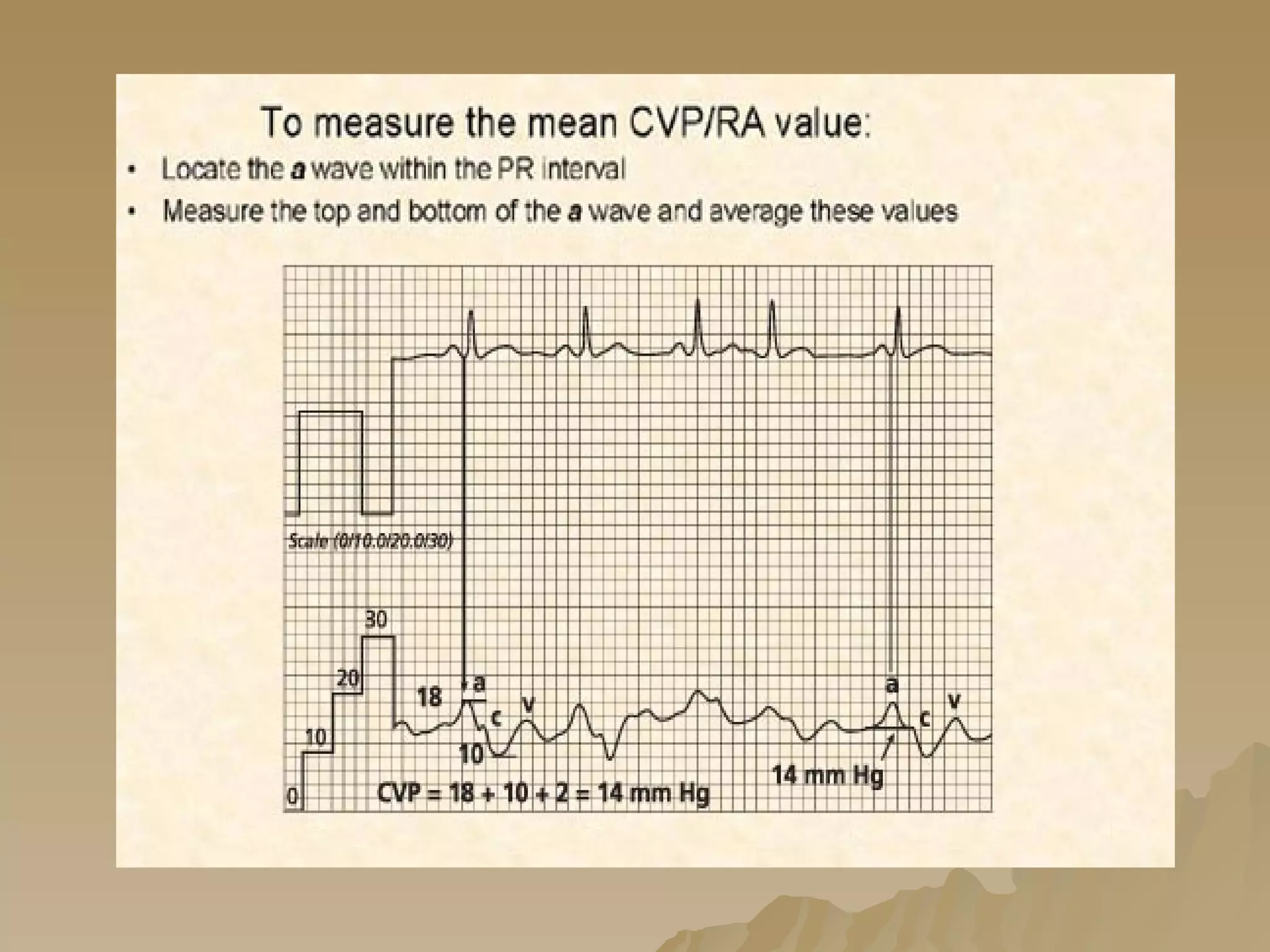
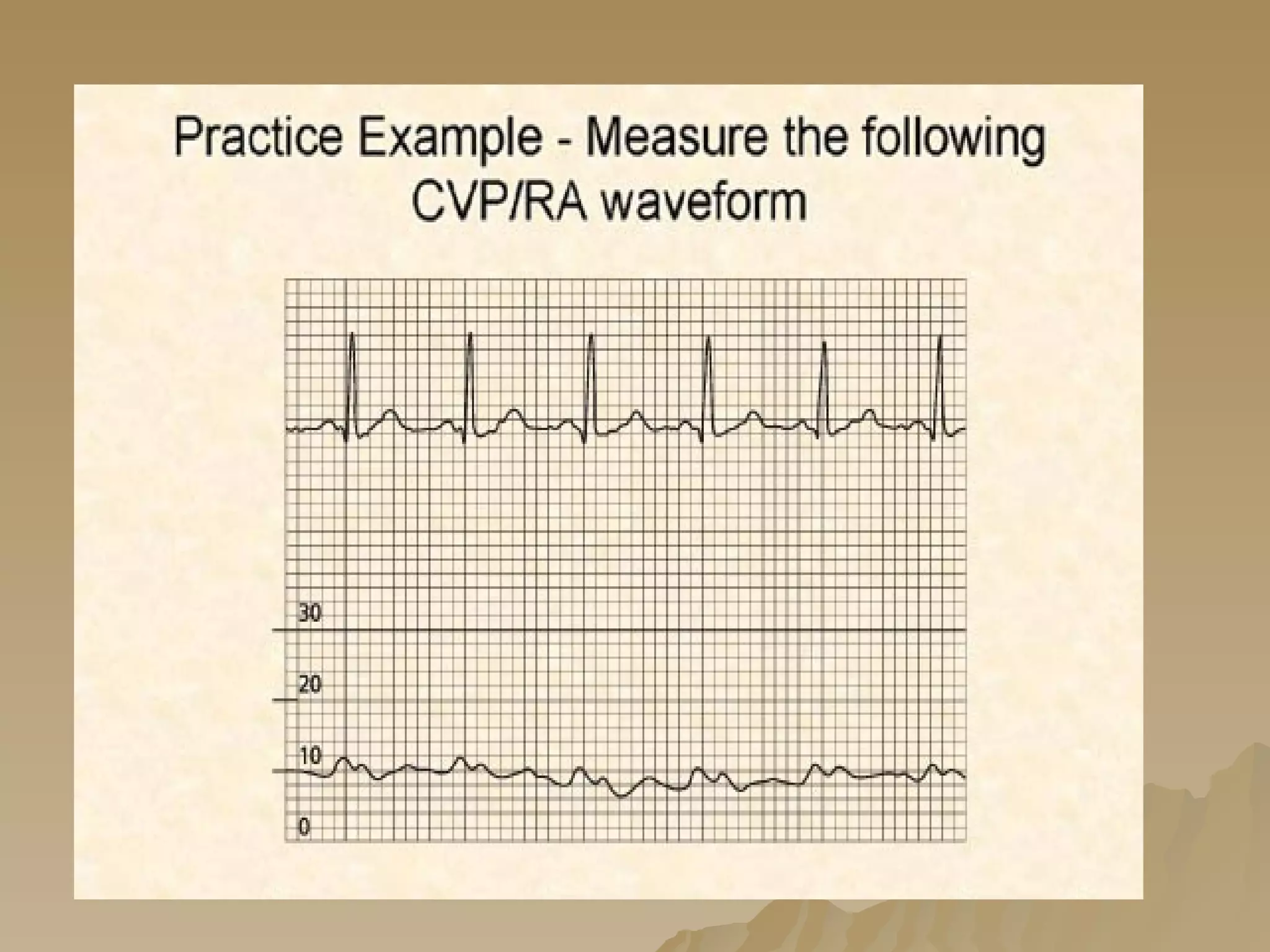
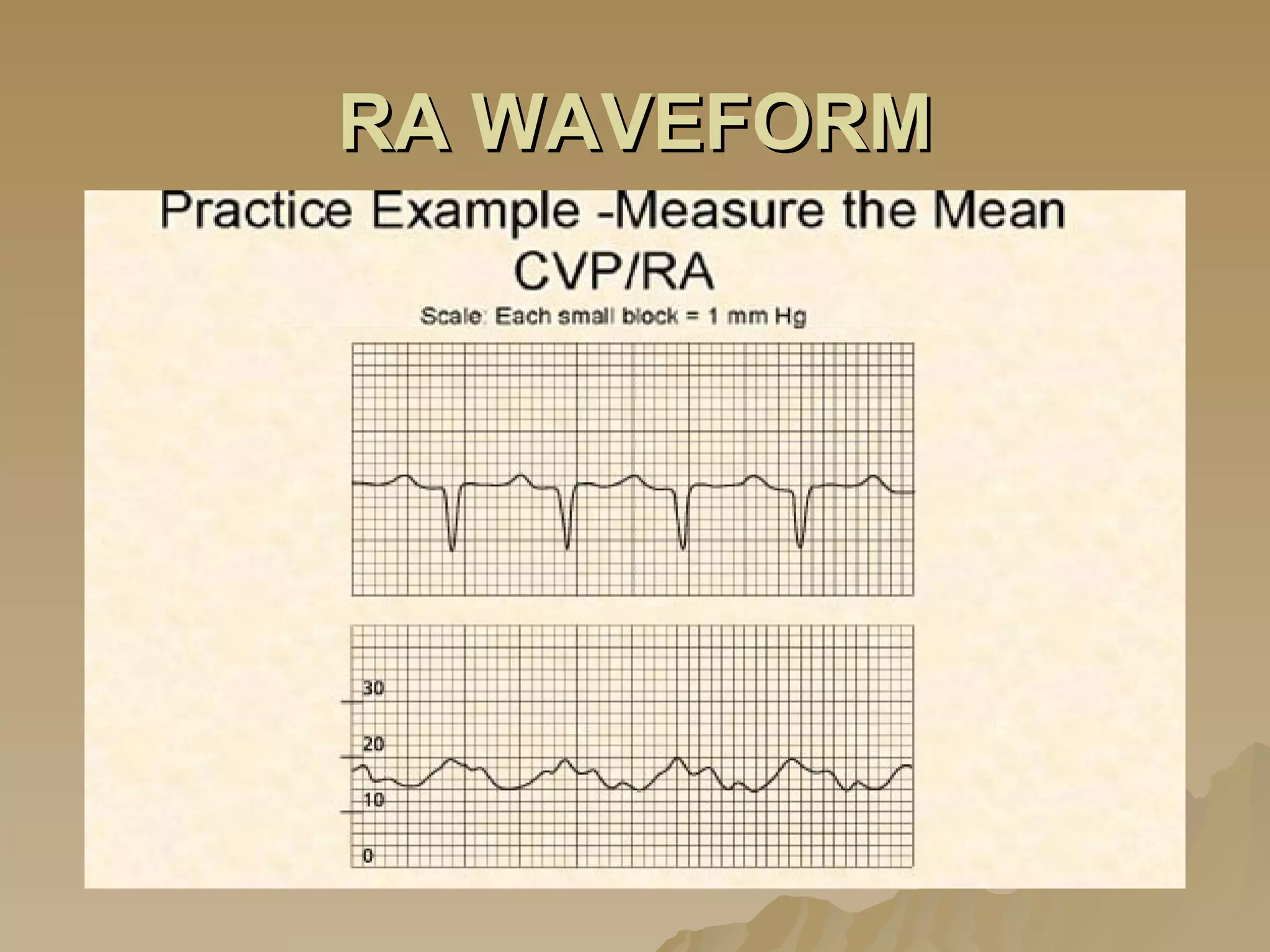
RA WAVEFORM
 
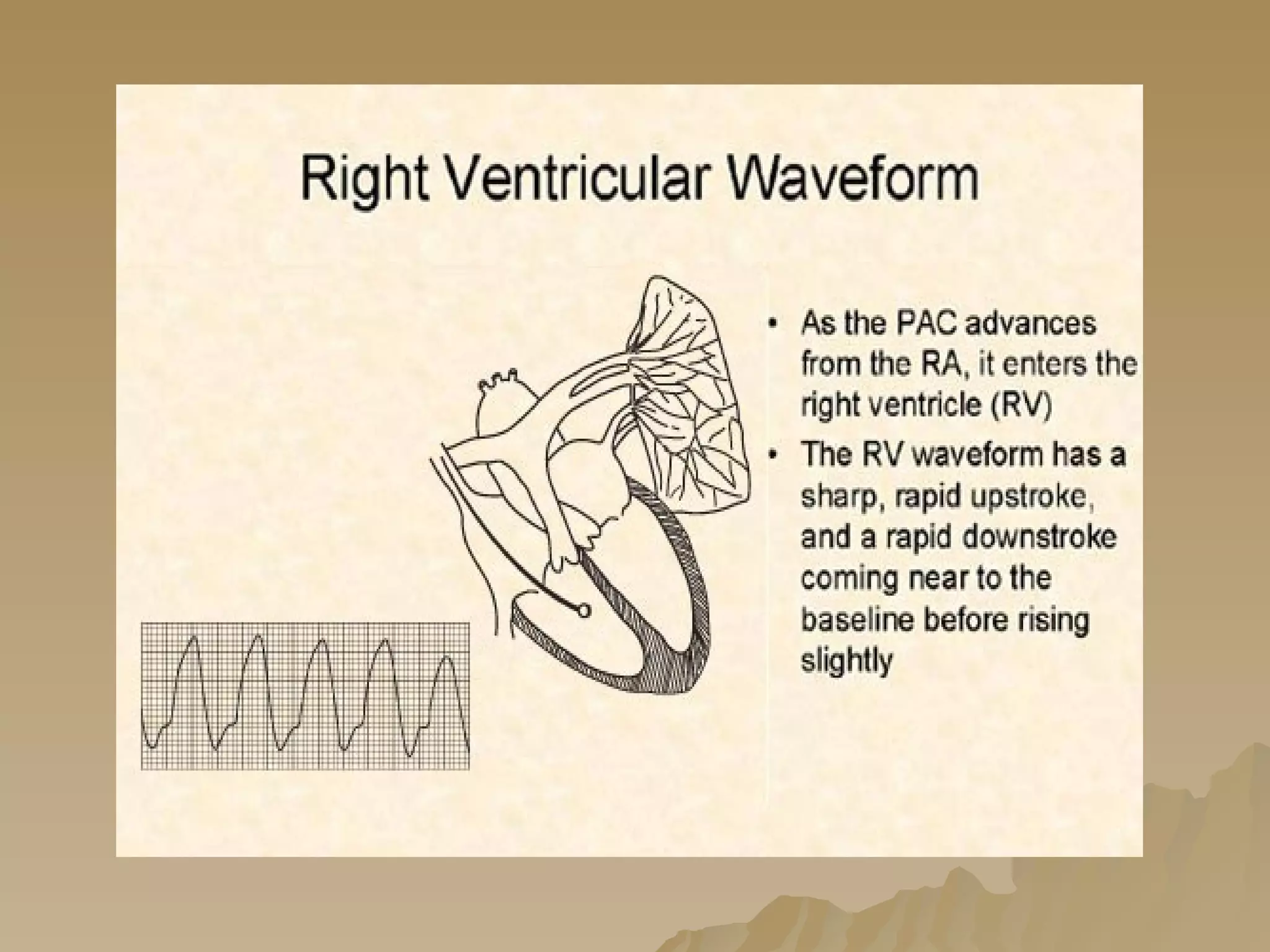
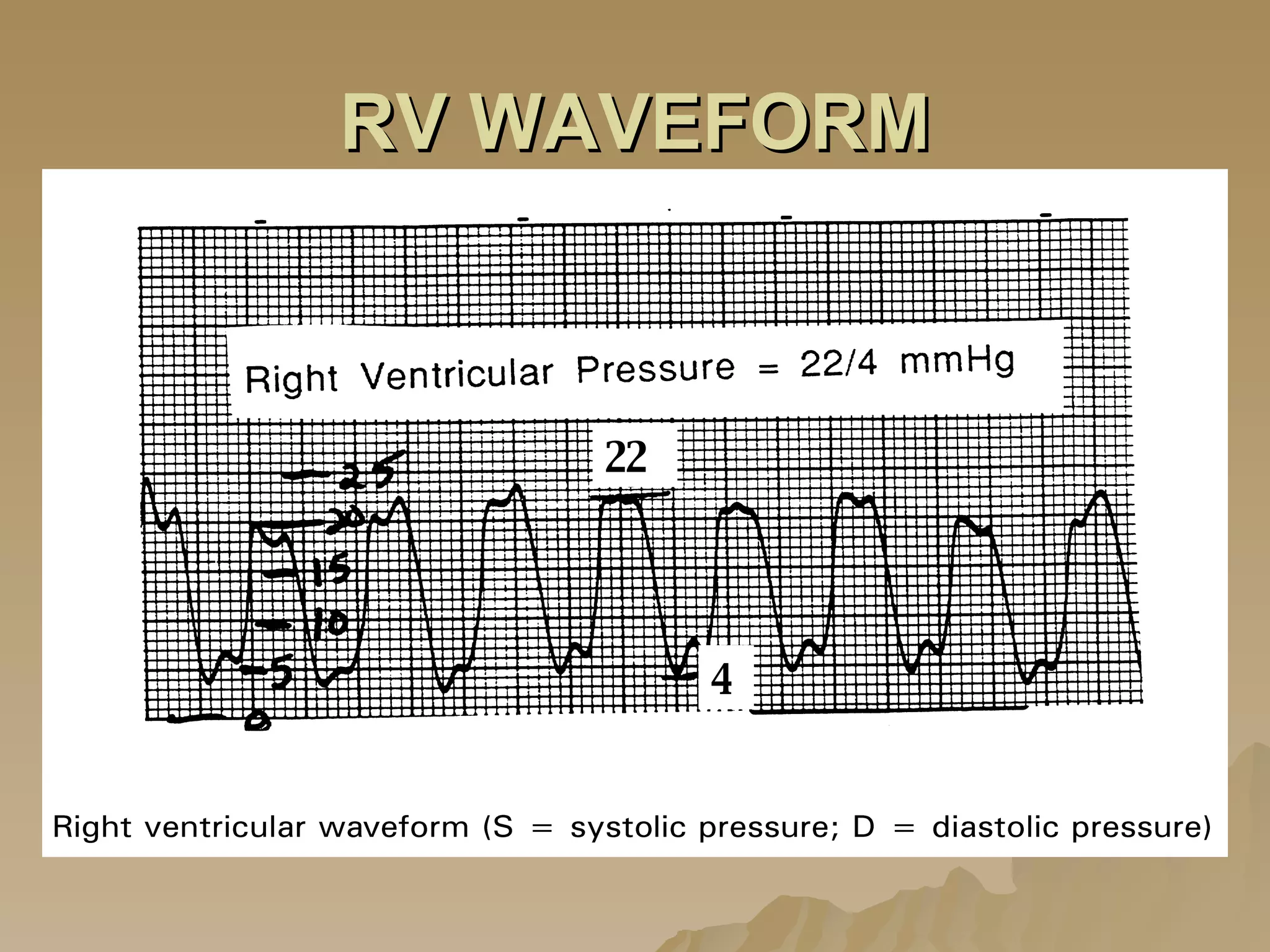
RV WAVEFORM 22 4
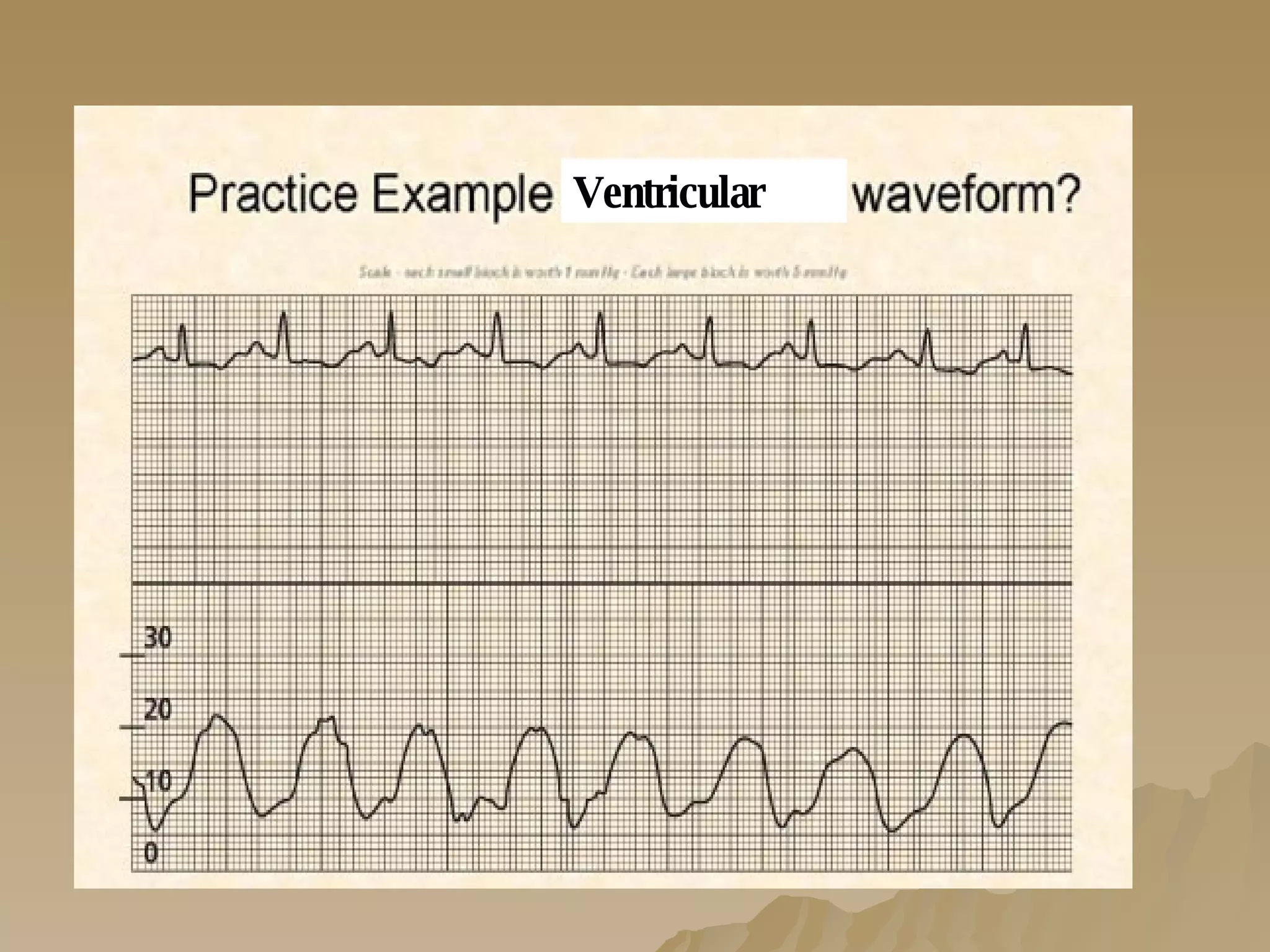
Ventricular
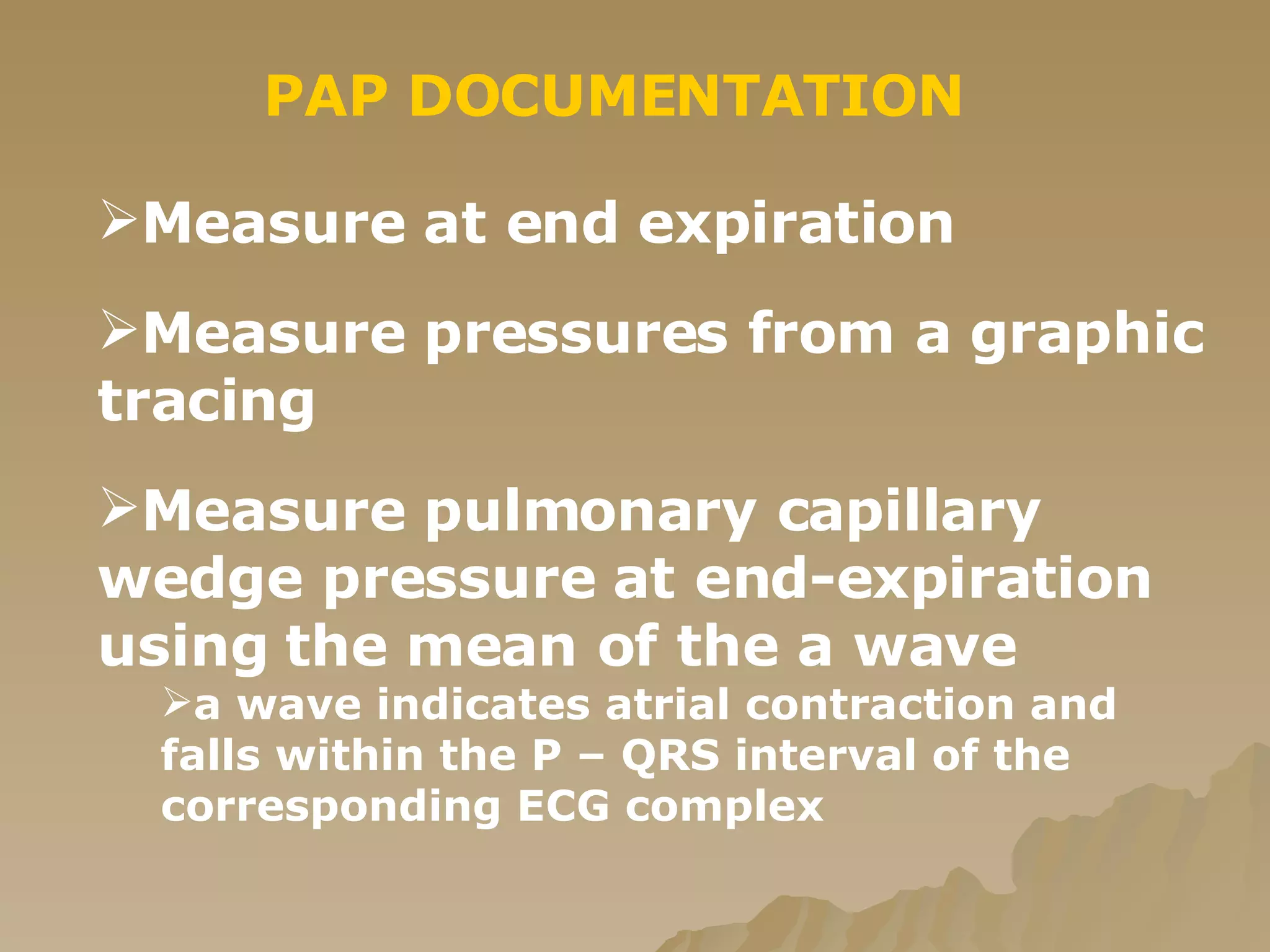
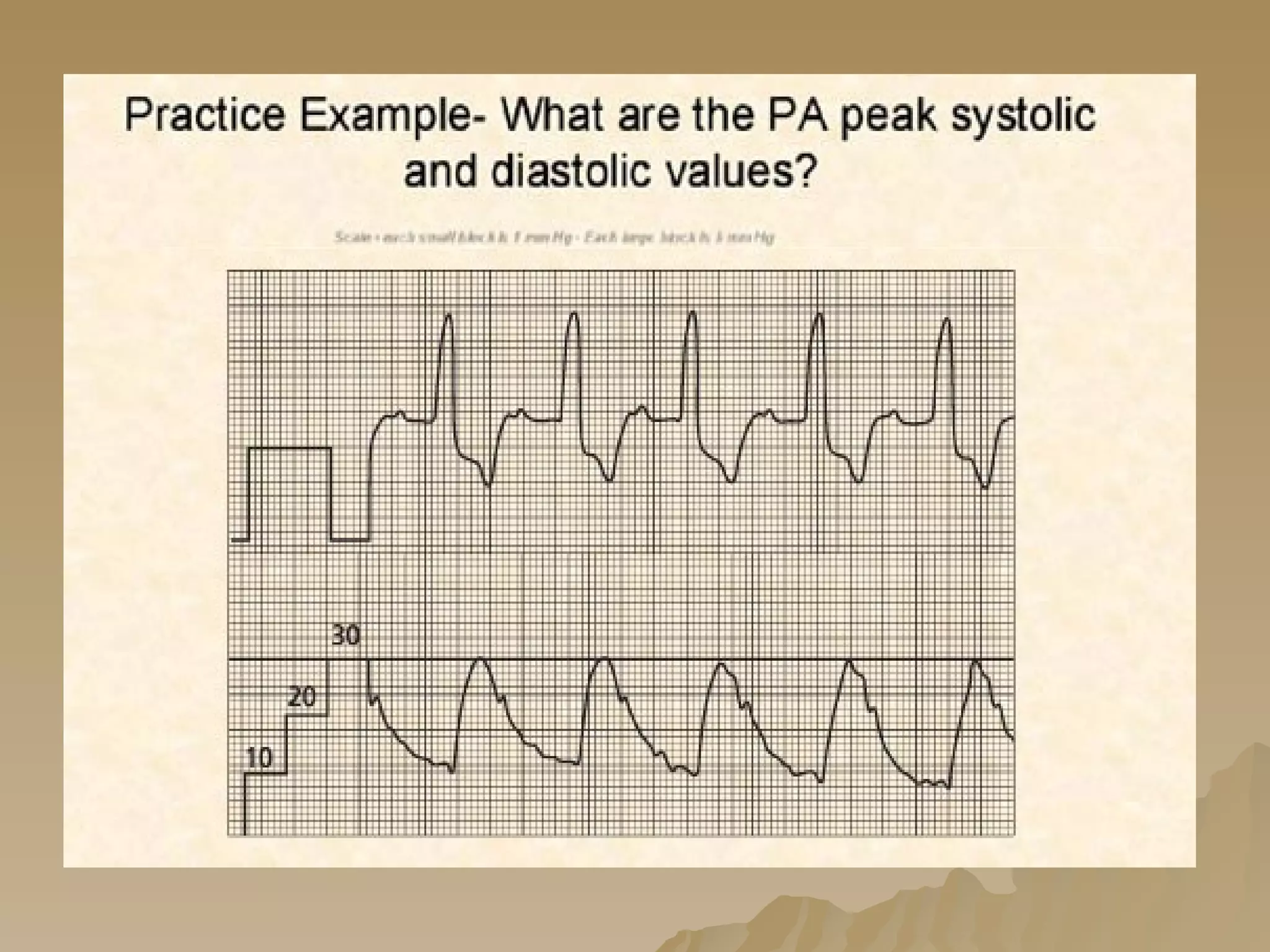
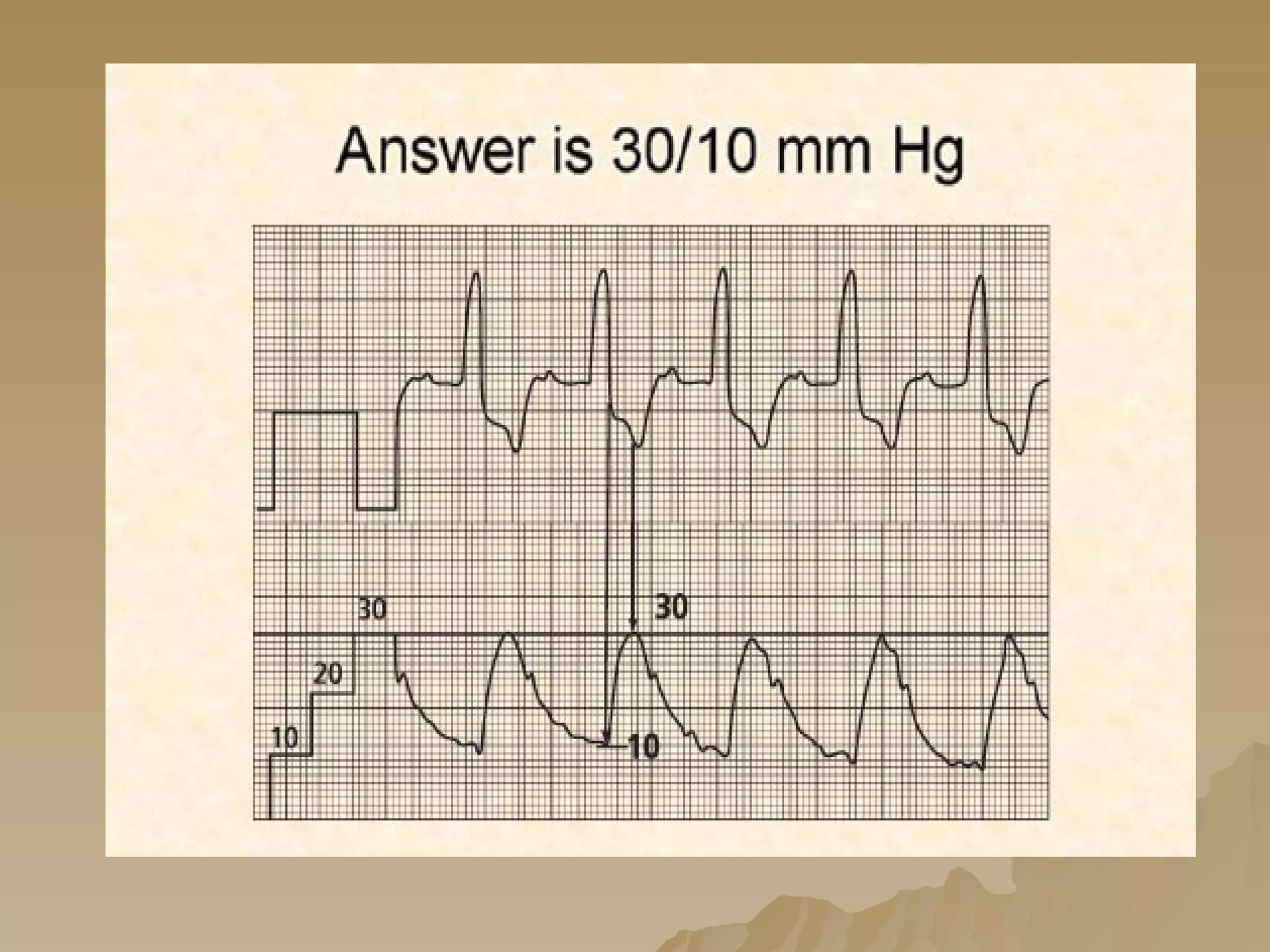
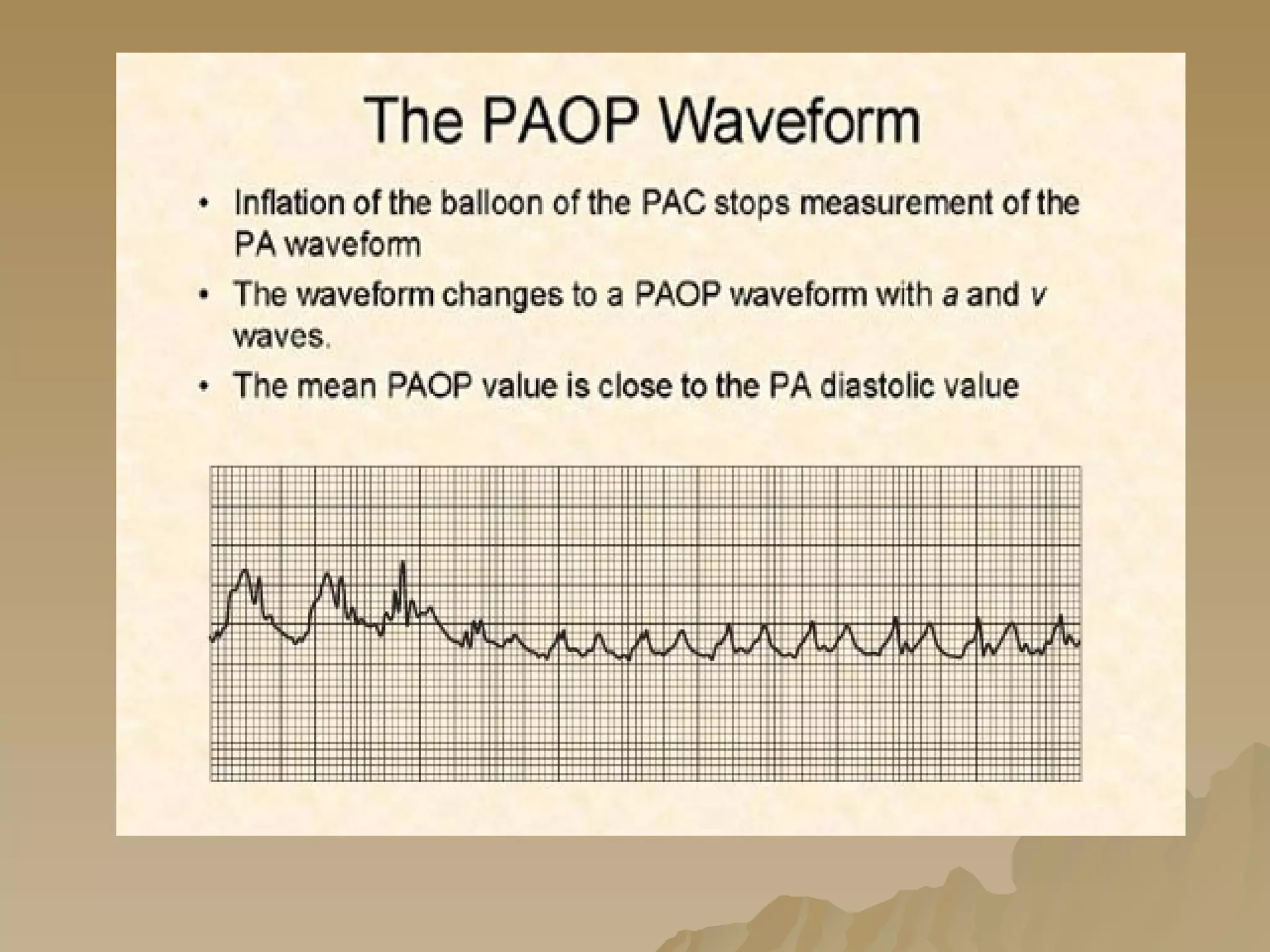
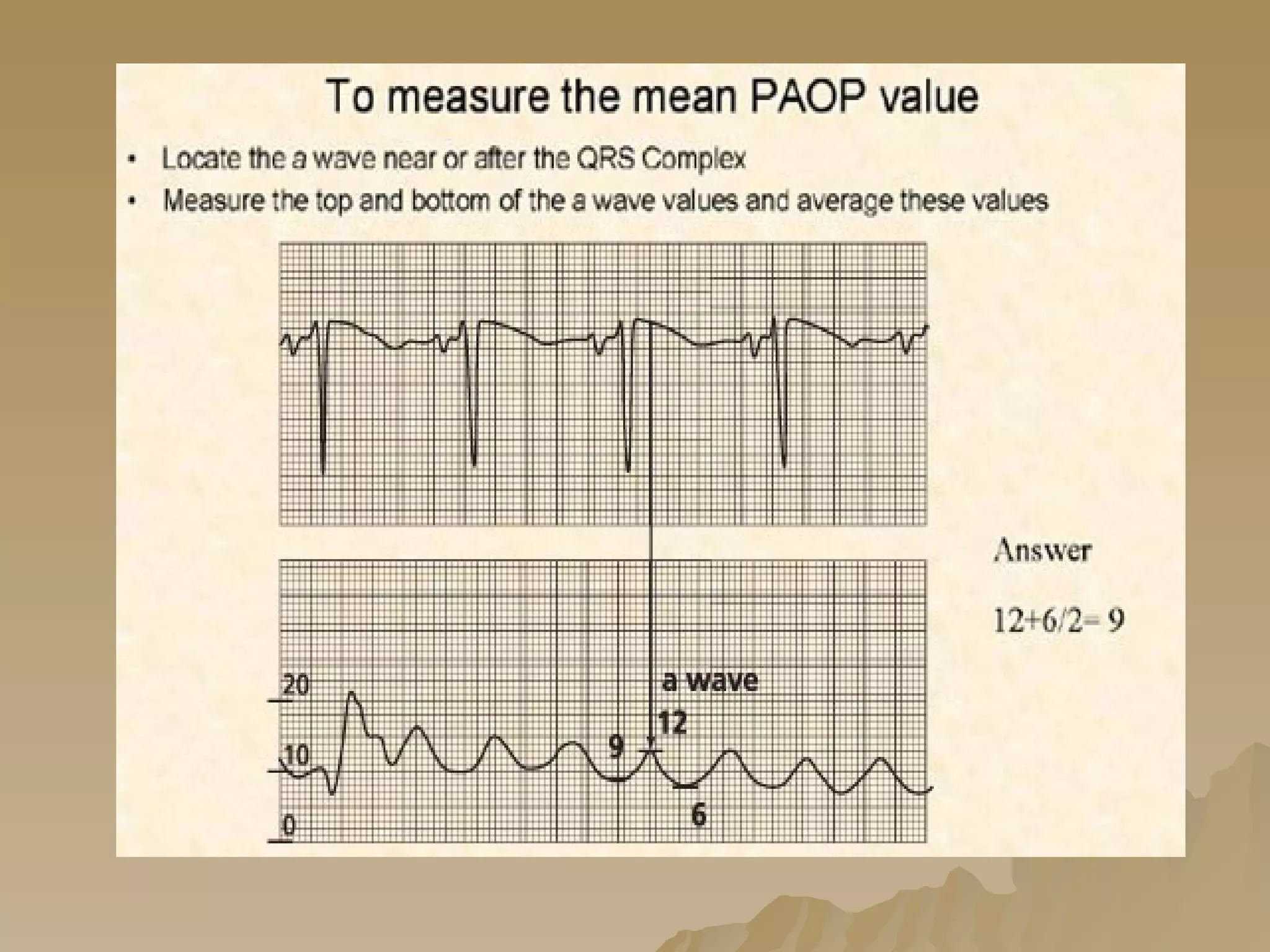
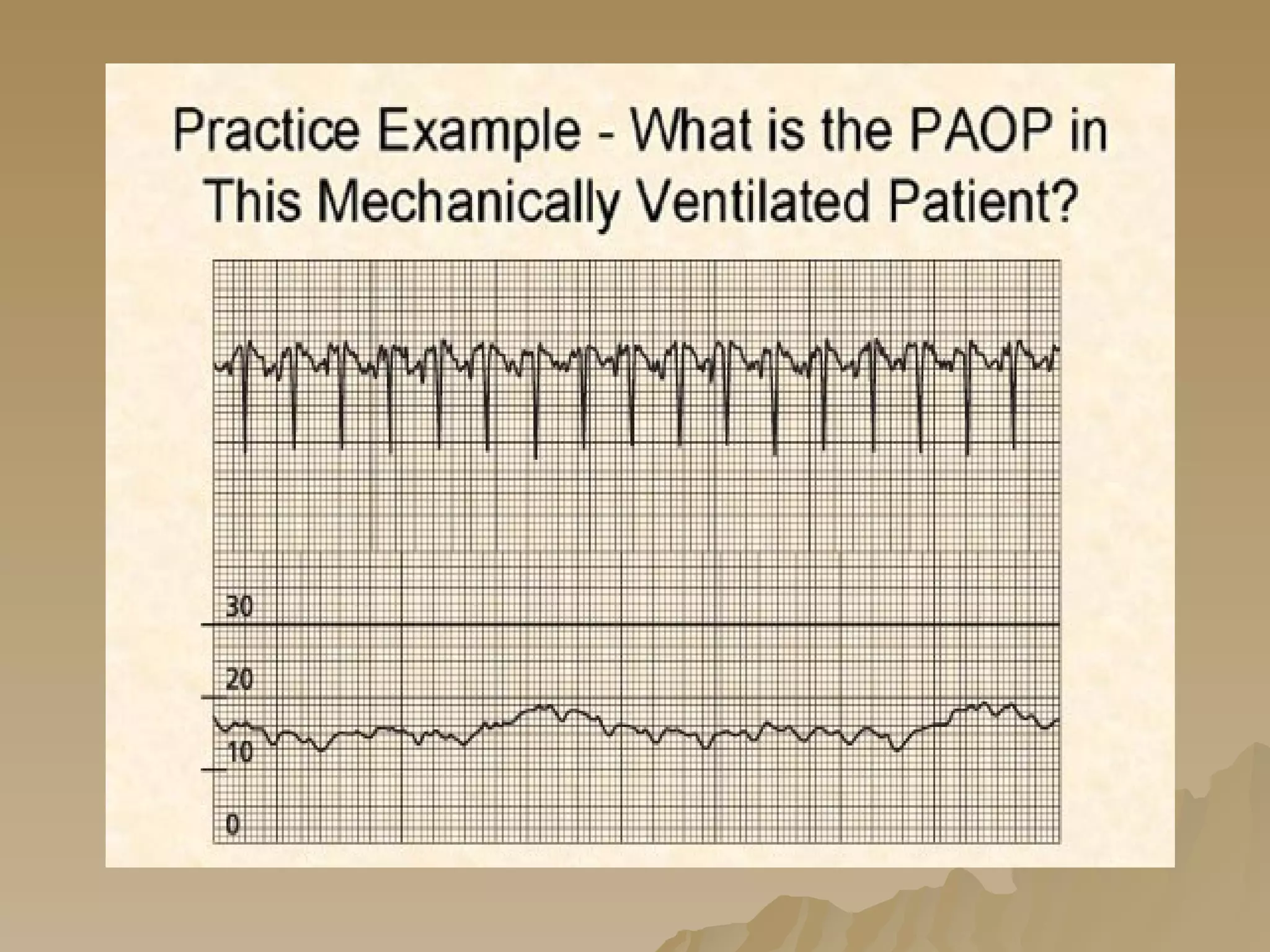
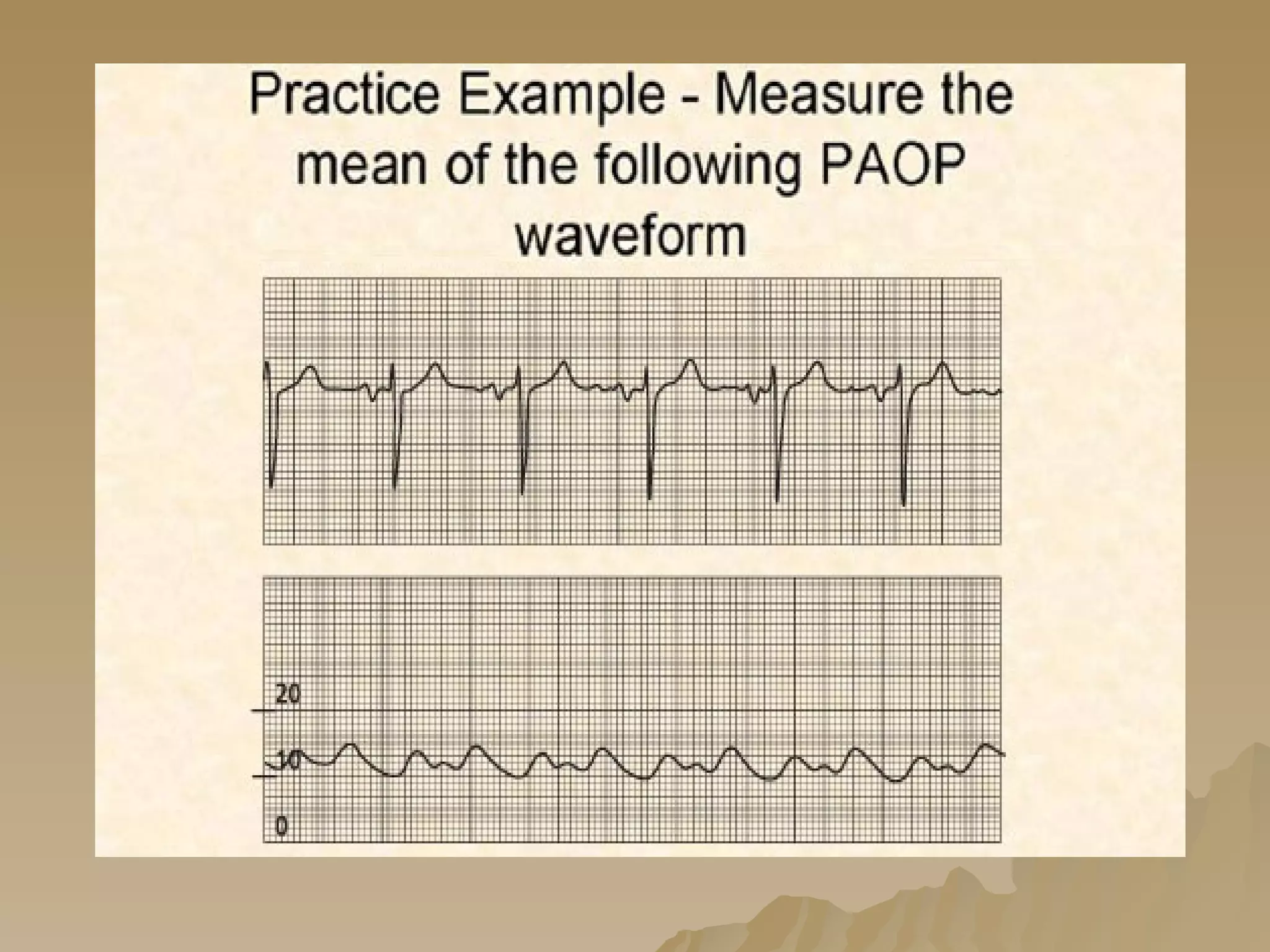
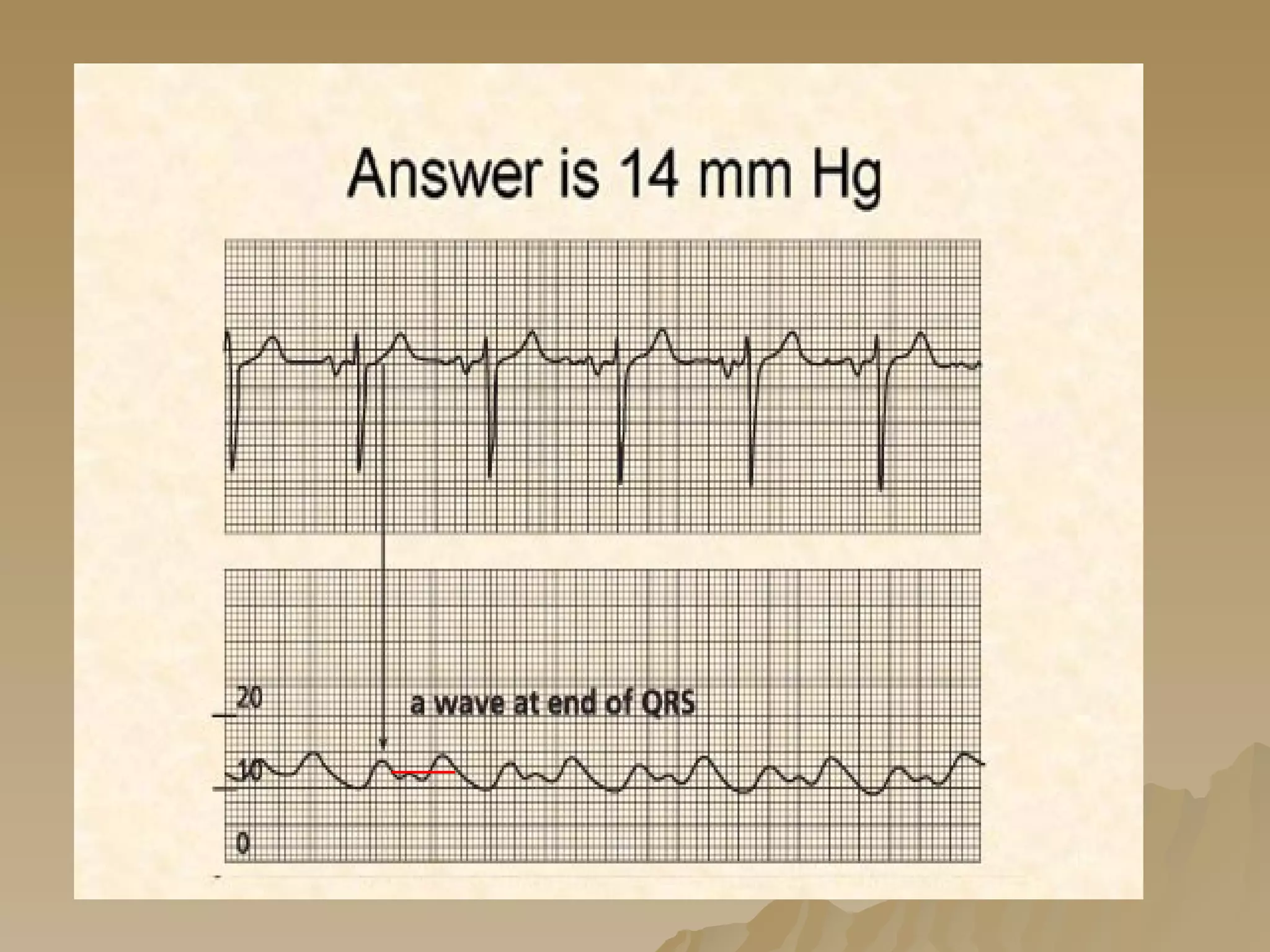
PAP DOCUMENTATION Measure at end expiration  Measure pressures from a graphic tracing  Measure pulmonary capillary wedge pressure at end-expiration using the mean of the a wave a wave indicates atrial contraction and  falls within the P – QRS interval of the corresponding ECG complex


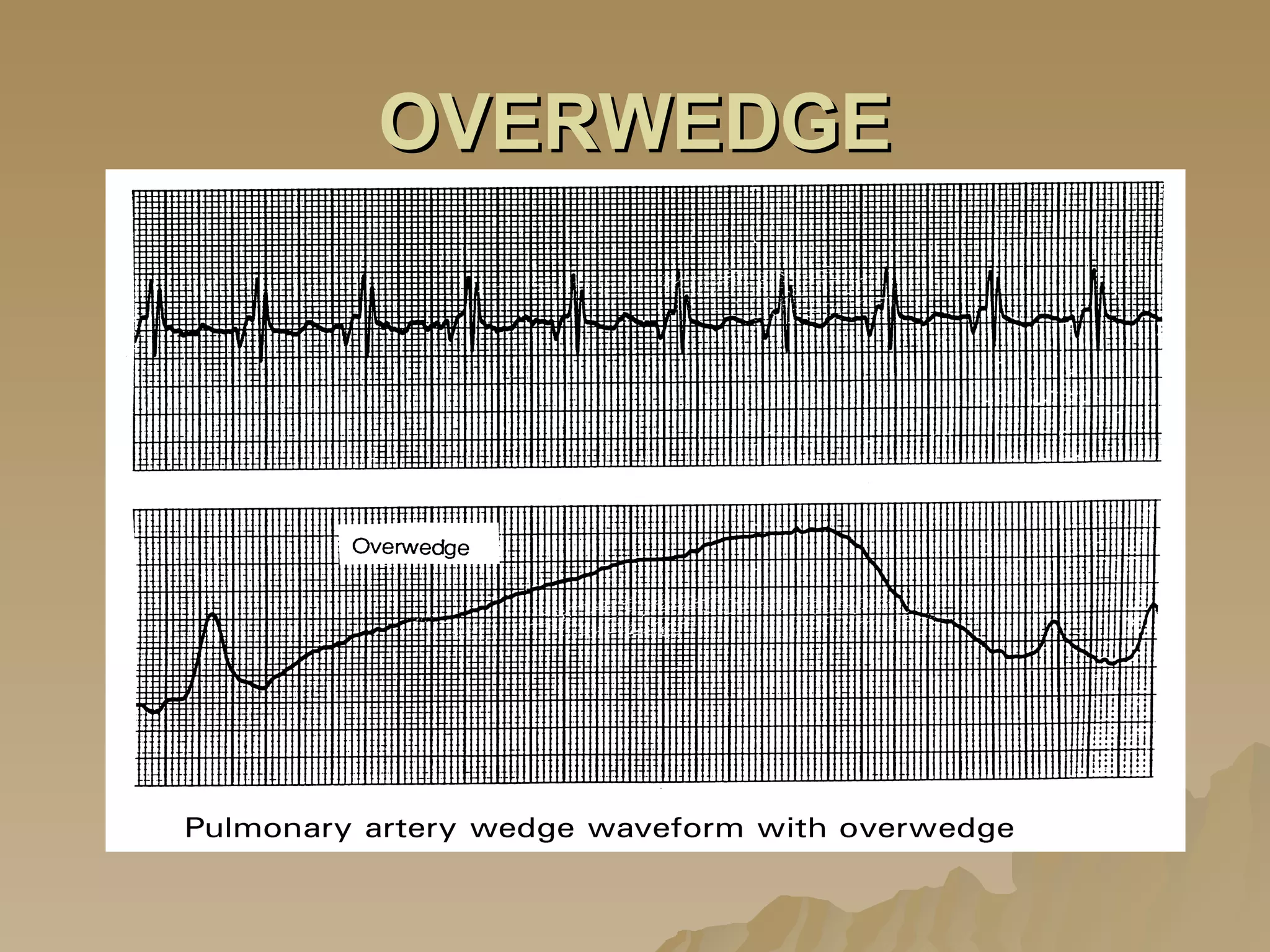
PAW WAVEFORM WITH MECHANICAL VENTILATION


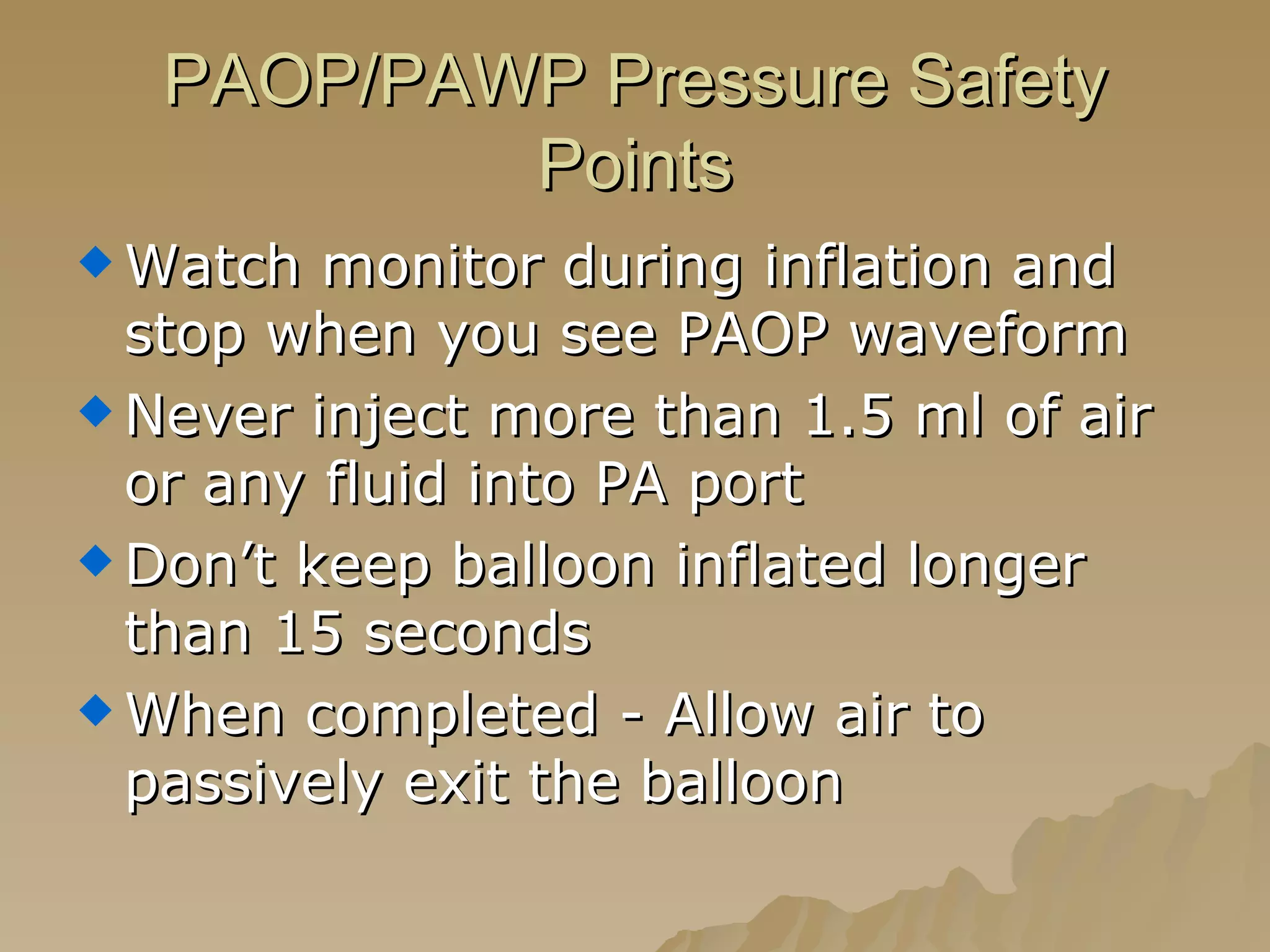
PAOP/PAWP Pressure Safety Points Watch monitor during inflation and stop when you see PAOP waveform Never inject more than 1.5 ml of air or any fluid into PA port Don’t keep balloon inflated longer than 15 seconds When completed - Allow air to passively exit the balloon
OVERWEDGE
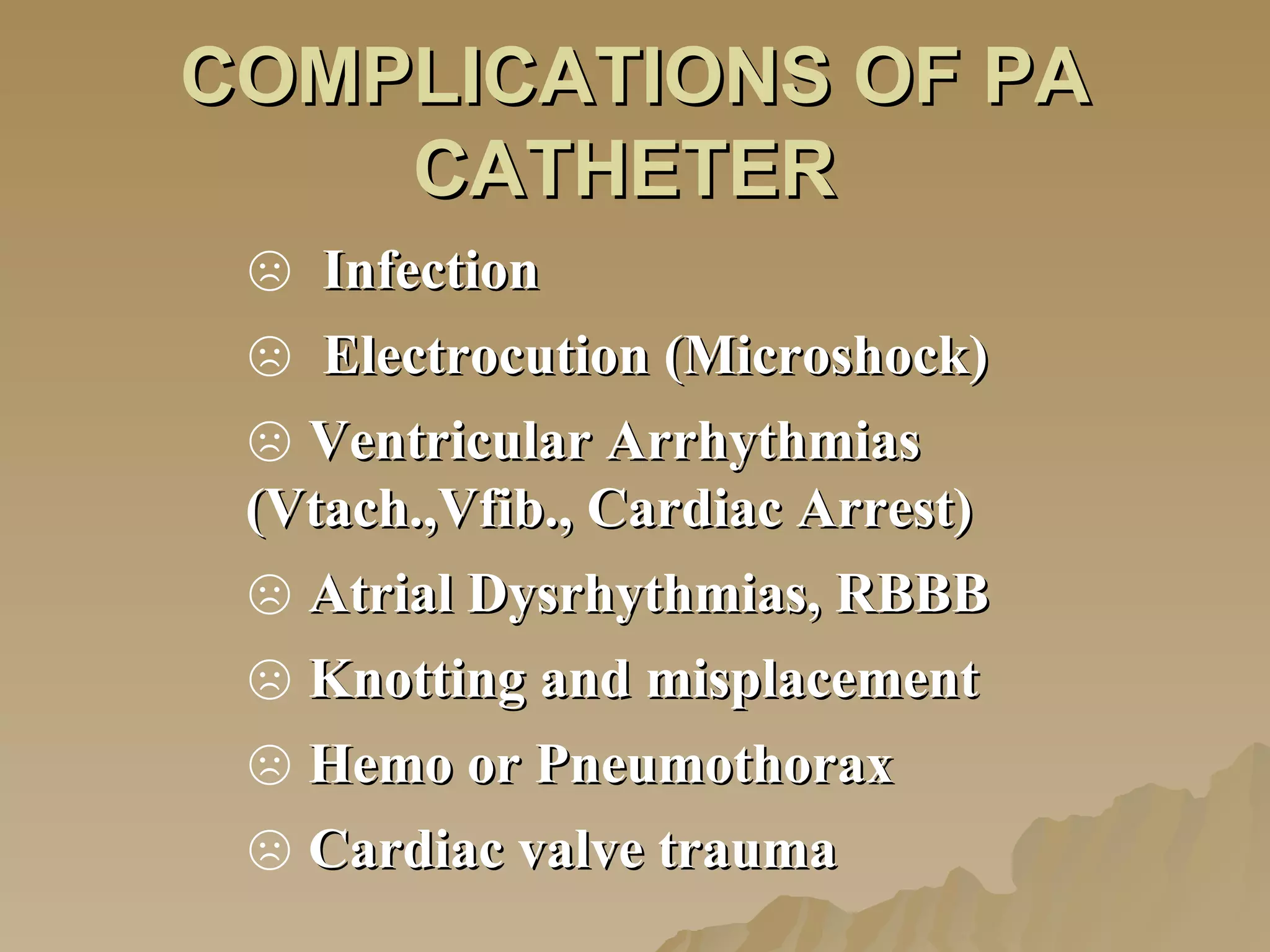
COMPLICATIONS OF PA CATHETER  Infection Electrocution (Microshock) Ventricular Arrhythmias  (Vtach.,Vfib., Cardiac Arrest) Atrial Dysrhythmias, RBBB Knotting and misplacement Hemo or Pneumothorax  Cardiac valve trauma
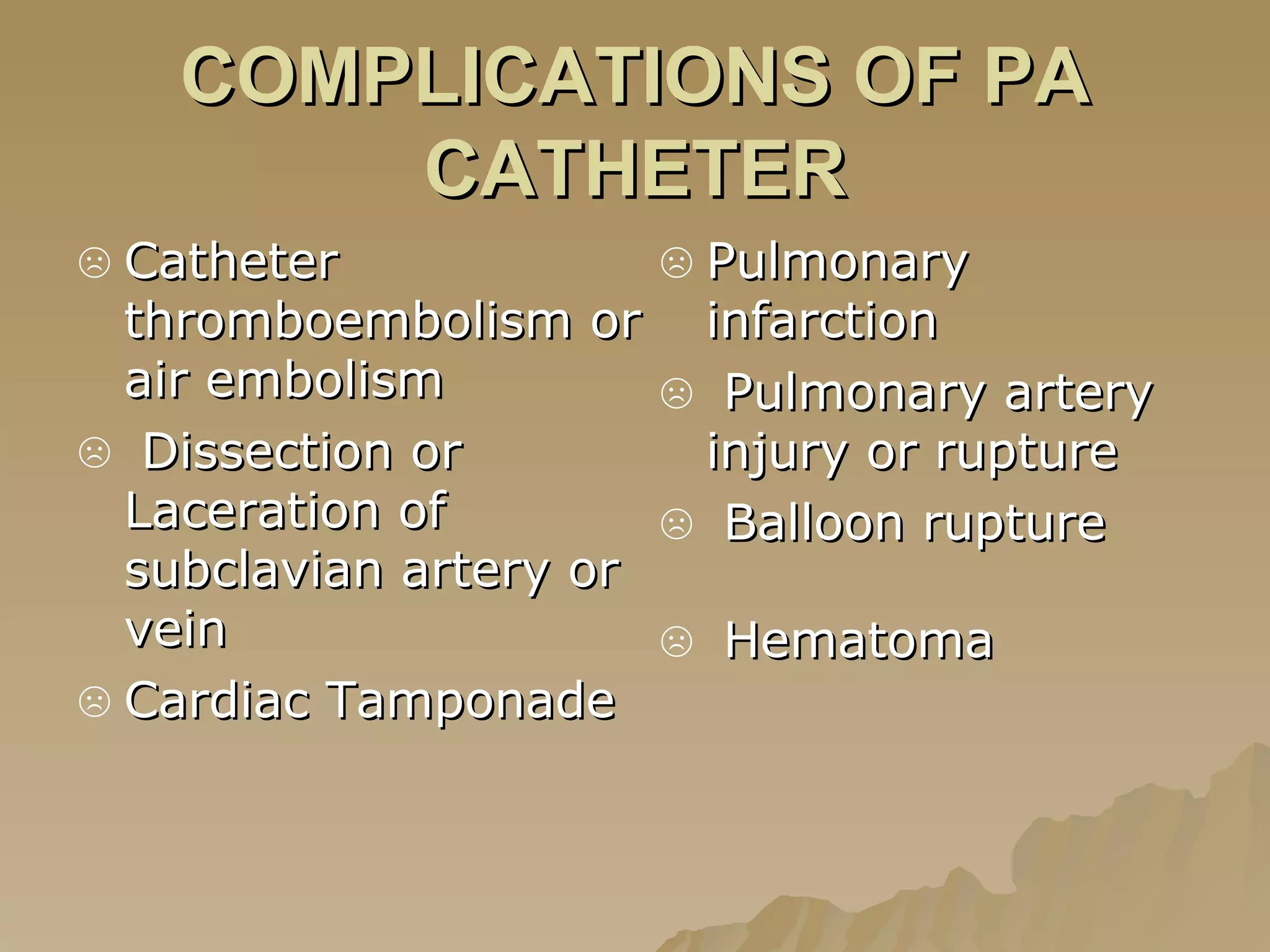
COMPLICATIONS OF PA CATHETER Catheter thromboembolism or air embolism  Dissection or Laceration of subclavian artery or vein Cardiac Tamponade Pulmonary infarction  Pulmonary artery injury or rupture  Balloon rupture  Hematoma
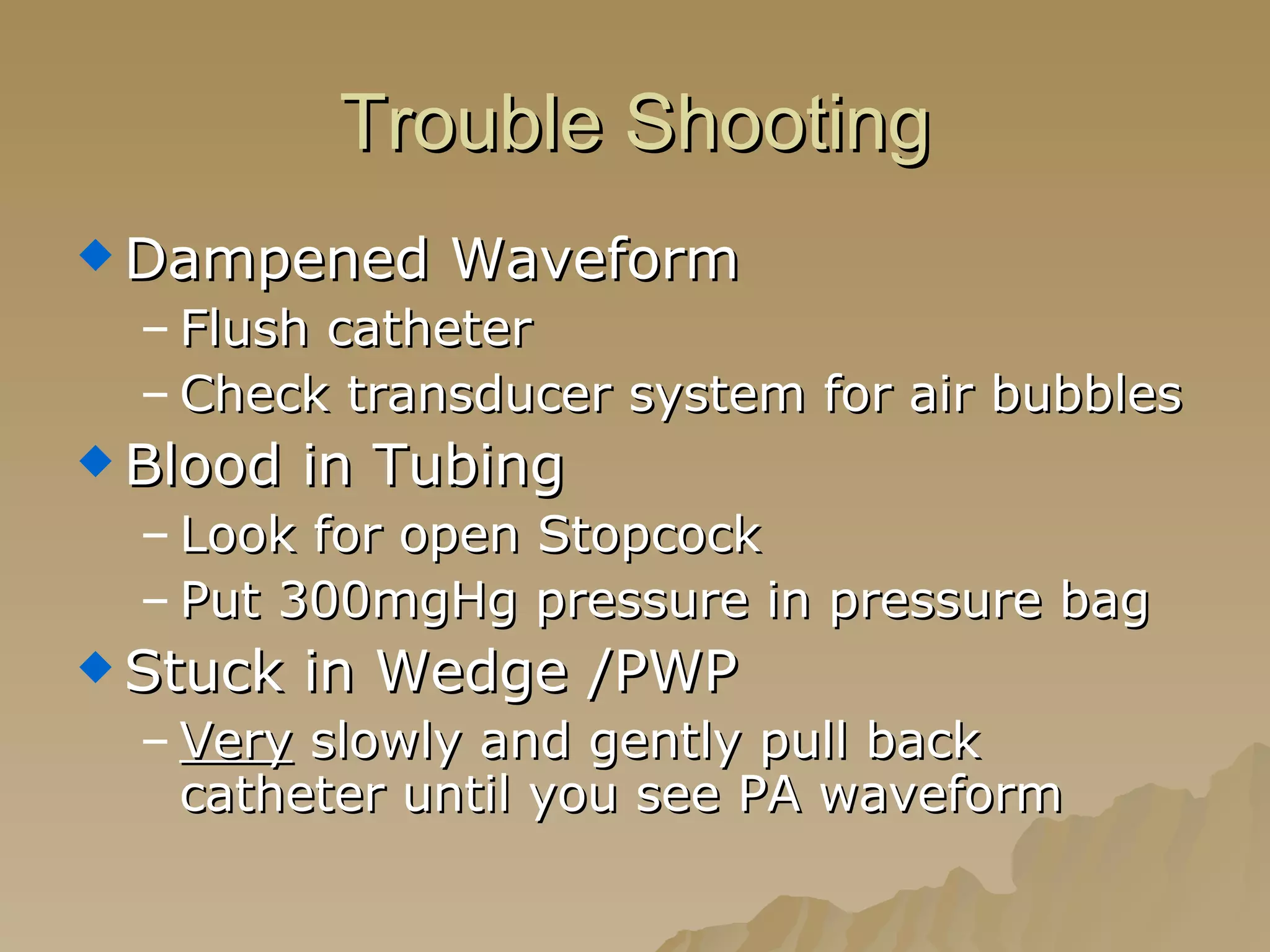
Trouble Shooting Dampened Waveform  Flush catheter Check transducer system for air bubbles Blood in Tubing Look for open Stopcock Put 300mgHg pressure in pressure bag Stuck in Wedge /PWP  Very  slowly and gently pull back catheter until you see PA waveform
References Pulmonary Artery Catheter Education Project @  www.pacep.org  sponsored by  American Association of Critical Care Nurses   American Association of Nurse Anesthetists   American College of Chest Physicians   American Society of Anesthesiologists   American Thoracic Society   National Heart Lung Blood Institute   Society of Cardiovascular Anesthesiologists   Society of Critical Care Medicine Hemodynamics Made Incredibly Visual – LWW publishing 2007  AACN practice alert – Pulmonary Artery Pressure Monitoring - Issued 5/2004   Handbook of Hemodynamic Monitoring – G Darovic 2 nd  ed. TCHP Education Consortium 2005 – A Primer for Cardiovascular Surgery and Hemodynamic Monitoring  Nursebob's MICU/CCU Survival Guide-Hemodynamics in Critical Care -Hemodynamic Monitoring Overview 12/04/00

Hemodynamics Basic Concepts

  • 1.
    Understanding Adult HemodynamicsTheory, Monitoring, Waveforms and Medications Vicki Clavir RN
  • 2.
    Purpose The primarypurpose of invasive hemodynamic monitoring is the early detection, identification, and treatment of life-threatening conditions such as heart failure and cardiac tamponade. By using invasive hemodynamic monitoring the nurse is able to evaluate the patient's immediate response to treatment such as drugs and mechanical support. The nurse can evaluate the effectiveness of cardiovascular function such as cardiac output, and cardiac index.
  • 3.
    Objectives Understands basiccardiac anatomy Verbalizes determinates of Cardiac Output and their relationships to each other List indications for hemodynamic monitoring Demonstrates monitor system and set up Describe pharmacologic strategies that manipulate the determinates of cardiac output
  • 4.
    Indications for HemodynamicMonitoring: One of the obvious indications for hemodynamic monitoring is decreased cardiac output. This could be from dehydration, hemorrhage, G. I. bleed, Burns, or surgery. All types of shock, septic, cardiogenic, neurogenic, or anaphylactic may require invasive hemodynamic monitoring. Any deficit or loss of cardiac function: such as acute MI, cardiomyopathy and congestive heart failure may require invasive hemodynamic monitoring.
  • 5.
  • 6.
    Coronary Arteries RCA-RA, RV&LV Inf, Inf Septum SA node 65% AV node 80% PDA 80-90% CX- LA,LV ( side/back) SA node 40% AV node 20% LAD – LV (front/bottom) Septum Bundle branches Left Main
  • 7.
  • 8.
    Cardiac Cycle DiastolePhase SA node contracts. Atria contract. Ventricles fill with more blood. Contraction reaches AV node . Late Diastole Atria and Ventricles are relaxed. Semilunar valves are closed. Atrioventricular valves are open. Ventricles continue to fill with blood. Mid Diastole Ventricles relax. Semilunar valves close. Atrioventricular valves open. Ventricles fill with blood. Early Diastole Cardiac Cycle Systole Phase Contraction passes from AV node to Purkinje fibers and ventricular cells. Ventricles contract. Atrioventricular valves close. Semilunar valves open. Blood is pumped from the ventricles to the arteries. Systole
  • 9.
  • 10.
    Electrical Conduction systemSA node  Atrial muscle  Internodal fibers  AV node  AV bundle  right and left bundle branches  Ventricular muscle
  • 11.
    Autonomic Nervous SystemThe autonomic nervous system stimulates the heart through a balance of sympathetic nervous system and parasympathetic nervous system innervations. The sympathetic nervous system plays a role in speeding up impulse formation, thus increasing the heart rate The parasympathetic nervous system slows the heart rate.
  • 12.
  • 13.
    Coronary Arteries Fill The Cardiac Cycle
  • 14.
  • 15.
  • 16.
    Normal CO 4-8liters Normal Cardiac Index is 2.5 to 4.5 liters
  • 17.
    Heart Rate Works with Stroke Volume Compensatory Tachycardia Bradycardia Dysrhythmias
  • 18.
  • 19.
  • 20.
    Factors Causing LowCardiac Output Inadequate Left Ventricular Filling Tachycardia Rhythm disturbance Hypovolemia Mitral or tricuspid stenosis Pulmonic stenosis Constrictive pericarditis or tamponade Restrictive cardiomyopathy Inadequate Left Ventricular Ejection Coronary artery disease causing LV ischemia or infarction Myocarditis, cardiomyopathy Hypertension Aortic stenosis Mitral regurgitation Drugs that are negative inotropes Metabolic disorders
  • 21.
  • 22.
    Hemodynamic terms Preload- Stretch of ventricular wall. Usually related to volume. (how full is the tank?) Frank Starling’s Law
  • 23.
    Hemodynamic terms Increasedpreload seen in Increased circulating volume (too much volume) Mitral insufficiency Aortic insufficiency Heart Failure Vasoconstrictor use- (dopamine) Decreased Preload seen in Decreased circulating volume (bleeding,3 rd spacing) Mitral stenosis Vasodilator use ( NTG) Asynchrony of atria and ventricles
  • 24.
  • 25.
  • 26.
    Normal Value -2-8 mm Hg
  • 27.
    Or LVEDP PAOP= 8-12 mm Hg PAD = 10-15 mm Hg
  • 28.
  • 29.
    Hemodynamic terms Contractility- How well does the ventricular walls move? How good is the pump?  Decreased due to Drugs – certain drugs will decrease contractility Lido, Barbiturates, CCB, Beta-blockers Infarction, Cardiomyopathy Vagal stimulation Hypoxia
  • 30.
    Hemodynamic terms Contractility-  Increased Positive inotropic drugs Dobutamine, Digoxin, Epinephrine Sympathetic stimulation Fear, anxiety Hypercalcemia ( high calcium)
  • 31.
    CONTRACTILITY - PRECAUTIONS Do Not use Inotropes until volume deficiency is corrected Correct Hypoxemia and electrolyte imbalance.
  • 32.
  • 33.
    Hemodynamic terms Afterload – resistance the blood in the ventricle must overcome to force the valves open and eject contents to circulation.
  • 34.
  • 35.
    Hemodynamic terms Factorsthat  increase afterload are Systemic resistance or High Blood pressure Aortic stenosis Myocardial Infarcts / Cardiomyopathy Polycythemia – Increased blood viscosity
  • 36.
    Hemodynamic terms Factorsthat  decrease Afterload Decreased volume Septic shock- warm phase End stage cirrhosis Vasodilators
  • 37.
    Normal PVR is120 to 200 dynes
  • 38.
    Normal SVR -800-1200 dynes
  • 39.
  • 40.
  • 41.
    Mean Arterial PressureMAP is considered to be the perfusion pressure seen by organs in the body. It is believed that a MAP of greater than 60 mmHg is enough to sustain the organs of the average person under most conditions. If the MAP falls significantly below this number for an appreciable time, the end organ will not get enough blood flow, and will become ischemic. Calculated MAP = 2x diastolic + systolic 3
  • 42.
  • 43.
  • 44.
  • 45.
  • 46.
  • 47.
  • 48.
  • 49.
  • 50.
    1. PRELOAD- venousblood return to the heart Controlled by; ♥ .Blood Volume  PRBC’s Albumin Normal Saline  Diuretics- lasix,bumex Thiazides  Ace inhibitors ♥ . Venous Dilation  Nitroglycerine  Ca+ channel blockers clonidine (Catapress) methyldopa trimethaphan (arfonad) ↓ Dobutamine  Morphine 2. CONTRACTILITY - forcefulness of contractility  Ca+ channel blockers  Digoxin  Dopamine/Dobutamine  Milrinone/amrinone 3. AFTERLOAD – work required to open aortic valve and eject blood – resistance to flow in arteries °  Dopamine (at higher doses)  Ace inhibitors  Nipride/lesser extent Nitro  Calcium channel blockers  Labetalol Drugs of Hemodynamics 4. HEART RATE –  Beta blockers  Calcium channel blockers  Atropine  Dopamine  Dobutamine
  • 51.
  • 52.
  • 53.
  • 54.
  • 55.
    O2 O2 O2 O2 O2 O2 O2 To BODY From Body
  • 56.
  • 57.
    Factors that makeup SVO 2 are Cardiac output SaO 2 VO 2 (oxygen consumption) Hemoglobin
  • 58.
  • 59.
    Fever, infection Seizures,agitation Shivering  Work of Breathing Suctioning, bathing, repositioning  Oxygen consumption - LV dysfunction (cardiac disease, drugs) - Shock – cardiac/septic (late) Hypovolemia Cardiac Dysrhythmias  Cardiac Output - Hypoxemia Lung disease Low FIO2 Oxygen saturation (SaO2) - Anemia - Hemorrhage O2 Delivery  Hb concentration Clinical Conditions Causative Factors
  • 60.
    Increased SVO 2Most common cause is - Sepsis Or Wedged PA catheter
  • 61.
    Functions of PACatheter Allows for continuous bedside monitoring of the following Vascular tone, myocardial contractility, and fluid balance can be correctly assessed and managed. Measures Pulmonary Artery Pressures, CVP, and allows for hemodynamic calculated values. Measures Cardiac Output. (Thermodilution) SvO2 monitoring (Fiber optic). Transvenous pacing. Fluid administration.
  • 62.
    PA Catheter KEEPCOVERED KEEP LOCKED YELLOW Clear BLUE RED Markings on catheter. 1. Each thin line= 10 cm. 2. Each thick line= 50 cm.
  • 63.
    Description of PACatheter Ports/lumens. CVP Proximal (pressure line - injectate port for CO)- BLUE PA Distal (Pressure line hook up)- Yellow Extra port - usually- Clear Thermistor – Red Cap
  • 64.
    Continuous Cardiac Outputand SVO 2 monitoring
  • 65.
    Indications for PAcatheter The pulmonary artery catheter is indicated in patients whose cardiopulmonary pressures, flows, and circulating volume require precise, intensive management. MI – cardiogenic shock - CHF Shock - all types Valvular dysfunction Preoperative, Intraoperative, and Postoperative Monitoring ARDS, Burns, Trauma, Renal Failure
  • 66.
  • 67.
  • 68.
    500 ml PremixedHeparinized bag of NS
  • 69.
  • 70.
  • 71.
    ♥ Re-level the transducer with any change in the patient’s position ♥ Referencing the system 1 cm above the left atrium decreases  the pressure by 0.73 mm Hg ♥ Referencing the system 1 cm below the left atrium increases  the pressure by 0.73 mm Hg Angles 45° 30° 0 °
  • 72.
  • 73.
    Remove cap andkeep sterile Turn stopcock towards pressure bag Zero monitor Replace cap
  • 74.
  • 75.
    SQUARE WAVE TEST- Determines the ability of the transducer to correctly reflect pressures. - Perform at the beginning of each shift A B C
  • 76.
    Thermodilution Cardiac OutputsC ardiac O utputs reading should be within . 5 of each other for averaging purposes. Except in patients with atrial fibrillation- just average 3 to 4 readings. (due to loss of atrial kick output changes from minute to minute) C ardiac O utputs should be obtained at the end of respiration - at the same point each time
  • 77.
  • 78.
  • 79.
    RN magazine April, 2003 - PA catheter refresher course.
  • 80.
  • 81.
    ALL PA measurementsare calculated at end expiration because the lungs are at their most equal - (negative vs. positive pressures)
  • 82.
  • 83.
    a, c,& vWaves and their Timing to the ECG tracing
  • 84.
  • 85.
  • 86.
  • 87.
  • 88.
  • 89.
  • 90.
    PAP DOCUMENTATION Measureat end expiration Measure pressures from a graphic tracing Measure pulmonary capillary wedge pressure at end-expiration using the mean of the a wave a wave indicates atrial contraction and falls within the P – QRS interval of the corresponding ECG complex
  • 91.
  • 92.
  • 93.
  • 94.
  • 95.
  • 96.
  • 97.
  • 98.
  • 99.
  • 100.
  • 101.
  • 102.
  • 103.
  • 104.
  • 105.
    PAW WAVEFORM WITHMECHANICAL VENTILATION
  • 106.
  • 107.
  • 108.
  • 109.
  • 110.
    PAOP/PAWP Pressure SafetyPoints Watch monitor during inflation and stop when you see PAOP waveform Never inject more than 1.5 ml of air or any fluid into PA port Don’t keep balloon inflated longer than 15 seconds When completed - Allow air to passively exit the balloon
  • 111.
  • 112.
    COMPLICATIONS OF PACATHETER Infection Electrocution (Microshock) Ventricular Arrhythmias (Vtach.,Vfib., Cardiac Arrest) Atrial Dysrhythmias, RBBB Knotting and misplacement Hemo or Pneumothorax Cardiac valve trauma
  • 113.
    COMPLICATIONS OF PACATHETER Catheter thromboembolism or air embolism Dissection or Laceration of subclavian artery or vein Cardiac Tamponade Pulmonary infarction Pulmonary artery injury or rupture Balloon rupture Hematoma
  • 114.
    Trouble Shooting DampenedWaveform Flush catheter Check transducer system for air bubbles Blood in Tubing Look for open Stopcock Put 300mgHg pressure in pressure bag Stuck in Wedge /PWP Very slowly and gently pull back catheter until you see PA waveform
  • 115.
    References Pulmonary ArteryCatheter Education Project @ www.pacep.org sponsored by American Association of Critical Care Nurses American Association of Nurse Anesthetists American College of Chest Physicians American Society of Anesthesiologists American Thoracic Society National Heart Lung Blood Institute Society of Cardiovascular Anesthesiologists Society of Critical Care Medicine Hemodynamics Made Incredibly Visual – LWW publishing 2007 AACN practice alert – Pulmonary Artery Pressure Monitoring - Issued 5/2004 Handbook of Hemodynamic Monitoring – G Darovic 2 nd ed. TCHP Education Consortium 2005 – A Primer for Cardiovascular Surgery and Hemodynamic Monitoring Nursebob's MICU/CCU Survival Guide-Hemodynamics in Critical Care -Hemodynamic Monitoring Overview 12/04/00