Glasgow Coma Score1 No motor response to pain 2 Extends to pain 3 Flexes to pain 4 Withdraws 5 Localizes pain 6 Follows simple commands M otor response 1 None 2 Incomprehensible 3 Inappropriate 4 Confused 5 Oriented Verbal response 1 None 3 To pain 3 To touch or loud voice 4 Opens eyes on own Eye opening Score Response
29.
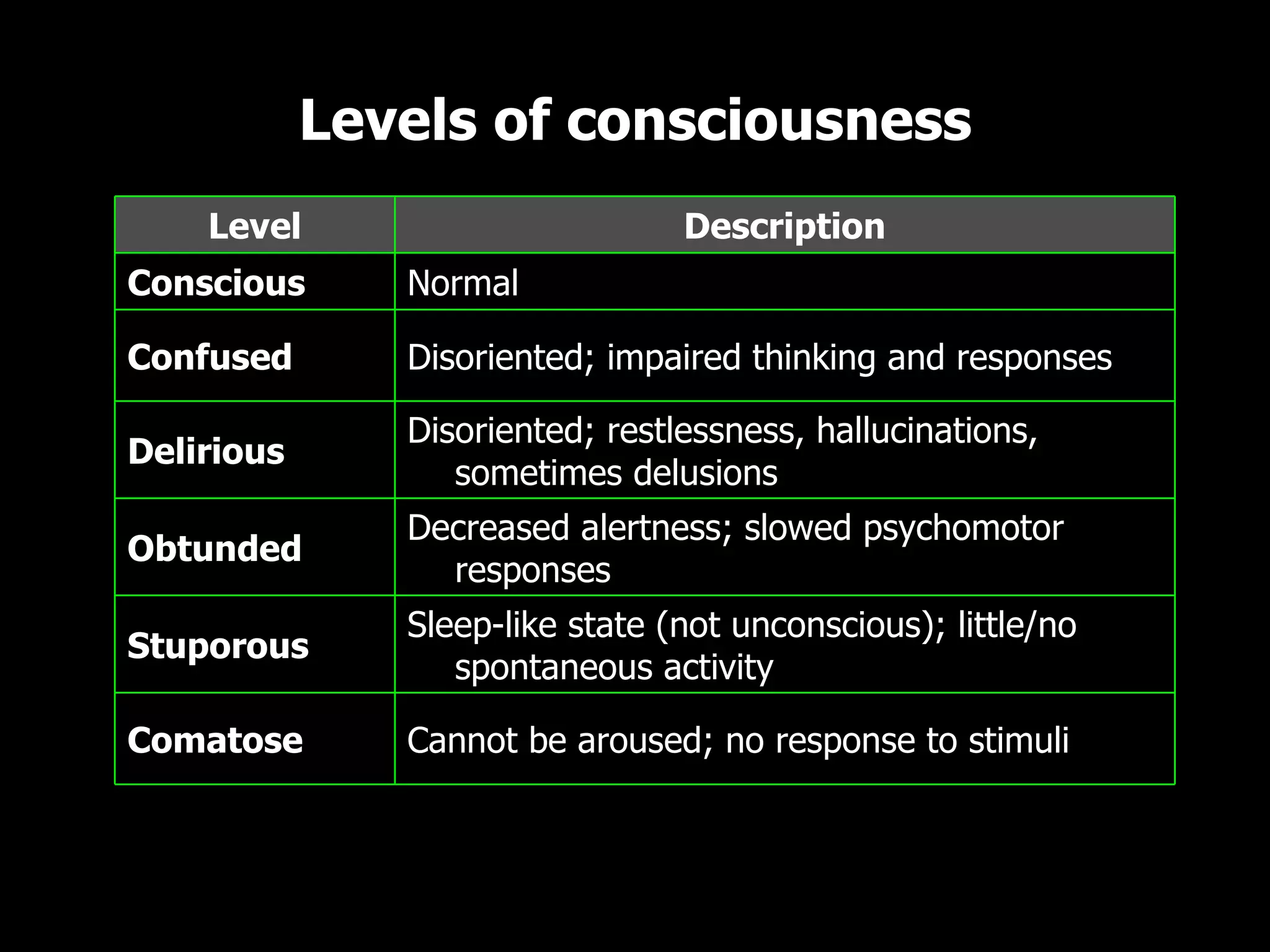
Levels of consciousnessCannot be aroused; no response to stimuli Comatose Sleep-like state (not unconscious); little/no spontaneous activity Stuporous Decreased alertness; slowed psychomotor responses Obtunded Disoriented; restlessness, hallucinations, sometimes delusions Delirious Disoriented; impaired thinking and responses Confused Normal Conscious Description Level
30.
symptoms of mild head injury raised, swollen บวม โน bruise ถลอก small, superficial cut in the scalp บาดแผลเล็ก ตื้น headache ปวดศีรษะ
31.
confusion สับสนloss of consciousness ไม่รู้สึกตัว blurred vision มองเห็นไม่ชัด severe headache ปวดศีรษะรุนแรง vomiting อาเจียน loss of short-term memory, ความจำระยะสั้นหายไป slurred speech พูดช้า difficult walking เดินลำบาก dizziness เวียนศีรษะ weakness in one side or area of the body อ่อนแรงข้างใดข้างหนึ่ง sweating เหงื่อแตก pale skin color ซีด seizures ชัก behavior changes พฤติกรรมเปลี่ยน blood or clear fluid draining from the ears or nose เลือดหรือน้ำออกจากหู หรือจมูก one pupil looks larger than the other eye ม่านตาไม่เท่ากัน deep cut or laceration in the scalp บาดแผลลึก open wound in the head ศีรษะเปิด foreign object penetrating the head สิ่งแปลกปลอมอยู่ในศีรษะ symptoms of moderate to severe head injury
Indication for admissionMinor head injury ที่มี Focal neurodeficit P ost traumatic seizure S kull fracture หมดสตินานกว่า 10 นาที อาการแสดงของความดันในกะโหลกศีรษะ เด็ก คนแก่คนเมาสุรา Moderate head injury Severe head injury
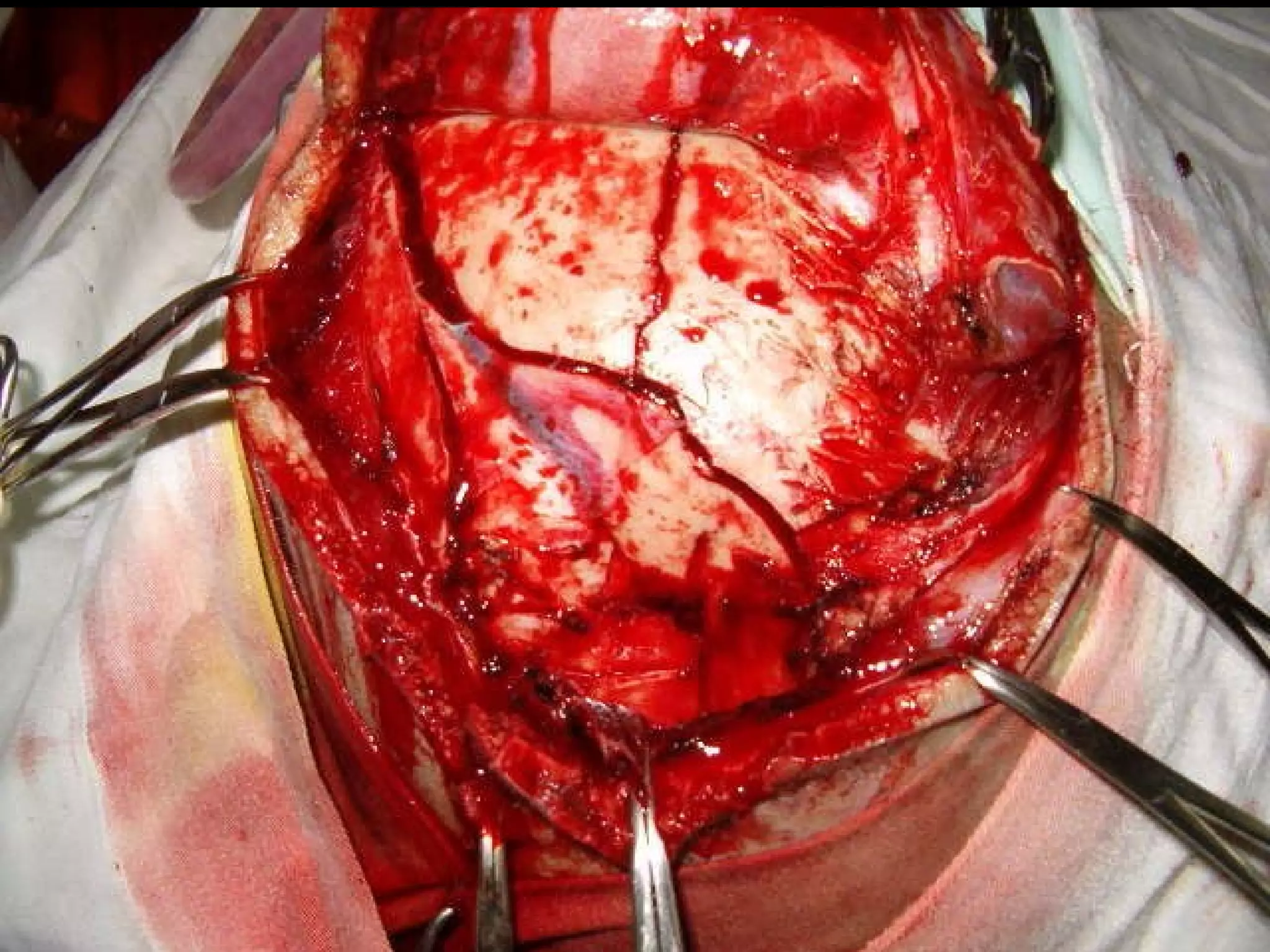
Depressed skull fractureควร ผ่าตัด :Open depressed skull fracture depressed > the thickness of the cranium อาจจะรักษาโดยไม่ผ่าตัด : Open depressed skull fracture with No clinical or radiographic evidence of dural penetration,significant intracranial hematoma,depression >1 cm.,frontal sinus involvement,gross cosmetic deformity,wound infection,pneumocephalus,gross wound contamination อาจจะรักษาโดยไม่ผ่าตัด :Closed depressed skull fracture
41.
Investigation Skull x-rays CT scan of the head Magnetic resonance imaging MRI may be used later for additional information about a brain injury. Other x-rays may be performed to look for other injuries Imaging Studies
42.
Initial blood testsblood alcohol level for any patient who has an altered level of consciousness C oagulation abnormalities, a prothrombin time ( PT ), partial thromboplastin time ( PTT ), and a platelet count B leeding time assessment may reveal platelet dysfunction.
43.
Urgent Scan in adult if any of GCS <13 when first assessed GCS<15 two hours after injury Suspected open or depressed skull fracture Signs of base of skull fracture** Post-traumatic seizure Focal neurological deficit >1 episode of vomiting Coagulopathy + any amnesia or LOC since injury **Signs of basal skull fracture: 'panda' eyes, CSF leakage (ears or nose) or Battle's sign (bruising behind the ear in cases of basal skull
44.
8 hours after injury , a CT scan is also recommended if there is either : More than 30 minutes of amnesia of events before impact Or any amnesia or LOC since injury if Aged ≥65 years Coagulopathy or on warfarin Dangerous mechanism of injury RTA as pedestrian RTA - ejected from car Fall > 1m or >5 stairs