


Asif Nawaz
M.phil 2nd
AUST
INTRODUCTION:
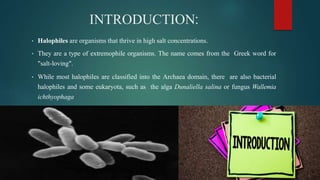
• Halophiles are organisms that thrive in high salt concentrations.
• They are a type of extremophile organisms. The name comes from the Greek word for
"salt-loving".
• While most halophiles are classified into the Archaea domain, there are also bacterial
halophiles and some eukaryota, such as the alga Dunaliella salina or fungus Wallemia
ichthyophaga
Habitat:
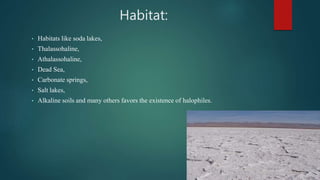
• Habitats like soda lakes,
• Thalassohaline,
• Athalassohaline,
• Dead Sea,
• Carbonate springs,
• Salt lakes,
• Alkaline soils and many others favors the existence of halophiles.
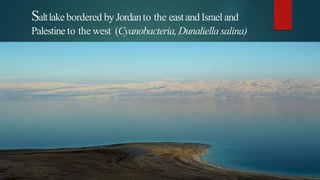
Saltlakebordered by Jordanto the eastandIsrael and
Palestine to the west (Cyanobacteria,Dunaliellasalina)
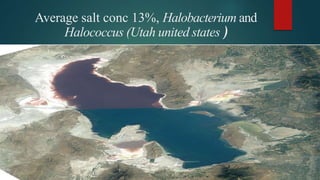
Average salt conc 13%, Halobacterium and
Halococcus (Utah united states )
TYPES:
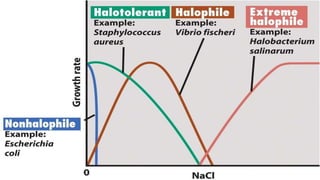
 Halophiles are categorized as:
1. Slight,
2. Moderate
3. Extreme,
Due to the extent of their halotolerance.
 Slight halophiles prefer 0.3 to 0.8 M (1.7 to 4.8% seawater is 0.6 M or 3.5%), e.g,
Erythrobacter flavus
 moderate halophiles 0.8 to 3.4 M (4.7 to 20%), e.g, Desulfohalobium
 and extreme halophiles 3.4 to 5.1 M (20 to 30%) salt content. E.g, Salinibacter ruber
DIVERSTY:
• A wide variety of halophiles including heterotrophic (Chromohalobacter, Selina
vibrio)
• Chemoautotrophic (Dunaliella),
• chemolithotrophic (marinobacter sp)
• Aerobes (Halomonas halmophila) and
• Anaerobes(Halobacteroideshalobius) could be observed transforming diverse
range of substrates in hypersaline habitats.
Taxonomy:
 Methods of chemotaxonomy,multilocus sequence analysis,numerical
taxonomy,comparative genomics and proteomics have allowed taxonomists to
classify halophiles.
 These versatile microorganisms occupy all three major domains of life i.e.,
• Archaea 21.9%
• Bacteria 50.1%
• Eukarya. 27.9%
ARCHEA:
• The domain Archaea has been further divided into two subdomains, Halobacteria
and MethanogenicArchaea.
• Halobacteria is represented by one of the largest halophile family,Halobacteriaceae
with 36 genera and 129 species requiring high NaCl concentrations which
discriminate them from other halophiles
APPLICATIONS OF HALOPHILES:
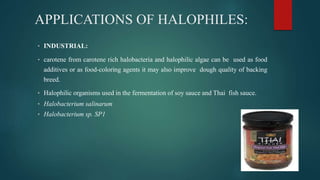
• INDUSTRIAL:
• carotene from carotene rich halobacteria and halophilic algae can be used as food
additives or as food-coloring agents it may also improve dough quality of backing
breed.
• Halophilic organisms used in the fermentation of soy sauce and Thai fish sauce.
• Halobacterium salinarum
• Halobacterium sp. SP1
ECOTINE
 Ectoine is commercially produced by extracting the compound from halophilic
bacteria.
 Industrial process for mass production of ectoine and hydroxyectoine were
developed by using Halomonas elongata and Marinococcus M52, respectively.
 This procedured is based on bacterial milking.
 One of the most common osmotic solute in domain bacteria is ecotine.
 It was Ist discovered in Ectothiorhodspira halochloris.
• Ectoine can protect
• unstable enzymes
• nucleic acid against high salinity
• thermal denaturation
• desiccation and freezing.
• Therefore increased the shelf life of enzymes.
• Stabilizes the activity of trypsin and chymotrypsin.
• It can also reduced the sun burn cell when exposed to U.V light.
• Ectoine also inhibits aggregation and neurotoxicity of
Alzheimer’s β- amyloid.
MEDICAL APPLICATIONS:
• Haloarchaea were the first members of archaea found to produce bacteriocins,
named halocins.
• They are peptide or protein antibiotics secreted into the environment to kill or
inhibit the sensitive haloarchaeal strains that occupy the same niche.
ENVIROMENT:
• Several processes have been proposed for the biological
treatment of such waste waters to remove organic carbon and toxic compounds.
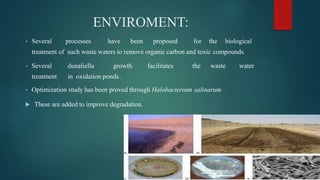
• Several dunaliella growth facilitates the waste water
treatment in oxidation ponds .
• Optimization study has been proved through Halobacterium salinarum
 These are added to improve degradation.
BIOFULES:
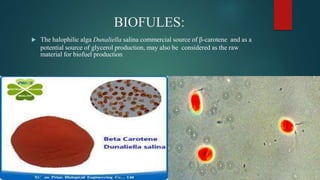
 The halophilic alga Dunaliella salina commercial source of β-carotene and as a
potential source of glycerol production, may also be considered as the raw
material for biofuel production
OTHERS:
 Genetically engineering halophilic enzymes encoding DNA into crops to allow for
salt tolerance.
 Awellknown study has been conducted on genetic strain
holomonas sp, bacilus gabsonii EN4.
 Increasing crude oil extraction (MEOR). through microbial
enhanced oil recovery
Halophiles their systemm and applications

Halophiles their systemm and applications

  • 1.
  • 2.
    INTRODUCTION: • Halophiles areorganisms that thrive in high salt concentrations. • They are a type of extremophile organisms. The name comes from the Greek word for "salt-loving". • While most halophiles are classified into the Archaea domain, there are also bacterial halophiles and some eukaryota, such as the alga Dunaliella salina or fungus Wallemia ichthyophaga
  • 3.
    Habitat: • Habitats likesoda lakes, • Thalassohaline, • Athalassohaline, • Dead Sea, • Carbonate springs, • Salt lakes, • Alkaline soils and many others favors the existence of halophiles.
  • 4.
    Saltlakebordered by Jordantothe eastandIsrael and Palestine to the west (Cyanobacteria,Dunaliellasalina)
  • 5.
    Average salt conc13%, Halobacterium and Halococcus (Utah united states )
  • 6.
    TYPES:  Halophiles arecategorized as: 1. Slight, 2. Moderate 3. Extreme, Due to the extent of their halotolerance.  Slight halophiles prefer 0.3 to 0.8 M (1.7 to 4.8% seawater is 0.6 M or 3.5%), e.g, Erythrobacter flavus  moderate halophiles 0.8 to 3.4 M (4.7 to 20%), e.g, Desulfohalobium  and extreme halophiles 3.4 to 5.1 M (20 to 30%) salt content. E.g, Salinibacter ruber
  • 8.
    DIVERSTY: • A widevariety of halophiles including heterotrophic (Chromohalobacter, Selina vibrio) • Chemoautotrophic (Dunaliella), • chemolithotrophic (marinobacter sp) • Aerobes (Halomonas halmophila) and • Anaerobes(Halobacteroideshalobius) could be observed transforming diverse range of substrates in hypersaline habitats.
  • 9.
    Taxonomy:  Methods ofchemotaxonomy,multilocus sequence analysis,numerical taxonomy,comparative genomics and proteomics have allowed taxonomists to classify halophiles.  These versatile microorganisms occupy all three major domains of life i.e., • Archaea 21.9% • Bacteria 50.1% • Eukarya. 27.9%
  • 10.
    ARCHEA: • The domainArchaea has been further divided into two subdomains, Halobacteria and MethanogenicArchaea. • Halobacteria is represented by one of the largest halophile family,Halobacteriaceae with 36 genera and 129 species requiring high NaCl concentrations which discriminate them from other halophiles
  • 11.
    APPLICATIONS OF HALOPHILES: •INDUSTRIAL: • carotene from carotene rich halobacteria and halophilic algae can be used as food additives or as food-coloring agents it may also improve dough quality of backing breed. • Halophilic organisms used in the fermentation of soy sauce and Thai fish sauce. • Halobacterium salinarum • Halobacterium sp. SP1
  • 12.
    ECOTINE  Ectoine iscommercially produced by extracting the compound from halophilic bacteria.  Industrial process for mass production of ectoine and hydroxyectoine were developed by using Halomonas elongata and Marinococcus M52, respectively.  This procedured is based on bacterial milking.  One of the most common osmotic solute in domain bacteria is ecotine.  It was Ist discovered in Ectothiorhodspira halochloris.
  • 13.
    • Ectoine canprotect • unstable enzymes • nucleic acid against high salinity • thermal denaturation • desiccation and freezing. • Therefore increased the shelf life of enzymes. • Stabilizes the activity of trypsin and chymotrypsin. • It can also reduced the sun burn cell when exposed to U.V light. • Ectoine also inhibits aggregation and neurotoxicity of Alzheimer’s β- amyloid.
  • 14.
    MEDICAL APPLICATIONS: • Haloarchaeawere the first members of archaea found to produce bacteriocins, named halocins. • They are peptide or protein antibiotics secreted into the environment to kill or inhibit the sensitive haloarchaeal strains that occupy the same niche.
  • 15.
    ENVIROMENT: • Several processeshave been proposed for the biological treatment of such waste waters to remove organic carbon and toxic compounds. • Several dunaliella growth facilitates the waste water treatment in oxidation ponds . • Optimization study has been proved through Halobacterium salinarum  These are added to improve degradation.
  • 16.
    BIOFULES:  The halophilicalga Dunaliella salina commercial source of β-carotene and as a potential source of glycerol production, may also be considered as the raw material for biofuel production
  • 17.
    OTHERS:  Genetically engineeringhalophilic enzymes encoding DNA into crops to allow for salt tolerance.  Awellknown study has been conducted on genetic strain holomonas sp, bacilus gabsonii EN4.  Increasing crude oil extraction (MEOR). through microbial enhanced oil recovery