 Oxygen serves as the terminal electron acceptor for the
electron-transport chain in aerobic respiration
 The aerobic respiration in bacteria typically occurs in three
principal stages
 Glycolysis
 Krebs cycle
 Electron transport chain
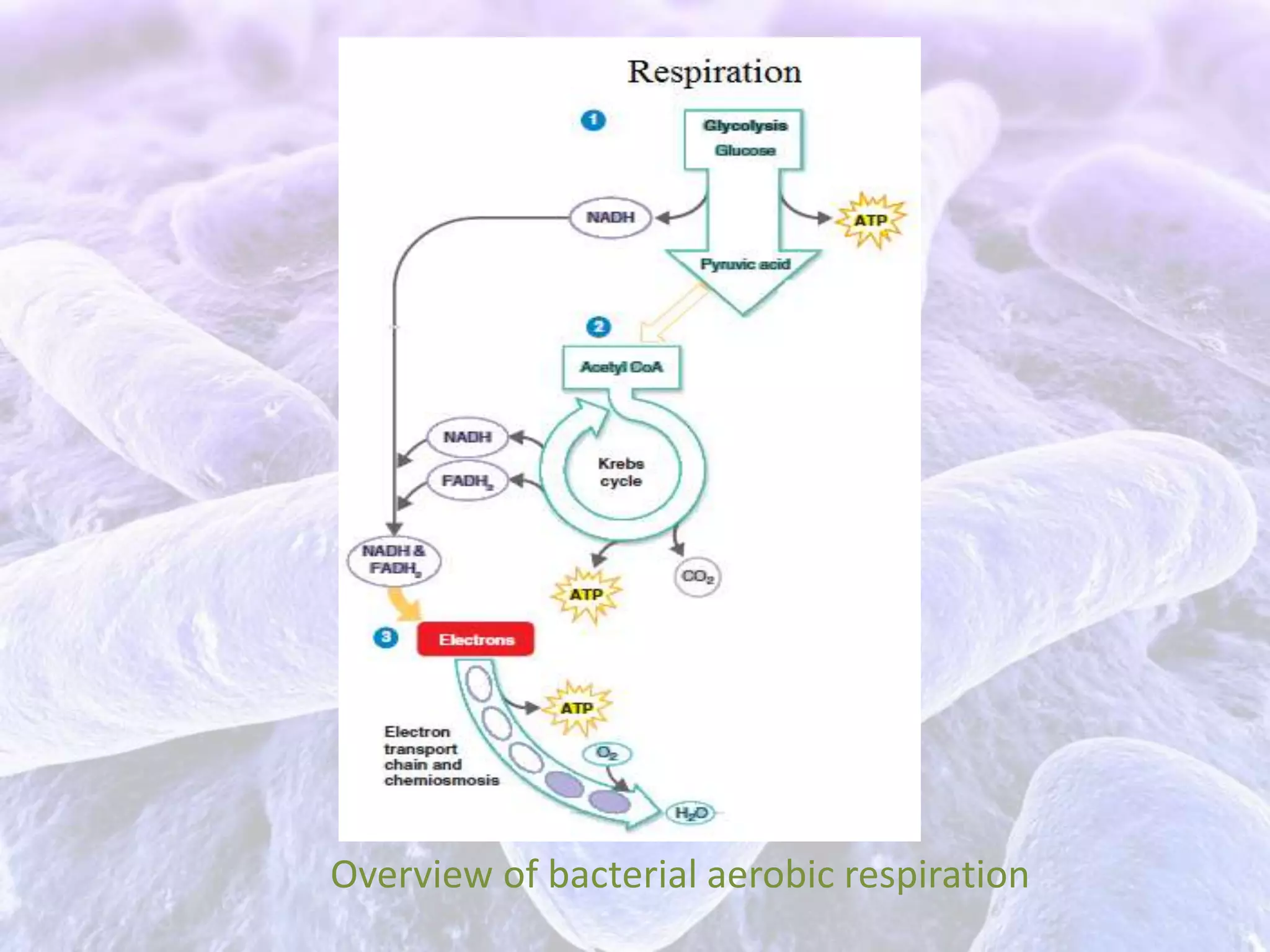
Overview of bacterial aerobic respiration
 First stage in carbohydrate catabolism
 Oxidation of glucose to pyruvic acid
 Located in the cytoplasmic matrix of prokaryotes and eukaryotes
 Also called the Embden-Meyerhof pathway
 Does not require oxygen; it can occur whether oxygen is present
or not
 Two molecules of ATP are produced
 Consists of two basic stages; preparatory stage and energy-
conserving stage
An outline of the reactions of glycolysis
Preparatory stage
Energy-conserving stage
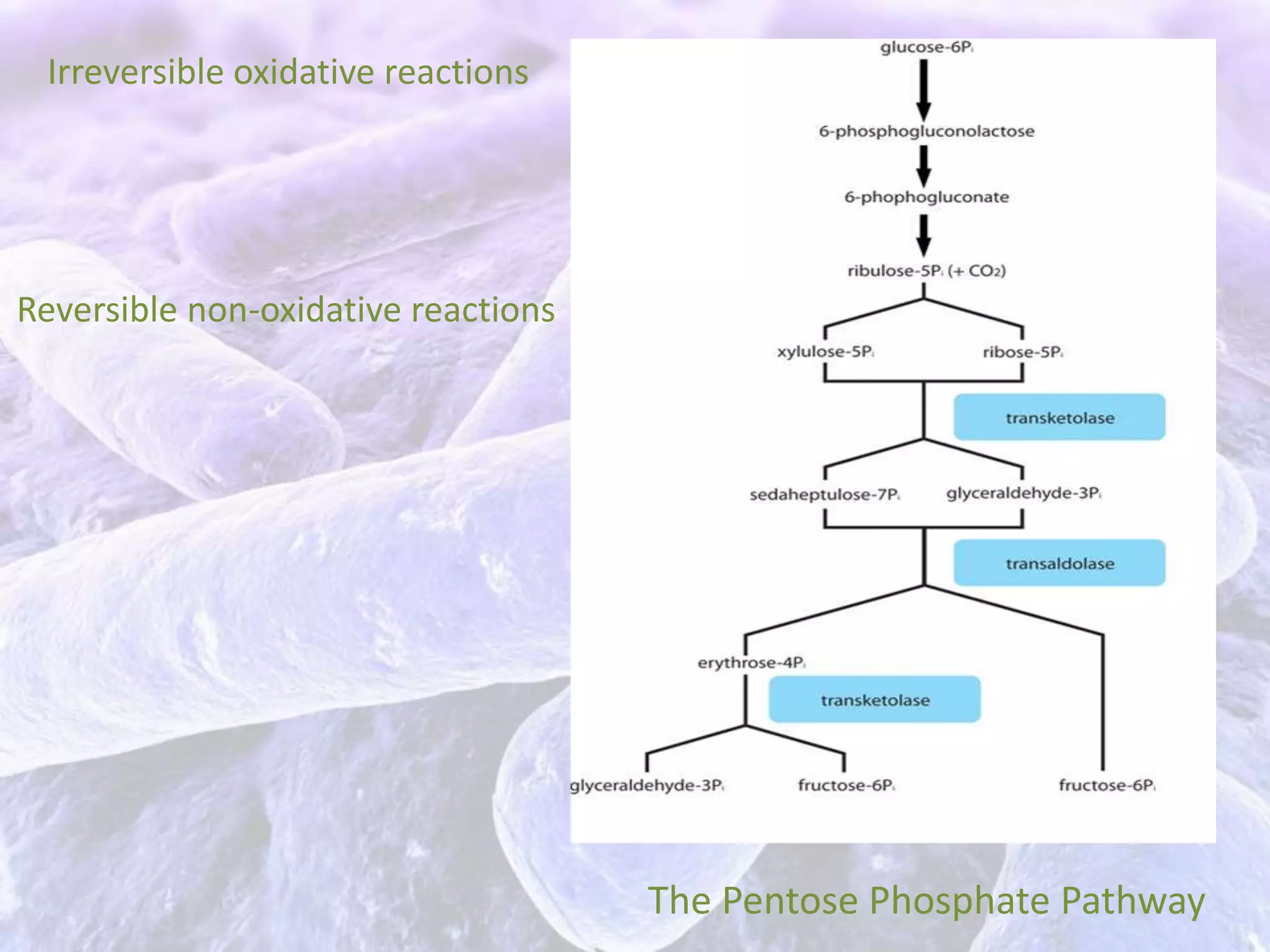
The Pentose Phosphate Pathway
 Also called the hexose monophosphate pathway
 Occurs in the cytosol of the cell
 No ATP is directly consumed or produced in the cycle
 Operate either aerobically or anaerobically
 Bacteria that use the pentose phosphate pathway include
Bacillus subtilis, E. coli, Leuconostoc mesenteroides and
Enterococcus faecalis
Irreversible oxidative reactions
Reversible non-oxidative reactions
The Pentose Phosphate Pathway
 The most common route for the conversion of hexoses to
pyruvate
 Generally found in Pseudomonas, Rhizobium, Azotobacter,
Agrobacterium and Enterococcus faecalis
The Entner-Doudoroff Pathway
 Also called the tricarboxylic acid (TCA) cycle or citric acid cycle
 Large amount of energy stored in acetyl CoA is released step by step
Oxidative decarboxylation of pyruvate
 Pyruvate is converted to acetyl CoA and CO2
 It is not part of the Krebs cycle, but is a major source of acetyl CoA
 NAD+ is reduced to NADH
 Acetyl-CoA arises from the catabolism of many lipids, carbohydrates
and amino acids
 The complete cycle appears to be functional in many aerobic
bacteria, free-living protozoa, and most algae and fungi
 The facultative anaerobe E. coli does not use the full Krebs
cycle under anaerobic conditions or when the glucose
concentration is high but does at other times
 One of Krebs cycle’s major functions is to provide carbon
skeletons for biosynthesis
The Krebs cycle
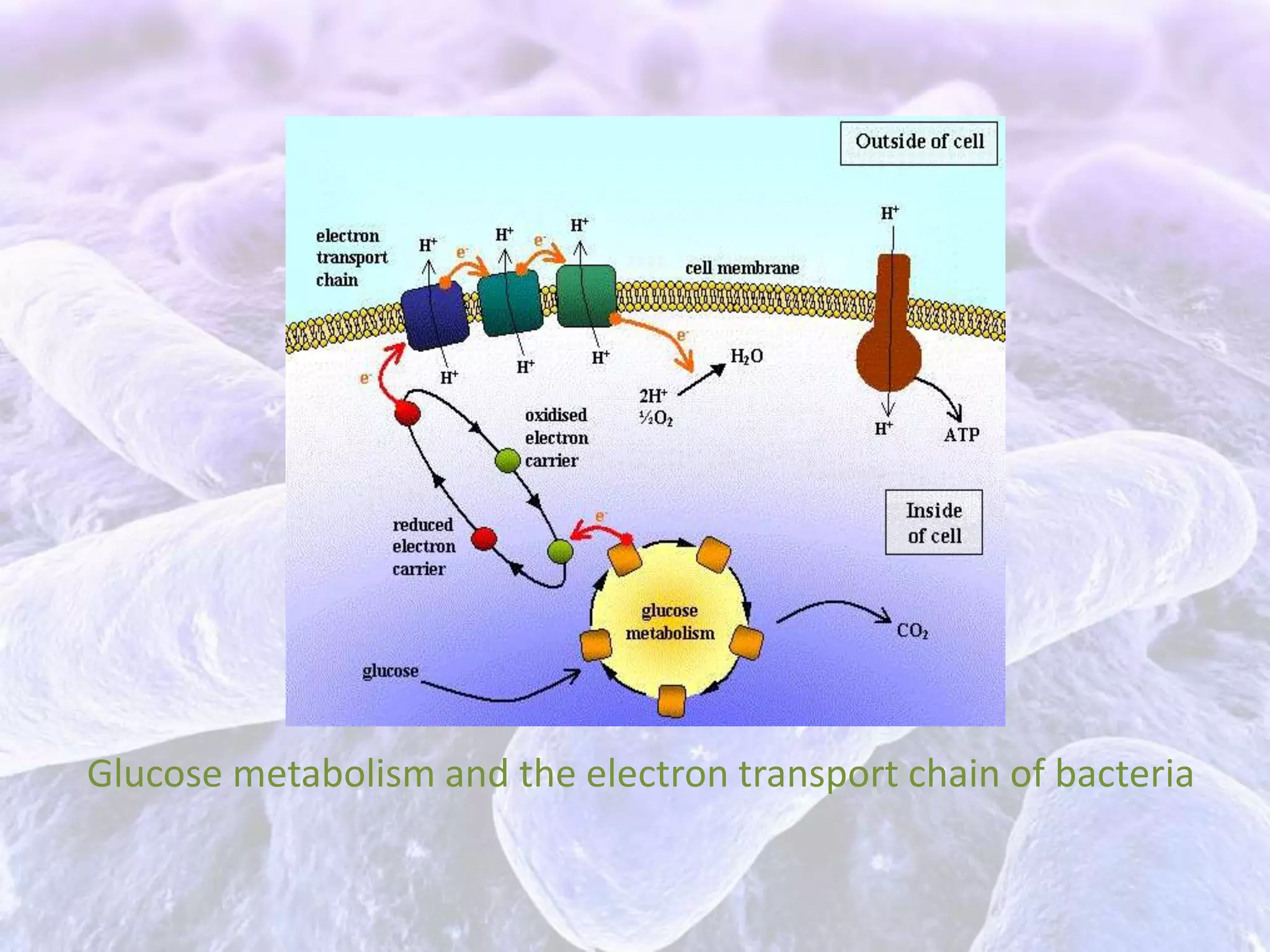
 Consists of a sequence of carrier molecules that are capable of
oxidation and reduction
 Electrons are passed through the chain
 Stepwise release of energy
 Which is used to drive the chemiosmotic generation of ATP
 The final oxidation is irreversible
 In eukaryotic cells - the electron transport chain is contained in
the inner membrane of mitochondria
 In prokaryotic cells - it is found in the plasma membrane
Glucose metabolism and the electron transport chain of bacteria
 There are three classes of carrier molecules in electron
transport chains
Flavoproteins
 Contain flavin, a coenzyme derived from riboflavin (vitamin B2)
 Capable of performing alternating oxidations and reductions
 One important flavin coenzyme is flavin mononucleotide
(FMN)
Cytochromes
 Proteins with an iron-containing group (heme)
 Capable of existing alternately as a reduced form (Fe2+) and an
oxidized form (Fe3+)
 The cytochromes involved in electron transport chains include
cytochrome b (cyt b), cytochrome c1 (cyt c1), cytochrome c
(cyt c), cytochrome a (cyt a), and cytochrome a3 (cyt a3)
Ubiquinones, or coenzyme Q
 small non-protein carriers
An electron transport chain
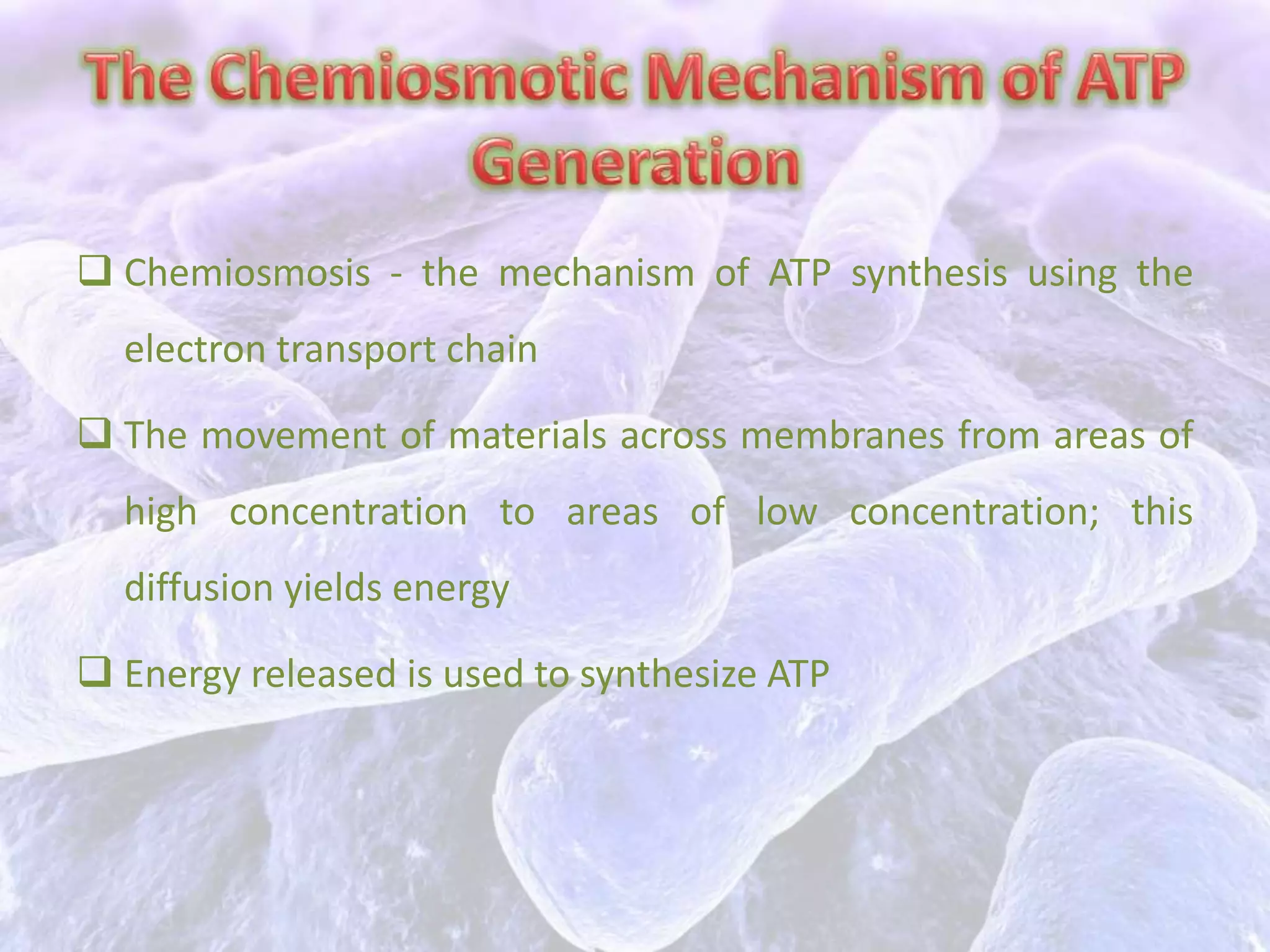
 Chemiosmosis - the mechanism of ATP synthesis using the
electron transport chain
 The movement of materials across membranes from areas of
high concentration to areas of low concentration; this
diffusion yields energy
 Energy released is used to synthesize ATP
Electron transport and the chemiosmotic generation of ATP
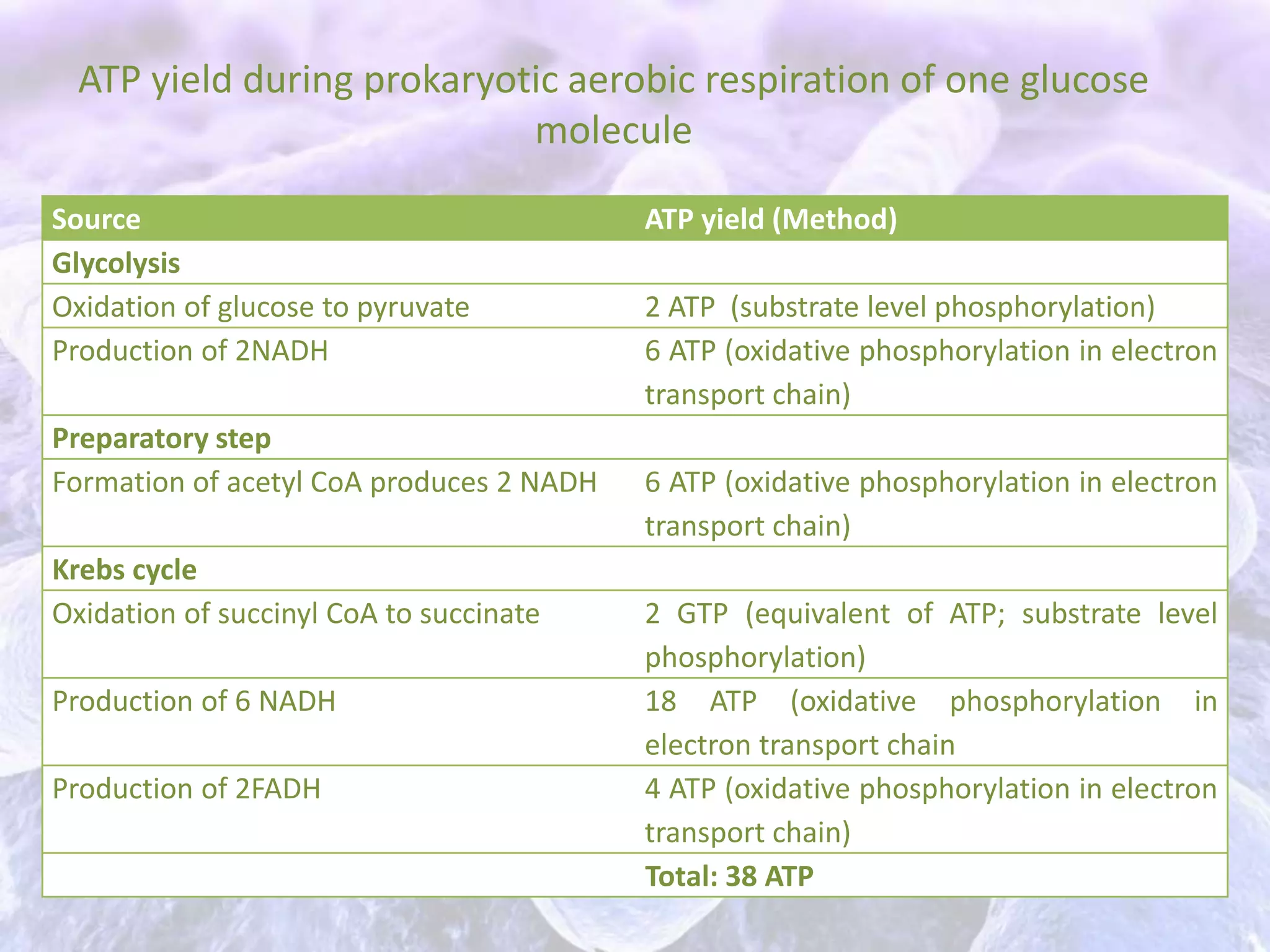
Source ATP yield (Method)
Glycolysis
Oxidation of glucose to pyruvate 2 ATP (substrate level phosphorylation)
Production of 2NADH 6 ATP (oxidative phosphorylation in electron
transport chain)
Preparatory step
Formation of acetyl CoA produces 2 NADH 6 ATP (oxidative phosphorylation in electron
transport chain)
Krebs cycle
Oxidation of succinyl CoA to succinate 2 GTP (equivalent of ATP; substrate level
phosphorylation)
Production of 6 NADH 18 ATP (oxidative phosphorylation in
electron transport chain
Production of 2FADH 4 ATP (oxidative phosphorylation in electron
transport chain)
Total: 38 ATP
ATP yield during prokaryotic aerobic respiration of one glucose
molecule
Bacterial aerobic respiration

Bacterial aerobic respiration

  • 2.
     Oxygen servesas the terminal electron acceptor for the electron-transport chain in aerobic respiration  The aerobic respiration in bacteria typically occurs in three principal stages  Glycolysis  Krebs cycle  Electron transport chain
  • 3.
    Overview of bacterialaerobic respiration
  • 4.
     First stagein carbohydrate catabolism  Oxidation of glucose to pyruvic acid  Located in the cytoplasmic matrix of prokaryotes and eukaryotes  Also called the Embden-Meyerhof pathway  Does not require oxygen; it can occur whether oxygen is present or not  Two molecules of ATP are produced  Consists of two basic stages; preparatory stage and energy- conserving stage
  • 5.
    An outline ofthe reactions of glycolysis Preparatory stage Energy-conserving stage
  • 6.
    The Pentose PhosphatePathway  Also called the hexose monophosphate pathway  Occurs in the cytosol of the cell  No ATP is directly consumed or produced in the cycle  Operate either aerobically or anaerobically  Bacteria that use the pentose phosphate pathway include Bacillus subtilis, E. coli, Leuconostoc mesenteroides and Enterococcus faecalis
  • 7.
    Irreversible oxidative reactions Reversiblenon-oxidative reactions The Pentose Phosphate Pathway
  • 8.
     The mostcommon route for the conversion of hexoses to pyruvate  Generally found in Pseudomonas, Rhizobium, Azotobacter, Agrobacterium and Enterococcus faecalis
  • 9.
  • 10.
     Also calledthe tricarboxylic acid (TCA) cycle or citric acid cycle  Large amount of energy stored in acetyl CoA is released step by step Oxidative decarboxylation of pyruvate  Pyruvate is converted to acetyl CoA and CO2  It is not part of the Krebs cycle, but is a major source of acetyl CoA  NAD+ is reduced to NADH  Acetyl-CoA arises from the catabolism of many lipids, carbohydrates and amino acids
  • 11.
     The completecycle appears to be functional in many aerobic bacteria, free-living protozoa, and most algae and fungi  The facultative anaerobe E. coli does not use the full Krebs cycle under anaerobic conditions or when the glucose concentration is high but does at other times  One of Krebs cycle’s major functions is to provide carbon skeletons for biosynthesis
  • 12.
  • 13.
     Consists ofa sequence of carrier molecules that are capable of oxidation and reduction  Electrons are passed through the chain  Stepwise release of energy  Which is used to drive the chemiosmotic generation of ATP  The final oxidation is irreversible  In eukaryotic cells - the electron transport chain is contained in the inner membrane of mitochondria  In prokaryotic cells - it is found in the plasma membrane
  • 14.
    Glucose metabolism andthe electron transport chain of bacteria
  • 15.
     There arethree classes of carrier molecules in electron transport chains Flavoproteins  Contain flavin, a coenzyme derived from riboflavin (vitamin B2)  Capable of performing alternating oxidations and reductions  One important flavin coenzyme is flavin mononucleotide (FMN)
  • 16.
    Cytochromes  Proteins withan iron-containing group (heme)  Capable of existing alternately as a reduced form (Fe2+) and an oxidized form (Fe3+)  The cytochromes involved in electron transport chains include cytochrome b (cyt b), cytochrome c1 (cyt c1), cytochrome c (cyt c), cytochrome a (cyt a), and cytochrome a3 (cyt a3) Ubiquinones, or coenzyme Q  small non-protein carriers
  • 17.
  • 18.
     Chemiosmosis -the mechanism of ATP synthesis using the electron transport chain  The movement of materials across membranes from areas of high concentration to areas of low concentration; this diffusion yields energy  Energy released is used to synthesize ATP
  • 19.
    Electron transport andthe chemiosmotic generation of ATP
  • 20.
    Source ATP yield(Method) Glycolysis Oxidation of glucose to pyruvate 2 ATP (substrate level phosphorylation) Production of 2NADH 6 ATP (oxidative phosphorylation in electron transport chain) Preparatory step Formation of acetyl CoA produces 2 NADH 6 ATP (oxidative phosphorylation in electron transport chain) Krebs cycle Oxidation of succinyl CoA to succinate 2 GTP (equivalent of ATP; substrate level phosphorylation) Production of 6 NADH 18 ATP (oxidative phosphorylation in electron transport chain Production of 2FADH 4 ATP (oxidative phosphorylation in electron transport chain) Total: 38 ATP ATP yield during prokaryotic aerobic respiration of one glucose molecule