Acetone-Butanol
fermentation
Noufal N
S3 MSc Microbiology
School of Biosciences
M.G.University
• 1862 Pasteur discovered butanol fermentation in
bacteria.
• 1911 Fernbach described several species of bacteria
which conduct acetone-butanol-fermentation.
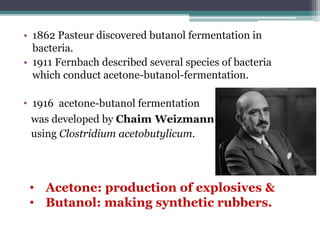
• 1916 acetone-butanol fermentation
was developed by Chaim Weizmann
using Clostridium acetobutylicum.
• Acetone: production of explosives &
• Butanol: making synthetic rubbers.
• In acetone-butanol fermentation, acetone and butanol are
produced from glucose using strains of Clostridia, which
are strictly anaerobic bacteria. Further, ethanol is also
produced.
• The ABE fermentation produces solvents in a ratio of 3
parts acetone, 6 parts butanol to 1 part ethanol.
• Clostridium acetobutylicum is the most well-studied
and widely used species, although Clostridium
beijerinckii has also been used with good results.
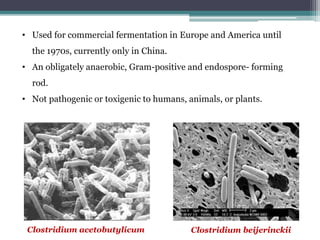
Clostridium beijerinckiiClostridium acetobutylicum
• Used for commercial fermentation in Europe and America until
the 1970s, currently only in China.
• An obligately anaerobic, Gram-positive and endospore- forming
rod.
• Not pathogenic or toxigenic to humans, animals, or plants.
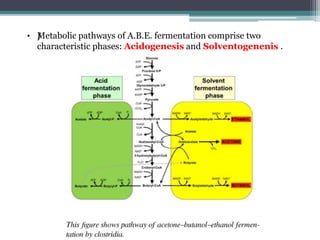
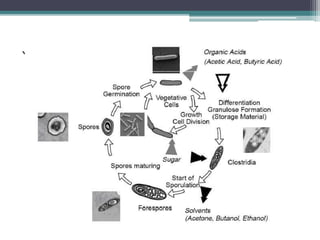
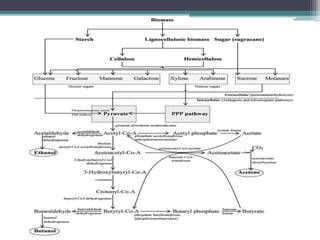
• ƒMetabolic pathways of A.B.E. fermentation comprise two
characteristic phases: Acidogenesis and Solventogenenis .
Organism:
1. Clostridium acetobutylicum – 1st organism –
industrial production of acetone from starch.
2. Clostridium saccharoacetobutylicum – convert
molasses into acetone & butanol.
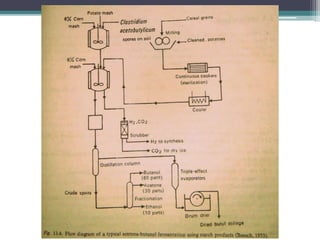
• submerged cultures
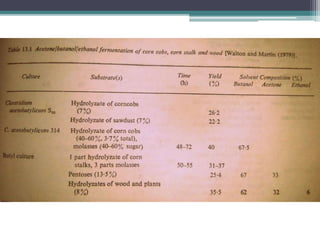
• Substrate: sterile diluted molasses or cooked corn
meal.
• pH : 7.2
• Type of fermentation: anaerobic
• By-products : CO₂( preparation of dry ice) & H (fuel)
• Product recovery : fractional distillation
• Large bioreactors – 200000-1000000 Lr
• CO2 was bubbled through the culture to ensure that O2
was excluded.
• Fermentation – biphasic Acidogenesis
Solventogenenis
• Acidogenesis – forming acetate , butyrate , hydrogen ,
and CO2.
• Solventogenesis – forming butanol, acetone , and
ethanol.
• After 40-60 hrs – 12-20gm/L of solvent(6B:3A:E1).
• The solvents was removed by distillation.
• The remaining microbial dried solids were used as
high nutrient animal feed.
`
uses:
• Butanol is a valuable solvent for the production of
lacquer(used to prepare the finish of
automobiles),latex,enamels….
• Used as biofuel(it has similar physical properties to
gasoline).
• Used as an additive to plastics to keep them flexible.
• Used as a solvent in the manufacture of antibiotics ,
vitamins , and hormones.
• Acetone is important in making cordite.
Thank
you

Acetone and butanol fermentation

  • 1.
    Acetone-Butanol fermentation Noufal N S3 MScMicrobiology School of Biosciences M.G.University
  • 2.
    • 1862 Pasteurdiscovered butanol fermentation in bacteria. • 1911 Fernbach described several species of bacteria which conduct acetone-butanol-fermentation. • 1916 acetone-butanol fermentation was developed by Chaim Weizmann using Clostridium acetobutylicum. • Acetone: production of explosives & • Butanol: making synthetic rubbers.
  • 3.
    • In acetone-butanolfermentation, acetone and butanol are produced from glucose using strains of Clostridia, which are strictly anaerobic bacteria. Further, ethanol is also produced. • The ABE fermentation produces solvents in a ratio of 3 parts acetone, 6 parts butanol to 1 part ethanol. • Clostridium acetobutylicum is the most well-studied and widely used species, although Clostridium beijerinckii has also been used with good results.
  • 4.
    Clostridium beijerinckiiClostridium acetobutylicum •Used for commercial fermentation in Europe and America until the 1970s, currently only in China. • An obligately anaerobic, Gram-positive and endospore- forming rod. • Not pathogenic or toxigenic to humans, animals, or plants.
  • 5.
    • ƒMetabolic pathwaysof A.B.E. fermentation comprise two characteristic phases: Acidogenesis and Solventogenenis .
  • 8.
    Organism: 1. Clostridium acetobutylicum– 1st organism – industrial production of acetone from starch. 2. Clostridium saccharoacetobutylicum – convert molasses into acetone & butanol. • submerged cultures • Substrate: sterile diluted molasses or cooked corn meal. • pH : 7.2 • Type of fermentation: anaerobic • By-products : CO₂( preparation of dry ice) & H (fuel) • Product recovery : fractional distillation
  • 9.
    • Large bioreactors– 200000-1000000 Lr • CO2 was bubbled through the culture to ensure that O2 was excluded. • Fermentation – biphasic Acidogenesis Solventogenenis • Acidogenesis – forming acetate , butyrate , hydrogen , and CO2. • Solventogenesis – forming butanol, acetone , and ethanol. • After 40-60 hrs – 12-20gm/L of solvent(6B:3A:E1). • The solvents was removed by distillation. • The remaining microbial dried solids were used as high nutrient animal feed.
  • 10.
  • 12.
    uses: • Butanol isa valuable solvent for the production of lacquer(used to prepare the finish of automobiles),latex,enamels…. • Used as biofuel(it has similar physical properties to gasoline). • Used as an additive to plastics to keep them flexible. • Used as a solvent in the manufacture of antibiotics , vitamins , and hormones. • Acetone is important in making cordite.
  • 13.