Different covid 19
vaccines
ASIF NAWAZ
M.phil 4th
Aust
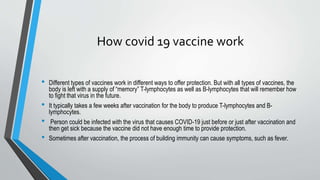
How covid 19 vaccine work
• Different types of vaccines work in different ways to offer protection. But with all types of vaccines, the
body is left with a supply of “memory” T-lymphocytes as well as B-lymphocytes that will remember how
to fight that virus in the future.
• It typically takes a few weeks after vaccination for the body to produce T-lymphocytes and B-
lymphocytes.
• Person could be infected with the virus that causes COVID-19 just before or just after vaccination and
then get sick because the vaccine did not have enough time to provide protection.
• Sometimes after vaccination, the process of building immunity can cause symptoms, such as fever.
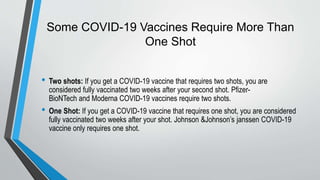
Some COVID-19 Vaccines Require More Than
One Shot
• Two shots: If you get a COVID-19 vaccine that requires two shots, you are
considered fully vaccinated two weeks after your second shot. Pfizer-
BioNTech and Moderna COVID-19 vaccines require two shots.
• One Shot: If you get a COVID-19 vaccine that requires one shot, you are considered
fully vaccinated two weeks after your shot. Johnson &Johnson’s janssen COVID-19
vaccine only requires one shot.
Vaccines Brand
• Vaccine Brand Name
Pfizer-BioNTech
• Who Can Get this Vaccine [ 1 ]
People 12 years and older
• How Many Shots You Will Need
2 shots given 3 weeks (21 days) apart [ 2 ]
• When Are You Fully Vaccinated?
2 weeks after your second shot
• Vaccine Brand Name
Moderna
• Who Can Get this Vaccine [ 1 ]
People 18 years and older
• How Many Shots You Will Need
2 shots given 4 weeks (28 days) apart [ 2 ]
• When Are You Fully Vaccinated?
2 weeks after your second shot
• Vaccine Brand Name
Johnson & Johnson’s Janssen
• Who Can Get this Vaccine [ 1 ]
People 18 years and older
• How Many Shots You Will Need
1 shot
• When Are You Fully Vaccinated?
2 weeks after your shot
mRNAVaccine
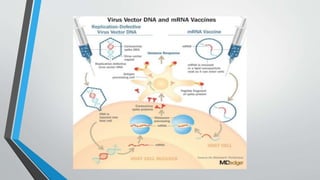
• mRNA vaccines are a new type of vaccine to protect against infectious diseases.
• MRNA vaccines teach our cells how to make a protein—or even just a piece of a protein—that triggers
an immune response inside our bodies.
• The benefit of mRNA vaccines, like all vaccines, is those vaccinated gain protection without ever having
to risk the serious consequences of getting sick with COVID-19.
• As soon as the necessary information about the virus that causes COVID-19 was available, scientists
began designing the mRNA instructions for cells to build the unique spike protein into an mRNA
vaccine.}
Viral Vector Vaccines
• Viral vector vaccines use a modified version of a different virus (the vector) to deliver
important instructions to our cells.
• The benefit of viral vector vaccines, like all vaccines, is those vaccinated gain
protection without ever having to risk the serious consequences of getting sick with
COVID-19.
Possible Side Effects :
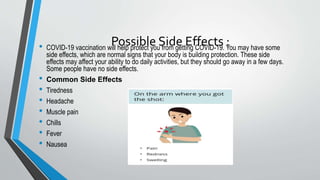
• COVID-19 vaccination will help protect you from getting COVID-19. You may have some
side effects, which are normal signs that your body is building protection. These side
effects may affect your ability to do daily activities, but they should go away in a few days.
Some people have no side effects.
• Common Side Effects
• Tiredness
• Headache
• Muscle pain
• Chills
• Fever
• Nausea
When You’ve Been Fully Vaccinated
• Fully vaccinated people can resume activities without wearing a mask or physically
distancing, except where required by federal, state, local, tribal, or territorial laws,
rules, and regulations, including local business and workplace guidance.
Vaccine Safety and Monitoring
• COVID-19 vaccines are safe and effective.
• Millions of people in the United States have received COVID-19 vaccines under the
most intense safety monitoring in U.S. history.
• CDC recommends you get a COVID-19 vaccine as soon as you can.
Vaccine Effectiveness
• All COVID-19 vaccines currently available in the United States are effective at preventing
COVID-19 as seen in clinical trial settings.
• Research provides growing evidence that mRNA COVID-19 vaccines offer similar protection
in real world conditions.
• COVID-19 vaccination is an important tool to help stop the COVID-19 pandemic.
• COVID-19 vaccination helps protect people from getting sick or severely ill with COVID-19 and
might also help protect people around them.
• To receive the most protection, people should receive all recommended doses of a
COVID-19 vaccine.
• Some people who are fully vaccinated against COVID-19 will still get sick because no
vaccine is 100% effective. Experts continue to monitor and evaluate how often this
occurs, how severe their illness is, and how likely a vaccinated person is to spread
COVID-19 to others.
• https://www.nytimes.com/interactive/2020/health/sinopharm-covid-19-
vaccine.html
• https://www.cdc.gov/coronavirus/2019-ncov/vaccines/different-
vaccines.html
• https://www.cdc.gov/coronavirus/2019-ncov/vaccines/different-
vaccines/Pfizer-BioNTech.html
Different covid 19 vaccines

Different covid 19 vaccines

  • 1.
    Different covid 19 vaccines ASIFNAWAZ M.phil 4th Aust
  • 2.
    How covid 19vaccine work • Different types of vaccines work in different ways to offer protection. But with all types of vaccines, the body is left with a supply of “memory” T-lymphocytes as well as B-lymphocytes that will remember how to fight that virus in the future. • It typically takes a few weeks after vaccination for the body to produce T-lymphocytes and B- lymphocytes. • Person could be infected with the virus that causes COVID-19 just before or just after vaccination and then get sick because the vaccine did not have enough time to provide protection. • Sometimes after vaccination, the process of building immunity can cause symptoms, such as fever.
  • 3.
    Some COVID-19 VaccinesRequire More Than One Shot • Two shots: If you get a COVID-19 vaccine that requires two shots, you are considered fully vaccinated two weeks after your second shot. Pfizer- BioNTech and Moderna COVID-19 vaccines require two shots. • One Shot: If you get a COVID-19 vaccine that requires one shot, you are considered fully vaccinated two weeks after your shot. Johnson &Johnson’s janssen COVID-19 vaccine only requires one shot.
  • 4.
    Vaccines Brand • VaccineBrand Name Pfizer-BioNTech • Who Can Get this Vaccine [ 1 ] People 12 years and older • How Many Shots You Will Need 2 shots given 3 weeks (21 days) apart [ 2 ] • When Are You Fully Vaccinated? 2 weeks after your second shot • Vaccine Brand Name Moderna • Who Can Get this Vaccine [ 1 ] People 18 years and older • How Many Shots You Will Need 2 shots given 4 weeks (28 days) apart [ 2 ] • When Are You Fully Vaccinated? 2 weeks after your second shot
  • 5.
    • Vaccine BrandName Johnson & Johnson’s Janssen • Who Can Get this Vaccine [ 1 ] People 18 years and older • How Many Shots You Will Need 1 shot • When Are You Fully Vaccinated? 2 weeks after your shot
  • 6.
    mRNAVaccine • mRNA vaccinesare a new type of vaccine to protect against infectious diseases. • MRNA vaccines teach our cells how to make a protein—or even just a piece of a protein—that triggers an immune response inside our bodies. • The benefit of mRNA vaccines, like all vaccines, is those vaccinated gain protection without ever having to risk the serious consequences of getting sick with COVID-19. • As soon as the necessary information about the virus that causes COVID-19 was available, scientists began designing the mRNA instructions for cells to build the unique spike protein into an mRNA vaccine.}
  • 7.
    Viral Vector Vaccines •Viral vector vaccines use a modified version of a different virus (the vector) to deliver important instructions to our cells. • The benefit of viral vector vaccines, like all vaccines, is those vaccinated gain protection without ever having to risk the serious consequences of getting sick with COVID-19.
  • 9.
    Possible Side Effects: • COVID-19 vaccination will help protect you from getting COVID-19. You may have some side effects, which are normal signs that your body is building protection. These side effects may affect your ability to do daily activities, but they should go away in a few days. Some people have no side effects. • Common Side Effects • Tiredness • Headache • Muscle pain • Chills • Fever • Nausea
  • 10.
    When You’ve BeenFully Vaccinated • Fully vaccinated people can resume activities without wearing a mask or physically distancing, except where required by federal, state, local, tribal, or territorial laws, rules, and regulations, including local business and workplace guidance.
  • 11.
    Vaccine Safety andMonitoring • COVID-19 vaccines are safe and effective. • Millions of people in the United States have received COVID-19 vaccines under the most intense safety monitoring in U.S. history. • CDC recommends you get a COVID-19 vaccine as soon as you can.
  • 12.
    Vaccine Effectiveness • AllCOVID-19 vaccines currently available in the United States are effective at preventing COVID-19 as seen in clinical trial settings. • Research provides growing evidence that mRNA COVID-19 vaccines offer similar protection in real world conditions. • COVID-19 vaccination is an important tool to help stop the COVID-19 pandemic. • COVID-19 vaccination helps protect people from getting sick or severely ill with COVID-19 and might also help protect people around them.
  • 13.
    • To receivethe most protection, people should receive all recommended doses of a COVID-19 vaccine. • Some people who are fully vaccinated against COVID-19 will still get sick because no vaccine is 100% effective. Experts continue to monitor and evaluate how often this occurs, how severe their illness is, and how likely a vaccinated person is to spread COVID-19 to others.
  • 14.