Bacterial photosynthesis
Oxygenic Photosynthesis
Anoxygenic Photosynthesis
Ms Saajida Sultaana Mahusook
Photosynthesis
• Photosynthesis is the conversion of light energy
into chemical energy in the form of ATP.
• Prokaryotes that can convert light energy into
chemical energy include the photosynthetic
cyanobacteria, the purple and green bacteria,
halobacteria etc.
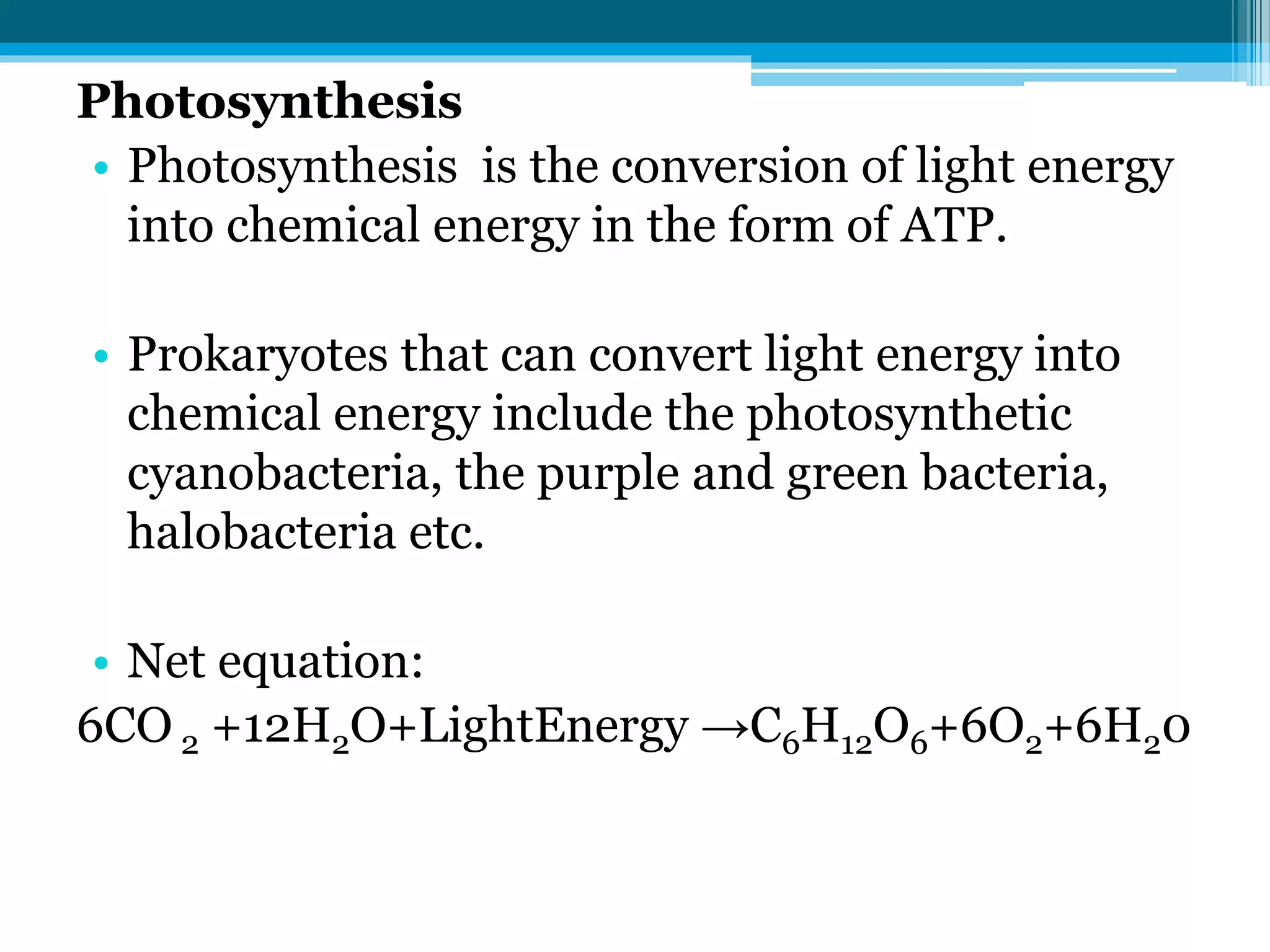
• Net equation:
6CO 2 +12H2O+LightEnergy →C6H12O6+6O2+6H20
Photosynthetic reactions divided into two stages:
Light reaction - light energy is absorbed and
converted to chemical energy such as ATP and NADPH
Dark reaction- carbohydrates made from CO2 is
stored in ATP & NADPH
• Photosynthetic bacteria contain light absorbing
pigments and reaction centres and capable of
converting light energy into chemical energy.
• Photosynthetic pigments: Bacteriochlorophyll,
carotenoids, bacteriorhodopsin, phycobilins.
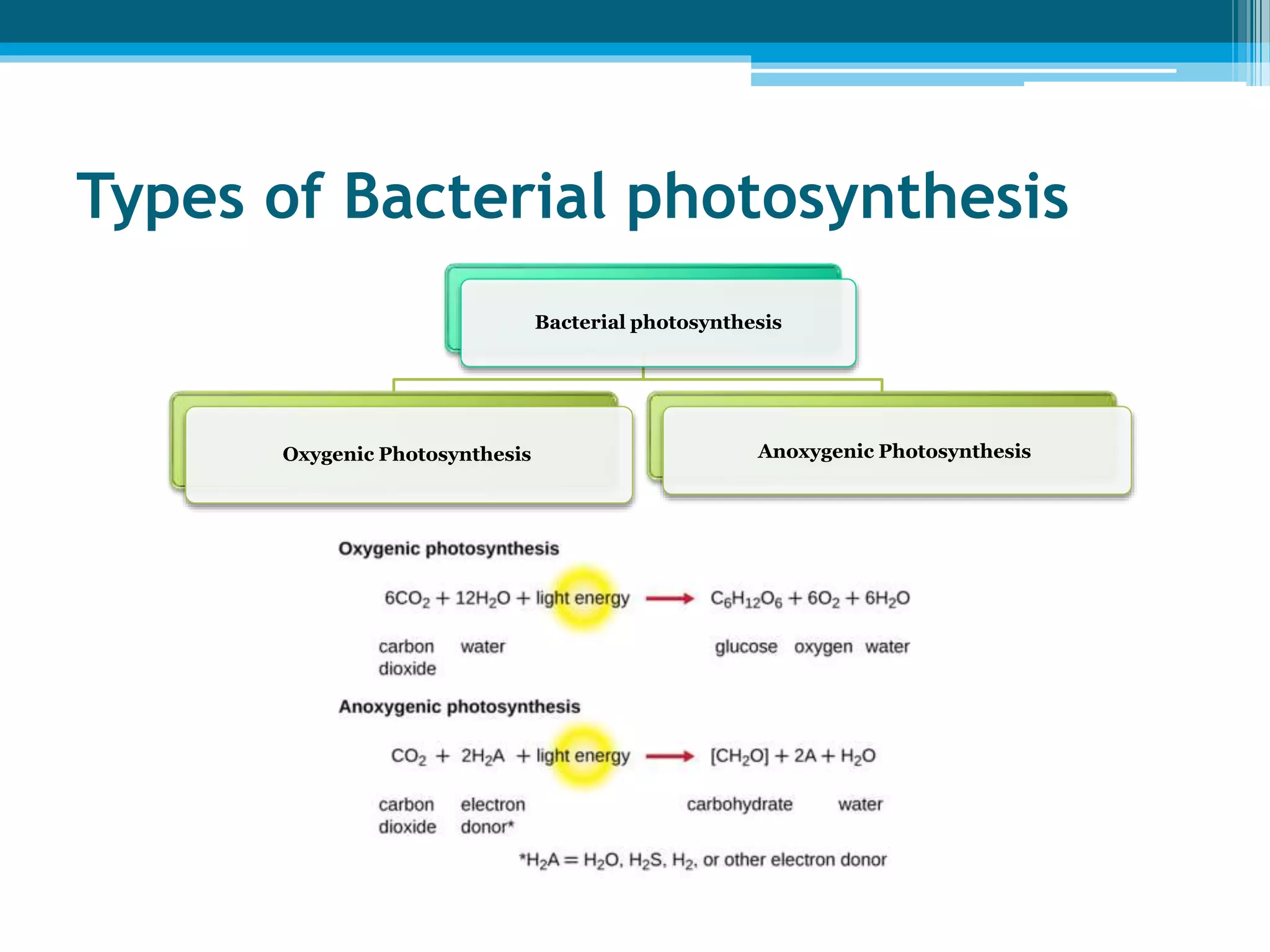
Types of Bacterial photosynthesis
Bacterial photosynthesis
Oxygenic Photosynthesis Anoxygenic Photosynthesis
Oxygenic Photosynthesis
• Oxygenic photosynthetic bacteria are unicellular or
multicellular and possess Bacteriochlorophyll a.
They perform photosynthesis in a similar manner to
plants.
• They contain light-harvesting pigments (such as
phycobilins, phycoerythrin), absorb CO2, and
release oxygen. Eg. Cyanobacteria or Cyanophyta
and prochlorophytes .
• The synthesis of carbohydrates results in release of
molecular O2 and removal of CO2 from
atmoshphere.
• It occurs in lamellae which house thylakoids
containing chlorophyll a/b and phycobilisomes
pigments to gather light energy.
• This process involves two photosystems (PS):
PS II- which generates a proton-motive force for
making ATP.
PS I- which generates low potential electrons for
reducing power.
• There are 5 sub groups of Oxygenic
photosynthetic bacteria .
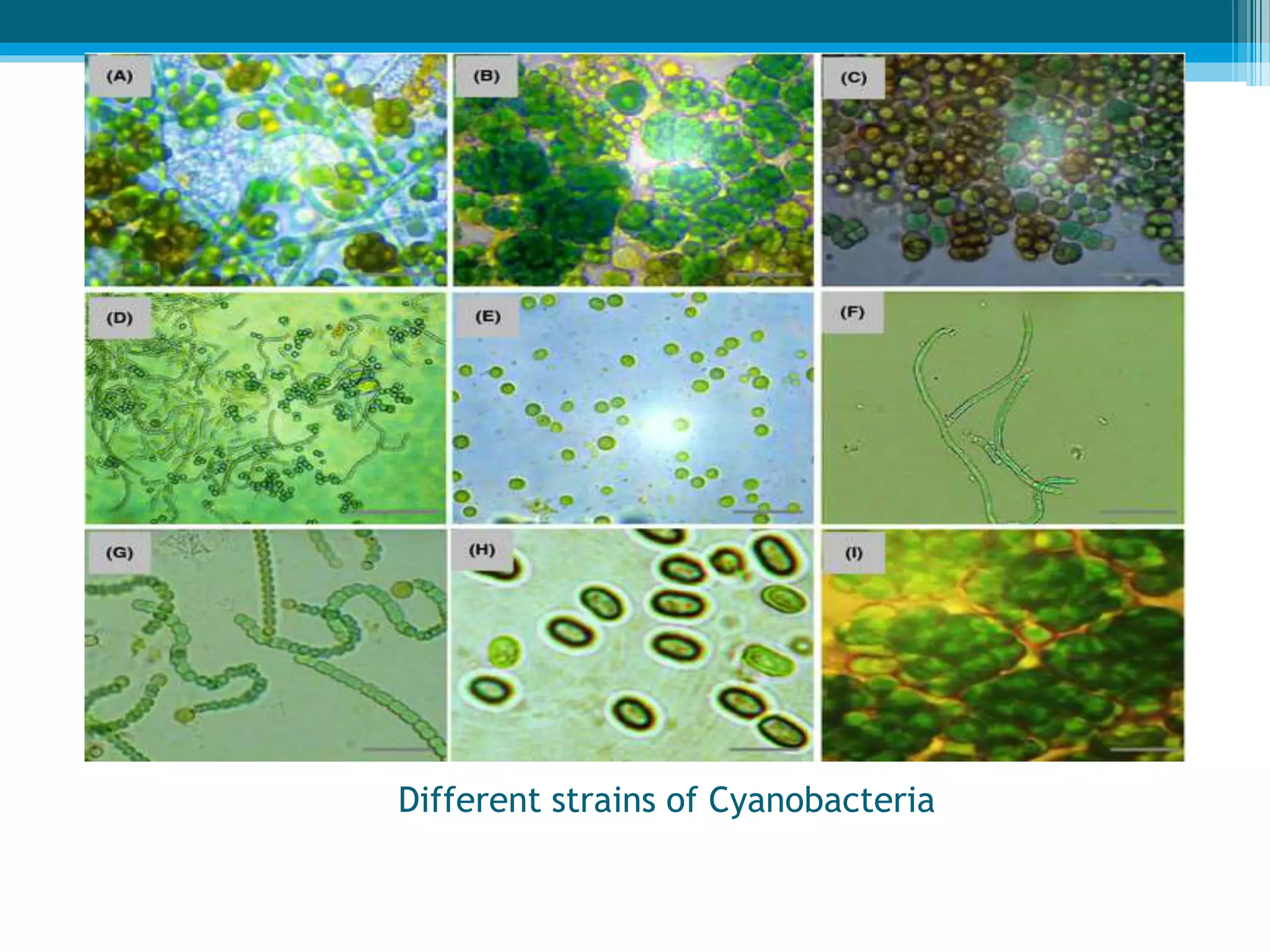
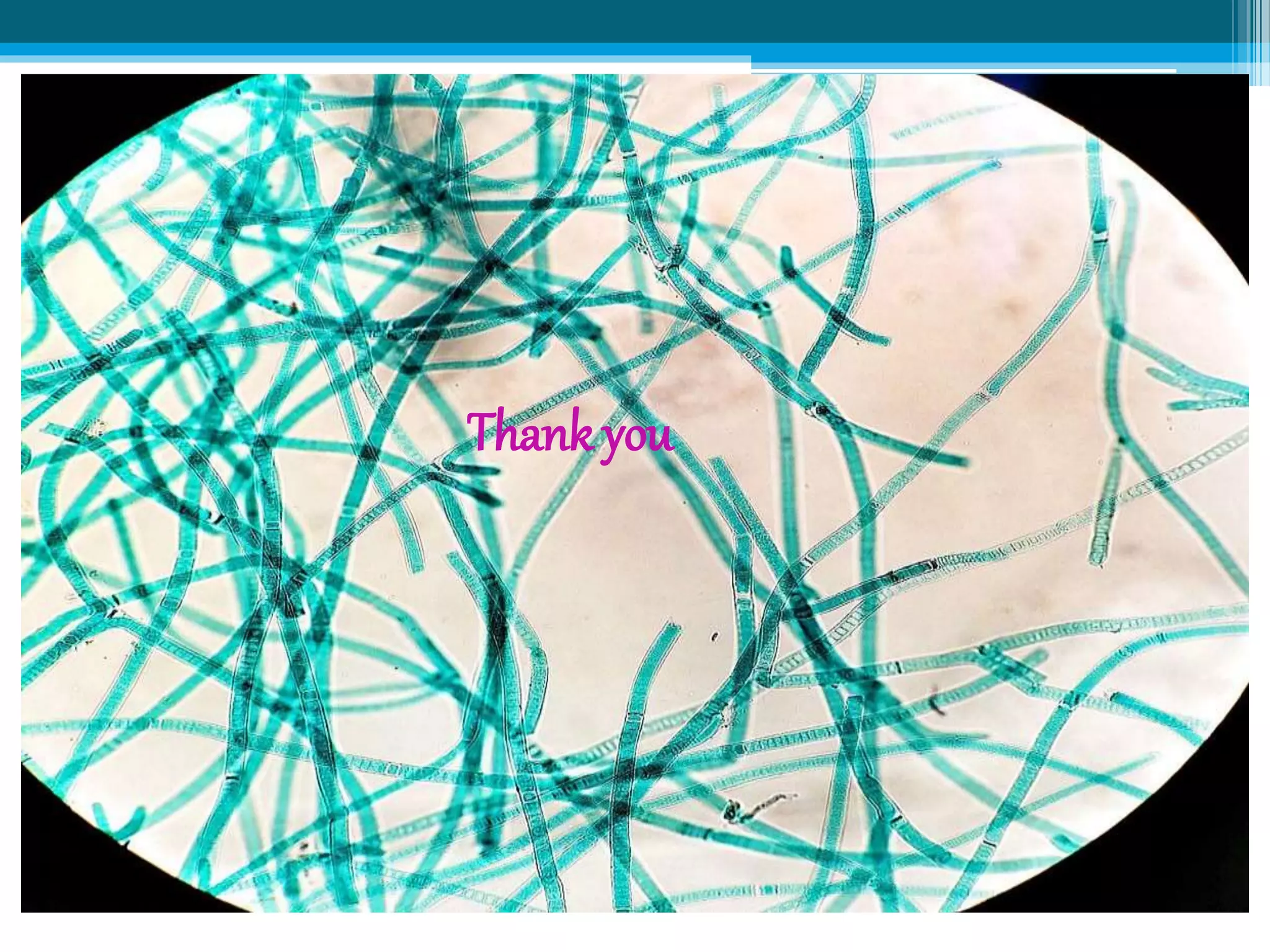
Different strains of Cyanobacteria
• Cyanobacteria perform photosynthesis using water
as an electron donor in a similar manner to plants.
This results in the production of oxygen and is
known as oxygenic photosynthesis.
• Cyanobacteria are often blue-green in color and are
thought to have contributed to the biodiversity on
Earth by helping to convert the Earth’s early oxygen-
deficient atmosphere to an oxygen-rich
environment.
• Cyanobacteria are mostly found in water but can
survive on land, in rocks, and even in animal shells
(or fur), and in coral. They are also endosymbiont-
they can live within the cells or body of another
organism in a mutually beneficial way.
Anoxygenic Photosynthesis
• Anoxygenic photosynthetic bacteria consume CO2,
light energy to create organic compounds, sulfur or
fumarate compounds instead of O2.
• It occurs in purple bacteria, green sulfur bacteria,
green gliding bacteria, Filamentous Anoxygenic
Phototrophs (FAPs), Phototrophic Acidobacteria,
and Phototrophic Heliobacteria.
• It uses bacteriochlorophyll instead of chlorophyll
and involves one photosystem (PS I) to generate
ATP in “cyclic” manner.
• Purple bacteria can be divided into two main
types – the Chromatiaceae, which produce sulfur
particles inside their cells, and the
Ectothiorhodospiraceae, which produce sulphur
particles outside their cells.
• They cannot photosynthesize in places that have
an abundance of oxygen. They are found in
either stagnant water or hot sulfuric springs.
• Purple sulfur bacteria use hydrogen sulfide
as their reducing agent(instead of using water to
photosynthesize), releasing sulfur (rather than
oxygen).
Purple non-sulfur bacteria use hydrogen as
their reducing agent, do not release sulphur.
• They can tolerate small amounts of sulfur, and
too much hydrogen sulfide is toxic to them.
Green sulfur bacteria are generally non-motile
and occurs in multiple shapes such as spheres,
rods, and spirals.
• They are found in deep ocean and can survive in
extreme conditions, like the other types of
photosynthetic bacteria.
Phototrophic Acidobacteria are found in a lot
of soils. Some are acidophilic .
Phototrophic Heliobacteria are found in soils,
especially water-saturated fields, like rice paddies.
They use bacteriochlorophyll g.
• They are photoheterotroph- they cannot use
carbon dioxide as their primary source of
carbon.
Green and red filamentous anoxygenic
phototrophs (FAPs) were previously called
green non-sulfur bacteria, until it was discovered
that they could also use sulfur components to work
through their processes.
• This type of bacteria uses filaments to move
around. The colour depends on the type of
bacteriochlorophyll the particular organism
uses.
• This bacteria can either be photoautotrophic
chemoorganotropic or photoheterotrophic.
Applications of Photosynthetic Bacteria
• Water purification, bio-fertilizers, animal feed
and bioremediation of chemicals among many
others.
• They are used in the treatment of polluted water
since they can grow and utilize toxic substances
such as H2S or H2S203.
• Researchers at Harvard’s Wyss Institute have
engineered photosynthetic bacteria to produce
simple sugars and lactic acid.
References:
• https://courses.lumenlearning.com/microbiolog
y/chapter/photosynthesis/
• https://nptel.ac.in/courses/102103015/21
• https://photosynthesiseducation.com/photosynt
hesis-in-bacteria/
Thank you

Photosynthesis in bacteria and its types

  • 1.
    Bacterial photosynthesis Oxygenic Photosynthesis AnoxygenicPhotosynthesis Ms Saajida Sultaana Mahusook
  • 2.
    Photosynthesis • Photosynthesis isthe conversion of light energy into chemical energy in the form of ATP. • Prokaryotes that can convert light energy into chemical energy include the photosynthetic cyanobacteria, the purple and green bacteria, halobacteria etc. • Net equation: 6CO 2 +12H2O+LightEnergy →C6H12O6+6O2+6H20
  • 3.
    Photosynthetic reactions dividedinto two stages: Light reaction - light energy is absorbed and converted to chemical energy such as ATP and NADPH Dark reaction- carbohydrates made from CO2 is stored in ATP & NADPH • Photosynthetic bacteria contain light absorbing pigments and reaction centres and capable of converting light energy into chemical energy. • Photosynthetic pigments: Bacteriochlorophyll, carotenoids, bacteriorhodopsin, phycobilins.
  • 4.
    Types of Bacterialphotosynthesis Bacterial photosynthesis Oxygenic Photosynthesis Anoxygenic Photosynthesis
  • 5.
    Oxygenic Photosynthesis • Oxygenicphotosynthetic bacteria are unicellular or multicellular and possess Bacteriochlorophyll a. They perform photosynthesis in a similar manner to plants. • They contain light-harvesting pigments (such as phycobilins, phycoerythrin), absorb CO2, and release oxygen. Eg. Cyanobacteria or Cyanophyta and prochlorophytes . • The synthesis of carbohydrates results in release of molecular O2 and removal of CO2 from atmoshphere.
  • 6.
    • It occursin lamellae which house thylakoids containing chlorophyll a/b and phycobilisomes pigments to gather light energy. • This process involves two photosystems (PS): PS II- which generates a proton-motive force for making ATP. PS I- which generates low potential electrons for reducing power. • There are 5 sub groups of Oxygenic photosynthetic bacteria .
  • 7.
    Different strains ofCyanobacteria
  • 8.
    • Cyanobacteria performphotosynthesis using water as an electron donor in a similar manner to plants. This results in the production of oxygen and is known as oxygenic photosynthesis. • Cyanobacteria are often blue-green in color and are thought to have contributed to the biodiversity on Earth by helping to convert the Earth’s early oxygen- deficient atmosphere to an oxygen-rich environment. • Cyanobacteria are mostly found in water but can survive on land, in rocks, and even in animal shells (or fur), and in coral. They are also endosymbiont- they can live within the cells or body of another organism in a mutually beneficial way.
  • 9.
    Anoxygenic Photosynthesis • Anoxygenicphotosynthetic bacteria consume CO2, light energy to create organic compounds, sulfur or fumarate compounds instead of O2. • It occurs in purple bacteria, green sulfur bacteria, green gliding bacteria, Filamentous Anoxygenic Phototrophs (FAPs), Phototrophic Acidobacteria, and Phototrophic Heliobacteria. • It uses bacteriochlorophyll instead of chlorophyll and involves one photosystem (PS I) to generate ATP in “cyclic” manner.
  • 10.
    • Purple bacteriacan be divided into two main types – the Chromatiaceae, which produce sulfur particles inside their cells, and the Ectothiorhodospiraceae, which produce sulphur particles outside their cells. • They cannot photosynthesize in places that have an abundance of oxygen. They are found in either stagnant water or hot sulfuric springs. • Purple sulfur bacteria use hydrogen sulfide as their reducing agent(instead of using water to photosynthesize), releasing sulfur (rather than oxygen).
  • 11.
    Purple non-sulfur bacteriause hydrogen as their reducing agent, do not release sulphur. • They can tolerate small amounts of sulfur, and too much hydrogen sulfide is toxic to them. Green sulfur bacteria are generally non-motile and occurs in multiple shapes such as spheres, rods, and spirals. • They are found in deep ocean and can survive in extreme conditions, like the other types of photosynthetic bacteria.
  • 12.
    Phototrophic Acidobacteria arefound in a lot of soils. Some are acidophilic . Phototrophic Heliobacteria are found in soils, especially water-saturated fields, like rice paddies. They use bacteriochlorophyll g. • They are photoheterotroph- they cannot use carbon dioxide as their primary source of carbon.
  • 13.
    Green and redfilamentous anoxygenic phototrophs (FAPs) were previously called green non-sulfur bacteria, until it was discovered that they could also use sulfur components to work through their processes. • This type of bacteria uses filaments to move around. The colour depends on the type of bacteriochlorophyll the particular organism uses. • This bacteria can either be photoautotrophic chemoorganotropic or photoheterotrophic.
  • 14.
    Applications of PhotosyntheticBacteria • Water purification, bio-fertilizers, animal feed and bioremediation of chemicals among many others. • They are used in the treatment of polluted water since they can grow and utilize toxic substances such as H2S or H2S203. • Researchers at Harvard’s Wyss Institute have engineered photosynthetic bacteria to produce simple sugars and lactic acid.
  • 15.
  • 16.