1
Organizational Behavior Group 3
Groups and Teams
2
Groups Teams
Case
study
3
GROUPS
4
Meaning of Group
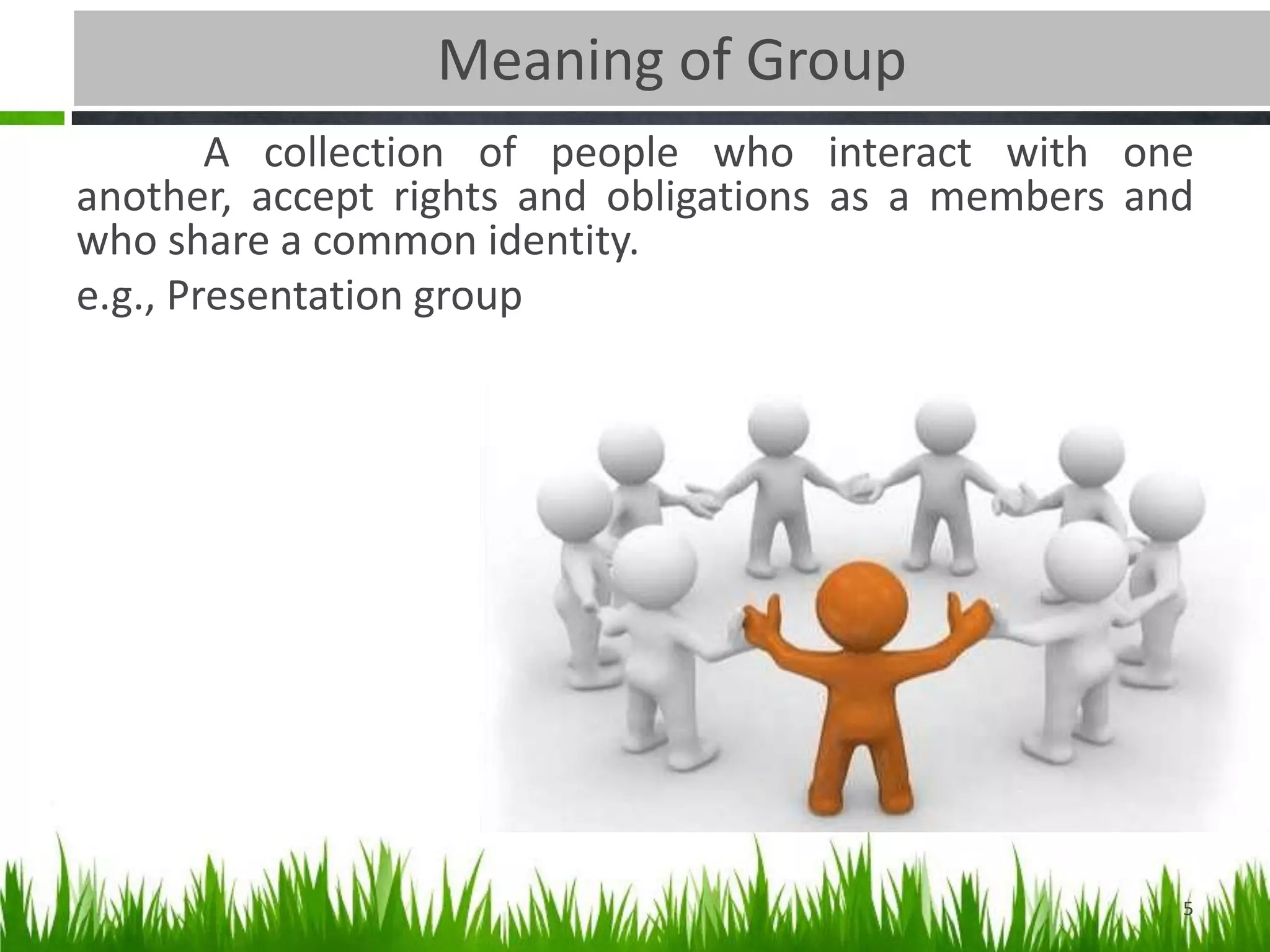
A collection of people who interact with one
another, accept rights and obligations as a members and
who share a common identity.
e.g., Presentation group
5
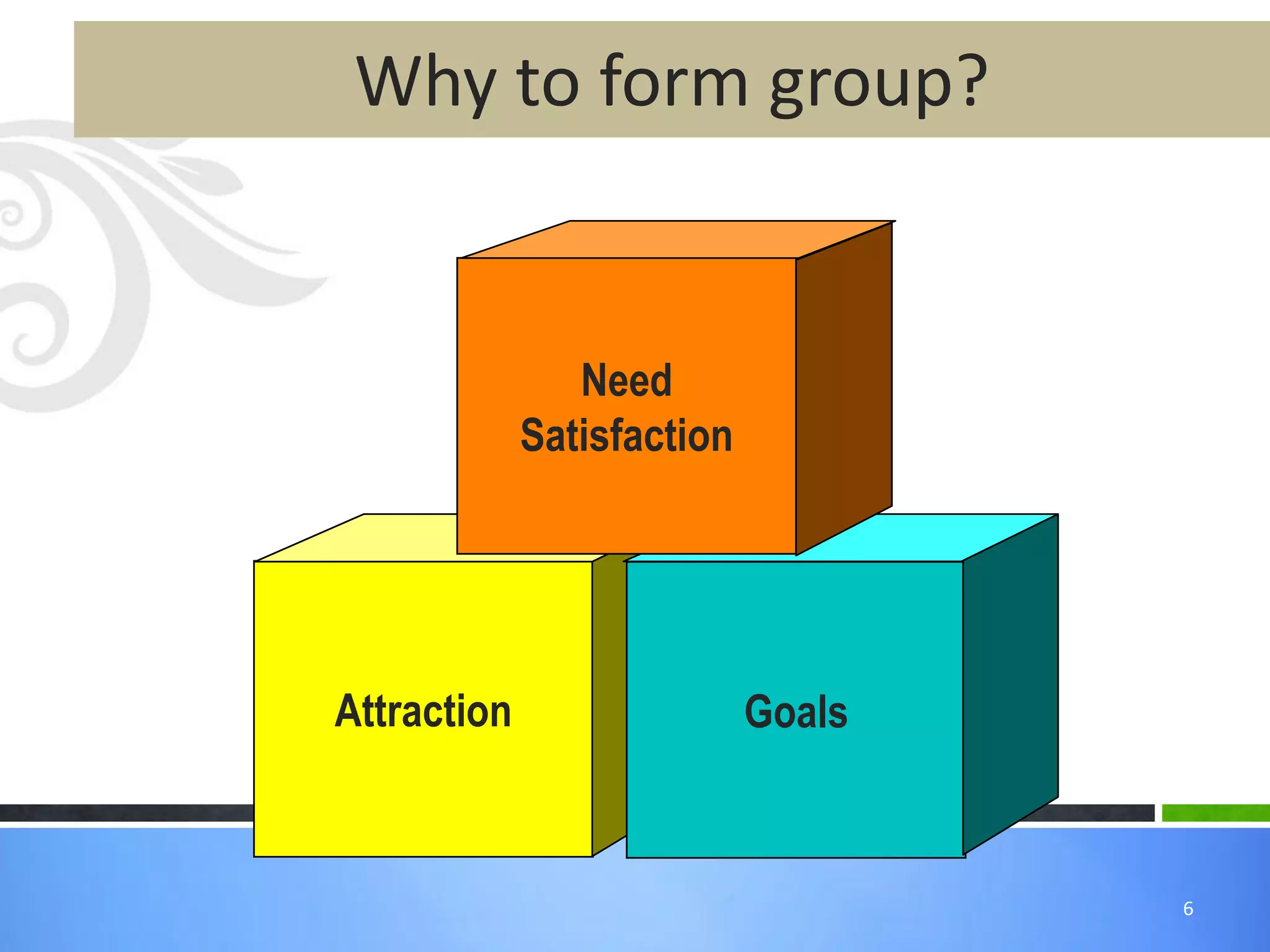
Why to form group?
6
Attraction Goals
Need
Satisfaction
Roles in Group
• Task oriented roles
• Maintenance roles
• Individual roles
7
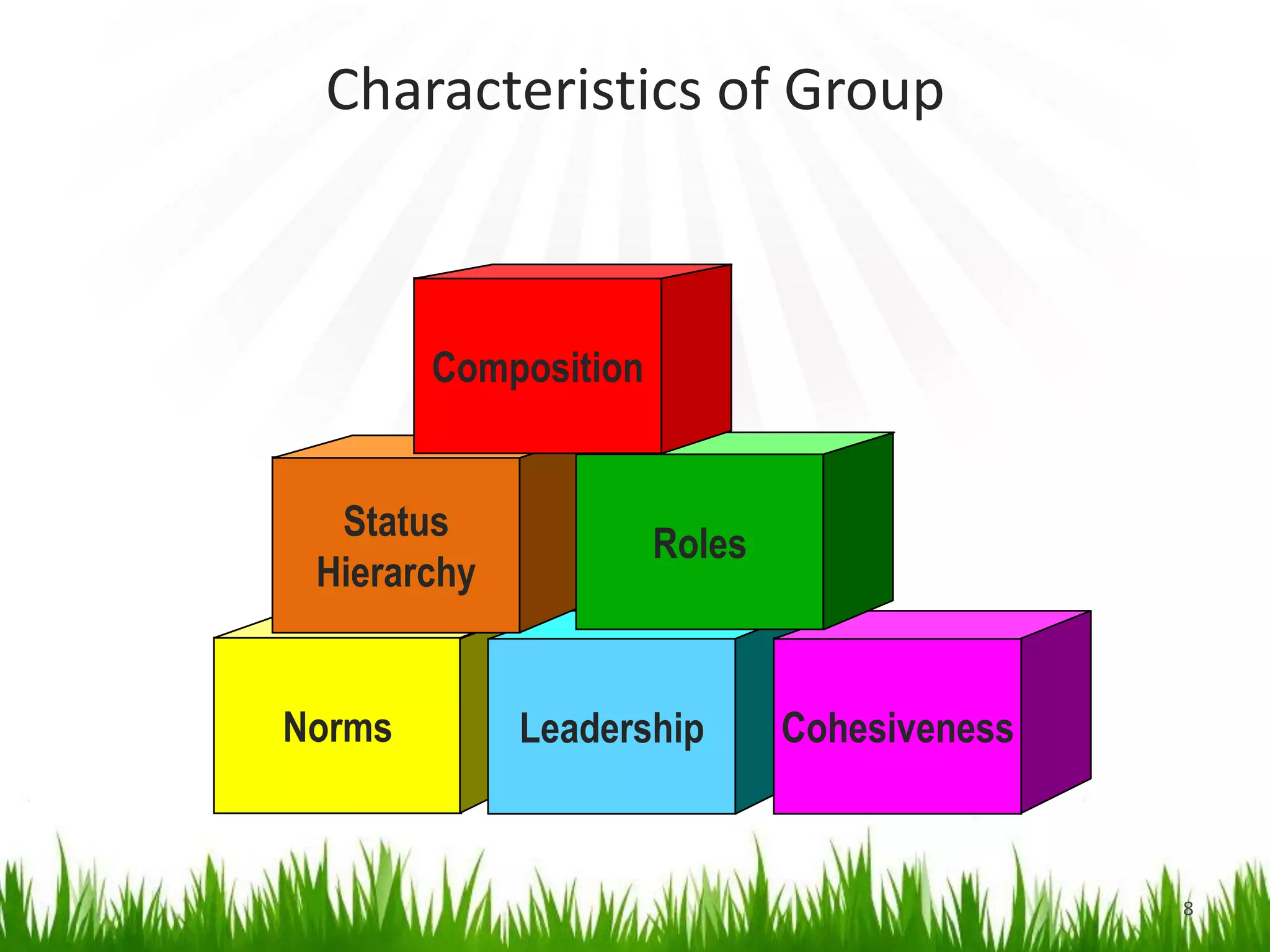
Characteristics of Group
Norms Leadership Cohesiveness
Status
Hierarchy
Roles
Composition
8
9
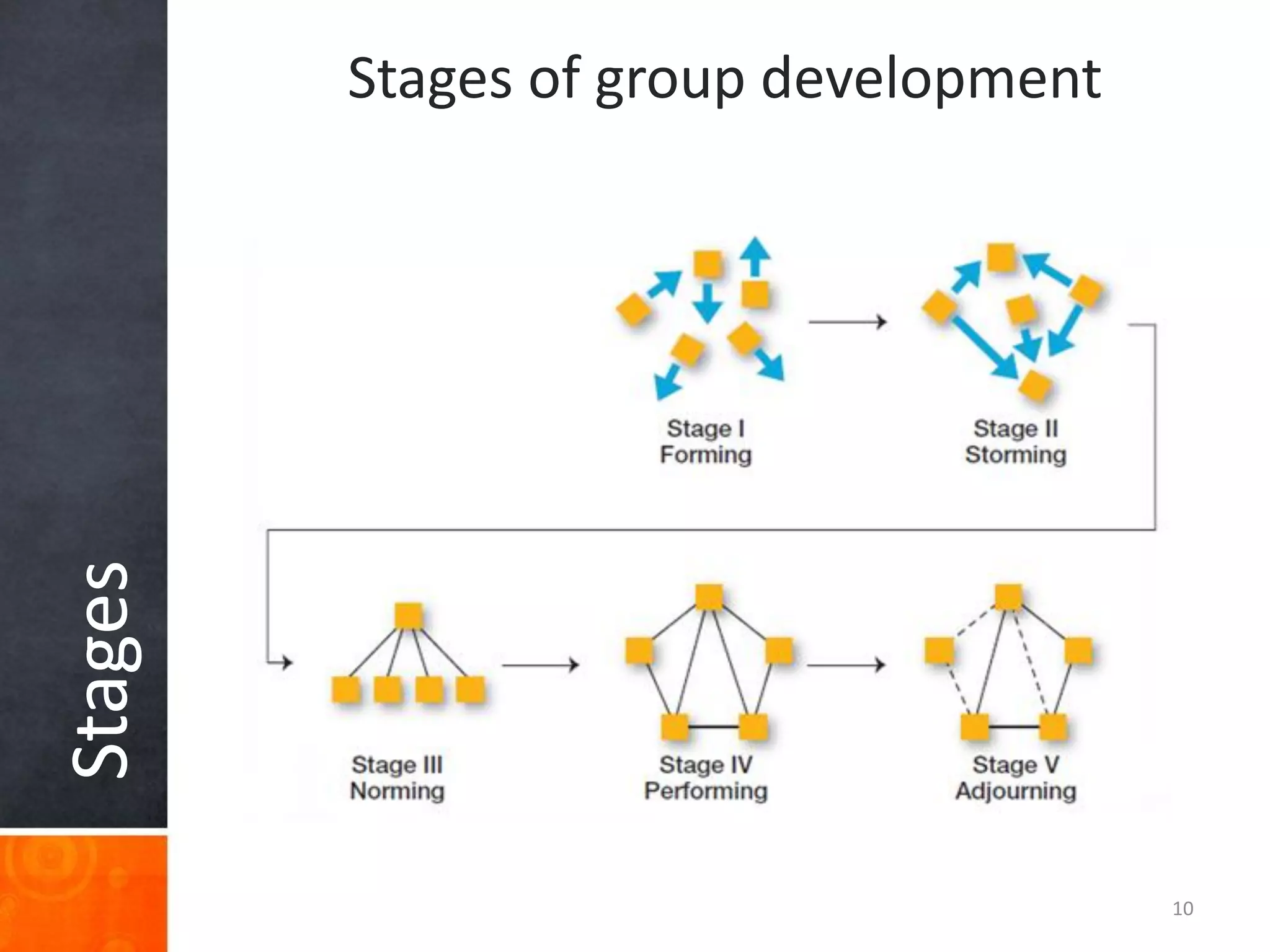
Stages Stages of group development
10
11
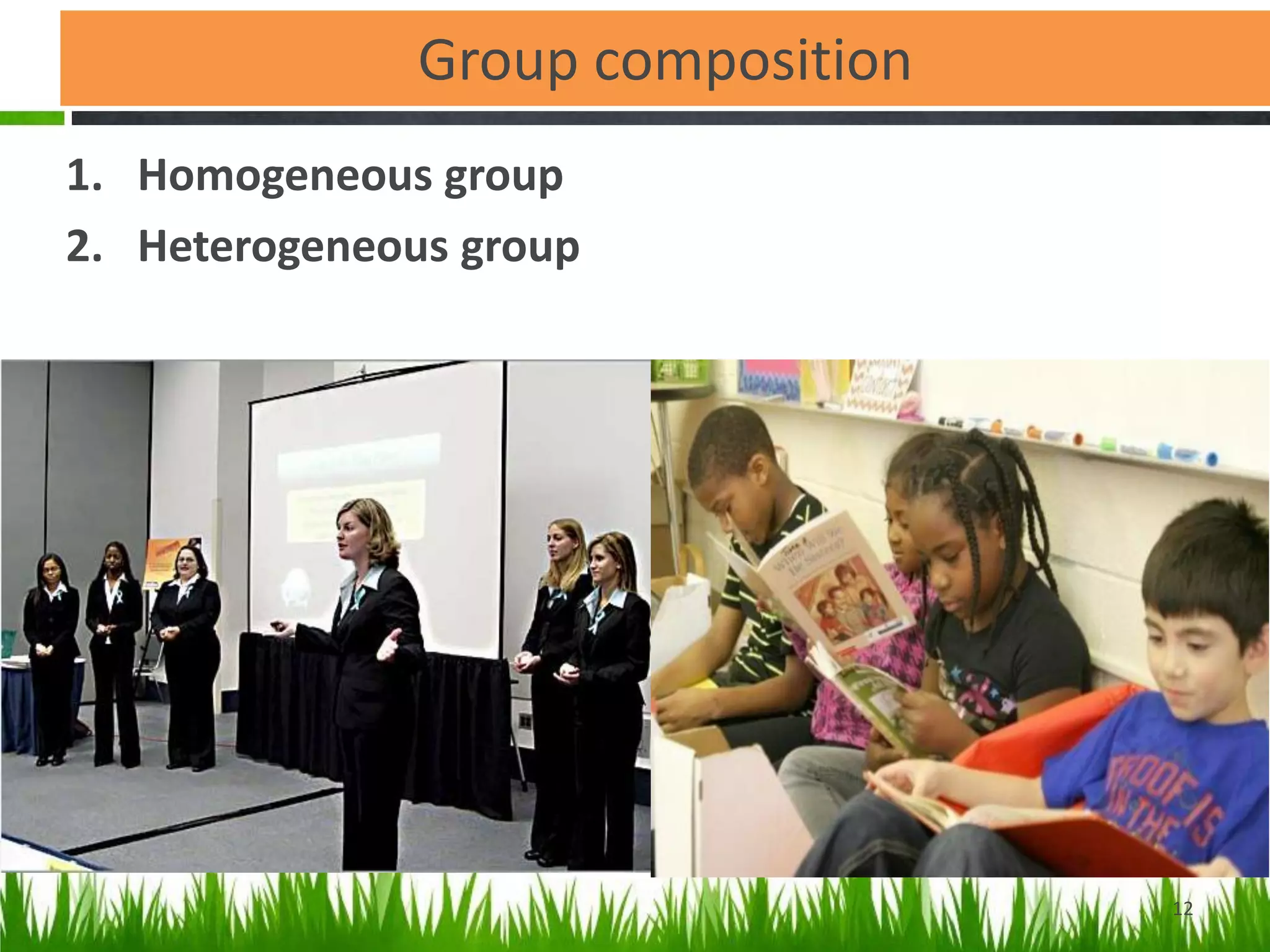
Group composition
1. Homogeneous group
2. Heterogeneous group
12
Advantages of group
• Pooling of knowledge and information
• Satisfaction & commitment
• Personnel development
• More risk-taking
13
Disadvantages of group
• Time consuming & costly
• Individual domination
• Problem of responsibility
• Group think
14
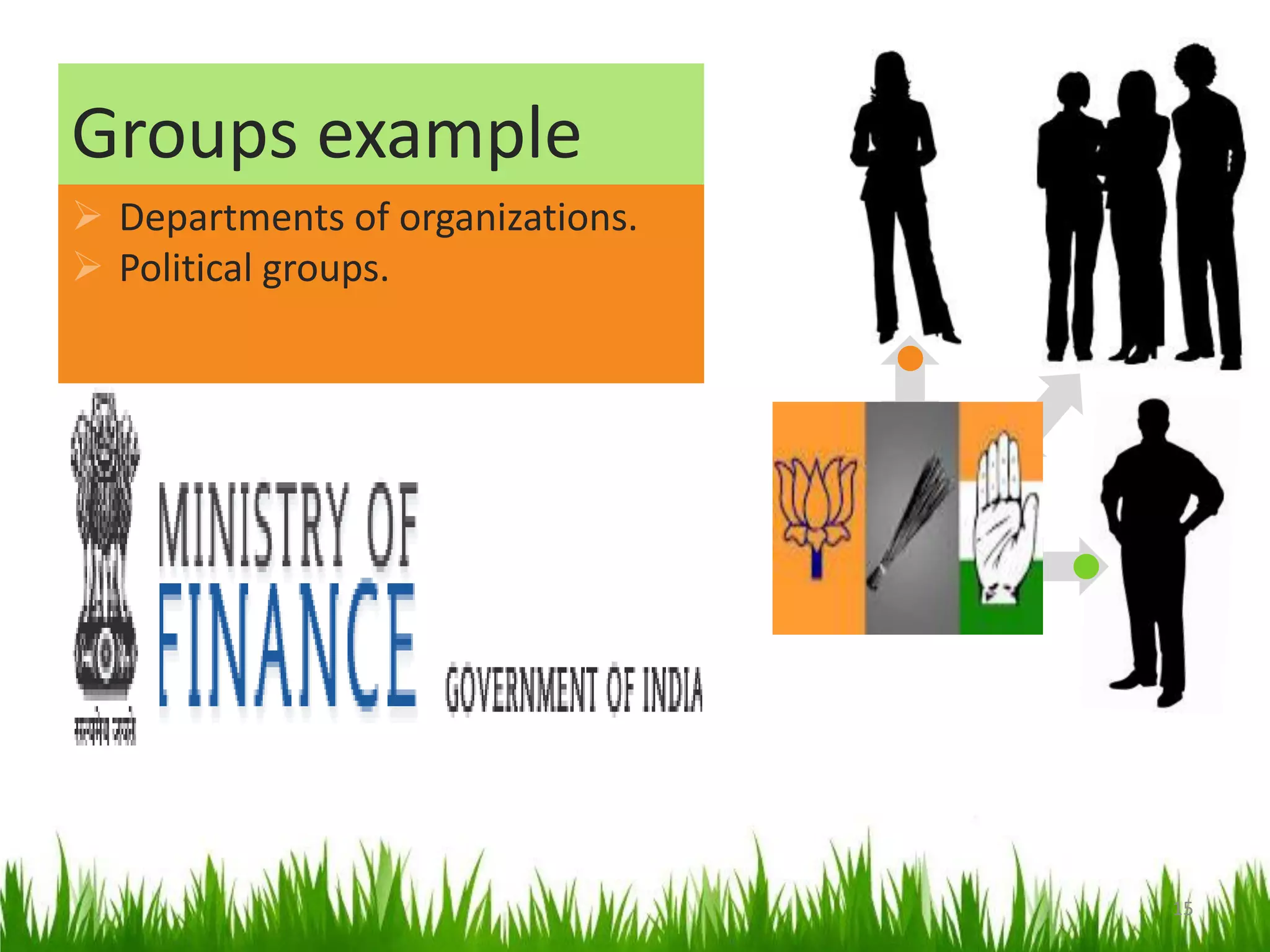
 Departments of organizations.
 Political groups.
Groups example
15
TEAMS
16
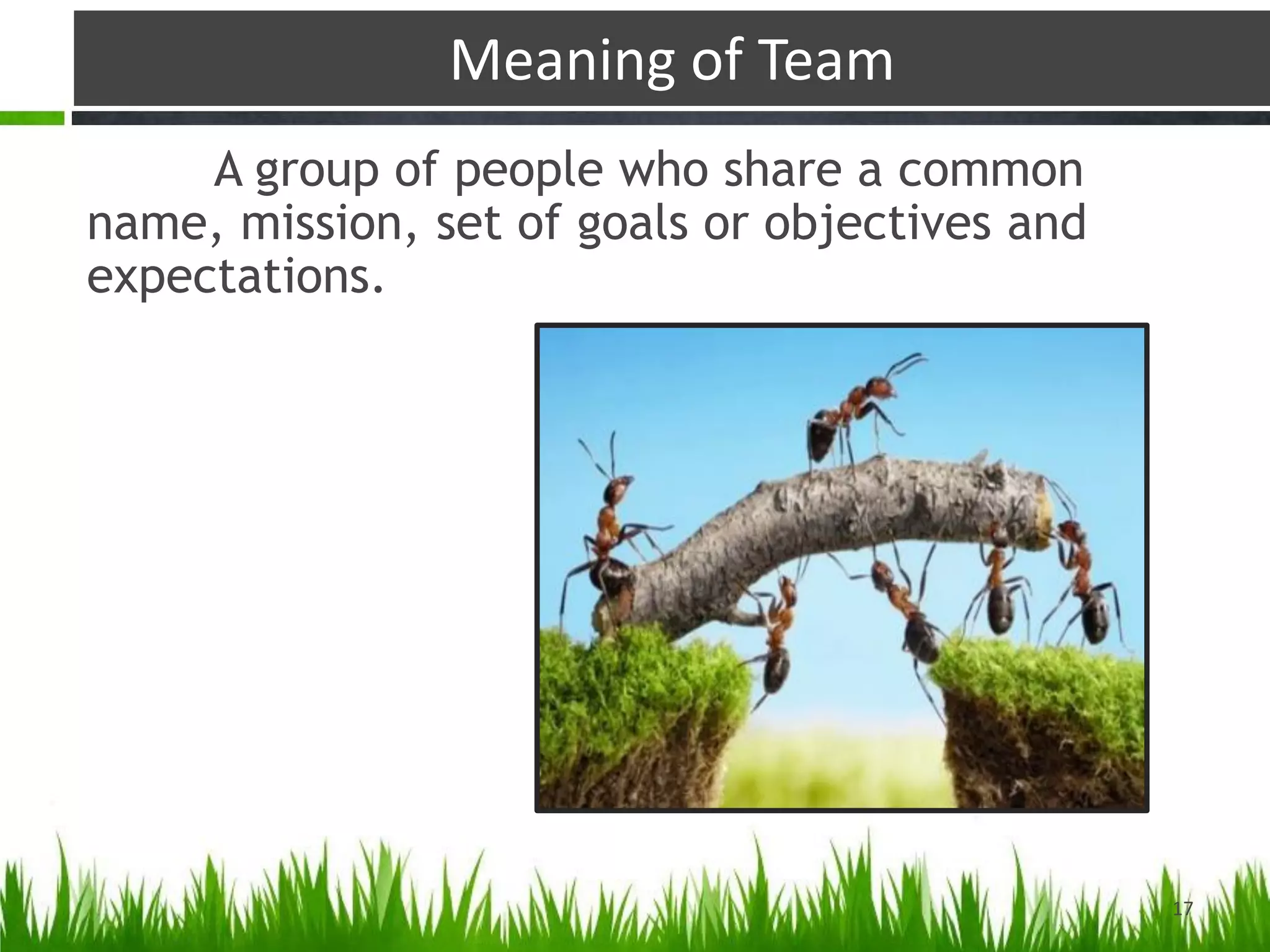
Meaning of Team
A group of people who share a common
name, mission, set of goals or objectives and
expectations.
17
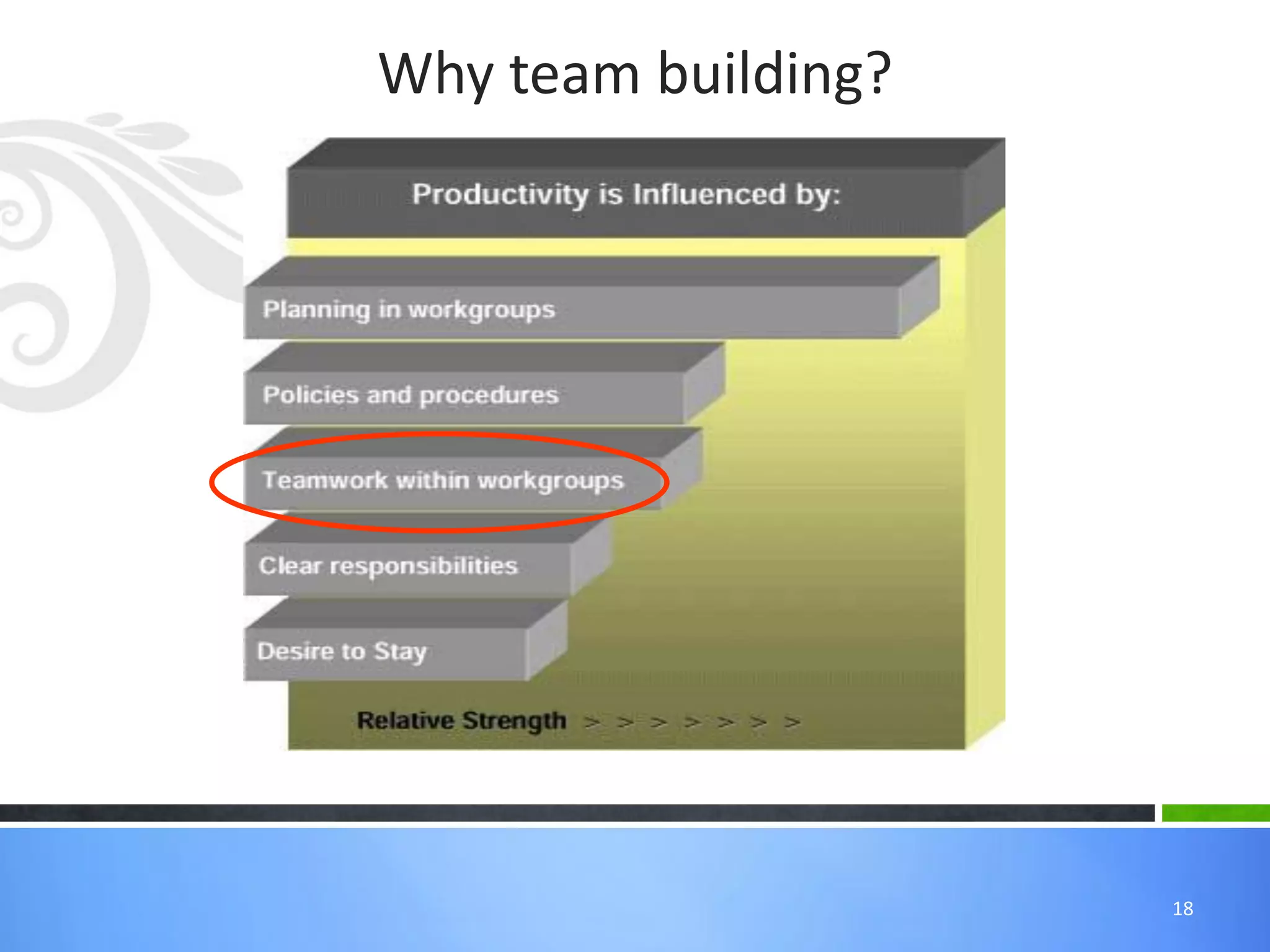
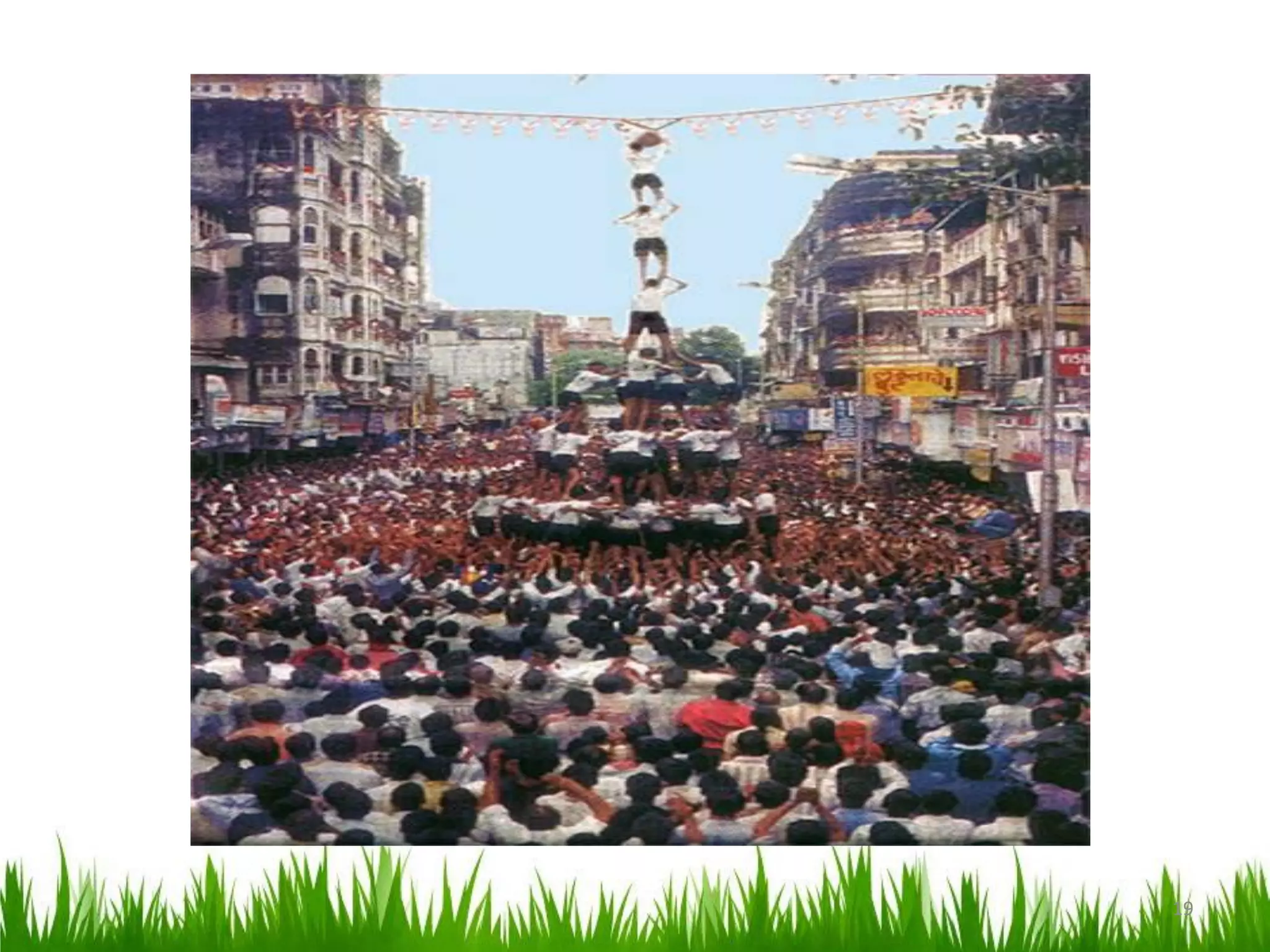
Why team building?
18
19
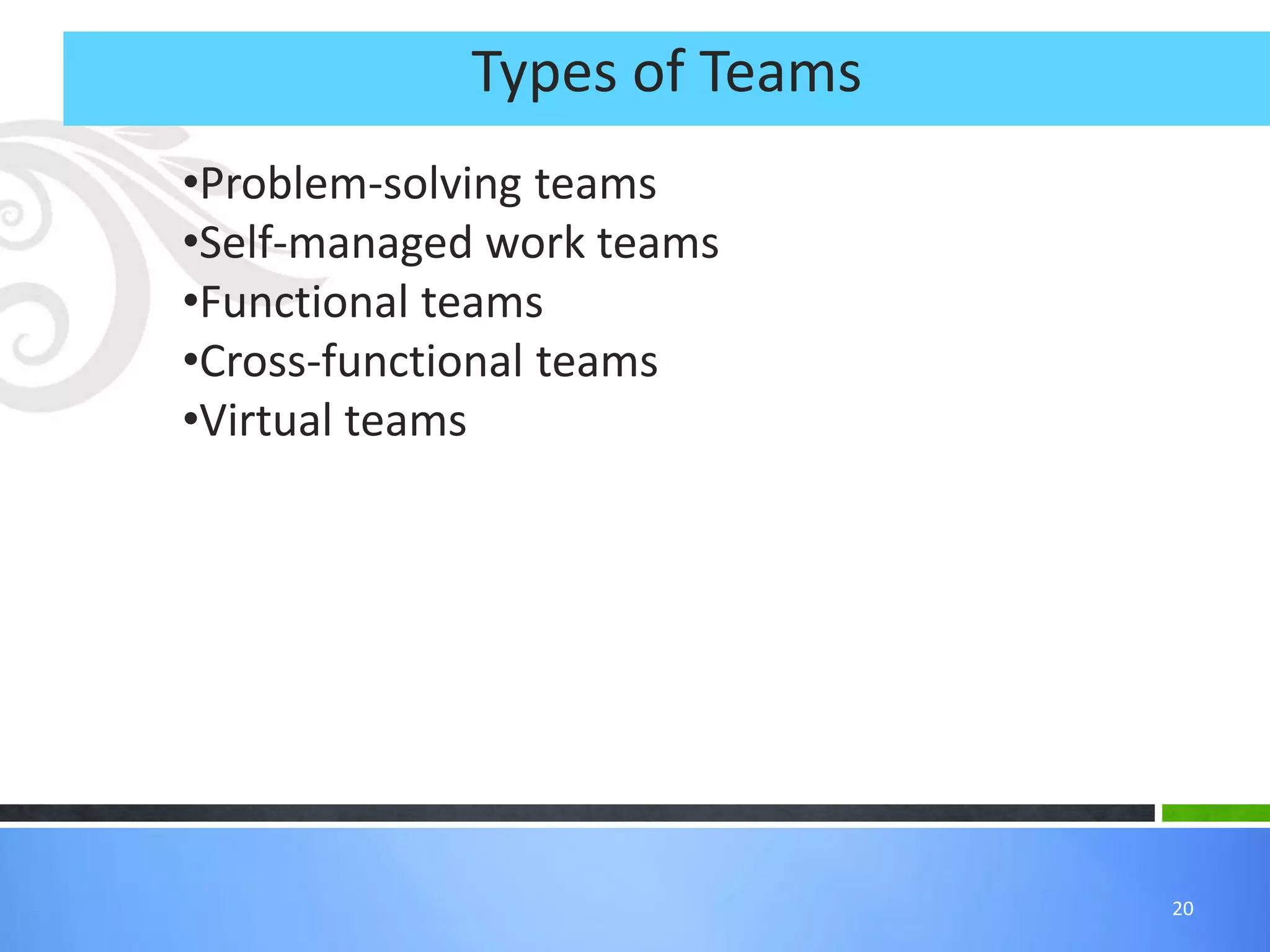
•Problem-solving teams
•Self-managed work teams
•Functional teams
•Cross-functional teams
•Virtual teams
Types of Teams
20
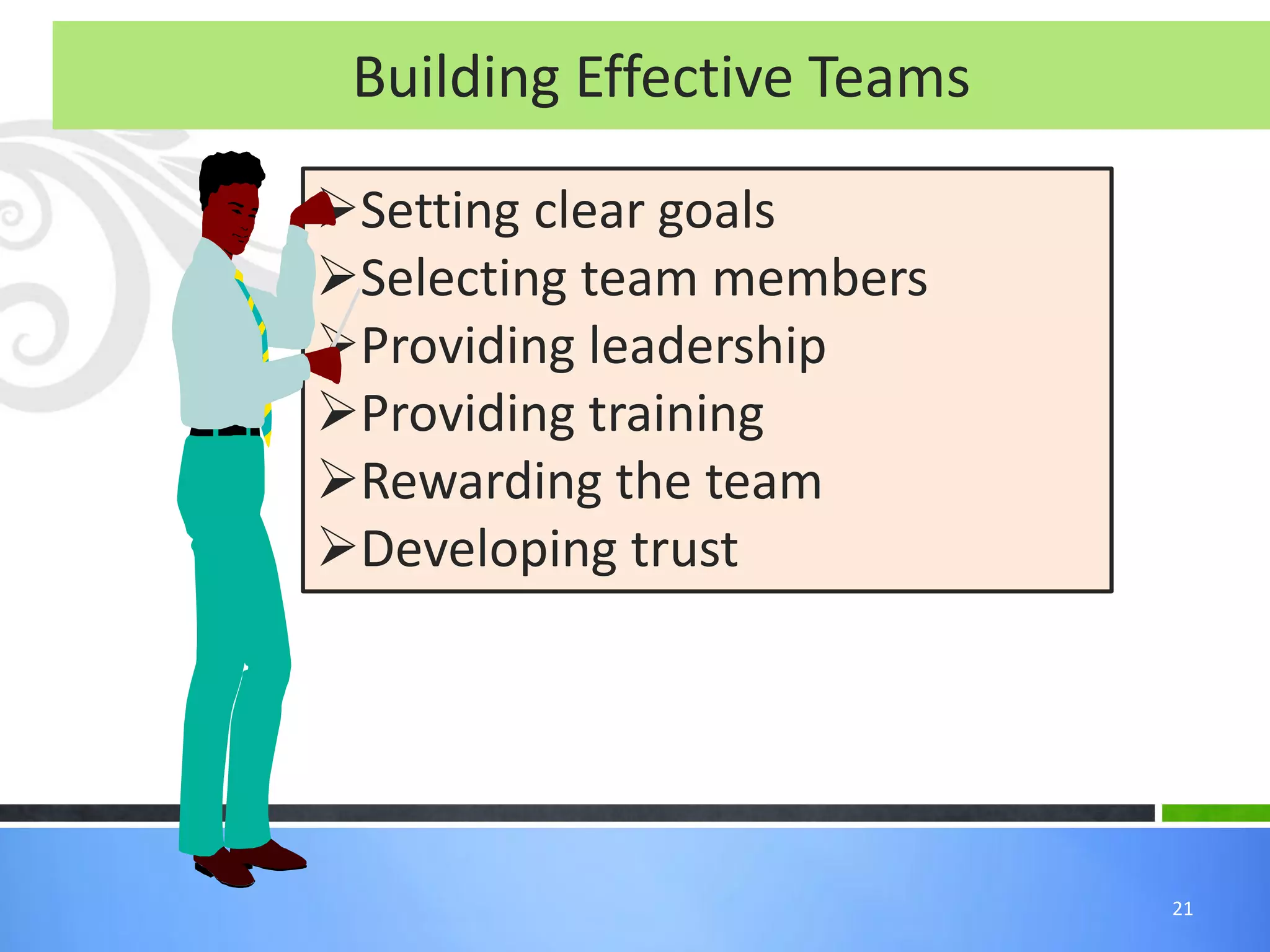
Building Effective Teams
Setting clear goals
Selecting team members
Providing leadership
Providing training
Rewarding the team
Developing trust
21
Advantages of Team building
• Range Of Options
• Division Of Work
• Motivation
• Help in Decision Making
22
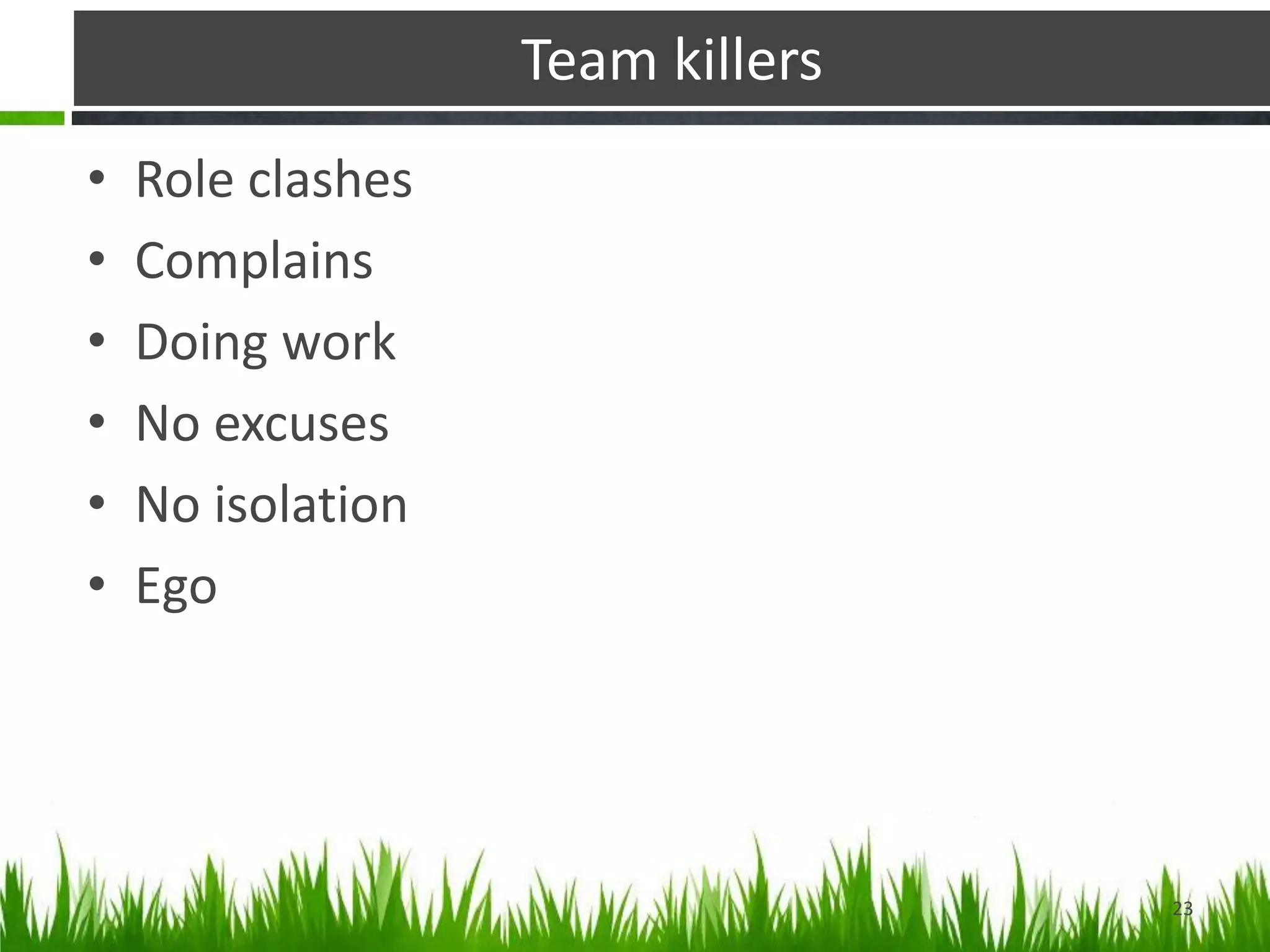
Team killers
• Role clashes
• Complains
• Doing work
• No excuses
• No isolation
• Ego
23
24
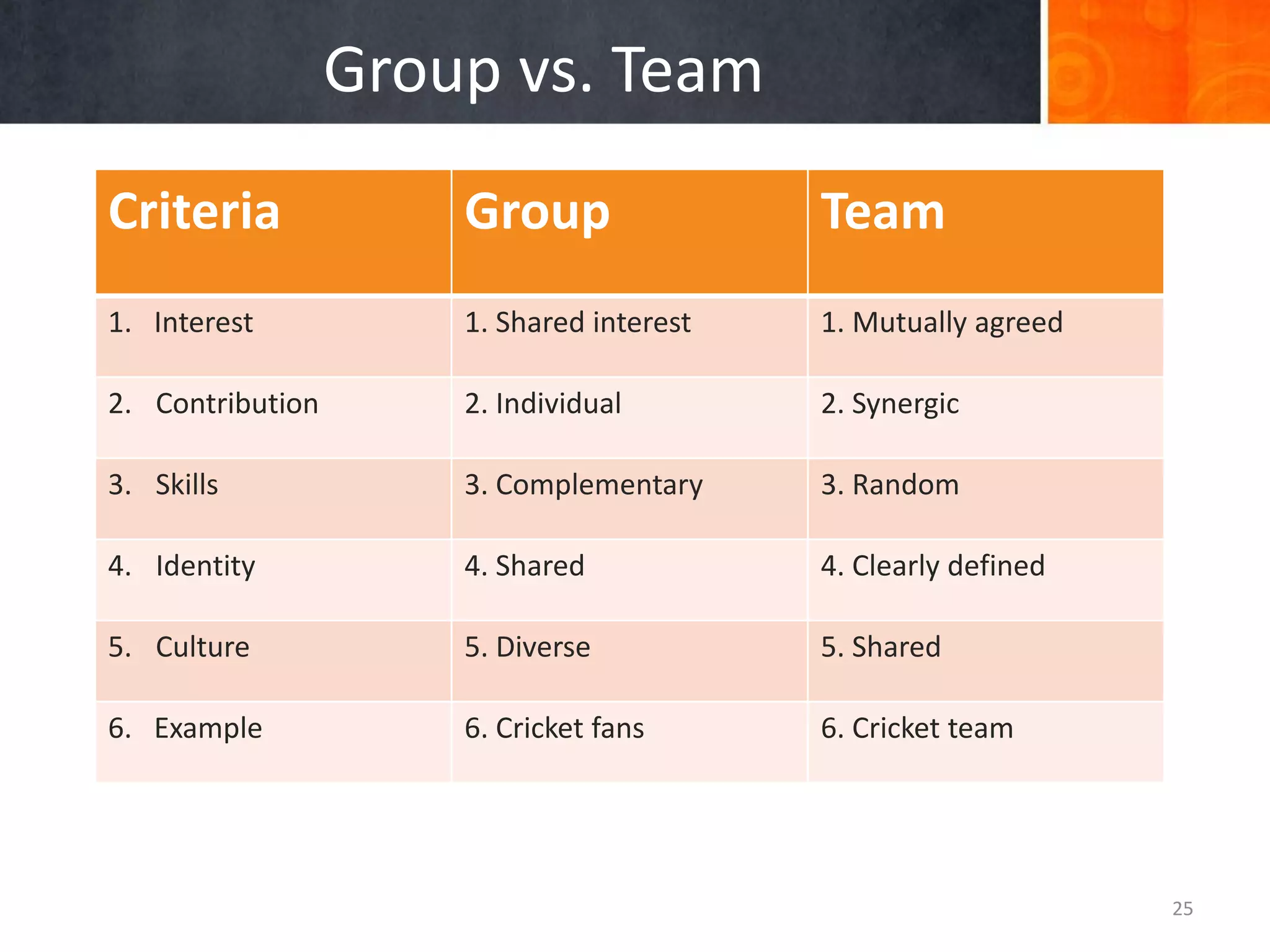
Group vs. Team
Criteria Group Team
1. Interest 1. Shared interest 1. Mutually agreed
2. Contribution 2. Individual 2. Synergic
3. Skills 3. Complementary 3. Random
4. Identity 4. Shared 4. Clearly defined
5. Culture 5. Diverse 5. Shared
6. Example 6. Cricket fans 6. Cricket team
25
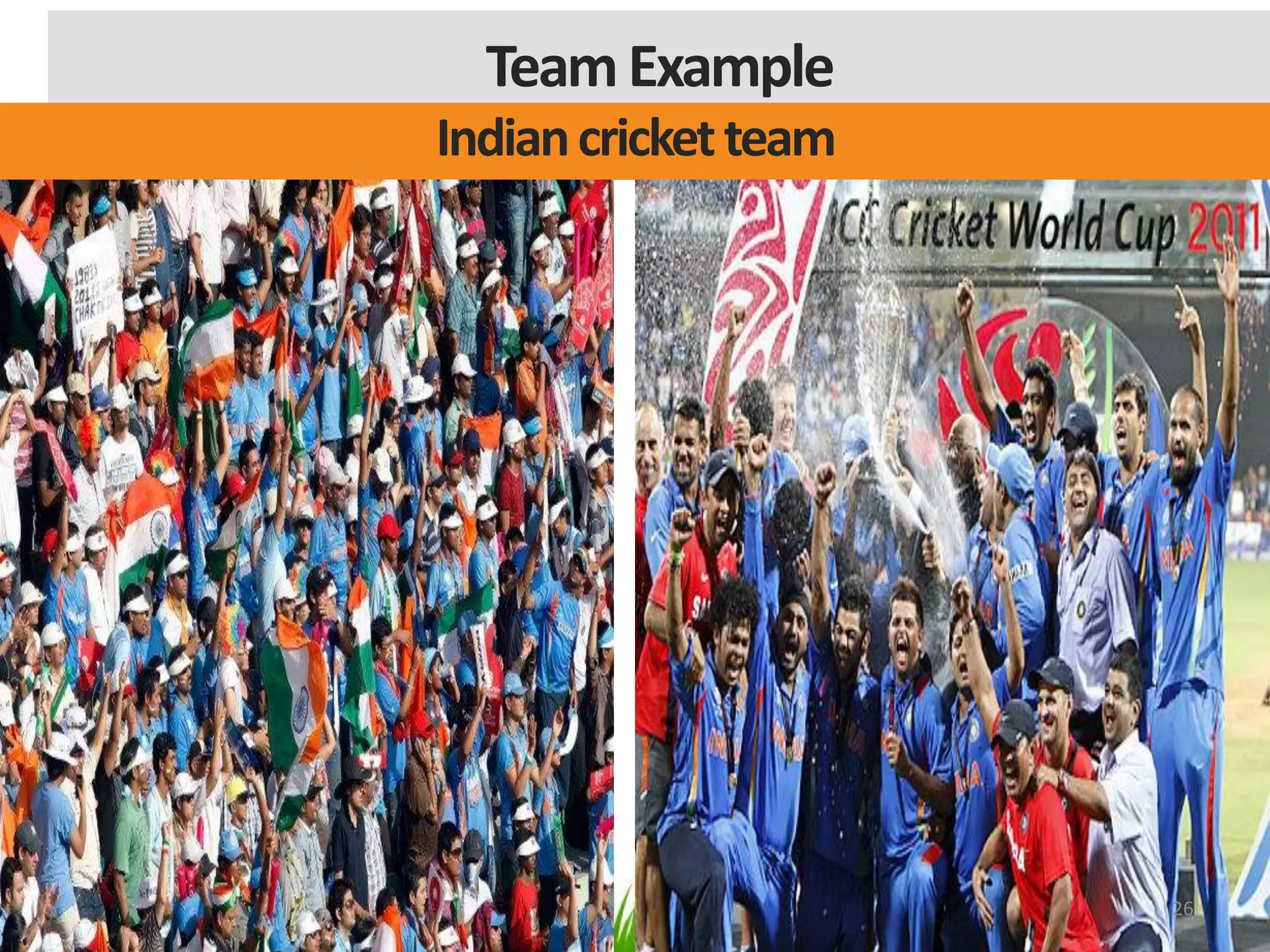
Indiancricketteam
TeamExample
26
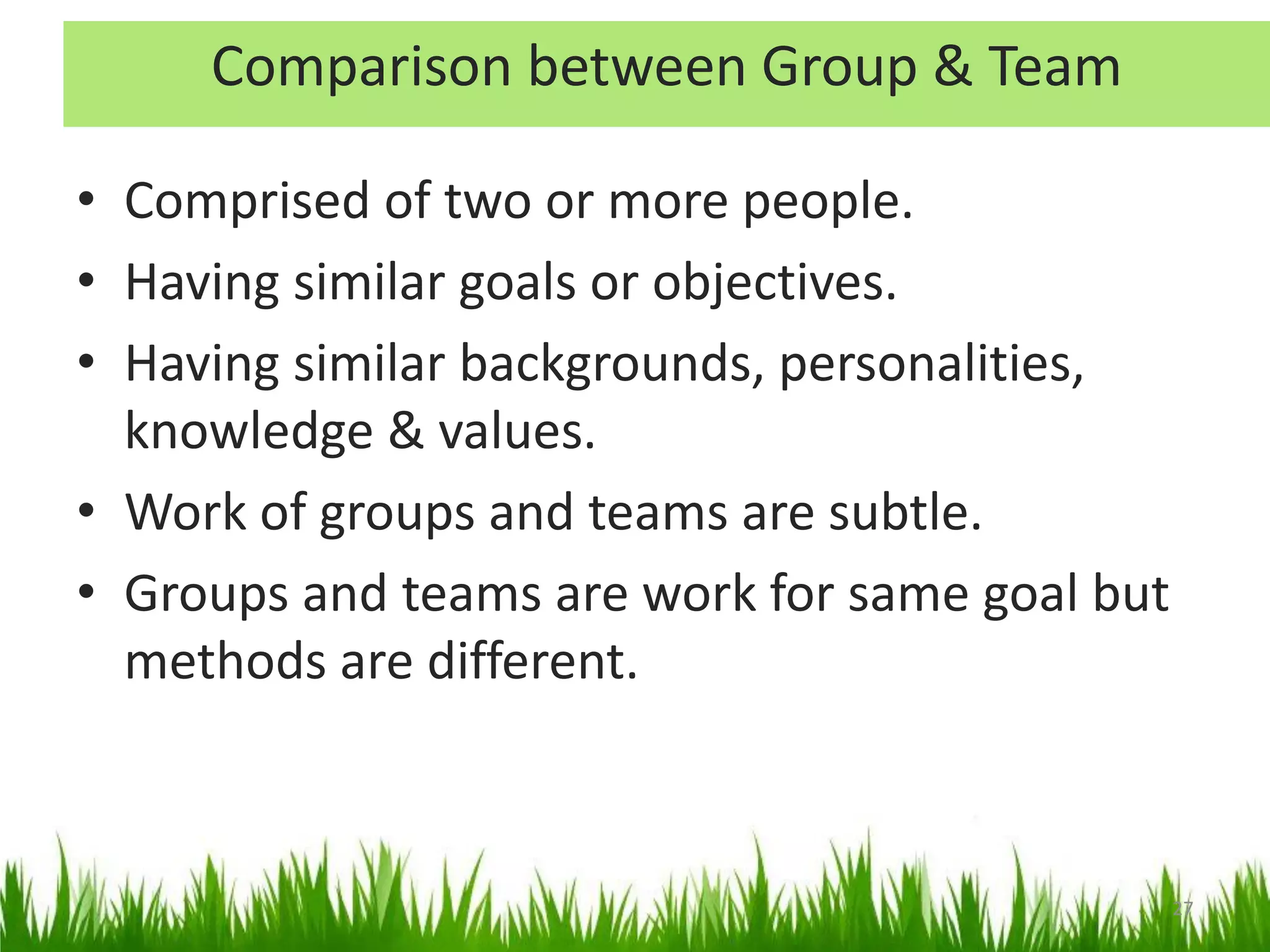
Comparison between Group & Team
• Comprised of two or more people.
• Having similar goals or objectives.
• Having similar backgrounds, personalities,
knowledge & values.
• Work of groups and teams are subtle.
• Groups and teams are work for same goal but
methods are different.
27
SEWA
Self Employed Women’s Association
28
3
28
CASE
STUDY
29
SEWA
• Head office : Ahmedabad
• Total members:1,916,676
• Goal: ’Full employment and self-reliance’
30
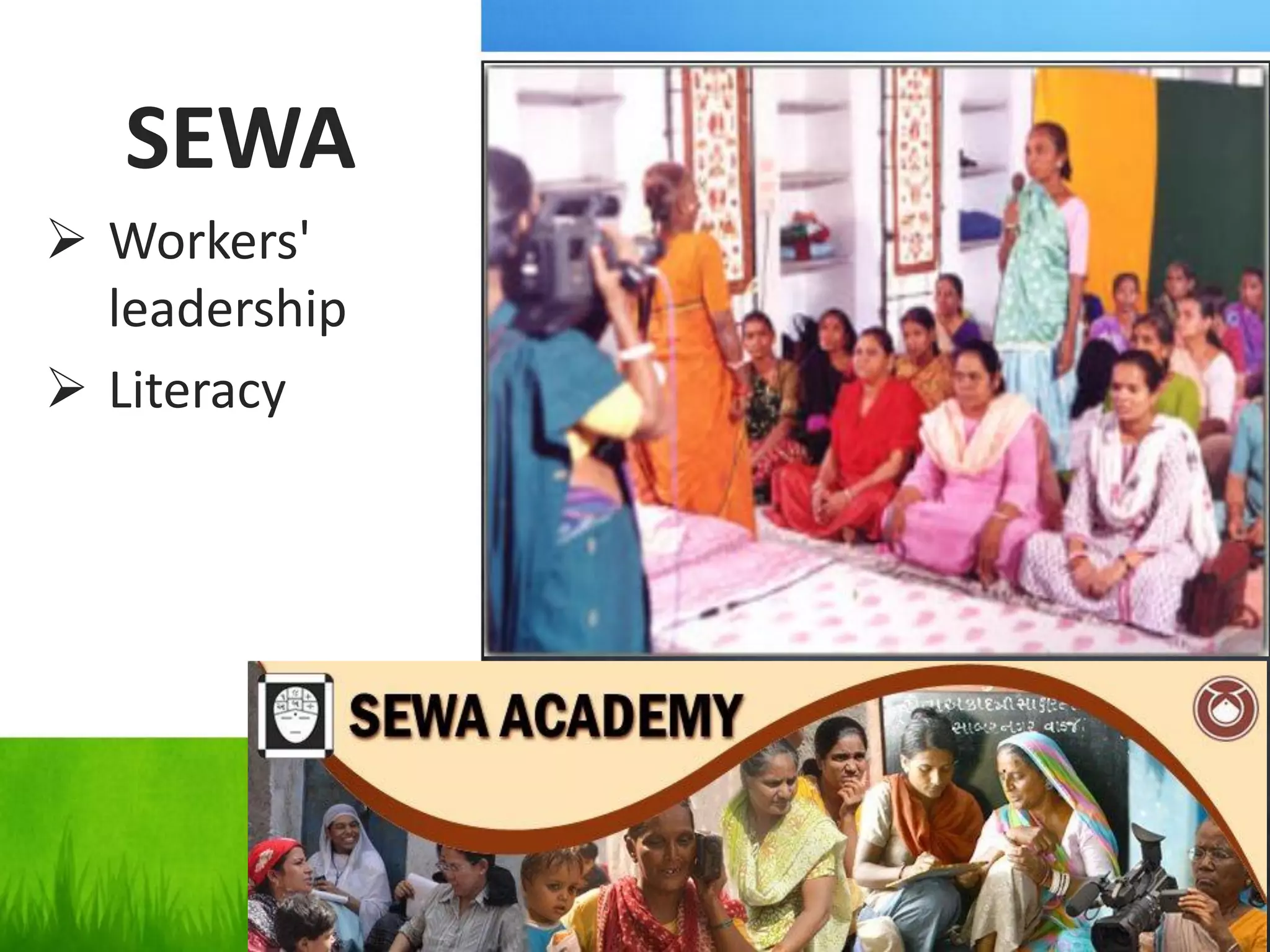
SEWA
 Workers'
leadership
 Literacy
31
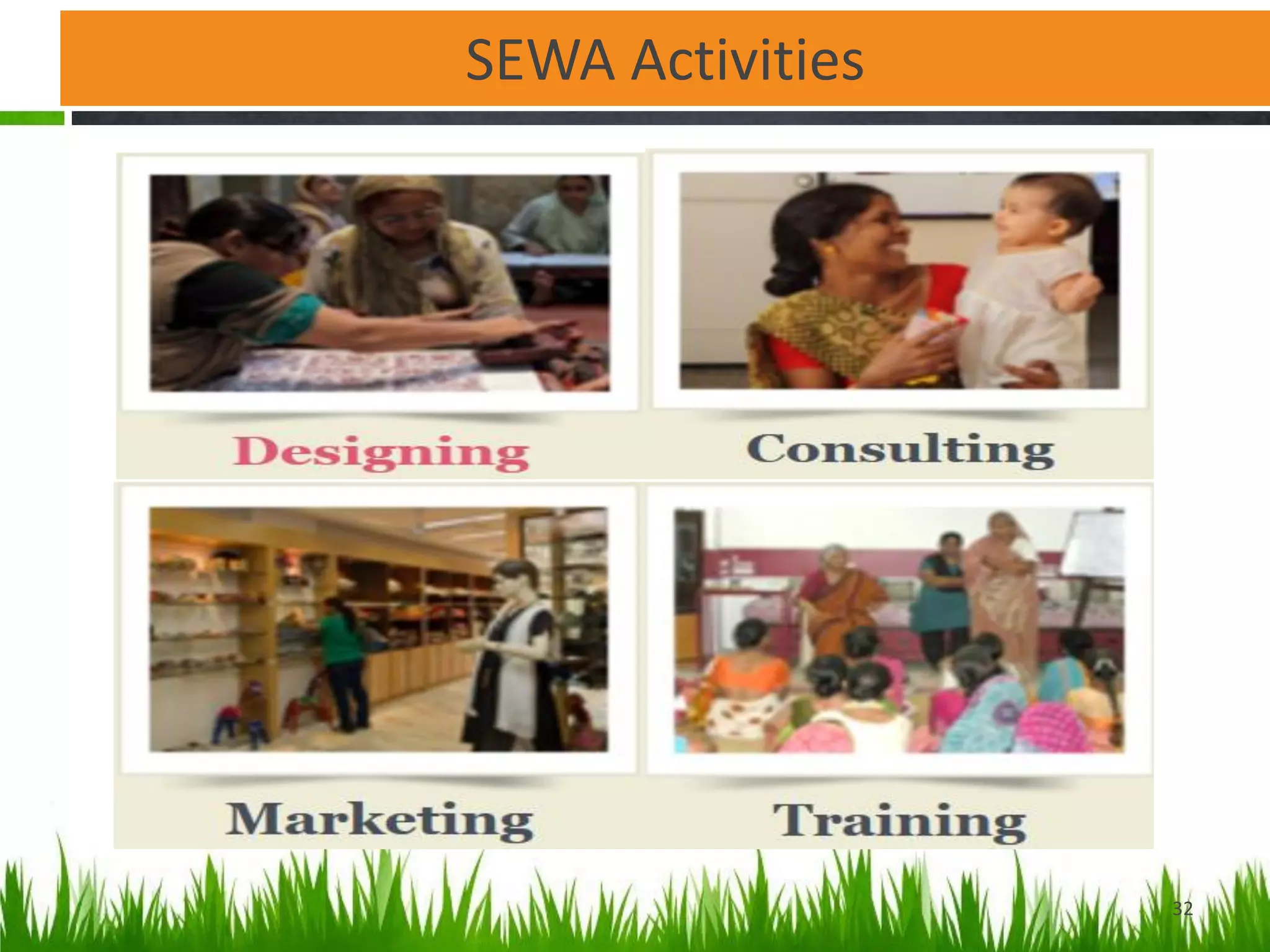
SEWA Activities
32
Questions
33
1. What did you understand by groups?
2. What is meant by forming a team?
3. Give two points of difference between
groups and teams.
4. Give a comparison between group and team.
5. Give examples about formal groups.
6. Give examples of team.
References
• Google.co.in
• En.wikipedia.org
• Organizational Behavior and Management by
John Ivancevich, Robert Konopaske, Michael
Matteson
• Contemporary Management by Gareth Jones,
Jennifer George
• www.sewa.org
34
35

Groups and teams new ppt