




Principles Of Management
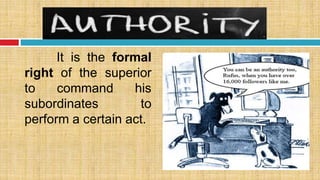
It is the formal
right of the superior
to command his
subordinates to
perform a certain act.
Sources of Formal Authority
 Classical View-
Traditional or
Legalistic View.
 Human Relation View-
Acceptance View.
Ability/
Potenti
al of a
person
to
influenc
e other
person.
 Charismatic power-
extraordinary qualities.
 Reflected power-from a
powerful individual.
 Emotional power-As a mother
over her son.
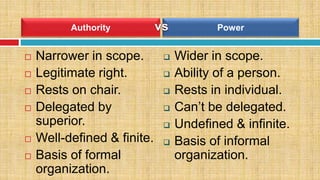
 Narrower in scope.
 Legitimate right.
 Rests on chair.
 Delegated by
superior.
 Well-defined & finite.
 Basis of formal
organization.
 Wider in scope.
 Ability of a person.
 Rests in individual.
 Can’t be delegated.
 Undefined & infinite.
 Basis of informal
organization.
Authority Power
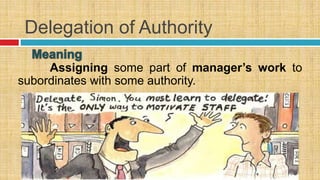
Delegation of Authority
Assigning some part of manager’s work to
subordinates with some authority.
Advantages of Delegation
 Relieves manager of his
heavy workload.
 Leads to better
decisions.
 Speeds up decision
making.
 Helps to train
subordinate and build
morale.
Barriers of Delegation
 Fear of loss of power.
 The “I Can Do it Better
Myself” fallacy.
 Lack of Confidence in
subordinates.
 Fear of being exposed.
 Difficulty in Briefing.
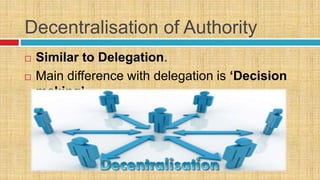
Decentralisation of Authority
 Similar to Delegation.
 Main difference with delegation is ‘Decision
making’.
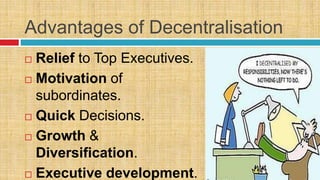
Advantages of Decentralisation
 Relief to Top Executives.
 Motivation of
subordinates.
 Quick Decisions.
 Growth &
Diversification.
 Executive development.
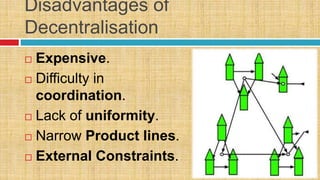
Disadvantages of
Decentralisation
 Expensive.
 Difficulty in
coordination.
 Lack of uniformity.
 Narrow Product lines.
 External Constraints.
Empowerment
 Authority of an
employee to make
decision.
 Operationalized through
participation, innovation,
access to information &
responsibility.
 Speed
 Morale
 Greater potential of
chaos
 Role conflict
Merits De-merits
References
 Principles of Management by P C Tripathi & P
N Reddy.
 Management Theory and Practices by C B
Gupta
 Images.google.com
Dr. Nazia Ansari
Guided By
Prepared By
Darshana Chauhan
Athira Ezhuva
Vanita Hathliya

Authority & delegation in Management

  • 1.
  • 2.
    It is theformal right of the superior to command his subordinates to perform a certain act.
  • 3.
    Sources of FormalAuthority  Classical View- Traditional or Legalistic View.  Human Relation View- Acceptance View.
  • 4.
    Ability/ Potenti al of a person to influenc eother person.  Charismatic power- extraordinary qualities.  Reflected power-from a powerful individual.  Emotional power-As a mother over her son.
  • 5.
     Narrower inscope.  Legitimate right.  Rests on chair.  Delegated by superior.  Well-defined & finite.  Basis of formal organization.  Wider in scope.  Ability of a person.  Rests in individual.  Can’t be delegated.  Undefined & infinite.  Basis of informal organization. Authority Power
  • 6.
    Delegation of Authority Assigningsome part of manager’s work to subordinates with some authority.
  • 7.
    Advantages of Delegation Relieves manager of his heavy workload.  Leads to better decisions.  Speeds up decision making.  Helps to train subordinate and build morale.
  • 8.
    Barriers of Delegation Fear of loss of power.  The “I Can Do it Better Myself” fallacy.  Lack of Confidence in subordinates.  Fear of being exposed.  Difficulty in Briefing.
  • 9.
    Decentralisation of Authority Similar to Delegation.  Main difference with delegation is ‘Decision making’.
  • 10.
    Advantages of Decentralisation Relief to Top Executives.  Motivation of subordinates.  Quick Decisions.  Growth & Diversification.  Executive development.
  • 11.
    Disadvantages of Decentralisation  Expensive. Difficulty in coordination.  Lack of uniformity.  Narrow Product lines.  External Constraints.
  • 12.
    Empowerment  Authority ofan employee to make decision.  Operationalized through participation, innovation, access to information & responsibility.
  • 13.
     Speed  Morale Greater potential of chaos  Role conflict Merits De-merits
  • 15.
    References  Principles ofManagement by P C Tripathi & P N Reddy.  Management Theory and Practices by C B Gupta  Images.google.com
  • 16.
    Dr. Nazia Ansari GuidedBy Prepared By Darshana Chauhan Athira Ezhuva Vanita Hathliya