Team in
Organization
© 2009 Prentice-Hall Inc. All rights reserved. 10-3
10-4
@
Tea Chewed
10-5
Shahanaz
Akter
140313
Shakila Afrin
140317
Sayeda Tamanna
Jahan
140312
Prosen Roy
140337
Laazina Khan
Hrisha
140340
Shaikh
Samiur
Rahman
140351
Analyze the growing popularity of
teams
Contrast among groups and
teams.
Compare and contrast four types
of teams.
Identify the characteristics of
effective teams.
Show how organizations create
team players.
Decide when to use individuals
instead teams.
Show differs of teams in our and
global context.
10-6
We will learn
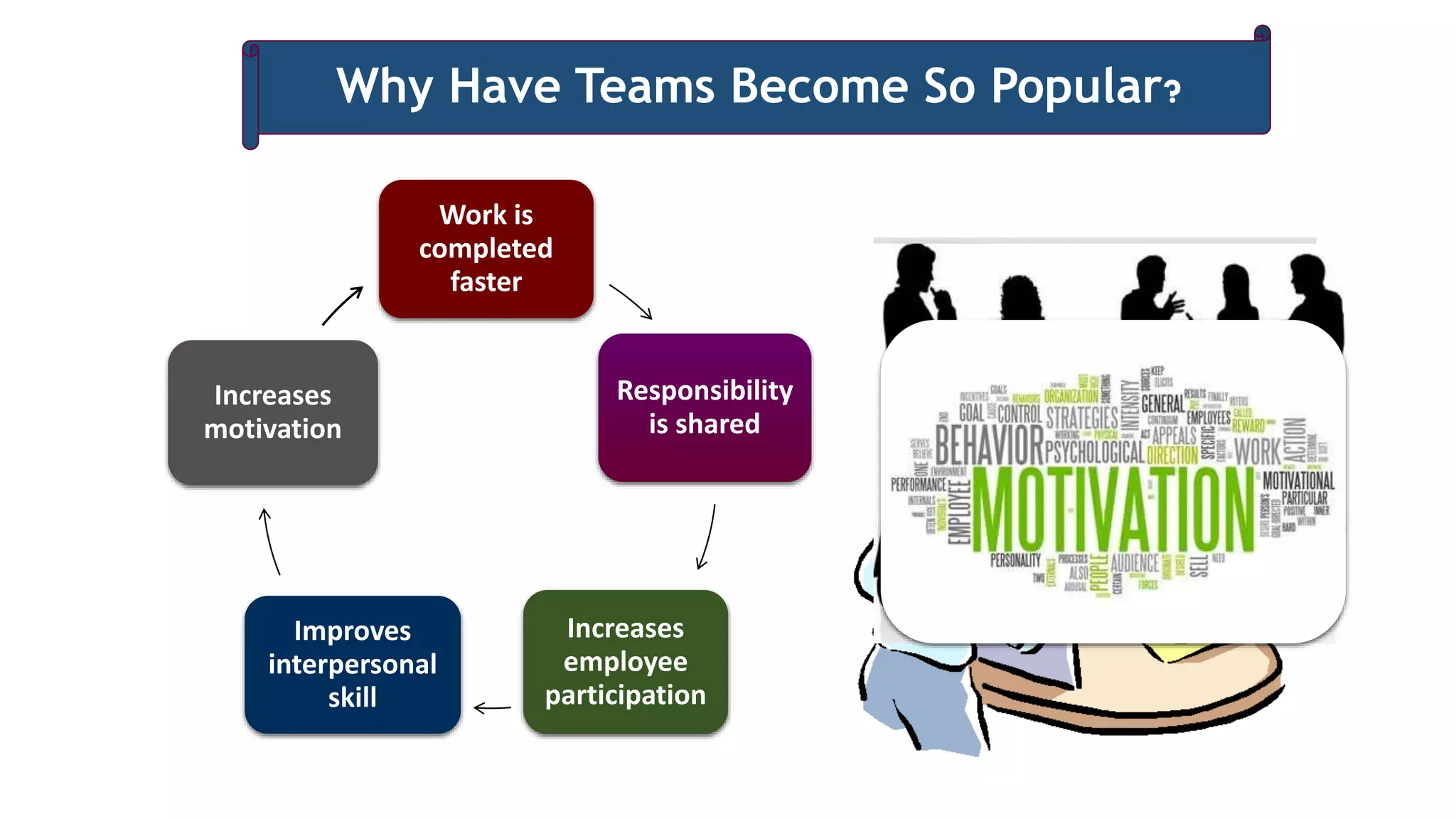
Work is
completed
faster
Responsibility
is shared
Increases
employee
participation
Improves
interpersonal
skill
Increases
motivation
Why Have Teams Become So Popular?
Work Group
Work Team
Primary
Interaction
Making
decisions
No joint
Efforts
Individual
Responsibility
Positive
synergy
Coordinated
Effort
Individual
inputs
Greater
performance
10
11
Work group Vs.Work team
Work Group Work Team
Goals
Synergy
Accountability
Skills
Share Information
Neutral
(Sometimes Negative)
Individual
Random & Varied
Collective Performance
Positive
Individual & Mutual
Complementary
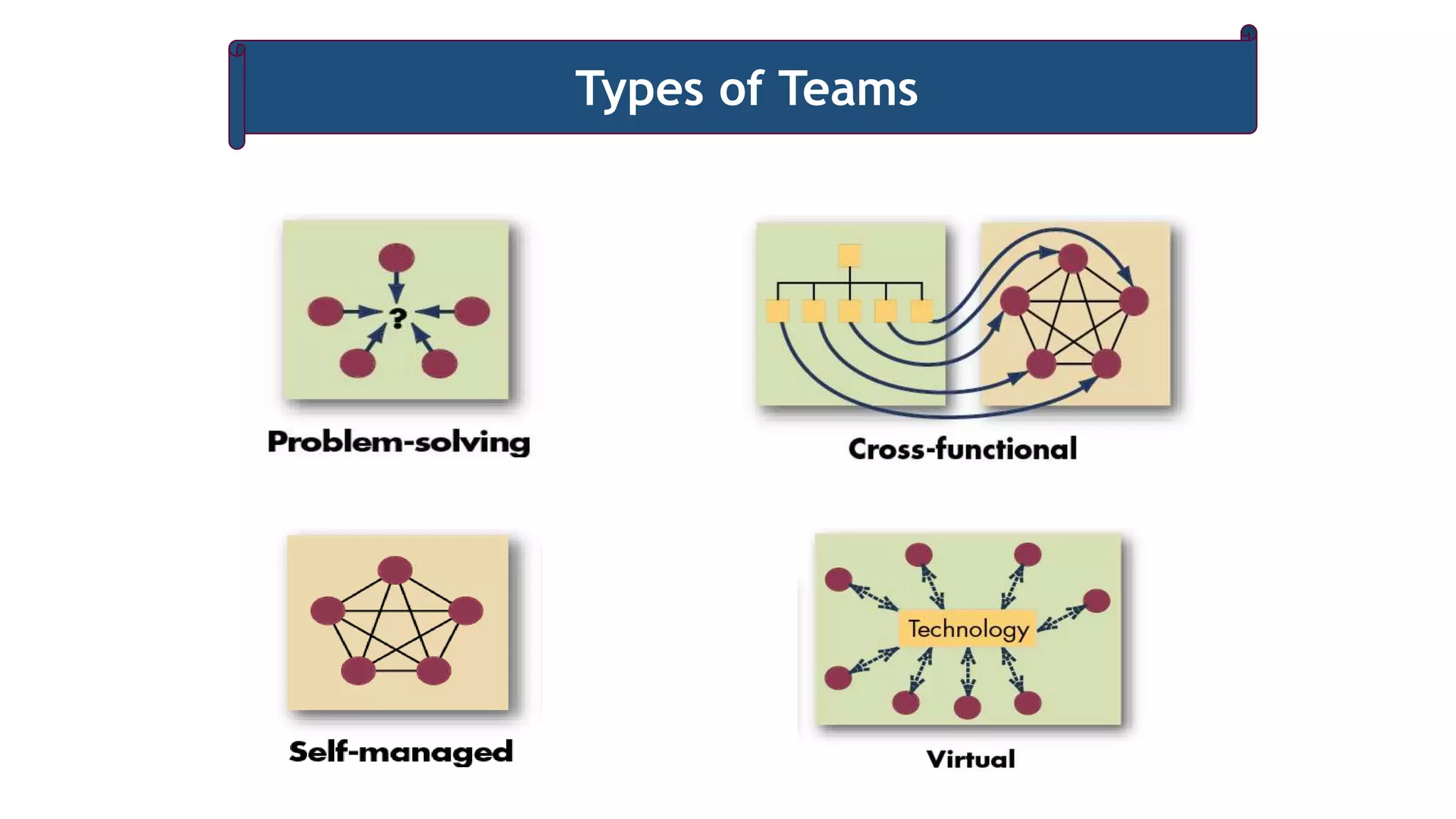
Types of Teams
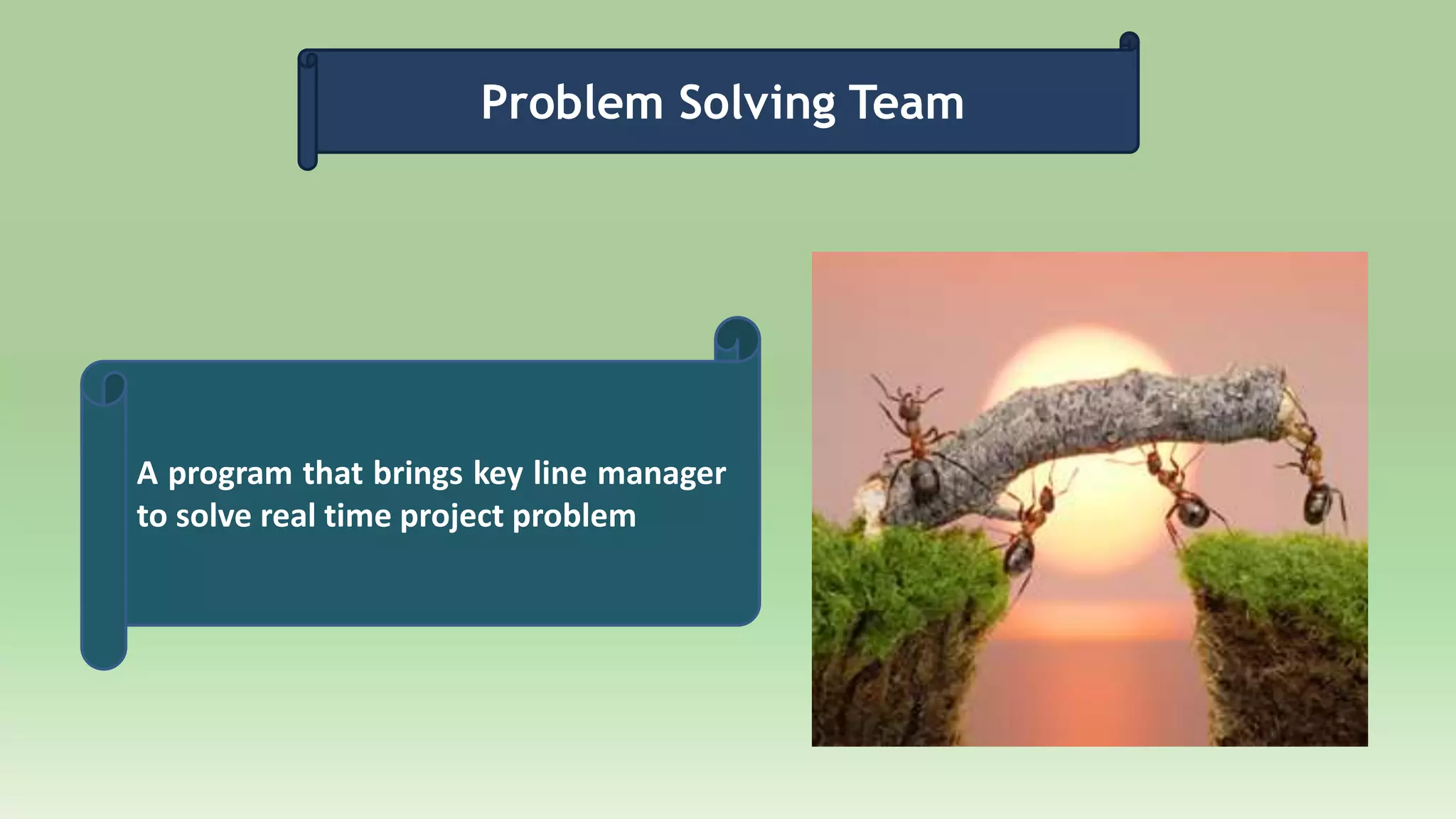
A program that brings key line manager
to solve real time project problem
Problem Solving Team
Excellent decision makers
Generate ideas through brainstorming or
similar techniques
Excellent planners of the implementation
stage
Need too much time, efforts & energies
Loose momentum
Advantages & Disadvantages
A team in which 10 to 15 people take
on the responsibilities of their former
supervisors
Self-Managed Work Teams
Benefits
Flexibility
Efficient
operations
Lower
absenteeis
m
High
commitment Drawbacks
Employee
inability
High
investment
Inefficiency
Extended
time
A group of people with
different functional
expertise and work areas
working toward a common
goal
Cross – Functional Teams
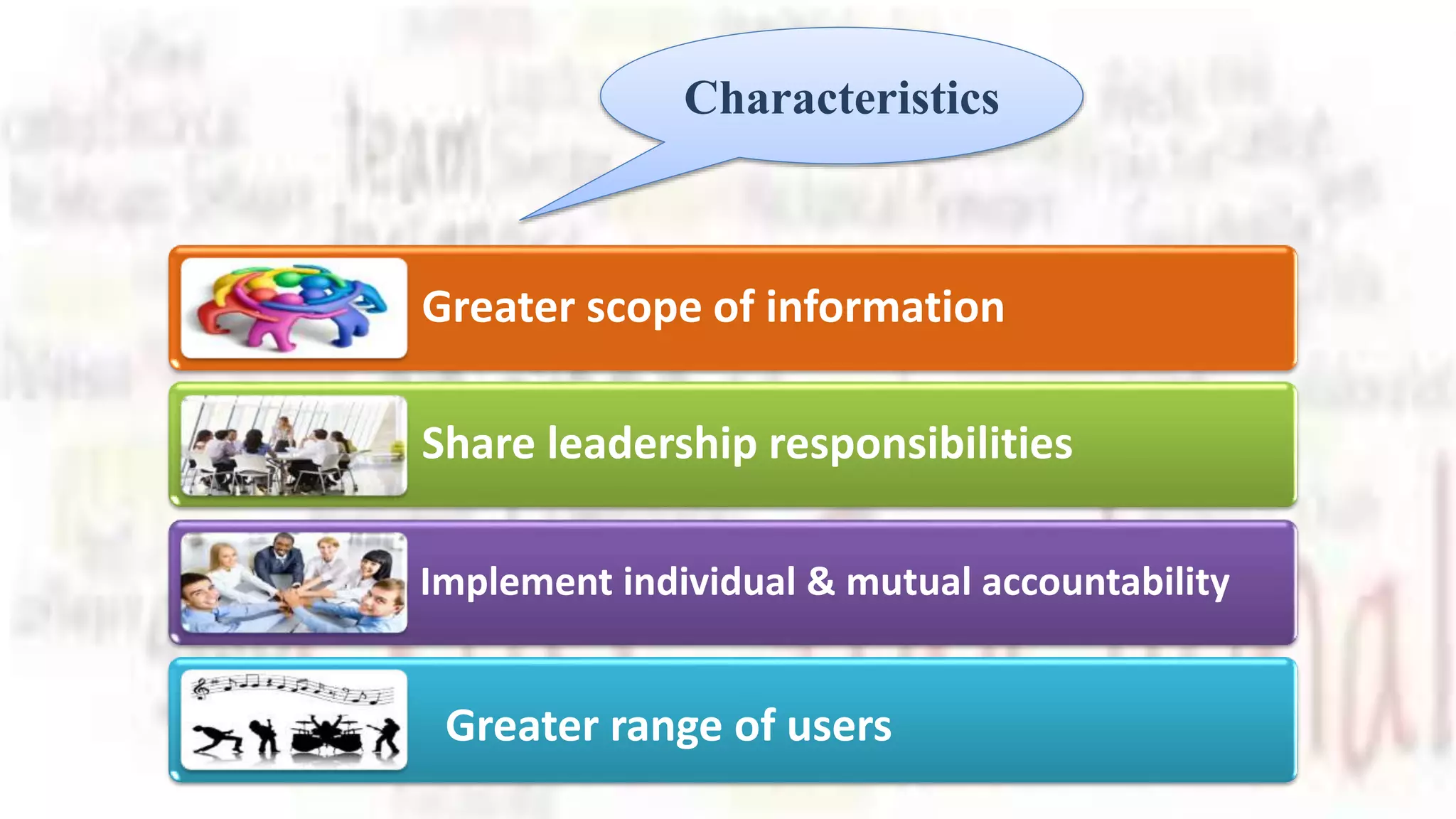
Greater scope of information
Share leadership responsibilities
Implement individual & mutual accountability
Greater range of users
Characteristics
Virtual Teams
A group of individuals who work across time,
space and organizational boundaries with links
strengthened by webs of communication
technology
TEAM
Linker
Creator
Promoter
Assessor
OrganizerProducer
Controller
Maintainer
Adviser
Key Roles on Team
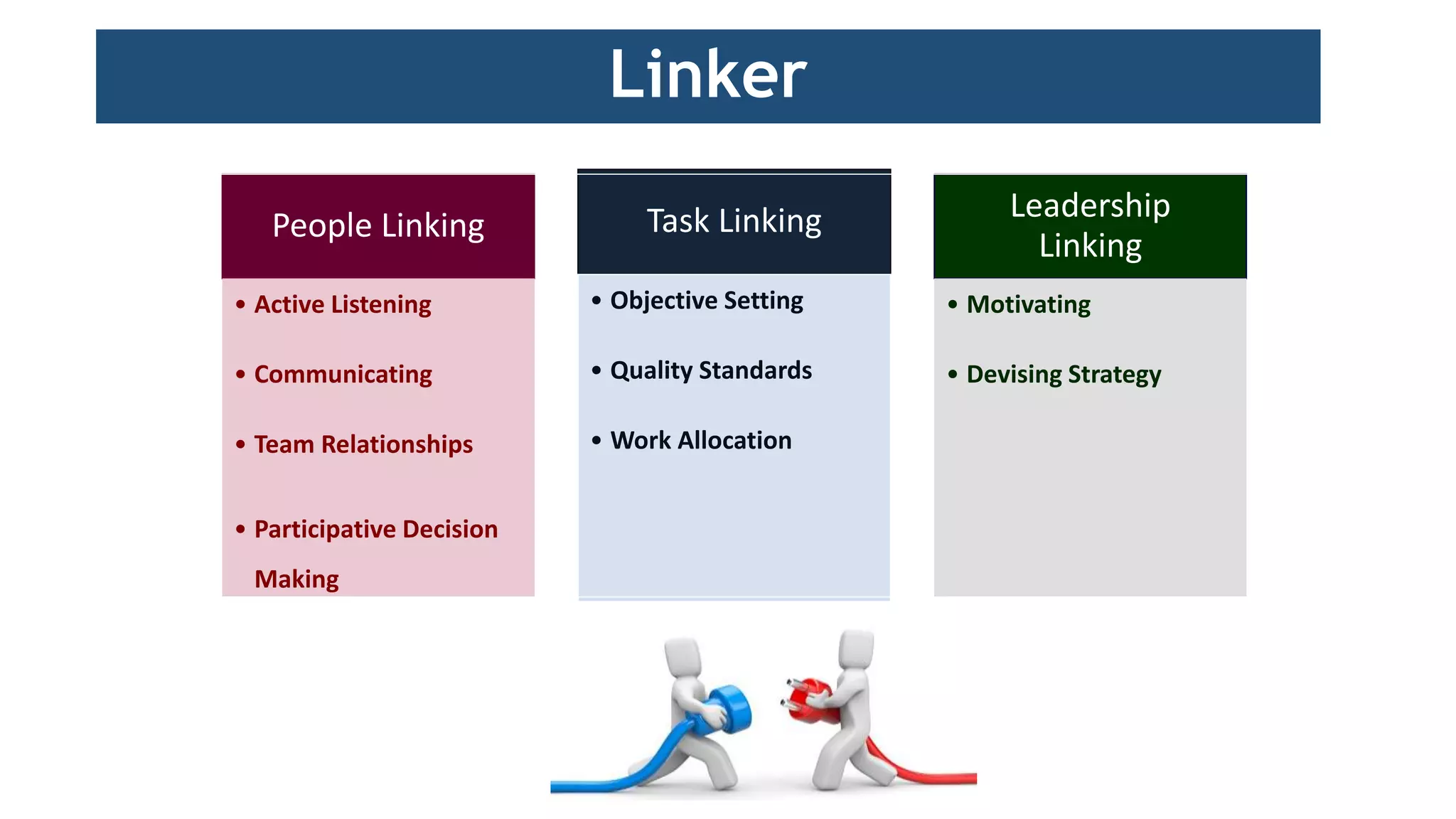
People Linking
• Active Listening
• Communicating
• Team Relationships
• Participative Decision
Making
Task Linking
• Objective Setting
• Quality Standards
• Work Allocation
Leadership
Linking
• Motivating
• Devising Strategy
Linker
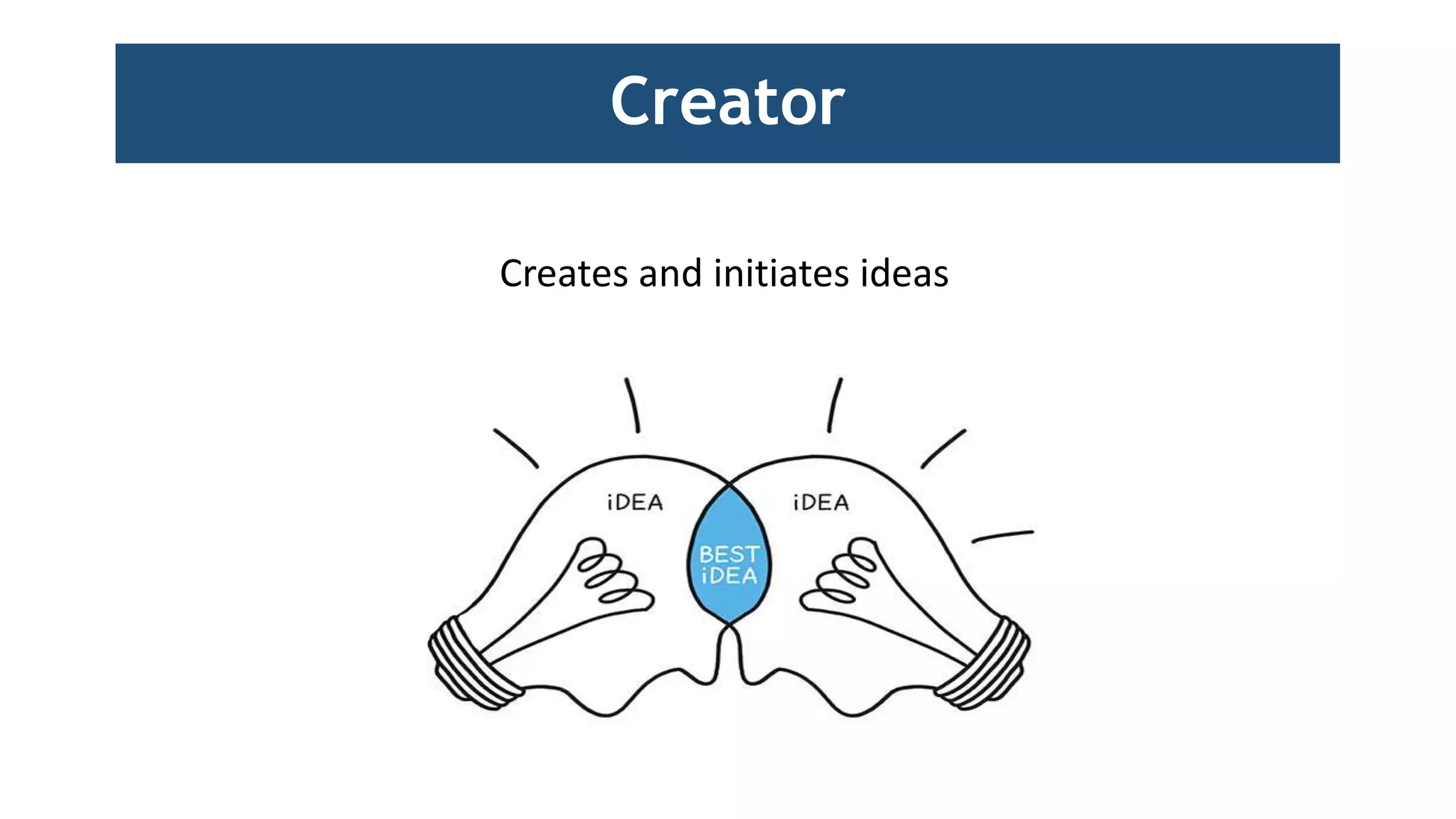
Creator
Creates and initiates ideas
Upholds best ideas and solutions in a way that will influence other team members
Promoter
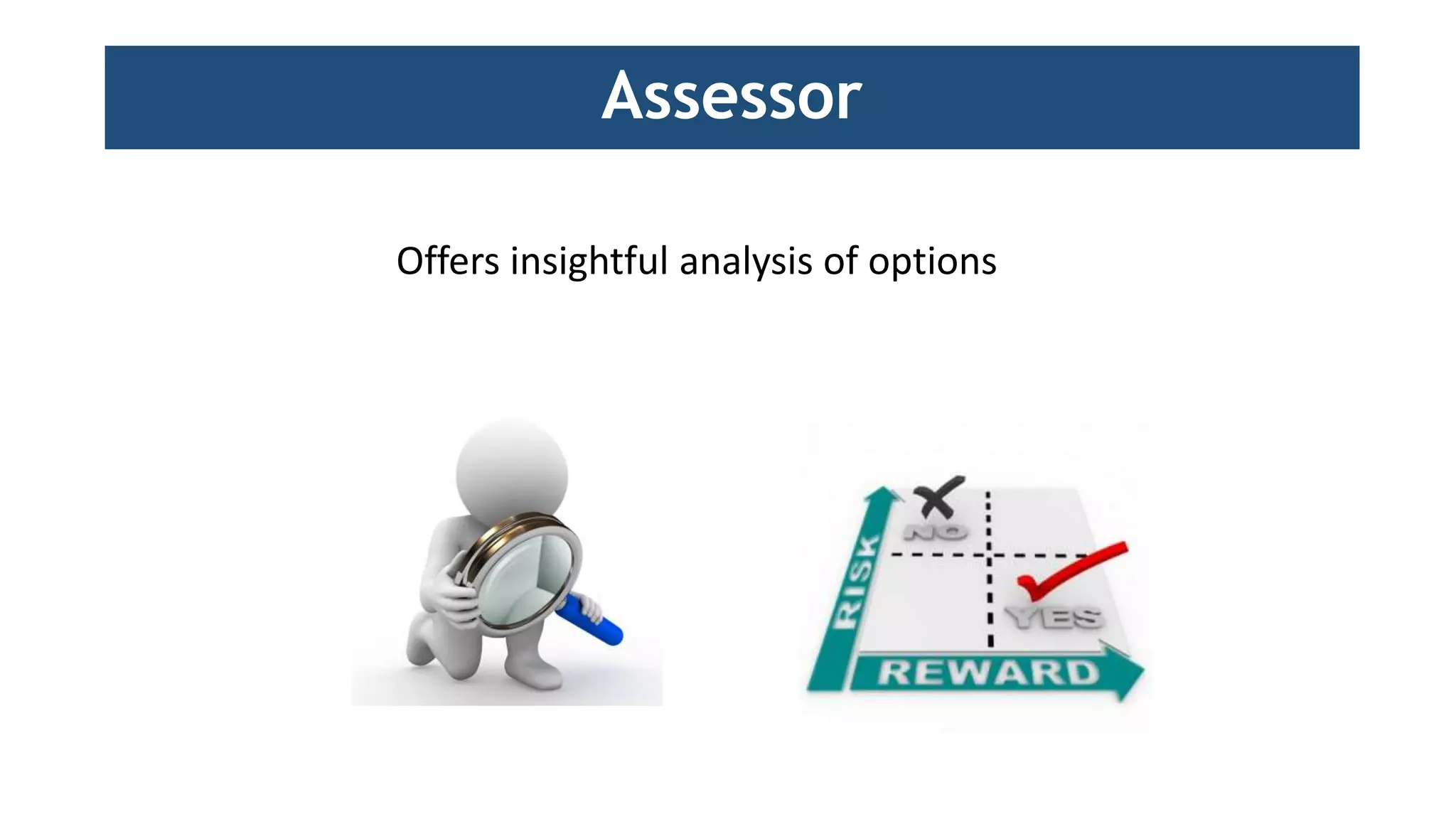
Offers insightful analysis of options
Assessor
Establishes and implements ways of making things work
Organizer
Concludes and delivers outputs and provides direction and follow
through
Producer
Controls the working of systems and enforces rules
Controller
Fights external battles to uphold and safeguard standards and processes
Maintainer
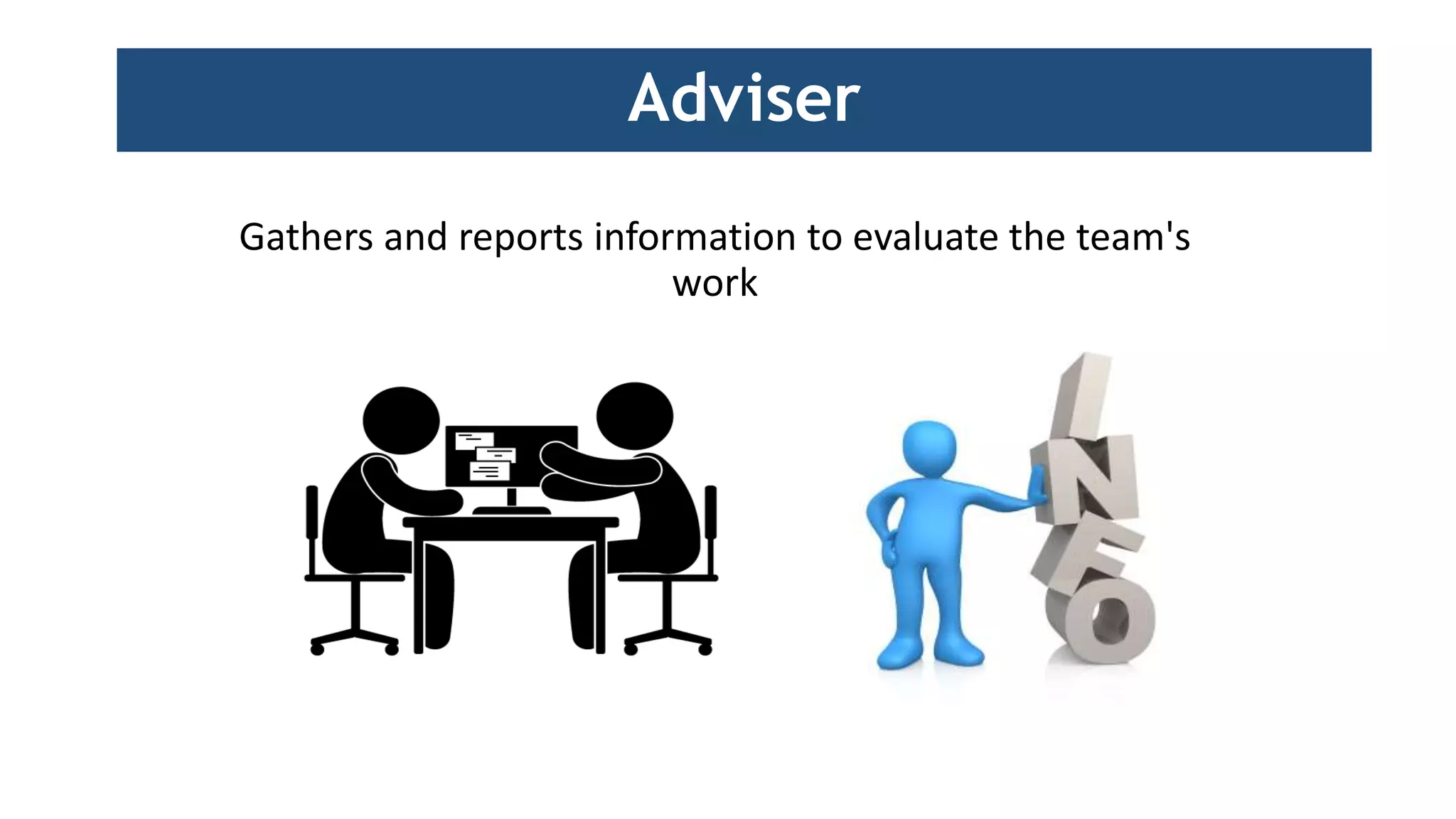
Gathers and reports information to evaluate the team's
work
Adviser
Context Composition
Work design Process
Key Components of Effective Teams
Adequate Resources
Tools to complete the job
Creating Effective Teams: Context
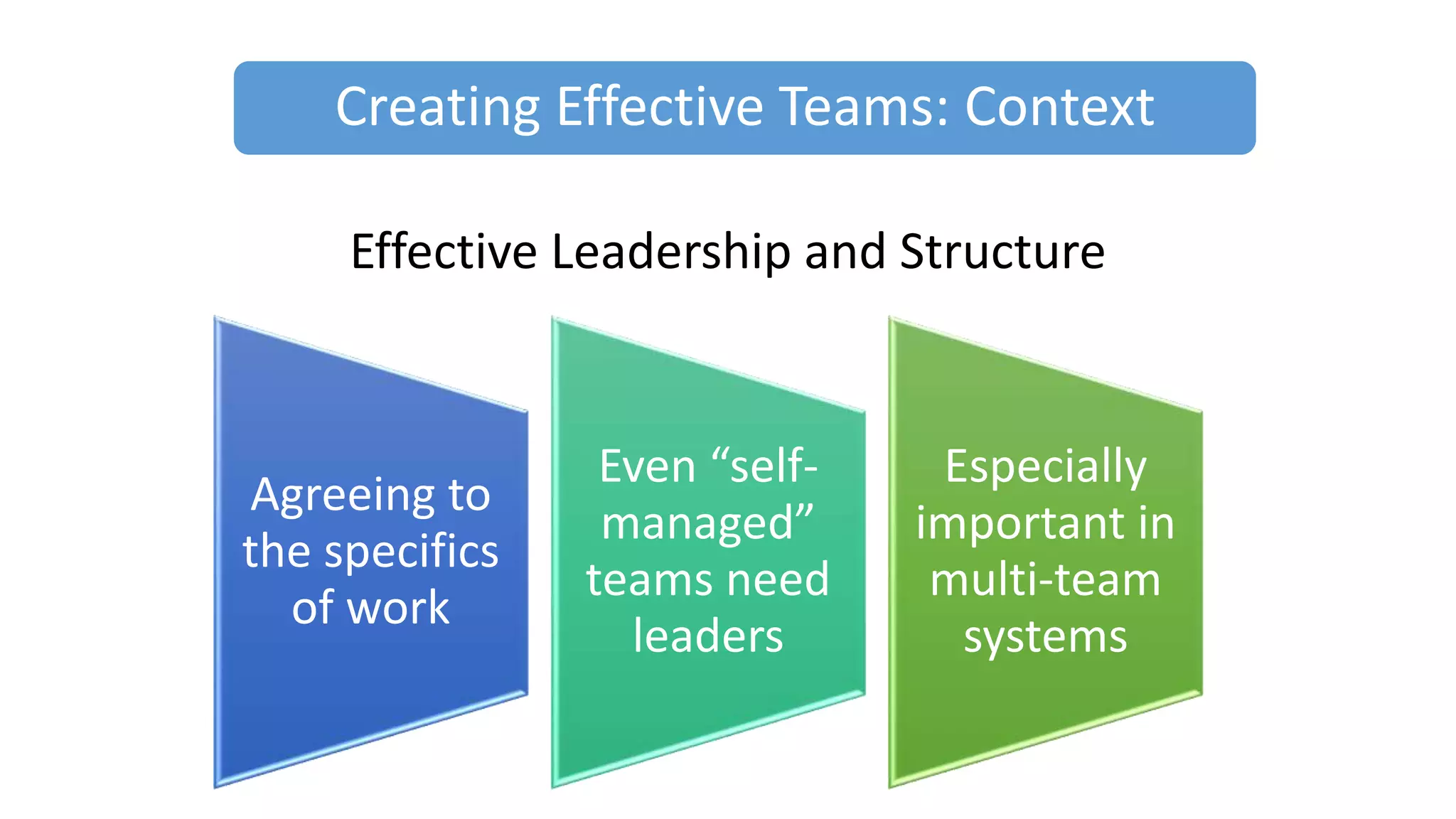
Effective Leadership and Structure
Creating Effective Teams: Context
Agreeing to
the specifics
of work
Even “self-
managed”
teams need
leaders
Especially
important in
multi-team
systems
Creating Effective Teams: Context
Climate of Trust
Members must trust each other and the leader
Creating Effective Teams: Context
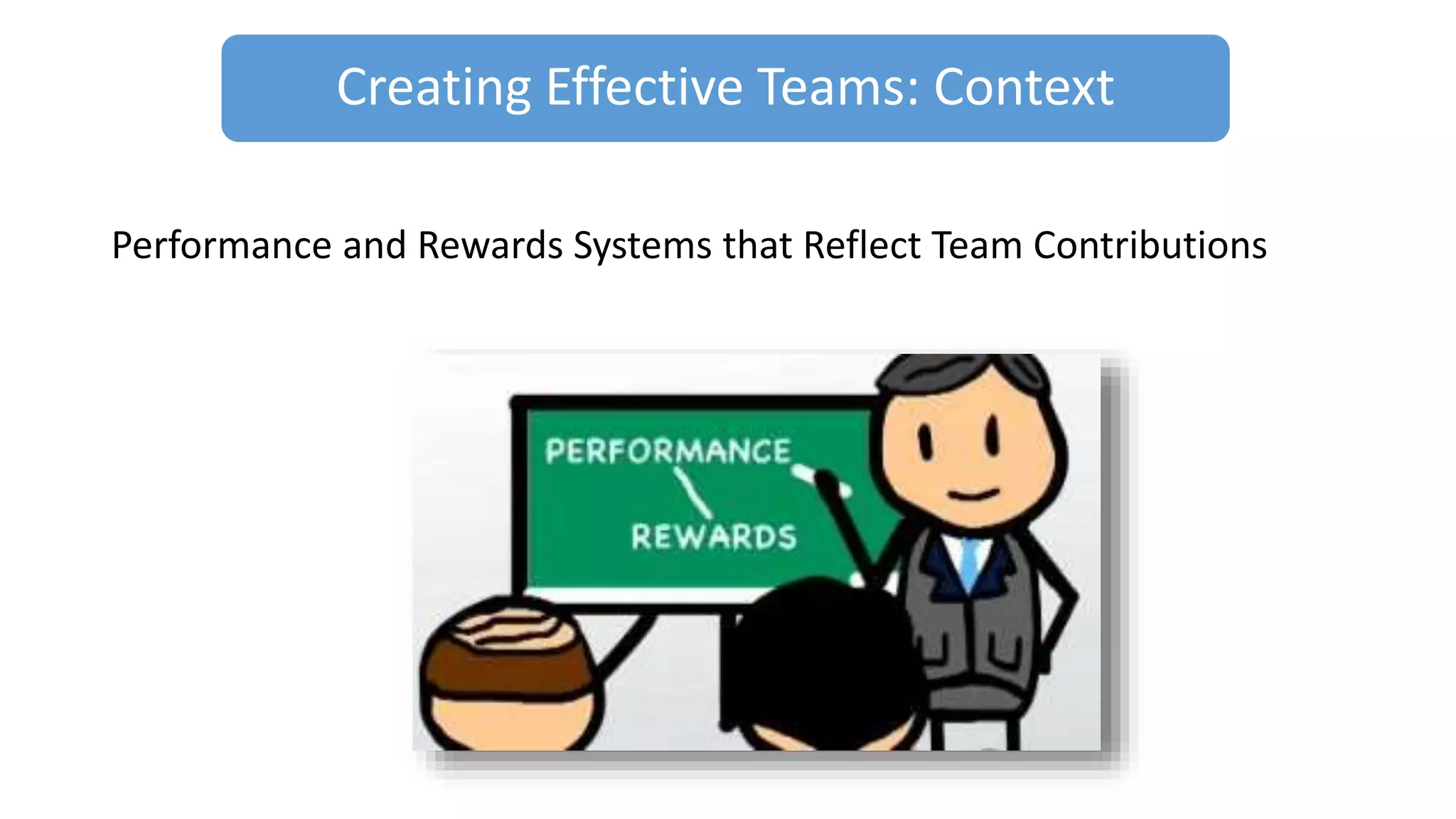
Performance and Rewards Systems that Reflect Team Contributions
Scenario 1
37
Scenario 2
38
Team
Composition
Abilities
of
members
Members
preference
Size
Diversity
of
members
Allocation
of roles
Personality
of
members
Team Composition
Abilities of Members
Creating Effective Teams: Composition
Need technical expertise
Problem-solving
Decision-making
Good interpersonal skills
Conscientiousness
Openness to
experience
Agreeableness to
team
performance
Creating Effective Teams:
Composition
Personality of Members
Creating Effective Teams:
Composition
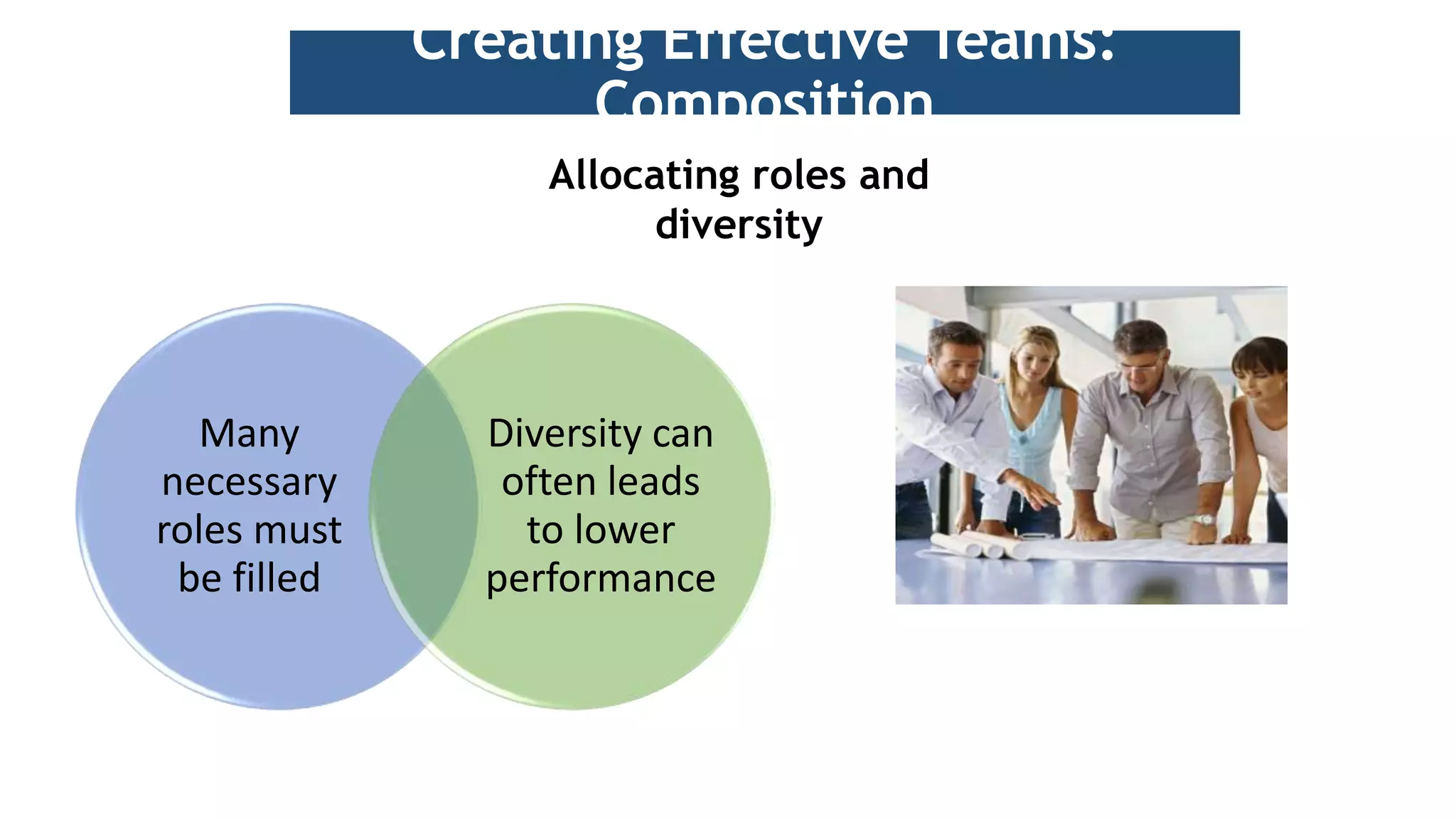
Allocating roles and
diversity
Many
necessary
roles must
be filled
Diversity can
often leads
to lower
performance
Size of Team: The smaller the better- 5 to 9 is optimal
Creating Effective Teams:
Composition
Member’s Preference for Team Work
Do the members want to be on Teams?
Creating Effective Teams:
Composition
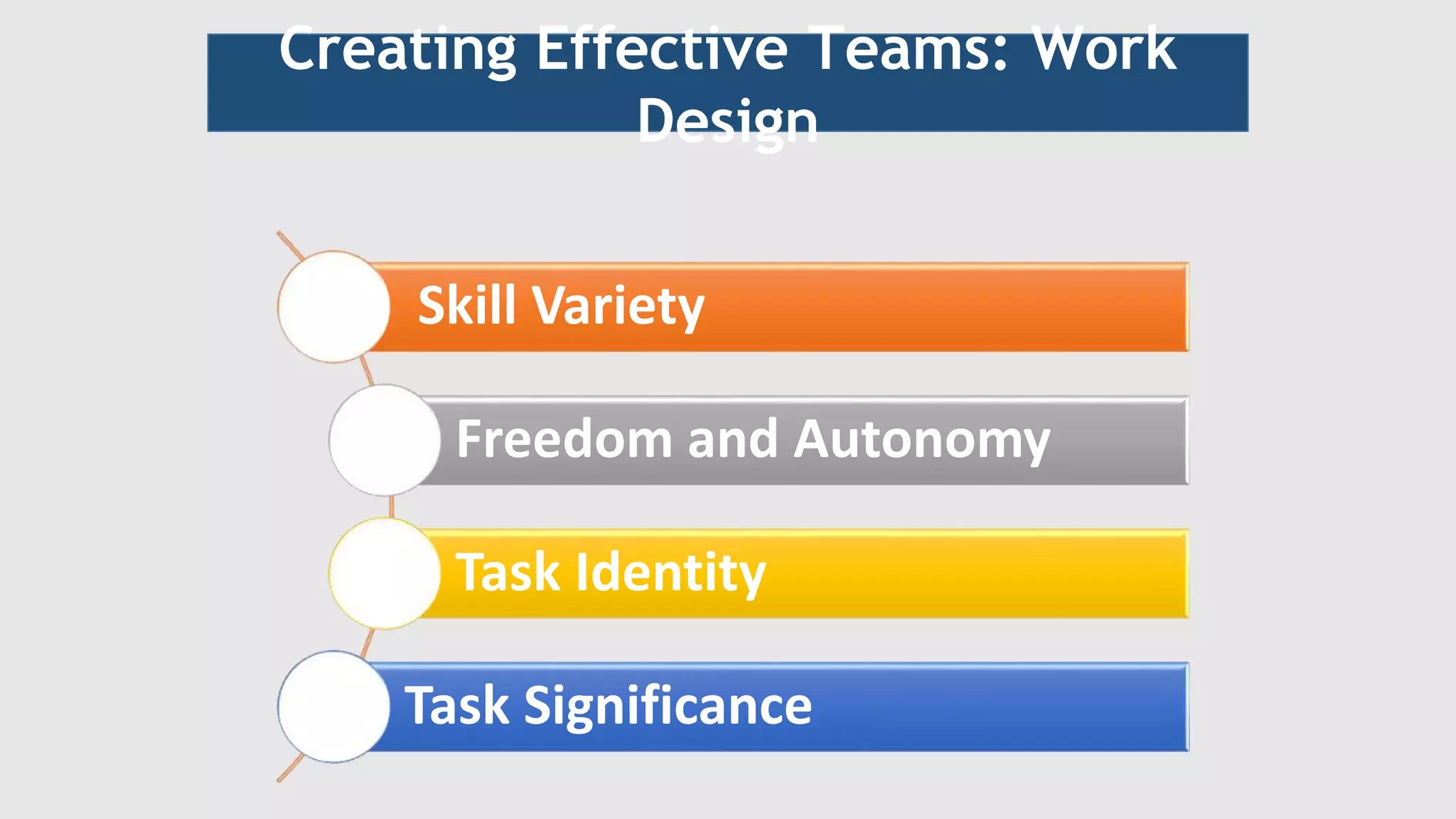
Skill Variety
Freedom and Autonomy
Task Identity
Task Significance
Creating Effective Teams: Work
Design
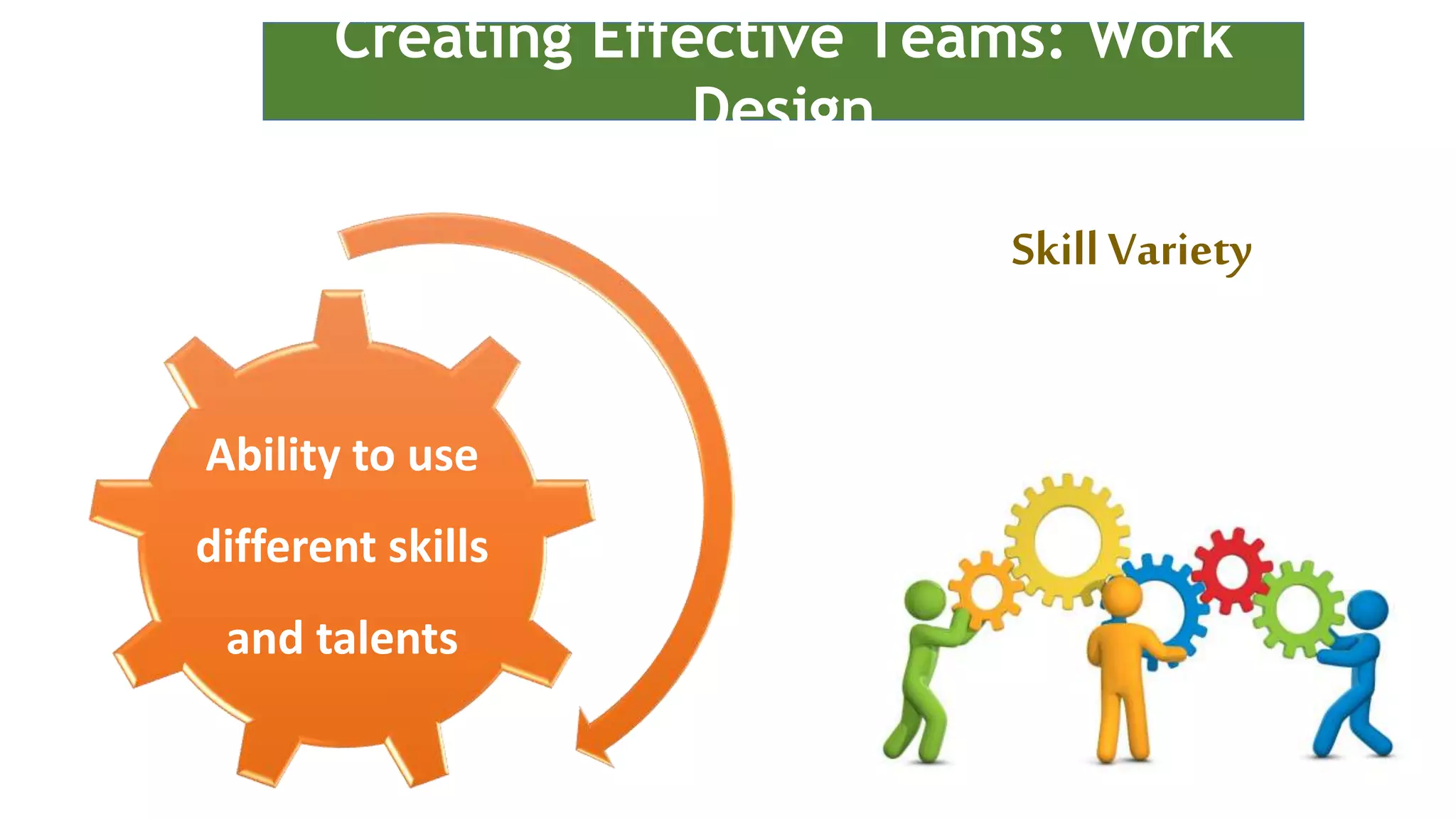
Skill Variety
Ability to use
different skills
and talents
Creating Effective Teams: Work
Design
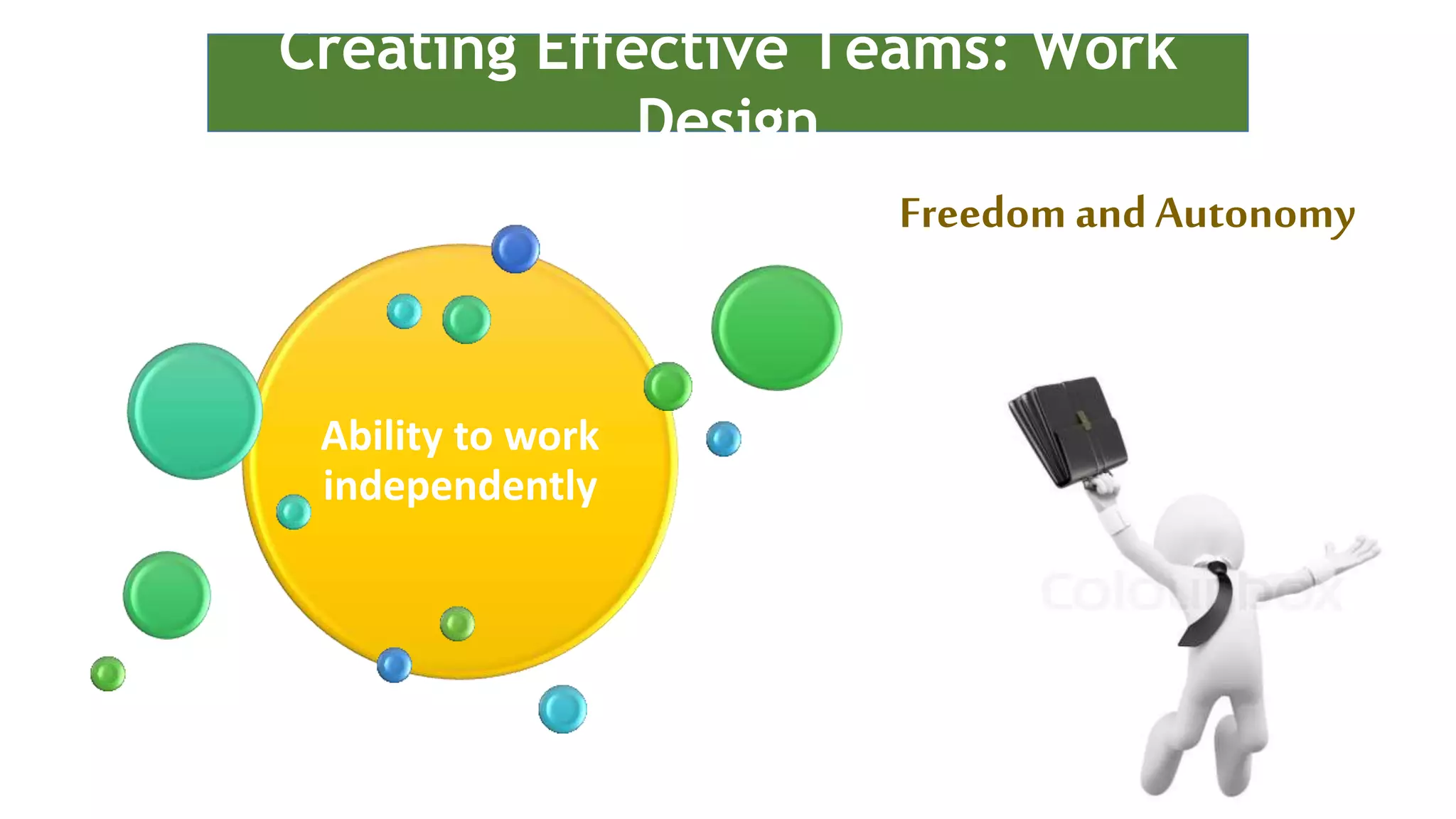
Freedom andAutonomy
Ability to work
independently
Creating Effective Teams: Work
Design
Task Identity
•Ability to complete a
whole and identifiable
task or product
Task
Identity
Creating Effective Teams: Work
Design
TaskSignificance
Working on a task or project
that has a substantial
impact on others
Creating Effective Teams: Work
Design
Creating Effective Teams: Process
10-50
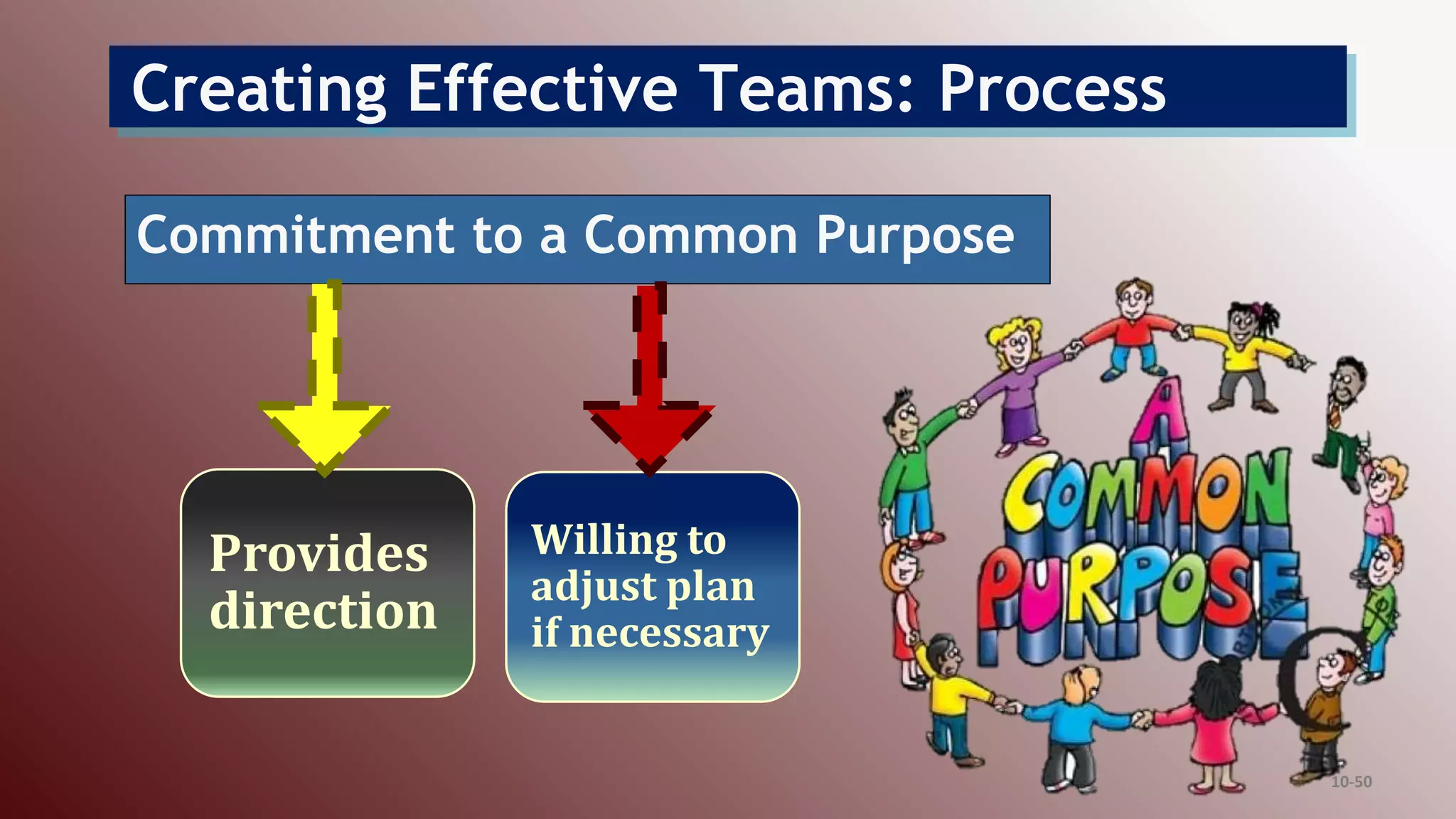
Willing to
adjust plan
if necessary
Commitment to a Common Purpose
Provides
direction
Team Efficacy
Mental Models
Creating Effective Teams: Process
10-52
Specific
Measurable
Realistic
Challengi
ng
A Managed Level of Conflict
Minimized Social Loafing
Task conflicts are helpful
Interpersonal conflicts are not
Team holds itself accountable
Both Individually and as a team
Creating Effective Teams:
Process
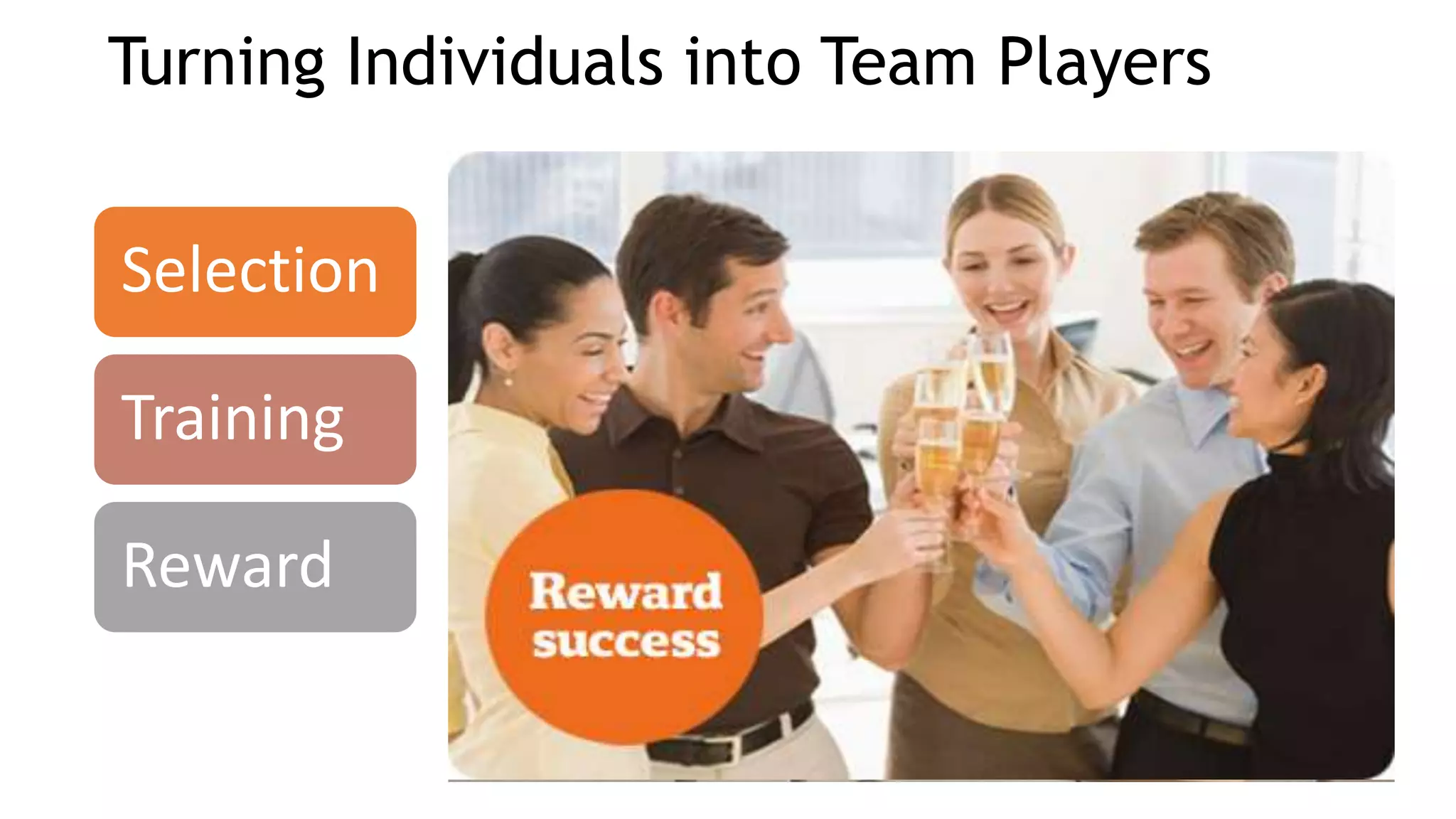
Turning Individuals into Team Players
Selection
Training
Reward
Beware!
Teams Aren’t Always
the Answer
Decide When to Use Team
• Three tests to see if a Team is better for the work:
The work can be done better by
more than one person
The work create a common purpose
or set of goals for the group
The members of the group are
interdependent
ThankYou
Any
Queries??

Team in organization.

Editor's Notes

  • #4 The Literal elaboration of the word TEAM is Together Everyone Achieves More
  • #5 Now lets watch a video
  • #8 Let’s come to the question why teams have become so popular
  • #9 There is a huge confusion amongst people about team and group. Because both group and team are consist of two or more than two people. Can You tell me that the groups we are already working in for Organizational behavior and other courses, is that actually group or team? SABIHA: I think it is group. Me: You Think so? Okay please sit down. To know the differences between the group and team we need to know the basic definition of these two
  • #10 work group is a group that interacts primarily to share information and make decisions to help each member perform within his or her area of responsibility. No joint efforts are given in work groups. Work groups have no need or opportunity to engage in collective work that requires joint effort. So their performance is merely the summation of each group member’s individual contribution. A work team , on the other hand, generates positive synergy through coordinated effort. The individual efforts result in a level of performance greater than the sum of those individual inputs. The extensive use of teams creates the potential for an organization to generate greater outputs with no increase in inputs.
  • #11 So now my friend I think you know we are working in a team not a group.
  • #13 Goals: Goal of work group is to share information, on the other hand goal of work team focuses on collective performance. Accountability: Accountability of works in groups is individual, but in a team accountability of works is both individual & mutual
  • #17 Typically, these responsibilities are planning and scheduling work, assigning tasks to members, making operating decisions etc
  • #23 Every members of a team has some key roles to play
  • #24  Coordinating and integrating the work of others .The linker role consists of three types of skills -
  • #25 And ensures that the team will spend time discussing ideas around the problems being faced.
  • #27 Assessor offers insightful analysis of options and assesses the applicability of new approaches
  • #28 and assign accountabilities and responsibilities.
  • #31 . They take pride in maintaining both the physical side of the work and the social side.
  • #32 When faced with a difficult problem, the starting point for team discussion is advising.
  • #46 Work design is a important part In A Team-Effectiveness Model. A good Work design requires variety of skills, freedom and autonomy of worker , identity and significance of task.
  • #49 Task identity is ability to complete a whole task
  • #54 1) Conflict when teams are performing non routine activities,, critical assessment of problems and options then Task conflicts are helpful but Interpersonal conflicts are almost always dysfunctional. (2) Loafing: Tendency of certain members of group to get by with less effort than what they would put if they work alone
  • #56 Now look, here a caution: Teams are not always the answer
  • #57 There are three test to see if team is the best option for a particular work Now Let’s watch a video clip, some of us have already seen it before, but now lets see it again from the “team” perspective