GROUP 6
Groups & Teams
GROUPS VS TEAMS
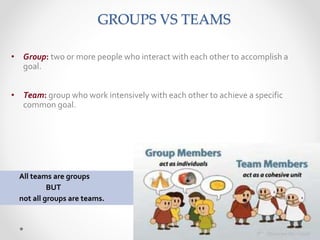
• Group: two or more people who interact with each other to accomplish a
goal.
• Team: group who work intensively with each other to achieve a specific
common goal.
2
All teams are groups
BUT
not all groups are teams.
GROUPS VS TEAMS
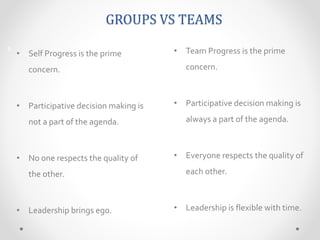
• Self Progress is the prime
concern.
• Participative decision making is
not a part of the agenda.
• No one respects the quality of
the other.
• Leadership brings ego.
3
• Team Progress is the prime
concern.
• Participative decision making is
always a part of the agenda.
• Everyone respects the quality of
each other.
• Leadership is flexible with time.
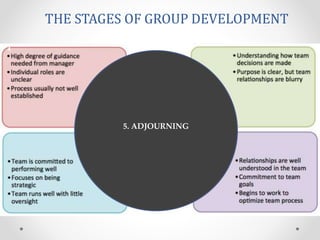
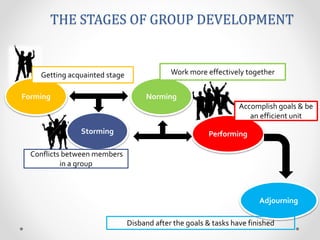
5. ADJOURNING
THE STAGES OF GROUP DEVELOPMENT
4
Performing
Adjourning
Norming
Storming
Forming
Getting acquainted stage
Conflicts between members
in a group
Work more effectively together
Accomplish goals & be
an efficient unit
Disband after the goals & tasks have finished
THE STAGES OF GROUP DEVELOPMENT
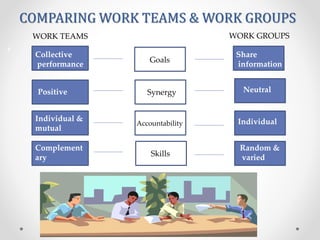
COMPARING WORK TEAMS & WORK GROUPS
6
Goals
Synergy
Skills
Accountability
Complement
ary
Individual &
mutual
Positive
Collective
performance
Share
information
Neutral
Individual
Random &
varied
WORK TEAMS WORK GROUPS
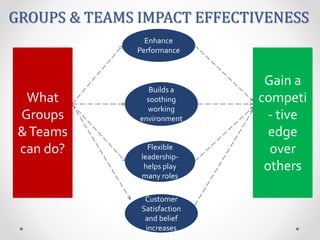
What
Groups
&Teams
can do?
Gain a
competi
- tive
edge
over
others
Enhance
Performance
Builds a
soothing
working
environment
Flexible
leadership-
helps play
many roles
Customer
Satisfaction
and belief
increases
GROUPS & TEAMS IMPACT EFFECTIVENESS
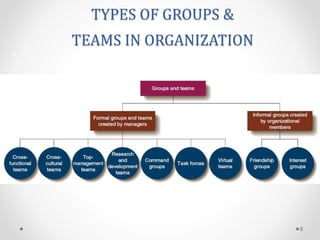
TYPES OF GROUPS &
TEAMS IN ORGANIZATION
8
4
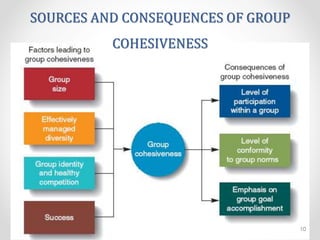
SOURCES AND CONSEQUENCES OF GROUP
COHESIVENESS
10
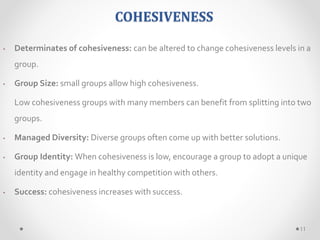
COHESIVENESS
• Determinates of cohesiveness: can be altered to change cohesiveness levels in a
group.
• Group Size: small groups allow high cohesiveness.
Low cohesiveness groups with many members can benefit from splitting into two
groups.
• Managed Diversity: Diverse groups often come up with better solutions.
• Group Identity: When cohesiveness is low, encourage a group to adopt a unique
identity and engage in healthy competition with others.
• Success: cohesiveness increases with success.
11
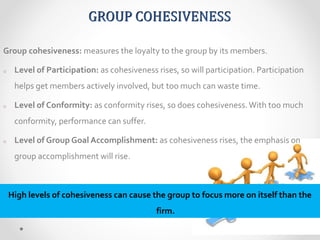
GROUP COHESIVENESS
Group cohesiveness: measures the loyalty to the group by its members.
o Level of Participation: as cohesiveness rises, so will participation. Participation
helps get members actively involved, but too much can waste time.
o Level of Conformity: as conformity rises, so does cohesiveness.With too much
conformity, performance can suffer.
o Level of Group Goal Accomplishment: as cohesiveness rises, the emphasis on
group accomplishment will rise.
High levels of cohesiveness can cause the group to focus more on itself than the
firm.
MANAGING GROUPS AND TEAMS
FOR HIGH PERFORMANCE
• Social loafing
o The human tendency to put forth less effort in a group than individually.
o Results in possibly lower group performance and failure to attain group goals
13
Coming together is a beginning, keeping
together is a progress, working together is a
Success.
If you like it please clap
&
if you don’t clap it simply means
we are a group
but
you are a team…

Groups & Teams - Organizational Behaviour

  • 1.
  • 2.
    GROUPS VS TEAMS •Group: two or more people who interact with each other to accomplish a goal. • Team: group who work intensively with each other to achieve a specific common goal. 2 All teams are groups BUT not all groups are teams.
  • 3.
    GROUPS VS TEAMS •Self Progress is the prime concern. • Participative decision making is not a part of the agenda. • No one respects the quality of the other. • Leadership brings ego. 3 • Team Progress is the prime concern. • Participative decision making is always a part of the agenda. • Everyone respects the quality of each other. • Leadership is flexible with time.
  • 5.
    5. ADJOURNING THE STAGESOF GROUP DEVELOPMENT 4
  • 6.
    Performing Adjourning Norming Storming Forming Getting acquainted stage Conflictsbetween members in a group Work more effectively together Accomplish goals & be an efficient unit Disband after the goals & tasks have finished THE STAGES OF GROUP DEVELOPMENT
  • 7.
    COMPARING WORK TEAMS& WORK GROUPS 6 Goals Synergy Skills Accountability Complement ary Individual & mutual Positive Collective performance Share information Neutral Individual Random & varied WORK TEAMS WORK GROUPS
  • 8.
    What Groups &Teams can do? Gain a competi -tive edge over others Enhance Performance Builds a soothing working environment Flexible leadership- helps play many roles Customer Satisfaction and belief increases GROUPS & TEAMS IMPACT EFFECTIVENESS
  • 9.
    TYPES OF GROUPS& TEAMS IN ORGANIZATION 8 4
  • 10.
    SOURCES AND CONSEQUENCESOF GROUP COHESIVENESS 10
  • 11.
    COHESIVENESS • Determinates ofcohesiveness: can be altered to change cohesiveness levels in a group. • Group Size: small groups allow high cohesiveness. Low cohesiveness groups with many members can benefit from splitting into two groups. • Managed Diversity: Diverse groups often come up with better solutions. • Group Identity: When cohesiveness is low, encourage a group to adopt a unique identity and engage in healthy competition with others. • Success: cohesiveness increases with success. 11
  • 12.
    GROUP COHESIVENESS Group cohesiveness:measures the loyalty to the group by its members. o Level of Participation: as cohesiveness rises, so will participation. Participation helps get members actively involved, but too much can waste time. o Level of Conformity: as conformity rises, so does cohesiveness.With too much conformity, performance can suffer. o Level of Group Goal Accomplishment: as cohesiveness rises, the emphasis on group accomplishment will rise. High levels of cohesiveness can cause the group to focus more on itself than the firm.
  • 13.
    MANAGING GROUPS ANDTEAMS FOR HIGH PERFORMANCE • Social loafing o The human tendency to put forth less effort in a group than individually. o Results in possibly lower group performance and failure to attain group goals 13
  • 14.
    Coming together isa beginning, keeping together is a progress, working together is a Success.
  • 15.
    If you likeit please clap & if you don’t clap it simply means we are a group but you are a team…