1

NOVA INTERNATIONAL COLLEGE

         Presentation
              Of
INNOVATION & CHANGE MANAGEMENT


  By     Gopal Niraula
2
Group
3


       Two or more people who interact with each other to
        accomplish certain goals or meet certain needs.

         A group   is a collection of individual
           Who   have significantly interdependent relations with each
            other
           Whose group identity is recognised by non-members
           Who have differentiated roles in the group.
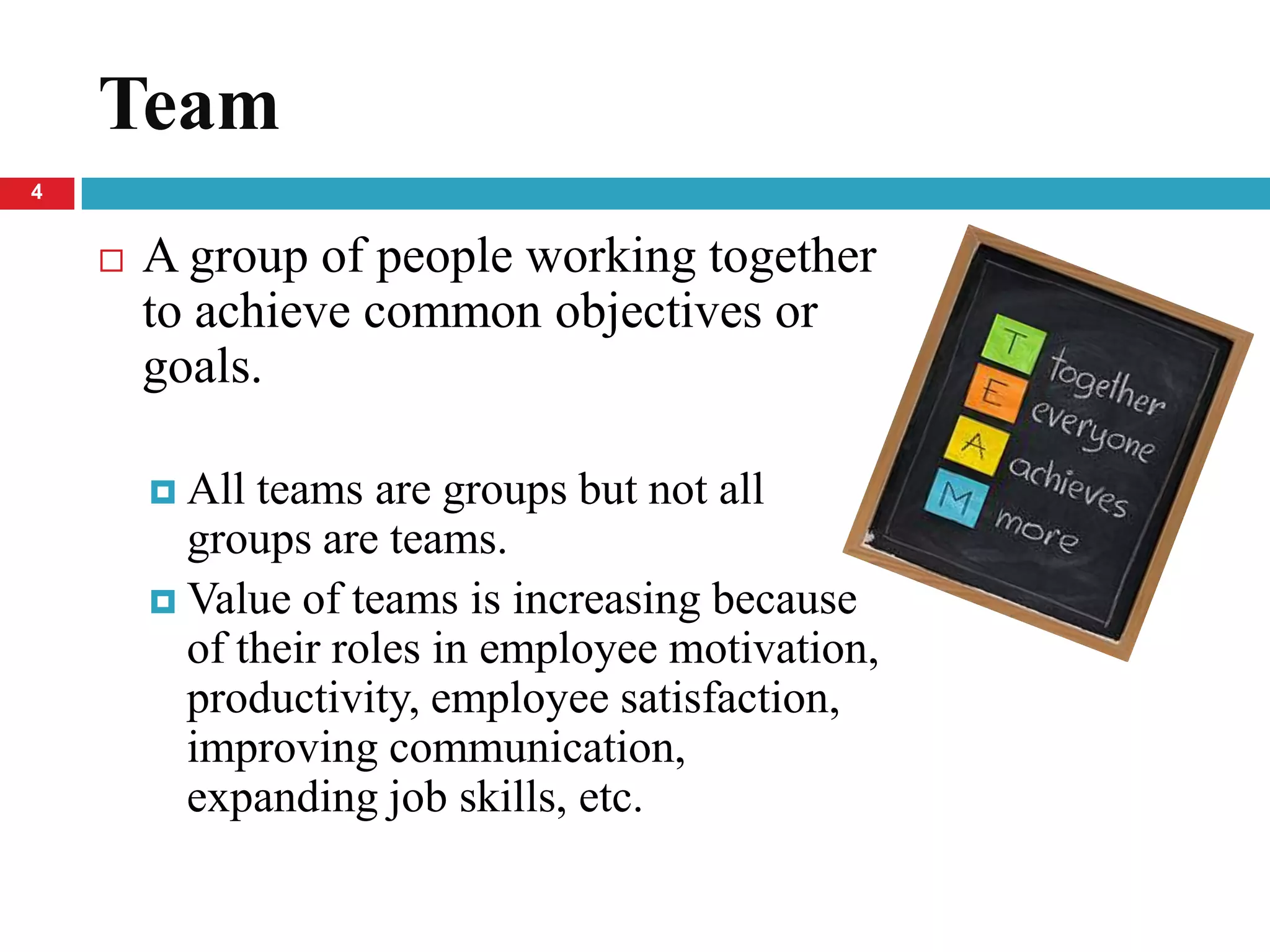
Team
4


       A group of people working together
        to achieve common objectives or
        goals.

         All teams are groups but not all
          groups are teams.
         Value of teams is increasing because
          of their roles in employee motivation,
          productivity, employee satisfaction,
          improving communication,
          expanding job skills, etc.
5
6


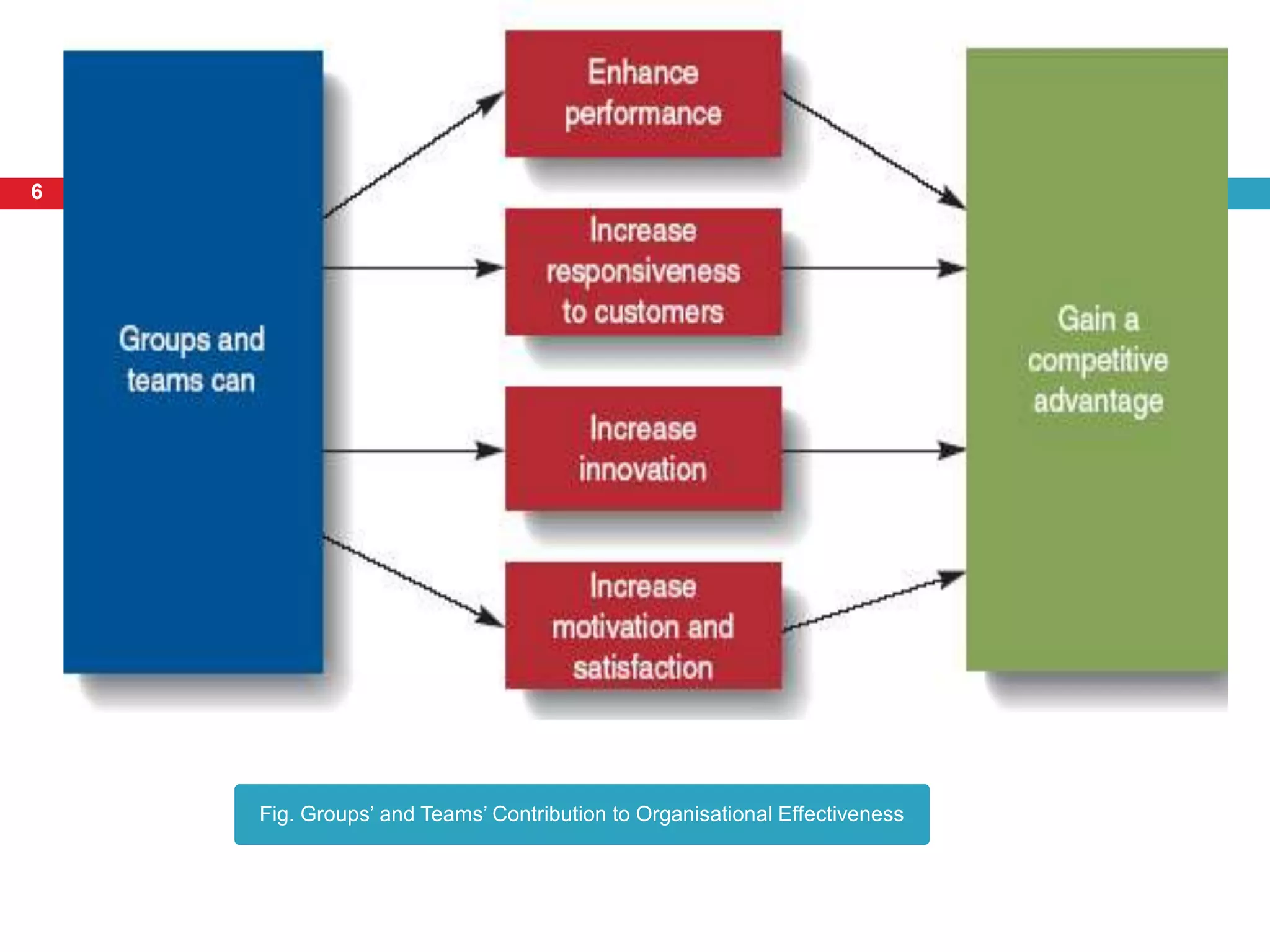
    Fig. Groups’ and Teams’ Contribution to Organisational Effectiveness
Competitive Advantage with Groups
7
    & Teams
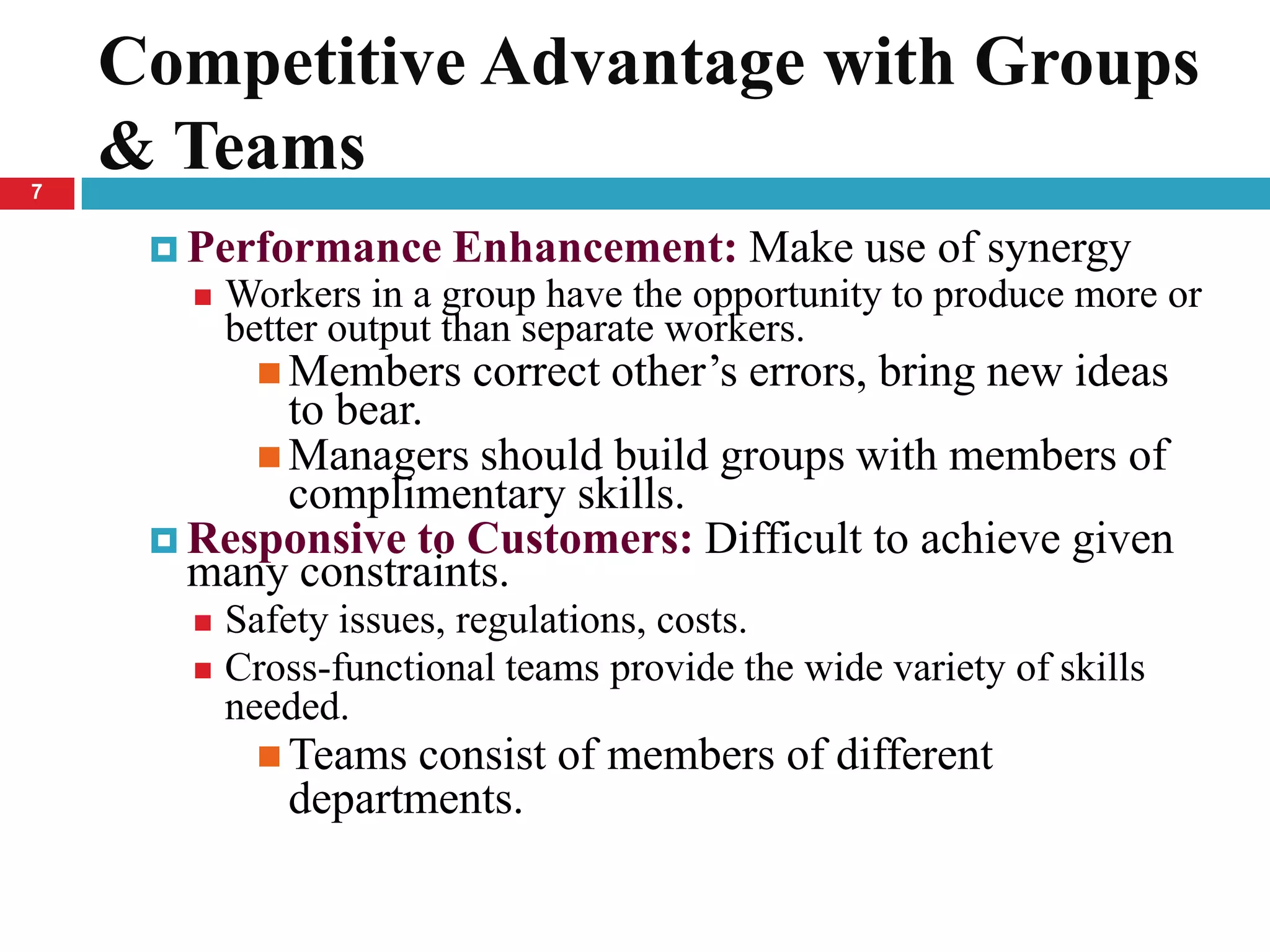
      Performance      Enhancement: Make use of synergy
          Workers in a group have the opportunity to produce more or
           better output than separate workers.
             Members    correct other’s errors, bring new ideas
            to bear.
           Managers should build groups with members of
            complimentary skills.
      Responsive to Customers: Difficult to achieve given
       many constraints.
        Safety issues, regulations, costs.
        Cross-functional teams provide the wide variety of skills
         needed.
             Teams consist of members of different
              departments.
Competitive Advantage with Groups
8
    & Teams
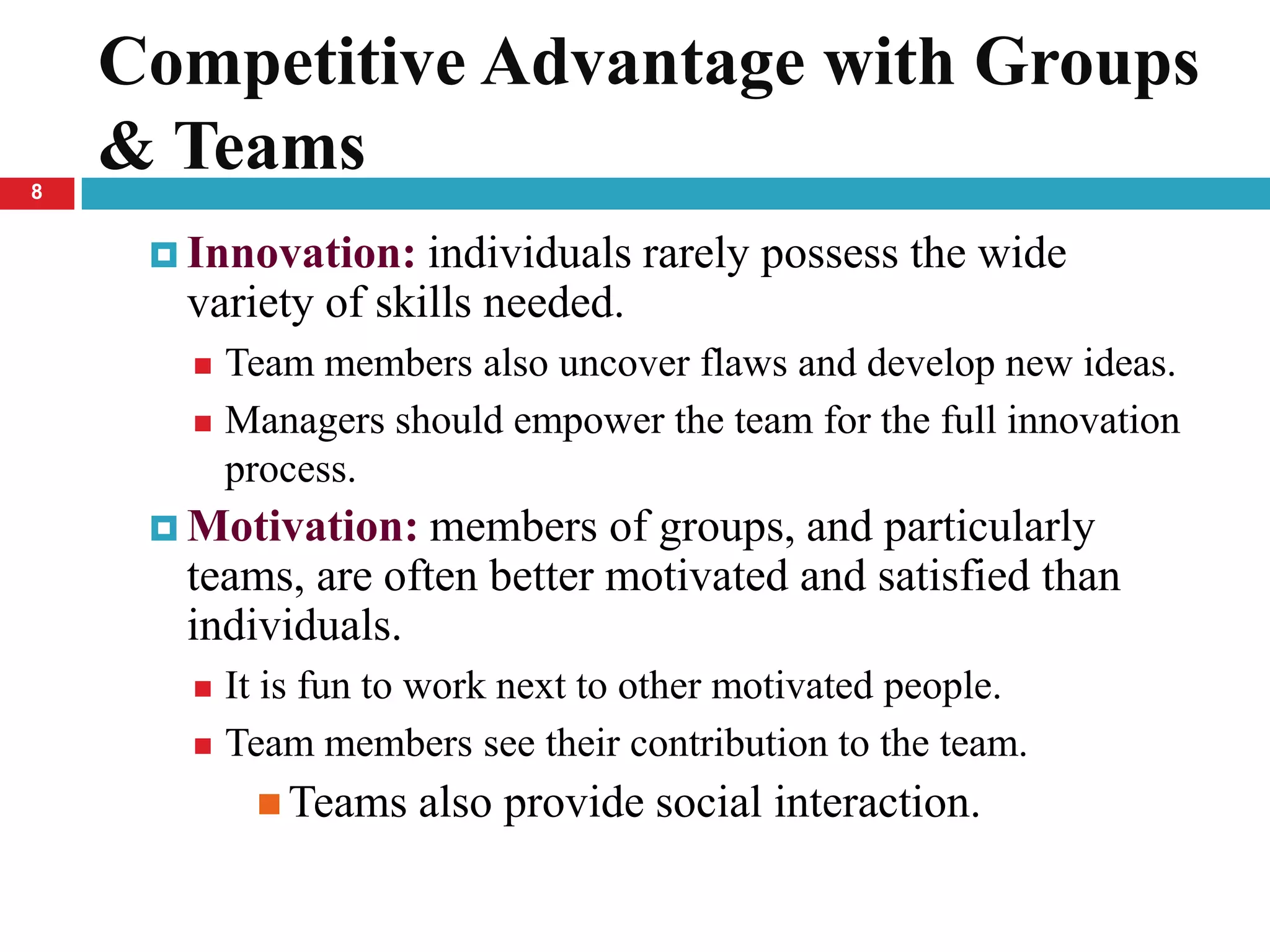
      Innovation:  individuals rarely possess the wide
      variety of skills needed.
        Team members also uncover flaws and develop new ideas.
        Managers should empower the team for the full innovation
         process.
      Motivation:  members of groups, and particularly
      teams, are often better motivated and satisfied than
      individuals.
        It is fun to work next to other motivated people.
        Team members see their contribution to the team.

            Teams   also provide social interaction.
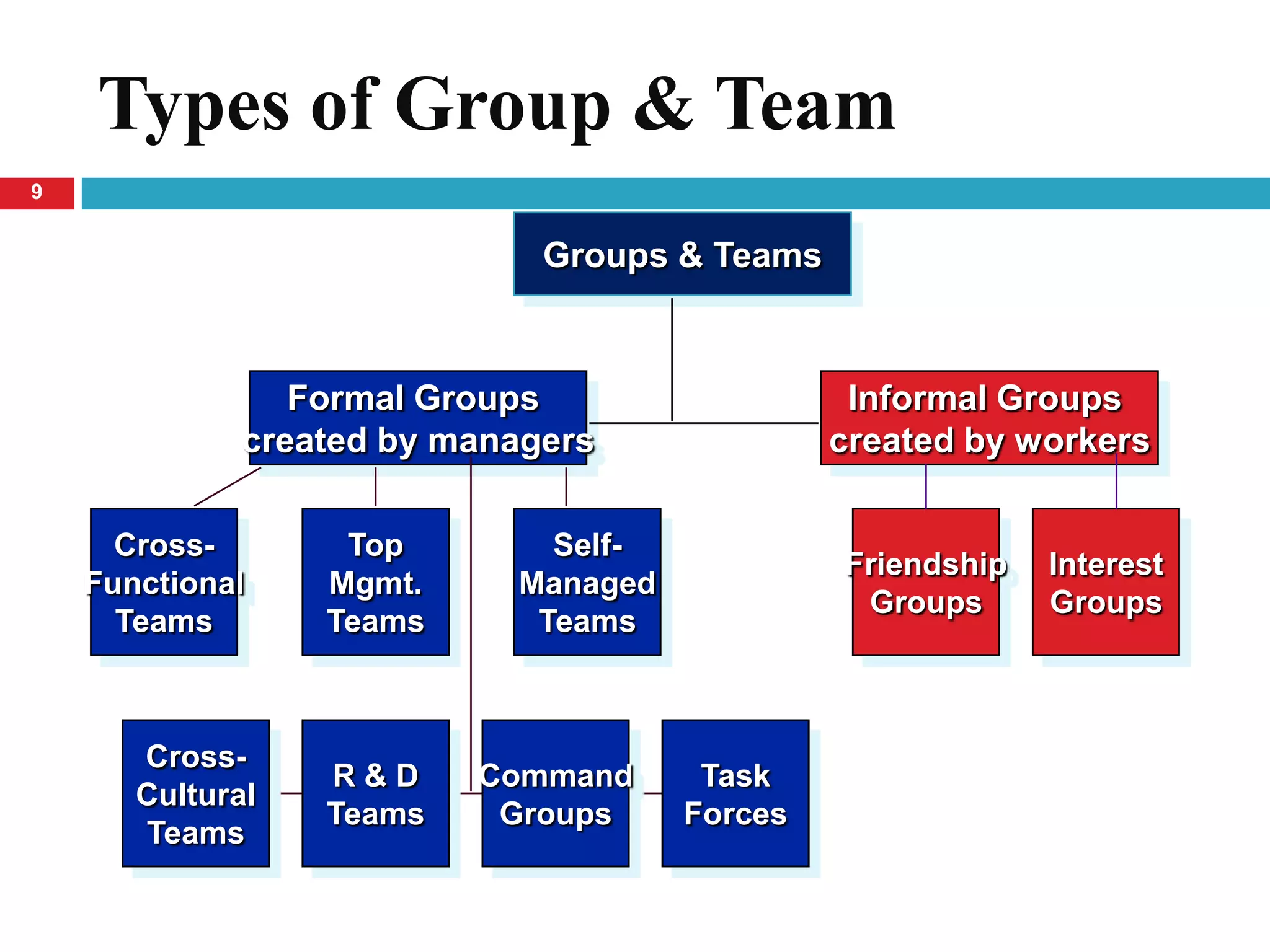
Types of Group & Team
9


                              Groups & Teams


                 Formal Groups                  Informal Groups
              created by managers              created by workers

      Cross-       Top        Self-
                                               Friendship   Interest
    Functional    Mgmt.     Managed
                                                Groups      Groups
      Teams       Teams      Teams


       Cross-
                  R&D     Command      Task
       Cultural
                  Teams    Groups     Forces
       Teams
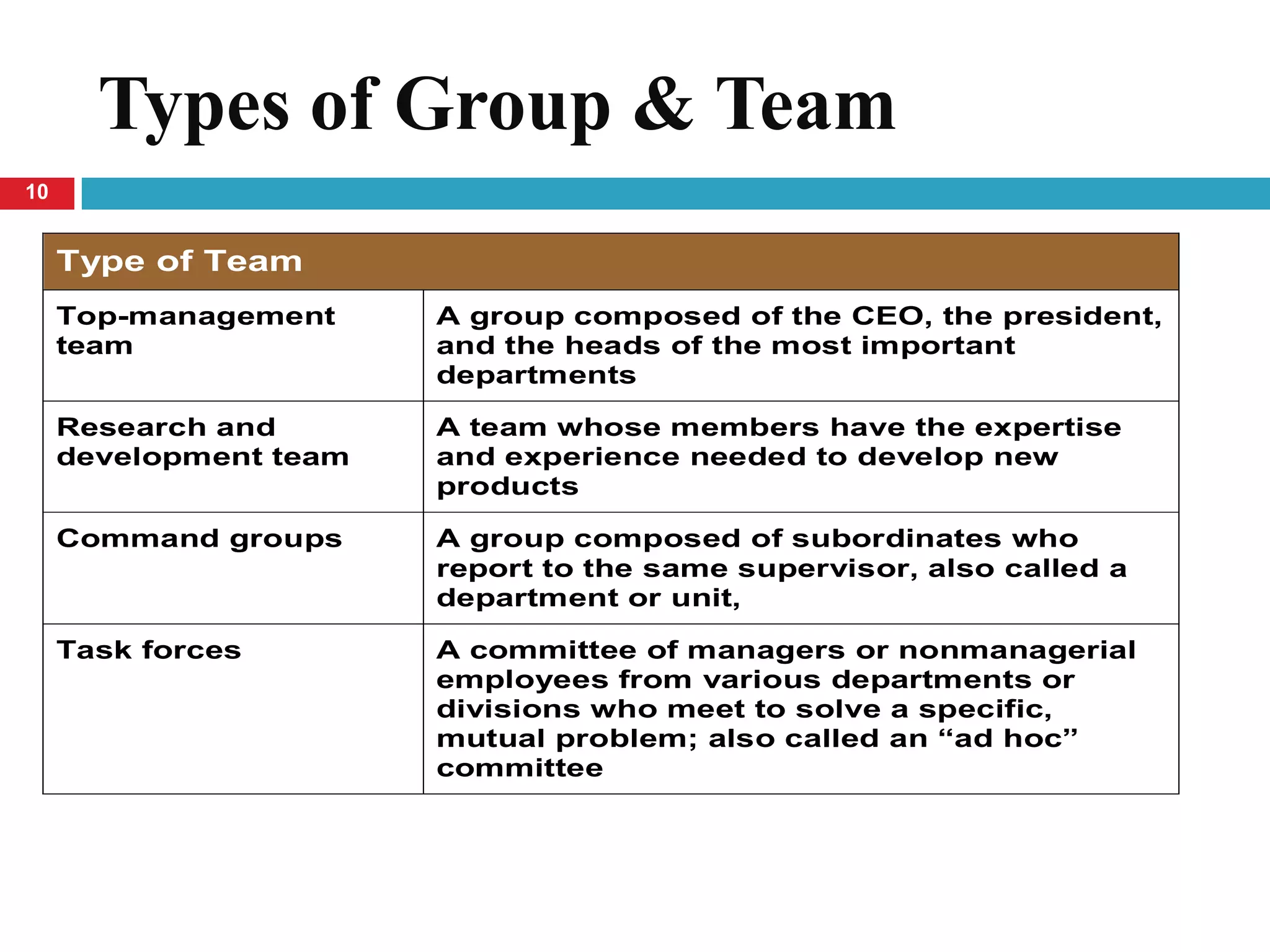
Types of Group & Team
10


     Type of Team
     Top-management     A group composed of the CEO, the president,
     team               and the heads of the most important
                        departments

     Research and       A team whose members have the expertise
     development team   and experience needed to develop new
                        products

     Command groups     A group composed of subordinates who
                        report to the same supervisor, also called a
                        department or unit,

     Task forces        A committee of managers or nonmanagerial
                        employees from various departments or
                        divisions who meet to solve a specific,
                        mutual problem; also called an “ad hoc”
                        committee
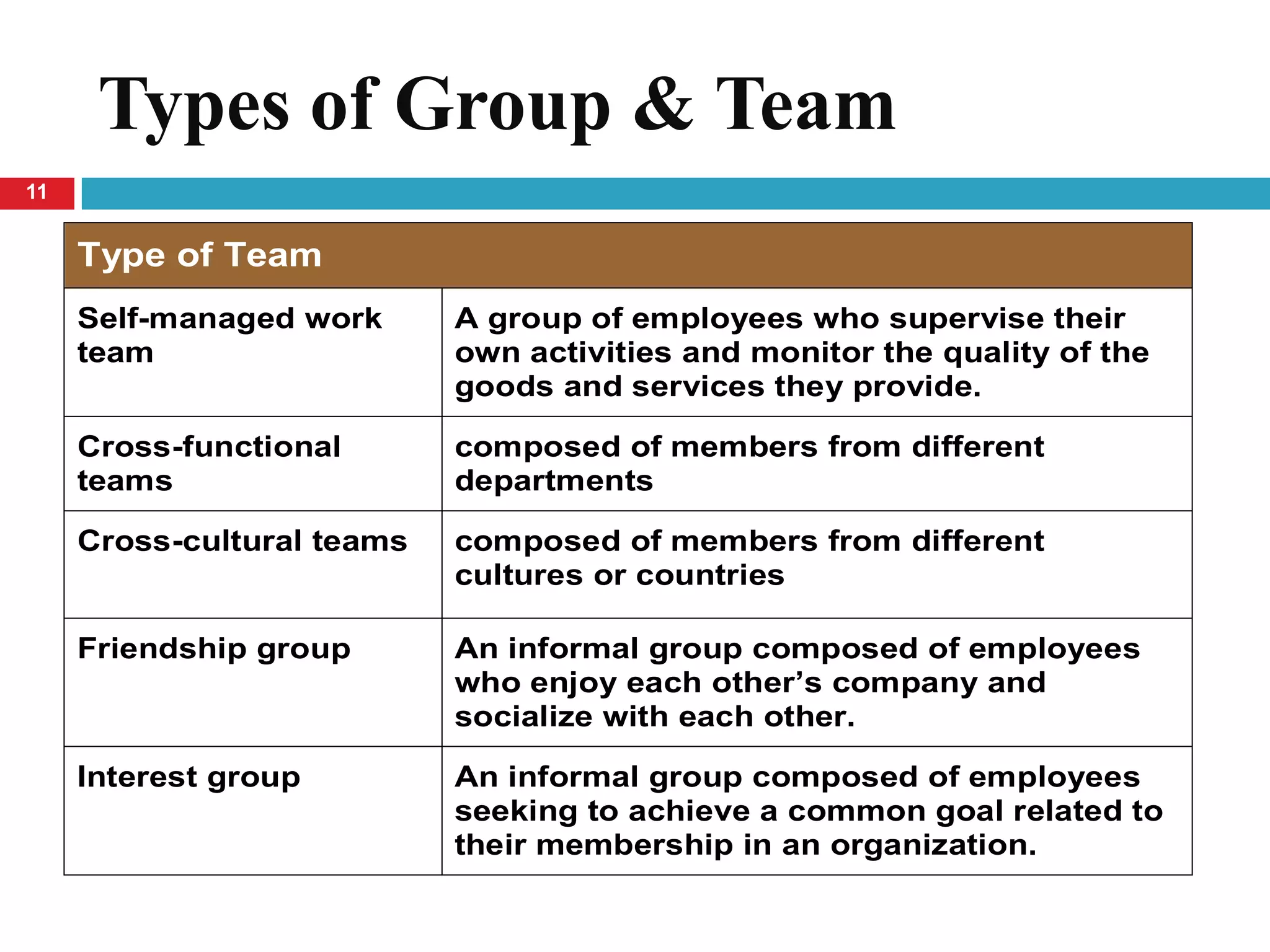
Types of Group & Team
11


     Type of Team
     Self-managed work      A group of employees who supervise their
     team                   own activities and monitor the quality of the
                            goods and services they provide.

     Cross-functional       composed of members from different
     teams                  departments

     Cross-cultural teams   composed of members from different
                            cultures or countries

     Friendship group       An informal group composed of employees
                            who enjoy each other’s company and
                            socialize with each other.

     Interest group         An informal group composed of employees
                            seeking to achieve a common goal related to
                            their membership in an organization.
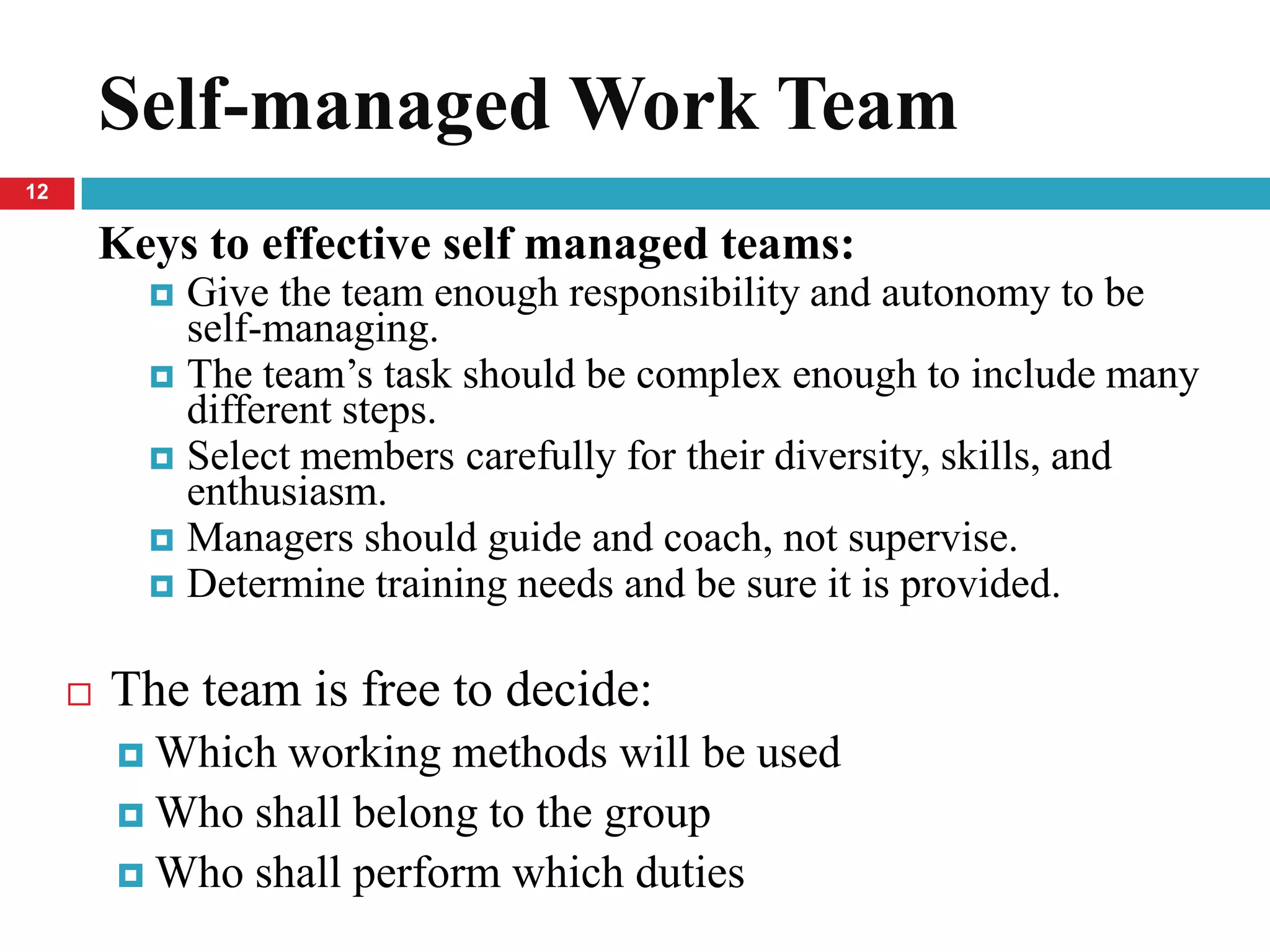
Self-managed Work Team
12

         Keys to effective self managed teams:
            Give the team enough responsibility and autonomy to be
             self-managing.
            The team’s task should be complex enough to include many
             different steps.
            Select members carefully for their diversity, skills, and
             enthusiasm.
            Managers should guide and coach, not supervise.
            Determine training needs and be sure it is provided.


        The team is free to decide:
          Which working methods will be used
          Who shall belong to the group
          Who shall perform which duties
13


     Dynamics affect how a group or team functions.
Group Size
14


          Group size affects how a group performs.

        Advantage of small groups
          Interact more with each other and easier to coordinate
           their efforts
          More motivated, satisfied, and committed

          Easier to share information

          Better able to see the importance of their personal
           contributions
Group Size
15


        Advantages of large groups
          More resources at their disposal to achieve group goals
          Enables managers to obtain division of labor advantage


        Disadvantages of large groups
          Problem of communication and coordination
          Lower level of motivation

          Members might not think their efforts are really needed
Group Task
16


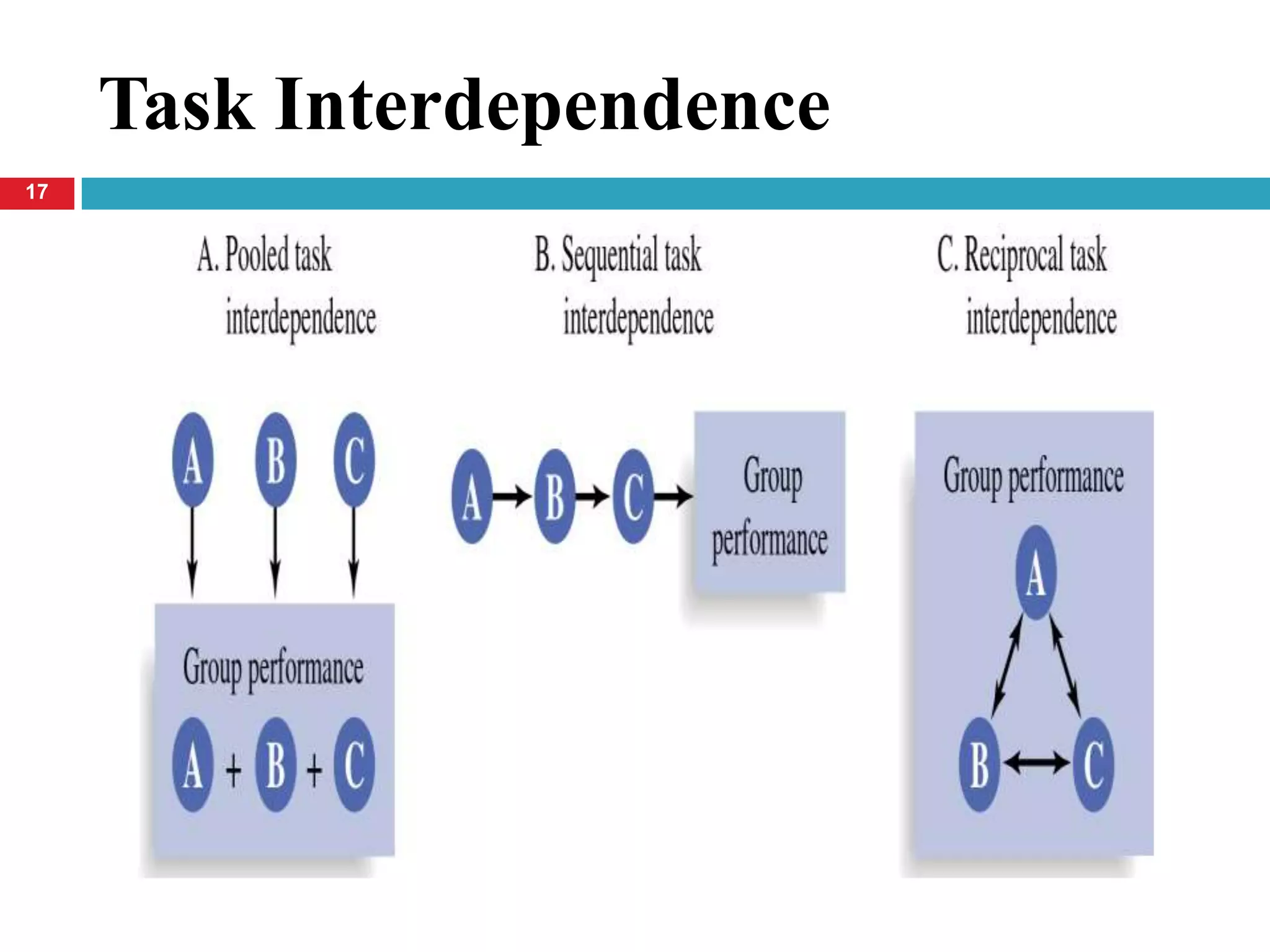
      Group tasks impact how a group interacts.
     Task interdependence shows how the work of one
     member impacts another; as interdependence rises,
     members must work more closely together.
      Task interdependence Types:
         Pooled Task Interdependence: each member of a group
       makes separate and independent contributions to group
       performance.
         Sequential Task Interdependence: requires specific behaviors
       to be performed by group members in a predetermined order.
         Reciprocal Task Interdependence: the activities of all work
       group members are fully dependent on one another so that each
       member’s performance influences the performance of every
       other member of the group.
Task Interdependence
17
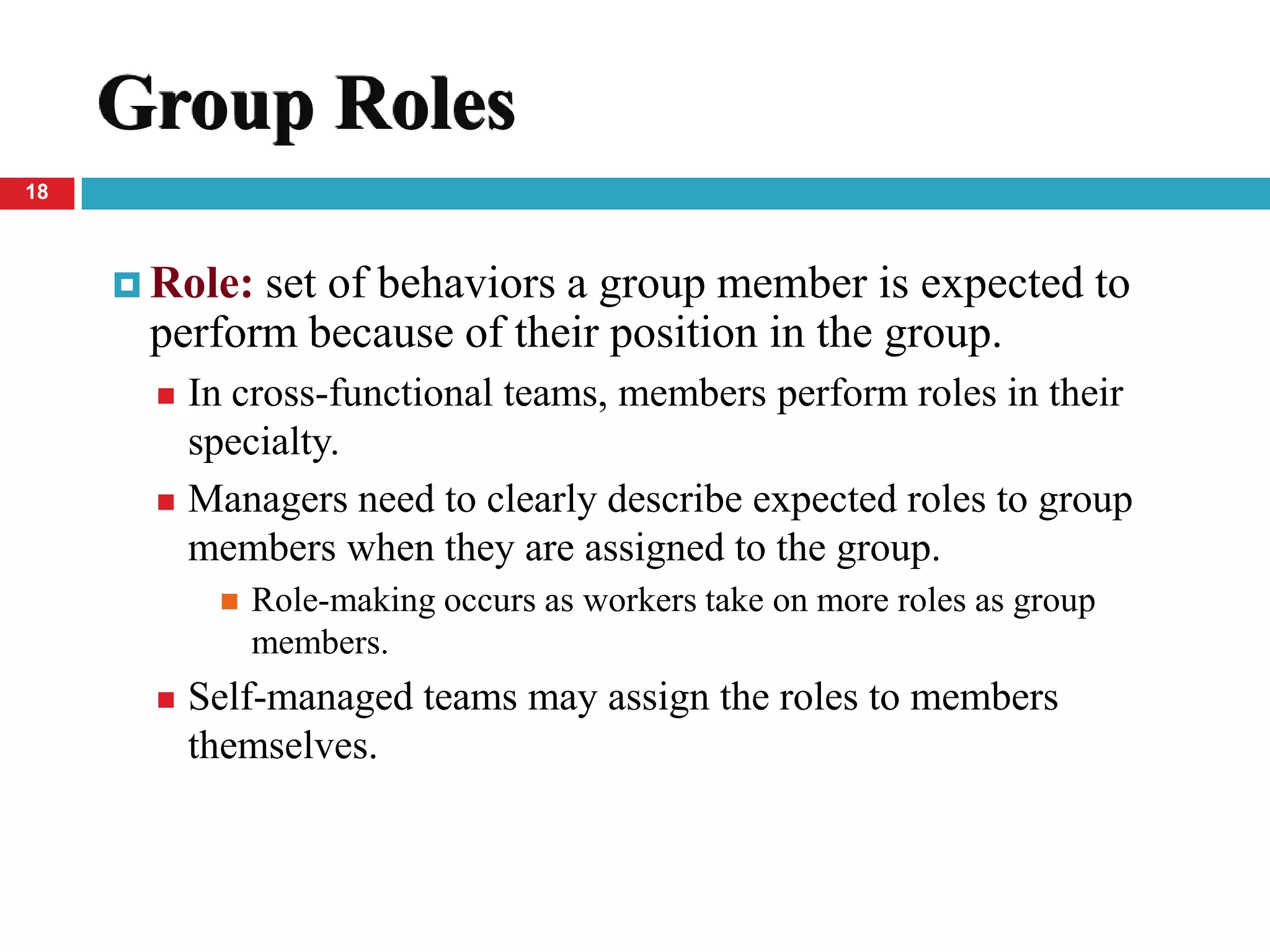
Group Roles
18


      Role:set of behaviors a group member is expected to
      perform because of their position in the group.
        In cross-functional teams, members perform roles in their
         specialty.
        Managers need to clearly describe expected roles to group
         members when they are assigned to the group.
               Role-making occurs as workers take on more roles as group
                members.
          Self-managed teams may assign the roles to members
           themselves.
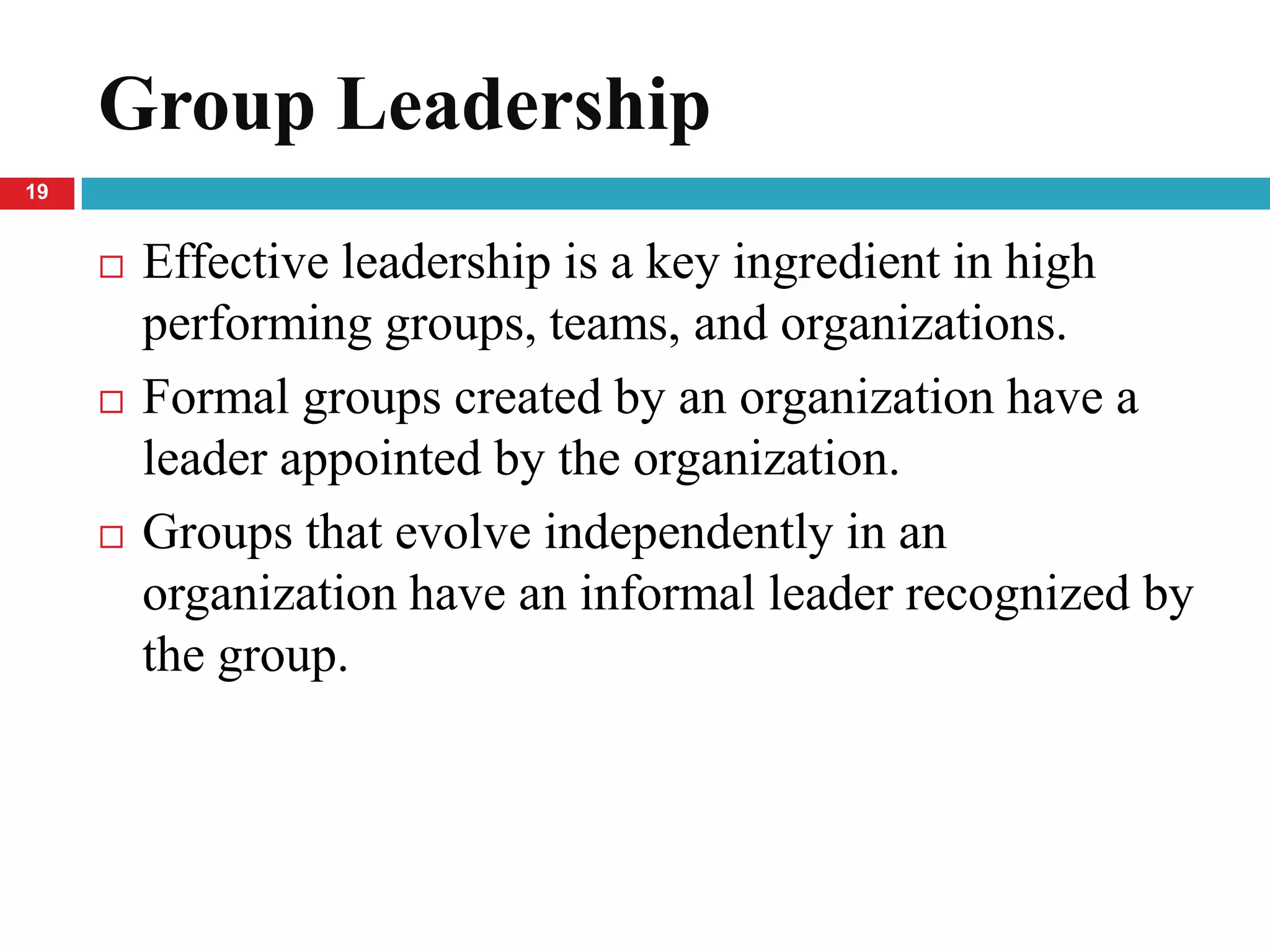
Group Leadership
19


        Effective leadership is a key ingredient in high
         performing groups, teams, and organizations.
        Formal groups created by an organization have a
         leader appointed by the organization.
        Groups that evolve independently in an
         organization have an informal leader recognized by
         the group.
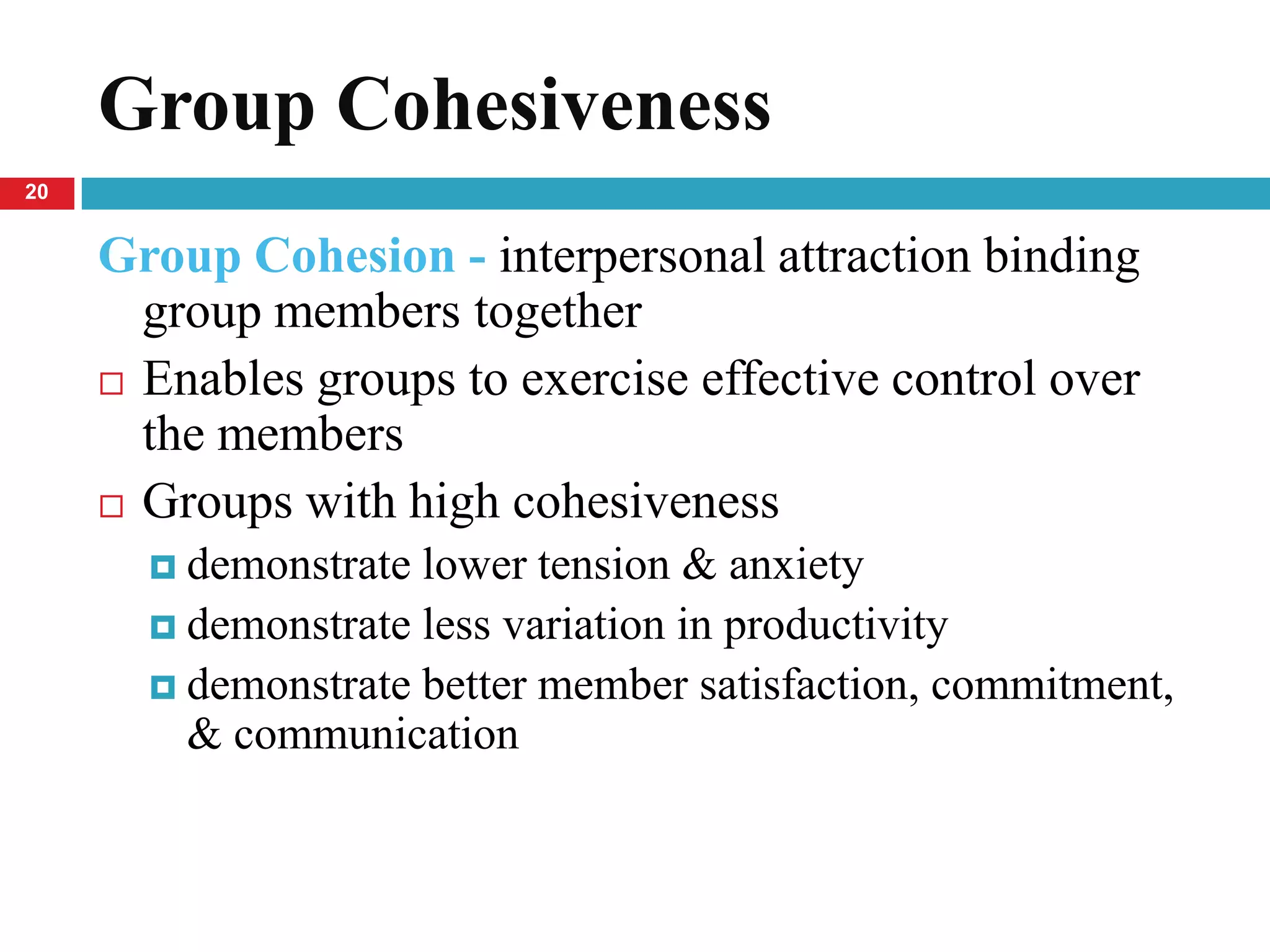
Group Cohesiveness
20


     Group Cohesion - interpersonal attraction binding
       group members together
      Enables groups to exercise effective control over
       the members
      Groups with high cohesiveness

        demonstrate lower tension & anxiety
        demonstrate less variation in productivity
        demonstrate better member satisfaction, commitment,
         & communication
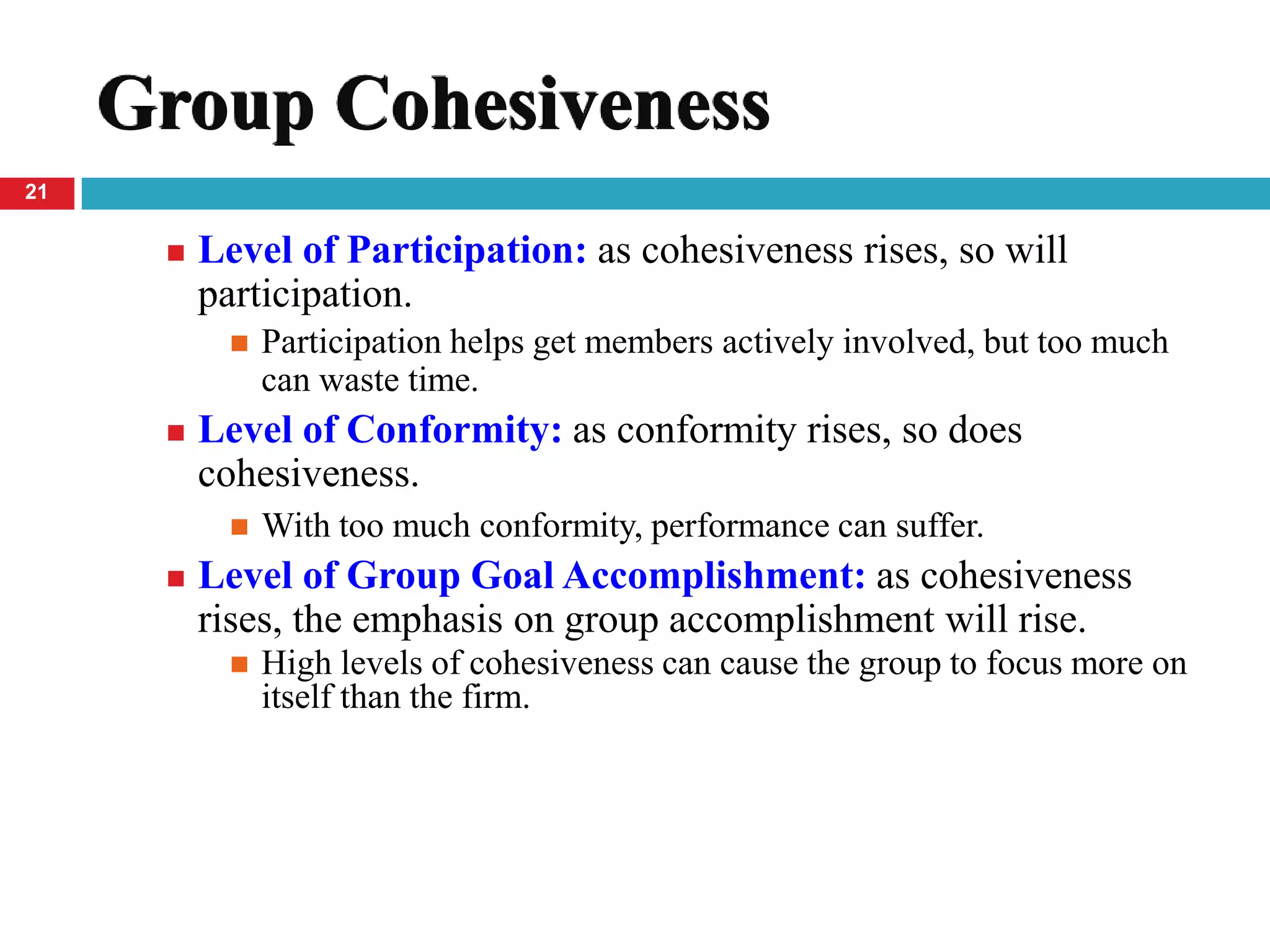
Group Cohesiveness
21


         Level of Participation: as cohesiveness rises, so will
          participation.
              Participation helps get members actively involved, but too much
               can waste time.
         Level of Conformity: as conformity rises, so does
          cohesiveness.
              With too much conformity, performance can suffer.
         Level of Group Goal Accomplishment: as cohesiveness
          rises, the emphasis on group accomplishment will rise.
              High levels of cohesiveness can cause the group to focus more on
               itself than the firm.
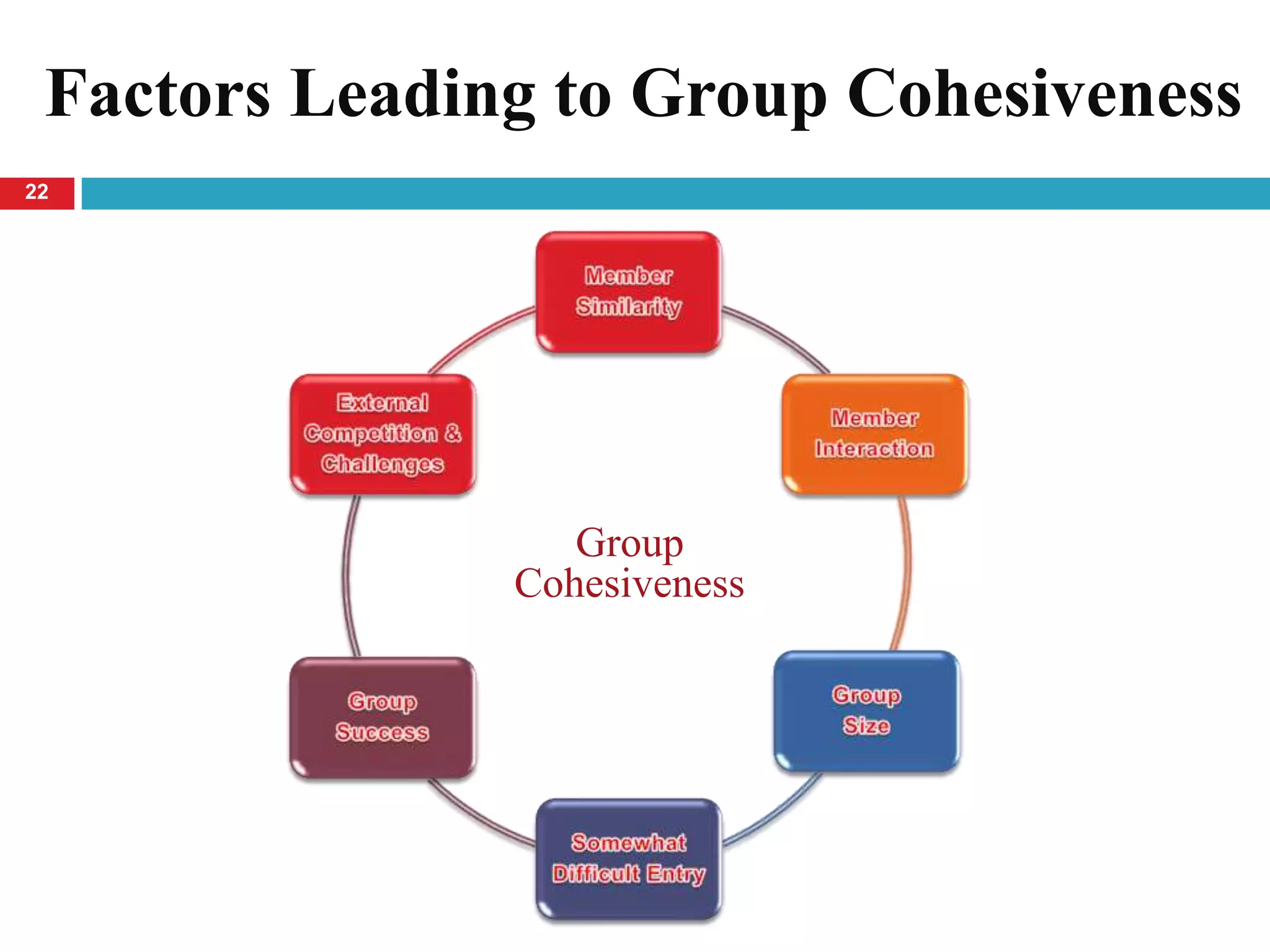
Factors Leading to Group Cohesiveness
22


                  Group
               Cohesiveness
23

Group process and innovation

  • 1.
    1 NOVA INTERNATIONAL COLLEGE Presentation Of INNOVATION & CHANGE MANAGEMENT By Gopal Niraula
  • 2.
  • 3.
    Group 3  Two or more people who interact with each other to accomplish certain goals or meet certain needs.  A group is a collection of individual  Who have significantly interdependent relations with each other  Whose group identity is recognised by non-members  Who have differentiated roles in the group.
  • 4.
    Team 4  A group of people working together to achieve common objectives or goals.  All teams are groups but not all groups are teams.  Value of teams is increasing because of their roles in employee motivation, productivity, employee satisfaction, improving communication, expanding job skills, etc.
  • 5.
  • 6.
    6 Fig. Groups’ and Teams’ Contribution to Organisational Effectiveness
  • 7.
    Competitive Advantage withGroups 7 & Teams  Performance Enhancement: Make use of synergy  Workers in a group have the opportunity to produce more or better output than separate workers.  Members correct other’s errors, bring new ideas to bear.  Managers should build groups with members of complimentary skills.  Responsive to Customers: Difficult to achieve given many constraints.  Safety issues, regulations, costs.  Cross-functional teams provide the wide variety of skills needed.  Teams consist of members of different departments.
  • 8.
    Competitive Advantage withGroups 8 & Teams  Innovation: individuals rarely possess the wide variety of skills needed.  Team members also uncover flaws and develop new ideas.  Managers should empower the team for the full innovation process.  Motivation: members of groups, and particularly teams, are often better motivated and satisfied than individuals.  It is fun to work next to other motivated people.  Team members see their contribution to the team.  Teams also provide social interaction.
  • 9.
    Types of Group& Team 9 Groups & Teams Formal Groups Informal Groups created by managers created by workers Cross- Top Self- Friendship Interest Functional Mgmt. Managed Groups Groups Teams Teams Teams Cross- R&D Command Task Cultural Teams Groups Forces Teams
  • 10.
    Types of Group& Team 10 Type of Team Top-management A group composed of the CEO, the president, team and the heads of the most important departments Research and A team whose members have the expertise development team and experience needed to develop new products Command groups A group composed of subordinates who report to the same supervisor, also called a department or unit, Task forces A committee of managers or nonmanagerial employees from various departments or divisions who meet to solve a specific, mutual problem; also called an “ad hoc” committee
  • 11.
    Types of Group& Team 11 Type of Team Self-managed work A group of employees who supervise their team own activities and monitor the quality of the goods and services they provide. Cross-functional composed of members from different teams departments Cross-cultural teams composed of members from different cultures or countries Friendship group An informal group composed of employees who enjoy each other’s company and socialize with each other. Interest group An informal group composed of employees seeking to achieve a common goal related to their membership in an organization.
  • 12.
    Self-managed Work Team 12 Keys to effective self managed teams:  Give the team enough responsibility and autonomy to be self-managing.  The team’s task should be complex enough to include many different steps.  Select members carefully for their diversity, skills, and enthusiasm.  Managers should guide and coach, not supervise.  Determine training needs and be sure it is provided.  The team is free to decide:  Which working methods will be used  Who shall belong to the group  Who shall perform which duties
  • 13.
    13 Dynamics affect how a group or team functions.
  • 14.
    Group Size 14 Group size affects how a group performs.  Advantage of small groups  Interact more with each other and easier to coordinate their efforts  More motivated, satisfied, and committed  Easier to share information  Better able to see the importance of their personal contributions
  • 15.
    Group Size 15  Advantages of large groups  More resources at their disposal to achieve group goals  Enables managers to obtain division of labor advantage  Disadvantages of large groups  Problem of communication and coordination  Lower level of motivation  Members might not think their efforts are really needed
  • 16.
    Group Task 16  Group tasks impact how a group interacts. Task interdependence shows how the work of one member impacts another; as interdependence rises, members must work more closely together. Task interdependence Types: Pooled Task Interdependence: each member of a group makes separate and independent contributions to group performance. Sequential Task Interdependence: requires specific behaviors to be performed by group members in a predetermined order. Reciprocal Task Interdependence: the activities of all work group members are fully dependent on one another so that each member’s performance influences the performance of every other member of the group.
  • 17.
  • 18.
    Group Roles 18  Role:set of behaviors a group member is expected to perform because of their position in the group.  In cross-functional teams, members perform roles in their specialty.  Managers need to clearly describe expected roles to group members when they are assigned to the group.  Role-making occurs as workers take on more roles as group members.  Self-managed teams may assign the roles to members themselves.
  • 19.
    Group Leadership 19  Effective leadership is a key ingredient in high performing groups, teams, and organizations.  Formal groups created by an organization have a leader appointed by the organization.  Groups that evolve independently in an organization have an informal leader recognized by the group.
  • 20.
    Group Cohesiveness 20 Group Cohesion - interpersonal attraction binding group members together  Enables groups to exercise effective control over the members  Groups with high cohesiveness  demonstrate lower tension & anxiety  demonstrate less variation in productivity  demonstrate better member satisfaction, commitment, & communication
  • 21.
    Group Cohesiveness 21  Level of Participation: as cohesiveness rises, so will participation.  Participation helps get members actively involved, but too much can waste time.  Level of Conformity: as conformity rises, so does cohesiveness.  With too much conformity, performance can suffer.  Level of Group Goal Accomplishment: as cohesiveness rises, the emphasis on group accomplishment will rise.  High levels of cohesiveness can cause the group to focus more on itself than the firm.
  • 22.
    Factors Leading toGroup Cohesiveness 22 Group Cohesiveness
  • 23.