GRAMMAR FOR
ADVANCED LEVEL
1.
2.
3.

Passive voice
Direct indirect ( reported speech)
Conjunction
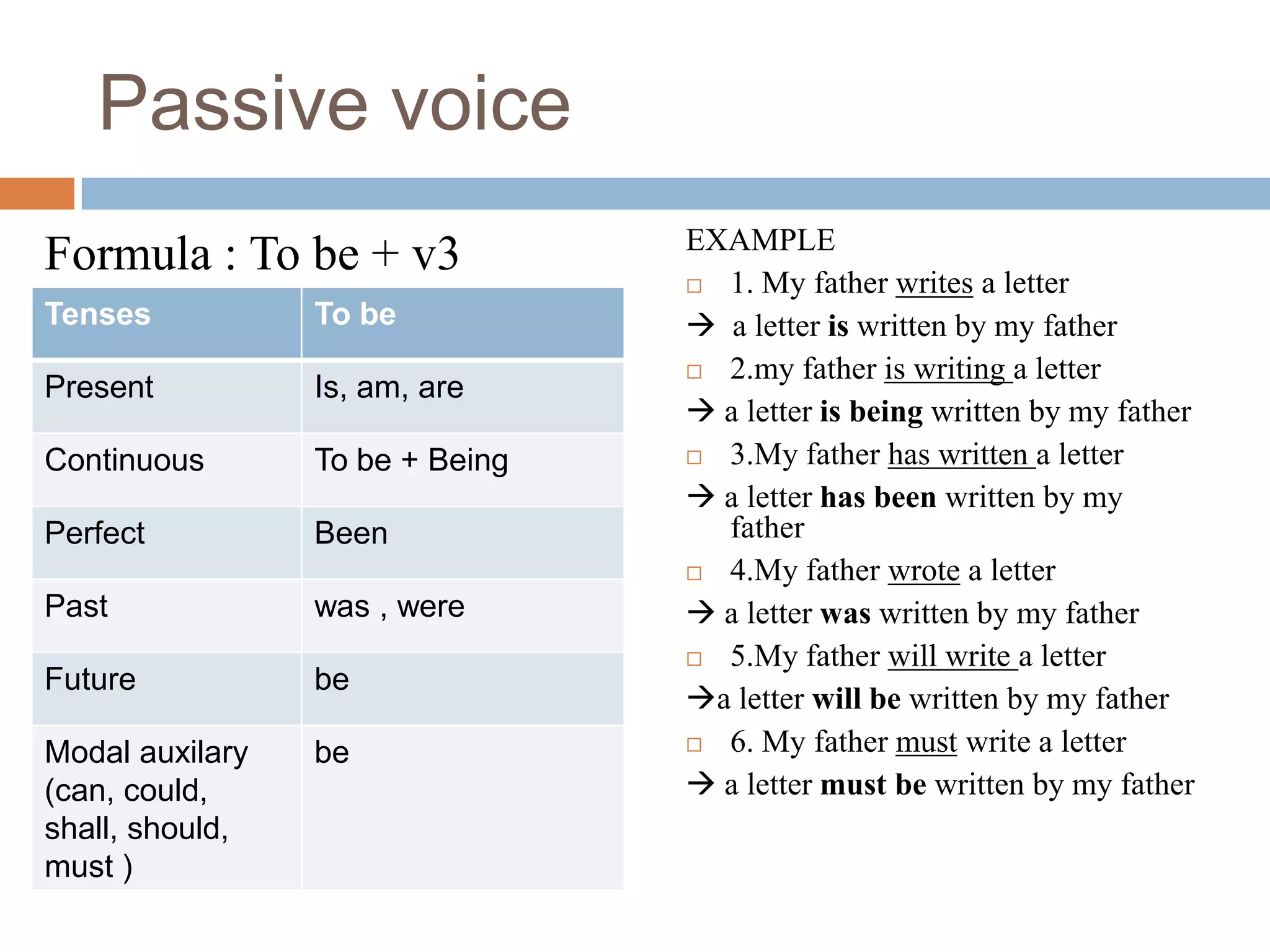
Passive voice
Formula : To be + v3
Tenses

To be

Present

Is, am, are

Continuous

To be + Being

Perfect

Been

Past

was , were

Future

be

Modal auxilary
(can, could,
shall, should,
must )

be

EXAMPLE
 1. My father writes a letter
 a letter is written by my father
 2.my father is writing a letter
 a letter is being written by my father
 3.My father has written a letter
 a letter has been written by my
father
 4.My father wrote a letter
 a letter was written by my father
 5.My father will write a letter
a letter will be written by my father
 6. My father must write a letter
 a letter must be written by my father
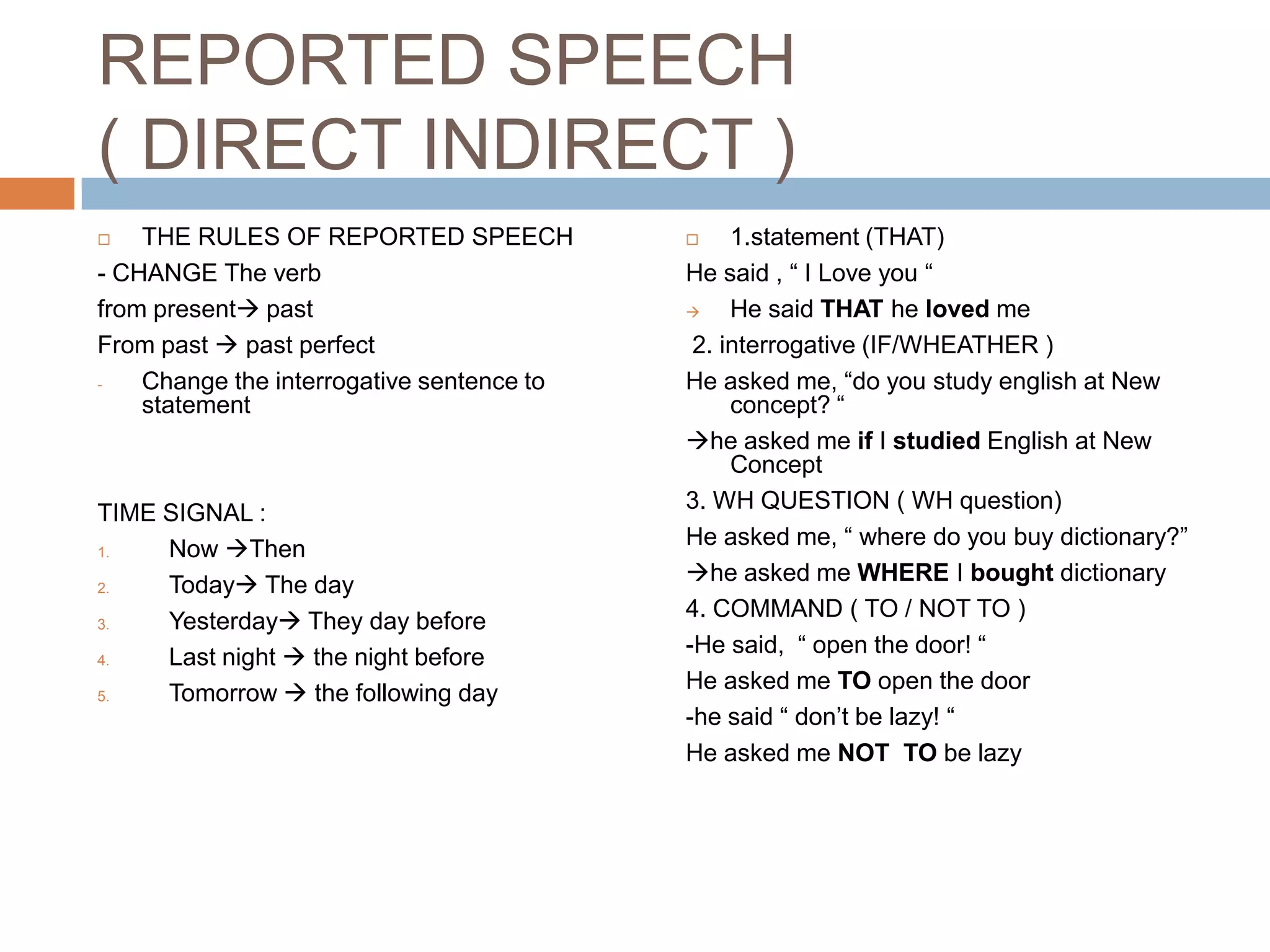
REPORTED SPEECH
( DIRECT INDIRECT )
THE RULES OF REPORTED SPEECH
- CHANGE The verb
from present past
From past  past perfect
Change the interrogative sentence to
statement


TIME SIGNAL :
1.
Now Then
2.
Today The day
3.
Yesterday They day before
4.
Last night  the night before
5.
Tomorrow  the following day

1.statement (THAT)
He said , “ I Love you “

He said THAT he loved me
2. interrogative (IF/WHEATHER )
He asked me, “do you study english at New
concept? “
he asked me if I studied English at New
Concept
3. WH QUESTION ( WH question)
He asked me, “ where do you buy dictionary?”
he asked me WHERE I bought dictionary
4. COMMAND ( TO / NOT TO )
-He said, “ open the door! “
He asked me TO open the door
-he said “ don’t be lazy! “
He asked me NOT TO be lazy

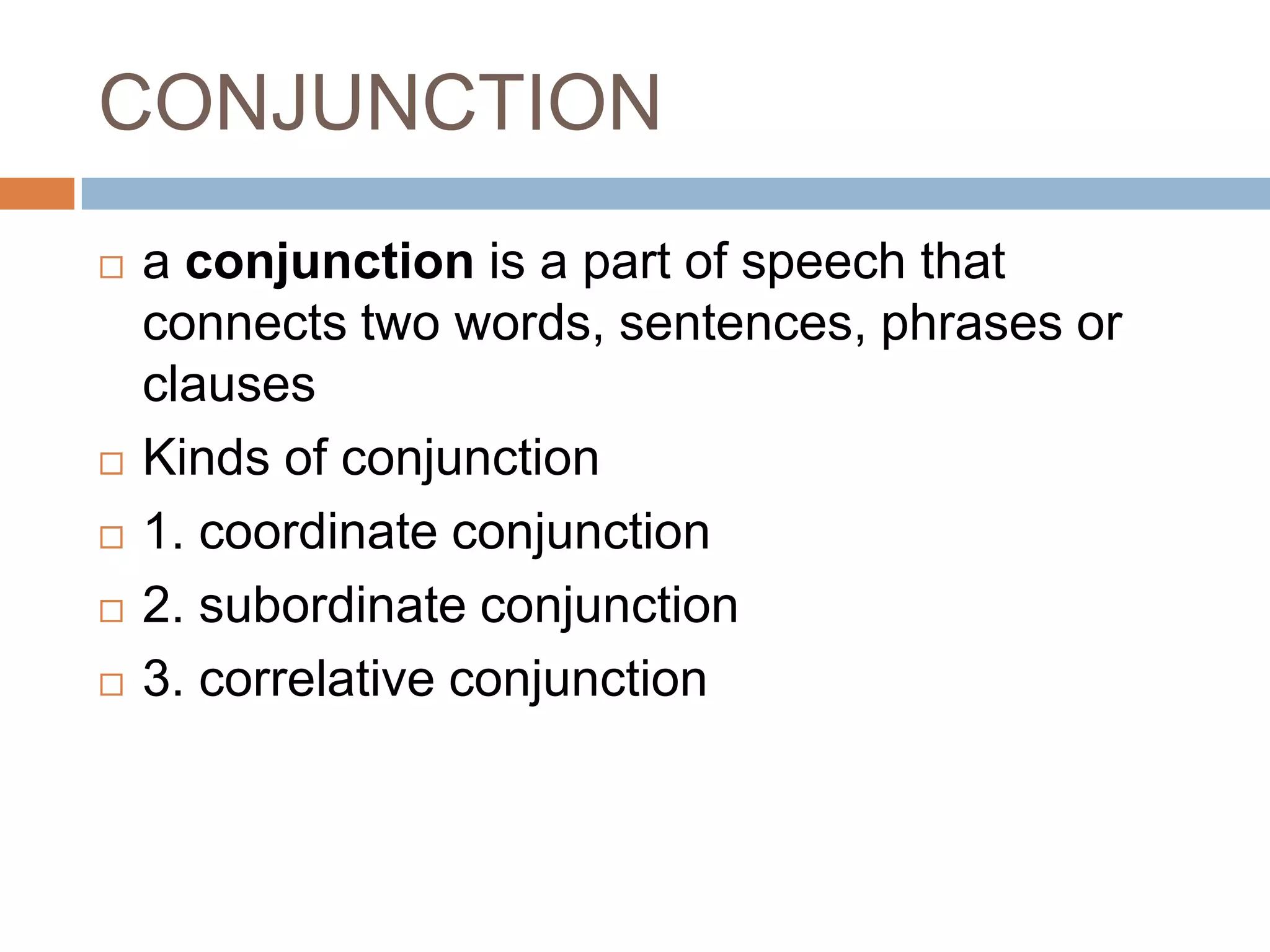
CONJUNCTION







a conjunction is a part of speech that
connects two words, sentences, phrases or
clauses
Kinds of conjunction
1. coordinate conjunction
2. subordinate conjunction
3. correlative conjunction
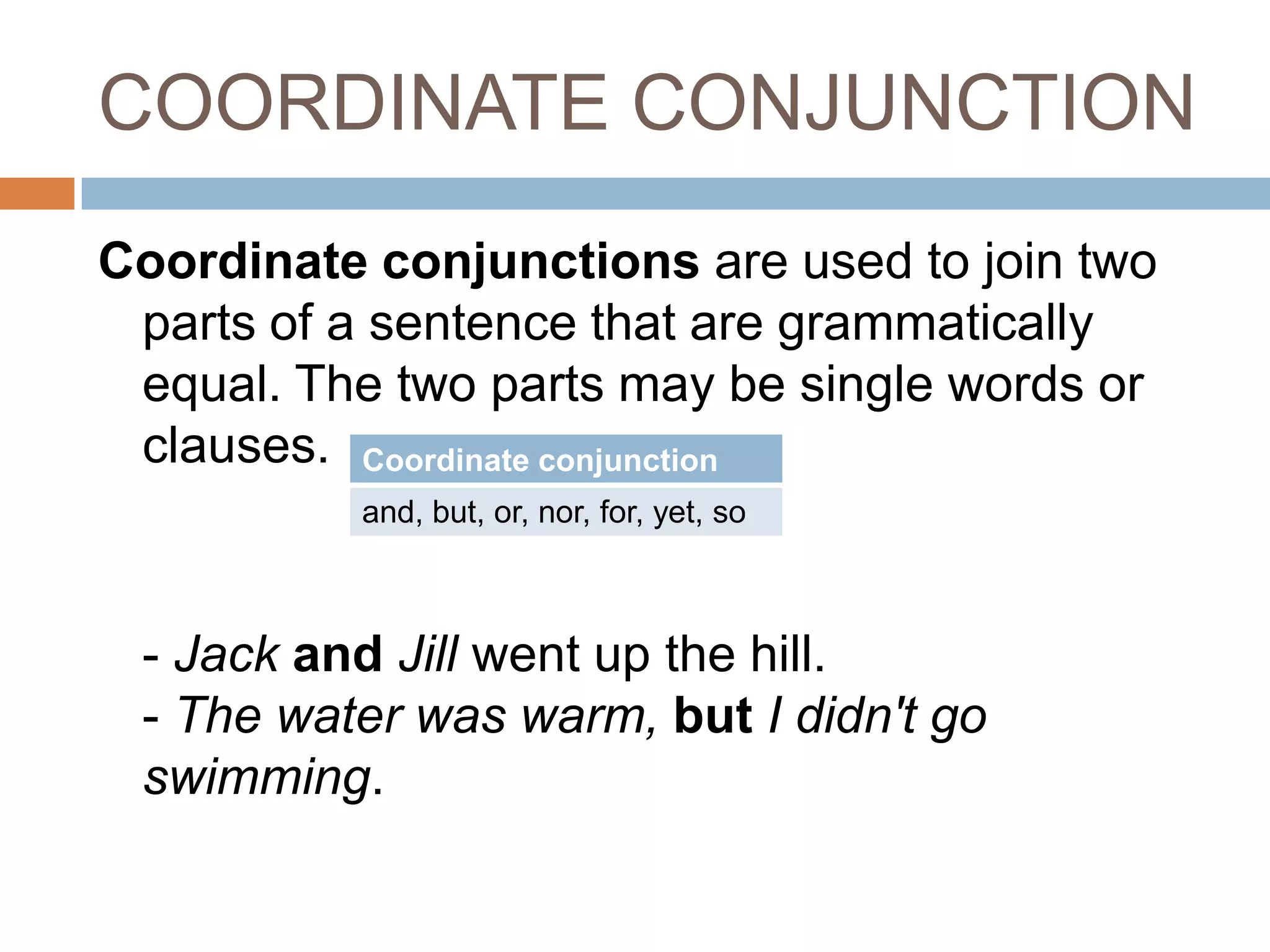
COORDINATE CONJUNCTION
Coordinate conjunctions are used to join two
parts of a sentence that are grammatically
equal. The two parts may be single words or
clauses. Coordinate conjunction
and, but, or, nor, for, yet, so

- Jack and Jill went up the hill.
- The water was warm, but I didn't go
swimming.
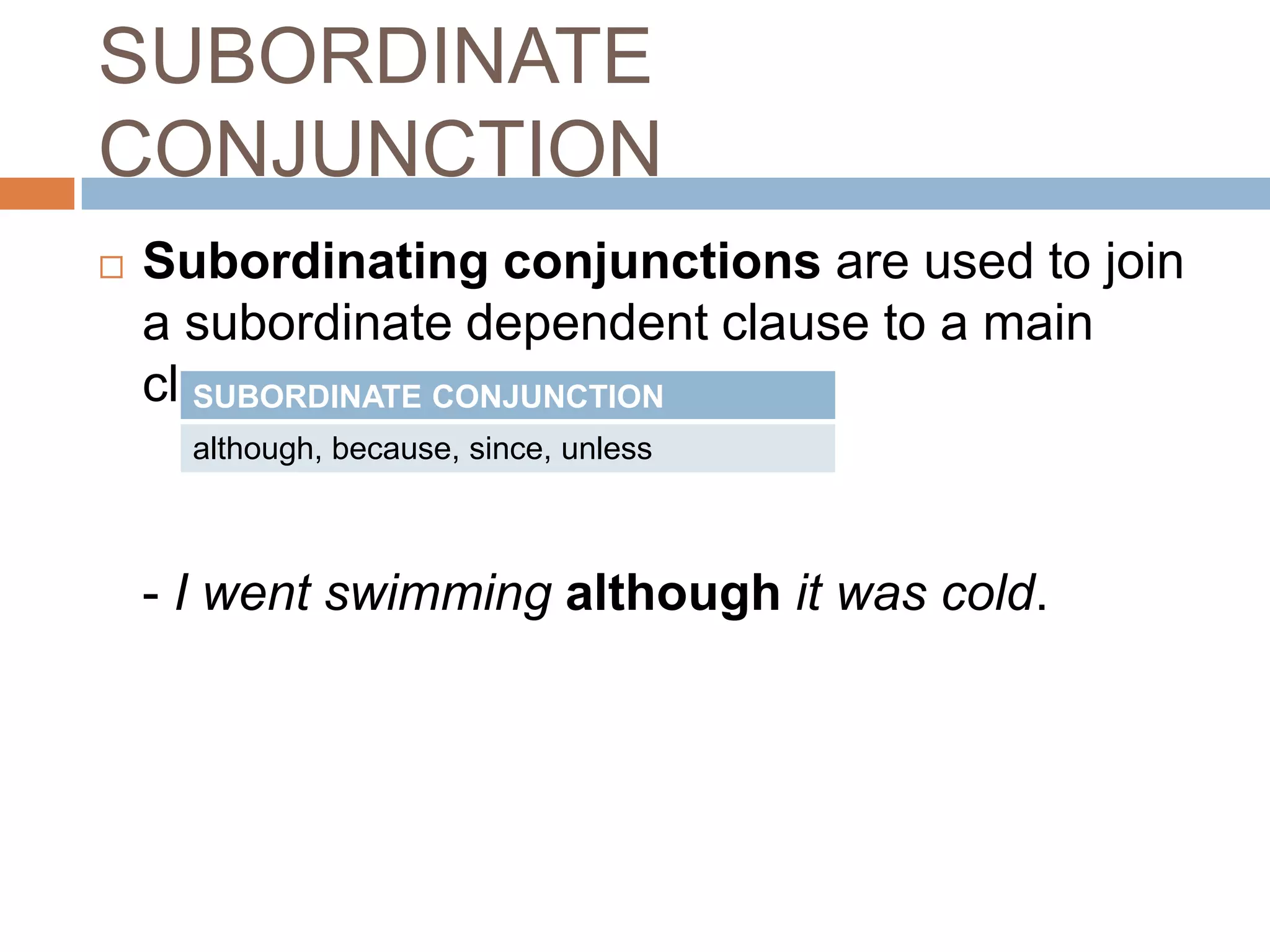
SUBORDINATE
CONJUNCTION


Subordinating conjunctions are used to join
a subordinate dependent clause to a main
clause.
SUBORDINATE CONJUNCTION
although, because, since, unless

- I went swimming although it was cold.
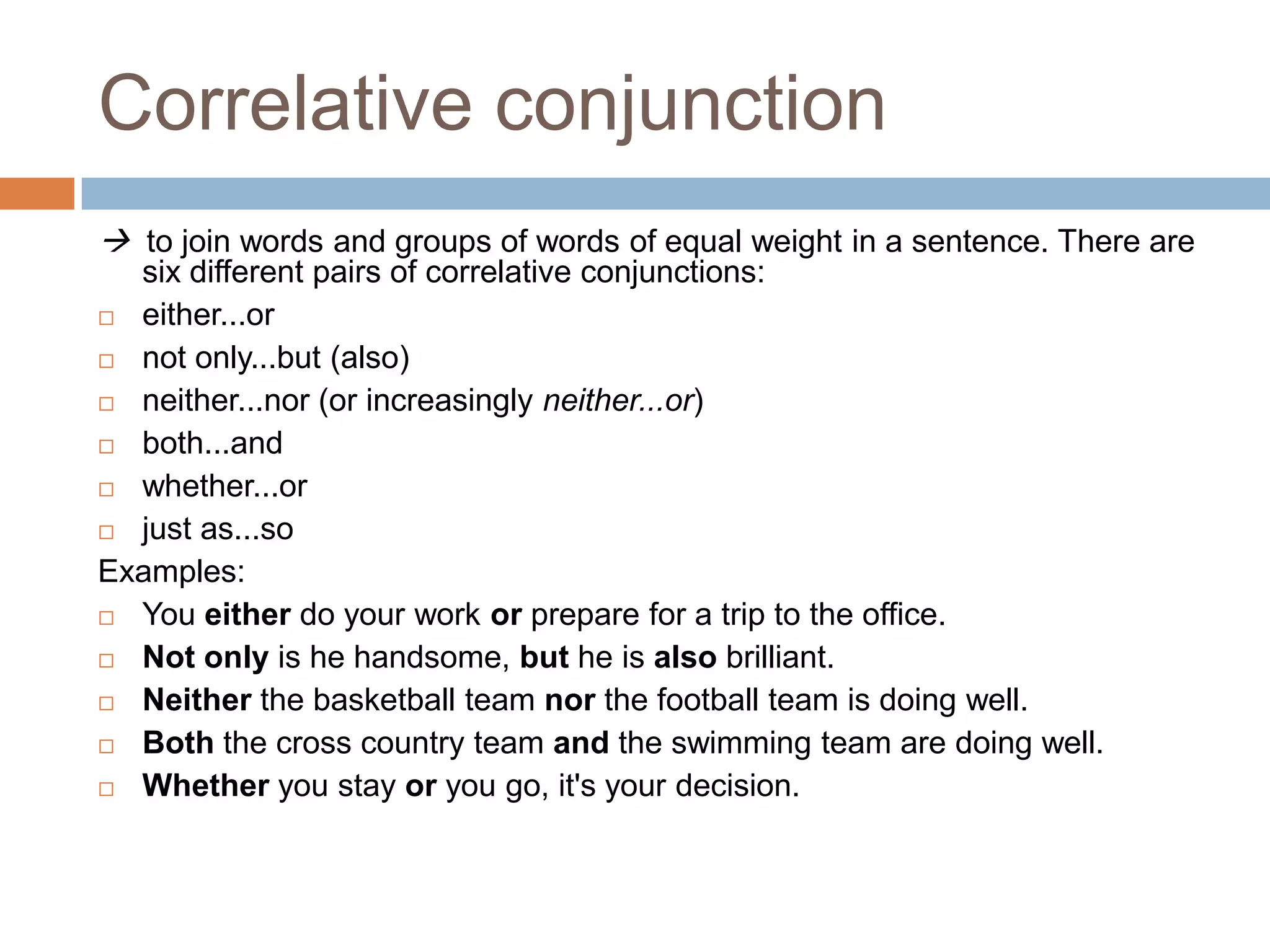
Correlative conjunction
 to join words and groups of words of equal weight in a sentence. There are
six different pairs of correlative conjunctions:
 either...or
 not only...but (also)
 neither...nor (or increasingly neither...or)
 both...and
 whether...or
 just as...so
Examples:
 You either do your work or prepare for a trip to the office.
 Not only is he handsome, but he is also brilliant.
 Neither the basketball team nor the football team is doing well.
 Both the cross country team and the swimming team are doing well.
 Whether you stay or you go, it's your decision.

Grammar for advanced level

  • 1.
    GRAMMAR FOR ADVANCED LEVEL 1. 2. 3. Passivevoice Direct indirect ( reported speech) Conjunction
  • 2.
    Passive voice Formula :To be + v3 Tenses To be Present Is, am, are Continuous To be + Being Perfect Been Past was , were Future be Modal auxilary (can, could, shall, should, must ) be EXAMPLE  1. My father writes a letter  a letter is written by my father  2.my father is writing a letter  a letter is being written by my father  3.My father has written a letter  a letter has been written by my father  4.My father wrote a letter  a letter was written by my father  5.My father will write a letter a letter will be written by my father  6. My father must write a letter  a letter must be written by my father
  • 3.
    REPORTED SPEECH ( DIRECTINDIRECT ) THE RULES OF REPORTED SPEECH - CHANGE The verb from present past From past  past perfect Change the interrogative sentence to statement  TIME SIGNAL : 1. Now Then 2. Today The day 3. Yesterday They day before 4. Last night  the night before 5. Tomorrow  the following day 1.statement (THAT) He said , “ I Love you “  He said THAT he loved me 2. interrogative (IF/WHEATHER ) He asked me, “do you study english at New concept? “ he asked me if I studied English at New Concept 3. WH QUESTION ( WH question) He asked me, “ where do you buy dictionary?” he asked me WHERE I bought dictionary 4. COMMAND ( TO / NOT TO ) -He said, “ open the door! “ He asked me TO open the door -he said “ don’t be lazy! “ He asked me NOT TO be lazy 
  • 4.
    CONJUNCTION      a conjunction isa part of speech that connects two words, sentences, phrases or clauses Kinds of conjunction 1. coordinate conjunction 2. subordinate conjunction 3. correlative conjunction
  • 5.
    COORDINATE CONJUNCTION Coordinate conjunctionsare used to join two parts of a sentence that are grammatically equal. The two parts may be single words or clauses. Coordinate conjunction and, but, or, nor, for, yet, so - Jack and Jill went up the hill. - The water was warm, but I didn't go swimming.
  • 6.
    SUBORDINATE CONJUNCTION  Subordinating conjunctions areused to join a subordinate dependent clause to a main clause. SUBORDINATE CONJUNCTION although, because, since, unless - I went swimming although it was cold.
  • 7.
    Correlative conjunction  tojoin words and groups of words of equal weight in a sentence. There are six different pairs of correlative conjunctions:  either...or  not only...but (also)  neither...nor (or increasingly neither...or)  both...and  whether...or  just as...so Examples:  You either do your work or prepare for a trip to the office.  Not only is he handsome, but he is also brilliant.  Neither the basketball team nor the football team is doing well.  Both the cross country team and the swimming team are doing well.  Whether you stay or you go, it's your decision.