Downloaded 109 times
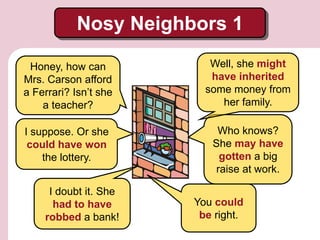
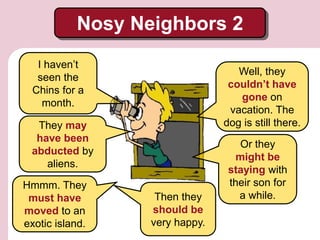
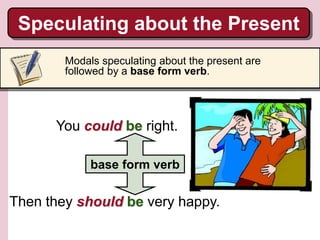
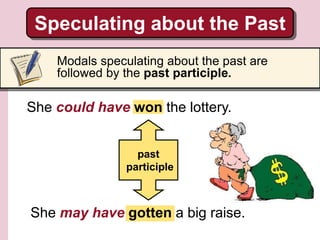
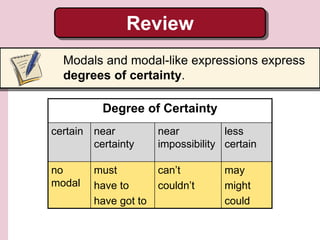
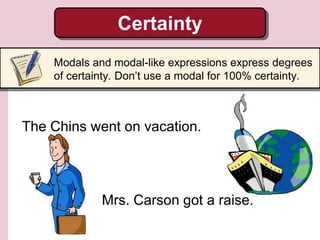


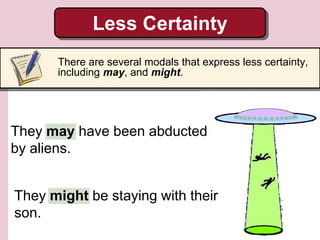





This document discusses the use of modal verbs to express different degrees of certainty in English. It explains that: 1) Modals like "must have" and "had to have" express near certainty about past events, while modals like "might" and "may" express less certainty. 2) When speculating about present situations, modals take the base verb form, like "they should be very happy." 3) When speculating about past events, modals take the past participle verb form, like "she could have won the lottery." 4) Modals like "should" and "ought to" express near certainty about future events, using the base verb form, while


