Grammar for PET:
Infinitive or –ing form?

Katie Dirksmeier
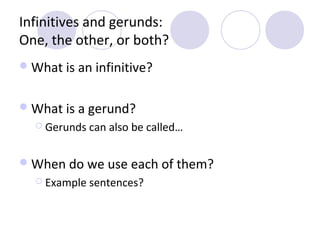
Infinitives and gerunds:
One, the other, or both?
 What is an infinitive?
 What is a gerund?
 Gerunds

can also be called…

 When do we use each of them?
 Example

sentences?
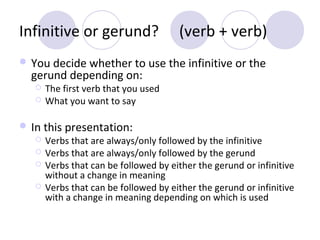
Infinitive or gerund?

(verb + verb)

 You decide whether to use the infinitive or the

gerund depending on:



The first verb that you used
What you want to say

 In this presentation:
 Verbs that are always/only followed by the infinitive
 Verbs that are always/only followed by the gerund
 Verbs that can be followed by either the gerund or infinitive
without a change in meaning
 Verbs that can be followed by either the gerund or infinitive
with a change in meaning depending on which is used
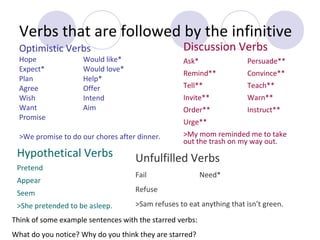
Verbs that are followed by the infinitive
Discussion Verbs

Optimistic Verbs
Hope
Expect*
Plan
Agree
Wish
Want
Promise

Would like*
Would love*
Help*
Offer
Intend
Aim

Ask*
Remind**

Pretend
Appear

Convince**

Tell**

Teach**

Invite**

Warn**

Order**

Instruct**

Urge**

>We promise to do our chores after dinner.

Hypothetical Verbs

Persuade**

>My mom reminded me to take
out the trash on my way out.

Unfulfilled Verbs
Fail

Need*

Seem

Refuse

>She pretended to be asleep.

>Sam refuses to eat anything that isn’t green.

Think of some example sentences with the starred verbs:
What do you notice? Why do you think they are starred?
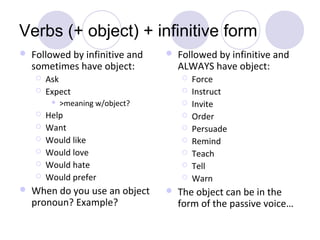
Verbs (+ object) + infinitive form


Followed by infinitive and
sometimes have object:



Ask
Expect
















>meaning w/object?



Help
Want
Would like
Would love
Would hate
Would prefer

When do you use an object
pronoun? Example?

Followed by infinitive and
ALWAYS have object:










Force
Instruct
Invite
Order
Persuade
Remind
Teach
Tell
Warn

The object can be in the
form of the passive voice…
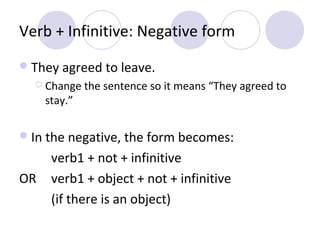
Verb + Infinitive: Negative form
 They agreed to leave.
 Change

stay.”

the sentence so it means “They agreed to

 In the negative, the form becomes:

OR

verb1 + not + infinitive
verb1 + object + not + infinitive
(if there is an object)
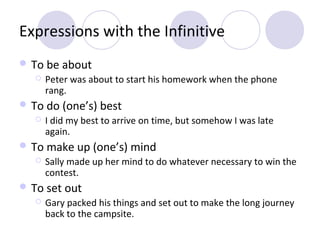
Expressions with the Infinitive
 To be about


Peter was about to start his homework when the phone
rang.

 To do (one’s) best


I did my best to arrive on time, but somehow I was late
again.

 To make up (one’s) mind


Sally made up her mind to do whatever necessary to win the
contest.

 To set out


Gary packed his things and set out to make the long journey
back to the campsite.
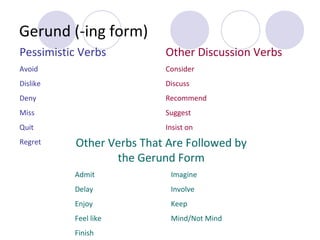
Gerund (-ing form)
Pessimistic Verbs

Other Discussion Verbs

Avoid

Consider

Dislike

Discuss

Deny

Recommend

Miss

Suggest

Quit

Insist on

Regret

Other Verbs That Are Followed by
the Gerund Form
Admit

Imagine

Delay

Involve

Enjoy

Keep

Feel like

Mind/Not Mind

Finish
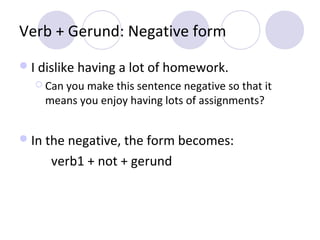
Verb + Gerund: Negative form
 I dislike having a lot of homework.
 Can

you make this sentence negative so that it
means you enjoy having lots of assignments?

 In the negative, the form becomes:

verb1 + not + gerund
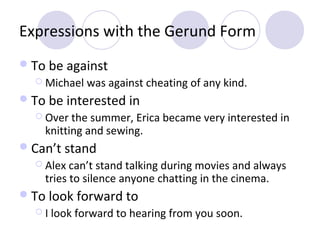
Expressions with the Gerund Form
 To be against
 Michael

was against cheating of any kind.

 To be interested in
 Over

the summer, Erica became very interested in
knitting and sewing.

 Can’t stand
 Alex

can’t stand talking during movies and always
tries to silence anyone chatting in the cinema.

 To look forward to
I

look forward to hearing from you soon.
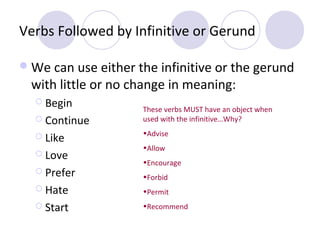
Verbs Followed by Infinitive or Gerund
 We can use either the infinitive or the gerund

with little or no change in meaning:
 Begin
 Continue
 Like
 Love
 Prefer

These verbs MUST have an object when
used with the infinitive…Why?
•Advise
•Allow
•Encourage
•Forbid

 Hate

•Permit

 Start

•Recommend
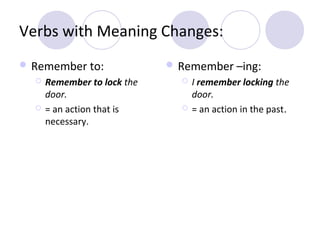
Verbs with Meaning Changes:
 Remember to:




Remember to lock the
door.
= an action that is
necessary.

 Remember –ing:




I remember locking the
door.
= an action in the past.
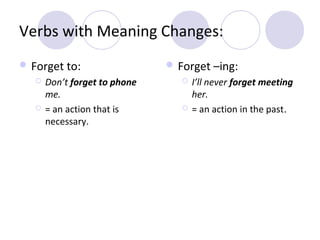
Verbs with Meaning Changes:
 Forget to:




Don’t forget to phone
me.
= an action that is
necessary.

 Forget –ing:




I’ll never forget meeting
her.
= an action in the past.
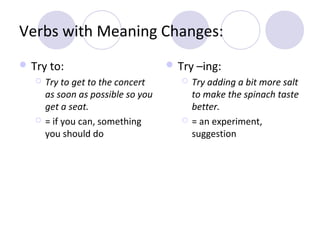
Verbs with Meaning Changes:
 Try to:




Try to get to the concert
as soon as possible so you
get a seat.
= if you can, something
you should do

 Try –ing:




Try adding a bit more salt
to make the spinach taste
better.
= an experiment,
suggestion
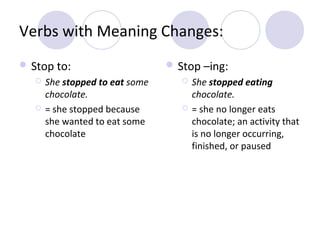
Verbs with Meaning Changes:
 Stop to:




She stopped to eat some
chocolate.
= she stopped because
she wanted to eat some
chocolate

 Stop –ing:




She stopped eating
chocolate.
= she no longer eats
chocolate; an activity that
is no longer occurring,
finished, or paused
 http://www.e-grammar.org/infinitive-gerund/

 https://www.youtube.com/watch?v=RHmMzCic

INFINITIVE OR GERUND by Katie

  • 1.
    Grammar for PET: Infinitiveor –ing form? Katie Dirksmeier
  • 2.
    Infinitives and gerunds: One,the other, or both?  What is an infinitive?  What is a gerund?  Gerunds can also be called…  When do we use each of them?  Example sentences?
  • 3.
    Infinitive or gerund? (verb+ verb)  You decide whether to use the infinitive or the gerund depending on:   The first verb that you used What you want to say  In this presentation:  Verbs that are always/only followed by the infinitive  Verbs that are always/only followed by the gerund  Verbs that can be followed by either the gerund or infinitive without a change in meaning  Verbs that can be followed by either the gerund or infinitive with a change in meaning depending on which is used
  • 4.
    Verbs that arefollowed by the infinitive Discussion Verbs Optimistic Verbs Hope Expect* Plan Agree Wish Want Promise Would like* Would love* Help* Offer Intend Aim Ask* Remind** Pretend Appear Convince** Tell** Teach** Invite** Warn** Order** Instruct** Urge** >We promise to do our chores after dinner. Hypothetical Verbs Persuade** >My mom reminded me to take out the trash on my way out. Unfulfilled Verbs Fail Need* Seem Refuse >She pretended to be asleep. >Sam refuses to eat anything that isn’t green. Think of some example sentences with the starred verbs: What do you notice? Why do you think they are starred?
  • 5.
    Verbs (+ object)+ infinitive form  Followed by infinitive and sometimes have object:   Ask Expect            >meaning w/object?  Help Want Would like Would love Would hate Would prefer When do you use an object pronoun? Example? Followed by infinitive and ALWAYS have object:        Force Instruct Invite Order Persuade Remind Teach Tell Warn The object can be in the form of the passive voice…
  • 6.
    Verb + Infinitive:Negative form  They agreed to leave.  Change stay.” the sentence so it means “They agreed to  In the negative, the form becomes: OR verb1 + not + infinitive verb1 + object + not + infinitive (if there is an object)
  • 7.
    Expressions with theInfinitive  To be about  Peter was about to start his homework when the phone rang.  To do (one’s) best  I did my best to arrive on time, but somehow I was late again.  To make up (one’s) mind  Sally made up her mind to do whatever necessary to win the contest.  To set out  Gary packed his things and set out to make the long journey back to the campsite.
  • 8.
    Gerund (-ing form) PessimisticVerbs Other Discussion Verbs Avoid Consider Dislike Discuss Deny Recommend Miss Suggest Quit Insist on Regret Other Verbs That Are Followed by the Gerund Form Admit Imagine Delay Involve Enjoy Keep Feel like Mind/Not Mind Finish
  • 9.
    Verb + Gerund:Negative form  I dislike having a lot of homework.  Can you make this sentence negative so that it means you enjoy having lots of assignments?  In the negative, the form becomes: verb1 + not + gerund
  • 10.
    Expressions with theGerund Form  To be against  Michael was against cheating of any kind.  To be interested in  Over the summer, Erica became very interested in knitting and sewing.  Can’t stand  Alex can’t stand talking during movies and always tries to silence anyone chatting in the cinema.  To look forward to I look forward to hearing from you soon.
  • 11.
    Verbs Followed byInfinitive or Gerund  We can use either the infinitive or the gerund with little or no change in meaning:  Begin  Continue  Like  Love  Prefer These verbs MUST have an object when used with the infinitive…Why? •Advise •Allow •Encourage •Forbid  Hate •Permit  Start •Recommend
  • 12.
    Verbs with MeaningChanges:  Remember to:   Remember to lock the door. = an action that is necessary.  Remember –ing:   I remember locking the door. = an action in the past.
  • 13.
    Verbs with MeaningChanges:  Forget to:   Don’t forget to phone me. = an action that is necessary.  Forget –ing:   I’ll never forget meeting her. = an action in the past.
  • 14.
    Verbs with MeaningChanges:  Try to:   Try to get to the concert as soon as possible so you get a seat. = if you can, something you should do  Try –ing:   Try adding a bit more salt to make the spinach taste better. = an experiment, suggestion
  • 15.
    Verbs with MeaningChanges:  Stop to:   She stopped to eat some chocolate. = she stopped because she wanted to eat some chocolate  Stop –ing:   She stopped eating chocolate. = she no longer eats chocolate; an activity that is no longer occurring, finished, or paused
  • 16.