













![Regulation of the oxidative phosphorylation
• Oxidative phosphorylation is regulated by cellular energy demands.
• The intracellular [ADP] and the mass-action ratio [ATP]/([ADP][Pi]) are
measures of a cell’s energy status. Normally this ratio is very high, so
the ATP-ADP system is almost fully phosphorylated.
• When the rate of some energy-requiring process (protein synthesis, for
example) increases, the rate of breakdown of ATP to ADP and Pi
increases, lowering the mass-action ratio.
• With more ADP available for oxidative phosphorylation, the rate of
respiration increases, causing regeneration of ATP. This continues until
the mass-action ratio returns to its normal high level, at which point
respiration slows again.
39](https://image.slidesharecdn.com/oxidativephosphorylationandelectrontransportchain-171129162619/75/Oxidative-phosphorylation-and-electron-transport-chain-38-2048.jpg)
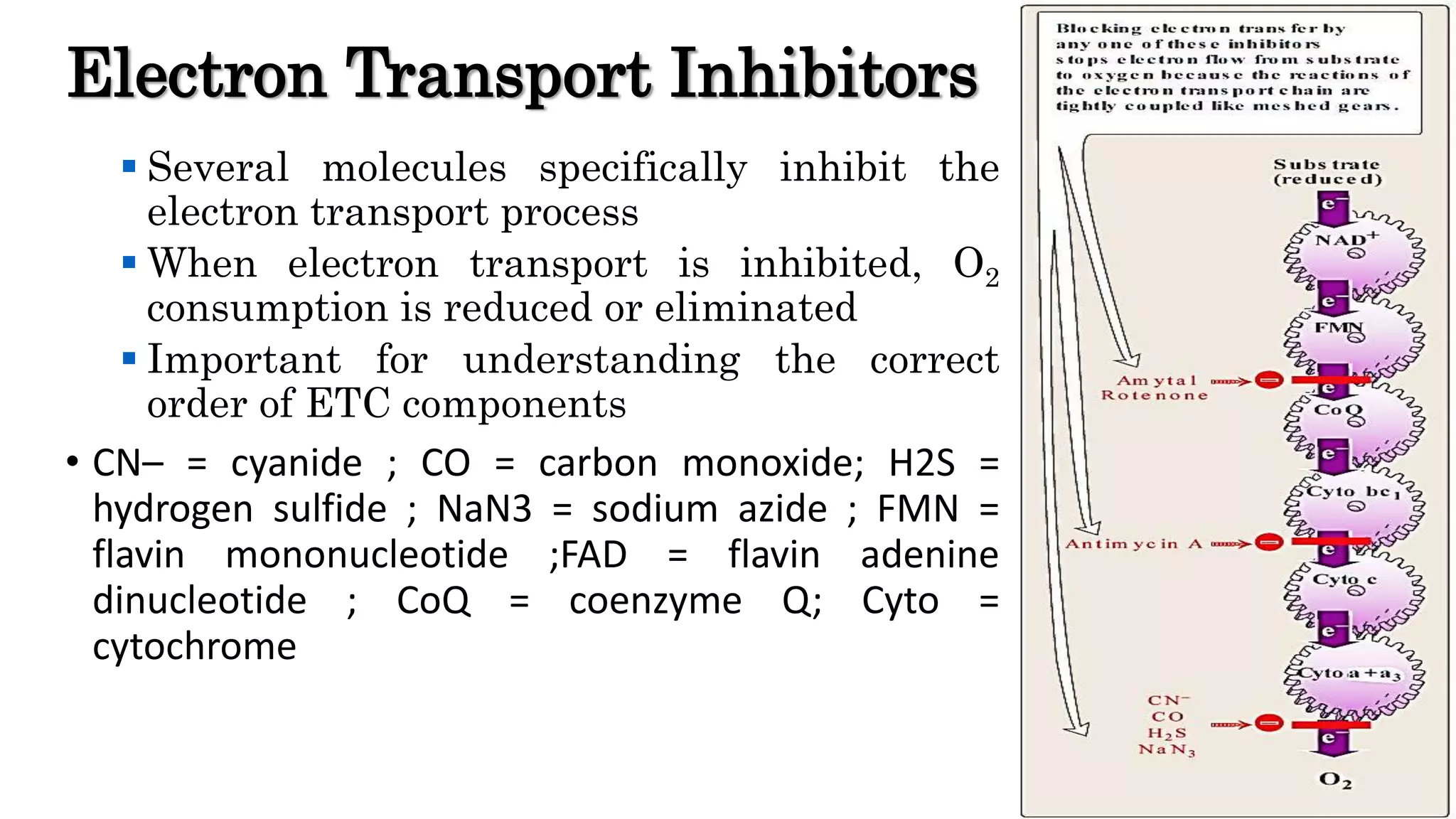




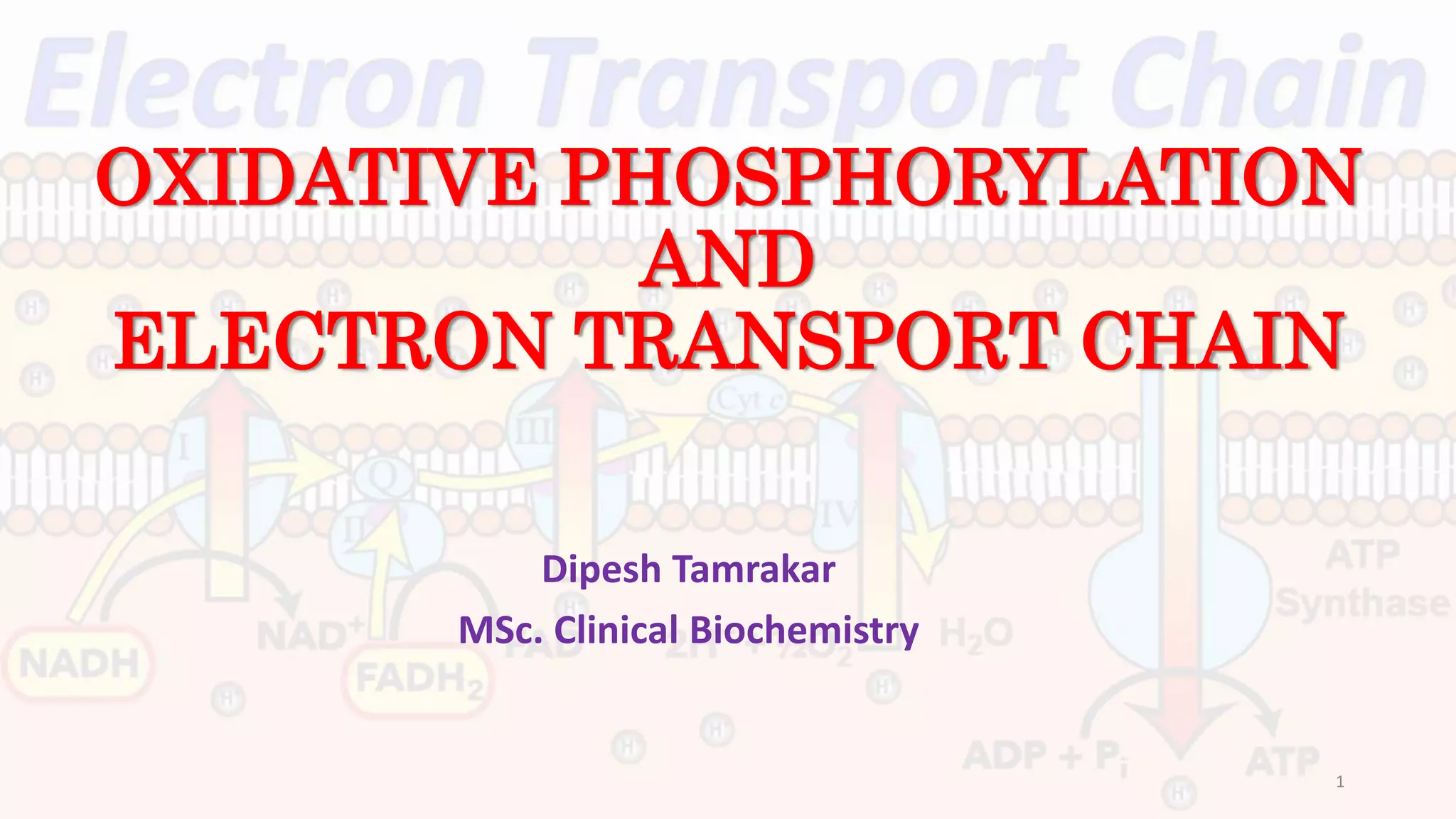
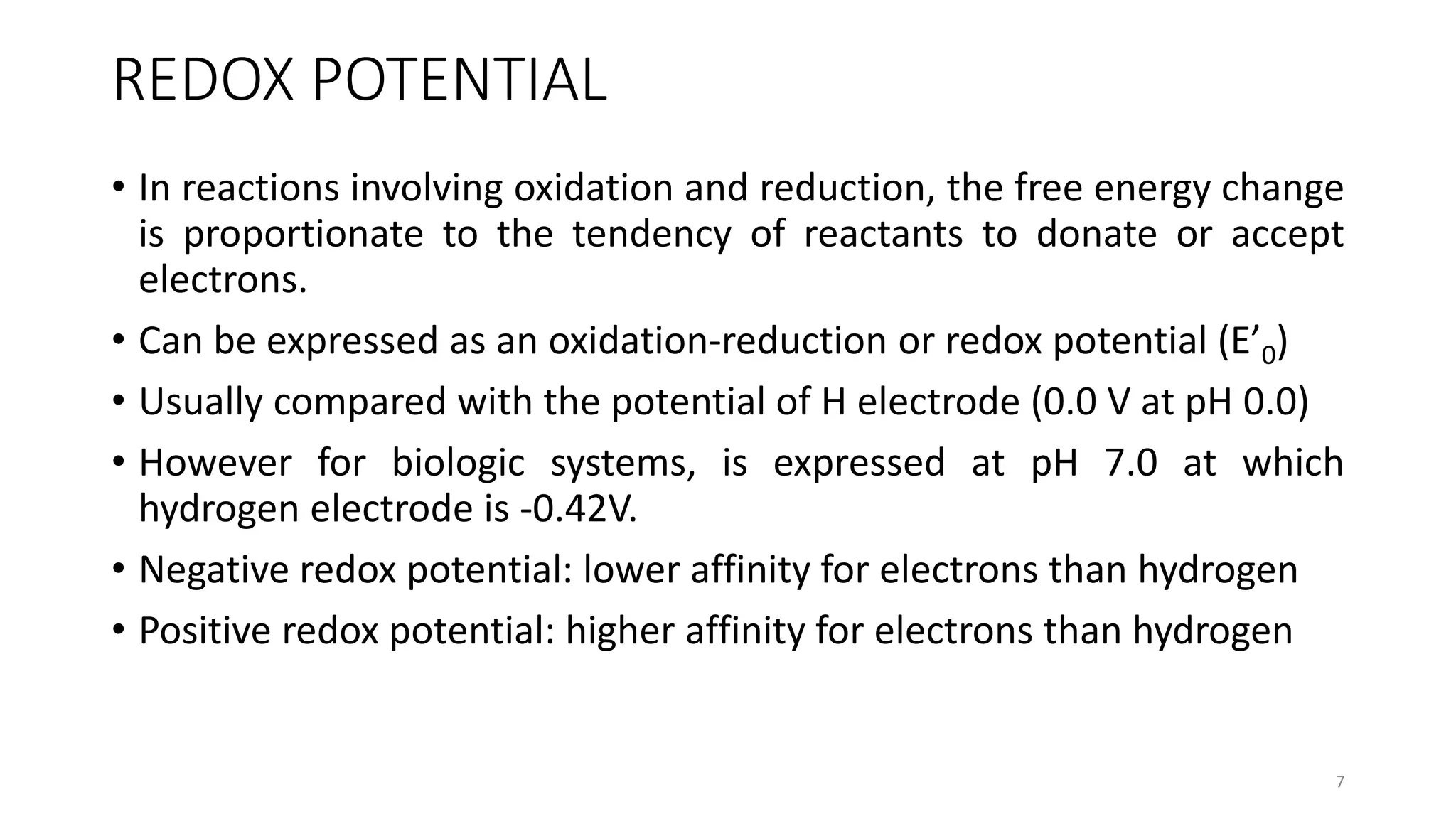
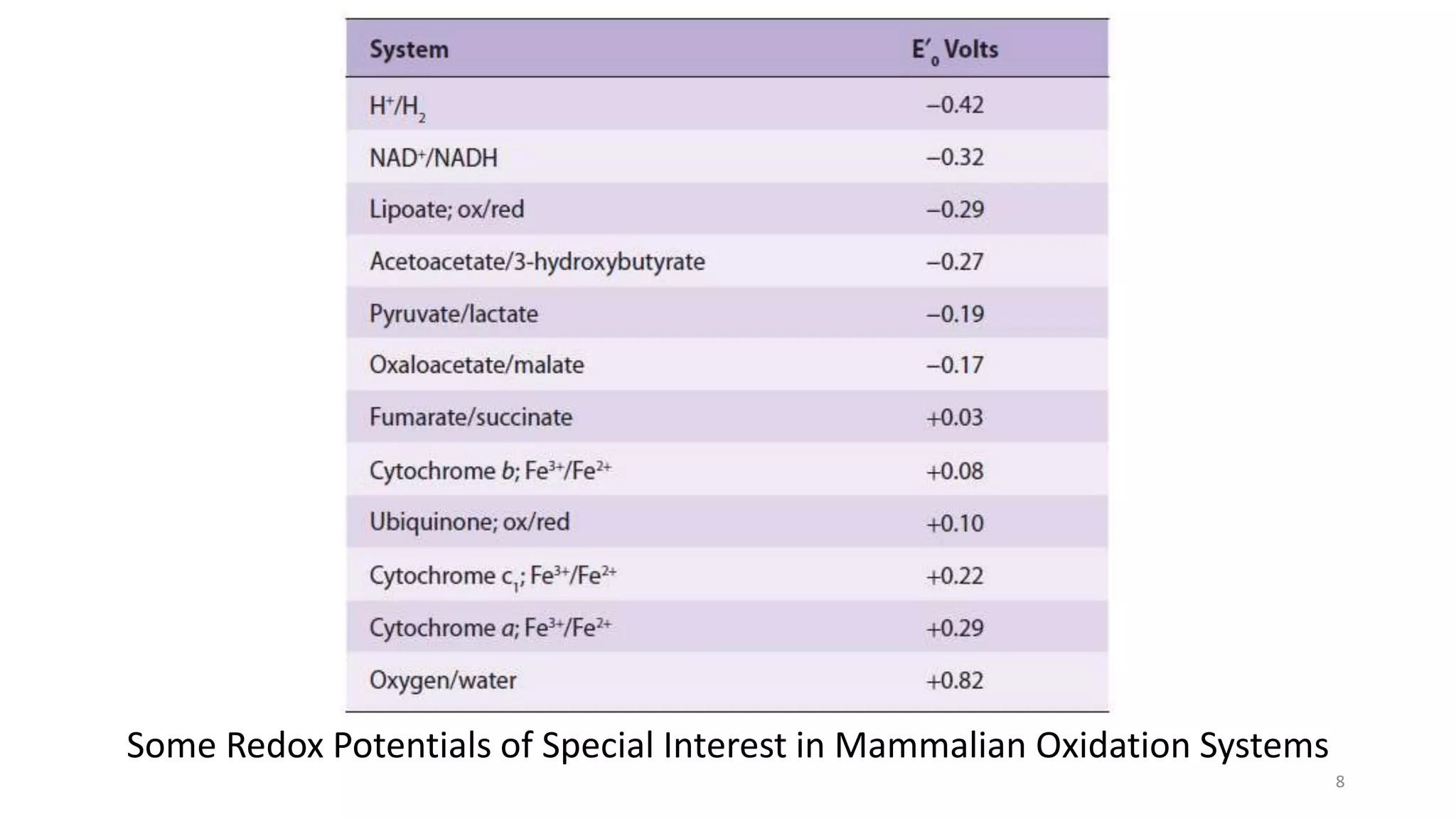
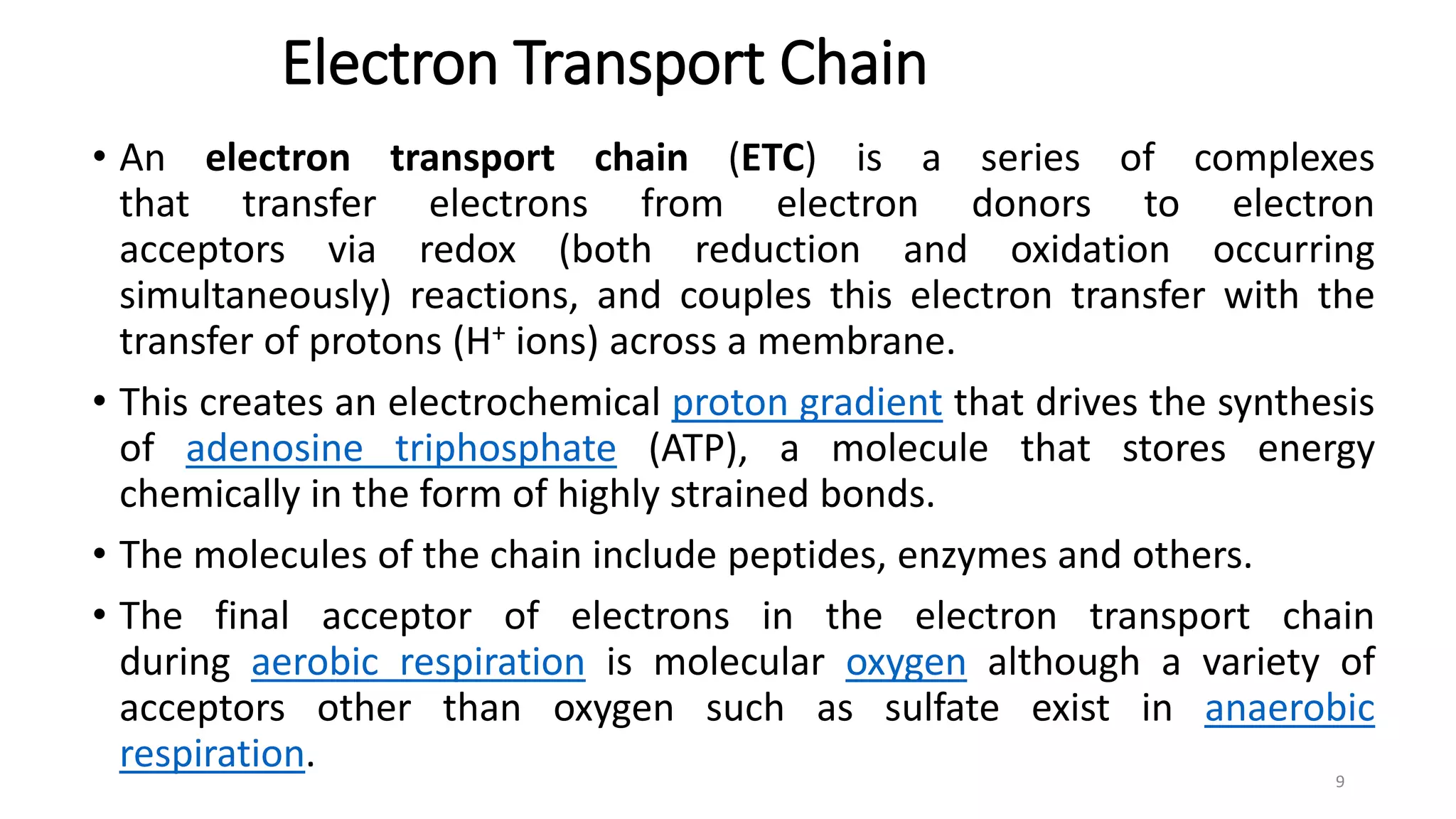
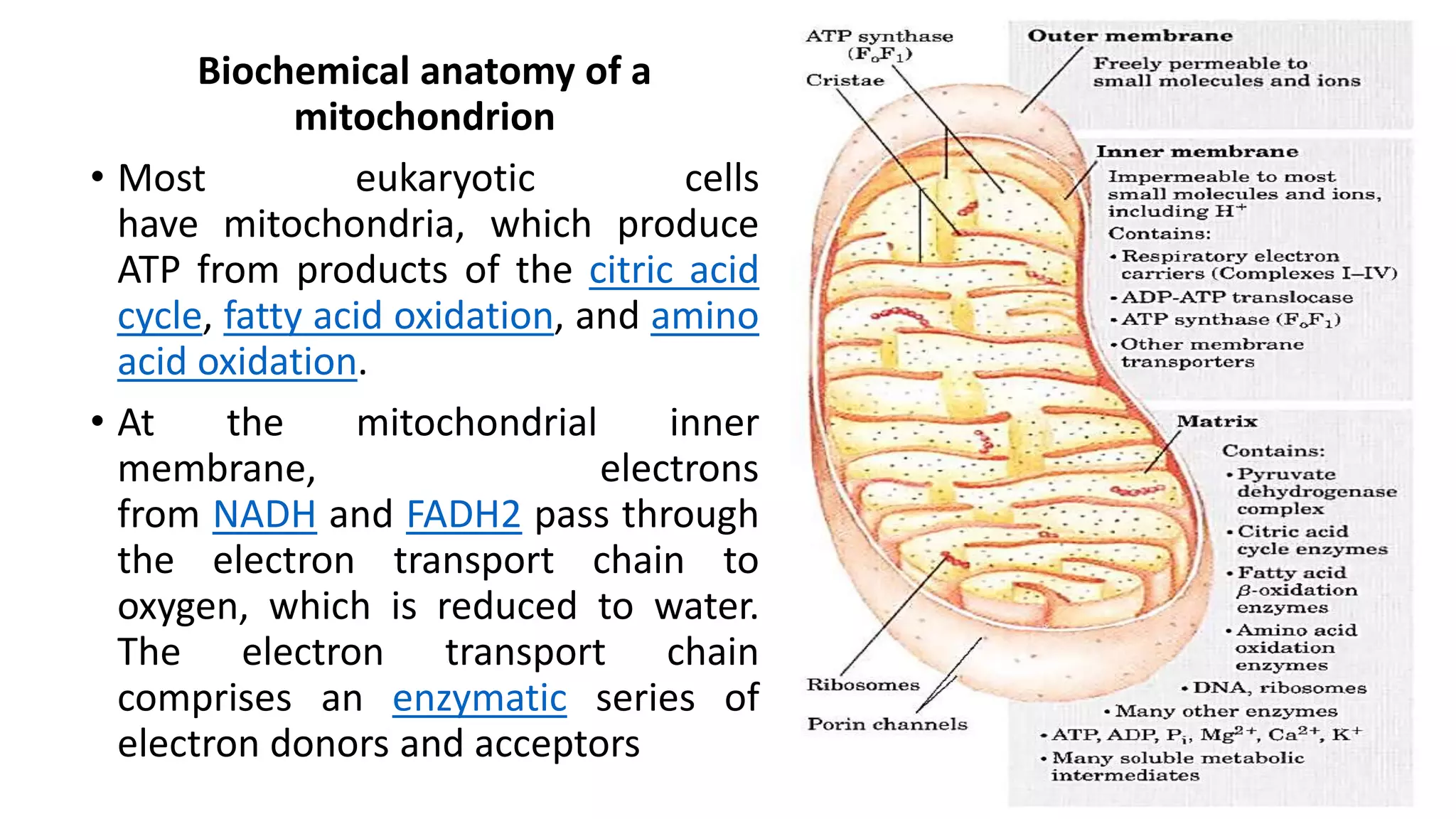
Oxidative phosphorylation is the final stage of cellular respiration in aerobic organisms, where the energy from oxidation of nutrients drives ATP synthesis, occurring in mitochondria through electron transportation and proton gradient creation. Key complexes in the electron transport chain facilitate this process, while factors such as redox potentials and the proton motive force play significant roles in ATP production. The process is tightly regulated by cellular energy demands and can be inhibited by various poisons or uncouplers that disrupt the electron transport and ATP synthesis.


