Maria GUL
jips
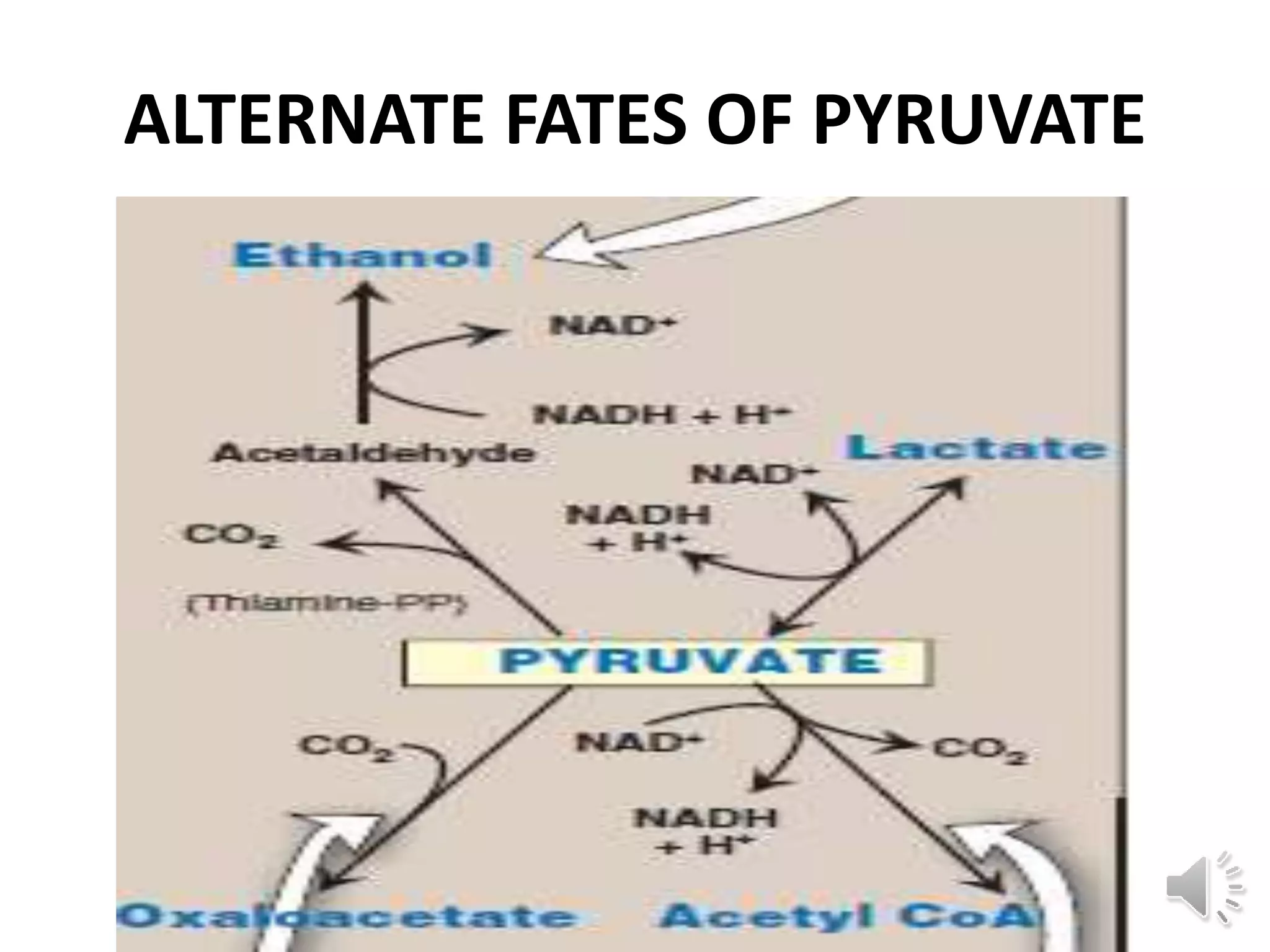
ALTERNATE FATES OF PYRUVATE
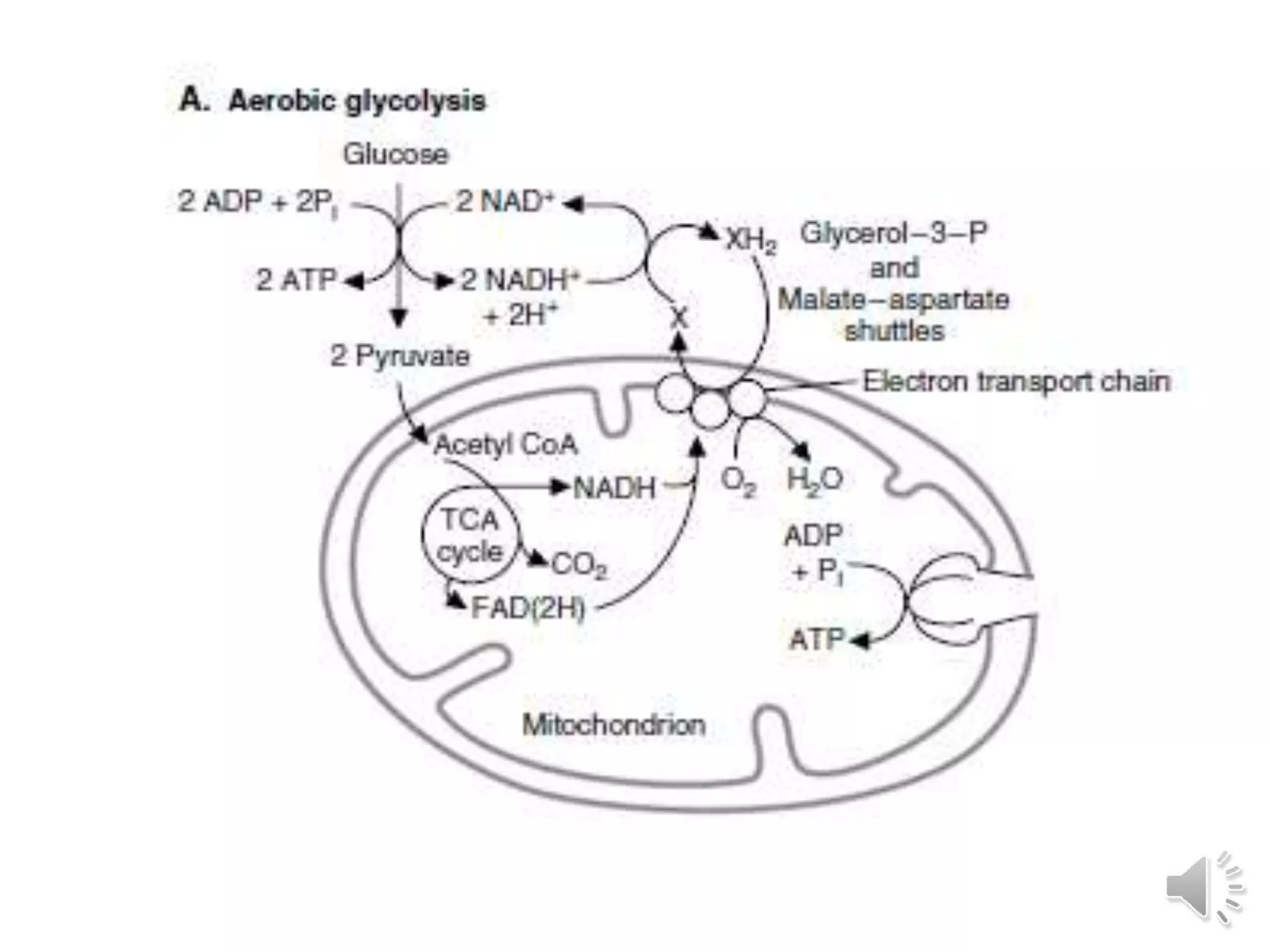
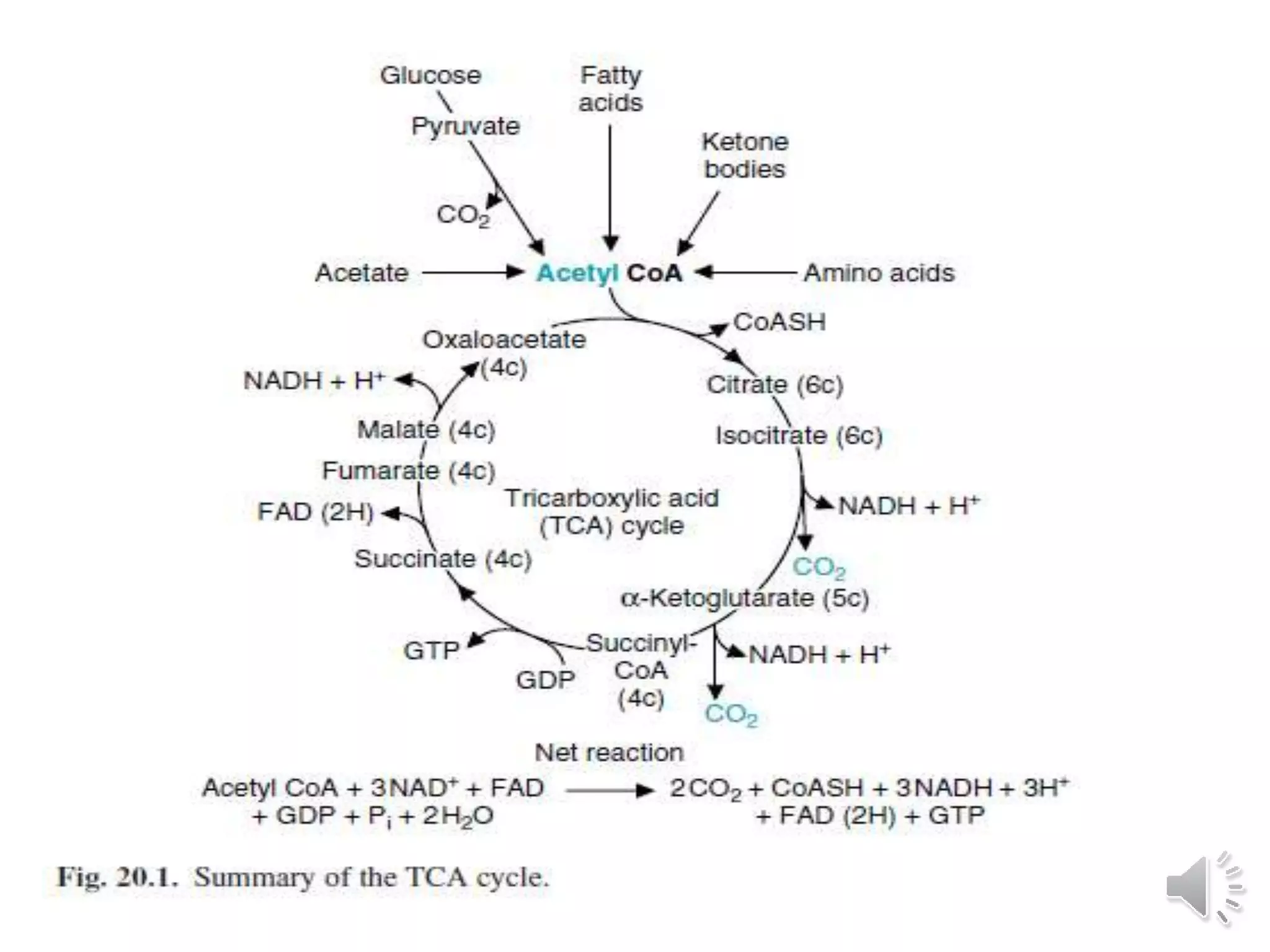
The tricarboxylic acid cycle (TCA cycle, also
called the Krebs cycle or the citric acid cycle)
plays several roles in metabolism. The cycle
occurs totally in the mitochondria.
, because O2 is required as the final electron
acceptor.
Reactions of TCA Cycle
• In the TCA cycle, oxaloacetate is first
condensed with an acetyl group from acetyl
coenzyme A (Co A), and then is regenerated as
the cycle is completed.
1. Oxidative decarboxylation of
pyruvate
• Pyruvate, the endproduct of aerobic
glycolysis, must be transported into the
mitochondrion before it can enter the TCA cycle.
• Once in the matrix, pyruvate is converted to
acetyl CoA by the pyruvate dehydrogenase
complex, which is a multienzyme complex.
• The pyruvate dehydrogenase complex is not part
of the TCA cycle, but is a major source of acetyl
CoA—the 2-Carbon substrate for the cycle.
2. Synthesis of citrate from acetyl CoA and
oxaloacetate
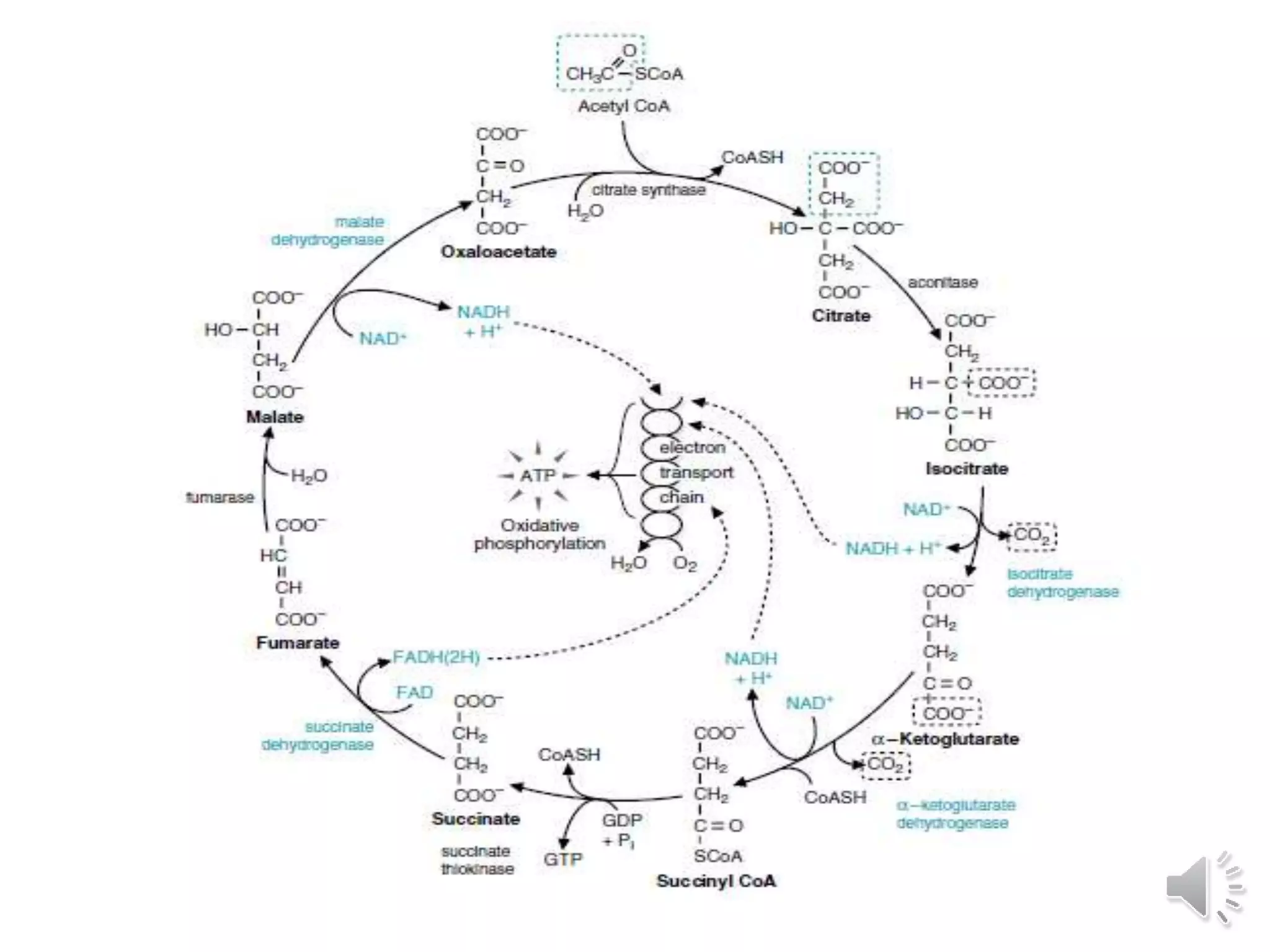
The condensation of acetyl Co A and
oxaloacetate to form citrate (a tricarboxylic
acid) is catalyzed by citrate synthase.
3. Isomerization of citrate
Citrate is isomerized to isocitrate by
aconitase,(an Fe-S protein).
4. Oxidation and decarboxylation of isocitrate
Isocitrate dehydrogenase catalyzes the irreversible
oxidative decarboxylation of isocitrate.
• Rate limiting step of TCA cycle, yielding the first of
three NADH molecules produced by the cycle, and
the first release of CO2.
5. Oxidative decarboxylation of α-ketoglutarate
The conversion of α-ketoglutarate to succinyl CoA is
catalyzed by the α-ketoglutarate dehydrogenase
complex.
• The reaction releases the second CO2 and produces
the second NADH of the cycle.
6. Cleavage of succinyl CoA
Succinate thiokinase (also called succinyl CoA
synthetase—named for the reverse reaction)
cleaves the high-energy thioester bond of
succinyl CoA). This reaction is coupled to
phosphorylation of guanosine diphosphate
(GDP) to guanosine triphosphate (GTP). GTP
and ATP are energetically interconvertible by
the nucleoside diphosphate kinase reaction:
GTP + ADP GDP + ATP
7. Oxidation of succinate
Succinate is oxidized to fumarate by succinate
dehydrogenase, as FAD (its coenzyme) is
reduced to FADH2 . Succinate dehydrogenase
is the only enzyme of the TCA cycle that is
embedded in the inner mitochondrial
membrane.
8. Hydration of fumarate
Fumarate is hydrated to malate in a freely
reversible reaction catalyzed by fumarase (also
called fumarate hydratase.
9. Oxidation of malate
Malate is oxidized to oxaloacetate by malate
dehydrogenase. This reaction produces the
third and final NADH of the cycle.
 Two carbon atoms enter the cycle as acetyl CoA and
leave as CO2.
 The cycle does not involve net consumption or
production of oxaloacetate or of any other
intermediate.
 Four pairs of electrons are transferred during one turn
of the cycle: three pairs of electrons reducing three
NAD+ to NADH and one pair reducing FAD to FADH2.
Oxidation of one NADH by the electron transport chain
leads to formation of approximately three ATP,
whereas oxidation of FADH2 yields approximately two
ATP .The total yield of ATP from the oxidation of one
acetyl CoA is shown in next slide.
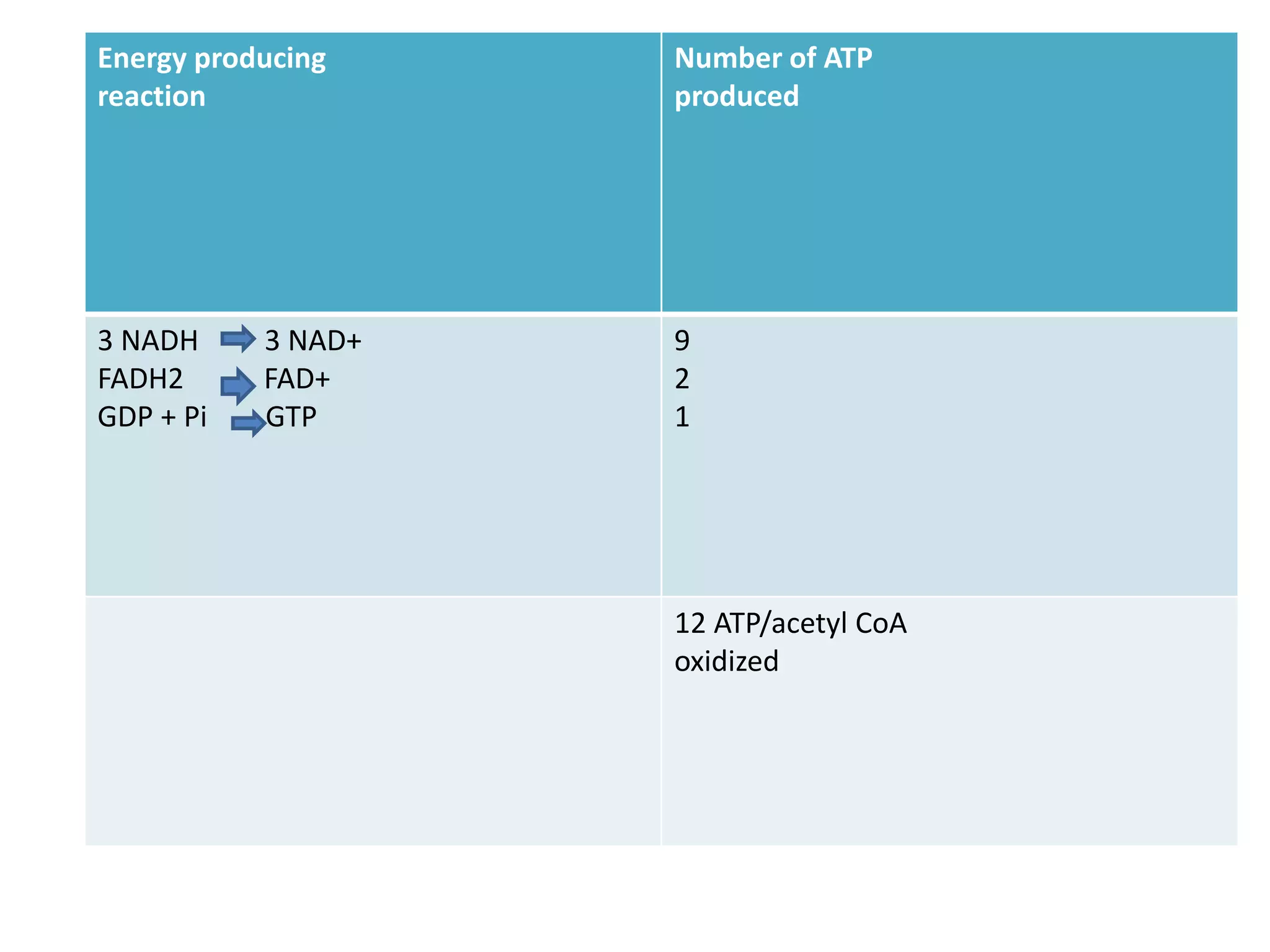
Energy producing
reaction
Number of ATP
produced
3 NADH 3 NAD+
FADH2 FAD+
GDP + Pi GTP
9
2
1
12 ATP/acetyl CoA
oxidized
Assignment
• What is TCA ?
• Describe TCA and ATP produced by glucose
breakdown?
Krebs cycle lec 5 6 audio 1

Krebs cycle lec 5 6 audio 1

  • 1.
  • 2.
  • 4.
    The tricarboxylic acidcycle (TCA cycle, also called the Krebs cycle or the citric acid cycle) plays several roles in metabolism. The cycle occurs totally in the mitochondria. , because O2 is required as the final electron acceptor.
  • 7.
    Reactions of TCACycle • In the TCA cycle, oxaloacetate is first condensed with an acetyl group from acetyl coenzyme A (Co A), and then is regenerated as the cycle is completed.
  • 8.
    1. Oxidative decarboxylationof pyruvate • Pyruvate, the endproduct of aerobic glycolysis, must be transported into the mitochondrion before it can enter the TCA cycle. • Once in the matrix, pyruvate is converted to acetyl CoA by the pyruvate dehydrogenase complex, which is a multienzyme complex. • The pyruvate dehydrogenase complex is not part of the TCA cycle, but is a major source of acetyl CoA—the 2-Carbon substrate for the cycle.
  • 9.
    2. Synthesis ofcitrate from acetyl CoA and oxaloacetate The condensation of acetyl Co A and oxaloacetate to form citrate (a tricarboxylic acid) is catalyzed by citrate synthase. 3. Isomerization of citrate Citrate is isomerized to isocitrate by aconitase,(an Fe-S protein).
  • 10.
    4. Oxidation anddecarboxylation of isocitrate Isocitrate dehydrogenase catalyzes the irreversible oxidative decarboxylation of isocitrate. • Rate limiting step of TCA cycle, yielding the first of three NADH molecules produced by the cycle, and the first release of CO2. 5. Oxidative decarboxylation of α-ketoglutarate The conversion of α-ketoglutarate to succinyl CoA is catalyzed by the α-ketoglutarate dehydrogenase complex. • The reaction releases the second CO2 and produces the second NADH of the cycle.
  • 11.
    6. Cleavage ofsuccinyl CoA Succinate thiokinase (also called succinyl CoA synthetase—named for the reverse reaction) cleaves the high-energy thioester bond of succinyl CoA). This reaction is coupled to phosphorylation of guanosine diphosphate (GDP) to guanosine triphosphate (GTP). GTP and ATP are energetically interconvertible by the nucleoside diphosphate kinase reaction: GTP + ADP GDP + ATP
  • 12.
    7. Oxidation ofsuccinate Succinate is oxidized to fumarate by succinate dehydrogenase, as FAD (its coenzyme) is reduced to FADH2 . Succinate dehydrogenase is the only enzyme of the TCA cycle that is embedded in the inner mitochondrial membrane. 8. Hydration of fumarate Fumarate is hydrated to malate in a freely reversible reaction catalyzed by fumarase (also called fumarate hydratase.
  • 13.
    9. Oxidation ofmalate Malate is oxidized to oxaloacetate by malate dehydrogenase. This reaction produces the third and final NADH of the cycle.
  • 14.
     Two carbonatoms enter the cycle as acetyl CoA and leave as CO2.  The cycle does not involve net consumption or production of oxaloacetate or of any other intermediate.  Four pairs of electrons are transferred during one turn of the cycle: three pairs of electrons reducing three NAD+ to NADH and one pair reducing FAD to FADH2. Oxidation of one NADH by the electron transport chain leads to formation of approximately three ATP, whereas oxidation of FADH2 yields approximately two ATP .The total yield of ATP from the oxidation of one acetyl CoA is shown in next slide.
  • 15.
    Energy producing reaction Number ofATP produced 3 NADH 3 NAD+ FADH2 FAD+ GDP + Pi GTP 9 2 1 12 ATP/acetyl CoA oxidized
  • 16.
    Assignment • What isTCA ? • Describe TCA and ATP produced by glucose breakdown?