Angle-Closure glaucoma
Prof K N Jha,MS.
Learning Aim
• Definition of Angle-closure glaucoma
• Primary angle-closure glaucoma (PACG)
• Clinical features and treatment of PACG
Angle Closure glaucoma
• Angle closure glaucoma are a large and diverse group
of diseases characterized by peripheral anterior
synechia and/ or iridotrabecular apposition.
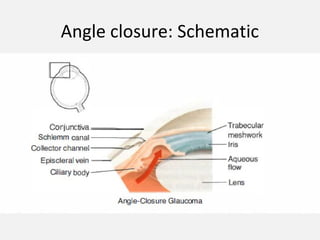
• Angle closure: apposition of peripheral iris to the
trabecular meshwork and the resulting reduced
drainage of the aqueous humor through anterior
chamber angle.
Angle closure: Schematic
Angle Closure glaucoma
• Primary angle closure glaucoma: there is no
underlying pathologic cause , there is only
anatomic predisposition.
• Secondary angle closure glaucoma: underlying
pathologic cause e.g. intumescent lens, iris
neovascularisation initiates the angle closure.
Primary Angle Closure glaucoma( PACG)
• Primary angle closure Suspect( PAC-Suspect)
• Primary angle Closure (PAC)
• Primary Angle-Closure Glaucoma(PACG)
Mechanism of angle closure
• Mechanism that push the iris forward
• Mechanism that pull the iris forward
PRIMARY ANGLE CLOSURE GLAUCOMA (PACG)
Primary angle closure glaucoma ( PACG)
• Primary angle closure is the leading cause of
glaucoma worldwide.
• Cause: relative pupillary block, plateau iris,
anterior lens movement.
PACG : Risk Factors
• Race: prevalence variable across races
• Ocular biometrics: crowded anterior segment of the eye,
short axial length, shallow anterior chamber ( < 2.5 mm)
• Age above 40 years
• Gender: M:F
• Family history
• Refraction
Anatomical predispositions
Convex iris-lens
diaphragm
• Shallow anterior
chamber
• Narrow entrance to
chamber angle
Acute PAC:Pathophysiology
IOP rises rapidly due to sudden blockage of TM by iris.
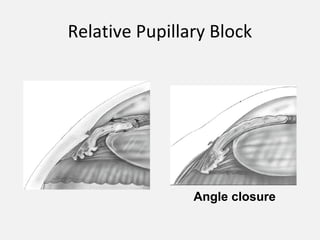
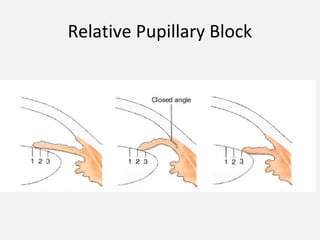
• Pupillary block: flow of aqueous through pupil is
impeded ( relative pupillary block)
• Pupillary block causes pressure gradient between
posterior and the anterior chamber.
• Due to pressure gradient the peripheral iris bows
forward ( iris bombé )against the trabecular meshwork
leading to obstruction of aqueous outflow and rise of
IOP.
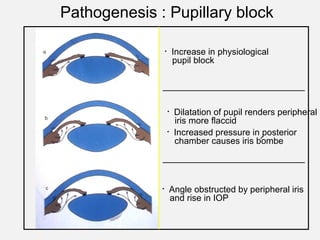
Pathogenesis : Pupillary block
• Increase in physiological
pupil block
• Dilatation of pupil renders peripheral
iris more flaccid
• Increased pressure in posterior
chamber causes iris bombe
• Angle obstructed by peripheral iris
and rise in IOP
Relative Pupillary Block
Angle closure
Relative Pupillary Block
ACUTE ANGLE CLOSURE
Acute angle closure
Symptoms: Ocular pain, headache, blurred vision,
halos , nausea , vomiting.
Signs
Conjunctival and circumcorneal congestion
Cornea: hazy
Anterior chamber: shallow
Pupil: mid dilated, sluggish and irregular
Mild aqueous flare and ant chamber cells
Optic nerve head may be swollen
IOP: high
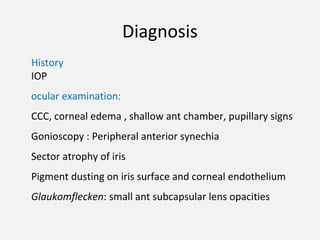
Diagnosis
History
IOP
ocular examination:
CCC, corneal edema , shallow ant chamber, pupillary signs
Gonioscopy : Peripheral anterior synechia
Sector atrophy of iris
Pigment dusting on iris surface and corneal endothelium
Glaukomflecken: small ant subcapsular lens opacities
Treatment
• Preventive: Screening for people at greatest
risk for angle closure.
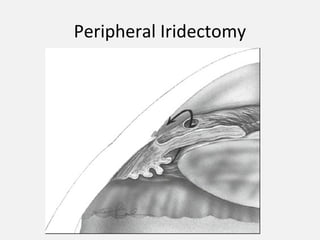
• Definitive treatment: Iridectomy/ / laser
iridoplasty/ pupilloplasty
• Treatment of the acute angle closure
PACG : Treatment of the acute attack
• Pilocarpine eye drop 1-2% in the affected and the
fellow eye
• Topical beta-adrenergic blocker
• Carbonic anhydrase inhibitor
• Hyperosmotic agent: Mannitol 20% I.V., Oral glycerol
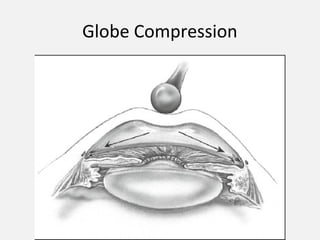
• Globe compression
Globe Compression
Peripheral Iridectomy
PACG:Treatment of the fellow eye
• PAC is a bilateral disease
• There is 50-80 % chance of the fellow eye
developing acute attack over next 5-10 years.
• Peripheral Iridectomy
Follow up
• Repeat gonioscopy to look for chronic angle
closure.
PACG : Points to remember
• Predisposing factors
• Pathophysiology
• Clinical features
• Treatment
• Prevention

Glaucoma 2 primary angle closure glaucoma,dr.k.n.jha,02.11.16

  • 1.
  • 2.
    Learning Aim • Definitionof Angle-closure glaucoma • Primary angle-closure glaucoma (PACG) • Clinical features and treatment of PACG
  • 3.
    Angle Closure glaucoma •Angle closure glaucoma are a large and diverse group of diseases characterized by peripheral anterior synechia and/ or iridotrabecular apposition. • Angle closure: apposition of peripheral iris to the trabecular meshwork and the resulting reduced drainage of the aqueous humor through anterior chamber angle.
  • 4.
  • 5.
    Angle Closure glaucoma •Primary angle closure glaucoma: there is no underlying pathologic cause , there is only anatomic predisposition. • Secondary angle closure glaucoma: underlying pathologic cause e.g. intumescent lens, iris neovascularisation initiates the angle closure.
  • 6.
    Primary Angle Closureglaucoma( PACG) • Primary angle closure Suspect( PAC-Suspect) • Primary angle Closure (PAC) • Primary Angle-Closure Glaucoma(PACG)
  • 7.
    Mechanism of angleclosure • Mechanism that push the iris forward • Mechanism that pull the iris forward
  • 8.
    PRIMARY ANGLE CLOSUREGLAUCOMA (PACG)
  • 9.
    Primary angle closureglaucoma ( PACG) • Primary angle closure is the leading cause of glaucoma worldwide. • Cause: relative pupillary block, plateau iris, anterior lens movement.
  • 10.
    PACG : RiskFactors • Race: prevalence variable across races • Ocular biometrics: crowded anterior segment of the eye, short axial length, shallow anterior chamber ( < 2.5 mm) • Age above 40 years • Gender: M:F • Family history • Refraction
  • 11.
    Anatomical predispositions Convex iris-lens diaphragm •Shallow anterior chamber • Narrow entrance to chamber angle
  • 12.
    Acute PAC:Pathophysiology IOP risesrapidly due to sudden blockage of TM by iris. • Pupillary block: flow of aqueous through pupil is impeded ( relative pupillary block) • Pupillary block causes pressure gradient between posterior and the anterior chamber. • Due to pressure gradient the peripheral iris bows forward ( iris bombé )against the trabecular meshwork leading to obstruction of aqueous outflow and rise of IOP.
  • 13.
    Pathogenesis : Pupillaryblock • Increase in physiological pupil block • Dilatation of pupil renders peripheral iris more flaccid • Increased pressure in posterior chamber causes iris bombe • Angle obstructed by peripheral iris and rise in IOP
  • 14.
  • 15.
  • 16.
  • 17.
    Acute angle closure Symptoms:Ocular pain, headache, blurred vision, halos , nausea , vomiting. Signs Conjunctival and circumcorneal congestion Cornea: hazy Anterior chamber: shallow Pupil: mid dilated, sluggish and irregular Mild aqueous flare and ant chamber cells Optic nerve head may be swollen IOP: high
  • 18.
    Diagnosis History IOP ocular examination: CCC, cornealedema , shallow ant chamber, pupillary signs Gonioscopy : Peripheral anterior synechia Sector atrophy of iris Pigment dusting on iris surface and corneal endothelium Glaukomflecken: small ant subcapsular lens opacities
  • 19.
    Treatment • Preventive: Screeningfor people at greatest risk for angle closure. • Definitive treatment: Iridectomy/ / laser iridoplasty/ pupilloplasty • Treatment of the acute angle closure
  • 20.
    PACG : Treatmentof the acute attack • Pilocarpine eye drop 1-2% in the affected and the fellow eye • Topical beta-adrenergic blocker • Carbonic anhydrase inhibitor • Hyperosmotic agent: Mannitol 20% I.V., Oral glycerol • Globe compression
  • 21.
  • 22.
  • 23.
    PACG:Treatment of thefellow eye • PAC is a bilateral disease • There is 50-80 % chance of the fellow eye developing acute attack over next 5-10 years. • Peripheral Iridectomy
  • 24.
    Follow up • Repeatgonioscopy to look for chronic angle closure.
  • 25.
    PACG : Pointsto remember • Predisposing factors • Pathophysiology • Clinical features • Treatment • Prevention