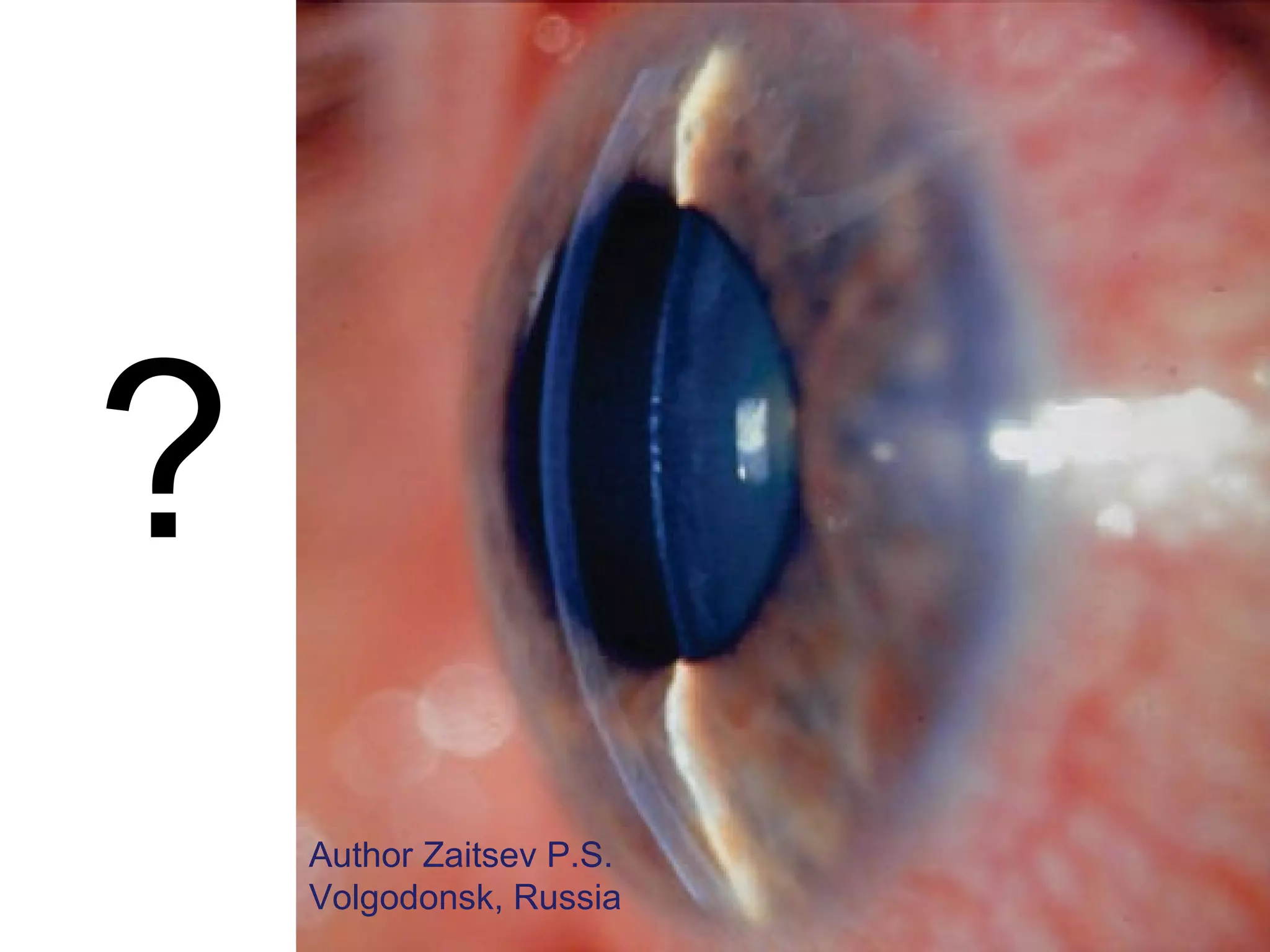
? Author Zaitsev P.S.  Volgodonsk, Russia
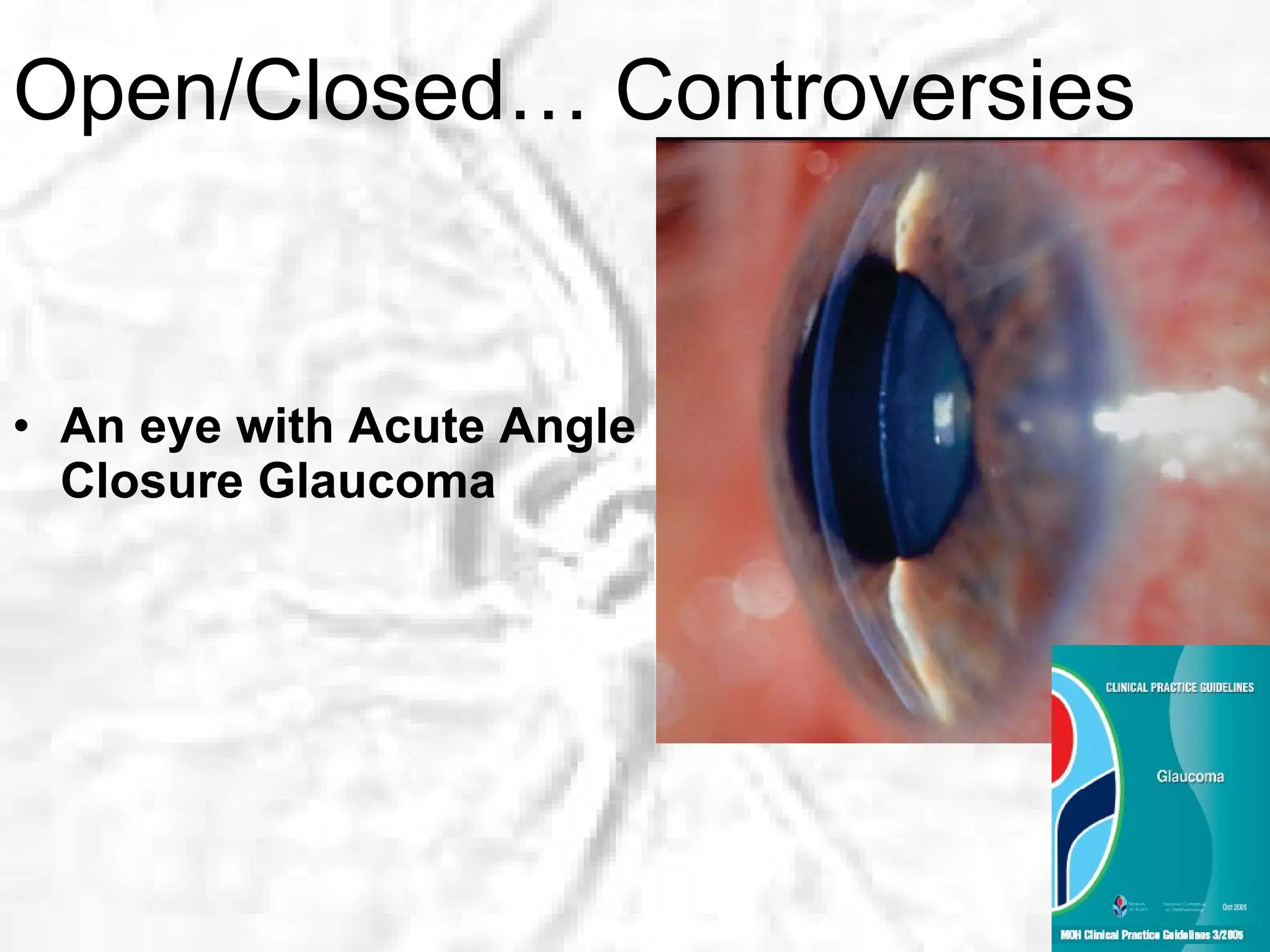
Open/Closed… Controversies  An eye with Acute Angle Closure Glaucoma
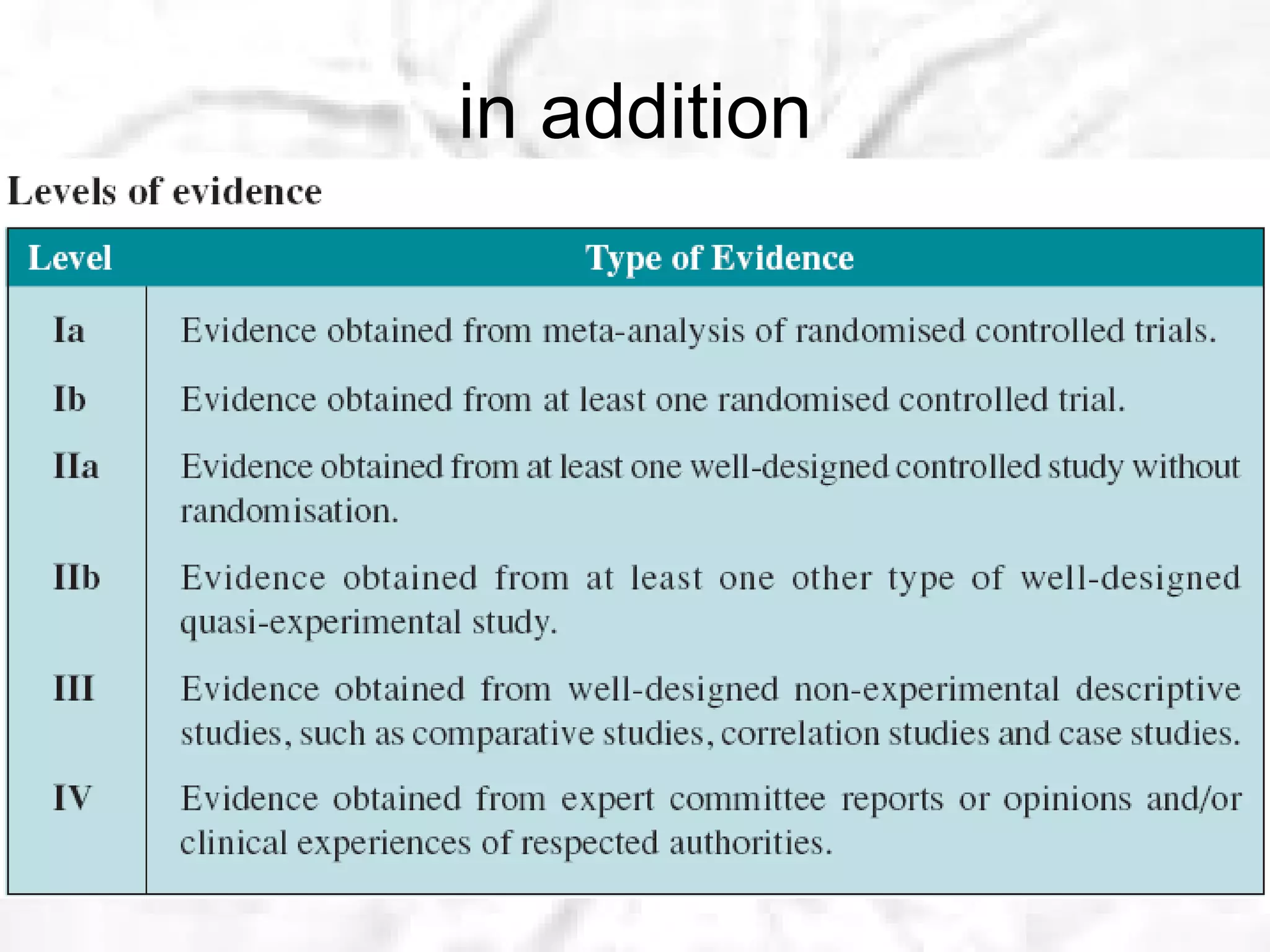
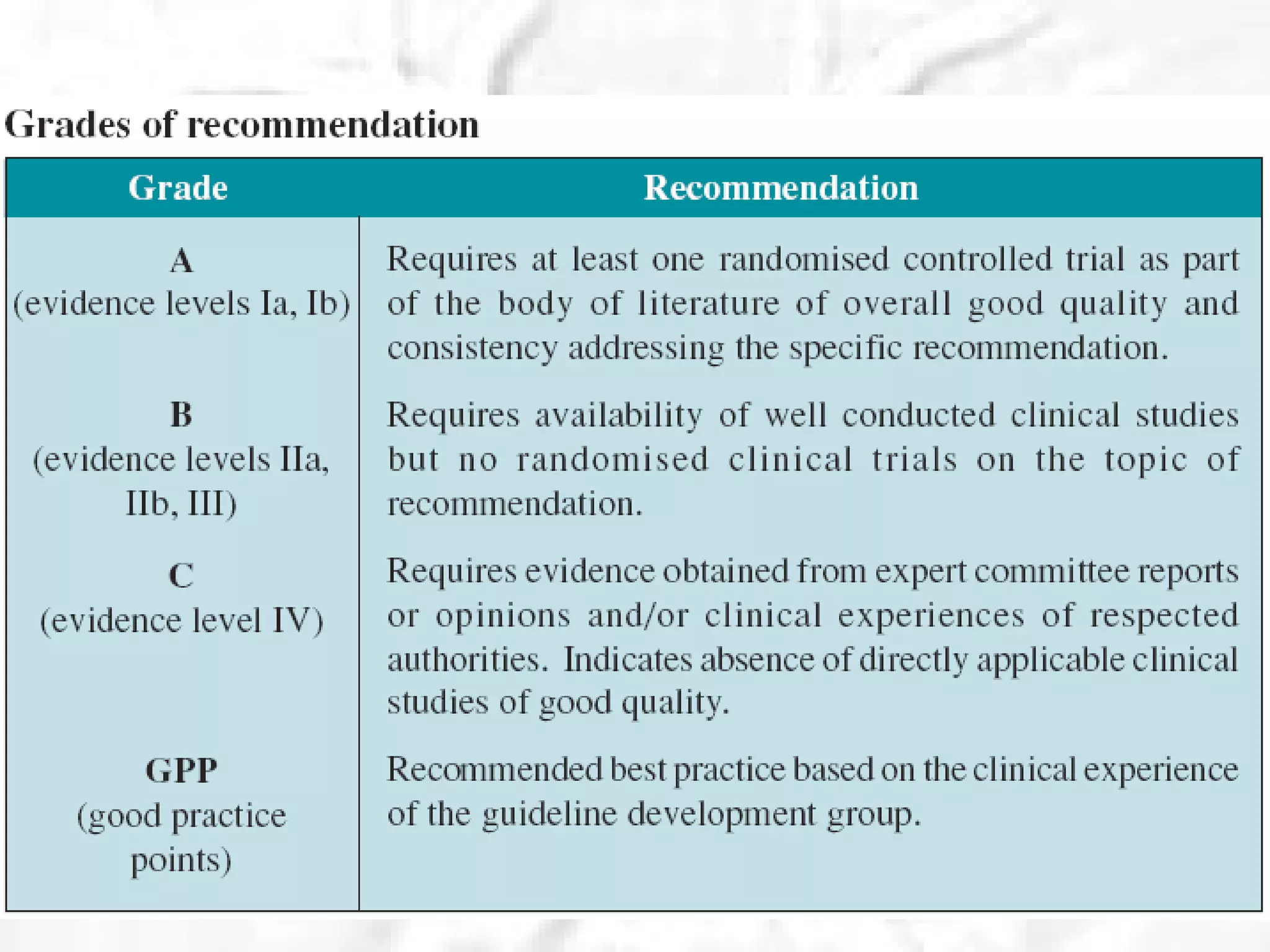
IOP lowering is the only clinically effective approach in the management of glaucoma.  Grade A, Level Ia A The first line of treatment in Primary Angle Closure Glaucoma is a laser iridotomy. A laser iridotomy is also required for the fellow eye. Supplemental medical therapy may also be required.  Grade A, Level Ib
Are angle closure (AC) and angle-closure glaucoma (ACG) important health problems?
Are angle closure (AC) and angle-closure glaucoma (ACG) is important health problems!!! Primary angle-closure glaucoma (PACG) accounts for approximately 25% of all glaucomatous optic neuropathy worldwide, but 50% of bilateral glaucoma blindness.  Visual impairment from primary angle closure (PAC) and PACG can result from ocular damage other than glaucomatous optic nerve damage (e.g., corneal decompensation, cataract, ischemic optic neuropathy).  Some Asian populations have a high prevalence of advanced angle-closure glaucoma.  PACG is predominantly asymptomatic.
Br J Ophthalmol  2006; 90: 262-267 The number of people with glaucoma worldwide in 2010 and 2020 Abstract Aim:  To estimate the number of people with open angle (OAG) and angle closure glaucoma (ACG) in 2010 and 2020.   Methods:  A review of published data with use of prevalence models. Data from population based studies of age specific prevalence of OAG and ACG that satisfied standard definitions were used to construct prevalence models for OAG and ACG by age, sex, and ethnicity, weighting data proportional to sample size of each study. Models were combined with UN world population projections for 2010 and 2020 to derive the estimated number with glaucoma.  Results:  There will be 60.5 million people with OAG and ACG in 2010, increasing to 79.6 million by 2020, and of these, 74% will have OAG. Women will comprise 55% of OAG, 70% of ACG, and 59% of all glaucoma in 2010. Asians will represent 47% of those with glaucoma and 87% of those with ACG. Bilateral blindness will be present in 4.5 million people with OAG and 3.9 million people with ACG in 2010, rising to 5.9 and 5.3 million people in 2020, respectively.  Conclusions:  Glaucoma is the second leading cause of blindness worldwide, disproportionately affecting women and Asians .
The two main purposes of the PAC-treatment procedures are:
The two main purposes of the PAC-treatment procedures are: –  To contribute towards well-motivated preventive treatment of the various forms of imminent PAC in order to avoid both the acute catastrophe and the more common, asymptomatic, “creeping” angle-closure17, 34, 35. –  To contribute towards an optimal course of treatment for the individual patient by applying specific treatment.
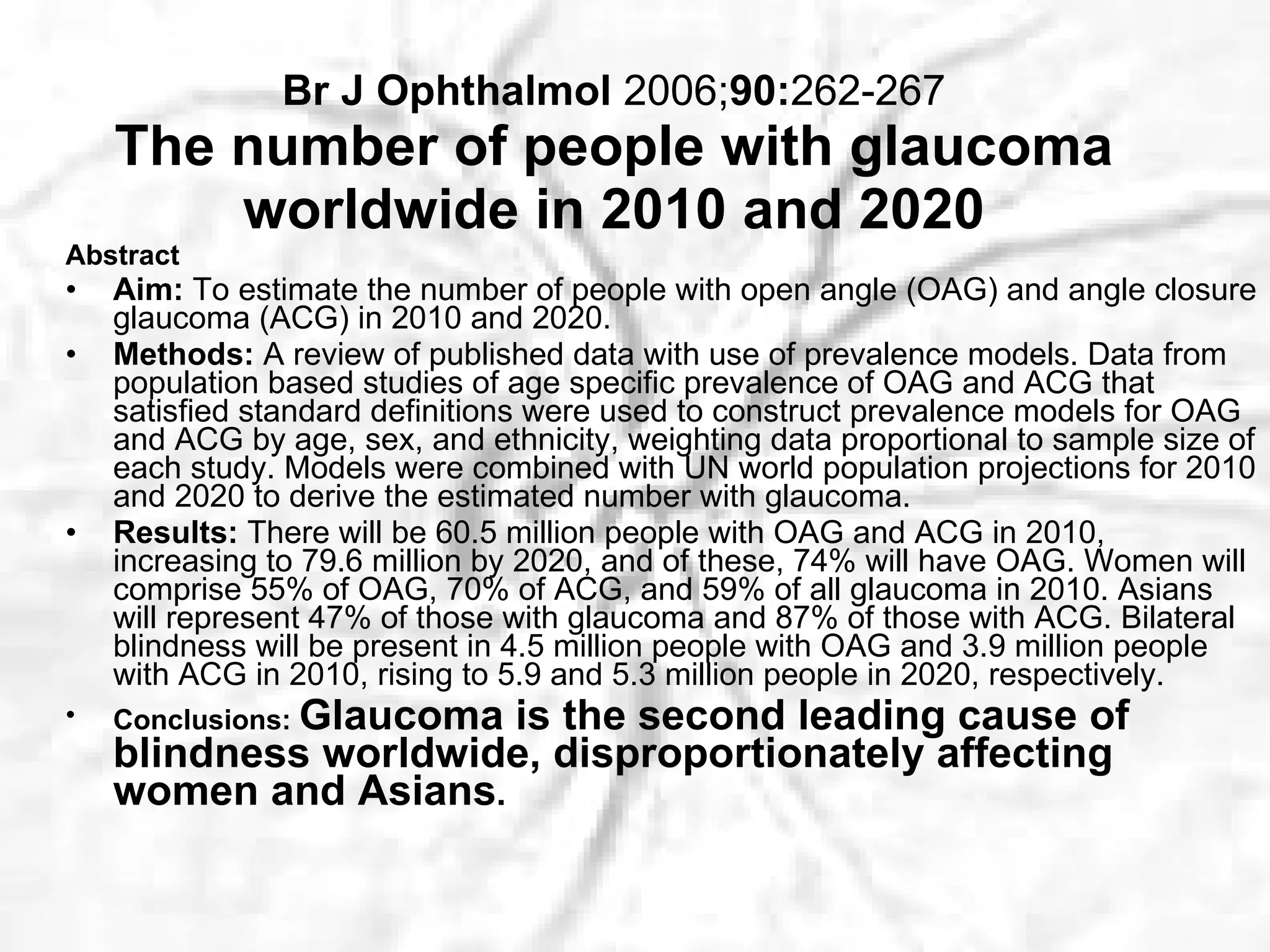
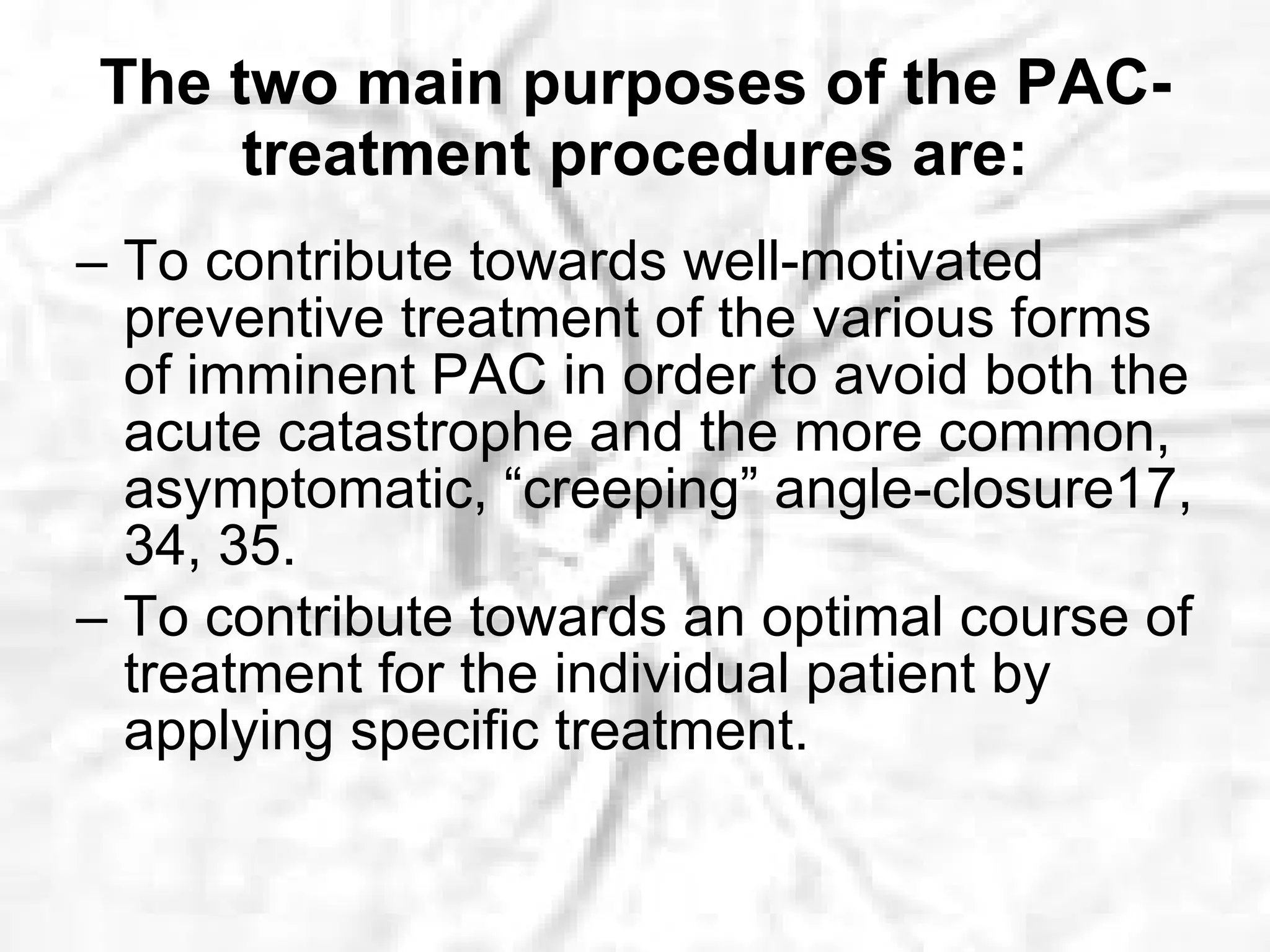
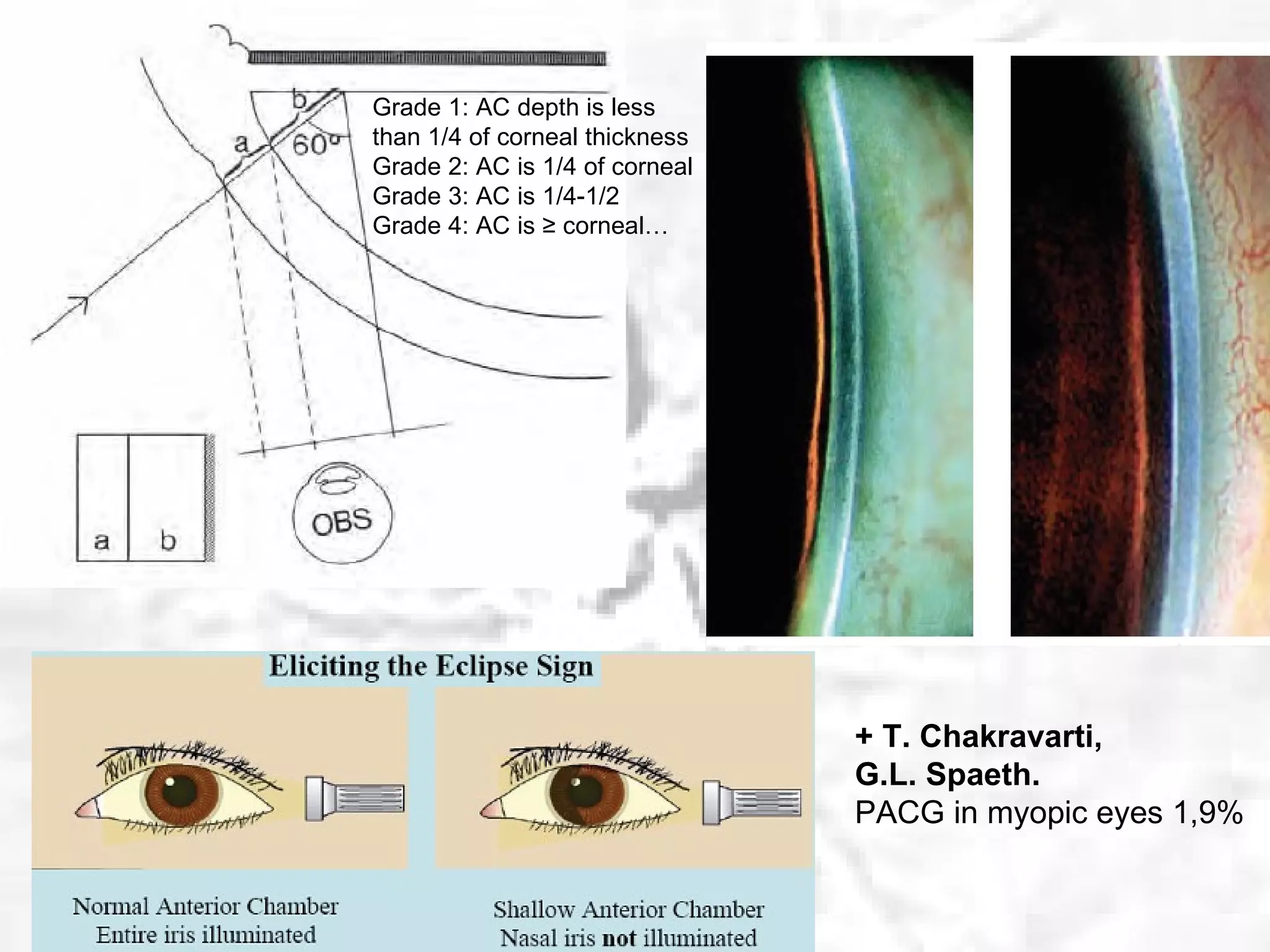
+  T. Chakravarti,  G.L. Spaeth.   PACG in myopic eyes 1,9% Grade 1: AC depth is less than 1/4 of corneal thickness  Grade 2: AC is 1/4 of corneal Grade 3: AC is 1/4-1/2  Grade 4: AC is ≥   corneal…
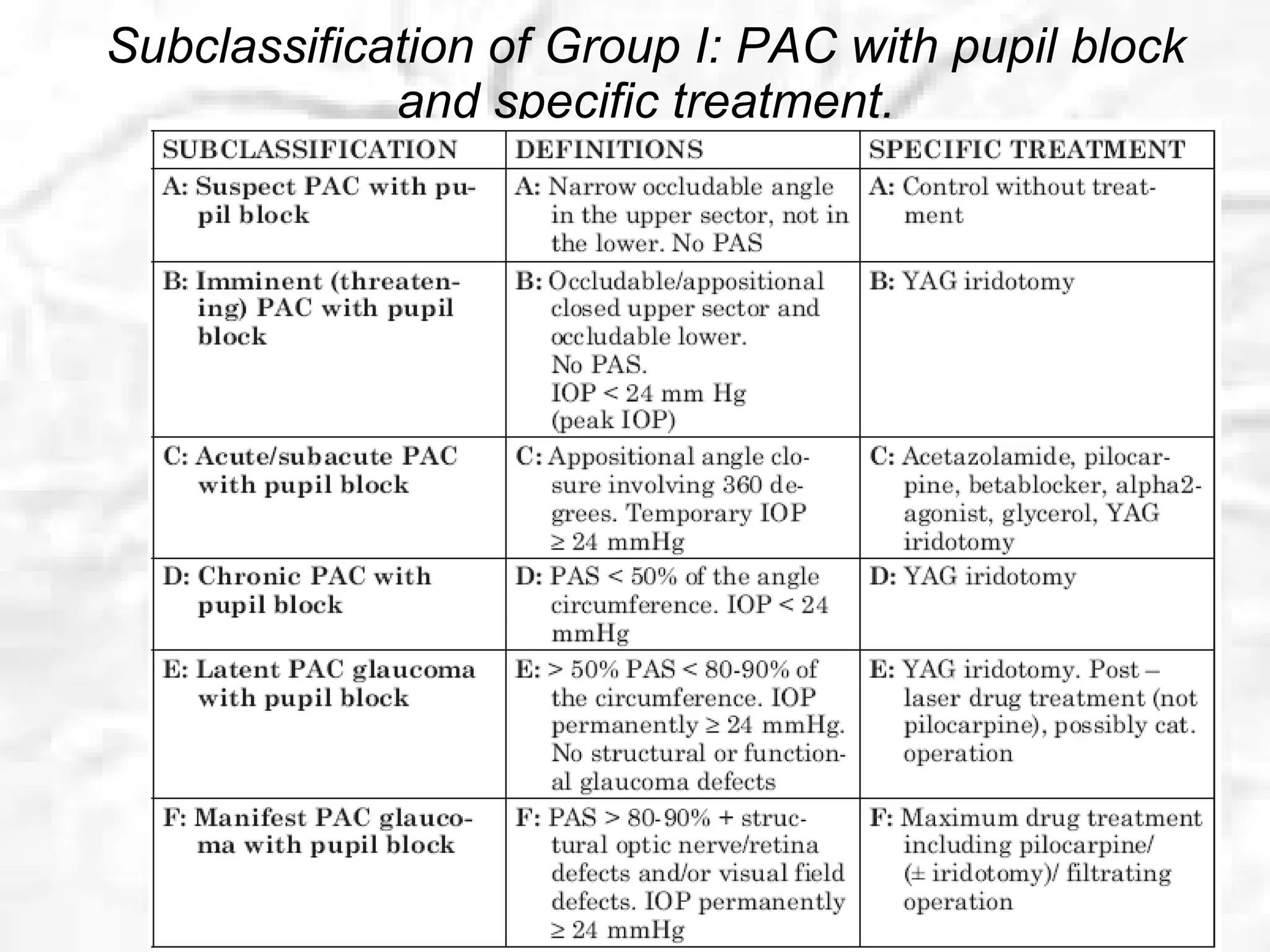
Subclassification of Group I: PAC with pupil block and specific treatment.
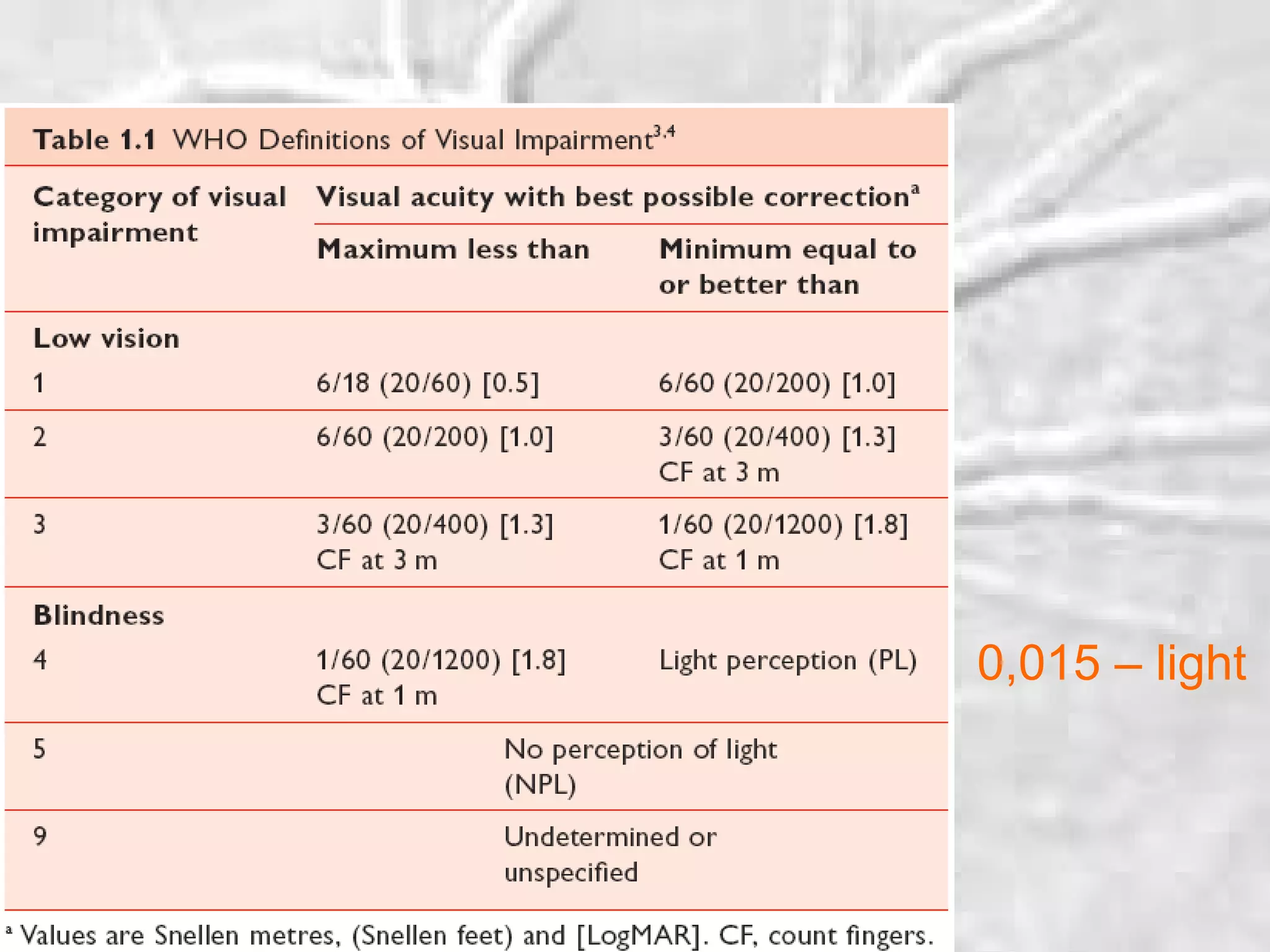
  0,015 –  light
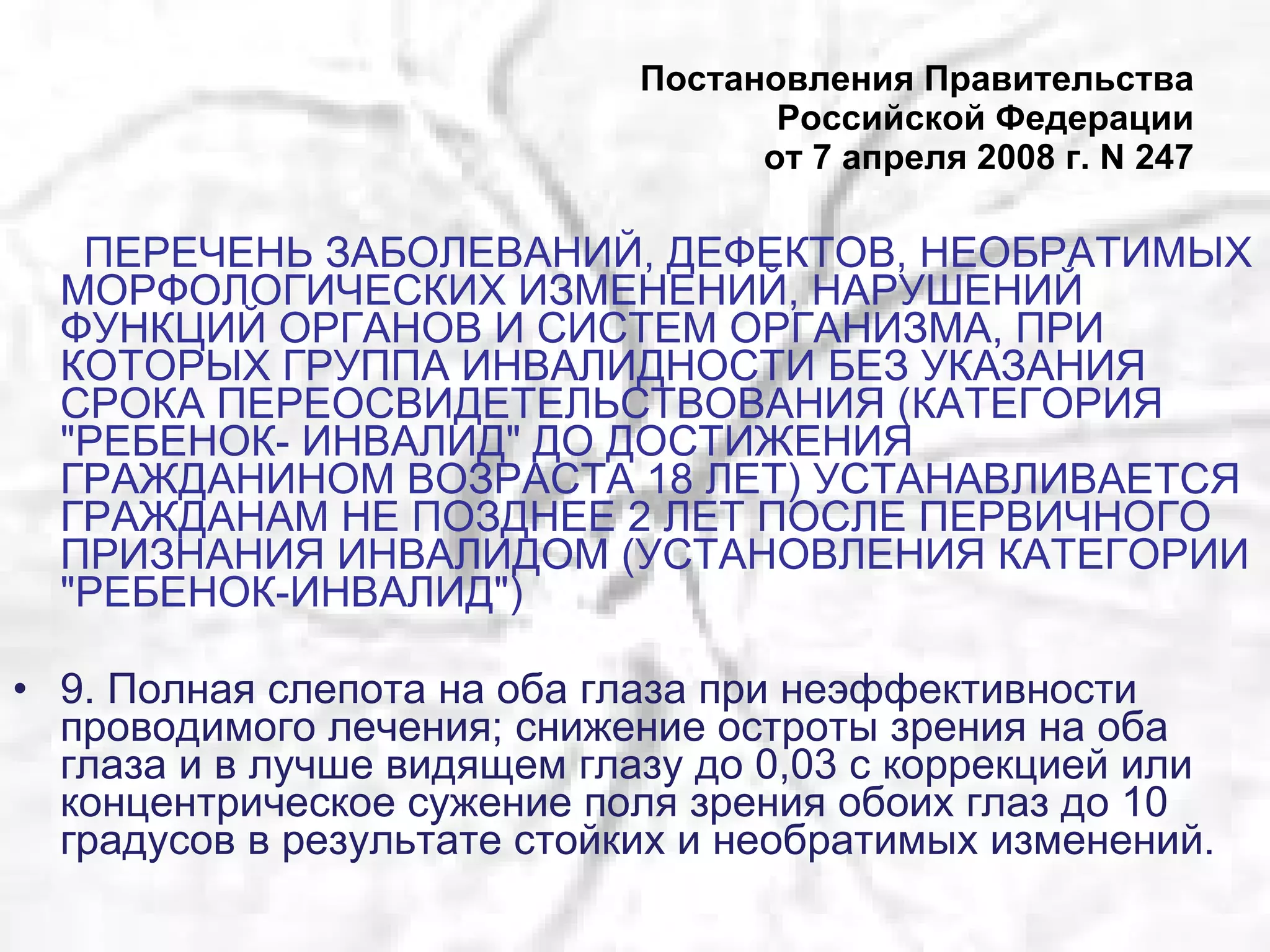
Постановления Правительства Российской Федерации от 7 апреля 2008 г. N 247 ПЕРЕЧЕНЬ ЗАБОЛЕВАНИЙ, ДЕФЕКТОВ, НЕОБРАТИМЫХ МОРФОЛОГИЧЕСКИХ ИЗМЕНЕНИЙ, НАРУШЕНИЙ ФУНКЦИЙ ОРГАНОВ И СИСТЕМ ОРГАНИЗМА, ПРИ КОТОРЫХ ГРУППА ИНВАЛИДНОСТИ БЕЗ УКАЗАНИЯ СРОКА ПЕРЕОСВИДЕТЕЛЬСТВОВАНИЯ (КАТЕГОРИЯ "РЕБЕНОК- ИНВАЛИД" ДО ДОСТИЖЕНИЯ ГРАЖДАНИНОМ ВОЗРАСТА 18 ЛЕТ) УСТАНАВЛИВАЕТСЯ ГРАЖДАНАМ НЕ ПОЗДНЕЕ 2 ЛЕТ ПОСЛЕ ПЕРВИЧНОГО ПРИЗНАНИЯ ИНВАЛИДОМ (УСТАНОВЛЕНИЯ КАТЕГОРИИ "РЕБЕНОК-ИНВАЛИД") 9. Полная слепота на оба глаза при неэффективности проводимого лечения; снижение остроты зрения на оба глаза и в лучше видящем глазу до 0,03 с коррекцией или концентрическое сужение поля зрения обоих глаз до 10 градусов в результате стойких и необратимых изменений.
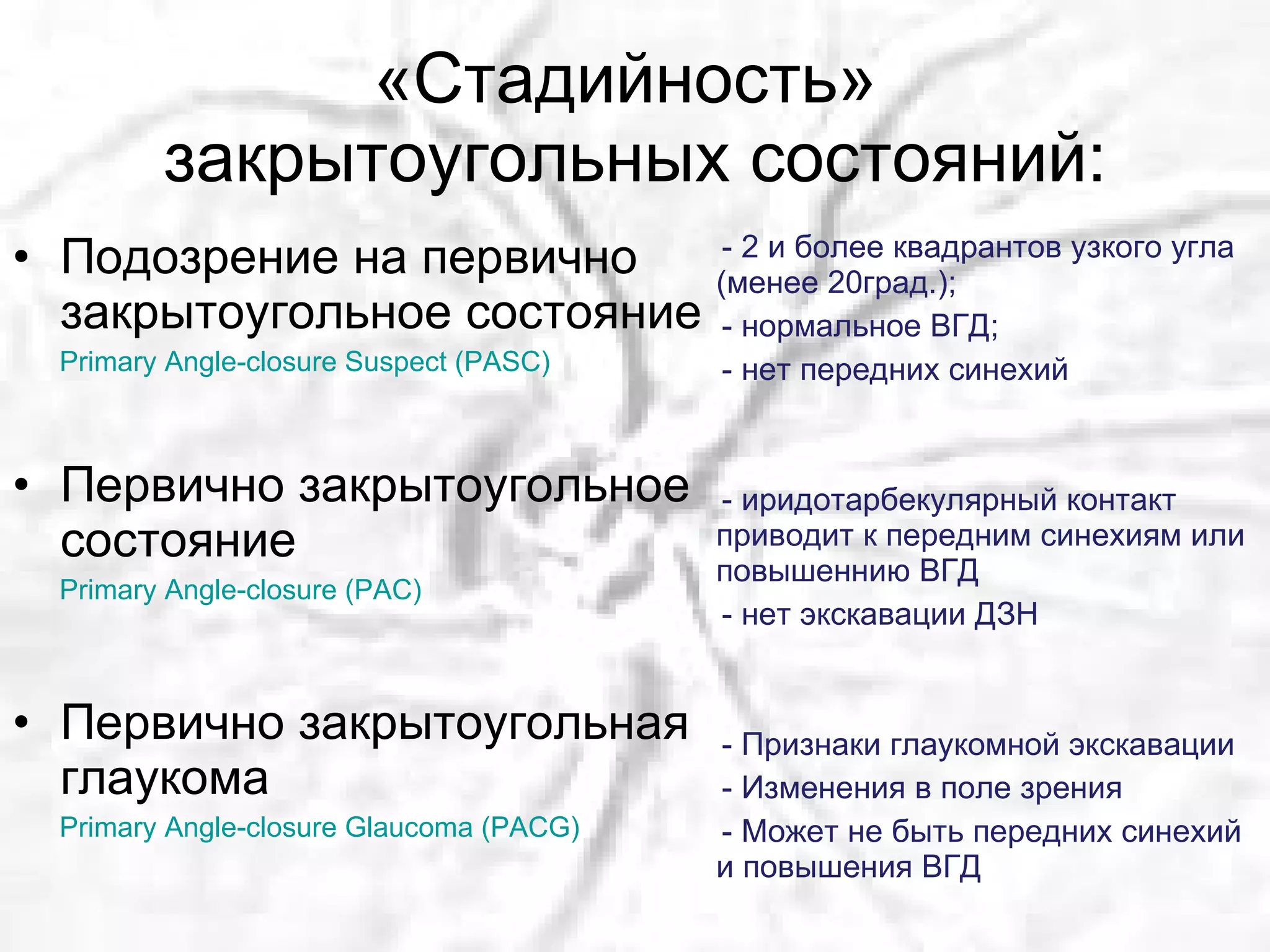
«Стадийность»  закрытоугольных состояний: Подозрение на первично закрытоугольное состояние Primary Angle-closure Suspect (PASC) Первично закрытоугольное состояние  Primary   Angle-closure (PAC) Первично закрытоугольная глаукома Primary   Angle-closure Glaucoma (PACG) - 2 и более квадрантов узкого угла (менее 20град.); - нормальное ВГД;  - нет передних синехий  - иридотарбекулярный контакт  приводит к передним синехиям или повышеннию ВГД  - нет экскавации ДЗН  - Признаки глаукомной экскавации - Изменения в поле зрения - Может не быть передних синехий и повышения ВГД
Механизмы закрытия угла 1.  Зрачковый блок 2. Синдром плоской радужки + «ползущая» закрытоугольная глаукома (развитие синехий) Блокада угла передней камеры смещенной кпереди  иридо-хрусталиковой диафрагмой. 3.   Закрытие угла связано с крупным хрусталиком 4. Механизм неправильного тока жидкости Смешанные виды
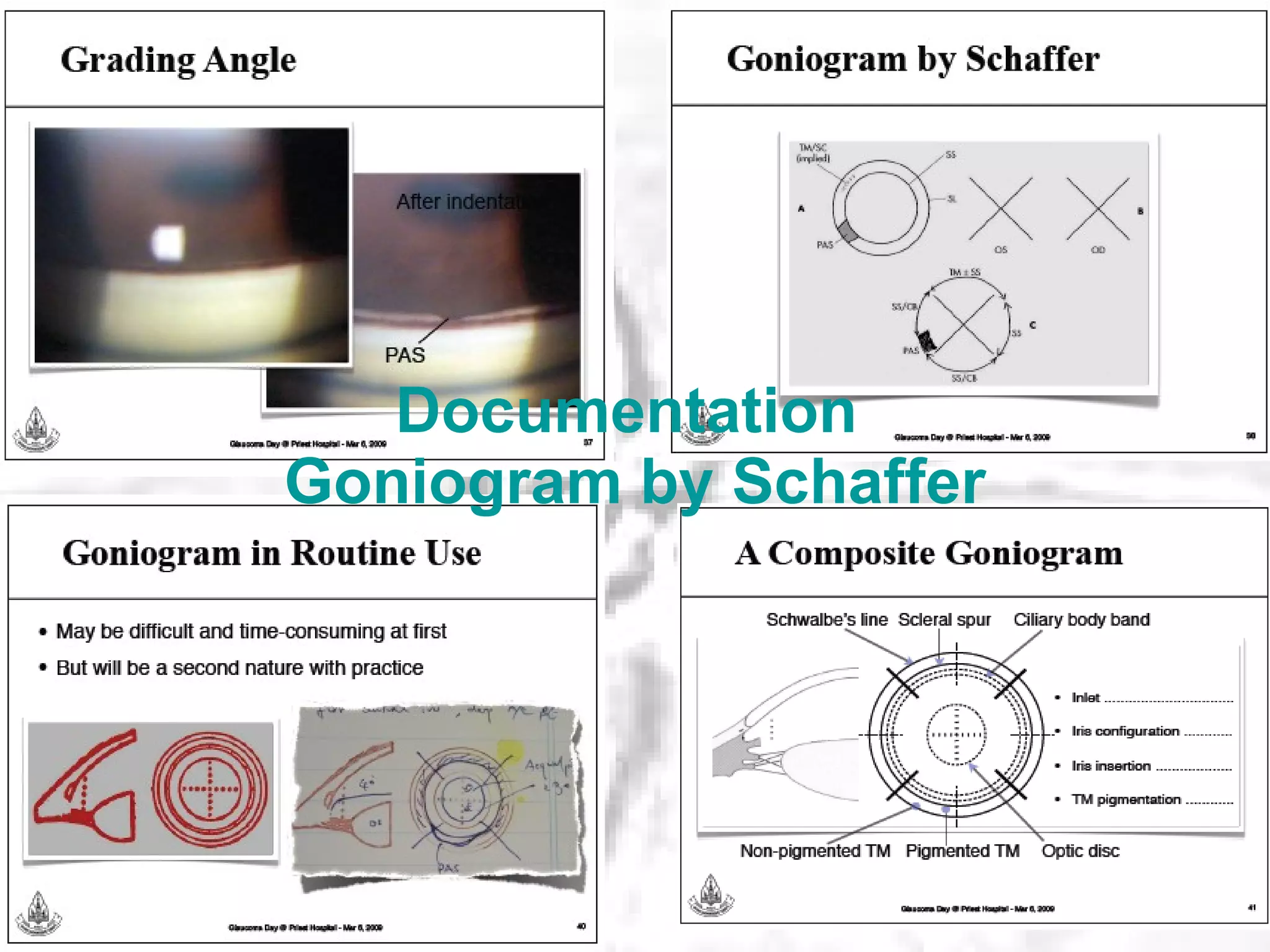
Documentation  Goniogram by Schaffer
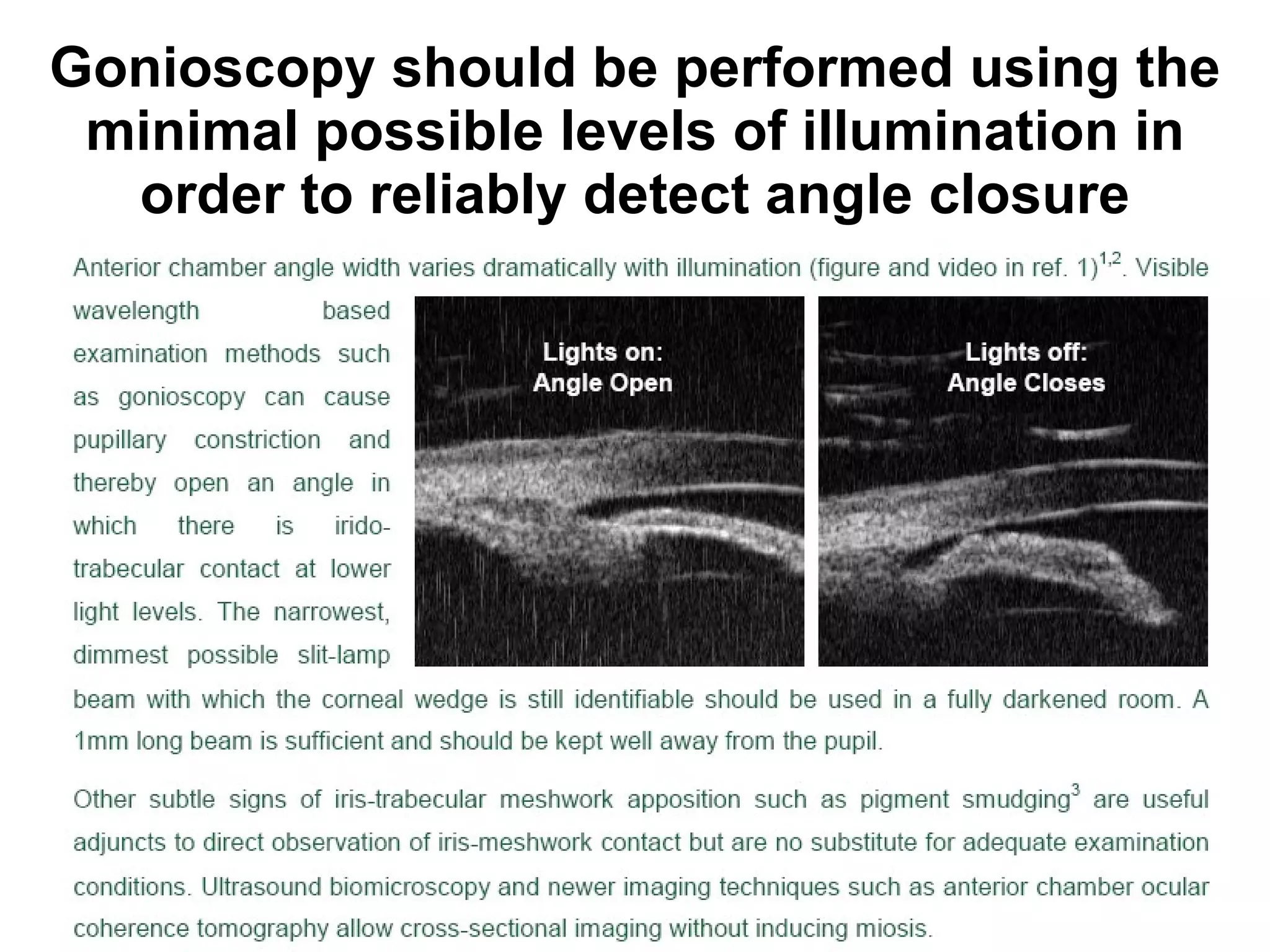
Gonioscopy should be performed using the minimal possible levels of illumination in order to reliably detect angle closure
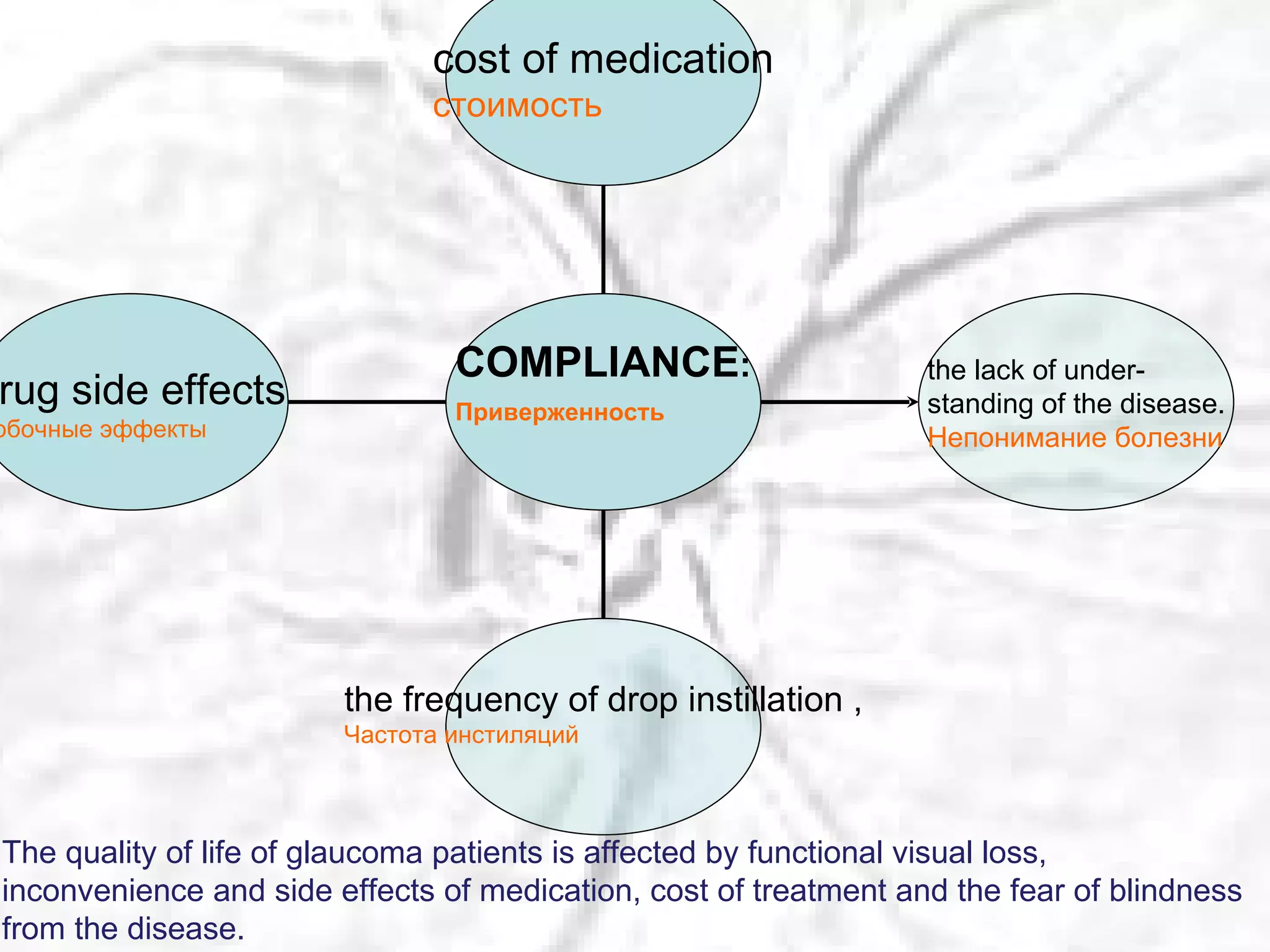
The quality of life of glaucoma patients is affected by functional visual loss, inconvenience and side effects of medication, cost of treatment and the fear of blindness from the disease. drug side effects Побочные эффекты the frequency of drop instillation , Частота инстиляций the lack of under- standing of the disease. Непонимание болезни cost of medication стоимость COMPLIANCE : Приверженность
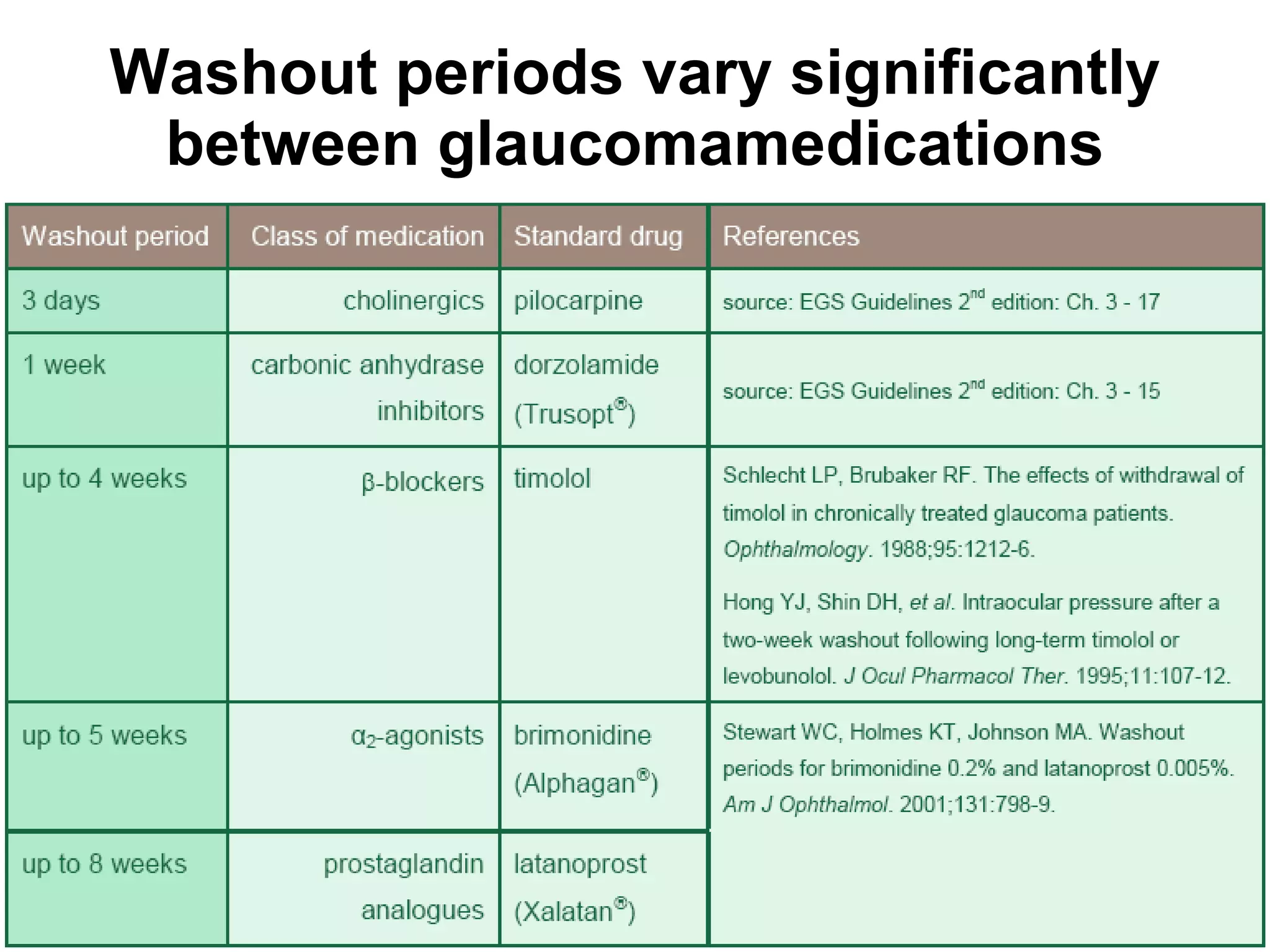
Washout periods vary significantly between glaucomamedications
Картинка найдена пользователем  Vlad34 forums.rusmedserv.com Спасибо  за  внимание
in addition
 
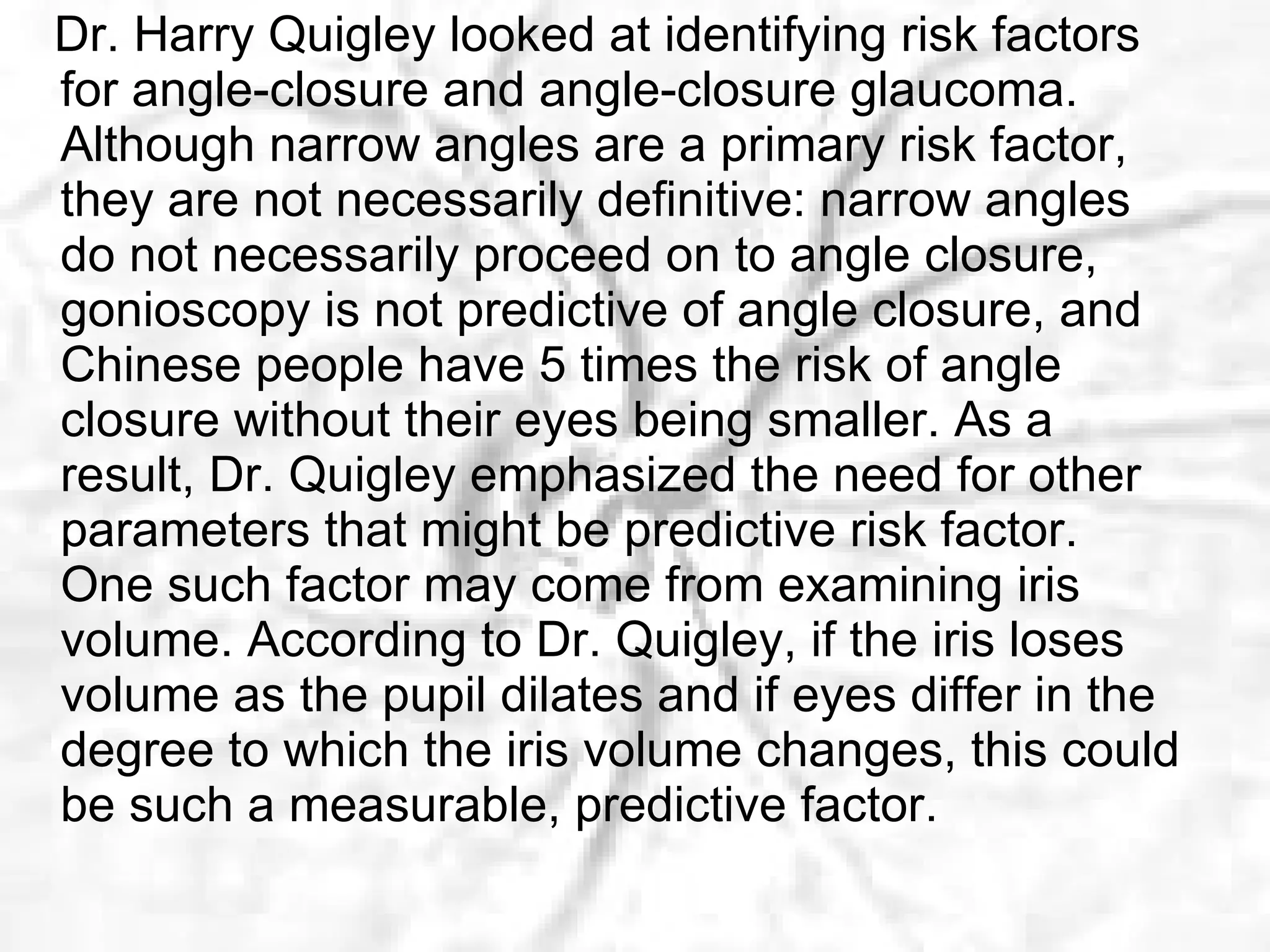
Dr. Harry Quigley looked at identifying risk factors for angle-closure and angle-closure glaucoma. Although narrow angles are a primary risk factor, they are not necessarily definitive: narrow angles do not necessarily proceed on to angle closure, gonioscopy is not predictive of angle closure, and Chinese people have 5 times the risk of angle closure without their eyes being smaller. As a result, Dr. Quigley emphasized the need for other parameters that might be predictive risk factor. One such factor may come from examining iris volume. According to Dr. Quigley, if the iris loses volume as the pupil dilates and if eyes differ in the degree to which the iris volume changes, this could be such a measurable, predictive factor.
There are treatment strategies available for exfoliation syndrome. Dr. Ritch recommended reducing pupillary movements (and therefore pigment dispersion) with pilocarpine 2% at bedtime, and using prostaglandin agents to open the uveo-scleral outflow pathway (to compensate for the damaged trabecular outflow). For the futu re, his recommendations for research included. Both from Program and abstracts of the American Glaucoma Society 2008 Annual Meeting;
Drug-induced acute angle closure glaucoma. Curr   Opin   Ophthalmol .  2007; 18(2):129-33 Acute angle closure glaucoma due to pupillary block, treatable by peripheral iridotomy, can be caused by adrenergic agents, either locally (phenylephrine drops, nasal ephedrine, or nebulized salbutamol) or systemically (epinephrine for anaphylactic shock), drugs with anticholinergic effects including tropicamide and atropine drops, tri and tetracyclic antidepressants, and  cholinergic agents like pilocarpine . A novel anticholinergic form is the use of periocular botulinum toxin diffusing back to the ciliary ganglion inhibiting the pupillary sphincter. Sulfa-based drugs (acetazolamide, hydrochlorothiazide, cotrimoxazole, and topiramate) can cause acute angle closure glaucoma by ciliary body edema with anterior rotation of the iris-lens diaphragm. Iridotomy is not effective.  + Chronic use of pilocarpine can be caused pup.block
Bilateral acute angle-closure glaucoma may occur after uneventful blepharoplasty Bilateral acute angle-closure glaucoma is a possible (potentially blinding) complication after uneventful eyelid surgery. Predisposing factors include all underlying causes of a narrow anterior chamber such as hypermetropia and cataract. The various factors causing pupillary dilatation and angle closure are: • local anesthesia containing adrenaline or anticholinergic drugs used during general anesthesia  • psychological stress • dark-adapted eye under post-op bandage In the literature only four case reports were found describing this complication(1-4), yet presumably it is often misdiagnosed and thus underreported. Moreover, blepharoplasty is frequently performed by plastic surgeons and dermatologists who are often unaware of this potentially blinding complication. Much valuable time may be lost before the correct diagnosis is made, especially since there can be considerable post-operative swelling of the eyelids making examination of the eye more difficult. Considering that immediate appropriate therapy may reverse the angle closure and thus prevent visual loss, a better awareness and prompt recognition of this condition is imperative.
Natural Neuroprotection Carlo Nucci, University of Rome Tor Vergata, Rome Italy One of the most thoroughly studied is Ginkgo biloba extract Another extensively studied neuroprotective agent is citicoline. Green tea is particularly rich in flavonoids, the most abundant being epigallocatechin gallate (EGCG). The next compound on our list is coenzyme Q10,  a fundamental player in the mitochondrial respiration pathway. I would like to briefly mention the retinal endocannabinoids system.
Review of alpha-2 agonists Manuel Vidal Sanz Universidad de Murcia Spain Review of NMDA antagonists Neville Osborne, Oxford University

Ang.Closure Glaucoma

  • 1.
    ? Author ZaitsevP.S. Volgodonsk, Russia
  • 2.
    Open/Closed… Controversies An eye with Acute Angle Closure Glaucoma
  • 3.
    IOP lowering isthe only clinically effective approach in the management of glaucoma. Grade A, Level Ia A The first line of treatment in Primary Angle Closure Glaucoma is a laser iridotomy. A laser iridotomy is also required for the fellow eye. Supplemental medical therapy may also be required. Grade A, Level Ib
  • 4.
    Are angle closure(AC) and angle-closure glaucoma (ACG) important health problems?
  • 5.
    Are angle closure(AC) and angle-closure glaucoma (ACG) is important health problems!!! Primary angle-closure glaucoma (PACG) accounts for approximately 25% of all glaucomatous optic neuropathy worldwide, but 50% of bilateral glaucoma blindness. Visual impairment from primary angle closure (PAC) and PACG can result from ocular damage other than glaucomatous optic nerve damage (e.g., corneal decompensation, cataract, ischemic optic neuropathy). Some Asian populations have a high prevalence of advanced angle-closure glaucoma. PACG is predominantly asymptomatic.
  • 6.
    Br J Ophthalmol 2006; 90: 262-267 The number of people with glaucoma worldwide in 2010 and 2020 Abstract Aim: To estimate the number of people with open angle (OAG) and angle closure glaucoma (ACG) in 2010 and 2020. Methods: A review of published data with use of prevalence models. Data from population based studies of age specific prevalence of OAG and ACG that satisfied standard definitions were used to construct prevalence models for OAG and ACG by age, sex, and ethnicity, weighting data proportional to sample size of each study. Models were combined with UN world population projections for 2010 and 2020 to derive the estimated number with glaucoma. Results: There will be 60.5 million people with OAG and ACG in 2010, increasing to 79.6 million by 2020, and of these, 74% will have OAG. Women will comprise 55% of OAG, 70% of ACG, and 59% of all glaucoma in 2010. Asians will represent 47% of those with glaucoma and 87% of those with ACG. Bilateral blindness will be present in 4.5 million people with OAG and 3.9 million people with ACG in 2010, rising to 5.9 and 5.3 million people in 2020, respectively. Conclusions: Glaucoma is the second leading cause of blindness worldwide, disproportionately affecting women and Asians .
  • 7.
    The two mainpurposes of the PAC-treatment procedures are:
  • 8.
    The two mainpurposes of the PAC-treatment procedures are: – To contribute towards well-motivated preventive treatment of the various forms of imminent PAC in order to avoid both the acute catastrophe and the more common, asymptomatic, “creeping” angle-closure17, 34, 35. – To contribute towards an optimal course of treatment for the individual patient by applying specific treatment.
  • 9.
    + T.Chakravarti, G.L. Spaeth. PACG in myopic eyes 1,9% Grade 1: AC depth is less than 1/4 of corneal thickness Grade 2: AC is 1/4 of corneal Grade 3: AC is 1/4-1/2 Grade 4: AC is ≥ corneal…
  • 10.
    Subclassification of GroupI: PAC with pupil block and specific treatment.
  • 11.
    0,015– light
  • 12.
    Постановления Правительства РоссийскойФедерации от 7 апреля 2008 г. N 247 ПЕРЕЧЕНЬ ЗАБОЛЕВАНИЙ, ДЕФЕКТОВ, НЕОБРАТИМЫХ МОРФОЛОГИЧЕСКИХ ИЗМЕНЕНИЙ, НАРУШЕНИЙ ФУНКЦИЙ ОРГАНОВ И СИСТЕМ ОРГАНИЗМА, ПРИ КОТОРЫХ ГРУППА ИНВАЛИДНОСТИ БЕЗ УКАЗАНИЯ СРОКА ПЕРЕОСВИДЕТЕЛЬСТВОВАНИЯ (КАТЕГОРИЯ "РЕБЕНОК- ИНВАЛИД" ДО ДОСТИЖЕНИЯ ГРАЖДАНИНОМ ВОЗРАСТА 18 ЛЕТ) УСТАНАВЛИВАЕТСЯ ГРАЖДАНАМ НЕ ПОЗДНЕЕ 2 ЛЕТ ПОСЛЕ ПЕРВИЧНОГО ПРИЗНАНИЯ ИНВАЛИДОМ (УСТАНОВЛЕНИЯ КАТЕГОРИИ "РЕБЕНОК-ИНВАЛИД") 9. Полная слепота на оба глаза при неэффективности проводимого лечения; снижение остроты зрения на оба глаза и в лучше видящем глазу до 0,03 с коррекцией или концентрическое сужение поля зрения обоих глаз до 10 градусов в результате стойких и необратимых изменений.
  • 13.
    «Стадийность» закрытоугольныхсостояний: Подозрение на первично закрытоугольное состояние Primary Angle-closure Suspect (PASC) Первично закрытоугольное состояние Primary Angle-closure (PAC) Первично закрытоугольная глаукома Primary Angle-closure Glaucoma (PACG) - 2 и более квадрантов узкого угла (менее 20град.); - нормальное ВГД; - нет передних синехий - иридотарбекулярный контакт приводит к передним синехиям или повышеннию ВГД - нет экскавации ДЗН - Признаки глаукомной экскавации - Изменения в поле зрения - Может не быть передних синехий и повышения ВГД
  • 14.
    Механизмы закрытия угла1. Зрачковый блок 2. Синдром плоской радужки + «ползущая» закрытоугольная глаукома (развитие синехий) Блокада угла передней камеры смещенной кпереди иридо-хрусталиковой диафрагмой. 3. Закрытие угла связано с крупным хрусталиком 4. Механизм неправильного тока жидкости Смешанные виды
  • 15.
  • 16.
    Gonioscopy should beperformed using the minimal possible levels of illumination in order to reliably detect angle closure
  • 17.
    The quality oflife of glaucoma patients is affected by functional visual loss, inconvenience and side effects of medication, cost of treatment and the fear of blindness from the disease. drug side effects Побочные эффекты the frequency of drop instillation , Частота инстиляций the lack of under- standing of the disease. Непонимание болезни cost of medication стоимость COMPLIANCE : Приверженность
  • 18.
    Washout periods varysignificantly between glaucomamedications
  • 19.
    Картинка найдена пользователем Vlad34 forums.rusmedserv.com Спасибо за внимание
  • 20.
  • 21.
  • 22.
    Dr. Harry Quigleylooked at identifying risk factors for angle-closure and angle-closure glaucoma. Although narrow angles are a primary risk factor, they are not necessarily definitive: narrow angles do not necessarily proceed on to angle closure, gonioscopy is not predictive of angle closure, and Chinese people have 5 times the risk of angle closure without their eyes being smaller. As a result, Dr. Quigley emphasized the need for other parameters that might be predictive risk factor. One such factor may come from examining iris volume. According to Dr. Quigley, if the iris loses volume as the pupil dilates and if eyes differ in the degree to which the iris volume changes, this could be such a measurable, predictive factor.
  • 23.
    There are treatmentstrategies available for exfoliation syndrome. Dr. Ritch recommended reducing pupillary movements (and therefore pigment dispersion) with pilocarpine 2% at bedtime, and using prostaglandin agents to open the uveo-scleral outflow pathway (to compensate for the damaged trabecular outflow). For the futu re, his recommendations for research included. Both from Program and abstracts of the American Glaucoma Society 2008 Annual Meeting;
  • 24.
    Drug-induced acute angleclosure glaucoma. Curr Opin Ophthalmol .  2007; 18(2):129-33 Acute angle closure glaucoma due to pupillary block, treatable by peripheral iridotomy, can be caused by adrenergic agents, either locally (phenylephrine drops, nasal ephedrine, or nebulized salbutamol) or systemically (epinephrine for anaphylactic shock), drugs with anticholinergic effects including tropicamide and atropine drops, tri and tetracyclic antidepressants, and cholinergic agents like pilocarpine . A novel anticholinergic form is the use of periocular botulinum toxin diffusing back to the ciliary ganglion inhibiting the pupillary sphincter. Sulfa-based drugs (acetazolamide, hydrochlorothiazide, cotrimoxazole, and topiramate) can cause acute angle closure glaucoma by ciliary body edema with anterior rotation of the iris-lens diaphragm. Iridotomy is not effective. + Chronic use of pilocarpine can be caused pup.block
  • 25.
    Bilateral acute angle-closureglaucoma may occur after uneventful blepharoplasty Bilateral acute angle-closure glaucoma is a possible (potentially blinding) complication after uneventful eyelid surgery. Predisposing factors include all underlying causes of a narrow anterior chamber such as hypermetropia and cataract. The various factors causing pupillary dilatation and angle closure are: • local anesthesia containing adrenaline or anticholinergic drugs used during general anesthesia • psychological stress • dark-adapted eye under post-op bandage In the literature only four case reports were found describing this complication(1-4), yet presumably it is often misdiagnosed and thus underreported. Moreover, blepharoplasty is frequently performed by plastic surgeons and dermatologists who are often unaware of this potentially blinding complication. Much valuable time may be lost before the correct diagnosis is made, especially since there can be considerable post-operative swelling of the eyelids making examination of the eye more difficult. Considering that immediate appropriate therapy may reverse the angle closure and thus prevent visual loss, a better awareness and prompt recognition of this condition is imperative.
  • 26.
    Natural Neuroprotection CarloNucci, University of Rome Tor Vergata, Rome Italy One of the most thoroughly studied is Ginkgo biloba extract Another extensively studied neuroprotective agent is citicoline. Green tea is particularly rich in flavonoids, the most abundant being epigallocatechin gallate (EGCG). The next compound on our list is coenzyme Q10, a fundamental player in the mitochondrial respiration pathway. I would like to briefly mention the retinal endocannabinoids system.
  • 27.
    Review of alpha-2agonists Manuel Vidal Sanz Universidad de Murcia Spain Review of NMDA antagonists Neville Osborne, Oxford University

Editor's Notes

  • #7 вввввввввввввввввввввввввввв
  • #13 вввввввввввввввввввввввввввв