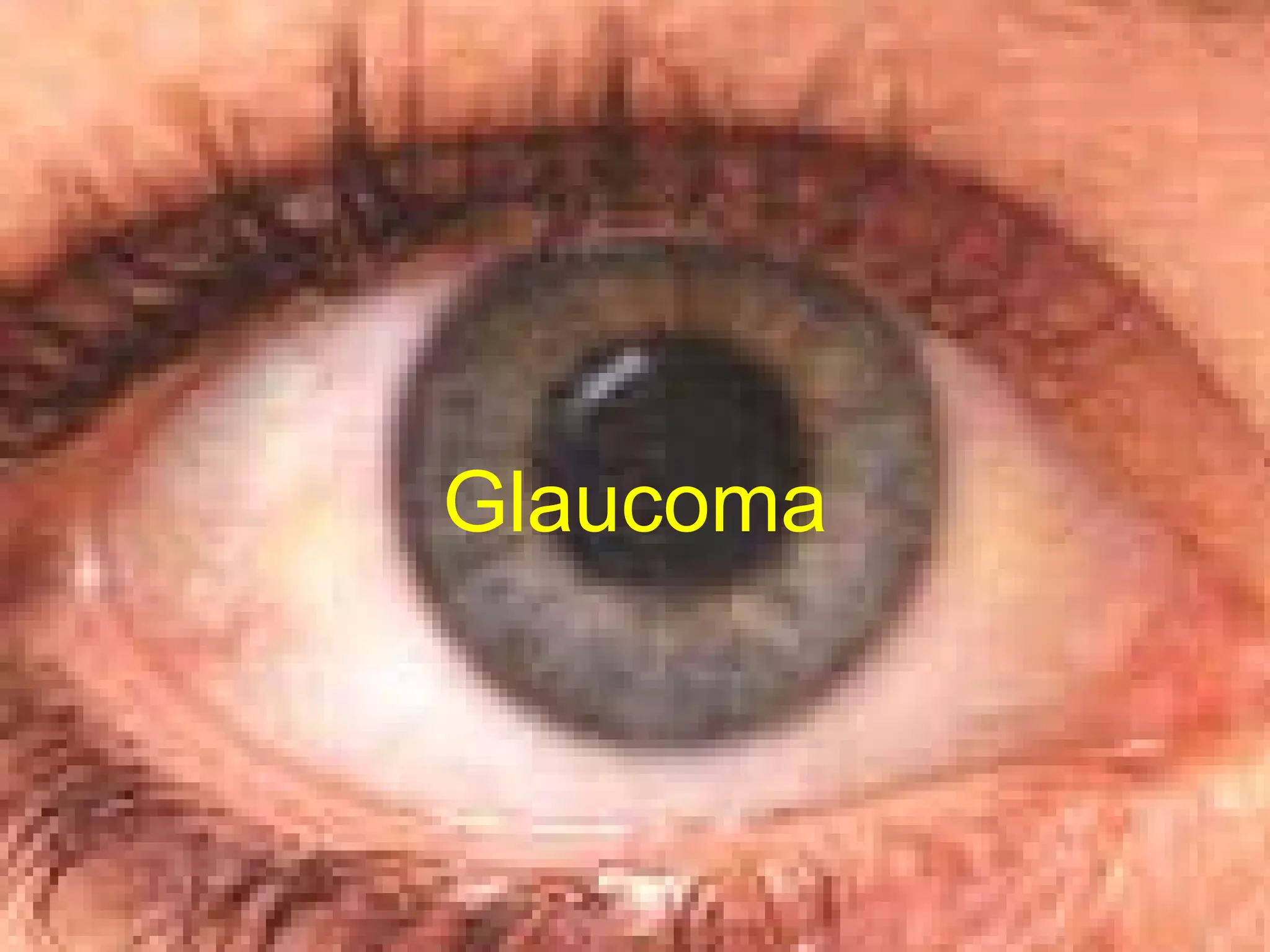
Glaucoma The silent thief of sight
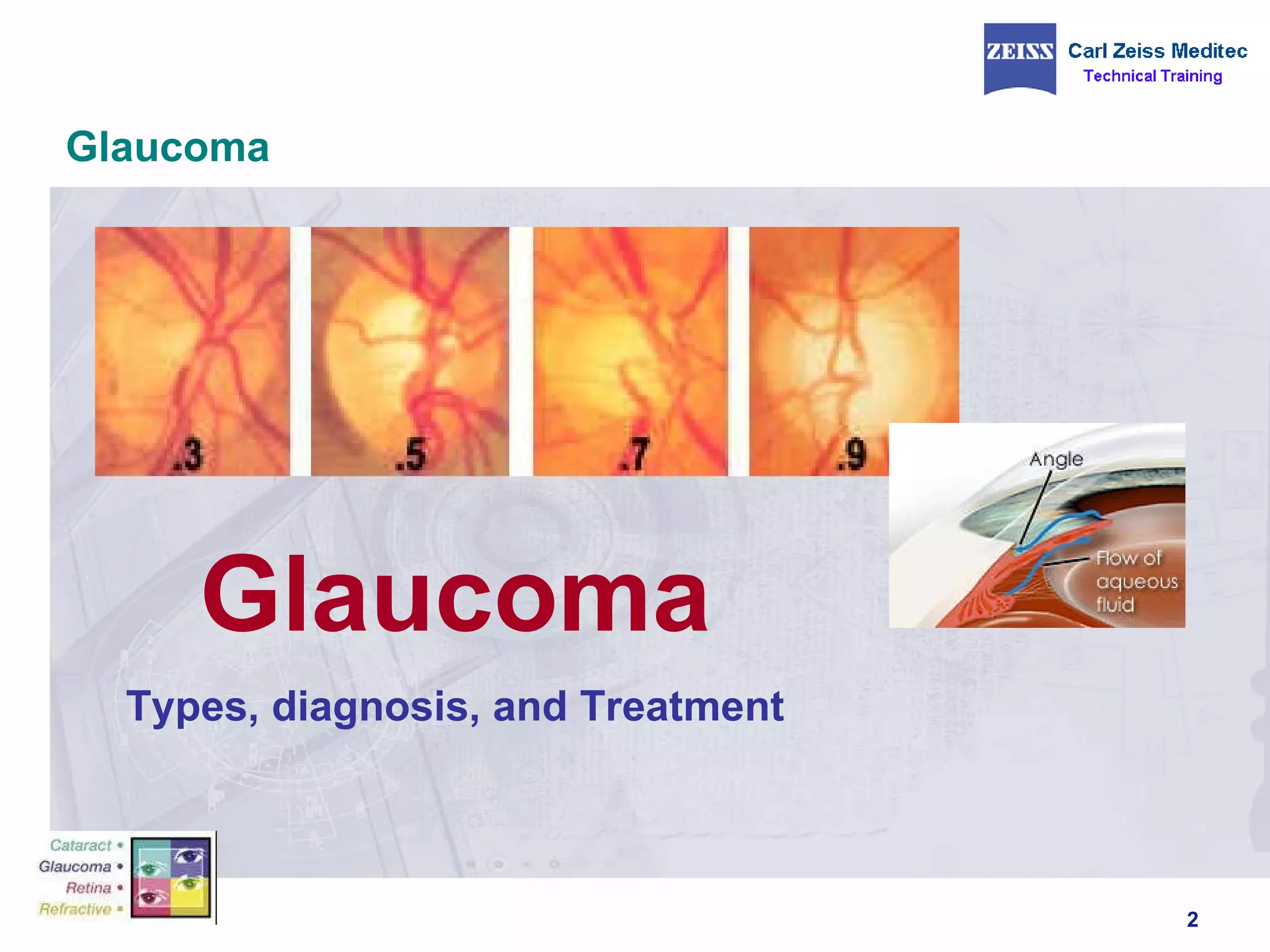
Glaucoma Glaucoma Types, diagnosis, and Treatment
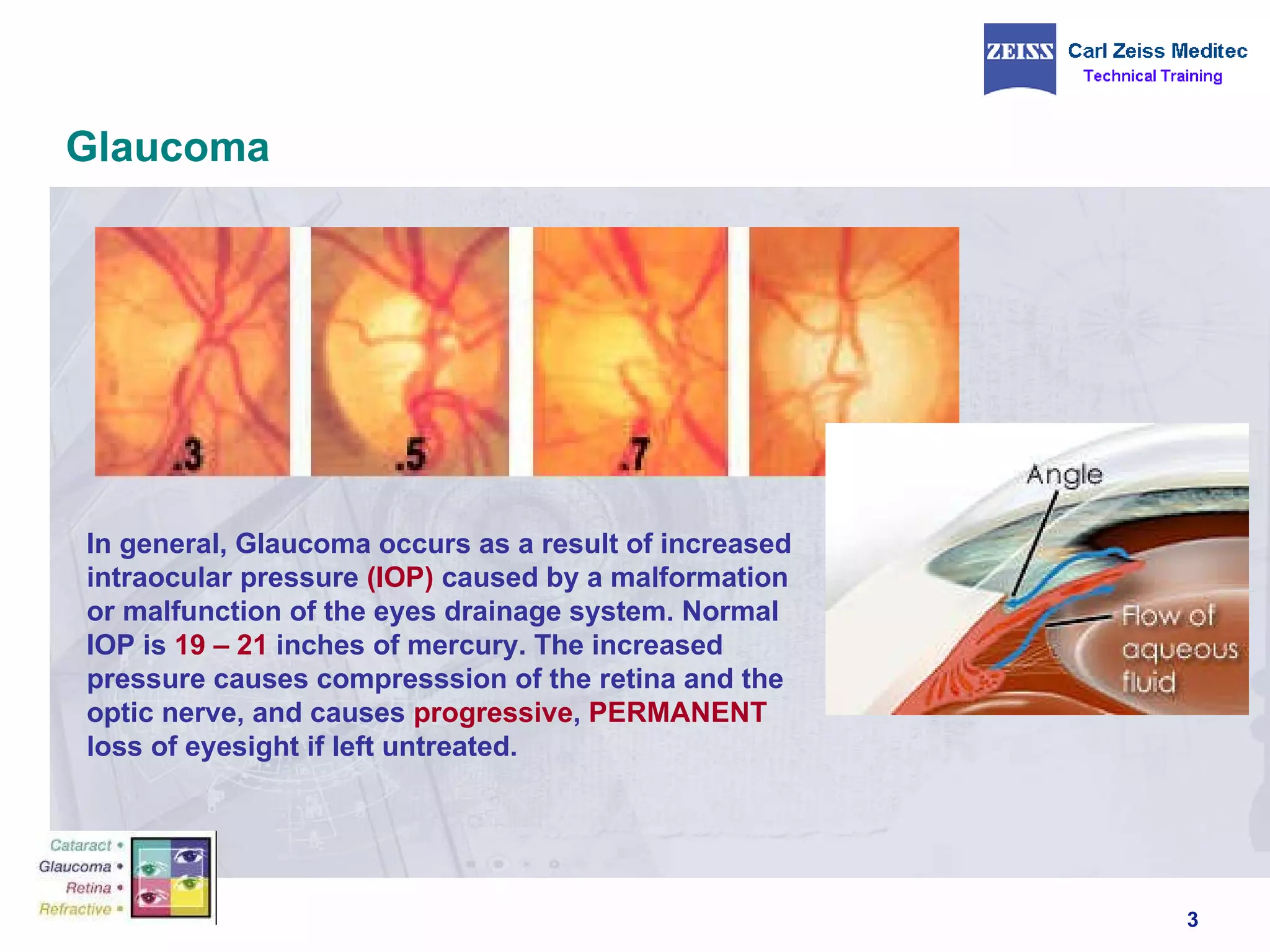
Glaucoma In general, Glaucoma occurs as a result of increased intraocular pressure  (IOP)  caused by a malformation or malfunction of the eyes drainage system. Normal IOP is  19 – 21  inches of mercury. The increased pressure causes compresssion of the retina and the optic nerve, and causes  progressive ,  PERMANENT  loss of eyesight if left untreated.
Glaucoma Glaucoma can be classified into several different and unique types: Primary Open Angle Glaucoma (POAG) Angle – closure Glaucoma (Acute Glaucoma) Congenital Glaucoma Secondary Glaucoma Pigmentary Glaucoma Normal – tension Glaucoma (NTG)
Glaucoma Primary Open Angle Glaucoma
Glaucoma Primary Open Angle  Glaucoma   is caused when the normal drainage system of the eye becomes partially blocked, causing pressure to build within the eye. Normal Eye
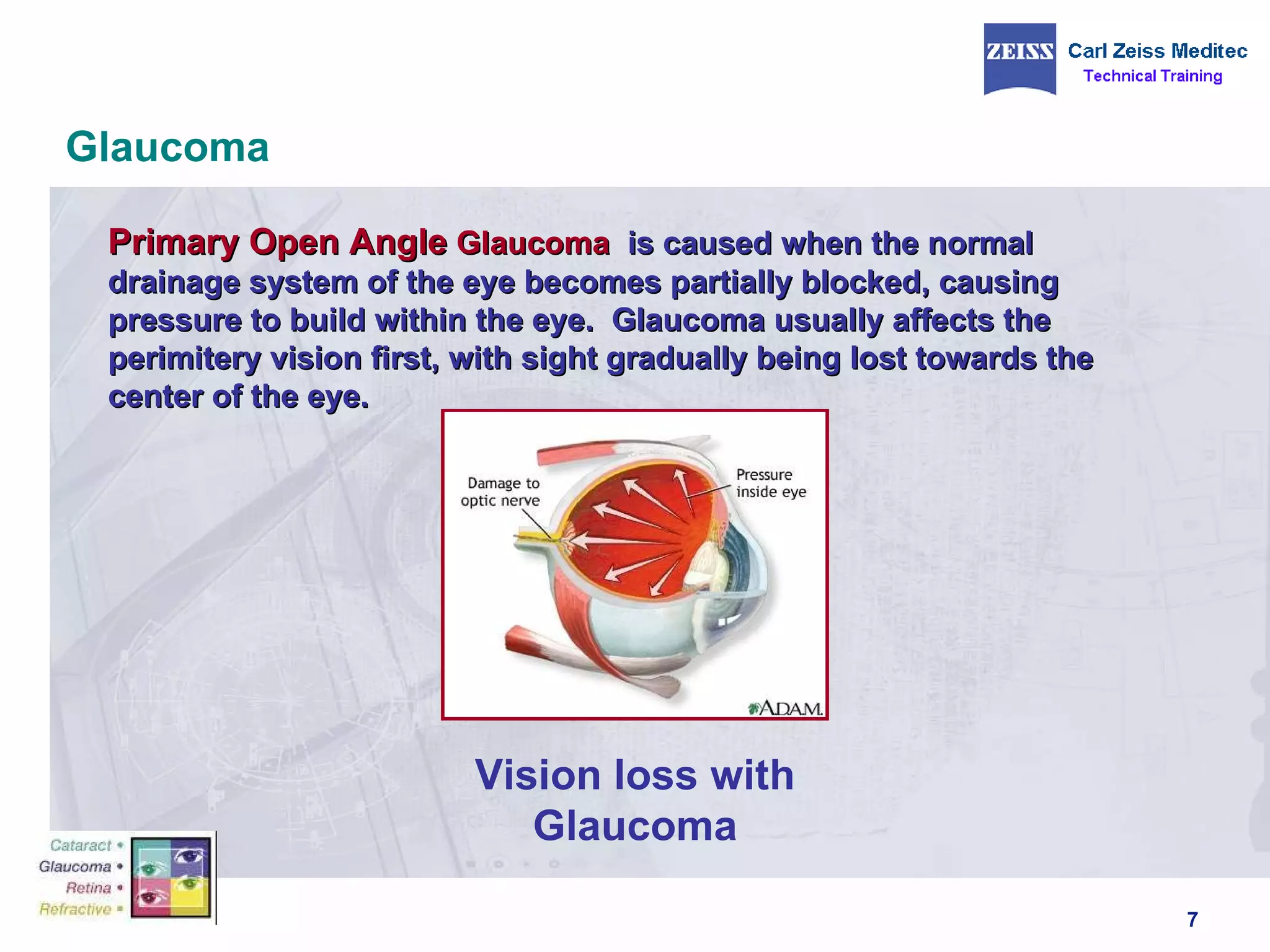
Glaucoma Primary Open Angle  Glaucoma   is caused when the normal drainage system of the eye becomes partially blocked, causing pressure to build within the eye.  Glaucoma usually affects the perimitery vision first, with sight gradually being lost towards the center of the eye.  Vision loss with Glaucoma
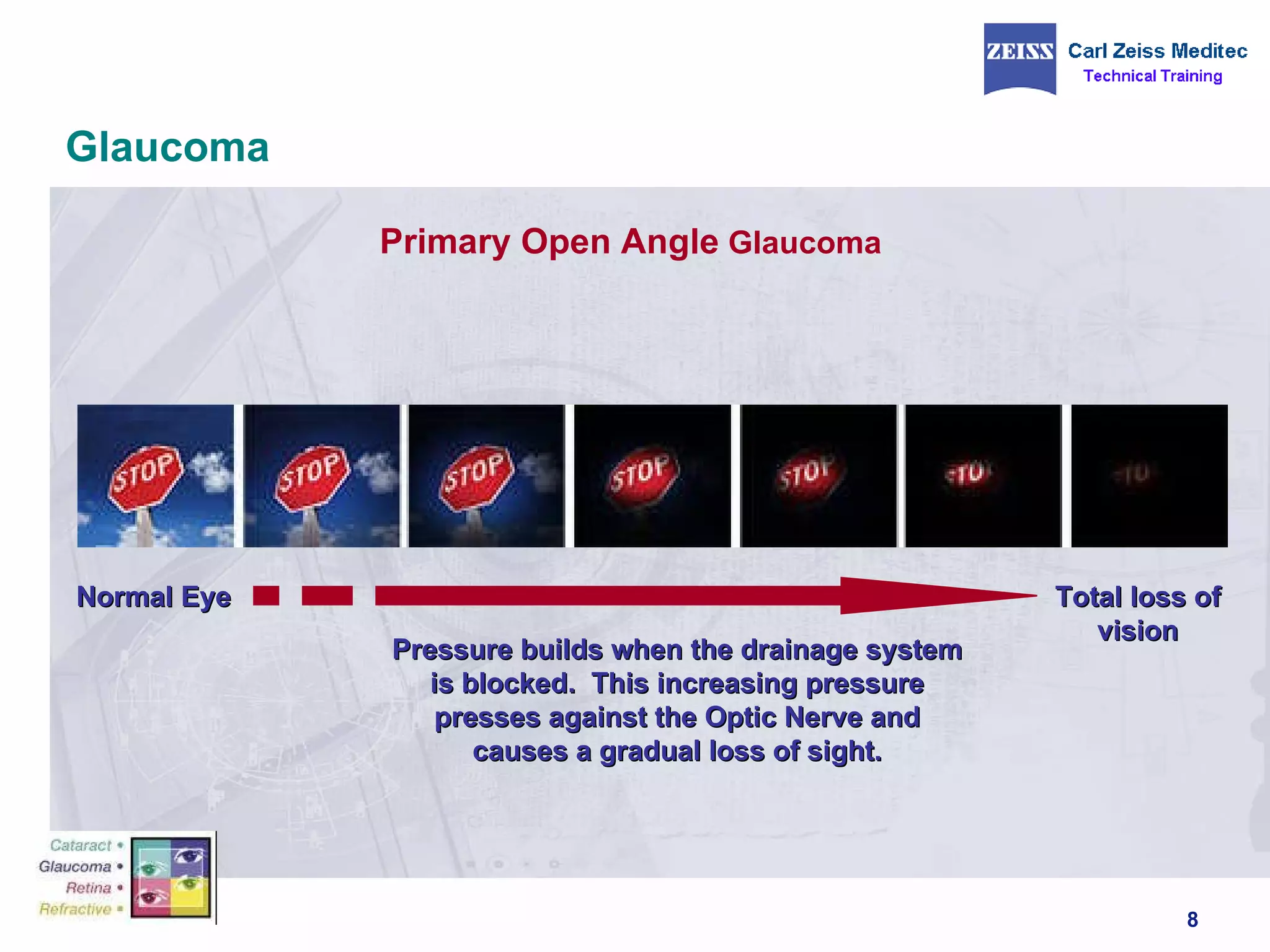
Glaucoma Primary Open Angle  Glaucoma   Normal Eye Pressure builds when the drainage system is blocked.  This increasing pressure presses against the Optic Nerve and causes a gradual loss of sight. Total loss of vision
Glaucoma Primary Open Angle Glaucoma Symptoms In the very early stages there are NO symptoms. Mild pain in the eye, increasing gradually over time. “ Halos” appearing around lights. Gradual loss of Peripheral vision. Loss of night vision Who is at risk? Patients with a family history of Glaucoma African Americans Patients suffering from Myopia Patients suffering from  Diabetes People over 35 years of age
Glaucoma Angle – closure Glaucoma (Acute Glaucoma)
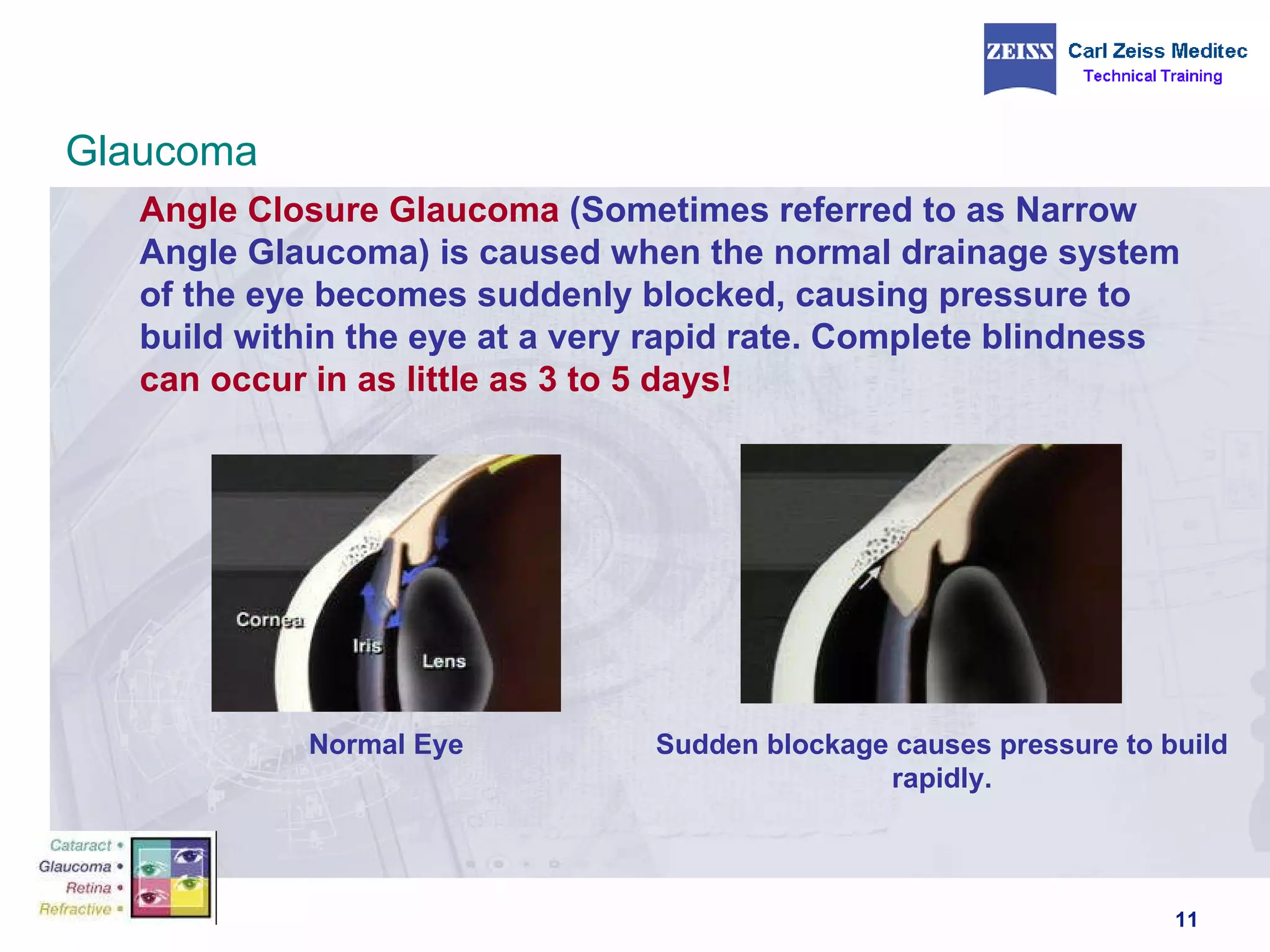
Angle Closure Glaucoma  (Sometimes referred to as Narrow   Angle Glaucoma) is caused when the normal drainage system of the eye becomes suddenly blocked, causing pressure to build within the eye at a very rapid rate. Complete blindness  can occur in as little as 3 to 5 days! Normal Eye Sudden blockage causes pressure to build rapidly. Glaucoma
Angle Closure Glaucoma Symptoms Severe Pain Pressure over the eye Cloudiness to the Cornea Eye extremely sensitive to light Halos seen around lights. Nausea and/or vomiting Who is at risk? Patients with a family history of Glaucoma African Americans Patients suffering from Myopia Patients suffering from Diabetes People over 35 years of age Glaucoma
Glaucoma Congenital Glaucoma
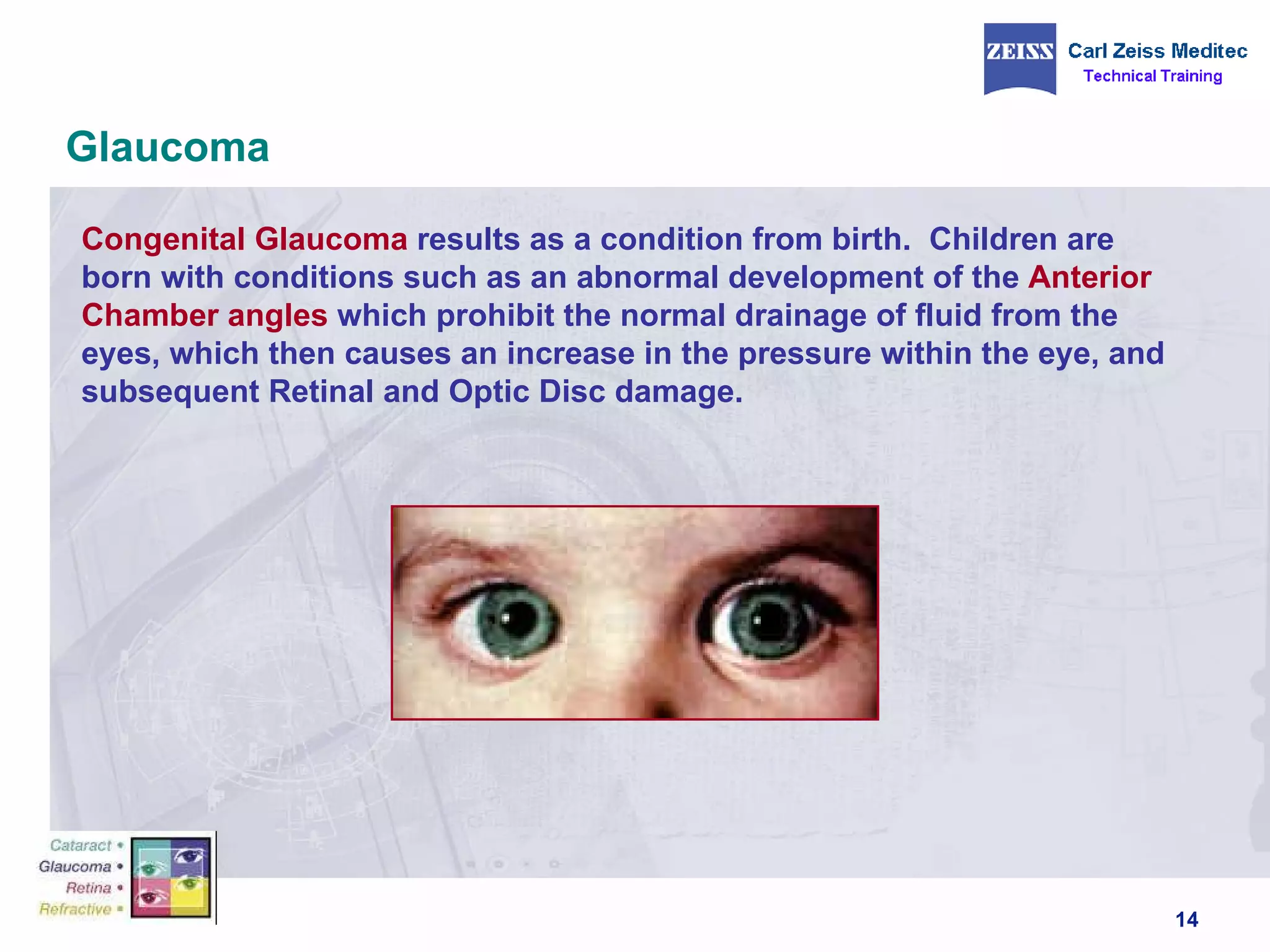
Glaucoma Congenital Glaucoma  results as a condition from birth.  Children are born with conditions such as an abnormal development of the  Anterior   Chamber angles  which prohibit the normal drainage of fluid from the eyes, which then causes an increase in the pressure within the eye, and subsequent Retinal and Optic Disc damage.
Glaucoma Parents normally are the first to recognize the symptoms of Congenital Glaucoma: Cloudiness of the cornea due to Edema Distension of the eye Photophobia (sensitive to light)
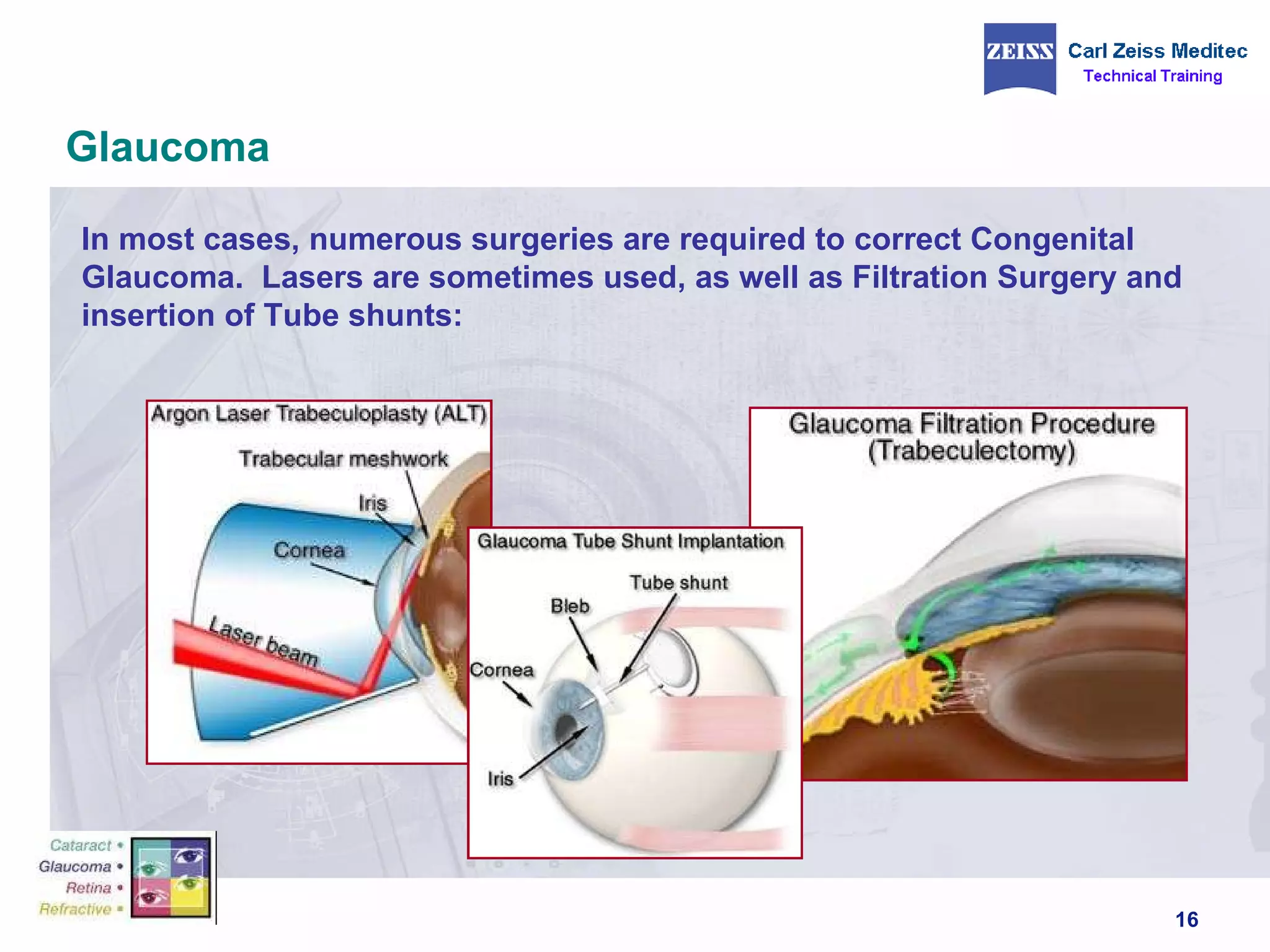
Glaucoma In most cases, numerous surgeries are required to correct Congenital Glaucoma.  Lasers are sometimes used, as well as Filtration Surgery and insertion of Tube shunts:
Glaucoma Secondary Glaucoma
Glaucoma Secondary Glaucoma   is usually the result of a trauma to the eye, although it can develop due to several causes: Abnormal deposits in the eye fluid Uveitis Lens Changes Drugs Haemorrhage
Glaucoma Pigmentary Glaucoma
Glaucoma Pigmentary Glaucoma  can develop as a result of small pieces of the Iris breaking off.  These small particles can lodge themselves in the normal drainage canals and subsequently interfere with the normal drainage of fluids from the eye.
Glaucoma Normal Tension Glaucoma
Glaucoma Normal Tension Glaucoma  occurs when there is damage to the Optic nerve detected in patients who have completely normal Inter – Occular pressure.  It has the same characteristics as Primary Open – Angle Glaucoma.
Glaucoma Diagnosis and Treatment
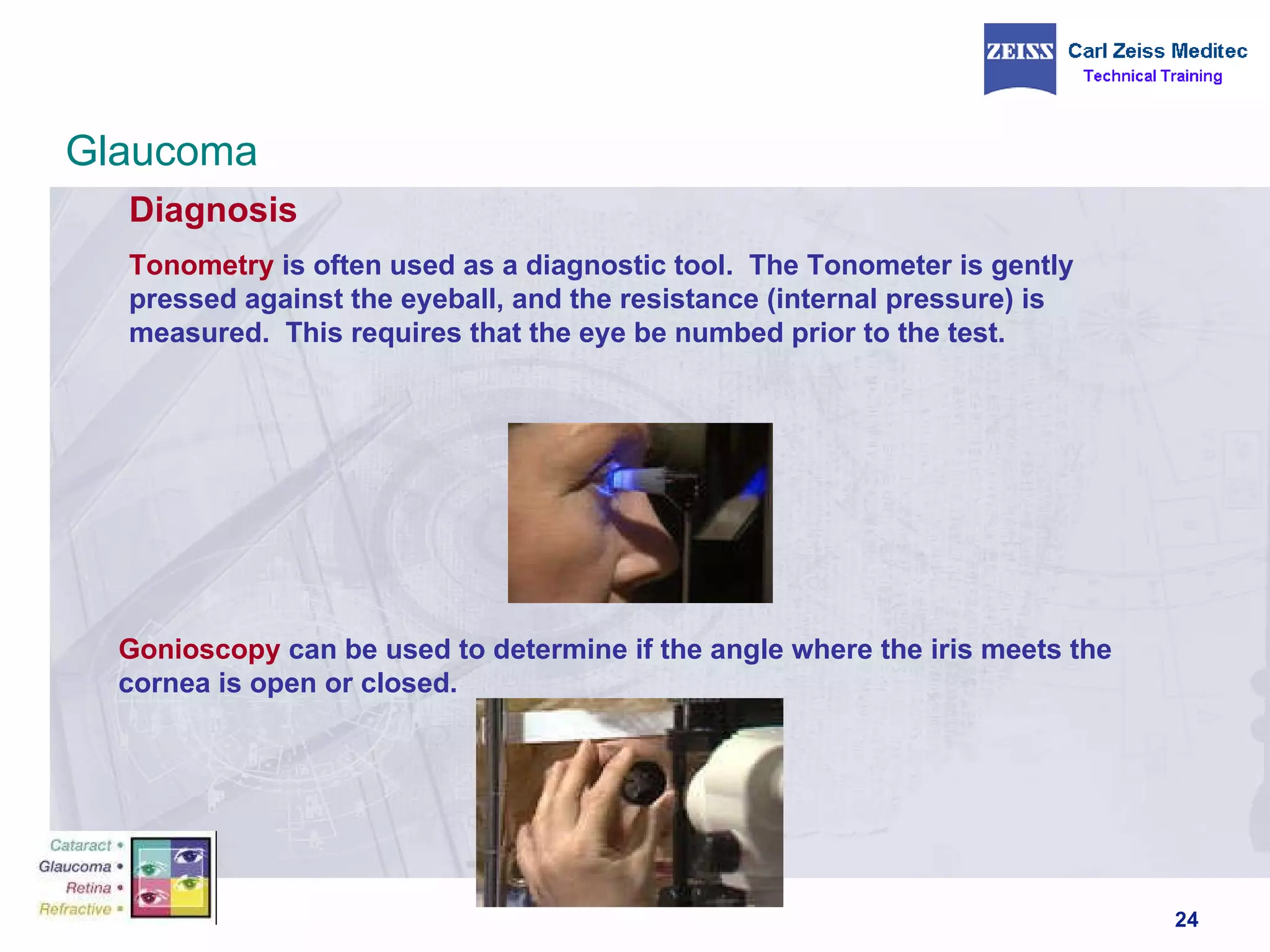
Diagnosis Tonometry  is often used as a diagnostic tool.  The Tonometer is gently pressed against the eyeball, and the resistance (internal pressure) is measured.  This requires that the eye be numbed prior to the test. Gonioscopy   can be used to determine if the angle where the iris meets the cornea is open or closed. Glaucoma
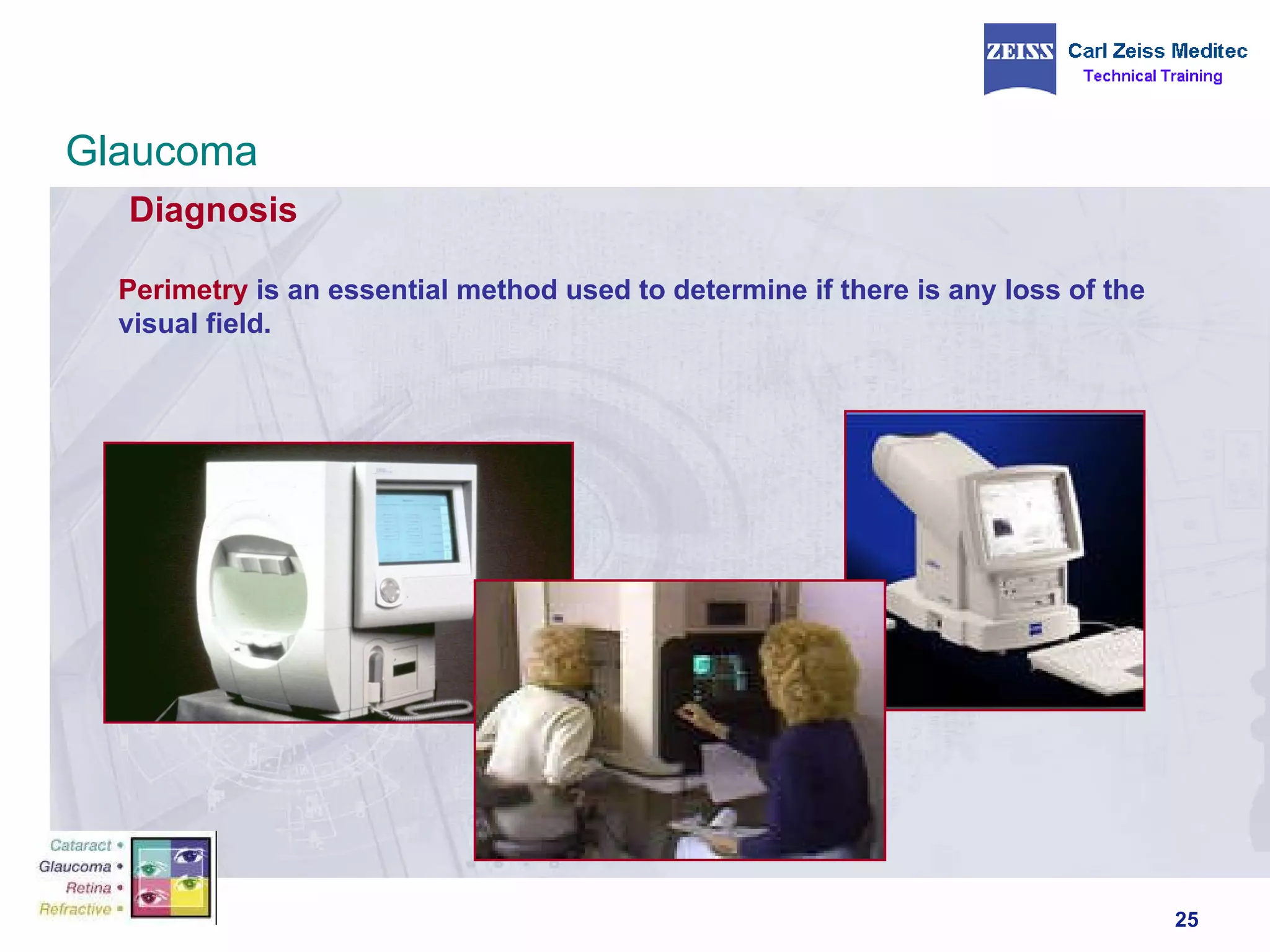
Diagnosis Perimetry  is an essential method used to determine if there is any loss of the visual field. Glaucoma
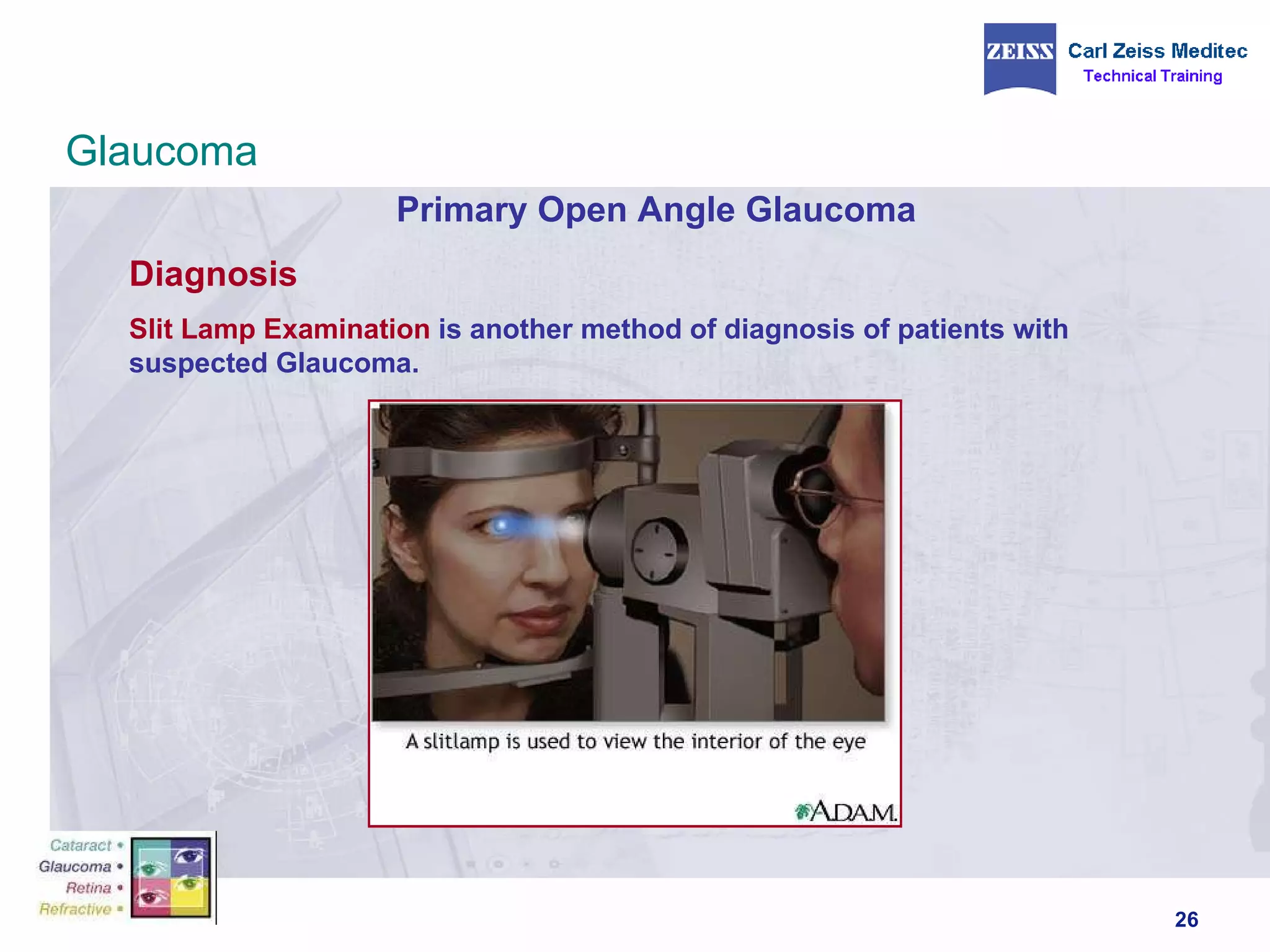
Primary Open Angle Glaucoma Diagnosis Slit Lamp Examination  is another method of diagnosis of patients with suspected Glaucoma. Glaucoma
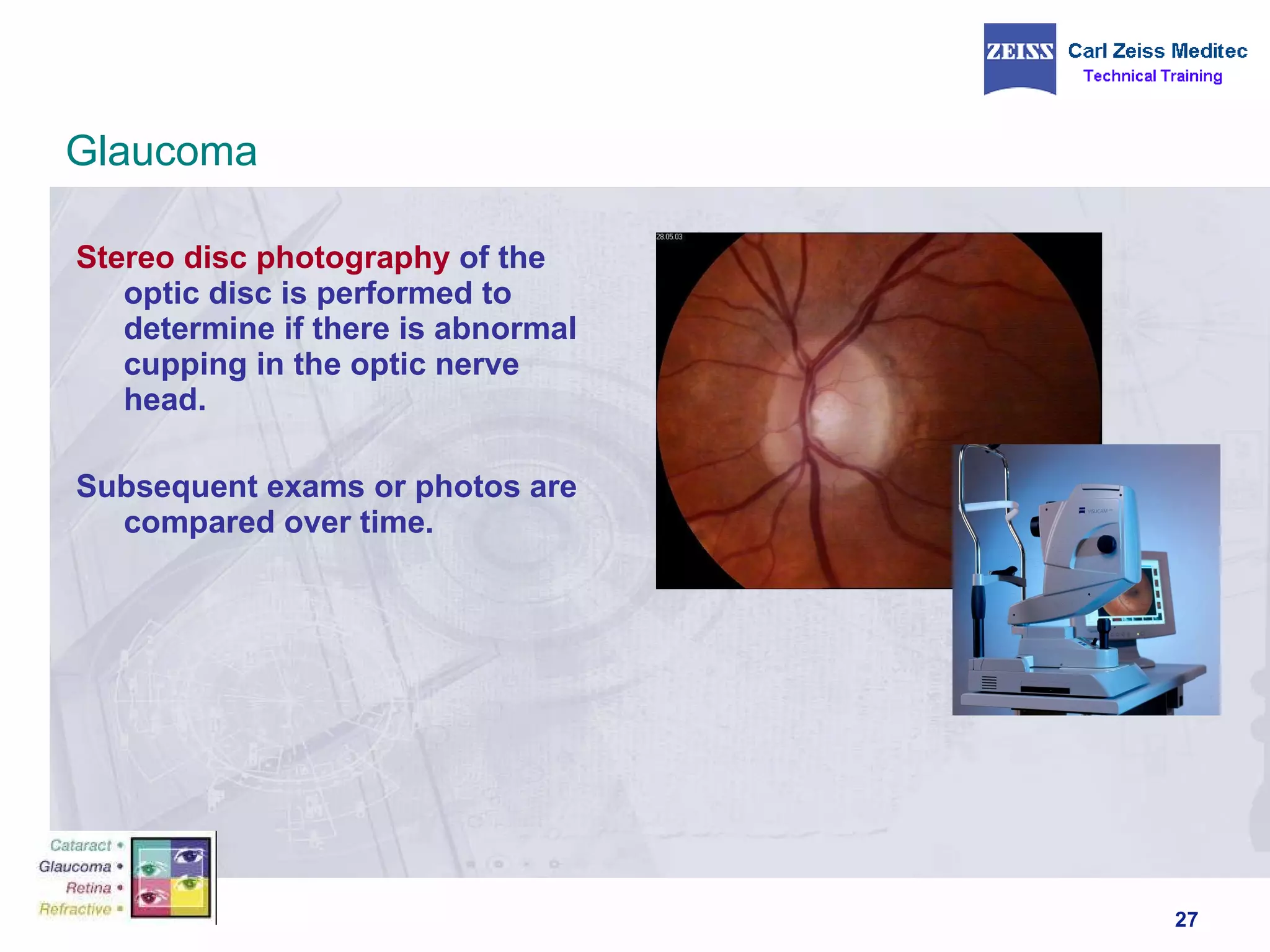
Stereo disc photography  of the optic disc is performed to determine if there is abnormal cupping in the optic nerve head. Subsequent exams or photos are compared over time. Glaucoma
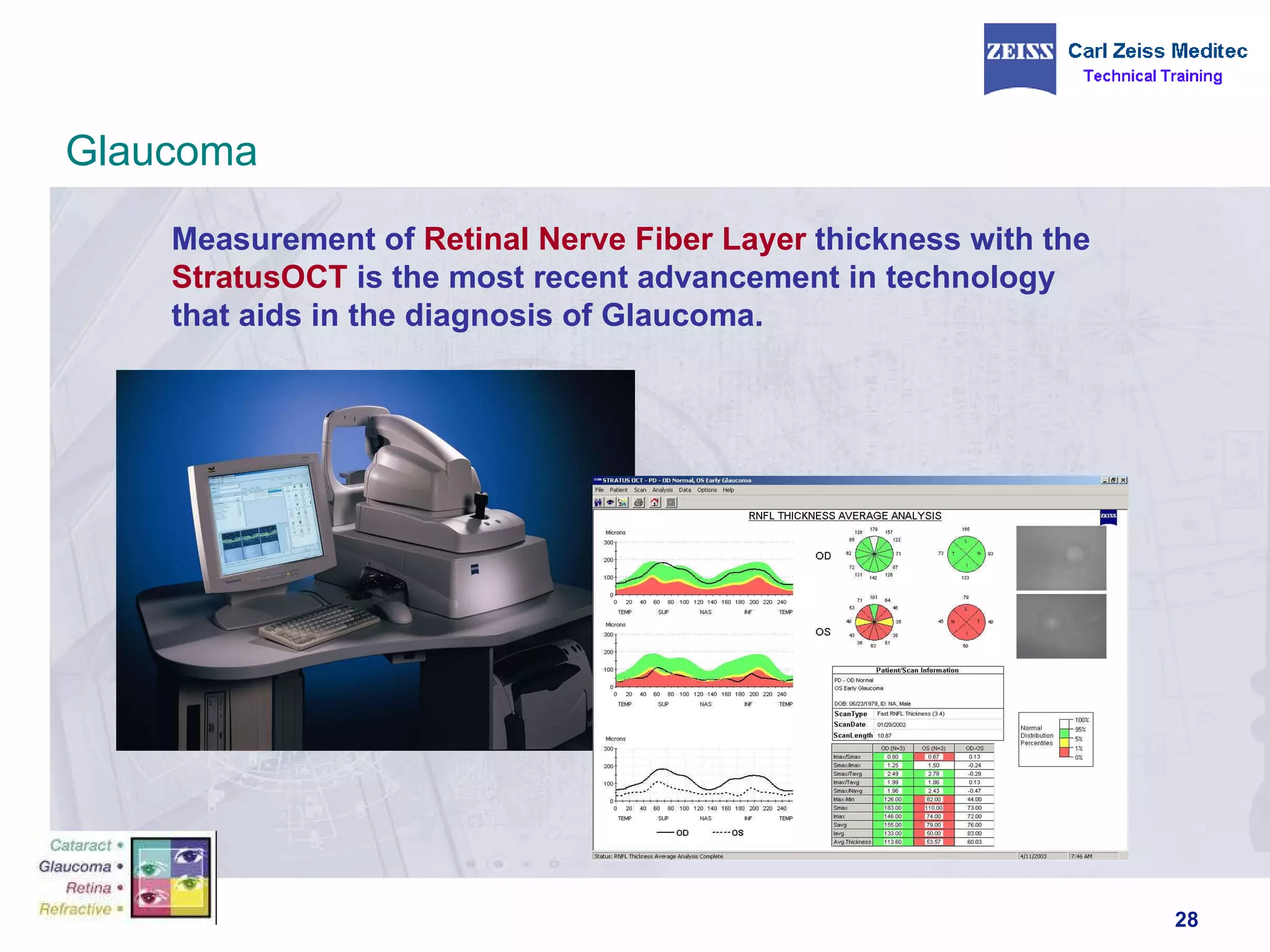
Measurement of  Retinal Nerve Fiber Layer  thickness with the  StratusOCT  is the most recent advancement in technology that aids in the diagnosis of Glaucoma. Glaucoma
Treatment Medication Laser Surgery Filtration Surgery Medications are available in several forms. Laser surgery can reduce the need for medications Filtration Surgery creates a new drainage channel Glaucoma
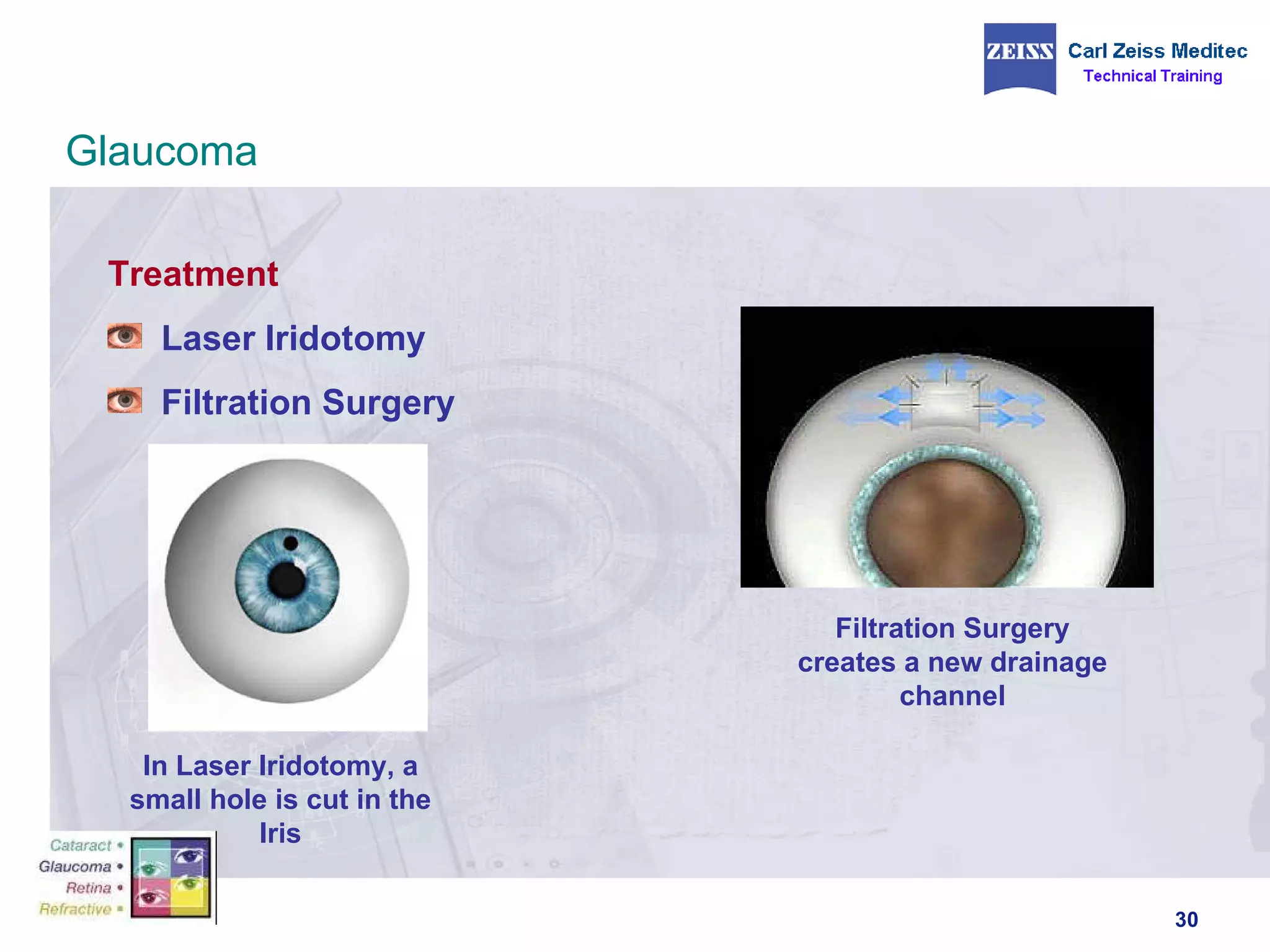
Treatment Laser Iridotomy Filtration Surgery In Laser Iridotomy, a small hole is cut in the Iris Filtration Surgery creates a new drainage channel Glaucoma

Glaucoma

  • 1.
    Glaucoma The silentthief of sight
  • 2.
    Glaucoma Glaucoma Types,diagnosis, and Treatment
  • 3.
    Glaucoma In general,Glaucoma occurs as a result of increased intraocular pressure (IOP) caused by a malformation or malfunction of the eyes drainage system. Normal IOP is 19 – 21 inches of mercury. The increased pressure causes compresssion of the retina and the optic nerve, and causes progressive , PERMANENT loss of eyesight if left untreated.
  • 4.
    Glaucoma Glaucoma canbe classified into several different and unique types: Primary Open Angle Glaucoma (POAG) Angle – closure Glaucoma (Acute Glaucoma) Congenital Glaucoma Secondary Glaucoma Pigmentary Glaucoma Normal – tension Glaucoma (NTG)
  • 5.
    Glaucoma Primary OpenAngle Glaucoma
  • 6.
    Glaucoma Primary OpenAngle Glaucoma is caused when the normal drainage system of the eye becomes partially blocked, causing pressure to build within the eye. Normal Eye
  • 7.
    Glaucoma Primary OpenAngle Glaucoma is caused when the normal drainage system of the eye becomes partially blocked, causing pressure to build within the eye. Glaucoma usually affects the perimitery vision first, with sight gradually being lost towards the center of the eye. Vision loss with Glaucoma
  • 8.
    Glaucoma Primary OpenAngle Glaucoma Normal Eye Pressure builds when the drainage system is blocked. This increasing pressure presses against the Optic Nerve and causes a gradual loss of sight. Total loss of vision
  • 9.
    Glaucoma Primary OpenAngle Glaucoma Symptoms In the very early stages there are NO symptoms. Mild pain in the eye, increasing gradually over time. “ Halos” appearing around lights. Gradual loss of Peripheral vision. Loss of night vision Who is at risk? Patients with a family history of Glaucoma African Americans Patients suffering from Myopia Patients suffering from Diabetes People over 35 years of age
  • 10.
    Glaucoma Angle –closure Glaucoma (Acute Glaucoma)
  • 11.
    Angle Closure Glaucoma (Sometimes referred to as Narrow Angle Glaucoma) is caused when the normal drainage system of the eye becomes suddenly blocked, causing pressure to build within the eye at a very rapid rate. Complete blindness can occur in as little as 3 to 5 days! Normal Eye Sudden blockage causes pressure to build rapidly. Glaucoma
  • 12.
    Angle Closure GlaucomaSymptoms Severe Pain Pressure over the eye Cloudiness to the Cornea Eye extremely sensitive to light Halos seen around lights. Nausea and/or vomiting Who is at risk? Patients with a family history of Glaucoma African Americans Patients suffering from Myopia Patients suffering from Diabetes People over 35 years of age Glaucoma
  • 13.
  • 14.
    Glaucoma Congenital Glaucoma results as a condition from birth. Children are born with conditions such as an abnormal development of the Anterior Chamber angles which prohibit the normal drainage of fluid from the eyes, which then causes an increase in the pressure within the eye, and subsequent Retinal and Optic Disc damage.
  • 15.
    Glaucoma Parents normallyare the first to recognize the symptoms of Congenital Glaucoma: Cloudiness of the cornea due to Edema Distension of the eye Photophobia (sensitive to light)
  • 16.
    Glaucoma In mostcases, numerous surgeries are required to correct Congenital Glaucoma. Lasers are sometimes used, as well as Filtration Surgery and insertion of Tube shunts:
  • 17.
  • 18.
    Glaucoma Secondary Glaucoma is usually the result of a trauma to the eye, although it can develop due to several causes: Abnormal deposits in the eye fluid Uveitis Lens Changes Drugs Haemorrhage
  • 19.
  • 20.
    Glaucoma Pigmentary Glaucoma can develop as a result of small pieces of the Iris breaking off. These small particles can lodge themselves in the normal drainage canals and subsequently interfere with the normal drainage of fluids from the eye.
  • 21.
  • 22.
    Glaucoma Normal TensionGlaucoma occurs when there is damage to the Optic nerve detected in patients who have completely normal Inter – Occular pressure. It has the same characteristics as Primary Open – Angle Glaucoma.
  • 23.
  • 24.
    Diagnosis Tonometry is often used as a diagnostic tool. The Tonometer is gently pressed against the eyeball, and the resistance (internal pressure) is measured. This requires that the eye be numbed prior to the test. Gonioscopy can be used to determine if the angle where the iris meets the cornea is open or closed. Glaucoma
  • 25.
    Diagnosis Perimetry is an essential method used to determine if there is any loss of the visual field. Glaucoma
  • 26.
    Primary Open AngleGlaucoma Diagnosis Slit Lamp Examination is another method of diagnosis of patients with suspected Glaucoma. Glaucoma
  • 27.
    Stereo disc photography of the optic disc is performed to determine if there is abnormal cupping in the optic nerve head. Subsequent exams or photos are compared over time. Glaucoma
  • 28.
    Measurement of Retinal Nerve Fiber Layer thickness with the StratusOCT is the most recent advancement in technology that aids in the diagnosis of Glaucoma. Glaucoma
  • 29.
    Treatment Medication LaserSurgery Filtration Surgery Medications are available in several forms. Laser surgery can reduce the need for medications Filtration Surgery creates a new drainage channel Glaucoma
  • 30.
    Treatment Laser IridotomyFiltration Surgery In Laser Iridotomy, a small hole is cut in the Iris Filtration Surgery creates a new drainage channel Glaucoma