IGCSE GEOGRAPHY
5. SETTLEMENTS
WHAT IS A SETTLEMENT
SETTLEMENTS SITE AND SITUATION
SITE FACTORS
SETTLEMENT FACTORS
Settlements come in different sizes, types and locations.
You can learn about the history and function of a settlement
by studying its shape and size, its placement in the landscape,
and its situation in relation to surrounding features.
If you group and classify settlements according to their size
and shape, the result is a settlement hierarchy.
A settlement is a place where people live.
A settlement may be as small as a single house in a remote area
or as large as a mega city (a city with over 10 million residents).
A settlement may be permanent or temporary.
An example of a temporary settlement is a refugee camp.
However, a temporary settlement may become permanent over
time. This has happened to many refugee camps that have been
built in conflict zones.
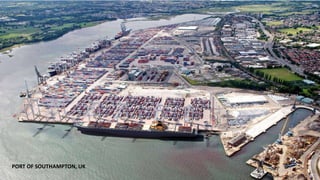
The reason a settlement was developed or built can be thought
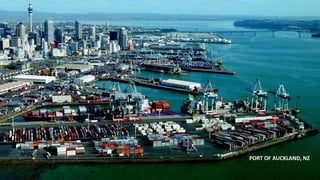
of as its function. For example, the settlement of Southampton
is a port.
PORT OF SOUTHAMPTON, UK
PORT OF AUCKLAND, NZ
The piece of land upon which a settlement is built is the
settlement site.
There are many reasons why a site might be chosen for the
development of a settlement and some factors will be more
important than others.
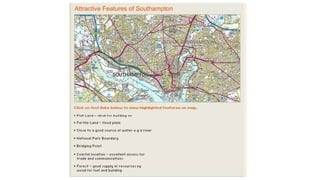
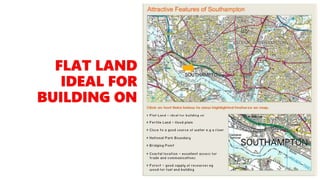
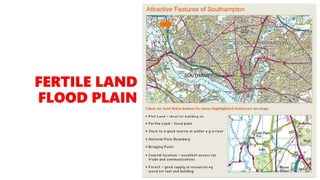
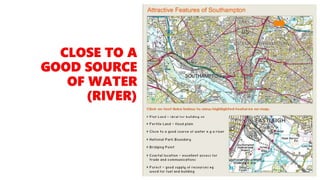
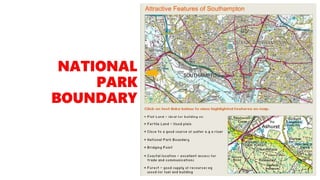
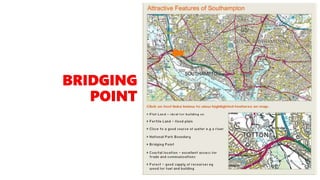
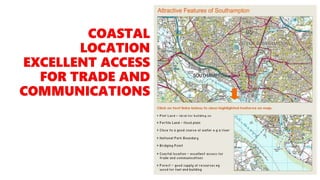
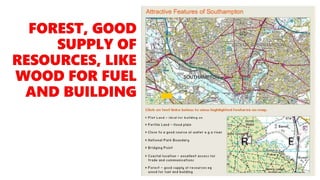
How many features can you spot in the map of Southampton
below?
Some common site factors include:
Wet point sites - these have a good water supply. Many
settlements grew around wet point sites, eg villages in the
South Downs.
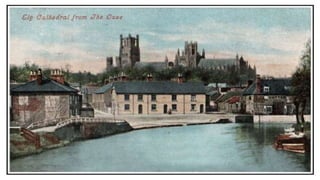
Dry point sites - these are away from the risk of flooding, eg Ely
in Cambridgeshire.
Defensive sites - often found on higher ground so that in the
past enemies could be seen from a distance, eg Corfe Castle,
Dorset, or in the loop of a meander, eg Durham.
Aspect - settlements are often found on the sunny side of a
deep valley. This is common in settlements in the Alps.
Shelter - from cold prevailing winds and rain.
Gap towns - Lincoln is found in a gap between two areas of
higher ground.
Resources - important for industry, eg villages such as Aberfan
in the Welsh valleys is close to coal reserves.
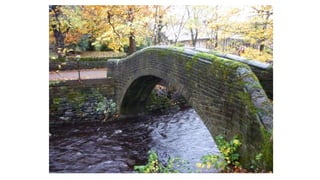
Bridging point - settlements with 'ford' in their name often
grew around a fording point or bridging point, eg Watford is
found on the River Colne.
Trading centres - often settlements grow where natural route
ways and rivers meet, which helps the development of roads,
railways and canals.
The importance of many of these functions diminish as
technological advances enable people to overcome difficulties.
The situation of a settlement is its position in relation to the
surrounding human and physical features, many of which will
have an impact on the settlement's type, size and function.
With modern settlements, remember that decisions about
location and situation have been made by planners, but that
their priorities may differ from those that determined the
location of a historical settlement like Southampton. For
example, a modern settlement does not need to be close to a
river because drinking water is now piped to our homes and
waterways are no longer important for transport.
Most large settlements in MEDCs are multifunctional and
perform a range of functions such as retail, education and
industry.
When settlements first started to grow, most had only one
distinct function, and others developed as the settlement grew.
If we group and classify a number of settlements according
to their size and shape, the result is settlement hierarchy.
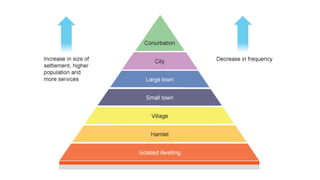
As you move up the hierarchy, the size of the settlement and
the distance between similar sized settlements increases.
There are more cities than conurbations, more towns than
cities and more villages than towns.
The number of services that a settlement provides increases
with settlement size.
Small settlements will only provide low-order services such
as a post offices, doctors and newsagents.
Large towns, cities and conurbations will provide low and
high-order services such as leisure centres, chain stores and
hospitals.
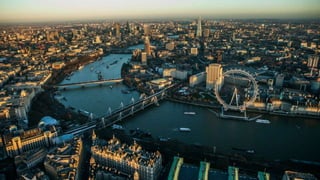
Larger settlements and conurbations have a much larger
sphere of influence than smaller ones.
This means they attract people from a wider area because of
the facilities they offer.
Cities such as London have a global sphere of influence,
whereas a small hamlet or village may only have a sphere of
influence of a couple of kilometres.
Services such as department stores selling high order goods
have a higher threshold than those selling low order goods
such as newsagents.
This means they need a higher number of people to support
them and make them profitable, therefore they will only be
found in larger settlements. It also means that there are
fewer big department stores than small newsagents.
The range of a service or product is the maximum distance
people are prepared to travel to purchase it.

GEOGRAPHY IGCSE: SETTLEMENTS

  • 1.
    IGCSE GEOGRAPHY 5. SETTLEMENTS WHATIS A SETTLEMENT SETTLEMENTS SITE AND SITUATION SITE FACTORS SETTLEMENT FACTORS
  • 2.
    Settlements come indifferent sizes, types and locations. You can learn about the history and function of a settlement by studying its shape and size, its placement in the landscape, and its situation in relation to surrounding features. If you group and classify settlements according to their size and shape, the result is a settlement hierarchy.
  • 3.
    A settlement isa place where people live. A settlement may be as small as a single house in a remote area or as large as a mega city (a city with over 10 million residents). A settlement may be permanent or temporary. An example of a temporary settlement is a refugee camp. However, a temporary settlement may become permanent over time. This has happened to many refugee camps that have been built in conflict zones. The reason a settlement was developed or built can be thought of as its function. For example, the settlement of Southampton is a port.
  • 4.
  • 5.
  • 6.
    The piece ofland upon which a settlement is built is the settlement site. There are many reasons why a site might be chosen for the development of a settlement and some factors will be more important than others. How many features can you spot in the map of Southampton below?
  • 15.
    Some common sitefactors include: Wet point sites - these have a good water supply. Many settlements grew around wet point sites, eg villages in the South Downs. Dry point sites - these are away from the risk of flooding, eg Ely in Cambridgeshire. Defensive sites - often found on higher ground so that in the past enemies could be seen from a distance, eg Corfe Castle, Dorset, or in the loop of a meander, eg Durham. Aspect - settlements are often found on the sunny side of a deep valley. This is common in settlements in the Alps.
  • 17.
    Shelter - fromcold prevailing winds and rain. Gap towns - Lincoln is found in a gap between two areas of higher ground. Resources - important for industry, eg villages such as Aberfan in the Welsh valleys is close to coal reserves. Bridging point - settlements with 'ford' in their name often grew around a fording point or bridging point, eg Watford is found on the River Colne. Trading centres - often settlements grow where natural route ways and rivers meet, which helps the development of roads, railways and canals.
  • 19.
    The importance ofmany of these functions diminish as technological advances enable people to overcome difficulties. The situation of a settlement is its position in relation to the surrounding human and physical features, many of which will have an impact on the settlement's type, size and function. With modern settlements, remember that decisions about location and situation have been made by planners, but that their priorities may differ from those that determined the location of a historical settlement like Southampton. For example, a modern settlement does not need to be close to a river because drinking water is now piped to our homes and waterways are no longer important for transport.
  • 21.
    Most large settlementsin MEDCs are multifunctional and perform a range of functions such as retail, education and industry. When settlements first started to grow, most had only one distinct function, and others developed as the settlement grew.
  • 22.
    If we groupand classify a number of settlements according to their size and shape, the result is settlement hierarchy.
  • 24.
    As you moveup the hierarchy, the size of the settlement and the distance between similar sized settlements increases. There are more cities than conurbations, more towns than cities and more villages than towns. The number of services that a settlement provides increases with settlement size. Small settlements will only provide low-order services such as a post offices, doctors and newsagents. Large towns, cities and conurbations will provide low and high-order services such as leisure centres, chain stores and hospitals.
  • 25.
    Larger settlements andconurbations have a much larger sphere of influence than smaller ones. This means they attract people from a wider area because of the facilities they offer. Cities such as London have a global sphere of influence, whereas a small hamlet or village may only have a sphere of influence of a couple of kilometres.
  • 27.
    Services such asdepartment stores selling high order goods have a higher threshold than those selling low order goods such as newsagents. This means they need a higher number of people to support them and make them profitable, therefore they will only be found in larger settlements. It also means that there are fewer big department stores than small newsagents. The range of a service or product is the maximum distance people are prepared to travel to purchase it.