Downloaded 41 times
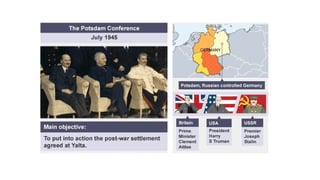
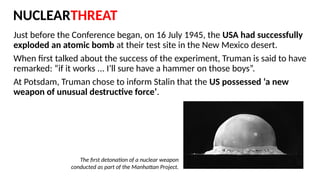
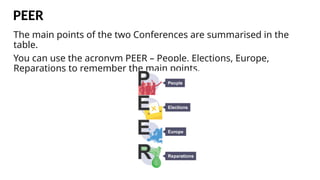
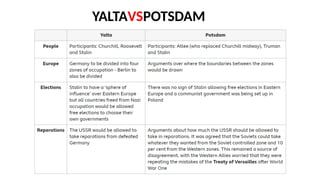

The Potsdam Conference in August 1945 was marked by tensions among the leaders Stalin, Truman, and Atlee, with key agreements on bringing Nazi war criminals to trial and dividing Germany into four occupied zones. Significant disagreements arose regarding Soviet policies in Eastern Europe and reparations from Germany, exacerbated by the change in U.S. leadership from Roosevelt to Truman, who was less inclined to cooperate with Stalin. Truman's revelation of the atomic bomb added further strain to the discussions, highlighting the emerging divisions between the powers.


