“Preparing before a lesson
yields excellent results” –
Moshoaliba T.N
SETTLEMENT: TERM 3
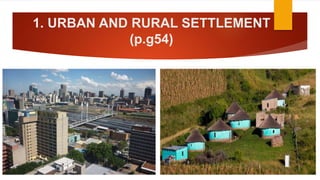
1. URBAN AND RURAL SETTLEMENT
(p.g54)
URBAN SETTLEMENT (p.g55)
 Bigger than rural settlement.
 Smaller urban areas are called towns.
 Large urban areas are called cities.
 People work in buildings such as shopping
centres, offices and factories.
 Some work on the streets as vendors.
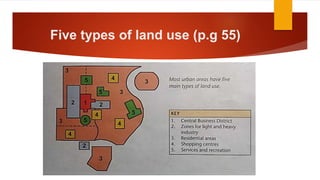
LAND USE WITHIN URBAN SETTLEMENT
(p.g55)
 Largest part is used for houses where people
live.
 Other parts are for businesses, shops, parks,
stadiums and transport centres (train/bus
stations).
 Businesses and shops are in the centre of the
city or town (CBD).
Five types of land use (p.g 55)
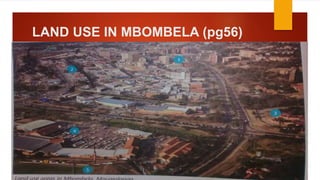
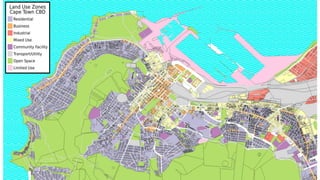
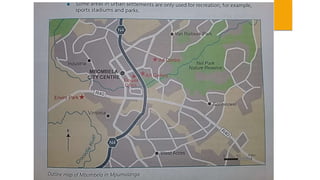
LAND USE IN MBOMBELA (pg56)
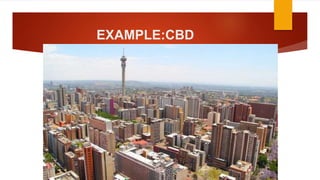
1. CENTRAL BUSINESS DISTRICT (CBD)
 In the middle of an urban area.
 There are many shops, offices and government
buildings.
EXAMPLE:CBD
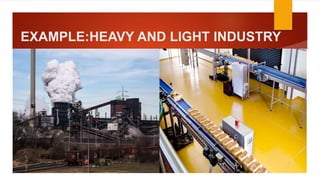
2. ZONES FOR LIGHT AND HEAVY
INDUSTRY
 E.g. of light industries are clothing, food and
drink processing, electrical industries and
furniture making.
 .E.g. of heavy industries use heavy resources
such as coal and iron ore (Steel manufacturing
and oil refinery).
EXAMPLE:HEAVY AND LIGHT INDUSTRY
3. RESIDENTIAL AREAS
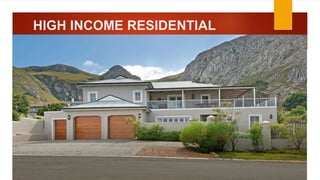
 High income residential have the most expensive
properties (modern/classy house or mansions).
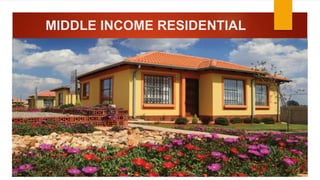
 Middle income have medium sized properties.
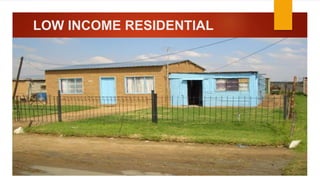
 Low income residential areas have smaller
properties(RDP) – may be overcrowded and not
built well.
HIGH INCOME RESIDENTIAL
MIDDLE INCOME RESIDENTIAL
LOW INCOME RESIDENTIAL
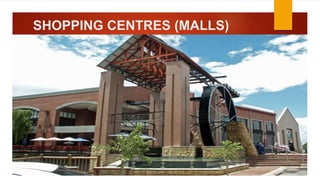
4. SHOPPING CENTRES
 Large areas where there are many shops under one
roof.
 Close to middle income residential areas.
 Car parks, bus and taxi ranks are close to shopping
centres
SHOPPING CENTRES (MALLS)
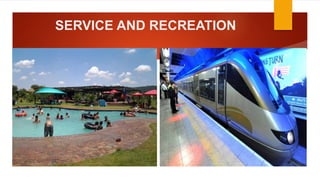
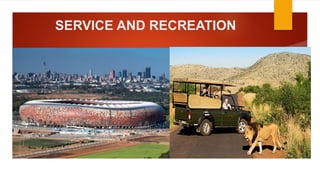
5. SERVICES AND RECREATION
 To provide services to people, e.g. transport, home services and
selling food.
 Service centres such as bus and train stations.
 Sports stadiums, nature reserve parks, swimming clubs etc.
SERVICE AND RECREATION
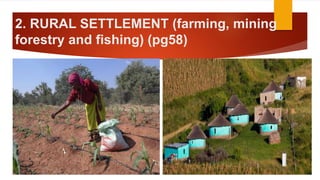
2. RURAL SETTLEMENT (farming, mining
forestry and fishing) (pg58)
2.1 FARMING SETTLEMENT (pg58)
 Main activity is producing food.
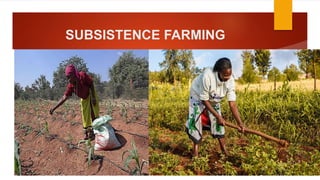
 When people grow food for themselves and
their families is called subsistence farming.
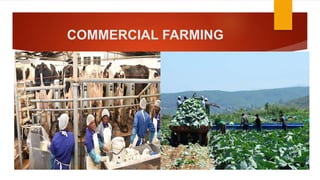
 Commercial farming produces food to sell,
they operate like factories.
 Commercial farms are large areas, hire many
people and produce large quantities of food.
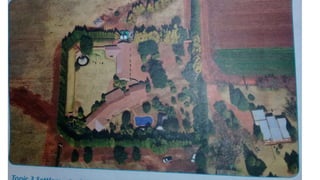
SUBSISTENCE FARMING
COMMERCIAL FARMING
2.2 MINING SETTLEMENT (pg59)
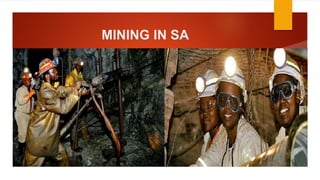
 Many of the jobs in modern mines are industrial.
 The first miners in South Africa were farmers who learnt how
to take iron out of rocks to make weapons.
 Popular mining settlements are Kimberlely, Johannesburg,
Newcastle, Welkom
MINING IN SA
2.3 FORESTRY SETTLEMENT
(pg58)
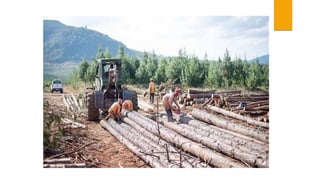
 Where wood is planted.
 Some settlements develop close to forests.
 People may find jobs in saw mills, pulp and paper mills or just
from cutting trees.
 In Gabon the government controls the forests, and the people
are only given 5km strips to cut down trees an to sell.
2.4 FISHING SETTLEMENT (pg58)
 Important for people who live close to large lakes and long
coastline of Africa.
 The whole community may be involved in fishing in many
ways.
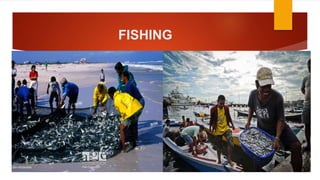
 Some people make nets or build boats to catch fish.
 Others catch fish by pulling in the nets and they sell the fish.
FISHING
Unit 2: Land use on aerial
photographs and large scale maps
p.g 60
1. What aerial photographs look like:
 They show views of land taken from a camera that is fixed under a special plane.
 The photo is taken directly above an area from a plane in the air. There are two
types of aerial photographs being vertical and oblique.
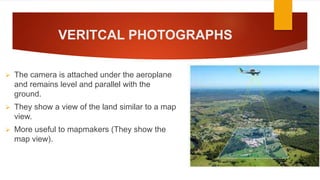
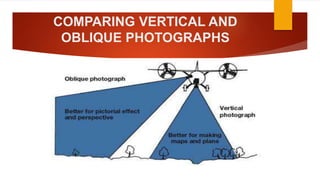
VERITCAL PHOTOGRAPHS
 The camera is attached under the aeroplane
and remains level and parallel with the
ground.
 They show a view of the land similar to a map
view.
 More useful to mapmakers (They show the
map view).
OBLIQUE PHOTOGRAPHS pg. 62
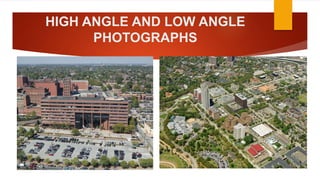
 Show a view from above at an angle (not parallel to the ground).
 Are easier to interpet/read as they show objects more like the way we see them.
 There are two types, high angle oblique (see the horizon) and low angle oblique
(cannot see the horizon).
HIGH ANGLE AND LOW ANGLE
PHOTOGRAPHS
COMPARING VERTICAL AND
OBLIQUE PHOTOGRAPHS
2. INFORMATION FROM AERIAL
PHOTOGRAPHS – NATURAL AND
CONSTRUCTED FEATURES pg. 63
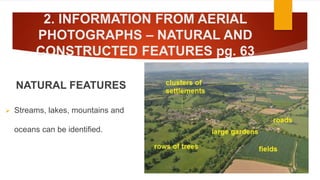
NATURAL FEATURES
 Streams, lakes, mountains and
oceans can be identified.
2. INFORMATION FROM AERIAL
PHOTOGRAPHS – NATURAL AND
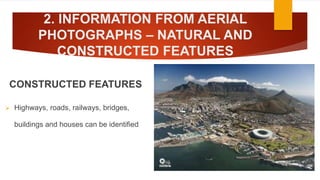
CONSTRUCTED FEATURES
 Highways, roads, railways, bridges,
buildings and houses can be identified
3. Identifying land use in urban
settlement (aerial photographs and large
scale map) pg. 65
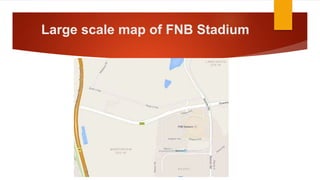
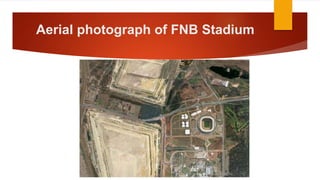
 Using an aerial photograph of an urban settlement together with a large scale
map.
 Gain a better understanding of the features of the land (Natural and
constructed).
 Understand how land is being used in the settlement.
Large scale map of FNB Stadium
Aerial photograph of FNB Stadium

Grade 8 term 3 Geography (settlement)

  • 1.
    “Preparing before alesson yields excellent results” – Moshoaliba T.N SETTLEMENT: TERM 3
  • 2.
    1. URBAN ANDRURAL SETTLEMENT (p.g54)
  • 3.
    URBAN SETTLEMENT (p.g55) Bigger than rural settlement.  Smaller urban areas are called towns.  Large urban areas are called cities.  People work in buildings such as shopping centres, offices and factories.  Some work on the streets as vendors.
  • 4.
    LAND USE WITHINURBAN SETTLEMENT (p.g55)  Largest part is used for houses where people live.  Other parts are for businesses, shops, parks, stadiums and transport centres (train/bus stations).  Businesses and shops are in the centre of the city or town (CBD).
  • 5.
    Five types ofland use (p.g 55)
  • 6.
    LAND USE INMBOMBELA (pg56)
  • 8.
    1. CENTRAL BUSINESSDISTRICT (CBD)  In the middle of an urban area.  There are many shops, offices and government buildings.
  • 9.
  • 10.
    2. ZONES FORLIGHT AND HEAVY INDUSTRY  E.g. of light industries are clothing, food and drink processing, electrical industries and furniture making.  .E.g. of heavy industries use heavy resources such as coal and iron ore (Steel manufacturing and oil refinery).
  • 11.
  • 12.
    3. RESIDENTIAL AREAS High income residential have the most expensive properties (modern/classy house or mansions).  Middle income have medium sized properties.  Low income residential areas have smaller properties(RDP) – may be overcrowded and not built well.
  • 13.
  • 14.
  • 15.
  • 16.
    4. SHOPPING CENTRES Large areas where there are many shops under one roof.  Close to middle income residential areas.  Car parks, bus and taxi ranks are close to shopping centres
  • 17.
  • 18.
    5. SERVICES ANDRECREATION  To provide services to people, e.g. transport, home services and selling food.  Service centres such as bus and train stations.  Sports stadiums, nature reserve parks, swimming clubs etc.
  • 19.
  • 20.
  • 22.
    2. RURAL SETTLEMENT(farming, mining forestry and fishing) (pg58)
  • 23.
    2.1 FARMING SETTLEMENT(pg58)  Main activity is producing food.  When people grow food for themselves and their families is called subsistence farming.  Commercial farming produces food to sell, they operate like factories.  Commercial farms are large areas, hire many people and produce large quantities of food.
  • 24.
  • 25.
  • 27.
    2.2 MINING SETTLEMENT(pg59)  Many of the jobs in modern mines are industrial.  The first miners in South Africa were farmers who learnt how to take iron out of rocks to make weapons.  Popular mining settlements are Kimberlely, Johannesburg, Newcastle, Welkom
  • 28.
  • 29.
    2.3 FORESTRY SETTLEMENT (pg58) Where wood is planted.  Some settlements develop close to forests.  People may find jobs in saw mills, pulp and paper mills or just from cutting trees.  In Gabon the government controls the forests, and the people are only given 5km strips to cut down trees an to sell.
  • 31.
    2.4 FISHING SETTLEMENT(pg58)  Important for people who live close to large lakes and long coastline of Africa.  The whole community may be involved in fishing in many ways.  Some people make nets or build boats to catch fish.  Others catch fish by pulling in the nets and they sell the fish.
  • 32.
  • 33.
    Unit 2: Landuse on aerial photographs and large scale maps p.g 60 1. What aerial photographs look like:  They show views of land taken from a camera that is fixed under a special plane.  The photo is taken directly above an area from a plane in the air. There are two types of aerial photographs being vertical and oblique.
  • 34.
    VERITCAL PHOTOGRAPHS  Thecamera is attached under the aeroplane and remains level and parallel with the ground.  They show a view of the land similar to a map view.  More useful to mapmakers (They show the map view).
  • 35.
    OBLIQUE PHOTOGRAPHS pg.62  Show a view from above at an angle (not parallel to the ground).  Are easier to interpet/read as they show objects more like the way we see them.  There are two types, high angle oblique (see the horizon) and low angle oblique (cannot see the horizon).
  • 36.
    HIGH ANGLE ANDLOW ANGLE PHOTOGRAPHS
  • 37.
  • 38.
    2. INFORMATION FROMAERIAL PHOTOGRAPHS – NATURAL AND CONSTRUCTED FEATURES pg. 63 NATURAL FEATURES  Streams, lakes, mountains and oceans can be identified.
  • 39.
    2. INFORMATION FROMAERIAL PHOTOGRAPHS – NATURAL AND CONSTRUCTED FEATURES CONSTRUCTED FEATURES  Highways, roads, railways, bridges, buildings and houses can be identified
  • 40.
    3. Identifying landuse in urban settlement (aerial photographs and large scale map) pg. 65  Using an aerial photograph of an urban settlement together with a large scale map.  Gain a better understanding of the features of the land (Natural and constructed).  Understand how land is being used in the settlement.
  • 41.
    Large scale mapof FNB Stadium
  • 42.