


WELCOME
GENE TRANSFER TECHNIQUES
DEV HINGRA
PhD Scholar
09982384008
Department of Plant Breeding & Genetics
Rajasthan College of Agriculture
Maharana Pratap University of Agriculture & Technology
Udaipur 313001
Mail Id – mail2devhingra@gmail.com
INTRODUCTION
• Gene transfer or uptake of DNA refers to the
process that moves a specific piece of DNA into
cell.
• The directed desirable gene transfer from one
organism to another and the subsequent stable
integration & expression of foreign gene into the
genome is referred as genetic transformation.
• The transferred gene is known as transgene and
the organism that develop after a successful gene
transfer is known as transgenic.
Evolution and Gene Transfer
• Genetic engineering techniques and tools
are artificial means of creation of variation.
• These can be used in development of new
genotypes or species.
• Thus it is linked with man made crop
evolution.
Transformation:Transformation:
Heritable change in a cell/organismHeritable change in a cell/organism
brought about by the uptake andbrought about by the uptake and
establishment of introduced DNA.establishment of introduced DNA.
STEPS IN TRANSFORMATION
1. Identification of useful genes : Desirable
genes located in wild species, unrelated
plant species, unrelated organism and
animals.
2. Designing gene for insertion: The gene
of interest is isolated from the donor
source and cloned in the laboratory. The
cloning is done generally using plasmid.
3. Insertion of gene into target plant: The cloned
gene i.e multiple copies of the gene of interest
are inserted into host plant or the recipient
plant.
4. Identification of transgenic cells: Transformed
cells are identified using selectable marker and
are regenerated into whole plant in nutrient
medium. Regenerate plant compared with
plant variety. It should look like parent variety
except gene of interest.
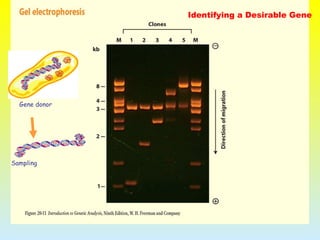
Identifying a Desirable Gene
Gene donor
Sampling
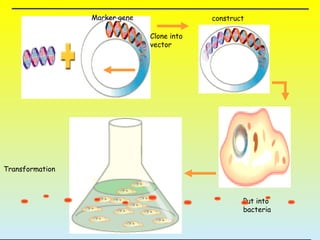
Clone into
vector
Marker gene construct
i
Put into
bacteria
Transformation
Methods of
gene transfer
There are two methods
A)Vector Based Method:- Infecting plant cells with
plasmid as vector carrying the desired gene.
1) Agrobacterium tumefaciens.
2) Agrobacterium rhizogenes.
3) Viral vectors like CaMV, Gemini virus
B) Direct Gene Transfer Method :- Shooting
microscopic particle containing gene directly into the cell.
1. Particle Bombardment (Gene Gun).
2. Liposome-mediated gene transfer.
3. Electroporation of protoplast.
4. Microinjection.
5. Silicon carbide fibers.
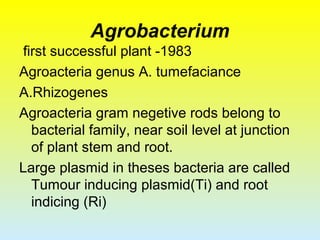
Agrobacterium
first successful plant -1983
Agroacteria genus A. tumefaciance
A.Rhizogenes
Agroacteria gram negetive rods belong to
bacterial family, near soil level at junction
of plant stem and root.
Large plasmid in theses bacteria are called
Tumour inducing plasmid(Ti) and root
indicing (Ri)
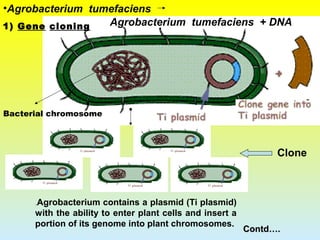
.Agrobacterium contains a plasmid (Ti plasmid)
with the ability to enter plant cells and insert a
portion of its genome into plant chromosomes.
Agrobacterium tumefaciens + DNA
Contd….Contd….
•Agrobacterium tumefaciens
Clone
1) Gene cloning
Bacterial chromosome
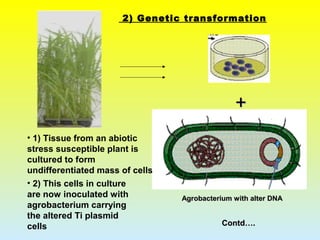
• 1) Tissue from an abiotic
stress susceptible plant is
cultured to form
undifferentiated mass of cells
++
Agrobacterium with alter DNAAgrobacterium with alter DNA
• 2) This cells in culture
are now inoculated with
agrobacterium carrying
the altered Ti plasmid
cells Contd….Contd….
2) Genetic transformation
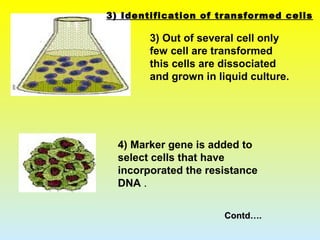
3) Out of several cell only
few cell are transformed
this cells are dissociated
and grown in liquid culture.
4) Marker gene is added to
select cells that have
incorporated the resistance
DNA ..
Contd….Contd….
3) Identification of transformed cells
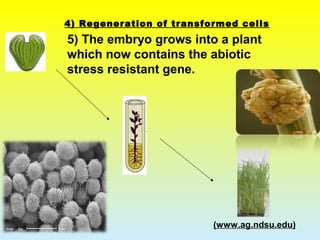
5) The embryo grows into a plant
which now contains the abiotic
stress resistant gene.
(www.ag.ndsu.edu)
4) Regeneration of transformed cells
Bt-transformed Crops
• Cotton
• Corn (maize)
• Soybean
• Tomato
• Tobacco
• Brinjal
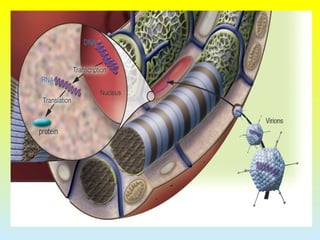
VIRUS MEDIATED GENE TRANSFER
Vectors based on virus desirable – high
efficiency of gene transfer
Viral infection of cell result in addition of
new genetic material which is expressed in
the host.
Additional genetic material incorporated in
the genome of plant virus might be
replicated and expressed in the plant cell
along with viral genome.
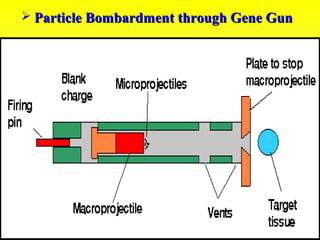
 Particle Bombardment through Gene GunParticle Bombardment through Gene Gun
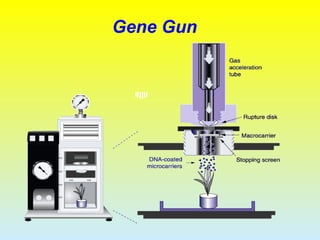
Gene Gun
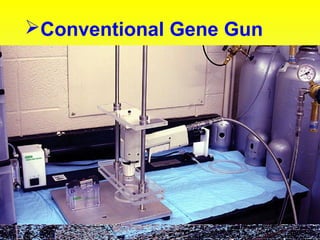
Conventional Gene Gun
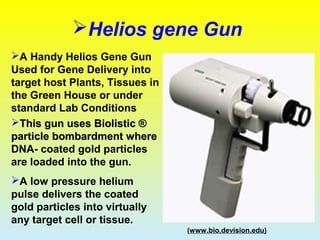
Helios gene Gun
A Handy Helios Gene Gun
Used for Gene Delivery into
target host Plants, Tissues in
the Green House or under
standard Lab Conditions
(www.bio.devision.edu)
This gun uses Biolistic ®This gun uses Biolistic ®
particle bombardment whereparticle bombardment where
DNA- coated gold particles
are loaded into the gun.
A low pressure helium
pulse delivers the coated
gold particles into virtually
any target cell or tissue.
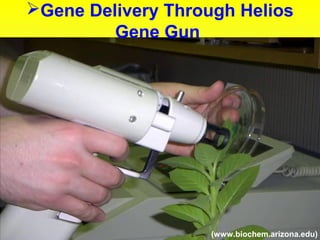
Gene Delivery Through Helios
Gene Gun
(www.biochem.arizona.edu)
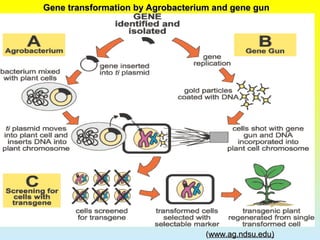
Gene transformation by Agrobacterium and gene gunGene transformation by Agrobacterium and gene gun
((www.ag.ndsu.edu)www.ag.ndsu.edu)
Liposomes - mediated
transformation
• In Liposomes mediated transformationIn Liposomes mediated transformation
DNA is loaded into liposome.DNA is loaded into liposome.
• DNA are enter in to protoplastDNA are enter in to protoplast
(lipofection) either direct fusion with(lipofection) either direct fusion with
plasma membrane or endocytosis ofplasma membrane or endocytosis of
liposome.liposome.
• And transfer of genes takes place.And transfer of genes takes place.
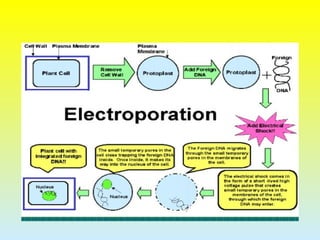
Electroporation
Suspension of protoplast with
desired DNA are prepared passes
from
High electric shock
For few seconds
Cause temporarily pores to open
Allows DNA to enter the cell
Preferably Protoplasts used largely
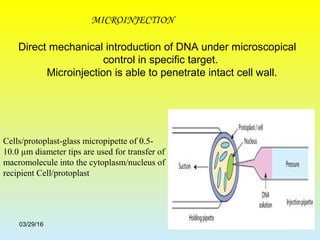
Direct mechanical introduction of DNA under microscopical
control in specific target.
Microinjection is able to penetrate intact cell wall.
03/29/16
Cells/protoplast-glass micropipette of 0.5-
10.0 µm diameter tips are used for transfer of
macromolecule into the cytoplasm/nucleus of
recipient Cell/protoplast
MICROINJECTION
Silicon-carbide mediated
transformation.
In Silicon-carbide mediate transformation
The DNA (with marker gene) , silicon carbide
fibers ,tissue of species are mixed in a blender.
 The DNA-coated fibers penetrate the cells
via small edges created by the fibers.
Thus the DNA is introduced.
Advantages of Transgenic Plants
• Improvement in Yield
• Herbicide resistance
• Improvement in Quality
• Insect resistance
• Resistance to abiotic stresses
• Industrial Products
• Rapid and Accurate Technique
• No barrier for gene transfer
LIMITATIONLIMITATION
 Genetically modified crop are against
environment and biosafety.
 Genetically modified crops may become
weed.
 Antibiotic resistant gene in crops may lead to
development of resistant to the antibiotic used
to treat human and animal diseases.
 It may disturb the ecosystem by eliminating
the natural population.
 Dependence of farmers on multinational
company.
Risk and concerns
• Damage to human health
• Allergenicity.
• Eating foreign DNA.
• Change nutrient levels.
• Cauliflower mosaic virus promoter.
• Damage to natural environment
• Monarch butterfly.
• Antibiotic resistance.
• Crop to weed gene flow.
• Leakage of GM proteins into soil.
It would be highly effective to identify
genes that respond to multiple stresses,
both biotic and abiotic.
 Transforming many different elite crop
varieties that are suitable for planting in
major growing regions in the world, so that
crossing with local crop varieties could be
minimized or eliminated.
 There is a need for a greater number of
dedicated laboratories which deal solely
with the production of abiotic stress
tolerant transgenic crops.
Future research needs
India has diverse climatic condition and soil types,
varied agricultural patterns and poor infrastructure in
farming sector. There is thus an urgent need for
production of abiotic stress tolerant plants in India, than
anywhere else.
 Genetic engineering could be used to accelerate
progress in conventional crops breeding programs
committed towards development of abiotic tolerance in
rice.
 Genetic engineering may provide ample scope for
enhancing crop yield by enabling growing in drought
and salt stress condition.
 LEA has a potential for use as molecular tools for
genetic crop improvement toward stress tolerance.
ThankThank
youyou

Gene transfer techniques

  • 1.
  • 2.
    GENE TRANSFER TECHNIQUES DEVHINGRA PhD Scholar 09982384008 Department of Plant Breeding & Genetics Rajasthan College of Agriculture Maharana Pratap University of Agriculture & Technology Udaipur 313001 Mail Id – mail2devhingra@gmail.com
  • 3.
    INTRODUCTION • Gene transferor uptake of DNA refers to the process that moves a specific piece of DNA into cell. • The directed desirable gene transfer from one organism to another and the subsequent stable integration & expression of foreign gene into the genome is referred as genetic transformation. • The transferred gene is known as transgene and the organism that develop after a successful gene transfer is known as transgenic.
  • 4.
    Evolution and GeneTransfer • Genetic engineering techniques and tools are artificial means of creation of variation. • These can be used in development of new genotypes or species. • Thus it is linked with man made crop evolution.
  • 5.
    Transformation:Transformation: Heritable change ina cell/organismHeritable change in a cell/organism brought about by the uptake andbrought about by the uptake and establishment of introduced DNA.establishment of introduced DNA.
  • 6.
    STEPS IN TRANSFORMATION 1.Identification of useful genes : Desirable genes located in wild species, unrelated plant species, unrelated organism and animals. 2. Designing gene for insertion: The gene of interest is isolated from the donor source and cloned in the laboratory. The cloning is done generally using plasmid.
  • 7.
    3. Insertion ofgene into target plant: The cloned gene i.e multiple copies of the gene of interest are inserted into host plant or the recipient plant. 4. Identification of transgenic cells: Transformed cells are identified using selectable marker and are regenerated into whole plant in nutrient medium. Regenerate plant compared with plant variety. It should look like parent variety except gene of interest.
  • 8.
    Identifying a DesirableGene Gene donor Sampling
  • 9.
    Clone into vector Marker geneconstruct i Put into bacteria Transformation
  • 10.
  • 11.
    There are twomethods A)Vector Based Method:- Infecting plant cells with plasmid as vector carrying the desired gene. 1) Agrobacterium tumefaciens. 2) Agrobacterium rhizogenes. 3) Viral vectors like CaMV, Gemini virus B) Direct Gene Transfer Method :- Shooting microscopic particle containing gene directly into the cell. 1. Particle Bombardment (Gene Gun). 2. Liposome-mediated gene transfer. 3. Electroporation of protoplast. 4. Microinjection. 5. Silicon carbide fibers.
  • 12.
    Agrobacterium first successful plant-1983 Agroacteria genus A. tumefaciance A.Rhizogenes Agroacteria gram negetive rods belong to bacterial family, near soil level at junction of plant stem and root. Large plasmid in theses bacteria are called Tumour inducing plasmid(Ti) and root indicing (Ri)
  • 13.
    .Agrobacterium contains aplasmid (Ti plasmid) with the ability to enter plant cells and insert a portion of its genome into plant chromosomes. Agrobacterium tumefaciens + DNA Contd….Contd…. •Agrobacterium tumefaciens Clone 1) Gene cloning Bacterial chromosome
  • 14.
    • 1) Tissuefrom an abiotic stress susceptible plant is cultured to form undifferentiated mass of cells ++ Agrobacterium with alter DNAAgrobacterium with alter DNA • 2) This cells in culture are now inoculated with agrobacterium carrying the altered Ti plasmid cells Contd….Contd…. 2) Genetic transformation
  • 15.
    3) Out ofseveral cell only few cell are transformed this cells are dissociated and grown in liquid culture. 4) Marker gene is added to select cells that have incorporated the resistance DNA .. Contd….Contd…. 3) Identification of transformed cells
  • 16.
    5) The embryogrows into a plant which now contains the abiotic stress resistant gene. (www.ag.ndsu.edu) 4) Regeneration of transformed cells
  • 17.
    Bt-transformed Crops • Cotton •Corn (maize) • Soybean • Tomato • Tobacco • Brinjal
  • 18.
    VIRUS MEDIATED GENETRANSFER Vectors based on virus desirable – high efficiency of gene transfer Viral infection of cell result in addition of new genetic material which is expressed in the host. Additional genetic material incorporated in the genome of plant virus might be replicated and expressed in the plant cell along with viral genome.
  • 20.
     Particle Bombardmentthrough Gene GunParticle Bombardment through Gene Gun
  • 21.
  • 22.
  • 23.
    Helios gene Gun AHandy Helios Gene Gun Used for Gene Delivery into target host Plants, Tissues in the Green House or under standard Lab Conditions (www.bio.devision.edu) This gun uses Biolistic ®This gun uses Biolistic ® particle bombardment whereparticle bombardment where DNA- coated gold particles are loaded into the gun. A low pressure helium pulse delivers the coated gold particles into virtually any target cell or tissue.
  • 24.
    Gene Delivery ThroughHelios Gene Gun (www.biochem.arizona.edu)
  • 25.
    Gene transformation byAgrobacterium and gene gunGene transformation by Agrobacterium and gene gun ((www.ag.ndsu.edu)www.ag.ndsu.edu)
  • 26.
    Liposomes - mediated transformation •In Liposomes mediated transformationIn Liposomes mediated transformation DNA is loaded into liposome.DNA is loaded into liposome. • DNA are enter in to protoplastDNA are enter in to protoplast (lipofection) either direct fusion with(lipofection) either direct fusion with plasma membrane or endocytosis ofplasma membrane or endocytosis of liposome.liposome. • And transfer of genes takes place.And transfer of genes takes place.
  • 27.
    Electroporation Suspension of protoplastwith desired DNA are prepared passes from High electric shock For few seconds Cause temporarily pores to open Allows DNA to enter the cell Preferably Protoplasts used largely
  • 29.
    Direct mechanical introductionof DNA under microscopical control in specific target. Microinjection is able to penetrate intact cell wall. 03/29/16 Cells/protoplast-glass micropipette of 0.5- 10.0 µm diameter tips are used for transfer of macromolecule into the cytoplasm/nucleus of recipient Cell/protoplast MICROINJECTION
  • 30.
    Silicon-carbide mediated transformation. In Silicon-carbidemediate transformation The DNA (with marker gene) , silicon carbide fibers ,tissue of species are mixed in a blender.  The DNA-coated fibers penetrate the cells via small edges created by the fibers. Thus the DNA is introduced.
  • 31.
    Advantages of TransgenicPlants • Improvement in Yield • Herbicide resistance • Improvement in Quality • Insect resistance • Resistance to abiotic stresses • Industrial Products • Rapid and Accurate Technique • No barrier for gene transfer
  • 32.
    LIMITATIONLIMITATION  Genetically modifiedcrop are against environment and biosafety.  Genetically modified crops may become weed.  Antibiotic resistant gene in crops may lead to development of resistant to the antibiotic used to treat human and animal diseases.  It may disturb the ecosystem by eliminating the natural population.  Dependence of farmers on multinational company.
  • 33.
    Risk and concerns •Damage to human health • Allergenicity. • Eating foreign DNA. • Change nutrient levels. • Cauliflower mosaic virus promoter. • Damage to natural environment • Monarch butterfly. • Antibiotic resistance. • Crop to weed gene flow. • Leakage of GM proteins into soil.
  • 34.
    It would behighly effective to identify genes that respond to multiple stresses, both biotic and abiotic.  Transforming many different elite crop varieties that are suitable for planting in major growing regions in the world, so that crossing with local crop varieties could be minimized or eliminated.  There is a need for a greater number of dedicated laboratories which deal solely with the production of abiotic stress tolerant transgenic crops. Future research needs
  • 35.
    India has diverseclimatic condition and soil types, varied agricultural patterns and poor infrastructure in farming sector. There is thus an urgent need for production of abiotic stress tolerant plants in India, than anywhere else.  Genetic engineering could be used to accelerate progress in conventional crops breeding programs committed towards development of abiotic tolerance in rice.  Genetic engineering may provide ample scope for enhancing crop yield by enabling growing in drought and salt stress condition.  LEA has a potential for use as molecular tools for genetic crop improvement toward stress tolerance.
  • 36.

Editor's Notes

  • #10 Movie requires Macromedia flash player. Click “Yes” when PowerPoint ask whether contents are safe, I have tried and it was.