By
Biswajit sahoo
m.sc.(previous)
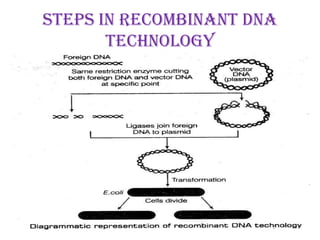
Steps in recombinant DNA
technology
Gene transfer methods
The process of transfer, intigration and expression
of transgene in the host cells is known as genetic
transformation/gene transfer.
 Two main categories.
1) Vector mediated and Indirect gene transfer.
2) Vectorless and Direct gene transfer
Vectorless and Direct
gene transfer
 Introduction of DNA into host cells without the involvement
of biological agents.
 The various methods of direct gene transfers are
1) Chemical methods
2) Electroporation
3) Particle bombardment
4) Lypofection
5) Micro injection
6) Macro injection
7) Pollen transformation
8) Delivery via growing pollen tubes
9) Laser induced transformation
10) Fibre mediated transformation
1) Chemical methods:-
• It is based on ability of protoplast to uptake the foreign
DNA from surrounding solution.
• An isolated plasmid DNA is mixed with protoplast in the
presence of the polyethylene glycol (PEG), PVA
(polyvinylalcohol) and Ca (PO4) which enhance the
uptake DNA by protoplast.
• After 15-20 min of incubation the protoplasts are
cultured. On the presence of appropriate selective
agents, the protoplast are regenerated and the
transgenic plants are further characterized for
conformation.
2) Electroporaton
• Induction of DNA into cell by exposing them for a very
brief period to high voltage electrical pulses to induce
transiant pores in the plasma lemma is called
Electroporation.
• The electric current leads to the formation of small
temporary holes in the membrane of the protoplasts
through which the DNA can pass.
• This method can be used in those crop species in which
regeneration from protoplast is possible.
3) Particle bambordment /
microprojectile / biolistic / gene gun /
particle acceleration
• The process of particle acceleration (or) biolistics
acceleration of DNA into cells with sufficient force such
that a part of it gets integrated in to DNA of target
cells.
• The process of transformation employes foreign DNA
coated with minute 0.2-0.7 μm gold (or) are tungstun
particles to deliver into target plant cells.
• Two procedures have been used to accelerate the
minute particles·
1.By using pressurized helium gas·
2.By electro static energy released by a droplet of water
exposed to a high voltage
• This method is being widely used because of its ability
to deliver foreign DNA into regenerable cells, tissue (or)
organs irrespective of monocots (or) dicots.
• Because of the physical nature of process there is no
biological limitation to the active DNA delivery that
makes it, genotype independent. This method allows
the transport of genes into many cells of nearly any
desired position in an experimental system without too
much manual labour.
Gene gun
4) Lypofection
Introduction of DNA into cells via lyposomes is known
as lipofection.
• The DNA enclosed in the lipid vesicles when mixed with
protoplast under appropriate condition penetrates into
the protoplast where lipase activity of the protoplast
dissolves the lipid vesicles and DNA gets released for
integration into the host genome.
• This method has not been commonly used as it is
difficult to construct the lipid vesicles. The success
depends upon the protoplast regeneration.
5) Microinjection
 The DNA solution is injected directly inside the cell
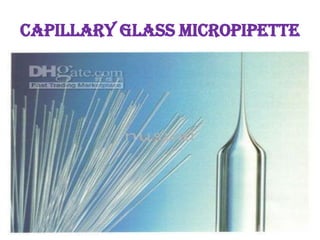
using capillary glass micropipetts with the help of
micromanipulators of a microinjection assembly.
 It is easier to use protoplast than cells since cell wall
interferes with the process of microinjection.
 The protoplast are usually immobilized in agarose (or)
on a glass slides coated with polylysine or by holding
them under suction by a micropipette.
 The process of microinjection is technically demanding
and time consuming a maximum of 40-50 protoplasts
can be microinjected in one hour
Capillary glass micropipette
6) Macroinjection
• The injection of plasmid DNA into the lumen of developing
inflorescence using by hypodermic syrange is known as
macro injection.
• An aqueous solution of DNA was introduced into the
developing floral tillers 14 days prior to meiosis.
• Transformed seeds were obtained from these injected
tillers after cross pollination with other and injected tillers.
• However the mechanism by which the DNA entered the
zygotic tissue yet unknown.
Hypodermic syringe
7) Pollen transformation
• Involves the gene transfer by soaking the
pollen grains in DNA solution prior to their
use for pollination.
• The method is highly attractive in view of its
simplicity and general applicability but so far
there is no definite evidence for a transgene
being transferred by pollen soaked in DNA
solution
8) DNA Delivary via growing pollen
tubes
• The stigmas were cut after pollination exposing
the pollen tubes, the DNA was introduced onto
the cut surface that presumably diffused through
the germinating pollen tube into the ovule.
• This method is simple easy and very promising
provided consistent result and stable
transformations are achieved. The mechanism of
DNA transfer into zygote through this method is
not yet established.
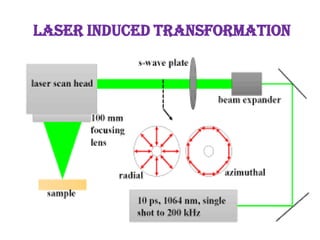
9) Laser induced transformation
• It is method of introducing DNA into plant cells
with a laser micro beam.
• Small pores in the membrane are created by
laser micro beam. The DNA from the surrounding
solution may then enter into the cell cytoplasm
through the small pores.
• Lasers have been used to deliver DNA into plant
cells.
• But there is no information on transient
expression or stable integration.
Laser induced transformation
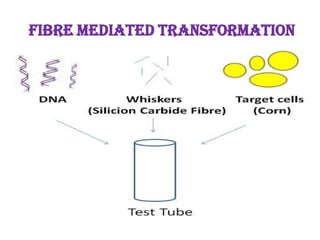
10) Fibre Mediated transformation
• The DNA is delivered into the cell cytoplasm and
nucleus by silicon carbide fibres of 0.6 μm diameter
and 10-80 μm length.
• The fibres mediated delivery of DNA into the cytoplasm
is similar to microinjection.
• The method was successful with maize and tobacco
suspension cell culture.
• It is the most rapid and expensive method of DNA
delivary provided stable integrations are achieved
Fibre Mediated transformation
Direct gene transfer

Direct gene transfer

  • 2.
  • 3.
    Steps in recombinantDNA technology
  • 4.
    Gene transfer methods Theprocess of transfer, intigration and expression of transgene in the host cells is known as genetic transformation/gene transfer.  Two main categories. 1) Vector mediated and Indirect gene transfer. 2) Vectorless and Direct gene transfer
  • 5.
    Vectorless and Direct genetransfer  Introduction of DNA into host cells without the involvement of biological agents.  The various methods of direct gene transfers are 1) Chemical methods 2) Electroporation 3) Particle bombardment 4) Lypofection
  • 6.
    5) Micro injection 6)Macro injection 7) Pollen transformation 8) Delivery via growing pollen tubes 9) Laser induced transformation 10) Fibre mediated transformation
  • 7.
    1) Chemical methods:- •It is based on ability of protoplast to uptake the foreign DNA from surrounding solution. • An isolated plasmid DNA is mixed with protoplast in the presence of the polyethylene glycol (PEG), PVA (polyvinylalcohol) and Ca (PO4) which enhance the uptake DNA by protoplast. • After 15-20 min of incubation the protoplasts are cultured. On the presence of appropriate selective agents, the protoplast are regenerated and the transgenic plants are further characterized for conformation.
  • 8.
    2) Electroporaton • Inductionof DNA into cell by exposing them for a very brief period to high voltage electrical pulses to induce transiant pores in the plasma lemma is called Electroporation. • The electric current leads to the formation of small temporary holes in the membrane of the protoplasts through which the DNA can pass. • This method can be used in those crop species in which regeneration from protoplast is possible.
  • 9.
    3) Particle bambordment/ microprojectile / biolistic / gene gun / particle acceleration • The process of particle acceleration (or) biolistics acceleration of DNA into cells with sufficient force such that a part of it gets integrated in to DNA of target cells. • The process of transformation employes foreign DNA coated with minute 0.2-0.7 μm gold (or) are tungstun particles to deliver into target plant cells. • Two procedures have been used to accelerate the minute particles·
  • 10.
    1.By using pressurizedhelium gas· 2.By electro static energy released by a droplet of water exposed to a high voltage • This method is being widely used because of its ability to deliver foreign DNA into regenerable cells, tissue (or) organs irrespective of monocots (or) dicots. • Because of the physical nature of process there is no biological limitation to the active DNA delivery that makes it, genotype independent. This method allows the transport of genes into many cells of nearly any desired position in an experimental system without too much manual labour.
  • 11.
  • 12.
    4) Lypofection Introduction ofDNA into cells via lyposomes is known as lipofection. • The DNA enclosed in the lipid vesicles when mixed with protoplast under appropriate condition penetrates into the protoplast where lipase activity of the protoplast dissolves the lipid vesicles and DNA gets released for integration into the host genome. • This method has not been commonly used as it is difficult to construct the lipid vesicles. The success depends upon the protoplast regeneration.
  • 13.
    5) Microinjection  TheDNA solution is injected directly inside the cell using capillary glass micropipetts with the help of micromanipulators of a microinjection assembly.  It is easier to use protoplast than cells since cell wall interferes with the process of microinjection.  The protoplast are usually immobilized in agarose (or) on a glass slides coated with polylysine or by holding them under suction by a micropipette.  The process of microinjection is technically demanding and time consuming a maximum of 40-50 protoplasts can be microinjected in one hour
  • 14.
  • 15.
    6) Macroinjection • Theinjection of plasmid DNA into the lumen of developing inflorescence using by hypodermic syrange is known as macro injection. • An aqueous solution of DNA was introduced into the developing floral tillers 14 days prior to meiosis. • Transformed seeds were obtained from these injected tillers after cross pollination with other and injected tillers. • However the mechanism by which the DNA entered the zygotic tissue yet unknown.
  • 16.
  • 17.
    7) Pollen transformation •Involves the gene transfer by soaking the pollen grains in DNA solution prior to their use for pollination. • The method is highly attractive in view of its simplicity and general applicability but so far there is no definite evidence for a transgene being transferred by pollen soaked in DNA solution
  • 18.
    8) DNA Delivaryvia growing pollen tubes • The stigmas were cut after pollination exposing the pollen tubes, the DNA was introduced onto the cut surface that presumably diffused through the germinating pollen tube into the ovule. • This method is simple easy and very promising provided consistent result and stable transformations are achieved. The mechanism of DNA transfer into zygote through this method is not yet established.
  • 19.
    9) Laser inducedtransformation • It is method of introducing DNA into plant cells with a laser micro beam. • Small pores in the membrane are created by laser micro beam. The DNA from the surrounding solution may then enter into the cell cytoplasm through the small pores. • Lasers have been used to deliver DNA into plant cells. • But there is no information on transient expression or stable integration.
  • 20.
  • 21.
    10) Fibre Mediatedtransformation • The DNA is delivered into the cell cytoplasm and nucleus by silicon carbide fibres of 0.6 μm diameter and 10-80 μm length. • The fibres mediated delivery of DNA into the cytoplasm is similar to microinjection. • The method was successful with maize and tobacco suspension cell culture. • It is the most rapid and expensive method of DNA delivary provided stable integrations are achieved
  • 22.