Gene Therapy- Types, Methods, Vectors, Major
          Development, Problems


                               Sanju Kumari
• Gene therapy is the insertion of genes into an individual cells
  and tissues to treat a disease in which a defective mutant
  allele is replaced with a functional one

• DNA is used as a therapeutic agent

• Genetic diseases, hematological disorders, acquired
  immunodeficiency syndromes, cancers are mainly treated
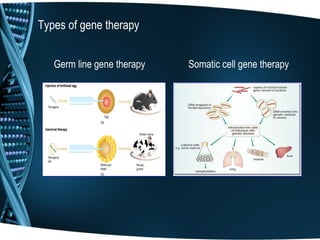
Types of gene therapy


   Germ line gene therapy   Somatic cell gene therapy
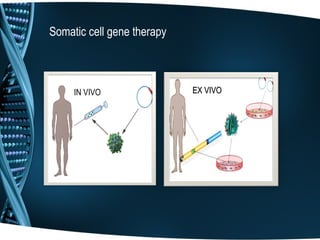
Somatic cell gene therapy


     IN VIVO                EX VIVO
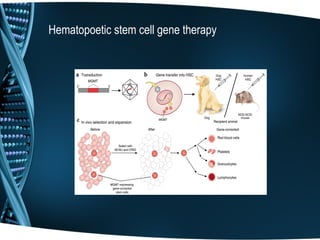
Hematopoetic stem cell gene therapy
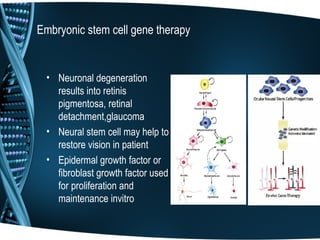
Embryonic stem cell gene therapy


  • Neuronal degeneration
    results into retinis
    pigmentosa, retinal
    detachment,glaucoma
  • Neural stem cell may help to
    restore vision in patient
  • Epidermal growth factor or
    fibroblast growth factor used
    for proliferation and
    maintenance invitro
Vectors for gene therapy

• Viral vectors               • Non-Viral vectors
  Retroviral vectors            Oligonucleotides
  Lentiviral vectors            Naked-DNA
  Adeno associated viral        Polyplexes
  vectors                       Lipoplexes
  Adenoviral Vector             Liposomes
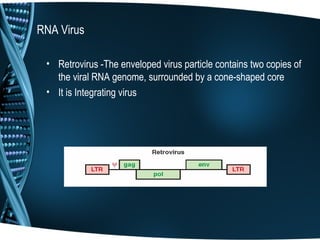
RNA Virus

 • Retrovirus -The enveloped virus particle contains two copies of
   the viral RNA genome, surrounded by a cone-shaped core
 • It is Integrating virus
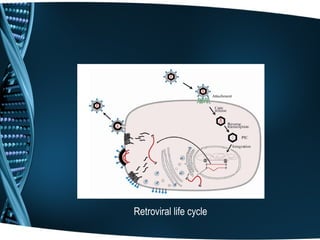
Retroviral life cycle
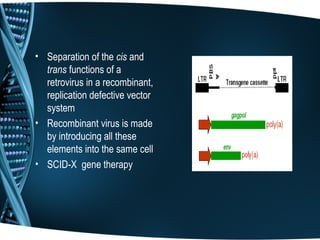
• Separation of the cis and
  trans functions of a
  retrovirus in a recombinant,
  replication defective vector
  system
• Recombinant virus is made
  by introducing all these
  elements into the same cell
• SCID-X gene therapy
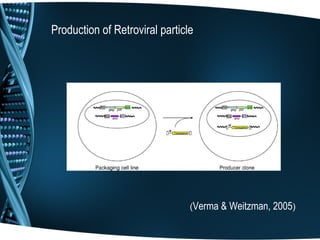
Production of Retroviral particle


                                (Verma & Weitzman, 2005)
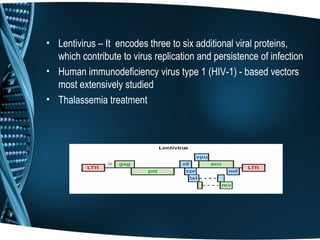
• Lentivirus – It encodes three to six additional viral proteins,
  which contribute to virus replication and persistence of infection
• Human immunodeficiency virus type 1 (HIV-1) - based vectors
  most extensively studied
• Thalassemia treatment
DNA Virus

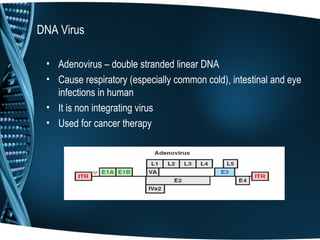
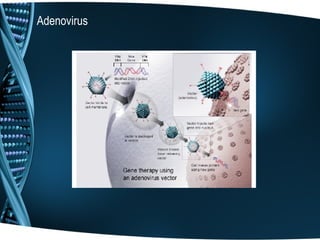
 • Adenovirus – double stranded linear DNA
 • Cause respiratory (especially common cold), intestinal and eye
   infections in human
 • It is non integrating virus
 • Used for cancer therapy
Adenovirus
Adenoviral-mediated Rybp expression promotes tumor
cell-specific apoptosis

  • Rybp kills tumors but not non transformed cell
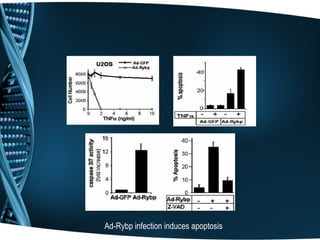
  • Ad-Rybp treatment result in Cytotoxic effect in the
    osteosarcoma cell line U20S
  • It enhances Fas-induced apoptosis
  • Ad-Rybp infection sensitizes cells to TNF-α treatment
Ad-Rybp infection induces apoptosis
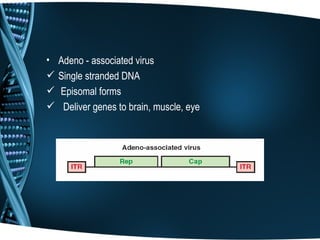
•   Adeno - associated virus
   Single stranded DNA
   Episomal forms
    Deliver genes to brain, muscle, eye
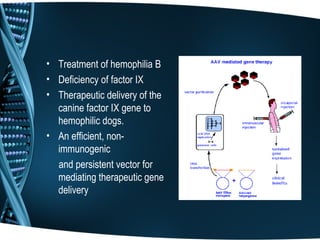
• Treatment of hemophilia B
• Deficiency of factor IX
• Therapeutic delivery of the
  canine factor IX gene to
  hemophilic dogs.
• An efficient, non-
  immunogenic
  and persistent vector for
  mediating therapeutic gene
  delivery
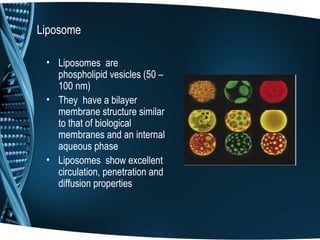
Liposome

 • Liposomes are
   phospholipid vesicles (50 –
   100 nm)
 • They have a bilayer
   membrane structure similar
   to that of biological
   membranes and an internal
   aqueous phase
 • Liposomes show excellent
   circulation, penetration and
   diffusion properties
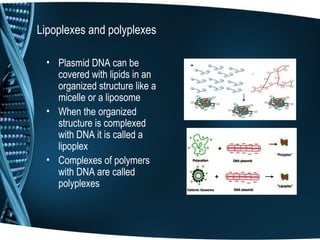
Lipoplexes and polyplexes

  • Plasmid DNA can be
    covered with lipids in an
    organized structure like a
    micelle or a liposome
  • When the organized
    structure is complexed
    with DNA it is called a
    lipoplex
  • Complexes of polymers
    with DNA are called
    polyplexes
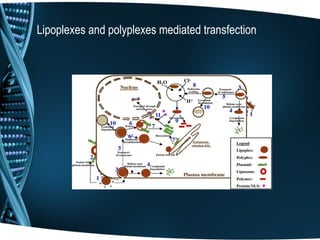
Lipoplexes and polyplexes mediated transfection
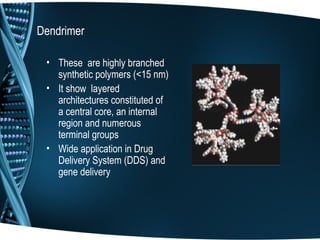
Dendrimer

 • These are highly branched
   synthetic polymers (<15 nm)
 • It show layered
   architectures constituted of
   a central core, an internal
   region and numerous
   terminal groups
 • Wide application in Drug
   Delivery System (DDS) and
   gene delivery
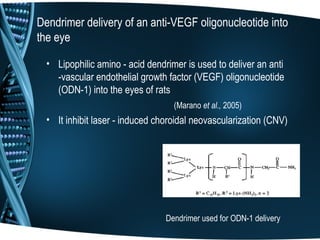
Dendrimer delivery of an anti-VEGF oligonucleotide into
the eye

  • Lipophilic amino - acid dendrimer is used to deliver an anti
    -vascular endothelial growth factor (VEGF) oligonucleotide
    (ODN-1) into the eyes of rats
                                   (Marano et al., 2005)
  • It inhibit laser - induced choroidal neovascularization (CNV)


                                 Dendrimer used for ODN-1 delivery
Methods of gene transfer


• Physical methods :-
 Microinjection
    Electroporation


• Chemical methods:-
 Calcium phosphate precipitation
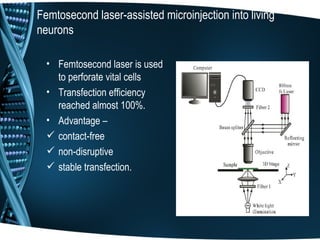
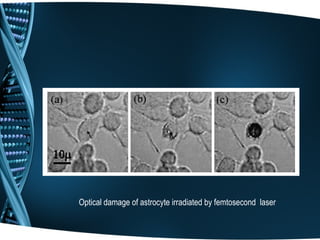
Femtosecond laser-assisted microinjection into living
neurons

  • Femtosecond laser is used
    to perforate vital cells
  • Transfection efficiency
    reached almost 100%.
  • Advantage –
   contact-free
   non-disruptive
   stable transfection.
Optical damage of astrocyte irradiated by femtosecond laser
Electroporation

 • Electroporation is the best non viral transfection technique in
   human endothelial and smooth muscle cells
 • High efficiency and acceptable survival rate
 • Require special buffer and programs
 • A range of voltage,capacitance and resistance settings is used
 • High number of cells and high plasmid amounts required is a
   weakness


                                       (Iversen et.al.,2005)
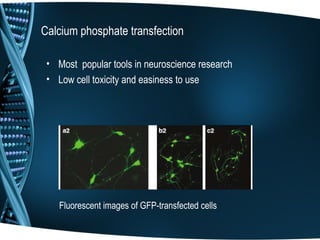
Calcium phosphate transfection

 • Most popular tools in neuroscience research
 • Low cell toxicity and easiness to use


    Fluorescent images of GFP-transfected cells
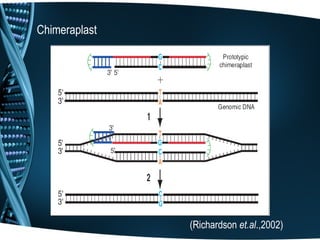
Chimeraplast


               (Richardson et.al.,2002)
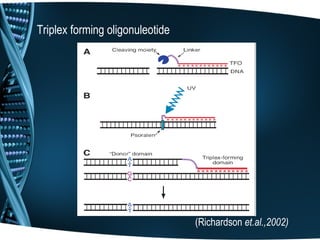
Triplex forming oligonuleotide


                                 (Richardson et.al.,2002)
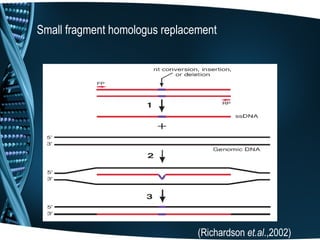
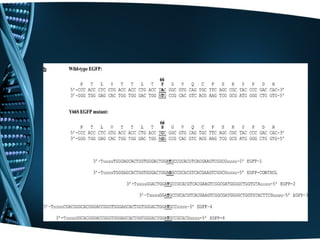
Small fragment homologus replacement


                                (Richardson et.al.,2002)
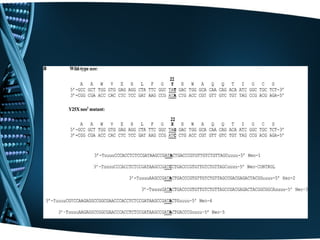
• Site-specific gene modification by oligodeoxynucleotides in
  mouse bone marrow-derived mesenchymal stem cells
• Alternative approach to ‘cure’ genetic disorders caused by
  mutations
• Establishement of MSCs cell lines with stably integrated mutant
  neomycin resistance and enhanced green fluorescent protein
  reporter genes
• The genetically modified MSCs were able to engraft into many
  tissues of unconditioned transgenic mice
                                             (Flagler,2008)
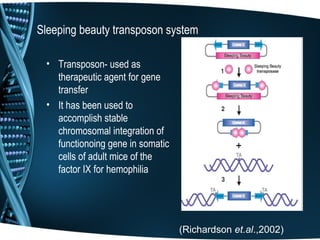
Sleeping beauty transposon system

 • Transposon- used as
   therapeutic agent for gene
   transfer
 • It has been used to
   accomplish stable
   chromosomal integration of
   functionoing gene in somatic
   cells of adult mice of the
   factor IX for hemophilia


                                  (Richardson et.al.,2002)
• Somatic integration and long-term transgene expression in
  normal and hemophilic mice using a DNA transposon system
• Sleeping beauty transposase efficiently insert DNA into the
  genomes of adult mammals using naked DNA
• Long-term expression of human blood coagulation factor IX
• Therapeutic in a mouse model of Haemophilia B
                                       (Yant et.al.,2000)
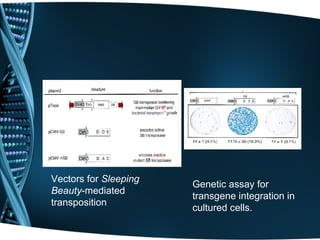
Vectors for Sleeping
                       Genetic assay for
Beauty-mediated
                       transgene integration in
transposition
                       cultured cells.
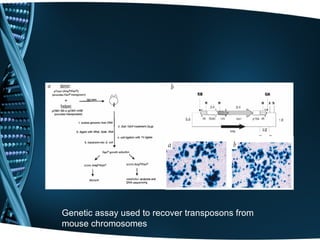
Genetic assay used to recover transposons from
mouse chromosomes
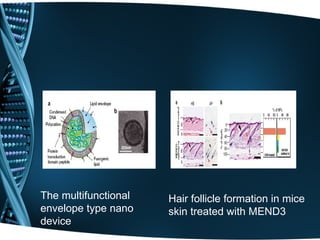
Octaarginine-modified multifunctional envelope-type
nanoparticles for gene delivery

  • Multifunctional envelope-type nanodevice (MEND) that mimics
    an envelope-type virus based on a novel packaging strategy.
  • DNA core packaged into a lipid envelope modified with an
    octaarginine peptide
  • Topical application of MEND particles containing constitutively
    active bone morphogenetic protein (BMP)
  • Type IA receptor (caBmpr1a) gene had a significant impact on
    hair growth in vivo
  • Superior non-viral gene delivery system
                                     (Khalil et al.,2007)
The multifunctional   Hair follicle formation in mice
envelope type nano    skin treated with MEND3
device
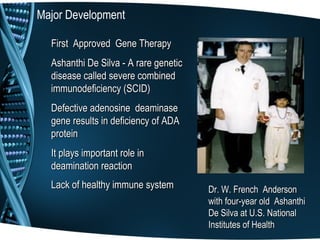
Major Development

  First Approved Gene Therapy
  Ashanthi De Silva - A rare genetic
  disease called severe combined
  immunodeficiency (SCID)
  Defective adenosine deaminase
  gene results in deficiency of ADA
  protein
  It plays important role in
  deamination reaction
  Lack of healthy immune system        Dr. W. French Anderson
                                       with four-year old Ashanthi
                                       De Silva at U.S. National
                                       Institutes of Health
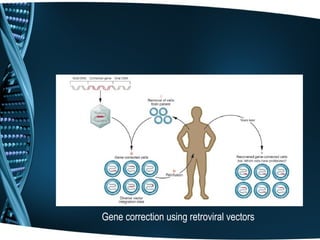
• Correction of SCID(X) by exvivo gene therapy
• Mutation in the gene encoding the common γc chain
• γc chain is an essential component of five cytokine receptors,
  which are necessary for the development of T cells and natural
  killer cells.
• CD34+ bone marrow cells from five boys are transduced ex
  vivo
• Retroviral vector
                                  (Abina et al.,2002)
Gene correction using retroviral vectors
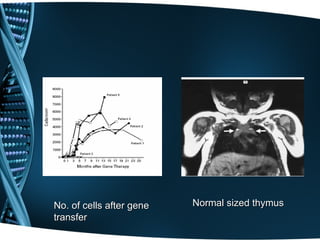
No. of cells after gene   Normal sized thymus
transfer
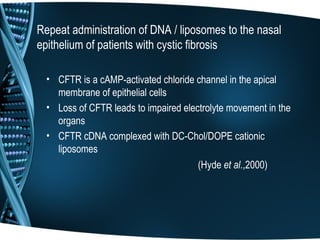
Repeat administration of DNA / liposomes to the nasal
epithelium of patients with cystic fibrosis

  • CFTR is a cAMP-activated chloride channel in the apical
    membrane of epithelial cells
  • Loss of CFTR leads to impaired electrolyte movement in the
    organs
  • CFTR cDNA complexed with DC-Chol/DOPE cationic
    liposomes
                                       (Hyde et al.,2000)
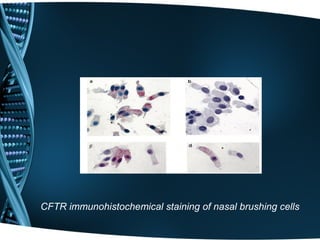
CFTR immunohistochemical staining of nasal brushing cells
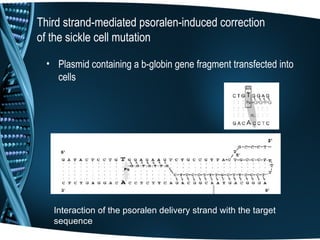
Third strand-mediated psoralen-induced correction
of the sickle cell mutation

  • Plasmid containing a b-globin gene fragment transfected into
    cells


   Interaction of the psoralen delivery strand with the target
   sequence
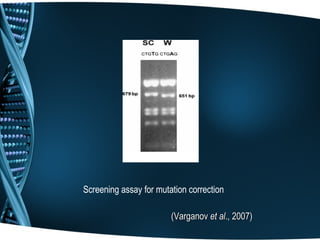
Screening assay for mutation correction

                        (Varganov et al., 2007)
Gene Therapy May Switch off Huntington Disease


 •  RNA interference or gene silencing may be a new way to treat
    Huntington's
 • siRNA is designed to match the RNA copied from a faulty gene
 • HD results from polyglutamine repeat expansion (CAG codon)
   in exon of huntingtin gene
 • Toxic gain of function on the huntingtin protein
                                       (Harper et al.,2005)
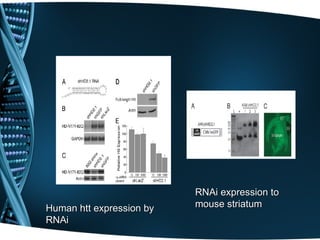
RNAi expression to
Human htt expression by   mouse striatum
RNAi
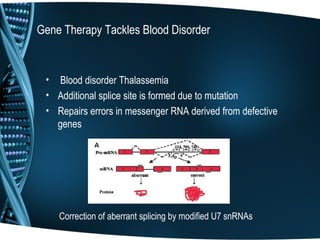
Gene Therapy Tackles Blood Disorder


 • Blood disorder Thalassemia
 • Additional splice site is formed due to mutation
 • Repairs errors in messenger RNA derived from defective
   genes


    Correction of aberrant splicing by modified U7 snRNAs
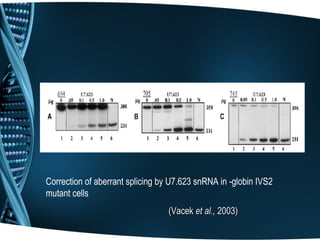
Correction of aberrant splicing by U7.623 snRNA in -globin IVS2
mutant cells
                                  (Vacek et al., 2003)
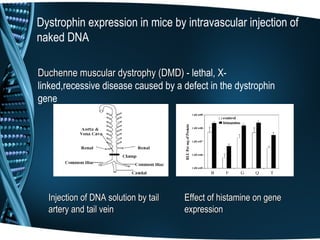
Dystrophin expression in mice by intravascular injection of
naked DNA

Duchenne muscular dystrophy (DMD) - lethal, X-
linked,recessive disease caused by a defect in the dystrophin
gene


  Injection of DNA solution by tail   Effect of histamine on gene
  artery and tail vein                expression
Gene Therapy for Parkinson's disease


 • Liposomes coated in a polymer call polyethylene glycol (PEG)
 • Viral vectors are too big to get across the "blood-brain barrier"
   This method has potential for treating Parkinson's disease Loss
   of dopaminergic neurons
 • Tyrosine hydroxylase gene therapy
 • Episomal based gene therapy
                                (Pardridge et al., 2005)
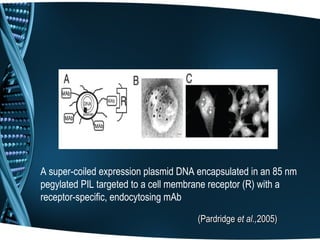
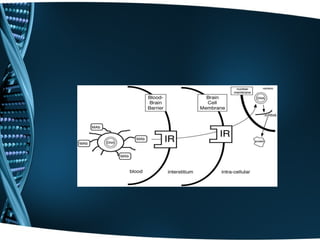
A super-coiled expression plasmid DNA encapsulated in an 85 nm
pegylated PIL targeted to a cell membrane receptor (R) with a
receptor-specific, endocytosing mAb

                                      (Pardridge et al.,2005)
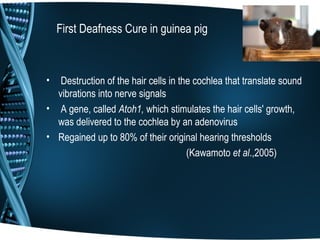
First Deafness Cure in guinea pig


•  Destruction of the hair cells in the cochlea that translate sound
  vibrations into nerve signals
• A gene, called Atoh1, which stimulates the hair cells' growth,
  was delivered to the cochlea by an adenovirus
• Regained up to 80% of their original hearing thresholds
                                      (Kawamoto et al.,2005)
Gene Therapy for Advanced Melanoma


 •  Reengineer lymphocytes for expression of TCR to target and
   attack cancer cells in patients with advanced metastatic
   melanoma
 • Retroviral vector was constructed encoding the pmel-1 TCR
   genes targeting the B16 melanoma antigen, gp100
 • Adoptive cell transfer
 • Transduction of C57BL/6 lymphocytes resulted in efficient
   pmel-1 TCR expression
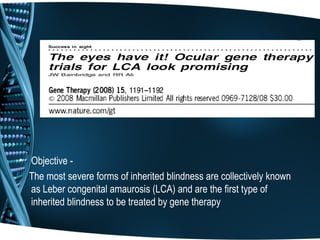
• Objective -
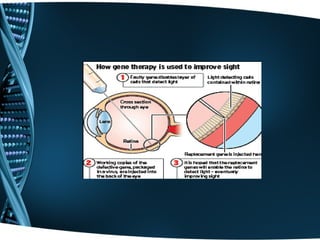
  The most severe forms of inherited blindness are collectively known
  as Leber congenital amaurosis (LCA) and are the first type of
  inherited blindness to be treated by gene therapy
Materials and Methods

 • A recombinant AAV-2 vector was used to deliver a human
    RPE65 cDNA to the target retinal pigment epithelium cells
 • Maguire et al.used an AAV-2 vector with a constitutive
    promoter to drive transgene expression
 • Bainbridge et al.used elements of the endogenous RPE65
    promoter
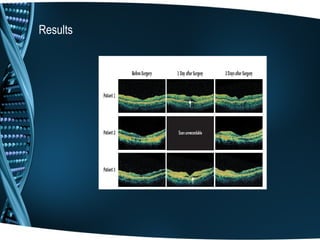
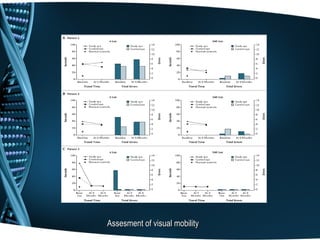
 • detected a progressive improvement in retinal sensitivity
   in one patient using both microperimetry and dark-adapted
   perimetry
Results
Assesment of visual mobility
Problems in gene therapy

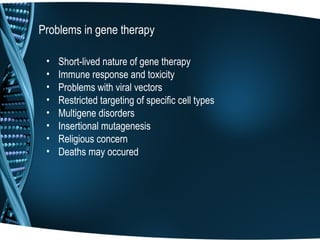
 •   Short-lived nature of gene therapy
 •   Immune response and toxicity
 •   Problems with viral vectors
 •   Restricted targeting of specific cell types
 •   Multigene disorders
 •   Insertional mutagenesis
 •   Religious concern
 •   Deaths may occured
Failures of Viral Mediated Gene Therapy

 • Retroviral vector
    • Dr. Alan Fischer – Conducting gene therapy on SCID-X1
      linked hereditary disorder
    • Hematopoietic stem cells from patients were stimulated and
      transduced ex vivo with MLV-based retroviral vector
    • Expressing the γc cytokine receptor subunit, and then were
      reinfused into the patients
    • During a 10-month follow up, γ c-expressing T and NK cells
      counts and function were comparable to age-matched
      controls
    • Two of the children developed T-cell leukemia
 Adeno-Associated Virus Vector
   • Patients suffering from hemophilia B were treated with AAV
     vectors expressing human factor IX
   • Intramuscular injecting AAV factor IX vectors directly into
     liver, which in turn have shown some unexplained toxicity
    University of Pennsylvania
   • A human Phase I clinical trial for ornithine
     transcarbamylase deficiencies
   • This trial was designed to test the safety of an E1/E4-
     deleted recombinant adenovirus vector
   • Jessie Gelsinger received highest dose and first person to
     die as result of vector delivery
Gene therapy
Gene therapy

Gene therapy

  • 1.
    Gene Therapy- Types,Methods, Vectors, Major Development, Problems Sanju Kumari
  • 2.
    • Gene therapyis the insertion of genes into an individual cells and tissues to treat a disease in which a defective mutant allele is replaced with a functional one • DNA is used as a therapeutic agent • Genetic diseases, hematological disorders, acquired immunodeficiency syndromes, cancers are mainly treated
  • 3.
    Types of genetherapy Germ line gene therapy Somatic cell gene therapy
  • 4.
    Somatic cell genetherapy IN VIVO EX VIVO
  • 5.
  • 6.
    Embryonic stem cellgene therapy • Neuronal degeneration results into retinis pigmentosa, retinal detachment,glaucoma • Neural stem cell may help to restore vision in patient • Epidermal growth factor or fibroblast growth factor used for proliferation and maintenance invitro
  • 7.
    Vectors for genetherapy • Viral vectors • Non-Viral vectors Retroviral vectors Oligonucleotides Lentiviral vectors Naked-DNA Adeno associated viral Polyplexes vectors Lipoplexes Adenoviral Vector Liposomes
  • 8.
    RNA Virus •Retrovirus -The enveloped virus particle contains two copies of the viral RNA genome, surrounded by a cone-shaped core • It is Integrating virus
  • 9.
  • 10.
    • Separation ofthe cis and trans functions of a retrovirus in a recombinant, replication defective vector system • Recombinant virus is made by introducing all these elements into the same cell • SCID-X gene therapy
  • 11.
    Production of Retroviralparticle (Verma & Weitzman, 2005)
  • 12.
    • Lentivirus –It encodes three to six additional viral proteins, which contribute to virus replication and persistence of infection • Human immunodeficiency virus type 1 (HIV-1) - based vectors most extensively studied • Thalassemia treatment
  • 13.
    DNA Virus •Adenovirus – double stranded linear DNA • Cause respiratory (especially common cold), intestinal and eye infections in human • It is non integrating virus • Used for cancer therapy
  • 14.
  • 15.
    Adenoviral-mediated Rybp expressionpromotes tumor cell-specific apoptosis • Rybp kills tumors but not non transformed cell • Ad-Rybp treatment result in Cytotoxic effect in the osteosarcoma cell line U20S • It enhances Fas-induced apoptosis • Ad-Rybp infection sensitizes cells to TNF-α treatment
  • 16.
  • 17.
    Adeno - associated virus  Single stranded DNA  Episomal forms  Deliver genes to brain, muscle, eye
  • 18.
    • Treatment ofhemophilia B • Deficiency of factor IX • Therapeutic delivery of the canine factor IX gene to hemophilic dogs. • An efficient, non- immunogenic and persistent vector for mediating therapeutic gene delivery
  • 19.
    Liposome • Liposomesare phospholipid vesicles (50 – 100 nm) • They have a bilayer membrane structure similar to that of biological membranes and an internal aqueous phase • Liposomes show excellent circulation, penetration and diffusion properties
  • 20.
    Lipoplexes and polyplexes • Plasmid DNA can be covered with lipids in an organized structure like a micelle or a liposome • When the organized structure is complexed with DNA it is called a lipoplex • Complexes of polymers with DNA are called polyplexes
  • 21.
    Lipoplexes and polyplexesmediated transfection
  • 22.
    Dendrimer • Theseare highly branched synthetic polymers (<15 nm) • It show layered architectures constituted of a central core, an internal region and numerous terminal groups • Wide application in Drug Delivery System (DDS) and gene delivery
  • 23.
    Dendrimer delivery ofan anti-VEGF oligonucleotide into the eye • Lipophilic amino - acid dendrimer is used to deliver an anti -vascular endothelial growth factor (VEGF) oligonucleotide (ODN-1) into the eyes of rats (Marano et al., 2005) • It inhibit laser - induced choroidal neovascularization (CNV) Dendrimer used for ODN-1 delivery
  • 24.
    Methods of genetransfer • Physical methods :-  Microinjection  Electroporation • Chemical methods:-  Calcium phosphate precipitation
  • 25.
    Femtosecond laser-assisted microinjectioninto living neurons • Femtosecond laser is used to perforate vital cells • Transfection efficiency reached almost 100%. • Advantage –  contact-free  non-disruptive  stable transfection.
  • 26.
    Optical damage ofastrocyte irradiated by femtosecond laser
  • 27.
    Electroporation • Electroporationis the best non viral transfection technique in human endothelial and smooth muscle cells • High efficiency and acceptable survival rate • Require special buffer and programs • A range of voltage,capacitance and resistance settings is used • High number of cells and high plasmid amounts required is a weakness (Iversen et.al.,2005)
  • 28.
    Calcium phosphate transfection • Most popular tools in neuroscience research • Low cell toxicity and easiness to use Fluorescent images of GFP-transfected cells
  • 29.
    Chimeraplast (Richardson et.al.,2002)
  • 30.
    Triplex forming oligonuleotide (Richardson et.al.,2002)
  • 31.
    Small fragment homologusreplacement (Richardson et.al.,2002)
  • 32.
    • Site-specific genemodification by oligodeoxynucleotides in mouse bone marrow-derived mesenchymal stem cells • Alternative approach to ‘cure’ genetic disorders caused by mutations • Establishement of MSCs cell lines with stably integrated mutant neomycin resistance and enhanced green fluorescent protein reporter genes • The genetically modified MSCs were able to engraft into many tissues of unconditioned transgenic mice (Flagler,2008)
  • 35.
    Sleeping beauty transposonsystem • Transposon- used as therapeutic agent for gene transfer • It has been used to accomplish stable chromosomal integration of functionoing gene in somatic cells of adult mice of the factor IX for hemophilia (Richardson et.al.,2002)
  • 36.
    • Somatic integrationand long-term transgene expression in normal and hemophilic mice using a DNA transposon system • Sleeping beauty transposase efficiently insert DNA into the genomes of adult mammals using naked DNA • Long-term expression of human blood coagulation factor IX • Therapeutic in a mouse model of Haemophilia B (Yant et.al.,2000)
  • 37.
    Vectors for Sleeping Genetic assay for Beauty-mediated transgene integration in transposition cultured cells.
  • 38.
    Genetic assay usedto recover transposons from mouse chromosomes
  • 39.
    Octaarginine-modified multifunctional envelope-type nanoparticlesfor gene delivery • Multifunctional envelope-type nanodevice (MEND) that mimics an envelope-type virus based on a novel packaging strategy. • DNA core packaged into a lipid envelope modified with an octaarginine peptide • Topical application of MEND particles containing constitutively active bone morphogenetic protein (BMP) • Type IA receptor (caBmpr1a) gene had a significant impact on hair growth in vivo • Superior non-viral gene delivery system (Khalil et al.,2007)
  • 40.
    The multifunctional Hair follicle formation in mice envelope type nano skin treated with MEND3 device
  • 41.
    Major Development First Approved Gene Therapy Ashanthi De Silva - A rare genetic disease called severe combined immunodeficiency (SCID) Defective adenosine deaminase gene results in deficiency of ADA protein It plays important role in deamination reaction Lack of healthy immune system Dr. W. French Anderson with four-year old Ashanthi De Silva at U.S. National Institutes of Health
  • 42.
    • Correction ofSCID(X) by exvivo gene therapy • Mutation in the gene encoding the common γc chain • γc chain is an essential component of five cytokine receptors, which are necessary for the development of T cells and natural killer cells. • CD34+ bone marrow cells from five boys are transduced ex vivo • Retroviral vector (Abina et al.,2002)
  • 43.
    Gene correction usingretroviral vectors
  • 44.
    No. of cellsafter gene Normal sized thymus transfer
  • 45.
    Repeat administration ofDNA / liposomes to the nasal epithelium of patients with cystic fibrosis • CFTR is a cAMP-activated chloride channel in the apical membrane of epithelial cells • Loss of CFTR leads to impaired electrolyte movement in the organs • CFTR cDNA complexed with DC-Chol/DOPE cationic liposomes (Hyde et al.,2000)
  • 46.
    CFTR immunohistochemical stainingof nasal brushing cells
  • 47.
    Third strand-mediated psoralen-inducedcorrection of the sickle cell mutation • Plasmid containing a b-globin gene fragment transfected into cells Interaction of the psoralen delivery strand with the target sequence
  • 48.
    Screening assay formutation correction (Varganov et al., 2007)
  • 49.
    Gene Therapy MaySwitch off Huntington Disease • RNA interference or gene silencing may be a new way to treat Huntington's • siRNA is designed to match the RNA copied from a faulty gene • HD results from polyglutamine repeat expansion (CAG codon) in exon of huntingtin gene • Toxic gain of function on the huntingtin protein (Harper et al.,2005)
  • 50.
    RNAi expression to Humanhtt expression by mouse striatum RNAi
  • 51.
    Gene Therapy TacklesBlood Disorder • Blood disorder Thalassemia • Additional splice site is formed due to mutation • Repairs errors in messenger RNA derived from defective genes Correction of aberrant splicing by modified U7 snRNAs
  • 52.
    Correction of aberrantsplicing by U7.623 snRNA in -globin IVS2 mutant cells (Vacek et al., 2003)
  • 53.
    Dystrophin expression inmice by intravascular injection of naked DNA Duchenne muscular dystrophy (DMD) - lethal, X- linked,recessive disease caused by a defect in the dystrophin gene Injection of DNA solution by tail Effect of histamine on gene artery and tail vein expression
  • 54.
    Gene Therapy forParkinson's disease • Liposomes coated in a polymer call polyethylene glycol (PEG) • Viral vectors are too big to get across the "blood-brain barrier" This method has potential for treating Parkinson's disease Loss of dopaminergic neurons • Tyrosine hydroxylase gene therapy • Episomal based gene therapy (Pardridge et al., 2005)
  • 55.
    A super-coiled expressionplasmid DNA encapsulated in an 85 nm pegylated PIL targeted to a cell membrane receptor (R) with a receptor-specific, endocytosing mAb (Pardridge et al.,2005)
  • 57.
    First Deafness Curein guinea pig • Destruction of the hair cells in the cochlea that translate sound vibrations into nerve signals • A gene, called Atoh1, which stimulates the hair cells' growth, was delivered to the cochlea by an adenovirus • Regained up to 80% of their original hearing thresholds (Kawamoto et al.,2005)
  • 58.
    Gene Therapy forAdvanced Melanoma • Reengineer lymphocytes for expression of TCR to target and attack cancer cells in patients with advanced metastatic melanoma • Retroviral vector was constructed encoding the pmel-1 TCR genes targeting the B16 melanoma antigen, gp100 • Adoptive cell transfer • Transduction of C57BL/6 lymphocytes resulted in efficient pmel-1 TCR expression
  • 59.
    • Objective - The most severe forms of inherited blindness are collectively known as Leber congenital amaurosis (LCA) and are the first type of inherited blindness to be treated by gene therapy
  • 60.
    Materials and Methods • A recombinant AAV-2 vector was used to deliver a human RPE65 cDNA to the target retinal pigment epithelium cells • Maguire et al.used an AAV-2 vector with a constitutive promoter to drive transgene expression • Bainbridge et al.used elements of the endogenous RPE65 promoter • detected a progressive improvement in retinal sensitivity in one patient using both microperimetry and dark-adapted perimetry
  • 62.
  • 63.
  • 64.
    Problems in genetherapy • Short-lived nature of gene therapy • Immune response and toxicity • Problems with viral vectors • Restricted targeting of specific cell types • Multigene disorders • Insertional mutagenesis • Religious concern • Deaths may occured
  • 65.
    Failures of ViralMediated Gene Therapy • Retroviral vector • Dr. Alan Fischer – Conducting gene therapy on SCID-X1 linked hereditary disorder • Hematopoietic stem cells from patients were stimulated and transduced ex vivo with MLV-based retroviral vector • Expressing the γc cytokine receptor subunit, and then were reinfused into the patients • During a 10-month follow up, γ c-expressing T and NK cells counts and function were comparable to age-matched controls • Two of the children developed T-cell leukemia
  • 66.
     Adeno-Associated VirusVector • Patients suffering from hemophilia B were treated with AAV vectors expressing human factor IX • Intramuscular injecting AAV factor IX vectors directly into liver, which in turn have shown some unexplained toxicity  University of Pennsylvania • A human Phase I clinical trial for ornithine transcarbamylase deficiencies • This trial was designed to test the safety of an E1/E4- deleted recombinant adenovirus vector • Jessie Gelsinger received highest dose and first person to die as result of vector delivery