Bio Material Project
GENE DELIVERY SYSTEM

  Submitted By:

                  Punith Kumar Neelam (WSU ID:M369K625)

                  Abhijith reddy Sadhu (WSU ID:M726Z747)
Abstract:

• Gene delivery system provided modern medicine a new
  perspective which was unimaginable a few decades ago.

• Progress in the fields of molecular biology and r-DNA
  technology is now changing the basis of clinical
  medicine.
   .
• Gene delivery system is currently employed in the
  treatment of diseases like cystic fibrosis, cardiovascular
  diseases, cancer and auto-immune diseases.
INTRODUCTION:
 • Genes who are carried on chromosomes are basic
   structural & functional units of heredity.
 • Genes are specific sequences of bases that encode
   instructions on how to make proteins.
 • Genes get a lot of attention it’s the proteins that perform
   most life function and form most of the cellular
   structures.
     .
 • Genes are altered then the encoded proteins are unable
   to carry out their normal functions which result in the
   genetic disorders.
GENE DELIVERY:
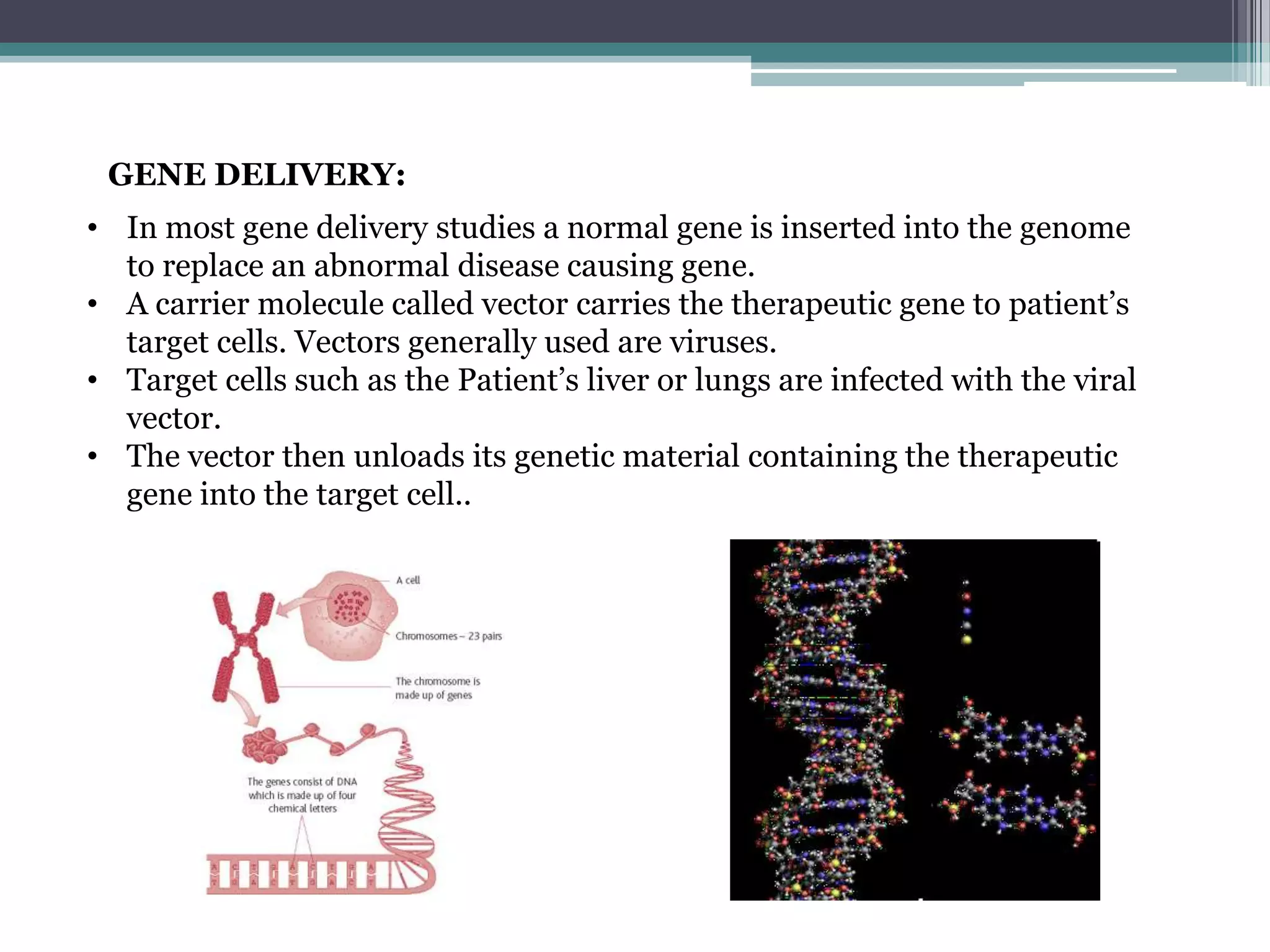
• In most gene delivery studies a normal gene is inserted into the genome
  to replace an abnormal disease causing gene.
• A carrier molecule called vector carries the therapeutic gene to patient’s
  target cells. Vectors generally used are viruses.
• Target cells such as the Patient’s liver or lungs are infected with the viral
  vector.
• The vector then unloads its genetic material containing the therapeutic
  gene into the target cell..
Literature Review
VECTOR AND ITS IDEAL PROPERTIES:

 A Vector can be described as a system fulfilling
 several functions

 1. Enabling delivery of genes to target cells
    and their nucleus.

 2. Providing protection from gene degradation.

 3. Ensuring gene transcription in the cells.
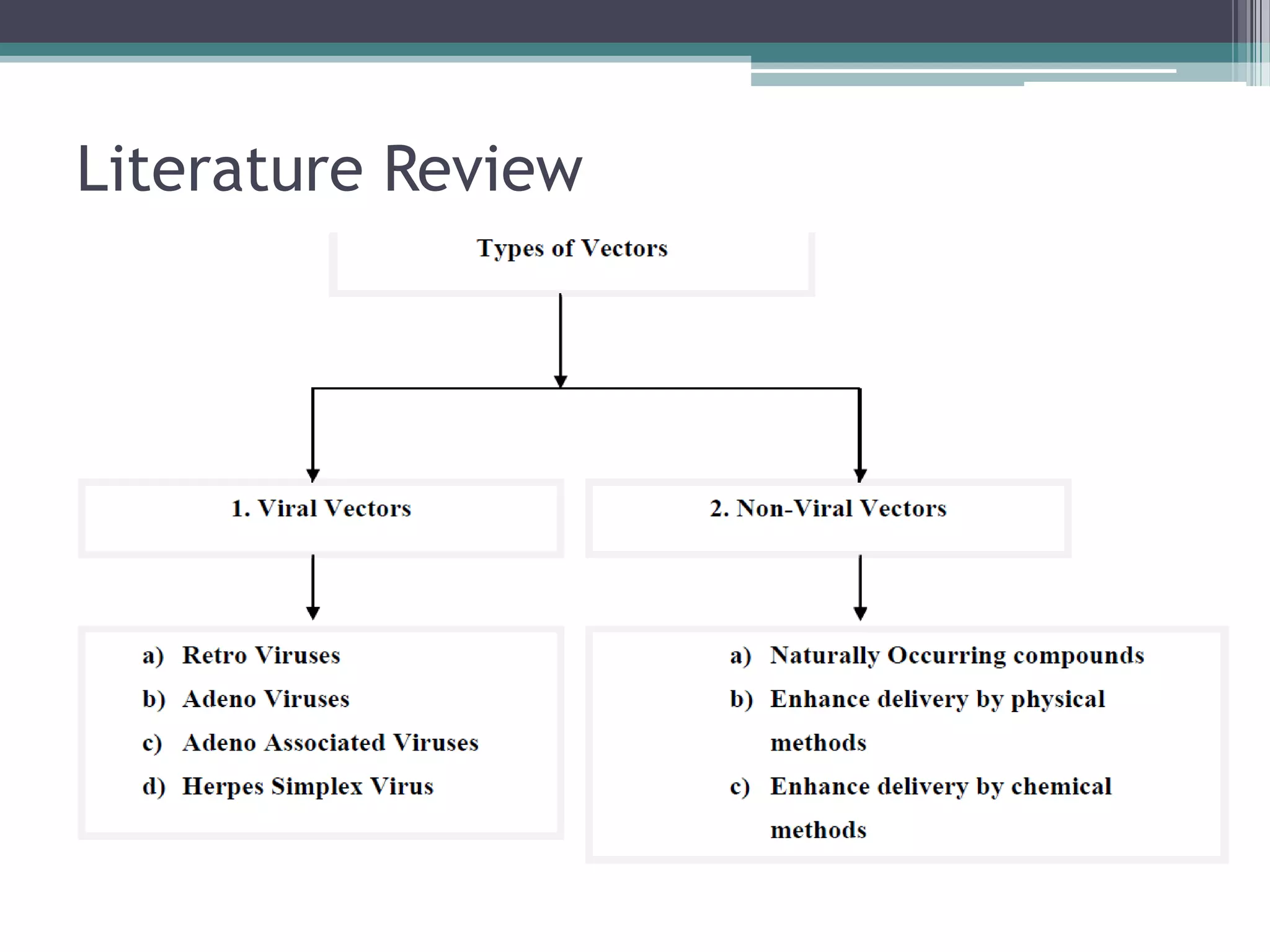
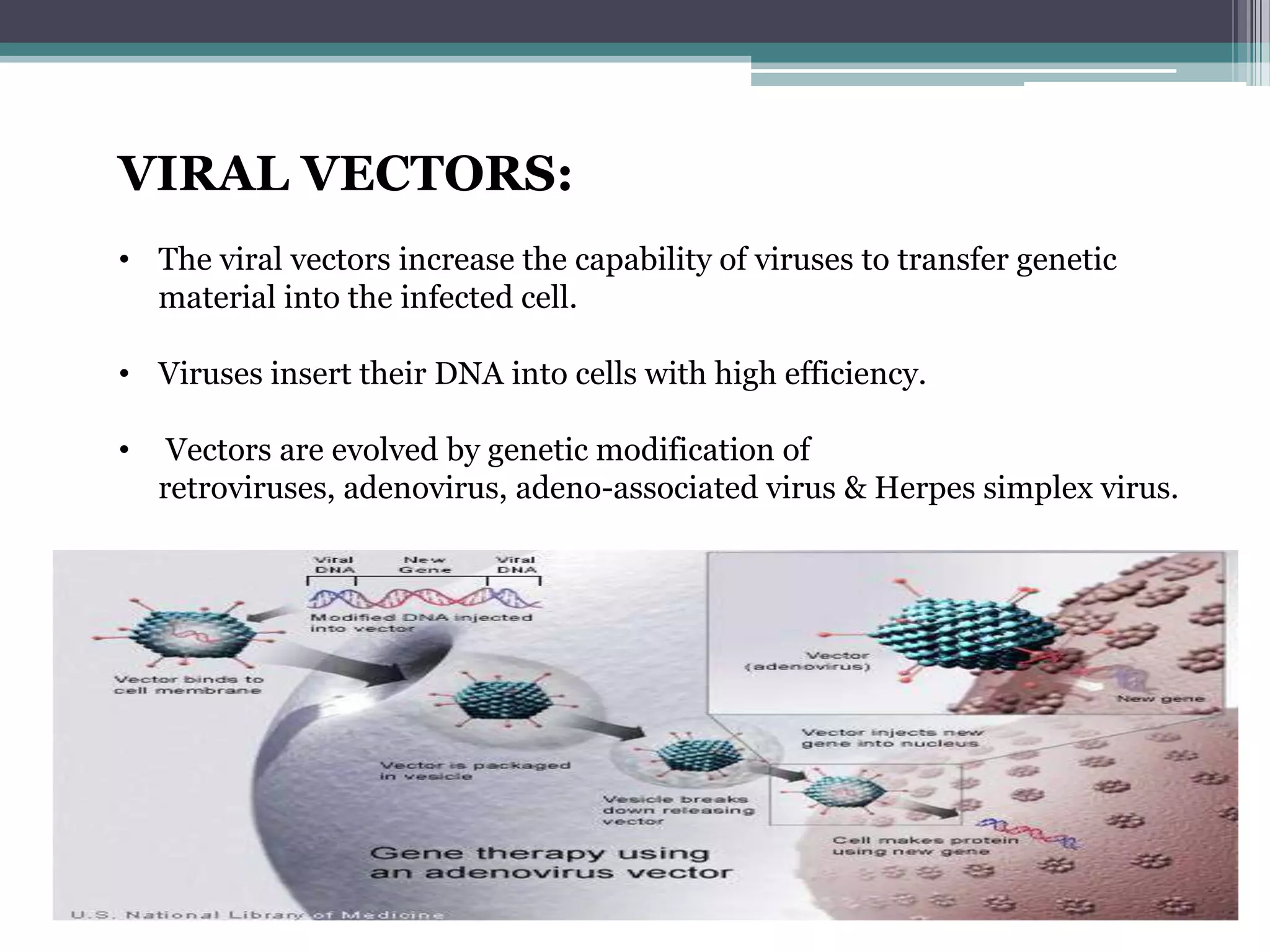
VIRAL VECTORS:
• The viral vectors increase the capability of viruses to transfer genetic
  material into the infected cell.

• Viruses insert their DNA into cells with high efficiency.

•    Vectors are evolved by genetic modification of
    retroviruses, adenovirus, adeno-associated virus & Herpes simplex virus.
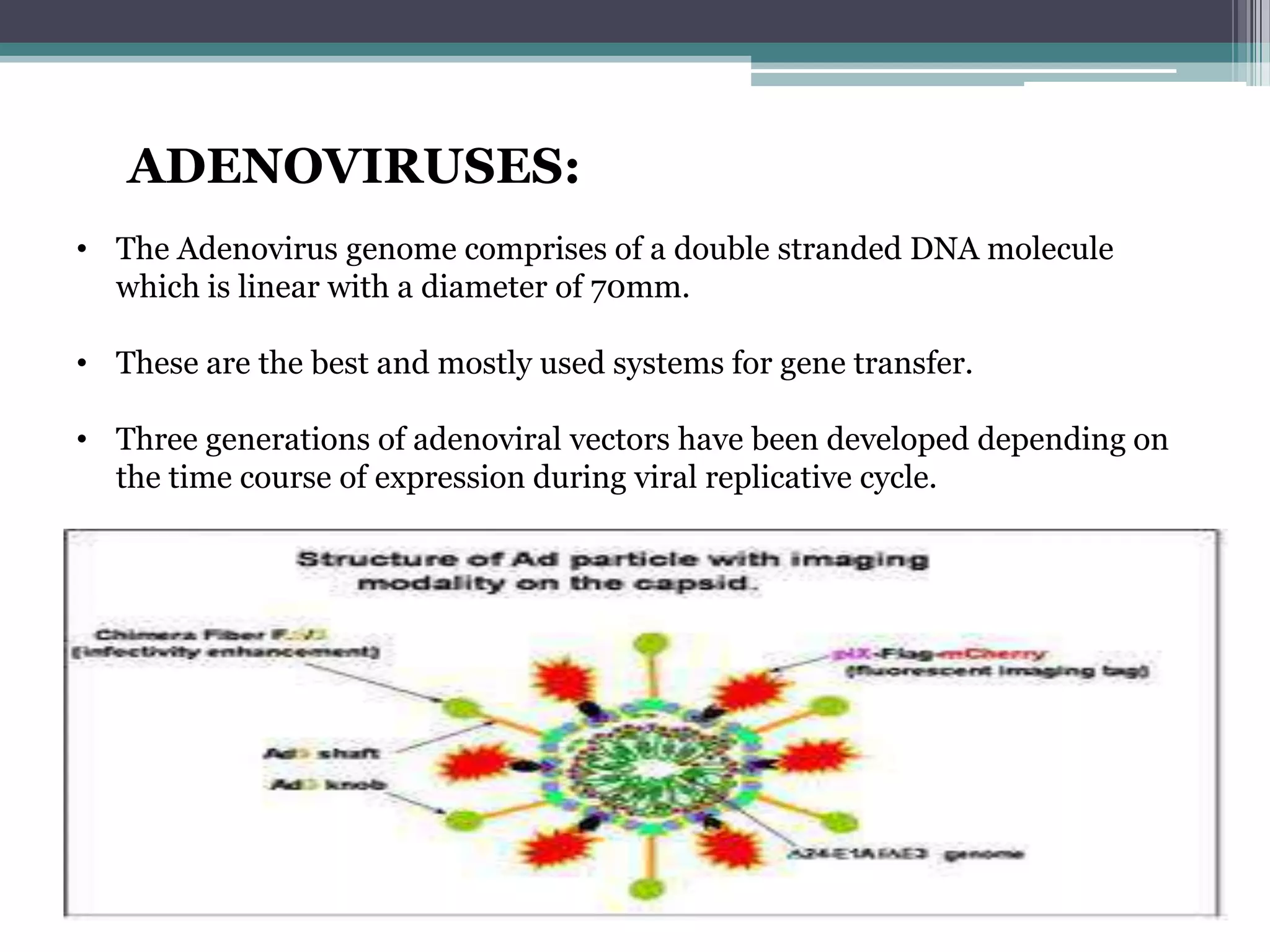
ADENOVIRUSES:
• The Adenovirus genome comprises of a double stranded DNA molecule
  which is linear with a diameter of 70mm.

• These are the best and mostly used systems for gene transfer.

• Three generations of adenoviral vectors have been developed depending on
  the time course of expression during viral replicative cycle.
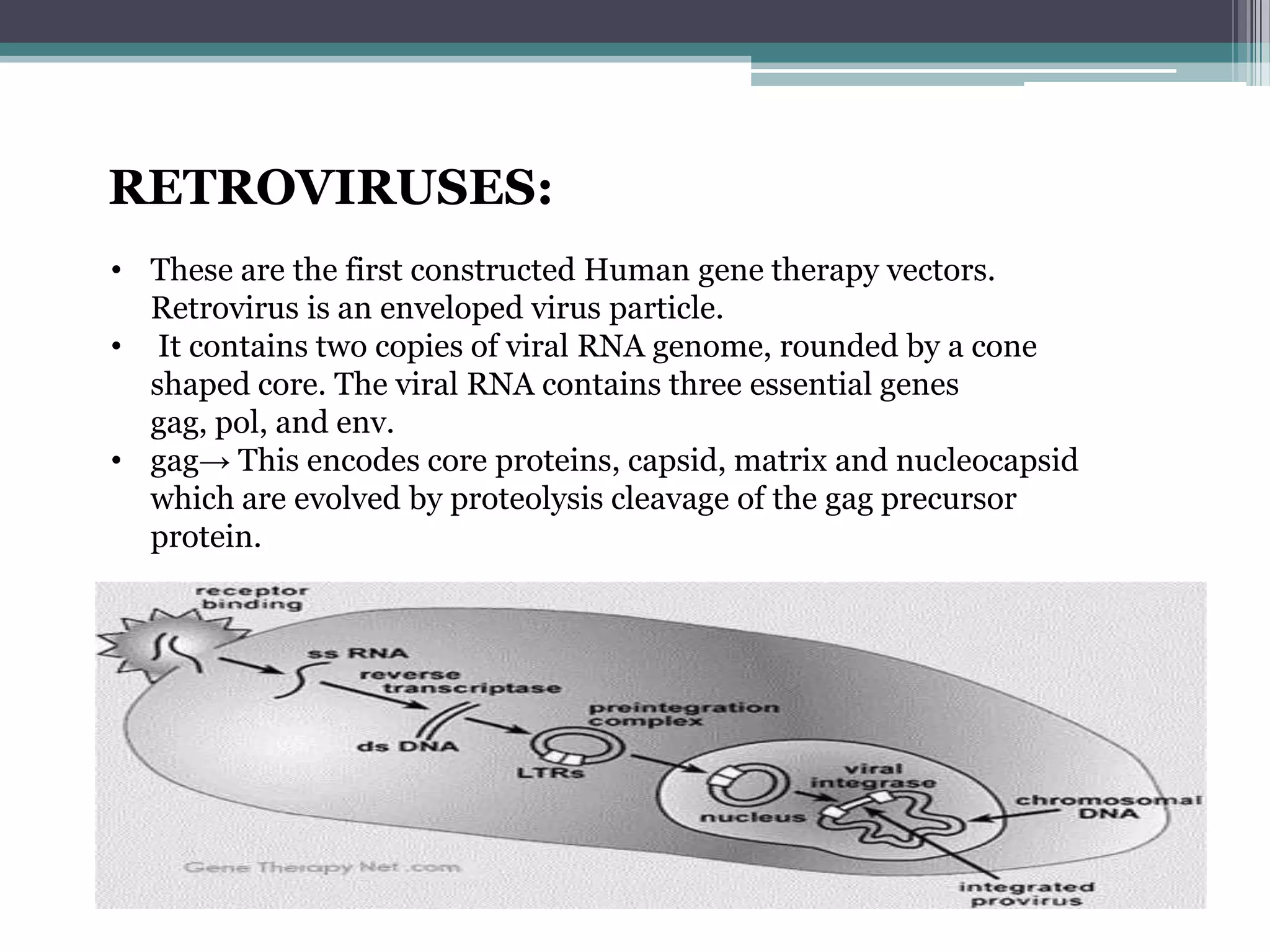
RETROVIRUSES:
• These are the first constructed Human gene therapy vectors.
  Retrovirus is an enveloped virus particle.
• It contains two copies of viral RNA genome, rounded by a cone
  shaped core. The viral RNA contains three essential genes
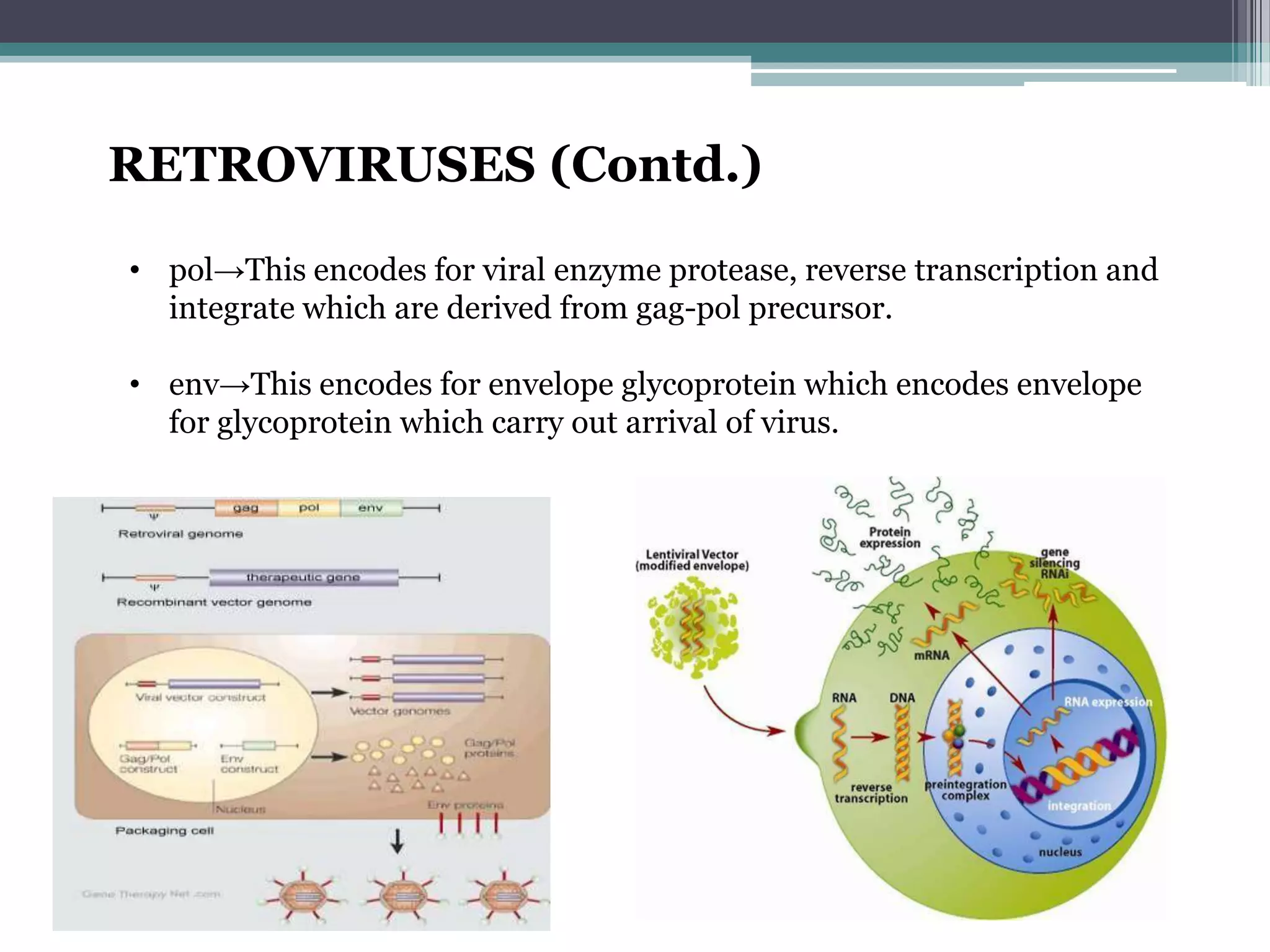
  gag, pol, and env.
• gag→ This encodes core proteins, capsid, matrix and nucleocapsid
  which are evolved by proteolysis cleavage of the gag precursor
  protein.
RETROVIRUSES (Contd.)

• pol→This encodes for viral enzyme protease, reverse transcription and
  integrate which are derived from gag-pol precursor.

• env→This encodes for envelope glycoprotein which encodes envelope
  for glycoprotein which carry out arrival of virus.
ADENO ASSOCIATED VIRUSES (AAV):

• Adeno associated is a small virus infects humans and some other primate
  species i.e. is not death causing virus which helps for immune response and
  also used in gene therapy and AAV viruses to the parvoviruses.

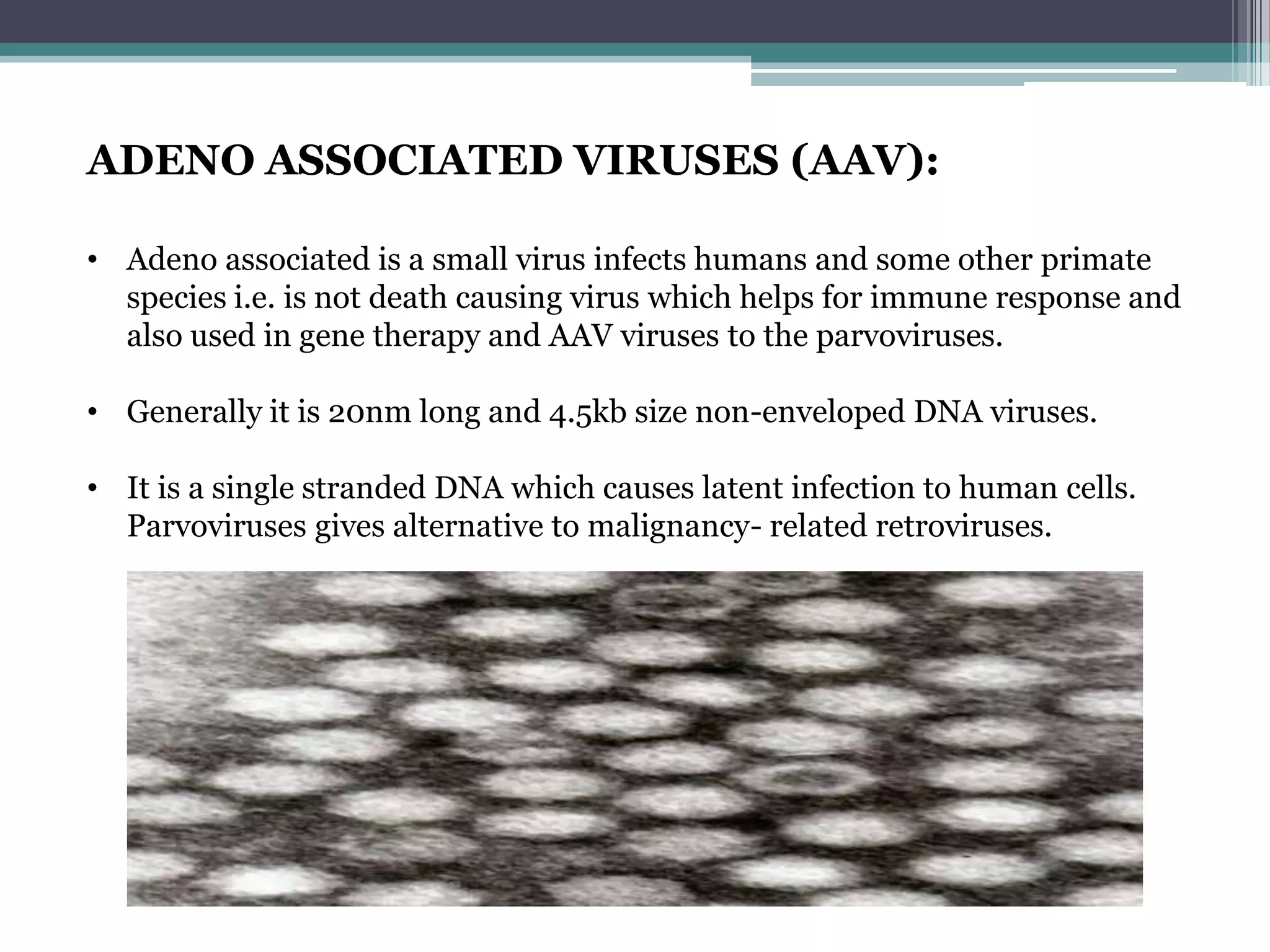
• Generally it is 20nm long and 4.5kb size non-enveloped DNA viruses.

• It is a single stranded DNA which causes latent infection to human cells.
  Parvoviruses gives alternative to malignancy- related retroviruses.
Structure of AAV:

1. AAV Genome: Genome built of SSDNA (Single Stranded
   deoxyribonucleic) in positive or negative sense and it consist of ITRs
   (Inverted terminal repeats) on both ends of SSDNA and two reading
   frames (ORFs).

2. Inverted terminal repeater Sequences: ITRs are named because there
   are symmetrical in nature and these are 145bases each. The important
   property of this is it form hairpin which are useful in self primase
   which are independent synthesis of the second DNA strand.

3. Rep genes : It one of the open reading frame on the left side of the
   genome with different lengths

4. Cap genes: This is another reading frame we found in genome which is
   generally on the right hand side.

5. VP Proteins: VP Proteins are the part of the Cap genes generally these
   are 3 in number named as V1, V2, and V3.
Structure of AAV (Contd)

  Infection Cycle of AAV:

       Cell membrane attachment.
       Endocytosis.
       Trafficking of endosomal
       Late endosome or lysosome escape
       Nucleus translocation
   Advantages:
       1. AAV apparent lack of pathogenicity which makes it better than retro
          viruses.
       2. This can be used in cancer treatment
   Disadvantages:

       1. Limited cloning capacity of the vector.

       2. AAV ITR of two genomes is almost double the capacity of the
          vector.
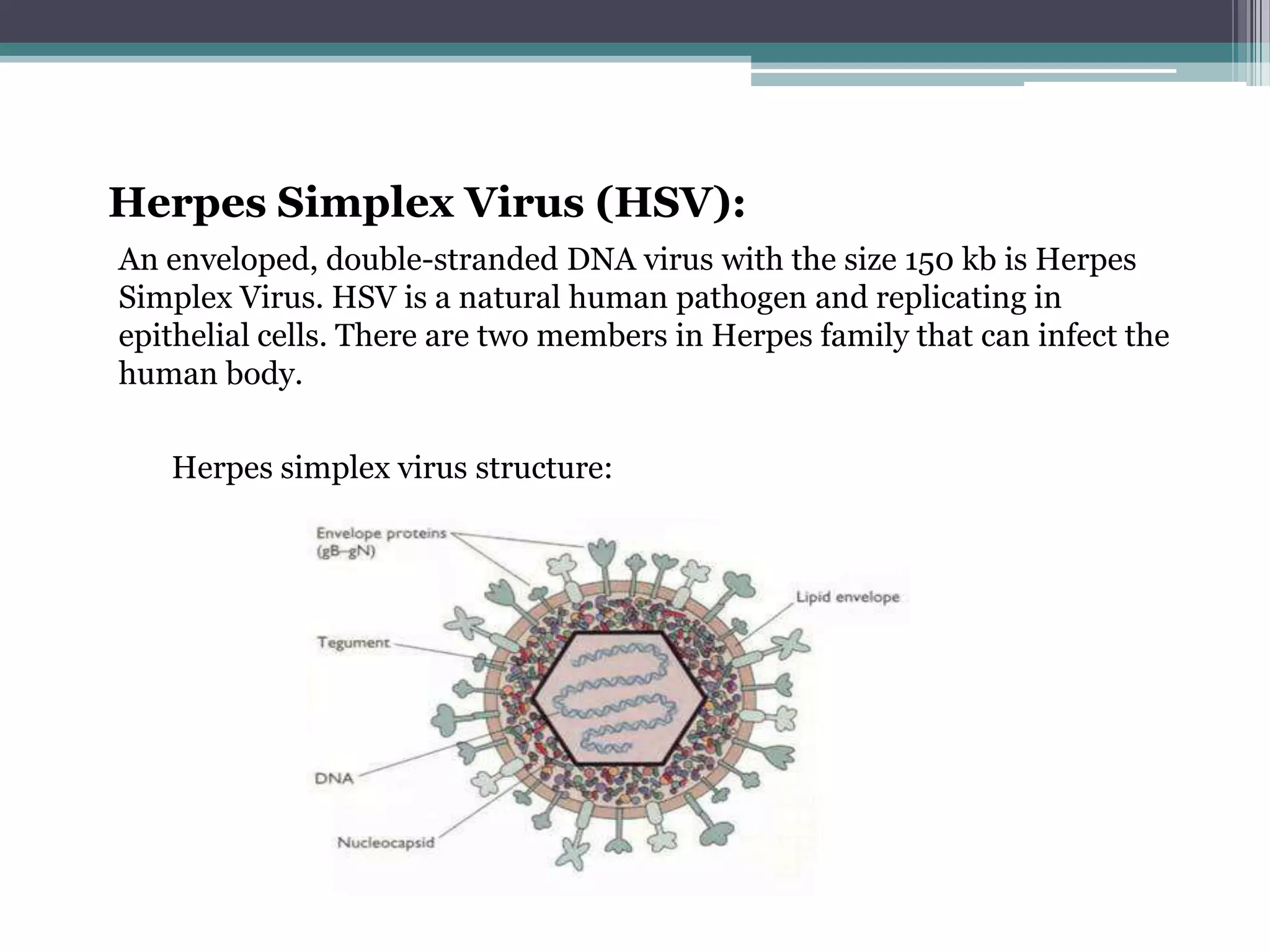
Herpes Simplex Virus (HSV):
An enveloped, double-stranded DNA virus with the size 150 kb is Herpes
Simplex Virus. HSV is a natural human pathogen and replicating in
epithelial cells. There are two members in Herpes family that can infect the
human body.

   Herpes simplex virus structure:
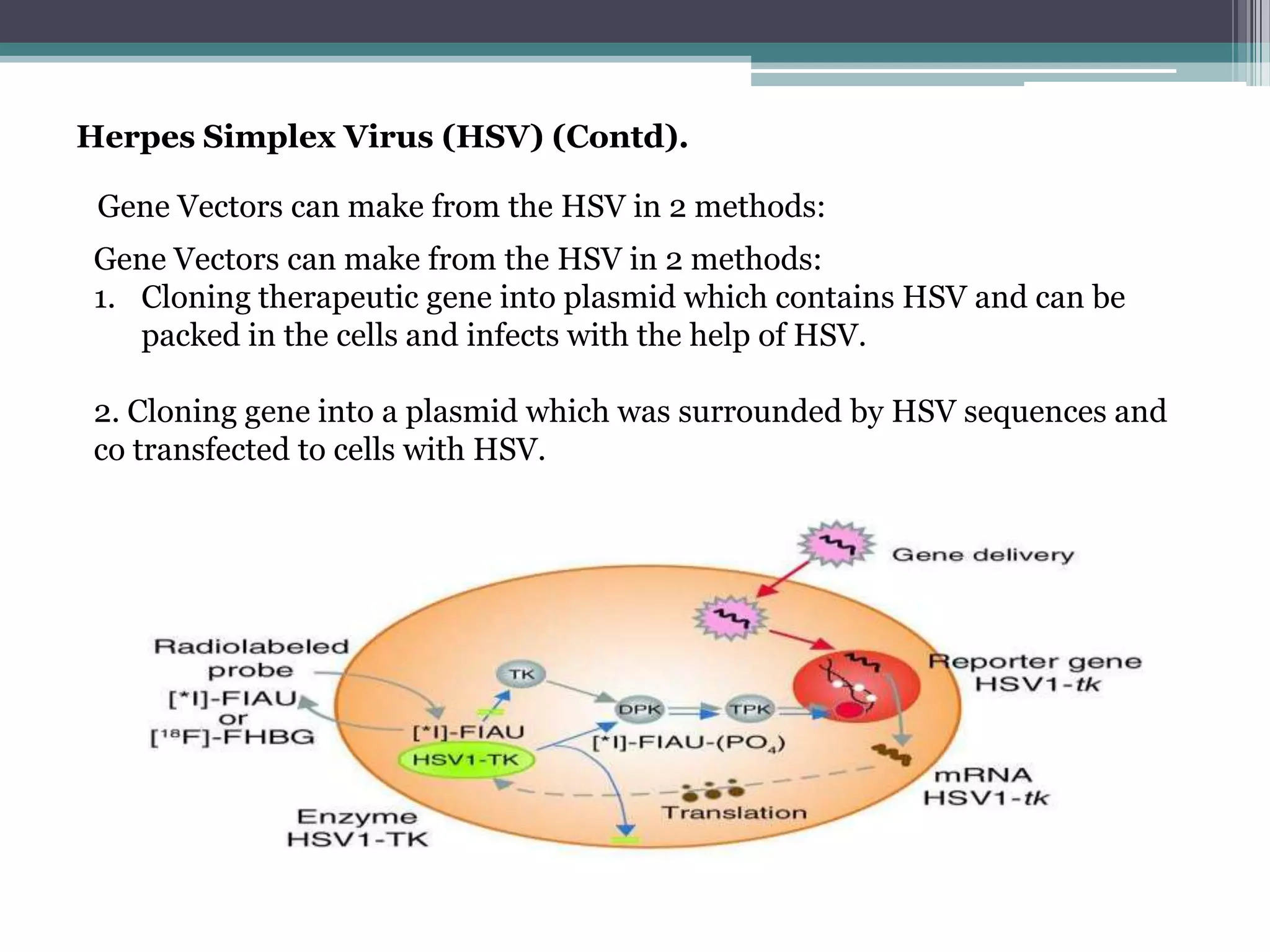
Herpes Simplex Virus (HSV) (Contd).

 Gene Vectors can make from the HSV in 2 methods:
Gene Vectors can make from the HSV in 2 methods:
1. Cloning therapeutic gene into plasmid which contains HSV and can be
   packed in the cells and infects with the help of HSV.

2. Cloning gene into a plasmid which was surrounded by HSV sequences and
co transfected to cells with HSV.
Herpes Simplex Virus (HSV):


      Advantage:

    1. HSV Based Gene Therapy has the largest cloning capacity than all
       the other.
    2. The HSV genome is the largest of all the Viral vectors
    Limitations:

     HSV turns off all the expression of gens so only small portion of HSV
     genome will active during latency. This can overcome by introducing
     foreign gene into the latency region.
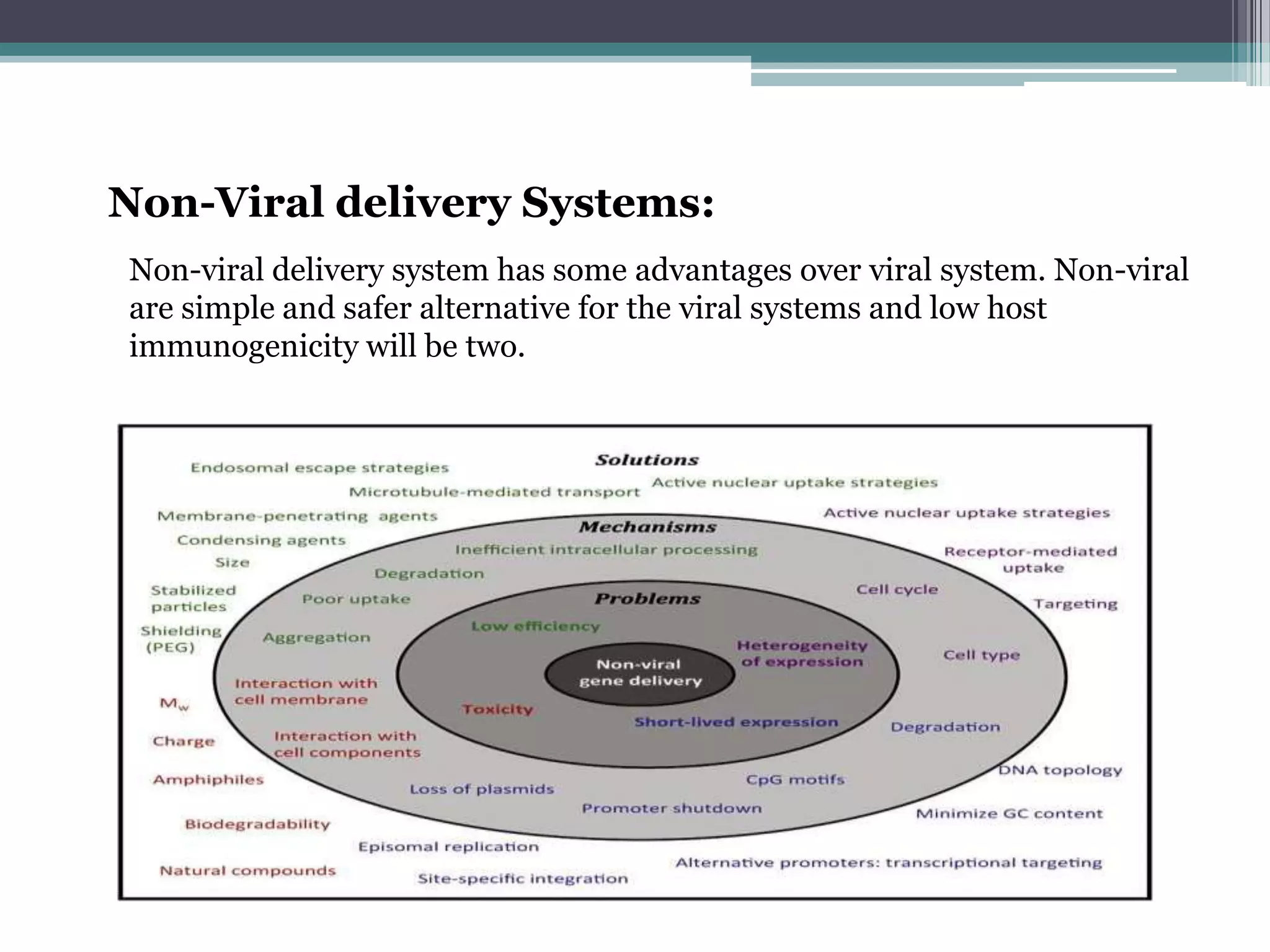
Non-Viral delivery Systems:
Non-viral delivery system has some advantages over viral system. Non-viral
are simple and safer alternative for the viral systems and low host
immunogenicity will be two.
Naturally Occurring compounds:
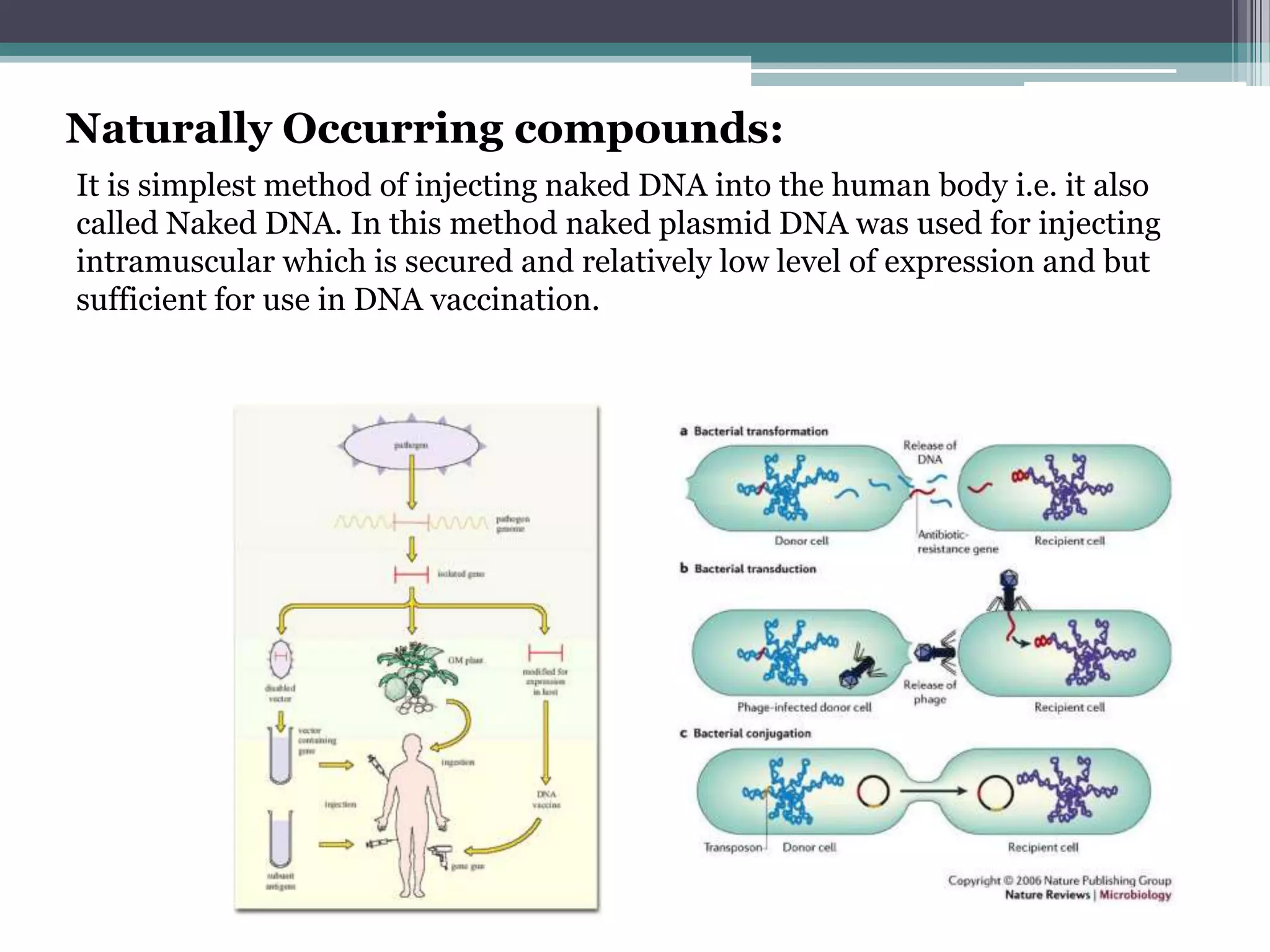
It is simplest method of injecting naked DNA into the human body i.e. it also
called Naked DNA. In this method naked plasmid DNA was used for injecting
intramuscular which is secured and relatively low level of expression and but
sufficient for use in DNA vaccination.
Naturally Occurring compounds:
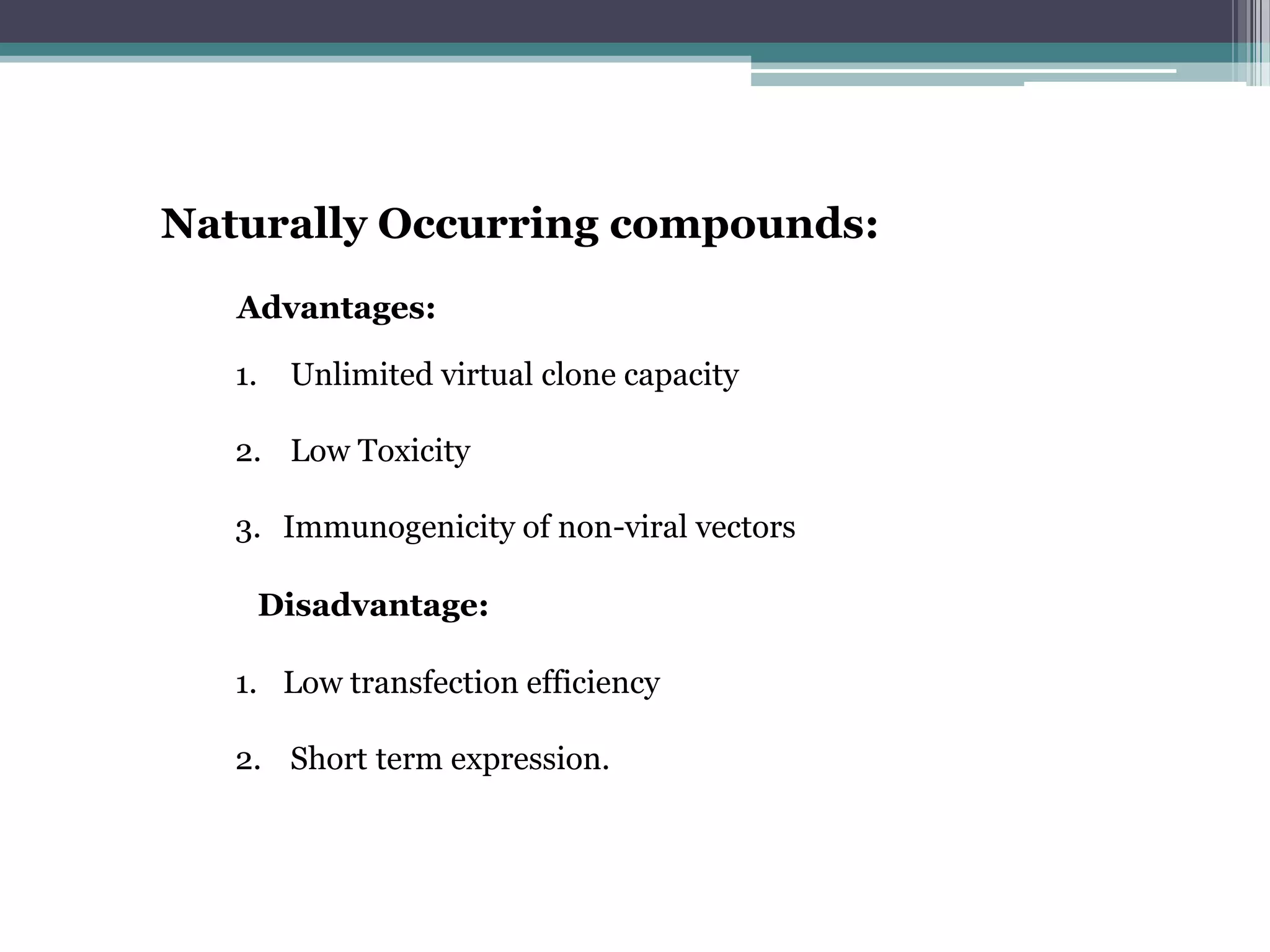
   Advantages:

   1.    Unlimited virtual clone capacity

   2. Low Toxicity

   3. Immunogenicity of non-viral vectors

        Disadvantage:

   1. Low transfection efficiency

   2. Short term expression.
Enhancing of drug delivery by Physical methods:


    There are 4 Physical methods by which we can enhance our drug
    delivery they are:

    • Electroporation

    • Gene Gun

    • Sonoporation

    • Magnetofection
Electroporation:

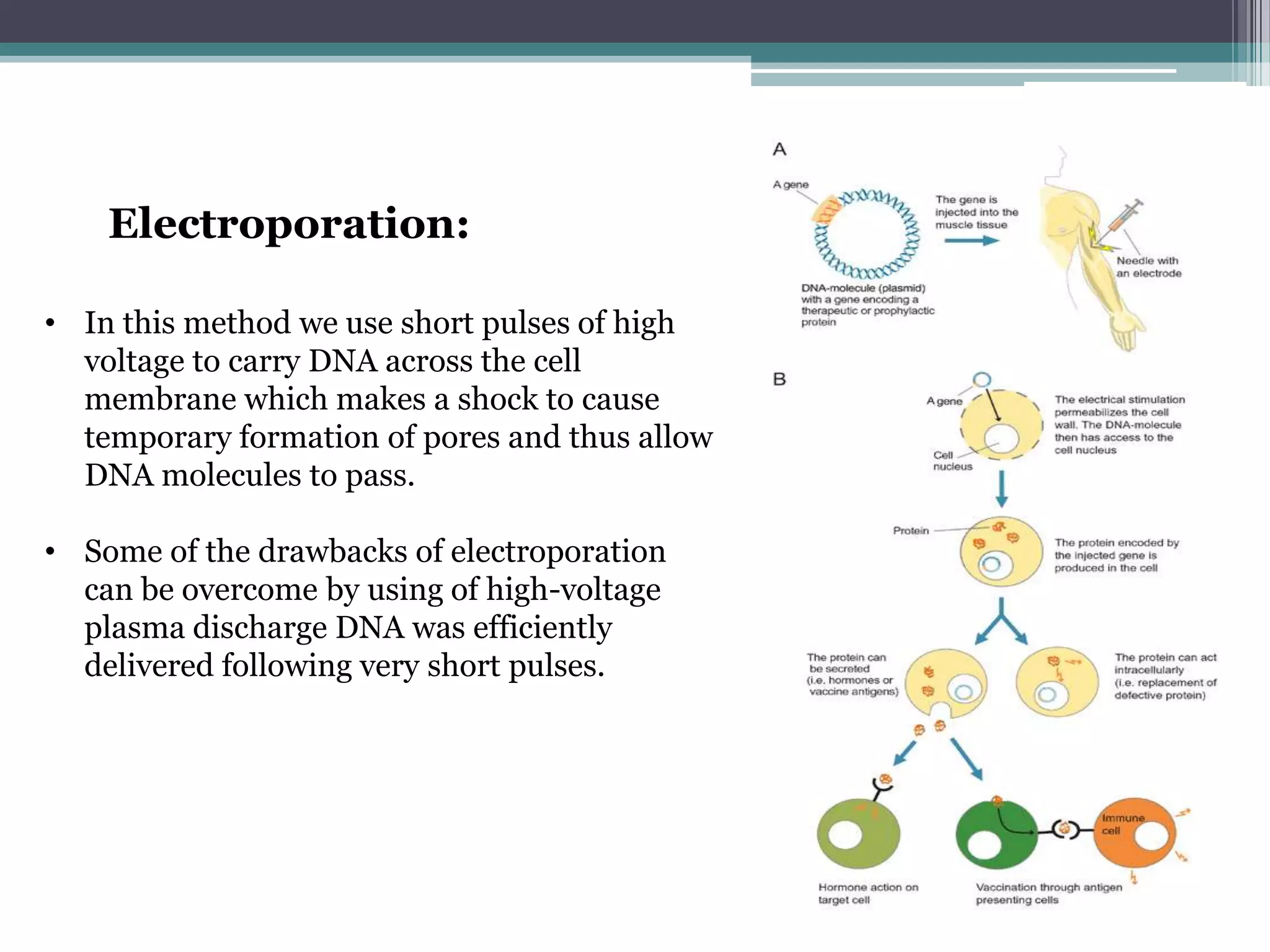
• In this method we use short pulses of high
  voltage to carry DNA across the cell
  membrane which makes a shock to cause
  temporary formation of pores and thus allow
  DNA molecules to pass.

• Some of the drawbacks of electroporation
  can be overcome by using of high-voltage
  plasma discharge DNA was efficiently
  delivered following very short pulses.
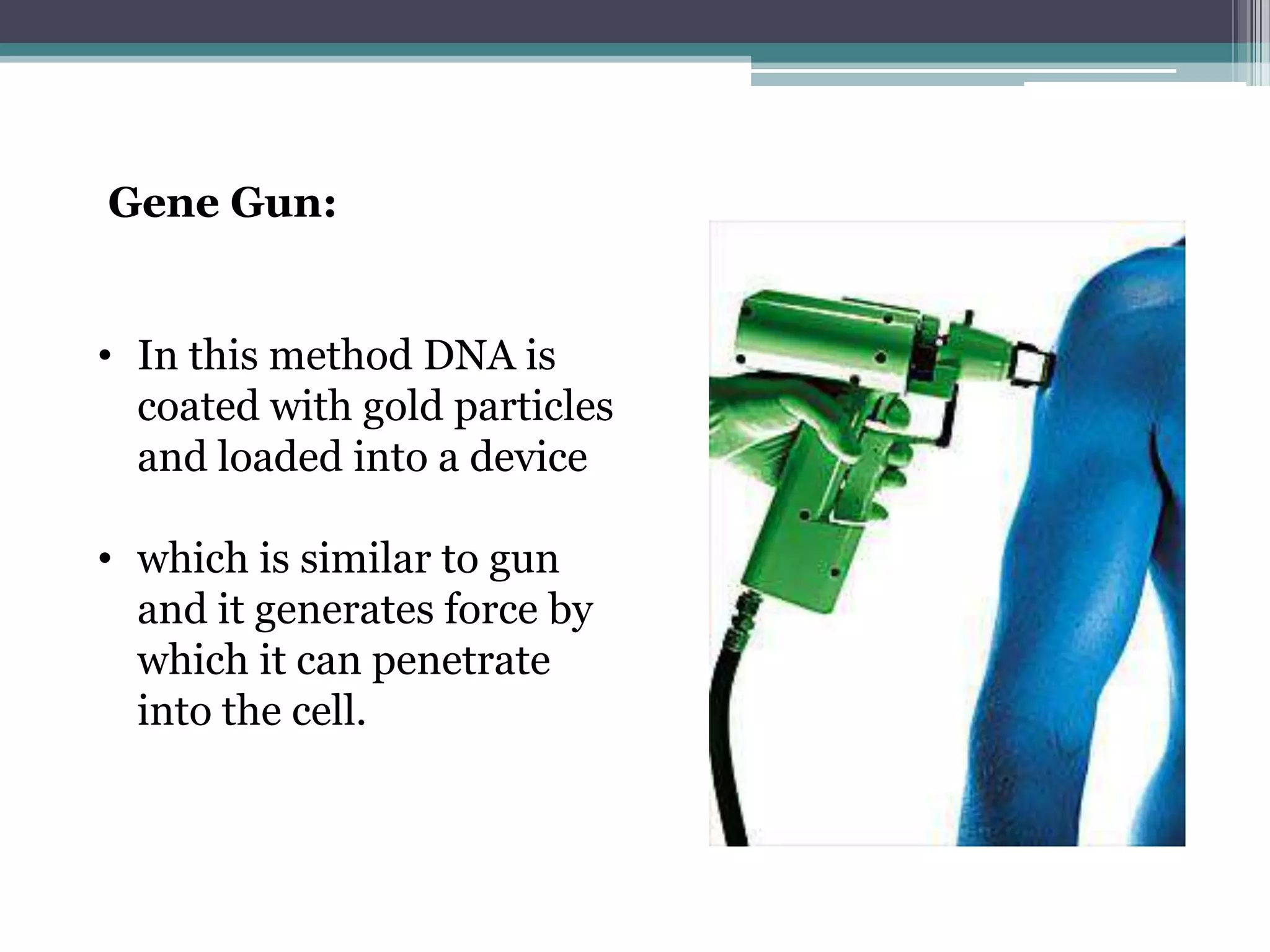
Gene Gun:


• In this method DNA is
  coated with gold particles
  and loaded into a device

• which is similar to gun
  and it generates force by
  which it can penetrate
  into the cell.
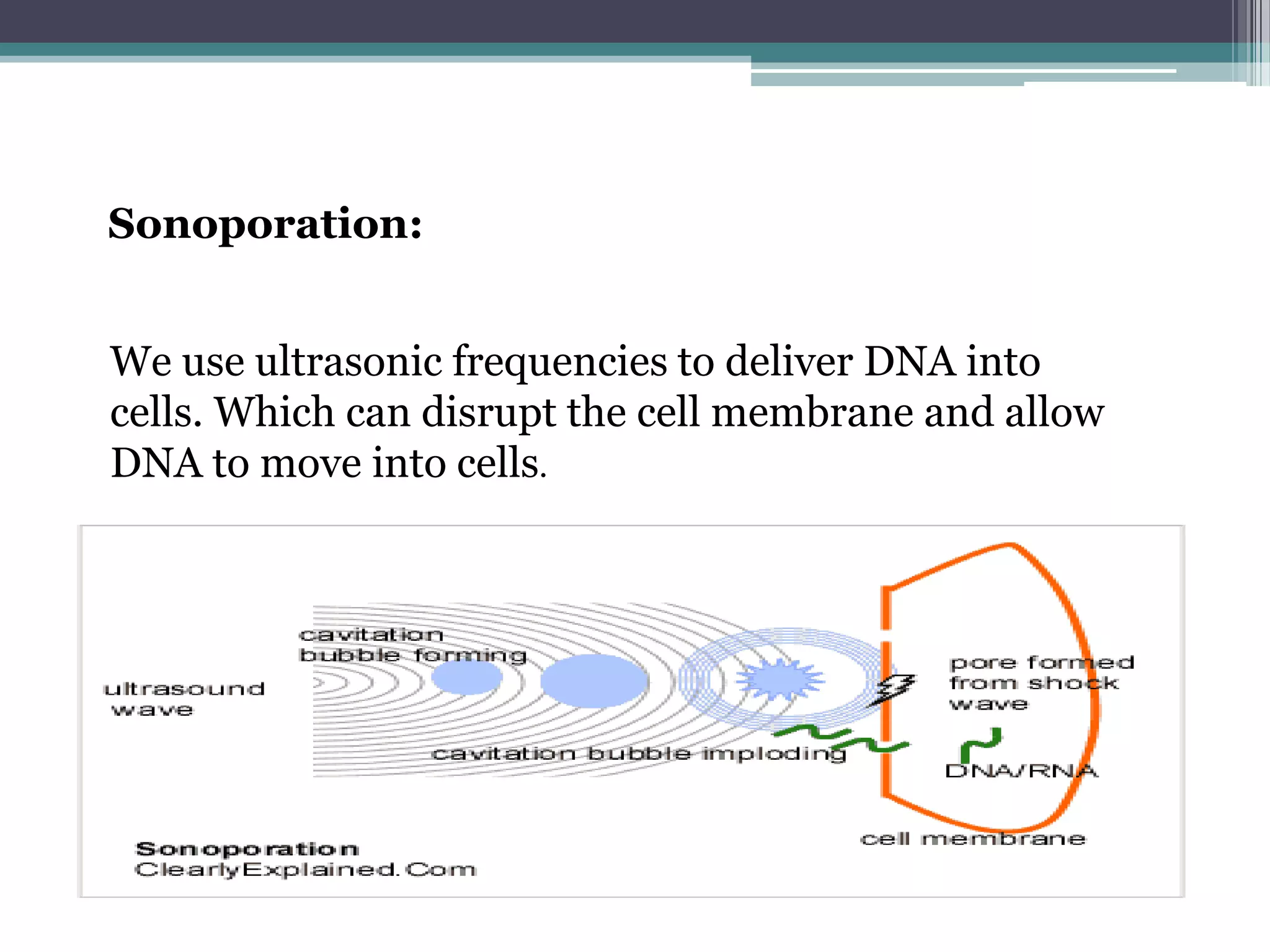
Sonoporation:


We use ultrasonic frequencies to deliver DNA into
cells. Which can disrupt the cell membrane and allow
DNA to move into cells.
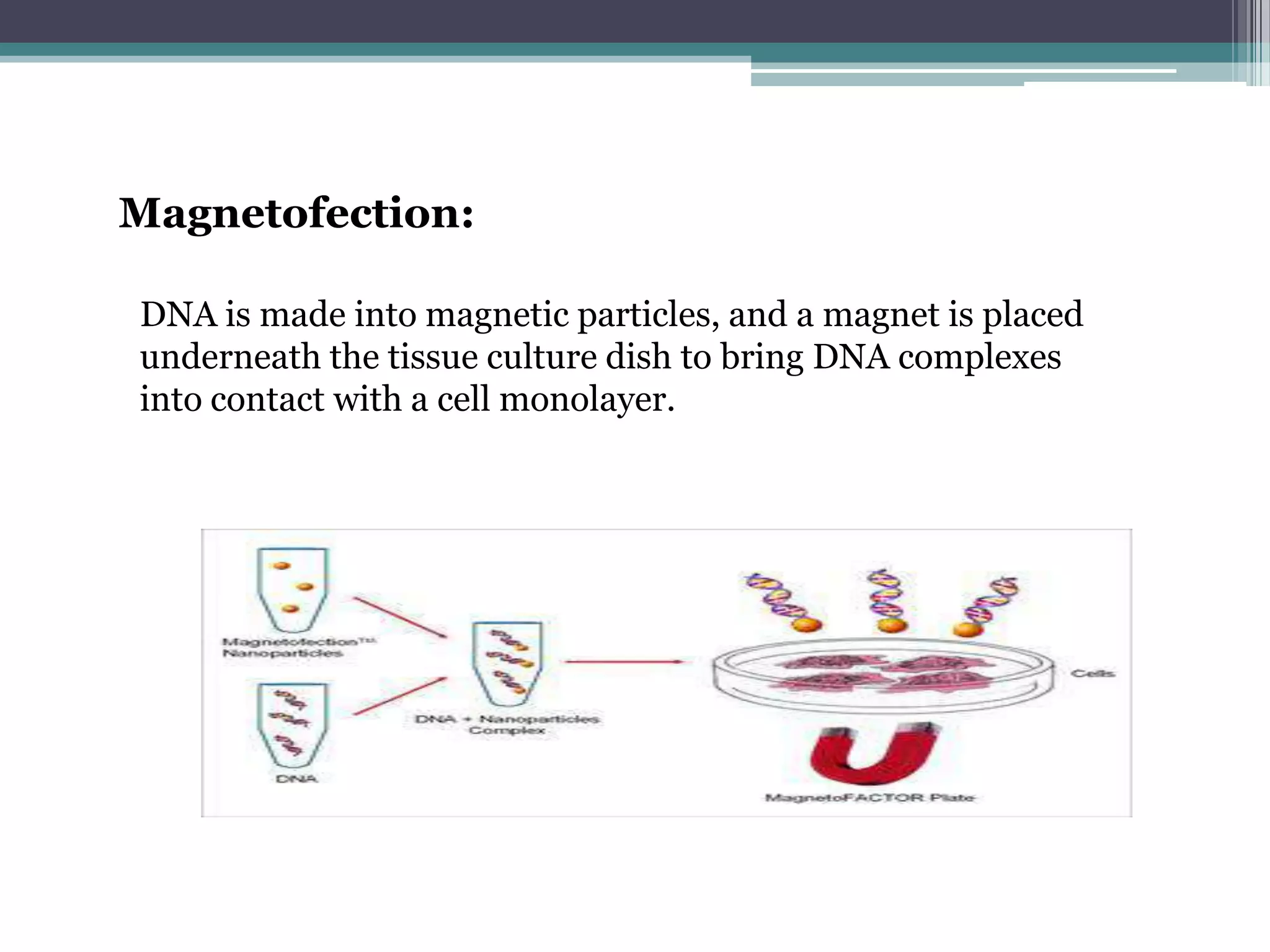
Magnetofection:

DNA is made into magnetic particles, and a magnet is placed
underneath the tissue culture dish to bring DNA complexes
into contact with a cell monolayer.
Enhancing of Drug delivery by Chemical Method:


 There are 4 Chemical methods by which we can enhance our drug
 delivery they are:

 • Oligonucleotides

 • Lipoplexes

 • Dendrimers

 • Inorganic Nanoparticles
Oligonucleotides:

  In gene therapy oligonucleotides is to deactivate the genes involved as
  a part of disease process. It involves two methods.

  1. Using antisense to specific target gene and to disrupt the
     transcription of the faulty gene.

  2. By using small molecules of RNA for signal the cell and to cleave
     specific unique sequences in the mRNA.
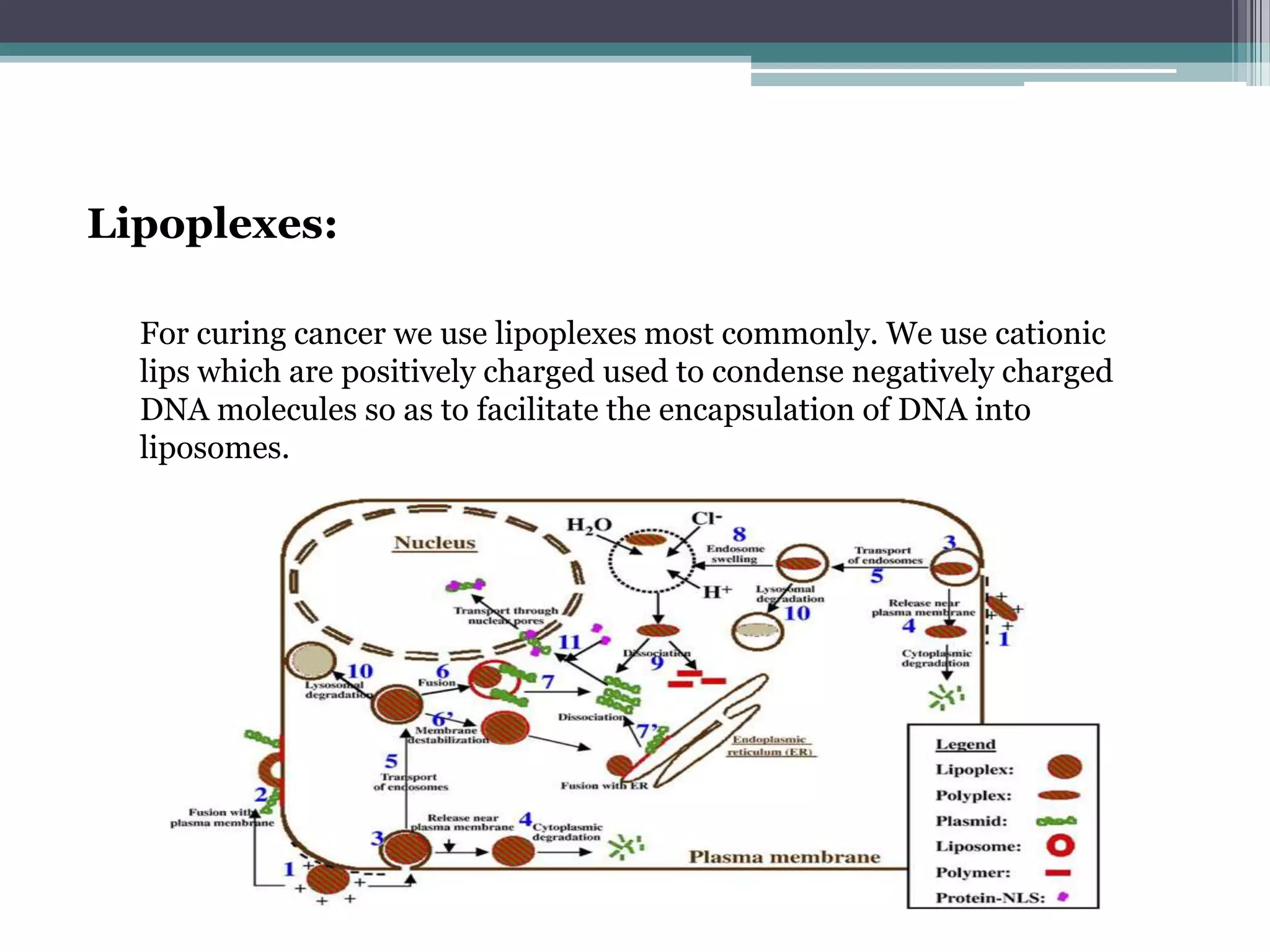
Lipoplexes:

  For curing cancer we use lipoplexes most commonly. We use cationic
  lips which are positively charged used to condense negatively charged
  DNA molecules so as to facilitate the encapsulation of DNA into
  liposomes.
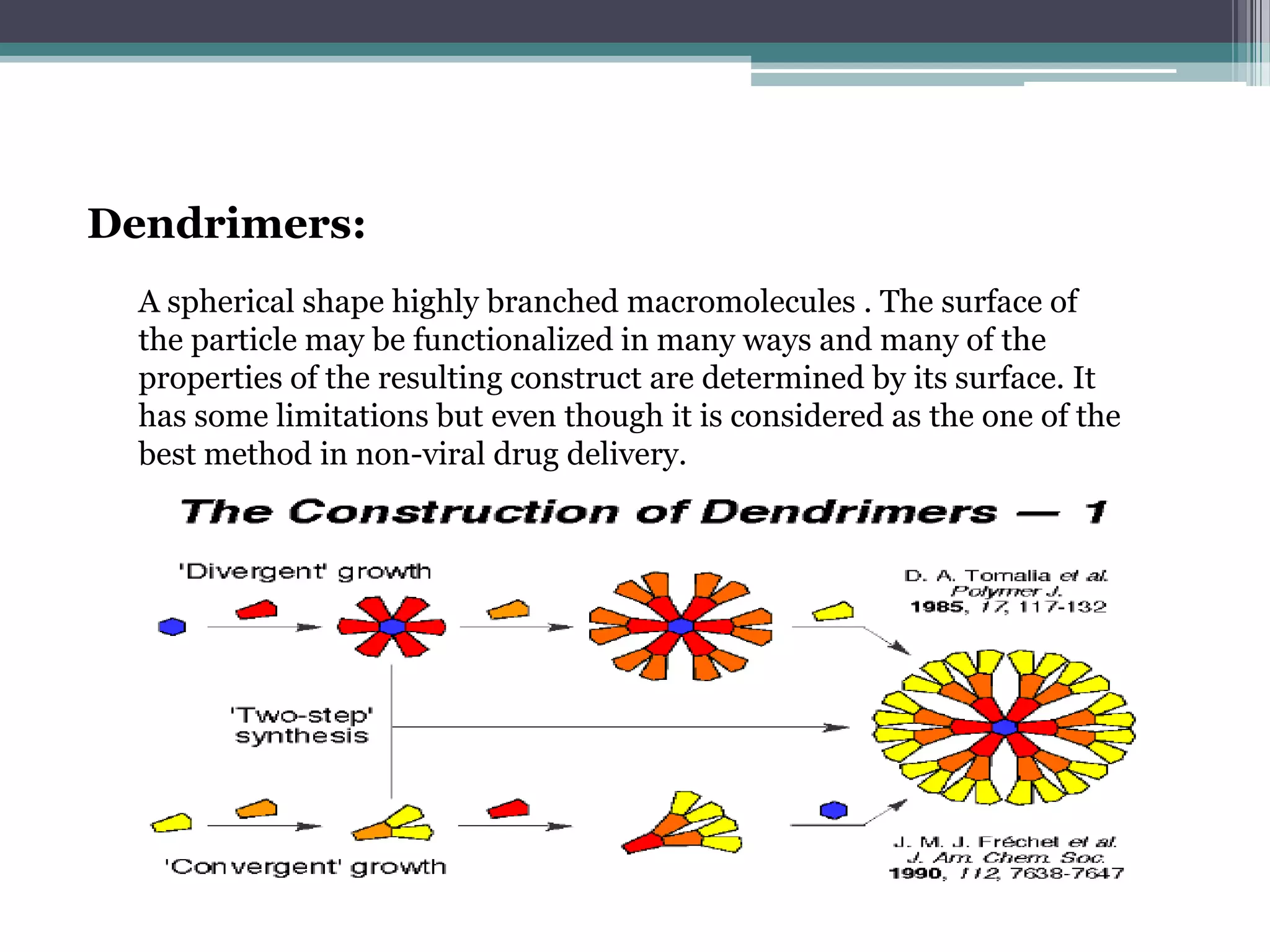
Dendrimers:
  A spherical shape highly branched macromolecules . The surface of
  the particle may be functionalized in many ways and many of the
  properties of the resulting construct are determined by its surface. It
  has some limitations but even though it is considered as the one of the
  best method in non-viral drug delivery.
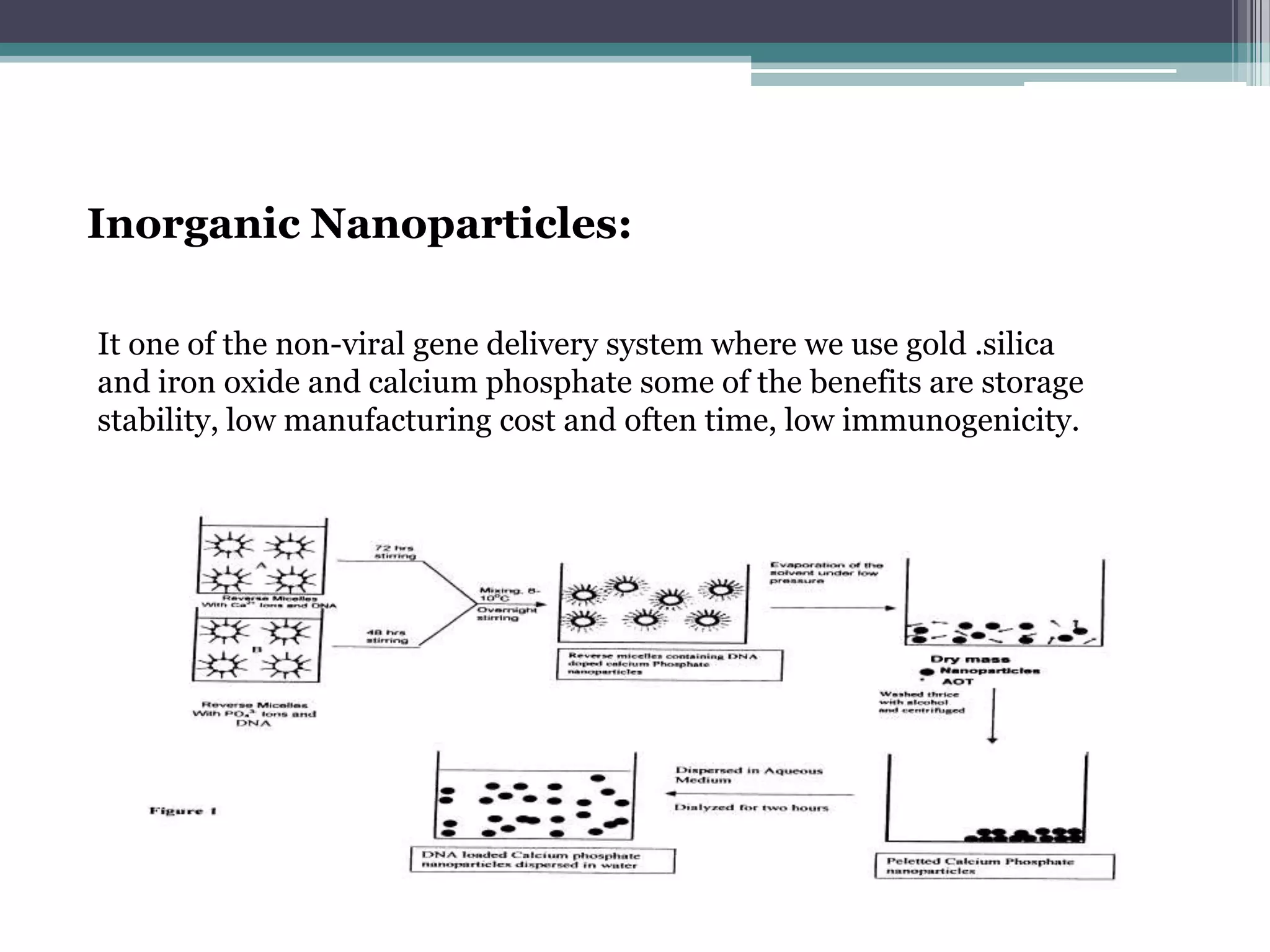
Inorganic Nanoparticles:

It one of the non-viral gene delivery system where we use gold .silica
and iron oxide and calcium phosphate some of the benefits are storage
stability, low manufacturing cost and often time, low immunogenicity.
Hybrid Methods:


There is another method other than viral and non-viral gene delivery
system i.e. Hybrid gene delivery which is developed from the
combination of two or more techniques. One of the hybrid methods
is virosomeswhich is formed by the combination of liposomes with
activated HIV
Conclusion:

•   Gene therapy utilizes the delivery of DNA into cells, which can be
    done by several ways by a number of methods that is some of them
    are by viral methods and some are by the non-viral methods few
    are by the Hybrid methods.

• When a disease attack the human the virus will attack the cell of the
  body instead giving medicines to the body or through blood if we
  can inject them directly to the cell we have better chances of curing
  disease.

• By using gene delivery system we are able to inject the medicine
  directly to the cell so these drugs will work on the cell and we can
  cure many more disease since they affect the human immune
  system by attacking the cells.
Bibliography:


1. Brisson M, He Y, Li Setal: A novel T7 RNA polymerase autogene
   for efficient cytoplasmic expression of target genes.

2. Darquet AM, Rangara R, Kiers P et al: Minicircle: an improved
   DNA molecule for in vitro and in vivo gene transfer.

3. NONTEMPLATE-DEPENDENT POLYMERIZATION PROCESSES:
   POLYHYDROXYALKANOATE SYNTHASES AS A PARADIGM, JoAnne
   Stubbe, Jiamin Tian, Aimin He, Anthony J. Sinskey, Adam G.
   Lawrence, and Pinghua Liu.

Gene delivery system

  • 1.
    Bio Material Project GENEDELIVERY SYSTEM Submitted By: Punith Kumar Neelam (WSU ID:M369K625) Abhijith reddy Sadhu (WSU ID:M726Z747)
  • 2.
    Abstract: • Gene deliverysystem provided modern medicine a new perspective which was unimaginable a few decades ago. • Progress in the fields of molecular biology and r-DNA technology is now changing the basis of clinical medicine. . • Gene delivery system is currently employed in the treatment of diseases like cystic fibrosis, cardiovascular diseases, cancer and auto-immune diseases.
  • 3.
    INTRODUCTION: • Geneswho are carried on chromosomes are basic structural & functional units of heredity. • Genes are specific sequences of bases that encode instructions on how to make proteins. • Genes get a lot of attention it’s the proteins that perform most life function and form most of the cellular structures. . • Genes are altered then the encoded proteins are unable to carry out their normal functions which result in the genetic disorders.
  • 4.
    GENE DELIVERY: • Inmost gene delivery studies a normal gene is inserted into the genome to replace an abnormal disease causing gene. • A carrier molecule called vector carries the therapeutic gene to patient’s target cells. Vectors generally used are viruses. • Target cells such as the Patient’s liver or lungs are infected with the viral vector. • The vector then unloads its genetic material containing the therapeutic gene into the target cell..
  • 5.
  • 6.
    VECTOR AND ITSIDEAL PROPERTIES: A Vector can be described as a system fulfilling several functions 1. Enabling delivery of genes to target cells and their nucleus. 2. Providing protection from gene degradation. 3. Ensuring gene transcription in the cells.
  • 7.
    VIRAL VECTORS: • Theviral vectors increase the capability of viruses to transfer genetic material into the infected cell. • Viruses insert their DNA into cells with high efficiency. • Vectors are evolved by genetic modification of retroviruses, adenovirus, adeno-associated virus & Herpes simplex virus.
  • 8.
    ADENOVIRUSES: • The Adenovirusgenome comprises of a double stranded DNA molecule which is linear with a diameter of 70mm. • These are the best and mostly used systems for gene transfer. • Three generations of adenoviral vectors have been developed depending on the time course of expression during viral replicative cycle.
  • 9.
    RETROVIRUSES: • These arethe first constructed Human gene therapy vectors. Retrovirus is an enveloped virus particle. • It contains two copies of viral RNA genome, rounded by a cone shaped core. The viral RNA contains three essential genes gag, pol, and env. • gag→ This encodes core proteins, capsid, matrix and nucleocapsid which are evolved by proteolysis cleavage of the gag precursor protein.
  • 10.
    RETROVIRUSES (Contd.) • pol→Thisencodes for viral enzyme protease, reverse transcription and integrate which are derived from gag-pol precursor. • env→This encodes for envelope glycoprotein which encodes envelope for glycoprotein which carry out arrival of virus.
  • 11.
    ADENO ASSOCIATED VIRUSES(AAV): • Adeno associated is a small virus infects humans and some other primate species i.e. is not death causing virus which helps for immune response and also used in gene therapy and AAV viruses to the parvoviruses. • Generally it is 20nm long and 4.5kb size non-enveloped DNA viruses. • It is a single stranded DNA which causes latent infection to human cells. Parvoviruses gives alternative to malignancy- related retroviruses.
  • 12.
    Structure of AAV: 1.AAV Genome: Genome built of SSDNA (Single Stranded deoxyribonucleic) in positive or negative sense and it consist of ITRs (Inverted terminal repeats) on both ends of SSDNA and two reading frames (ORFs). 2. Inverted terminal repeater Sequences: ITRs are named because there are symmetrical in nature and these are 145bases each. The important property of this is it form hairpin which are useful in self primase which are independent synthesis of the second DNA strand. 3. Rep genes : It one of the open reading frame on the left side of the genome with different lengths 4. Cap genes: This is another reading frame we found in genome which is generally on the right hand side. 5. VP Proteins: VP Proteins are the part of the Cap genes generally these are 3 in number named as V1, V2, and V3.
  • 13.
    Structure of AAV(Contd) Infection Cycle of AAV:  Cell membrane attachment.  Endocytosis.  Trafficking of endosomal  Late endosome or lysosome escape  Nucleus translocation Advantages: 1. AAV apparent lack of pathogenicity which makes it better than retro viruses. 2. This can be used in cancer treatment Disadvantages: 1. Limited cloning capacity of the vector. 2. AAV ITR of two genomes is almost double the capacity of the vector.
  • 14.
    Herpes Simplex Virus(HSV): An enveloped, double-stranded DNA virus with the size 150 kb is Herpes Simplex Virus. HSV is a natural human pathogen and replicating in epithelial cells. There are two members in Herpes family that can infect the human body. Herpes simplex virus structure:
  • 15.
    Herpes Simplex Virus(HSV) (Contd). Gene Vectors can make from the HSV in 2 methods: Gene Vectors can make from the HSV in 2 methods: 1. Cloning therapeutic gene into plasmid which contains HSV and can be packed in the cells and infects with the help of HSV. 2. Cloning gene into a plasmid which was surrounded by HSV sequences and co transfected to cells with HSV.
  • 16.
    Herpes Simplex Virus(HSV): Advantage: 1. HSV Based Gene Therapy has the largest cloning capacity than all the other. 2. The HSV genome is the largest of all the Viral vectors Limitations: HSV turns off all the expression of gens so only small portion of HSV genome will active during latency. This can overcome by introducing foreign gene into the latency region.
  • 17.
    Non-Viral delivery Systems: Non-viraldelivery system has some advantages over viral system. Non-viral are simple and safer alternative for the viral systems and low host immunogenicity will be two.
  • 18.
    Naturally Occurring compounds: Itis simplest method of injecting naked DNA into the human body i.e. it also called Naked DNA. In this method naked plasmid DNA was used for injecting intramuscular which is secured and relatively low level of expression and but sufficient for use in DNA vaccination.
  • 19.
    Naturally Occurring compounds: Advantages: 1. Unlimited virtual clone capacity 2. Low Toxicity 3. Immunogenicity of non-viral vectors Disadvantage: 1. Low transfection efficiency 2. Short term expression.
  • 20.
    Enhancing of drugdelivery by Physical methods: There are 4 Physical methods by which we can enhance our drug delivery they are: • Electroporation • Gene Gun • Sonoporation • Magnetofection
  • 21.
    Electroporation: • In thismethod we use short pulses of high voltage to carry DNA across the cell membrane which makes a shock to cause temporary formation of pores and thus allow DNA molecules to pass. • Some of the drawbacks of electroporation can be overcome by using of high-voltage plasma discharge DNA was efficiently delivered following very short pulses.
  • 22.
    Gene Gun: • Inthis method DNA is coated with gold particles and loaded into a device • which is similar to gun and it generates force by which it can penetrate into the cell.
  • 23.
    Sonoporation: We use ultrasonicfrequencies to deliver DNA into cells. Which can disrupt the cell membrane and allow DNA to move into cells.
  • 24.
    Magnetofection: DNA is madeinto magnetic particles, and a magnet is placed underneath the tissue culture dish to bring DNA complexes into contact with a cell monolayer.
  • 25.
    Enhancing of Drugdelivery by Chemical Method: There are 4 Chemical methods by which we can enhance our drug delivery they are: • Oligonucleotides • Lipoplexes • Dendrimers • Inorganic Nanoparticles
  • 26.
    Oligonucleotides: Ingene therapy oligonucleotides is to deactivate the genes involved as a part of disease process. It involves two methods. 1. Using antisense to specific target gene and to disrupt the transcription of the faulty gene. 2. By using small molecules of RNA for signal the cell and to cleave specific unique sequences in the mRNA.
  • 27.
    Lipoplexes: Forcuring cancer we use lipoplexes most commonly. We use cationic lips which are positively charged used to condense negatively charged DNA molecules so as to facilitate the encapsulation of DNA into liposomes.
  • 28.
    Dendrimers: Aspherical shape highly branched macromolecules . The surface of the particle may be functionalized in many ways and many of the properties of the resulting construct are determined by its surface. It has some limitations but even though it is considered as the one of the best method in non-viral drug delivery.
  • 29.
    Inorganic Nanoparticles: It oneof the non-viral gene delivery system where we use gold .silica and iron oxide and calcium phosphate some of the benefits are storage stability, low manufacturing cost and often time, low immunogenicity.
  • 30.
    Hybrid Methods: There isanother method other than viral and non-viral gene delivery system i.e. Hybrid gene delivery which is developed from the combination of two or more techniques. One of the hybrid methods is virosomeswhich is formed by the combination of liposomes with activated HIV
  • 31.
    Conclusion: • Gene therapy utilizes the delivery of DNA into cells, which can be done by several ways by a number of methods that is some of them are by viral methods and some are by the non-viral methods few are by the Hybrid methods. • When a disease attack the human the virus will attack the cell of the body instead giving medicines to the body or through blood if we can inject them directly to the cell we have better chances of curing disease. • By using gene delivery system we are able to inject the medicine directly to the cell so these drugs will work on the cell and we can cure many more disease since they affect the human immune system by attacking the cells.
  • 32.
    Bibliography: 1. Brisson M,He Y, Li Setal: A novel T7 RNA polymerase autogene for efficient cytoplasmic expression of target genes. 2. Darquet AM, Rangara R, Kiers P et al: Minicircle: an improved DNA molecule for in vitro and in vivo gene transfer. 3. NONTEMPLATE-DEPENDENT POLYMERIZATION PROCESSES: POLYHYDROXYALKANOATE SYNTHASES AS A PARADIGM, JoAnne Stubbe, Jiamin Tian, Aimin He, Anthony J. Sinskey, Adam G. Lawrence, and Pinghua Liu.