Downloaded 958 times



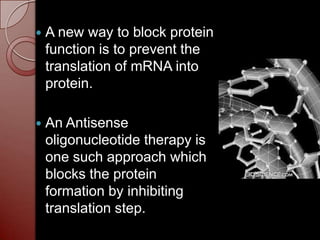
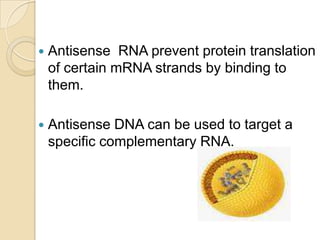
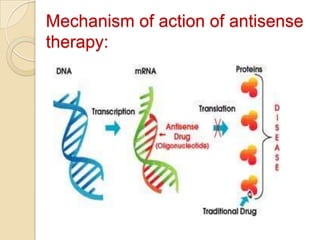
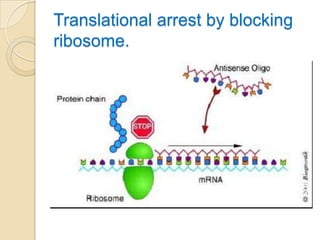
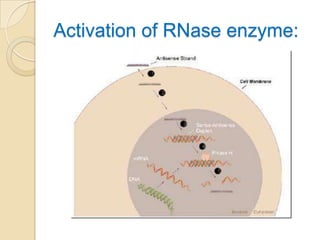
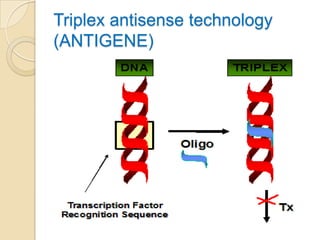
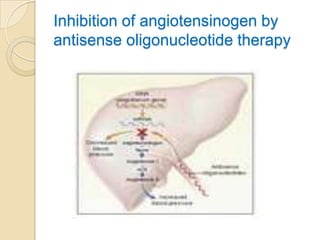
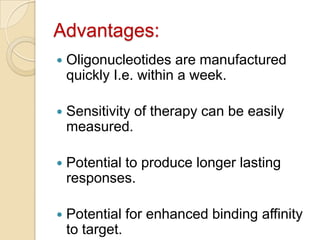
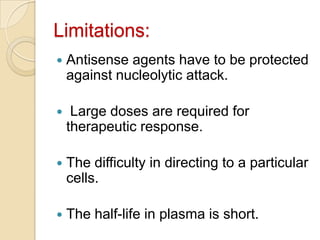
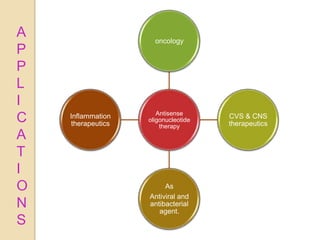
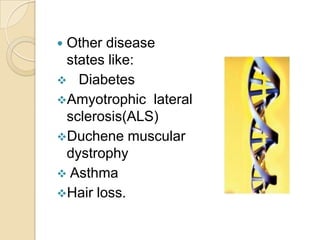
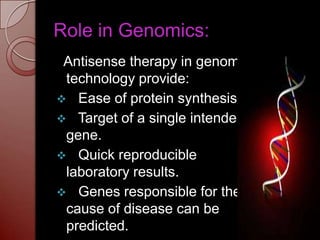
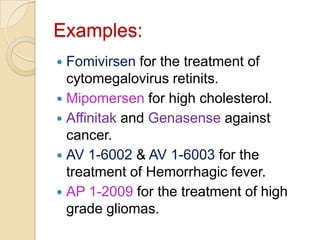
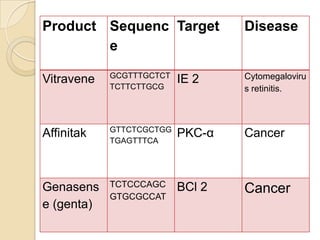
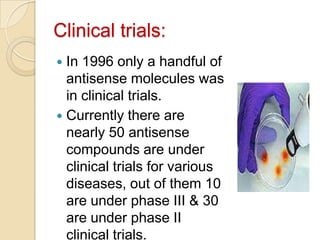




Antisense oligonucleotide therapy is a pharmacological approach that uses synthetic genetic material to inhibit protein translation by binding to mRNA. It works by blocking ribosomes, activating RNase enzymes, or forming triplex structures. Advantages include rapid manufacturing and potential for enhanced targeting. Limitations include short half-lives and difficulty directing to specific cells. Over 50 antisense compounds are in clinical trials for various diseases. The future of antisense-based therapies looks promising as more companies develop applications.


![OLIGONUCLEOTIDE THERAPY [ TECHNIQUES, APPLICATIONS]](https://cdn.slidesharecdn.com/ss_thumbnails/66-191220063512-thumbnail.jpg?width=640&height=640&fit=bounds)


