DAVANGERE UNIVERSITY
SEMINAR TOPIC:
SOMATIC CELL GENE
THERAPY.
CONTENTS
 Introduction
Types of gene therapy
 Somatic cell gene therapy
 Germ line gene therapy
 Types of somatic cell gene therapy
 Ex-vivo gene therapy
 In-vivo gene therapy
 Antisense gene therapy
 Advantages and Disadvantages of gene therapy
 Summary
 Conclusion
 References
INTRODUCTION
Gene therapy is an experimental technique that uses genes
to treat or prevent disease. To treat a disorder by inserting a
gene into a patient’s cells instead of using drugs or surgery.
The first attempt at modifying human DNA was performed
in 1980 by Martin Cline, but the first successful nuclear gene
transfer in humans was approved by the National Institutes of
Health (NIH) in may 1989.
1. Somatic cell gene therapy:
In somatic cell gene therapy(SCGT), the therapeutic
genes are transferred into any cell other than a gamete, germ
cell, gametocyte, or undifferentiated stem cells. Any such
modifications affect the individual patient only, and are not
inherited by offspring. Somatic gene therapy represents main
stream basic and clinical research, in which therapeutic DNA
is used to treat disease.
2. Germ line gene therapy:
In germ line gene therapy, germ cells i.e., sperm or ovum,
are modified by the introduction of functional genes, which are
integrated into their genomes. This would allow the therapy to
be heritable and passed on to later generations.
TYPES OF SOMATIC CELL GENE
THERAPY
1. Ex-vivo Gene Therapy
2. In-vivo Gene Therapy
3. Antisense Gene Therapy
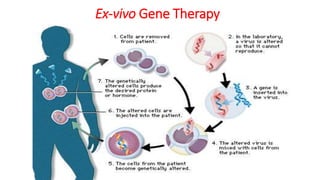
1. Ex-vivo Gene Therapy
o Collect cells from an affected individual.
o Correct the genetic defect by gene transfer.
o Select and grow the genetically corrected (remedial) cells.
o Either infuse or transplant them back into the patient.
Ex-vivo Gene Therapy
Genetic map of a typical retrovirus
Genetic map of a two – gene retroviral vector
Positive negative selection
In addition to remedial gene it consists "selectable"
genes whose products permit cells to live or cause them to die in the
presence of a particular drug. The two most common selectable genes
used in gene targeting are the neomycin resistance (neor) gene, which
allows cells to survive in the presence of the antibiotic neomycin,
G418 (Positive selection).
The thymidine kinase (TK) gene from
the herpes virus. Cells with this gene die in the presence of the
antiviral agent ganciclovir (Negative selection).
The neor and TK genes are generally used together for maximum
selection.
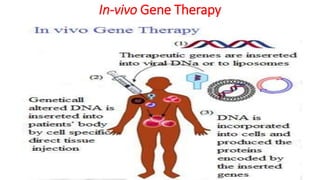
In-vivo Gene Therapy
Adenovirus
Adenovirus is a double stranded DNA virus that can carry
>30Kb of insert DNA as a low pathogenicity in humans.
An adenovirus packaging cell line can produce mixed
population of viruses that consists of those containing viral
DNA and those that carry the cloned genes on the viral vector
eg :Duchenne muscular dystrophy.
Herpes simplex virus
Tissue specific viruses could be used as vehicles to bring
genes to a defined region of the body. For eg: HSV recognize
the nerve cells at their axonal terminal ends and is transported
internal to the neuronal cell body. Where it is maintained.
eg: Alzhemier’s disease.
Retroviral vector
 Researchers have also developed a novel cancer
treatment that utilizes a retroviral vector system.
 Retrovirus can only infect dividing cells and that
infective particles are released only after integration of a
retroviral vector from packaging cell line technique.
 In this case, a retroviral vector containing the herpes
simplex virus gene for thymidine kinase was introduced
into a packaging cell line.
eg: Brain tumor
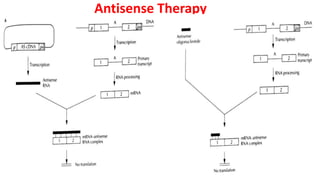
Antisense Therapy
Advantages of Gene Therapy
 Gene therapy has the potential to eliminate and prevent
hereditary diseases such as cystic fibrosis, ADA-SCID etc.
It is a possible cure for heart disease, AIDS and cancer.
The virus is replication deficient, so its safe and is suitable
for the treatment of a variety of diseases.
They can be modified so that they can’t replicated and
destroy cells.
It can be used to eradicate diseases from the future
generation.
Disadvantages of Gene Therapy
Immune response is of stimulated that reduces gene therapy
effectiveness which is always a potential risk.
Viruses used as vectors for gene transfer may cause toxicity,
immune responses, and inflammatory reactions in the host.
Disorders caused by defects in multiple genes can’t be
treated effectively using gene therapy.
They can carry a limited amount of genetic material.
therefore, some genes may be too big to fit into some viruses.
Random insertion can disrupt normal genes
SUMMARY
Once a normal version of a gene for a human disease has
been cloned, the possibility exists that it can be used to
correct the defect in individuals that have a mutant form of
the gene. When this form of treatment is applied to non-
germ line cells, it is called somatic cell gene therapy. There
are three therapeutic approaches: Ex-vivo gene therapy, In-
vivo gene therapy, and antisense therapy.
CONCLUSION
Theoretically, gene therapy is the permanent
solution for genetic diseases. But it has several complexities at
its current stage, it is not accessible to most people due to its
huge cost. Gene therapy have the potential to revolutionize the
practice of medicine. Overcoming all its hurdles it would
change our lives forever.
REFERENCES
Freshney R. I., (2010), Culture Of Animal Cells, 6th edn,
John Wiley and Sons, Inc., pp 732 .
Pasternak J. J., and Glick R. B.,(1994), Molecular
Biotechnology, 1st edn, Panima Publishing Corporation, New
Delhi, pp 484 .
Reichsman F, and Fitzgerald-hayes M.,(2010), DNA and
Biotechnology, 3rd edn, Academic Press, USA, pp 390.
Ramadass P.,(2008), Animal Biotechnology, MJP Publishers,
Chennai, pp 494 .

Gene therapy.

  • 1.
  • 2.
    CONTENTS  Introduction Types ofgene therapy  Somatic cell gene therapy  Germ line gene therapy  Types of somatic cell gene therapy  Ex-vivo gene therapy  In-vivo gene therapy  Antisense gene therapy  Advantages and Disadvantages of gene therapy  Summary  Conclusion  References
  • 3.
    INTRODUCTION Gene therapy isan experimental technique that uses genes to treat or prevent disease. To treat a disorder by inserting a gene into a patient’s cells instead of using drugs or surgery. The first attempt at modifying human DNA was performed in 1980 by Martin Cline, but the first successful nuclear gene transfer in humans was approved by the National Institutes of Health (NIH) in may 1989.
  • 4.
    1. Somatic cellgene therapy: In somatic cell gene therapy(SCGT), the therapeutic genes are transferred into any cell other than a gamete, germ cell, gametocyte, or undifferentiated stem cells. Any such modifications affect the individual patient only, and are not inherited by offspring. Somatic gene therapy represents main stream basic and clinical research, in which therapeutic DNA is used to treat disease. 2. Germ line gene therapy: In germ line gene therapy, germ cells i.e., sperm or ovum, are modified by the introduction of functional genes, which are integrated into their genomes. This would allow the therapy to be heritable and passed on to later generations.
  • 5.
    TYPES OF SOMATICCELL GENE THERAPY 1. Ex-vivo Gene Therapy 2. In-vivo Gene Therapy 3. Antisense Gene Therapy
  • 6.
    1. Ex-vivo GeneTherapy o Collect cells from an affected individual. o Correct the genetic defect by gene transfer. o Select and grow the genetically corrected (remedial) cells. o Either infuse or transplant them back into the patient.
  • 7.
  • 8.
    Genetic map ofa typical retrovirus Genetic map of a two – gene retroviral vector
  • 9.
    Positive negative selection Inaddition to remedial gene it consists "selectable" genes whose products permit cells to live or cause them to die in the presence of a particular drug. The two most common selectable genes used in gene targeting are the neomycin resistance (neor) gene, which allows cells to survive in the presence of the antibiotic neomycin, G418 (Positive selection). The thymidine kinase (TK) gene from the herpes virus. Cells with this gene die in the presence of the antiviral agent ganciclovir (Negative selection). The neor and TK genes are generally used together for maximum selection.
  • 10.
  • 11.
    Adenovirus Adenovirus is adouble stranded DNA virus that can carry >30Kb of insert DNA as a low pathogenicity in humans. An adenovirus packaging cell line can produce mixed population of viruses that consists of those containing viral DNA and those that carry the cloned genes on the viral vector eg :Duchenne muscular dystrophy. Herpes simplex virus Tissue specific viruses could be used as vehicles to bring genes to a defined region of the body. For eg: HSV recognize the nerve cells at their axonal terminal ends and is transported internal to the neuronal cell body. Where it is maintained. eg: Alzhemier’s disease.
  • 12.
    Retroviral vector  Researchershave also developed a novel cancer treatment that utilizes a retroviral vector system.  Retrovirus can only infect dividing cells and that infective particles are released only after integration of a retroviral vector from packaging cell line technique.  In this case, a retroviral vector containing the herpes simplex virus gene for thymidine kinase was introduced into a packaging cell line. eg: Brain tumor
  • 13.
  • 14.
    Advantages of GeneTherapy  Gene therapy has the potential to eliminate and prevent hereditary diseases such as cystic fibrosis, ADA-SCID etc. It is a possible cure for heart disease, AIDS and cancer. The virus is replication deficient, so its safe and is suitable for the treatment of a variety of diseases. They can be modified so that they can’t replicated and destroy cells. It can be used to eradicate diseases from the future generation.
  • 15.
    Disadvantages of GeneTherapy Immune response is of stimulated that reduces gene therapy effectiveness which is always a potential risk. Viruses used as vectors for gene transfer may cause toxicity, immune responses, and inflammatory reactions in the host. Disorders caused by defects in multiple genes can’t be treated effectively using gene therapy. They can carry a limited amount of genetic material. therefore, some genes may be too big to fit into some viruses. Random insertion can disrupt normal genes
  • 16.
    SUMMARY Once a normalversion of a gene for a human disease has been cloned, the possibility exists that it can be used to correct the defect in individuals that have a mutant form of the gene. When this form of treatment is applied to non- germ line cells, it is called somatic cell gene therapy. There are three therapeutic approaches: Ex-vivo gene therapy, In- vivo gene therapy, and antisense therapy.
  • 17.
    CONCLUSION Theoretically, gene therapyis the permanent solution for genetic diseases. But it has several complexities at its current stage, it is not accessible to most people due to its huge cost. Gene therapy have the potential to revolutionize the practice of medicine. Overcoming all its hurdles it would change our lives forever.
  • 18.
    REFERENCES Freshney R. I.,(2010), Culture Of Animal Cells, 6th edn, John Wiley and Sons, Inc., pp 732 . Pasternak J. J., and Glick R. B.,(1994), Molecular Biotechnology, 1st edn, Panima Publishing Corporation, New Delhi, pp 484 . Reichsman F, and Fitzgerald-hayes M.,(2010), DNA and Biotechnology, 3rd edn, Academic Press, USA, pp 390. Ramadass P.,(2008), Animal Biotechnology, MJP Publishers, Chennai, pp 494 .