Gene expression in
prokaryotes
 Genetic expression is the process by which
inheritable information from a gene, such as
the DNA sequence, is made into a functional
gene product, such as protein or RNA
 Non-protein coding genes (e.g. rRNA genes,
tRNA genes) are transcribed, but not
translated into protein
 Group of organisms lacking a cell nucleus or any
other membrane-bound organelles.
 Differ from the eukaryotes, which have a cell
nucleus
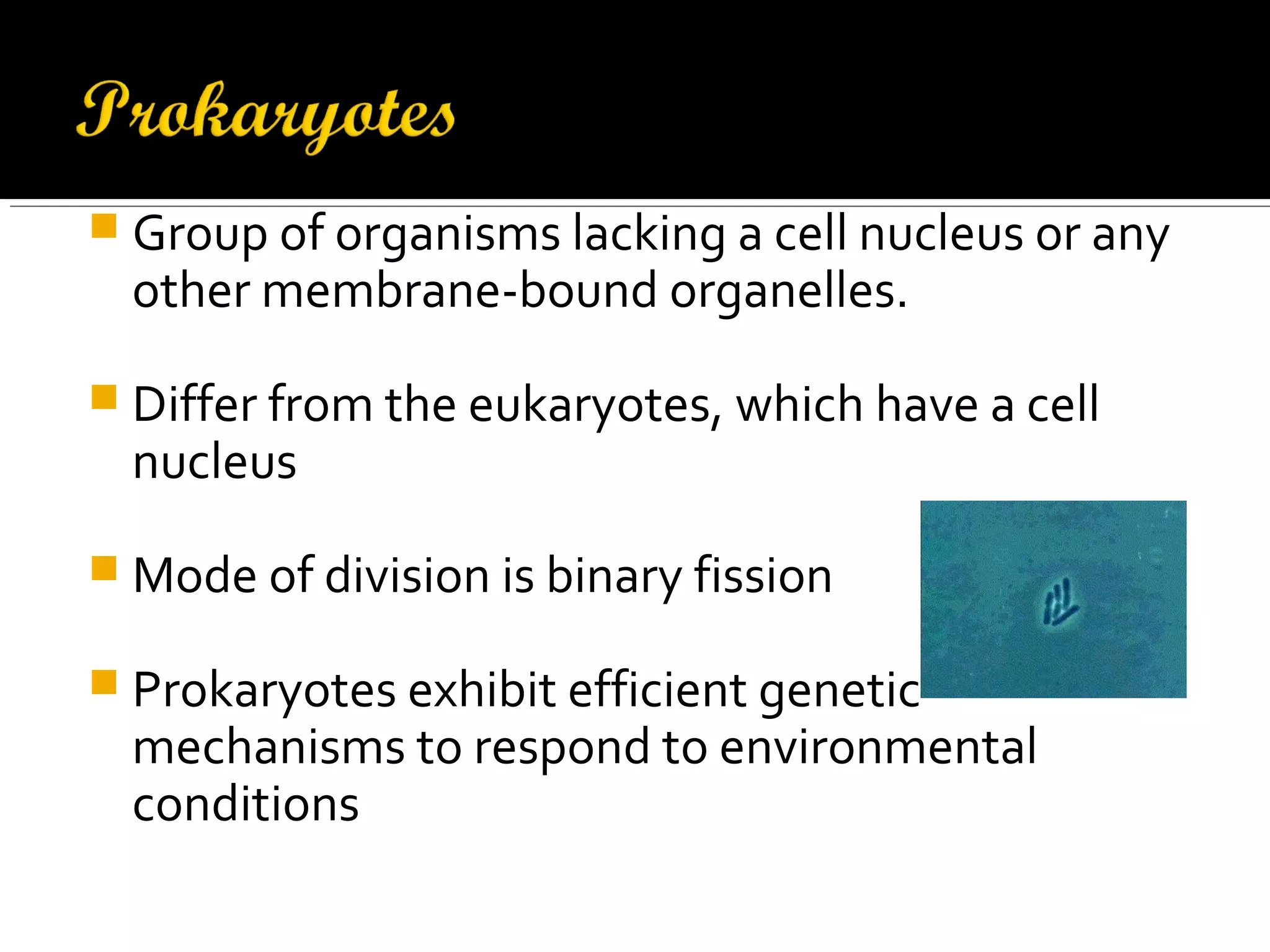
 Mode of division is binary fission
 Prokaryotes exhibit efficient genetic
mechanisms to respond to environmental
conditions
Rod-Shaped Bacterium,
Escherichia coli dividing by
binary fission
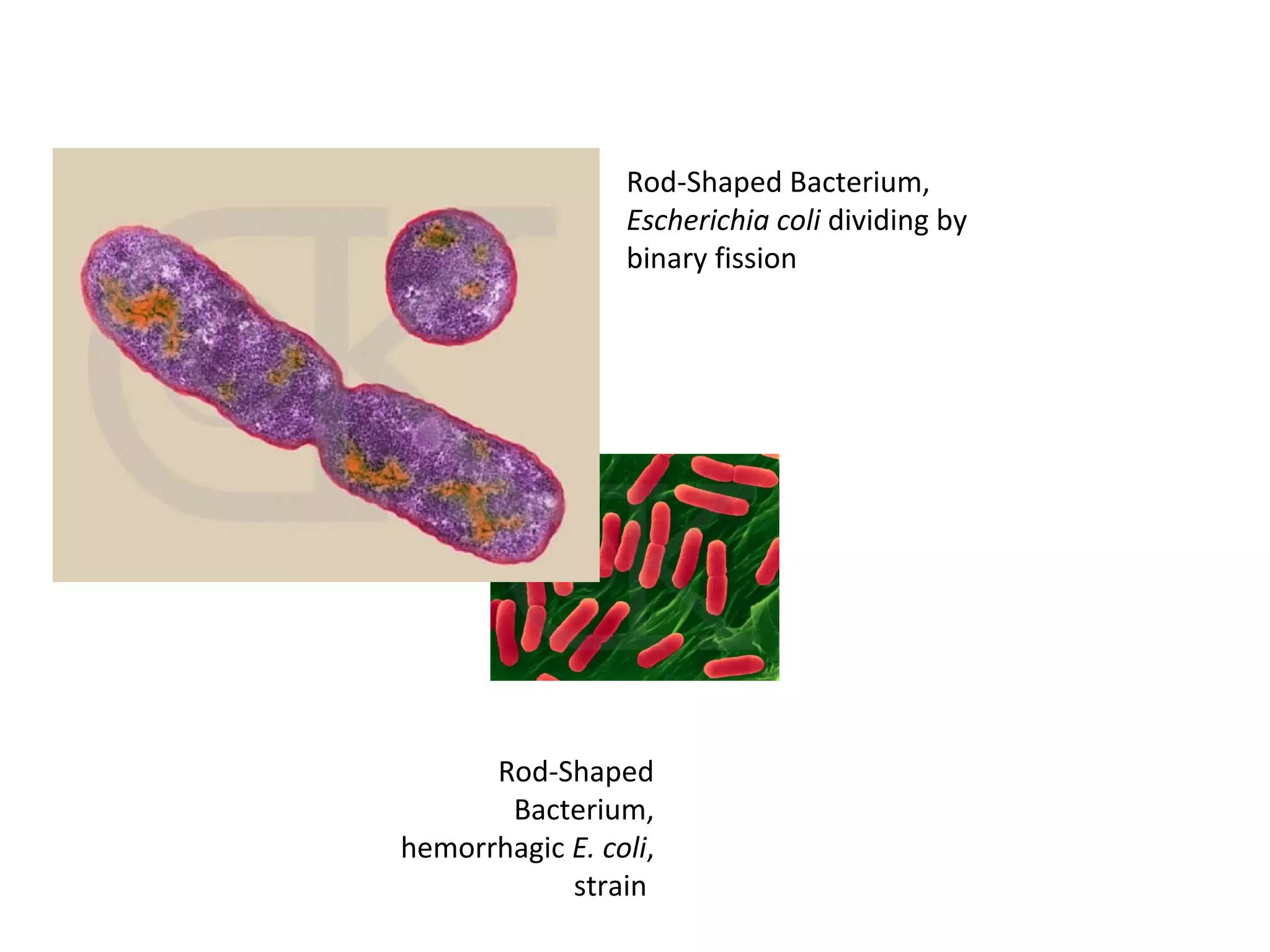
Rod-Shaped
Bacterium,
hemorrhagic E. coli,
strain
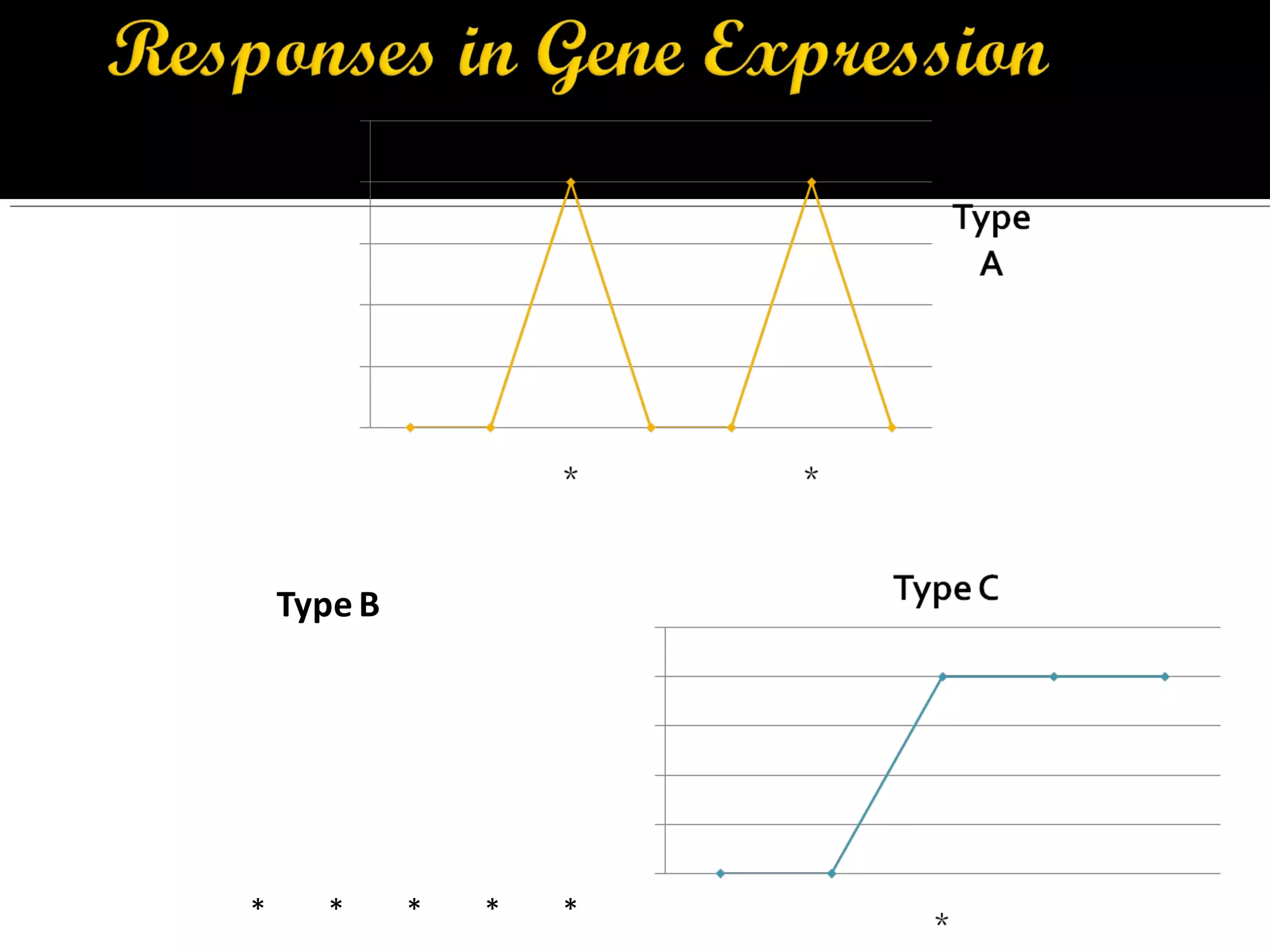
* * * * *
Type B
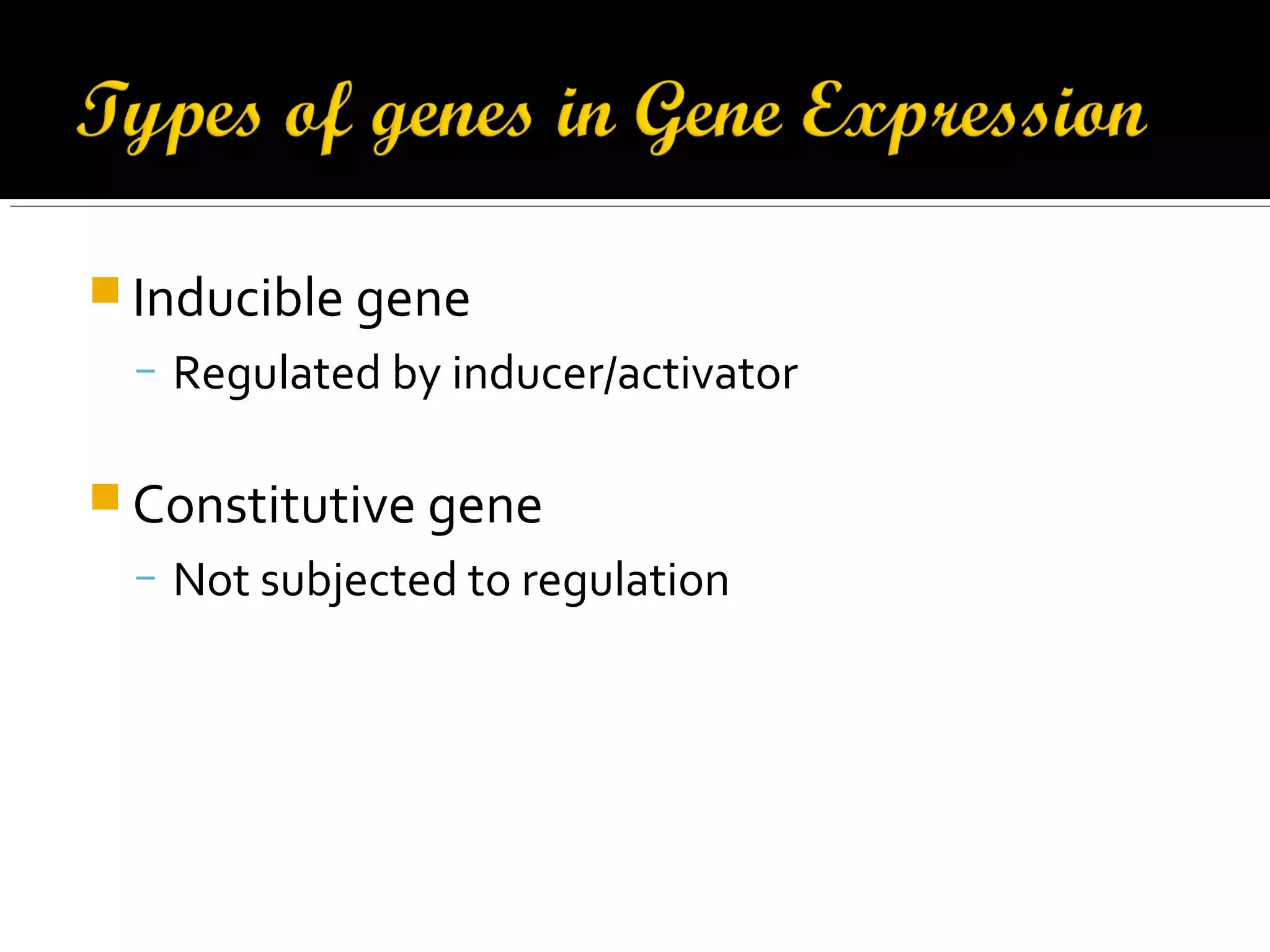
 Inducible gene
− Regulated by inducer/activator
 Constitutive gene
− Not subjected to regulation
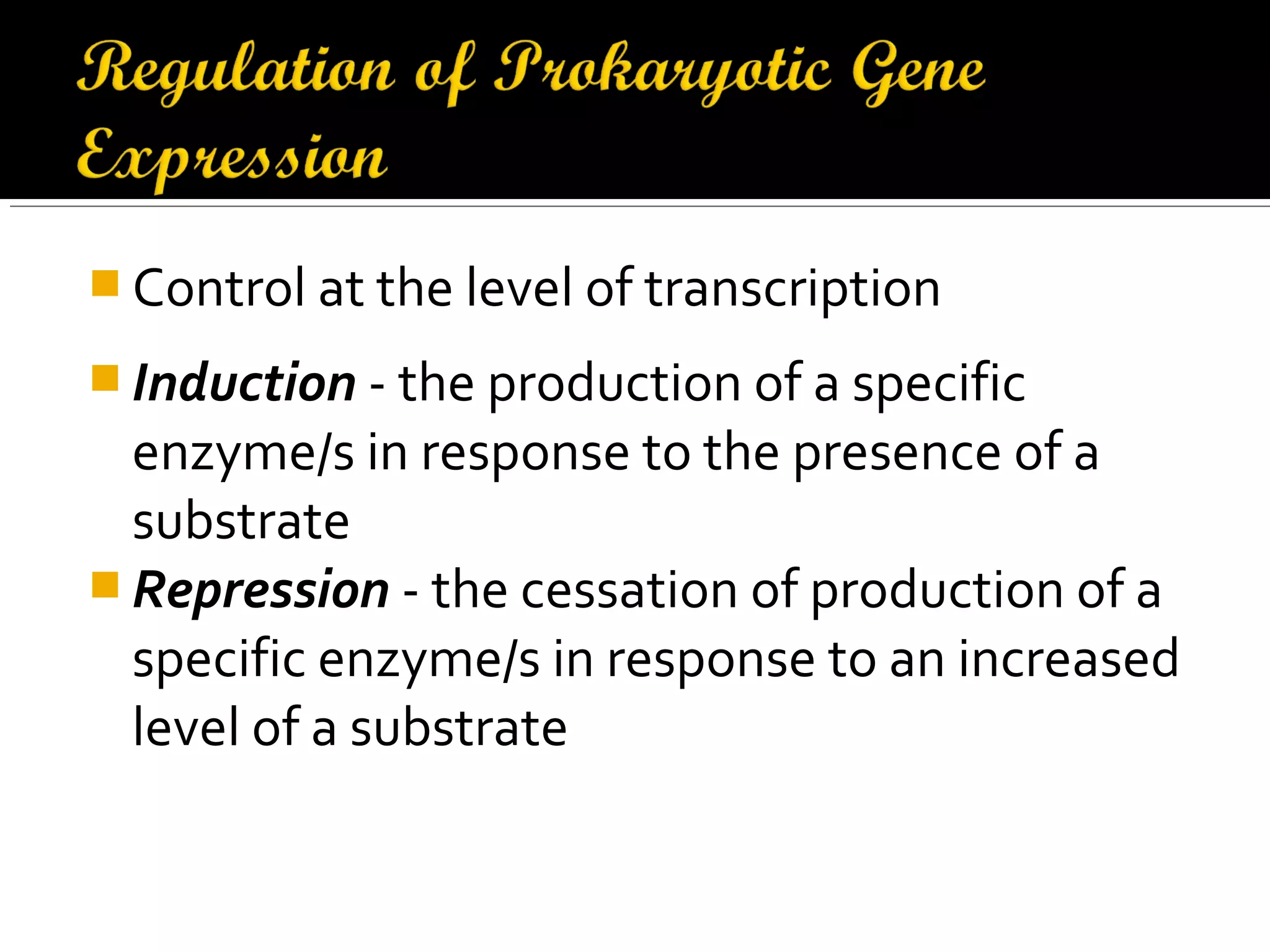
 Control at the level of transcription
 Induction - the production of a specific
enzyme/s in response to the presence of a
substrate
 Repression - the cessation of production of a
specific enzyme/s in response to an increased
level of a substrate
 All of the genes which encode the enzymes
necessary for the pathway are found next to
each other on the E. coli chromosome
 A single mRNA carries information for
multiple proteins
 This type of mRNA is called a polycistronic
mRNA and is totally unique to prokaryotes
 An operon model is a self-regulating series of
genes found on DNA that work in concert
 It includes a special segment of genes that are
regulators of the protein synthesis, but do not
code for protein, called the promoter and
operator regions
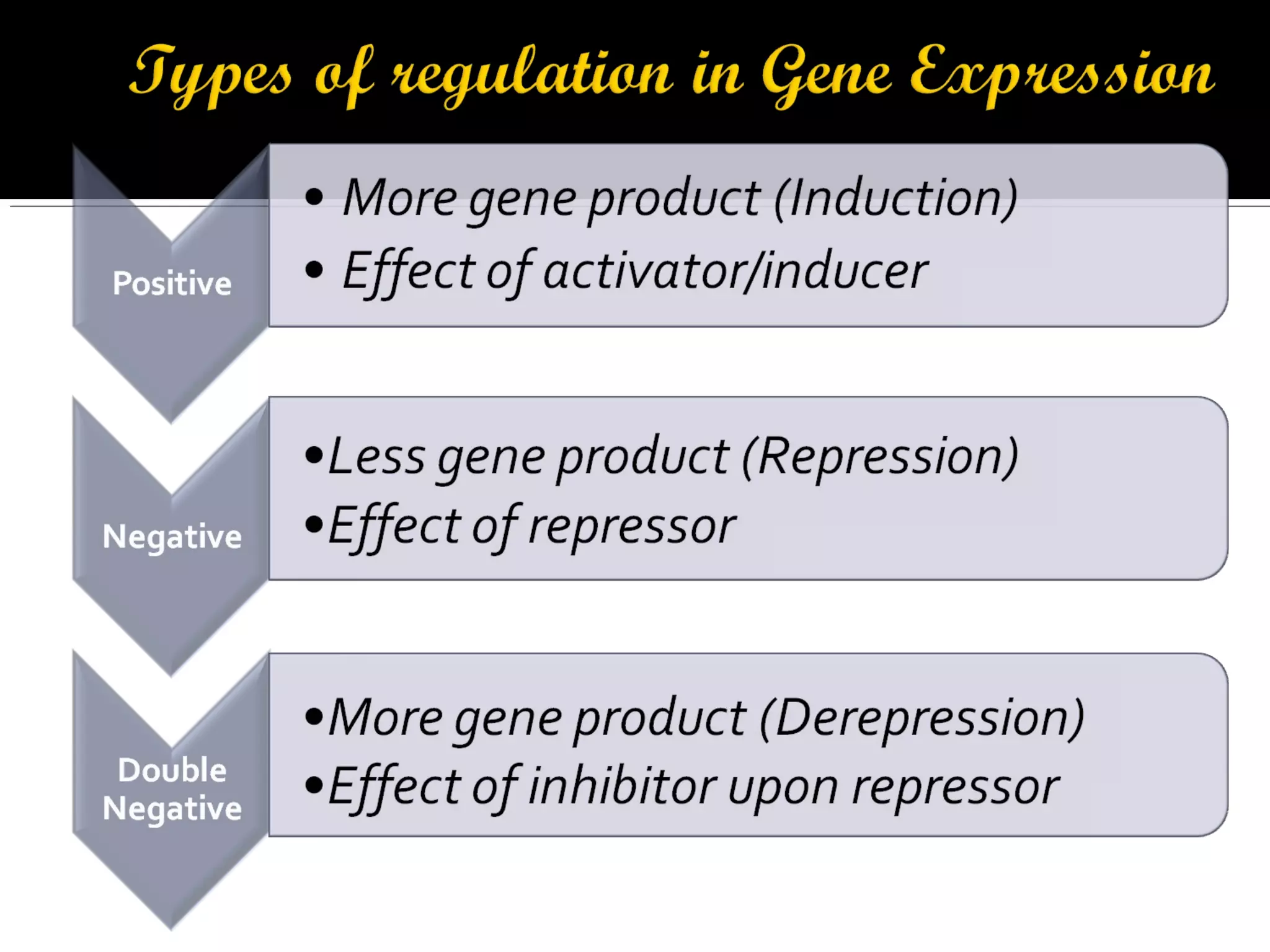
 Lactose (Lac), Tryptophan (Trp), L-Arabinose
(Ara)
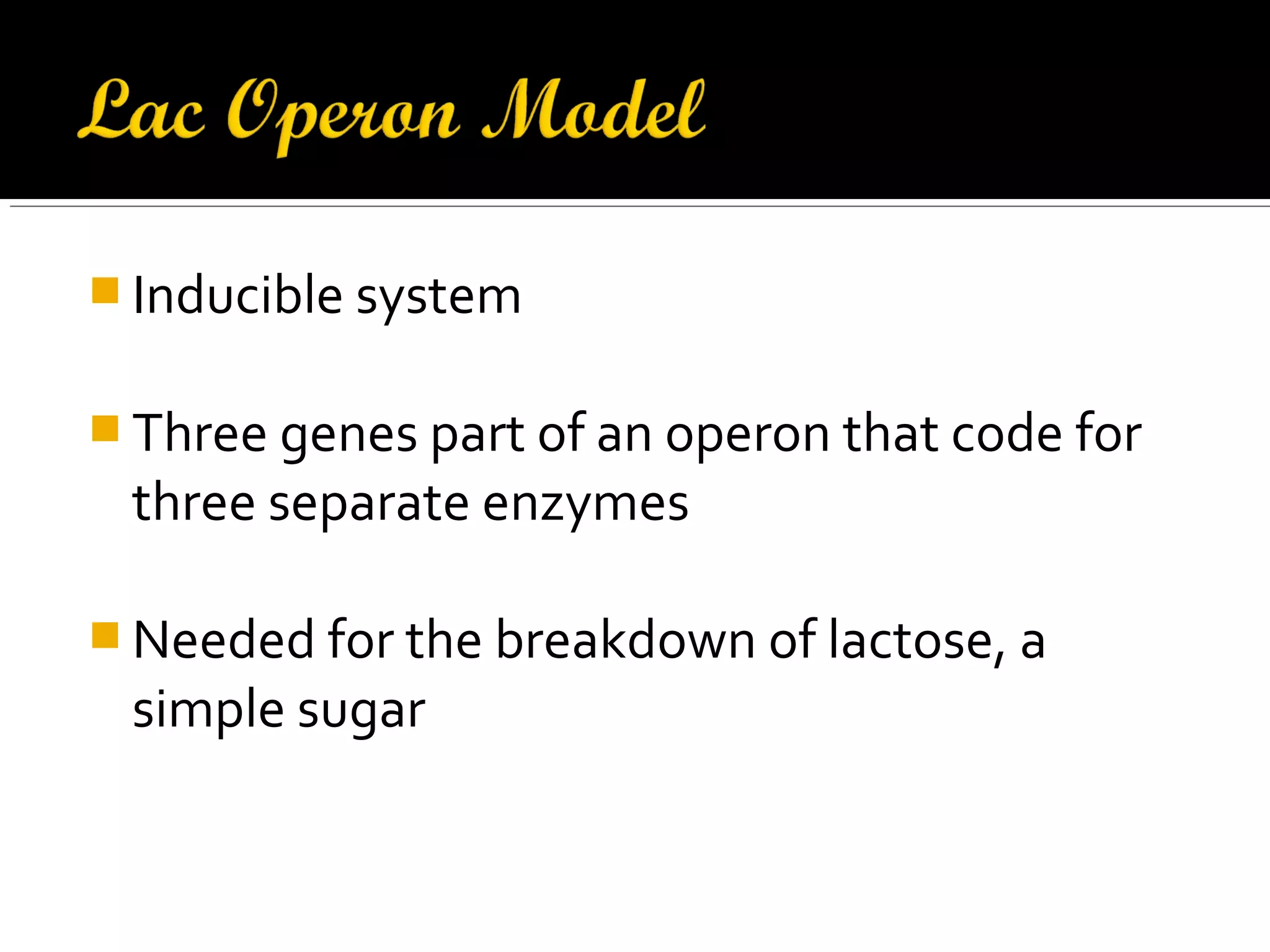
 Inducible system
 Three genes part of an operon that code for
three separate enzymes
 Needed for the breakdown of lactose, a
simple sugar
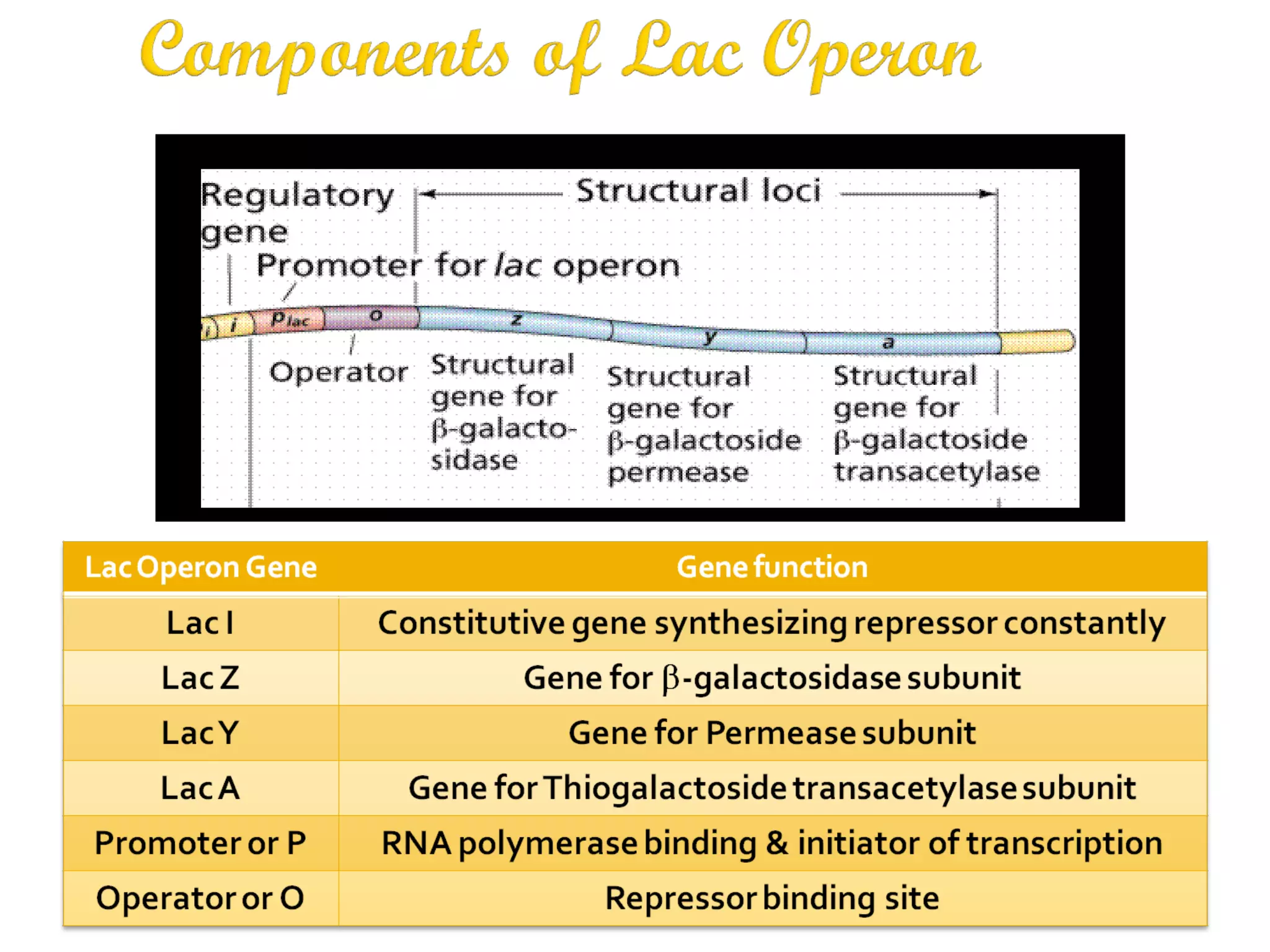
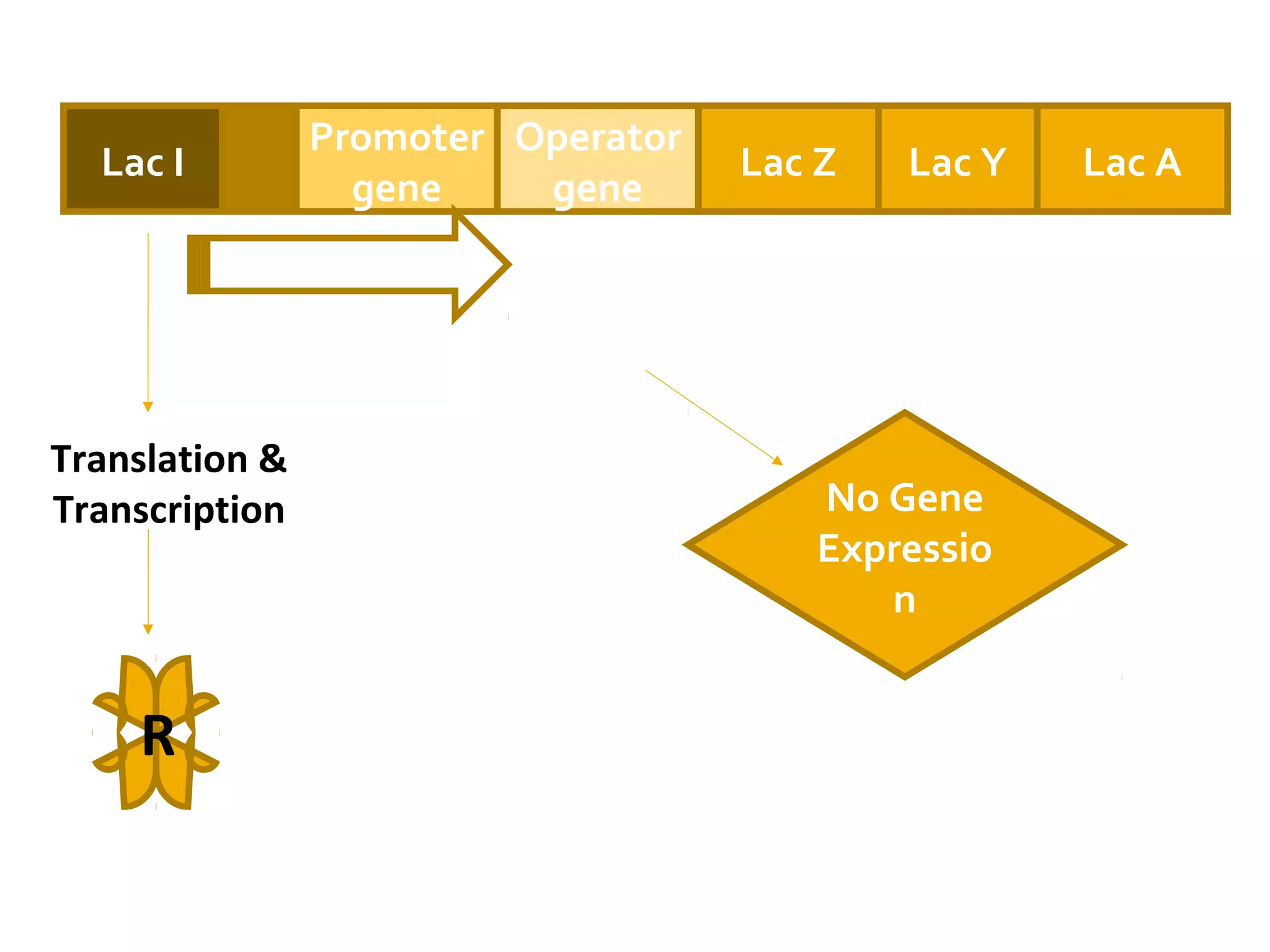
Lac I
Promoter
gene
Operator
gene
Lac Z Lac Y Lac A
RNA polymerase
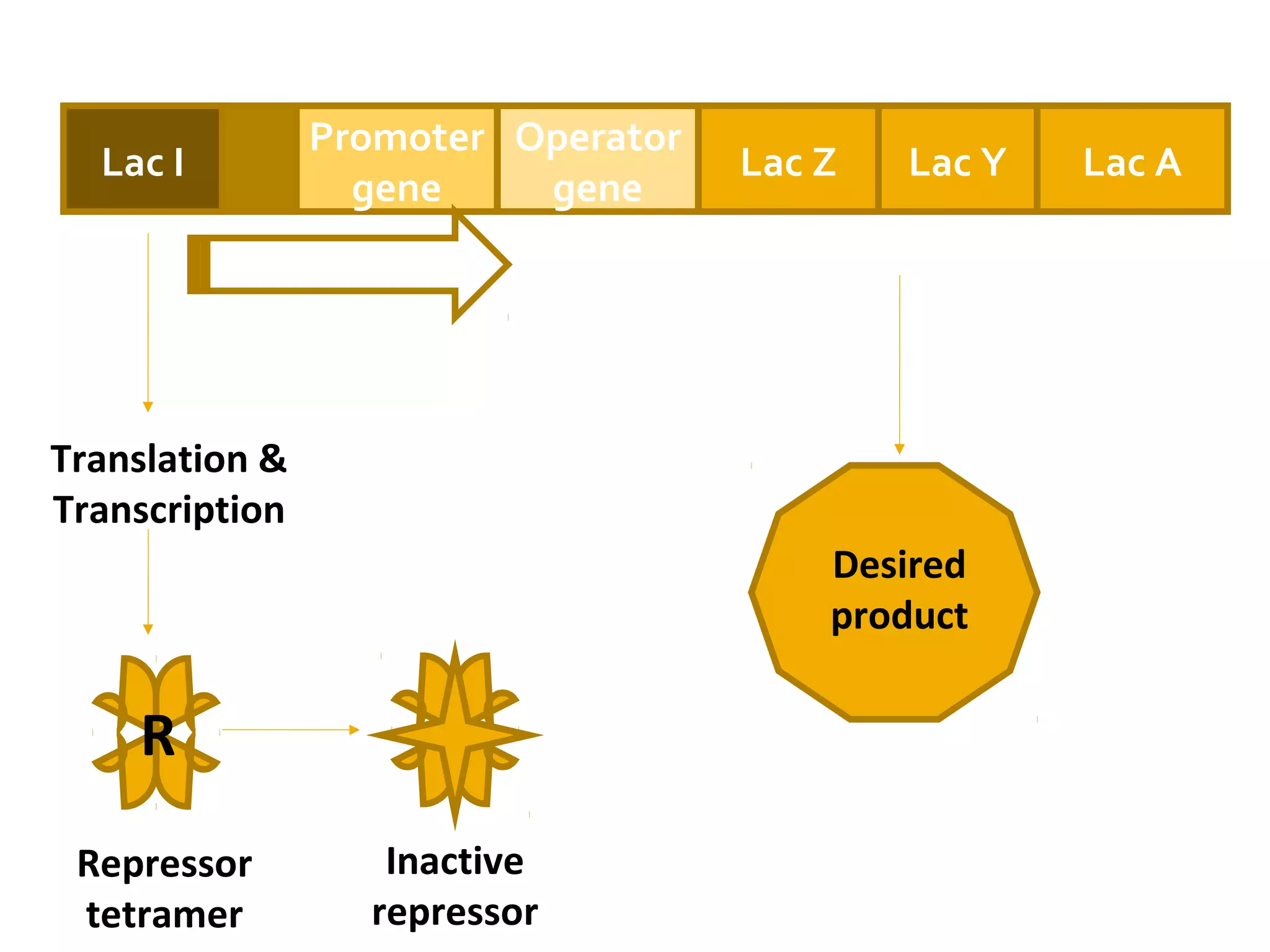
Repressor
tetramer
R
Translation &
Transcription
Inactive
repressor
Desired
product
Lac I
Promoter
gene
Operator
gene
Lac Z Lac Y Lac A
R
Translation &
Transcription
RNA polymerase
No Gene
Expressio
n
Lac I
Promoter
gene
Operator
gene
Lac Z Lac Y Lac A
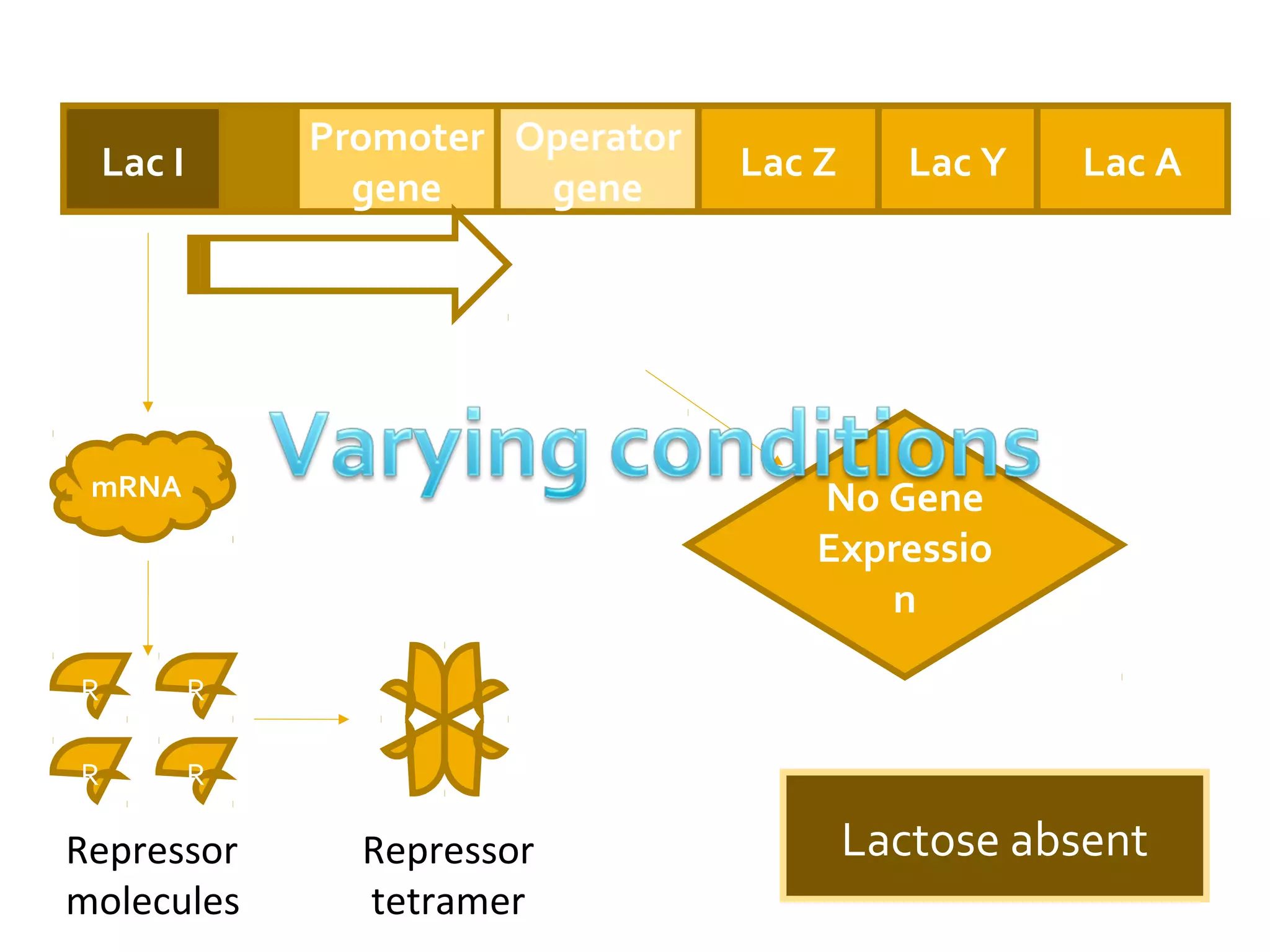
mRNA
R R
RR
Lactose absentRepressor
molecules
Repressor
tetramer
No Gene
Expressio
n
RNA polymerase
Lac I
Promoter
gene
Operator
gene
Lac Z Lac Y Lac A
mRNA
R R
RR
RNA polymerase
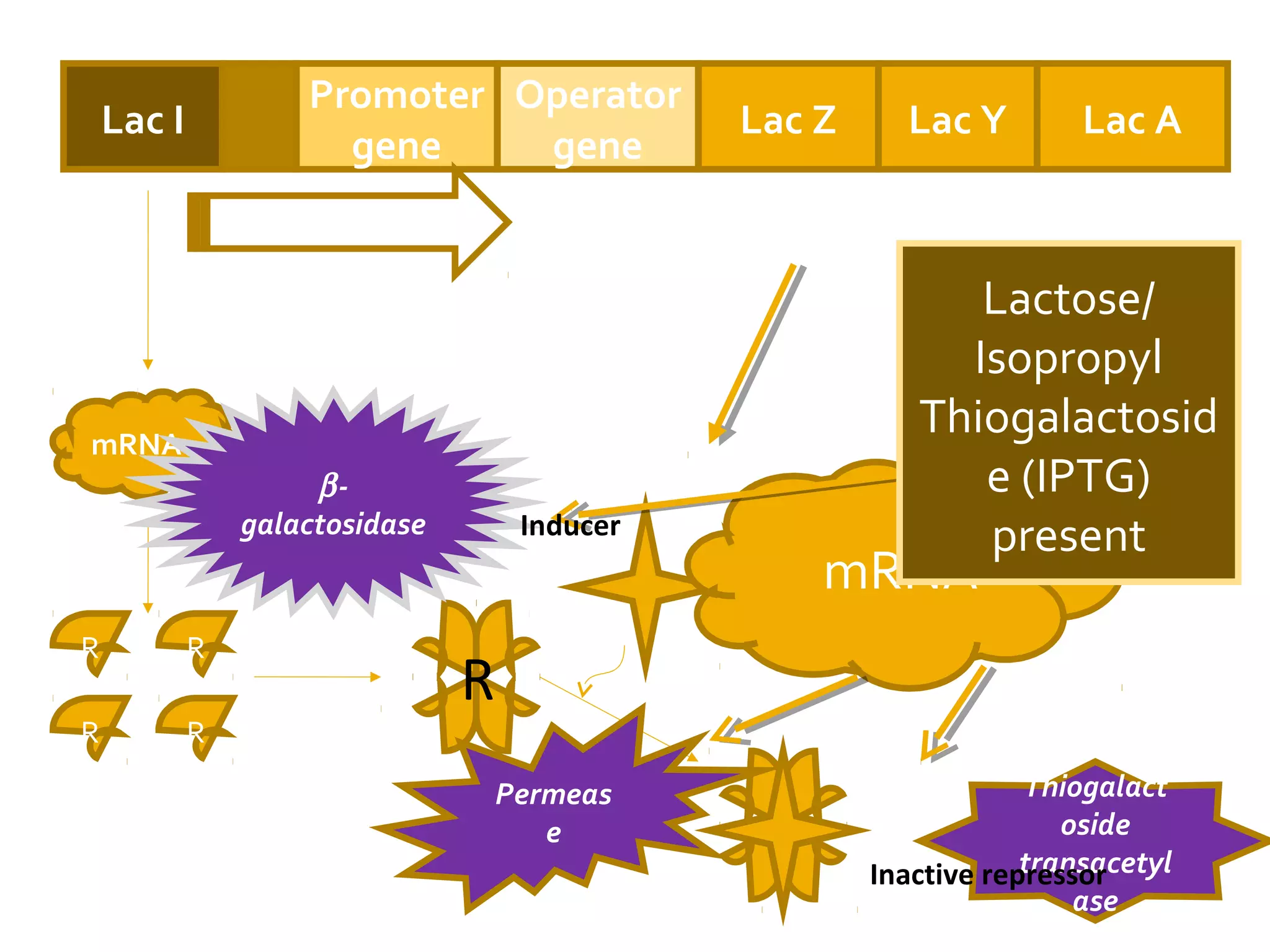
mRNA
Thiogalact
oside
transacetyl
ase
Permeas
e
β-
galactosidase Inducer
Inactive repressor
R
Lactose/
Isopropyl
Thiogalactosid
e (IPTG)
present
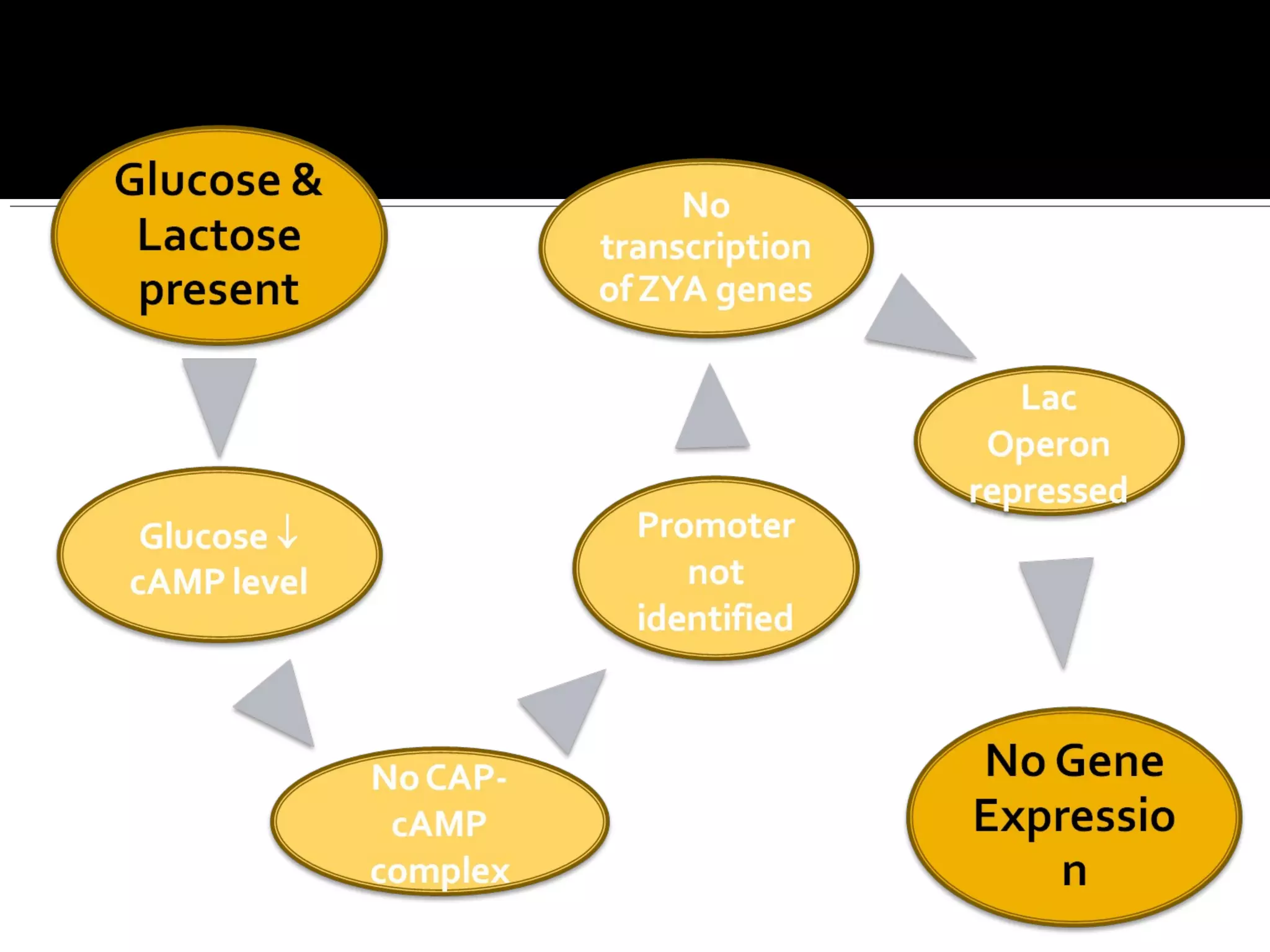
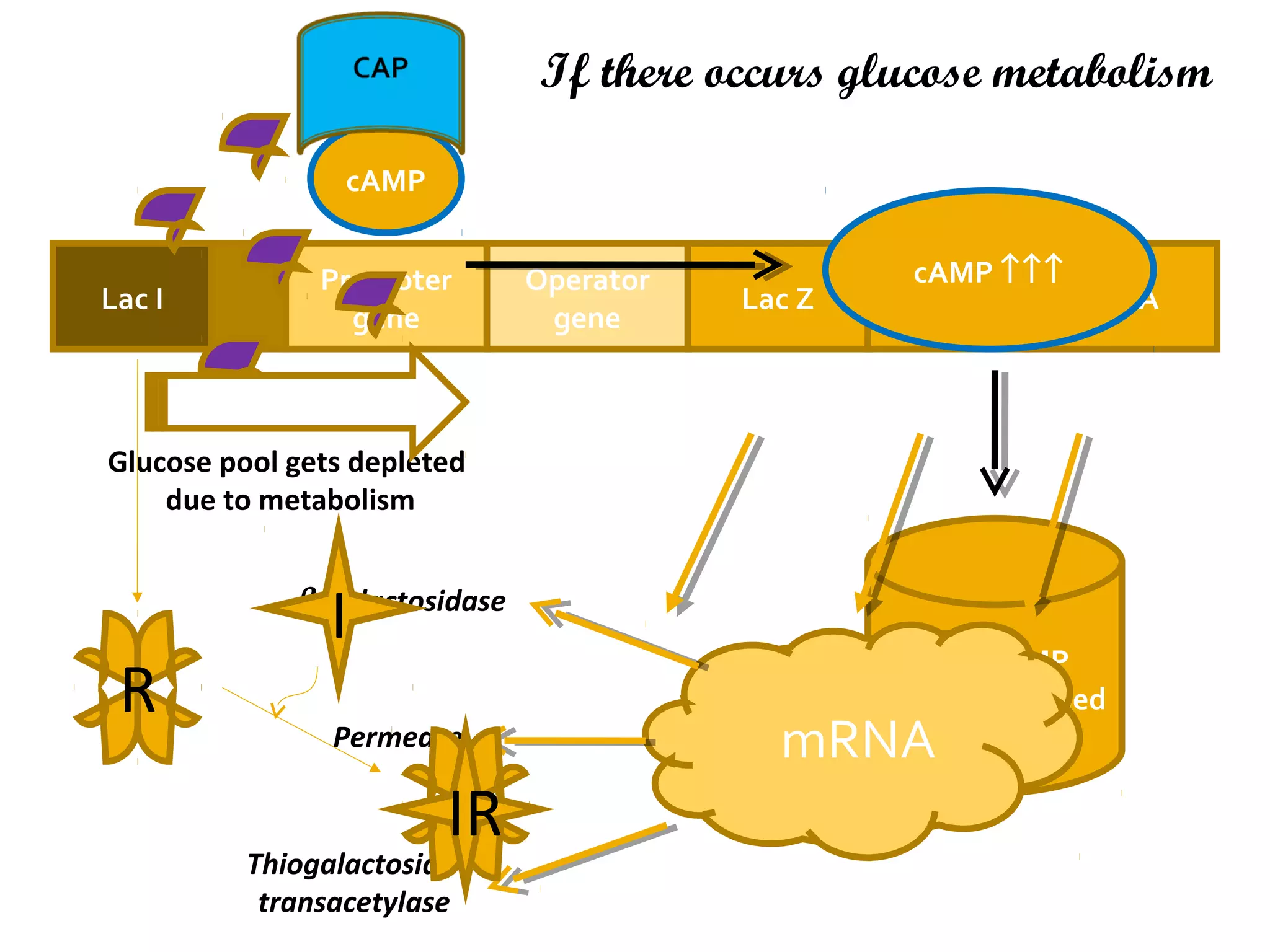
If there occurs no glucose metabolism
Lac I
Promoter
gene
Operator
gene
Lac Z Lac Y Lac A
cAMP ↑↑↑
Glucose pool gets depleted
due to metabolism
CAP-cAMP
complex formed
cAMP
RNA polymerase
mRNA
β-galactosidase
Permease
Thiogalactoside
transacetylase
If there occurs glucose metabolism
R
IR
I
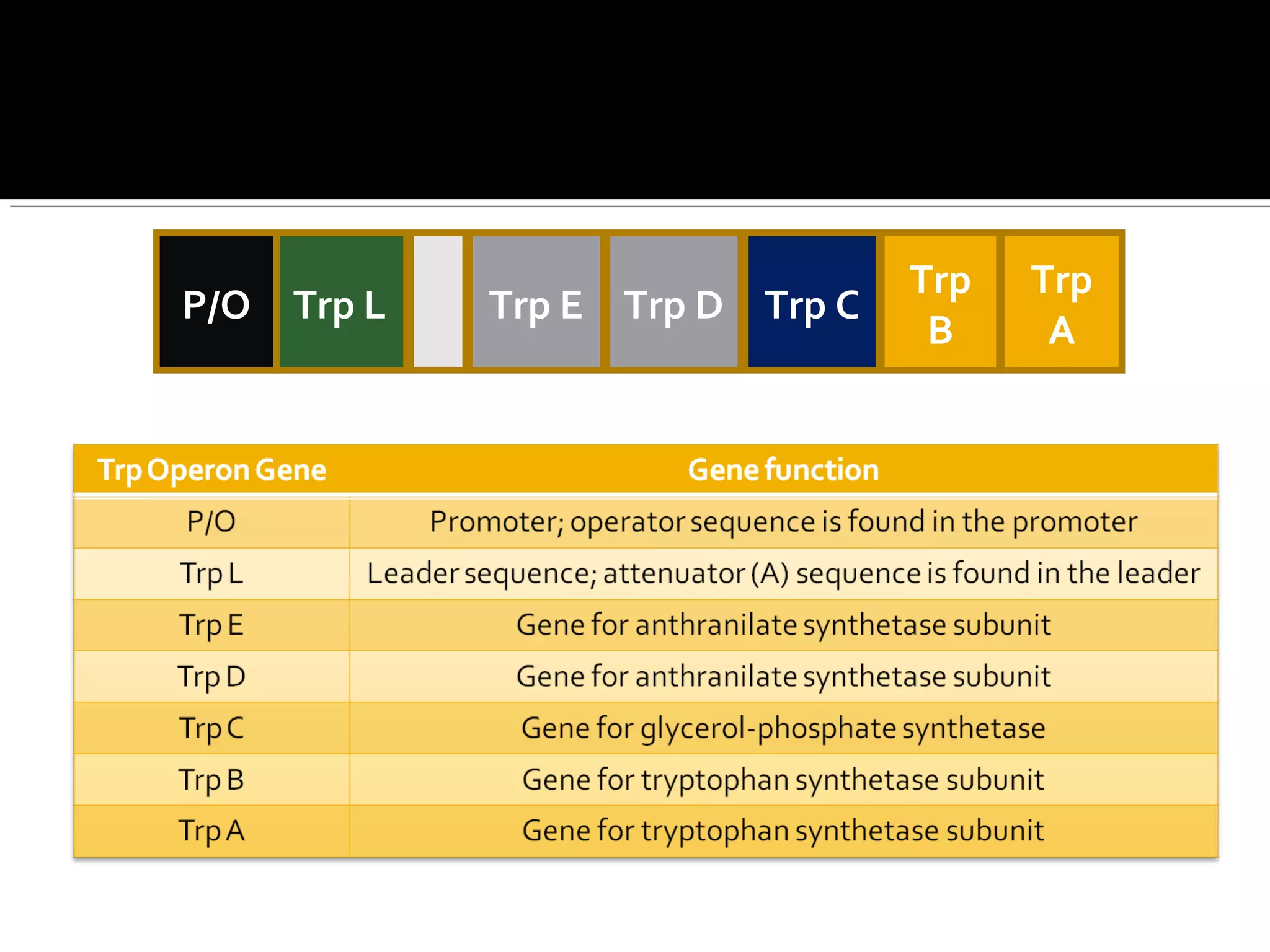
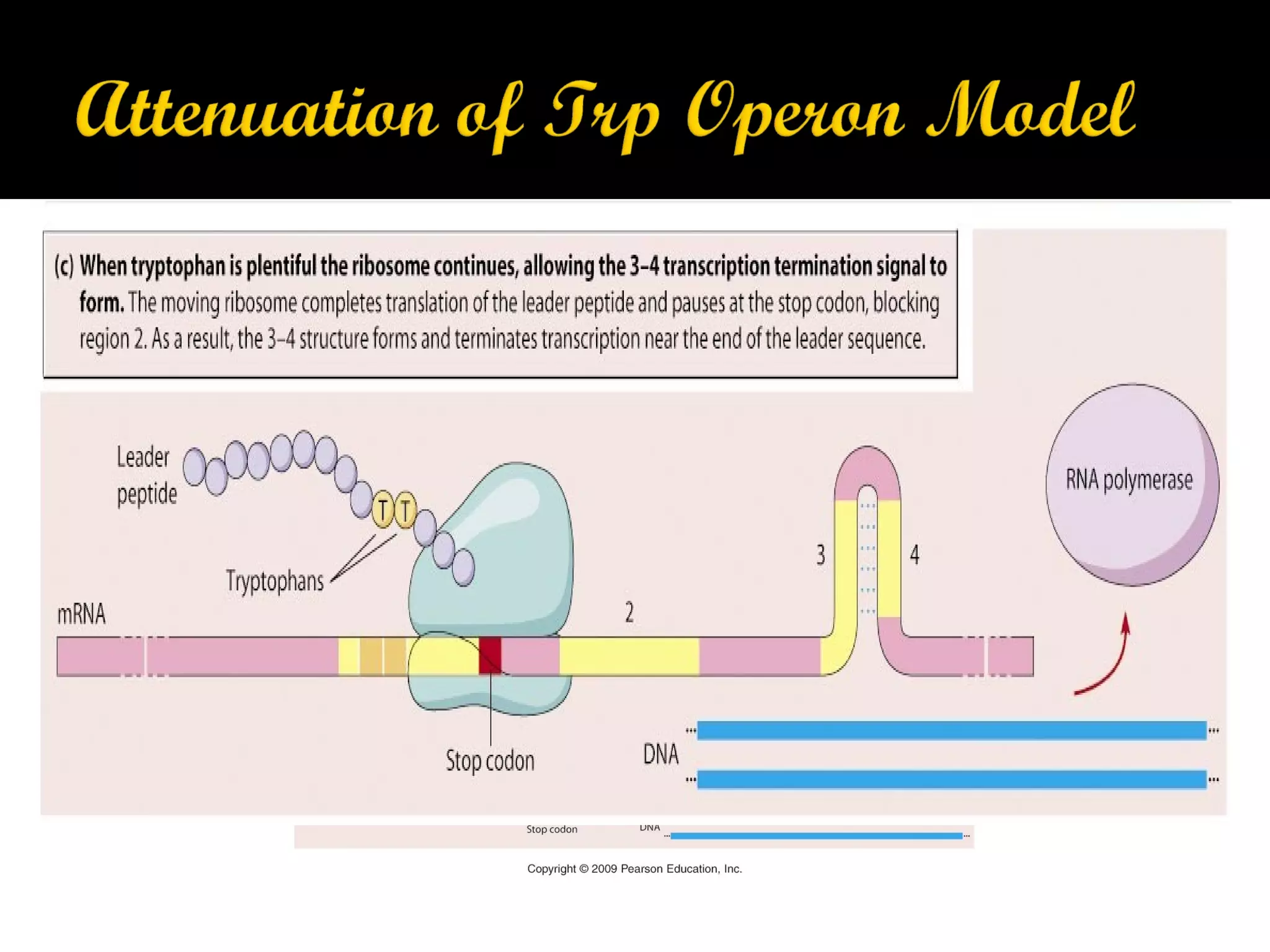
Trp Operon Model
Trp
A
Trp C
Trp
B
Trp LP/O Trp E Trp D
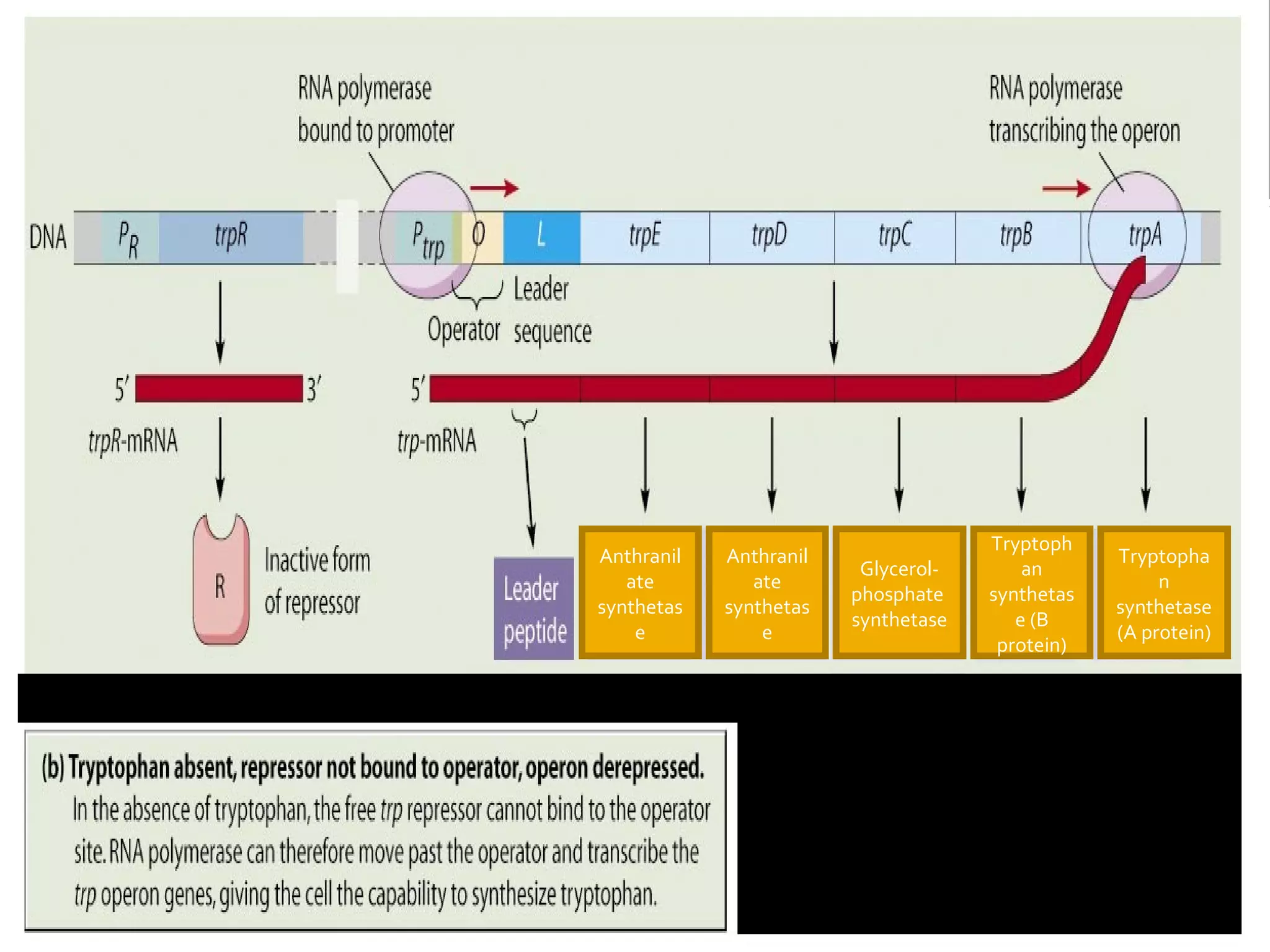
Tryptoph
an
synthetas
e (B
protein)
Tryptopha
n
synthetase
(A protein)
Anthranil
ate
synthetas
e
Anthranil
ate
synthetas
e
Glycerol-
phosphate
synthetase
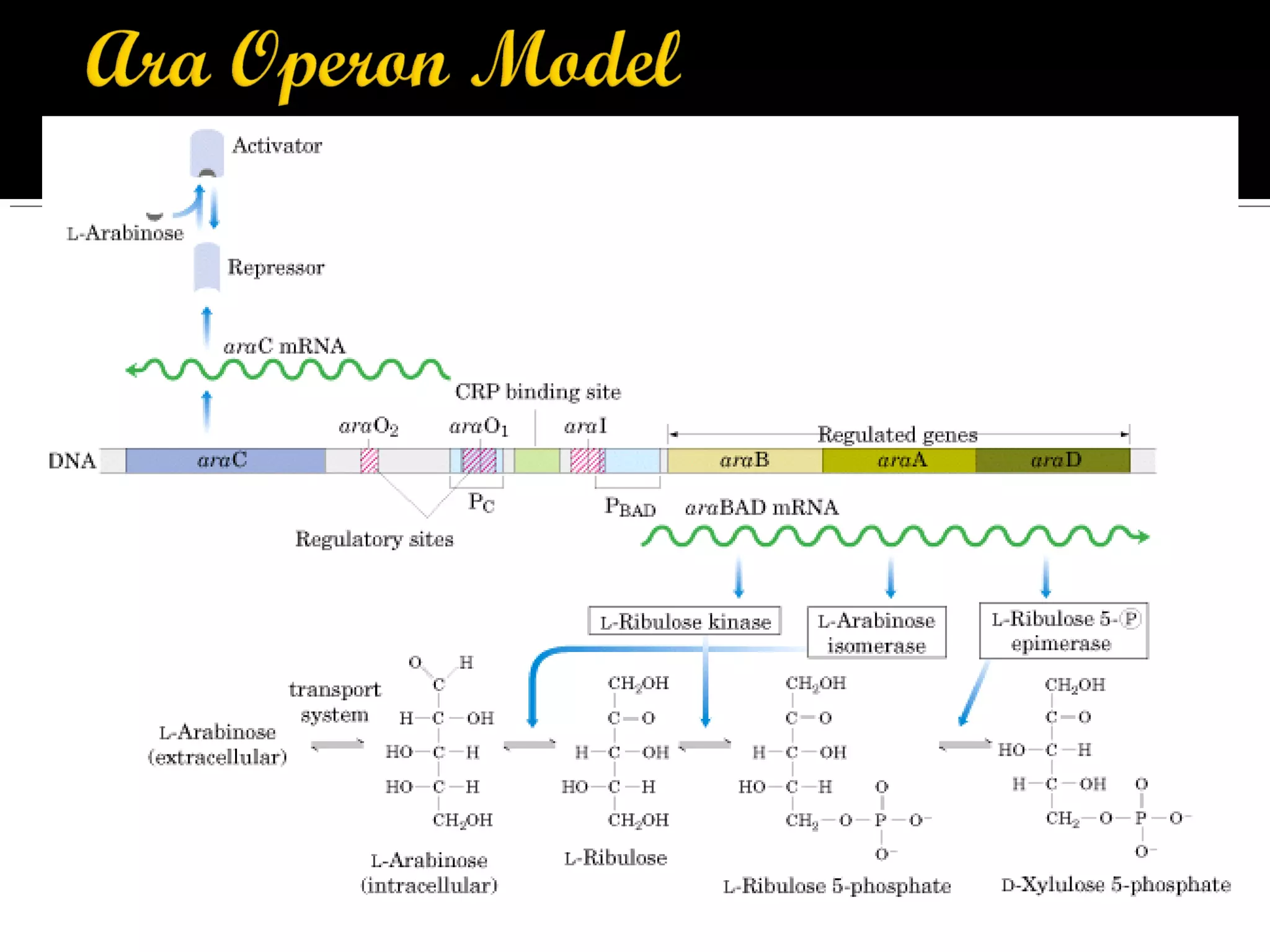
1. L-arabinose operon model
2. Controlled by a dual positive and
negative system
3. 3 structural genes: araB, araA, and
araD
4. Encode the metabolic enzymes for
breaking down arabinose for
further metabolism via the HMP
Shunt pathway

Gene expression in prokaryotes

  • 1.
  • 2.
     Genetic expressionis the process by which inheritable information from a gene, such as the DNA sequence, is made into a functional gene product, such as protein or RNA  Non-protein coding genes (e.g. rRNA genes, tRNA genes) are transcribed, but not translated into protein
  • 3.
     Group oforganisms lacking a cell nucleus or any other membrane-bound organelles.  Differ from the eukaryotes, which have a cell nucleus  Mode of division is binary fission  Prokaryotes exhibit efficient genetic mechanisms to respond to environmental conditions
  • 4.
    Rod-Shaped Bacterium, Escherichia colidividing by binary fission Rod-Shaped Bacterium, hemorrhagic E. coli, strain
  • 6.
    * * ** * Type B
  • 7.
     Inducible gene −Regulated by inducer/activator  Constitutive gene − Not subjected to regulation
  • 8.
     Control atthe level of transcription  Induction - the production of a specific enzyme/s in response to the presence of a substrate  Repression - the cessation of production of a specific enzyme/s in response to an increased level of a substrate
  • 9.
     All ofthe genes which encode the enzymes necessary for the pathway are found next to each other on the E. coli chromosome  A single mRNA carries information for multiple proteins  This type of mRNA is called a polycistronic mRNA and is totally unique to prokaryotes
  • 10.
     An operonmodel is a self-regulating series of genes found on DNA that work in concert  It includes a special segment of genes that are regulators of the protein synthesis, but do not code for protein, called the promoter and operator regions  Lactose (Lac), Tryptophan (Trp), L-Arabinose (Ara)
  • 11.
     Inducible system Three genes part of an operon that code for three separate enzymes  Needed for the breakdown of lactose, a simple sugar
  • 13.
    Lac I Promoter gene Operator gene Lac ZLac Y Lac A RNA polymerase Repressor tetramer R Translation & Transcription Inactive repressor Desired product
  • 14.
    Lac I Promoter gene Operator gene Lac ZLac Y Lac A R Translation & Transcription RNA polymerase No Gene Expressio n
  • 15.
    Lac I Promoter gene Operator gene Lac ZLac Y Lac A mRNA R R RR Lactose absentRepressor molecules Repressor tetramer No Gene Expressio n RNA polymerase
  • 16.
    Lac I Promoter gene Operator gene Lac ZLac Y Lac A mRNA R R RR RNA polymerase mRNA Thiogalact oside transacetyl ase Permeas e β- galactosidase Inducer Inactive repressor R Lactose/ Isopropyl Thiogalactosid e (IPTG) present
  • 17.
    If there occursno glucose metabolism
  • 18.
    Lac I Promoter gene Operator gene Lac ZLac Y Lac A cAMP ↑↑↑ Glucose pool gets depleted due to metabolism CAP-cAMP complex formed cAMP RNA polymerase mRNA β-galactosidase Permease Thiogalactoside transacetylase If there occurs glucose metabolism R IR I
  • 19.
    Trp Operon Model Trp A TrpC Trp B Trp LP/O Trp E Trp D
  • 21.
  • 23.
    1. L-arabinose operonmodel 2. Controlled by a dual positive and negative system 3. 3 structural genes: araB, araA, and araD 4. Encode the metabolic enzymes for breaking down arabinose for further metabolism via the HMP Shunt pathway