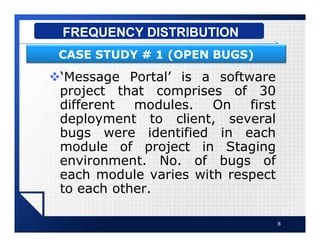
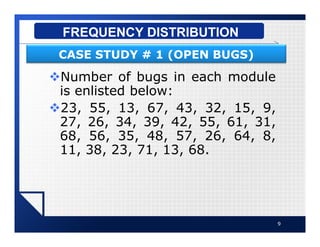
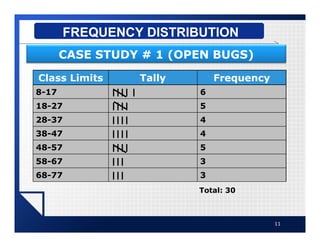
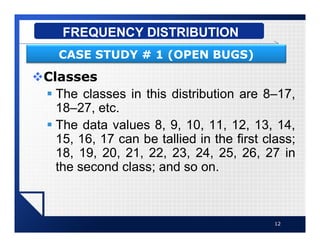
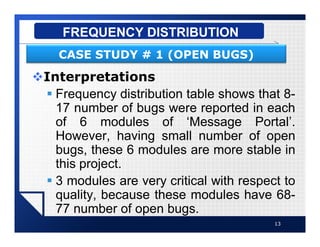
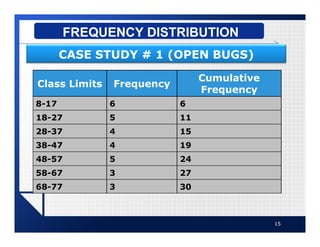
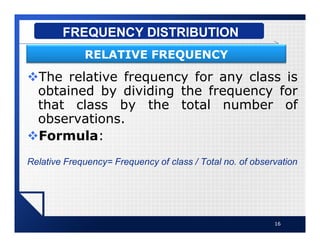
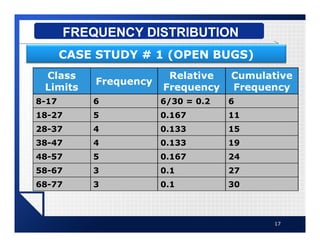
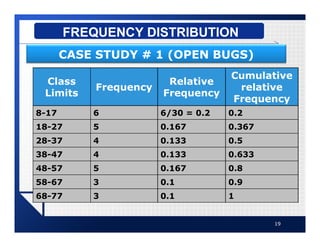
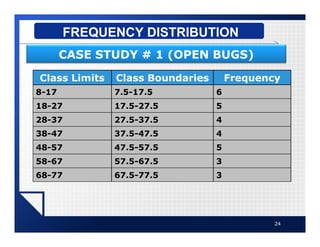
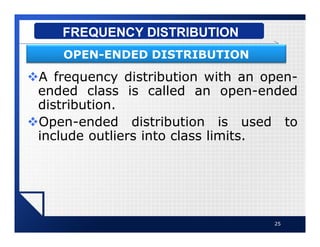
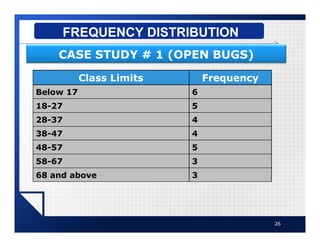
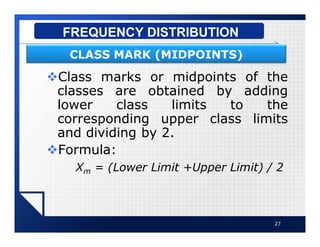
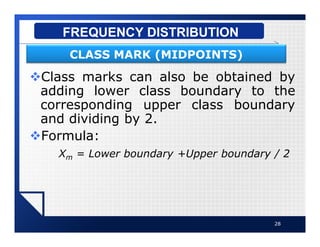
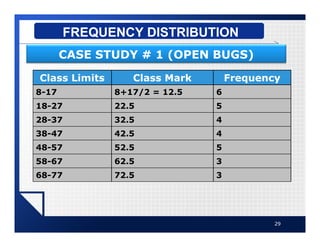
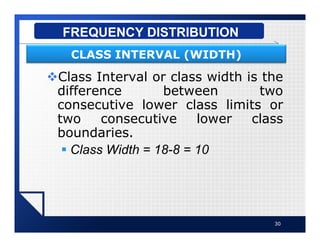
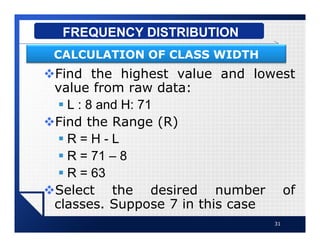
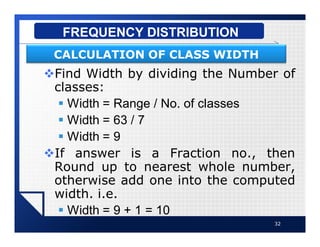
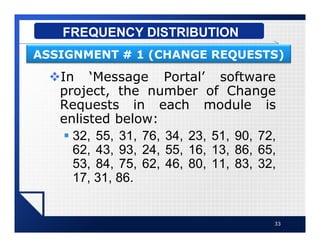
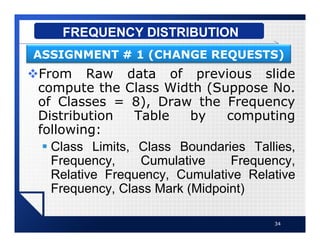
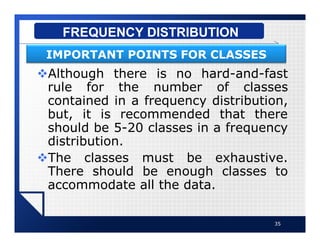
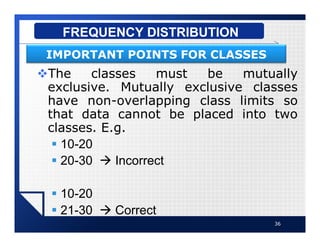
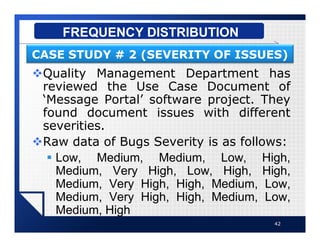
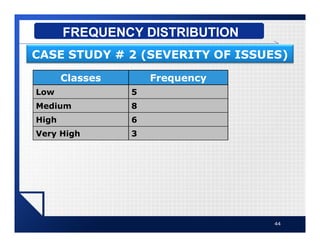
This document discusses frequency distributions, which organize raw data into a table with classes and frequencies. A frequency distribution divides data values into categories called classes and counts the number of values that fall into each class. It presents raw data in a meaningful way that allows comparisons. The document provides examples to demonstrate how to construct frequency distributions, including calculating class limits, frequencies, and other metrics. Key aspects covered include types of distributions, important points about classes, and how to handle quantitative versus categorical data.