
Lecture #14
Definition 
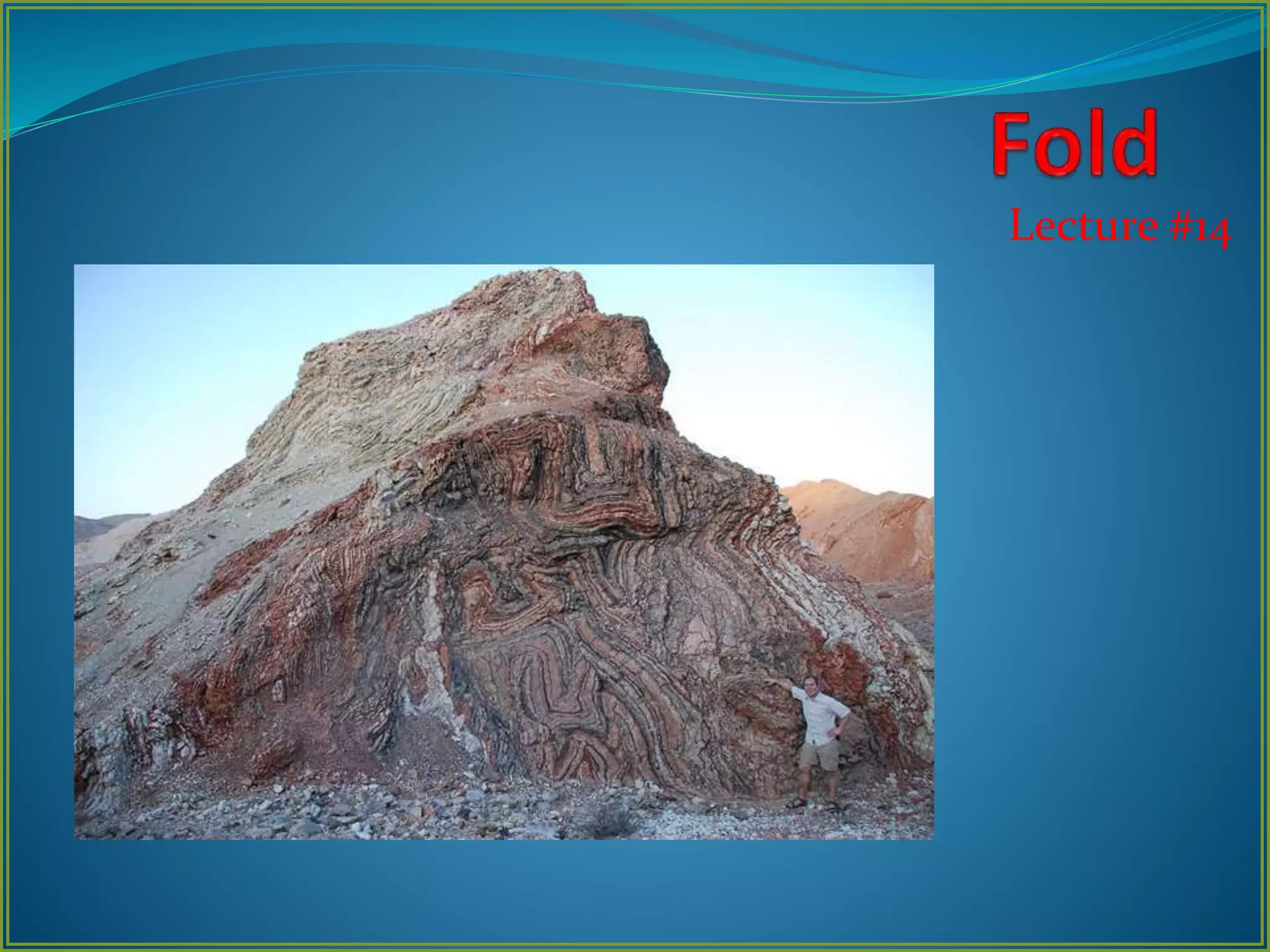
Fold is the shape or volume changes from one material 
(bedding), which show as an arc or group of arc on the line 
or plane structure on that material. 
Fold is an important phenomena, that indicate 
deformation characteristic especially the geometry 
description with distortion and rotation. 
An inhomogeneous deformation that occurred on 
material/rock that has line and plane structure. 
Need to consider that an element which is before has 
curve form can change become plane or straight line or 
an element can remain as plane structure or straight line 
after deformation.
Fold Geometry Description 
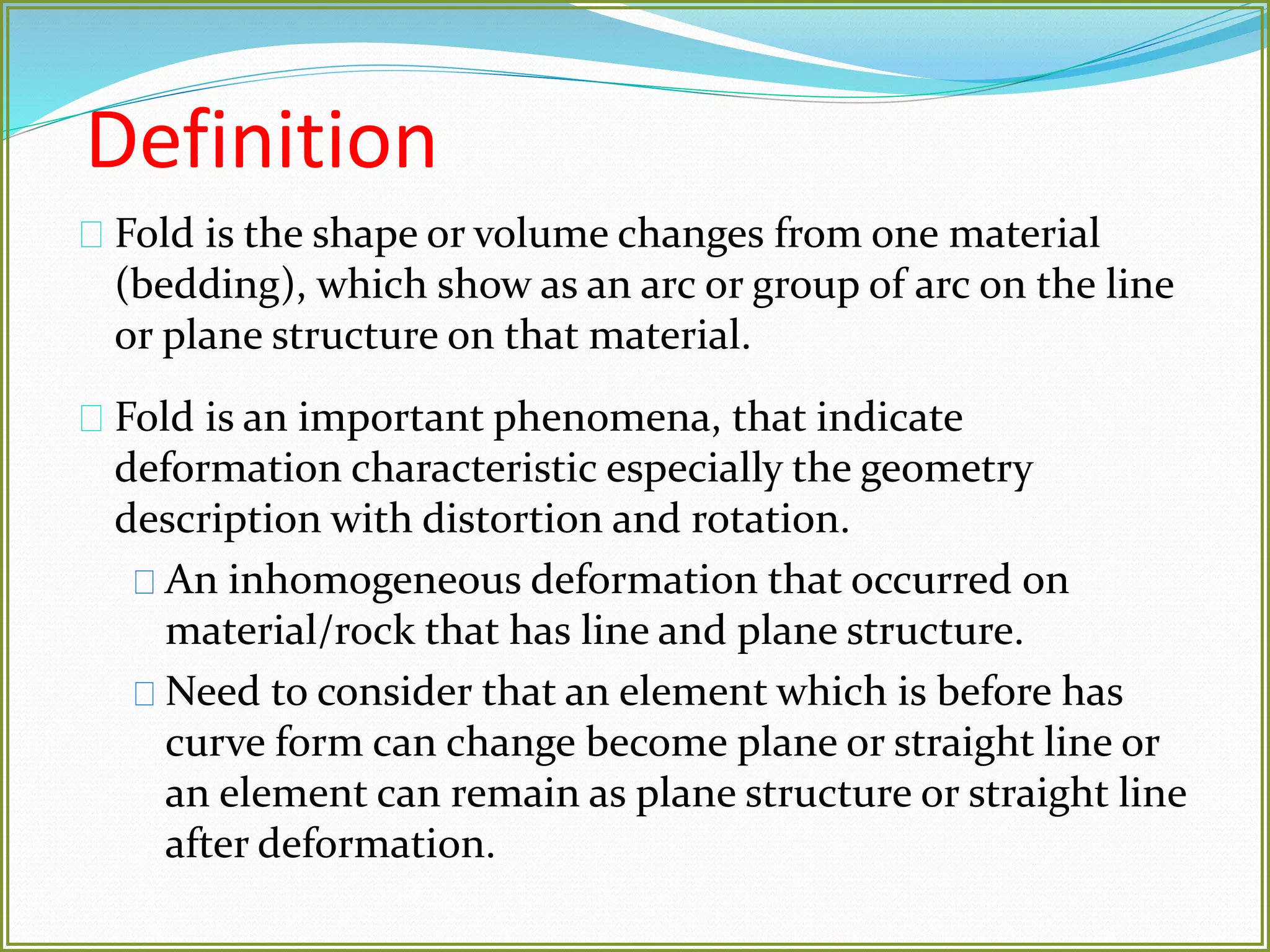
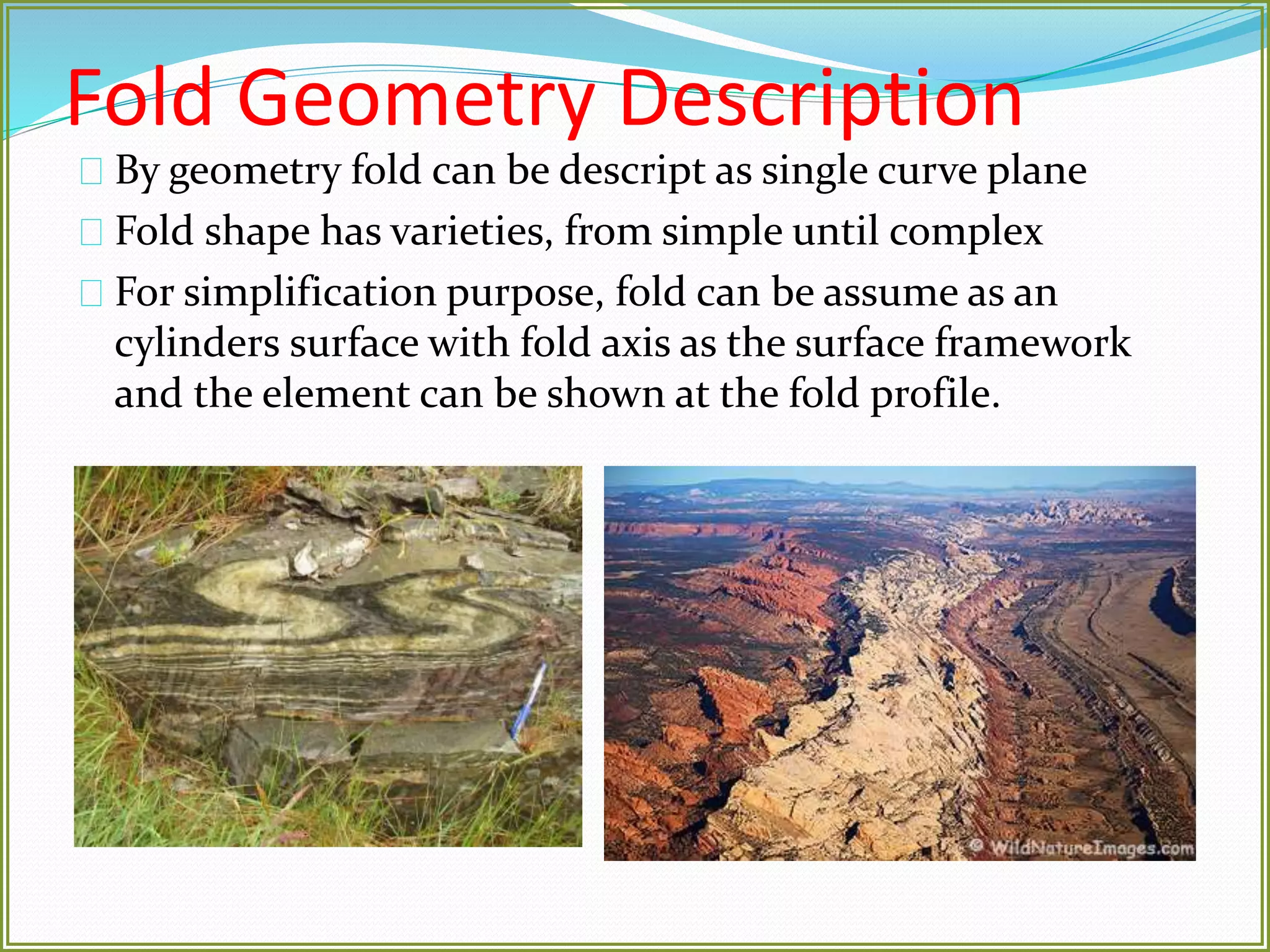
By geometry fold can be descript as single curve plane 
Fold shape has varieties, from simple until complex 
For simplification purpose, fold can be assume as an 
cylinders surface with fold axis as the surface framework 
and the element can be shown at the fold profile.
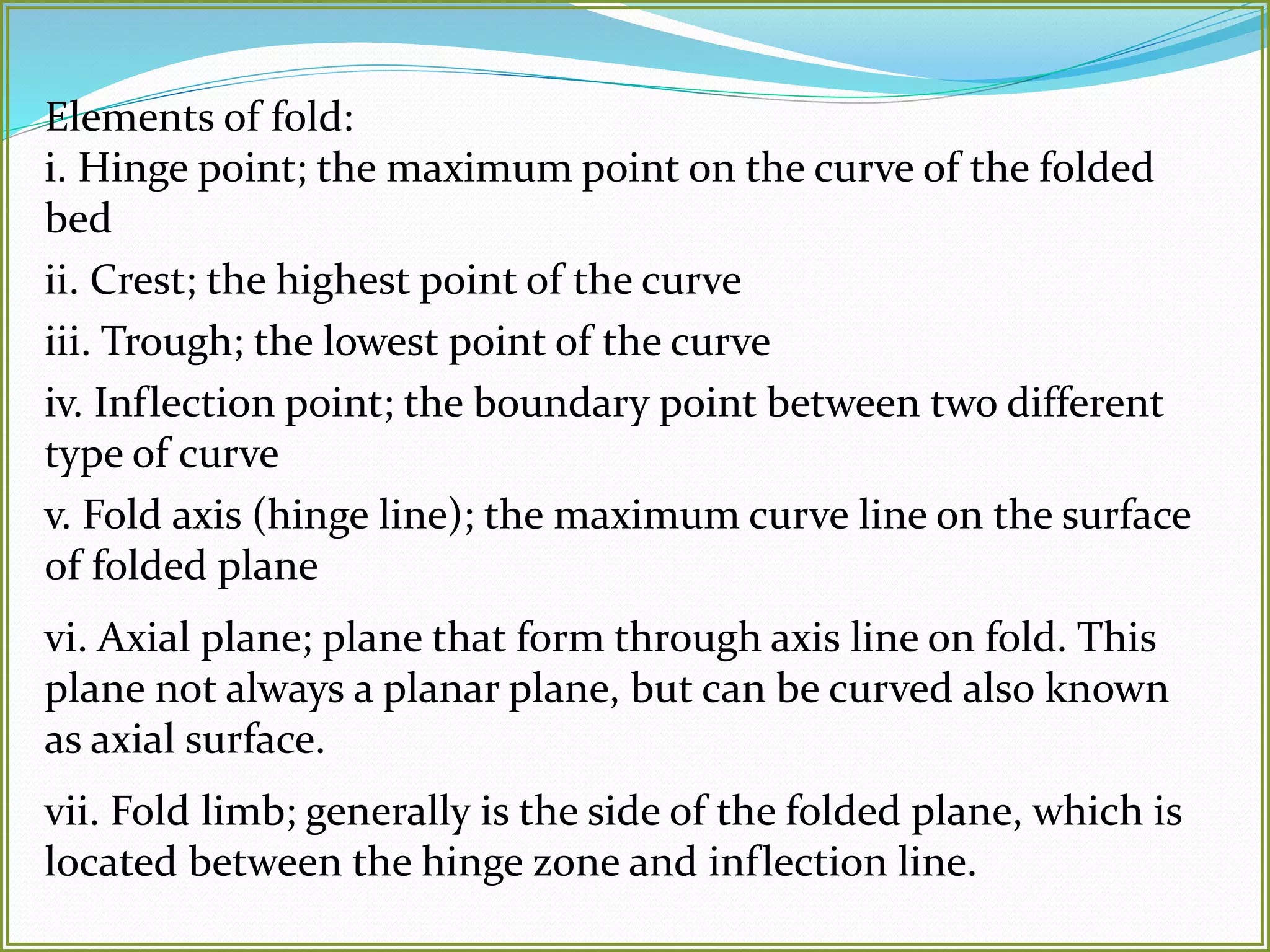
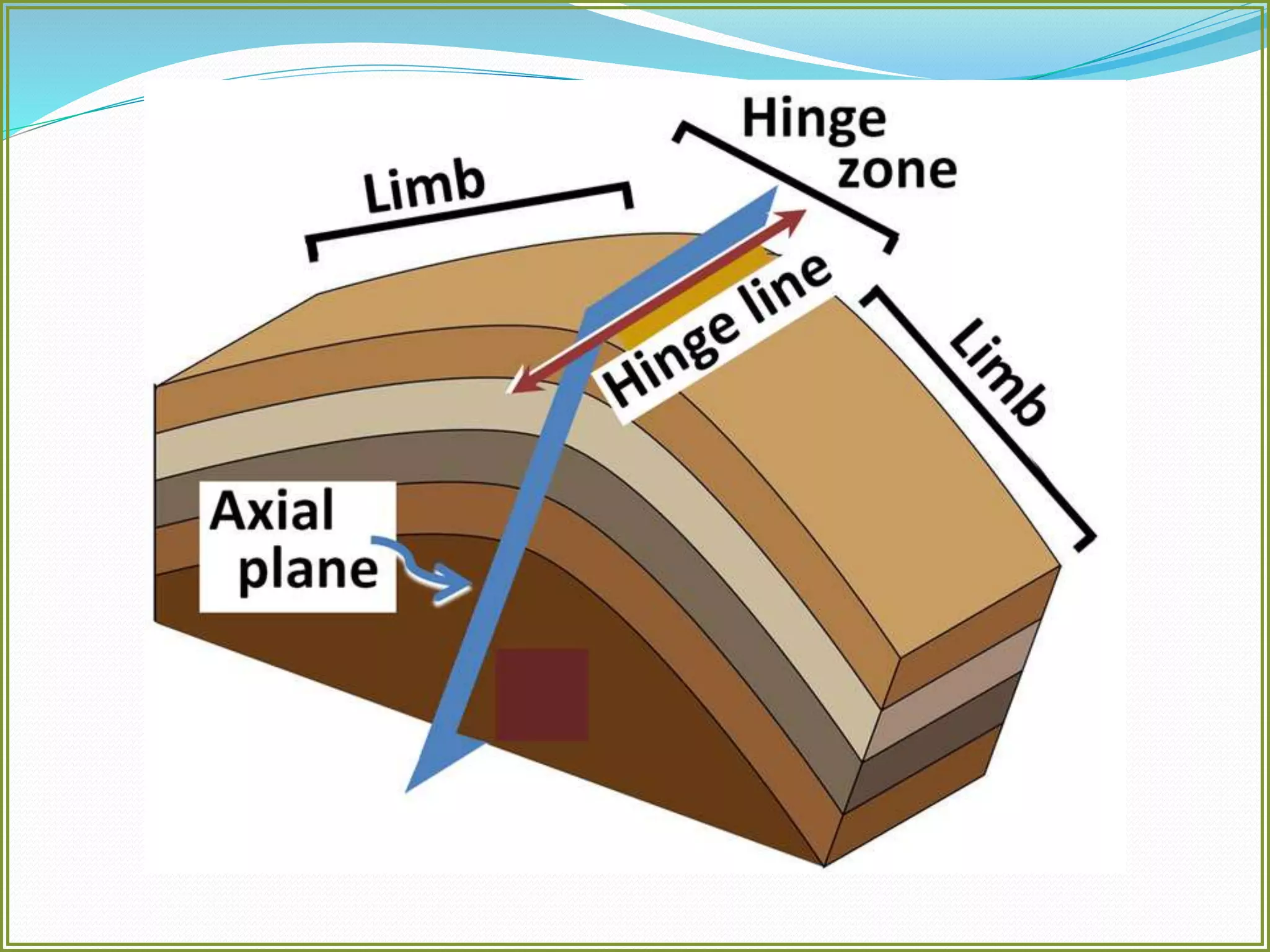
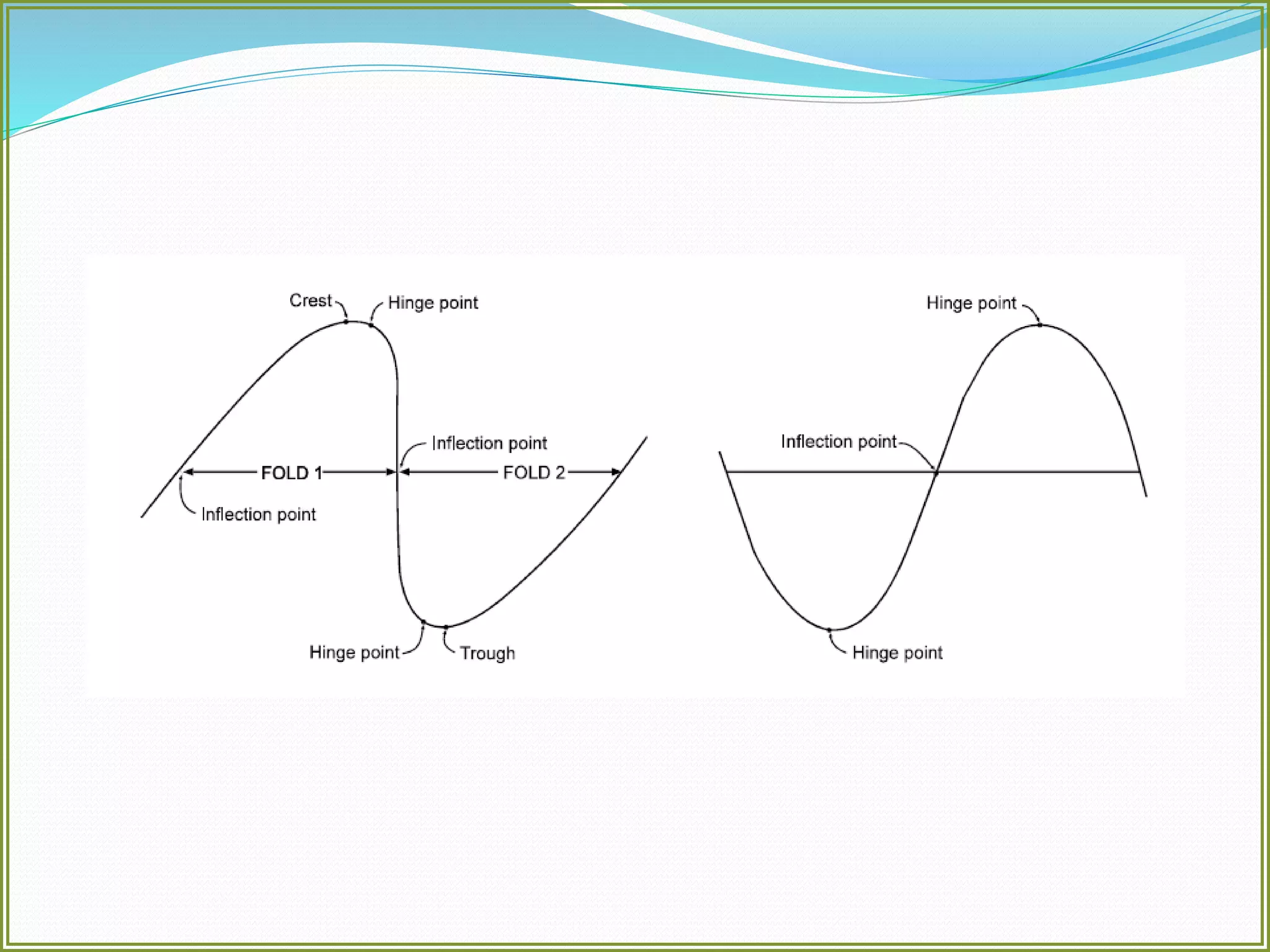
Elements of fold: 
i. Hinge point; the maximum point on the curve of the folded 
bed 
ii. Crest; the highest point of the curve 
iii. Trough; the lowest point of the curve 
iv. Inflection point; the boundary point between two different 
type of curve 
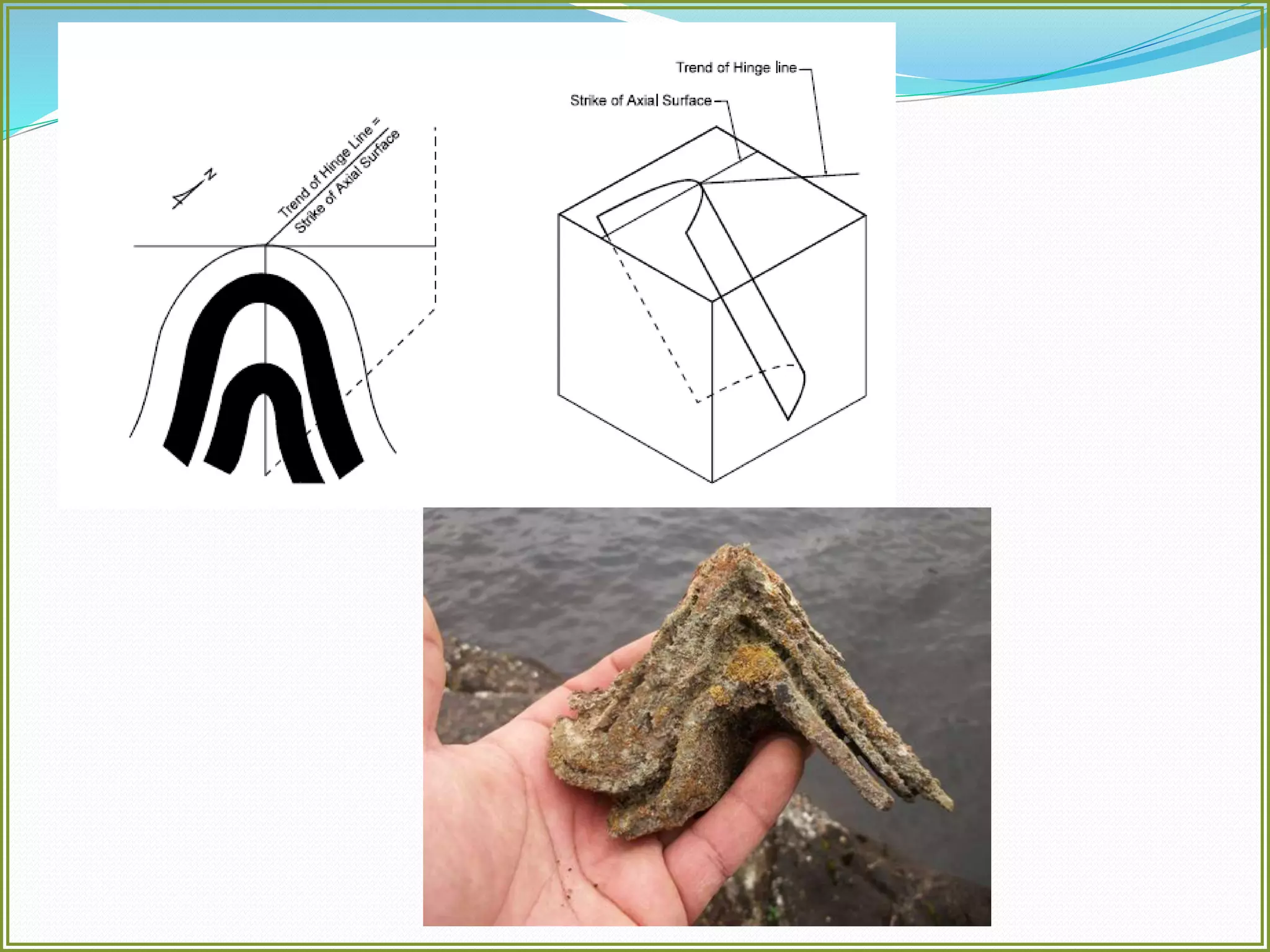
v. Fold axis (hinge line); the maximum curve line on the surface 
of folded plane 
vi. Axial plane; plane that form through axis line on fold. This 
plane not always a planar plane, but can be curved also known 
as axial surface. 
vii. Fold limb; generally is the side of the folded plane, which is 
located between the hinge zone and inflection line.
Basic Fold Classification 
Generally fold being classified based on the characteristic 
which can descript the element geometrically 
Classification and fold naming, normally not directly 
represent the occurrence characteristic. 
By indirect fold forming can represent the occurrence 
characteristic or fold forming and type or material 
Ex: tight fold represent major deformation, parallel fold 
represent on the component bedding. 
Based on interlimb angle; symmetry characteristic; fold 
position; isogon.
Interlimb Angle 
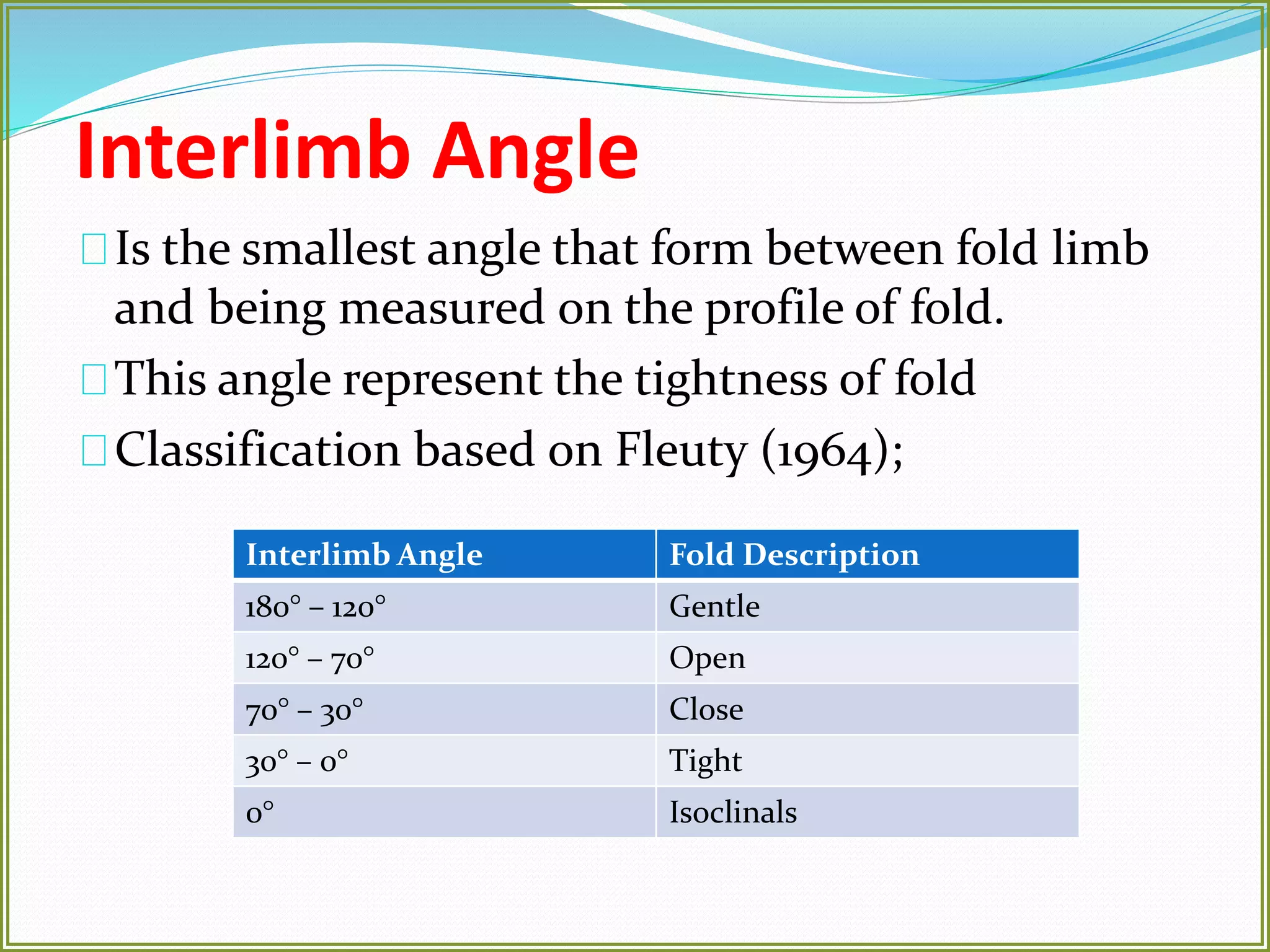
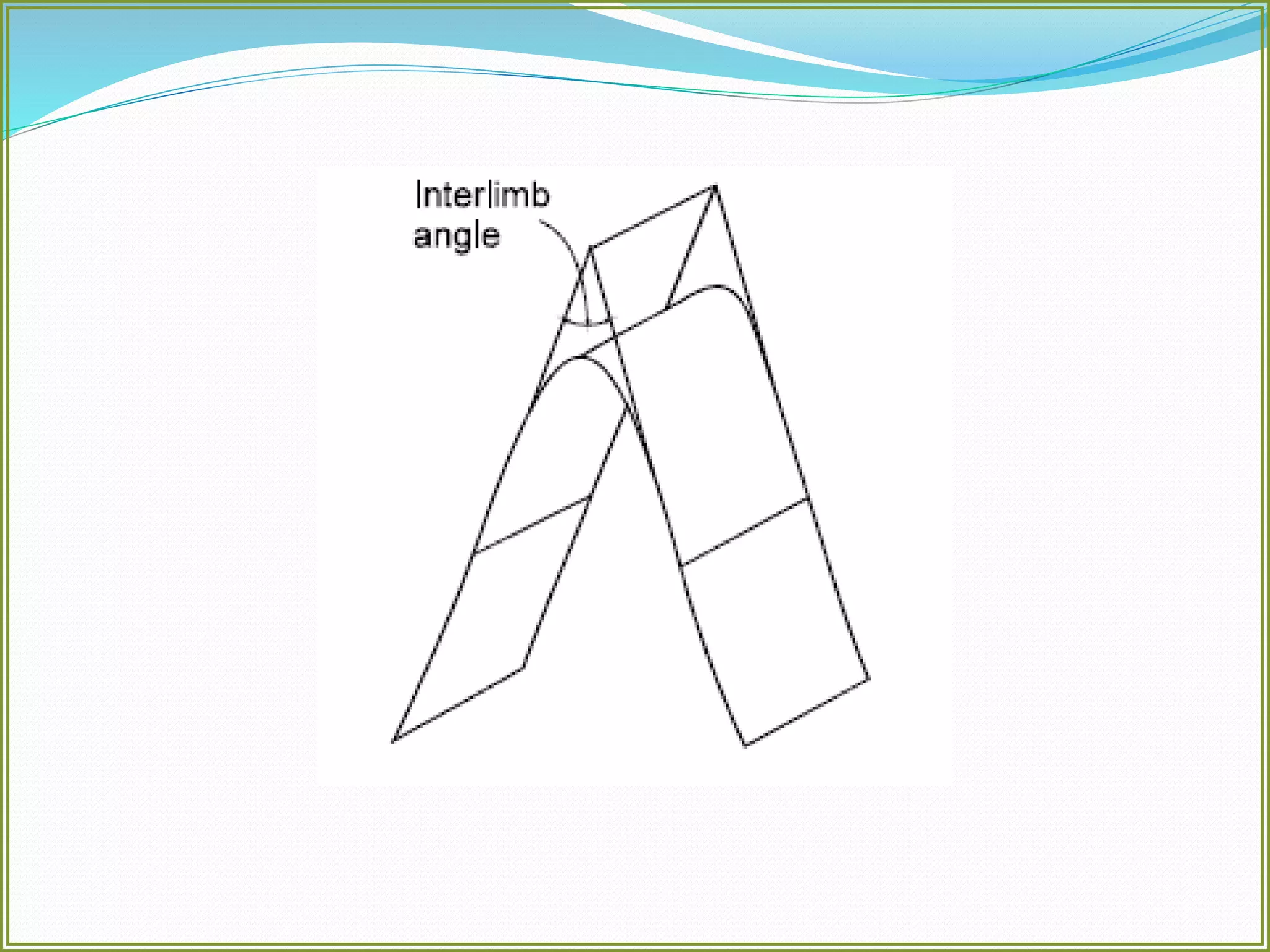
Is the smallest angle that form between fold limb 
and being measured on the profile of fold. 
This angle represent the tightness of fold 
Classification based on Fleuty (1964); 
Interlimb Angle Fold Description 
180° – 120° Gentle 
120° – 70° Open 
70° – 30° Close 
30° – 0° Tight 
0° Isoclinals
Symmetry Characteristic 
Symmetry is one of the criteria that represent form of a cylindrical 
surface. 
Symmetry characteristic being determined by the plane that through the 
hinge line and divided the interlimb angle equally, which known as 
symmetry characteristic, and this fold known as symmetry fold, and has 
orthorhombic symmetric characteristic. 
Series of fold known as symmetric if each of the fold has symmetry 
characteristic and pattern periodically . 
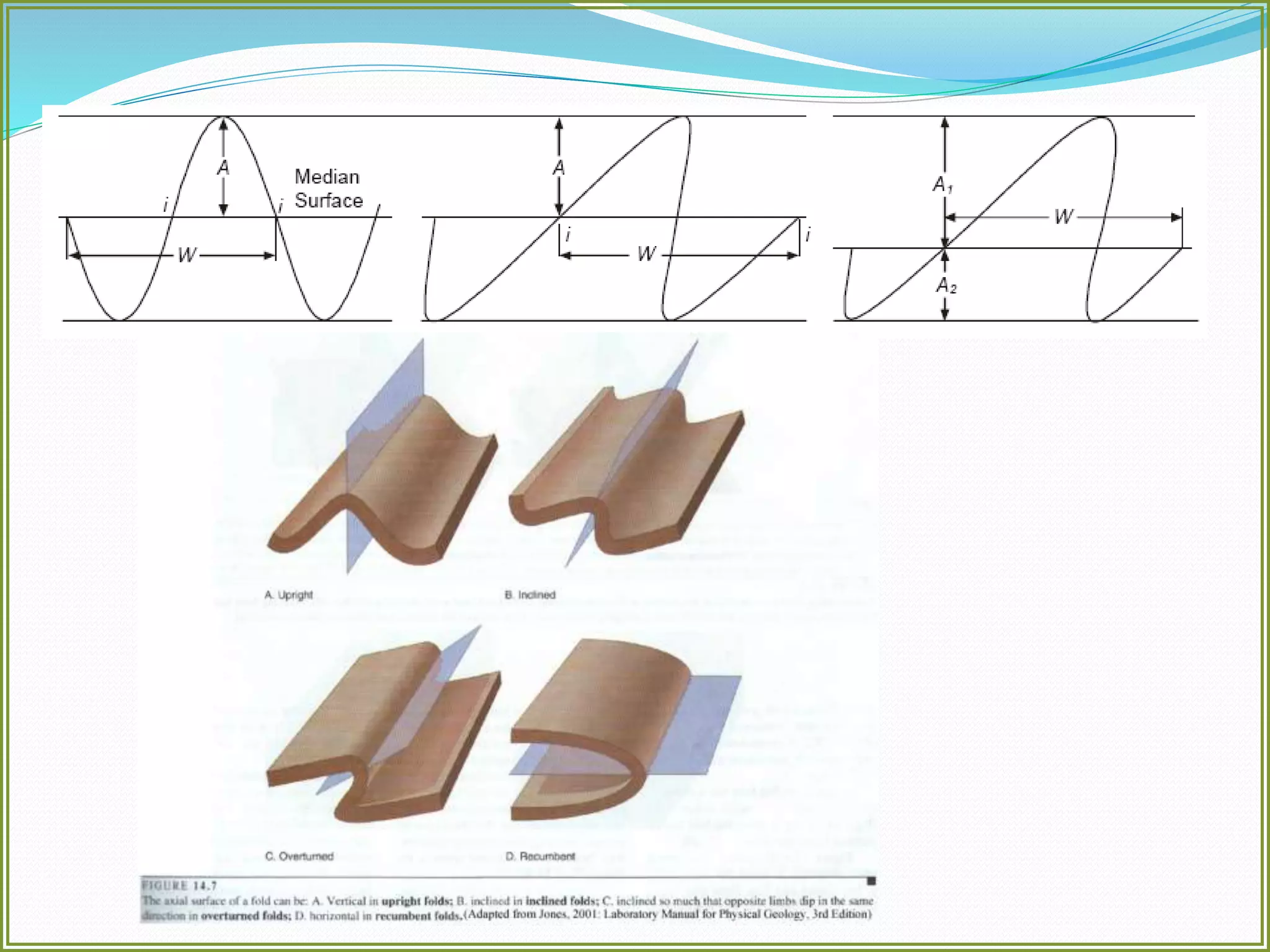
In symmetrical fold, amplitude and wave length, the comparison of this 
element will be easy to descript. 
If the plane trace through the hinge line and not as symmetry plane, the 
fold known as asymmetry fold, which has monocline symmetry 
characteristic. 
Therefore it is necessary to add asymmetry characteristic such as the 
nature of slope plane direction (vergence) or relative direction of anti-form 
hill with sin-form hill such as wind direction, left right or clockwise 
rotation for fold with plunge axis.
Fold Position 
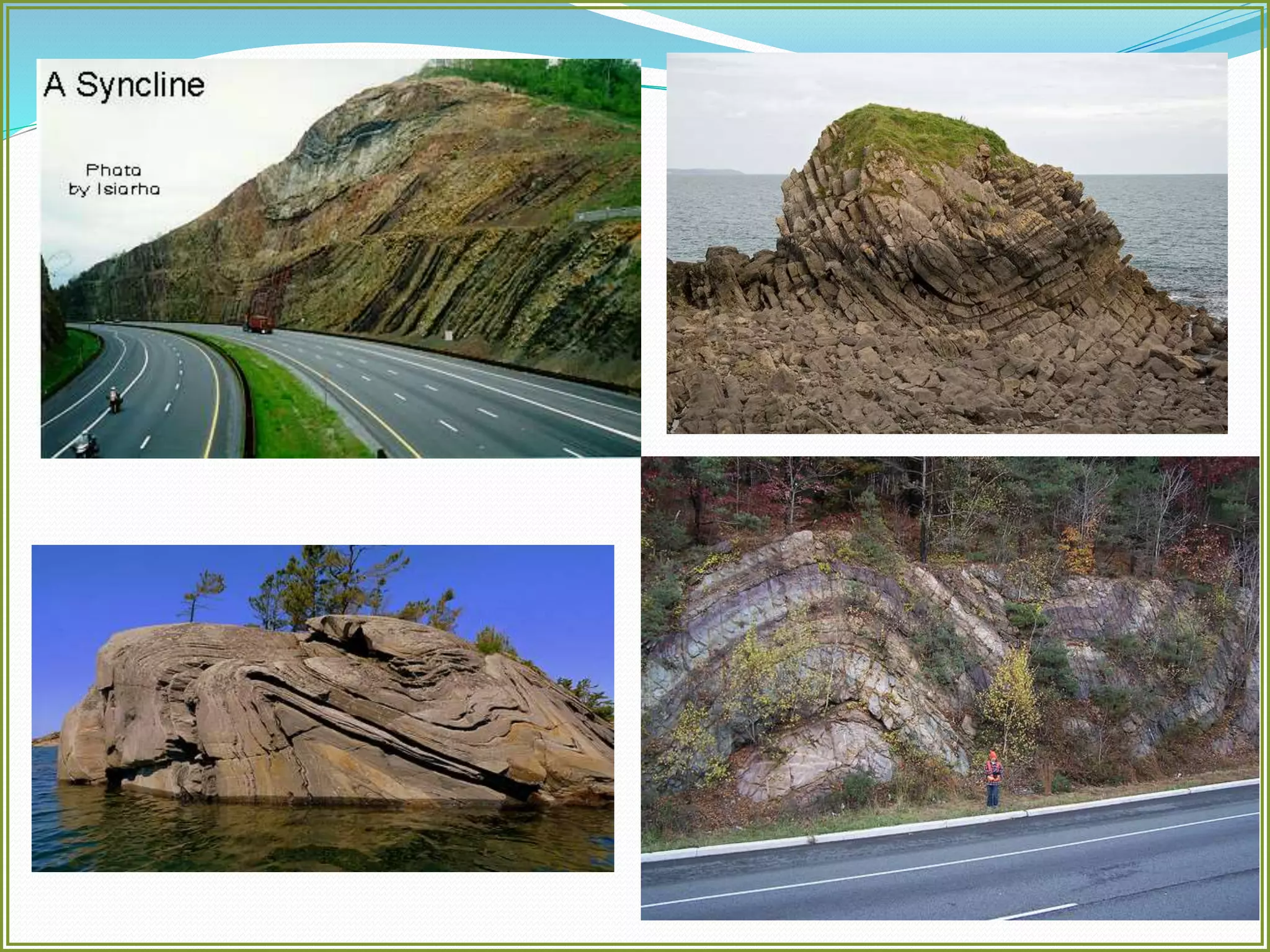
Folding that the limb dip goes to different direction known as anticline 
Folding that the limb dip goes to the same direction known as syncline 
Fold position can get from the fold axis and axial plane, surface. 
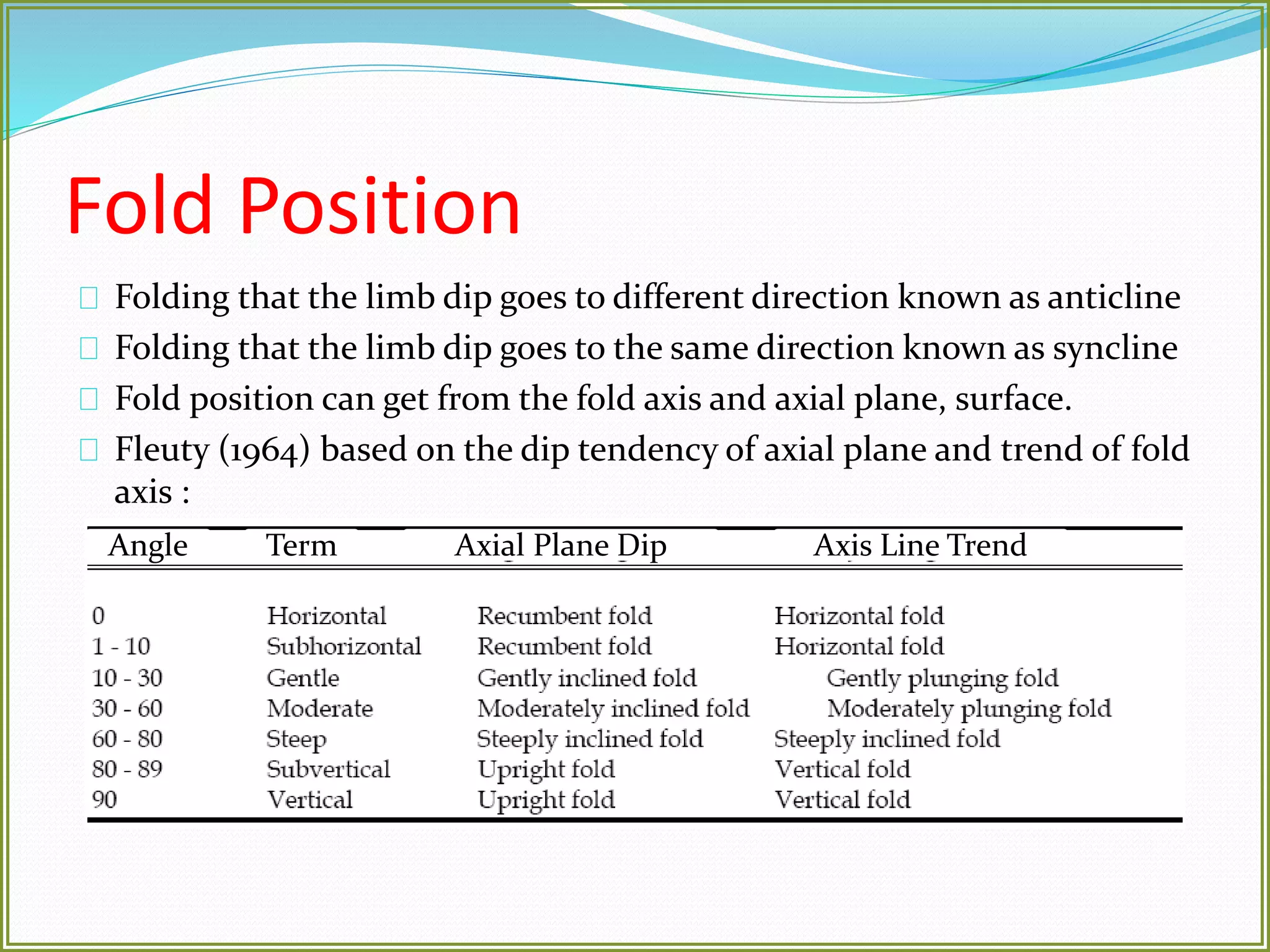
Fleuty (1964) based on the dip tendency of axial plane and trend of fold 
axis : 
Angle Term Axial Plane Dip Axis Line Trend
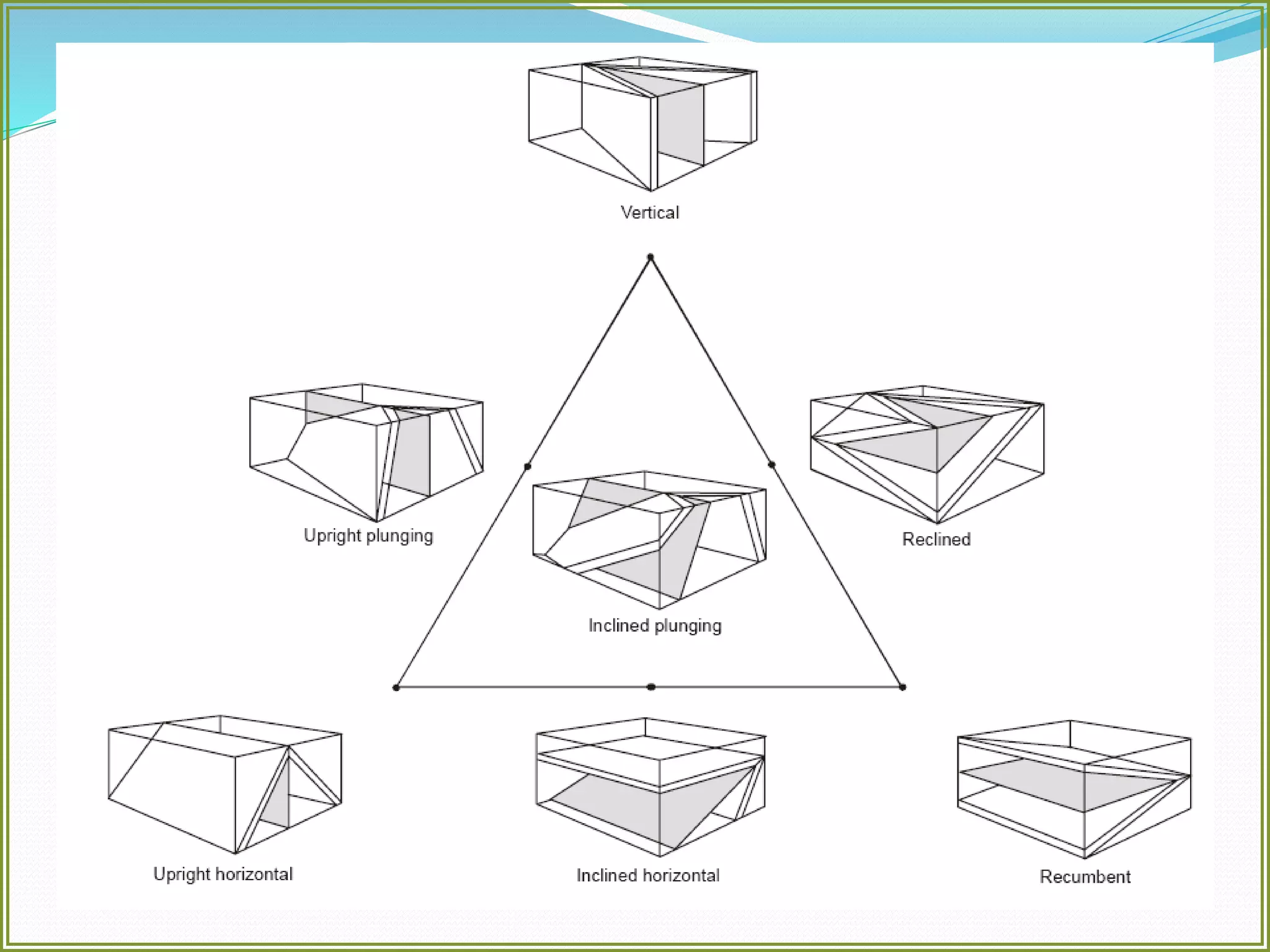
Rickard (1971) classification based on the combination 
of trend and pitch magnitude, and the dipping of the 
axial plane. 
To give more consistent position on the inclined fold 
Example: 
1. Upright fold: dip 85, trend 25: upright, gently, 
plungging fold. 
2. Inclined fold: dip 70, trend 45; steeply, inclines, 
moderately plungging fold. 
3. Reclined fold: dip 56, trend 55; moderately inclined 
fold
Isogon 
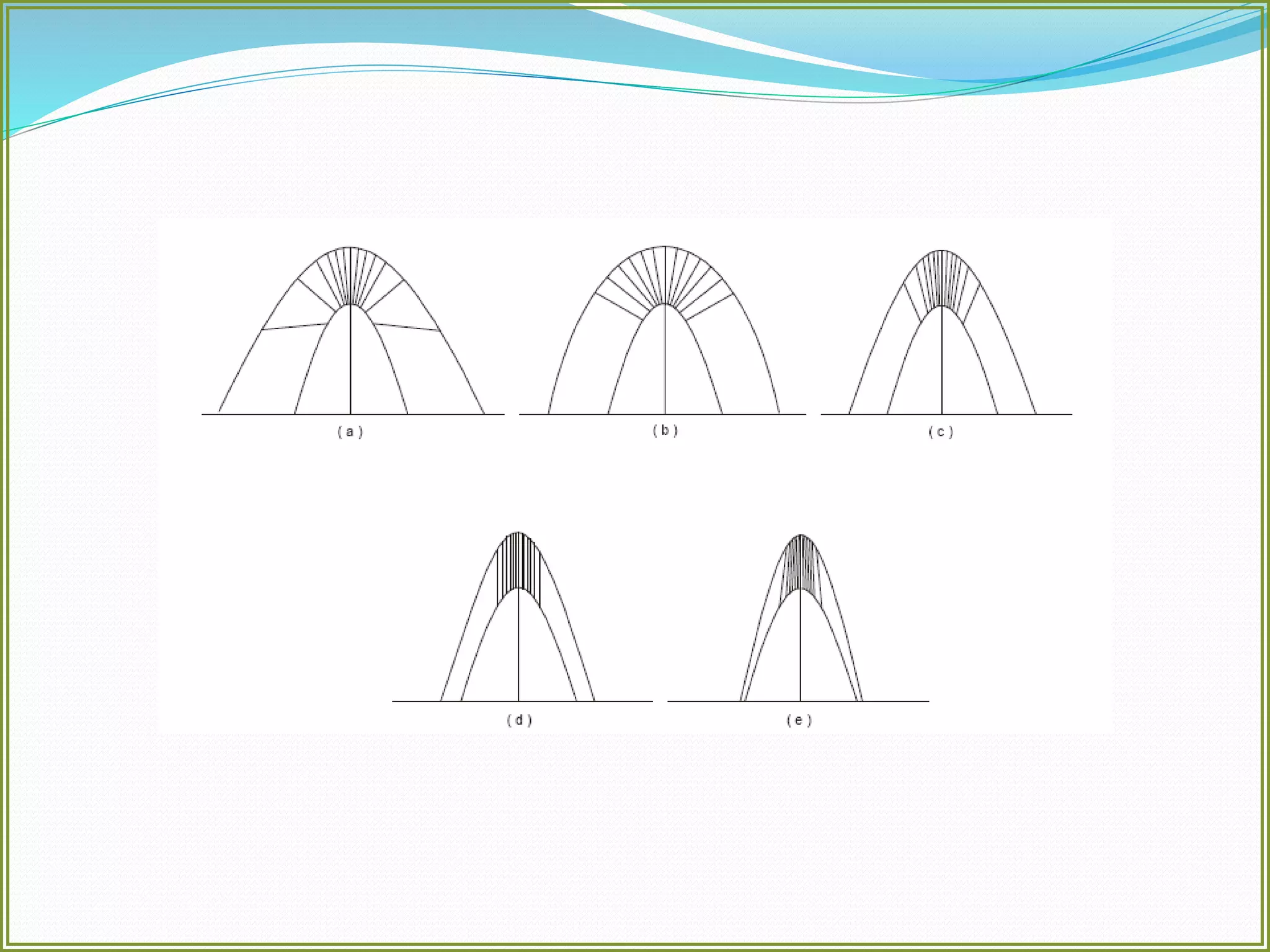
Lines that connected points from two surface fold 
which the dip or apparent dip are same. 
Isogon can be used as a basic fold classification based 
on the parallel nature of the isogon and the direction 
of the convergent and divergent (the inside part of the 
isogon used to determined the direction of isogon 
convergency- Ramsay 1967). 
Fold with heavy isogon convergence: Parallel fold 
Fold with weak isogon convergence: Similarity fold 
or Divergent fold
Construction of parallel fold profile 
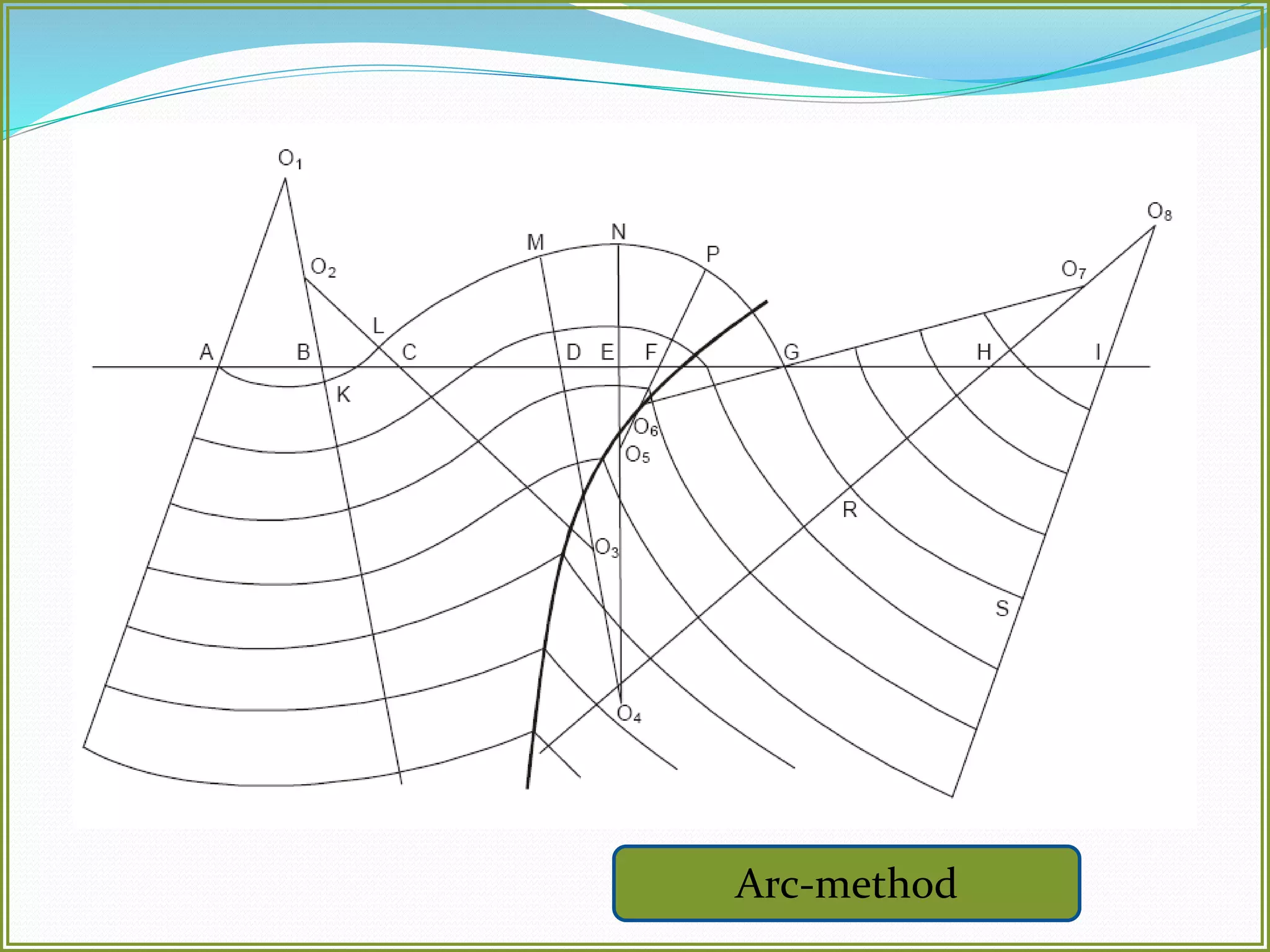
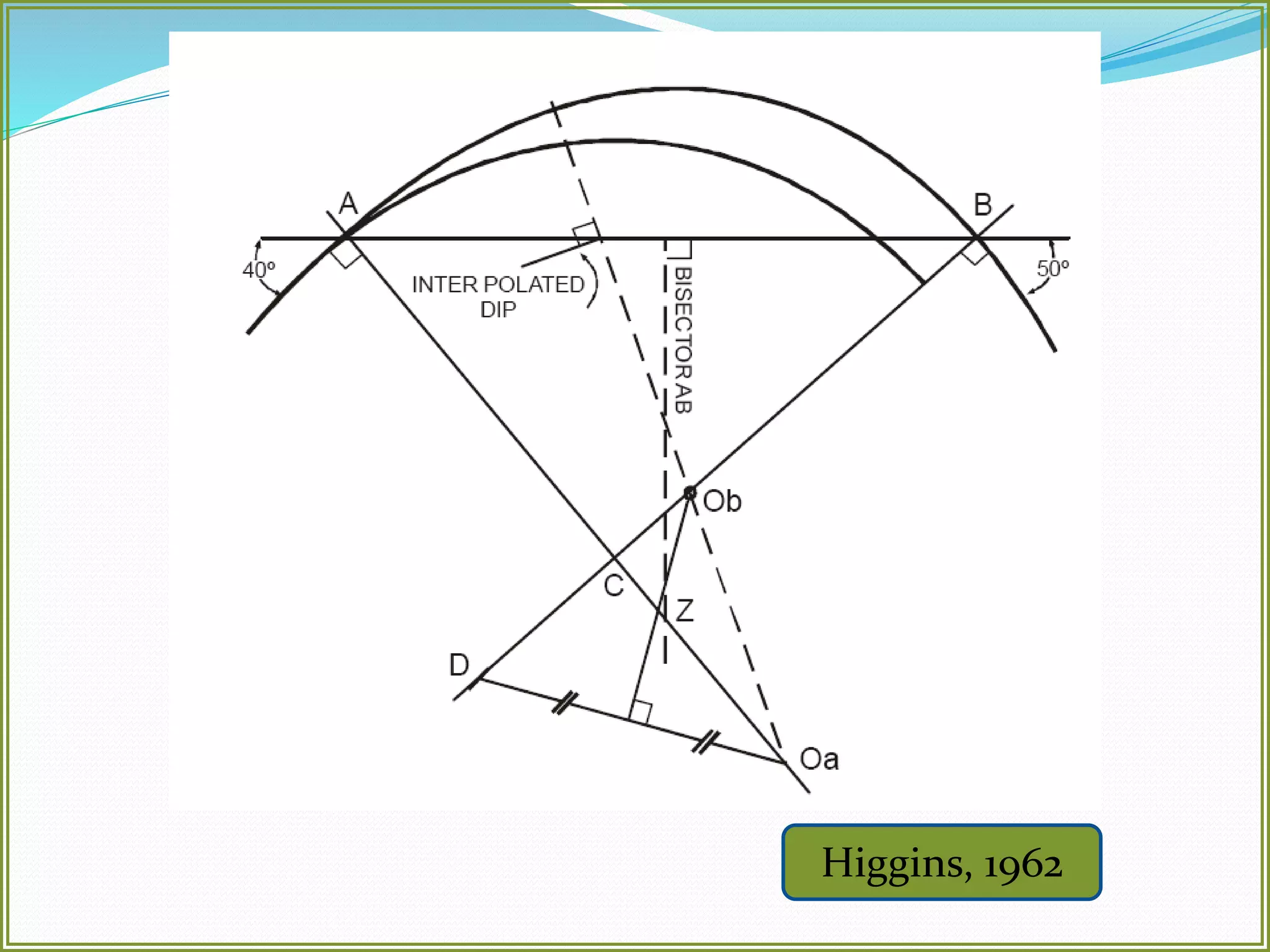
Method that can be used to construct the parallel fold: 
Arc method 
Higgins method (1962) 
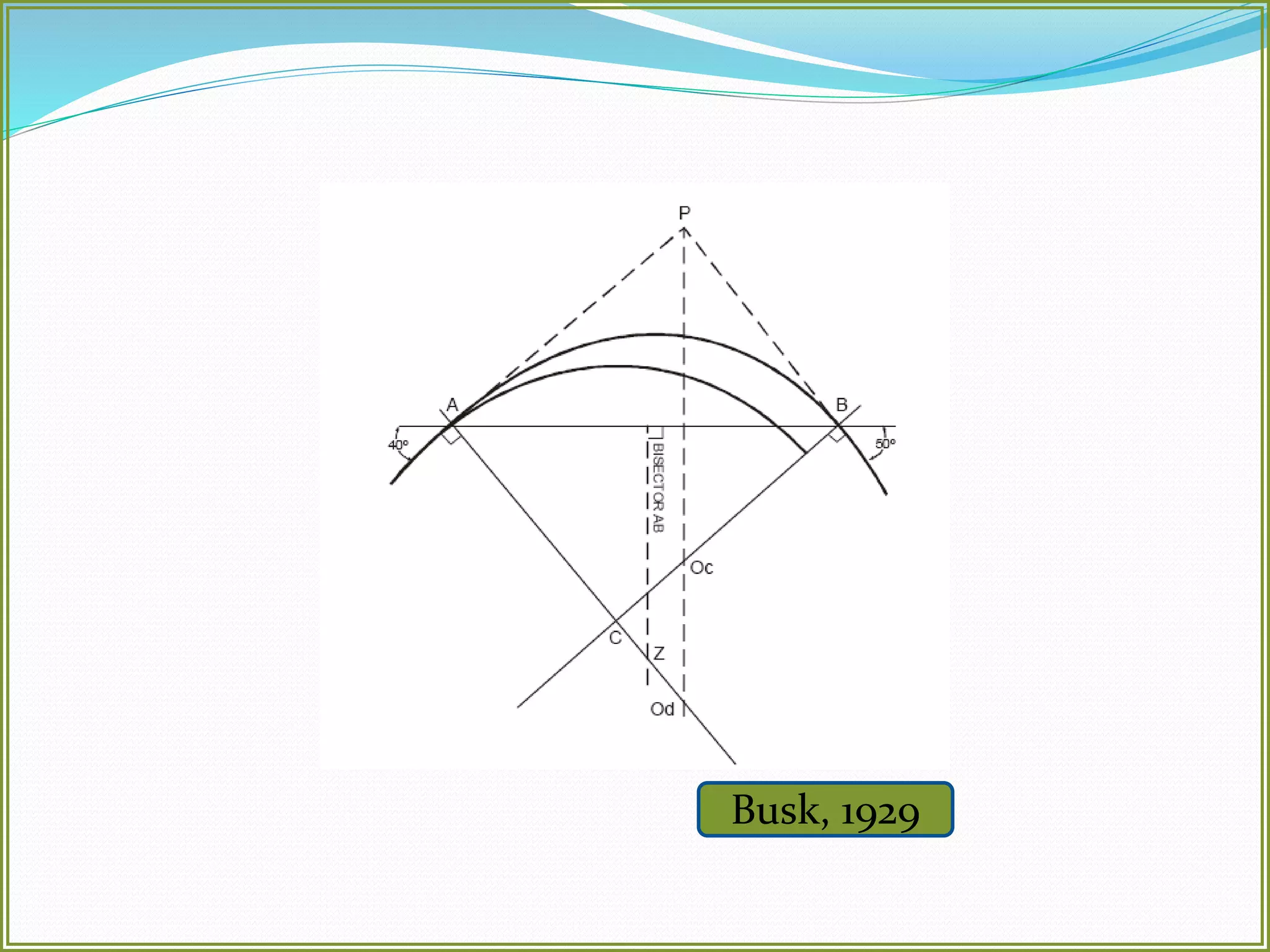
Bust method (1929)
Arc-method
Higgins, 1962
Busk, 1929
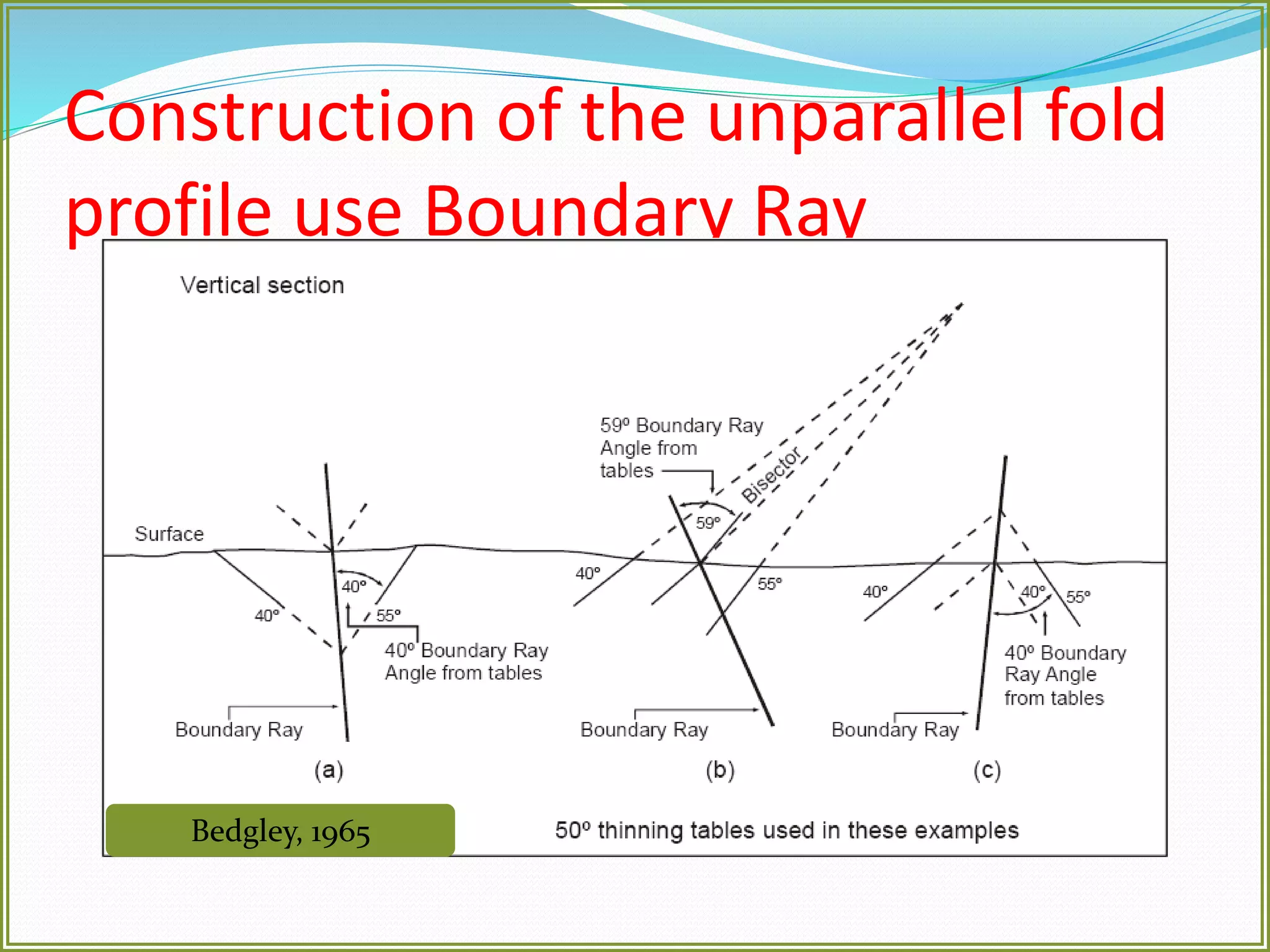
Construction of the unparallel fold 
profile use Boundary Ray 
Bedgley, 1965
Fold

Fold

  • 1.
  • 2.
    Definition Fold isthe shape or volume changes from one material (bedding), which show as an arc or group of arc on the line or plane structure on that material. Fold is an important phenomena, that indicate deformation characteristic especially the geometry description with distortion and rotation. An inhomogeneous deformation that occurred on material/rock that has line and plane structure. Need to consider that an element which is before has curve form can change become plane or straight line or an element can remain as plane structure or straight line after deformation.
  • 3.
    Fold Geometry Description By geometry fold can be descript as single curve plane Fold shape has varieties, from simple until complex For simplification purpose, fold can be assume as an cylinders surface with fold axis as the surface framework and the element can be shown at the fold profile.
  • 5.
    Elements of fold: i. Hinge point; the maximum point on the curve of the folded bed ii. Crest; the highest point of the curve iii. Trough; the lowest point of the curve iv. Inflection point; the boundary point between two different type of curve v. Fold axis (hinge line); the maximum curve line on the surface of folded plane vi. Axial plane; plane that form through axis line on fold. This plane not always a planar plane, but can be curved also known as axial surface. vii. Fold limb; generally is the side of the folded plane, which is located between the hinge zone and inflection line.
  • 9.
    Basic Fold Classification Generally fold being classified based on the characteristic which can descript the element geometrically Classification and fold naming, normally not directly represent the occurrence characteristic. By indirect fold forming can represent the occurrence characteristic or fold forming and type or material Ex: tight fold represent major deformation, parallel fold represent on the component bedding. Based on interlimb angle; symmetry characteristic; fold position; isogon.
  • 11.
    Interlimb Angle Isthe smallest angle that form between fold limb and being measured on the profile of fold. This angle represent the tightness of fold Classification based on Fleuty (1964); Interlimb Angle Fold Description 180° – 120° Gentle 120° – 70° Open 70° – 30° Close 30° – 0° Tight 0° Isoclinals
  • 13.
    Symmetry Characteristic Symmetryis one of the criteria that represent form of a cylindrical surface. Symmetry characteristic being determined by the plane that through the hinge line and divided the interlimb angle equally, which known as symmetry characteristic, and this fold known as symmetry fold, and has orthorhombic symmetric characteristic. Series of fold known as symmetric if each of the fold has symmetry characteristic and pattern periodically . In symmetrical fold, amplitude and wave length, the comparison of this element will be easy to descript. If the plane trace through the hinge line and not as symmetry plane, the fold known as asymmetry fold, which has monocline symmetry characteristic. Therefore it is necessary to add asymmetry characteristic such as the nature of slope plane direction (vergence) or relative direction of anti-form hill with sin-form hill such as wind direction, left right or clockwise rotation for fold with plunge axis.
  • 16.
    Fold Position Foldingthat the limb dip goes to different direction known as anticline Folding that the limb dip goes to the same direction known as syncline Fold position can get from the fold axis and axial plane, surface. Fleuty (1964) based on the dip tendency of axial plane and trend of fold axis : Angle Term Axial Plane Dip Axis Line Trend
  • 18.
    Rickard (1971) classificationbased on the combination of trend and pitch magnitude, and the dipping of the axial plane. To give more consistent position on the inclined fold Example: 1. Upright fold: dip 85, trend 25: upright, gently, plungging fold. 2. Inclined fold: dip 70, trend 45; steeply, inclines, moderately plungging fold. 3. Reclined fold: dip 56, trend 55; moderately inclined fold
  • 20.
    Isogon Lines thatconnected points from two surface fold which the dip or apparent dip are same. Isogon can be used as a basic fold classification based on the parallel nature of the isogon and the direction of the convergent and divergent (the inside part of the isogon used to determined the direction of isogon convergency- Ramsay 1967). Fold with heavy isogon convergence: Parallel fold Fold with weak isogon convergence: Similarity fold or Divergent fold
  • 22.
    Construction of parallelfold profile Method that can be used to construct the parallel fold: Arc method Higgins method (1962) Bust method (1929)
  • 23.
  • 24.
  • 25.
  • 26.
    Construction of theunparallel fold profile use Boundary Ray Bedgley, 1965