Download to read offline

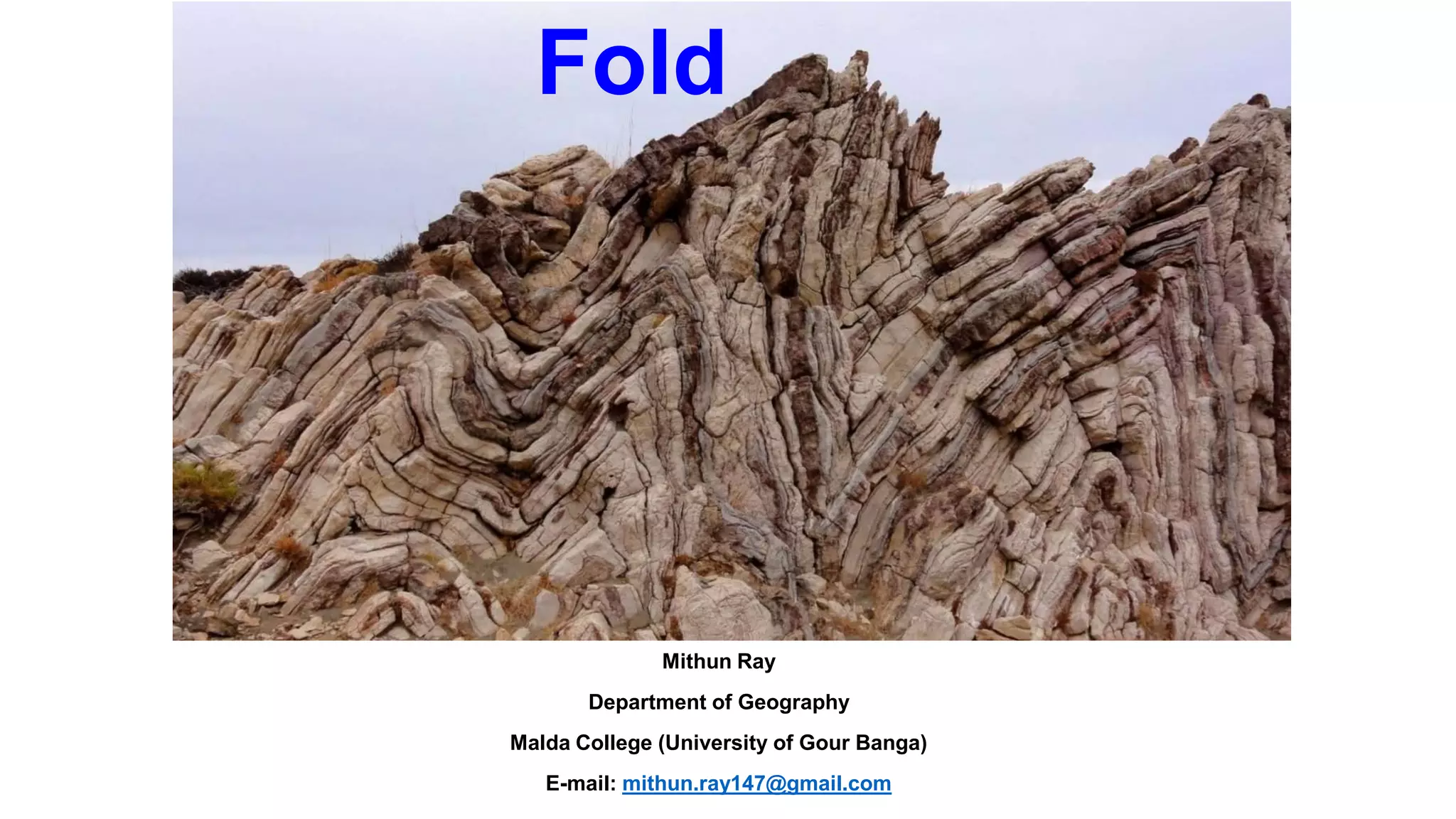
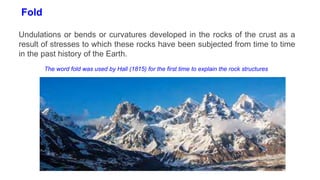
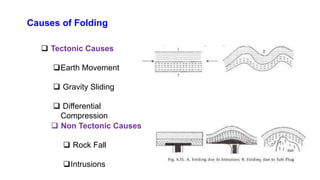
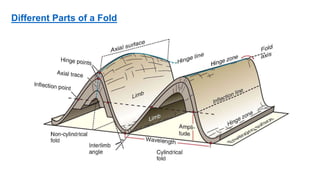

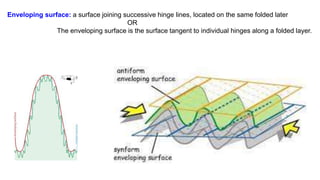
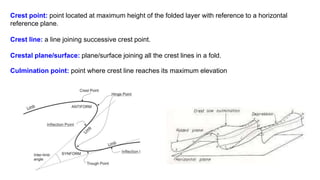
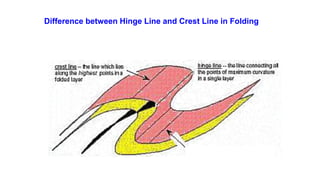
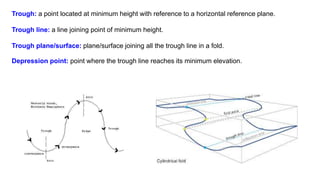
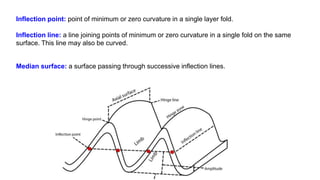
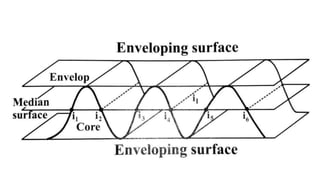
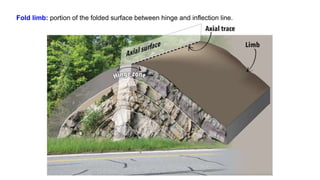
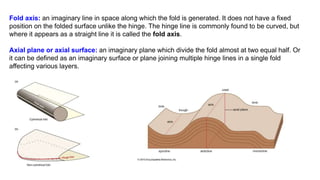
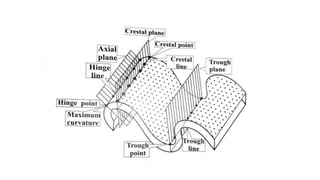
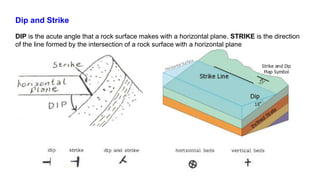
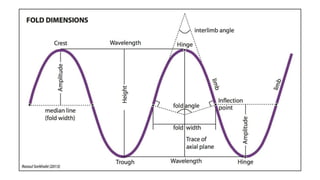
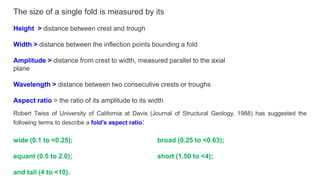
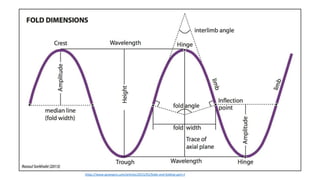
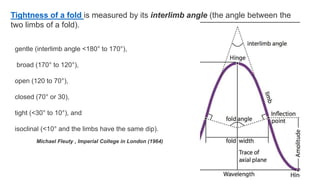
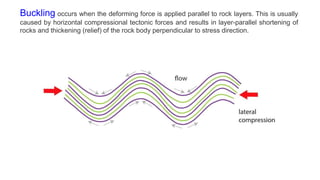
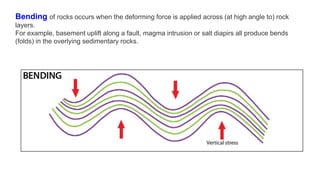
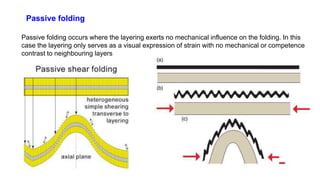
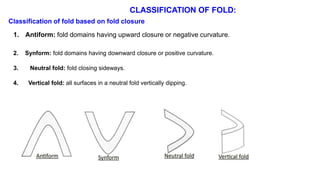

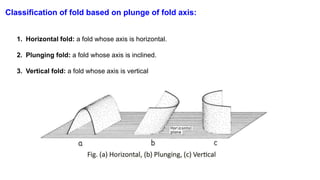
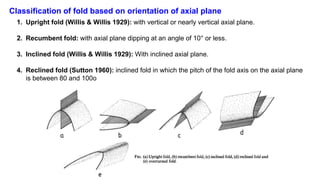
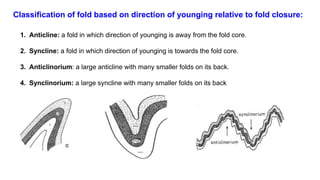
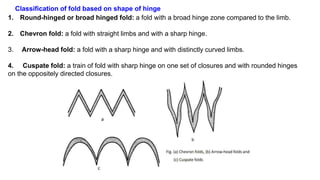



This document defines key terms related to rock folding and describes the different types of folds. It begins by explaining that folds form in rocks due to stresses that cause undulations or curvatures over time. Different parts of folds are then defined, including the hinge, limb, axis, and more. Causes of folding like tectonic movement and mechanisms like buckling are outlined. Folds are also classified based on features such as closure, symmetry, plunge, and hinge shape. Measurement criteria for folds including height, width, and tightness are provided. The presentation aims to deliver a lecture on rock folding structures and was compiled using various academic sources.


