

Terminology of folds
Some basic information about fold
description and geometry
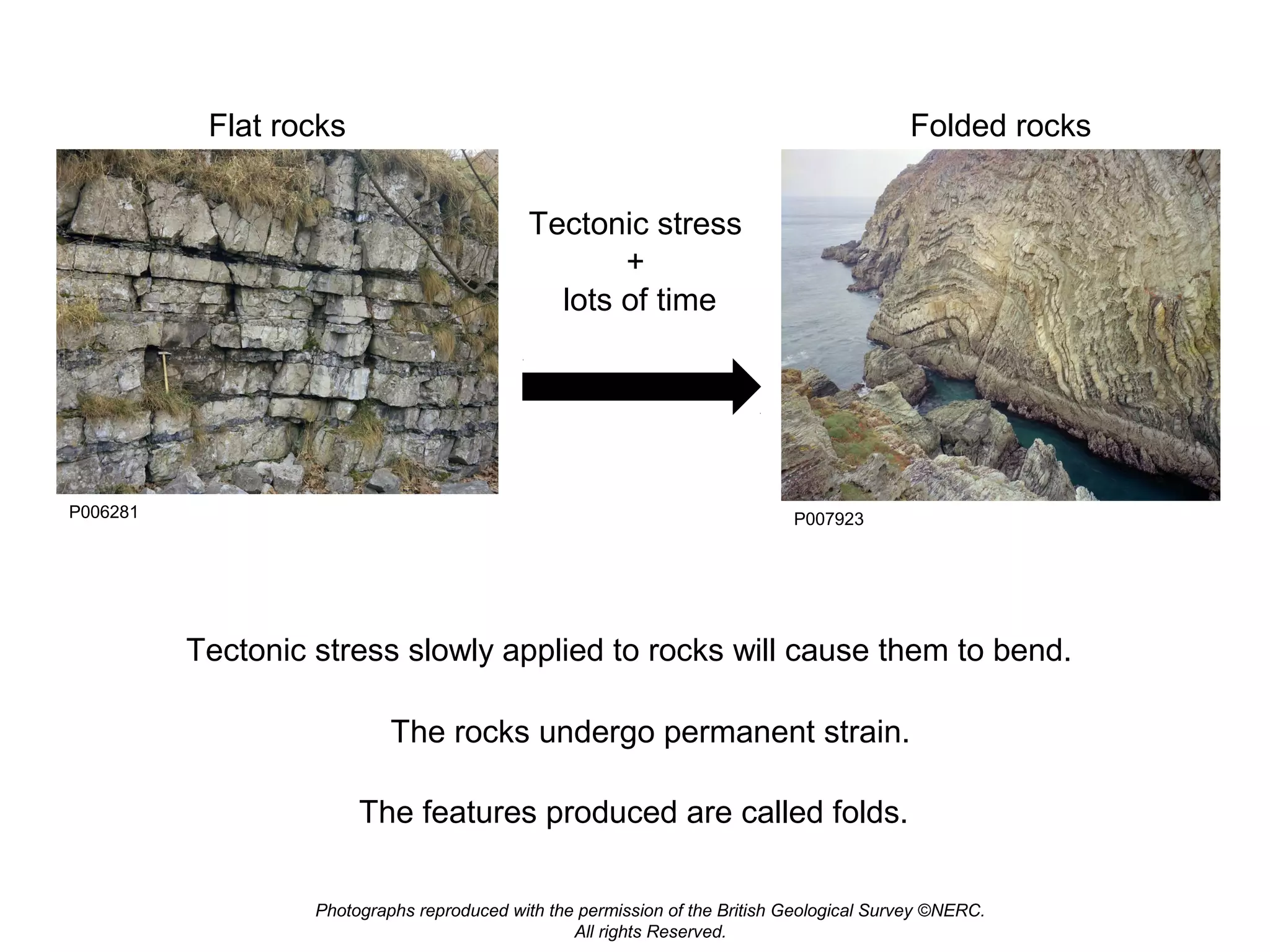
Tectonic stress slowly applied to rocks will cause them to bend.
Flat rocks Folded rocks
Tectonic stress
+
lots of time
Photographs reproduced with the permission of the British Geological Survey ©NERC.
All rights Reserved.
P006281 P007923
The features produced are called folds.
The rocks undergo permanent strain.
antiform
antiform
antiform
synform
synform
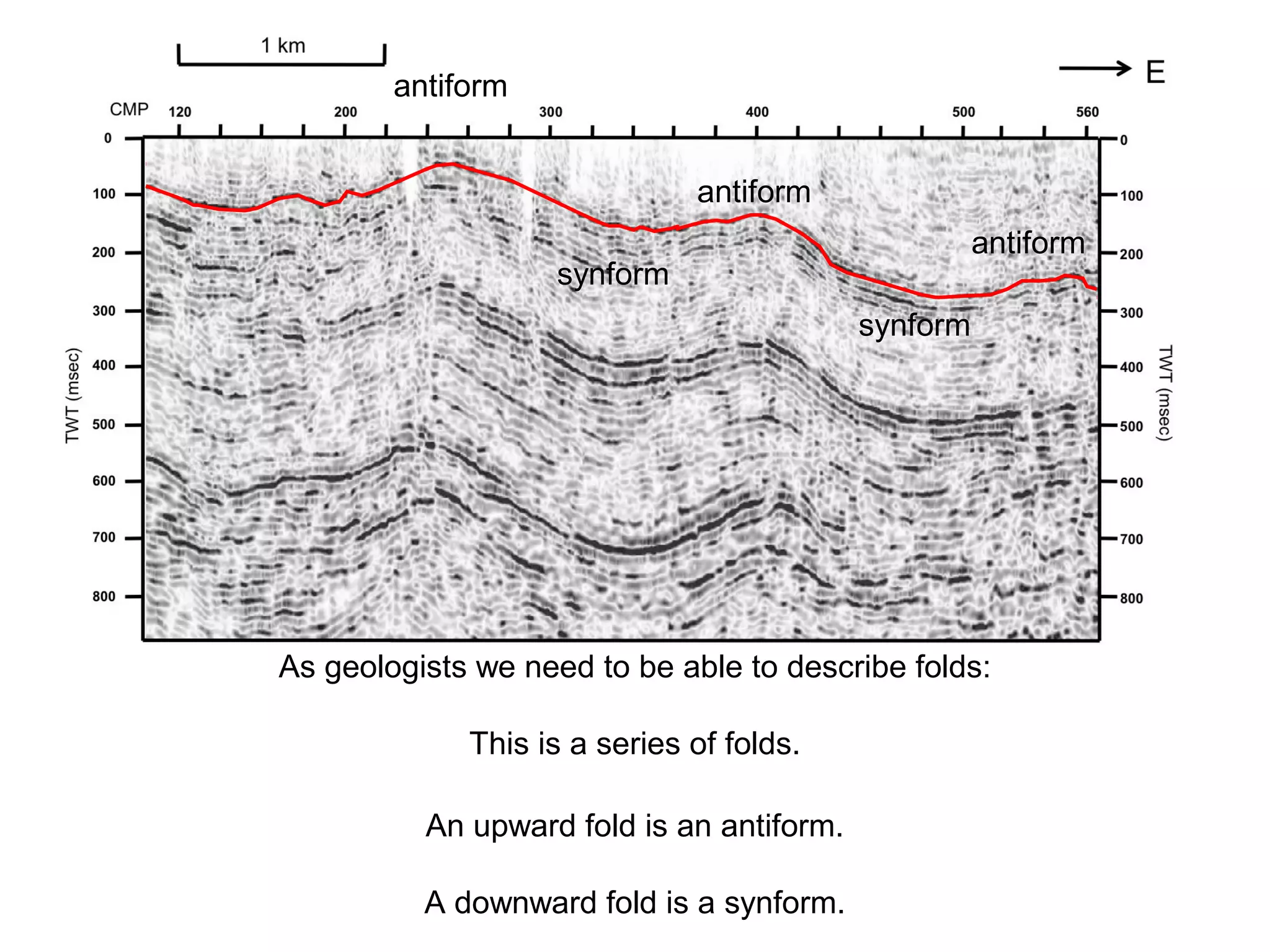
As geologists we need to be able to describe folds:
An upward fold is an antiform.
A downward fold is a synform.
This is a series of folds.
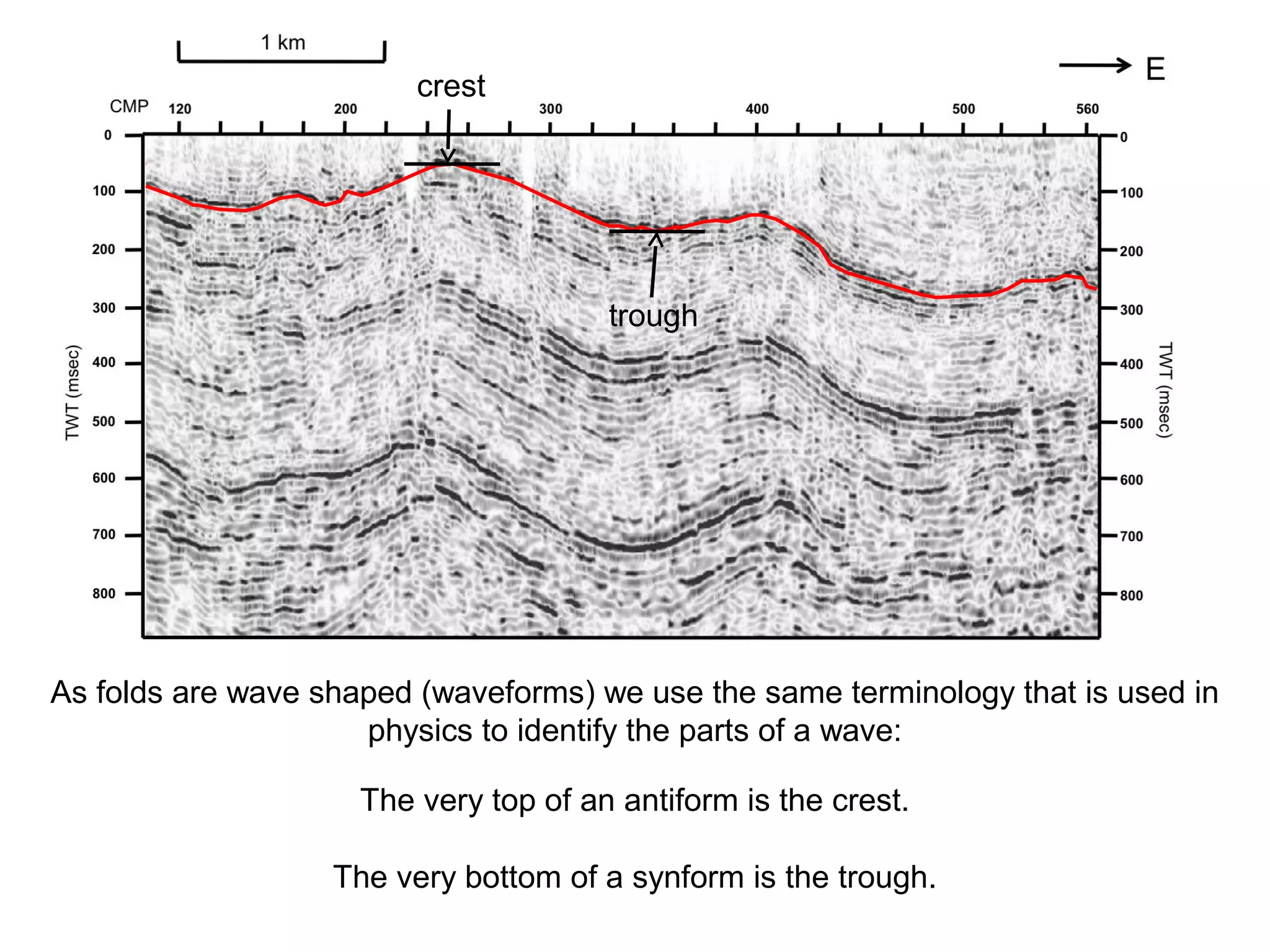
As folds are wave shaped (waveforms) we use the same terminology that is used in
physics to identify the parts of a wave:
The very top of an antiform is the crest.
The very bottom of a synform is the trough.
crest
trough
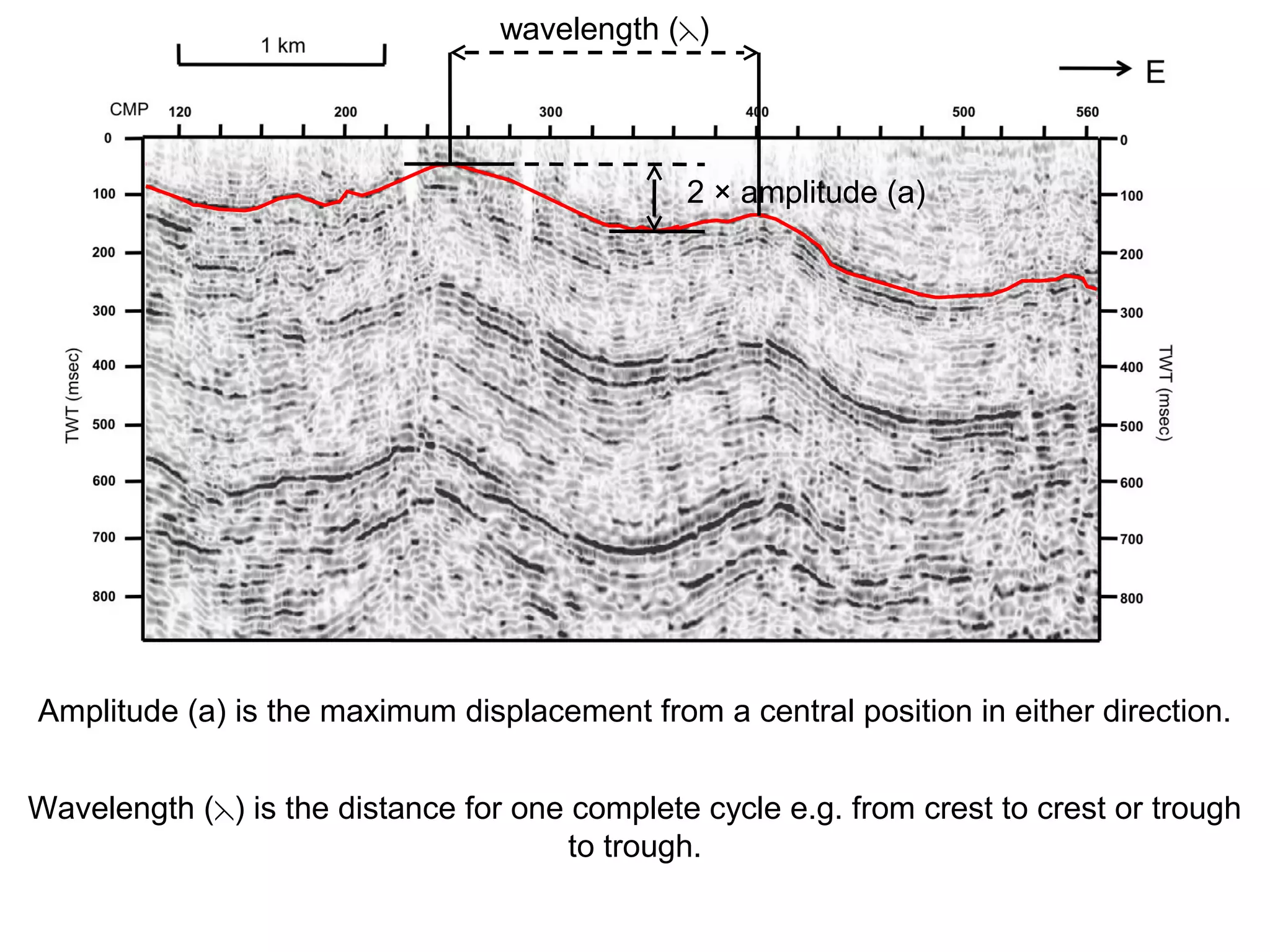
Amplitude (a) is the maximum displacement from a central position in either direction.
Wavelength ( ) is the distance for one complete cycle e.g. from crest to crest or trough⋋
to trough.
2 × amplitude (a)
wavelength ( )⋋
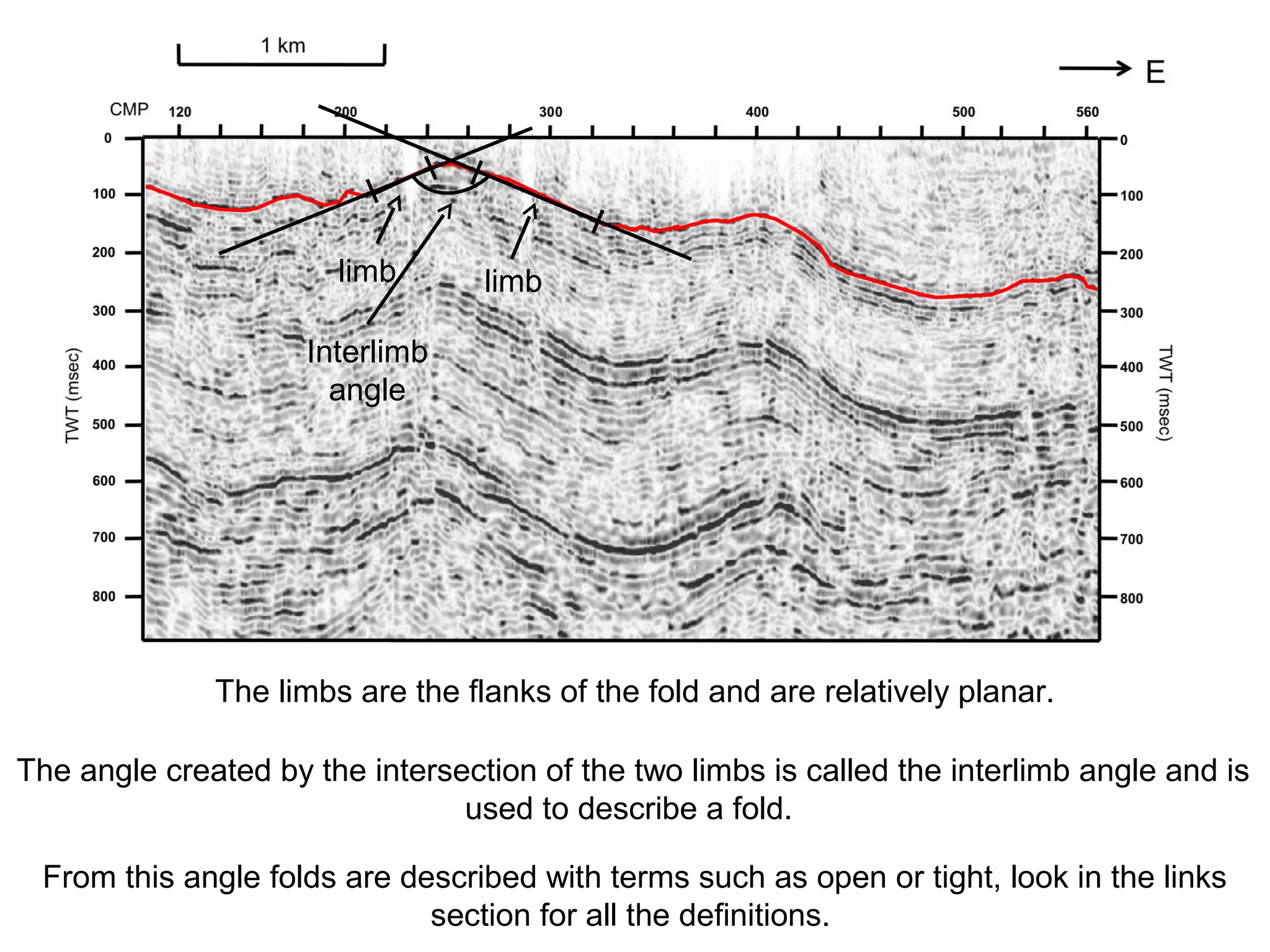
The limbs are the flanks of the fold and are relatively planar.
The angle created by the intersection of the two limbs is called the interlimb angle and is
used to describe a fold.
limb limb
Interlimb
angle
From this angle folds are described with terms such as open or tight, look in the links
section for all the definitions.
Looking in 2D
Some terms to describe the
orientation of a fold
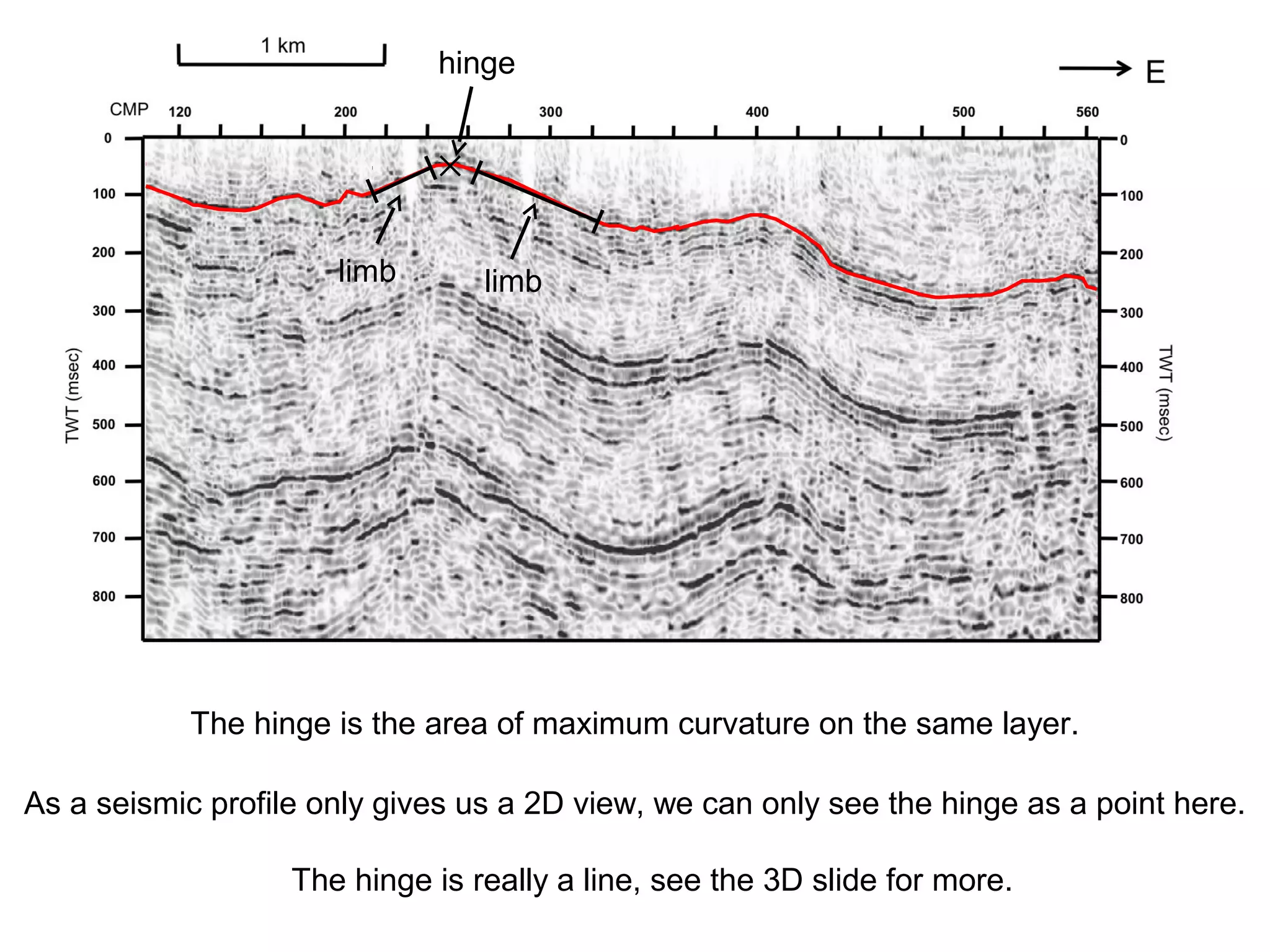
The hinge is the area of maximum curvature on the same layer.
limb limb
hinge
As a seismic profile only gives us a 2D view, we can only see the hinge as a point here.
✕
The hinge is really a line, see the 3D slide for more.
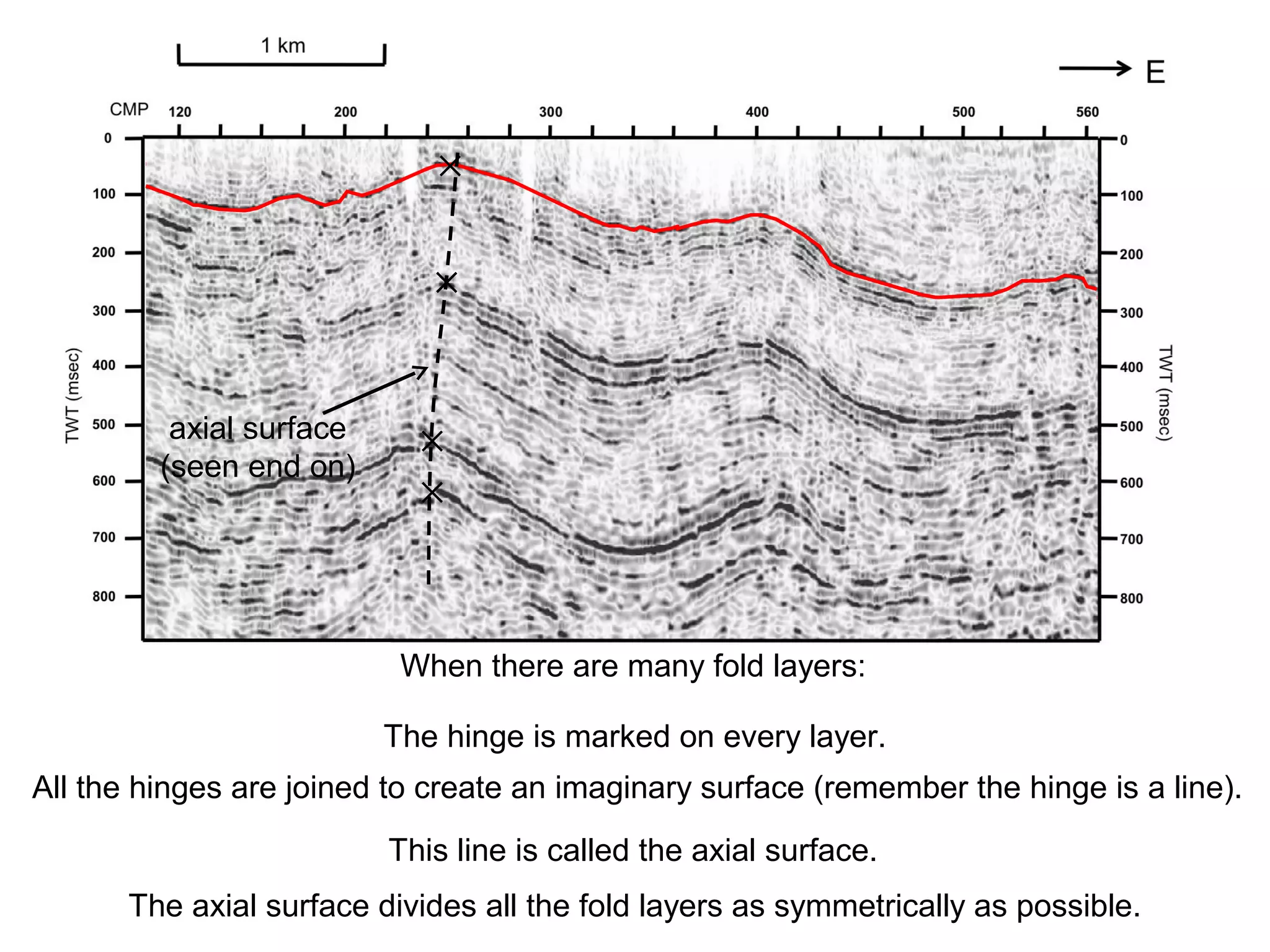
When there are many fold layers:
The hinge is marked on every layer.
✕
✕
✕
✕
All the hinges are joined to create an imaginary surface (remember the hinge is a line).
This line is called the axial surface.
axial surface
(seen end on)
The axial surface divides all the fold layers as symmetrically as possible.
Look in 3D
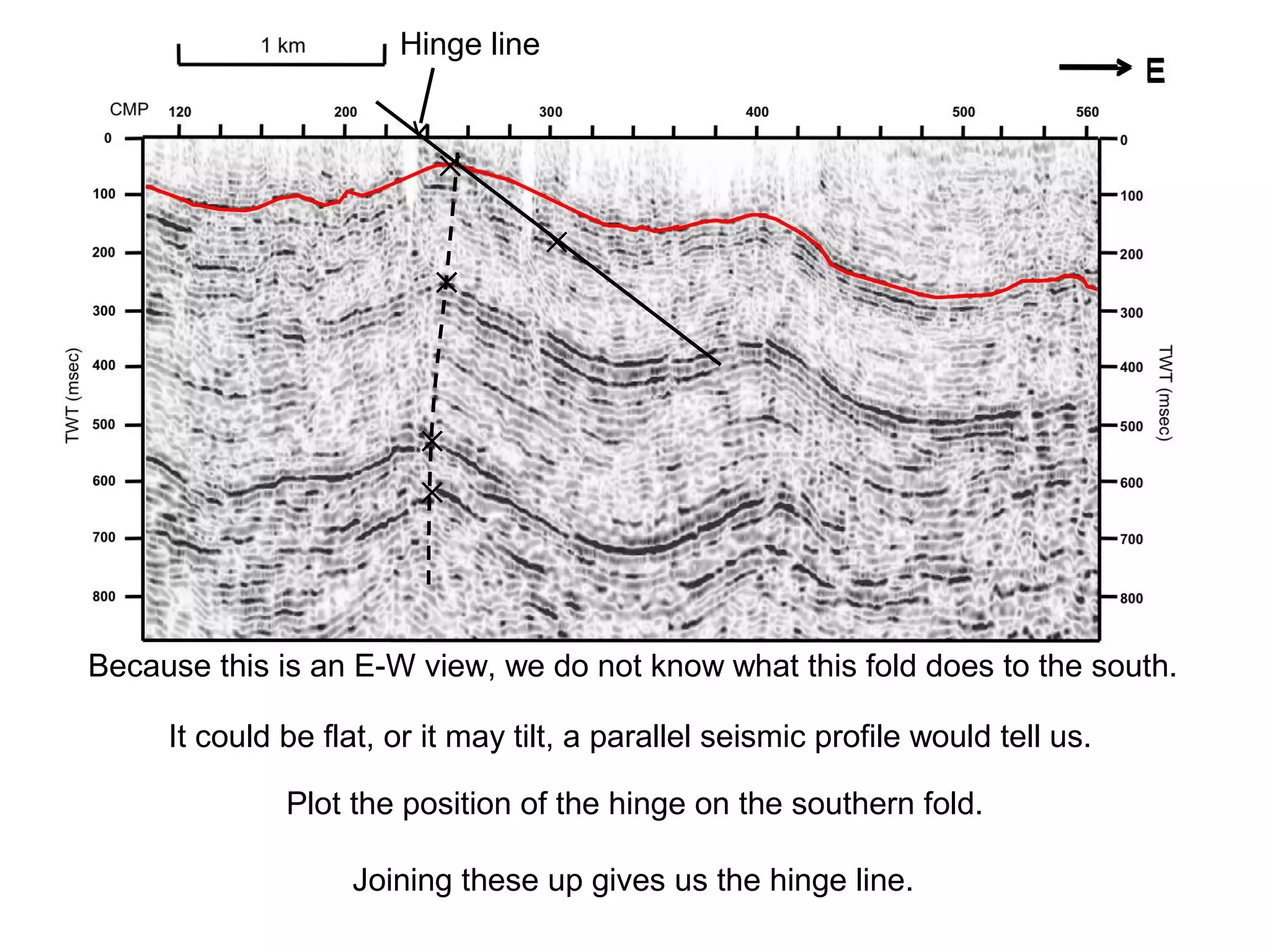
Because this is an E-W view, we do not know what this fold does to the south.
It could be flat, or it may tilt, a parallel seismic profile would tell us.
✕
✕
✕
✕
Plot the position of the hinge on the southern fold.
✕
✕
✕
✕
✕
Hinge line
Joining these up gives us the hinge line.
E
✕
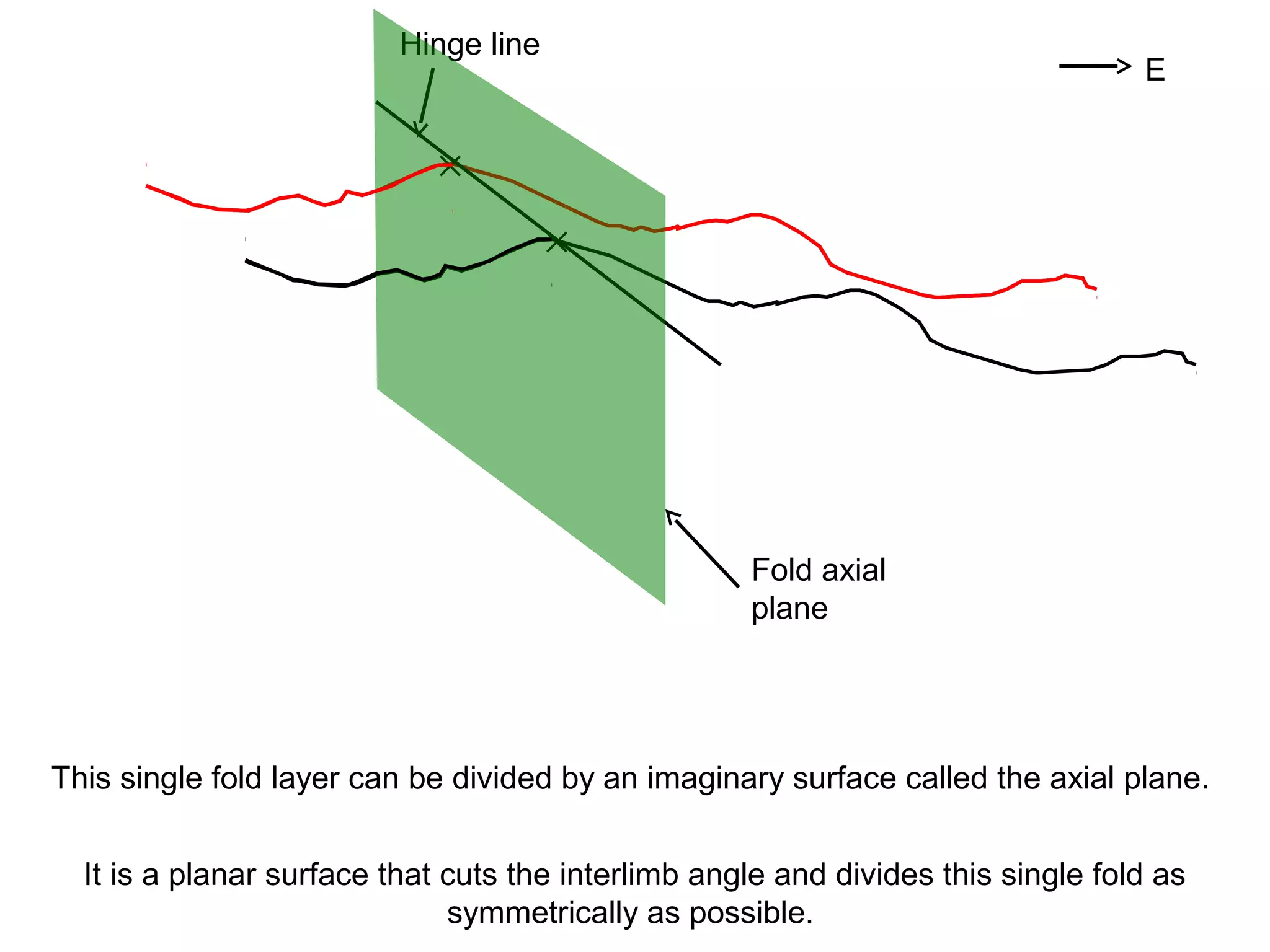
This single fold layer can be divided by an imaginary surface called the axial plane.
✕
Hinge line
E
It is a planar surface that cuts the interlimb angle and divides this single fold as
symmetrically as possible.
Fold axial
plane
✕
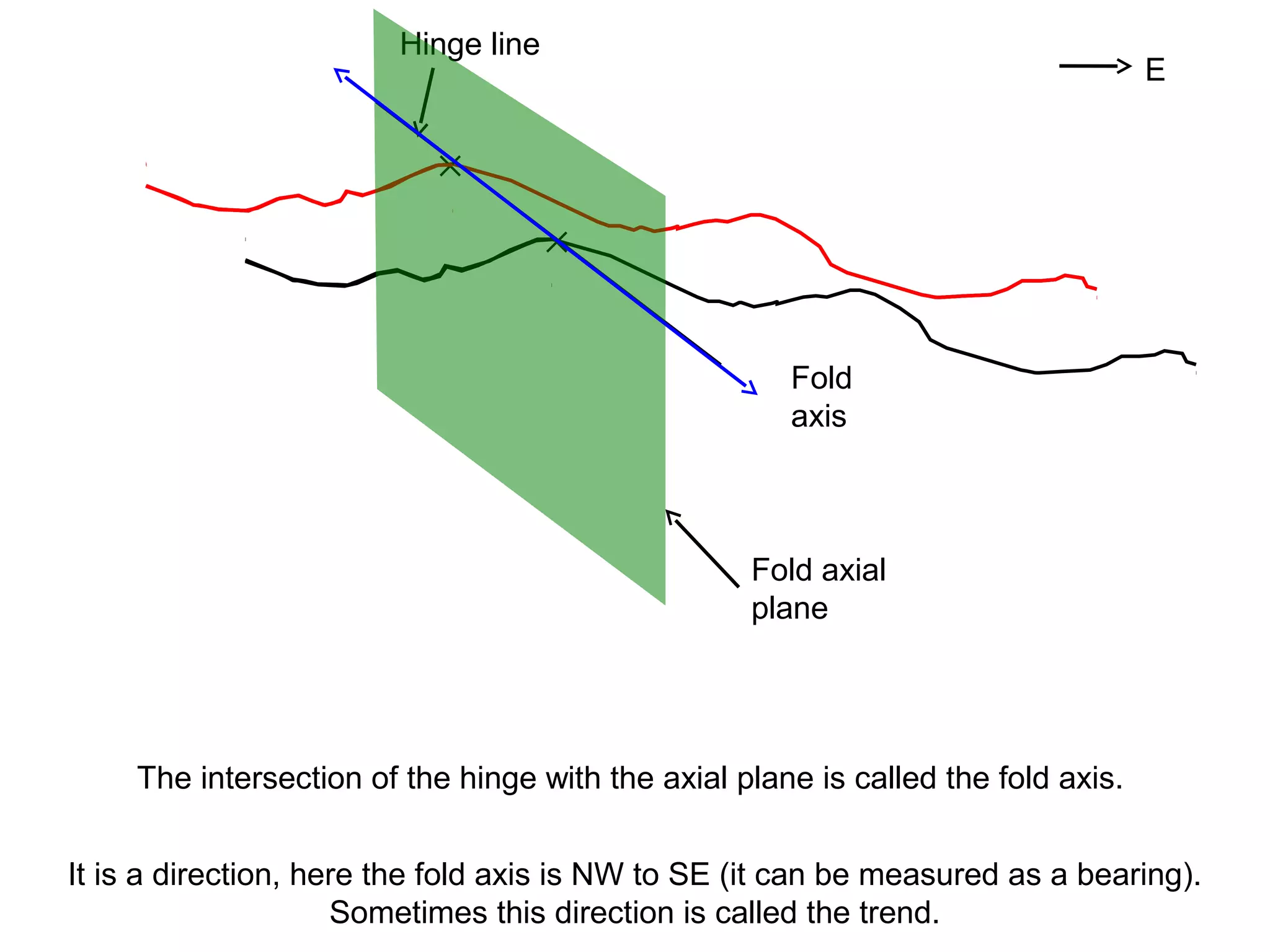
The intersection of the hinge with the axial plane is called the fold axis.
✕
Hinge line
E
It is a direction, here the fold axis is NW to SE (it can be measured as a bearing).
Sometimes this direction is called the trend.
Fold axial
plane
Fold
axis
✕
✕
✕
✕
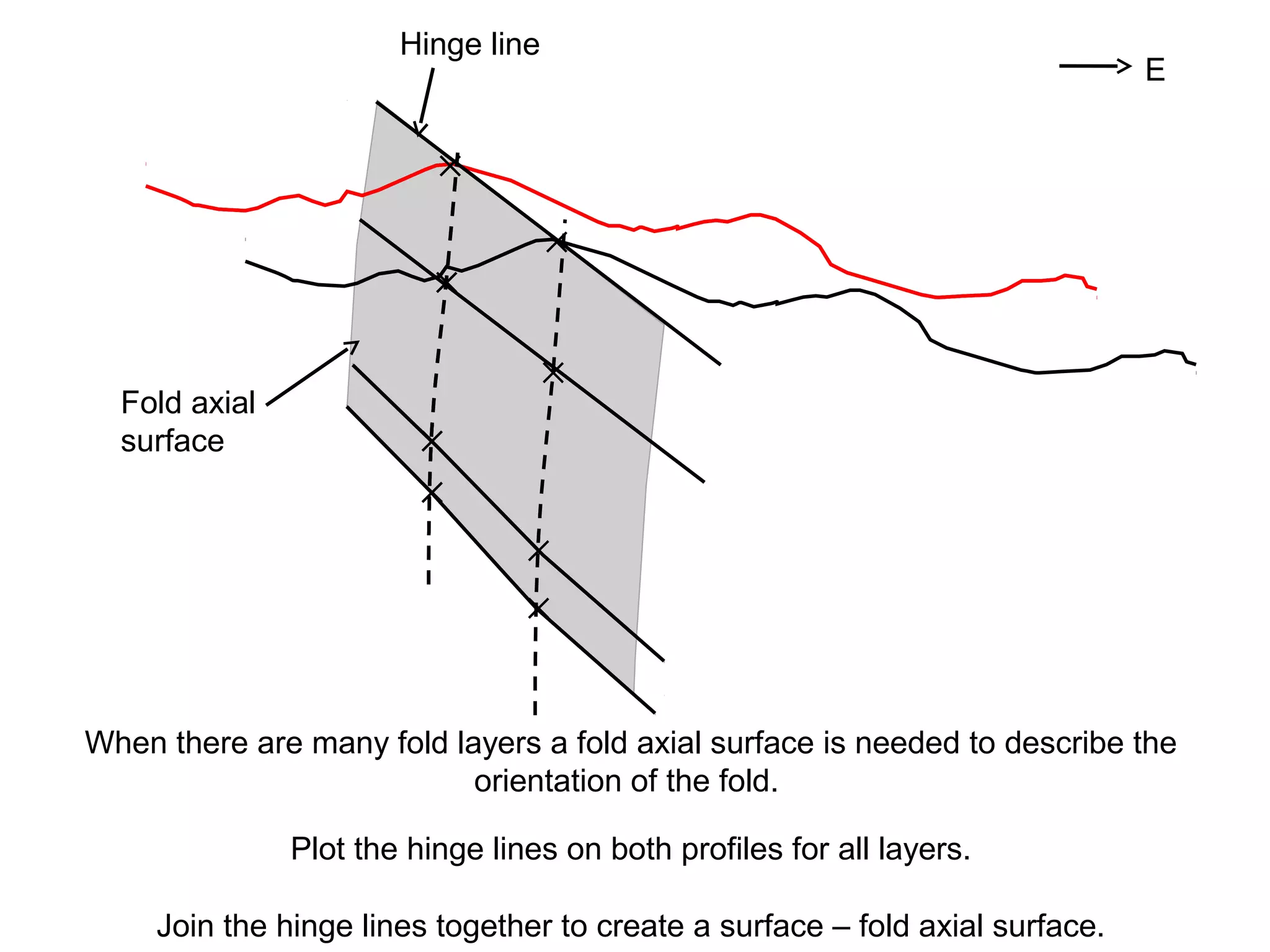
Plot the hinge lines on both profiles for all layers.
✕
✕
✕
✕
✕
✕
✕
✕
Hinge line
E
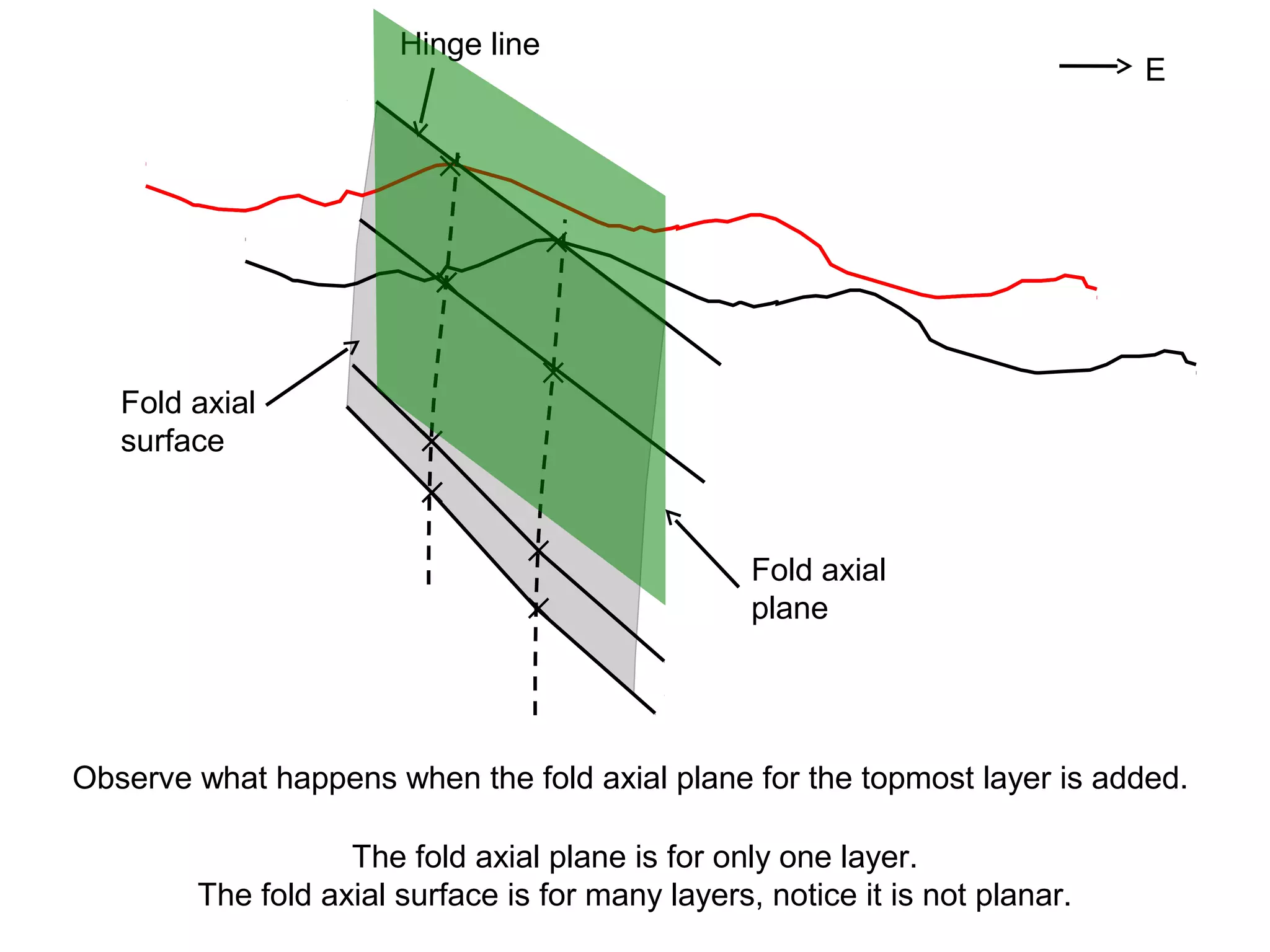
Join the hinge lines together to create a surface – fold axial surface.
Fold axial
surface
When there are many fold layers a fold axial surface is needed to describe the
orientation of the fold.
✕
✕
✕
✕
Observe what happens when the fold axial plane for the topmost layer is added.
✕
✕
✕
✕
✕
✕
✕
✕
Hinge line
E
The fold axial plane is for only one layer.
The fold axial surface is for many layers, notice it is not planar.
Fold axial
surface
Fold axial
plane
✕
✕
✕
✕
✕
✕
✕
✕
✕
✕
✕
✕
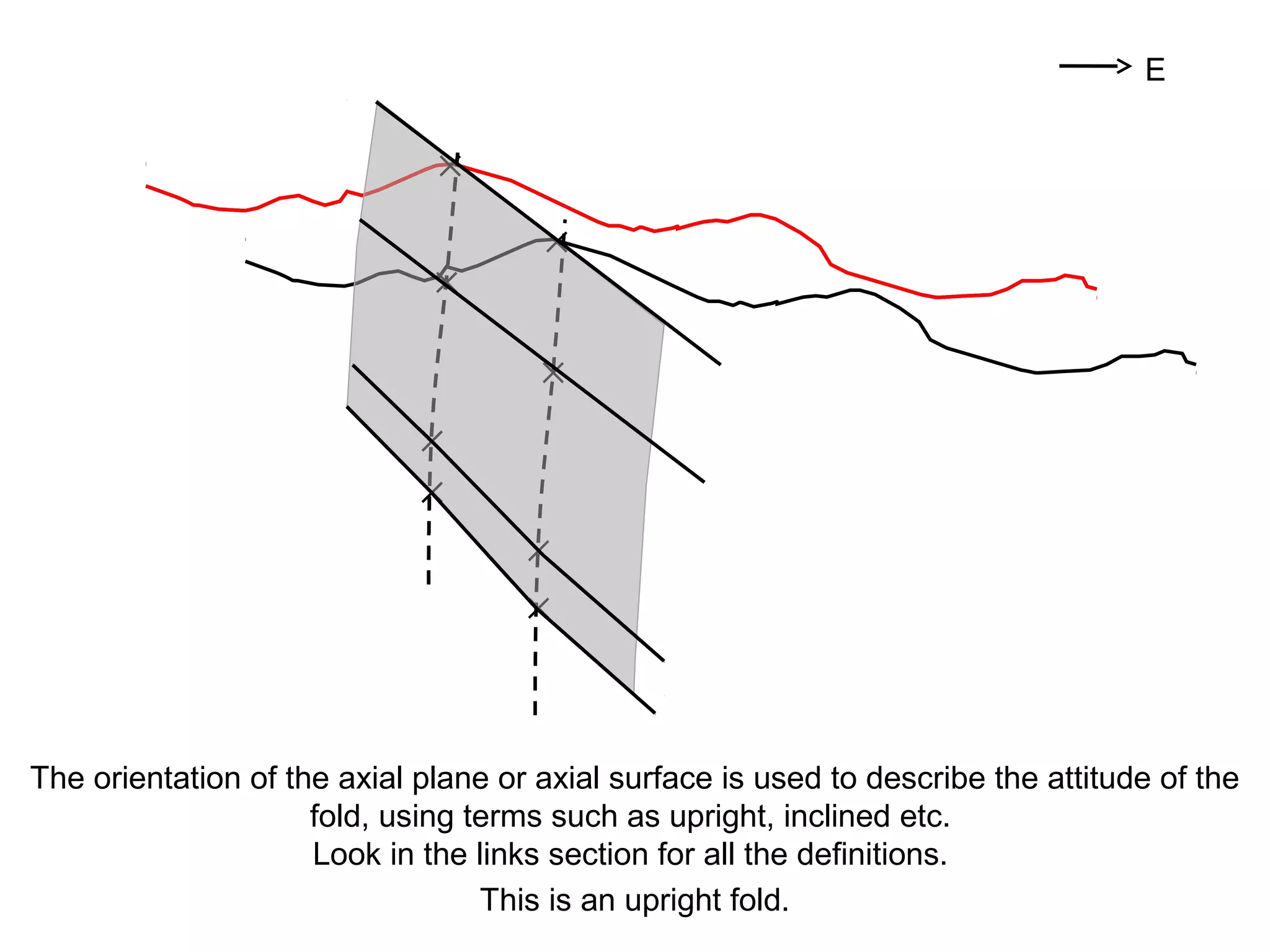
The orientation of the axial plane or axial surface is used to describe the attitude of the
fold, using terms such as upright, inclined etc.
Look in the links section for all the definitions.
E
This is an upright fold.
✕
✕
✕
✕
✕
✕
✕
✕
✕
✕
✕
✕
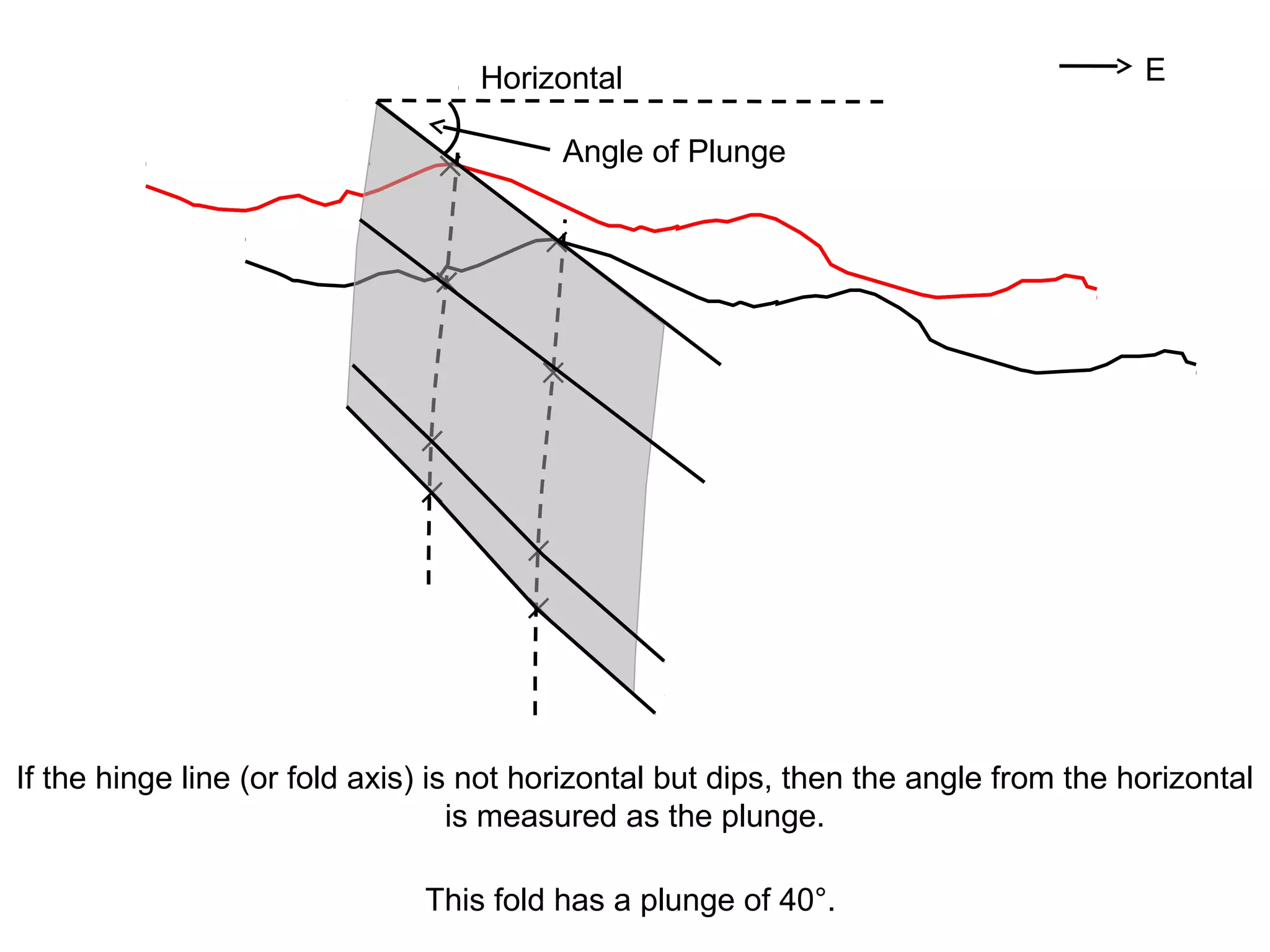
If the hinge line (or fold axis) is not horizontal but dips, then the angle from the horizontal
is measured as the plunge.
E
This fold has a plunge of 40°.
Angle of Plunge
Horizontal

Terminology of folds

  • 1.
    Terminology of folds Somebasic information about fold description and geometry
  • 2.
    Tectonic stress slowlyapplied to rocks will cause them to bend. Flat rocks Folded rocks Tectonic stress + lots of time Photographs reproduced with the permission of the British Geological Survey ©NERC. All rights Reserved. P006281 P007923 The features produced are called folds. The rocks undergo permanent strain.
  • 3.
    antiform antiform antiform synform synform As geologists weneed to be able to describe folds: An upward fold is an antiform. A downward fold is a synform. This is a series of folds.
  • 4.
    As folds arewave shaped (waveforms) we use the same terminology that is used in physics to identify the parts of a wave: The very top of an antiform is the crest. The very bottom of a synform is the trough. crest trough
  • 5.
    Amplitude (a) isthe maximum displacement from a central position in either direction. Wavelength ( ) is the distance for one complete cycle e.g. from crest to crest or trough⋋ to trough. 2 × amplitude (a) wavelength ( )⋋
  • 6.
    The limbs arethe flanks of the fold and are relatively planar. The angle created by the intersection of the two limbs is called the interlimb angle and is used to describe a fold. limb limb Interlimb angle From this angle folds are described with terms such as open or tight, look in the links section for all the definitions.
  • 7.
    Looking in 2D Someterms to describe the orientation of a fold
  • 8.
    The hinge isthe area of maximum curvature on the same layer. limb limb hinge As a seismic profile only gives us a 2D view, we can only see the hinge as a point here. ✕ The hinge is really a line, see the 3D slide for more.
  • 9.
    When there aremany fold layers: The hinge is marked on every layer. ✕ ✕ ✕ ✕ All the hinges are joined to create an imaginary surface (remember the hinge is a line). This line is called the axial surface. axial surface (seen end on) The axial surface divides all the fold layers as symmetrically as possible.
  • 10.
  • 11.
    Because this isan E-W view, we do not know what this fold does to the south. It could be flat, or it may tilt, a parallel seismic profile would tell us. ✕ ✕ ✕ ✕ Plot the position of the hinge on the southern fold. ✕ ✕ ✕ ✕ ✕ Hinge line Joining these up gives us the hinge line. E
  • 12.
    ✕ This single foldlayer can be divided by an imaginary surface called the axial plane. ✕ Hinge line E It is a planar surface that cuts the interlimb angle and divides this single fold as symmetrically as possible. Fold axial plane
  • 13.
    ✕ The intersection ofthe hinge with the axial plane is called the fold axis. ✕ Hinge line E It is a direction, here the fold axis is NW to SE (it can be measured as a bearing). Sometimes this direction is called the trend. Fold axial plane Fold axis
  • 14.
    ✕ ✕ ✕ ✕ Plot the hingelines on both profiles for all layers. ✕ ✕ ✕ ✕ ✕ ✕ ✕ ✕ Hinge line E Join the hinge lines together to create a surface – fold axial surface. Fold axial surface When there are many fold layers a fold axial surface is needed to describe the orientation of the fold.
  • 15.
    ✕ ✕ ✕ ✕ Observe what happenswhen the fold axial plane for the topmost layer is added. ✕ ✕ ✕ ✕ ✕ ✕ ✕ ✕ Hinge line E The fold axial plane is for only one layer. The fold axial surface is for many layers, notice it is not planar. Fold axial surface Fold axial plane
  • 16.
    ✕ ✕ ✕ ✕ ✕ ✕ ✕ ✕ ✕ ✕ ✕ ✕ The orientation ofthe axial plane or axial surface is used to describe the attitude of the fold, using terms such as upright, inclined etc. Look in the links section for all the definitions. E This is an upright fold.
  • 17.
    ✕ ✕ ✕ ✕ ✕ ✕ ✕ ✕ ✕ ✕ ✕ ✕ If the hingeline (or fold axis) is not horizontal but dips, then the angle from the horizontal is measured as the plunge. E This fold has a plunge of 40°. Angle of Plunge Horizontal